An Excellent Publication by a Dynamic IAS Officer (Retired): Few Points about the Book

By virtue of working in the National Institute of Rural Development and Panchayati Raj (NIRDPR)   and few other organisations in India and even abroad, I have the opportunity to meet many IAS officers and around 15 senior IAS officers were my bosses. While I was in abroad (many countries) many foreigners appreciated our IAS system of recruiting. 

 I have to agree that all IAS officers whom I met and interacted with were knowledgeable and vibrant in different fields. Some of them were publishing articles also. I am now a senior citizen and around 65 years of age but two names I remember whose articles inspired me – one is T. L Sankar sir and another one Rajeev Sadanandan sir. I had the opportunity to work under both of them when both were in NIRDPR as Director General and Deputy Director General in different periods. 

Recently, I have the opportunity to go through the book written by Chinmay Basu sir, an Odisha cadre IAS now retired on superannuation and settled in Kolkata. He also worked in NIRDPR as Deputy Director General. After retirement he has published (February 2021) a wonderful book in Bengali titled ‘Jibaner Jharna Kalam’ (meaning, according to me Jotted Down Experience of Life). 

There are altogether 23 chapters in the book and the volume is spread over to 128 pages including foreword and preface. The foreword is written by one IAS – Anita Agnihotri madam. 

For the benefit of readers I am highlighting a gist of each chapter as the author has presented his experience during service life mostly during his experience in Odisha with some cases in each chapter. 

 First chapter has highlighted his experience when   he was a student staying in the hostel of Young Men’s Christian Association (YMCA) in Calcutta, now Kolkata. According to the author most of the students were from different parts of India mostly from North East of India. Anyway, he has presented a sad case as he met one person, Sheikh Kader at YMCA whose family still has a renowned bakery in Guwahati, Assam. Kader finally became a medical doctor and a few years ago when the author with his wife went to Guwahati as tourists desired to meet Kader and accordingly went to Sheikh Brothers Bakery and came to know Kader passed away. Second chapter is interesting as when he joined Lal Bahadur Shastri Academy, Mussoorie, in 1977 as probationer, while filling up the form mentioned married as before joining marriage registration took place.  But normally as per Indian culture social marriage is a must so when he wanted to go for social marriage top head of the Institute asked him to clarify and with interesting note he has clarified   because registration and social marriage are two  different phenomena. In the third chapter, the author has presented his experience when he went to join with his wife a small town Gunupur as SDO (Sub Divisional Officer), Korapout district.  With a lot of hassles he joined and he was the first IAS officer to join as SDO in that place. In the fourth chapter, the author has narrated how a small   rivulet (drainage type)   became furious because of incessant rain. With a lot of difficulty the author crossed the rivulet with the help of local staff as there was an important meeting. 

In the fifth chapter a case of corrupt practice has been highlighted as how an official harassed a small cinema hall owner. With the intervention of the author, the cinema hall was reopened. Sixth chapter also touched upon the corruption (bribery) case which the author has neutralised. In the seventh chapter exploitation of the bonded labourers by the big landowners has been presented. The author’s experience in Kalahandi has been presented in chapter 8 where he worked as district magistrate. Here also he observed some issues. In chapter 9 the author had to move by train by taking a ticket in another person’s name and the situation has been lucidly explained. An anomaly during recruitment of staff in Sambalpur district, where the author was the district magistrate, has been presented in chapter 10, and the author and his immediate colleagues tackled the issue as he received an anonymous letter about corruption during examination. In chapter 11 the author has explained how his childhood friend who went mountaineering lost his life. The chapter 12 is also interesting as the author was with his two children and wife while going to Nandankanan, a great and famous sanctuary of the animals by bus, and faced a serious problem because he forgot to take the required amount. And finally how it was resolved may be found in the chapter. 

 The author has explained his interesting experience in Chapter 13 about train journeys and the train left the station as within the stipulated time he along with his boss a chief secretary level officer could not get down in the station timely and finally the issue was resolved. In Chapter 14 the author has explained how the big industrialists exploit weavers. Health issue of the author’s teenage son and how the issue was tackled has been narrated in chapter 15 and chapter 16 as the author’s son suddenly suffered from nerve related issues in 1995. In chapter 17 former Prime Minister Honourable Rajiv Gandhi’s visit with Madam Sonia Gandhi at Kalahandi in 1987 has been lucidly presented. And unfortunately both could not visit a village because of heavy rain although it was scheduled. But later on the author visited and observed a few cases of corruption and highlighted these in chapter 17.  When the author’s son and daughter were students at Symbiosis college in Pune, the mother of both (his wife) , used too many phone calls through STD. Those days cell phones were not available. So the author was disgusted as the phone was meant for official purposes. In view of this, the author joined in Mumbai as Chief Executive Officer in Khadi and Village Industries Commission. Time to time both husband and wife used to visit Pune to meet their children and similarly both the children on holidays used to visit their home in Mumbai. And in this chapter 18 behaviour of both son and daughter has been lucidly explained which is a simple example of generation gap. 

The author had the opportunity to study in Harvard University of USA in 1989 under the scholarship of UNDP. Since it was a prestigious programme, he went there with his wife and both the children and had the opportunity to attend Nobel laureate Professor Amartya Sen’s class (chapter 19). In chapter 20, the author has explained a case in the USA as by seeing ‘Food Coupon’ which an old lady was using he puzzled and later on came to know these are given by the Government to the poor persons who are unable to work like Old-age pension in our country. The author has lucidly explained in chapter 21 his visit with family members to Niagara Falls in Canada. Here he has honestly explained about the visa issue because he came from India on one single entry visa but some people misguided him that multiple entry visas are required and finally the issue was resolved. The author’s experience with the former Chief Minister Honourable Biju Pattnaik and about his personality has been wonderfully jotted down in chapter 22. In the last chapter of 23 while the author was Chief Executive Officer in Khadi and Village Industries Commission in a programme Prime Minister Honourable Atal  Bihari Vajpayee came as chief guest , the author’s embracing position while extending vote of thanks in Hindi has been explained. The author feels that he should have spoken like an extempore speech not by reading a piece of paper and with a humorous note he has concluded the chapter.

This is a wonderful publication although in Bengali so I suggest the author if possible it may be published in Odia, English and Hindi also. Also I suggest all the 23 chapters should be numbered by inserting 1, 2, 3 etc., as only the chapters’ titles have been mentioned in the content. Since, the publication has mainly highlighted his experience during service period and abroad so many of us faced such issues in our service life so I am feeling nostalgic.

 Dr Shankar Chatterjee

Former Professor & Head (CPME),NIRD & PR ( Govt. of India), Hyderabad,  

TOP FAMOUS DANCE STYLES IN THE WORLD

Dance is one of the best forms of expression. People all over the world are into various forms of dancing. They say anybody can dance…which is true, unless and until you are knowledgeable of the dance form. The easiest dance form is Freestyling. It is simple and you don’t need to have a specific choreography to dance along with the music.

Here are some dance styles that are widely loved by the people of the world.

HIP-HOP

The dance form is usually performed by skilled dancers. It includes a wide range of styles created in the 1970s and made popular by dance ctews in the United States. They go under training that usually involves locking, popping, breaking, flips, handstands etc. This dance has moves which are closer to the ground and is usually performed to hip-hop, R&B, Funk, Electronic, and pop music. They are also called street dances or street style. This is a dace form that is widely performed and loved.

BALLET

A dance style that was originated in the 15th century in Italy and later developed into a concert dance form in France and Russia. This is usually performed on classical music. Ballets are choreographed and performed by trained ballet dancers. It requires ages of training and is extremely eye pleasing.

SALSA

It is performed in couples and is performed on Salsa and Latin American music. Salsa is an amalgamation of Cuban dances such mambo, pachanga, and rumba as well as American dances such as swing and tap. It was primarily developed by Puerto Ricans and Cubans living in New York in the late 1960s and early 1970s. Different regions of Latin America and the United States (including countries in the Caribbean) have distinct salsa styles of their own, such as Cuban, Puerto Rican, Colombian, and New York styles. Salsa dance socials are commonly held in nightclubs, bars, ballrooms, restaurants, and outside, especially when part of an outdoor festival.

BELLY DANCE

It is an expressive Arabian dance style that was originated in Egypt. It features movements of the hips and torso. It has evolved to take many different forms depending on the country and region, both in costume and dance style; with Egyptian style the most recognized worldwide due to the Egyptian cinema. It is popular worldwide with many schools around the globe now practicing it.

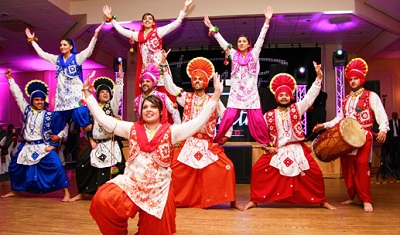
BHANGRA

It is a type of traditional folk dance of the India subcontinent, originating in Sialkot in Punjab. In a typical performance, several dancers execute vigorous kicks, leaps, and bends of the body—often with upraised, thrusting arm or shoulder movements.  its modern-day evoluti on has allowed bhangra to retain its traditional Indian roots, while broadening its reach to include integration into popular music and DJing, group-based competitions, and even exercise and dance programs in schools and studios.

FLAMENCO

It is an art form based on the various folkloric music traditions of southern Spain, originating in the culture and traditions of the Cale Roma, commonly known in Spanish as Gitanos, of the region of Andalusia, but also having a historical presence in Mucia. Flamenco has become popular all over the world, especially the US and Japan.

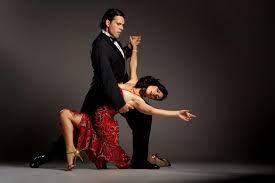
TANGO

Tango is a partner dance, and social dance that originated in the 1880s, the natural border between Argentina and Uruguay. The tango then spread to the rest of the world. Many variations of this dance currently exist around the world. On August 31, 2009, it approved a joint proposal by Argentina and Uruguay to include the tango in the UNESCO Cultral Heritage list.

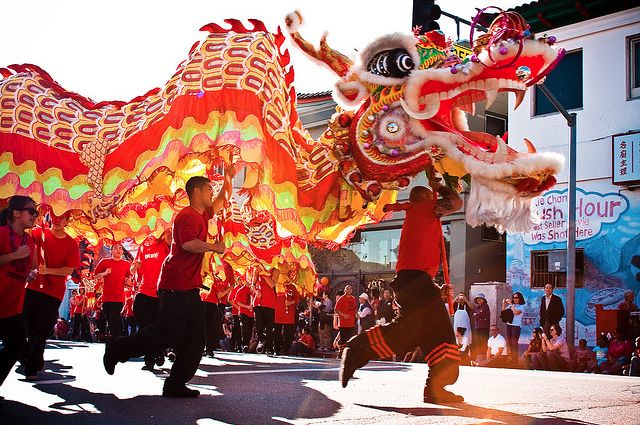
DRAGON DANCE

It is a form of traditional dance and performance in Chinese dance. Like the lion dance, it is most often seen in festive celebrations. The dance is performed by a team of experienced dancers who manipulate a long flexible figure of a dragon using poles positioned at regular intervals along the length of the dragon. The dragons are believed to possess qualities that include great power, dignity, fertility, wisdom and auspiciousness. The movements in a performance traditionally symbolize historical roles of dragons demonstrating power and dignity.

CONTEMPORARY

is a genre of dance performance that developed during the mid-twentieth century and has since grown to become one of the dominant genres for formally trained dancers throughout the world, with particularly strong popularity in the U.S. and Europe. Although originally informed by and borrowing from classical, modern, and jazz styles. Due to its technical similarities, it is often perceived to be closely related to modern dance, ballet, and other classical concert dance styles. 

Article by : Haniah Mirza

what makes you most beautiful;

“Beauty is skin-deep” the saying goes, and it seems most of you agree when you describe what you consider most beautiful in a person.

Confidence, kindness, happiness, dignity and intelligence all ranked in the top five out of 19 attributes that people said make the opposite and same sex beautiful.

Physical attributes like facial appearance, body weight and shape, and sexiness come much lower in the rankings of a recent Global Advisor survey of more than 18,000 people across 27 countries.

In fact, strength was the only physical attribute in the top 10 for what women considered beautiful in men. For how men view women – strength, sexiness and facial appearance – ranked at the bottom of the top 10 traits.

“No matter how physically gorgeous someone
is, if they are a rotten person, they will
not appear beautiful to us for long.
”
Carla Flamer, Marketing Canada

But, if the business of improving your looks is such a big business, then why do we place less importance on physical traits when it comes to what we consider beautiful?

Or, is there more to this than what meets the eye?

Difference between thinking & experiencing

Namika Sagara, President of Ipsos’ Behavioral Science Center, says we use different processes in our brain when we think of what characteristics matter versus what matters when we experience things.

“When we think of it, we tend to be more logical and rational, and also cognizant of what others might think of what we have to say,” said Sagara. “But when we experience, we tend to skip those logical and rational processes.”

Greg Gwiasda, Behavioral Scientist & VP at our Behavioral Science Center, adds that when things seem distant, we tend to think more abstractly, but when we are close to doing something, we think more concretely.

“When we talk to people about what they want in a partner, we are in a more abstract mindset – so the general traits are more likely to be salient,” said Gwiasda. “When we are actually choosing a partner, this is a very immediate need and we think in much more concrete terms – she’s got a nice smile, figure; he’s got good eyes, abs.”

Appearing beautiful vs. staying beautiful

There’s also a difference between what we initially view as beautiful when we meet someone and what keeps them as beautiful in our eyes, according to Carla Flamer, President of Marketing Canada, who’s worked with some of the world’s biggest beauty brands.

“The physical aspects, features, body type, facial balance – that gets positive first attention,” said Flamer. “What keeps someone looking beautiful in our eyes is intrinsic.”

“One is more immediate/visceral, in terms of creating an impression, and the other longer lasting,” said Flamer suggesting both are equally important elements of beauty – the physical and non-physical.

“No matter how physically gorgeous someone is, if they are a rotten person, they will not appear beautiful to us for long.”

Sagara backed this sentiment by saying that attraction can go through a journey and change over time.

“For example, the most salient attraction you might recall right when you met your partner is a physical attraction [like] how pretty his or her eyes were,” said Sagara. “What you think most attractive about your partner now may be the confidence he or she has.”

This is not because you think the eyes of your partner are no longer attractive, Sagara explains, but more that you have developed a stronger attraction to their confidence after spending more time with them.

What’s socially acceptable?

But given the popularity of current dating apps where you can swipe through potential partners based on their looks, the experts agreed there could be an element of people wanting to give socially desirable answers in order not to appear shallow.

Physical traits like hair styling, youthfulness and body weight and shape were among eight of the last nine characteristics that made men beautiful to women. Similarly, seven of last 10 attributes that made women beautiful to men were physical ones.

Sagara said that when we report what makes a person beautiful, we – consciously or unconsciously – tend to align with what we think should make a person beautiful, which can be heavily influenced by our macro and micro cultures.

But Colin Strong, Global Head of Behavioral Science at Ipsos, argues that giving more importance to physical attributes of beauty can be misleading, because it is difficult to really understand why we are attracted to another.

He points to the fact that the current survey’s findings are similar to one done by Ipsos for Dove’s Real Beauty campaign in 2004.

“Since 2004 there has been an explosion in online dating – and a lot of handwringing over the way in which we are making increasingly superficial decisions over who we want to date,” said Strong.

“Maybe this shows that in actual fact, despite this, we are all still looking for qualities in our partners that will lead to love, not just a hot date.”

life is easy when we put in efforts

Everything that we want to achieve requires some effort. But how important is effort in achieving our goals?

What you do today – the effort you put in – determines your success tomorrow. Rory Vaden, the author of “Take the Stairs: 7 Steps for Achieving True Success”, says, “Success is never owned; it is only rented – and the rent is due every day.”

Effort, like sunscreen in the summer, needs to be applied consistently. To achieve our goals, we need to put in the effort each and every day. On days that we feel good and on days when we don’t feel like doing the work. Many people will put in effort for a short time and when their effort does not immediately pay off or they become distracted by life, they stop putting in the daily effort needed to finish and succeed.

One way to keep yourself motivated to put in the effort needed for your goals is to think of all the other people who have the same goal. Knowing that most people will at some point give up and stop putting in consistent effort, you can use this to motivate you to continue to work hard and keep moving forward. I call these “Get ahead” days. These are the days that you get ahead of your competition. After all, everyone can put in the effort when they are feeling good or the circumstances are perfect, but not many persist through the tough days.

Effort is really just a habit that we need to develop if we want to be successful. Success requires that you are willing to do whatever is necessary, when it is necessary in order to succeed.

Effort pays off in many ways. When we put in effort, we learn. Whether the effort produces results or not, we can learn and adapt based on what we learn from our efforts. If our efforts lead us further away from our goal, then we need to change our strategy. If our effort brings us closer to our goal, we can double down with our effort.

The great basketball player, Michael Jordan said that work ethic, (effort), eliminates fear. By putting in the effort, we know what we are capable of and do not need to be afraid.

Effort teaches us that we can do more than we thought. We learn new skills and abilities when we take the time to put in consistent effort. Every new success that we achieve through our efforts increases our confidence in ourselves and our abilities. Effort keeps us focused on success. As your effort brings you closer to your goal, your motivation and willpower increase as you can taste victory.

KNOWLEDGE IS POWER

Knowledge is power, which indicates that a person can use knowledge to gain education and complete control over his life. Educated people can deal with life’s challenges with ease. Knowledge is the most powerful tool for empowering people, and no other power on the planet can defeat it. Knowledge, we may say, gives power to a person who strives for his rights and competes with the rest of the world. The distinction between a man and an animal has been made by knowledge. Human beings cannot be compared to animals in terms of physical strength, but because of the power of knowledge, they have been the most powerful species on the planet.

Humans are physically weaker than animals. Every knowing person is educated, but not everyone who is educated is knowledgeable. This may appear strange, yet it is correct. Almost everyone in today’s world is educated, but they have little understanding of the subjects they have studied. Furthermore, knowledge is a critical tool for bringing about positive changes in society or in a country. Knowledge provides us with a glimpse of our future and what we may accomplish there. The effect of knowledge is that all countries around the world use technologically advanced tools and technology, among other things. Knowledge, not weapons or bombs, is what makes a country powerful.

Benefits of Knowledge:

Enables Problem Saving: There is a solution to every problem in life. Solutions, on the other hand, are only supplied by people who are knowledgeable. Problems will inevitably arise in life, and by gaining knowledge, you may train yourself to be a problem solver. You will become important in your culture if you accomplish this. Doctors, for example, cure ailments by giving patients medications, but they cannot do so if they are uninformed.

Builds Confidence: When you are well-informed, your self-assurance grows. You won’t be able to solve problems if you don’t have faith in yourself. You can have faith in yourself if you have knowledge. Your level of confidence in approaching a task will be determined by your knowledge of the subject. People who are familiar with the situation are rarely afraid. When issues develop, they may even rejoice since it gives them the opportunity to shine. Consider how the stars shine brightly at night while humans strain to see them.

Breeds Success: Knowledge is a key to success. What guys know determines their success. What you know about the subject determines your success as a student. Let’s face it: we can’t demonstrate that we grasp a problem if we keep failing. Failure indicates that there is still something you don’t understand. Once you’ve overcome your ignorance, you’ll be on your way to success.

In conclusion, we may state that accurate knowledge aids in the development of a person. It also keeps people out of confrontations and corrupt situations. Knowledge also provides happiness and wealth to a country. Above all, information is the key to everyone’s success. We should also be willing to learn new things in areas where we believe we are experts. Let us not be afraid to fail in our pursuit of knowledge.

PHYSICAL FITNESS

Prioritize Your Health & Wellness: Learn The Importance Of Physical Fitness  | Shaw Academy

Different people have different points of view regarding fitness . For a common man to have a good physique is a symbol of physical fitness . For a doctor , the proper functioning of physiological systems is physical fitness . In fact , physical fitness is a simple term with a broad meaning . Physical fitness of a common person means the capacity to do the routine work without any fatigue or exertion and after doing his work he has power to do some more work with quick recovery . Physical fitness is more than the possession of strength and endurance . It means having the best possible health with the capacity to do one’s everyday task , engage in recreational pursuits and meet emergencies , when they arise . As a matter of fact , physical fitness is possessed by that individual , who remains enthusiast , works cheerfully and does the emergency work with vigour . Physical fitness implies a relation between the task to be performed and the individual’s capability to perform it .in fact , to understand the physical fitness in better way , it would be more beneficial to go through the following definitions of physical fitness .

  • According to Webster’s Encyclopaedia , “ It is the ability of a person to do daily routine work without fatigue ; moreover to participate in playful activities and still reserve enough capacity to meet any emergency .“
  • According to Don Hoskins ,”The human body’s ability to move with the desired speed , balance , agility and strength gained through proper exercise and nutrition , “
  • According to Kroles , “Successful adaption to the stresses of one’s lifestyle.”
  • According to David R. Lamb , “Physical fitness is the capacity to meet the present and potential physical challenges of life with success .”

In fact , it can be said that physical fitness is the ability to function effectively and efficiently , enjoy leisure , be healthy , resist disease and cope with the emergency situations . Physical fitness varies according to the nature of work , individual’s size , shape of the body , age and sex . For physical fitness , we require an efficient motor mechanism , efficient organic mechanism and an efficient mental functioning .

Nelson Mandela

Nelson Rolihlahla Mandela was a Revolutionary , Philosopher and the President of South Africa from 1994 to 1999.He was born on 18 July 1918 in Mvezo ,South Africa.

He fought for the freedom of South Africa .He is the symbol of freedom in South Africa.He spent around 27 years in jail fighting against South African Government’s racist policy .He was the First Black President of South Africa.He was Honoured with Nobel Peace Prize in the year 1993.

18 July was official declared by the United Nation as the International Nelson Mandela Day .

Monkey-pox

Recently, we may heard about monkeypox, which took place in Texas, USA. Now, let’s have a brief intro about monkeypox.

A rare case of monkeypox was detected in Texas, marking the first such cases recorded in the state, the Centers for Disease Control and Prevention (CDC) said. “While rare, this case is not a reason for alarm and we do not expect any threat to the general public.”

Monkeypox belongs to the same family of viruses as smallpox. It is a rare but serious viral illness that is characterised by flu-like symptoms and swelling of the lymph nodes, which gradually progresses to a widespread rash all over the face and body.It spreads from one person to another via respiratory droplets.

The first case of monkeypox in humans was recorded in 1970 in the Democratic Republic of Congo during a period of intensified effort to eliminate smallpox.

Scientists have so far discovered two distinct genetic groups of monkeypox virus—Central African and West African.The most recent case detected in the US has been infected by the type of virus found in parts of West Africa, including Nigeria, CDC said.

The United Kingdom, Israel and Singapore have recorded cases of monkeypox in six passengers, all of whom were returning from Nigeria.

Happy life

We all wish to be happy. however we have a tendency to typically think about happiness as a factor that happens to America — one thing we’ve no management over. it is simple to link the thought of happiness with matters we’re in. we would tell ourselves, “If solely things were totally different, then i would be happy.”

But that is not very however happiness works. analysis shows that simply atiny low portion of happiness (only concerning 10%) depends on a personality’s scenario. thus wherever will most of our happiness return from?

Born Happy?
Part of happiness depends on temperament. Some folks have a naturally happy nature. we have a tendency to all understand people that area unit cheerful and optimistic most of the time. Their upbeat personalities create it easier for them to be happy.

So what will that mean for people that area unit born with a temperament that is on the crabby side? they could see the faults in folks and things rather than the great. Their mood could be glum a lot of usually than it’s cheerful. however if they’d wish to be happier (and World Health Organization wouldn’t?), it’s doable to urge there.

Happiness Is Up to America
Researchers have found that quite half happiness depends on things that are literally underneath our management. that is really expert news as a result of it means that everybody may be happier.

A big a part of however happy we have a tendency to area unit depends on our mental attitude, the habits we have a tendency to follow, and therefore the approach we have a tendency to live day after day. By learning the key ingredients of happiness, we are able to use them to become happier.

Why Happiness Matters
Happiness is quite a decent feeling or a yellow emoticon face. it is the feeling of actually enjoying your life, and therefore the need to create the absolute best of it. Happiness is that the “secret sauce” which will facilitate America be and do our greatest.

Here’s what researchers found once they studied happy people:

Happy folks area unit a lot of flourishing.
Happy folks area unit higher at reaching goals.
Happy folks area unit healthier.
Happy folks live longer.
Happy folks have higher relationships.
Happy folks learn higher.
Ingredients for a contented Life
Happiness is thus vital in our lives that it’s it’s own field of analysis referred to as positive psychological science. consultants during this field have found that there area unit key things that create folks happier:

Positive Emotions
Joy. Gratitude. Love. Amazement. Delight. Playfulness. Humor. Inspiration. Compassion. Hope. Creativity. Interest. Excitement. Enjoyment. Calm. we have a tendency to all wish to have these positive feelings.

Besides feeling smart, positive emotions help things for our brains and bodies. They lower stress hormones, facilitate ease anxiety and depression, and improve our system.

Feeling some positive emotions each day features a massive result on our happiness and well-being. that is why it is so vital to try and do things that provide America positive feelings. Even easy actions like fiddling with a toddler or a pet or going for a walk outdoors will inspire these feelings.

Knowing the way to manage our negative emotions is additionally key to happiness. tough emotions area unit a truth of life. however the approach we have a tendency to handle them makes all the distinction.

Strengths and Interests
The things we’re smart at, and wish to do, area unit our strengths. we have a tendency to all have strengths, although we’ve not discovered them nevertheless.

Strengths include:

the things we’re curious about — for instance, music, art, science, building things, cooking, reading
any skills we’ve — like painting, enjoying AN instrument, or enjoying a sport
our smart qualities — like kindness, humor, or leadership
Happiness will increase once we discover a strength and follow it. The a lot of we have a tendency to follow a strength, the higher we have a tendency to get till we actually master it.

When we have a tendency to get really expert at doing one thing we fancy, we are able to wander off in it. that is referred to as flow. Experiencing flow helps boost happiness. Finding daily ways in which to use our strengths could be a key ingredient for a contented life.

Good Relationships
The folks in our lives matter. smart relationships area unit one in every of the simplest ways in which to fancy happiness, health, and well-being.

Developing bound emotional skills will facilitate America type and keep smart relationships. {when we have a tendency to|once we|after we} area unit there for the folks in our lives — and once {they’re|they area unit} there for America — we are a lot of resilient, capable, and flourishing.

Bail orders finally being computerised

Computer-mediated communication (CMC) is defined as any human communication that occurs through the use of two or more electronic devices. This tecnhique is indeed being adopted by the honourable Supreme Court Of India. The Chief Justice N.V.Ramana flanked by justices L.Nageswara Rao and A.S.Bopanna announced in open court the rolling out of a new scheme called “FASTER” or “Fast and Secure transmission of electronic records”. The use of this scheme would instantly, directly , securely and electronically transmit bail and other orders to jail authorities, district courts, high courts and tribunals. The Chief justice remarked that rolling out of this scheme is essential considering the fact that peope given bail by courts, even by the supreme court have to wait for days before prison authorities release them.” it is just too much”, he said.

The Chief justice heading specail bench, voiced the Supreme court’s displeasure at prison authorities who insist on receiving by hand the “authentic” hard copy of the bail order regardless of the fact that the personal liberty of the people is brushed aside.

The CJI said “in this age of information and communication technology, we are still looking at the skies for the pigeons to communicate the orders”.

The initiative was applauded by the Attorney general K.K.Venugopal.

Further orders

The bench further passed orders requring the state governments to file their reports about the internet connectivity in thier jails to prevent and resolve technical glitches that might occur in the future. The Secretary General of the Supreme Court was directed to submit a comprehensive report within two weeks for formulating the scheme.

The basis of formulation

The hearing was based on a suo moto case , “Delay in release of convicts after grant of bail”, registered on the initiative of Chief justice Ramana to confront the problem which effects the liberty and dignity of the prisoners.

Recent events

In recent times, 13 prisoners in Agra central jail who suffered imprisonment of upto two decades despite being decalred “juveniles” by the Juvenile Justice Board at the time the crime was commited by them. The Supreme Court Of India on july 8th granted bail to those 13 persons, but they were released after a delay of 4 days for cause being; the prison authorities needed a “authentic” hard copy.

Another event of that sort where prisoners were released after sometime after being granted bail is, when Pinjra tod actvists Devangana Kalita and Natasha Narwal and jamia Milia Islamia student Asif Iqbal Tanha walked out of jail only with a delay of two days after bail was granted to them.

A true reform

This is a reform which will change lives eventually by protecting and taking cognizance of their personal liberty. The chief justice N.V.Ramana is seen stressing on personal liberty because once in 1975, when the emergency was declared he witnessed the taste of the poison; civil liberty being taken away. Justice Ramana said the Emergency taught him much about the “human tragedies of hunger, pain and suffering”. Chief Justice Ramaana, recounted his flight in 1975, as an 18-year-old student, from imminent arrest in a lorry to his maternal aunt’s home with ₹10 in his pocket.

Beneficial insects

Insects affect man’s welfare in many ways.Many insects are beneficial to man.Beneficial insects are divided into two main groups according to the nature of benefit derived from them.They are Productive and Helpful insects.

⚫ Productive insects

These insects produce certain substances which are useful to humans.The important insect products are Honey,Silk and Lac.

⭐Honey bee

Honey bees are social insects.They line as colonies.They are active throughout the year.They feed on the pollen and nectar of flowers.The honey bees collect nectar from various flowers.The nectar is swallowed by the bees.In its stomach due to the action of enzymes certain changes happen to the nectar.Later in the bee hive it is collected and stored in Chambers as honey.Apiculture or bee keeping is the technique of rearing honey bees for honey and wax from their comb or beehives.

Honey has a high nutritive value.Its colour and smell varies in accordance with the nectar collected from different flowers.One gram of honey provides approximately 33k.cal of energy.It is used in Ayurvedic and Unani systems of medicines.It us helpful in building up the haemoglobin of the blood.It prevents cough,cold and fever.

Beewax is also a natural secretion of the worker bee from the glands located in the abdomen.It is used in the manufacture of cosmetics,face creams,paints, ointments, plastic works,polishes,carbon paper and many other lubricants.It is also used in microtomy for block preparation of tissues.

⭐Silk worms

Silk is another valuable product from the insect world.The silk is obtained as fine threads from the cocoons of various species of silkworms.Sericulture is the scientific management of production and marketing of natural silk from silkworms.The caterpillar of this worm feeds on castor leaves.The cocoons of this worm have very loose texture and the silk produced is called as Arandi silk locally.The threads are not glossy but much durable.

The sericulture plays a significant role in the rural economy of our country.The Chinese have the credit of discovering silk.It was kept as a secret for several centuries.

The raw silk is used in the manufacture of woven materials,knitted fabrics and garments.It is also used in parachutes, fishing lines,as sieves in flour Mills, insulation coil for telephones and wireless receivers,and tyres of racing cars.

⭐Lac insects

Another useful product we get from insects is lac.Lac is the recinous protective secretion produced by a kind of scale insect Called Laccifer lacca.The minute red coloured larva of this insect,settles on succulent shoots of the host plants.While growing they secrete a resinous material which covers them.The twigs are harvested and the encrustations scraped,dried and processed to yield the lac of commerce.

Lac is one of the most versatile natural resinous material.It has a unique combination of properties which render it useful in the plastics,epectrical,leather,wood finishing and other industries.It is a principal ingredient of sealing wax.

⚫ Helpful insects

This category of insects all forms which by their life activities help man in controlling the plant and animal pests.

⭐ Insect-Predators

These are generally larger than their prey.They can pounce upon and devour the prey easily.Amomg the insect predators,lady bird beetles are more useful to the farmers and gardeners.These small beetles are voracious and are highly prolific and long lived.Both larvae and adults feed on a wide range of insects.

⭐ Insect parasites

Insect parasites are smaller than their hosts.They live continuously for at least a part of their lifecycle on or within the body of the host.The braconids are a large group of small wasp like insects that parasitize a wide range of insects including plant lice and caterpillars.Most group of insects are plagued by ichneumon parasites.Employing insect predators and parasites for controlling the population of insect pests is known as biological control.

⭐ Insects as pollinators

Insects play an important role in the pollination of plants.Bees,wasps,ants,butterflies, beetles and thrips render valuable service in pollination.The services of honey bees are needed in the production of cultivated crops,such as apples,pears,plums and vegetables.Some plants like yucca and Smyrna fig are completely dependent upon insects for pollination.

⚫Other useful Insects

A number of insects feed on plants and they may aid in keeping plant weeds under control.The most successful use of an insect in the control of a plant was the introduction of the caterpillar of a moth to control the prickly pear.

Should plastic be banned?

Plastics are a man-made disaster that will continue to plague us for thousands of years. Furthermore, we have never lived a life free of plastic. Plastics are present in every part of our life, including entertainment, medical care, travel, employment, and even our homes. But it wouldn’t be fair if we didn’t recognize that plastic has also been a benefit to global economic prosperity. For many industries, it has shown to be a wonder material. Plastic derived from fossil fuels such as oil and petroleum is widely utilized in the production of a wide range of products, including plastic bags, kitchenware, furniture, doors, sheets, packaging materials, counter tops, and other items.

Plastics are omnipresent, and they have improved our lives, so banning them isn’t an option. However, prohibiting certain plastic sectors, such as the plastic bag industry, appears to be a sensible idea because plastic bags can be replaced. Jute, gunny, and paper bags are all viable alternatives to plastic bags. When it comes to plastic bags, the reuse and recycle approach can be applied. People should be made aware of the negative consequences of using plastics through proper awareness and instructional programs. Plastic bags are frequently utilized and are freely available on the market. Plastic bags are commonly found in supermarkets and are used to transport commodities such as rice, fruits, vegetables, wheat flour, and other foods. Plastic bags come in a variety of sizes and are far more cost-effective and convenient to use than paper bags.

PROBLEMS CAUSED BY PLASTIC BAGS INCLUDE:

Environmental Degradation: Because of their negative consequences, plastic bags have become a major source of land pollution today. Plastic bags are placed in landfills and take 500 years to decompose. Although these bags are light in weight and easily delivered by air, the waste they create on land and in landfills pollutes the environment. Plastic bags that enter water bodies are a major source of water pollution, and as a result, they harm our ecosystem in every manner.

Human Impact: On land, one of the most common sorts of litter is plastic shopping bags. Large amounts of plastic bags have been known to clog local drainage systems, particularly in underdeveloped countries. Floods in Bangladesh 20 years ago, for example, were blamed in part on bottlenecks in drainage systems caused by plastic shopping bags. Over time, plastic shopping bags leach pollutants into water systems, posing a health danger to human populations. Plastic bags are extremely difficult to recycle. While the three arrows in a circle recyclable emblem appears on many plastic shopping bags in the United States, it is frequently a marketing ploy.

Animal Impact: The world’s largest albatross colony is found on Midway Atoll in the North Pacific Ocean. These birds fly to these remote islands and forage at sea, often hundreds of miles away, for food for their young. Thousands of these beautiful birds have died at Midway Airport after ingesting significant amounts of plastic bag shards and bits. Adult birds bring all of the plastic detected in these birds to the island, where it is fed to the young birds. On a daily basis, four tons of plastic are predicted to accumulate here. Our oceans and seas are home to the bulk of the world’s species. Hundreds of different animals and birds are at risk of being injured or killed as a result of swallowing or being entangled in plastic bag flotsam. Marine creatures that eat floating plastic shopping bags may mistake them for jellyfish. Sea turtles are one of the animals that are threatened by the bags. They’re on the verge of extinction, because to their habit of consuming massive amounts of plastic. Plastic shards fester in the stomach since it can’t be digested properly.

4 Renewable Energy Sources

Environment Power Renewable Energy Renewables

Renewable energy is now in the list of popularity for the highest demand in recent year.In one word, you can say renewable energy are the future solution.

What is Renewable Energy?

Renewable energy means it is possible to renew them.In simple word there is no end of this type of energy.

 with the growth of population on the earth. The demand of renewable energy is also increasing day by day.Here I have discussed about some of the renewable energy sources.

Some Renewable Energy Sources :

  1. Solar Energy:
  2. Source:The source of this type of energy is the Sun,the King of our Solar System. Solar Energy is usually produced from sunlight falls on our earth surface.
  3. Production: To produce the Solar Energy, a solar panel is used which convert the sunlight into current for the uses. These solar panel are made of crystalline Silicon or C-Si which are also called as solar grade silicon. Silicon are abundant in amount on earth surface and feasible for produce current from sunlight.
  4. Advantage:
  5. The source of solar energy as we know it is the sun has no end. So, this energy is available anytime.
  6.  28-34 panel of solar plate can generate currents needed for an average house. So, you can personally generate the current you need.
  7.  No CO2 is produced during any process. So, it is eco-friendly. Even the solar panel are able to recycle bind.
  8.  It does not harm environment in any way.
  9. Economically affordable.
  10. Disadvantage: During rain, the power production efficiency is quite low than the sunny day, but still it does not affect so much the efficient is lowered by 5% .
  1. Hydro energy:
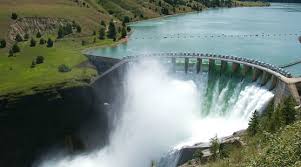
  2. Source: The source of hydro energy is water .This energy are produced by water dam, preserver, mountain rivers, water fountains.
  3. Production: To produce this energy, the following speed of water should be very high. The water flow will rotate the turbine which generate the electricity.
  4. Advantage:
  5. Water as a source of hydro energy is in abundant amount.
  6. During generation of hydro energy, there is no chance for the production of greenhouse gas. So, the environment is not affected.
  7. It produce a lot of energy.
  8.  The water is also not pollute during its production.
  9. Disadvantage:
  10. To need a lot of space for construct a damn and preserver. It is quite complex to set the need equipment to produce Hydro energy and need so much money.
  11.  The production process does not harm the environment but the construction can definitely affect the nature.
  1. Wind energy:
  2. Source:Obviously the source of this energy is wind.
  3. Production: It is produced by windmill. A heavy 3 blade rotor is fixed on the top of the tower.The speed of wind flow helps to make the rotor move which produce electricity.The windmill is usually setup on seashore,meadows or in any windy places.
  4. Advantage:
  5. The wind is abundant in amount. So, there is no running out of wind energy.
  6.  No CO2 is produced so no harming effect on the environment.
  7. Wind is not polluted during production.
  8. Disadvantage:

need lots of money equipment and manpower to set up a windmill.

  1. Biomass energy:
  2. Source: It is understandable that Biomass are living plant object.
  3. Production:The produce this energy the plant object are chosen.Electricity produced by burring those plant parts.
  4. Advantage: the non-edible and useless parts of plant are used as biomass energy.
  5. Disadvantages: Low amount of Co2 is produced but it does not affect environment that way.

TOP 5 PLACES TO VISIT IN UTTAR PRADESH

ABOUT UTTAR PRADESH :-

Uttar Pradesh acronym as UP is a Northern India state. It is very rich in its bio-diversity and cultural heritage. Hundreds of popular forts, buildings and historical monuments are located here. Every year millions and millions of tourists from various parts of India and around the world visit these places. Let us discuss some of these top places to visit.

TOP PLACES TO VISIT IN UP :-

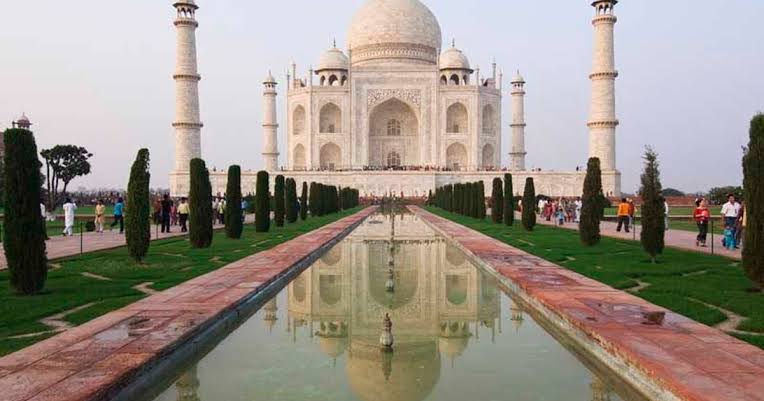
  • Taj Mahal – If you on a tour to UP and not visit here is something close to impossible. It is located in Agra district of UP. It was constructed by Mughal King Shah Jahan in the memory and is dedicated to his wife Mumtaz Mahal. It took around 20 years to complete it.
    It is built on the combined theme of Indo-Islamic and Mughal architecture. It has total 4 Minarets standing at the 4 corners of its base. The river Yamuna passes just nearby to it.
    The major attractions for tourists here are beautifully sculptured walls and tombs. It is a UNESCO World Heritage Site and is included in “7 Wonders in the World”. Every year 70-80 lakh tourists visit here.
TAJ MAHAL
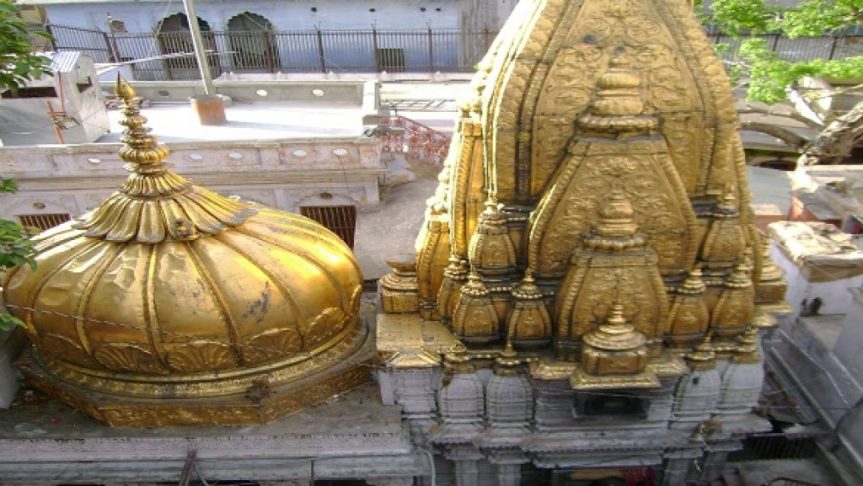
  • Kashi Vishwanath Temple – It is situated in Varanasi district of Uttar Pradesh. It is a very holy, well renowned and sacred place for the Hindus. It is one of the twelve sacred Jyotirlingas in accordance to the Hindu religion. It is dedicated to Lord Shiva.
    It was built by Raja Man Singh I and later redeveloped by Maharani Ahilyabai Holkar. It was destroyed by Mughal King Aurangzeb that is why Ahilyabai Holkar reconstructed it.
    It has find its place in many sacred Granths of Hindus and many great saints have visited here. Every year on Shivratri festival and even on other days, lakhs of devotees visit the temple
    .
KASHI VISHWANATH TEMPLE
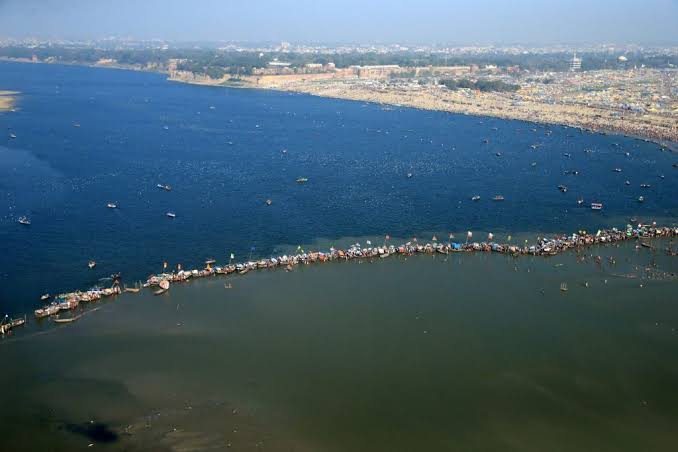
  • Triveni Sangam – It is a place in Allahabad district of Utter Pradesh where three rivers namely Ganga, Yamuna and mythical Saraswati meets.
    It is a sacred place for Hindus where they take the holy bath as according to many Hindu sacred books taking bath here flush away all sins.
    In a period of every 12 years, Kumbh Mela is held here in which lakhs of tourists and devotees from every corner of India and different parts of the world visit here.
TRIVENI SANGAM
  • Jhansi Fort – It is commonly known as Jhansi Ka Kila. It is located in Jhansi district of Uttar Pradesh. It was built in the year 1613 by Bundela King. Stone, lime and lead are majorly used to built it. It played a major role in the 18th century revolution by Rani Laxmi Bai for the independence of India from the Britishers. Every year Jhansi Mahotsav is organized in the month of January and Feburary in which prominent artists and musicians display their skills. It is a major attraction for tourists visiting Uttar Pradesh.
JHANSI FORT
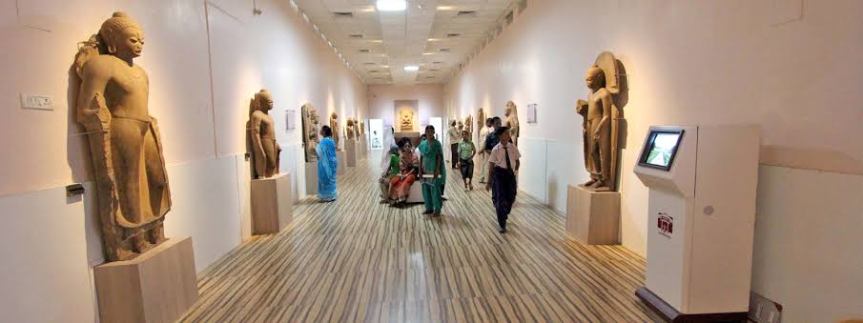
  • Sarnath Museum – It was established in the year 1910 by the Archaeological Survey of India to preserve their findings from various sites locates in Sarnath. Here majority of the findings are of Buddhist art and sculpture. Ashoka’s Lion Capital is the main attraction for tourists visiting here.
SARNATH MUSEUM

Links :-

https://tourism.gov.in/uttar-pradesh

BOOK REVIEW: MOUNTAIN OF MOON (CHANDER PAHAR)

The works of Bibhutibhushan Bandopadhyay may not be as widely, or regularly, translated into English but his literary reputation has been strengthened by several film adaptations. Two of his novels form the premise of Satyajit Ray’s much acclaimed Apu Trilogy, made in the 1950s. More recently, in 2013, his popular children’s novel, Chander Pahar (literally, the mountain of the moon), was turned into perhaps the most expensive Bengali film ever made.

The novel tells the story about an ordinary young Bengali man, Shankar Ray Choudhary, he adventures in Africa in the year 1909 and 1910. After graduating from college at 20th years old , his family’s financial struggles almost force him takes a job in a jute mill in Shyamnagar- a prospective he absolutely loathes.  By a stroke of love, he gets a job as a clerk at Uganda railway and rushes to the Africa without a second thought. After a few months laying rail tracks, he encounters the first of many dangers in pre-World War 1 Africa: a man eating lion. where he narrowly escapes a deadly Black Mamba. While at this post, Shankar encounters, rescues and nurses Diego Alvarez, a middle-age Portuguese explorer and gold/diamond prospector. Alvarez’s arrival becomes a turning point in Shankar’s life. While recovering, Alvarez describes his exploits in Africa with his friend Jim Carter. He explains that, lured by the prospect of a priceless yellow diamond from a Kaafi village chief, Alvarez and Carter searched for these yellow diamond caves, on the Mountain of the Moon (Chander Pahar) in the Richtersveld. Shankar, inspired by Alvarez’s exploits, resigns from his job and accompanies Alvarez to venture again for the mines. They meet hardships, like a racist gambler, legends about Dingonek the monster and later, a raging volcano. Eventually, they get lost in the forests where Alvarez is killed by the Bunyip. Demoralised, Shankar tries to return to civilization. He finds the Bunyip’s cave and the diamond mines by accident. Almost getting lost, he finds the remains of the Italian explorer, Attilio Gatti, and learns that the cave is in fact the diamond mine.

Leaving, he becomes lost in the deserts of kalahari and nearly dies of thirst. Fortunately, he is rescued by a survey team and taken to a hospital in salisbury, Rhodesia, from where he sets sail for home. Before going back, he writes his account in a newspaper, earning him money. He names the volcano after Alvarez. He ends the book saying that he will return to the cave one day with a large team, and continue the legacy of Alvarez, Carter, and Gatti.

The Mountain of the Moon, being ever so quaint and gripping, would be better remembered and endeared by readers (the assumption here is that they are Bengali) who encountered it in their childhood, perhaps buried away in the adventure section of their dusty school library. Still, the adventures of Shankar who, armed with erroneous maps and supplies of baboon ham and coffee, seeks to make his mark in an untamed land make for an interesting read.