Maintaining personal hygiene is essential for more than one reason; social, health, personal, psychological or just as a way of life. Maintaining a good standard of hygiene helps keep infections, illnesses and bad odors at bay. The importance of hygiene should be taught from an early age to help cultivate good habits. Personal hygiene can be defined as an act of maintaining cleanliness and grooming of the external body. Maintaining good personal hygiene consists of bathing, washing your hands, brushing teeth and sporting clean clothing. Additionally, it is also about making safe and hygienic decisions when you are around others.
One of the most fool proof ways to safeguard yourself and others from illness is through good personal hygiene. This means cleaning your hands, especially, but additionally your body. Good personal hygiene not only enhances your overall appearance, its importance is directly related to prevention of diseases, infections, and unpleasant odors.
Our comprehensive guide to help you stay healthy through good personal hygiene from healthy hand washing to all your need to know about skin we’ve got healthy personal hygiene covered from top to toe!
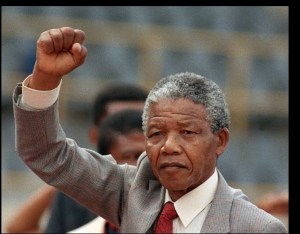
Rolihlahla Mandela was born in the village of Mvezo, in the Eastern Cape, on 18 July 1918. His mother was Nonqaphi Nosekeni and his father was Nkosi Mphakanyiswa Gadla Mandela.
Hearing the elders’ stories of his ancestors’ valour during the wars of resistance, he dreamed also of making his own contribution to the freedom struggle of his people.
EDUCATION
He attended primary school in Qunu where his teacher, Miss Mdingane, gave him the name Nelson, in accordance with the custom of giving all schoolchildren “Christian” names.
He completed his Junior Certificate at Clarkebury Boarding Institute and went on to Healdtown, a Wesleyan secondary school of some repute, where he matriculated. Mandela began his studies for a Bachelor of Arts degree at the University College of Fort Hare but did not complete the degree there as he was expelled for joining in a student protest.He completed his BA through the University of South Africa and went back to Fort Hare for his graduation in 1943.
Meanwhile, he began studying for an LLB at the University of the Witwatersrand. By his own admission he was a poor student and left the university in 1952 without graduating.He only started studying again through the University of London after his imprisonment in 1962 but also did not complete that degree.
In 1989, while in the last months of his imprisonment, he obtained an LLB through the University of South Africa. He graduated in absentia at a ceremony in Cape Town.
JOINED THE POLITICS
Mandela, while increasingly politically involved from 1942, only joined the African National Congress in 1944 when he helped to form the ANC Youth League (ANCYL). Mandela rose through the ranks of the ANCYL and through its efforts, the ANC adopted a more radical mass-based policy, the Programme of Action, in 1949.
A two-year diploma in law on top of his BA allowed Mandela to practise law, and in August 1952 he and Oliver Tambo established South Africa’s first black law firm, Mandela & Tambo.
At the end of 1952 he was banned for the first time. As a restricted person he was only permitted to watch in secret as the Freedom Charter was adopted in Kliptown on 26 June 1955.
Mandela immersed himself in official talks to end white minority rule and in 1991 was elected ANC President to replace his ailing friend, Oliver Tambo. In 1993 he and President FW de Klerk jointly won the Nobel Peace Prize and on 27 April 1994 he voted for the first time in his life.
PRESIDENT
On 10 May 1994 he was inaugurated as South Africa’s first democratically elected President. True to his promise, Mandela stepped down in 1999 after one term as President. He continued to work with the Nelson Mandela Children’s Fund he set up in 1995 and established the Nelson Mandela Foundation and The Mandela Rhodes Foundation.
THE TRIAL AND THE RELEASE
Mandela was arrested in a countrywide police swoop on 5 December 1956, which led to the 1956 Treason Trial. Mandela and his colleagues in the Treason Trial were among thousands detained during the state of emergency.Days before the end of the Treason Trial, Mandela travelled to Pietermaritzburg to speak at the All-in Africa Conference, which resolved that he should write to Prime Minister Verwoerd requesting a national convention on a non-racial constitution, and to warn that should he not agree there would be a national strike against South Africa becoming a republic. After he and his colleagues were acquitted in the Treason Trial, Mandela went underground and began planning a national strike for 29, 30 and 31 March. On 11 January 1962, using the adopted name David Motsamayi, Mandela secretly left South Africa. He travelled around Africa and visited England to gain support for the armed struggle. He was charged with leaving the country without a permit and inciting workers to strike. While facing the death penalty his words to the court at the end of his famous “Speech from the Dock” on 20 April 1964 became immortalised:
“I have fought against white domination, and I have fought against black domination. I have cherished the ideal of a democratic and free society in which all persons live together in harmony and with equal opportunities. It is an ideal which I hope to live for and to achieve. But if needs be, it is an ideal for which I am prepared to die. ”
Why should we teach manners and etiquette in the classroom? Because kids need good social skills in order to succeed. If kids aren’t learning these basic skills at home, we need to be teaching them at school. Otherwise, through subtle social signals, the kids without manners will lose out and never know why.
And here’s a scary thought: students are learning manners from us whether we are teaching them or not. As Robert Fulghum (All I Really Need to Know I Learned in Kindergarten) said: Don’t worry that children never listen to you; worry that they are always watching you.
Where To Begin
Manners and etiquette include so many aspects of human behavior that you’ll need to determine which ones you want to focus on. Here are two simple behaviors you might start with.
1. BEING POLITE
Making an effort to be polite — smiling, saying “please” and “thank you,” holding the door for someone — goes a long way toward making and keeping friends and diffusing hostilities.
You might begin by asking students to give some examples of polite behavior. Have them demonstrate ways they have been polite and role-play situations in which they should make an effort to be polite.
Encourage them to practice in real life too. Be sure to notice when they do.
Discuss the outcomes of their practicing polite behavior. Ask students to describe any changes they feel in the classroom (or school, if everyone is working on manners and etiquette). Do they feel more comfortable, happier, safer? How do they feel when they are being polite? When someone is polite to them?
2. ACTING APPROPRIATELY FOR THE SITUATION
Behaving appropriately can help you succeed in reaching your goals — whether you want to get better grades; get a job and get promoted; or get invited to social events.
Again, brainstorm with students to get them talking about appropriate behavior for various settings. Discuss appropriate behavior for conversations, including listening when someone is speaking to you, speaking when spoken to, not talking about private things in public, looking at the person you are speaking with (I know the cultural implications, but not explaining to students what some people expect of them is doing them a disservice).
Have students role-play conversations with their peers and adults, focusing on making small talk about appropriate, positive topics, giving a compliment, and receiving a compliment graciously.
Ask students to suggest ways to remember to smile, stand up straight, or get rid of the chewing gum when they want to be taken seriously.
We Owe It To Our Kids
We owe it to our kids to teach them manners and etiquette. If we truly want to give all students an opportunity to succeed, we must stress the importance of acceptable, desirable behavior that will help them get and keep jobs, friends, and family. Someone needs to tell them.
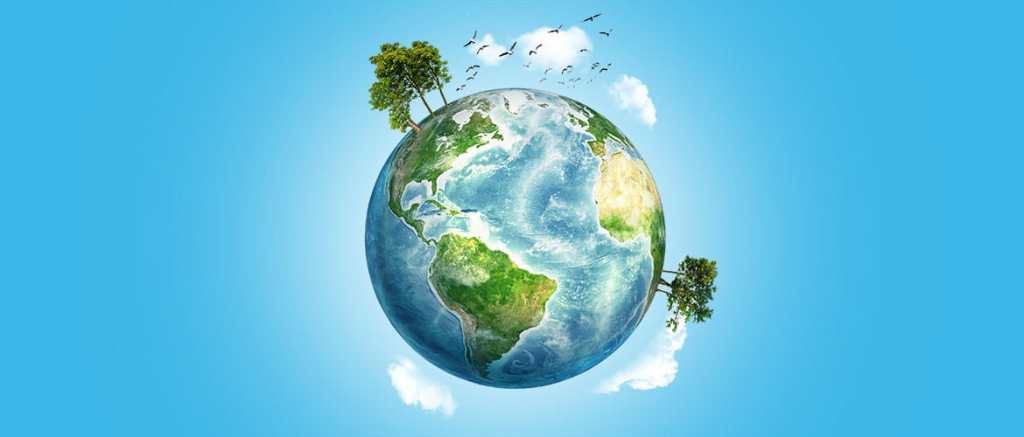
All living things that live on this earth comes under the environment. Whether they live on land or water they are part of the environment. The environment also includes air, water, sunlight, plants, animals, etc.
Moreover, the earth is considered the only planet in the universe that supports life. The environment can be understood as a blanket that keeps life on the planet sage and sound.
Importance of Environment
We truly cannot understand the real worth of the environment. But we can estimate some of its importance that can help us understand its importance. It plays a vital role in keeping living things healthy in the environment.
Likewise, it maintains the ecological balance that will keep check of life on earth. It provides food, shelter, air, and fulfills all the human needs whether big or small.
Moreover, the entire life support of humans depends wholly on the environmental factors. In addition, it also helps in maintaining various life cycles on earth.
Most importantly, our environment is the source of natural beauty and is necessary for maintaining physical and mental health.
Benefits of the Environment
The environment gives us countless benefits that we can’t repay our entire life. As they are connected with the forest, trees, animals, water, and air. The forest and trees filter the air and absorb harmful gases. Plants purify water, reduce the chances of flood maintain natural balance and many others.
Moreover, the environment keeps a close check on the environment and its functioning, It regulates the vital systems that are essential for the ecosystem. Besides, it maintains the culture and quality of life on earth.
The environment regulates various natural cycles that happen daily. These cycles help in maintaining the natural balance between living things and the environment. Disturbance of these things can ultimately affect the life cycle of humans and other living beings.
The environment has helped us and other living beings to flourish and grow from thousands of years. The environment provides us fertile land, water, air, livestock and many essential things for survival.
Looking Glass, a producer of holographic displays, has announced the development of two variants of their second-generation holographic display. Looking Glass has a video on its website demonstrating the capabilities that consumers may anticipate from the two new devices, the 4K Gen2 and the 8K Gen2, which are both powered by the company’s unique light-field technology.
The term “Through the Looking-Glass, and What Alice Found There” is derived from another word for a mirror, which was made popular by Lewis Carroll’s “Through the Looking-Glass, and What Alice Found There.” In reality, they resemble the shoebox dioramas made by elementary school children, albeit the images in the box are computer-generated in this case.
Looking Glass Portrait, the company’s first-generation holographic display, will be updated with the new goods. These were available for as cheap as $249 through a Kickstarter campaign. The second-generation gadgets are significantly more expensive, costing $3,000 for the 4K model and $17,500 for the 8K model.
The second-generation versions are a size and quality increase rather than a technological upgrade. The Portrait’s display is 7.9 inches, while the 4K version is 15.6 inches, and the 8K version is 32 inches. The two new models are both smaller and lighter, with ways for reducing ambient reflections.
All three of the company’s gadgets can transform and display images taken with a smartphone (through the Looking Glass app) into 3D pictures or movies that appear to be taken by a moving camera. The gadget may also be used to make and display 3D items; in the introduction video, they are seen designing and displaying a new shoe. In an animation, the screens may also be utilized to build and show 3D characters. All three devices run the HoloPlay Studio software from Looking Glass.
The devices operate with 3D applications such as Unity, Unreal Engine, and Blender, allowing users to generate a wide range of content. Users can also share their material with other Looking Glass users. The Looking Glass website now sells both of the new second-generation gadgets directly.
The firm sees the Portrait as a type of ambassador for its technology, especially given how difficult it was to get the systems in front of potential consumers last year. I’ve seen a few of Looking Glass’ earlier systems in person, and I can tell you that the impact isn’t quite the same over Zoom. As it strives to meet demand and overcome global supply chain difficulties, Looking Glass claims to have sold 11,000 devices and is delivering “thousands” each month.
“I think of it as their first chance to acquire their holographic display without having to gain consent from their boss,” says CEO Shawn Frayne. “Someone is interested in it, so they order it, and it meets or surpasses their expectations, and they proceed from there. The Portrait has a very high-quality level, and the larger pieces are a larger format variation of that quality.”
The new models will succeed their predecessors, which were essentially development units rather than mass-market goods (though the company will continue to offer support). In addition to being less expensive, the second-generation devices are lighter and have better visual quality than their predecessors, especially at the edges, where holographic displays often have problems.
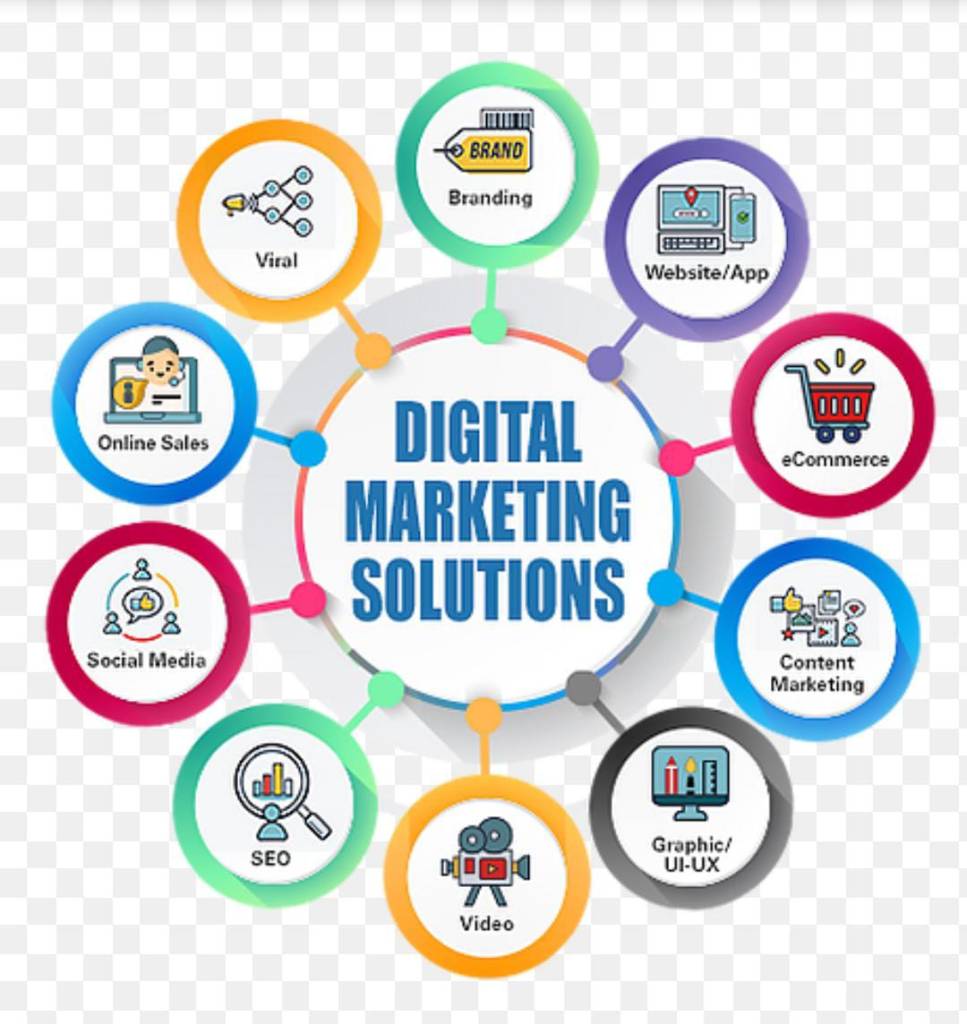
Digital Marketing refers to advertising delivered through digital channels such as search engines,websites,social media, email, and mobile apps.Digital Marketing -in other words, any form of marketing that exists online.Digital marketing helps you reach a larger audience than you could through other traditional methods, and target the prospects who most likely to buy your product or service.
BENEFITS OF DIGITAL MARKETING
You can target only the prospects most likely to purchase your product or service.
It’s more cost effective than traditional marketing methods.
Digital marketing lets you outrank bigger players in your industry.
Digital Marketing is measurable.
Digital Marketing
Types of Digital Marketing
Social Media Marketing: Today’s consumers are highly addicted on social media platforms such as Instagram, facebook, LinkedIn, snapchat etc.This is why it is essential that brands are active across accounts.
Influencer Marketing:Brand can reach these influencer followers with branded content and offers.Many marketers have found success with influencer marketing.
Email Marketing:If an individual has interacted with a few of your branded touchpoints – like an email offer for 10 percent off the items they have been considering, or free shipping – that may be what ultimately brings about a conversion. Nearly 60% of consumers say that email plays a role in their purchase decisions.
Content Marketing:Content marketing allows marketing teams to be proactive in answering their users’ questions. Marketing teams create content, videos, and other assets to answer questions or provide context to consumers throughout the three stages of the buyer’s journey:
The awareness stage: Buyer realizes they have a need
The consideration stage: Buyer determines a course of action to meet this need
The decision stage: Buyer decides on a product / service to purchase to meet the need
5.SEO:Search engine optimization often goes hand in hand with content marketing.Marketing team wants to ensure their article appears in those top results. This is done by optimizing content for user experience and ensuring the technical elements are in place to enable search engine crawlers to easily find and index this content. 6.Pay-Per-Click:Pay-per-click is a form of paid advertising that allows marketing teams to essentially purchase traffic to their website. Marketers place ads on websites or search engines such as Google and Microsoft Bing, and pay a fee each time the ad is clicked on. These ads often appear at the top of the search results page, andare typically determined by bids on specific keywords, while banner ads on websites usually have set prices. 7.Affiliate Marketing:Affiliate marketing is similar to referral programs, it involves working with outside individuals or companies under the agreement that they promote your product in exchange for a commission from each sale that can be attributed to their efforts. 8.Mobile marketing:Mobile marketing initiatives can include many of the digital marketing strategies mentioned above, and typically leverages a combination of text messages, social media, email, push notifications, and mobile applications. The importance of mobile marketing is rising, as it is expected that by 2024, the number of mobile shoppers will rise to approximately 187.5 million users.
Rate this:
360 Wander Writer
Welcome to Fantasy World
Cartoons play a major part of our happy childhood moments. Not only childhood they also make the later parts of life happy. It has fan base from all age groups. Cartoons are usually of illustrations . Those are drawn out of free hand drawing during the early periods of cartoon birth. They are also sometimes animated . It is a motion of picture that relies on a sequence of illustrations for its animation. The person who creates such cartoons are know as cartoonist and in a second sense they are know as animator.
The first cartoon was created by Emile Cohl, a French artist in the year of 1908. It was released by the Gaumont company in Paris . This is considered to be the worlds first animated cartoon. The name of the cartoon was ‘Fantasmagorie’. It means “a constantly shifting complex succession of things seen or imagined.” It was released on August 17 , 1908. Thomas Nast a German-born American editorial cartoonist is considered to be the “Father of the American Cartoon“. Its popularity began with the sound cartoons in 1928 and gradually ended in the late 1960s , which was replaced by television animated cartoons, which were produced on a cheaper budget. Mickey Mouse is one of the all time fame and favorite cartoon of all. This cartoon first released in 1928 and even now, it’s still a major hit.
Comic books
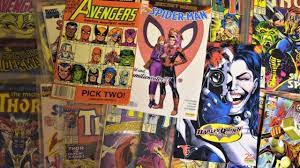
These cartoons in the form of magazine release is referred to as Comic books. The Swiss schoolmaster Rodolphe Töpffer ,a Swiss school master(1799–1846) is credited with the publishing of Comic first. Most of them agree that it started booming with the launch of Superman in the year of 1938. The term ‘Silver Age‘ refers to a general time period in which the comic books were originally available.
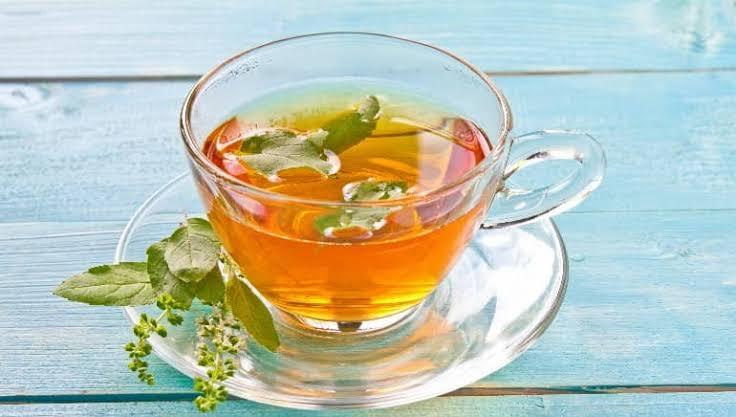
So in the previous article we have discussed about the new variety of tea that are not actually tea but called so. Herbal teas are not true teas as they are not brewed from the leaves of the Camellia sinensis plant. They are infused from fruits, flowers and plants. However, what makes them healthy is the absence of caffeine and presence of high amount of antioxidants.
Some of the types included :
Tulsi tea
Tulsi or the holy basil is famous worldwide for its innumerable properties. It is called the “Queen of Herbs” as it is bestowed with a myriad of complex biochemical compounds including eugenol, urosli acid, carvarcol, apigenin, luteolin and other flavonoids. Moreover, its also imbued with essential nutrients like vitamin A, C, calcium, zinc, iron and chlorophyll which is valuable in healing the body and mind. Tulsi tea, infused from dry or fresh leaves has various anti-inflammatory, antioxidant, antidiabetic, anticancer, antimicrobial and radioprotective properties. It is also considered a tonic for the body, mind, and spirit.
Chrysanthemum tea
Chrysanthemum tea is one of the most popular flowers teas in China, infused from its dried flowers. Studies showed it has a strong antioxidant activity and may help fight free radicals. It’s used for its cooling effect, especially during warm season, for potential sedative effect and lowering blood pressure. Chrysanthemum tea is rich in potassium, which helps reduce the risk of serious health conditions like cancer, diabetes, stroke, and heart disease. It is super rich in beta-carotene and vitamin A, that helps in eliminating oxidative stress and damaged cells in organ systems around the body and promote eye health.
Eucalyptus tea
Eucalyptus tea is infused from its dried leaves. It a famous herb native to Australia, providing numerous health benefits. The consumption of fresh or dried leaves is considered toxic because its hard to digest. However, it can be consumed in the form of tea to tap to its various benefits. The main flavonoids in eucalyptus include catechins, isorhamnetin, luteolin, kaempferol, phloretin, and quercetin. Diets rich in these compounds are known to protect against certain cancers, heart disease, and dementia. It possesses multiple antiseptic and antibacterial properties. Hence, they can be used for different breathing and lungs related problems–from treating the common cold and flu to sore throat and pneumonia.
Blue tea
Blue tea has been around in the market for ages. It is infused from dried flowers called Asian pigeonwings, bluebellvine, blue pea, butterfly pea, cordofan pea or Darwin pea. However, they are becoming more easily and widely available for consumption in stores due to its popularisation through travel blogs and shows. The tea is said to have stress busting effects that may also help reduce symptoms of anxiety. It contains anthocyanin, a compound known to increase blood circulation in the head and therefore helps maintain a healthy scalp. Blue tea has more antioxidants than green tea, hence they protect the body against free radical action and promote anti-ageing.
Guava leaf tea
Guava leaf tea is infused from the young leaves of the guava tree. It has in been a part of traditional medicine for centuries in Mexico and parts of South America. The leaves are a powerhouse of antioxidants like vitamin C and flavonoids such as quercetin. The polyphenols in guava leaf tea have been shown to regulate the absorption of carbohydrates from food and hence are beneficial for diabetic patients. The contain flavonoids (antioxidants), tannins, and acids (gallic and betulinic) that has various anti-bacterial and anti-fungal properties.
When we do vigorous activity , viz., participate in long distance races , or play football , hockey , etc., after some time we feel a sense of discomfort . We feel some problem while inhaling . We feel like stopping the activity immediately . But , if we make up our mind to continue that activity then we feel relaxed and comforted . We do not face any problem while intialing . This stage is termed as Second Wind . Discomfort , which we face in the beginning , includes the following symptoms .
Breathlessness
Pain in chest
Headache
Pain in the muscles , which are involved in that activity
Feeling of reduced physical coordination
Diminished neuro- muscular coordination
Feeling of dry throat
But , in spite of these symptoms of discomfort , we should continue the activity . Automatically , after sometime , discomfort will be no longer these . So the phenomenon of recovery from discomfort at early stage is known as second wind . All the symptoms are eliminated automatically . The stage of second wind comes to the beginners but the experienced athletes generally do not feel it . If they feel it , they feel it at low level . Second wind also depends upon the climatic conditions . It has been observed that in cold climate , athletes do not face this stage . It is only faced if activity is too much vigorous .
Changes in Our Body Due to Second Wind
During the stage of second wind some changes in our body occur which are stated below .
Breathlessness Disappears : Breathlessness disappears after second wind . Rate of respiration become less . Supply of oxygen becomes normal . The accumulation of CO2 also become normal .
Muscles become Normal : After the feeling of second wind , muscles become normal . There is no pain in the muscles . The swelling of muscles begins to diminish . The temperature of muscles increases .
Change in Blood Circulation System : In the stage of second wind , the waste products like lactic acid , acid phosphate , uric acid , etc., accu
Being a part of a mixed economy , where politics tend to exploit the peace between different religions and so on …….. .
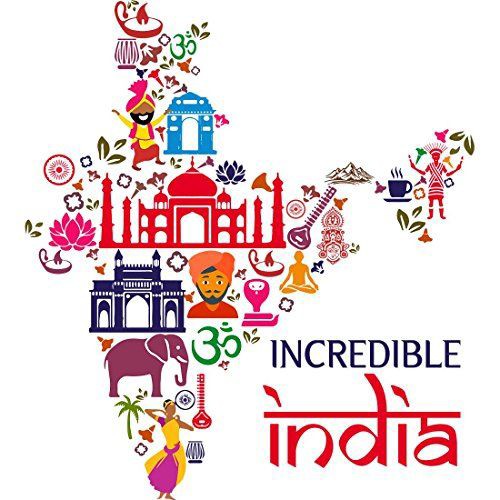
“India was the motherland of our race, and Sanskrit the mother of Europe’s languages: she was the mother of our philosophy; mother, through the Arabs, of much of our mathematics; mother, through the Buddha, of the ideals embodied in Christianity; mother, through the village community, of self-government and democracy. Mother India is in many ways the mother of us all.”
Will Durant, American historian
And now you want to know why I am being so dramatic over such things . Well , if you want to know than start reading the editorial .
Introduction
Indians say it is important to respect all religions, but major religious groups see little in common and want to live separately
More than 70 years after India became free from colonial rule, Indians generally feel their country has lived up to one of its post-independence ideals: a society where followers of many religions can live and practice freely.
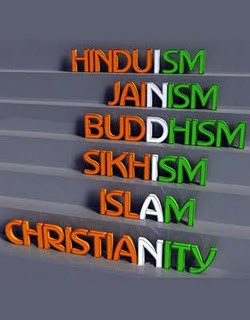
Religion has historically influenced Indian society on a political, cultural and economic level. There is a sense of pride associated with the country’s rich religious history as the traditions of Hinduism, Buddhism, Sikhism and Jainism all emerged out of India. Moreover, while a majority of people in India identify as Hindu (79.8%), the medley of religions that exist within the country continually impact contemporary society.
Census
The 2011 Indian census indicated that 79.8% of Indians identified as Hindu, 14.2% identified as Muslim and 2.3% identified as Christian. A further 1.7% of the population identified as Sikh, 0.7% identified as Buddhist and 0.37% identified as Jain. Due to the massive population size of India, religious minorities still represent a significant number of people. For example, although only 0.37% of India may identify with Jainism, that still equates to over 4 million people. While not all religions in India can be discussed in detail, the following provides an overview of the major religions in the country as well as sizable religions that originated in India.
Social beliefs
“India has two million gods and worships them all. In religion all other countries are paupers; India is the only millionaire.”
Mark Twain
Karma, Acceptance and Personal Choice . Many Indians tend to have a sense of acceptance towards one’s life position or a belief that, due to actions in one’s past life, good or bad personal circumstances are deserved. This attitude partly stems from religious ideas such as ‘karma’ (the idea that one’s actions will affect their current or future life) and ‘samsara’ (the cycle of rebirth).
The interplay of these social, cultural and religious factors allows people to be accepting of life events and trajectories. However, this is not to be interpreted as Indians being unwilling to take responsibility for life circumstances. Many often contemplate how their actions may impact their future and make decisions accordingly. Some of India’s youth are challenging a fatalistic perspective by asserting their free will to choose their vocation, spouse and other life factors. Indeed, as social mobility becomes more common, there is a growing belief that one can change their circumstances.
It’s Role
Religion plays a major role in the Indian way of life. Rituals, worship, and other religious activities are very prominent in an individual’s daily life; it is also a principal organizer of social life. The degree of religiosity varies amongst individuals; in recent decades, religious orthodoxy and observances have become less common in Indian society, particularly amongst young urban-dwellers. As of the politics , they play with religion , people’s belief and with their trust .
We live in a society where our everyday behaviours, thoughts and emotions are shaped by the patriarchal notions, that prevails in the structure of the society. A woman at every stage of her life, in fact even before her birth, was being subjected to the evils of the male-dominated society. Patriarchy is unique, as this oppression is prevalent globally but still many of its aspects are undermined by the society or remain hidden in the structure such that it was noticed by none, even man of the women who are subjected to it fails to notice. In Indian society, in particular, the patriarchal norms and values are also a result of caste and religious inequalities that haunts the society. The most familiar example is the restriction of women entry into Sabarimala Temple in Kerala.
Normalisation of Patriarchy
The transmission of patriarchal values and ideas from one generation to another occurs in the socialisation process. Socialisation is the process of internalising the norms and ideologies of society. During and at the end of the process, the individuals, be it men or women adjusts to the group or the society from which they socialised, and learns to behave in a manner as approved by the society. This socialisation process forms the basis for the normalisation of patriarchy in society. So, any attempt for a social change that is sustainable and egalitarian, should start from the socialisation process.
Primary and Secondary Socialisation
Socialisation occurs at two levels – primary and secondary.
In primary socialization, a child accepts and learns a set of norms, values, attitudes. For example, if a child sees his or her mother expressing hatred towards anybody, the child may think this behaviour is acceptable and could continue to practice hatred towards others.
In secondary socialization, the child learns what is the appropriate behaviour as a member of a smaller group in a larger society. Secondary socialization takes place outside the home. The children and adults learn how to act in an appropriate way in a situation. Schools require very different behaviour from the home, and children must act according to new rules.
The Chain of Transmission
So, the social institutions involving in the process of socialisation- both primary and secondary-should undergo a radical change from the present, in their approaches of socialising the new generation. Socialisation by any of these institutions is influenced by the patriarchal values of the society. Identifying the patriarchal values and norms in these institutions and replacing them with egalitarian value will break the transmission chain that helps in carry patriarchy across generations.
Let us see with some examples,
The key social institution in the primary socialisation process is the Family. The behaviour of the parents has a great influence on the child. In Indian society, there is a notion that males are breadwinners and women are homemakers, which itself is a result of the patriarchal norms. So, any child witnessing his/her father going to job and mother doing. Thus, the occupational segregation that we see in the labour market has its root in the Family. During this, the child ability to think critically about such a notion is not developed. Hence the child accepts this uncritically. This is a vicious cycle – the socialisation process leads to an unequal labour market, the unequal labour market again has its worst effects on the socialisation process.
Even the toys are given to the girls and boys during their childhood also has their effects. Often the boy child was given a bike or car toy, whereas the girl child was given a barbie doll-like toys. Over time this will give a superiority notion to the boy child, against the other gender as possessing a bike or car was often seen in terms of the status of a family in our society and is often associated with boys.
Schools are important secondary social institutions. The present arrangement in schools and colleges is such that the patriarchal notions went unnoticed and hence normalised. Even women who are subjected to this, often accept this as a legible one. Let us look at this with a simple example
Even today many school books of lower classes contain a picture of a family where the father was depicted as going to a job and the mother was doing household chores. Here comes the coincidence of the primary and secondary socialisation. As mentioned above a child sees the same kind of situation as in the book, in his/her home. This makes the child believes that this is how society operates.
But a big relief is that there are men and women who, over the years become aware of this pattern of socialisation and absolves themselves from the clutches of the patriarchal norms of the society and are being gender-neutral.
Breaking the chain
Redefining the socialisation process will be the solution.
Primary Socialisation: Make your child believe that the world is for everyone through your actions. A working male in a household, cooking for some time with his wife or helping her in her work will make a great difference to the child. This develops a sense in the child that no job is restricted to no one and no one is restricted from doing any job.
Secondary Socialisation: Making the words and pictures in the school books of lower classes gender-neutral, helps a lot. Say a picture of a family can be shown as a father and mother doing household chores together. This will make the child thinks that why the family shown in the book and his/her own family was totally different (in the case of a household where the father goes to job and mother do household chores).
The selection process in any kinds of posts in schools or colleges should not be based on gender. This makes every student (boy/girl/another gender) work together under the leadership of another student (boy/girl/another gender).
Thus, a permanent social change is in the hands of future generations.
I am not sure whether the youths and students are the future of India. But every youth will be a parent in the future. So, the responsibility of these youths/parents should be to make their child, being men or women, not to act as men or women.
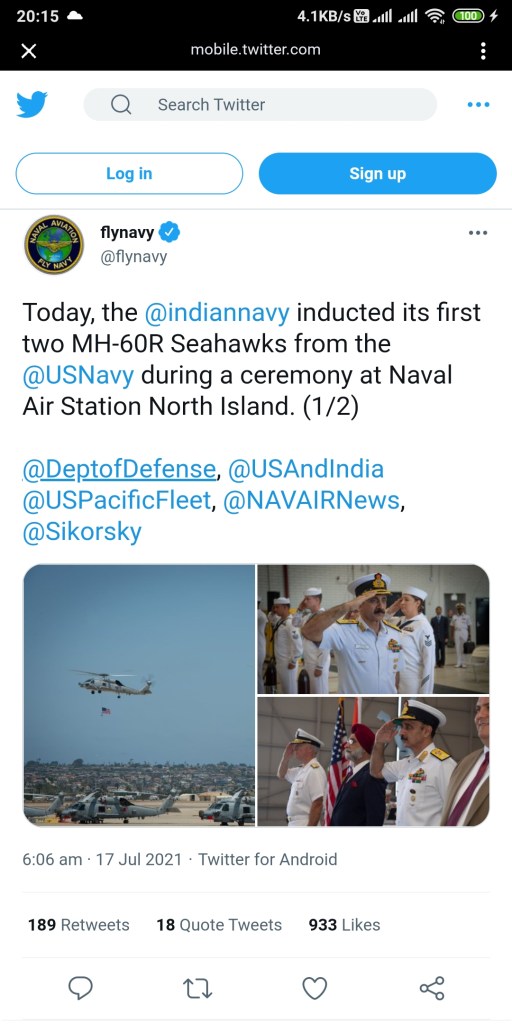
MH-60R, the world’s most advanced maritime helicopter was inducted to Indian navy by the US navy today. This is yet another sign of strengthening India-US defence relationship.
The ceremony procuring the first two MH-60R multi role helicopters was held at the Naval Air Station North Island or NAS North Island, San Diego on Friday. It was attended by India’s ambassador to the US Taranjit Singh Sandhu.
The Indian navy is procuring 24 helicopters in total for $2.4 billion. Ambassador Sandhu noted in his tweet that the trade has expanded to over 20 billion dollars in the past couple of years. “India US friendship is touching skies”, he tweeted.
There are over 300 Seahawks in service worldwide including US, Danish, Australian and Saudi Arabian navies. It was introduced in US navy in 2006. The procurement of 24 Seahawks was cleared by the fence ministry on August 25, 2018.
Features
Skirosky Aircraft developed the MH-60R Seahawk multi-mission helicopter also known as “Romeo”, inorder to replace the US Navy’s SR-60 & SH-60 helicopter fleet.
The MH-60R features a spacious cabin to fit 4 flight crew and five passengers. Dimensions of cabin are 3.2m long, 1.3 m high and 1.8 m wide. The helicopter is equipped with digital open architecture, night vision, mass memory data storage, flight management computer and operations software.
The helicopter can be armed with Mk 54 lightweight torepodoes for ASW missions. A number of weapons can be carried including eight Hellfire antisurface missiles and .50 calibre guns for ASuW missions.
The MH-60R is tolerant against small arms fore and medium calibre high-explosive projectiles. The energy absorbing landing gear offers increased survivability in the battlefield.
The 24 procured helicopters would be modified with several India-unique equipment and weapons.
“The induction of these helicopters would enhance the Indian Navy’s three dimensional capabilities…. Inorder to exploit these porent helicopters the first batch of Indian crew is presently undergoing training in the US” said the spokesperson
The Indian law prior to the Nirbhaya Incident took into account only acts of penile-vaginal intercourse within the definition of rape and forcible acts of penetration of vagina, mouth, urethra or anus through penis or an inanimate object did not fall within the definition of rape. Many rapists were not prosecuted because there was no law to punish such acts. In 2013, the definition was expanded to consider rape as any acts like penetration by penis, or any other object or any part of body to any extent, into the vagina, mouth, urethra or anus of a woman or making her to do so with another person or applying of mouth to sexual organs without the consent or will of the woman constitutes the offence of rape.
Section 53A of the Code of Criminal Procedure of the Indian law lays down certain provisions for medical examination of the accused. Section 164A of the Code of Criminal Procedure deals with the medical examination of the victim.
The revised statutes of 2013 Indian law, in section 376A, mandates minimum punishment in certain cases. For instance, if the sexual assault inflicts an injury which causes death or causes the victim to be in a persistent vegetative state, then the convicted rapist must be sentenced to rigorous imprisonment of at least twenty years and up to the remainder of the natural life or with a death penalty. As well, in May 2013, the Supreme Court of India held that the two-finger test on a rape victim violates her right to privacy, and asked the Delhi government to provide better medical procedures to confirm sexual assault.
The Indian Penal Code, Section 377, is the only section that criminalizes all acts of non-consensual carnal intercourse, ncluding male-on-male rape. This section penalizes both consensual and forced sodomywith 10 years minimum to life imprisonment. The Delhi HC stated that Section 377 of Indian Penal Code will continue to govern non-consensual penile, non-vaginal sex and penile non-vaginal sex involving minors. The section can be evoked to punish sodomites, pedophiles and zoophiles.
The rape definition in Section 375 of Indian Penal Code does not include rape in which males are the victims. The Indian government in 2012 decided to change the definition of “rape” as forcible penetration to include male victims, but was criticized on the grounds that this would further harm the interests of female rape victims.
Prevention of Rape:-
On the Street
Travel in well-lit, well-travelled areas.
If possible, walk in pairs.
Walk facing traffic.
Plan your route ahead of time.
Walk assertively and maintain a sharp awareness of your surroundings.
If you sense you are being followed, immediately cross to the opposite side of the street and head for the nearest open business or occupied dwelling.
In a Social Situation
When first meeting a new friend, exchange phone numbers, not addresses.
Keep someone apprised of your whereabouts when dating a man for the first time.
It is a good idea to refrain from going to bars and clubs alone. However, should you choose to do so, have your own transportation available, and use it.
Don’t allow alcohol or drugs to cloud your common sense.
If a man persists in asking for your phone number, and you feel it would cause a problem should you refuse, or give him a fake number.
Know what your personal social standards are and stick to them. Don’t allow your judgment to be overruled by an aggressive pursuer.
Passive Self Defense
Talking your way out of a situation.
Telling the rapist you’re pregnant, menstruating, or afflicted with a communicable disease can be an effective ploy.
Faking submission and waiting for an appropriate opportunity to make an escape.
Active Self Defense
If you choose to fight, fight effectively. A half-hearted attempt at resistance could be worse than no resistance at all.
Before initiating a physical defense, you should be aware of your capabilities – both physical and mental. If you cannot imagine yourself exerting whatever force necessary to ward off an attacker, then perhaps a more passive approach is more viable for you.
Have some idea of what you intend to do should you be attacked. If you have given prior thought to the matter, you will be better prepared to avoid debilitating panic.
Self-defense classes aimed at teaching everyday defensive maneuvers can help build confidence.
Don’t underestimate the power of your voice as an effective defensive tool. If you feel your voice may fail you when you need it most, practice screaming.
Almost of all major tests used to measure intelligence have been constructed so that there are no overall score differences between males and females.But there is little difference between the average IQ scores of men and women.Early studies show that male brains are 8 to 13 percent larger in volume than female brains,however this has been since attributed to difference in body size.Women have greater cortical thickness, and cortical surface area(controlling for body size) which leads to smaller brain size.
According to a research, it is found that women had greater blood flow in the prefrontal cortex(is a part of the brain which includes complex behaviour, including planning,and greatly contributes to personality development) compared to men, which might help them to be stronger in the aspects of life.This shows that girls are stronger in empathy, collaboration, self control, and showing appropriate concern.












You must be logged in to post a comment.