E-CONTRACTS- EXPLAINED

INTRODUCTION TO E-CONTRACT

Since the internet is no more secluded for just mere communication or computing and analysing of data, online contracts are now the order of the day and there are no differences between online and offline contracts. Hence, online contracts are still contracts and all the rules of contracts will still apply.

The online contract formation uses a communication technology which involves numerous intermediaries such as Internet Service Providers (ISPs). Imagine a contract that an Indian exporter and an American importer wish to enter into. One option would be that one party first pulls up two copies of the contract, signs them and couriers them to the other, who in turn signs both copies and couriers one copy back. The other option is that the two parties meet someplace and sign the contract.

In the electronic age, the whole contract can be completed in seconds, with both parties simply attaching their digital signatures to an electronic copy of the contract. There is no need for delayed couriers and additional travelling costs in such a situation. There was initially a hesitation amongst the legislatures to recognize this modern technology, but now many countries have passed laws to recognize electronic contracts.

WHAT IS E CONTRACT?

E-contract is any kind of contract formed in the course of e-commerce by the interaction of two or more individuals using electronic means, such as e-mail, the interaction of an individual with an electronic agent, such as a computer program, or the interaction of at least two electronic agents that are programmed to recognize the existence of a contract[3].

E-contract is a contract modelled, specified, executed and deployed by a software system[4].

The 2 main parties to an e-contract are- The Originator and the Addressee.

– Originator according to the IT Act, 2008 is a person who sends, generates, stores or transmits any electronic message to be sent, generated, stored or transmitted to any other person and does not include an Intermediary.

An Addressee according to the IT Act, 2008 is a person who is intended by the originator to receive the electronic record but does not include any Intermediary

NATURE OF E-CONTRACT

1. The parties do not, in most cases, meet physically.
2. There are no physical boundaries.
3. No handwritten signature and in most times, no hand writing is required.
4. Since there is no utmost security, risk factor is very high.
5. Jurisdictional issues are a major setback on e-contracts in case of breach.
6. There is no single authority to monitor the whole process especially in shrink wrap contracts.
7. Digital Signatures are used and electronic records are used as evidences in court n when need arises.
8. The three main methods of contracting electronically are e-mail, World Wide Web (www), and Cyber contracts (Click to agree/online contract).
9. The subject matter includes:

(A). Physical goods, where goods are ordered onlineand paid over internet and physical delivery is made.

(B). Digitised products such as software which can also be ordered for.

(C). Services like electronic banking, sale of shares, financial advice etc.

ELEMENTS OF E-CONTRACTS

Since electronic contracts are presently taken as seriously as offline contracts, the same principles which apply to a valid contract will apply here. The law already recognizes contracts formed using facsimile, telex and other similar technology. An agreement between parties is legally valid if it satisfies the requirements of the law regarding its formation, i.e. that the parties intended to create a contract primarily. This intention is evidenced by their compliance with 3 classical cornerstones i.e. offer, acceptance and consideration.

A. OFFER

Under section 2(a) of The Indian Contract Act, speaks of offer. “When one person signifies his willingness to do or to abstain from doing anything with a view to obtain assent of that other to such act or abstinence, he is said to make a proposal[5] ”. Advertisement on website may or may not constitute an offer as offer and invitation to treat are two distinct concepts. Being an offer to unspecified person, it is probably an invitation to treat, unless a contrary intention is clearly expressed. The test is of intention whether by supplying the information, the person intends to be legally bound or not. When consumers respond through an e-mail or by filling in an online form, built into the web page, they make an Offer. The seller can accept this offer either by express confirmation or by conduct. When dealing with business websites, it is important to establish whether the content of that business website amounts to an “offer” or merely an “invitation to treat”. An invitation to treat is not capable of being turned into a binding contract by simply accepting its terms. Rather, it is an invitation to others to make an offer of their own. By contrast, an offer is an expression of willingness to enter into a binding contract with another party[6].

B. ACCEPTANCE.

One difficult task about entering electronic contract is to know when an agreement has been reached. Once an offer is accepted, a contract is concluded except the postal acceptance rule applies. The postal acceptance rule is an exception to the general rule that acceptance of a contract must be communicated to the offeror before a contract can be in existence. Under the rule, acceptance of a contract is said to occur at the time the acceptance is posted. Hence, the communication of acceptance is complete against the proposer when it is put in the course of transmission to him and as against the acceptor when it comes to the knowledge of the proposer, that is, when the acknowledgement enters into the into the designated computer resource. There is no disparity between Indian and Common law in this regard as seen in Lalman Shukla v. Gaurie Datta Sharma[7] where in spite of the fact that he found the boy whose uncle had promised Rs. 501 to anyone who finds was denied the reward seeing that he came to know only after finding the boy.

C. LAWFUL CONSIDERATION

The Indian Contract Act of 1872 reads that “

In the present scenario, once an item has been supplied and the price has been paid, the consideration is executed and the requirement is satisfied. Problems may arise at a time when the consideration is merely executory[10]. This arises when the seller’s computer has done no more than “promise” to supply that item. A key intention that lies behind such promises is, of course, the intention to be bound by that promise in other words, the intention to create legal relations. The Contract law cannot entirely apply in e-contracts as in sometimes when an autonomous computer is used.

D. LAWFUL OBJECT

The purpose of such contract must be a lawful one. Courts will not enforce contracts that are illegal or violate public policy. Such contracts are considered void. An agreement which calls for the commission of a crime is illegal and therefore void. For example, a person could not enforce an agreement with another party to burn a house down. Also, an agreement that calls for the commission of a civil wrong (such as a tort) is illegal and void.

E. COMPETENT PARTIES TO CONTRACT

It is generally accepted that both natural persons and legal persons are capable of entering contracts, Computers are clearly not natural persons ,and neither American nor English contract law, at present, deem them to be legal persons. Computers, therefore, are not capable of being parties to contracts. In our scenario, both the buyer and the seller are natural persons, and consequently, are capable of being parties to the transaction. The autonomous computer, however, clearly cannot be a contractual party as the law now stands.

F. FREE CONSENT

The consent of the both parties must be free from any deceit, mistake, fraud etc. E contracts can be broadly categorized into:

– Shrink Wrap Agreements
– Click Wrap Agreements

Shrink Wrap agreements are those which can only be read and accepted by the consumer after the opening of a particular product. The term is described after the shrink wrap plastic wrapping that is used to cover software or other boxes. Installing software from a CD into your PC is an example of a shrink wrap agreement.

Click Wrap agreements are mostly found in the software installation process. The user has to click either ‘Accept’ or ‘Decline’ to accept or reject the agreement respectively. These agreements lack a certain amount of bargain power. Choosing to make payments online or choosing to reject it is an example of using a click wrap agreement.

Either ways, the consent to such must be free. This is quite difficult to determine because sometimes the margin used to determine the strict rule of free consent gets narrower.

G. CERTAINTY OF TERMS

Keeping a record of the contract as agreed is vital. This can be difficult if there have been several email exchanges (perhaps each attaching documents intended to form part of the terms of the contract) including counter offers and negotiations between the contracting parties. As noted above, it may be difficult in such a scenario to determine who is the offeror and who has accepted the final offer, which may determine which party’s terms and conditions apply. In any event, it is important to ensure that the parties are clear on the content of the final contractual terms.
Rath Yatra: The world famous Cart Festival

Puri Jagannath Rath Yatra, 12 July, 2021

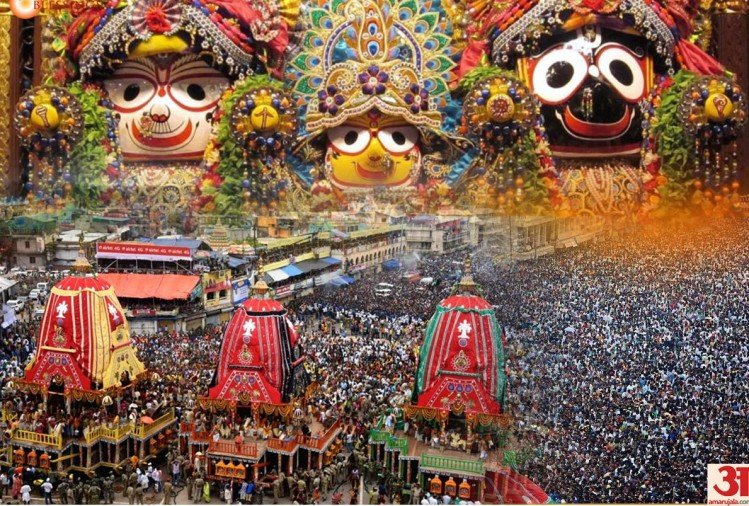
Rath Yatra, also known as “Car Festival” or “Chariot Festival” is an annual festival which takes place in Puri, Odisha, a state in India. It is famous for being a crowd puller. Every year millions of people arrive in the city to take part in the festival.

This Hindu festival is associated with Lord Jagannath, a form of Lord Vishnu (not to be confused with avatar).

Every year Lord Jagannath visits his birthplace- Gundicha temple, via Mausi Maa temple (maternal aunt’s temple).

The festival is about Lord Jagannath, his brother Lord Balaram, sister Goddess Subhadra along with the eternal wheel Sudarshan Chakra journey and visits to his birthplace. It is a seven days’ visit and on the last day when he returns home, he stops for a short while at his maternal aunt’s home, the Mausi Maa temple.

Each of the deities has a chariot of its own.

Lord Jagannath

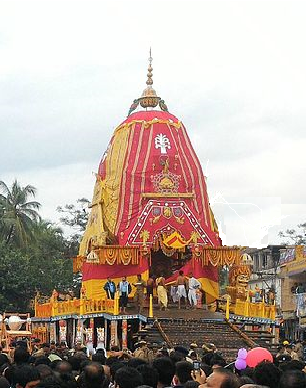
Lord Jagannath’s Chariot is the largest of all with 16 wheels and 4 white horses.  The name of the chariot is Nandighosha, also known as Garudadhwaja and Kapiladhwaja. The Chariot is also recognised by its red and yellow colour which are most commonly associated with Lord Vishnu among the Hindus. The guardian of the chariot is Garuda and the name of the charioteer is Daruka. The gatekeepers are Jaya and Vijaya. The Lord is accompanied by the deity Madanmohan. Among all the chariots Lord Jagannath’s chariot is the tallest since he’s the most powerful one even if he’s the middle one. The emblem of his flag is the Sudarshana Chakra.

Nandigosha Rath

Lord Balabhadra

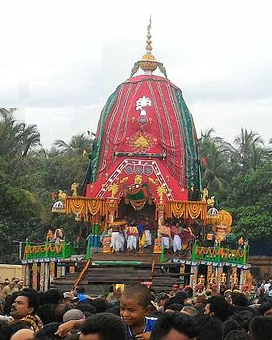
Lord Balabhadra is the second most powerful among the three siblings, hence the second-largest chariot. His chariot has 14 wheels and 4 horses. His chariot is recognised by the red and bluish-green colour combination and black horses. The emblem of the flag on His chariot is a palm tree. The guardian of his chariot is Vasudev and the charioteer is Matali. The gatekeepers are Nanda and Sunanda. His chariot is called Taladhwaja, also known as Langaladhwaja. He is accompanied by Ramakrishna.

Taladhwaja Rath

Goddess Subhadra

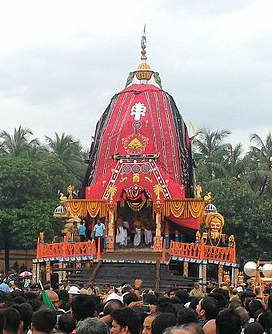
Goddess Subhadra is the sister. Along with her brothers, she too travels to Lord Jagannath’s birthplace in her red and black chariot, black being associated with the Goddess. Her chariot, Darpadalana, also known as Devadalana or Padmadhwaja has 12 wheels and 4 red horses. Her guardian is Jayadurga and charioteer is Arjun. She is accompanied by the eternal wheel, Sudarshana. The eternal wheel travels with Her, on Her chariot for Her safety. Her gatekeepers are Ganga and Jamuna.

Darpadalana Rath

The Yatra (The Journey)

The Rath Yatra takes place starts from a specific place and follows a fixed path. The procession progresses down the Bada Danda, a 3km long road. The chariots are drawn by the many devotees who assemble on this holy day at the Bada Danda. The deities reach their destination, the Gundicha temple, before nightfall. They stay in their respective chariots for the entire night and enter the temple the next day. For the following 7 days, they stay there after which they come back. On the day the deities return many rituals like Suna Besha take place.  

Once they return to their abode in Puri the Rath Yatra ends.  

Note: All images have been taken from https://en.wikipedia.org/wiki/Ratha_Yatra_(Puri)

Earthworm-Vermiculture

As organic matter acts as both the substrate and food in vermicomposting, and soil is not involved, only earthworms can be used in vermiculture.The growth of industries,urban cities and the ever increasing human population have led to an increased accumulation of waste materials.Waste materials introduced into the environment are of two types namely non-degradablr and degradable wastes.The disposal of these solid wastes remains serious challenge in most of the countries.

Vermiculture

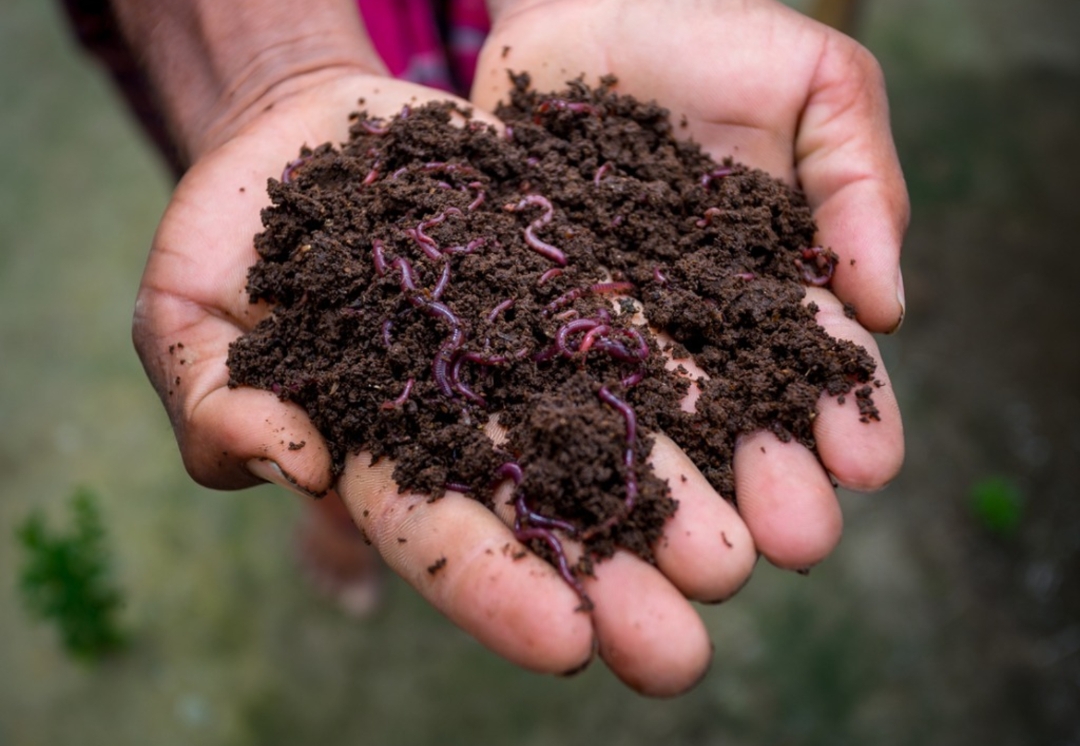
In recent years vermiculture has received much attention in many countries.The spiralling cost of fish meal and the low supply of soyabean meal are responsible for the utilization of earthworms as an alternative low cast protein meal in aquaculture and poultry industry.Further the worms also play an important role in waste disposal.They decompose natural organic wastes into rich compost fertilizer.A single earthworm can produce 1000-1500 offsprings in a year.2000 mature breeders can produce more than 1 million worms.

Culture of earthworms

The method of culturing earthworms can vary from place to place.A cultured worm must be able to adapt to substrates,grow fast and breed or multiply readily under controlled conditions.

A compost pile bed of 2.4 m long,1.2m wide and 0.6m deep appears to be very satisfactory for a population of more than 50,000 earthworms.The boxes can be made from wood to accommodate 5000 to 6000 worms.Soil, organic matter,manure,leaves,rice straw,dried water hyacinth,saw dust and any fermented substrate can be used as a culture medium to raise worms in boxes or containers.The worms in the worm beds can grow and reproduce faster if they are given sufficient food.Any decayed organic matter appears to be good food for worms but the feed should not be contaminated by detergents or insecticides.

Since the earthworms are rich in protein,fat, carbohydrate and Ash they are used as a feed component for fish,prawn and shrimp.They are also used as livestock feed in poultry industry.

Vermicompost

Many species of earthworms are easily adapted to agricultural wastes like after harvest strubble, sugarcane thrash,coir waste,dung of cow,horse,sheep and poultry droppings.The breakdown of these materials or the degrades of organic matter by worm activity is called ‘vermicompost’.It is a better source of organic manure.

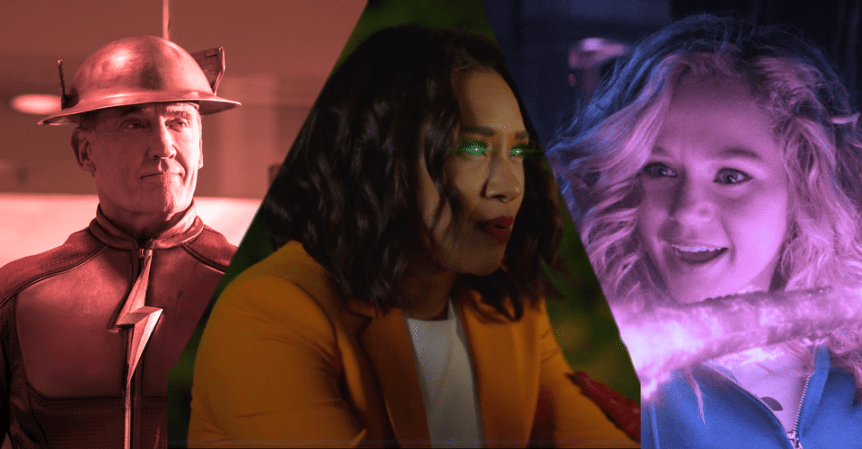
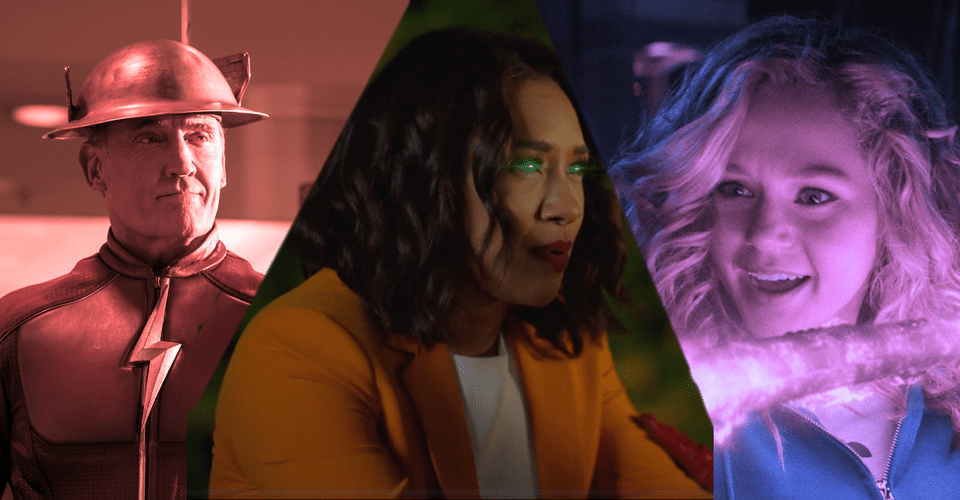
The Flash Theory: Iris Brings Back The Arrowverse Multiverse Post-Crisis

Warning! Spoilers ahead for The Flash season 7 episode 16, “P.O.W.”

The Flash season 7 is barreling towards its two-part finale and Iris West-Allen’s latest storyline could bring back the Arrowverse’s multiverse following its collapse in Crisis on Infinite Earths. Time and interdimensional travel have been heavily utilized in the shared universe ever since The Flash unlocked the titular character’s abilities to move backwards and forwards in time. The team’s trip to Earth-2 opened up yet another gateway to traversing the multiverse. While Crisis on Infinite Earths changed that for good, Iris’ situation could unlock the multiverse once again. 

Iris has been noticeably absent from two episodes of The Flash. In season 7’s episode 15, Barry revealed she wasn’t feeling well and was recovering from a bout of illness at home. In the following episode, however, Iris confirmed what she was experiencing was far more than a regular cold; when she sneezed, her eyes briefly and startlingly flashed green before returning to their normal color afterward. Why the illness is affecting Iris in this way remains unclear, but her symptoms have led her molecules to become unstable, inducing headaches and time displacement.   

At the end of the episode, Nora West-Allen confirms that Iris will be okay, but there’s no telling when her symptoms will clear up or what will happen before they do. That said, it’s possible Iris moving in and out of the timeline could play a crucial role in the future of the multiverse and the reason for her predicament may be hiding in plain sight.

Iris Is Phasing In & Out Of The Timeline

Iris’ absence from The Flash season 7’s episode 15 was suspicious, especially since it involved a possible pregnancy storyline that was happening without her. In the following episode, however, fans learned why Iris has been absent. As it turns out, her cold wasn’t a normal one and it was somehow causing her to phase in and out of the timeline. It got so bad apparently that Deon, the Still Force, swooped in to protect Iris by using his abilities to stabilize her from phasing through various temporal planes, moving her to “pure temporal strains” to keep her alive. If it wasn’t for Deon, Iris would have fractured through time itself, which doesn’t sound very pleasant and could have unprecedented repercussions.

This subplot creates an interesting twist considering everything happening on The Flash right now. Between what’s going on with Iris, the Godspeed clones, August Heart — who originated as Godspeed in 2049 pre-Crisis on Infinite Earths — coming into the picture, and Barry dreaming about Nora telling him there seems to be something wrong in the future, Iris’ timeline instability may be the one thing connecting each of these separate storylines. That said, the reason why she’s suddenly phasing in and out of the timeline has yet to be confirmed on the show, but all roads seem to be leading back to one cause.  

Iris Being Pregnant Is Causing Her To Be Unstuck From Time

Barry and Iris have been trying to conceive for a few episodes now. After Barry dreamed about Nora the first time, he assumed Iris was pregnant only for the results of the test to come back negative. However, this could have been a false negative. Considering that Iris’ presence in the timeline has been unstable, it’s possible that she is already pregnant and doesn’t realize it. What’s more, being pregnant with speedster babies won’t follow the same patterns of a normal pregnancy and it’s possible that Iris carrying metahumans is causing her to be unstuck from time. Her phasing in and out of the timeline could be The Flash’s equivalent to morning sickness. 

This could also explain why she will be able to regain her speedster powers in the season 7 finale. In the comics, Iris phases back and forth in time because it’s revealed she is actually from the future and was sent back to the 20th century by her birth parents. The Flash showrunner Eric Wallace has teased this storyline coming into play, but like with all things that make their way onto the show, it will probably be a loose adaptation from the comics storyline it’s based on. Traveling between timelines because of a pregnancy might be the closest the series gets to this particular comics arc in this instance.

Jay Garrick’s The Flash Return Hints At Alternate Earths Connection

Jay Garrick (aka, The Flash of Earth-3) was last seen prior to Crisis on Infinite Earths, warning Barry of the impending doom facing the multiverse. However, the speedster didn’t participate in the crossover, nor was he confirmed to be alive in the aftermath that saw the multiverse rebooted and Earth-1 merge with others (including Supergirl’s Earth-38) to become Earth-Prime. Jay will be appearing in The Flash’s two-part season 7 finale to aid in the Godspeed clone war. How his reappearance will be explained remains to be seen, but it’s possible he will show up courtesy of Iris’ temporal phasing. Jay originally hails from Earth-3 and his return to The Flash coinciding with Iris being able to phase through time (and maybe dimensions) could be connected. Iris may be acting as the bridge between Earth-Prime and Jay’s world without even realizing, and the superhero series might confirm that he is now from Stargirl’s Earth-2 instead.

Theory: Iris’ Temporal Phasing Brings Back The Multiverse

In The Flash season 6, Nash Wells detected particles of Eternium, an interdimensional (and multiversal) element, on Iris prior to the events of Crisis on Infinite Earths. At the time, nothing much came of it, just another tease that seemed to lead nowhere. However, this could come back into play now that Iris is phasing through temporal planes in season 7. It’s possible the combination of Eternium and her moving in and out of time now allows her to connect to not only different time periods on Earth-Prime, but alternate universes as well. Perhaps before she is finally stabilized, Iris will indeed fracture through time and that’s what breaks the barrier separating Earth-Prime from the rest of the multiverse, which has remained a secret post-Crisis.

Namely, Iris’ temporal instability could alert her and The Flash to the fact there are still other worlds out there despite the collapse of the multiverse during Crisis. After all, Stargirl exists on the rebooted Earth-2 and it’s been confirmed that Jay Garrick will make an appearance on the series in its sophomore season. And so Iris’ temporal imbalance could open the gateway to interdimensional travel once more, reestablishing the connection between Earth-Prime and other earths. There has to be a reason for why Nash detected Eternium on her. All of this could also be setting up The Flash’s five-episode crossover event in the fall. Whatever the reasons behind Iris’ phasing in and out of time, the introduction of this storyline for her could finally tie together so many loose plot threads for The Flash and the Arrowverse at large. 

CASE ANALYSIS-THE SABARIMALA CASE[Indian Young Lawyers Association and Ors vs. The State of Kerala and Ors.]

INTRODUCTION

Sabarimala temple is situated at Sabarimala in Pathanamthitta district, Kerala. It is a Hindu temple dedicated to Lord Ayyappa and their followers Ayyappan. This temple is managed and administered by statutory body Travancore Devaswom Board created under the Travancore-Cochin Hindu Religious Insitution Act, 1950. In the past women devotees between age of 10 to 50 years were not permitted to exercise their right to worship[1] in this temple.

This restriction on women is justified on the ground that Lord Ayyappa is ‘Naishtik Brahmachari’ and for preservation of character of deity Ayyappa it is necessary. So, as per notification by Travancore Devaswom Board, women belonging to age of 10 to 50 years are not permitted to enter into the temple. On the other hand, some gender right activist thinks that this exclusionary practice which is based upon the biological factor exclusive to the female gender amount to discrimination and violates various fundamental right guaranteed under Indian Constitution.

Sabarimala Temple row is all about the conflict between tradition and women rights. As per traditions and customs, women between 10 and 50 years of age were not allowed to enter into Sabarimala Temple but this restriction is not in accordance with the constitutional morality. Constitutional morality and Individual or social morality is different things. In a democratic country like India, if there is any conflict between constitutional morality and societal morality, farmer should prevail over later.

FACTS OF THE CASE


In 1990, a petition was filed in Kerala High Court seeking a ban on entry of women inside the Sabarimala temple. The Kerala High Court had upheld the restriction of women of certain age entry inside the holy shrine of Lord Ayyappa. In 2006, A petition under Art 32 of Indian Constitution was filed in the Supreme Court by the registered association of Indian Young Lawyers seeking entry of women between 10 to 50 years.

In 2008 after two years matter was referred to three-judge bench. In January 2016 Supreme Court of India raise questions against such restriction and said that this is not in accordance with constitutional morality. In April 2016, Kerala government replied that it is under obligation to protect the right to practice the religion[2] of Sabarimala devotees. In 2017 Supreme Court of India referred the case to Constitutional bench.

In writ petition it was argued that Rule 3(b) of Kerala Hindu places of public worship (authorisation of entry) rules, 1965 (hereinafter referred as 1965 rules) framed in exercise of the powers conferred by section 4 of the Kerala Hindu places of public worship (authorisation of entry) act, 1965 (hereinafter referred as 1965 Act) is unconstitutional because it violates Articles 14,15,25 and 51A(e) of Indian Constitution.

CONCLUSION


There is a sharp distinction between the societal morality/individual morality and constitutional morality. I case where, there is violation of fundamental right, we should have to focus on the constitutional morality. Whether any practise is essential part of the religion or not? It can be found out only through the documentary evidences. So, as Indu Malhotra j. right observed that this case involves the mix question of fact and law and question of fact can not be decided in writ petition hearing.

Question of fact need to be solved by competent court of civil jurisdiction. There is also lack of documentary evidences with regard to the question whether devotees of Lord Ayyappa constitute a religious denomination under art 26 or not? So there are various lacuna in this judgment, so review petition was filed later and 5 judge bench (3:2) referred this matter to 7 judge bench.

Artichoke

The artichoke is a flavoursome vegetable and also a superb ornamental garden plant thanks to its lovely purple flowers. It is eaten raw or cooked depending on the variety, hot or cold, alone or as a side dish.

Mediterranean origins

Originating in the Mediterranean basin, artichokes were probably first cultivated in Andalusia or Tunisia. They undoubtedly reappeared in Italy during the Renaissance (mid-15th century), and had pride of place on all the finest tables in Europe. The Spanish and French colonists developed its cultivation in America, in California and Louisiana respectively.

A tasty surprise

Although they are spread across the five continents, the biggest artichoke producers are still concentrated in the Mediterranean basin. Italy, Spain and Egypt alone produce more than half of the 1600 tonnes harvested around the world every year. Artichoke cultivation takes up a large amount of space. Artichoke heads are still harvested by hand and, since this depends on their ripening, this may span several weeks. This leads to particularly high production costs, making artichokes among the most expensive vegetables on the market (at equivalent edible quantities). They are harvested in Europe from June to November and in California from March to May. Artichoke heads are eaten raw or cooked. However, care must be taken to remove the choke (for the largest specimens) and the outermost ‘leaves’ or bracts, which are too tough and rather bitter. The small, purple poivrade artichoke is eaten whole, or peeled and cooked for a short time. Some Italian varieties of purple artichokes are especially eaten raw, thinly sliced, with salt, lemon juice and olive oil. Artichokes can be boiled in salted water, steamed, microwaved, roasted or braised, etc.

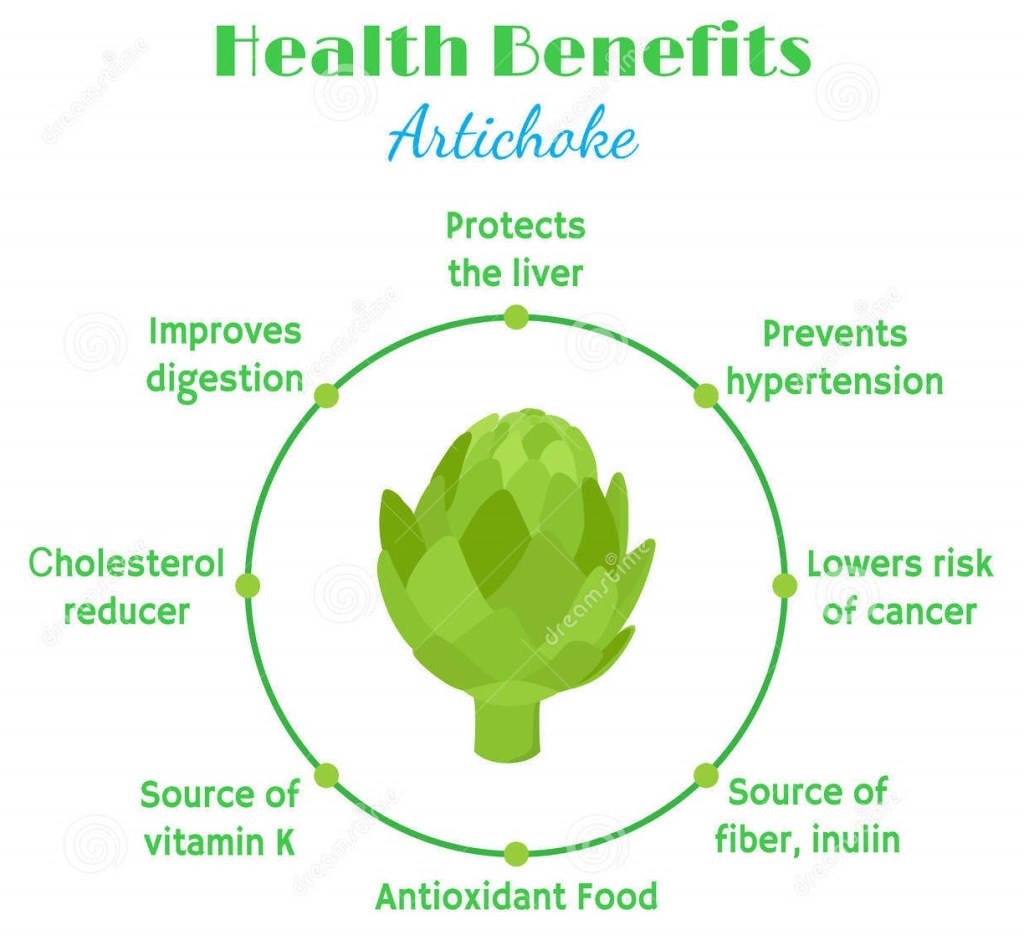
Health Benefits

Artichoke extract is sometimes used to treat a variety of health conditions. For example, some consumers use the extract to treat hangovers, high blood pressure, anemia, arthritis, kidney problems, liver problems, snake bites, water retention, and other concerns. There is not enough evidence to support the use of artichoke leaf extract for these health benefits.

There is research, however, to support the use of artichoke leaf extract to treat indigestion and high cholesterol with studies about cholesterol gaining interest.

Healthiest way to prepare an artichoke:

Grab a steamer pot, and add a small amount of water with a squeeze of lemon juice.

Add one tablespoon of salt and bring to a boil.

Trim the spiky leaves, then place the artichokes stem-side up in the steamer basket after having trimmed their spiky leaves.

Cover pot, steam for 25 to 30 minutes, until heart is tender when pierced with a knife and inner leaves pull out easily.

THE POWER OF YOUR MIND

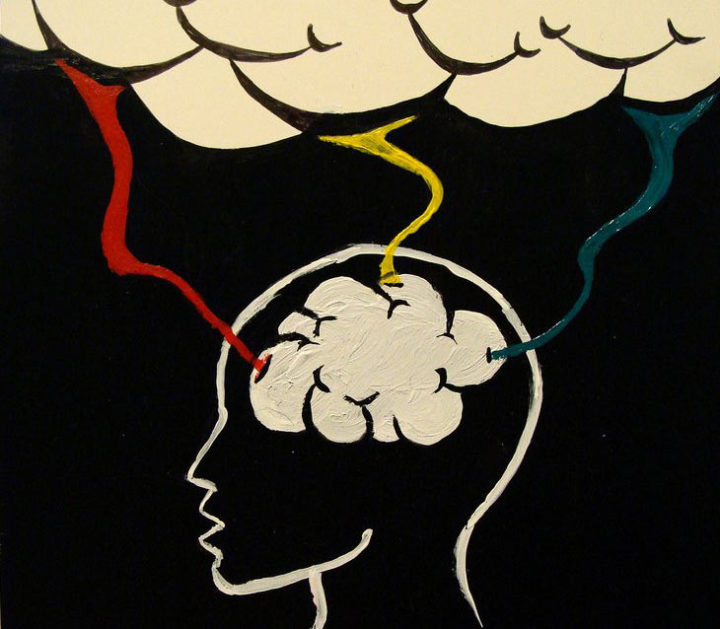
YOUR MIND CAN DO FOR YOU MORE THAN YOU CAN EVEN THINK OF. IT CAN HELP YOU SAIL YOUR BOAT THROUGH THE MOST DISASTEROUS SITUATIONS AND IT CAN DROWN YOUR BOAT IN THE OCEAN .

IT ACTS LIKE A GINNIE. IF YOU SAY ” I AM SICK ” OR ” I HAVE LOST EVERYTHING ” , IT WILL SAY “YOUR WISH , MY COMMAND”. THIS IS WHAT IS GOING TO GET MANIFESTED. YOU SHALL GET IN A SITUATION WHEREIN, YOU WILL FACE ISSUES.

ON THE OTHER HAND IF YOU SAY, ” I HAVE EVERYTHING ” OR ” I AM HEALTHY”. NO MATTER IN WHAT SITUATION YOU ARE, YOU SHALL SURELY BE ABLE TO OVERCOME IT AND BE IN A STATE OF COMFORT.

creativity

YOUR MIND AND UNIVERSE ACT LIKE A MAGNET. THEY ATTRACT EACH OTHER.

THINK GOOD, ATTRACT GOOD

FIND THE GOOD IN BAD

YOU SHALL ACHIEVE WHAT YOU WANT

POPULATION GROWTH

‘It is easy to add but difficult to maintain’
Population is a dynamic phenomenon where the number, distribution and composition are constantly changing. Human population increases as babies are born and decreases as people die. For most of human history, births have only slightly exceeded deaths every year. As a result, human population grew slowly. About the time of Industrial Revolution, it began to increase rapidly.

Natural increase

Natural increase of population is the difference between the birth rate and death rate. In fact population is always increasing but only in very rare cases it may decrease through natural or man-made disasters such as famine, landslides, earthquakes, tsunami, epidemics, extreme weather conditions and war.

Population change

Population change refers to an increase or decrease in the population of an area influenced by the number of births, deaths and migration. The population of the world doubled from 500 million in 1650 to 1000 million in 1850. The projected population for 2025 and 2050 is about 8 billion and 9 billion respectively.

Population growth

Population growth refers to an increase in the number of people who reside in a particular area during a particular period.

Population increases when there are more births and immigration. It decreases when there are more deaths and emigration.

Distribution of Population

Population distribution refers to the way in which people are spread out across the earth’s surface.

The world population is not uniformly distributed, owing to the following factors.

Physical Factors

Physical factors include temperature, rainfall, soil, relief, water, natural vegetation, distribution of minerals and availability of energy resources.

Historical Factors

Regions with historical importance (river valley civilization), war and Constant invasions fall under historical factors responsible for population distribution.

Economic Factors

Educational institutions, employment opportunities, manufacturing industries, luxurious amenities, trade and commerce and other facilities encourage dense population in an area.

Density of Population

Density of population refers to the number of people living per square kilometre. An area is said to be sparsely populated when it has a large area with less number of people. Similarly, smaller the area with a large number of people, is said to be densely populated.

Population Density = Total Population/Total land area

The world’s population density is divided into three main groups.

Areas of high density (above 50 people per sq.km)

East Asia, South Asia, North West Europe and Eastern North America.

Areas of moderate density (10 to 50 people per sq.km)

The sub tropical regions like Angola, Congo, Nigeria and Zambia in Africa.

Areas of low density (less than 10 people per sq.km)

Central Africa, Western Australia, Northern Russia, Canada, etc…

Waiting for likes on your social media posts??

DO YOU WAIT FOR EVERYBODY TO LIKE YOUR POST. DESPERATELY WAIT FOR COMMENTS OR SHARES. IF YES, DONT DO THAT. SOMEBODYS LIKE WONT MAKE A DIFFERENCE IN YOUR LIFE. IT WONT LOWER YOUR STANDARDS, IT JUST WONT.

STOP JUDGING YOURSELF THE WAY PEOPLE DO . YOU ARE THE ONE WHO HAS EMBEDDED YOUR EFFORTS TO GET THE BEST IN YOU. WHY WAIT FOR SOMEBODY’S CONSENT??

HAVE FAITH IN YOURSELF. IF WE KEEP ON WAITING FOR OTHERS TO GIVE US CONSENT, WE MIGHT START HATING OURSELVES.

WHATEVER YOU DO IS PERFECT

EVEN IF PEOPLE WHO YOU LOVE, REJECT

HAVE FAITH IN YOURSELF

YOU DONT NEED ANYBODY’S HELP

YOU HAVE THE ABILITY TO FLY

YOU WILL REALLY GO HIGH

Do We Live in a Multiverse?

As far as we currently know, there is a single expanding blob of spacetime speckled with trillions of galaxies – that’s our Universe. If there are others, we have no compelling evidence for their existence.

Amazing book about Multiverse

That said, theories of cosmology, quantum physics, and the very philosophy of science have a few problems that could be solved if our blob of ‘everything’ wasn’t, well, everything.

That doesn’t mean other universes must exist. But what if they do?

What is a universe?

It should be a simple question to answer. But different areas of science will have subtly different takes on what a universe even is.

Cosmologists might say it describes the total mass of stuff (and the space in between) that has been slowly expanding from a highly concentrated volume over the past 13.77 billion years, becoming increasingly disordered with age. 

It now stretches 93 billion light years from edge to edge, at least based on all of the visible (and invisible) stuff we can detect in some way. Beyond that limit, there are either things we can’t see, an infinite expanse of nothingness, or – in the unlikely scenario that all of space bends back around on itself – a round-trip back to the start across a hyperspherical universe. 

If we’re talking quantum physics, though, a universe might refer to all fields and their particles, and their combined influences over one another. As a general rule, a universe (like ours, at least) is a closed system, meaning it can’t suddenly lose or gain a significant sum of energy. 

Telescope under 100

Philosophically speaking, a universe might be a discrete set of fundamental laws that governs the behavior of everything we observe. A universe would be defined by its own rules that set its unique speed for light, tell particles how to push or pull, or space how it should expand. 

What is a multiverse in cosmology?

A century of astronomical observations has told us a lot about the age, size, and evolution of galaxies, stars, matter and the four dimensions we sum up as spacetime. 

One thing we know with great confidence is that everything we see now is expanding at an accelerating rate. This logically implies the Universe, at least the one we live in, used to be a lot smaller. 

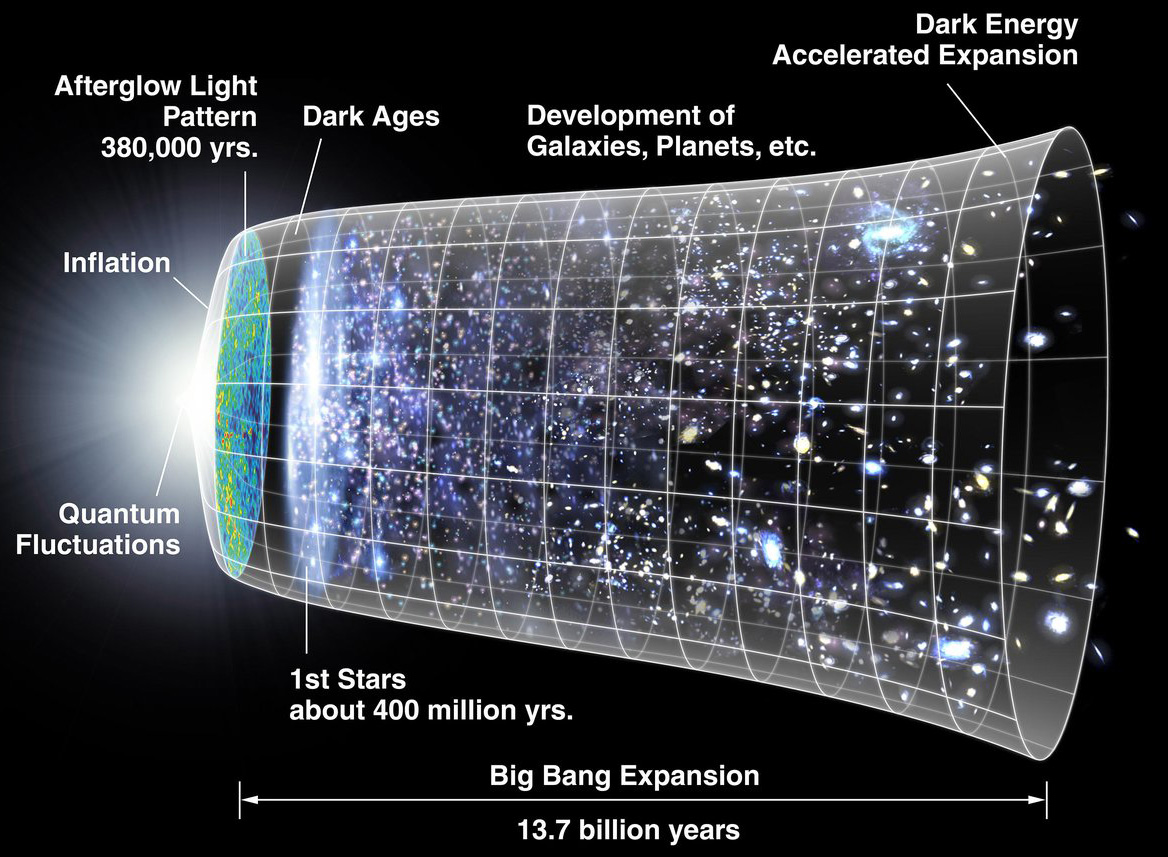
big bang nasa infographic expansion(NASA/JPL)

We can theoretically squeeze all of the matter of the Universe down to a point where the concentration of energy reduces atoms to a soup of simpler particles and forces combine until we can’t tell them apart. Any smaller than that? Big shrugs.

If we go with what’s known as a cyclic model of cosmology, the parent universe preceded ours in some way. It might even be a lot like this one, only running in reverse compared with ours, shrinking over time into a concentrated point only to bounce back out for some reason. Played out for eternity, we might imagine the respective universes bounce back and forth in an endless yo-yo effect of growing and collapsing.

Or, if we go with what’s known as a conformal cyclic model, universes expand over trillions upon trillions of years until their cold, point-like particles are so spread out, for all mathematical purposes everything looks and acts like a brand new universe.

If you don’t like those, there’s a chance our Universe is a white hole – the hypothetical back end of a black hole from another universe. Which, logically, just might mean the black holes in our Universe could all be parents, pinching off new universes like cosmic amoebae.

What is a multiverse in quantum physics?

Early last century, physicists found theories that described matter as tiny objects only told half of the story. The other half was that matter behaved as if it also had characteristics of a wave.

Exactly what this dual nature of reality means is still a matter of debate, but from a mathematical perspective, that wave describes the rise and fall of a game of chance. Probability, you see, is built into the very machinery that makes up the gears of a universe like ours.

Of course, this isn’t our daily experience as vast collections of atoms. When we send a bucket of molecules called a rocket to the Moon as it zooms past 300,000 kilometres away, we’re not rolling dice. Classical old physics is as reliable as tomorrow’s sunrise.

But the closer we zoom in on a region of space or time, the more we need to take into account the possible range of measurements we might find. 

This randomness isn’t the result of things we don’t know – it’s because the Universe itself is yet to make up its mind. There’s nothing in quantum mechanics explaining this transition either, leaving us to imagine what it all means. https://www.youtube.com/embed/dzKWfw68M5U?ab_channel=PBSSpaceTime

In his 1957 doctoral dissertation, American physicist Hugh Everett suggested the range of possibilities are all as real as one another, representing actual realities – separate universes, if you like – just like the one we’re all familiar with.

What makes any one universe in this many worlds interpretation distinct is how each wave correlates with a specific measurement taken of other waves, a phenomenon we call entanglement.

What ‘we’ means, and why ‘we’ experience one entangled set over waves over another, isn’t clear, and in some ways presents an even bigger problem to solve. 

What is a multiverse in philosophy?

One of science’s most fundamental starting assumptions is that in spite of what your mother tells you, you’re not special. Nor is any other human, or our planet, or – by extension – our Universe.

While rare events occur from time to time, we don’t answer The Big Questions with ‘it just happened that way’. 

So why does our Universe seem to have just the right tug-of-war of forces that allow not just particles to appear, but to congeal for long enough periods into atoms that can undergo complex chemistry to produce thinking minds like ours?

Philosophically speaking, the anthropic principle (or principles, since there are many different ways to spin the idea) suggests we might have it backwards. Without these conditions, no minds would have arisen to consider the amazing turn of events. 

If just a single universe ‘just happened that way’ early one spring morning, it’d be one big coincidence. Too big really. 

But if there were infinite universes, with infinite combinations of forces pushing and pulling, some would inevitably give rise to minds that just might ask ‘are we part of a multiverse?’ 

Will we ever discover other universes?

Given the very definition of a universe relies on some kind of physical fence keeping influencing factors apart, it’s hard to imagine ways we might ever observe the existence of a sibling for our universe. If we did, we might as well see it as an extension of our own Universe anyway.

That said, there could be some cheats that could give us a glimpse.

Any experiment to find one would have to rely on that ‘fence’ having some holes in it that allow particles or energy to leak across, either into ours, or away from it. Or, in the case of universes existing in our past, monumental events that left enough of a scar that not even a rebirth could erase.

For now, we still have no good reason to think our blob of everything is anything but unique. Given we’re still learning how our own Universe works, the current gaps in physics could yet be plugged without any need to imagine a reality other than ours.

In countless other versions of this article scattered throughout the multiverse, however, the question of whether we are alone just might have a different answer.

What is The International Monetary Fund ?

Intergovernmental organisations (IGOs) have always played a very important role in the global economy . These groups are generally created through the enactment of a treaty and are composed of a group with member states . The goal of individual IGOs depends on their genre of function and membership . Some of the most common and widely known IGOs include the United Nations , the World Bank and International Monetary Fund ( IMF)

International Monetary Fund () IMF also called The Fund , based in Washington ,D.C. is an international monetary institution established by 44 nations under the Bretton Woods Agreement of July 1994.

The IMF was established to promote economic and financial cooperation among its members in order to facilitate the expansion and balanced growth of world trade . It started functioning from March 1,1947 , the Fund has currently 189 member countries each of which has representation on the IMF ‘s executive board in proportion to its financial importance .

IMF is an international organisation that promotes global economic growth and financial stability, encourages international trade and reduces poverty Quotas of member countries .

IMF ‘s mission is

“To foster global Monetary cooperation ,secure financial stability , facilitate international trade , promote high employment and sustainable economic growth and reduce poverty around the world.”

Origin :-

IMF was originally created in 1945 ,as part of the Bretton Woods Agreement, which attempted to encourage international which attempted to encourage international financial cooperation .

The principal aim was to avoid the economic mistakes of the 1920s and 1930s . The attempts of many countries to return to the old gold system after the First World War failed miserably.

The World Depression of the thirties forced every country to abandon the gold standard .This led to adoption of nationalist policies which marked decline in world trade and extension of depression.

44 nations assembled at the United Nations Monetary and Financial Conference at Bretton Woods, New Hampshire from July 1 to July 22,1944 and established The International Monetary Fund .

The Article of Agreement of the IMF provided the basis of the international monetary system .


Structure of The Fund


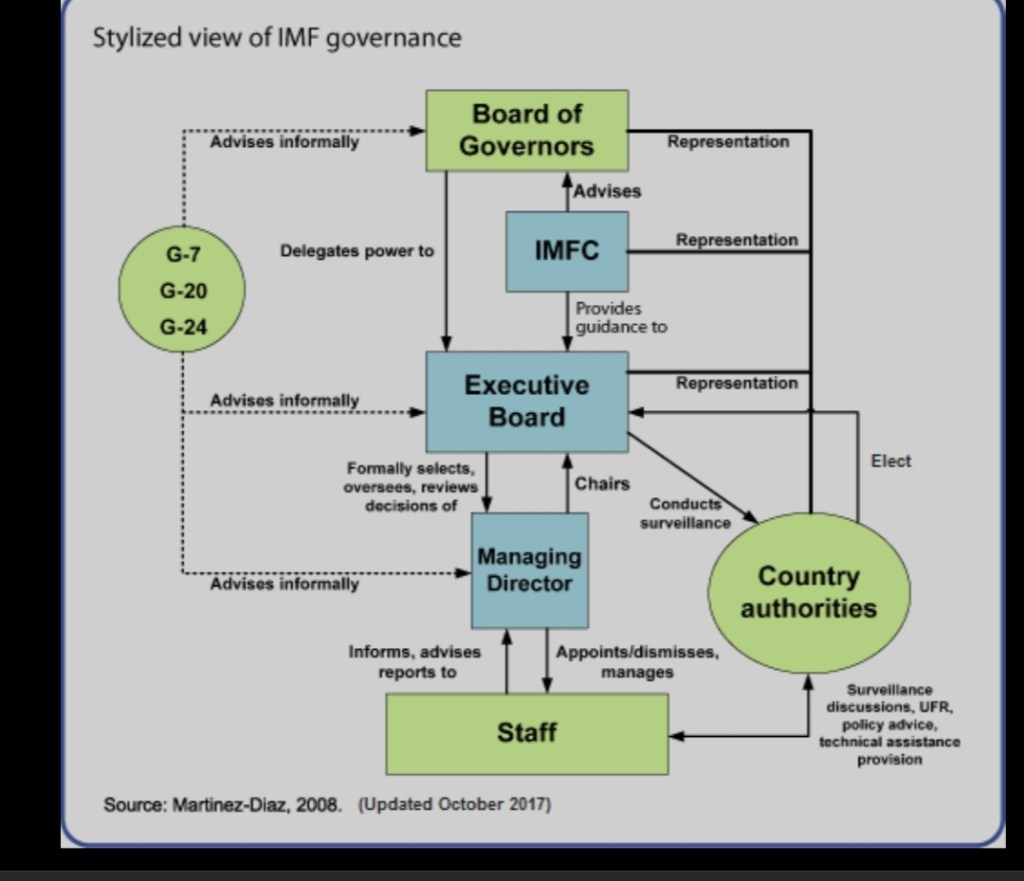
The structure of The Fund consists of a Board of Governors , an Executive Board , A Managing Director, a Council and a staff with its headquarters in Washington DC, USA.

The Board of Governors is the top in the structure of The Fund . They are decision making organs of the Fund..They exercise power and make decisions that are binding on members and the Fund .

The board of the Governors, which now has 24 members ,meets annually in which details of the Fund activities for the previous year are presented.

Other members include :-

The Executive Board , which has 21 members at present . Five Executive Directors are appointed by the five members ( USA , UK , Germany., France and Japan ) having longest quotas .

The Managing Director is elected by the Executive Directors .He is usually political or any other international official.

The Interim Committee (now IMFC ) , is established to advise the Board of Governors on supervising the management and adoption of international monetary policy .

The Development Committee advises and reports to the Board of Governors on all aspects of the transfer of real resources to developing countries .


Objectives :-

The fundamental purposes and objectives of the Fund had been laid down in Article 1 of the original Articles of Agreement . The major six objectives of IMF are :-

1: To promote international monetary cooperation through a permanent Institution which provides the machinery for consumption and collaboration in international monetary problems.

2: To facilitate the expansion and balanced growth of international trade, and to
contribute thereby to the promotion and maintenance of high levels of employment and
real income and to the development of the productive resources of all members as
primary objective of economic policy.

3: To promote exchange stability, to maintain orderly exchange arrangements among
members, and to avoid competitive exchange depreciation.

4: To assist in the establishment of a multilateral system of payments in respect of
current transactions between members and in the elimination of foreign exchange
restrictions which hamper the growth of world trade.

5: To give confidence to members by making the general resources of the Fund temporarily available to them under adequate safeguards, thus providing them with the
opportunity to correct maladjustments in their balance of payments, without resorting
to measure destruction of national or international prosperity.

6: In accordance with the above, to shorten the duration and lessen the degree of dis –
equilibrium in the international balance of payments of members.
___________________________________________

Functions of IMF

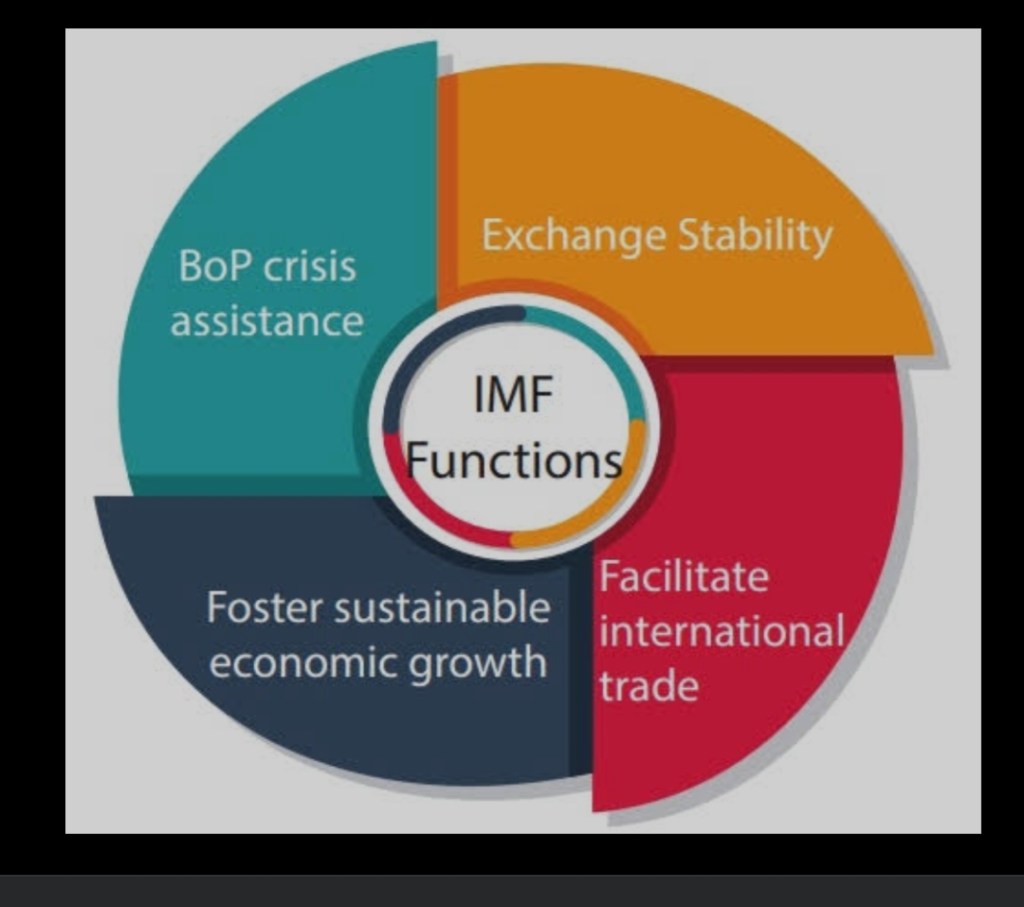
The principal function of the IMF is to supervise the international monetary system.
Several other functions performed by the IMF .
Three major functions of IMF are :-


Surveillance over Members Economic Policies :-

The IMF closely monitors each member’s country’s economic and financial development . The IMF holds a conference with member countries on a regular basis Usually once each year to assess its economic conditions with a view to providing policy recommendations .


Financial Assistance :-

IMF functions as an agency of providing resources to meet short term and medium term
. It lends to its member countries facing BOP disequilibrium .

IMF loan is usually provided under an “arrangement ” requiring a borrowing country to undertake the specific policies and measures to resolve it’s balance of payments problem as specified in a “Letter of Intent ” .
Most IMF loans are primarily financed by its member countries through payment of quotas .


Consultative Function:

It functions as a centre for international cooperation and a source of counsel and
technical assistance to its members.IMF provides technical assistance to help member countries strengthen their capacity to design and implement effective policies in four areas :- monetary and Financial policy ; fiscal policy; statistics ; and economic and financial legislation.

Other functions :-

• Stabilizing Economics
• Maintaining Balance between demand and supply of member countries.
• Maintenance of Liquidity .
• Reducing tariffs.
• General watch .
___________________________________________

Financial Resources of The Fund :-

The bulk of financial assistance performed by the IMF has its financial resources from two sources .


(i) Subscription or quota of the member nations :-

Each member country is required to subscribe to an amount equivalent to its quota. It is
the quota on which payment obligations, credit facilities, and voting right of members
are determined. As soon as a country joins the Fund, it is assigned a quota which is
expressed in Special Drawing Rights (SDRs).


(ii) Borrowings :-

The Fund is authorised to borrow in special circumstances if its own resources prove to
be insufficient. It sells gold to member countries to replenish currency holdings. It is
entitled to borrow even from the international capital market. Though the Articles of
Agreement permits the Fund to borrow from the private capital market.

The IMF has two accounts of
operation—the General Account and the Special Drawing Account.
The Fund burrows under the General Arrangements to Borrow in order to forestall or cope with an impairment of the international monetary system.
__________________________________________

Credit Tranches :-

To meet the severe BOP disequilibrium , the Fund has been gradually raising the limit of borrowing by its members under the credit tranche.
Since the 1960s , the Fund has created several credit facilities for its members.

Some borrowing facility provided by the Fund are :-

(i) Stand-by Arrangements:
The term “stand-by” here
means that, subject to conditionality, a member has a right to draw the money made available, if needed.
This method of borrowing has become the most normal form of assistance by the Fund.
Under this form of borrowing, a member state obtains the assurance of the Fund that,
usually over 12-18 months, requests for drawings of foreign exchange (i.e., to meet
short- term BOP problems) up to a certain amount will be allowed if the country
concerned wishes.
However, the stand-by arrangements can be extended up to 3 years while repayments
are required to be made within 3-5 years of each drawing.


(ii) Extended Fund Facility (EFF):
Stand-by arrangements to stabilise a member’s BOP run usually for a period of 12-18
months. Developing countries suffer from chronic BOP problems which could not be
remedied in the short run. EFF provides credit upto a period of 10 years and loan upto 300 percent of a member’s Quotas are allowed.


(iii) Compensatory Financing Facility (CFF):
Apart from the ordinary drawing rights, there are some ‘special finances’ windows to
assist the developing countries to tide over BOP difficulties. CFF, introduced in 1963, is
one such special drawing provision.
It can now draw up to 45 p.c. Since the mid- 1990s, this has been the least-used facility.


(iv) Structural Adjustment Facility (SAF) and the Enhanced SAF (ESAF):
In 1986 a new facility—the SAF—was introduced for the benefit of low income
countries.
Under it, credit facilities for economic reform programmes are available at a low
interest rate of 0.5 p. c compared to 6 p.c. for most Fund facilities. Loans are for 10
years with a grace period of five and a half years.
SAF provides to undertake medium-term structural
adjustment programmes to foster economic growth and improve BOP conditions
The ESAF has been replaced
by a new facility, called Poverty Reduction and Growth Facility in 1999.


(v) Poverty Reduction and Growth Facility (PRGF):
The PRGF that replaced the ESAF in November 1999 provides concessional lending to
help the poorest member countries with the aim of making poverty reduction and
economic growth —the central objectives of policy programmes.


(vi) Supplemental Reserve Facility (SRF):
This instrument provides additional short-term financing to member countries facing
exceptional BOP difficulties because of a sudden and disruptive loss of market
confidence reflected in capital outflows of countries concerned. Consequent upon the
After the eruption of the East Asian financial crisis, the SRF was introduced in 1997.

___________________________________________

India And The IMF

India is one of the founder members of the IMF . It signed the Fund Agreement on 27 December , 1945 . Till 1970 India ‘s Quotas in the Fund was the fifth and it had the power to appoint permanent Executive Directors.


With increase in the Fund Quotas of other countries like Canada , Italy , Japan etc . India ceased to hold a permanent position as Executive Directors .
With the Eleventh Review of Quotas , India’s quota in the IMF declined from 2.09 per cent . As a result , India’s position in the Fund quota came down to 13th .

The current IMF data shows India’s position at seventh .


India has been benefited in certain ways by the IMF by receiving loans to meet the deficit in its balance payment in several years .India has been getting advisory help from the Fund under the Fund surveillance conditionality .
Hence , as a member India has gained much help from the IMF to have an economically stable system.

The Forgotten Trio

Benoy Badal Dinesh, the Bravery trio

The trio of 3 idiots or the trio of Yeh Zindagi Na Milege Dobara we know but there is a trio of 3 brave boys who on their own took a big step to contribute to the movement of independence of India.

The trio of three brave hearts who took matters in their hand against the British, in the Writer’s building in Kolkata, the administrative center of the city during the British rule. It was a usual day of works going on when a sudden sound of shots made eco through ages on the hearts of the British people.

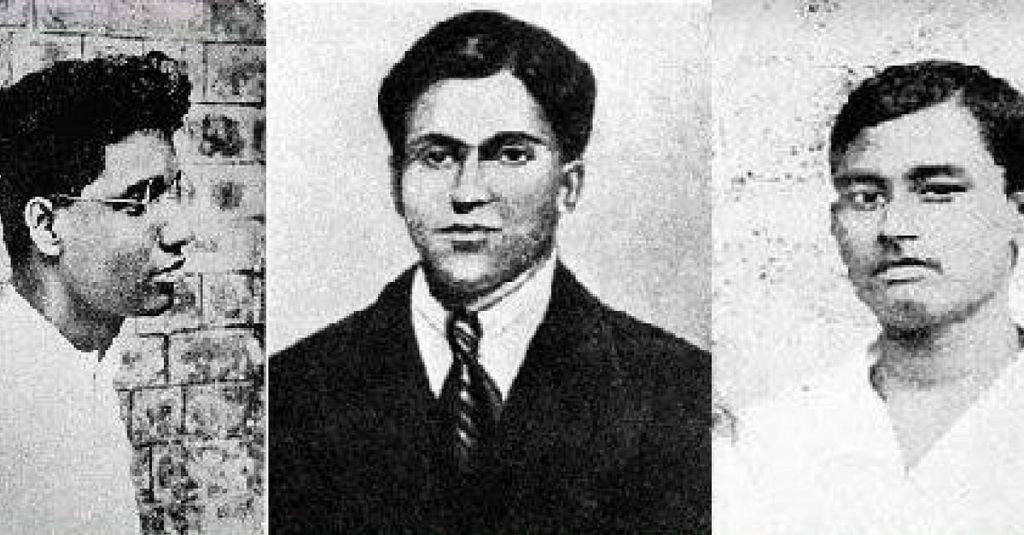
the comrades were Benoy Krishan Basu, Dinesh Gupta, and Sudhir Gupta.

Benoy Krishan Basu, born in Rohitbhog, Bangladesh on 11 September 1908, completed his matriculation in Dhaka , got enrolled into Mitford medical School(Sir Salimullah Medical college), but he couldn’t able to complete his medical studies as he joined in “Mukti sangha’ a secret society under the influence of a revolutionary of Dhaka Hemchandra Ghosh.

Dinesh Chandra Gupta, born in Josholong, Bangladesh on 6 December 1911. He joined a group organized by Subhas Chandra bosh ‘Bengal volunteers while he was studying in Dhaka college, while that the Bengal volunteers transformed to a more active revolutionary association, planned of killing British police officers, for short time Dinesh Gupta was training local revolutionaries in use of firearms in Midnapore, who was responsible for the assassination of three District Magistrates in succession.

Badal Gupta, his real name was Sudhir Gupta, was born in Puba Shimulia, in the region of Dhaka, now in Mushiganj District, Bangladesh, as he inspired by a teacher of the Banaripara School of Bikrampur ‘Nikunja Sem’, joined the Bengal Volunteers, he was also influenced by his two paternal uncles ‘Dharaninath Gupta and Nagendranath Gupta who were the revolutionary activities who had a major role in the Alipore Bomb Case.

The motto of their Bravery act was of killing N S Simpson, the late Colonel of the Indian Imperial Police and the Inspector General of Police(Prisons), the person behind the worst atrocities on the inmates of prisons and other Britishers. The three men dressed in European attire came from the shadows and opened fire from their revolvers shot Simpson shot in 7 bullets on him, three on the head. Soon the British police surrounded them and there was a brief gun battle between the trio and the cops, some of the lead officers lead to severe injuries but somehow the British police overpowered them but the three men refused to surrender, immediately on the spot Badal Gupta ingested Potassium Cyanide died on spot, while Benoy and Dinesh shot themselves point-blank by their firearms. Dinesh and Benoy were taken to hospital but took their last breath on 13 December 1930 as he used to keep on injuring on the spot where the bullet was hit, Dinesh Gupta was the only one to survive, later he was martyred by hanging on 7th July 1931 at the Alipore Jail, at the age of 19 for anti-government activities and murder. 

On the 8th of December, the three young men one of 19 and two of them merely 22 achieved immortality and strike terror in the hearts of British officers by their unimaginable act.

Air pollution grips Macedonian Capital Skopje:

Methodology: 

● Description of the problem. 

● Cause of the problem. 

● Analysis of the problem. 

● Control of the problem. 

➡ Introduction to the problem: 

According to a World Health Organisation (WHO) study, published in early 2017, Skopje, which is located at the bottom of a valley, was among ten cities in Europe with the highest concentration of fine particles. Skopje, like the four other Balkans cities listed among the 10, has an industry based on coal or lignite, used also for heating. Skopje, Sofia, Prishtina, and Sarajevo are on the list of Europe’s most polluted cities. 

According to the local media, 38% of all deaths in Tetovo and 22% at the state level are the direct result of air pollution. Yet, the problem is neglected for most of the year. Only when winter comes and thick smog suffocates the city and its inhabitants, it is revived by the media and the political opposition. Hence, VMRO-DPMNE is now blaming the ruling SDSM for the bad air quality, as if it had not ruled the country for 10 years until 2017. 

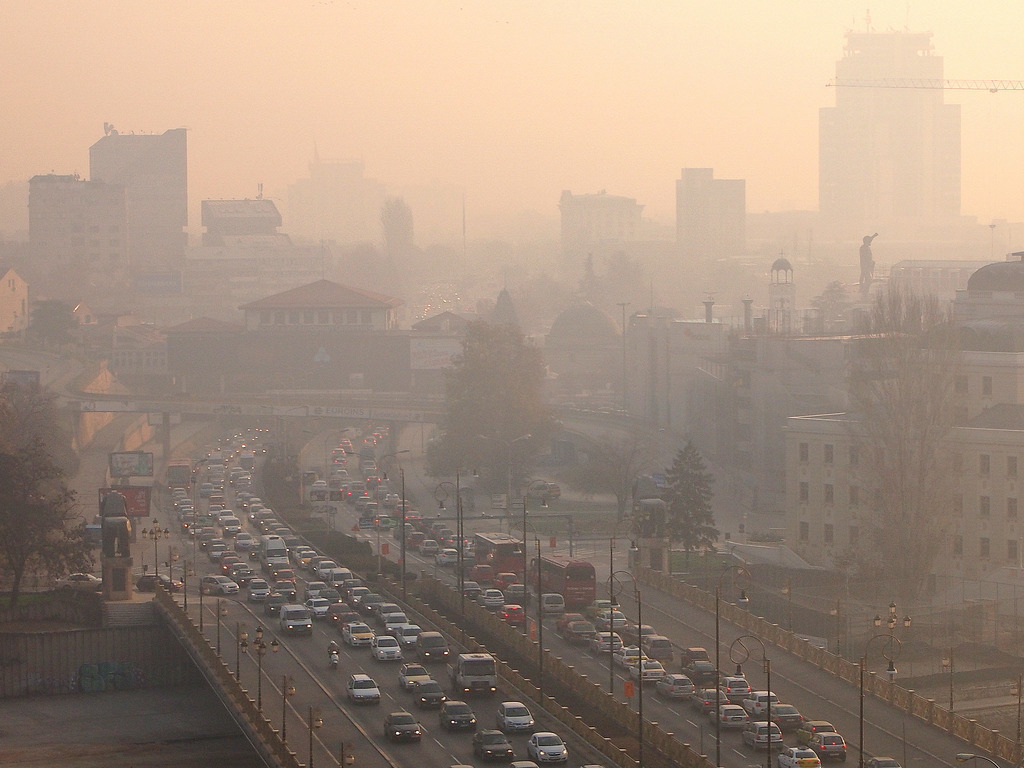
Pollution grip on the Macedonian’s capital Due to the high air pollution the whole city is not visible from the sky. By just seeing this picture we can understand what is the actual condition of the air pollution in Macedonian.

➡ Cause of the problem: 

As a consequence, in less than five years, the number of registered vehicles increased from 350,000 to 475,000 – most running on diesel, therefore with higher emission of PM particles compared to gasoline. 

Another factor is the savage urbanization of the cities. Instead of green parks, new buildings are springing up like mushrooms after rain. Apart from the main city park, there is not a single green space in Skopje that has not shrunk in the past 10-15 years. Illegal logging is endemic around cities and in the neighboring mountain areas, further deteriorating the ecosystem. Rather than addressing the problem, politicians have exploited it for electoral purposes. 

During the VMRO-DPMNE era in 2006–2017, the SDSM constantly attacked the government’s reckless ecological policies, promising a more eco-friendly approach. Excess usage of vehicles in that particular area has adversely affected the climate change in Skopje and has increased air pollution at the same time. 

➡ Analysis of the problem:

The poor air quality in the Republic of Macedonia is predominantly due to the tiny combustion particles called PM10 (10 micrometers or less in diameter) and PM2.5 (2.5 micrometers or less in diameter). 

These can easily penetrate deep into the body, causing not only breathing problems, but also other dangerous health issues. According to the World Health Organization (WHO), 2,574 people die prematurely every year as a direct result of air pollution. Skopje’s annual mean for 2016 was 40 µg/m3 (40 micrograms per cubic meter), which is 4 times higher than the annual WHO guideline (10 µg/m3), and 60 percent greater than the official Macedonian target[2] and European guideline[3] (25 µg/m3). 

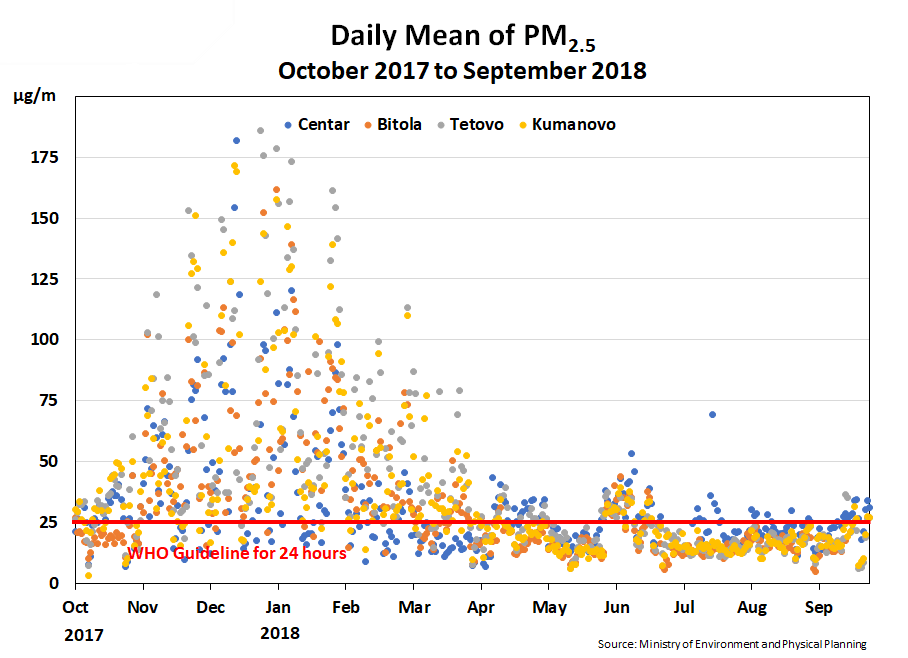
Graph 1 below shows the daily PM2.5 observations over the last year for Skopje (Centar), Bitola, Tetovo, and Kumanovo. All four cities regularly exceed the WHO daily guideline (25 µg/m3) with winter being the worst period. 

➡ Control of the problem: 

Quality and a healthy living environment are one of the basic preconditions for a quality life of all citizens in the Republic of Macedonia and a commitment of the Government of the Republic of Macedonia. Clean air is one of the main components, which, unfortunately, historically seen in the Republic of Macedonia, has seen high values in recent decades. 

Some ways to prevent the effect of air pollution in Macedonian Capital Skopje are: 

● The plantation of trees can reduce the increase of harmful chemical gases in the air. 

● Less use of vehicles. 

● More use of renewable energy in place of oils and fuels. 

● Use of solar panels.

Reproduction and Modification in plants

We know already that flowering plants have root,stem and leaves.They are called vegetative organs.Flowers,fruits and seeds in a plant are called reproductive organs.In earlier classes we have seen that new plants can be grown from seeds.In this lesson,we are going to know how a flower changes itself into a fruit,and the modifications of root,stem and leaves of a plant.

Reproduction

We can see from this activity that watermelon plant is produced from that seeds.potato plant is not from seed,but from the steam Tuber (Vegetative part).seed is not only the source for new generation,even vegetative part of a plant can be used to produce a new plant.The process by which plants and animals produce young ones and increase their number is known as ‘reproduction’. Drumstick tree can be grown from both seeds and stem cuttings.When plants are reproduced from the seeds we call that process as sexual reproduction.All other ways of reproduction without seed are called as asexual reproduction.

Sexual reproduction

Seed is produced from a flower by the process of pollination and fertilization.This is known as sexual reproduction.To understand how seeds are formed in a flower, first we need to understand parts of a flower.

Parts of a flower

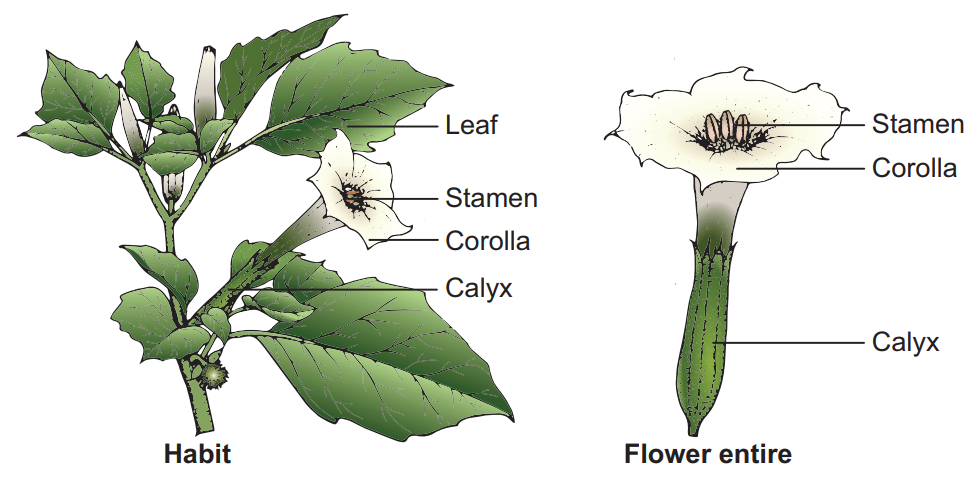
Let us compare few buds and opened flowers of Hibiscus and Datura.Observe bud and opened flower of Hibiscus and Datura.we can tabulate the characteristics of Hibiscus and Datura flowers as below.

In a bud ,we can see a green colour,leaf like structure which cover the whole bud or flower.Each of these green leaf like structure present as an outermost layer is called as sepal.This outer most ring of sepals is known as Calyx.Petals are the largest part of flowers.They are often attractive, brightly coloured, sometimes sweet scented and attract the insects.The ring of petals together is called corolla.

Inside corolla,in Hibiscus,we can observe a long tube on which many stamens are arranged.But,in Datura we can see only five stalked structures,stamens.This ring or whorl of a flower is called androecium.Each stamens consists of two parts-a stalk called filament and a lobe called anther.If you touch these lobes in a mature flower,we can get a powdery substance called pollen grains

Inside androecium whorl,we can find a female reproductive part of the flower, called gynoecium.You will find this part with a swollen bottom part.

This is a ovary.Seeds are produced in this part.On top of the ovary there is a slender tube like structure called style.The top most striky tip of the style is stigma.Pollen grains are received by the stigma.This is the fourth whorl of a flower.

Types of flowers

Flowers can be divided into two types.They are explained below.

Complete Flower

If all the four whorls-calyx,corolla,stamens and pistil are present,then it is called as complete flower.complete flowers are bisexual flowers.

Incomplete Flower

If any of these four whorls is missing,then it is called as incomplete flower.Incomplete flowers are unisexual flowers.There are two types of Unisexual flowers,male flowers and female flower.The flower with androecium and without gynoecium is called as male flower and the one with gynoecium and without androecium is known as female flowers.

Pollination

We know that flowers of pumpkin are unisexual-that is some flowers are male while many are female flowers.We can easily identify the male and female flower of pumpkin,even before the buds bloom.To understand how a flower develops into fruit,let us perform an experiment on pumpkin plant.The process by which pollen grains reach stigma is called as pollination.The flower that receives pollen grains is called pollinated flower while the one that did not receive pollen grains is called as unpollinated flower.In the above experiment we transferred the pollen grains from male flower to the female flower. This is called as an artificial pollination.However ,in nature there are many ways in which pollen grains reach the stigma of the flower and it is called as natural pollination.
In some plants like grasses, pollen grains are light.Staments shed pollen grains,and are carried by wind to other flower.Insects ,birds are also agents of pollination.Bees, butterflies and variety of birds hover around flowers. They help to carry pollen from one flower to another.Pollen grains stick to their legs,wings or abdomen when they move from one flower to another.This is called as cross pollination.when you shake,pollen grains fall.Thus,when wind shakes the flower or when a butterfly agitates the flower,pollen grains could fall into the sigma of the same flower.Some plants that have both the male and female parts within a single flower (bisexual) pollinate by this means.This is called as self pollination

Beans(Fabaceae) and tomatoes (Solanaceae) commonly self-pollinate.Even though,for example,tomato self pollinate,they need the help of the insects to create vibrations within the flowers that will effectively loosen the pollen.Paddy is mostly self pollinating using just gentle wind as the pollinating agent.The agents that are helping in pollination are called as pollinators.In many plants,pollens have to come from some other flowers.This is obvious in case of plants which have distinct male and female flowers like pumpkin.In some flowers the gynoecium matures first before the androecium shed pollens.Such as apples,plums, strawberries, pumpkins use insects for cross-pollination.

Fertilization

During pollination,pollen grains reach stigma.What happens to them after this? substance produced on the stigma causes the pollen grain to germinate.During the germination a tube develops from the pollen grain which carries male gametes and ultimately reaches female inside the ovary through the style.Male gamete fuses with the female gamete to form zygote .This process is known as fertilization.Where is this female gamete located? Inside the ovary,small rounded structures,ovules are present.In these ovules, female gamete is present.To know more about this,we should cut ovary of a flower in longitudinal and transverse ways.cut a ovary of a flower both vertically and horizontally.Observe the ovules.compare the ovary and ovules from few different flowers.Are there one or more ovules? Can you see any connection between the number of ovules in the ovary number of seeds in each fruit?

Collect some fruits like tomato,brinjal, lady’s finger(vegetable),mango,peas and custard apple and observe.You can see some green part above brinjal and lady’s finger.what are they?
Compare mango, custard apple and peas.All these are single fruits but custard apple has many small parts in it,each with a seed .Mango has a single seed and pea has many seeds.what do you understand from the above observations?
♦ A green part above fruit of brinjal and lady’s finger are sepals of a flower.In some plants,after fertilization,sepal will not fall from fruit and remain or persist with fruit.
♦️ Custard apple is made up of many fruits, aggregated together.Each fruit part is thin, membranous with some granule like, which is edible.
♦️ In mango the outer skin and middle pulpy are edible and sweet .The inner most part is with single seed.
♦️ In pea the fruit is not fleshy,but forms a convering pouch for many seeds.

In all the above fruits, Ovary,a lower most swollen part of pistil develops into a fleshy fruit.Ovules present inside the ovary gets transformed into a seed.

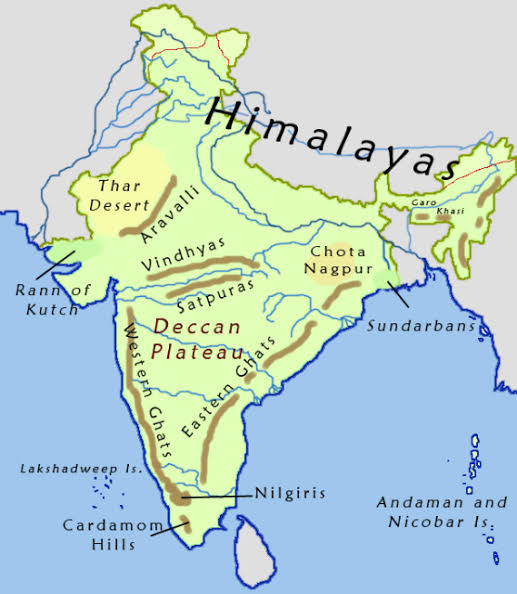
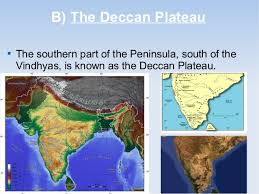
Divisions and geography of the Deccan Plateau:

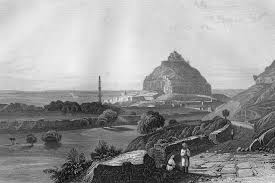
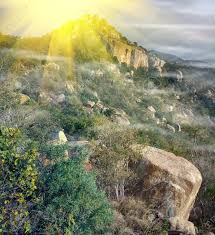
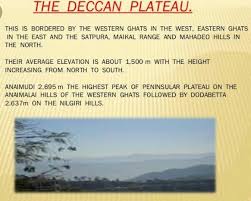
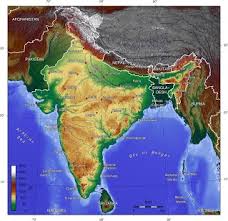
⭐This physiographic division is the largest part of the plateau region India. The shape of this plateau is roughly triangular.
⭐ One of the sides of this triangle is marked by the line joining Kanyakumari with Rajmahal Hills and this line passes through the Eastern Ghats.


⭐The second arm is marked by the Satpura Range, Mahadeo Hills, Maikal Range and the Rajmahal Hills.
⭐The third arm is marked by the Western Ghats.
⭐The area of this plateau is about 7 lakh square km and the height ranges from 500 to 1000 m above sea level.


⭐The Western Ghats forms the Western edge of the Panisular Plateau. It runs parallel to the Arabian Sea coast.
⭐The northern part of this range is called as Sahyadris. The height of the Sahyadris increases from North to South.
⭐Anaimudi is a sort of tri-junction of the Anaimalai Range, the Cardamom Hills and the Palani Hills.


⭐Kodaikanal is a beautiful hill resort situated on the Palani Hills.
⭐ Eastern Ghats run from Southwest to Northeast from the eastern edge of this Plateau.
⭐The range is also called as Poorvadri.


⭐The Eastern Ghats join the Western Ghats at the Nilgiri hills, bordering Karnataka and Tamil Nadu.
⭐The Eastern Ghats are not continuous like the Western Ghats.
⭐The rivers of Mahanadi, Godavari, Krishna, Pennar and Kaveri have dissected this range at many places.