Should Plastic be Banned?

A truly wonderful and magical material, plastic was invented in the year 1907 by Leo Hendrick Bakeman in New York, United States of America. This wondrous material was made from phenol and formaldehyde in a cheap and easy method. Ever since this revolutionary invention, the world as we knew it changed. Plastic replaced many materials in industries. Plastic is so widely used around the world because of its following properties:

  • Plastic is a hard material
  • Plastics are a highly dense material
  • Its tensile strength is high
  • It is resistant to heat and high temperatures
  • It is a non-conductor of electricity and heat
  • It is light in weight
  • The production of plastic is cheap and simple

All these properties make plastic the most popular material for factories as well as consumers. With the invention of plastic bags, things started to take nosedive in terms of the per capita plastic produced in the world. Everything was hunky-dory until people started to realise that plastic can’t be degraded by natural causes. Its a non-degradable material and will stay in the environment for more than 500 years to come. It is estimated that more than 6 billion metric tons of plastic waste are lying on our earth with no place to go.

Enzymes and bacterias cannot degrade plastic because plastic is not made up of naturally occurring materials. It is a purely man-made material. Most of the plastic is dumped in open lands and far away in oceans. While this seemed like a logical idea until people released that they were polluting the environment, air, water and land. The hazardous chemical in the plastics started to be seen in fishes and crops we eat which ultimately meant that plastic waste that we assumed was gone, was slowly making its way back to our bodies through our food chain. It is said that human beings have already started consuming plastics in small portions and a plastic worth the weight of a debit card in consumed every year by a person.

While plastics can’t be banned completely, because it has made our lives better. Plastic is used in advanced medical equipment to save lives. They are used in the pharma industry, the travel industry and clothing industry and the truth is, human beings cannot live without plastic. But we can surely reduce the consumption of plastic. Banning plastics completely is not a sensible idea.

Why plastic bags should be banned?

There are various alternatives to plastic bags. Jute bags, paper bags and gunny bags are some of them. Plastics bags are not so much necessary that man cannot live without it. And certain kind of plastic bags can not be recycled as well. But they surely can be reused. The habit of reusing the same plastic bags comes into effect only when the manufacture of new plastic bags are banned.

More than 20 million metric tonnes of plastic waste is dumped in the ocean and open lands. More than 50% of these are plastic bags. They are creating enormous pressure on our environment and causing irreversible pollution. It will take a herculean task to get rid of all the plastic that is produced in the world as of now. If it is not banned, then it will be impossible to get rid of it ever and the existence of the human race will be in question.

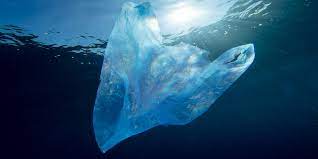
There are areas in several parts of our ocean which is covered with plastic as big as the size of India. The aquatic life is consuming these plastics and we are consuming them which disturbs the whole food cycle in our ecosystem. Banning plastic bags will at least, if not totally eliminate plastic from our earth, reduce this disturbance to our environment.

Women empowerment and child development:

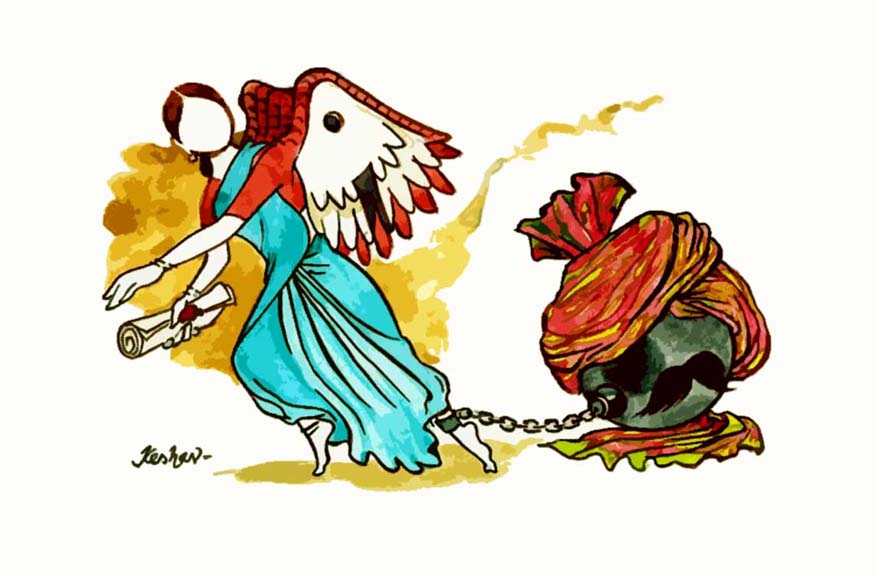
Empowerment means giving power to someone to try and do something in a very country like India where the slogan originated – 

that means – Where Women are honored, divinity blossoms there, and where ever women are dishonored, all action, regardless of how noble it’s going to be, remains unfruitful. in an exceedingly country like India, the necessity for women’s empowerment may be a concern of thinking that why to try and do a nation with such great thoughts needs for the encouragement of ladies during this developing era. 

Schemes launched by the govt. of India: 

The government of India has launched many schemes for the empowerment of ladies. 

Beti Bachao, Beti Pdhao (22nd January 2015) – 

To provide education to ladies and their welfare. to stop the violation within the interest of ladies. To celebrate the birth of a lady child. 

One-Stop Centre Scheme (1st April 2015) – 

To provide support and assistance to women laid low with violence at private or at any public place, no matter caste, class, religion, region, sexual orientation, or legal status. 

UJJAWALA (December 2007) – 

For Prevention of trafficking, Rehabilitation, and Re-integration of Victims of Trafficking and Commercial Sexual Exploitation. 

Women Helpline Scheme (1st April 2015) – 

To provide 24-hour emergency and non-emergency responses to women tormented by violence including sexual offenses and harassment both within the public and personal sphere, including e family, community, workplace, etc. 

Support to Training and Employment Programme for girls (STEP) (1986-87) – 

To provide skills that give employability to women, to produce competencies and skills that enable women to become self-employed/ entrepreneurs. 

Women Empowerment and Livelihood Programme (Mid-Gangetic Plains – ‘Priyadarshini’) – 

It focuses on Women empowerment and Livelihood in Mid-Gangetic Plains. It also empowers them to deal with their political, legal, health problems.

Development of girls and youngsters in Rural Areas (DWCRA) –

To improve the socio-economic status of poor women within rural areas. By the formulation of groups of ladies for income-generating activities on a self-sustaining basis.

Many schemes have started. And still, the govt is putting its efforts into the empowerment of ladies. But somewhere, we all are lacking in our responsibilities. Still, women are afraid to travel out. 

Rapes in India:

According to the NCRB report 6,000 rape cases were reported in Rajasthan, followed by 3,065 cases in the state in 2019. 

The rape vulnerability of a lady or woman has increased up to 44 percent within the last ten years, the National Crime Records Bureau (NCRB) data shows. in line with the NCRB data, during the amount 2010-2019, a complete of three,13,289 cases were reported across India. Due to such records peoples are afraid to send their daughters, wife, mothers out. 

We all are working for the empowerment of ladies. But some people in society still follow their conservative thinking. And also, they’re taught to measure as they need the sole aim to serve their in-laws. whether or not they’re willing to try and do something, they’re blind to such forms of silly thinking. In many places of India, girls are engaged to their future husbands at a young age by their families and shortly are married to them in no time. From their childhood itself, they’re taught to measure within their limits and to not cross their boundaries. there’s nothing wrong with working with the person. Both men and ladies are equal. 

Education is that the only thing that will change the thinking of our society. We must encourage every woman to come back forward and to measure as they require to measure. Not as others want her to measure. If women are concerned, they have to be taught about their rights in society and that they must be taught to return come in this world and showcase their skills before others. there’s nothing that a lady cannot do. Some women changed the thinking of the entire world and proved to women that ladies can do the items a person does and even more efficiently.

The Future of jobs is based on skills not on college degrees.

Many big companies (like Apple and Google) claims we’re no more hiring on degree basis we’re hiring on skill basis. And that’s gonna impact on many people lives. And we already be seen there.

During the crisis, a lot of employees has lost their jobs and seeking out for a new job. Now, what does that indicate us?

In future, the changement of hiring process is different and a lot of more companies are already started to changing their hiring systems.

Photo by Anthony Shkraba on Pexels.com

The whole economy is shifting from traditionally to digitally and most of us we adapted it and use in our daily lifes. Because of this digital world, where anyone and everyone can access information around the world. Our methods of working is completely different from traditionally to digitally.

The working time of people is reduced and many business owners have automate their business with the help of A.I. (Artificial Intelligence). According to CEO of freelancers of Upwork, says 75% of people who are doing freelancing work are making handsome amt. of money by just having a skills. others are still struggling with their piece of paper.

You can learn any type of skills by accessing FREE information from Internet, watching from Youtube videos, take a course from any big entrepreneur, so we developed more and make a change in yourself to make this world better.

To be sure, i’m not saying that college is waste of time and money for everyone. Of course it is, but having a so much resources available around everywhere where we can access in a bit of seconds, it will be more better option than a college degree.

But one thing can: The fastest-growing segment of the workforce — freelancers — have realized more than most that education doesn’t stop. It’s a lifelong process. Diploma or not, it’s a mindset worth embracing.

The Fight is Not over Yet- Farmer’s Protest

“Let us not forget that the cultivation of the Earth is the most important labor of man. When tillage begins, other arts will follow. The farmer’s, therefore are the founders of the civilization.”

Daniel Webster

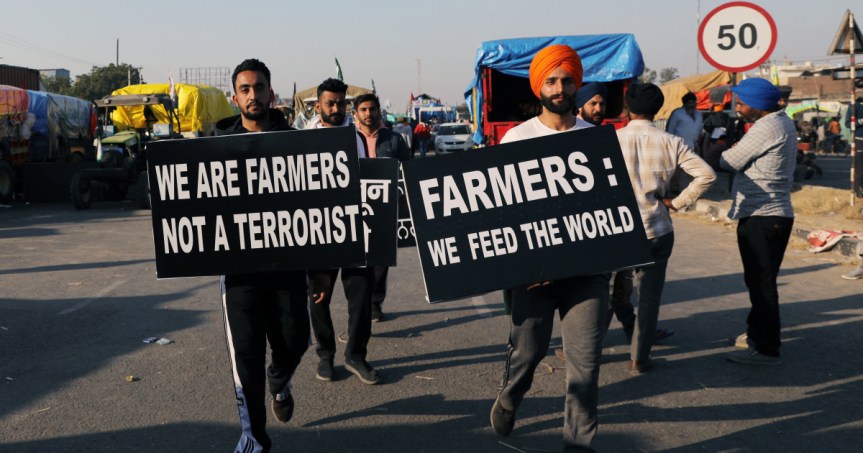
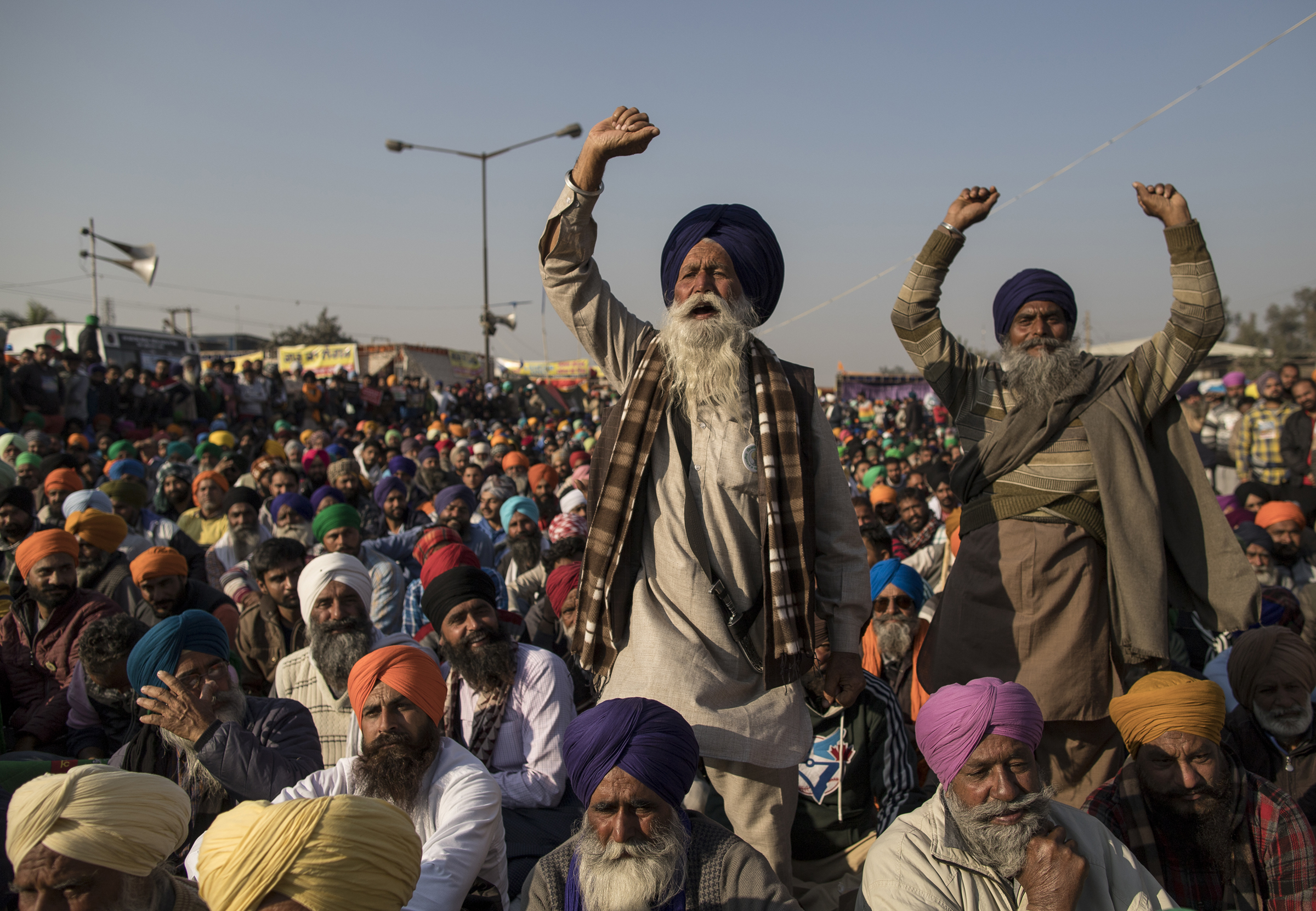
On August 9, 2020, Farmers from Punjab and Haryana laid siege to the national capital region. They are raising their voices against the recently passed farm bills. It has been five months since they have left their houses and have suffered hardships from the changed weather to farmer’s giving up and dying. But no beneficial approach has been taken for them, the fight continues to go on.

After 1947, the zamindari system was abolished in the nation. The farmlands were divided into smaller parts and the tiller became the owner of those parts but still they did not acquire bargaining power for their own crops which led to traders taking advantage of this drawback. Traders used to give credit then used to buy crops during the harvest season at lower prices. The farmer used to stay poor because he never got the good price for his crop production. To decide what the right price should be in the year 1960, when the country was going through the “Green Revolution”, APMC’S (Agriculture Produce Marketing Committees) were introduced which began to regulate the farm produce. Except the committee no one was allowed to buy produce from farmers. They will give traders a license and space to buy. In this system farmer is supposed to get different rates at which he wants to sell his production.

The Farmers' Protests Are a Turning Point for India | Time

But, till today unfortunately the farmers don’t decide the price the traders do. Even today the farmer is a price taker and not a price maker. No matter who makes the laws or tries to raise their opinions and concerns the atrocities have to be faced by the farmer’s.  As a result, they are dealing through several problems like lack of mechanization, soil erosion, agriculture marketing and so on. In India 76% of the farmer’s want to give up farming. The market needs to have a good buyer to pay a fair price. 

Amidst protest from the opposition and farmers organization, the monsoon session of the Lok Sabha passed three agricultural bills which were: – 

  1. Farmer’s Produce Trade and Commerce (promotion and facilitation) Bill, 2020 – to create a system where farmers and traders have the freedom to sell and purchase outside APMC’s, to promote barrier free inter state farmer produce, reduce facilitative framework for electronic trading.  If this is implemented the states will lose its revenue there are also chances that it may end the MSP based procurement system.
  • The Farmer (Empowerment and Protection) Agreement of Price Assurance and Farm Services Bill, 2020 – enable farmers too access modern technology, reduce cost marketing which will boost farmers income, effective dispute resolution. If this is implemented sponsors may not like to deal with small and marginal farmers, farmers who are into contract farming will get weak in terms of negotiating.
  • The Essential Commodities (Amendment) Bill, 2020- removing commodities like some important food items. Essential commodities, bring investment for farm infrastructure, help both farmers and consumers by bringing price stability. If this is implemented big companies will stock commodities, which means they will dictate whatever price they say.

Before helping the farmers, we should understand what problems they are facing. Firstly, we should strengthen the dispute redressal problem. There should be an intermediary body between the traders and the farmers. So, that they understand their rights and know what contract they are signing. They can get a guarantee for their crops and expand their growth if they have someone to help them. Secondly, they should have a bargaining power on what they have produced. This should be their basic right. Lastly if the government provides the farmers with people who can help them it will create massive trust on the government. 

The success or failure of the bill depends on the implementation. It will be unfair if the farmers think that this bill is their biggest enemy which is supposed to be helping them in ways which will change the entire agricultural system of the country. If the government genuinely wants to take up an initiative to help the famers and to end the protest, they should hear the perspective of the farmers because at the end of the day it is their livelihood which is being talked about. An industry that feeds you is worth fighting for.

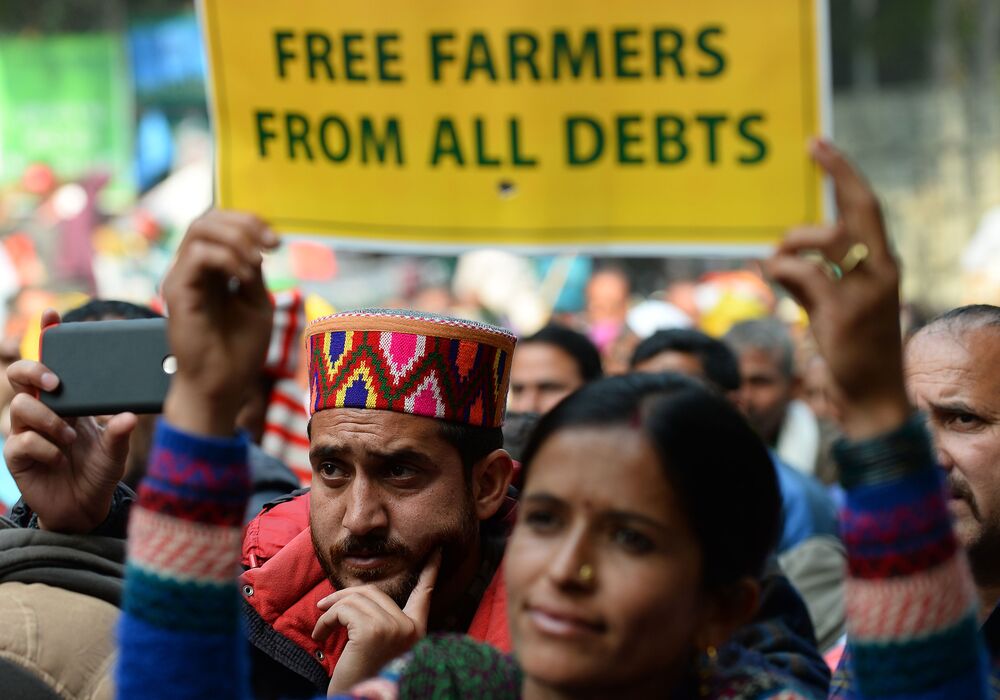
Farmers' Protest Underscores Modi's Challenges Before Elections - Bloomberg

Niger armed attack

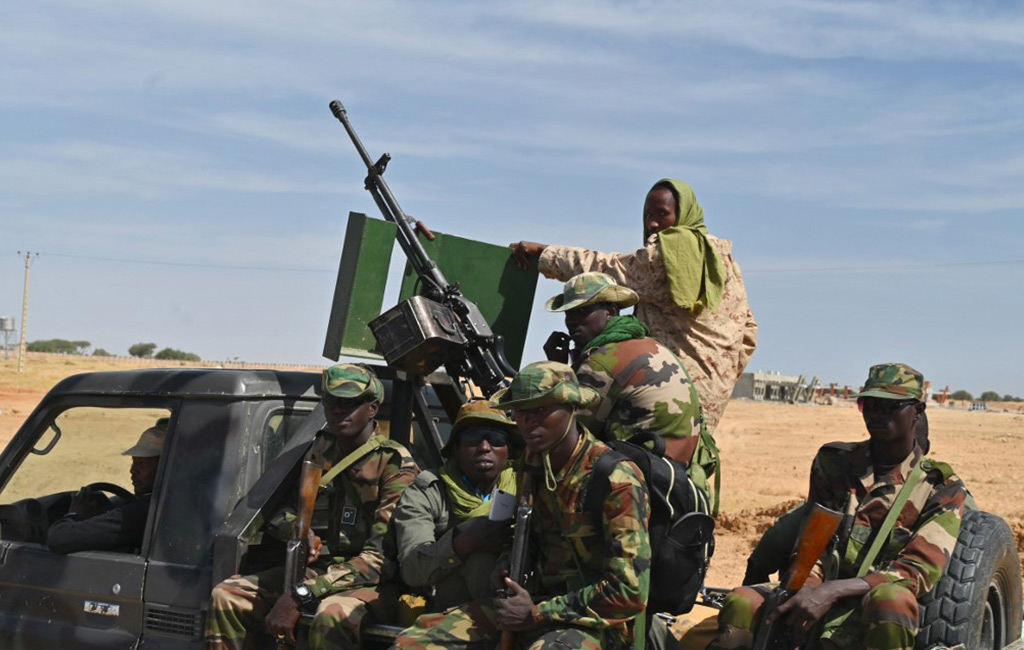
Five civilians, four soldiers and 40 armed attackers were killed Sunday in a clash in Niger’s restive southwest region near the border with Mali, the government said.

Around 100 heavily armed “terrorists” riding motorcycles attacked the Tchoma Bangou village, striking around 3 pm Sunday, Niger’s Ministry of Defence said in a statement read on public television that did not identify who it suspected was behind the latest deadly incident.

The “prompt and vigorous reaction” by the Defense and Security Forces (FDS), “made it possible to repel the attack and inflict heavy losses on the enemy”, the ministry said, adding that its soldiers had seized motorcycles and a cache of weapons, including AK47s and machine guns, from the assailants.

Tchoma Bangou is located in the Tillaberi region, bordering Mali and Burkina Faso, an area known as “the three borders” that has been regularly targeted by jihadist groups.

Tillaberi has been under a state of emergency since 2017. The authorities have banned motorbike traffic night and day for a year and ordered the closure of certain markets suspected of supplying “terrorists”.

One of the poorest countries in the world, Niger has for years battled jihadist insurgencies on its southwestern flank with Mali, as well as Boko Haram on its southeastern border with Nigeria. The repeated attacks have claimed hundreds of lives and forced thousands to flee their homes.

THEOPHRASTUS – THE FATHER OF BOTANTY


The ancient Greek Theophrastus (371–286 B.C.E.) is known as the father, or founder, of botany. He wrote two large books, On the History of Plants and On the Causes of Plants. … He also developed a theory of plant growth and wrote about how plants were structured. He identified and described 550 different

While Theophrastus studied very diverse issues, he is best known for his work with plants. He has often been referred to as the first scientific botanist, and two of his practical, yet influential, books on the subject have survived into modern times.

Theophrastus was one of the few Peripatetics who fully embraced Aristotle’s philosophy in all areas of metaphysics, physics, physiology, zoology, botany, ethics, politics, and history of culture. His general tendency was to strengthen the systematic unity of those subjects and to reduce the transcendental or Platonic elements of Aristotelianism as a whole. Of his few surviving works, the most important are Peri phytōn historia (“Inquiry into Plants”) and Peri phytōn aitiōn (“Growth of Plants”), comprising nine and six books, respectively. Of dubious origin are the smaller treatises attributed to him on fire, winds, signs of weather, scents, sensations, and other subjects. His notable Charaktēres (many English translations) consists of 30 brief and vigorous character sketches delineating moral types derived from studies that Aristotle had made for ethical and rhetorical purposes; this work later formed the basis for the masterpiece of Jean de La Bruyère, Les Caractères . . . (1699). In his ethical teachings, famous because of the assaults of the Stoic philosophers, Theophrastus reiterated Aristotle’s notion of a plurality of virtues with their relative vices and acknowledged a certain importance to external goods.

Among Theophrastus’ other works is the Physikōn doxai (“Opinions of Natural Philosophers”). As reconstructed by Herman Diels in Doxographi Graeci (1879), it provides a foundation for the history of ancient philosophy

Theophrastus and his reasearches

newsletter icon
  • Metaphysics (or On First Principles).
    • Enquiry into Plants: Books 1-5.
    • Enquiry into Plants: Books 6-9; Treatise on Odours; Concerning Weather Signs.
    •  De Causis Plantarum. There are 3 volumes of this book .
    • On Sweat, On Dizziness and On Fatigue. 

Theophrastus introduced his Physics with the proof that all natural existence, being corporeal and composite, requires principles,and first and foremost motion as the basis of all change.

Denying the substance of space, he seems to have regarded it, in opposition to Aristotle, as the mere arrangement and position (taxis and thesis) of bodies.Time he called an accident of motion, without, it seems, viewing it, with Aristotle, as the numerical determinant of motion. He attacked the doctrine of the four classical elements and challenged whether fire could be called a primary element when it appears to be compound, requiring, as it does, another material for its own nutriment.

Surely, then, if the life in animals does not need explanation or is to be explained only in this way, may it not be the case that in the heavens too, and in the heavenly bodies, movement does not need explanation or is to be explained in a special way? —Theophrastus, Metaphysics, 10a.16-29

Flash flood in Himachal Pradesh, landslide in Uttarakhand

Visuals show an overflowing river Manjhi river in Dharamshala, wiping away nearly 10 shops in the area. Meanwhile, three people were killed at a village in Uttarakhand after their house collapsed in a landslide.

As the southwest monsoon continues to elude Delhi, Punjab and Haryana, it is wreaking havoc in parts of Himachal Pradesh and Uttarakhand.

In Himachal Pradesh’s Dharamshala, flood waters swept through the streets of Bhagsu Nag village, damaging parked vehicles. The district administration has instructed tourists to postpone their visit to Dharamsala in view of the heavy rains.

Union Home Minister Amit Shah spoke to Himachal Pradesh Chief Minister Jai Ram Thakur on Monday to take stock of the situation arising due to the floods in several districts of the state and assured him all possible help from the Centre.

States such as Uttarakhand and Jammu and Kashmir, too, witnessed torrential rain. Visuals from ANI show debris from a landslide blocking the Rishikesh-Badrinath national highway number 7 near Chamoli. In a separate incident, three people, including an eight-year-old boy, were killed at a village in Uttarakhand after their house collapsed in a landslide caused due to heavy rains.

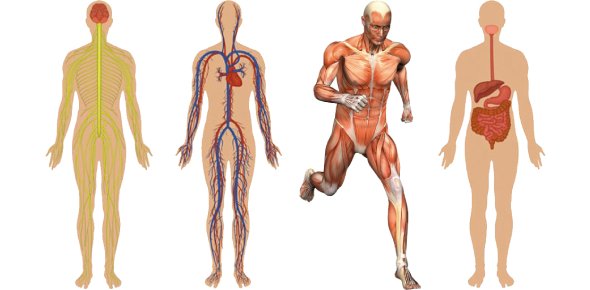
HUMAN ANATOMY

Introduction to Human Anatomy and Physiology

Anatomy is the study of the shape and structure of the body of organisms or living beings. The word anatomy is derived from the Greek words ‘ ana ‘ and ‘ tomy ‘ where ‘ ana ‘ means ‘apart’ and ‘tomy ‘ means ‘to cut’. In physiology, the functions of various system such as respiratory system, digestive system, nervous system, skeleton system and muscular system of organisms are studied. It can be said that physiology is the study of how the body and all its part function. It consists of two word, namely, ‘physio’ and ‘ ology’ where ‘physio’ means ‘nature ‘ and ‘ ology ‘ means ‘ study’. Here ,we will study human anatomy and human physiology.

Definition of Human Anatomy

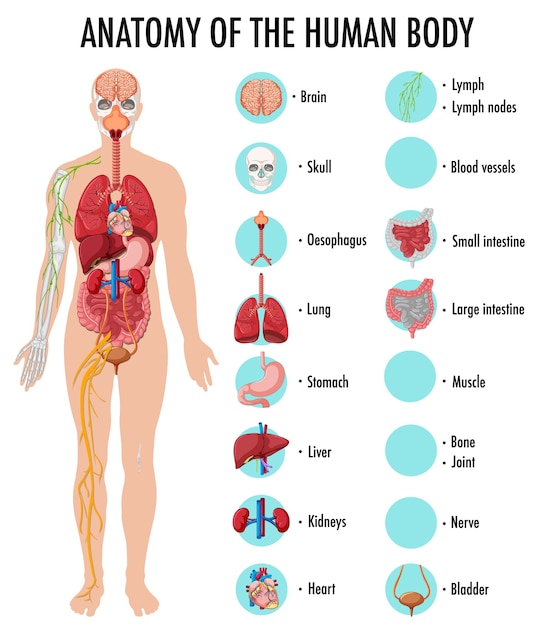
Free Vector | Anatomy of the human body information infographic

Human Anatomy is the study of structure ,shape, size , weight and location of all the organs of human body. A detailed knowledge of the structure of various system of human body is provided in human anatomy . For example , the shape, size, weight, structure and location of all the organs of the excretory system such as lungs, kidneys, large intestine, liver, skin, etc. are studied in human anatomy. Human anatomy can be defined as the science dealing with human body structure and relationships among structures.

Importance of Anatomy

The importance of anatomy and physiology is mentioned below.

  • Anatomy Provides the Knowledge of Structures of Various Organs : Human anatomy provides the detailed knowledge of the structure of various organ body . We get the knowledge of structure, shape, size, location and weight of organs of all the systems of our body. We come to know about the length of various organs such as the length, size and shape of the bones. With the help of anatomy , we get the knowledge of the percentage of white fibres and red fibres present in an individual. As a result of such knowledge , the teacher and coaches working in the field of physical education and sports may easily select the suitable sports according to the traits of students. For example, weightlifting is more appropriate for short statured students, who have more percentage of white fibres i.e., fast twitch fibres in comparison to red fibers i.e., slow twitch fibres can perform better in sprinting events instead of endurance events.

WATER POLLUTION – ITS CAUSES, EFFECTS AND REMEDIES

OVERVIEW :-

“WATER” , the lifeline of all the living species on the Earth. Without water it is not possible to survive a single day whether you are a human being or if we take in account any other organisms. Even the plants and trees which provide us oxygen to breathe can not survive without water.

WATER – OUR LIFELINE

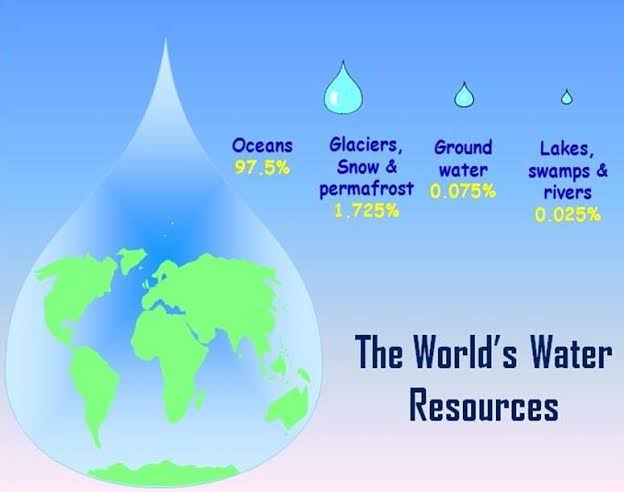
The molecular formula of water is H2O. It means it has two molecules of hydrogen and one molecule of oxygen to form one molecule of water. More than 70% of the Earth surface is covered with water. Out of the total water present on Earth around 97% is saline water present in oceans and seas. This water is not fit for drinking. The other 2% water is in form of glaciers at the two poles – North and South. The only remaining 1% is fresh water which is available in rivers and lakes. Only this 1% water is used for drinking and other day to day activities.

Distribution of Water available on Earth (in %)

But due to rapid increasing population, urbanisation, industrialisation over the years, water pollution has become a great matter of concern for the world community.

CAUSES AND EFFECTS OF WATER POLLUTION :-

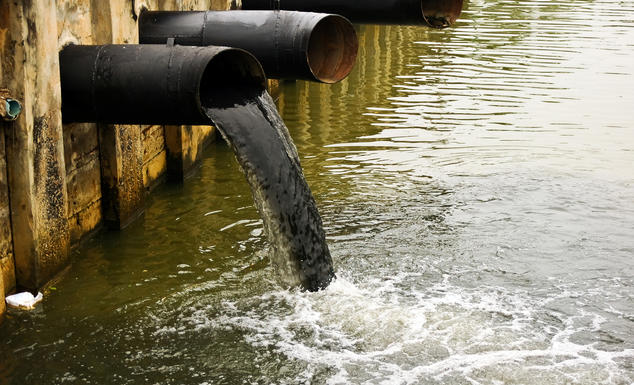
  • Domestic savage is one of the reason for water pollution. People living near water bodies discharge the human wastes in the water. Also in many urban areas there are no sewage treatment plants which can detoxify human wastes before discharging it in the water bodies like rivers. This increases the concentration of harmful organisms in the water and the water becomes unfit for drinking.
Discharging of Sewage Water without Treatment
  • Discharge of industrial wastes by factories situated near water bodies is also a major cause of water pollution. Industrial wastes contains a lot of toxic elements like mercury and silicon. These elements contaminate the water and it is no longer fit for human use.
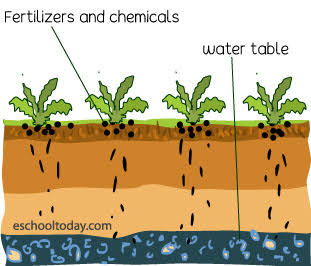
  • Excess use of fertilizers and pesticides also possesses a threat. These fertilizers and pesticides penetrates into the groundwater and makes it toxic. They also flow down into the water bodies and the flora and fauna which lives in these water bodies die in large numbers every year due to increase in water toxicity level.
Chemical Fertilizers Contaminate Ground Water
  • Global warming is another cause of water pollution. Due to global warming, the temperature of water in the water bodies increases rapidly. The flora and fauna living in these water bodies are not able to adapt themselves with this rapid increase in temperature and it results in a loss of large number of aquatic species.

REMEDIES TO COMBAT WATER POLLUTION :-

  • As far as possible, the effective implementation of 3R’s should be done. These 3R’s are Reduce, Reuse and Recycle.
  • Majority of the industrial waste must be treated before discharging it in the water bodies.
  • Excess use of chemical fertilizers and pesticides should be banned and the use of biological and eco-friendly products must be used in agriculture.
  • Sewage treatment plants should be installed so that biological wastes does not be discharged in water bodies without proper treatment. Effective monitoring of these sewage treatment plants must be undertaken for proper functioning of them.
Functioning of Wastewater Treatment Plant
  • Global warming threat should be taken under consideration and effective measures should be taken to reduce the factors that are responsible for global warming.

Links :-

https://www.google.com/amp/s/www.norcalcompactors.net/safeguard-environment-three-rs-reduce-reuse-recycle/amp/

https://www.nrdc.org/stories/water-pollution-everything-you-need-know

https://nwa.mah.nic.in/sdmc/availability/where.htm

Animal Farm

by George Orwell

Animal Farm by George Orwell tells the story of a group of farm animals who rebel against their human farmer, hoping to create a society where the animals can be equal, free, and happy. Their first leader, a pig, Old Major, was kind and fair who knew animals should be equal. But when Napoleon, also a pig, became the leader, it was very unpleasant. Napoleon wanted more power. The rebellion is betrayed, and the farm ends up in a state worse than it was before, under the dictatorship of Napoleon. He made a rule that allowed the pigs to have better food and that forced all of the other animals to work very hard in dangerous working conditions every day and night while the pigs laid on the bed all day, drinking and living in luxury. Pigs could speak fluently in English unlike the other animals, and that gave them the power to be leaders. Little by little, the rules begin to mysteriously change, and the pigs seem to gain power little by little, making the rest of the animals question what society they were striving for in the first place and whether their new-found freedom is as liberating as they have hoped. The cleaver pigs had already taken advantage of the naïve animals, and by the time the animals realised what the pigs had done, it was too late.

As soon the animals got freedom over the farm, they came up with a set of seven rules that will be the base of the Animal Farm. One of which was “All animals are equal”. This fair and just rule was later modified by the corrupt rulers into “All animals are equal, but some animals are more equal than others”. With this the original purpose of the Seven Commandments, which were supposed to keep order within Animal Farm by uniting the animals together against the humans and preventing animals from following the humans’ evil doings, is ruined and it demonstrates how even the best of us can be corrupt when power lies in our hands.

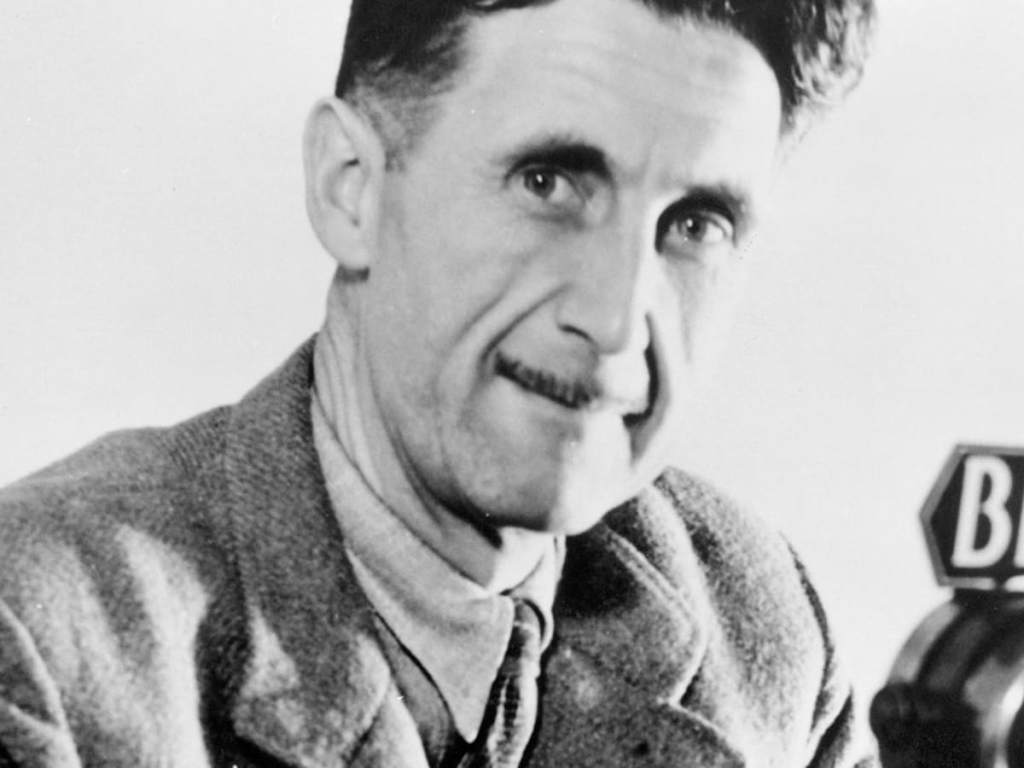
Author Orwell said that the book was based on the events of Russia’s Bolshevik revolution and the betrayal of the cause by Joseph Stalin. Published in 1945, this book still stays relevant in today’s world, even after 76 years. It highlights the demons within every human; jealousy, greed, laziness and cruelty. Animal Farm is bitter reminder from history warning us that no good will come to us or anybody unless we set aside our egos and greed to help and support each other selflessly when the whole world is against us.

Author George Orwell

What lies ahead for Afghanistan

On July 2, U.S. troops departed from the Bagram Air Base that coordinated the 20-year-long war in Afghanistan, effectively ending their military operations in the country. The exit is part of President Joe Biden’s plan to withdraw American troops from Afghanistan by September 11, the 20th anniversary of the terrorist attack on the twin towers of the World Trade Center and the Pentagon. Ever since the remaining U.S. troops began pulling out on May 1, the Taliban have made rapid territorial advances. If the Taliban had controlled 73 of Afghanistan’s 407 districts before May 1, the number of districts went up to 157 in two months as of June 29. They contest another 151 districts, which leaves 79 districts firmly in the hands of the government. The Taliban’s military offensive is focussed on the northern districts, far away from their southern strongholds, and several provincial capitals are under threat.

Why did the U.S. invade Afghanistan?

Weeks after the September 11, 2001 terrorist attacks, U.S. President George W. Bush declared war on Afghanistan, which was then ruled by the Taliban. Mr. Bush said the Taliban regime had turned down his demand to hand over al-Qaeda leaders, including Osama bin Laden, who plotted the attacks. Inside Afghanistan, the NATO coalition troops led by the U.S. quickly dislodged the Taliban regime and established a transitional government. Al-Qaeda’s leaders and key operatives fled to safe havens in Pakistan. The U.S. rejected an offer from the Taliban to surrender and vowed to defeat the insurgents in every corner of Afghanistan. In May 2003, Defense Secretary Donald Rumsfeld announced that major military operations in the country were over. The U.S. focus shifted to the Iraq invasion, while in Afghanistan, western powers helped build a centralised democratic system and institutions. But that neither ended the war nor stabilised the country.

Why is the U.S. pulling back?

The U.S. had reached the conclusion long ago that the war was unwinnable. Presidents, starting with Barack Obama, had promised to bring American troops back home from Afghanistan. But the U.S. wanted a face-saving exit. In July 2015, the Obama administration had sent a representative to the first-ever meeting between the Taliban and the Afghan government that was hosted by Pakistan in Murree. The Murree talks did not progress as the Afghan government disclosed after the first round that Taliban leader Mullah Omar had died two years earlier.

Later, President Donald Trump appointed a special envoy for Afghanistan, Zalmay Khalilzad, with a mandate to directly negotiate with the Taliban. Mr. Khalilzad and his team held talks with Taliban representatives in Doha that led to the February 2020 agreement between the U.S. and the insurgents. In the agreement, the Trump administration promised that it would withdraw all American troops from Afghanistan by May 1, 2021. President Joe Biden endorsed the Trump-Taliban deal, but pushed the deadline for withdrawal to September 11. Mr. Biden said on Friday, “We’re on track, exactly where we expected to be.”

What are the terms of the Trump-Taliban deal?

Before the Doha talks started, the Taliban had maintained that they would hold direct talks only with the U.S., and not with the Kabul government, which they did not recognise. The U.S. effectively accepted this demand when they cut the Afghan government off the process and entered direct talks with the insurgents. The February deal dealt with four aspects of the conflict — violence, foreign troops, intra-Afghan peace talks and the use of Afghan soil by terrorist groups such as al-Qaeda and the Islamic State (the IS has an Afghan unit, the Islamic State Khorasan Province, or ISKP, which largely operates from Nangarhar in eastern Afghanistan). According to the agreement, the Taliban promised to reduce violence, join intra-Afghan peace talks and cut all ties with foreign terrorist groups, while the U.S. pledged to withdraw all its troops, roughly 12,000 at the time of the signing of the agreement in February 2020, by May 1, 2021.

After the agreement was signed, the U.S. put pressure on the Afghan government to release thousands of Taliban prisoners — a key Taliban precondition for starting intra-Afghan talks. Talks between Taliban representatives and the Afghan government began in Doha in September 2020 but did not reach any breakthrough. At present, the peace process is frozen. The Taliban reduced hostilities against foreign troops but continued to attack Afghan forces even after the agreement was signed. Afghanistan also saw a series of targeted killings of journalists, activists and other civil society figures over the past many months, which the Afghan government says is a Taliban act. Kabul maintains that the Pakistan support for the Taliban is allowing the insurgents to overcome military pressure and carry forward with their agenda.

Is the Afghanistan government doomed?

The American intelligence community has concluded, according to The Wall Street Journal, that Kabul could fall within six months. None of the American leaders, from General Austin Miller to President Biden, is certain about the survival of the Afghan government. When Mr. Biden was asked this question on Friday, he didn’t say that the government would survive, but said, “They have the capacity to sustain the government”. One thing is certain — the American withdrawal has turned the balance of power in the battleground in favour of the Taliban. They are already making rapid advances, and could launch a major offensive targeting the city centres and provincial capitals once the Americans are out.

So, there could be three scenarios, according to experts. One, there could be a political settlement in which the Taliban and the government agree to some power-sharing mechanism and jointly shape the future of Afghanistan. As of now, this looks like a remote possibility. Two, an all-out civil war may be possible, in which the government, economically backed and militarily trained by the West, holds on to its positions in key cities and the Taliban expand its reach in the countryside, while other ethnic militias fight for their fiefs. This is already unfolding. A third scenario would be of the Taliban taking over the country.

GST – Good and Simple Tax?

Its been 4 years since Goods and Services Tax (GST) was introduced! How much do we know about it?

What is GST

  • The GST is a value-added tax levied on most goods and services sold for domestic consumption.
  • The GST is paid by consumers, but it is remitted to the government by the businesses selling the goods and services.
  • GST, which subsumed almost all domestic indirect taxes (petroleum, alcoholic beverages and stamp duty are the major exceptions) under one head, is perhaps the biggest tax reform in the history of independent India. It was launched into operation on the midnight of 1st July 2017.

What is special about GST?

  • Applicable on Supply Side: GST is applicable on ‘supply’ of goods or services as against the old concept on the manufacture of goods or on sale of goods or on provision of services.
  • Destination based Taxation: GST is based on the principle of destination-based consumption taxation as against the principle of origin-based taxation.
  • Dual GST: It is a dual GST with the Centre and the States simultaneously levying tax on a common base. The GST to be levied by the Centre is called Central GST (CGST) and that to be levied by the States is called State GST (SGST).
  • Import of goods or services would be treated as inter-state supplies and would be subject to Integrated Goods & Services Tax (IGST) in addition to the applicable customs duties.
  • GST rates to be mutually decided: CGST, SGST & IGST are levied at rates to be mutually agreed upon by the Centre and the States. The rates are notified on the recommendation of the GST Council.
  • Multiple Rates: GST is levied at four rates viz. 5%, 12%, 18% and 28%. The schedule or list of items that would fall under these multiple slabs are worked out by the GST council.This is apart from the tax on gold that is kept at 3% and rough precious and semi-precious stones that are placed at a special rate of 0.25% under GST.

The GST Council

  • It is a constitutional body (Article 279A) for making recommendations to the Union and State Government on issues related to GST.
  • The GST Council is chaired by the Union Finance Minister and other members are the Union State Minister of Revenue or Finance and Ministers in-charge of Finance or Taxation of all the States.
  • It is considered as a federal body where both the centre and the states get due representation.

GST – Reform?

  • Creation of a common national market: By amalgamating a large number of Central and State taxes into a single tax.
  • Mitigation of cascading effect:
    • The GST that a merchant pays to procure goods or services (i.e. on inputs) can be set off later against the tax applicable on supply of final goods and services. The set off tax is called input tax credit.
    • The GST thus avoids cascading effect or tax on tax which increases the tax burden on the end consumer.
  • Reduction in Tax burden: From the consumers’ point of view, the biggest advantage is in terms of reduction in the overall tax burden on goods.
  • Making Indian products more competitive: Introduction of GST is making Indian products more competitive in the domestic and international markets owing to the full neutralization of input taxes across the value chain of production.

What are the achievements of GST

  • Automated Indirect Tax Ecosystem:
    • The introduction of e-way bills coupled with the crackdown on fake invoicing has helped in bringing in a substantial portion of GST revenues, which were either being evaded or under-reported.
    • E-invoicing system would also usher the taxpayers into a fully automated compliance regime wherein the computation of tax liabilities and matching of input tax credit would become very simple.
  • Simplification of Compliance:
    • Various initiatives like linking the customs portal with GST portal for credit availability on imports, making available proper means for matching input tax credit, increased automation of the refund procedure to seamless operation of the Invoice Registry Portal, helped simplify tax compliance.
  • Functioning of GST Council:
    • The GST Council made corrections to law, issued clarifications on complex issues, rationalized GST rates and introduced relaxations for dealing with the Covid-19 pandemic, which establishes that the GST Council structure has been very functional and agile.
  • Example to the World:
    • India has served as an example to the world by successfully implementing one of the most complex tax transformation projects for the country.

Criticisms of GST

  • Fiscal Federalism:
    • This issue became controversial when GST collections fell because of the pandemic.
    • Because GST entailed a bigger surrender of taxation powers for the states – states do not levy direct taxes or customs duties – a guaranteed revenue growth of 14% for a period of five years was offered to them by the centre to get them to agree.
  • Issues Highlighted by the 15th Finance Commission:
    • The 15th Finance Commission has highlighted several areas of concern in the GST regime relating to multiplicity of tax rates, shortfall in GST collections vis-à-vis the forecast, high volatility in GST collections, inconsistency in filing of returns, dependence of States on the compensation from Centre and so on.
  • Large Businesses vs Small Businesses:
    • The fundamental principles on which the GST law was built were seamless flow of input credits and ease of compliance has been impaired by IT glitches.
    • Indirect taxes, unlike direct taxes such as income tax, do not differentiate between the rich and the poor and therefore put a bigger burden on the later.
    • Further, small and medium businesses are still grappling to adapt to the tech-enabled regime.

What are some suggestions by experts?

  • With oil prices sky-rocketing across the country, the policymakers need to contemplate the inclusion of petroleum and related products within the GST net.
  • It is vital to finally constitute the GST Appellate Tribunal as it is obvious that all taxpayers do not have the finances or means to approach the High Court for every practical difficulty faced.
  • Streamlining of anti-profiteering measures and simplification of compliance procedures also needs to be revisited to ensure that the cost efficiency and reduction in prices envisaged under GST law finally reaches the common man.

Conclusion

In the four years of GST, It has undoubtedly been successful in many areas but the pandemic has exposed several problems in its structure and implementation. The law is still a ‘work-in-progress’, and the process of evolution, in such a complex journey, cannot be eliminated. The Government is taking several measures to make it resilient. We can definitely hope for a Good and Simple tax in the times to come.

Join hands to save environment

An environment is everything that is around us, which includes both living and nonliving things such as soil,water,animals and plants, which adapt themselves to their surroundings. It is nature’s gift that helps in nourishing life on the earth.

Environment includes physical,chemical and other natural forces. Living elements that an organism interacts with are known as biotic elements: animals,plants,etc., abiotic elements are non living things which include air,water,sunlight etc.

Since everything is part of the environment of something else, the world environment is used to talk about many things. People in different fields of knowledge use the word environment differently. Electromagnetic environment is radio waves and other electromagnetic radiation and magnetic fields. The environment of galaxy refers to conditions of interstellar medium.

In psychology and medicine, a person’s environment is the people, physical things and places that the person lives with. The environment affects the growth and development of the person. It affects the person’s behavior,body,mind and heart.

The living conditions of living organisms in an environment are affected by the weather or climate changes in the environment.

How dangerous will the third wave of COVID-19 be?

A potential third wave would unlikely be as severe as the second wave, according to a modelling study by a team of scientists from the Indian Council of Medical Research (ICMR) and the Imperial College London, U.K. For it to be as devastating, at least 30% of the population who had been infected earlier must entirely lose their immunity, or an emerging variant of the virus must have a reproductive rate (R) over 4.5, that is, each infected person should be spreading to at least 4-5 others and these must occur almost immediately after the second wave ends.

Thereafter, a second wave was simulated assuming a more infectious variant, and therefore a higher R value, and accounting for the fact that second wave saw a peak about four times higher than the first wave. Once this was done, and estimating the number of people who had been likely exposed to the infection, they then modelled a future third wave under several scenarios: a complete loss of immunity from previous waves; emergence of a variant that was more infectious and capable of thwarting immunity than the ones observed; the impact of moving out of lockdowns; and the role of a highly infectious variant in a scenario of a certain percentage of people getting vaccinated.

Their results showed that under all of these situations, the peak number of infections remained much lower than during the second wave, unless the R rate exceeded 4.5, or those previously susceptible exceeded 30%.

The emergence of a third wave could be significantly buffered by expanding vaccination, they contend. Illustratively, the authors calculate that were vaccines rolled out in a way to cover 40% of the population with two doses over a period of three months following the end of the second wave, it could reduce symptomatic incidence by around 55%.

Less than 20% of Indians have received at least one dose of the vaccine and only 4% are fully vaccinated. The Centre proposes to vaccinate all adults — about 94.4 crore — by the end of 2021.

while several factors needed to converge for a third wave as devastating as the second, complacency in observing physical distancing or mask usage could be dangerous. “Wearing masks consistently and correctly as well vaccination are critical to ensure that a third wave isn’t severe, even though the evidence, as we’ve calculated, shows that it is quite unlikely,”

This is the first time that the ICMR’s scientists have attempted a formal forecast of a future wave. In spite of several modelling experts, no group estimated or warned of the severity of the second wave that saw new infections rise to nearly 400,000 a day. Currently, India’s second wave is on a decline, with about 50,000 cases being added daily. India, with over 30 million confirmed coronavirus cases and nearly 400,000 deaths, is the second most affected country after the United States.

Mental Health Kit: a must for all

By Satyansh Pathak | 13 July, 2021

MENTAL HEALTH has been a topic of discussion for a long time ,but it has gathered more attention recently.

We all are aware of the fact that a healthy life is directly proportional to one’s mental health. It is extremely important for all to take care of their mental health and devote as much time as they can. Because the energy and time you invest in yourself will never go waste.

Necessity is the mother of invention. And in order to have a stable mental health, mental health kits were created so that people can take care of their mind and body.

Here are few things that one can store in his mental health kit -:
1. Perfumes – Smell is one of the most powerful senses. The fragrance of perfumes reduces stress. The fragrances evoke emotions.
2. A diary and a pen – This helps to express thoughts clearly and in a more effective way. Moreover, it can make you feel light and happy.
3. Chocolates(mostly homemade) – Dark chocolates are good for our health. The main ingredient, that is, Cocoa helps us to fight depression, improves heart health and enhances the mood.
4. Charcoal facewash – Since self care is directly proportional to mental health, it is important to keep a product like Charcoal facewash which releases toxins from skin and keeps skin healthy and fresh.
5. Fidget spinner – It will helps to stay concentrated and also to keep a person away from unnecessary gossips.
6. A Stuffed toy(Teddy bear) – All of us loves to hold fluffy stuffs  tightly and play with it when we’re tired. They can easily drag a person’s attention and can make feel lively.
7. Sleep mask – Sleeping eye mask has the potential to relieve all the stress and provides comfort while sleeping.

You can add whatever you want in your MENTAL HEALTH KIT. Remember to be kind to yourself and be kind to others.