What is Body Positivity?

Hardly, anyone can say these days they love themselves the way they are or they love their bodies. Everyone now wants a flawless body. Every time a woman saw another woman walking on the street back then, she would walk away. But now ever time a woman sees another woman, all they notice is whether she is slim or fat. Realizing a woman has slimmer body, you question your size and beauty because that’s what society thinks is an acceptable size for a woman. This idea of being socially accepted through disregard for overweight bodies is what lead to body shaming, also known as Fat Shaming. This action of humiliating not only one’s appearance but other people’s appearance as well resulted in damaging people’s perception about self-love irrespective of size, shape or color. Sadly, women are not the only victims of body shaming. Men go through this emotional trauma as well.

Over the years, people have been emotionally struggling. They have been too hard on themselves to look perfect. They thought the only way they could be accepted by the society is if they lose weight and maintain unrealistic body standards. To challenge this society’s view on bodies and promotion of acceptance of all body sizes, Body Positivity had emanated.

The history of Body Positivity dates back to 1960’s. It emerged with the Fat Rights Movement. A man from New York was unhappy with the way people treated his wife because she was overweight. He handed out copies of an article he had right about a man who had been going through the same problem. Soon, he gathered people and created an association for fat Americans. It’s focus was to address the culture of people discriminating on the basis of their size and shape. In 2012, Body Positivity had gained . But, this time it was supported by people across the world through social media. The message of this movement now focused on ‘all bodies are beautiful’.

Social media played a pivotal role in increasing the popularity of body positivity. It helped people from various parts of the world to share their stories and be part of this movement. The concept of body positivity was foreign to most of the people. There were people who were severely affected by the constant criticism. Body Positivity Movement gave them a voice they were looking for.

However, body positivity has always been misunderstood by the people. It is limited to not one definition. It can mean accepting yourself they way you are or loving and feeling confident in your body. Though, body positivity strives to change people’s perspective about certain bodies, it focuses on self-acceptance and self-love. Embrace your flaws and love yourself unconditionally.

How do I a start journey of self-love?

  1. Think positively about your body. Do not let anybody tell you are fat. Speak for yourself.

2. Exercise not to be thin but to adopt a healthy lifestyle. It is not about the size, but about your mental and physical health.

3. Be around positive people. The more you are with negative people, the more negative vibes you get. Avoid negative self-talk.

4. Focus on yourself. Think about the things you love and are passionate about.

5. Always love yourself and embrace your true beauty.

Rowlatt act

Rowlatt Acts, (February 1919), legislation passed by the Imperial Legislative Council, the legislature of British India. The acts allowed certain political cases to be tried without juries and permitted internment of suspects without trial. Their object was to replace the repressive provisions of the wartime Defence of India Act (1915) by a permanent law. They were based on the report of Justice S.A.T. Rowlatt’s committee of 1918.

The Rowlatt Acts were much resented by an aroused Indian public. All nonofficial Indian members of the council (i.e., those who were not officials in the colonial government) voted against the acts. Mahatma Gandhi organized a protest movement that led directly to the Massacre of Amritsar (April 1919) and subsequently to his noncooperation movement (1920–22). The acts were never actually implemented.

The purpose of bringing this Act in effect was to abolish revolt and remove any conspiracy theories against the British from India. Under this act, people who indulged in rebellion against the British could be sent to jail for up to 2 years without trial. Any suspect could be nabbed without a warrant and could be detained for an extended period. The act also gave the government power to muzzle the press’s voice if they wanted to probe the reasons behind it with the evidence.

Consequently, they prohibited public gatherings of any cultural or religious sort. To revoke this act, Mahatma Gandhi and the other leaders called for a Hartal (suspended all activities) to make them view the rejection by Indians with this rule. Many freedom fighters and nationalists were arrested after protesting against it.

The Imperial Legislative Council cleared the Anarchical and Revolutionary Crimes Act (the official name of the Rowlatt Act) irrespective of the united opposition from the Indian members of the council. All of them resigned while the protest was on. The bills were called “black laws”.These consisted of Mohammed Ali Jinnah, Madan Mohan Malviya and Mazhar Ul Haq. Two prominent Congress leaders Satya Pal and Saifuddin Kitchlew were arrested on April 10. The protest was grisly when the government implemented the act, and the army was called in Punjab to control the situation.Gandhiji called for a nationwide hartal on April 6 in response to the act. It was known as the Rowlatt Satyagraha. Many places such as Bombay, Ahmadabad, Nadiad, and Punjab saw an ugly turn leading to riots and violence. The movement was suspended by Gandhiji when the rioting took place in some provinces, especially in Punjab, where the situation was not acceptable.

Without Natural resources life itself is impossible

Man lives in nature and depends on the resources of nature.The progress of mankind depends upon the exploitation of different resources.The utilization of soil,water,coal, electricity,oil,gas and nuclear energy is very important for the development of a Nation.These resources have changed the living standards of man.

The world is facing an ecological crisis and is degrading her natural resources day by day,due to over exploitation.Food, shelter and clothing are the primary requirements of man.Early human society has used natural resources, relatively in much less quantity to cover it’s wants.

Natural resources

The word ‘resource’ means a source of supply or support that is generally held in reserve.The natural resources are the components of lithosphere, hydrosphere and atmosphere.They include energy,air,water,soil,minerals,plant and animals.For man resources are those materials and sources of energy which are needed for survival and comforts.The nature of resources varies from society to society.

Types of natural resources

Natural resources are classified in different ways.i.e.,on the basis of chemical composition, availability and distribution.

⭐ Natural resources are of three types on the basis of their chemical composition

1) Inorganic resources.eg.air,water and minerals

2) Organic resources.eg.plants, animals, microorganisms and fossil fuels

3) Mixture of inorganic and organic resources.eg.soil

⭐ Natural resources are of two types depending upon their availability and abundance.

1) Inexhaustible resources

They are not likely to be exhausted by man’s use.They are air,clay,sand,tidal energy etc., Although the air is available in exhaustible quantity,it can be degraded,if it’s pollution is not checked.

2) Exhaustible resources

They are likely to be exhausted by human use.They are further of two types-renewable and non-renewable.

a) Renewable resources

They have inherent capacity to reappear or replenish themselves by quick recycling,reproduction and replacement within a reasonable time.Soil and living organisms are the main renewable resources.

b) Non-renewable resources

They lack the ability for recycling and replacement.The substances with a very long recycling time are also regarded as non renewable resources e.g.fossil fuels like coal, petroleum and Natural gas and minerals.

It is important to note that underground water,forests and wild life are regarded renewable resources but become non-renewable,if they are not properly.

KOLKATA:THE CITY OF JOY

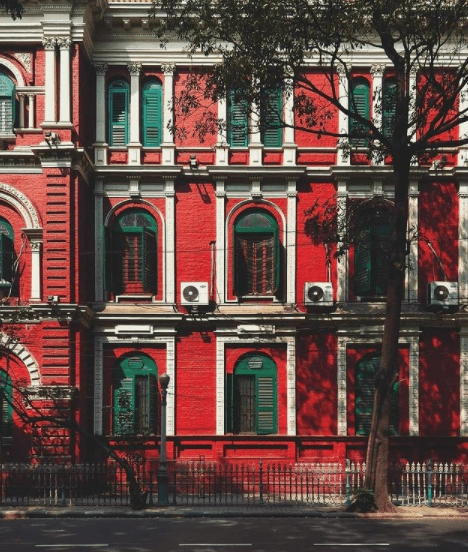
Kolkata previously Calcutta (the official name until 2001) is the capital of the Indian state of West Bengal. Located on the eastern bank of the Hooghly River, the city is approximately 80 kilometres (50 mi) west of the border with Bangladesh .It is the primary business, commercial, and financial hub of Eastern India and the main port of communication for North-East India. According to the 2011 Indian census, Kolkata is the seventh-most populous city in India, with a population of 1.49 crores. Spread roughly north–south along the east bank of the Hooghly River, Kolkata sits within the lower Ganges Delta of eastern India approximately 75 km (47 mi) west of the international border with Bangladesh; the city’s elevation is 1.5–9 m (5–30 ft).Much of the city was originally a wetland that was reclaimed over the decades to accommodate a burgeoning population .The remaining undeveloped areas, known as the East Kolkata Wetlands, were designated a “wetland of international importance” by the Ramsar Convention (1975). As with most of the Indo-Gangetic Plain, the soil and water are predominantly alluvial in origin. Kolkata is located over the “Bengal basin”, a pericratonic tertiary basin. Bengal basin comprises three structural units: shelf or platform in the west; central hinge or shelf/slope break; and deep basinal part in the east and southeast. Kolkata is located atop the western part of the hinge zone which is about 25 km (16 mi) wide at a depth of about 45,000 m (148,000 ft) below the surface. The shelf and hinge zones have many faults, among them some are active. Total thickness of sediment below Kolkata is nearly 7,500 m (24,600 ft) above the crystalline basement; of these the top 350–450 m (1,150–1,480 ft) is Quaternary, followed by 4,500–5,500 m (14,760–18,040 ft) of Tertiary sediments, 500–700 m (1,640–2,300 ft) trap wash of Cretaceous trap and 600–800 m (1,970–2,620 ft) Permian-Carboniferous Gondwana rocks. The quaternary sediments consist of clay, silt and several grades of sand and gravel. These sediments are sandwiched between two clay beds: the lower one at a depth of 250–650 m (820–2,130 ft); the upper one 10–40 m (30–130 ft) in thickness. According to the Bureau of Indian Standards, on a scale ranging from I to V in order of increasing susceptibility to earthquakes, the city lies inside seismic zone III.

ORIGIN

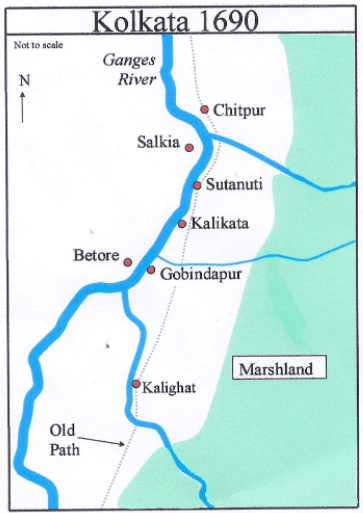
The word Kolkata is derives from Kalikata/ Kolikata,the Bengali name of one of three villages that predated the arrival of the British, in the area where the city was eventually established; the other two villages were Sutanuti and Govindapur.

In the late 17th century, the three villages that predated Calcutta were ruled by the Nawab of Bengal under Mughal suzerainty. After the Nawab granted the East India Company a trading licence in 1690,the area was developed by the Company into an increasingly fortified trading post. Nawab Siraj ud-Daulah occupied Calcutta in 1756, and the East India Company retook it the following year. In 1793 the East India company was strong enough to abolish rule, and assumed full sovereignty of the region. Under the company rule and later under the British Raj, Calcutta served as the capital of British-held territories in India until 1911, when its perceived geographical disadvantages, combined with growing nationalism in Bengal, led to a shift of the capital to New Delhi. Calcutta was the centre for the Indian independence movement. Following independence in 1947, Kolkata, which was once the centre of Indian commerce, culture, and politics, suffered many decades of political violence and economic stagnation.

A demographically diverse city, the culture of Kolkata features idiosyncrasies that include distinctively close-knit neighbourhoods (paras) and freestyle conversations (adda). Kolkata is home to West Bengal’s film industry Tollywood, and cultural institutions, such as the Academy of Fine Arts, the Victoria Memorial, the Asiatic Society, the Indian Museum and the National Library of India. Among scientific institutions, Kolkata hosts the Agri Horticultural Society of India, the Geological Survey of India, the Botanical Survey of India, the Calcutta Mathematical Society, the Indian Science Congress Association, the Zoological Survey of India, the Institution of Engineers, the Anthropological Survey of India and the Indian Public Health Association. Four Nobel laureates and two Nobel Memorial Prize winners are associated with the city.Though home to major cricketing venues and franchises, Kolkata differs from other Indian cities by focusing on association football and other sports.

How continuous sleep loss can impact on our mental and physical health..?

Recently a new study took place to see what will happen if we sleep less than 6 hours a day and if it is continued for 8 days, what type of consequences we will face.

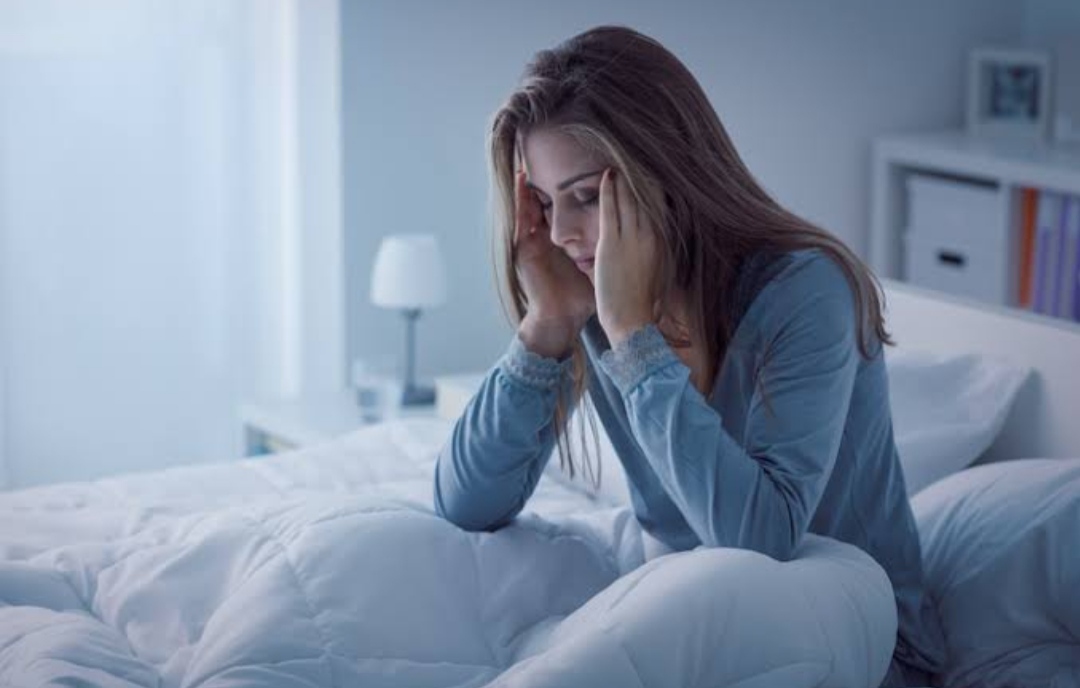
The results of a recent study suggest that, all it takes is three consecutive nights of sleep loss to cause our mental and physical wellbeing to greatly deteriorate.

Scientists said that minimum eight hours of sleep is necessary for an adult to main physical and mental health.

“”Many of us think that we can pay our sleep debt on weekends and be more productive on weekdays.””

“However, results from this study show that having just one night of sleep loss can significantly effects our daily functioning.”

After the study, experts said that we will experience symptoms like angry, nervous, lonely, irritable and frustrated feelings as a result of sleep loss. We will also experience more physical symptoms, such as upper respiratory issues, aches, gastrointestinal problems and other health concerns.

It is necessary and important to balance both the health and work. Take enough rest , stay healthy both physically and mentally.

UNEMPLOYMENT

Unemployment occurs when a person who is actively searching for employment is unable to find work. Unemployment is often used as a measure of the health of the economy. The most frequent measure of unemployment rate, which is the number of unemployed people divided by the number of people in the labour force.

Definitions:

The state of being without any work yet looking for work is called Unemployment. Unemployment is the key for the economic indicator because it signals the ability of workers to readily obtain gainful work to contribute to the productive output of the economy. High unemployment indicate the lower output of social economy.

Types Of Unemployment:

We can divide unemployment into four types

1.Classical Unemployment: Classical, or real-wage, unemployment, occurs when real wages for a job are set above the market-clearing level, causing the number of job-seekers to exceed the number of vacancies. On the other hand, most economists argue that as wages fall below a livable wage, many choose to drop out of the labor market and no longer seek employment. That is especially true in countries in which low-income families are supported through public welfare systems. In such cases, wages would have to be high enough to motivate people to choose employment over what they receive through public welfare. Wages below a livable wage are likely to result in lower labor market participation in the above-stated scenario.

2. Cyclical Unemployment: Cyclical unemployment is the variation in the number of unemployed workers over the course of economic upturns and downturns, such as those related to changes in oil price. Unemployment rises during recessionary periods and declines during periods of economic growth. Preventing and alleviating cyclical unemployment during recessions is one of the key reasons for the study of economics and the purpose of the various policy tool that governments employ on the downside of business cycles to stimulate the economy.

3. Structural Unemployment: structural Unemployment comes about through technological change in the structure of the economy in which labor markets operate. Technological changes—such as the replacement of horse-drawn transport by automobiles or the automation of manufacturing—lead to unemployment among workers displaced from jobs that are no longer needed. Retraining these workers can be difficult, costly, and time-consuming, and displaced workers often end up either unemployed for extended periods or leaving the labor force entirely.

4. Frictional Unemployment: Frictional Unemployment occurs as a result of people voluntary changing job within an economy. After a person leaves a company, it naturally takes time to find another job. Similarly, graduates just entering the workforce add to frictional unemployment. Usually, this type of unemployment is short-lived. It is also the least problematic from an economic standpoint. Frictional unemployment is a natural result of the fact that market processes take time and information can be costly. Searching for a new job, recruiting new workers, and matching the right workers to the right jobs all take time and effort, resulting in frictional unemployment.

Measurement:

Though many people care about the number of unemployed individuals, economists typically focus on the unemployment rate, which corrects for the normal increase in the number of people employed caused by increases in population and increases in the labour force relative to the population. The unemployment rate is expressed as a percentage and calculated as follows:

Text Box: *100

GitHub Copilot

GitHub Copilot is an AI service which suggests line completions and entire function bodies as a programmer types. GitHub Copilot is powered by the Open-AI Codex AI system. It is trained on public Internet text and millions of lines of code that are publicly available on websites like StackOverflow, GeeksforGeeks, and many more. While Copilot might be a major time saver that many people would consider “magic” ,it’s also been met with criticism by other developers, who worry that the tool could violate individual users’ copyrights.

How Copilot works?

GitHub describes Copilot as the AI equivalent of pair-programming, which is a term coined for two developers who work together at a single computer. Pair programming is when one developer write code for the problems stated and the other observes and make changes(debugging). In practice, though, Copilot is more of a time saver, which integrates the resources that developers might otherwise have to look up elsewhere. As users type into Copilot, it will suggest lines/blocks of code to add by just clicking a button. That way, they don’t have to spend time searching through various documentations or looking up sample code on sites like StackOverflow.

GitHub also wants Copilot to get more efficient over time based on the collected data from users. So whenever users accept or reject Copilot’s suggestions, its powerful machine learning model will use that feedback to improve future suggestions. This would make Copilot only better with time

Criticism

Not long after Copilot’s launch, many developers started ranting about the use of public code to train the tool’s AI. The major concern being commercial use of open source code without proper licensing. The major reason why developers are criticizing it is: Microsoft, the company that owns GitHub, has access to all the repositories. Training a machine learning model that uses all the public repositories and charges a subscription fee for others to use it will benefit Microsoft. So what do people who contribute to open-source get in return? The tool could also leak personal details that the developers may have posted publicly.

Microsoft’s Policy

The developers, programmers and the open-source community cannot complain, nor can they sue Microsoft. This is because there are absolutely no rules or regulations on how Microsoft plans to use open-source repositories. Even if the open source community decide to sue Microsoft, that would just mean a new set of rules would be imposed on how open-source software is used

The open-source community has mixed feelings regarding Microsoft’s Policy. Some people think that GitHub Copilot doesn’t work the way it’s advertised. A large portion of what Copilot outputs is already full of copyright/license violations, even without extensions. Some think, the code is still AI generated and not a copy-paste block from some repository, so the production is still the programmer’s responsibility.

Conclusion

It’s true that Microsoft is using the public repositories for their own good, but there are no laws based on which people can sue them. This is why most are moving their code from GitHub. It’s indeed copyright infringement for sure, but it’s going to be a little longer before Copilot will deliver a genuine productivity boost. Right now, the suggested snippets do look very accurate, but when dug beneath the surface and you will find that it doesn’t always do what you expected. Can we really find ourselves working with an AI pair-programmer in the future? As for now, it does look skeptical. But with Copilot, the future doesn’t look so far off.

INSPIRATIONAL QUOTES

“The soul of religion is one but encased in a multitude of forms. Wise men will ignore the outward crust and see the same soul living inside a variety of crusts.”– Mahatma Gandhi

“At the bottom of all tributes paid to democracy is the little man and woman, walking into a little booth, with that little pencil, making a little cross on paper- no amount of rhetoric or voluminous discussion can possibly diminish the overwhelming importance of the point.”– Winston Churchill

“Literacy in itself is no education. Literacy is not the end of education or even the beginning. By education I mean an all round drawing out of the best in the child and man- body, mind and spirit.” –Mahatma Gandhi

“Deliberation and debate is the way you stir the sole of our democracy.“- Jesse Jackson

“Freedom is not a matter of political decisions or new constitutions…. it is of the mind and heart and if the mind narrows itself and is befogged and heart is full of bitterness and hatred, then freedom is absent.”– Jawahar Lal Nehru

“India is the cradle of the human race, the birthplace of human speech, the mother of history, the grandmother of legend and the great grandmother of tradition. Our most valuable and most constructive materials in the history of man are treasured of India only.” – Mark Twain

“An investment in knowledge pays the best interest.“- Benjamin Franklin

“You can fool all the people some of the time and some of the people all the time but you cannot fool all the people all the time.” –Abraham Lincoln

“Workers of the world unite, you have nothing to lose but your chains; you have a world to win.” –Karl Marx

“I alone cannot change the world but I can cast a stone alone across the waters to create many ripples.” –Mother Teresa

“Just as a country cannot be ruled by another country, a class cannot be ruled by another class.” –BR Ambedkar

“It is impossible to think about the welfare of the world unless the condition of women is improved. It is impossible for a bird to fly on only one wing.“- Swami Vivekananda

Arts student job opportunity

As a arts student your opportunity not limited to Masters in Arts or UPSC and other government exam. Of course they are available for you. Today I will post some more amazing career option which you might not know.

MBA/MMS

Nowadays top B school are focusing on diversities. If your acads are low then the best exam would be MHCET. Many college in Mumbai don’t conduct gd-pi. If you communication skill is poor then you must aim for these mba/mms course(they mostly offer mms) .

CFA

If you are graduate (Final year) you can give CFA 1 exam. Then you will get an internship easily. And it will help you clear interview of Personal interview happens in bschool. In summer internship in mba program CFA certificate definitely help to crack it.

Law

Law give you opportunity to understand our legal system better and indepth. Many law firm recruit law graduate.

POLLINATION

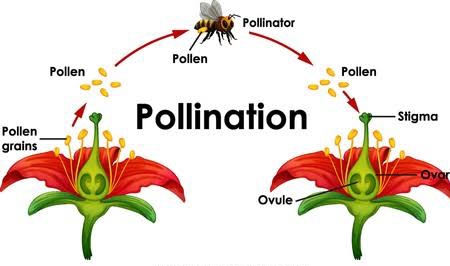
The transfer of pollen grains from anther to stigma of a flower is called as pollution.

Importance of pollination

✓It results in fertilization which leads to the formation of fruits and seed.
✓New varieties of plants are formed through new combination of genes in case of cross pollination.

Types of Pollination
✓Self-pollination
✓Cross Pollination

Self-pollination

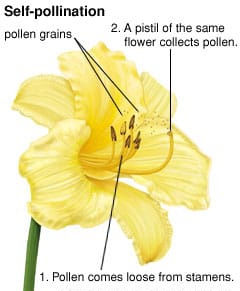
Self-pollination is also known as autogamy. The transfer of pollen grains from the anther to the stigma of same flower or another flower borne on the same plant is known as self-pollination. E.g. Hibiscus.

Cross Pollination

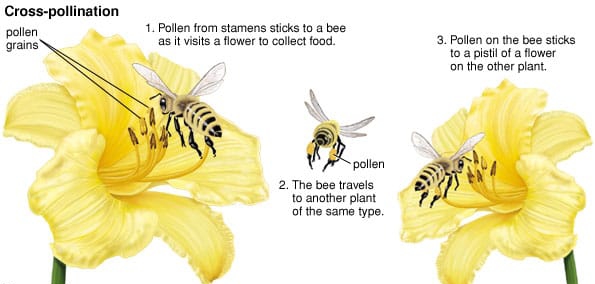
Cross Pollination is the transfer of pollen from the anthers of a flower to the stigma of a flower on another plant of the same species e.g.apples, grapes, plum, etc.

Agents of Cross Pollination

In order to bring about cross pollination, it is necessary that the pollen should be carried from one flower to another of a different plant.
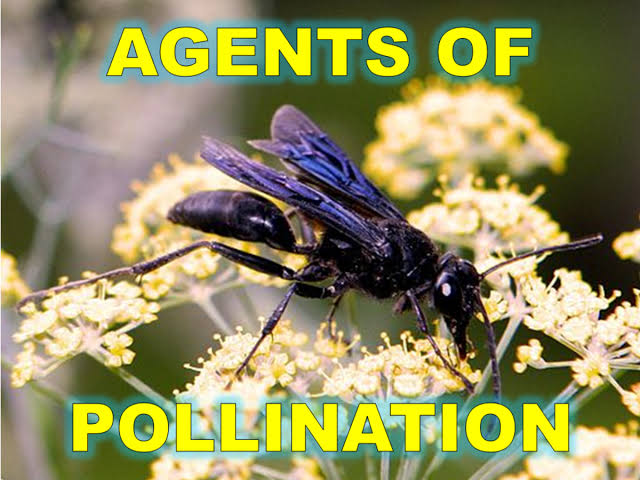
This takes place through the agency of animals, insects, wind and water.

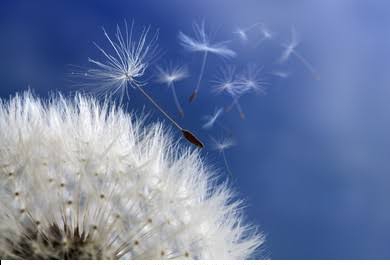
Pollination by wind

The Pollination with the help of wind is called anemophily. The anemophilous flowers produce enormous amount of pollen grains. The pollen grains are small, smooth, dry and light in weight. Pollen of such plants are blown off at a distance of more than 1,000 km. The stigmas are comparatively large, protruding and sometimes hairy to trap the pollen grains. e.g. Grasses and some cacti.

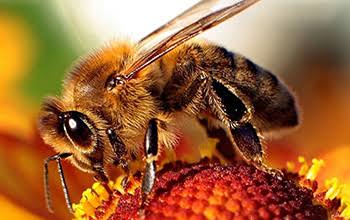
Pollination by insects

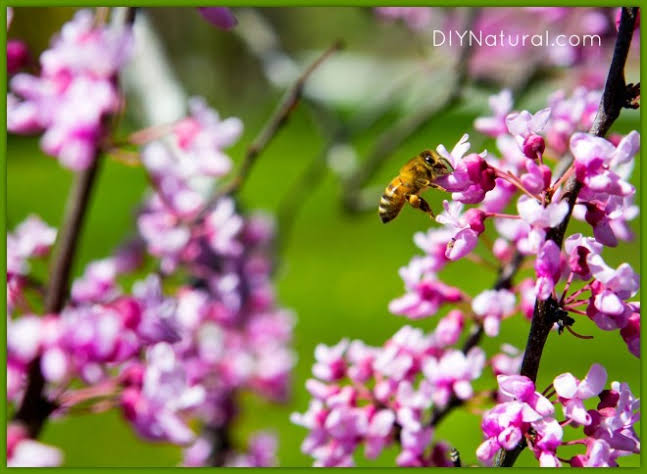
Pollination with the help of insects like honey bees, flies are called entomophily. To attract insects these flowers are brightly coloured, have smell and nectar. The pollen grains are larger in size, the exine is pitted, spiny etc., so they can be adhered firmly on the sticky stigma. Approximately, 80% of the pollination done by the insects is carried by honey bees.

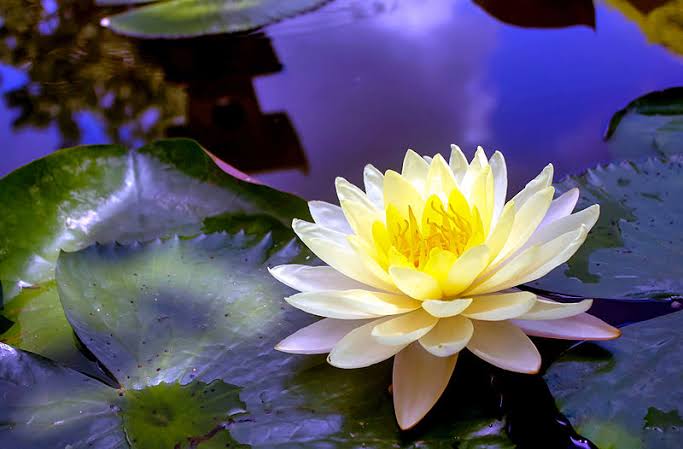
Pollination by water

The pollination with the help of water is called hydrophily. This takes place in aquatic plants.
Pollen grains are produced in large numbers.
Pollen grains float on surface of water till they land on the stigma of female flowers e.g.Hydrilla, Vallisneria.

Pollination by Animals

When pollution takes place with the help of animals, it is called Zoophily. Flowers of such plants attract animals by their bright color, size, scent etc. E.g. sun bird pollinates flowers of Canna, Gladioli, etc., Squirrels pollinate flowers of silk cotton tree.

Indian National Army

The Indian National Army (INA) or Azad Hind Fauj was an armed force formed by
Indian nationalists in 1942 in Southeast Asia during World War II.
The aim of the army was to overthrow the British Raj in colonial India, with Japanese
assistance. Initially composed of Indian prisoners of war captured by Japan in her
Malayan campaign and at Singapore, it later drew large numbers of volunteers from
Indian expatriate population in Malaya and Burma.
Initially formed in 1942 immediately after the fall of Singapore under Mohan Singh, the
first INA collapsed in December that year before it was revived under the leadership of
Subhas Chandra Bose in 1943 and proclaimed the army of Bose’s Arzi Hukumat-e- Azad
Hind (The Provisional Government of Free India). This second INA fought along with
the Imperial Japanese Army against the British and Commonwealth forces in the
campaigns in Burma, Imphal and Kohima, and later, against the successful Burma
Campaign of the Allies. The end of the war saw a large number of the troops repatriated
to India where some faced trial for treason and became a galvanising point of the Indian
Independence movement.
After Indian independence, the ex-INA members, with some exceptions, were refused
service in the Indian Army. However, a number of notable members later became
involved in public life in India and in Southeast Asia.
The legacy of the INA is controversial given its associations with Imperial Japan, the
course of Japanese occupations in Burma, Indonesia and other parts of Southeast Asia,
her alliance with Nazi Germany and Fascist Italy, as well as Japanese war crimes and the
alleged complicity of the troops of the INA in these. Also, its relative insignificance in
military terms, its obvious propaganda value to the Japanese, as well as wartime British
Intelligence propaganda of cowardice and stories that associated INA soldiers in
mistreatment of captured Allied troops, to some extent mires the history of the army.
However, after the war, the Red Fort trials of captured INA officers in India provoked
massive public outcries in support of their efforts to fight the Raj, eventually triggering
the Bombay mutiny in the British Indian forces. These events in the twilight of the Raj
are accepted to have played a crucial role in its hasty end.

Donate Blood, Save Lives!

See the source image
Your few drops of Blood can be someone’s new ray of hope.

“A drop of blood can save a life! Don’t waste it and donate blood.”

Blood donation is a vital part of worldwide healthcare. It relates to blood transfusion as a life-sustaining and life-saving procedure as well as a form of therapeutic phlebotomy as a primary medical intervention. Over one hundred million units of blood are donated each year throughout the world. Donation is the only way of obtaining blood. In the presence of medical and technological advances it is wrongly thought that blood can currently be made but the only source is through blood donation. In developed countries donors are volunteers who donate for their community and whereas in developing countries many people often donate only when their family and friends need it. The prospective donors are being checked that there blood is safe for use. Specialist medical staffs are available at all times during the donation drive and it safe and painless procedure. There is no risk for donors irrespective of the age factor. There is a constant need for regular blood supply because blood can be stored for only a limited time before use. Regular blood donations by a sufficient number of healthy people are needed to ensure that safe blood will be available whenever and wherever it is needed.

Why should you donate blood

Blood is the most precious gift that anyone can give to another person the gift of life. A decision to donate your blood can save a life, or even several if your blood is separated into its components – red cells, platelets and plasma – which can be used individually for patients with specific conditions.

The reason to donate is simple because it helps to save people’s lives. In fact, every two seconds of every day, someone needs blood. Since blood cannot be manufactured outside the body and has a limited shelf life, the supply must constantly be replenished by generous blood donors only.Many patients are waiting for operation in hospital but because of non-availability of blood donors they have to wait unless they find s reliable source they have to keep on waiting. Every two seconds someone in the world needs blood which are required for surgeries, cancer treatment, chronic illnesses, and traumatic injuries etc.

Who should not donate blood

  1. Pregnant or lactating women, or those who have recently had an abortion.
  2. Persons who are on steroids, hormonal supplements or certain specified medication.
  3. Persons with multiple sexual partners or those who are addicted to drugs.
  4. Persons who have had an attack of infection like jaundice, rubella, typhoid or malaria.
  5. Persons who have undergone surgery in the previous six months.
  6. Persons who have consumed alcohol in the 12 hours prior to donation.
  7. Women should avoid donation during their menstruating period.

Blood donation is a major concern to the society as donated blood is lifesaving for individuals who need it. Blood is scarce. There is a shortage to active blood donors to meet the need of increased blood demand. One of the biggest challenges to blood safety particularly is accessing safe and adequate quantities of blood and blood products. Safe supply of blood and blood components is essential, to enable a wide range of critical care procedures to be carried out in hospitals. Interactive awareness on blood donation should be organized to create awareness and opportunities for blood donation.

LUNG CANCER

See the source image

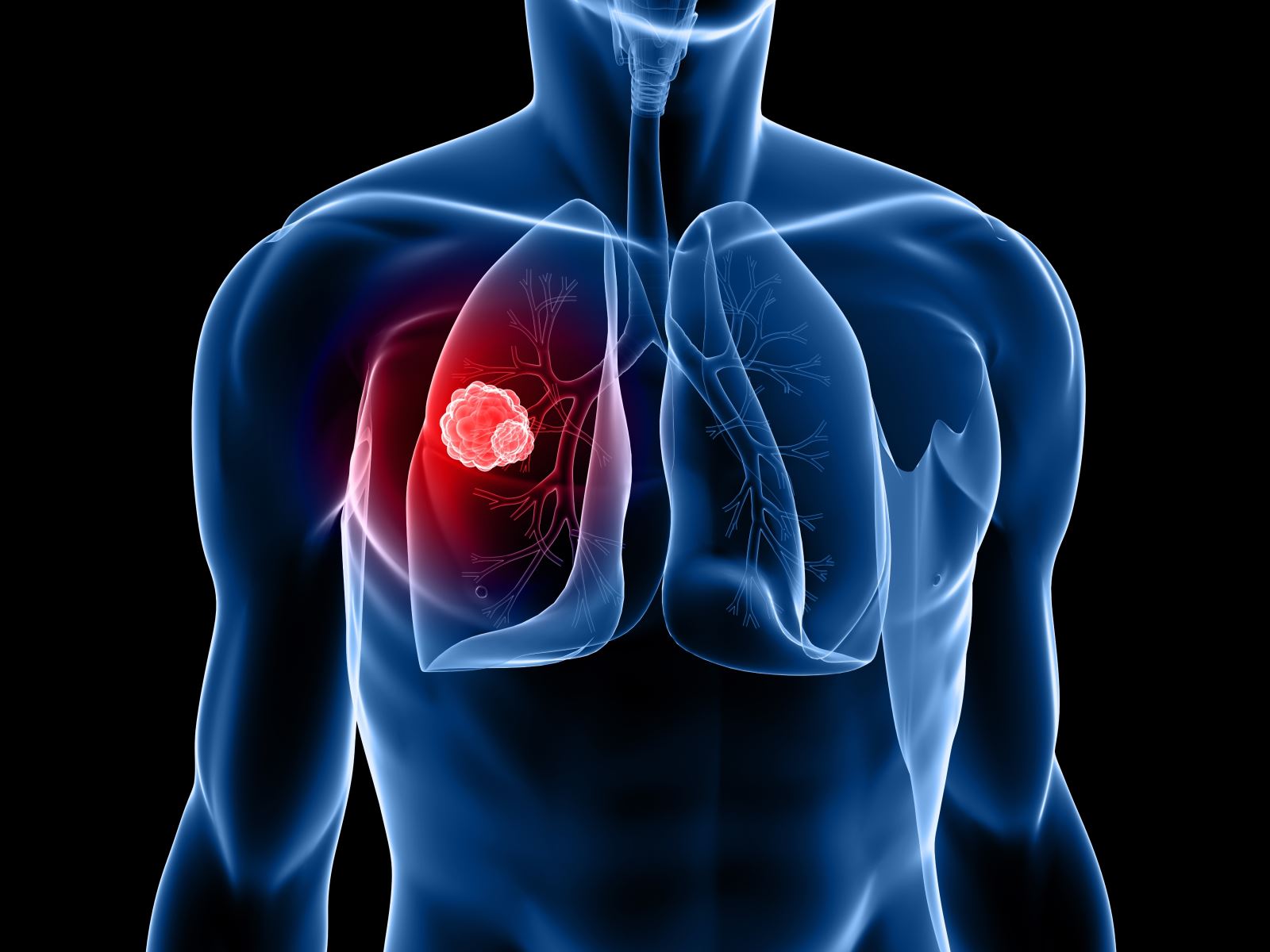
Lung cancer is a disease in which uncontrolled abnormal cell growth begins in the lungs. Lung cancer is a type of cancer that begins in the lungs. Your lungs are two spongy organs in your chest that take in oxygen when you inhale and release carbon dioxide when you exhale. Lung cancer begins in the lungs and may spread to lymph nodes or other organs in the body, such as the brain. Cancer from other organs also may spread to the lungs.  Lung cancer is the leading cause of cancer deaths worldwide. People who smoke have the greatest risk of lung cancer, though lung cancer can also occur in people who have never smoked. The risk of lung cancer increases with the length of time and number of cigarettes you’ve smoked. If you quit smoking, even after smoking for many years, you can significantly reduce your chances of developing lung cancer.

Causes of Lung Cancer:

  • Radon, a radioactive gas found naturally in soil and rocks
  • Smoking
  • Asbestos
  • Mineral and metal dust
  • Air pollution
  • Radiation treatment to your chest or breast
  • HIV/AIDS

Symptoms of Lung Cancer

Lung cancer typically doesn’t cause signs and symptoms in its earliest stages. Signs and symptoms of lung cancer typically occur when the disease is advanced. The symptoms are as follows

  • Chest pain that worsens when you breathe deeply, laugh, or a cough.
  • Hoarseness
  • A lingering or worsening cough
  • Shortness of breath
  • Wheezing
  • Weakness and fatigue
  • Loss of appetite and weight Loss
  • Coughing up phlegm or blood
  • Muscle Weakness
  • Nausea
  • Vomiting
  • High blood pressure and High blood sugar
  • Confusion
  • Coma

Prevention

  • Stop smoking. Stop smoking now. Quitting reduces your risk of lung cancer, even if you’ve smoked for years. Talk to your doctor about strategies and stop-smoking aids that can help you quit. Options include nicotine replacement products, medications and support groups.
  • Avoid secondhand smoke. If you live or work with a smoker, urge him or her to quit. At the very least, ask him or her to smoke outside. Avoid areas where people smoke, such as bars and restaurants, and seek out smoke-free options.
  • Avoid carcinogens at work. Take precautions to protect yourself from exposure to toxic chemicals at work. Follow your employer’s precautions. For instance, if you’re given a face mask for protection, always wear it. Ask your doctor what more you can do to protect yourself at work. Your risk of lung damage from workplace carcinogens increases if you smoke.
  • Eat a diet full of fruits and vegetables. Choose a healthy diet with a variety of fruits and vegetables. Food sources of vitamins and nutrients are best. Avoid taking large doses of vitamins in pill form, as they may be harmful. For instance, researchers hoping to reduce the risk of lung cancer in heavy smokers gave them beta carotene supplements. Results showed the supplements actually increased the risk of cancer in smokers.
  • Exercise most days of the week. If you don’t exercise regularly, start out slowly. Try to exercise most days of the week.

OSCAR WILDE’S 🏆:

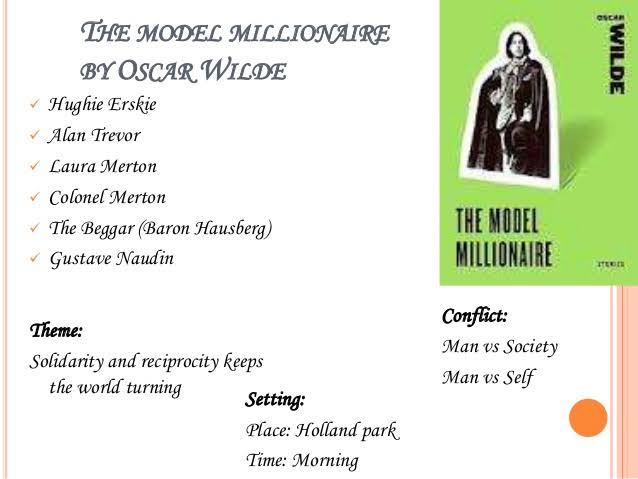
⭐Osar wild’s ‘The Model Millionaire’ gives a philanthropic (love for charity) view of life through his two characters,Hughie and The Baron.
⭐Hughie was a good looking youth who captivated (attracted) all with his clear profile, get eyes and crisp hair. He succeeded in everything but not in making money. This left him with two disadvantages- as a buoyant (delightful) handsome but ineffectual (worthless) youth ad not able to win hs lady love, Laura Merton’s hand in marriage. Laura’s father, retired Colonel was very frim that Hughie should prove his worth as a professional. Hughie should have ten thousand pounds of his own before he talked of engagement. Hughie could not forgive himself for his inability to do what the colonel wanted.


⭐On his way to Holland Park one morning, he called on his friend, Alan Trevor, a painter. Trevor was quite unlike Hughie. He had a freckled face with a red ragged beard. But with his brush,he could produce portraits(sketches) that fetched him a good price.
⭐ Hughie found Trevor was about the finish a life-size portrait of a beggar. The model was standing looking pathetic (pitiable) in a corner of the studio on a platform.
⭐The beggar stood leaning on a rough stick with a coarse brown cloak flung on hisshoulders, a pair of petched boots and a hat held out as if asking for alms(charity). The cloak and the hat were battered and tattered (worn-out). His wrinkled old face and parched dry skin would have wrung (to cause great distress) any body’s heart.


⭐ Hughie commented that it was sad that the model earned only a shilling for every hour and the painter earned a fortune for the painting.
⭐Just then Travor was called as the frame-maker had come to see him. Trevor told Hughie not to leave till his return.
⭐Hughie could not help feeling sorry for the begger who was resting on a ench during Travor’s abanse. He Haggard (miserable) appearane and forlorn (lonely, forsaken) expression touched Hughie. He found some Copper coins and a sovereign in his packet. He slipped the sovereign into the beggar’s hands and the man(the beggar) expressed his gratitude.


⭐Hughie left after Trevor returned.
⭐The following day,at Trevor’s place, Hughie was surprised to hear that the model was very much interested to know everything about him. But Hughie was not very happy when he heard that Travor had revealed Hughie’s financial (money) status. He told Hughie that the beggar was his friend, Baron Hausberg ,one of the richest men in Europe.
⭐ Learning the true identity of the beggar Hughie felt embarrassed that he had given him a sovereign out of pity. It made Trevor burst into laughter. Also it explained the model’s interested in Hughie.


⭐The following morning, Hughie had a visitor from Baron Hausberg. Hughie stammered (stuttered) out his apologies (sorry). A letter was handed over to him with the words “A wedding present to Hugh Erakine- Hughie and Laura — from an ‘old beggar’. Hughie was surprised to find a cheque for ten thousand pounds — the Money he had to show to Laura’s father.”
⭐When his friend Travor heard of this, he remarked :-“Millionaires model are rare enough— Model Millionaires are rarer still !“


⭐ According to Alan Travor, a millionaire used to o dress richly and luxuriously and would seldom pose as a beggar for a portrait. But in Hughie’s case, a millionaire who could be referred as a model (an example) of magnanimity (generosity) was extremely uncommon. To pay the price of ten thousand pounds in exchange for a sovereign (all that Hughie had, then) showed the good – heart of a rich man.

❣Oscar Wilde’s short stories always have surprised end, ad also convey some philosophy of life.❣

Coronavirus: Impact of Covid 19 Second Wave in India; Vaccination Policy; Third Wave Predictions

After the devastation caused by first wave in 2020, Coronavirus cases rose sharply in April and May 2021 causing the Second Wave. While Government and Industry thought that they had gained control of the situation by January 2021, the second wave found us wanting for basic necessities such as oxygen and medical supplies. It appears that the second wave is on its way out with daily cases coming down from the peaks of 4 lakh cases in April 2021, but we have lost almost 4.0 lakh lives to COVID-19. With the hope that the situation will improve in coming months, a SBI report predicts third wave in August-September, 2021.

Lower GDP Growth
In the wake of Second Wave of Covid 19, many economists and ratings agencies have lowered their FY22 GDP forecast for India in just a matter of months. While India’s March quarter (Q4FY21) GDP growth improved, economists believe that the gains have been eroded by the second wave of the pandemic. In June, the State Bank of India (SBI) slashed the country FY22 growth forecast to 7.9 per cent from the earlier 10.4 per cent. 

Rise in Unemployment hits Poor Households
Rising unemployment has emerged as the biggest economic concern during the second Covid-19 wave as it has mostly affected the poorer sections of society. Data suggests that the pace of employment increased sharply in May as smaller firms cut jobs at the fast pace. Think tank Centre for Monitoring Indian Economy had confirmed that one crore Indians have lost jobs during the second wave and the numbers are still rising. 

Weak Consumer Demand Hits Industry
Lack of demand and poor consumer sentiments during the second wave are factors that will significantly make India’s economic recovery harder. Consumers are not in a mood to spend freely after second wave, given the health and financial emergencies that shocked the households. The combination of slow demand growth and lack of consumer confidence could significantly derail the economy as people are likely to remain hesitant for a longer period before they start spending on discretionary items.

Loan Defaults on Rise
This negative impact is evident in the official data on rising loan defaults and cheque bounces. All Banks have reported a rise in loan defaults and cheque bounces during the second wave. It is a clear sign that middle class Indians are struggling to manage debts and liabilities. Cheque bounces rate for loan repayments have doubled to over 20 per cent from the year-ago period while credit card defaults rose to 18 per cent, says a Reuters report. Many banks have indicated that retail loan defaults are likely to rise in the coming months. HDFC Bank’s CEO Sashidhar Jagdishan recently stated during an investor call that the bank may not have a “grip of what is happening for the first time in so many years.”

Rural India Hit Hard
The second wave has seen stricter and longer lockdowns in the rural parts of the country too. Most APMC Mandis were closed for operations at the peak of Second Wave. Due to the closure of Mandis, vegetable vendors, and processing industries have also been hit. The average wage growth for the agriculture sector for the period of November 2020 to March 2021 has reduced to 2.9 percent (2nd wave) from 8.5 percent in April to August 2020 (1st wave).

Government Takes Steps

Government of India has taken many steps to support the Indian economy and industry. Here are the key steps:

  • In March 2020, the Government announced a Rs 1.70 lakh crore-Pradhan Mantri Garib Kalyan Yojana (PMGKP) to protect the poor and vulnerable from the impact of the pandemic.
  • In 2020, the Union government released the ‘Aatmanirbhar Bharat’ package to boost the economy and the overall stimulus was estimated to be worth around Rs 27.1 lakh crore.
  • Government and the RBI also came out with a series of packages in a phased manner totalling around Rs 30 lakh crore, which is 15 per cent of the national GDP.
  • To boost consumption during the festival season, in October 2020, Government announced measures that were worth close to Rs 73,000 crore to stimulate consumer spending.
  • Aatmanirbhar Bharat Abhiyaan 3.0 unveiled in November 2020, ahead of Diwali, was worth Rs 2.65 lakh crore. Of the total amount, the maximum of Rs 1.45 lakh crore was allocated to give a boost to manufacturing activites.
  • In June 2021, Finance Minister Nirmala Sitharaman announced some fresh relief measures for the economy, the first such package after the second COVID-19 wave, focusing largely on extending loan guarantees and concessional credit for pandemic-hit sectors and investments to ramp up healthcare capacities. The government pegged the total financial implications of the package, which included some changes earlier supports, at ₹6,28,993 crore. Ms. Sitharaman announced an expansion of the existing Emergency Credit Line Guarantee Scheme (ECLGS) by ₹1.5 lakh crore. She also announced a new ₹7,500 crore scheme to guarantee loans upto ₹1.25 lakh to small borrowers through micro-finance institutions.

COVID-19 Vaccination in India
On 16 January 2021 India started its national vaccination programme against the COVID-19 pandemic. The drive initially prioritises healthcare and frontline workers, and then those over the age of 60, and then those over the age of 45 and suffering from certain comorbidities.

A new policy for Covid-19 vaccination in India come into effect on June 21. Prime Minister Narendra Modi had said India will shift to centralised procurement of vaccines, after several states faced difficulties in procuring and managing the funding of vaccines. Centre will directly procure 75 per cent of the doses manufactured by vaccine companies, and distribute this among the states, to be administered for free. Private hospitals will have exclusive access to the remaining 25 per cent.  

India’s Third Covid-19 Wave from August, Peak in September: SBI

Unfortunately, it looks like that Coronavirus pandemic is not over yet. India is expected to see the Third Wave of the Coronavirus Pandemic from August 2021 and it would reach its peak in September, a report by the State Bank of India (SBI) has projected. “Going by the current data, India can experience daily Covid-19 cases around 10,000 somewhere around the second week of July. However, the cases can start rising by the second fortnight of August,” the SBI report said. An SBI report, published in June, said a possible second wave could be “as severe as second,” though it also said the number of coronavirus related fatalities would be less than the corresponding figures due to the second wave.

COVID 19 – India to emerge stronger
While there is a short-term negative impact on India, economists are of the opinion that the disruption caused by the virus in China could pave way for more long term foreign investments in emerging economies like India as the world looks to reduce dependency on China, the largest manufacturing hub in the world. Experts feel that India has a good chance of becoming an attractive manufacturing hub given the present situation, provided the government changes some of its trade policies to bring down commodity prices. An example of Vietnam, which has gained a huge growth boost due to higher density of electronics manufacturing, is before everyone.

According to the Chief Economic Advisor of India, Krishnamurthy Subramanian the coronavirus outbreak in China provides an opportunity for India to expand exports. India is one of China’s leading trade partners in Asia and has a huge trade deficit with that country. Sharing his views at IIM Calcutta, Subramanian said, “The coronavirus outbreak in China provides a good opportunity to India to expand trade and follow an export-driven model.”  He said that China imports a lot of components, parts, assembles and integrates and then exports them. “India has been following the same pattern in terms of mobile manufacturing in the country. So, if one looks from this perspective, it provides a good opportunity for India.” said Subramanian
 

Several reforms passed by Parliament since the pandemic set in, could lift medium-term growth prospects, including the Agricultural Reforms to give farmers more flexibility over where to sell their produce, it said. Stripping out middlemen, as the reform allows, could improve farmer incomes while reducing consumer prices.

Parliament has also passed Labour Reforms. Their intent, among other things, is to improve worker access to social security notably in the large unorganised sector, strengthen occupational safety requirements, speed up the resolution of labour disputes and ease migrant workers’ ability to move between states. In addition, employers will now only need prior state government approval for redundancies if they have over 300 workers, up from 100 previously, and state governments may raise this threshold. “These changes could support formalisation of India’s labour market and improve its flexibility, with positive efficiency gains, but our assumption is that in practice their impact will be modest,” experts added.

The government also intends to privatise some state-owned enterprises, of which more than 200 are owned by the central government and 800 by state governments. A wide-ranging privatisation push could be transformative, it said. Fitch said the process of reforms in India remains especially complex and implementation at times has proven difficult.