The Anglo-Saxon invaders, who came to Britain in the latter part of the 5th century A.D and eventually established their kingdoms there, were the founders of what we can properly call English culture and English Literature, Beowulf holds a special position in Anglo-Saxon literature- indeed, in older Germanic literature as a whole- because it is the only complete extant epic of its kind in an ancient Germanic language.
Beowulf falls into two main parts. The first deals with the visit of Beowulf to the court of King Hrothgar of Denmark to kill a monster named Grendel. He fights with and mortally wounds Grendel in Herot, and when Grendel’s mother comes to take revenge for the death of her son he follows her to the underground water home and slays her too. The second part takes place fifty years later, when Beowulf has long been the king of Geats. A dragon, guarding a hoard of treasure has been disturbed and Beowulf to save his country from the wrath of the dragon decides to fight the dragon. He succeeds in slaying the dragon but ends up being mortally injured. The poem ends with an account of Beowulf’s funeral: hid body is burned on an elaborate pyre amid the lamentations of his warriors.
Beowulf is a heroic poem, celebrating the exploits of a great warrior whose character and actions are held up as a model of aristocratic value. It reflects the ideals of that state of society we call the Heroic Age and its resemblance to the Odyssey in this respect has often been noted. The grave courtesy with which men of rank are received and dismissed the generosity of rulers and the loyalty of retainers, the thirst for fame through the achievement of deeds of courage and endurance, the solemn boasting of warriors before and after performance the interest in genealogies and pride in a noble heredity are all traditional realities of heroic poetry that are found prominently in Beowulf.
Two fragments makes up the remainder of older Anglo-Saxon heroic poetry. The first is a fragment of fifty line popularly known as The Fight at Finnsburh, and describes the attack on Hnaef’s hall by the followers of Finn, king of the North Frisians. The second fragment is the Waldhere, which tells of the exploits of Walter of Aquitaine.
Toward the end of the Anglo-Saxon period the old heroic note re-emerges finely in two poems dealing with contemporary history. The Battle of Brunanburh celebrates the victory of Athelstan of Wessex and Eadmund, his brother, against the combined forces of Olaf, the Norseman, Constantine, King of Scots, and the Britons of Strathclyde. the Battle of Maldon deals in the older epic manner with one of the many clashes between English and Danes that resulted from the latter’s attacks on England. It is the story of a disastrous English defeat. The poem contains nine speeches, mostly of exhortation and encouragement to the English forces, delivered by seven different speakers. the poem singles out for praise individual English warriors, talks about the passionate loyalty of retainers to their chief and eulogizes the brave struggle of the English warriors against insurmountable odds. The Old English heroic poetry provides a glimpse of virtues that were considered important. It shows that though the Christian elements had started to penetrate the literary ethos, qualities like heroism and courage were still held at a very high esteem. The movement of the focus of heroic poetry towards the spirit of nationalism, proclaiming the greatness of England as a nation marks the development of national identity among the English people.
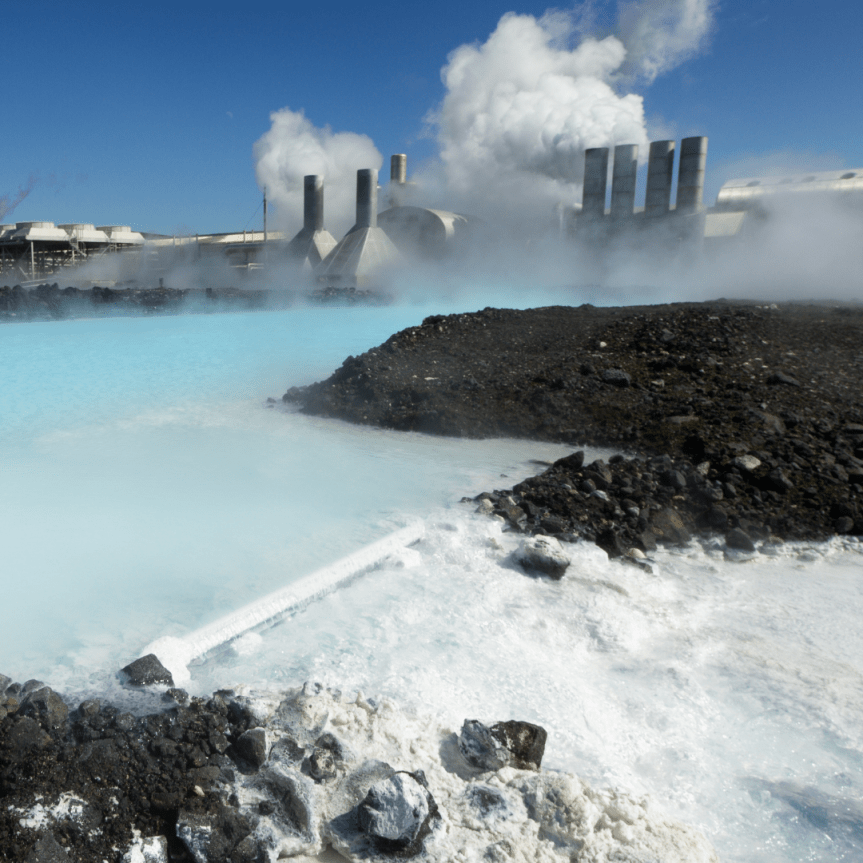
Geothermal energy is considered to be a clean source of energy. It mainly involves absorbing energy from the Earth’s molten core. Beneath the Earth’s surface is a hot layer of magma that erupts at some geological positions on the Earth. This eruption generates steam sufficient enough to rotate the blades of a turbine which generates electricity. The electricity generated can be then used to power up several houses or even small-scale industries solely depending on the velocity and pressure of the steam that vents out through the crust.
An alternative method is also present, known as thermal energy; this method involves burning coal or other fuels to generate steam which in turn rotates the blades to power up houses or industries. However, thermal energy is not considered a green source since it involves the combustion of several non-renewable fuels which only add up to the emissions emitted into the atmosphere. Whereas, geothermal is considered to be a more cost-effective and reliable source of energy. Some places are particularly favored to be potential geothermal points, as they can have access to steam within just a few hundred meters, therefore, avoiding drilling.
In the year 2010, the United States was the leader in geothermal power generation having a capacity of over 3000MW from over 70 plants present throughout the nation. The Philippines too followed the footsteps of the United States containing a capacity of around 1900MW powering up 18% of the nation’s electric grid.
In our nation according to a report in the year 2011, six prominent regions were identified as potential points for geothermal power generation. Located within these six regions where over 400 hot springs were used to estimate the thermal gradient present underneath the crust. The region in India containing the highest potential for a geothermal power plant was identified to be the Himalayan regions. These regions have a heat flow of 100w/m2 due to the highly built-up mountain ranges surrounded by them.
A 5kW installed capacity in Manikaran was abandoned in the year 2016 due to a catastrophic landslide. The energy obtained from this plant was used to suffice cold storage units, hot water baths and many other applications. Besides Manikaran, Tattapani too has a geothermal plant that helps sustain several mushroom cultivation industries, sericulture industry and also cold-storage production houses.
The government of our nation drafted a policy in the year 2019 which intends to get our nation to the top of the leader board in geothermal production. This policy intends to make our nation have a capacity of over 1,000MW by the end of 2022. The Ministry responsible for Renewable energy has put up an aim to develop 1000MW for thermal purposes and 20MW for electricity by 2022 and expect it to grow to 10,000MW and 1000MW respectively by the end of 2030.
By increasing the capacity for geothermal energy, we are not only reducing the effects of global warming or reducing our carbon footprint; we are also preparing sources for the erratic demand for energy we might experience in the coming years due to population explosion. We would require more economical sources of energy to help sustain the livelihood of the billions of people in our nation. This is merely just considered a start towards making our planet a better place to live in.
Hence, our nation is preparing itself to counteract several climate change phenomena by shifting to safer and cleaner modes of energy production. We must in every possible way either contribute our part in this shift to a cleaner world or just co-operate with people involved in this process.
This up and coming career option deals with the consumption and supply of energy on a macroeconomic scale. Energy economists analyse energy markets and financial decisions that affect the global energy market. Energy commodities include gasoline, electricity, natural gas, coal etc. In recent years, natural resources like crude oil and geothermal deposits have been decreasing at an alarming rate and it is imperative that we now conserve these energy resorces and learn to use them efficiently. The objective of energy economics is to use these natural resources without degarding the environment in any way. This can be done because energy can be neither created nor destroyed. Rather, it can only be converted into different forms. Also, energy taken from the physical environment ultimately has to return back. So, energy has to be converted into renewable forms like solar, wind and hydroelectric energy to keep the environmental impact to a minimum.
In economics, energy will always have positive demand no matter what the price becomes. Because of this, energy is seen as an essential good. Meaning some portion of the consumer’s income always goes toward energy. As such, the public policies that affect the global energy market should be taken very seriously. The main concerns that energy economists have to deal with are the demand and supply for each of the main fossil fuels and the competition for these fuels and of course, the impact these fuels have on the environment.
Energy economists can be classified into resource and environmental economics, mineral economics, and energy. Each of these three specialities arose because of different perceived needs and they all have different bases. Resource and environmental economics arose due to a federal government study on natural resource availability. After seeing the problems with availability of natural resources, the US setup Resources for the Future, a research institute that dealt with managing natural resources. Mineral economics came about in the 1930s when mineral extraction issues were being faced. Finally, energy economics as a separate speciality came about in the 1970s when there was a energy crisis and the people needed some organisation that dealt with these kind of issues.
Thus, energy economics is a very viable field to pursue a career in as they are more in demand now than they ever have been.
Meditation is a method of training the mind, similar to how fitness is a training method. However, there are numerous meditation techniques to choose from, so how can you begin to meditate?
“The word ‘meditation’ in the Buddhist tradition is akin to a word like ‘sports’ in the United States. Richard J. Davidson, PhD, director of the University of Wisconsin neuroscience lab, told The New York Times, “It’s a family of behaviours, not a single item.” Different meditation techniques necessitate different mental abilities.
For a newbie, sitting for hours and thinking of nothing or having an “empty mind” is exceedingly tough. When you’re just learning how to meditate, we have some tools to help you along the way, such as a beginner meditation DVD or a brain-sensing headband. In general, focusing on the breath is the simplest method to begin meditating. Concentration is an example of one of the most frequent ways of meditation.
MEDITATION OF CONCENTRATION
Concentration meditation entails concentrating solely on one point. Following the breath, repeating a single phrase or mantra, staring at a candle flame, listening to a repeated gong, or counting beads on a mala are all examples of meditation techniques. Because focusing the mind is difficult, a beginner may begin by meditating for only a few minutes and gradually increase the length of time.
When you detect your mind wandering in this type of meditation, simply refocus your consciousness on the chosen object of attention. You let go of odd thoughts rather than chasing them. Your ability to concentrate improves as a result of this procedure.
MEDITATION ON MINDFULNESS
The practitioner of mindfulness meditation is encouraged to monitor wandering ideas as they pass through the mind. The goal isn’t to become caught up in the thoughts or to pass judgement on them; rather, it’s to be aware of each mental note as it arises.
Students in some meditation schools combine concentration and awareness exercises.
Many disciplines require stillness – to varying degrees, depending on the instructor.
ADDITIONAL MEDITATION METHODS
There are a variety of alternative meditation techniques to choose from. Buddhist monks, for example, focus their daily meditation practice on the cultivation of compassion. This entails visualising unfavourable events and recasting them in a good perspective by using compassion to transform them. Moving meditation techniques such as tai chi, qigong, and walking meditation are also available.
MEDITATION’S
BENEFITS
Relaxation is often a side effect of meditation, even if it isn’t the intention. After performing studies on patients who practised transcendental meditation in the 1970s, Herbert Benson, MD, a researcher at Harvard University Medical School, created the phrase “relaxation response.”According to Benson, the relaxation response is “an opposing, instinctive response that promotes a reduction in sympathetic nervous system activity.”
Since then, research on the relaxation response has revealed the following short-term nervous system benefits:
Reduce your blood pressure.
Blood circulation is improved.
Reduced heart rate
Perspiration is reduced.
Slower breathing rate
Anxiety is reduced.
Reduced cortisol levels in the blood
More sensations of happiness
Stress is reduced.
Researchers are now looking at whether a regular meditation practice has long-term benefits, and they’re finding that meditators have improved brain and immunological function.
The ultimate advantage of meditation, according to Buddhist philosophy, is the freedom of the mind from attachment to things it can’t control, such as external situations or powerful interior emotions.
Instead of following wants or clinging to sensations, the freed or “enlightened” practitioner maintains a tranquil mind and sense of inner harmony.
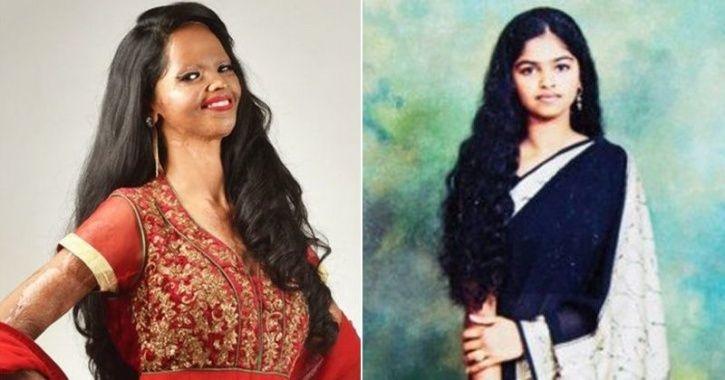
She was just a 15 year old girl . A girl , full of life . But what happened to her .
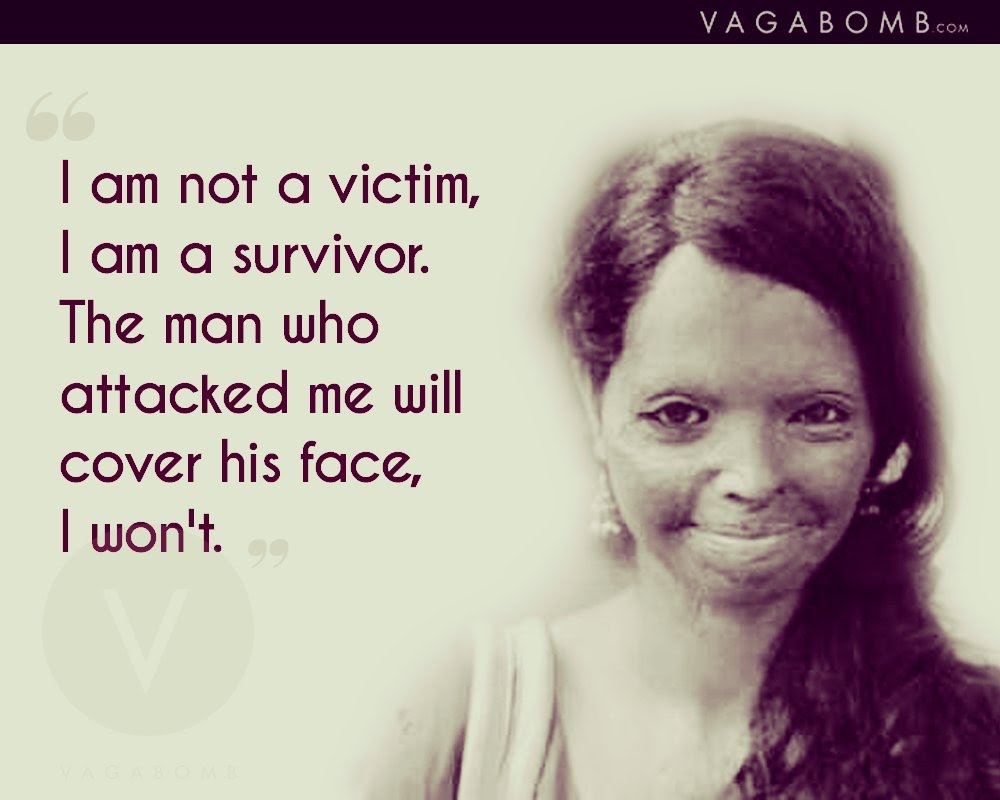
It’s her story . A story of a survivor.
She was powerful not because she wasn’t scared but because she went on so strongly, despite the fear.”
– Atticus
At the age of 15 , when a girl or a boy makes happy memories and learn about life . She was attacked in the market full of people . She was attacked because she rejected an old jerk of 32 years old.
A 32 year old proposed a marriage proposal to a 15 year old girl , who lives near the neighborhood. She ignored and rejected him and he planned an acid attack .
Her name is Lakshmi Agarwal , she was attacked at the age of 15 in 2005 in New Delhi after rejecting the romantic advances of Naeem Khan . She didn’t inform anyone about the scenario because she believed her parents and society would have blamed her and stopped her study .
After 10 months , Lakshmi was in the market and Naeem asked her again through message about the marriage proposal but she didn’t respond . And in no time , Kamran (Naeem’s older brother ) and his girlfriend attacked her with acid . He was in the motorcycle and his girlfriend Rakhi threw acid on Lakshmi , when Kamran called her name and she looked behind for response.
She fainted on the road and when she regain consciousness she went middle of the road asked for help and met with multiple accidents but no one stopped to help her . She was burning in fire and her skin was melting.
A man named Arun Singh called PCR and told police about the situation . Someone threw water to help her but it turned out opposite and the acid burnt her neck . Arun think it might be late , so he helped her on the backseat of his car , later the seat cover turned into black hole due to the acid .
Arun admitted her in the hospital , called police and her family . Lakshmi went through many surgeries and operations including eye surgery. Four days later Naeem Khan got arrested but was bailed after a month later .
Protests and media attention.
After many protests and media attention Naeem got life imprisonment .
Lakshmi’s story was one of the series in the Hindustan Times. Lakshmi was scared after the attack because most of her face and body parts were not same as before . But she didn’t loose hope ,she fought for justice , asked for help for the victims of acid attacks and pleaded the law for the ban on sale of acid.
Meanwhile government failed to frame policies on acid sale and chemical attacks .
“ Seriousness is not seen on the part of the government in handling the issue,” the bench headed by Justice RM Lodha.
In 2013 , the plea of Agarwal was heard and later claims that “ Acid is freely available in shops. Our own volunteers have gone and purchased acid easily. In fact, I have myself purchased acid,” she said. “We have launched a new initiative called ‘Shoot Acid’.
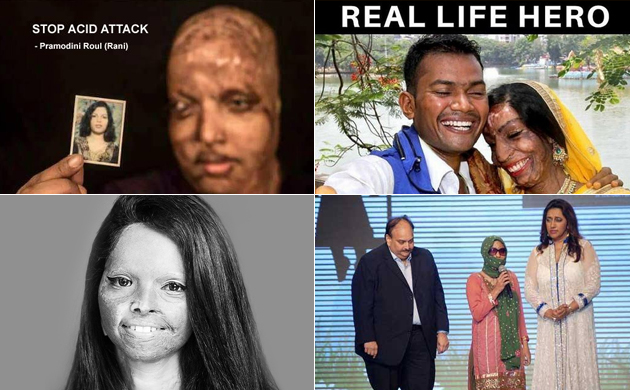
After , the law passed by Supreme court . Lakshmi founded NGO named Chhanv Foundation to help acid attack survivors in India.
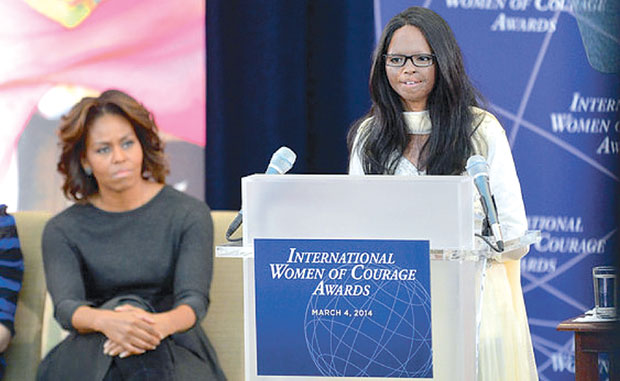
In 2019, she was honored with the International Women Empowerment Award from the Ministry of Women and Child Development, the Ministry of Drinking Water and Sanitation and UNICEF for her campaign of Stop Acid Sale. In 2014, she received the International Women of Courage award at the hands of First Lady Michelle Obama.
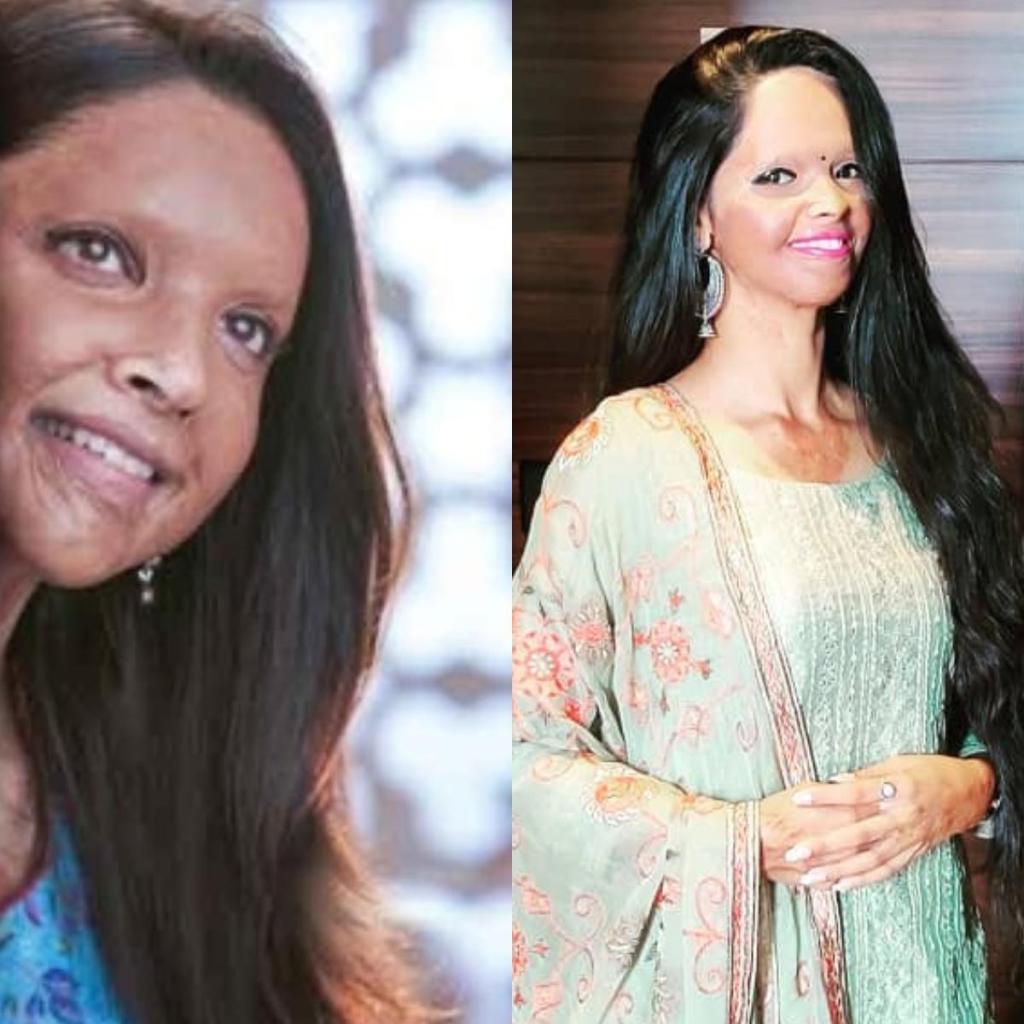
And the movie Chhapaak is based on her life and stars Deepika Padukone in her role.
“And one day she discovered that she was fierce, and strong, and full of fire, and that not even she could hold herself back because her passion burned brighter than her fears.”
If the ongoing pandemic has taught us anything, it’s to appreciate, respect and value our strong-willed and hard working doctors and healthcare workers who have worked selflessly day and night beyond the call of duty to get our country through two deadly waves of the outbreak with whatever resources they had. Today, we celebrate and thank them for all that they do, without worrying about their own safety. As a nation, we are proud and grateful for our doctors and all front-line healthcare workers for giving their all- saving, treating and advising us and our loved ones.
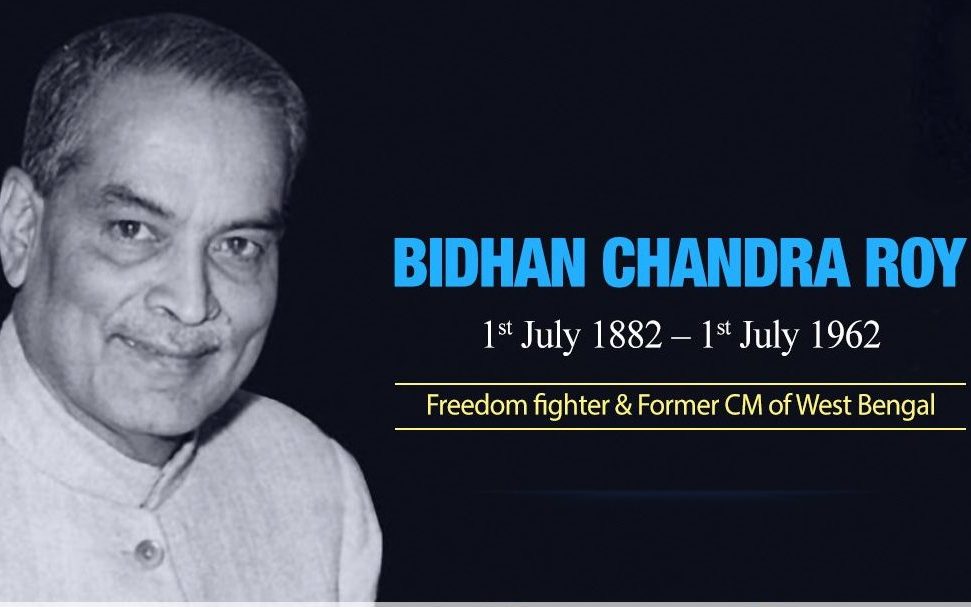
In India, Doctor’s Day is celebrated on 1st July to honour Dr. Bidhan Chandra Roy, a physician, philanthropist, social worker, freedom fighter, Bharat Ratna awardee and the former Chief Minister of West Bengal. He was born on 1st July, 1882 and died on 1st July, 1962. He, not only ensured availability of quality health services for common people at a critical period for India’s Independence, but also played a vital role in the creation of two prominent medical institutions- Indian Medical Association (1928) and Medical Council of India, of which he was the first President as well.
He also kickstarted the Indian Institute of Mental Health and opened Kolkata’s first postgraduate medical college. He also opened centres for women for social work and nursing training. The British Journal described Dr. Roy as “the first medical consultant in the subcontinent of India, who towered over his contemporaries in several fields. At his professional zenith, he may have had the largest consulting practice in the world, news of his visit to a city or even railway station bringing forth hordes of would-be patients.”
Pre-Independence
Dr. Roy was born in Patna, Bihar. He studied Mathematics in Bihar and medicine from Calcutta Medical College. Later, he served as the Vice-Chancellor of the University of Calcutta. After his postgraduation from London in 1911, he became a member of the Royal College of Physicians (MRCP) and a Fellow of Royal College of Surgeons (FRCS). He is one of the few to have obtained MRCP and FRCS degrees simultaneously.
After returning to India, he joined Mahatma Gandhi’s Civil Disobedience movement and became his friend and personal physician. During Gandhi’s 21 day ‘self-purification’ fast in Pune, Dr. Roy was by his side and took care of him.
Post-Independence
After Independence, he became the Governor of Uttar Pradesh and shortly after that in 1948, he became the second Chief Minister of West of Bengal, which at the time was torn by communal violence and influx of refugees. However, West Bengal finally saw peace within three years under his stewardship. He also practiced medicine and treated patients during this time. He served as the Chief Minister of West Bengal for 14 years till he died on his birth date in 1962, aged 80. After his death, his house was donated to the public to run a nursing home.
In 1961, he was awarded the Bharat Ratna. B.C. Roy National award was instituted in 1976 to award work in the areas of politics, philosophy, medicine, science, literature and arts.
Bangladesh, a country since its inception known as one of the poorest and most overly populated nations, is now gradually seeing economic improvement to an even greater degree than its contemporaries: India and Pakistan. At one point, Bangladesh was included in the list of Least Developed Countries (LDC) enumerated by the UN; but now it has been estimated that by 2024 it will break free from this categorization as it has seen a drastic increase in standard of living, fertility rates, and lowered infant mortality rates.
A Rough Start
Bangladesh got its independence from Pakistan in the year 1971 with the help of India. However, this independence was achieved through a lot of violence and struggle, so the Bangladeshi administration was not able to fulfil even some of the basic needs of its people due to the damage it had suffered, both economical and physical. Following this, there was even a major famine which killed nearly 15 lakh people in the country. This, along with political instability and constant military coups made it very difficult for any growth to take place in the country.
The Basket Case
After its independence, the foreign secretary of USA at the time, Alexis Johnson, called Bangladesh an ‘International Basket Case’. A basket case means a country burdened by economic strife and which falls into severe debt in order to cope with its financial crises. Such countries are those that struggle to maintain a self-sufficient and autonomous economy. Other newspapers would also predict that Independent Bangladesh will be an economic failure. Such predictions at the time were made due to the fact that Bangladesh was overburdened by a very dense populations, leading to severe problems like food shortage. It was also not a country rich in natural resources which would allow it to bolster its economy, so the general view was it would become an underdeveloped state and become economically dependent on other countries. This became true in the 1980s, when Bangladesh heavily relied on foreign aid to stay afloat and meets its needs.
How did Bangladesh become a well-performing economy?
Firstly, there is the well-known fact of the cheap labor or low-skill manufacturing that Bangladesh provides. After China, you are most likely to see a ‘Made in Bangladesh’ tag on the clothes bought in even the most expensive and high-end shopping areas in the world. This is because international clothing and apparel companies look to countries like Bangladesh for cheap labor and manufacturing so as to make greater profits on their products. This industry has provided major employment in the country, and has contributed up to 10% of its GDP at times, helping the country a lot in its growth.
Furthermore, around 80% of the workforce in these factories are women, which is an indicator of high employment for women and their empowerment. In a country where women are generally limited to being homemakers, the employment of women has led to fruitful advancements. Many reports have shown that as more and more women employed in factories, their educational attainment, age of marriage, and general welfare has increased. This is due to the fact that they have become economically independent and have seen an increase in income, thereby allowing expenses to be made on girl child’s education and not making marriage for money a necessity. Today, even the male-female wage gap is slowly decreasing in Bangladesh.
Then there is also the role of NGOs in Bangladesh. International and national NGOs got involved in the improvement of Bangladesh’s socioeconomic situations, with the building of schools and advancement of medical infrastructure. NGOs have played a unique role in Bangladesh’s improvement, as generally such welfare measures should be taken by the government so as to gain public trust. However, the Bangladesh government has given much leeway to the NGOs, and has encouraged to work together with them so as to promote growth in the country. This attitude has led to significant improvements, and other governments hesitant to work with NGOs for fear of it affecting their public image should look to Bangladesh as an example of its benefits.
Finally, and perhaps most important, is the balanced foreign policy of Bangladesh. They have created such a foreign policy that they have received foreign aid from many different countries, even those that have opposed their independence like the USA. Also, the scheme of remittances (money transferred by Bangladeshi citizens working in foreign countries to their home) in the foreign policy has contributed greatly to the GDP of the country. Overall, the foreign policy has allowed for products and services from Bangladesh to be bought and sold in foreign, richer countries, thereby helping income.
Conclusion
Hence, in this way Bangladesh has seen much economic success especially in the last decade or so. What remains to be seen is how the country will move forward in the years to come. Will their dependence on the clothing and garment industry be dangerous? Will international trade regulations become stricter as the country is economically improving? Only time will tell us the answer to these but for now, Bangladesh can celebrate how far it has come.
The marketing term ‘Server less” refers to a new generation of platform –as-a-service offerings by major cloud providers. Here the infrastructure provider takes responsibility for receiving client requests and responding to them, capacity planning, task scheduling and operational monitoring. These new services were first introduced by Amazon Web Services (AWS) Lambda. Here the application developers are no longer in the ‘server’ process that listens to TCP socket. That means usage is billed only when an application actively processes events, not when it is waiting .This, in effect, means that application idle time is free. Server less computing can be viewed as containerization operated at a scale where the optimization of resource usage can be done by the infrastructure provider, across all customers, rather than managed by a particular customer within their own deployment. Here the service providers provides several distributed authentication and authorization mechanisms to support the untrusted requests coming from client applications. Another benefit is in AWS lambda the function can use streaming data APIs and work with significantly lower memory limit.
This covid19 has burdened us with many challenges and obstacles. The word corona by itself poses as a very pessimistic thing that we have ever faced which has completely toppled our lives and brought the world to a grinding halt. Contemplating on the cons, meaning it is more than a drawback or a snag, because on a personal standard many of the families have lost their loved ones and there were many lonely departures without the final adieu. The world has dissipated many doctors, healthcare & welfare workers, police officers who toiled dawn and dusk for the well being of all and many innocent people. Despite the unemployment factor already being a serious issue in the country, especially in this pandemic some had to lose their jobs and many with no or a less source of income.
The education system has also taken a back seat in the pandemic refraining students from gaining practical knowledge. The digital medium cant make a replica of the interpersonal interactions that the school facilitates by having the young generation together from diverse backgrounds and culture. The peer group interaction between the class hours, promotes communication skills to their holistic development. Moreover the students in the rural are more prone to the drawback of online classes because they might not have an elasticity to E-learning. Even the developed countries faced many obstacles to deliver quality education to students during the pandemic.
It made many people idle and we were left stranded with a big question that when are we going to get out this woeful situation. The house confinement and the lack of exposure to school, work place, sports and leisure activities had increased the occurrence of mental illness and distress. The constant subjection to cell phone, computer and other electronic devices makes people at the high risk of obesity, eyesight problems and other related issues. Besides covid19 being a public health crisis, it has also severely affected the global economy leading to significant reductions in the income, mitigated productivity, business closures, disruptions in the transportation, service and other manufacturing industries. Amidst some people saying that the lockdown renders more mental depression imagine the plight of the families who have lost their own people. So in this crisis we were burdened with many things happening around us. All these things were making life unfeasible and intricate. This has left us with a stream of dejections, tears and unreliability. It made us uncertain of many factors in the near future.
On the other hand with schools, workplaces and universities shut down, a feeling that the clocks don’t work anymore and a unified distress within us, we were able to connect to the other part of life, the world opened us a new window. Before we would be awaiting for holidays to stay home and spend some quality time with our loved ones, even though we didn’t have a really great time in the lockdown it made us to think out of the box, to think of something other than the regular consistent work, made children to think out of the school curriculum. We became open to many things that we weren’t exposed to before because of some hectic scheduled stuffs. The current delay gave us more time to formulate a better roadmap for the future. People made their venture into online businesses which later became a good source of income for them. Kids started relishing non-curriculum books, creating art and exploring many things. With the flexibility of time in my peer group we started trying out new courses and internships which will help us in the long run rather than merely sticking to the subjects. For some people, the restrictions laid for covid19 gave some relaxations to develop their physical and mental health, to focus over fitness, home workout and activities like yoga with the feasibility of time. Which place could be more enjoyable than burning calories from the comfort of your home. Mothers had a pause form the tiring household chores with the children and other family members sharing the burden of house works. It has granted us ample of time to focus on our health, a sound sleep, to promote discipline and hygiene etc.
We have to be strong, resilient, stick to the necessary protocols laid by the government, be mentally and physically fit to get the rid of the crisis and for the betterment of the situation. We have fought against plenty of factors during many hardships like flood times and cyclones so we are going to do the same, fight against covid19 together but with social distancing and the masks up. Get vaccinated. Stay indoors and stay safe!!
Nutritive value of Fishes The nutritive and medicinal value of fish have been recognized from time immemorial.Fish flesh is an excellent source of protein in human diet.Fish is also a great source of omega-3 fatty acids,which are important for our body and brain.The principal biochemical contents of fish flesh are protein,fat and water.Protein constitutes about 20 percent.
The nutritional value of fish is comparable and even higher than that of the flesh of birds and mammals.Fish flesh remains a good source for all essential aminoacids in needed concentrations.
The Indian pomfret is ranked high on the basis of it’s aminogram.As a child food,fish is easily tolerated by infants.Lean fish is recommended to convalescing patients.
The nutritive value of preserved and processed fish and fishery product is generally lower than that of raw fish.
The following are the nutritive information of some fishes
Atlantic Salmon fillet:280 calories,12.5 grams of fat,86 mg of sodium,39.2 gram of protein.
Pacific and jack mackerel (3 ounces) 134 calories, 7 grams fat, 1.6 grams of omega-3 fatty acids.
Medical and Economic importance of fish
Apart from direct consumption,contents in the body of fish are processed into a number of valuable products.
⭐Fish liver oil:Fish liver contains vitamin A and D in considerable quantities.Eg:cod liver oil and shark liver oil .Fish liver oil can cure or prevent occurrence of deficiency diseases such as rickets,eye defects, abnormalities in skin,mucous membrane and vertebrae.Fish liver oil will ensure healthy growth of bones and teeth.
⭐Fish body oil:Fish body oil is obtained from the entire body of fish.Fish body oil is generally extracted from oil sardines or from less edible varieties of Fishes.Some of the important uses of oil are:
1) Tanning of leather
2)steel and chemical industries
3) manufacture of lubricants,candles,cheap soaps,paints and varnishes.
⭐Fish meal:Fish meal makes an excellent poultry and animal feed.It enhances egg and milk production.
⭐Fish flour:Fish flour may also be mixed with wheat and maize flour.It is also used to enrich bakery products such as cakes,breads, biscuits,soup and sweets.
⭐ Fish manure and guano:All rejected and thrown out products from fishery industry are made use of as fish manure.Fish guano is obtained as waste from fish oil industries.It is a good manure.
⭐Fish glue:It is a kind of good glue obtained from fin trimmings,bones and skins of fishes.Fish glue is considered as a good adhesive.
⭐Isin glass:Isinglass is a high grade collagen produced from the air bladders of certain groups of fishes.It is also used in the preparation of plasters and special cements.
⭐Fish skin:Tanned skin of sharks and rays are used in the manufacture of shoes,handbags and wallets.
⭐Fish fin:The fins of sharks are exported to China where they are used for preparing soup.
Scales of garpike are used for jewelry and novelties. From scales of some fish is secured a pigment whose water suspension is known as pearl essence. It is used in the manufacture of artificial pearl in Europe, especially in France.
Omega fatty acids
The unique feature which differentiates fish food from other animal protein sources is the presence of omega-3fatty acids such as linolenic acid,DHA and EPA.Decosahexaenoic acid(DHA) promotes learning ability in children and improved memory in elders.It is also essential for foetal growth and development.Omega fatty acid is also good for heart and reported to be good for arthritis.
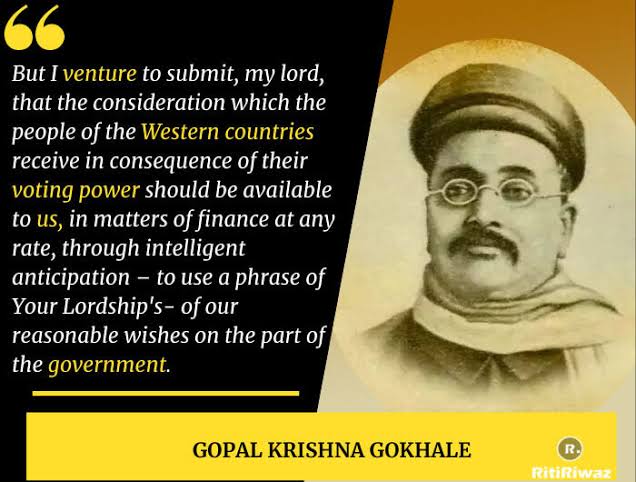
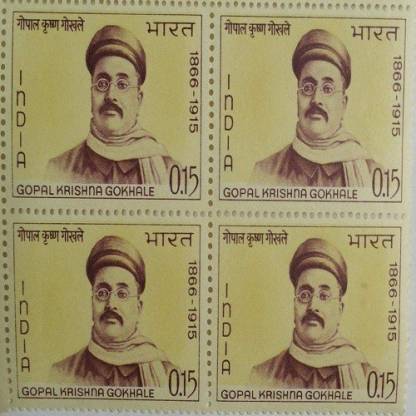
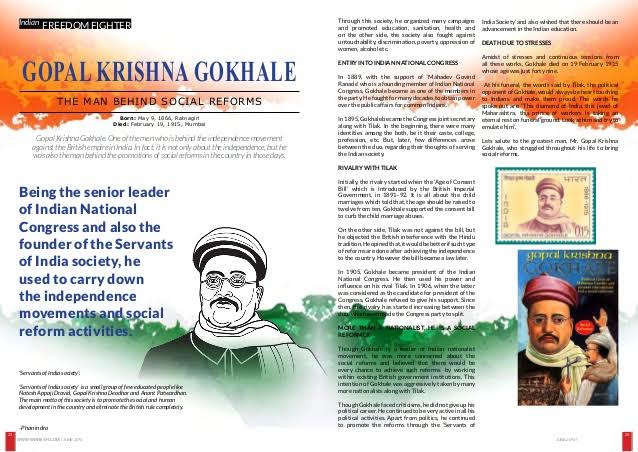
Gopal Krishna Gokhale CIE was an Indian liberal political leader and a social reformer during the Indian Independence Movement. Gokhale was a senior leader of the Indian National Congress and the founder of the Servants of India Society.
Gopala Krishna Gokhale’s Speech👨🏫:
Gopala Krishna Gokhale,a great freedom fighter and social reformer was a guru to Mahatma Gandhi. He supported the education of women and welcomed Western education in India. He delivered this speech in response to the address present to him by the students of Chennai (then Madras) on 25th July 1911 at Mumbai.
The sheltered Life of students:
He was remained of his own student he was addressing them. Students lead a very sheltered life but they have certain responsibilities and they are expected to perform certain duties.
He list these duties under four heads ;
⭐A student’s first duty is to him/her self. Acquiring knowledge is one’s primary duty-not only for one’s success in the examination but also for one’s life. One can gain the ulmost advantage as a student if one seek knowledge with devotion and whole-hearted love.
⭐The second requisite is to mould one's character. It is invidious (unjust) to distinguish between the value of character and knowledge. Both are indispensable (necessary).This character must show itself in sincerity, vigorous action and in lift sentiments. One needs to acquire a character which will raise the whole life of the people admist whom one moves and for whom one is expected to work.
⭐A strong,firm and noble character makes one a good citizen. A strong character is needed to occupy the place of seniors and be a good example to Juniors,and the succeeding generation. In short,both character and knowledge are absolutely necessary for students.
⭐A student's duty towards his follow students will teach him/her co-operation which includes adjustment, giving in at times and standing up for one's view without hurting other's feeling. Such a sense of co-operation should be developed into a habit to last one's whole life time. Without it, life in future may be miserable. A student's third duty is towards those who have authority over him/her.
Obedience to parents :
Obedience to parents is essential for acquiring knowledge. Parents take care of their children and find the means to enable them to pursue studies. Their withes should prevail in all matters. Students lean on parents till they can stand on their own feet. Once their education is completed they should use their own judgement to make decisions.
Reverence to Teacher👨🏫 :
Students must show reverence (respect) to their teachers. A student learn values of discipline,and co-operation with his fellow only in an institution. The true Spirit of discipline and co-operation is gained only at school or at college and cannot to gained later.
Duty to government :
A student owes his/her duty towards the government which is the highest authority over him. All students who are simple-minded should not fall a prey to disturbing/ agitating emotions. They should not exercise independent judgement in these instances. As long as they are students, loyalty and patriotism should govern theirind and heart. Hostility or negative attitude towards the government will give raise to Distrubances.
Responsibility to the wider world :
Finally a student should be aware of needs, living conditions, Injustice, struggles and sufferings of those around him. Sympathy towards the afflicted (affected) , willingness to redress and remedy should be their duty. Awareness and observance of the public needs comes before commitment.
Conclusion :
Gokhale’s speech to the students suits students of all times. The talk gives a clear insight into the life of gokhale,the reverence he had towards himself, parents, teachers, friends,the community around him and his country.
Ramachandra Guha is an Indian Historian and a columnist. His notable works include India After Gandhi and Gandhi: The Years That Changed the World. He has been awarded with several accolades for his achievements in the field of history. He has experiences of teaching at Yale University, the Indian Institute of Science and the University of California at Berkeley. He was also the Indo – American Community chair professor in 1997 and 1998.
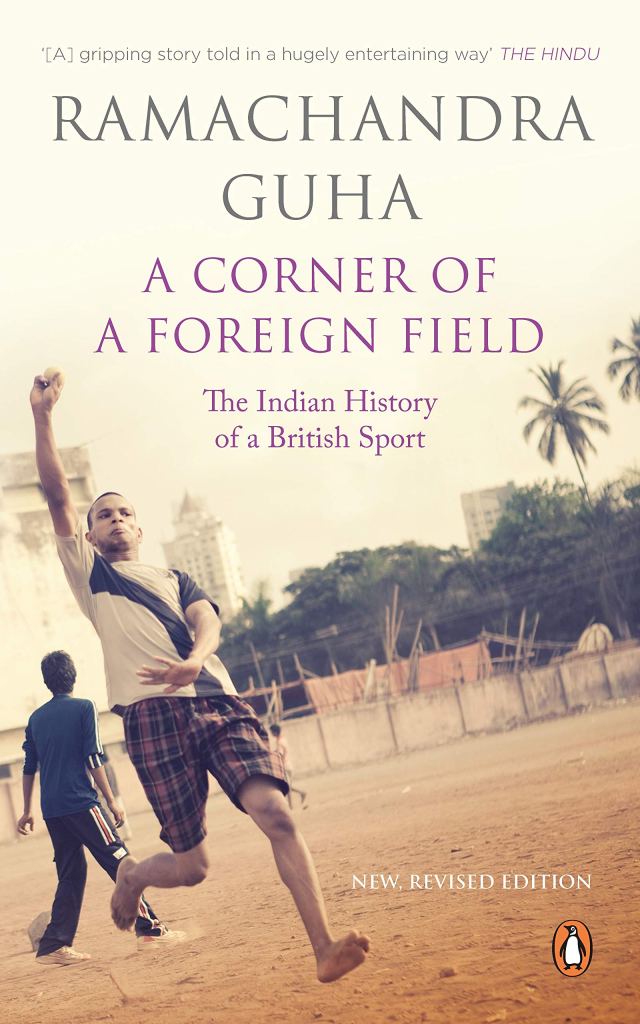
A Corner of a Foreign Field is a fascinating fusion of Indian history and Indian cricket.The book is divided into four chapters titled Race, Caste, Religion and Nation respectively. The first three chapter greatly benefit from thorough research and the skill of a great historian. The last chapter contains more of the authors feeling and opinion. Nevertheless, the book does not suffer from the personal feeling of the author. Throughout the book, the reader can experience the author’s love for the game.
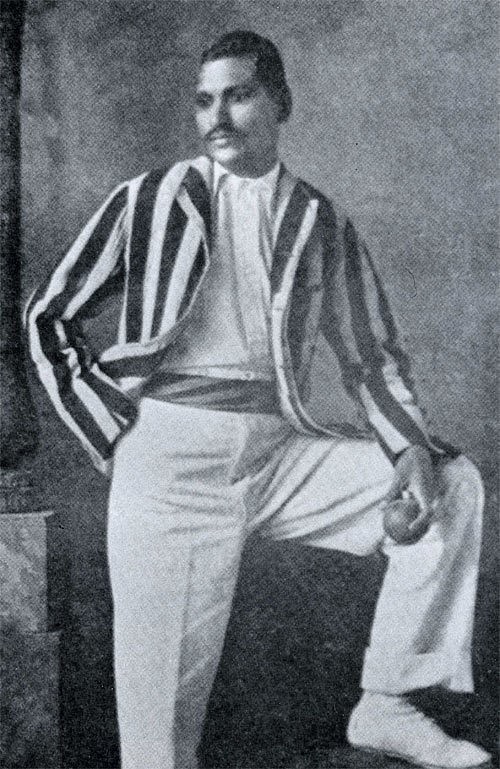
Palwankar Baloo
A Corner of a Foreign Field: The Indian History of a British Sport is a book about, one feels, the life of cricket in India so far. It is not just a history of the sport, but also a as much objective document of the sport as is possible. Cricket in India, as it is often said, is more than a sport. It evokes strong feelings from the audience and it won’t be an exaggeration to say that the team carries the burden of expectations of a billion people. Every on and off the field happening related to cricket is closely watched and excites opinions from all. This book views the unique sport through the lenses of race, religion, caste and nation. It speaks about the beginnings of cricket in India, how people reacted to this sport, its growth, impact and reception, BCCI, politics and much more. The book also gives insights into lives of people connected to the sport in one way or the other. The tales of cricketers like C. K Nayudu, Vijay Merchant, Palwankar Baloo and his brothers, Vijay Hazare makes it an interesting experience. It is astonishing how the game reflects the society at that point of time and the impacts each have had on one another throughout their history. It portrays the socio-cultural, political, economical aspects of the society by placing cricket at its centre. The book reflects the feelings of both an enthusiastic admirer of the sport and a historian keen on the socio-political happenings. The tales about cricketers are also good character sketches of the person. Not surprising, the story of Palwankar Baloo and his family is at the heart of this book as this originally began as a book about the life of Baloo. The book draws information heavily from newspapers of the day and the author uses this information beautifully to breathe life into the stories. The responses of various presses to the sport make for an interesting read. The knowledge of the author is seamless woven into the narrative. The writing of this book makes it an engaging experience even for a person not acquainted with the sport. Even for a fan of cricket, the book has much to offer and provide a great experience. It provides a whole lot new information and perspective even to a devoted follower of the sport.
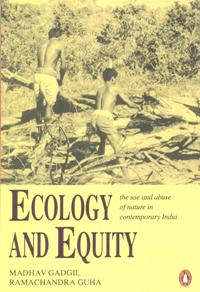
Madhav Gadgil is an Indian ecologist and the founder of the Centre for Ecological Sciences, Indian Institute of Science. He is know for heading the Western Ghats Ecology Experts Panel (WGEEP) of 2010, also known as Gadgil Commission. He was awarded with the Padma Shri in 1981 and the Padma Bhushan in 2006. Ramachandra Guha is an Indian Historian and a columnist. His notable works include India After Gandhi and Gandhi: The Years That Changed the World. He has been awarded with several accolades for his achievements in the field of history.
Ecology and Equity is principally a book about the history of resource use in India after post-independent India. The second part of the book certain schematic solutions based on the findings of the authors. It is a book that caters to both people who are alien to environmental issues and people already informed on this subject. The writing is lucid and precise which makes the reader curious on this subject.
In this book, too, the authors present a original analytic framework to classify the huge population of India. The theoretical framework is based on the idea of a ‘resource catchment’ – the place from which resources are collected for use by people. Using the example of the current Indian society, it divides population into three categories: omnivores, ecological refugees, and ecosystem people. The first category, omnivores(includes businessmen and entrepreneurs), uses most of the resources. They are the section that really benefits from economical development. Displaced peasants and tribal groups comprise ecological refugees. Development plans devoid of ecological consideration have resulted in their displacement. They are victims of overexploitation of resources by omnivores. The last category, the ecosystem people, consists the most of the Indian population. This category relies on resources within their space for fulfilling their requirements. They are dependent on the natural resource base in their living area and have been dependent on these resources traditionally. They grow their own crops to meet their food requirements. Though the classification of more than a billion people into three categories seems too simple and insufficient, it serves the purpose of the authors. The book offers a new development agenda after considering the ecological factors, that could benefit the majority. The authors propose for a development mission on the basis of local communities under a decentralized political system.
The authors describe the disruptive use of natural resources in the current era and shortcomings of the ideologies followed in the current society. Theories that existed before 1970s tell very little of man’s interaction with nature. Growing ecological threats have necessitated the requirement for new framework. The authors have developed this framework for better understanding of ecological problems and history of resource use, and to make the readers conscious of environmental problems from its roots. The book stresses the need for development strategies to be ecologically prudent. It shows the relationship between social conflicts and ecological factors. They hope to build a country based on decentralization of power and increasing the participation of communities in the matters of resources. After reading this book, one begins to look at environmental problems from a different perspective.
Puberty is the period of rapid physical, mental, and social changes that occurs in teenagers between the ages of 11 and 13. For teenagers, these years of considerable transition can be rather perplexing, resulting in restlessness and moodiness. Deep emotional changes and physical development can be a source of emotional distress for many children, making them prone to temptations and poor judgments. While this is a difficult time for the child, it also marks the beginning of an usual chasm between the youngster and his or her parents, leaving no place for the child to overcome or talk about the stresses they are under or the feelings they are experiencing. Teenagers may believe that no one, particularly their parents, understands their feelings. As a result, they are enraged, alone, and perplexed as they deal with complex concerns such as identity, peers, sexual behaviour, career, studies, drinking, and drug usage. Families are usually successful in assisting their children in achieving their developmental goals during the teen years. However, there are a few warning signs that things aren’t going well that should be addressed and identified early so that outside assistance can be sought. At this age, adolescents and young adults begin to think and feel differently. They are perplexed by their situation, which places them in a strange middle ground between being children and fully grown adults. They are feeling lonely and uneasy. Unfortunately, some people may assume that suicide is a permanent solution to problems that may be discussed and treated with the correct advice. Adolescents might pay a significant price for self-doubt, disorientation, and demands to succeed or conform. They are linked to feelings of befuddlement, grief, rage, concentration and hyperactivity issues, stress, self-doubt, pressure to succeed, financial insecurity, disappointment, and loss. There are a number of warning signs or symptoms that reflect the seriousness of the situation:
Helplessness is expressed in a variety of ways. • Loss of faith and hopelessness • Shame or remorse that is unbearably strong. • Significant shift in one’s personality or physical appearance • Behaviour that is unreasonable or strange. • Eating habits had shifted • Sleeping patterns that are irregular. • A drop in grades or productivity at work. • Loss of interest in formerly significant matters • Suicide is discussed through writing, speech, and humour. • Drinking and drug abuse are on the rise. • Separating oneself from friends, family, and society.
There are numerous causes that can devote or build-up to the final result of suicide:
• Impulses that are out of control. • There has been a history of suicide attempts in the family. • There was already a suicide plan in place. • Harsh or obnoxious behaviour • Domestic violence is an example of exposure to violence. • Access to firearms, such as a firearm at home • Bullying. • Acute rejection or loss. • There have been changes in their families. • Workplace anxiety • Abuse, whether physical or sexual
Mental health disorders that can lead to suicides are:
• Depression. • Bipolar Disorder. • Post Traumatic Stress Disorder. • Schizophrenia. • Borderline personality disorder. • Substance abuse. • Mental illness and the LGBTQ community
Conclusion While we are occupied with our work, a suicide is taking place. These individuals require assistance, love, inspiration, and understanding. WE have the capacity to stop the threat and create an environment where people who are at risk of suicide can speak honestly, express their thoughts, and discuss their issues. They just need someone to reassure them that everything will be fine. Simply do your bit, listen to them, and assist them in avoiding terrible measures such as suicide. Life is a gift, and we may enjoy it to the fullest while also helping to save the lives of those who do not have the same opportunity. Problems aren’t the end of the world; they can be solved and dealt with, and ending your life isn’t the answer. It is not a viable solution to burn our life book. Ask for support and speak up about your concerns because we weren’t born to be quitters. If you live a life that uplifts you, you will one day look back and be proud of how far you have gone.
National Doctors Day is celebrated nationwide, every year, on the 1st of July. But why? This is to express our gratitude towards doctors and physicians for their service towards our well-being. Legendary physician and the second Chief Minister of West Bengal, Dr Bidhan Chandra Roy was born on the 1st of July in Patna, Bihar in 1882 and coincidentally died on the very same date in the year 1962. In 1961, Dr Roy was conferred with the nation’s highest civilian award, Bharat Ratna. Doctors day in India was established in 1991 in honour of his birth and death anniversary.
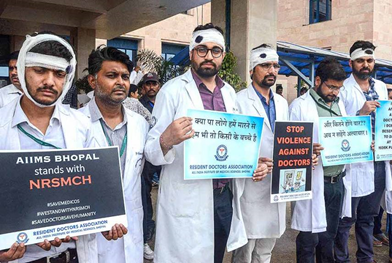
Well, Doctors day is celebrated every year on the 1st of July but this year another day was observed, by the doctors of IMA (Indian Medical Association) on 18th of June, NATIONAL PROTEST DAY. Doctors came together against the assaults on doctors in COVID wards. IMA observed nationwide protests demanding central law to protect doctors against violence.
Doctors and healthcare workers held placards and raised slogans like doctors bachao desh bachao (save doctors, save nation) and save the saviour. Doctors and medical staff at the IMA office in Hyderabad protested wearing black badges. Doctors from AIIMS Delhi and IMA unit, Ludhiana also took part in the agitations. Various state-level protests were taking place for a long time.
Why are these protests taking place?
Let me brief you here
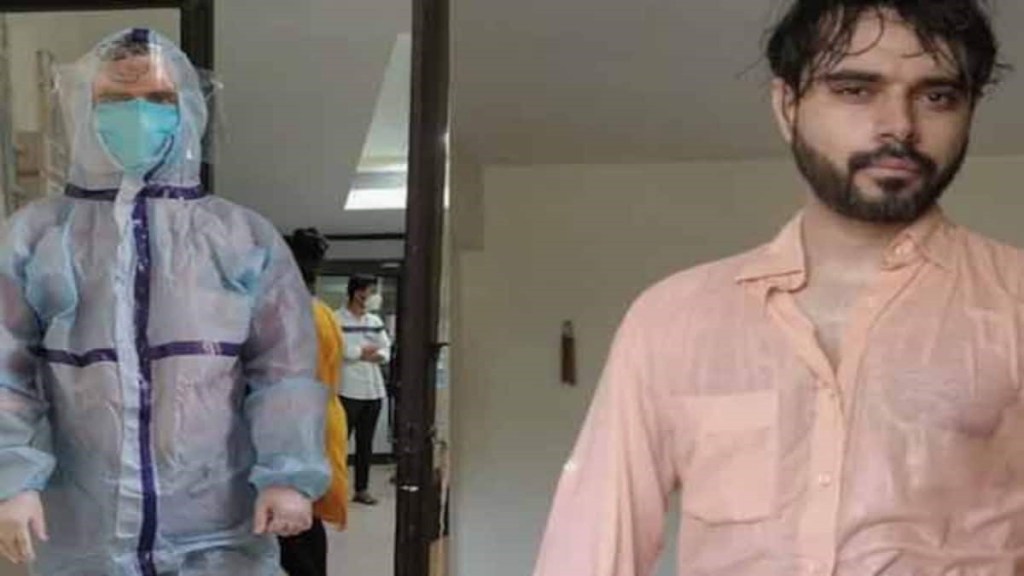
Bhopal: A local politician was seen screaming at a Bhopal doctor who couldn’t save the life of a patient who was bought to the hospital at an oxygen level of 30. This left the doctor in tears and he was demoralised to the extent that he wanted to resign.
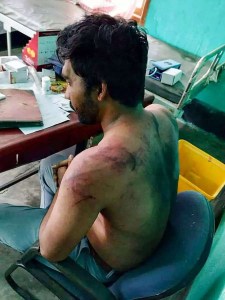
Guwahati: A doctor at a coronavirus facility in Assam was punched, kicked, and pounded with metal trash cans and bricks, by the relatives of a Covid patient who had died, allegedly due to oxygen shortage. Locals also assaulted the doctor who was then hospitalised.
Kerala: A police official allegedly attacked a doctor in the Alappuzha district. The official is accused of slapping Dr Rahul Mathew, who was working the night shift at the Mavelikkara district hospital, after the former’s mother, a COVID-19 patient, was brought dead to the hospitals. Doctors protest for the non-arrest.
And many more such cases went viral on social media. Assaults on doctors might not make it to the news daily, but take place every day.
What exactly did they do to get such treatment?
Grinded in high school, cracked NEET, spent 7-8 years working hard and studying in college, paid a hefty amount of fees to medical colleges or even took loans for their studies.
Who does that? Their fault, right?
Image source: Google | Image by: BusinessToday.In
During COVID lockdown when most of us were busy making dalgona coffee and baking cakes, they were out there in scorching heat, wearing PPE kits dealing with patients. Burning the candle at both ends, forgetting they have a life of their own, forgetting they have a family waiting for them, isolating themselves from their own family members, in their own houses to protect their families from contracting the virus, more than 500 doctors died during COVID, trying to save our lives. But why, just to save us. Imagine how demoralising it is for them to get beaten up by the ones they’re working for.
What is the probable reason?
Lack of infrastructure
Manpower
Laws in place
Security arrangements
Lack of infrastructure
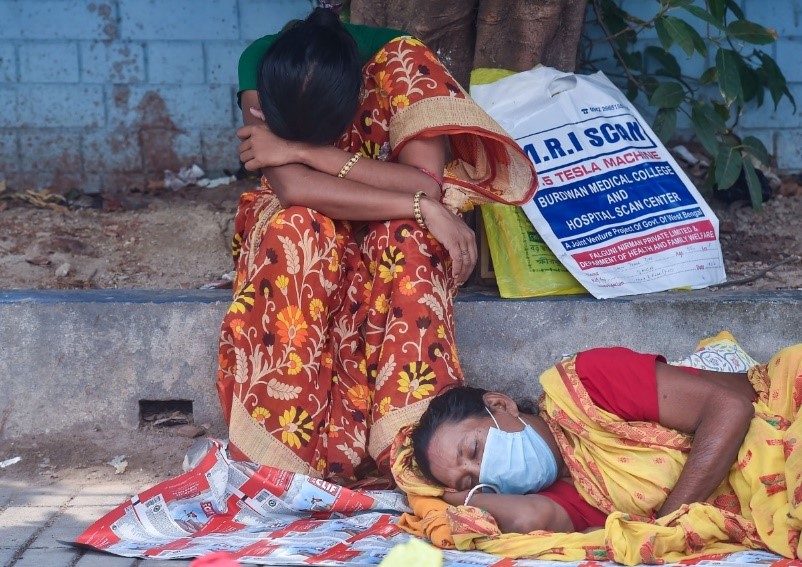
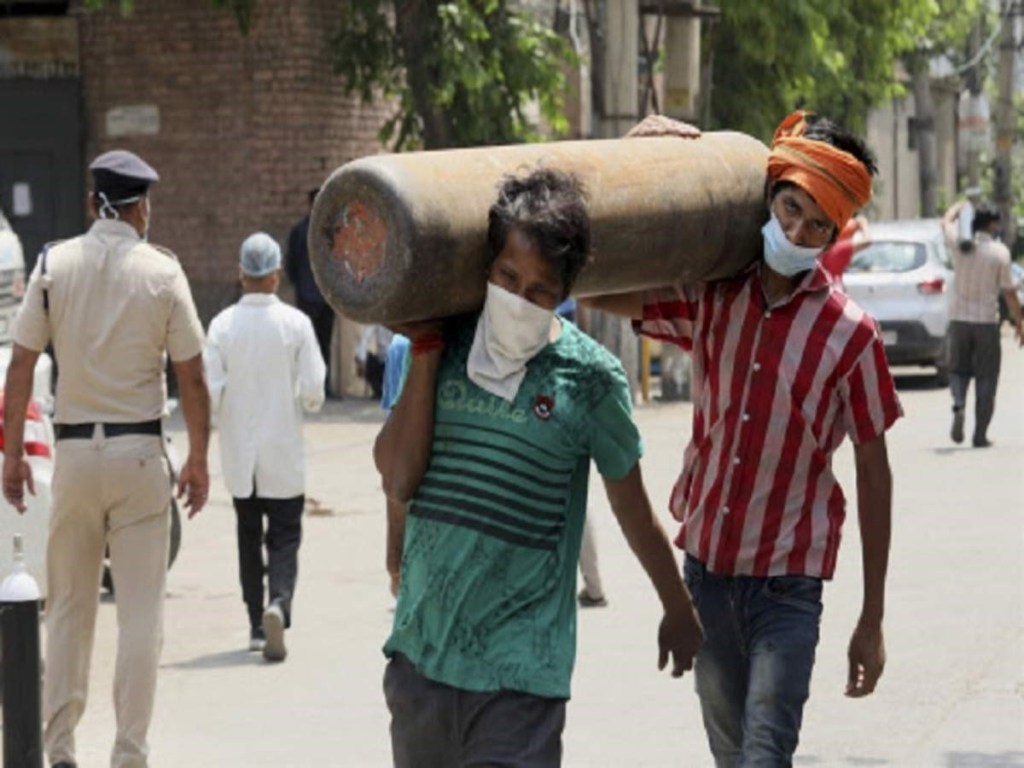
The shortfall of ICUs, no beds for patients, dearth of oxygen support, the inadequacy of medicines, caretakers bound to wait in long queues for medicines at dispensaries, patients gasping outside hospitals, black marketing of almost everything required for a person to recover, our health infrastructure was crippling.
Image source: Google | Image by: The Times Of India
Manpower
Along with the tools used to help fight COVID, there is a paucity of our warriors too. There should be at least one doctor per 1000 patients according to WHO, whereas in India there is one doctor who attends more than 1445 patients. Not just doctors, the suggested number of nurses per 1000 patients is at least 3, there are just 1.7 in India (43% less than WHO standards). This leads to overworking of doctors and medical staff ignoring their basic requirements like sleep and a proper diet.
Laws in place
Medicare Service Persons and Medicare Service Institutions (Prevention of Violence and Damage to Property) Act, also known as the Medical protection act is there in at least 19 states, which when breached can lead to an imprisonment of up to 3 years and a fine of INR 50,000. Damage to any medical devices and equipment is a punishable offence and offenders are liable to pay twice the amount of the damaged equipment’s cost.
The Act, however, fails to really protect doctors because it features neither in the Indian Penal Code (IPC) nor in the Code of Criminal Procedure (CrPC). This makes it difficult for victims to approach the police for help or the latter to file a complaint against suspects.
Security arrangements
Doctors are not politicians with scores of gunmen and bouncers around them, who will assure their safety? Due to lack of security at hospitals and clinics, doctors and other staff are the soft targets for unhappy relatives and agitated patients.
Stepping into doctor’s shoes
Imagine yourself as a teacher who fears being beaten up to death by parents for their child’s poor performance at a test, will you even be willing to teach anymore with the same zest. I don’t think so. Hospitals are understaffed, doctors are overworked, patients are overwhelmed.
But this isn’t the fault of our doctors. They are going an extra mile in order to save as many patients as they can, making 3 patients share a bed or switching oxygen support among patients, they have our best interest at heart.
Doctors are not supposed to be accountable for the paralyzed infrastructure, that is where the leaders we vote for come into play. They’re made to work for 15+ hours at a stretch that too in a harsh environment, in a place they no longer feel safe or comfortable in.
What do doctors want?
All they want is for the government to sit with them and consider their problems.
For a law to protect their lives so that they can continue with their duties towards the nation. The implementation of existing laws.
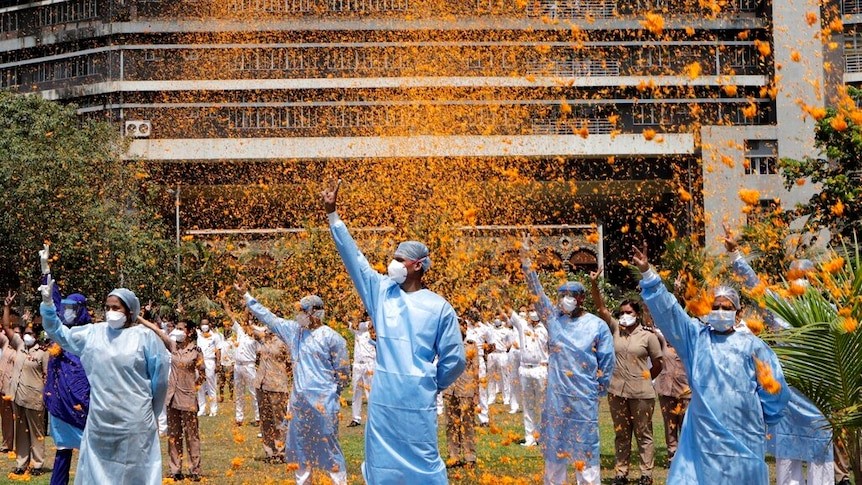
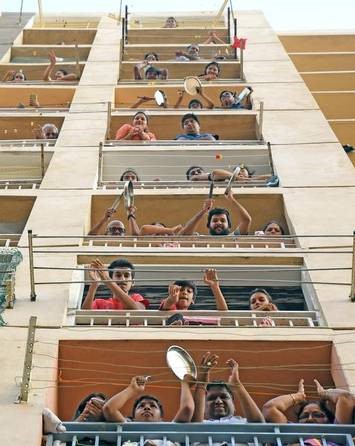
They don’t demand banging of thalis from our balconies or something like that in order to pay our respect, they didn’t ask for showering of flowers upon them for their service, all they’re asking for is to be able to practice in a safe environment where they’re worried for patients’ life, not scared of getting beaten up by sticks.
Image source: Google | Image by: Anjana Pasricha ( VoA)
We were always raised to believe doctors are God on land. Saving our life, giving us a new one at times, while risking their own. What they now want is not godly, but at least a humanly manner.
How can we help?
First and foremost, don’t be someone they need protection from. i.e. don’t be an assaulter.
Secondly, don’t ignore if you see someone being unfair toward them. Raise your voice, report if you see something like this.
A simple realisation that we can trust our doctors can do wonders.
Lastly, don’t forget they’re humans too. Thank them, pay your respect, or at least, just don’t be a jerk.
This Doctors day, I bet Dr Bidhan Chandra wouldn’t be proud of our country treating its doctors and medical staff like this.
Let’s all come together and promise that we’ll make the world a better place to live for our selfless human beings. We owe them.
Ending here with a salute to any doctor or an aspiring doctor reading this, and a sincere tribute to the warriors that lost their lives.






















You must be logged in to post a comment.