National Doctor’s Day

“The second God in our lives.”

Every year,July 1 is observ d as National Doctor’s Day in the memory of Dr. Bidhan Chandra Roy, who had his birth and death anniversary on the same day.

The day, commemorated by Indian Medical Association (IMA), is dedicated to all the doctor’s and healthcare workers who have been serving people by risking their lives. Dr.Roy , former Chief Minister of Bengal, was known for his selfless service.

Dr. Roy was born on July 1,1882, and passed away on July 1,1962. Since 1991, National Doctor’s Day, also called Doctor’s Day has been celebrated across the nation every year. This day is celebrated on different dates across the world.

“This world has become a better and healthier place to live in with doctors bringing the joy of health and goodness to our lives. Happy Doctor’s Day.”

“Medicines cure diseases, but only doctors can cure patients.” – Carl Jung

Dr. Roy played a great role in establishing medical institutions like Jadavpur TB Hospital, Chittaranjan Seva Sadan for women and children, Victoria Institution (college). He was also referred to as the first medical consultant in the subcontinent of Indian and was more successful and dedicated than his contemporaries in several fields, mentioned British Medical Journal.

For his outstanding contributions, he was also awarded the Bharat Ratna, on February 4,1961. National Doctor’s Day is observed to acknowledge the role doctors play in saving numerous lives.

Amid the pandemic, the role of frontline workers has been even more emphasised. Cheers to the spirit and dedicated of our frontline workers who immensely contributed in the hour of crisis.

From the starting of the pandemic, the doctors and all the other frontline workers are doing their duty 24×7 just to save people. During this, many doctors died too but still they tried to save the patients till their last breath.

“Doctors are the boon directly sent from God for us. Salute to the heroic job you do. Hats off to you! Happy Doctor’s Day.”

“At the time of emergency, doctors are like God for the patient.”

https://english.jagran.com/lifestyle/happy-national-doctors-day-2021-wishes-quotes-messages-whatsapp-and-facebook-status-to-thank-the-doctors-10028617

https://swachhindia.ndtv.com/national-doctors-day-2021-all-you-need-to-know-about-the-day-celebrating-our-saviours-amid-covid-19-60680/

360 Wander Writer

WELCOME TO TECHIE WORLD

WORD PRESS

It is a type of content management system(CMC) that allows you design your own website. Through the various Template systems you can customize the website to fit into any type of business platform like blog ,portfolio online shopping.

Word Press as a software is free to download but to launch it as website you must need WordPress Hosting.  You can create your own website name and become a blogger. 

Create…

It is a very easy platform to start with for beginners . Once you are used to it you can create wonders . It is very powerful tool in hands of a Expert. It is simple to use as a word processor like Microsoft Word. It can be well described as a “factory to make webpages” it is a core analogy designed to clarify the functions of WordPress.

The WordPress has some of the disadvantages like plugin updates , Slow page speed , Poor SEO ranking Website Vulnerability and also downing of websites without notice. In spite of some disadvantages it stands as the most preferred one among developers. WordPress is a flexible CMS that allows multiple users to create and run a website without coding. WordPress is closely associated with Automatic, the company founded by Matt Mullenweg.

WordPress-based websites use the canvas element to detect whether the browser is able to correctly render emoji.        WordPress supported one blog per installation, although multiple concurrent copies may be run from different directories if configured to use separate database tables. WordPress also features integrated link management; a search engine–friendly, clean permalink structure; the ability to assign multiple categories to posts; and support for tagging of posts.

Every WordPress website requires at least one theme to be present and every theme should be designed using WordPress standards with structured PHP, valid HTML (Hyper Text Markup Language), and Cascading Style Sheets (CSS).  WordPress has a web template system using a template processor. Its architecture is a front controller, routing all requests for non-static URIs to a single PHP file which parses the URI and identifies the target page. 


Black Holes: What are they exactly?

Don’t be fooled by the name: a black hole isn’t just empty space. Rather, it’s a vast amount of matter compressed into a small space – imagine a star 10 times more massive than the Sun crammed into a sphere the size of New York City. As a result, nothing, not even light, can escape the gravitational field. NASA instruments have created a fresh picture of these strange objects in recent years, which are considered by many to be the most fascinating entities in space.

For millennia, people have imagined an object in space that is so big and thick that light cannot escape it. Einstein’s theory of general relativity, which proved that when a large star dies, it leaves behind a small, dense remnant core, is most famous for predicting black holes. The equations demonstrated that if the core’s mass is greater than three times that of the Sun, gravity will override all other forces, resulting in a black hole.

Telescopes that detect x-rays, light, or other forms of electromagnetic radiation cannot directly observe black holes. However, we can deduce the existence of black holes and study them by observing their effects on adjacent matter. If a black hole passes through a cloud of interstellar matter, for example, it will accrete matter. If a normal star approaches close enough to a black hole, a similar scenario can occur. In this situation, as it pushes the star closer to itself, the black hole has the potential to break it apart. As the attracted matter speeds up and warms up, x-rays are emitted into space. Moreover, recent discoveries provide compelling evidence that black holes have a profound impact on their surroundings, generating intense gamma ray bursts, eating neighboring stars, and playing a large role in the creation of new stars in some locations while halting it in others.

The death of a star and the beginning of a black hole

The remnants of a massive star that dies in a supernova explosion form the majority of black holes in our universe. (Smaller stars decay into dense neutron stars, which lack the mass to confine light.) It can be demonstrated theoretically that no force can protect a star from collapsing under the force of gravity if the entire mass of the star is great enough (about three times the mass of the Sun). However, something unexpected happens when the star collapses. As the star’s surface approaches an imaginary surface known as the “event horizon,” time on the star slows in comparison to time measured by observers far away. When the surface of the star reaches the event horizon, time stops and the star can no longer collapse – it is merely a frozen entity in space.

Collisions between stars can produce even larger black holes. The strong, transient flashes of light known as gamma ray bursts were first spotted by NASA’s Swift telescope shortly after its launch in December 2004. After collecting data from the event’s “afterglow” with Chandra and NASA’s Hubble Space Telescope, researchers concluded that enormous explosions can occur when a black hole and a neutron star meet, forming another black hole.

The sheer size of black holes

Although the basic formation process is well studied and documented, one persistent mystery in black hole research is that they appear to exist on two dramatically different scales. On one hand, there are innumerable black holes formed by the collapse of huge stars. These “stellar mass” black holes are 10 to 24 times as massive as the Sun and can be found all around the Universe. When another star gets close enough to the black hole’s gravity, some of the matter around it is snared, causing x-rays to be emitted. The majority of galactic black holes, however, are extremely difficult to detect. Models estimate that there are as many as ten million to a billion such black holes in the Milky Way alone, based on the number of stars massive enough to form them.

The “supermassive” black holes, which are millions, if not billions, of times as massive as the Sun, are on the other extreme of the size range. Supermassive black holes, according to astronomers, are found at the centre of nearly all major galaxies, including our own Milky Way. Astronomers can spot them by observing the effects they have on neighboring stars and gas.

Astronomers have long held the belief that no mid-sized black holes exist, but r ecent data from Chandra, XMM-Newton, and Hubble, on the other hand, strengthens the case for the existence of mid-sized black holes. A chain reaction of star collisions in compact star clusters leads to the production of extremely massive stars, which eventually collapse to generate intermediate-mass black holes, according to one theory. After then, the star clusters descend to the galaxy’s centre, where the intermediate-mass black holes merge to produce a supermassive black hole.

Be it a baby black-hole or a giant one, these fantastic freely occurring galactic phenomena are still something that modern science needs to understand completely. The fact is that most fascinating things of science take the most time to completely grasp.

HATE CRIMES

When faced with a crisis, individuals typically revert to a terrible human trait: protecting their own while looking for a scapegoat to blame for the problem. The pandemic increased interpersonal and individual-level prejudice in a variety of circumstances, from discriminatory views toward racial, ethnic, and religious minority groups to verbal threats and physical assaults directed against them. Physical attacks and verbal abuse against LGBT community, Asian-Americans, Muslims who are frequently blamed as carriers, are now commonplace.

Hate crimes are crimes often motivated by prejudice or hatred towards specific groups of people. To be classified as a hate crime, the act must meet two criteria: first, it must be a criminal offense, and second, it must be motivated by bias. Hate crimes are acts of violence committed with the intent of injuring or intimidating someone based on their race, ethnicity, national origin, religion or sexual orientation. Hate crimes may also target people with disabilities. Hate crimes also appear to be more common in societies that are undergoing rapid social change and emerging groups, which may be culturally dissimilar, are seen as a threat to the status quo. Threats, property damage, assault, murder, and any other criminal offense motivated by prejudice are examples of hate crimes. Individuals from specific groups are not the only ones who are victims of hate crimes. Hate crimes can target people or property that are just affiliated with – or even considered to be a member of – a group that shares a recognized characteristic, such as human rights defenders, community centers, or houses of worship.

Hate crimes, unlike other sorts of crimes, have a far-reaching impact on both the immediate victim and others like them. They not only take lives and wreak havoc on families, but they also traumatize the communities where they occur. These activities create distrust and terror among communities, prohibiting them from participating in community life or cooperating with local law enforcement in investigating and preventing crimes. So, it’s extremely important for the authorities to find a way to stop these hate crimes.

Combating Hate Crimes

  • Recognize and condemn all instances of violent hate crimes. Government officials and public figures should send clear and consistent reminders that violent offenses motivated by bias and intolerance will be fully investigated and prosecuted to the full extent of the law.
  • Acknowledging the particular damage caused by hate crimes, authorities should introduce laws that create specific offenses or increases punishments for violent crimes committed on the basis of the victim’s race, religion, ethnicity, sexual orientation, gender, gender identity, mental or physical disabilities, or other similar status.
  • Governments should make sure that people who commit hate crimes face legal consequences of their action.
  • Official monitoring and public reporting systems should be maintained by governments to give reliable data for informed policy decisions to address violent hate crimes.
  • Official anti-discrimination and human rights organizations should have the responsibility to supervise, report, and help victims of hate crimes.
  • Governments should support and strengthen international bodies with anti-discrimination objectives.
  • To minimize fear and support victims, governments should conduct outreach and education activities to communities and civil society groups.

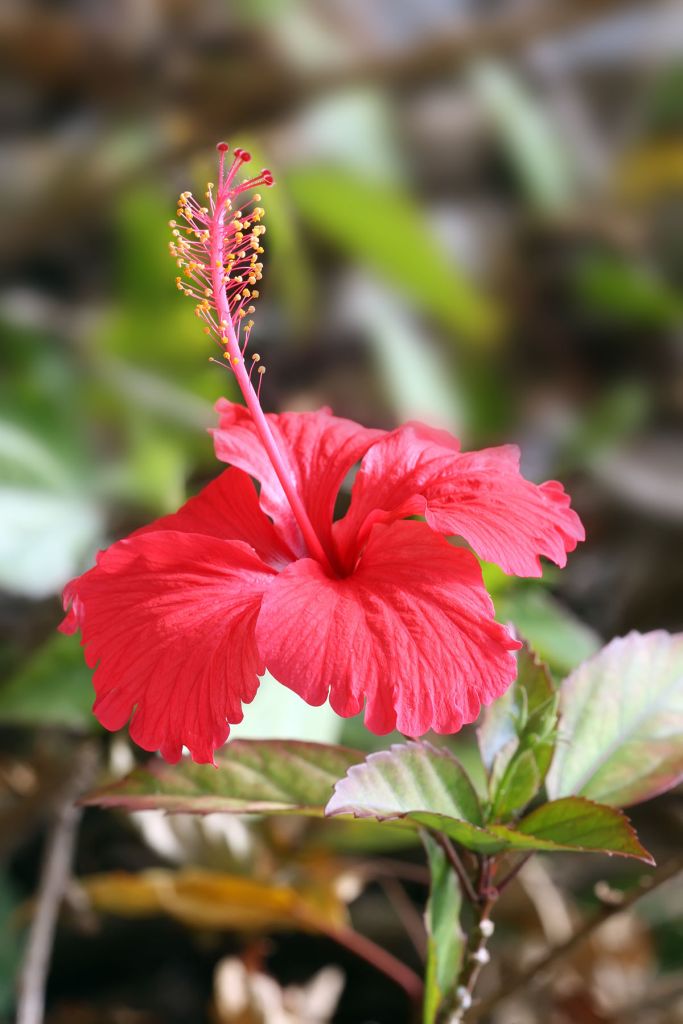
HIBISCUS FLOWER (Hibiscus rosa-sinensis)

Hibiscus is a genus of flowering plants in the family Malvaceae. The genus is quite large, comprising several hundred species that are native to warm temperate, subtropical and tropical regions throughout the world.

Hibiscus Flower

Scientific name: Hibiscus
Family: Malvaceae
Kingdom: Plantae
Order: Malvales
Subfamily: Malvoideae

Colors: Orange, Yellow, Red, Pink, and Multicolor. Purple and white forms are less common.
Height: 7 feet tall

The Parts of a Hibiscus Flower

✓Pistil
✓Petal
✓Stamen
✓Leaf
✓Stem
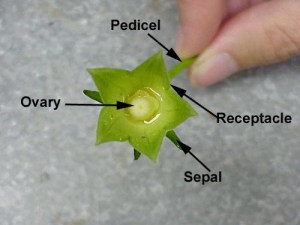
✓Receptacle
✓Sepal
✓Bract
✓Thalamus
✓Bracteole
✓Pedicel
✓Perianth

PISTIL:

The Pistil is the female reproductive part of a plant. The pistil is made up of the ovary where seeds develop, the stigma that catches pollen and the style that is the tube between the stigma and ovary. The female reproductive organ of a flower is Gynoecium or Pistil. Each member is carpel.

PETAL:

Petals are modified leaves that surround the reproductive parts of flowers. Innermost accessory whorl of flower is corolla. Each member is called Petal.

STAMEN:

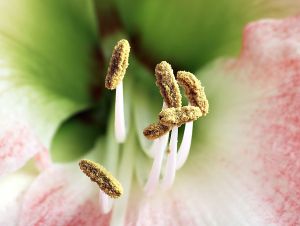
The Stamen is the pollen-producing reproductive organ of a flower. Collectively the stamens form the androecium. Male organ of a flower is androecium. Each member is Stamen.

LEAF:

Hibiscus leaves are simple, alternate, auriculate and have ovate stipules. Leaves are between 7 and 15 centimeters long.

STEM:

Hibiscus (Hibiscus rosa-sinensis) is a distinctive shrub valued for its shiny, deep green foliage and huge, exotic blooms. Propagate a new hibiscus by planting stem cuttings in the spring.

RECEPTACLE:

The Receptacle is the point on the stem to which the other structures attach.

SEPAL:

Sepals are small green petal-like structures that cover the petals before they emerge. Outermost whorl of flower is calyx. Each member is called Sepal.

BRACT:

Subtending leaf or leaf like structure of any flower is called Bract.

THALAMUS:

The part of the flower on which other floral parts are attached.

BRACTEOLE:

A Smaller bract present on the side of pedicel is called Bracteole or Bractlet.
A whorl of bracteoles at the base of calyx is called epicalyx.

PEDICEL:

Stalk of the flower. Flower is pedicellate or sessile depending upon presence or absence. The flowers with a short, rudimentary pedicel are called subsessile flowers.

PERIANTH (perigonium):

Undifferentiated calyx and corolla. Individual members are called tepal.

Benefits of Hibiscus flowers

✓The flowers and other parts of the plant are used to make medicine.

✓People use hibiscus for high blood pressure, high cholesterol, to increase the production of breast milk, and many other conditions, but there is no good scientific evidence to support most of these uses.

✓Most early research shows that drinking hibiscus tea for 2-6 weeks decreases blood pressure by a small amount in people with normal or high blood pressure.

✓May Help Lower Blood Pressure.

✓May Help Lower Blood Fat Levels.

✓May Boost Liver Health.

✓Make your hair look healthy and lustrous.

Doctors’ Day: A Day for the Life Savers

Doctors are said to be next to God. They save the lives of people, risking their own many a times. This day is a tribute to all the doctors and healthcare workers.

Every year the Indian Medical Association (IMA) celebrates 1st July as National Doctors’ Day on the birth and death anniversary of Bengal’s former Chief Minister, Dr. Bidhan Chandra Roy, to commemorate his contributions in the medical field to serve humanity. He took birth on 1st July 1882 and died on the same day in 1991. The day was first recognized in the year 1991.

National Doctors’ Day is dedicated to the doctors who serve to save the lives of people sacrificing their own. It is to recognize the contributions, efforts, and sacrifices the doctors make for the community and mankind. This year’s theme for National Doctors’ Day is “Save The Saviours”.

Coronavirus is contagious and life-taking, yet doctors are making all efforts to save the lives of the infected. Many doctors lost their life battle to save others. Especially now, when the pandemic has taken a toll on the lives of people, doctors have constantly worked day and night without break to save the lives of the patient. Their consistent attempts have saved the lives of many.

The doctors have been working 24*7 in that Personal Protective Equipment or as we know it as PPE kits; fully covered all day long without any complaint of heat, without water or food for as long hours as 17-18 hours at least; without any complaint of hunger or thirst, just to save the lives of people suffering from the deadly coronavirus. The continuous wearing of masks scars their ears and cheeks. The doctors sacrifice a lot for patients.

The pandemic made us understand more about the importance and dedication of doctors and health workers in our lives. Many of the retired doctors and nurses got trained and returned to work to treat the patients of COVID-19. The doctors and nurses working for treating the COVID-19 patients are not able to meet their families, for preventing the spread of it. They stay away from their kids and family just so that the patients can return to their families healthy and safe. Many doctors themselves suffering from coronavirus sacrificed their lives by giving up on hospitals beds for other patients when there were crisis for beds in hospitals.

Honorable Prime Minister of India, Narendra Modi, even mentioned doctors’ day and emphasized the role and exceptional contribution of doctors to save the lives of people in this pandemic. He also said that the doctors’ love for medicine is their love for humanity and with this power of love the doctors are taking care of us. He even congratulated and appreciated the efforts of doctors through his tweet saying, “On Doctors’ Day, my greetings to all the doctors. India’s strides in the world of medicine are commendable and have contributed to making our planet healthier.”

Doctors’ Day is for us to make out some time and appreciate the efforts and contributions of doctors. Thank them for their sacrifices and selfless services.

All you should Know about political theory.

Know about Political Theory

As Human beings, we live in a society and society includes groups and institutions. Every institution serves a specific purpose. For specific purposes, we need some rules and regulations. That called politics.

For understanding Political Theory, we divide it into two terms and understand one by one.

Political and Theory.

First, we discuss what is political.

What is political

The Term ‘political ‘ refers to something applicable to a polity, that is ‘ public’, as distinguished from private or something applicable to a limited numbers of persons.

The terms ‘ polity’, ‘ politics’, and ‘ political’ are derived from the Greek word ‘ polis’ which stood for ancient Greek city-state.

In the present- day society the scope of politics is not regarded to be so comprehensive. Today we draw a distinction between public and private spheres of human life, and confine the usage of the term ‘ politics’ to the institutions and activities falling I the public domain.

 The term ‘theory’ stands for systematic knowledge.

This, ‘political theory’ refers to a systematic knowledge of political phenomena.

 Political theory is concerned with three types of statements –

  • Empirical statement – which is based on observation, through sense- experience alone, that is the experience gained through sight, sound, smell, taste and touch of the concrete phenomena.
  • Logical statement –  which is based on reasoning
  • Evaluation – which is based on value judgment.

The political theory includes both political science and political philosophy.

 Political science , relies only on empirical and logical statements.

NATURE OF POLITICAL THEORY

George Catlin observed : “The theory itself is divided into political science and political philosophy.”

 In short, Catlin proceeds to identify the nature of political theory by pointing to its two important components- political science and political philosophy.

Andrew Hacker – “ Every political scientist plays a double role. He is part scientist and part philosopher.

SCOPE OF POLITICAL THEORY

  1. One point of its focus is the study of political concepts and it’s method of study. For this purpose, the normative -philosophical method is regarded to be suitable .
  2. Another point of it’s the focus is the study of political institutions and behaviour. For this purpose, the descriptive-scientific method is regarded to be suitable.

DEBATES ON THE DECLINE OF POLITICAL THEORY

The political theory seems to decline in the mid-twentieth due to questions started to raised by the exponents of new political science.

There were two major causes of the decline of political theory :

  1.  The rise of positivism led to the craze for science.
  2. The prevalence of political ideologies culminating in Marxism.

It is now widely held that political science, like other social and natural sciences, enables us to strengthen our means but we will have to resort to political philosophy to determine our ends.

Means and ends are interdependent. Hence , political science and political philosophy play complementary roles in our social life.

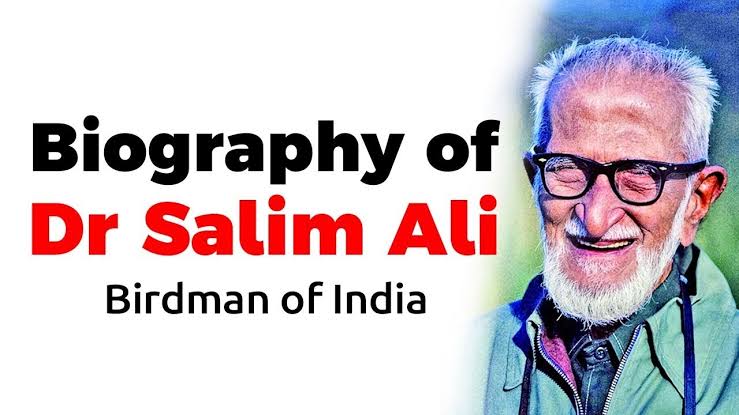
Dr. Salim Ali (1896-1987)

Dr.Salim Ali (1896-1987)🦜🕊:

Salim Moizuddin Abdul Ali (November 12, 1896- July 27,1987) was an Indian ornithology and naturalist. Known as the “🇮🇳birdman of India🇮🇳”, Salim Ali was among the first Indias to contact systematic bird survey across India and his bird books helped develop ornithology. He became the key figure behind the Bombay Natural History society after 1947 and used his personal influence to garner government support for the organization,create the Bharatpur bird sanctuary ( Keoladeo National Park) and prevent the destruction of what is now the silent valley National Park. He was awarded Indian’s second highest Civilian honour ,the padam vibhushan in 1976.

Early life❕❣❕:

Salim Ali was born into a sulaimani Bohra Muslim family of bommey, the ninth and youngest child. His father Moizuddin died when he was an one year old and his mother Zeenat-un-nissa died when he was three. The children were brought up by his maternal uncle Amiruddin Tyabji,and childness aunt, Hamida Begum ,in a middle-class household in Khetwadi, Mumbai. Another uncle was abbas Tybji,well known Indian freedom fighter. Salim was introduced to the series study of birds by W.S. Millard, secretary of the Bombay Natural History Society (,BNHS), who identified unusually coloured Sparrow that young Salim had shot for sport with is tough airgum. Millard identified it as a yellow-throated Sparrow,and showed Salim around the society’s collection of stuffed birds . Millard lent Salim a few books including Eha’s common birds of Bombay, encourage d Salim to make a collection of birds and co-operation offered to train him in skinning and preservation. Millard also introduced young Salim to (later sir) Norman Boyd Kinnear,the first paid curator at all BNHs, who later provide help from the British Museum. In his autobiography, The Fall of Sparrow Ali notes the yellow -throated Sparrow event as the Turning point of his life that let him into ornithology,an unusual career choice, especially for an Indian in those days. His early interest was in books on hunting in India and he became interested in sport -shooting , encourage d by the hunting interests of his foster-father Amiruddin. Shooting contests we’re often held in the neighbourhood in which he grew and among his playmates was Iskandar Mirza, a distant cousin who was a particularly good marksman and who went on in later life to become the first president of Pakistan.

Burma and Germany🦜🕊 :

Salim Ali's early education was at St. Xavier's college, Mumbai. Following a difficult first year in college,he dropped out and went to Tavoy,Burma(Tenasserim) to took after the family's wolfram (Tungstem) mining (tungsten was used in armour plating and valuable during the war) and timber interests there. The forest surrounding this area provided an opportunity for Ali to hone his naturalist (and hunting) skills. He also made acquaintance with J C Hopwood and Berthold Ribbentrop who were with Forest Service in Burma.

Other contribution🐦🦅:

⭐Dr. Ali had considerable influence in conservation related issues in post- Independence India especially through Prime Ministers Jawaharlal Nehru and Indira Gandhi was herself a keen birdwatcher, influence by Ali's bird book (a copy of the book of Indian Birds was gifted to her in 1942 by her father Nehru who was in Dehra Dun jail while she herself was imprisoned in Naini Jain and by the Gandhian birdwatcher Horace Alexander. Ali influenced the designation of the Bharatpur Bird Sanctuary and in decision in decisions that save the Silent Valley National Park. One of Ali's later interventions at Bharatpur involved the exclusion of cattle and graziers from the sanctuary and this was to prove costly and resulted in ecological changes that led to a deciline in the numbers of many species of waterbirds.

⭐Dr. Ali was a frequent visitor to the Doon school where he was an engaging and perusuasive advocate of ornithology to successive generation of pupils. As a consequence,he was considered to be part of the Dosco fraternity and became one of the very few people to be made an honorary member of The Doon School Old Boys Society.

Personal views🐦🦅:

⭐Salim Ali held may views that were contrary to the mainstream ideas of his time. A question that he asked frequently was about the collection of bird specimens particularly in later life when he became known for his conversation related activism. Although once a fan of shikar(hunting) literature,Ali held strong views on hunting but upheld the collection of bird specimens for scientific study. He held the view that the practice of wildlife conservation needed to the practical and not grounded in philosophies like ahimsa. He suggested that his fundamental religious sentiment had hindered the growth of bird study in India.

⭐In the early 1960s the national bird of India was under consideration and Salim Ali was intent that it should be the endangered Great Indian Bustard , however this proposal was over-ruled in favour of the Indian peafowl.

ANGER-A MAN’S WORST ENEMY

If you are patient in one moment of anger, you will escape 100 days of sorrow

Chinese proverb

Anger, also known as wrath or rage, is an intense emotional state involving a strong uncomfortable and non-cooperative response to a perceived provocation, hurt or threat.

A person experiencing anger will often experience physical effects, like an increased vital sign, elevated pressure level, and increased levels of adrenaline and noradrenaline. Some view anger as an emotion that triggers a component of the fight or flight response. Anger becomes the predominant feeling behaviorally, cognitively, and physiologically when an individual makes the conscious option to take action to instantly stop the threatening behavior of another outside force. the country term originally comes from the term anger of the Germanic language.

Anger can have many physical and mental consequences. The external expression of anger is found in facial expressions, visual communication, physiological responses, and every now and then public acts of aggression. Facial expressions can range from inward angling of the eyebrows to a full frown. While most of these who experience anger explain its arousal as a result of “what went on to them”, psychologists show that an angry person can fine be mistaken because anger causes a loss in self-monitoring capacity and objective observability.

Modern psychologists view anger as a standard, natural, and mature emotion experienced by virtually all humans now and then, and as something that has functional value for survival. Uncontrolled anger can, however, negatively affect personal or social well-being and impact negatively on those around them. While many philosophers and writers have warned against the spontaneous and uncontrolled fits of anger, there has been disagreement over the intrinsic value of anger. the problem of handling anger has been written about since the days of the earliest philosophers, but modern psychologists, in contrast to earlier writers, have also discovered the possible harmful effects of suppressing anger.

PHYSICAL EFFECTS OF ANGER

Anger triggers the body’s ‘fight or flight’ response. Other emotions that trigger this response include fear, excitement, and anxiety. The adrenal glands flood the body with stress hormones, like adrenaline and cortisol. The brain shunts blood off from the gut and towards the muscles, in preparation for exercise. Heart rate, pressure, and respiration increase, the vital sign rises and therefore the skin perspires. The mind is sharpened and focused.

HEART PROBLEMS WITH ANGER

The constant flood of stress chemicals and associated metabolic changes that go with ongoing unmanaged anger can eventually cause harm to many different systems of the body.

Some of the short and long-term health problems that have been linked to unmanaged anger include:

  • headache
  • digestion problems, such as abdominal pain
  • insomnia
  • increased anxiety
  • depression
  • high blood pressure
  • skin problems, such as eczema
  • heart attack
  • stroke

Anger doesn’t solve anything, it builds nothing, but it can destroy everythinng

Lawrence Douglas Wilder

EXPRESSING ANGER IN HEALTHY WAYS

If you’re feeling out of control, walk-off from matters temporarily, until you calm down.

Recognize and accept the emotion as normal and a part of life.

Try to pinpoint the precise reasons why you are feeling angry.

Once you have got identified the matter, consider springing up with different strategies for a way to remedy true.

Do something physical, like going for a run or playing sport.

Talk to someone you trust about how you’re feeling.

HOW TO DEAL WITH ARGUMENTS

When you have argued, it’s easy to remain angry or upset with the opposite person. If you do not resolve an argument with someone you see often, it is often an uncomfortable experience.

Talking to the person about your disagreement may or might not help. If you are doing approach them, ensure it’s in an exceedingly helpful way. Stay calm and communicate openly and honestly.

If the person can be violent or abusive, it should be best to not approach them directly. you may refer to them over the phone to determine if they’re hospitable finding an answer to the argument if you’re feeling safe to try and do so. it’d be helpful to ask someone to be there with you, to allow you support after you make the decision and afterward.

Try and tell the person how you are feeling as a result of their opinion, but avoid trying to inform them how they feel. it’s possible to comply with disagree. you’ll need somebody else to assist you to resolve the disagreement. you’ll ask a trusted person to act as a go-between and facilitate your both get another view on the argument.

Programming languages that you must learn! [Part 1]

[By Bhoomika Saini]

Photo by ThisIsEngineering on Pexels.com

Each programming language is designed for a specific purpose and has its relative merits and demerits. Also, the answer to the most useful programming language to learn is subjective and depends on your familiarity with coding.

Below, I’ve listed some of the Most Useful Programming Languages you can learn right now!

  1. PYTHON

Python language developed by Guido van Rossum. It was first released in 1991. It is one of the best programming language to learn which supports multiple systems and platforms.

It is one of the best coding language to learn that allows you to scale even the most complex applications with ease. It is used in Web and Internet Development, Scientific and Numeric applications, Desktop GUIs, Business applications. It is widely used in AI and Machine Learning space. Python is considered one of the easiest programming languages to learn!

2. JAVA

James Gosling primarily designed Java at Sun Microsystems in the year 1996. Java offers APIs for different activities like Database connection, networking, XML parsing, utilities, etc.

It is one of the best programming language to learn that has large number of open source libraries. Memory management in Java is quite expensive! Learning Java is simple and easy. Java mostly used for developing Android apps, web apps, and Big data.

3. C++

C++ is a programming language that was developed by Bjarne Stroustrup in 1983.It is a popular language, and thus, there are many compilers and libraries. Other programming languages like C, C#, and Java have very similar syntax to C++, make it easy to learn for everyone who knows C++.

It is one of the popular coding languages which has no garbage collector running in the background. C++ program can’t support garbage collection or Dynamic Memory Allocation. C++ is widely used in Game Development, Advance Computations, and Graphics Compilers.

Photo by Christina Morillo on Pexels.com

4. JAVASCRIPT

JavaScript was earlier called Live Script when it first shipped in with Netscape Navigator 2.0 in September 1995. Later, it was renamed as a JavaScript.

JavaScript is one of the best coding language to learn which is relatively simple to learn. It is one of the best programming language to learn which can work smoothly with other languages and can be used in a huge variety of applications. JavaScript only allows single inheritance, so multiple inheritances are not possible. JavaScript usage include web/mobile app development, game development, and desktop app development.

5. SWIFT

Apple developed Swift in 2014 for Linux and Mac applications. 

An open-source programming language that is easy to learn, Swift supports almost everything from the programming language Objective-C. Swift requires fewer coding skills compared with other programming languages, and it can be used with IBM Swift Sandbox and IBM Bluemix. Swift is used in popular iOS apps like WordPress, Mozilla Firefox, SoundCloud, and even in the game Flappy Bird.

5. GO

Go was developed by Google in 2007 for APIs and web applications. Go has recently become one of the fastest-growing programming languages due to its simplicity, as well as its ability to handle multicore and networked systems and massive codebases.

Go, also known as Golang, was created to meet the needs of programmers working on large projects. It has gained popularity among many large IT companies thanks to its simple and modern structure and syntax familiarity. Companies using Go as their programming language include Google, Uber, Twitch, Dropbox, among many others. Go is also gaining in popularity among data scientists because of its agility and performance.

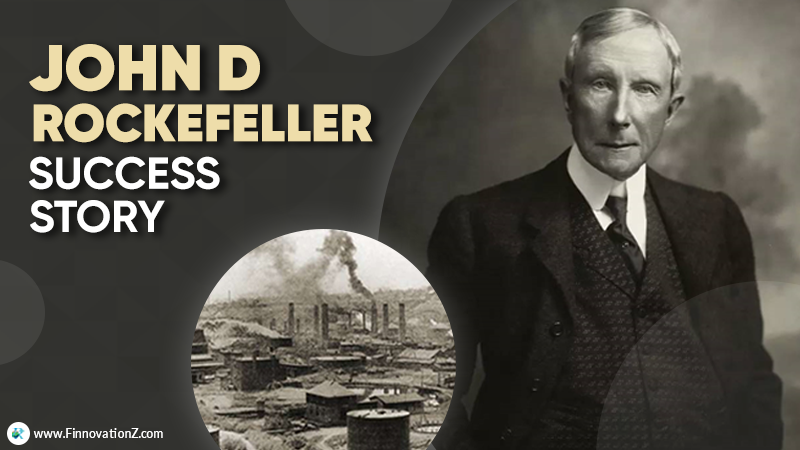
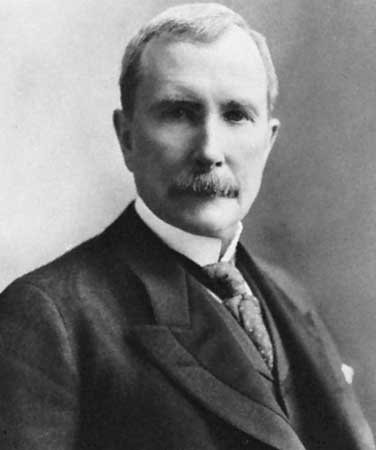
JOHN D ROCKEFELLER SUCCESS STORY

John D. Rockefeller was born July 8, 1839, in Richford, New York, about midway between Binghamton and Ithaca. His father, William Avery Rockefeller, was a “pitch man” — a “doctor” who claimed he could cure cancers and charged up to $25 a treatment. He was gone for months at a time traveling around the West from town to town and would return to wherever the family was living with substantial sums of cash. His mother, Eliza Davison Rockefeller, was very religious and very disciplined. She taught John to work, to save, and to give to charities.
From 1852 Rockefeller attended Owego Academy in Owego, New York, where the family had moved in 1851. Rockefeller excelled at mental arithmetic and was able to solve difficult arithmetic problems in his head — a talent that would be very useful to him throughout his business career. In other subjects Rockefeller was an average student but the quality of the education was very high.
In 1853, the Rockefellers moved to Cleveland, Ohio, and John attended high school from 1853 to 1855. He was very good at math and was on the debating team. The school encouraged public speaking and even though Rockefeller was only average, it was a skill that would prove to useful to him.
Early Business Career: 1855-1863
In the spring of 1855 Rockefeller spent 10 weeks at Folsom’s Commercial College — a “chain College” — where he learned single- and double-entry bookkeeping, penmanship, commercial history, mercantile customs, banking, and exchange. From his father he had learned how to draw up notes and other business papers. His father was very meticulous in matters of business and believed in the sacredness of contracts.
In August of 1855, at the age of 16, Rockefeller began looking for work in Cleveland as a bookkeeper or clerk. Business was bad in Cleveland at the time and Rockefeller had problems finding a job. He was always neatly dressed in a dark suit and black tie. Cleveland was not a large city in 1855 and Rockefeller could easily visit every business in under a week’s time. He returned to many businesses three times. Finally, on September 26, 1855, he got a job as an assistant bookkeeper with Hewitt & Tuttle, commission merchants and produce shippers.
Rockefeller soon impressed his employers with his seriousness and diligence. He was very exacting and scrupulously honest. For example, he would not write out a false bill of lading under any circumstances. He went to great lengths to collect overdue accounts. He was pleasant, persistent, and patient, and he got the company’s money from the delinquents.
During the Civil War their business expanded rapidly. Grain prices went up and so did their commissions. Most of their selling was done on commission, so Clark & Rockefeller took no risks from price fluctuations. Rockefeller’s style was very precise and calculated. He was not a gambler but a planner. He avoided speculation and refused to make advances or loans.
Rockefeller was extremely hard working. He traveled extensively, drumming up business throughout Ohio, and then would go to the banks and borrow large sums of money to handle the shipments. This aggressive style built the business up every year.

However, by the early 1860s, Rockefeller realized that the future of the commission merchant business in Cleveland was going to be limited. He had become convinced that the railroads were going to become the primary means of transportation for agricultural commodities. This would be to the disadvantage of Cleveland, because its position as an important Lake Erie port was its primary transportation advantage. He saw that the rising grain output of the Midwest and the Northwest of J. J. Hill would change the nature of the business for good. The huge elevators on Lake Michigan and the flour-millers of Minneapolis would be the dominant players in the business. Rockefeller came to believe that the future of Cleveland lay in the collection and shipment of raw industrial materials — not agricultural commodities. This would allow Cleveland to exploit its geographical advantages — mid-way between the Eastern seaboard and Chicago — and accessible to both rail and water transportation. He saw his chance in 1863 — 
Rockefeller Exits: 1892-1897
During 1891-92 all the evidence suggests that Rockefeller had a partial nervous breakdown from overwork. He lost all of his hair, including his eyebrows, and suffered from ill health in the early 1890s.
During this period Rockefeller’s wealth had increased to such an extent that his major problem was what to do with it all. He solved this problem by hiring Frederick T. Gates in September of 1891 as a full-time manager of his fortune. By this time, Rockefeller was literally inundated with appeals from individuals and charities for funds. Gates not only removed this burden; he also oversaw all of Rockefeller’s investments, which were becoming huge in their own right. For example, by 1897 Rockefeller owned large holdings of the Missabe iron range in Minnesota, a railroad to carry the ore to Lake Superior, and a fleet of huge ore-carrying lake steamers. In 1901 Rockefeller sold his iron ore-related business to J.P. Morgan for $80,000,000 with an estimated profit of at least $50,000,000 — a huge fortune in its own right, but it was just one of his investments. Morgan added the Rockefeller properties to the U.S. Steel Corporation.
By 1896, Rockefeller stopped going to his office daily and in 1897 he retired, at the age of 58. He took part in some management activity until 1899 but none to speak of thereafter. John Archbold ran Standard Oil from the mid-1890s onward. Archbold disliked prominence and asked Rockefeller to remain as the nominal president of Standard. Not publicly announcing his retirement was a great mistake on Rockefeller’s part. Rockefeller had resisted the temptation to exploit the Standard’s near-monopoly position by raising prices “too” much. Although Rockefeller’s pricing policies did result in some “monopoly profits” for the Standard, they were fairly mild. Not so Archbold. He raised prices aggressively, and the dividends rolled in. The consequence was that Rockefeller got all the blame for the policies even though he had almost no further role in management.
Retirement and Philanthropy
From the mid-1890s until his death in 1937, Rockefeller’s activities were philanthropic. Rockefeller’s fortune peaked in 1912 at almost $900,000,000, but by that time he had already given away hundreds of millions of dollars. His son, John D. Rockefeller, Jr. in 1897 joined Gates in the full time management of the fortune.
The University of Chicago — which Rockefeller was largely responsible for creating — alone received $75,000,000 by 1932.
He set up, at the urging of his son, the Rockefeller Institute for Medical Research (now Rockefeller University) and his gifts to it totaled $50,000,000 by the 1930s.
He founded the General Education Board in 1903 (later the Rockefeller Foundation). The General Education Board helped to establish high schools throughout the South by providing free professional advice on improving instruction and education. The effort was a cooperative one, and local money was used to build the high schools. In 1919, Rockefeller donated $50,000,000 to the Board to raise academic salaries, which were very low in the wake of WWI.
The Rockefeller Foundation was officially established in 1913 and Rockefeller transferred $235,000,000 to it by 1929.
In 1909, Rockefeller established the Rockefeller Sanitary Commission which was largely responsible for eradicating hookworm in the South by 1927.
When Rockefeller died, on May 23, 1937, his estate totaled only $26,410,837. He had given most of his property to his philanthropies and to his son and other heirs.
Rockefeller was a Schumpeteran entrepreneur. He clearly changed “the stream of the allocation of resources over time by introducing new departures into the flow of economic life” by creating the modern oil industry.

Last, but not least, he set the standard for philanthropy. Just the eradication of hookworm in the South alone would merit his place as one of the great humanitarians of the 20th Century. But his reputation was so sullied that he never received the credit that he was due for this great act on behalf of humankind.

“Don’t be afraid to give up the good to go for the great.”

How to study abroad?

Every year lakhs of students goes to study in abroad. The percentage of students studying in abroad is tend to growly. US, UK AND CANADA are the most preferred destination to study abroad. Every student wants to study in abroad at top university, but some don’t know the process and how to apply for that? This blog tells you to advantages of studying abroad, how to apply for bachelors degree, how to apply for masters degree, and additional information.

ADVANTAGES OF STUDYING IN ABROAD

  1. You will get to know about the world, new cultures, new people from all over the world.
  2. Good job and career opportunities.
  3. Good quality of education.
  4. Personal development.
  5. Good exposure to new culture.
  6. Advanced learning techniques.
Photo by RODNAE Productions from Pexels

APPLYING TO BACHELORS DEGREE

If you want to study yours bachelors degree in abroad, then you should to start your preparation from your 9 or 10 grade. First select your subject in which you want do your bachelors. Then select a country which suits and then research about the universities and then select some universities to apply. Know the university requirements, Different universities have different requirement and different selection process. You have to write a standardized test called SAT. SAT stands for Scholastic Assessment Test is a standardized test developed by college broad and Education Training Service(ETS).The SAT score is used for seeking admission in undergraduation programs. SAT consist of two section one is reading section which consist of 800 marks and math’s section also consists of 800 marks. SAT score is valid for 5 years . A total of 85 countries accept SAT score for giving admission to undergraduate programs. After writing SAT, you have to write two SAT subjects. One in Mathematics(Math’s 1 or Math’s 2) and one in science(Physics or Chemistry or Biology). Apart from that you have to send your High school transcripts, Letter of recommendation, Statement of purpose to the university which you are applying.

APPLYING TO MASTERS DEGREE

Many students prefer to study masters in abroad if you are in them, then select the country suits for you. Research about the universities and select the universities which suits you . The process is same for masters, but you to write a standardized test called GRE. GRE stands for Graduate Record Examination is a standardized test which is used for getting admission in masters program. GRE score is valid for 5 years. A total of 160 countries write GRE over 700 GRE examination center. GRE exam consist of one analytical writing section, two quantitative multiple choice section, two verbal multiple choice section. The maximum score in GRE is 340. Other than that you also require to send Letter of recommendation(from your teachers), Statement of Purpose, transcripts of undergraduation to the university you are applying.

ADDITIONAL INFORAMTION

If your applying for undergraduation or postgraduation program in a English speaking country like US or UK. You have to write English proficiency test TOEFL or IELTS. TOEFL stands for Test Of English As a Foreign Language is standardized test to measure English language ability of non-natives speakers. This test is accepted by more than 11,000 universities all over the world. This test consist of 4 sections reading, writing, speaking, listening. The maximum marks in TOEFL are 120. IELTS stands for International English Language Testing System is also a standardized test to measure English language ability of non-native speakers. IELTS is accepted by 10,000 universities all over the world. This test consist of 4 section reading, writing, speaking, listening. The maximum marks in IELTS is 9.0 points.

National Doctor’s Day . Celebrate and Appreciate The Life Savers of the World .

It is said ,
“diamonds are chunk of coals that did well under pressure”

Do you know about human diamonds ?
Think again, you might know them .
Yes you might have seen them ,even talked ,shared your problems ,they might have shined for you ,helped you solve your issues physically , mentally , emotionally .

Yes ,yes you are going the right way pal.
They help us without any time limit . They are available anytime whether it’s day or night .


Yes you got their dress code right,
They wear white coats and stethoscopes as their ornament .

Finally, here’s your answer.
They are doctors.


Amid the Covid-19 outbreak, when the world had no hope , when there was no Almighty omnipresent to save the world , when death threatening situation have elevated tremendously, the medical doctors have been working 24/7 risking their lives and desperately making an attempt to save several lives. Standing at the frontline battle of Covid -19 , facing the life threatening situations , instead of thinking about their own safety and their family’s safety they choose to serve the nation, putting their own lives at risk with selfless determination for the sake of saving lives despite of every possible chance of not seeing the world again .


The doctors and the staff have gone above and beyond everything one can ever expect them to during this Covid-19 battle.

Just like diamonds , taking pressure just to shine for others .
Doctors are just humans with white coats but with extraordinary will to serve and save people .

No words are enough to appreciate their service.
But one can always give a day to celebrate and appreciate their commitments.

In India , July 1st is celebrated as National Doctor’s Day .
A day when one can show their gratitude for all the support, dedicated service, care, and humbleness and surely the effective treatment by doctors .


National Doctor’s Day :-

Every year, July 1 is celebrated as National Doctors’ Day by the Indian Medical Association (IMA).
The day is dedicated to all the doctors and healthcare workers who have been serving the people by risking their lives.


History of Doctor’s Day in India :-


The National Doctor’s Day 1st July was first observed in 1991, commemorating the birth and death anniversary of former Bengal’s Chief Minister Dr Bidhan Chandra Roy to honour his contribution in serving humanity as a doctor .


About Dr Bidhan Chandra Roy :–

Bidhan Chandra Roy , was an Indian physician, educationist, philanthropist, freedom fighter and statesman who served as the Chief Minister of West Bengal .


Dr Roy was a great doctor who made an enormous contribution to the medical field. He was born on July 1, 1882.


On 1 July 1962, his 80th birthday, around 11 in morning , after treating his patients , he died . He had gifted his house for running a nursing home named after his mother, Aghore Kamini Devi. He had also constituted a trust for his properties at Patna to carry out social service, with eminent nationalist Ganga Sharan Singh (Sinha) .


He played a significant role in establishing medical institutions like Jadavpur T.B. Hospital, Chittaranjan Seva Sadan, Kamala Nehru Memorial Hospital, Victoria Institution (college), Chittaranjan Cancer Hospital and the Chittaranjan Seva Sadan for women and children.
He was responsible for setting up a framework for dispensing grant-in-aid to hospitals and charitable dispensaries
He was honoured with Bharat Ratna, on February 4, 1961.

July 1 is celebrated as ‘National Doctor’s Day’ as National Doctors’ Day by the Indian Medical Association (IMA) in account of his service and for being the pedestal of the medical line in India .

Celebration around the world :-

The date of celebrating National Doctor’s Day varies from nation to nation depending on the event of commemoration that is marked as the national Day of celebrating the service of doctors.


Cards or red carnations are gifted to doctors , physicians and their spouses to celebrate their commitment and service by patients and staff.
A flower is also placed on the graves of deceased physicians.

Red Carnations bouquets are specially gifted to doctors because of its specific symbol. Red carnations symbolises love, affection and sacrifice which represents the gratitude of a patient towards his healthcare professionals.

The day is celebrated by health care organizations as well .


Significance The National Doctor’s Day :-

This day is observed to pay heed towards the medical doctors’ role and responsibilities in serving lives. The day is supposed to recognise their functions and obligations as well as their service of healing mankind .
A good doctor who works hard to serve humanity and handle his/her patient with care always deserves appreciation . Thus , doctor’s day is a day to celebrate and appreciate their selfless service.


“Medicines can cure, but a good doctor’s inspirational words can give the strength to fight from within “

Being at hospital can be a terrible experience for a person but a good doctor not only provides the best treatment but also strength to fight the disease and treat a person not only physically but also mentally and emotionally with their positive thoughts .

Oncologists, pediatricians, cardiologists, neurologists, general physicians, dermatologists, gynecologists, and psychiatrists , all such kinds of doctors take the Hippocratic Oath and through this oath, they swear to follow ethics laid down for medical practices.

Doctor’s services are the foremost necessary for life.
Doctors all over the world are given the stature next to God because of their life saving role play .

So let us all appreciate and show your gratitude to the Warriors and Life Savers for all their commitments and selfless deeds .

Walking

Suppose that when you went to your Dr. for a regular health check-up. There your Dr. has given you your health prescription in which you are recommender a few medicines and surprisingly a simple thing to do every day and that is walking. Well then you will ask more questions and the Dr. will say walking has various health benefits and you need it too.

What is the thing which we are been doing when we were just a year old or when a newborn is born is born in a family there when the baby start walking Is also considered or taken walking as a strong or proper growth of a child?

Well, there are various benefits of walking daily, anyone can take these benefits by following a consistent walk every day. Various health researchers have found that there are chances that walking may improve your lifespan.

Are there only few benefits of walking? The answer to this question is no there NO there are many benefits for just walking, by just taking a small amount of time from your one and only precious lifestyle everyday just for walking. Seriously it will only take few moments or little span of time and you will get various benefits by following this walking ritual daily and after some time it will become your habit (As it is said that it only takes 21 days to form a habit if you are consistent or regular.

The benefits of walking

  • Can help you tone your legs and reduces excess fat from your body.

While walking regularly for about 30 minutes daily will help burn calories and will reduce the excess amount of fat stored in you body and can help slim down your legs. When you walk your legs works constantly which will help reduce your body fat percentage.

  • Can help is lowering you heart risk.

While doing any sort of physical activities you heart pumps blood the proper way to each part or organ of your body same is while walking for some time period daily will also reduces your heart risk

  • Can help in reducing blood sugar level.

Walking is also one kind of physical activity and while doing so or while walking daily the blood sugar level will reduce which may results in getting you benefits of that.

  • Can help increase your lifespan.

Studies have shown that by walking daily people’s life span may increase. People who walk daily tend to live more than people who do not.

  • Can improve your immune system.

People who walk daily for a certain amount of time of their day tends to get less sick or even if they get Sikh they will we able to fight with the fever and get healthier faster than normal people. SO, while walking your immune system will become stronger.

There are more benefits pf while walking and that is. When we people walk in a society there will be less crimes. Can develop your social skills and help reduces depression.

The coronavirus (COVID‐19) pandemic’s impact on mental health

Throughout the world, the public is being informed about the physical effects of SARS‐CoV‐2 infection and steps to take to prevent exposure to the coronavirus and manage symptoms of COVID‐19 if they appear. However, the effects of this pandemic on one’s mental health have not been studied at length and are still not known. As all efforts are focused on understanding the epidemiology, clinical features, transmission patterns, and management of the COVID‐19 outbreak, there has been very little concern expressed over the effects on one’s mental health and on strategies to prevent stigmatization. People’s behavior may greatly affect the pandemic’s dynamic by altering the severity, transmission, disease flow, and repercussions. The present situation requires raising awareness in public, which can be helpful to deal with this calamity. This perspective article provides a detailed overview of the effects of the COVID‐19 outbreak on the mental health of people.

KIDS AND TEENS AT RISK

Kids, away from their school, companions, and partners, remaining at home can have numerous inquiries concerning the flare-up and they look toward their folks or guardians to find the solution. Not all kids and guardians react to pressure similarly. Children can encounter nervousness, trouble, social detachment, and an oppressive climate that can have short‐ or long‐term consequences for their psychological wellness. Some normal changes in youngsters’ conduct

To assist with balancing negative practices, expects guardians to try to avoid panicking, manage the circumstance carefully, and answer the entirety of the kid’s inquiries as well as could be expected. Guardians can set aside some effort to converse with their youngsters about the COVID‐19 flare-up and share some sure realities, figures, and data. Guardians can assist with consoling them that they are protected at home and urge them to participate in some solid exercises including indoor games and some physical and mental activities. Guardians can likewise foster a home timetable that can assist their youngsters with staying aware of their investigations. Guardians should show less pressure or nervousness at their home as kids see and feel negative energy from their folks. The contribution of guardians in solid exercises with their youngsters can assist with lessening pressure and nervousness and carry help to the general circumstance.

 ELDERS AND PEOPLE WITH DISABILITIES AT RISK

Older individuals are more inclined to the COVID‐19 flare-up because of both clinical and social reasons, for example, having a more vulnerable safe framework or other basic medical issue and removing from their families and companions because of their bustling timetables. As indicated by clinical specialists, individuals matured 60 or above are bound to get the SARS‐CoV‐2 and can create a genuine and life‐threatening condition regardless of whether they are healthy.

Physical separating because of the COVID‐19 episode can have exceptional adverse consequences on the emotional wellness of the old and handicapped people. Actual disengagement at home among relatives can put the old and incapacitated individual at genuine emotional wellness hazard. It can cause tension, trouble, and prompt a horrible circumstance for them. Old individuals rely upon youthful ones for their day by day needs, and self‐isolation can fundamentally harm a family framework. The old and crippled individuals living in nursing homes can confront outrageous psychological wellness issues. Be that as it may, something as straightforward as a call during the pandemic episode can assist with supporting old individuals. COVID‐19 can likewise bring about expanded pressure, uneasiness, and gloom among older individuals previously managing psychological well-being issues.

Specialists, medical caretakers, and paramedics functioning as a front‐line power to battle the COVID‐19 flare-up might be more defenseless to foster emotional well-being indications. Dread of contracting an illness, long working hours, inaccessibility of defensive stuff and supplies, patient burden, inaccessibility of powerful COVID‐19 prescription, passing of their associates after openness to COVID‐19, social separating and disconnection from their loved ones, and the critical circumstance of their patients may cause significant damage of the psychological wellness of wellbeing laborers. The functioning proficiency of wellbeing experts may diminish progressively as the pandemic wins. Wellbeing laborers should take brief breaks between their functioning hours and manage the circumstance tranquilly and in a casual way.