Unemployment in India

Unemployment means the state of being without any opportunity of earning one’s livelihood. The industrial civilisation has greatly increased the wants of man and opened up many new opportunities for employment. The rapid increase of population has worsened the situation. This is why the problem of unemployment has been getting more and more acute every year.

The evil effect of unemployment is not confined to the economic field only. It destroys the sense of moral values and leads to undesirable activities from a feeling of despair and anger. A society so infected can never prosper in the world. This is why every civilized government looks upon removal of unemployment as one of its primary duties.

The Government of India have already taken in hand various development projects and started many big industries in the public sector. They are also helping Industries in private sector and encouraging cottage and Small-scale industries. All these have given employment, direct and indirect, to a good number of people; still the number of men yet unemployment is alarmingly large and the rapid increase of population has been adding to the difficulty to the situation. This increase has to be checked by family planning; but the general body of our people are yet too ignorant to take advantage of this.

The dynamism of labor in India is very low. Because of family loyalty, people usually avoid moving to remote areas of work. Elements such as the diversity of languages, religions, and customs also contribute to less mobility. Low mobility leads to greater unemployment.Lack of infrastructure like roads, electricity, telecommunication, highways, irrigation facilities in agriculture. Inadequate availability of infrastructure is a major hurdle in creating productive employment opportuniti

The government imposed a lockdown to get relief from the epidemic but it affected economic and commercial activities and resulted in job losses and later the migration of migrant workers started which shook the whole country.

The quality of Indian education needs to be improved. The government should select a committee to oversee schools and universities. The syllabus taught has not been of any use to the industry so the teachings should be in line with the current requirements of the industry. Practical knowledge should be given before finishing studies.

Development of the rural areas will stop the migration of the rural people to the urban cities and this will not put more pressure on the urban city jobs.Government should allow more foreign companies to open their unit in India, so that more employment opportunities will be available.

Over 18 crore doses of COVID19 vaccine administered in the country so far

India has crossed a major landmark by administering more than 18 crore doses of COVID19 vaccine in the country so far. These include over 96 lakh 27 thousand Healthcare Workers who have taken the first dose and more than 66 lakh Health care workers who have taken the second dose, over one crore 43 lakh Frontline Workers have taken the first dose and more than 81 lakh front line workers have taken the second dose.

The Union Health Ministry said, over 10 lakh 79 thousand beneficiaries were inoculated with Covid-19 vaccine doses till 8 PM yesterday. Out of this, more than six lakh 16 thousand beneficiaries were vaccinated for the first dose and more than four lakh 62 thousand beneficiaries received second dose of the vaccine.

The Ministry said, more than three lakh 25 thousand beneficiaries in the age group of 18 to 44 years received their first dose of COVID vaccine yesterday. Cumulatively, over 42 lakh 55 thousand in this age group have been administered the first dose across the country.

The Liberalised and Accelerated Phase-3 Strategy of Covid-19 Vaccination came into force from 1st of this month.

Government fighting COVID-19 with all its might, assures Prime Minister

Prime Minister Narendra Modi has assured that the country will overcome the challenge of the Corona pandemic with its strength and dedication. He asserted that India is not a nation that will lose hope in tough times.

He was speaking at a virtual event after releasing the 8th installment of financial benefit under the Pradhan Mantri Kisan Samman Nidhi (PM-KISAN) scheme to over 9 crore 50 lakh farmers in the country. Mr. Modi said that farmers have shown their grit in serving the nation even during the testing times of COVID-19.

Mr. Modi said the PM-Kisan scheme has proven to be very beneficial for the marginal farmers in the country. Talking about the COVID pandemic, the Prime Minister said a large number of cases are being reported from the rural areas as well. He urged the village panchayats to ensure proper awareness and sanitation in their respective areas.

On the occasion, Mr. Modi called upon the State governments to ensure strict laws to counter black marketing of medicines and medical supplies.

Assuring everyone about the Government’s resolve towards fighting COVID-19 with all its might, the Prime Minister said that he shares the feelings of the countrymen at every loss of life reported in the country.

Mr. Modi requested everyone to register themselves for vaccination and urged them to strictly adhere to COVID appropriate behaviour at all times.

PM Modi says, Centre, all states govts together making continuous efforts to ensure maximum people get vaccinated at rapid pace

Talking about the COVID pandemic, the Prime Minister said that a large number of cases are also reported from the rural areas as well. He urged the village panchayats to ensure proper awareness and sanitation in their respective areas. On the occasion, Mr. Modi called upon the State governments to ensure strict laws to counter black marketing of medicines and medical supplies.

He said, the pharma sector in the country is producing and delivering medicines at a large scale and the centre is working with the ‘Whole of Government’ approach towards building new COVID hospitals and oxygen plants. The Prime Minister said that the Armed forces are also working with full strength to ensure oxygen supply and ensure COVID related care in these tough times.

Urging people to wear masks properly, Mr. Modi asked everyone to consult a doctor when they witness any COVID related symptom. Assuring everyone about the government’s resolve towards fighting COVID-19 with all might, the Prime Minister said that he shares the feelings of countrymen at every loss of life reported in the country.

Speaking about the largest vaccination drive against COVID-19 in the country, Mr. Modi requested everyone to register themselves for the vaccination and urged to strictly adhere to the covid appropriate behaviour at all times. Informing that nearly 18 crore vaccine doses have been administered so far in the country, he affirmed that the Centre along with State governments is continuously working towards ensuring quick and easy availability of COVID vaccines to every eligible beneficiary.

जलवायु परिवर्तन

 जलवायु परिवर्तन क्या है और यह आपको कैसे प्रभावित करता है?

जलवायु परिवर्तन से तात्पर्य पृथ्वी की पर्यावरणीय परिस्थितियों में परिवर्तन से है।  यह कई आंतरिक और बाहरी कारकों के कारण होता है।  पिछले कुछ दशकों में जलवायु परिवर्तन एक वैश्विक चिंता का विषय बन गया है।  इसके अलावा, ये जलवायु परिवर्तन पृथ्वी पर जीवन को विभिन्न तरीकों से प्रभावित करते हैं।  ये जलवायु परिवर्तन पारिस्थितिकी तंत्र और पारिस्थितिकी पर विभिन्न प्रभाव डाल रहे हैं।  इन परिवर्तनों के कारण, पौधों और जानवरों की कई प्रजातियां विलुप्त हो गई हैं।
अविश्वसनीय स्रोतों या जानबूझकर गलत सूचना के कारण बहुत से लोग नहीं जानते कि यह वास्तव में क्या है, जिसके कारण जलवायु परिवर्तन के बारे में कई मिथक हैं।  इन पृष्ठों में, हम विषय को एक उद्देश्य, वैज्ञानिक दृष्टिकोण से देखते हैं, जलवायु परिवर्तन के कारणों और परिणामों पर चर्चा करते हैं और इससे कैसे निपटा जाना चाहिए।
 सबसे पहले, हमें दो अवधारणाओं को स्पष्ट करना होगा जिन्हें अक्सर समानार्थक शब्द समझ लिया जाता है: जलवायु परिवर्तन और ग्लोबल वार्मिंग।  हालाँकि, उनके बीच एक महत्वपूर्ण अंतर है, यह देखते हुए कि यह ग्लोबल वार्मिंग है जो जलवायु परिवर्तन का कारण बनती है।  जैसे-जैसे ग्रह का तापमान स्वाभाविक रूप से अधिक बढ़ता है, जलवायु बदलती रहती है।
हालांकि यह निश्चित है कि पृथ्वी स्वाभाविक रूप से गर्म हो गई है और अन्य युगों के दौरान ठंडी हो गई है, ऐसे चक्र हमेशा बहुत धीमे रहे हैं, लाखों साल लगते हैं, जबकि अब, केवल 200 वर्षों की अवधि के भीतर, हम उस स्तर तक पहुंच रहे हैं जो अतीत में लाया था  विलुप्त होने के बारे में।
जलवायु परिवर्तन के कारण और परिणाम

जलवायु परिवर्तन का मुख्य कारण ग्लोबल वार्मिंग है, जिसके भौतिक, जैविक और मानव प्रणालियों के साथ-साथ अन्य प्रभावों पर कई नकारात्मक परिणाम होते हैं।
ग्लोबल वार्मिंग ग्रीनहाउस प्रभाव के कारण होता है, एक प्राकृतिक प्रक्रिया जिसके द्वारा वातावरण सूर्य की कुछ गर्मी को बरकरार रखता है, जिससे पृथ्वी को जीवन की मेजबानी के लिए आवश्यक परिस्थितियों को बनाए रखने की अनुमति मिलती है।  ग्रीनहाउस प्रभाव के बिना, ग्रह का औसत तापमान -18ºC होगा।
समस्या यह है कि दैनिक मानवीय गतिविधियाँ ग्रीनहाउस प्रभाव को अधिकतम करती हैं, जिससे ग्रह का तापमान और भी अधिक बढ़ जाता है।
इन जलवायु परिवर्तनों का पर्यावरण पर नकारात्मक प्रभाव पड़ता है।  समुद्र का स्तर बढ़ रहा है, ग्लेशियर पिघल रहे हैं, हवा में CO2 बढ़ रही है, जंगल और वन्यजीव घट रहे हैं, और जल जीवन भी जलवायु परिवर्तन के कारण परेशान हो रहा है।  इसके अलावा, यह गणना की जाती है कि यदि यह परिवर्तन जारी रहा तो पौधों और जानवरों की कई प्रजातियां विलुप्त हो जाएंगी।  और पर्यावरण को भारी नुकसान होगा।
ग्रीन हाउस गैसें

कार्बन डाइऑक्साइड, मीथेन, नाइट्रोजन ऑक्साइड, एचसीएफसी: मुख्य रूप से बिजली उत्पादन, परिवहन, हीटिंग, उद्योग और निर्माण में जीवाश्म ईंधन के जलने के कारण होता है।  इसके अलावा पशुधन, कृषि (मुख्य रूप से चावल की खेती), अपशिष्ट जल उपचार और दूसरों के बीच लैंडफिल के कारण होता है।
भूमि पारिस्थितिकी प्रणालियों और वनों की कटाई का विनाश
वनों की कटाई जलवायु परिवर्तन के सबसे महत्वपूर्ण कारणों में से एक है।  जंगल और वर्षावन ख़तरनाक गति से गायब हो रहे हैं।  पिछले 10 वर्षों में, उन्होंने कम से कम 13 मिलियन हेक्टेयर को नष्ट कर दिया है।
जनसंख्या वृद्धि

मानव जनसंख्या बेतहाशा बढ़ रही है।  आज, बमुश्किल २५० साल बाद, हम ७.७ अरब से अधिक हैं और २०५० तक कम से कम २ अरब तक बढ़ते रहेंगे।  बढ़ती हुई जनसंख्या को अधिक से अधिक संसाधनों की आवश्यकता है, जो सभी उत्पादन प्रक्रियाओं से ग्रीनहाउस गैस उत्सर्जन में वृद्धि को गति देता है।
जलवायु परिवर्तन के परिणाम

 वैश्विक तापमान में वृद्धि विनाशकारी परिणाम लाती है, जिससे मानव सहित पृथ्वी के वनस्पतियों और जीवों का अस्तित्व खतरे में पड़ जाता है।  सबसे खराब जलवायु परिवर्तन प्रभावों में ध्रुवों पर बर्फ के द्रव्यमान का पिघलना शामिल है, जो बदले में समुद्र के स्तर को बढ़ाता है, बाढ़ पैदा करता है और तटीय वातावरण को खतरे में डालता है जिसके माध्यम से छोटे द्वीप राज्यों के पूरी तरह से गायब होने का जोखिम होता है।
 जलवायु परिवर्तन अधिक हिंसक मौसम की घटनाओं, सूखे, आग, जानवरों और पौधों की प्रजातियों की मृत्यु, नदियों और झीलों से बाढ़, जलवायु शरणार्थियों के निर्माण और खाद्य श्रृंखला और आर्थिक संसाधनों के विनाश की उपस्थिति को भी बढ़ाता है, खासकर विकासशील देशों में।
अगर हम कुछ नहीं करते हैं और चीजें अभी की तरह चलती रहती हैं तो भविष्य में एक दिन आएगा जब इंसान पृथ्वी की सतह से विलुप्त हो जाएगा।  लेकिन इन समस्याओं को नज़रअंदाज करने के बजाय हम इस पर काम करना शुरू कर देते हैं तभी हम पृथ्वी और अपना भविष्य बचा सकते हैं।हालांकि इंसान की गलती ने जलवायु और पारिस्थितिकी तंत्र को काफी नुकसान पहुंचाया है।  लेकिन, फिर से शुरू करने और पर्यावरण को नुकसान पहुंचाने के लिए हमने अब तक जो किया है उसे पूर्ववत करने का प्रयास करने में देर नहीं हुई है।  और अगर हर इंसान पर्यावरण में योगदान देना शुरू कर दे तो हम भविष्य में अपने अस्तित्व के बारे में सुनिश्चित हो सकते हैं।

How India is lacking in Healthcare

Health is man’s most precious possession. One who enjoys good health can enjoy life in the real sense. The healthcare system of India has been poor for a long time and the ongoing covid pandemic has revealed it.


In the absence of modern quality healthcare in the public sector , people prefer the private sector for better treatment but it is not affordable for them. Healthcare sector is not ready for the unprecedented rise in coronavirus cases which could turn worse. It has highlighted the lack of medical funding to build better healthcare infrastructure.

The covid pandemic creates a special challenge due to the paucity of testing services, weak surveillance system and above all poor medical care. The impacts of this pandemic, and especially the lockdown strategy, are multi-dimensional.


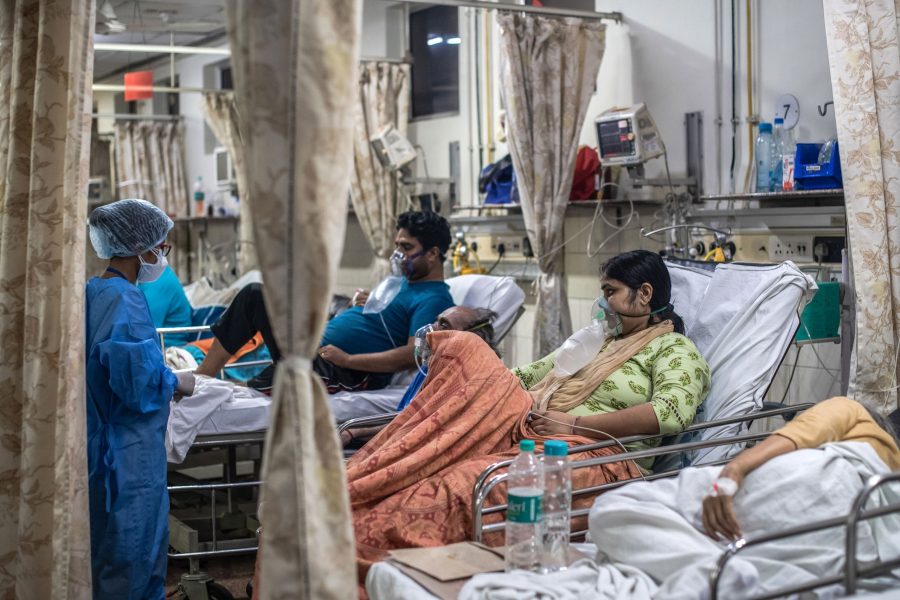
Due to lack of vaccines, many people are getting infected with corona. Not all patients are receiving treatment due to lack of hospital beds. The problem has become more serious as there are not enough doctors. People are dying from oxygen after being infected.

Many states are already at risk of pandemic due to the lack of health infrastructure and equipment ranging from oxygen to ventilators. Most of the people in India have no medical insurance, so they cannot cope financially and mentally against pandemic or any other disease. Who are the decision maker of the society, most of them live in cities and towns. So they cannot reach to the people who live in rural areas. Now people’s lives are at stake.

The solution is to increase healthcare spending and strengthen the healthcare system.The epidemic highlighted the inadequacy of private health care and the importance of spending and strengthening public health care. Longevity; The government needs to re-evaluate and make rapid improvements in public health, infrastructure funding. India need more doctors and nurses for better healthcare system. More government hospitals are needed to treat most people. India need to prioritize healthcare and be better prepared for the future.

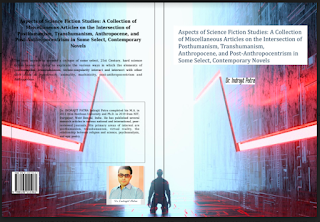
Aspects of Science Fiction Studies: A Collection of Miscellaneous Articles on the Intersection of Posthumanism, Transhumanism, Anthropocene and Post-Anthropocentrism in Some Select, Contemporary Novels

ISBN Number

978-81-951119-6-1

Title Aspects of Science Fiction Studies: A Collection of Miscellaneous Articles on the Intersection of Posthumanism, Transhumanism, Anthropocene and Post-Anthropocentrism in Some Select, Contemporary Novels
Author/Editor Dr. Indrajit Patra
Year Of Allotment of ISBN 2021
Country of Publication INDIA
Product Form Single-component retail product/
Language English
Imprint Pen2Print

About the Book 
The book intends to present a critique of some select, 21st Century, hard science fiction novels in order to explicate the various ways in which the elements of posthumanism, transhumanism,
techno-singularity, interact and intersect with other such ideas as monstrosity, animality, machinicity, postanthropocentrism, and Anthropocene. The study divides its analysis into seven different
chapters and attempts to present an elaborate study on various aspects of posthumanism, transhumanism, and singularity. The book despite being a collection of miscellaneous essays actually intends
to show how a technologically mediated transhuman/posthuman culture will normally be defined by a total dissolution of binaries and human digital and real, and machine and man.
Buy Now from Amazon LINK 1 and Amazon LINK 2

Buy Print Copy LINK 1

IJR – International Journal of Research

International Journal of Research (IJR) is indexed, refereed, peer reviewed, open access journal, publishing high quality papers on all aspects of education.

Social Science

Humanities, Sociology, Education, Political Science, Law, Policy, Social Review, Arts, History, Philosophy, English

Management

Commerce, Economics, Finance, Accounting, Corporate Governance, Human Resources Management, Marketing Management, Quality Management Training and Development

Engineering

Information Technology, Computer Application, Civil Engineering, Machanical Engineering, Chemical Engineering, Electrical Engineering, Physics

Medical Science

Medicine, Health, Nursing, Clinical Research, Pharmacy, Pharmaceutical, Pharmacognosy, Pharmacology, Phytochemistry

Biology

Botany, Bioscience, Microbiology, Biotechnology, Clinical Biology, Molecular Biology, Biochemistry, Agriculture, Chemistry, Environment and Ecology, Food Science, Nutrition, Plant Science, Entomology, Zoology, Fisheries

Physical Education

Sports, Yoga, Physiotherapy, Physiology, Exercise, Health

How to Get Published

Send paper for review to ijr@ijrjournal.com

EAM S Jaishankar virtually participates in G7 Foreign Ministers’ meeting

External Affairs Minister Dr S Jaishankar participated in the G-7 Foreign Ministers’ meeting through video conference yesterday. After the meeting, Dr Jaishankar said, it was an interactive and thought-provoking meeting. He appreciated the opportunity to participate in its many conversations.
 
During the meeting it was discussed that vaccination is the only lasting solution to the COVID-19 challenge. A global answer will require diversified production, uninterrupted supply chains and generous resourcing. Dr. Jaishankar said, India will do its part. He noted that geopolitical changes have been accelerated by Covid-related trends and issues of transparency, reliability and resilience will guide policy choices. Open Societies and personal freedoms require careful nurturing and must be on guard against fake news and digital manipulation he added.
 
Dr Jaishankar said, India had embraced Green Growth since 2014 and transformation stories include renewable capacity, Ujjwala, LED distribution, forest cover and Jal Jeevan. He said, but higher green ambitions require larger green resources and COP26 will be a test. The 2021 UN Climate Change Conference, also known as COP26, is the 26th UN Climate Change conference.
 
Dr Jaishankar thanked UK Foreign Secretary Dominic Raab for inviting India as a guest to the Foreign Ministers’ Meeting.
 
British Prime Minister Boris Johnson interacted with the participating Foreign Ministers in between the sessions. Dr Jaishankar assured him that Foreign Secretary Dominic Raab and he will take forward the 2030 Roadmap. In a tweet, Dr Jaishankar said, India and UK are committed to delivering on the Modi-Johnson vision of the ties.

Tamil Nadu announces new restrictions till May 20 to curb spread of Covid-19

Tamil Nadu has registered more than 23 thousand fresh cases yesterday. The health department said, more than one lakh 25 thousand people are under treatment, the death amounts to more than 160. Chennai continues to register more than 6000 positive cases with Coimbatore registering more than 2000 and Chengalpet with more than 1000.  Tirunelveli and Tiruvallur districts registered more than 900 cases yesterday.  Due to the prevailing pandemic situation, the government has announced new restrictions and nine higher police officials to monitor the logistics and other necessities needed to manage COVID. AIR correspondent reports that the new restrictions of the government will come into force from today to the 20th of this month.
 
Transport services like rail, metro and bus services will be allowed to operate with 50 percent passengers only. Private and government offices will have 50 percent attendance. No other shops except groceries , vegetable and tea shops without air-conditioned facility  will be allowed to function with 50 percent customers till 12 noon. Auditoriums, open air meetings and cultural events are banned. Only 20 people will be allowed in funerals and 50 persons in marriages. Curfew will continue on Sundays. E commerce activities like swiggy and zomato will be allowed to take place from restaurants with restricted timings.  Essential services, Media, freight and medical emergencies are allowed at all times and night curfew will continue from ten pm to four am.

COVID-19 supplies received from global community effectively allocated to states, UTs by Centre: Health Ministry

TheUnion Health Ministry has said that COVID-19 supplies received from the Global Community have been effectively allocated to States and Union Territories by the Centre.
   
The Ministry said that the Government of India has been receiving international donations of COVID-19 relief medical supplies and equipment since the  27th of last month from different countries including the United Kingdom, Ireland, Romania, Russia, UAE, USA, Taiwan, Kuwait, France, Thailand, Germany, Uzbekistan, Belgium and Italy. It added that from the  27th of April to the 4th of this month,  1764 Oxygen Concentrators, 1760 Oxygen Cylinders, seven  Oxygen Generation Plants, 450 ventilators, over  1.35 lakh  Remdesivir vials and  1.20 lakh  Favipiravir strips were delivered.
 
The Health Ministry said, a streamlined and systematic mechanism for allocation of the support supplies received by India has been put into place by the centre for effective distribution of the medical and other relief and support material. Besides, a dedicated Coordination Cell has been created in the Ministry to coordinate the receipt and allocation of foreign COVID relief material as grants, aid and donations.
 
The Ministry said, all these relief medical supplies and equipment are being allocated in a timely manner to the 38 medical institutions across 31 States and union territories, so far in the first tranche. This will help to supplement the medical infrastructure of these Institutions and strengthen their clinical management capacities for prompt and effective clinical management of the hospitalised COVID-19 patients. The cargo clearance and deliveries are facilitated without delay in coordination with agencies concerned.

Over 16 crore 24 lakh doses of Covid-19 vaccines administered in country

India has administered over 16 crore 24 lakh doses of COVID-19 vaccine in the country so far. Over 94 lakh 79 thousand Healthcare Workers  have taken the 1st dose while more than 63 lakh Health care workers have taken the 2nd dose. Over one crore 36 lakh Frontline Workers have taken the 1st dose while more than 74 lakh front line workers have taken the 2nd dose.
 
The Union Health Ministry said, more than 18 lakh 90 thousand beneficiaries were inoculated with COVID-19 vaccine doses till 8 PM yesterday. Out of these more than eight lakh 66 thousand beneficiaries were vaccinated for the 1st dose and more than 10 lakh beneficiaries received the 2nd dose of the vaccine.
 
The Ministry said, two lakh 30 thousand 305 beneficiaries in the age group of 18 to 44 years received their first dose of COVID vaccine yesterday and cumulatively over nine lakh across 12 States and Union Territories. 
 
The Ministry said, the vaccination exercise as a tool to protect the most vulnerable population groups in the country from COVID-19 continues to be regularly reviewed and monitored at the highest level.

12 states and UTs show early signs of reduction in Covid-19 cases: Govt

The Government has said that 12 States and Union Territories are showing early signs of reduction in COVID-19 cases. These States and Union Territories include Maharashtra, Uttar Pradesh, Delhi, Chhattisgarh, Gujarat, Jharkhand and Ladakh. Briefing reporters in New Delhi, Joint Secretary in Ministry of Health and Family Welfare, Lav Agarwal said, around 2.4 per cent day on day growth in COVID cases has been noticed. He said, 12 States and Union Territories have more than one lakh active cases. The states are Maharashtra, Karnataka, Kerala, Uttar Pradesh, Rajasthan, Andhra Pradesh, Gujarat, Tamil Nadu, Chhattisgarh, West Bengal, Bihar and Haryana. 

Mr Agarwal said, seven states have 50 thousand to one lakh active cases, while 17 states have less than 50 thousand active cases. He said, Maharashtra, Karnataka, Andhra Pradesh, Delhi, and Haryana have reported more COVID-19 deaths.

Principal Scientific Advisor, K Vijay Raghavan said, vaccines are effective against current variants. He said, new variants will arise all over the world and in India too but variants that increase transmission will likely plateau. He said, this is a critical time and it is important for all of us to work together and ensure India and the world get out of this Pandemic. He said, mask and social distancing are critical and most effective in containing COVID-19.