SHOULD ABORTION BE BANNED WORLDWIDE ?

The discussion about whether abortion ought to be a legitimate alternative keeps on isolating individuals. Some are agreeable to it while others are against it. However, prior to going to the determination we should investigate it’s advantages and disadvantages.

ADVANTAGES:

1.There are a few contentions that one forward on the side of fetus removal. As a matter of first importance, any birth of a youngster ought to happen whenever the guardians need and not by some coincidence. This way it would go far in helping the world to have a climate where all youngsters that are brought into the world in this world have a climate favorable for legitimate turn of events.

2.There is no requirement for swelling the world with numerous kids who can’t approach essential necessities like sufficient attire, food, haven, and instruction.

Abortion activists are ready for Justice Kennedy's retirement — Quartz

3.It ought to likewise be noticed that when an individual chooses to carry out an abortion it isn’t out of her aversion for youngsters but since she feels that it would not be an insightful choice to continue with the pregnancy as it is as yet not yet the ideal opportunity to have a child.

4.On account of assault or inbreeding, keeping a pregnancy is very damaging to the individual assaulted as nobody would wish to keep a kid that is a consequence of this, and the best answer for this issue is to abort the unborn kid.

5.At times entanglements can happen to a pregnancy that might put the existence of the mother or unborn youngster in harm’s way and surprisingly now and again every one of them. For this situation, abortion should be allowed to save the actual wellbeing of the mother.

DISADVANTAGES:

1.As indicated by Koster, abortion is just a brief and unreasonable choice that cause ladies to feel that they have gotten some help to an undesirable kid against odds of extremely durable loss of fruitlessness.

2.She further argues that although removing an unwanted pregnancy may somehow offer relief to the woman the possibility of becoming infertile especially if an unqualified person performed the operation is very significant and once you lose your fertility there is zero chance that you will regain it.

3.Even when performed by a qualified medical doctor there is a chance that complications may arise like in some medical procedures and if this happens, you could definitely lose your fertility.

4.The alleviation that one feels after procuring an abortion is typically brief, and it passes on after some time prompting a long-lasting sensation of blame and bitterness. In fact, in most of the times, this feeling of relief is just a deliberate attempt by the psychology of a person to delete the sense of guilt and shame that creeps in immediately one procures an abortion.

5.A great deal of favorable to lifers would liken early termination to murder, and it is consequently ethically off-base and ought to be prohibited. Genovesi characterizes murder as a purposeful demonstration of removing the existence of an individual. He further adds that since the baby of an individual has life, then, at that point removing it will add up to killing it, which is equivalent to kill.

India's new abortion law is progressive and has a human face | ORF

CONCLUSION:

The way things are today, it appears to be the discussion on abortion won’t reach a conclusion soon. There ought to be endeavors to give an unmistakable approach on this issue that would be worthy in the entire world through a worldwide body like the United Nations.

Apart from that the church and other organizations that are anti-abortion ought to soften their stand in some incidences like rape which are too traumatizing.

RESOURCES:

  1. https://ivypanda.com/essays/pros-and-cons-of-abortion-to-the-society/

2. https://abortion.procon.org/

GREEDINESS – A HEART ISSUE!!!

Greediness is the path of destruction of people. When people are greedy, they are blinded by the wrong actions and never be able to come of from that without a constant effort. To make you understand easier, I brought you a story written by C. Rajagopalachari who is was the last Governor-General of India.

Quotes about Being Greedy (39 quotes)

The protagonist of the story is Rammaya. He is a simple man living with his wife in a nice house made of tiled roof in a small town. Though he is not rich, he could take care of this family well. There lived two sparrows in the nice spot of the tiled roof of Rammaya’s house adn the mother bird has laid its eggs in the nest.

The male sparrow asked the female why Ramaya’s wife often quarrel with Rammaya. The female replied how could I know and told the male to mind its own business. Then the male sparrow said, you are always self-centered and also asked whether thy could help Rammaya. The female sparrow replied aggressively “don’t talk about the matter that does’nt concern us. It is enough for us if the cat doesn’t come to us”. Here comes the main twist.

The male sparrow picked a diamond nose-jewel somewhere from the land. As soon as picking it, went to its nest and asked the female bird ” Do you like it?” The female replied, what could I do with this diamond jewel. It scolded the male to bring food for the young ones. this male bird dropped the diamond jewel in the house and went to search food for the young ones.

Rammaya’s wife noticed the stud while sweeping the floor. She didn’t think of anything and with delight she wore it. Ramaya became angry and asked her how did she get that diamond stud. She replied causally that she found it and so she wore it. Rammaya insisted her to hand it over to the village magistrate. He also said, if police come and search for it, it will be a disgrace for us.

In the neighbourhood, the talk begun about the lost diamond-stud. The owner of the stud is Meenakshi Ammal’s daughter. She consoled the little girl and also said not to tell her father. If he knows he would in rage, said Meenakshi Ammal. But this talk was heard by the little girl’s father and it has to be admitted. The suspect was the maid-servant Kuppayi. The police searched her but could find nothing. After hearing this, Rammaya was very timid and his wife put the diamond ring in a safe place. Soon after that she had severe fever and was kept in the bed. So no one searched their house.

The male sparrow said, the lady of the house is scared and is down with fever. Replied the female sparrow, it is solely due to your doing. THe male answered bravely, “Did I ask her to steal it?” THis is because the humans are bound to be greedy. The female appreciated the male and said that we should never be greedy for what belongs to others.

The story came to an end by, Rammaya and his wife lived their whole life with the fear of being caught. THe diamond-stud may be with them but the fear of getting caught is more than that.

The thing I understand from the story is, We humans have six sense yet we don’t have conscience. We are greedy and not being truthful and helpful to others. We know birds have only five senses. Do think about the birds and humans. The birds aren’t greedy forwhat doesn’t belong to them. But the humans are greedy.

Even if you don’t help otherrs, try not to be greedy!!!

MENSTRUATION!!!

Menstruation, when we say this word some people will feel awkard or uncomfortable in their point of view. This is a God given gift to every women. They carry a life within them. This cannot be felt by men. But I don’t know why men feel uncomfortable when we talk about Menstruation in front of them. In early days, our grandmother used to say not to talk about this mentruation in front of everyone. In girls life, if the menstrual cycle starts, they are abide by many rules by the elderly. I am happy that mentruation has became a common thing now-a-days. Men also understand women’s pain and feeling during this mentruation. Now, let’s see about menstruation and menstrual hygiene.

During menstrual period, girls will have back pain, periodical cramps, mood swings etc. The child birth pain and periodical pain cannot be explained in words. Understand the pain of your mother or sister or wife and be helpful to them during these menstrual days.

Menstrual Cycle

Menstrual Cycle

The cyclic events that occurs during the reproductive phase of every women’s life is called Menstrual cycle or period. The menstrual cycle starts at the age of 11-13 which is the onset of puberty that is called, menarche and this menstrual cycle stops around the age of 48-50 years and this is called menopause. This reproductive period is marked by series of events repeated almost every month in physiologically normal women in the form of menstrual flow. This menstrual flows occurs once in 28 days with slight variation.

This menstrual cycle consists 4 phases;

  1. Menstrual phase
  2. Follicular phase
  3. Ovulatory phase
  4. Luteal phase

These phases shows simultaneous synchorny of events in both ovary and uterus. The changes in ovary and uterus are due to induced pituitary hormones and ovarian hormones. Let’s see about each phase of the menstrual cycle.

MENSTRUAL PHASE

This phase is also called destructive phase. The cycle starts with menstrual flow and occurs upto 4-5 days. Menstrual flow is nothing but the breaking of the endometrial lining of the uterus and its blood vessels due to the decreased level of progesterone and estrogen.

FOLLICULAR PHASE

The follicular phase extends from 5th day of the cycke until ovulation. During this phase, the primary follicle in the ovary matures and the endometrium regenerates through proliferation. As said earlier, these changes are due the hormones induced by the secretion of gonadotropins. It stimulates follicular development and secretion of estrogen.

OVULATORY PHASE

The induced hormones like Follicular Stimulating Hormone and Lutenizing Hormone attain its peak level in the 14th day of the menstrual cycle. In this phase ovum is released into the peritoneal cavity.

LUTEAL PHASE

During luteal phase, the remaining part of the Graafian follicle is transformed into a transitory endocrine gland called corpus luteum. The corpus luteum secretes large amount of progesterone which is essential for the maintenance of the endometrium.

If fertilization takes place, it gives way to the implantation of the fertilized ovum. Menstruation occurs only if the released ovum is not fertilized. The absence of menstruation maybe an indicator of pregnancy. This could be also due to stress and anaemia. If you have irregular or absence of period, consult a doctor immediately.

World Menstrual Hygiene Day 2018. Good menstrual hygiene management (MHM)…  | by International Med. Corps | International Medical Corps | Medium

MENSTRUAL HYGIENE

The health of every individual depends on the cleanliness of oneself. However, women should be hygienic in order to be healthy. This hygiene keep them free from skin and genitourinatory tract infection. It is vital for good health, well-being, dignity, empowerment and productivity of women. The impact of poor menstrual hygiene on girls is increased stress levels, fear and embarrassment during menstruation. This can keep girls inactive during such periods leading to absenteeism from school.

The basic menstrual hygiene ways are

  1. Sanitary pads should be changed regularly, to avoid infections due to microbes from vagina and sweat from genitals.
  2. Use of warm water to clean genitals helps to get rid of menstrual cramps.
  3. Wearing loose clothing rather than tight fitting clothes will ensure the airflow around the genitals and prevent sweating.

NAPKIN HYGIENE

  1. The sanitary pad and tampons should be wrapped properly and discarded because they can spread infections.
  2. Sanitary pad or tampon should not be flushed down the toilet.
  3. Napkin incinerators are to be used properly for disposal of used napkins.

I hope you would have some basic knowledge about menstruation and its hygiene. There are still people who don’t have menstrual education and awareness about the infections caused without menstrual and napkin hygiene.

Creating awareness on menstrual hygiene through pictures - The Week

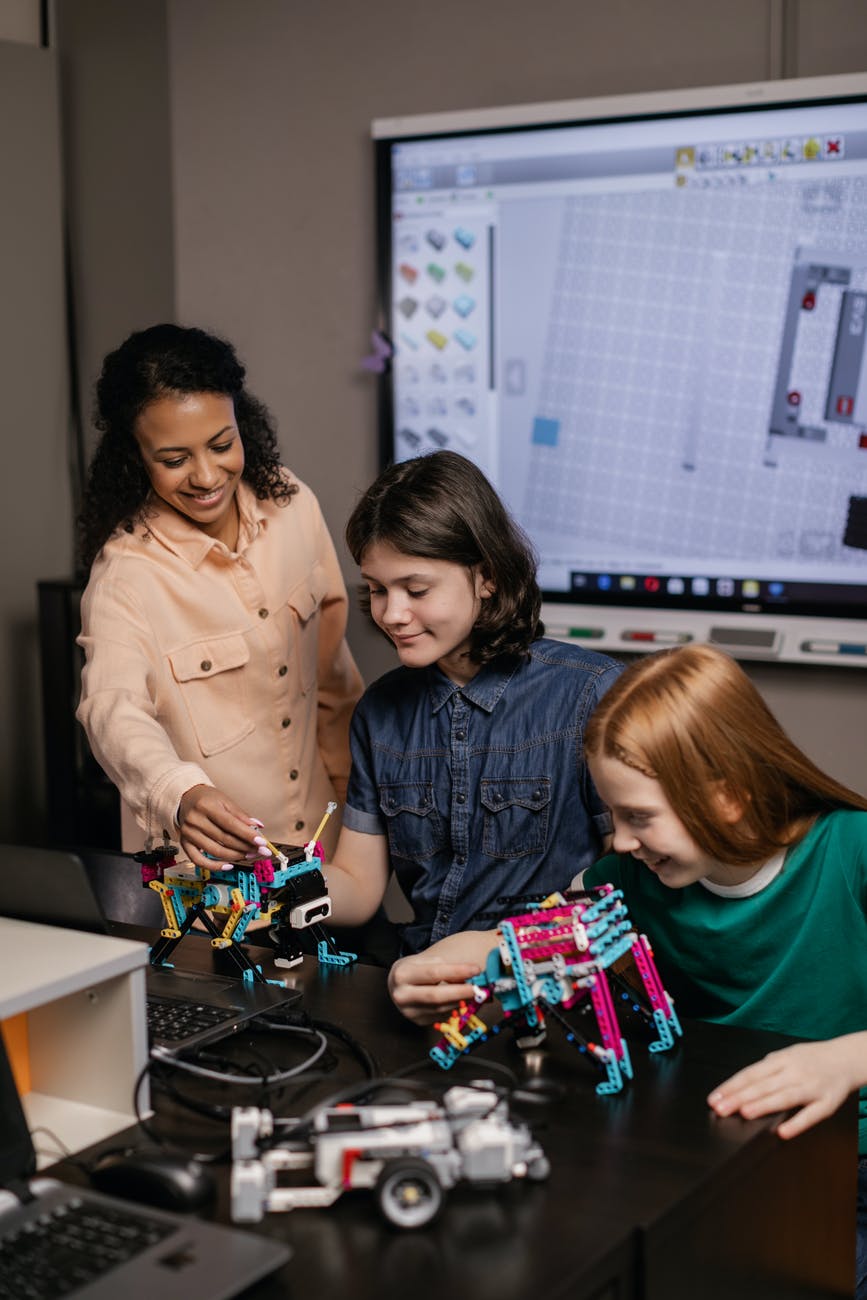
#EduRob- ROBOTICS IN EDUCATION

INTRODUCTION

“Our future success is directly proportional to our ability to understand, adopt and integrate new technology into our work.” During the pandemic, technology facilitated both work and learning. Keeping this in mind, the idea of intertwining Robotics in Education seems convincing. According to the research by Global Market Insights, Artificial Intelligence in the education market will surpass USD 6 billion by 2024.

A PEEP INTO THE EFFICACY OF ROBOTICS IN EDUCATION

Technology in education, popularly called edtech is the need of the hour.

Audio Visual Media

Robotics can use audiovisual media to impart quality learning. Online learning requires a lot of attention from students and a proper system to deliver on the part of teachers. Therefore, Robotics can also make use of Virtual Facilitators like gesture recognition, 3-D gaming and computer animation to create interactions with students, making learning engaging. Subsequently, gamification tools can make the subject more engaging. Also, Chatbots can address queries by providing tailor-made answers.

Combat the Paradox in Employment

India has witnessed a paradox in employment. Indian recruitment is going through a peculiar phase. Surprisingly, almost 8 million youngsters enter the job market every year; still, companies find it tough to fill vacancies for crucial roles. The main reason for this is the enlarging skill gap. Many times students do not possess the skill set required by companies for crucial roles. Artificial Intelligence (AI) in Robots can help re-skill and up-skill students. Subsequently, Robotics can use AI and predictive analysis to map high demanded skills to boost career prospects.

Streamline admin work and universal access

Teachers have to spend their precious time and energy on admin tasks and paper checking. They can use this time to impart knowledge. Here Robotics comes into play as it can streamline these tasks. Robotics in Education gifts us universal access wherein students belonging to different linguistic communities can learn freely.

Customized Learning

The most fundamental efficacy of Robotics in Education is customized learning. Different students have different problems. Therefore, we require different methodologies to address them. Some students have good grasping power while some learn at a slower pace. Subsequently, AI in Robots can smartly customize learning by giving challenging tasks to fast learners and going at a slower speed for slow learners. It can also communicate with learners, simulating human experiences by voice or hologram.

Catering to differently abled students

Today, we have a plethora of online courses for upgrading skills available. But unfortunately, these courses are unable to cater to the needs of differently-abled students. In such a scenario, Robotics attains prime importance. AI in Robots can create customized lessons to suit the learning needs of differently-abled students as well. During the video conference for Smart India Hackathon, 2019, an engineering student from Dehradun presented her program that could help dyslexic students by utilizing the benefits of AI. Hence, Robotics can unclip the wings of specially-abled children by enabling them to learn the latest skill sets.

A GLANCE AT SOME SUCCESS STORIES

Some counties have already very well amalgamated technology with education. Columbia is running full-time online schools as a substitute for bricks and mortar schools. The schools use digital resources like digital grade books, digital portfolios, learning games and real-time feedback of students. Finland has goodwill as an educational powerhouse, imparting quality learning. It is also known for making the most advanced application of digital technology in formal and extracurricular activities. Finland has successfully used Robotics through humanoid robots and mobile apps. The robots can understand and speak up to 23 languages. The robots can also give feedback to teachers about the problems that students face. Robotics enhances the overall interest in STEM (Science, Technology, Engineering and Mathematics) by developing critical thinking skills.

Robotics in E-Learning is not an unexplored arena. Air Force technicians use Intelligent Tutoring Systems like SHERLOCK to detect electrical system problems in aircraft. We can use a similar system in education as well. Another pertinent instance is Duolingo which is one of the most famous apps used for learning foreign languages. Carnegie Learning’s MATHia was awarded the “Best Use of AI in Education”. It is a learning engine that adjusts itself according to the capacity of students.

THE FINAL THOUGHT

Robotics can certainly pave a new path for Education. It provides adaptive learning to help students ace subjects. It would help impart quality education through an engaging methodology.Skill upliftment through a digital medium can provide a flexible approach besides adding shimmer to one’s resume. Today various fields are making optimum use of Robotics. Hence we need to deal with the challenges associated with it. The primary challenge before us is preparing students for this change. We need to instill an understanding that AI would simply complex things while eliminating boundaries in learning. At the same time, one also needs to understand that there are roles requiring creativity, emotional intelligence. Only humans can play these roles well. We ought to bust the myth that utilizing Robotics in various fields would not lead to unemployment.

The purpose of using Robotics in Education is not to replace the existing people but to enhance the quality of Education. Thus the need of the hour is striking a balance and combining both AI and human abilities. Another challenge is that there is a vast need for Research & Development in this field as we are just in the initial phase of usage. Extensive Research and further innovation would ensure successful implementation.

Adapting to changes always seems difficult. But we need to understand that change is the only constant. Therefore, we must be more receptive to it.“Robotics in Education is not meant to eliminate humans but to facilitate them”.

WHY IS SOCIETY SCARED OF CONFIDENT WOMEN?

INTRODUCTION

Men often consider workplaces like offices and positions of power as their original territory. But unfortunately, a woman walking down the same corridor seems really hurting. Maybe, the patriarchal society does not dare to accept a woman’s success. Society has sadly conditioned men to see women as inferior. Society has suppressed women for the longest time. Men have gotten so used to seeing women as the weaker sex that they cannot see them prosper. The story does not belong to the present day. Society is writing it since ancient times. A legitimate example would be the terror in the hearts of men on seeing Razia Sultan’s regime.

CONSTANT FEAR OF SUCCESSFUL WOMEN

A woman with a solid and confident personality strikes terror in the hearts of men for no fault of hers. Suppose a woman questions a decision or expresses her point strongly. In that case, she is instantly stereotyped as a devil for violating the conventional code of conduct. As a retaliation, men usually title strong women as challenging to work with or get along or tough to handle. This is the most common solution men use when they cannot accept a confident and booming woman. The frustration is so deep that they even derogate the assumption that the woman must have done sexual favors to impress her boss.

The issue is not that superficial as it may seem to be. Instead, it is something much deeper rooted. More than a mere stereotypical gender face-off, it brings out the fickle-mindedness of society.  For long years the community has conditioned men to see themselves as superior and women tolerant of it. The television and film industry is the trendsetter for the country. But unfortunately, in the majority of cases, successful and confident working women are often portrayed as mean, cold-hearted, or harsh. If a man is career-driven, then he is praised for his determination. But if a woman does the same, she’s seen as selfish or irresponsible towards her family. Successful working women are rarely portrayed as affectionate mothers or wives. This brings out a bizarre assumption that a career deteriorates motherhood in a woman.

WHY ARE WE SO INSECURE?

Insecure people do pull down everyone, but when this pulling down does a gender bias, things get ugly. The whole proposition takes a dramatic turn because men often see it as a role reversal. They often look at this role reversal as a threat to their masculinity. Since the earliest times, a man is seen as the breadwinner for the family. This label further cements their superiority over women. This is because it is a certification of the fact that women are dependent upon men. In such a scenario, when women break their cocoons and move out, it scares men to the core. Men are in constant fear of losing their supposed superiority over women. Men cannot accept that women can break their shackles and be on an equal footing to them.

POSITION OF THE SOCIETY

This fear of losing power is so deeply rooted that it is visible even between a husband and a wife. If a wife starts earning equal to or more than her husband, she often hurts her husband’s ego and falls prey to numerous taunts. But this does not mean that only men are at fault, the society has an equal contribution. Very conveniently, society says that behind every successful man, there is a woman. Still, it cannot believe the vice versa. Community respectfully uses the term “working women” for females when they move out of their homes. But it mockingly uses the phrase “house husband” when a husband takes care of the household. This clearly highlights that despite shouting about equality at the rooftops, society is still uncomfortable for it at heart.

THE FINAL THOUGHT

Not liking a woman just because she is successful or confident brings out society’s own insecurities. If a husband supports his wife the same way his wife helps him, things will improve. It is certainly wrong to stereotype that all men are afraid of confident women. Husbands have started supporting their wives to fulfill their dreams. This precious support is unclipping their wings.

Men have begun respecting women at top management levels.  The traditional rigid roles of men being the protector provider and women being dependent ought to be challenged. Masculinity is no certificate of superiority. Equality comes where we judge a person on his merit and not his gender. Gender bias is certainly corrosive to society and progress as well. There is nothing wrong with healthy competition. In fact, it actually brings out the best in a person and helps him to flourish. But when this competition is a pure consequence of the power play between sexes, it does become problematic.

#MediChain- USING BLOCKCHAIN IN MEDICINE

INTRODUCTION TO THE IDEA

“Healthcare is yet to be transformed by technology.” The renowned American businessman, Joshua Koshner has very rightly given this statement. Developed countries like the USA plan to spend 20% of their GDP on healthcare in future. The Healthcare industry spends jarring costs due to data breaches and inefficient practices in data management. In this case, Blockchain comes to the rescue. It can certainly pop this spending bubble with great ease.

WHAT IS BLOCKCHAIN?

Blockchain is an immutable, decentralised form of database that stores information. As the name suggests, it is a chain or a series of blocks that store data like the date, time and amount of transactions. There are various types of blockchains like public, private and permissioned. A public blockchain allows anyone to contribute to the network. Hence public blockchains are both decentralised and democratic. Opposite to this, permissioned blockchains allow only verified participants to join the network. Private and permissioned blockchains are similar in function with one difference. The difference is that a particular organisation owns a Private blockchain.

The most important feature associated with blockchains is security. Each block within a blockchain contains a hash of the previous block. A hash is a cryptographic key. These keys are stored in the shared ledger. The keys are also connected by a mesh of nodes that join them. Each node contains a copy of the whole chain which is synchronised and updated constantly. Therefore hashing makes it difficult to alter the blocks. Thus it ensures immutability. Moreover, incentivising miners ensures integrity as they disapprove malicious transactions. These mechanisms ensure the high security of data

HOW DO WE USE BLOCKCHAIN IN MEDICINE?

Blockchain has a wide range of applications in the field of medicine.

STORING PATIENT DATA

Blockchain can keep a decentralised, incorruptible and transparent log of patient data. Since the Blockchain would be private, it would store the sensitive data safely with complex codes involved in it. Decentralisation of data would also allow patients and faculty to access the information, saving the time involved therein. Therefore, Blockchain can create a constantly updated single ledger of health records for rapid transfer by authorised parties.

SECURE DATA STORAGE

The safety and security of patient data have prime importance. Over 176 million patient records were leaked due to data breaches between 2009 and 2017. Important details like health and genomic testing records were stolen. In such a case blockchain provides safety of data through its security features. Each individual can have a private key that would unlock data only when required. Thence, blockchain can store data safely and securely.

SEAMLESS SHARING DATA TRANSFER

The data stored on the blockchain can be readily shared with healthcare providers. This can be done through a shareable private key. Hence blockchain can easily eliminate the time wasted in sharing information with health care providers. It would ensure speedy treatment without time lag. Therefore, Blockchain would improve Health Information Technology (HIT).

PREVENT INEFFICACIES

Surprisingly, a whopping amount of $11 billion is wasted annually due to inefficiencies in data management. The processes involved in obtaining data access related to medical records are very time-consuming. These processes not only exhaust the staff resources involved but also lead to delays in inpatient care. Decentralisation of medical records helps save the time wasted in providing data access to faculties. This way Blockchain would facilitate faster diagnosis and treatment.

SUPPLY CHAIN TRACEABILITY

Decentralisation has serious implications in terms of supply chain traceability. It ensures full transparent supply chain management. Patients can get appropriate answers to concerns related to the supply chain. The ledger once created, can record data at every step of the shipping journey. It would record important details like the information about the supplier.

TRACKING DISEASE OUTBREAKS

Blockchain can help in real-time disease reporting. It would also facilitate the recognition of disease patterns. This can in turn help in identifying transmission parameters.

SAFETY OF GENOMICS

In 2001, the cost to process a human genome was $1 billion. But today, it is just $1000. Hence, the ability of genomics to improve health has certainly become a financial and scientific reality. But these days genomics data theft has become a serious issue. A large number of companies bring individual DNA sequencing. Therefore the security of genomics data is a serious concern. Blockchain provides a potential solution to this. It can provide an online market, where scientists can buy encrypted data for research purposes. This would also eliminate the middlemen and time involved in the purpose earlier. So, blockchain is a perfect fit for this purpose as it can store precious genomics data safely.

A GLANCE AT SOME SUCCESS STORIES

Blockchain in healthcare is certainly not an unexplored arena. Several platforms have already reaped the benefits of blockchain and others are planning to do so. BurstIQ is a platform that helps companies manage patient data safely and securely. Factom has employed blockchain technology to store digital health records safely. Factom also received a grant of $200000 from the U.S. Department of Homeland Security to integrate data from Border Patrol cameras and sensors. MedicalChain maintains a record of the origin and patient identity. In May 2018 MedicalChain launched a telemedicine platform to consult doctors via video call. Guardtime which is located in California helps healthcare companies to implement blockchain technology in their operations. The company uses blockchain for cybersecurity applications. Robomed has combined AI and blockchain to offer patients better treatment. The company also uses chatbots to collect patient information and share it with the medical team. The Taipei Medical University has recently implemented blockchain technology including Robomed’s network. This was done to store and secure medical records more easily.

Most importantly, the government agency, the Centre for Disease Control and Prevention (CDC) uses blockchain to monitor diseases and report outbreaks. Additionally, IBM is working with CDC to develop a blockchain-based surveillance system. Subsequently, this would also help public health agencies to collect patient data effectively.

THE FINAL THOUGHT

Developed countries spend a good share of their Gross Domestic Product (GDP) in healthcare. The U.S government plans to spend 20% of its GDP on healthcare soon. Hospital costs are whopping and inefficient practices in data management further aggravate the. Blockchain can reduce these costs substantially. Estonia has been an initiative taker in this regard. It began harnessing the benefits of blockchain technology in healthcare in 2012. Today almost all of the healthcare billing in the country is processed through blockchain.  Almost 95% of patient data is ledger-based while 99% of prescription data is digital.

Today, blockchain is used in various fields like education, finance and data management. Blockchain has a wide variety of applications in healthcare. It facilitates the secure transfer of patient medical records, supply chain, management and handling of genetic code. Inculcating blockchain technology can improve the efficacy of operations in health care. Currently, we are in the initial phase of using blockchain. Therefore, we need extensive research in this field. We also need pilot surveys to understand the efficacy and limitations of the technology. Blockchain will not only reduce costs but would also improve the safety and security of data.

The significance of innovations is indispensable. Also, change is the only constant. Therefore, encouraging innovations and accepting changes is the need of the hour.


WHAT WILL LIFE BE LIKE IN 2050 ?

After 29 years from now we will sore new heights in technology and medical science. Try not to get befuddled on the off chance that you see robots and distinctive A.I machines at your work place. Possibly we could go to Mars and different planets. 4G and 5G will turn out to be exceptionally normal and think about what perhaps it would not be being used around then.

Yet, not to fail to remember that now our mother earth is confronting such a lot of a global warming, contamination, deforestation, ozone layer depletion and the list goes on. A few specialists accept that a large number of the cities or nation will get vanished in next 10 to 20 years. These generally incorporates cities close to seaside area on the grounds that the degree of ocean water is rising step by step. Because of global warming polar caps are melting and colder areas are becoming hotter.

We may likewise confront water shortage in 2050 in light of the fact that fresh water is just 2.5% on earth and we are not conserving our natural resources. Not notice that oxygen that we inhale will likewise be exceptionally less in 2050 in light of the fact that now additionally because of contamination air we inhale is becoming poisonous step by step which can influence our lungs gravely. The measure of harmful gases like Sulfur dioxide, nitrogen dioxide and carbon monoxide are influencing air quality index(AQI) gravely. A few specialists say that we may have to convey our own oxygen cylinder in 2050.
Regardless of the amount we dominate in our innovation however we will require these regular assets to live healthy. What will be the reason behind living in such developed society in the event that we can’t be healthy. So we need to save our natural resources and limit contamination assuming we need to live heathy in 2050.

The Rock cycle

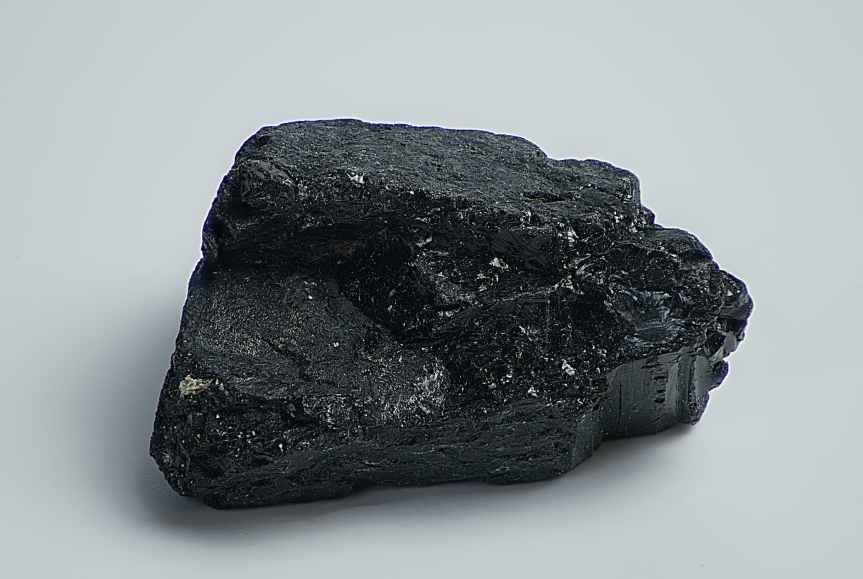
Photo by Anthony on Pexels.com

Look at all the rocks around you. They are a very important part of your existence, they form soils, are used in construction, for manufacturing substances, making medicines, cosmetics and soo much more. So you kinda get an idea, right?

Come, let us all today see the various kinds of rocks surrounding us and how they are formed.

There are 3 kinds of rocks-

  1. Igneous rocks- These are the most primary form of rocks and are formed when the molten lava cools and solidifies. They can be formed both inside the earth as well as the earth’s surface. When formed inside the surface of earth, they are known as intrusive igneous rocks (having a course structure with large mineral gains indicating they spent a large amount of time inside the earth’s crust) . Examples are granite and diorite. And when igneous rocks are formed on the earths crust they are known as extrusive igneous rocks. They have relatively small grains and very fine structure. Examples are rocks like basalt and obsidian.
  2. Sedimentary rocks- These rocks are formed from pieces of existing igneous or metamorphic rocks or biological material that undergo weathering and erosion and get deposited in the form of strata or layers. These are further sub-divided into three types- clastic, organic, and chemical . Clastic(eg.- sandstone) and organic rocks(eg.- coal) are formed due to weathering of rock into small fragments which are later transported to new places, or the biological materials like plants, shells, and bones that are compressed into rock. Chemical sedimentary rocks(eg- limestone) are the result of chemical precipitation. A chemical precipitate forms when the solution (usually water) evaporates and leaves the compound behind.
  3. Metamorphic rocks- When either the igneous or the sedimentary rocks are subjected to immense heat or pressure, metamorphic rocks are formed. They are of two types- foliated and non-foliated.  When the minerals line up in layers, they form foliated rock. (eg.- gneiss- made from granite). Non- foliated rocks follow the same procedure but they do not have the layered appearance of foliated rocks. Sedimentary rocks ( bituminous coal, for example) when provided enough heat and pressure, can turn into non-foliated metamorphic rocks (anthracite coal).

ROCK CYCLE

All the three types of rocks are inter-changeable into one another.

  1. The igneous rock can be subjected to intense heat and pressure and form metamorphic rock or be weathered and eroded to give rise to sedimentary rocks or it can even be subducted and melt to give way to magma and again form igneous rock .
  2. The sedimentary rocks can either be subjected to extreme conditions of temperature or pressure to form metamorphic rocks or subduct to form magma or even weather and erode to again from sedimentary rock.
  3. The metamorphic rocks can either erode to give rise to sedimentary rocks or subduct to form magma that can later form igneous rocks.

This is how the rock cycle in our surroundings work. Rocks are continuously weathered and eroded and subducted and exposed to high heat and pressure. Some of the forces that drive the rock cycle are-

  1. Plate tectonic
  2. Spreading ridges
  3. Subduction zone
  4. Continental collision
  5. Accelerated erosion

This is all in the article about rock process.

Clouds

All of us have looked at the clouds. Many of them appear white, sometimes fluffy, sometimes as thin as a wisp, sometimes black. Based on the color of clouds, we predict the weather for the day. But have you ever looked at all the clouds and wondered just how many different types of clouds we encounter everyday and we just categorize them as black and white.

Photo by paul voie on Pexels.com

So, today let us look at the categorization of various kinds of clouds that exist and see what they predict about our day.

Clouds are at the basic level subdivided into 3 categories-

  1. High clouds- They occur between 20,000-40,000 feet above the sea level. They mainly occur in a feathery form. (very high above the ground. Air has less molecules of water vapor as well as possible nuclei for cloud formation. Air molecules are scattered ). These clouds do not bring rainfall.
  2. Medium clouds- They occur in the range of 10,000-20,000 feet above the sea level. They occur as clusters of clouds and can bring rainfall and snow.
  3. Low clouds- Occur in the range of 6,500-10,000 feet. These clouds mainly block sunlight ans can cause light drizzle/mist. Ever seen clouds appear beneath you from a mountain top?

The high clouds have 3 kinds of cloud varieties-

  1. Cirrus- Thin, wispy, fibrous clouds that appear in bright blue sky are cirrus. They barely dim the sunlight though. They are made of tiny ice crystals that scatter the sunlight , thereby making the clouds appear orange or yellow, making for a beautiful sunrise or sunset.
Photo by Karolina Grabowska on Pexels.com

2. Cirrocumulus- Very high cumulus clouds that appear as white globular masses forming ripples.

Photo by Vinu00edcius Vieira ft on Pexels.com

3. Cirrostratus- A stratus cloud (horizontal layering with uniform base), it occurs in the from of a thin white sheet or veil and provides the sky a milky texture, making the sun/moon shine with a characteristic ‘halo’.

The ‘mid-level clouds have 3 varieties-

  1. Altocumulus- These are the wooly bumpy clouds that occur in layers. They look like waves in blue sky. Can cover the sky occasionally.
Photo by Lucas Pezeta on Pexels.com

2. Altostratus- These are denser grayish clouds and have a watery look.

3. Nimbostratus- ‘Nimbo’ means precipitating. These clouds are associated either with rain or snow and are dark-dull layered clouds.

Photo by Pixabay on Pexels.com

The low level clouds have 3 sub-types-

  1. Stratus- These are very low clouds. Uniformly grey, thick clouds, they cause light drizzle an dull weather. They also reduce aircraft visibility and are the cause of highland fog.
Photo by Andre Moura on Pexels.com

2. Cumulus-These are vertical clouds with rounded top and horizontal base and occur in humid tropical regions. Formed due to up-rising conventional currents. It ight appear grey against the sun but it is a fair weather cloud.

Photo by Pixabay on Pexels.com

3. Stratocumulus- These are rough, bumpy clouds and have waves more pronounced than Altocumulus cloud.

Photo by Lucas Pezeta on Pexels.com

There is one another type of cloud associated with cyclonic conditions, lightening and thunderstorm, known as cumulonimbus cloud. These are overgrown cumulus clouds that are formed between 2,000-30,000 feet high. Formed in tropical afternoons, these are black in color and usually seen in equators and in sub-tropical regions(during summers).

Photo by Flash Dantz on Pexels.com

This is all about clouds. The next time you are on your rooftop, you have something to keep you busy and you can’t disagree, looking at clouds is interesting.

Blood and different blood groups in humans

Blood is a red coloured fluid flowing through the heart and blood vessels.it is also sometimes called as river of life because it circulates all the essential nutrients and oxygen to our body.it is made up of liquid part plasma( water and salts) and solid part( RBC and platelets).blood is pumped by heart to our whole body. Blood is a component of circulatory system of our body.

Structure of blood

Blood is formed mainly of two components that are Plasma and blood cells .plasma is a pale yellow fluid part of our blood .it is about 55 % of our blood composition. Blood cells is also called blood corpuscles. they constitutes about 45% of blood. it is of 3 types that is RBC ( Red blood cells) or erythrocytes , WBC(White blood cells) or leucocytes and blood platelets or thrombocytes.

Some Characteristics of blood

  • Blood is heavier and thicker than water
  • its pH lies between 7.3 to 7.4.
  • Blood’s volume in our body is about 5 to 6 litres.
  • It is saltish in tastes

Functions of blood:-

  1. Transportation of gases : The blood carries oxygen from the lungs to the tissues and carbon dioxide from tissues to the lungs.
  2. Transport of food :- It carries digested food like amino acid , glucose and many other s from our intestine to different organs of the body.
  3. Temperature regulation :-It absorbs heat produced by respiration in internal tissues and transport it in to the skin and lungs for dissipation.
  4. Distribution of hormones :- The endocrine glands secrete hormones directly into the blood . Blood helps to transport them in required organs.
  5. Defence against diseases :- It produces certain antibodies which fights against bacteria. white blood cell (WBC) covers the disease causing bacteria and protect the body.

Blood groups in humans

Karl Landsteiner discovered that human beings have glycoproteins on the surface of RBC called antigens. and globulin proteins in the blood plasma called antibodies. therefore, there is 2 types of antigens A and B and two types of antibodies antibody a and antibody b in our body. Based on this concept , there are 4 types of blood groups found in human body.

  1. ABO blood groups
  • person with antigen A are said to be having blood group A.
  • person with antigen B are said to be having blood group B.
  • persons having both antigen A and antigen B are said to be having blood group AB.
  • Person with no antigen is said to be having blood group O.
    • during blood transfusion , we cannot mix two different types of blood group in a body. when blood groups of 2 different types of groups A and B is mixed , clumping reaction occurs. because either the antibodies of recipient ‘s blood destroys the RBC of donor blood or vice versa.

Person with blood group A are called universal donor , because they can donate blood to any of the blood group. while person with blood group AB are called universal recipients because they have no antibodies and can receive blood from any of the blood group.

2.Rh factor ( Rhesus antigen system) : – Human blood also have Rh antigen . it is of two types Rh positive and Rh negative. Transfusion of Rh negative with Rh negative can be done with no problem and same goes for Rh positive to R h positive transfusion.( Source : Veer Bala Rastogi , 96).

Science in education

Article

Abstract

Necessity is the mother of invention. When there is need, invention or discoveries take place. In this article we are going to discuss the history of science, different scholars, evolution theories and pedagogical aspects of science. 

Key points:

  • History of science and it’s evolution from the 5th century to the 21st century.
  • Scholars and their field of work
  • Evolution in theories 
  • Nature of science and philosophers 
  • Need of teaching and the pedagogies for the nature of science.

Introduction:

The history of science included evolution and new inventions of science. History of science showed progress in the process of thoughts and followed the vision. The nature of science consists of its systemized empirical facts and inferences, concepts, laws and theories. We discussed the theories of different philosophers and their facts. The pedagogies & curriculum of science should be more student-centric and focus on learning more about the environment.

History of science

The evolution of science in history is slow and dramatic. There were many  scholars like: Aryabhata, Pythagoras, chanakya, alhazen, Giordano Bruno, Galileo, Issac newton, jagadish chandtra bose, Prafulla Chandra Ray, Dr. mahendra lal sircar, C.V raman, Jamsetji and many other. They all have a vision to develop scientific temper in society. Nalanda university is the first great university in recorded history. The philosophers stand by the facts and give the proven reason about their theory. The mission and vision of the science in history to develop in society demolish the misconception and find new methods.

Nature of science & philosopher

What is the nature of science and its implication in the education system?  The thinker’s aimed to develop clear criteria to distinguish science from pseudoscience. He focused that the cognitive practices of scientist is thought dimension to understand nature of science. The evolution of the science also included in the nature of science. The science is growing and brings changes in itself. He also discussed the danger to humanity by science –based weapon of mass destruction. He put the light over the current consensus of science in which he described observations are not neutral, they are theory-laden. Observations determine the correct theory. 

Needs of teaching science 

It is also important to understand why we need to teach and or learn science and what to teach? 

So we need to learn science because science seeks to describe and explain the physical world based on empirical evidence. Science contains methods and approaches which help to lead to new inventions and discoveries. Scientific knowledge helps us as students to revise new evidence, theories and research. It also helps us to make scientific temperament in society and things more reasonable and justified.

Pedagogies for nature of science and curriculum

The pedagogies for the nature of science should be inquiry based. The teacher should encourage the students to develop curiosity so they can think and inquire. History of science – how the theories come into existence, how the idea comes in the theorist mind- could help them to understand the concept easily, for example the history of gravity and Sir Isaac Newton.

The curriculum should be less subjective and bookish. More day to day experiences should be included which leads to inductive thoughts. The curriculum should be more based on research, not comprehensives. 

Conclusion 

  • Evolution of science has changed throughout the years..
  • Development of scientific temperament in society is the vision of the scientists and philosophers of science.
  • Nature of science always brings changes in itself.
  • The pedagogy for nature of science should be inquiry and history based approach.
  • The curriculum must be more related with daily life and research based.

Knowing the Indian Ocean

After the Pacific and the Atlantic, let’s move onto the Indian ocean

Photo by Asad Photo Maldives on Pexels.com

Hope you remember the acronym- PAISA

  1. Pacific
  2. Atlantic
  3. Indian
  4. Southern
  5. Antarctic

These oceans are arranged in the decreasing order of their sizes.

The third largest ocean based upon its size, it is the only ocean in the whole world to be named after a country. It covers 27,240,000 sq ml or 19.8 percent of the world’s water on the Earth’s surface. Bounded by Asia to the north, southern ocean to the south, Africa to the west and the Indonesian islands (the strait of Malacca) and Australia to the east, it also hass many marginal seas and islands.

Marginal Seas:

  1. Bay of Bengal
  2. Arabian sea
  3. Laccadive sea
  4. Java sea
  5. Andaman Sea
  6. Timor Sea
  7. Red sea
  8. Persian Gulf
  9. Gulf of Aden
  10. Gulf of Oman
  11. Gulf of Suez
  12. Molucca sea
  13. Gulf of Khambhat

Major islands

  1. Andaman and Nicobar
  2. Lakshadweep
  3. Maldives
  4. Madagascar
  5. Reunion
  6. Seychelles
  7. Mauritius
  8. Comoros
  9. Indonesia

Enclosed by land on three sides, it is centered along the Indian peninsula and doesn’t extend from pole to pole. It has roughly 800 drainage basin of which 50% are located in Asia, 30 % in Africa and 20% in Australia. It is considered to have subtropical climate. The northern half of the Indian ocean experience monsoon winds that lead to reversal in direction of winds (caused by the movement of ITCZ that in summers reaches above the Tibetan plateau, due to the apparent movement of sun) during summers and winters. This brings the monsoon winds to India during the rainy season(80% of the Monsoon rains dependent on them).

40 % of the total sediments found in this ocean are the results of deposition of the Ganga and Indus fans, the largest submarine fans of the world. The western Indian ocean has the largest phytoplankton blooms in summer due to the monsoon winds (they lead to the ocean water upwelling, building nutrient rich cold water to the surface of the ocean). These phytoplankton later support a complete ecosystem, acting as the primary food producers in the chain, in the ocean leading to high concentration of fish and other marine organisms. Thus, harm to the growth of these phytoplankton (continuously on the rise due to global warming, dumping of acidic and industrial waste water and algae bloom) can further destroy the fragile marine ecosystem.

There are 10 large marine ecosystems in the Indian Ocean-

  1. Agulhas current
  2. Somali coastal current
  3. Red sea current
  4. Persian gulf current
  5. Arabian sea
  6. Bay of Bengal
  7. Gulf of Thailand
  8. West central Australian shelf
  9. Northwest Australian shelf
  10. Southwest Australian shelf

Coastal reefs, sea grass bed and Mangrove forest: The most productive and important ecosystems. This ocean has 36 biodiversity hotspots and is an actively spreading and expanding ocean(having only two trenches- The Java and Sunda trench and the Makaran trench). It also has an active volcanic hotspot- The Reunion hotspot(currently below the reunion islands). Salinity follows the trends similar to the Atlantic ocean(though it doesn’t extend towards the poles.)

This is all about the Indian ocean. See you tomorrow with the Southern ocean.

DS0101EN: Introduction to Data Science course by edX

Hey peeps! Here is a course for all the engineering students out there who want to pave their way towards being a data scientist. So, gear up and tighten the seat belts. Let’s get into the world of data science.

Top 10 Careers in Data Science that are Shaping the Future

In this course you will:

  • Meet people who work in data science
  • Explore definitions of data science
  • Learn about data science in a business context
  • Discover some use cases and applications of data science

Syllabus

Module 1 – Defining Data Science

  • What is Data Science?
    • Fundamentals of Data Science
    • The Many Paths to Data Science
    • Advice for New Data Scientists

Module 2 – What Data Scientists Do

  • A Day in the Life of a Data Scientist
    • Old problems, new problems, Data Science solutions
    • Data Science Topics and Algorithms
    • Cloud for Data Science

Module 3 – Data Science in Business

  • Foundations of Big Data
    • How Big Data is Driving Digital Transformation
    • What is Hadoop?
    • Data Science Skills and Big Data
    • Data Scientists at New York University

Module 4 – Use Cases for Data Science

  • What is the Difference?
    • Neural Networks and Deep Learning
    • Applications of Machine Learning

Exercise – Computer Vision with IBM Watson

Module 5 – Data Science in Business

  • How Data Science is Saving Lives
    • How Companies Should Get Started in Data Science
    • Applications of Data Science

Module 6 – Careers and Recruiting in Data Science

  • How Can Someone Become a Data Scientist
    • Recruiting for Data Science
    • Careers in Data Science
    • High School Students and Data Science Careers

MODULE 1:

Learning Objectives

In this module you will:

  • Hear from data science professionals to learn what data science is.
  • Learn about the many paths to data science.
  • Hear from data science professionals as they give advice to anyone who is passionate about data science.
  • Learn some statistics about the field of data science, the demand for data scientists, and some of the qualities of excelling data scientists.
  • Learn why data science is the sexiest job of the 21st century.

SUMMARY:

In this module, you have learned:

  • Data science is the study of large quantities of data, which can reveal insights that help organizations make strategic choices.
  • There are many paths to a career in data science; most, but not all, involve a little math, a little science, and a lot of curiosity about data.
  • New data scientists need to be curious, judgemental and argumentative.
  • Why data science is considered the sexiest job in the 21st century, paying high salaries for skilled workers.

MODULE 2:

Learning Objectives

In this module you will:

  • Hear from data scientists as they share with you what a typical day in the life of a data scientist looks like.
  • Hear from data scientists as they share with you what tools, algorithms, and technologies they use on a daily basis.
  • Hear from data scientists as they try to explain the term “cloud”.
  • Learn about data science, data scientists, and how each is defined.

In this module, you have learned:

  • The typical workday for a Data Scientist varies depending on what type of project they are working on.
  • Many algorithms are used to bring out insights from data. 
  • Accessing algorithms, tools, and data through the Cloud enables Data Scientists to stay up-to-date and collaborate easily.

MODULE 3:

In this module, you have learned:

  • How Big Data is defined by the Vs: Velocity, Volume, Variety, Veracity, and Value.
  • How Hadoop and other tools, combined with distributed computing power,  are used to handle the demands of Big Data.
  • What skills are required to analyse Big Data. 
  • About the process of Data Mining, and how it produces results.

MODULE 4:

Learning Objectives

In this module you will:

  • Hear from Norman White, the Faculty Director of the Stern Centre for Research Computing, at New York University.
  • Hear from Norman White as he talks about data science and what skills are required for anyone interested in pursuing a career in this field.
  • Hear from Norman White as he explains some of the popular data science tools and algorithms.
  • Hear from Norman White as he gives advice to high schools students, in particular, and anyone, in general, who are looking to start a career in data science.
  • Learn about data mining, and the steps the comprise the process of mining a given dataset.
  • Learn about regression and what questions can be put to regression analysis.

SUMMARY:

In this module, you have learned:

  • The differences between some common Data Science terms, including Deep Learning and Machine Learning.
  • Deep Learning is a type of Machine Learning that simulates human decision-making using neural networks.
  • Machine Learning has many applications, from recommender systems that provide relevant choices for customers on commercial websites, to detailed analysis of financial markets.
  • How to use regression to analyze data.

MODULE 5:

Learning Objectives

In this module you will:

  • Learn about what companies need to do in order to start with data science.
  • Learn about some of the qualities that differentiate data scientists from other professionals.
  • Learn about some applications of data science.
  • Learn about analytics and what important role data scientists play in this process.
  • Learn about story-telling and the importance of an effective final deliverable.
  • Learn about the main components of an effective final deliverable.
  • Apply what you learned about data science to answer open-ended questions.
  • Demonstrate your understanding of the readings to define what data science and data scientist mean.
  • Demonstrate your understanding of the readings to answer a question about the final deliverable of data science project.

Summary:

In this module, you have learned:

  • Data Science helps physicians provide the best treatment for their patients, and helps meteorologists predict the extent of local weather events, and can even help predict natural disasters like earthquakes and tornadoes.
  • That companies can start on their data science journey by capturing data. Once they have data, they can begin analysing it.
  • Some ways that data is generated by consumers. 
  • How businesses like Netflix, Amazon, UPs, Google, and Apple use the data generated by their consumers and employees.
  • The purpose of the final deliverable of a Data Science project is to communicate new information and insights from the data analysis to key decision-makers.

MODULE 6:

Learning Objectives

In this module you will:

  • Learn about what companies need to do in order to start with data science.
  • Learn about some of the qualities that differentiate data scientists from other professionals.
  • Learn about some applications of data science.
  • Learn about analytics and what important role data scientists play in this process.
  • Learn about story-telling and the importance of an effective final deliverable.
  • Learn about the main components of an effective final deliverable.
  • Apply what you learned about data science to answer open-ended questions.
  • Demonstrate your understanding of the readings to define what data science and data scientist mean.
  • Demonstrate your understanding of the readings to answer a question about the final deliverable of data science project.

SUMMARY:

In this module, you have learned:

  • The length and content of the final report will vary depending on the needs of the project.
  • The structure of the final report for a Data Science project should include a cover page, table of contents, executive summary, detailed contents, acknowledgments, references, and appendices.
  • The report should present a thorough analysis of the data and communicate the project findings.

Noise Pollution- Causes, Effects & more

Noise is usually defined as unwanted sound or a sound without value that causes discomfort to the listener. Noise is usually measured in units of decibels and is denoted by dB.

1. On human beings:-

Mental health

Exposure to intense levels of noise can cause personality changes and violent reactions. Noise has also been shown to be a factor that attributed to violent reactions. 
Psychological health effects from noise include depression and anxiety stress. Individuals who have hearing loss, including noise induced hearing loss, may have their symptoms eased with the use of hearing aids. Individuals who do not seek treatment for their loss are 50% more likely to have depression than their aided peers. These psychological effects can lead to detriments in physical care as reduced self-care, work-tolerance, and increased isolation.

Physical health

Exposure to loud sound or longer exposure causes threshold shift. Noise-induced threshold shifts are seen as a notch on an audiogram from 3000 to 6000 Hz, but most often at 4000 Hz.
Exposure to loud noises, either in a single traumatic experience or over time, can damage the auditory system and result in hearing loss and sometimes tinntius as well. Noise induced hearing loss is sometimes unilateral and typically causes patients to lose hearing around the frequency of the triggering sound trauma.

2. On animals:-

Marine animals

Two main reasons that make an environmental impact of noise in marine life a grave are – 1. Noise travels much more in water, covering greater distances than it would do on land while travelling though air, and secondly because the marine life is extremely sensitive to noise pollution and an absence of any mechanism to safeguard them against it, underwater noise pollution disrupts marine life in more serious ways.

The deaths can occur because of haemorrhages, changed diving pattern, migration to newer places, and damage to internal organs and an overall panic response to the foreign sounds. There is also a disruption in normal communication between marine animals because of underwater noise pollution. This means animals prone to noise pollution cannot call their mates, look for food or even make a cry for help under such circumstances.

Birds

Anthropogenic noise, emitted from the oil and gas compressors, is becoming a global issue. The idea of the study was to measure the stress levels of the birds compared to the distance they were nesting with the oil and gas compressors.

So much so that they were showing Post Traumatic Stress Disorder-like (PTSD) symptoms. In the birds, their corticosterone levels were relatively low. And that isn’t exactly what you would expect to see in a high-stress situation. This is likely to be what was happening with the birds. It triggered health defects such as stunted growth, issues with their reproduction, and fewer feathers on the birds. Their ability to hear predators also seemed to be jeopardised because of the noisy surroundings.

Preventive measures to reduce noise pollution

  • Factories should be established away from the settlements.
  • Settlements should be located 20 kms away from the mining areas and coal areas.
  • Explosives should be not used in mountainous, forest and mining areas.
  • Use of horn in public places should be banned.
  • The sound of musical instruments should be controlled to desirable limits.
  • The use of sound amplifiers of high power should be banned in religious events.
  • The use of sound absorber tiles should be encouraged in the construction of multi-storeyed buildings.
  • In industrial, commercial and hospital buildings, adequate soundproof systems should be installed.
  • Intensive plantation should be made in the entire building complex.
  • Planting green trees along the roadside reduces the intensity of noise pollution.
  • Protective tools should be provided for workers.
  • Legal provisions should set limits on noise and control over noise pollution.

MUSIC – A GOOD COMPANION!!!

We may live in different place, different state, different country but we a got together by music. Would you agree if say like that? Yes, music is a good companion which helps us to express our feelings. It may be any form of music but we may feel accompanied with music rather than being lonely. Let me tell you about how music has an great effect on us.

Music is something that we enjoy as a part of our life. It accompanies us from birth to death. During our childhood, our parents and grandparents used to sing songs to make us sleep. Crying is a kind of music. When we woke up, we can hear the birds chirpping and trees rustling which is the most lovely feel in the morning. Music is everywhere, all we need is to open our ears to listen to it.

One who knows to create music on their own with musical instruments is called a Musician. The different music instruments include – Percussion, Brass, String, woodwind and keyboard. Brass music instruments are played using mouth. Those instruments include Trombone, Trumpet etc. String music instruments give rythym to music and those instruments include Guitar, Veena, Violin etc.

Some musical instruments

Percussion musical instruments gives main beat and feel to the song and those include Drums, Tabla, Dolak etc. Woodwind instruments are made of wood and they are also played using mounth like brass instruments and these instrument include Flute. The keyboard consists of keys which has high pitches.When you add another voice to an instrument, it is called singing and is a vital part of the music. When people who play different instruments come together to play them together, it is called a band.

There are different genres of music such as rock, pop, classical, blues, jazz, R&B, hip-hop, etc. All of these genres of music are characterized by how the instruments work together. Rock music is often louder and is played using percussion and string instruments. In Jazz music, Saxophone is very popular. In this modern world, the newest genres of music is electronic dance music (EDM) which consists of loud percussive beats and is very popular to young people.

We all have our favorite music director, singer, band, etc. Music is a universal language that unite people regardless of boundaries. This has the sense of familiarity among the people. Eventhough, we don’t understand the meaning of the lyrics of a song, we like it because of the tune and voice. Music is not just a sound but a communicable language which makes feel good. I love to hear music when am alone. But I used to play music when I am with my friends and family and it unites us very much. Listening to your favourite song can completely uplift your mood if you are feeling down. Everybody has their own kind of music that they love, which is why it is special to us all in our own unique ways.

Unique Music Quotes With Images In English - Premium Quotes Only

My best advice for you is to enjoy the music when you are alone and enjoy more than that when you are with your family. This feel cannot be explained in words and you’ll understand by experiencing it. Often hear songs; make everyone around you happy. Be happy; lead a helathy life.

Read more;