Emerging Trends in Social Media

Image Source: Business Today

Over the past decade, social media has managed to secure a special position in our hearts.
Like every other evolutions in the world, the way we use social media platforms also evolves.
With the quick growth of social media, trends change every second day and thus brands and individuals are in a hurry to adopt them fast!

Major Trends…

1) Augmented Reality

Augmented reality (AR) is an interactive experience of a real-world environment where the objects that reside in the real world are enhanced by computer-generated perceptual information, sometimes across multiple sensory modalities, including visual and auditory.

How it is used in different ways in social media?

Now, during the pandemic times, it wasn’t easy for people to go out for shopping and try out the things they wanted to purchase.
So Augmented Reality became an important feature in social media apps so that consumers can try out the business products from their respective homes.

Popular furniture company IKEA using AR.

MORE COMMON EXAMPLES OF AR IN SOCIAL MEDIA

Mark Zuckerberg, founder of Facebook, recently said Augmented Reality has slowly become the company’s “topmost priority” .
We have already witnessed how social media apps like Snapchat and Instagram have become more AR oriented– all the face filters that we use on such social media apps are nothing but small facets of Augmented Reality.

Credit: The Verge

2)VIRTUAL REALITY

Virtual reality (VR) refers to a computer- generated simulation in which a person can interact within an artificial three-dimensional environment using electronic devices, such as special goggles with a screen or gloves fitted with sensors.
Users have a realistic feeling experience when it comes to Virtual Reality.

VIRTUAL REALITY IN SOCIAL MEDIA

A) VR CHAT
VRChat is a free-to- play massively multiplayer online virtual reality social media platform. It allows players to interact with others as 3D character models.
Users can interact via text chats and then play the games according to their needs.

Credits: Business Insider

B) FACEBBOOK SPACE
It allows an integration with Facebook, which makes it easy to invite our friends and acquaintances to the VR world.
Three people can actually interact using a VR device. This has however now been discontinued.

3)Shopping through Social Media

Many new brands and business firms deal with their consumers entirely though social media platforms like Facebook and Instagram.

Both these social media platforms provide services like a complete e- commerce portal and also allows business firms to show their products on the platforms while attaching a link to the firm’s official website. Customers can view products, see prices and can directly order products from these social media platforms.

Credits: Cosmetics Business

4) News Culture on Social Media

This is one of the most popular trends we tend to see these days on social media. People spent most of their times in social media and therefore many mainstream media channels maintain good interaction with their audiences on social media platforms like Instagram, Facebook and Twitter via video stories, pictorial presentations and like.

Many new media houses are completely based on social media. People mostly get to know about recent happenings through social media.
Twitter as compared to any other social media platform has distinctively been credited for instantaneous news.

Facebook page of ABP News

5) Hash-tag Culture

This is another form of social media trend that can be seen these days where interested groups make a hash-tag phrase (for example: #xyz) regarding their concerned matters.
This has widely been witnessed on Twitter and Instagram where users make their interested topics “trendy” on social media. This is especially done on Twitter to bring anything to public notice.


Credits: Elegant Themes.

ISRO- A Overlook-Part 3

Hello people!! Hope everyone wears mask and maintaining social distancing. We are nearing the end of this pandemic. Be positive. In this blog, we are going to continue our overlook on ISRO.

GSLV:

GSLV is basically like the updated version of the ASLV and has a payload capacity of 5000 kgs. The GSLV has far had 13 launches out of which 8 were successful and 2 were partial failures and 3 were complete failures. The GSLV is used till today to send larger payloads into Geostationary transfer orbit. And that brings us into ISRO’s final rocket which is the GSLV Mark 3. This rocket was designed in the early 2000s and is ISRO’s most powerful rocket which is capable of sending 10,000 kgs into low earth orbit. Similar to the PSLV, the GSLV Mark 3 is quite cost efficient in terms of cost per kilogram. The GSLV Mark 3 costs $51 million per launch meaning that it costs $5100 per kilogram. So far, the GSLV Mark 3 has only had 4 launches and all of them have been a success. It looks like ISRO has significantly improved their reliability compared to their early days.

Anyway, moving onto notable ISRO projects completed with these rockets, we have many satellite programs. The IRS series instance consists of a group of sattilites in Sun synchronous orbit. These satellites allow India to map and monitor natural resources such as fresh water. Another group of satellites managed by ISRO is the INSAT series. This group of sattilites is located in Geostationary transfer orbit and it provides telecommunications and broadcasting capabilities. In fact, INSAT is the largest domestic communication system in the Asia- Pacific region. ISRO also has satellites within their GAGAN satellite navigation system and within IRNSS. These groups provide navigation, communications, surveillance and many more survives to ISRO and India.

Chandrayaan:

ISRO’s satellites are cool and where it gets really more interesting is their Lunar and Martian missions. After early 2000s, ISRO focused on sending humans to the Moon. The first step in this journey was sending a probe to the moon. In 2008, ISRO used a modified version of the PSLV to launch Chandrayaan 1 to the moon and this probe became the first probe to prove the existence of water on the Moon. According to Chandrayaan 1, the Lunar poles hold over 600 billion kilograms of ice. ISRO didn’t attempt another Lunar mission for quite some time, but the next attempt was a massive step up compared to Chandrayaan 1. Chandrayaan 2 was launched in 2019 using the GSLV Mark 3 and it consisted of a lunar orbiter, lander and a rover which were all developed by India. The goal of the mission was to prove ISRO’s ability to complete soft landing on the Moon’s surface. Unfortunately a software glitch would result in the lander deviating from the planned path and crashing into surface of the moon. ISRO is expecting to try another soft landing with Chandrayaan 3 which is expected to take place in 2022.

THE ART OF NATURE

Helloooo guys!! Hope you all are doing good😊.

Before we jump right into the topic .

I have a few questions to ask.

What do you think is the most popular pick for any photographer or an artist?
From where do you think are the musicians getting inspired from?

Why is the sun shining so bright in the morning and it’s so dark in the night?
Why are the water bodies blue? Why are trees green?

Ok ok I asked too many questions, haha sorry guys
I will ask only one question .

Why is the nature so beautiful?

All this points to only one thing that is

” The art of NATURE”

It’s the art of nature because the nature is deciding the beautiful and colourful strokes needed for the beings to live.

Nature has everything that is needed to be learnt by us humans .Every aspect of it is something special.

Nature is magic.”

Nature has many qualities like discipline, strictness, sincerity, love, care
The definition of beauty is nature.”


Nature is so free, boundless.
But at the same time it is not reckless or careless.

Nature is has its own will but it also bends the will if needed .
It forms it’s rules and abides by it but when it breaks those rules the living beings have to face dire consequences.

It’s as if the process of crafting is so beautiful that your in awe .

It’s make you feel every bit of emotion that exists but you cannot express all in it few words.


The ocean, sea, rivers, all forms of water bodies are like vast blankets that cover the earth as if protecting us .

The sky so free that when we stare at it makes you feel as if the limiter we have set is broken .When we stare at nature there is an immense silence and its as if nothing can stop you from experiencing the freedom .

The clouds are like the drawings that kids draw with pure heart although not perfect, it fills our heart.

We definitely have to talk about the starry night skies that fill our eyes with glitters ,words are not enough describe the beauty of the nature.

This feeling of satisfaction is similar to that of watching an art piece of your favourite artist in an art museum .

Nature gives food, water, what not it gives everything that we need so that we can sustain our lives on earth .

Because of its unconditional love we are leading happy lives .

Everyone calls it “mother nature” .In my view nature is god because of its pure love towards every being living or non living. It doesn’t discriminate anyone on any basis . Nature embraces us, protects us, even when we destroy, pollute it still accepts us.

So in return our only responsibility as on the receiver side is to protect the nature and its beauty
so our next generations can also see the “Art of nature”
.

THANKYOU^^

Fog Computing

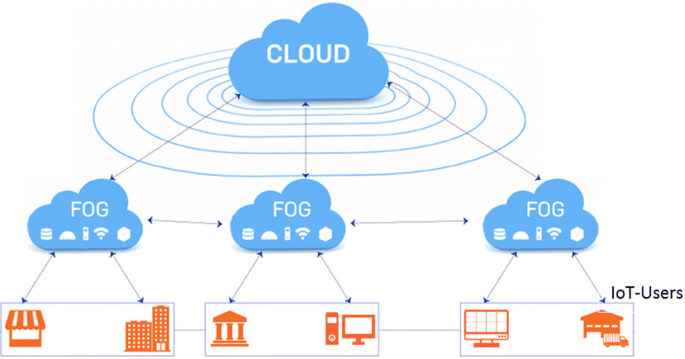
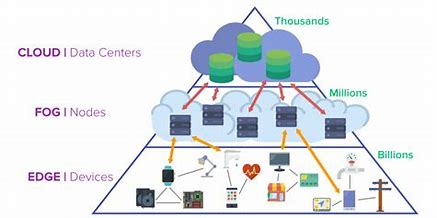
Fog computing, also known as fog networking or fogging, is a decentralised computing architecture that exists between the cloud and data-generating devices. Users may put resources, such as programmes and the data they generate, in logical areas to improve performance using this flexible structure.

In simple words, Fog computing is a type of decentralised computing infrastructure in which data, machines, storage, and applications are distributed between the data source and the cloud. 

The term “fog nodes” is used in fog computing. These fog nodes are closer to the data source, and they have more processing and storage power. When compared to sending the request to the cloud for centralised processing, fog nodes can process the data much faster.

The large number of devices connected to the internet makes the cloud more clogged. Fog computing has become important for IoT devices since cloud computing is not feasible in some circumstances. It is capable of handling the huge amounts of data generated by these devices.

Advantages of Fog Computing

  • Privacy:Fog computing could be used to limit the amount of information shared. Instead of transmitting sensitive user data to a centralised cloud infrastructure, any sensitive data may be examined locally. The IT staff will be able to track and operate the device in this manner. Also, any subset of data that requires analysis may be transmitted to the cloud.
  • Bandwidth: There are pretty minimal bandwidth requirements since the selected data may be processed locally rather than being sent to the cloud. These bandwidth reductions will be particularly useful as the number of IoT devices grows. 
  • Latency: Another advantage of processing data locally is the reduction in latency. The data can be processed at the data source that is closest to the user geographically. This can result in immediate answers, which is very useful for time-sensitive services.
  • Productivity: Fog apps can be used by customers who want the machine to perform the way they want it to. With the appropriate set of tools, developers may quickly create these fog apps. They can deploy it whenever they wish when the work is completed.

Disadvantages of Fog Computing

  • Complexity: Fog computing is a difficult concept to grasp because of its complexity. Many devices, situated in various places, each store and analyse their own collection of data. This might add to the network’s complexity. In addition, a fog infrastructure has more complex fog nodes.
  • Power Consumption: In a fog environment, the number of fog nodes present is proportional to their energy consumption. This means that these fog nodes demand a lot of energy to work properly. There is higher power usage in a fog infrastructure when there are more fog nodes. Most businesses attempt to cut costs by utilising fog nodes.
  • Authentication: Fog computing is a large-scale service provider. End users, internet service providers, and cloud providers are all part of fog computing. In the fog, this might lead to difficulties with trust and authentication.
  • Maintenance: In comparison to cloud architecture, where maintenance is smooth, fog is not. Because controllers and storages are dispersed throughout the network, additional maintenance is required. Processing is decentralised in the fog architecture.

ISRO- A Overlook-Part 2

Continuing my blog “ISRO – A overlook- Part1”. We have seen the rise, struggles, successes and failures of ISRO in the previous blog. Now in this blog, let’s know something more and know how India’s Space Program humiliated NASA’s budget.

ASLV

The ASLV was a five stage solid fuel rocket that aimed to deliver payloads into Geostationary orbit. Unfortunately the first launch ended up being a massive failure. Throughout its lifetime, the ASLV completed 4 launches out of which 3 were failures. The first failure took place in 1987 when the first stage of the rocket failed to ignite after launch. After one year, ISRO tried an attempt again. But this time the launcher ended up disintegrating. The third launch of the ASLV took place in 1992, and similar to the SLV failure, the satellite was released in too low of an orbit and ended up deorbiting and fell back to the earth. The fourth and final launch of the ASLV took place in 1994 and this launch was actually a success.

PSLV

But given the checkered past of the ASLV, ISRO decided to discontinue the rocket and focus their effort on the PSLV (Polar Satellite Launch Vehicle). The PSLV was designed to deliver payloads into the Sun Synchronous orbit and this rocket is what really prove the capability of ISRO. Ironically, the first flight of the PSLV in 1994 would end up being a failure. However, PSLV would end up having a streak of 50 successful launches. The PSLV is used till this day and it has even put 342 foreign satellite from 36 different countries into various orbits. Until this year, PSLV held the record for deploying the most number of satellites into sun- synchronous orbit in a single launch. PSLV-C37 successfully carried and deployed 104 satellites in sun-synchronous orbits.

Apart from being an extremely reliable launch vehicle, the PSLV is also extremely cost efficient. Each launch is estimated to cost between $18 million and $28 million. We’ll estimate on the higher side and take it as $25 million per launch. The PSLV is capable of delivering 3800 kg into low earth orbit meaning that it costs $6579 per kg. To put into perspective, NASA’s upcoming SLS rocket is expected to be able to put 70 metric tons into orbit, but the price per launch is over $2 billion. This means that the cost per kg is $28,572 which is over four times the cost of PSLV. Now, PSLV isn’t as cost efficient as the Falcon 9 which costs only $2,193 per kg which is only about a third of the cost of PSLV. Nonetheless, the PSLV is way more effivient than options coming out from NASA today and the PSLV was designed way back in the 1980s and 1990s. Anyway, ISRO’s new rocket was the GSLV(Geosynchronous Satellite Launch Vehicle). This is actually an updated version of the ASLV and has a payload capacity of 5000 kg. The GSLV had 13 launches out of which 8 were successful and 2 were partial failures and 3 were complete failures.

Let’s discuss more on GSLV in the next part. Stay Safe!!

The World of Extremes- Mercury

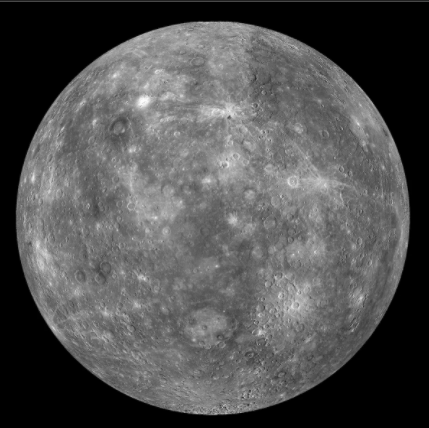
The closest planet to the Sun is Mercury. Everyone knows that. But did you know that Mercury has the Caloris Basin which is 1,550-kilometer-wide! Mercury is the smallest planet in the solar system. It has no moons of its own. If you stand on the surface of Mercury, the Sun would appear three times larger than seen from earth. Mercury is smaller than Ganymede and Titan. It is 2400km in radius. It is a rocky world, one of the terrestrial planets, and has a weak magnetic field generated by its core. It has a very thin, almost nonexistent atmosphere. Its landscape is more cratered than any other terrestrial planets(lots of bombardment from solar debris). Are you ready to learn more about this small yet exciting planet?

Image result for Mercury. Size: 170 x 160. Source: www.universetoday.com

Some facts about Mercury:

Radius- 2440 km

Orbital period (Length of a year)-  88 Earth days

Length of a day- 59 Earth days

Surface temperatures-  -183°C(-300°F) to 430°C(800°F)

Axis tilt- 0 degrees

Distance from the Sun- 0.39AU

Moons- none

Gravity- 0.38 Earth’s gravity

Mercury’s History

Mercury was formed from rocky materials that could withstand the high temperatures close to the Sun.  Early Mercury lost most of its original atmosphere due to the constant lashes of the solar wind. Mercury was subject to impacts from incoming solar system debris during a period called the “Late Heavy Bombardment,” which ended about 3.8 billion years ago. Mercury has retained many of the craters from that era of its history. It is assumed that, the more craters on the surface of a planet or object, the older the planet or object is. So, Mercury’s surface is quite old. The Caloris Basin was created as a result of a 100-kilometer-wide asteroid crashing into the surface, about 4 million years ago.

Missions to Mercury

Mariner 10 was the first mission to visit Mercury in 1973 and circled the planet three times. Through its specialized equipment, it measured Mercury and sent the first-ever close-up images of its surface. 

In 2011, the MESSENGER(Mercury Surface, Space Environment, Geochemistry and Ranging ) spacecraft entered into Mercury’s orbit for a multi-year mission. The data from MESSENGER is remarkable. 

Mercury’s secrets uncovered

There is strong evidence of water at the poles. Mercury’s core is larger than expected- it takes up 85 percent of the planet! The core is probably solid and surrounded by a liquid layer of molten iron, a layer of iron sulfide above that, and silicate rocks that make up the crust. Mercury is the densest of all the terrestrial planets. Volcanism helped shape Mercury’s surfaces. Its landscape is split by large cliffs called scarps, which formed as the surface broke apart. It is made up of 60 percent iron which is twice as much as Earth has, and 40 percent other minerals. Mercury’s very thin atmosphere contains- hydrogen, helium, oxygen, sodium, calcium, potassium and water vapor. Scientists found traces of dark materials which could be organic compounds(carbon-based). It is possible that these organic compounds and the ice deposits were delivered by comets which bombarded it.

I hope you learnt something more about Mercury than it just being the closest planet to the Sun.

https://en.wikipedia.org/wiki/Mercury_(planet)
https://solarsystem.nasa.gov/planets/mercury/overview/

Edge Computing

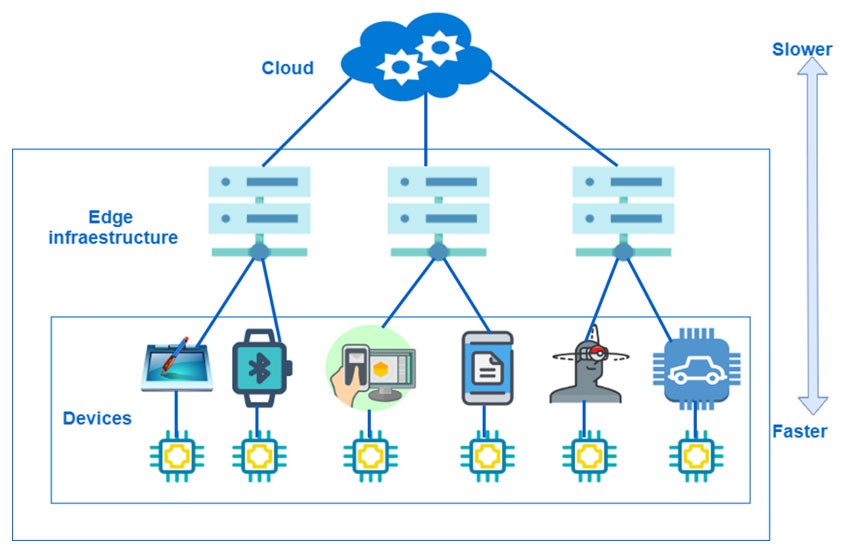
Edge computing allows for faster response times that aren’t hampered by network latency, as well as decreased bandwidth by selectively transferring the right data to the cloud.

Edge computing architecture is directly applicable to IoT-linked devices.

A large amount of data is generated by remote sensors placed on a machine, component, or device. If the data is transported back across a long network link to be evaluated, logged, and monitored, it takes considerably longer than if it is handled at the edge, near to the data source.

Edge computing was formed as a result of the rapid growth of the Internet of Things (IoT) devices that connect to the internet to receive information from the cloud or to send data back to the cloud.

Advantages of Edge Computing

  • Speed: Edge computing has the capacity to reduce latency and enhance network speed. By processing data closer to the source of information, substantially minimizes the distance it must travel.
  • Scalability: You can utilize the edge to scale your own IoT network without worrying about storage requirements. Also, IoT devices may be installed here with just one implantation.
  • Reliability: Edge computing excels at maintaining reliability. Edge computing provides an uninterruptible service since it does not rely on internet connections or servers most of the time. There is no need for users to be concerned about service disruptions or poor internet connections. It can also use microdata centers to store and possess data locally. As a result, IoT devices can be assured of a stable connection. As a result, edge computing is advised for usage in remote places where a stable network connection is unavailable.
  • Cost: IoT services require additional network bandwidth, data storage, and processing power, so they can be expensive to implement. Edge computing for IoT allows users to minimize bandwidth and data storage requirements, and data centers may be replaced with device solutions. As a result, the cost of installing IoT devices and applications is significantly reduced. Also, not all of the information is transferred to the cloud. Only the most relevant data will be transmitted to the cloud, saving network bandwidth. This can lower overall infrastructure expenditures.

Disadvantages of Edge Computing

  • Incomplete Data: Only partial sets of data may be processed and analysed using edge computing. The rest of the information is just discarded. Companies may lose a lot of important information as a result of this. As a result, companies must decide what sort of data they are prepared to lose before using edge computing. 
  • Investment Cost: Building an edge infrastructure may be time-consuming and costly. This is because of their complexity, which requires the use of more resources and equipment. Also, the IoT device with edge computing requires the use of more local hardware in order to function. Overall, this might lead to greater efficiency, but it will need considerable investment. 
  • More Storage Space: Edge computing requires a substantial increase in storage capacity on your device. This will not be a concern because storage devices are growing increasingly compact. It is, though, something to keep in mind while creating an IoT device.
  • Maintenance: Edge computing, unlike a centralized cloud architecture, is a distributed system. This means that there are more network configurations with many compute nodes to choose from. This requires a greater level of maintenance than a centralized system.

Monsoon!

Yeah! Its a season of joy, enjoyment, happiness, and we should enjoy it at the best.

A monsoon is traditionally a seasonal reversing wind accompanied by corresponding changes in precipitation, but is now used to describe seasonal changes in atmospheric circulation and precipitation associated with annual latitudinal oscillation of the Intertropical Convergence Zone between its limits to the north and south of the equator. Usually, the term monsoon is used to refer to the rainy phase of a seasonally changing pattern, although technically there is also a dry phase. The term is sometimes incorrectly[according to whom?] used for locally heavy but short-term rains.

The major monsoon systems of the world consist of the West African and Asia–Australian monsoons. The inclusion of the North American Monsoon and South American monsoon with incomplete wind reversal has been debated.

The term was first used in English in British India and neighbouring countries to refer to the big seasonal winds blowing from the Bay of Bengal and Arabian Sea in the southwest bringing heavy rainfall to the area.

So we should definitely enjoy this season!

5 Paranormal Myths

Just because the paranormal is that the realm of the unexplained doesn’t mean there isn’t any explaining to try to do. Humans have always sought to define the planet around us, and even to the worlds which will be beyond us. As a result, throughout millennia, we’ve developed countless theories and told endless stories within the realm of paranormal popular culture, and there are tons of misconceptions that have taken root within the public’s consciousness. Believe it or not, even when handling the mysterious realm of ghosts, aliens, and creatures, there are some things we will fairly confidently label as false. So, to clear up some incorrect assumptions about the unexplained, let’s take a glance at 5 Paranormal Myths.

  • Paranormal Facts Exist – The term “paranormal” applies to anything currently beyond the range of scientific explanation. So anyone who claims they need access to the rulebook of the paranormal, which they know a foolproof way of creating a ghost go “boo!” is perhaps a charlatan … or close to be pretty famous. many researchers — including reputable scientists — have compelling theories about unexplained phenomena and are trying to use those utilizing the methodology, but thus far, paranormal facts don’t quite exist.
  • Ghosts Only begin in the dark – There are tons of reasons to ghost hunt at night: the planet quiets down because the day fades away; some locations only allow you to enter after the close of daytime business hours; it’s much creepier at night; and, most significantly, it’s the simplest time to play together with your sweet night-sight camera! But if you would like to chase ghosts, you’ll even as effectively roll in the hay during the day, consistent with most paranormal researchers. It’d even be a simpler time because that’s when the dead were probably most alive.
  • There’s No Physical Evidence of Bigfoot – While there haven’t been any bodies found, Bigfoot researchers claim there’s quite a little bit of physical evidence to suggest the creatures exists — including hair, blood, tissue, tracks, and, yes, poop. There is also a growing community of scientists who believe in Sasquatch, including famed primatologist Dr. Goodall and Dr. Jeffrey Meldrum of Idaho State University, among others. Eric Altman of the Pennsylvania Bigfoot Society stresses that, as far because the lack of physical remains (a dead Sasquatch), fossilization requires very specific conditions and Mother Nature has an efficient system of breaking down animal remains in about 10 days — so a freshly-dead specimen of the already-rare creature would be hard to seek out.
  • Only Old Buildings are Haunted – A decrepit, ancient Victorian mansion with broken windows, creaky floorboards and moldy furniture could also be the simplest haunted house in Hollywood, but it’s not where ghosts necessarily hang around. Beyond just old houses, researchers claim to possess found paranormal evidence in jails, asylums, hospitals, hotels, museums, battleships, cruise liners, cars, roads, and forests. New locations also can be haunted, as can the bottom where a replacement building is established. There doesn’t necessarily need to be a death on the property, either. it’s widely accepted within the paranormal community that objects and other people themselves are often the main targets of a haunting.
  • America’s Paranormal Fascination is New – Although the paranormal has become quite fashionable with the arrival of investigation-based reality shows, America’s fascination dates back to the origins of the state. The paranormal peaked within the US within the mid-19th and early 20th centuries with the introduction of Spiritualism, a spiritual philosophy that espoused that communication with the imaginary place is positive. Mary Todd Lincoln, Clemens, and Houdini were among the American celebrities who became a part of the paranormal conversation, and therefore the public gathered in homes and auditoriums to attach with the dead in séances. Beyond ghosts, future president Teddy Roosevelt wrote of a frontiersman’s encounter with a Bigfoot-like creature in 1893, and other Sasquatch stories would periodically make their way into the news. Long before the Battle of l. a. in 1942 or The Roswell Incident in 1947, “airships” were reported within the skies above America — and newspaperman S.E. Haydon wrote about the crash of such a ship in Aurora, Texas, in 1897, about 6 years before the Wright Brothers’ first flight.

Why are so many variants of covid-19 arising?

In a bid to contain the spike in COVID-19 cases, the UK went on lockdown in November 2020. But despite having the same lockdown measures, infections in Kent were still rising. Due to an overall drop in the number of cases, the country eventually relaxed its lockdown restrictions. What happened next was nothing short of a nightmare. The number of cases skyrocketed. Researchers realized somewhere in Kent the virus had mutated. It was a new variant, and it was more contagious and was spreading extremely fast. In the next five months, this became the most common form of the virus.

But let us back up for a bit. Why did the COVID-19 virus mutate? Why do any virus mutate at all?                                                                                               

From an evolutionary standpoint, mutations are necessary accessories to natural selection. Most mutations are not beneficial for the organisms. Many mutations cause organisms to leave fewer descendants over time, but once in a while, there are changes that give the virus an advantage. These advantageous mutations led to the emergence of what are now called the Variants of concern.

Viruses are basically just a shell of protein surrounding some genetic material- either DNA or RNA. That genetic material is made up of molecules that can be represented by a series of letters like this

Structure of genetic material of viruses. [ Source: Vox]

Each part of the genetic code contains instructions for how to make one specific protein that allows the virus to function. The virus has one goal- to make more copies of itself. But because they are extremely simple entities they use us to replicate. Whenever a virus infects someone, it takes over their cells to make more and more copies of themselves. This means tediously replicating the  same code repeatedly. Occasionally, however, the virus makes a mistake. This is called a mutation, and it slightly changes the instructions for making the virus. This altered virus is a variant.

Coronaviruses have a specific type of proteins called the spike proteins that they use to bind with and infect the human cell. Luckily for us, this binding is not a perfect fit and the virus cannot always get past the cell’s defenses. What happened with the UK variant or the B.1.1.7 variant is that it had a mutation on the spike itself making the binding better.

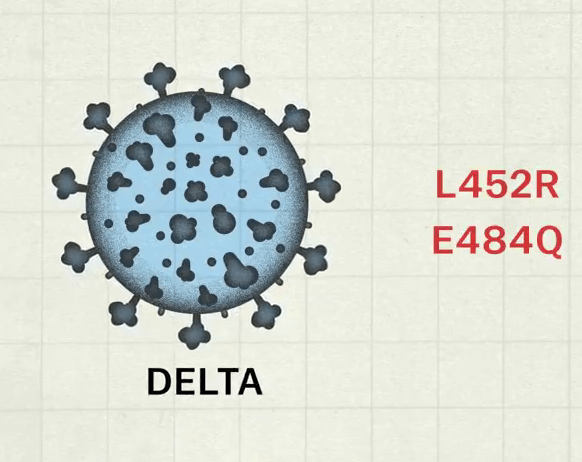
The deadly second wave of Coronavirus that wreaked havoc globally, had a cataclysmic effect in India. WHO recently announced that the highly infectious virus variant which was first detected in India will be referred to as the ‘Delta variant.’ As per data, the Delta variant or the B1.617.2  was the primary cause behind India’s devastating second wave and is much more infectious than the Alpha strain (B.1.1.7), which found in the UK.

The Delta variant and its two mutations. [Source: Vox]

The Delta variant has many different mutations, two of which had been seen earlier. These mutations seem to make the virus more transmissible and confers it power to re-infect people. This means the Delta variant evolved as a response to our immune system.

The Delta plus variant, a new mutant version of the Delta strain first detected in India, has been found in 22 cases in Maharashtra, Kerala and Madhya Pradesh and is a “variant of concern”, the government said in a warning to these states this evening. Sharing preliminary details of the Delta-plus variant, researchers at CSIR-Institute of Genomics and Integrative Biology (IGIB) said that it may be linked with abilities to better escape immune response, which means the virus can potentially dodge vaccines and antibody therapies. In fact, Vinod Scaria, a scientist with IGIB, said that there is also evidence of the Delta-plus variant’s “resistance to monoclonal antibodies”, putting into question the effectivity of the monoclonal antibody cocktail that was recently okayed for the treatment of milder cases.

The tsunami we witnessed in the second wave of the pandemic, caused by the delta variant, has only started to ebb. The rise of a new mutant, merely months after the initial detection, makes the Delta plus variant a serious cause of concern, at least on paper.

Cloud Computing

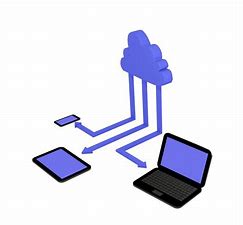
Cloud computing facilitates in the analysis and storing of the data, allowing companies to get the most out of their IoT infrastructure.

Businesses may get a lot of resources from the Cloud, so they don’t have to spend a lot of money building up their infrastructure. The IT team is more focused on day-to-day upkeep operations in the absence of on-site systems, hardware, and software, which is frequently an obvious benefit of the Cloud.

Even in the face of unexpected crises, cloud computing can keep organisations functioning. There is no immediate threat to the private data because it is stored on extra independent servers, making the Cloud a vital aspect of Internet-based companies.

Features of Cloud Computing

  • Resources Pooling
    • It indicates that the Cloud provider used a multi-tenant architecture to draw computing resources to deliver services to many clients.
    • Various physical and virtual resources are assigned and reassigned based on the needs of the client.
    • The client has little control or information about where the given resources are located, but can define location at a higher level of abstraction.
  • On-Demand Self-Service

It is one of the most essential and valuable elements of Cloud Computing since it allows the user to keep track of the server’s uptime, capabilities, and network storage allocation. This function also allows the user to keep track of the computer’s capabilities.

  • Easy Maintenance

The servers are simple to manage, and downtime is minimal, if not non-existent in some situations. Every time a new version of Cloud Computing is released, it improves steadily. The upgrades are more compatible with devices and work quicker than previous versions, as well as having problems repaired.

  • Large Network Access

With the assistance of a device and an internet connection, the user may view the cloud’s data or upload data to the cloud from anywhere. These capabilities are available throughout the network and may be accessed over the internet.

  • Availability

The Cloud’s capabilities may be customised for the user and can be vastly expanded. It evaluates storage utilisation and, if necessary, allows the user to purchase more Cloud Storage for a nominal fee.

  • Automatic System

At some level of service, cloud computing automatically analyses the data required and facilitates metering. We can track, manage, and report on consumption. It will give both the host and the client with transparency.

  • Economical

It is a one-time expense since the firm (host) must purchase storage and just a portion of it can be shared among numerous companies, saving the host money on a monthly or annual basis. Only a small portion of the money is spent on basic maintenance and a few other little costs.

  • Security

One of the most appealing aspects of cloud computing is its security. It takes a snapshot of the data saved so that it doesn’t be lost if one of the servers is destroyed. The data is kept on storage devices that cannot be hacked or accessed by unauthorised individuals. The storage service is efficient and trustworthy.

  • Pay as you go

In cloud computing, the user only pays for the services or storage space that they use. There are no hidden or additional fees to be paid. The service is reasonably priced, and most of the time some space is made available for free.

CYBERSECURITY – AN OVERVIEW

WHAT IS CYBERSECURITY? 

Cyber Security is defined as the measures taken to safeguard the connected networks and the data related to them from any attack, damage, or unauthorized access. Every organization like educational, medical, or financial organizations store a large number of user data or many confidential data which needs to be protected from outside access. These data if not protected keeps the company’s reputation at stake. The company needs to cover up data just like we hide our personal information in our online life. Healthcare organizations have their patients’ medical reports along with some personal info. Educational institutions will have the students’ and teacher’s personal as well as academic details. Corporate companies save their employee’s private details including their pay structure and banking details. 

Nowadays, we have highly privileged data such as intellectual property, patents, copyrights, etc… which have to be maintained as a secret from other competitive organizations. Losing this kind of information will affect the organization’s future on a large scale. With the advent Internet of Things (IoT), we have a lot more data to be managed and secured as we have widened the storage services through cloud and virtualization. This has given rise to a new stream called Big Data, which covers large volumes of data related to business and technology. 

WHY IT IS NEEDED?

All these details are confidential and need to be covered up from the external world so that no one could take easy advantage of them. Whenever we engage in any websites that have access to our data like name, age, or photos, the information will also be saved in the website’s server which allows the hackers to access the data. When the hackers see something beneficial in you, they use this data to threaten you to get something like ransom in return. Some steal this info to use your identity faking as their own. This may harm an individual or a whole company very badly. This summarizes the need for cybersecurity and the increase in scope for the field.

CIA TRIAD

  • CONFIDENTIALITY – Also known as privacy, this deals with restricting unknown access by using authentication encryption. Various methods used here are data encryption, two-factor authentication, biometrics and Username, ID, and password. 
  • INTEGRITY – This ensures accuracy and consistency even after unauthorized access. It is done by bringing in file permissions, version history, and backups. Checksum uses hashing algorithms to compare the hash value before and after any changes in data. If the data remains the same, the hash value returned is also the same. But even if a minute change is done in the data, the hash value returned will not be the same. By comparing the hash values, we can ensure integrity. 
  • AVAILABILITY – Making the data available only to the authorized users and performing hardware repairs, software updates, and backups on a timely basis. Avoiding attacks by using security software that doesn’t allow malicious attacks.

TYPES OF ATTACKERS

  • AMATEURS – Sometimes called script kiddies, these people are the ones with zero or low knowledge of hacking. They just follow the instructions found on the internet out of curiosity or just try their skills out. Still the results can be highly serious.
  • HACKERS – This group of people tries to get access to computer networks. They are further classified into three.
    • WHITE HAT HACKERS – These people break into computers to find out the flaws and fix them with the prior permission of the organization.
    • BLACK HAT HACKERS – These people break into computers with malicious intent and without permission. They try to take advantage of the company’s weaknesses.
    • GREY HAT HACKERS – These people fall somewhere between white and black hat hackers. They engage in unethical things but not with the intention of harmful attacks like the black hat hackers.
  • ORGANIZED HACKERS  This category includes cybercriminals, hacktivists, terrorists, and state-sponsored attackers.

CONSEQUENCES OF HACKING

The seriousness of the consequences differs with the scenario. But on the whole, the company or the victim is the one who faces the aftermath. For example, the attacker might use phishing techniques to hack your details. There might be some attachments in the mail that seems to be genuine and on clicking that it may look legitimate and ask for your details but actually, it might be a trap of the hackers which may cost you. Another example may be Denial of Service (DoS). We often come across website traffic because a lot of users try to access it. But the overloading may be done by the attackers to shut the website down. Again, this leads to unimaginable consequences. There are many more techniques and examples to cite. 

AWARENESS

Awareness leads to prevention. We can be more cautious when we give our private information like DOB, Banking details, ID proofs on any site. We should also be aware that all our picture uploads and other things are stored in the servers which might cause some problems similar to those we come across in our day-to-day life. It is always suggested to stay intact and stealthy when it comes to our social-media life.

Yoga!

Yoga Sanskrit: योग; Sanskrit for “yoking” or “union”, is a group of physical, mental, and spiritual practices or disciplines that originated in ancient India. Yoga is one of the six orthodox philosophical schools of Hinduism. There are a broad variety of yoga schools, practices, and goals in Hinduism, Buddhism, and Jainism and there are four paths or types of yoga: Karma yoga, Kriya yoga, Bhakti yoga, and Jnana yoga. Research studies have shown that traditional yoga systems that include breathing exercises and asanas or postures, chants, and meditation can reduce stress and improve immunity and lung functions. Traditional forms and modern methods of yoga are practiced worldwide.

The practice of yoga has been thought to date back to pre-vedic Indian traditions, possibly in the Indus valley civilization around 3000 BCE. Yoga is mentioned in the Rigveda, and also referenced in the Upanishads, though it most likely developed as a systematic study around the 5th and 6th centuries BCE, in ancient India’s ascetic and Śramaṇa movements.

The chronology of earliest texts describing yoga practices is unclear, varyingly credited to the Upanishads. The Yoga Sutras of Patanjali date from the 2nd century BCE, and gained prominence in the West in the 20th century after being first introduced by Swami Vivekananda. Hatha yoga texts began to emerge sometime between the 9th and 11th century with origins in tantra.


Yoga gurus from India introduced yoga to the West following the success of Vivekananda’s adaptation of yoga without asanas in the late 19th and early 20th centuries. The term “yoga” in the Western world often denotes a modern form of hatha yoga and yoga as exercise, consisting largely of the asanas. Outside India, it has developed into a posture-based physical fitness, stress-relief and relaxation technique. Traditional yoga, however, includes physical exercise, meditation, and spirituality. Yoga has its own epistemological method, which assumes the ontology and metaphysics of the closely correlated Samkhya darsana.

In this today’s world it’s so difficult to spend our time and go to gym and take a diet and etc etc. But yoga is formed to pe in a peace of mind where we are not just physically but we are mentally fit too.

youtube

YouTube

YouTube the way of leaning

What Are the Main Functions of YouTube?

  • Users can search for and watch videos.
  • Create a personal YouTube channel.
  • Upload videos to your channel.
  • Like/Comment/share other YouTube videos.
  • Users can subscribe/follow other YouTube channels and users.
  • Create playlists to organize videos and group videos together.

What is the main purpose of YouTube?

YouTube provides a simple way for people to store videos online and share them with others. YouTube videos cover any topic anyone cares to upload a video about. These videos are easy to share via other forms of social media, email and websites and can also be embedded in other websites

What are the benefits of being a YouTuber?

Benefits of Having a YouTube Channel

Give the Audience More Content. One really good reason to add video and a YouTube channel to your site is to give the audience more content. …

Extra Source of Traffic. …

Closer Personal Connection. …

Another Source Of Revenue. …

Modernizing. …

Creative Outlet. …

Get Outside Your Comfort Zone.

Teens Like YouTube because?

YouTube is a free to use service and a can be a great space for teens to discover things they like. For many young people, YouTube is used to watch music videos, comedy shows, how to guides, recipes, hacks and more. Teens also use the video-sharing service to follow their favourite vloggers (video blogger), subscribe to other YouTubers and celebrities they are interested in.

By YouTube what the people wish to like ?

The way the their mind sets and Intrest videos

there are different kind of people

Wish to learn new things

spend time on their mind sets

giving live news and events

Advantages and Disadvantages

1.       In education YouTube help in term of provide the video of teaching and learning for the students to get the knowledge from the professors in another part of the world.

2.       The students are able to access to the sources of learning anytime anywhere they want without any payment.

3.       Provide the chance for all the learner to study with the high professional teacher especially for those who have no chance to go university.

4.       There are many skill people who upload their video and we can learn from their skill.

5.       YouTube is the very wide classroom for teaching and learning which we can save our time and budget.

6.        It is a biggest source of study which easy to understand by the video such as video on how to make up, video on how to cook, video on how …etc.

ISRO – A overlook- Part1

Over the past several years, SpaceX has received a lot of well deserved praise and acclamation for their strides and efforts in lowering the cost of rocket launches. The world knows about NASA and SpaceX. But there is another organisation that is not nearly as celebrated is India’s Space Organisation ISRO. For decades, ISRO has slowly but consistently been driving down the cost of mission across the board including orbital missions, lunar missions, and even Martian missions. Here is the story of the space underdog, ISRO.

ISRO was officially founded on August 15,1969, but the organisation’s roots stretch back a few decades. The earliest known roots trace back to Indian Physicist S.K.Mitra in 1920’s. Mitra was most known for his experiments related to Ionosphere soundings. An Ionosphere sounding is a telecommunications technique used to identify the most optional radio frequency in a given area. Apart from Mitra, Sir C.V Raman and Maghnad Saha also completed a variety of space related experiments throughout 1920’s and 1930’s. But, the first major leap forward wouldn’t come till the 1940’s until the physical research laboratory and the Tata Institute of Fundamental Research were founded. These two organisations were founded by scientists Vikram Sarabhai and Homi Bhabha respectively. Each organisation leveraged nearly universities and research laboratories to conduct experiments related to cosmic radiation, upper atmosphere studies, and higher altitude tests. In 1962, Vikram Sarabhai would convince the Prime Minister Nehru to set up the Indian National Committee for Space Research. And soon after, India began experimenting with sounding rockets which eventually led to the formation of Indian Space Research Organisation (ISRO) in 1969. Since then, ISRO has developed 5 different launch vehicles with the first being the Satellite Launch Vehicle (SLV). The SLV was a small rocket with a payload capacity of only 40 kgs. Though with the relative simplicity, it took nearly 7 years for ISRO to develop it and unfortunately the first launch in 1979 failed. A faulty valve would end up causing the rocket to crash into the Bay of Bengal in just 317 seconds after launch. ISRO launched another SLV in the next year 1980 and this time, the launch was successful. On July 18,1980, ISRO launched Rohini RS-1 sattilite into its orbit and became the sixth nation to reach orbit. Apart from the July 1980 launch, there were two more launches held in May 1981 and April 1983, orbiting Rohini satellites carrying remote sensing sensors. The third launch was successful, but the satellite was launched in too low of an orbit which caused the satellite to deorbit 9 days after launch and fell back to the earth. The fourth launch took place in 1983, and this mission was successful that ISRO sent an earth observation satellite into the orbit. The successful culmination of the SLV-3 project showed the way to advanced launch vehicle projects such as the Augmented Satellite Launch Vehicle (ASLV), Polar Satellite Launch Vehicle (PSLV) and the Geosynchronous satellite Launch Vehicle (GSLV).

As everyone, I am too excited to know about ISRO and their achievements and records. I will learn new and continue this journey in next blog. Thank you. Stay safe!