WANT TO KNOW HOW TO NEGOTIATE EFFICIENTLY?

1.Put Yourself in Their Shoe:-

It’s not wrong to stick to your ground but the negotiator should try to keep himself/herself in the place of other parties involved in negotiation. He/she should visualize the situation from another’s perspective and should understand that the other parties also have some restrictions that are acting as a barrier in making the deal successful.

Empathy Marketing: Connecting With Customers By Providing Value | CleverTap

2.Justify Your Position:-

The Negotiator should not just walk into negotiation. He/she should have full knowledge that depicts that the negotiator has researched and is committed to the deal. This helps the negotiator to justify his/her position that provides an upper edge for the negotiator to make the deal in his/her favor.

3.Know Their Interest:-

The negotiator should try to analyse what is compelling the party to make that deal and how he/she can be convinced to conclude the deal in favor of the negotiator.

4.Remove the Emotions:-

One should ensure that the emotions don’t act as a barrier for the deal. It may negatively affect the negotiation. Negotiator may get caught up and be swayed by his/her personal feelings ending up the deal in favor of the other party.

Emotion and Web Design: The Keys to an Affective Ecommerce Websites –  Digital Agency Sydney | TWMG Blog

5.Know when to Stop:-

The negotiator should know beforehand when he/she will walk away. There is no use trying to get the other party to see where the negotiator stands if the talks aren’t moving forward.

How to Politely Leave a Meeting Room Before the Meeting Ends – D-Organice  Function Room | Seminar Room | Event Place

WANT TO KNOW HOW BILL GATES NEGOTIATES ?

1. Be Less Emotional:-

Once Gates told he is successful in negotiations when the other party is emotional because he is “kind of less emotional.” The fact that Gates said he is less emotional rather than unemotional reveals an important distinction. “He obviously knows that feelings are important when dealing with other people, especially in a negotiation

How to Improve Your Emotional Intelligence for Business

2. Listen, then give your  perspective:-

Gates is known for his negotiation skills , which years ago he showed off during a tense encounter with Apple Founder Steve Jobs. Just before launching Windows, Jobs and Gates were butting heads. Jobs claimed Windows was a copy of Apple’s operating system. The wrinkle though was that Apple had “liberally borrowed” programming from Xerox.

The two founders needed to come to an understanding about the provenance of their competing operating systems. Gates went to Apple’s headquarters and Jobs lambasted him in front of Apple executives. In one of his infamous emotional outbursts, Jobs yelled, “You’re ripping us off. I trusted you, and now you’re stealing from us!”

That’s when Gates grabbed the upper hand. Instead of screaming back at Jobs, Gates gave his perspective in a tranquil manner: “I think it’s more like we both had this rich neighbor named Xerox, and I broke into his house to steal the TV set and found out you had already stolen it,” he said.

Gates tapped into a key tenet of emotional intelligence: He stayed poised in a high pressure situation. His calm demeanour helped to placate Jobs, and the two men hashed things out.

NEGOTIATION SKILL: IS THERE ANY NEED TO POSSES ?

Need to invoke Negotiation Skills

Negotiation skills are not born with a child. These skills need to be developed and enhanced.

Negotiation skills teaches a person/child to be patient and understand the needs and opinions of others while giving importance to the requirements of all and finding a solution that is beneficial and acceptable to all the parties.

Negotiation skills are crucial and play an essential role in effective teamwork, decision making and managing differences and conflicts.

Thus, negotiation skills should be developed to improve the quality of communication and decisions.

Importance of Negotiation Skills

· Helps the negotiator to understand why the other party wants to make the deal.

· This understanding will help him/her to convince the party to agree with the results desired by the negotiator.

·Helps to detect the weak areas of the party and will use these areas to make the result of negotiation in favor of the negotiator.

· Enrich the presence of mind of a person.

· Makes the person analyse and reason himself/herself that why he/she is compromising for successful conduct of a deal and whether it is really beneficial to compromise for that deal or not.

Looking for tips about self improvement? Here it is.

SELF HELP

Are you aware of the phrase “change starts with you”? Here are some ways which can help you better your day to day activities and broaden your horizon. Don’t wait any further and let that positive change start from you.

https://edunewsnetwork.wordpress.com/2021/07/10/looking-for-tips-ab

1) CONCENTRATION.
• To do:
~ Meditate.
~ try playing games which requires a lot of concentration e.g. chess, puzzles and memory games.
~ get enough sleep
~ Exercise.
~ listen to music
• To avoid:
~ Loud background noise
~ avoid being around anything that can distract you
~ try not to multitask
~ avoid heavy foods
~ avoid zoning out

2) THINKING ANALYSIS.
• To do:
~ observe
~ think practically
~ ask questions
~ reasoning plays an important part in analytical thinking.
~ make sure to consider every aspect of the topic.
• To avoid:
~ don’t let emotions play a role.
~ don’t let personal conflicts cloud your judgement
~ don’t overthink it
~ don’t rush to make a decision
~ don’t stick to a single method

3) REASONING POWER:
• To do:
~ keep an open mind
~ to consider all options
~ learn more about the topic
~ frequent questioning
~ make notes
• To avoid:
~ try not to avoid others Point of view
~ don’t be quiet
~ don’t just focus on one topic but cover every topic possible
~ don’t neglect options
~ avoid being idle

4) MENTAL MATURITY.
• To do:
~ learn from experiences
~ be positive
~ accept criticism
~ be responsible
~ learn from the past
• To avoid:
~ blaming others for ones own failure.
~ don’t avoid something just because it’s difficult
~ avoid childish behavioural patterns
~ Don’t always expect positive results
~ don’t try to complete every task in a single day

5) ADJUSTMENT THINKING.
• To do:
~ empathize
~ an open mind is the key
~ consider others opinions
~ choose the best option
~ take your time
• To avoid:
~ Don’t be obsessed with just one solution
~ don’t be too headstrong
~ don’t be overconfident
~ avoid being too stressed about a situation
~ don’t be too anxious about change

6) INSIGHT
• To do:
~ ask questions like ‘why’ and ‘how’
~ take notes
~ think rationally
~ pay attention to details
~ take your time to analyze a topic.
• To avoid:
~ avoid being satisfied with the first solution
~ avoid drifting from the topic
~ Don’t be in a hurry to form a conclusion or form an analysis
~ try to avoid being a know-it-all
~ avoid being ignorant

7) MENTAL RESPONSIBILITIES.
• To do:
~ imagination
~ be creative
~ expand your horizons
~ get enough sleep
~ do something outside your comfort zone
• To avoid:
~ Don’t try to pressurize yourself.
~ don’t try to block out your thoughts
~ try not to be too invested in just one thing
~ avoid procrastination
~ avoid a negative mentality

8) ORIGINAL THINKING.
• To do:
~ find inspiration
~ read articles
~ research
~ be insightful
~ try to focus on quality rather than quality
• To avoid:
~ plagiarism
~ don’t be predicable
~ Don’t be dependent
~ don’t rely on others
~ don’t always think from your perspective

9) THOUGHT EXCHANGE.
• To do:
~ be open to opinions
~ try to listen
~ give and receive feedback
~ learn more about the topic
~ try to work with like minded people
• To avoid:
~ don’t be ignorant
~ don’t dismiss trust
~ don’t be unwilling to involve the other person
~ avoid thought stopping
~ Don’t always think from your thinking style

10) THE UNCONSCIOUS.
• To do:
~ try to remember your dreams
~ try to make sense of your dreams
~ try to understand what they’re trying to convey
~ be organised
~ be realistic
• To avoid:
~ avoid unpleasant thoughts
~ day dreaming
~ avoid not being a keen listener
~ avoid not being attentive
~ have compulsive behaviour

11) CLEAR THINKING.
• To do:
~ Go take a look at nature.
~ breathing exercise
~ get good sleep
~ listen to music
~ one thing at a time
• To avoid:
~ avoid noisy environment
~ try not to have a lot on your mind
~ avoid overlapping thoughts
~ avoid staying up for too long
~ don’t be too invested in a single problem

12) EMOTIONAL MATURITY.
• To do:
~ accept criticism
~ positive thoughts
~ always aim to reach a goal
~ take a pause and reflect
~ make wise decisions
• To avoid:
~ avoid not being straightforward
~ Don’t avoid difficult situations
~ try not to be too selfish
~ avoid thinking others have it easy
~ avoid negativity

13) LEARNING ABILITIES.
• To do:
~ read books
~ visit places
~ try to imagine yourself in a different situation
~ research
~ experience something new
• To avoid:
~ don’t try to stop learning just because you’re not immediately good at it
~ don’t move forward without a plan
~ don’t always stick to one kind of thought process
~ avoid doing all the tasks at once
~ Don’t always expect something in return

14) MIND ANIMATION.
• To do:
~ be original
~ create new things
~ have a clear mind
~ work towards a goal
~ find inspiration
• To avoid:
~ having a closed mind
~ being unprepared
~ stuck with one perspective
~ minimum understanding of the subject
~ being content with minimal information

NEGOTIATION AND HOW IT ACTS BENEFICIAL

What is Negotiation

Negotiation is a very wide term which is essential everywhere.

It is not restricted within the boundaries of an organisation but is important and can be seen in our daily life.

It is a mode by which people resolve their differences.

It is a method by which adjustment or compromise is reached while avoiding quarrel or conflict.

Negotiation refers to an activity of discussing and convincing an individual, a party or a group of people to reach a state of mutual acceptance to decide or agree something.

How is Negotiation Fruitful

· Avoids disputes or arguments

· Gives a brief about strengths, weaknesses and mindset of parties involved.

· All the parties agree to compromise

· Mutual acceptance among parties

· Concludes reaching some form of settlement

· Results in best possible deals

Digital Marketing

Digital marketing is the use of the Internet, mobile devices, social media, search engines, and other channels to reach consumers. Some marketing experts consider digital marketing to be an entirely new endeavor that requires a new way of approaching customers and new ways of understanding how customers behave compared to traditional marketing.

Understanding Digital Marketing

Digital marketing targets a specific segment of the customer base and is interactive. Digital marketing is on the rise and includes search result ads, email ads, and promoted tweets – anything that incorporates marketing with customer feedback or a two-way interaction between the company and customer.

In the parlance of digital marketing, advertisers are commonly referred to as sources, while members of the targeted ads are commonly called receivers. Sources frequently target highly specific, well-defined receivers.

Digital Marketing Channels

  • Website Marketing

A website is the centerpiece of all digital marketing activities. Alone, it is a very powerful channel, but it’s also the medium needed to execute a variety of online marketing campaigns. A website should represent a brand, product, and service in a clear and memorable way. It should be fast, mobile-friendly, and easy to use.

  • Pay-Per-Click (PPC) Advertising

PPC advertising enables marketers to reach Internet users on a number of digital platforms through paid ads. Marketers can set up PPC campaigns on Google, Bing, LinkedIn, Twitter, Pinterest, or Facebook and show their ads to people searching for terms related to the products or services. PPC campaigns can segment users based on their demographic characteristics (such as by age or gender), or even target their particular interests or location. The most popular PPC platforms are Google Ads and Facebook Ads.

  • Content Marketing

The goal of content marketing is to reach potential customers through the use of content. Content is usually published on a website and then promoted through social media, email marketing, SEO, or even PPC campaigns. The tools of content marketing include blogs, ebooks, online courses, infographics, podcasts, and webinars.

  • Email Marketing

Email marketing is still one of the most effective digital marketing channels. Many people confuse email marketing with spam email messages, but that’s not what email marketing is all about. Email marketing is the medium to get in touch with your potential customers or the people interested in your brand. Many digital marketers use all other digital marketing channels to add leads to their email lists and then, through email marketing, they create customer acquisition funnels to turn those leads into customers.

  • Social Media Marketing

The primary goal of a social media marketing campaign is brand awareness and establishing social trust. As you go deeper into social media marketing, you can use it to get leads or even as a direct sales channel.

  • Affiliate Marketing

Affiliate marketing is one of the oldest forms of marketing, and the Internet has brought new life to this old standby. With affiliate marketing, influencers promote other people’s products and get a commission every time a sale is made or a lead is introduced. Many well-known companies like Amazon have affiliate programs that pay out millions of dollars per month to websites that sell their products.

  • Video Marketing

YouTube has become the second most popular search engine and a lot of users are turning to YouTube before they make a buying decision, to learn something, read a review, or just to relax. There are several video marketing platforms, including Facebook Videos, Instagram, or even TikTok to use to run a video marketing campaign. Companies find the most success with video by integrating it with SEO, content marketing, and broader social media marketing campaigns.

  • SMS Messaging

Companies and nonprofit organizations also use SMS or text messages to send information about their latest promotions or giving opportunities to willing customers. Political candidates running for office also use SMS message campaigns to spread positive information about their own platforms. As technology has advanced, many text-to-give campaigns also allow customers to directly pay or give via a simple text message.

Digital marketing challenges

1. Not getting lost in the volume

The digital world is booming, and almost every business out there has taken its products/services online to reach out to the masses. According to a report by Experian, most marketers are now facing the challenge of making their brand stand out in the volumes available on the internet. This eventually leads to the difficulty of running a brand awareness campaign or acquiring new customers.

What can you do?

While it is a fact that at least some of your products/services might be similar to what another business has to offer, there is a minor aspect that is unique to you. Discover the USP of your product/service and find ways to convey the same. Conduct surveys on your existing customers and your target audience to better understand what they are looking for and identify which needs your brand can fulfill.

2. Driving relevant traffic to the website

Continuing on the point above, marketers today are consistently facing a challenge in spreading brand awareness in the right target market. This also makes it harder for them to drive the ideal traffic to their business websites. Therefore, understanding which channel to tap into and driving the relevant audience to your website to turn them into customers is becoming an ongoing challenge for marketers.

What can you do?

Conduct an audit of your online activity. Identify what tactics you are opting to reach out to your audience. Consider the content you’re producing, the channels you’re presenting it on, your social presence, and the paid/unpaid campaigns you are running. Use robust analytics to know which of them work the best for you and optimize your efforts simultaneously. But it is essential to measure your analytics at modest intervals of time to give each of your efforts enough span to work over.

3. Targeting the right audience effectively

The first and foremost thing that an effective marketer would do is identify their target audience in the market. With the number of internet users increasing by the day and their needs changing almost every second, targeting the right audience has become one of the biggest challenges for marketers.

Keeping in mind what your business has to offer and what kind of problems it would solve when put to use, create your value proposition. This will help you identify who or what demographics would resonate with it the most when targeted.

What can you do?

Look at the general demographics of the market that you want to reach out to. Identify their needs and create customer personas taking into consideration their online behavior and possible future needs. In this case, companies like Wigzo equip you with machine learning and predictive analytics tools to enable better persona creation.

4. Lead generation using social media

When it comes to the various social channels, most businesses and marketers don’t know how to remain consistent. Most of them feel that it is all about the paid campaigns they are supposed to run for brand awareness and lead generation. Although, both of them is a constant challenge with the ever-increasing market competition.

Even though considerable marketing budgets are set aside by businesses, most marketers cannot run their engagement into revenue. But you mustn’t just build your social following – you need to get conversions that add up to the overall business goal.

What can you do?

The most effective way to leverage social media is to integrate your marketing and sales efforts. Sharing behavioral data and interaction levels with leads on social media can help the sales team define a custom, personalized customer journey for them – which they are more likely to convert on.

5. Optimizing marketing budgets and ROI

With the increase of digital channels and advanced analytics tools, marketers are now expected to optimize the marketing budgets and the ROI to best suit the business’s needs. He is expected to measure each effort and its value to achieve the end goal – the number of leads generated or the revenue raised.

What can you do?

Tap into the power of machine learning and robust analytics regularly. An effective marketer can gauge the value of every single lead generated from a marketing effort. Understand the impact of each digital campaign on lead generation, test different variants and approaches of reaching out to your target audience to optimize your campaigns for much better results.

While you measure the digital inbound results, ensure that you consider the outbound efforts being made by your business and what kind of results it is yielding.

6. Keeping up with the changing trends

The digital market and marketing techniques have changed drastically over the last few years. And it continues to change even today to cater to the modern-day addressable market needs. Hence, marketers need to stay up-to-date with all these changes.

Be it the launch of a new social media platform or a technology that would make a marketing effort more robust, marketers need to remain on top of things to ensure their business does not lose out on possible conversions.

What can you do?

Consistently engage with your target audience on platforms that they are most active on. The most effective way of doing so is to leverage social listening using tools like Hootsuite. They help you understand what people are saying about you and your product/service, what they expect – allowing you to become a part of their conversation.

7. A Check on Increased Security Risks

We have come across cases wherein online security has been compromised.  The news and media keep it afresh. Since more information is shared online, hackers get more incentives to find ways to get through security. Shopping, bill payment, application submission, order copies, certificates, and other essential documents, and so much more are stored online for easy access – making these spaces a treasure trove for hackers and thieves. Venturing into digital marketing sure comes with its cost of security getting compromised as most of the work remains online. Security comes as a challenge.

What can you do?

You may already have a good firewall, HTTPS encryption, and maybe a good antivirus program. But that’s not enough. You will need more. Sit out and work with an authentic security team and identify your website’s weak spots and apps to create measures to reduce risk.

8. Lesser Focus on Keywords

Keywords were the bread and butter of SEO sometime in the immediate past. You just needed to find the right keywords and use them right, and your site could shoot up to the top in the search results—helping you with more exposure and traffic.

Now Google has changed algorithms making the keywords less critical. However, they are still to be used but are not the focus. Instead, it has become a topical approach rather than seeking and finding one, meaning that Google first gets an overall scope of your website.

What can you do?

First, you need to use search phrases instead of keywords and build content around topics rather than coming up with content for each keyword you want to target. Make your website a resource for the phase or question you need to target and see the changes.


Current trends of serverless computing.

Developers spend countless hours solving business problems with code. Then comes a never ending part where ops team’s turn to spend countless hours figuring out how to get the code that developers write up and running on whatever computers are available and making sure those computers operate smoothly. Serverless computing represents an enhancement of cloud programe models, abstraction, and platforms, and is a command to the attainment and wide acceptance of cloud technologies.

What is serverless computing?

Serverless computing is a cloud computing implementation model in which the cloud provider deals with machine resources on demand, taking care of the servers on behalf of their customers. It does not hold resources in volatile memory; computing is rather done in short bursts with the results persisted to storage. When an app is not in use, there are no computing resources allocated to the app. It is an execution model for the cloud in which Some of the Common languages supported by serverless runtimes are Java, Python and PHP. Amazon’s AWS Lambda was the first serverless platform and it defined several key dimensions including cost, programming model, deployment, resource limits,security, and monitoring. Supported languages include Node.js, Java, Python, and C programming. Initial versions had limited composability but this has been addressed recently.

Current trend

1.Google Cloud Functions : It provides basic FaaS functionality to run serverless functions written in Node. The functionality is currently limited but expected to grow in future versions.

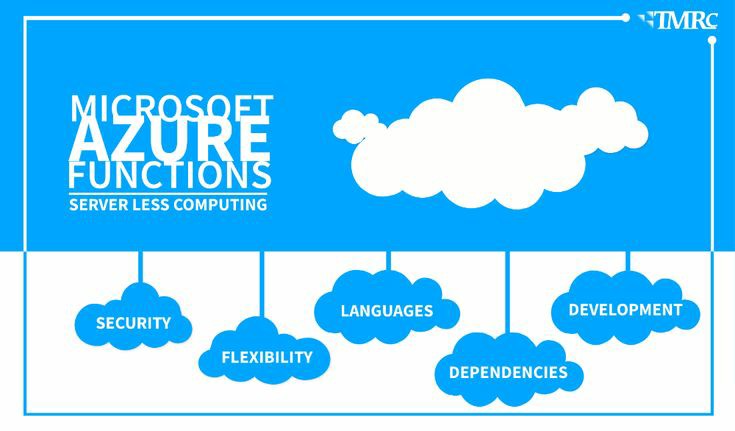
2.Microsoft Azure Functions : It provides HTTP webhooks and integration with Azure services to run user provided functions. The platform supports C , Node.js, Python, PHP, bash, or any executable. The runtime code is open-source and available on GitHub under an MIT License. To ease debugging, the Azure Func-tions CLI provides a local development experience for creating, developing, testing,running, and debugging Azure Functions.

3.IBM OpenWhisk provides event-based serverless programming with the ability to chain serverless functions to create composite functions. It supportsNode.js, Java, Swift, Python, as well as arbitrary binaries embedded in a Docker Container. OpenWhisk is available on GitHub under an Apache open source license.Besides There are several serverless projects ranging from open source projects to vendors that find serverless a natural fit for their business. OpenLambda is an open source serverless computing platform. The source code is available in GitHub Lunder an Apache License. It’s paper outlines a number of challenges around performance such as supporting faster function startup time for heterogeneous language runtimes and across a load balanced pool of servers, deployment of large amounts of code, supporting stateful interactions (such as HTTP sessions), etc

4.AWS Lambda: It is a serverless compute service that lets you run code without provisioning or managing servers, creating workload-aware cluster scaling logic, maintaining event integrations, or managing runtimes. With Lambda, you can run code for virtually any type of application or backend service – all with zero administration. Just upload your code as a ZIP file or container image, and Lambda automatically and precisely allocates compute execution power and runs your code based on the incoming request or event, for any scale of traffic. You can set up your code to automatically trigger from over 200 AWS services and SaaS applications or call it directly from any web or mobile app. You can write Lambda functions in your favorite language (Node.js, Python, Go, Java, and more) and use both serverless and container tools, such as AWS SAM or Docker CLI, to build, test, and deploy your functions.

Advantages

1.No infrastructure to maintain :Serverless computer services, which are small snippets of code meant to execute a single function are executed on pre-existing servers that run functions for countless other customers as well. Since you’re literally using someone else’s computer to execute your serverless functions, there’s no infrastructure to maintain it.

2.No costs : when functions aren’t running As Hacker Noon points out, the costs associated with serverless computing are minimal compared to other cloud services. Access authorization, presence detection, security, image processing, and other costs associated with operating a server, whether physical or virtual, are eliminated under a serverless model. In short, serverless functions can be dirt cheap, and if they aren’t being spun up for use, you aren’t paying anything.

3.Infinitely scalable : Automatic scaling capability of any serverless platform worth investing in is designed to scale based on need. That’s another advantage to serverless computing as there’s never a need to partition a new cloud server or purchase additional computing power for an existing instance. All of that is handled by the serverless computing platform, leaving you with no complication outside of a slightly larger bill for additional computing time.

4.Reduced latency : Cloud flare points out that using serverless functions can greatly reduce the latency experienced by end users. Serverless functions don’t operate from an origin server, so there’s no single location that an end user’s traffic has to be directed to.

5.Reduced software complexity : Serverless computing functions don’t need to take any of that into account–the code just has to be supported by the cloud platform being used. On top of being easier to build, serverless functions require a lot less coding knowledge to build, which opens up development to those at lower skill levels. As cloud native systems inherently scale down as well as up, these systems are known as elastic rather than scalable. Small teams of developers are able to run code themselves without the dependence upon teams of infrastructure and support engineers; more developers are becoming DevOps skilled and distinctions between being a software developer or hardware engineers are blurring.

Disadvantages

1.Security issues : server that runs serverless functions runs them for myriad customers, which opens up a lot of security concerns.

2.Vendor lock-in : Building serverless functions on one platform can mean that migrating to another is difficult. Code might need to be re-written, APIs that exist on one platform may not exist. you’re going to invest in a serverless platform, be sure the vendor you’re considering has everything you need because becoming unhappy with your serverless computing provider a few months or years into your service can be a major problem.

3.Debugging is more difficult : Every time a serverless instance spins up it creates a new version of itself, and that means it’s difficult to collect data necessary to debug and fix a serverless function. Debugging serverless functions is possible, but it’s not a simple task, and it can eat up lots of time and resources.

Conclusion

Evolution of the trend towards higher levels of abstractions in cloud programming models, and currently exemplified by the Function as a Service (FaaS) model where developers write small stateless code snippets and allow the platform to man-age the complexities of scalably executing the function in a fault tolerant manner.This seemingly restrictive model nevertheless lends itself well to a number of common distributed application patterns, including compute intensive event processing pipelines. Most of the large cloud computing vendors have released their own serverless platforms.

for more information go to the link below 👇

https://youtu.be/Fx3ZGy-mbV4

https://youtu.be/i_U_S5Eboy0

STORY: TRANSFORMATION

Brief About Story

The story named “Transformation” depicts how a person can completely transform himself/herself by self introspection. There is just a need of firm determination and everything will become possible.

Characters of the Story

Rohan- The Protagonist

Raman- Friend of Protagonist

TRANSFORMATION

Rohan, an employee in a company was a hard working asset for the organisation but he usually struggled in expressing his views. One of his friend named Raman possessing good influential skills took an initiative to help him to overcome the challenges. After some interactions he suggested Rohan to self-introspect himself and try to understand and summaries his drawbacks and work on them with a positive thinking. Rohan acted as per advice and started concentrating on getting over his weaknesses with a fighting spirit.

Raman was always co-operative and was available at each movement. His co-ordination and leadership skills helped Rohan in improving his vocabulary, body language, expressiveness, communication Skills, presentation Skills that helped him to showcase himself and his thoughts in a hesitant free manner.

SELF REALIZATION

Self Realization refers to the process of interacting with one inner self for figuring out the answers like drawbacks, strengths, weaknesses, interest areas, goals, opportunities etc for the purpose of self assessment.

It helps in understanding and summarizing one self and take required measures and actions to eradicate barriers of growth and development and working on improving strengths .

Abraham Maslow understood the importance of self interaction and placed Self Actualization as the final stage of his Motivation Theory which too is linked to the concept of Self Realization and interaction with internal self.

Self Realization | IKTAR

Importance of Self Realization

1.Higher Confidence

2.Increases Patience

3.Sharper Focus

4.Not being Controlled by Emotions

5.Acceptance

6.Helps in understanding the real clinches  of an issue

This image has an empty alt attribute; its file name is image-278.png

The Journalism and mass media

The Journalism and mass media is the  graduates work nationwide and worldwide at newspapers and magazines and in advertising, branding, broadcast news, social media, marketing, media research, photojournalism, publication design, public relations, radio, and other areas.

The Journalism is the activity of gathering, assessing, creating, and presenting news and information. It is also the product of these activities. Journalism can be distinguished from other activities and products by certain identifiable characteristics and practices.

There are five types,

  • investigative,
  • news,
  • reviews,
  • columns,
  • feature-writing.

The Rules Of Journalism

: Ask questions.

The  journalist’s greatest assets is their natural curiosity. Start with the famed five W’s (and one H), then ask some more. Asking “why?” is what gets you the good stuff.

: Dig for the story.

If you think you’ve got the whole story, dig around some more. The most fascinating parts of the story are often just under the surface.

: Master the language.

As a journalist, language is your main tool. Read as much as you can and as often as you can, research odd words and archaic sayings, look at what’s behind etymology. Learn the patterns behind language and how to use them.

: Spelling matters.

Double-check if you aren’t sure about spelling or style (especially in the case of names), and read through messages and articles thoroughly before sending either.

#5: Know thy publication.

Before you pitch, know a publication’s style, editorial staff and content. Publications are usually more than happy to provide back-issues. If you can’t find writer’s guidelines, send a short introductory email requesting them.

#6: Contacts are your career.

Contacts (and your reputation with said contacts) are your entire career. Editors, sources and interviewees are all vital parts of the journalistic process. Without them, you’d be screwed.

#7: Once it’s off the record, keep it that way.

Trusted sources will tell you all sorts of juicy, fascinating, scandalous and personal things in your career as a journalist, often off the record. Shut up about it.

#8: Three is a golden number.

Mind the rule of threes: Have at least three reliable, corroborating sources for every fact; three interviewees for every article; and read through a piece at least three times before you sit down to change a comma – that’s at least.

#9: Rejection is opportunity.

Getting a story rejected means you’ve just opened up a line of communication with a new editor – congratulations. Pitch again. Rejection also gives you a chance to sell the story elsewhere: Sometimes rejection just means it’s not right for them

#10: Editors are teachers.

You can learn a hell of a lot from the experience of your editors, and when given the chance you should. They braved the journalistic battlefield before you, so you can trust their edits and advice. Usually, they’re right.

: Mind the word count.

Yes, you can do that in the assigned word count, and the editor will either make you add or cut if you don’t. Here, they always know better. (Remember this piece of key-advice from The Elements of Style and repeat it as your daily editing mantra: Omit unnecessary words.)

: Deadlines are holy.

Deadlines exist for a reason: Never skip out on a deadline unless you are incapacitated or dead. If you have to, let your editor know beforehand and have a damn good reason. Then, don’t do it again. Compare deadlines to menstrual cycles: If you skip one, you might just be stressed. If you skip several, you’re in trouble.

#13: Know the law.

Journalism can take you to some strange places. Make sure you know the law and what side of it you’re standing on at all times.

#14: Always do your research.

Make sure that your research is flawless and that you can always match which source gave which fact. Cross-reference, find first-hand information and do your background research before requesting, planning or conducting an interview.

#15: Have it outlined.

Have the skeleton of your idea outlined and ready by the time you pitch the idea. That way you have all the information ready, and it makes your job – and theirs – easier. Your outline should include the article’s proposed headline, the article’s sub-headers and sections (you can write down facts as key-words here) and who you will interview.

#16: Keep and file everything.

Keep prior notes, interviews, sources, tapes, the lot: You never know when you’ll need it, and you probably will.

#17: Guard your vices.

Many great journalists have been crippled or completely destroyed by their vices – and it can be almost anything: Overworking, coffee, manic exercising, painkillers or heavier drugs. Whatever yours is, keep it in check or risk your job.

#18: Burnout is a rabid, fanged monkey.

Burnout is a myth, until you’re there. It’s a mental and physical size of your writing engine, and if you don’t find your way to unwind you’ll get there a lot quicker.

The Mass media refers to a diverse array of media technologies that reach a large audience via mass communication. … Broadcast media transmit information electronically via media such as films, radio, recorded music, or television.

The types of mass media include Newspapers, Radio, Television, Internet, Magazines and more,

  • What is Mass Media?
  • Journalism.
  • Social Media.
  • Films.
  • Television.
  • Radio.
  • Advertising.
  • Public Relations.
  • Books, Magazines, Newspapers and Journals.

RULES OF MASS MEDIA

  • The Privacy Act works to guarantee privacy to individuals and controls how personal information is used. Defamation in the written form (libel) or the spoken form (slander) is illegal in the United States.
  • Section 315 (Equal Time Rule) ensures that broadcast media cannot favor any one candidate over another by granting one more time than another. The Fairness Doctrine ensured that radio stations offered equal time to opposing viewpoints.
  • The Freedom of Information Act grants the public, including the news media, access to many government documents. The Digital Millennium Copyright Act, established in 1998, extended existing copyright laws to encompass and protect information online.

Transportation in India.

India’s transport sector is large and diverse; it caters to the needs of 1.1 billion people. In 2007, the sector contributed about 5.5 percent to the nation’s GDP, with road transportation contributing the lion’s share.

Good physical connectivity in the urban and rural areas is essential for economic growth. Since the early 1990s, India’s growing economy has witnessed a rise in demand for transport infrastructure and services.

However, the sector has not been able to keep pace with rising demand and is proving to be a drag on the economy. Major improvements in the sector are therefore required to support the country’s continued economic growth and to reduce poverty.

Roads. Roads are the dominant mode of transportation in India today. They carry almost 85 percent of the country’s passenger traffic and more than 60 percent of its freight. The density of India’s highway network — at 0.66 km of roads per square kilometer of land – is similar to that of the United States (0.65) and much greater than China’s (0.16) or Brazil’s (0.20). However, most roads in India are narrow and congested with poor surface quality, and 33 percent of India’s villages do not have access to all-weather roads.

Rural Roads-A Lifeline for Villages in India: Connecting Hinterland to Social Services and markets

Railways. Indian Railways is one of the largest railways under the single management. It carried some 19.8 million passengers and 2.4 million tonnes of freight a day in year 2009 and is one of the world’s largest employer. The railways play a leading role in carrying passengers and cargo across India’s vast territory. However, most of its major corridors have capacity constraint requiring capacity enhancement plans.

Ports. India has 13 major and 199 minor and intermediate ports along its more than 7500 km long coastline. India’s seaborne foreign trade being 95% by volume and 67% by value, the ports play a very significant role in improving foreign trade in a growing economy. These ports serve the country’s growing foreign trade in petroleum products, iron ore, and coal, as well as the increasing movement of containers. Indian ports handled cargo of 850 million tonnes and about 9.0 million TEU container traffic in year 2010. Over the last decade, the average annual growth rate of port cargo volume has been about 10%.. The future potential for port sector, particularly container ports is huge considering that the container traffic is projected to grow to 40 million TEU by 2025. Inland water transportation also remains largely undeveloped despite India’s 14,000 kilometers of navigable rivers and canals.

Aviation. India has 128 airports, including 15 international airports. Indian airports handled 142 million passengers in 2010-11 and 1.6 million tonnes of cargo in year 2009-10. The CAGR for the domestic passenger and freight growth over the last decade has been 14.2% and 7.8% respectively. The dramatic increase in air traffic for both passengers and cargo in recent years has placed a heavy strain on the country’s major airports. Passenger traffic is projected to grow more than 15% annually over 2011-13 and it is estimated that the aviation industry, currently 9th largest in the World, will require 30 billion USD investment in the next 15 years to keep pace with the growing demand.

Urban Transport. India is experiencing rapid urbanization with the present urbanization levels at 30% translating to a population of roughly 340 million living in urban areas. The number of million plus cities is presently at 42 and the urban economy accountd for roughly 60% of the GDP. Motorisation rates in India are in double digits as in most developing economies. Only about 20 cities out of 87 cities with a population in excess of 500,000 and state capitals have any kind of organized transport and only 3-4 cities could lay claim to a mass rapid transit system. The share of public transport in cities with population sizes over 4 million has declined from 69% to 38% between 1994 to 2007. Accident and fatality rates are one of the highest in the world affecting primarily the poor and vulnerable without their own means of transport.

Transport infrastructure in India is better developed in the southern and southwestern parts of the country.

The major challenges facing the sector are:

• India’s roads are congested and of poor quality. Lane capacity is low – majority of national highways are two lanes or less. A quarter of all India’s highways are congested. Many roads are of poor quality and road maintenance remains under-funded. This leads to the deterioration of roads and high transport costs for users.

• Rural areas have poor access. Roads are significant for the development of the rural areas – home to almost 70 percent of India’s population. Although the rural road network is extensive, some 33 percent of India’s villages do not have access to all-weather roads and remain cut off during the monsoon season. The problem is more acute in India’s northern and northeastern states which are poorly linked to the country’s major economic centers.

• The railways are facing severe capacity constraints. All the country’s high-density rail corridors face severe capacity constraints. Also, freight transportation costs by rail are much higher than in most countries as freight tariffs in India have been kept high to subsidize passenger traffic.

• Urban centers are severely congested. In Mumbai, Delhi and other metropolitan centers, roads are often severely congested during the rush hours. The dramatic growth in vehicle ownership during the past decade – has reduced rush hour speeds especially in the central areas of major cities.

• Ports are congested and inefficient. The average annual growth of cargo volume in the ports in the last decade was close to 10%, However, capacity utilization in some of the major ports remain as low as 58-60% Both bulk and containerized traffic is expected to grow at a much faster pace in future and by some estimate the container traffic is projected to grow to about 4.5 times of the current volume by 2025. India’s ports need to significantly ramp up their capacity and efficiency to meet this surging demand.

• Airport infrastructure is strained. . Air traffic has been growing rapidly leading to severe strain on infrastructure at major airports, especially in the Delhi and Mumbai airports which account for more than 40 percent of nation’s air traffic.

LIBRARIES: A BOON TO THE SOCIETY

THE HARD COPY OF LIBRARY

According to WIKIPEDIA, “A library is a collection of materials, books or media that are easily accessible for use and not just for display purposes. It is responsible for housing updated information in order to meet the user’s needs on a daily basis. A Library provides physical (hard copies documents) or digital access (soft copies) materials, and may be a physical location or a virtual space, or both. A library’s collection can include printed materials and other physical resources in many formats such as DVDs, CDs and Cassette as well as access to information, music or other content held on bibliographic databases.”

IMPORTANCE OF LIBRARIES TO MAN

Libraries are said to be the storehouse of culture. If a man is to be known by the company he keeps, society is to be known by the number of good libraries it has. Man’s craving for knowledge is eternal. He wants to know more; he wants to enjoy more. But he cannot always move about for various reasons. He goes to a library and reads books of his choice. Libraries preserve books of various types, old and new. There are also periodicals and daily papers to meet the demands of the people. In all ages, libraries have been considered to be the best medium of public instructions.

The doors of library are exposed to everyone for rewarding the requirement for information. They are run by the government, schools, colleges, and universities. The society members of the neighbouring locality can visit these libraries to boost their information and complete their research.

TYPES OF LIBRARIES

There are different types of libraries, such as public libraries, circulating libraries, private or personal libraries. Of these, public libraries are most important. These are financed either by Government or by public institutions. All readers are allowed to read here. These libraries have two sections-lending and reference. Books are lent out to those who deposit money. Others are allowed to sit a id read books during the period, these are kept open. As libraries spread education, the Government of India have taken up a scheme to establish rural libraries for the benefit of rural people. They sanction annual grants to these libraries in cash or kind. In these libraries, books are stocked to suit the half-literate people of villages.

A FRIEND IN NEED

Government-managed libraries are well equipped and well manned. Only technical men are employed here to help the readers. Quite a large number of scholars, students and members of the public daily attend such libraries for reading and making notes. There are public libraries organised by public institutions. These libraries cater to the needs of a large number of people living in particular localities. Students of schools and colleges also utilise these libraries and derive benefit from them. But these libraries are in bad shape. Government grants to these libraries are not adequate. Public-spirited men now-a-days, are rare. Development of libraries is an important task of a welfare Government. Common people and students get opportunities to read in these libraries. In our country where the percentage of illiteracy is high, these libraries help in expanding the facilities for reading. Public libraries and rural libraries do a lot of good to the localities where they are established. Now the Government has established primary unit libraries, town libraries etc. The Government gives regular grants for the purchase of books and equipment. But still the grants are not adequate. However, they help the public libraries to satisfy the needs and aspirations of the local people.

CONCLUSIONS

So, if we can see deeply a library Builds and helps to connect Community, it Provide Access to the full range of information resources needed to live, learn, govern, and work. It Promote Literacy to both children and adults. It Protect Your Rights to read and offers freedom of information gathering and sharing. People becomes innovative and smart in the company of library, which enhances creation and collaboration.

Introduction about different Schools, Colleges, Universities

Every student wants to join a dream college or university.

After schooling, we desire to join a top college or university for the security of our feature

Is a college the same thing as a university? What does “liberal arts” mean? Why are some colleges called public and others private? Here are the basics of the types of colleges.

Let me know about NIT AGARTALA

Institute is committed to developing highly competent young Engineers, Scientists, and Management Professionals to cater to the ever-increasing techno-managerial needs of national and international standards fulfilling professional ethics and societal commitment.

MISSIONS

• To produce techno-managerial human resources in line with global needs, offering a state-of-the-art facility, research, and engineering and allied disciplines.

• To enhance the effectiveness of technical education with innovative systems and devising a mechanism to facilitate the application of research findings to solve real problems of industries/academics.

• To nurture and sustain an academic ambience conducive to the development of intellectually capable and committed professionals so that effective growth is obtained for the region’s economic development and the nation as a whole.

• To establish as the corridor of higher education for the South East Asian countries.

EDUCATION SYSTEM

Presently the Institute offers eight UG courses and PG courses in several fields along with Post Doctoral Fellowships. This Institute is autonomous under NIT being act passed by the parliament.

The Institute recently introduced a new curriculum in IITs where more elective subjects are being offered to make the system flexible. Previously, the Institute used to follow the mark based system of evaluation, but have been switching over to a credit-based system to keep track of the global evaluation methods. Industrial training, Undertaking projects are parts of the education system and students are also encouraged to take various activities for social development through NSS and NCC.

Initiatives

The Institute recently has been converted from State Engineering College to National Institute of Technology. The total seats have been increased from 250 to 420 for the academic session 2007-2008. Recently three Under Graduate courses has been introduced in Electrical & Electronics Engineering, Transportation Engineering and Production Engineering. The Civil Engineering Department will start a PG programme in Structural Engineering to fulfil the requirement of the State. The nonresidential campus is to be made residential with the reopening of two boys hostels and one girl’s hostel for the students admitted for the session 2007-2008. A master plan is under preparation for 335 acres of land where a new campus will be built with modern facilities for the overall requirement of the Institute. The Institute is getting a 33 VK dedicated power supply through Tripura State Electricity Corporation Limited for uninterrupted power supply in the campus. The R. D. Department of Govt. of Tripura took total renovation work of the existing buildings after conversion to NIT. The Institute has also obtained a grant of 12 crore rupees from DoNER for the development of infrastructures like the extension of the Library Building, an extension of the Academic Building, the Centralized Computer Centre, a new water treatment plant and boys and girls common room. The campus is now totally connected through Wi-Fi with WiMAX wireless backbone and all e-journal facilities are available in the digital library of NIT Agartala.

Conversation skills that you need

communication plays a very important role in human life. It helps in the exchange of information and knowledge, it helps in developing relationships, the bonding on which the human life dwells itself. Conversations are key to language development. Ideas and thoughts also find a way to enhance through conversations. They make learning easier when combined with perfect facial and body expressions.

how do you define conversation skills?

A perfect conversation is the one which “serves the intention” and “transfers the information” perfectly. People may define it differently, But for the most part, conversation skills include ability to initiate, sustain and end a conversation. You may have the best information, but how you share, matters a lot. And also Engagement- an attempt to perfectly involve others in the conversation, is important.

“Conversation skills refer to a collective set of skills needed to communicate effectively with another person”. Better skills allow to understand and comprehend better to every person in the conversation.

The pandemic which hit the world very badly is forcefully making people to isolate themselves, replacing in person conversations to Vedio calls. Obviously there is a difference when you talk to a person when he is in front of you and when you talk through a screen. But rise in social media popularity did this before pandemic. Conversations have been changed to texting. These all are taking important conversation skills away from people. Clearly avoiding screen is not a solution, but maintaining a balance is very important.

ways to improve conversation skills

LISTEN ACTIVELY: Listening shows that we are in the person and the topic of conversation. Listening is as vital as speaking since a conversation involves sharing which needs both giving and receiving end. Practice active listening by paying attention, Asking questions to clarify confusions and repeating the message or its summary back to the speaker.

LOOK FOR NONVERBAL CUES: Non verbal communication has importance exactly as the words person chooses to do conversation. For example, consider body language. Try to have a good eye contact with the person in front of you. By saying a good eye contact I mean, the eye contact shouldn’t be making the person uncomfortable. Nodding your head to show your agreement or disagreement also helps. Keeping yourself in a position that makes you hear them correctly will also help. And if you are the speaker, make sure the message you are sending is consistent both verbally and non verbally.

HAVE EMPATHY: When you are listening to other person, try to put yourself in his/her shoes. Try to understand their point of view. Use statements which shows that you are understanding. For example ” I can understand your situation”. This will help to build trust. Learn to “agree to disagree”. Respect them even if you disagree. Be polite throughout the conversation.

PAY ATTENTION TO THE DETAILS: A person with strong conversation skill will absorb more from the conversation than the average person just by noticing extra details. This will help you have more accuracy in the information. Noticing the accent and the motive in the conversation will help in long term.

OFFER INTRESTING INSIGHTS: People with good conversation skills frequently yell you things you didn’t know and find interesting. Increase your knowledge by reading books, magazines and listening to podcasts. Observe how they are choosing words or expressing them. Be Honest when you don’t know, that will not make you anything lesser.

TALK SLOWLY: A good conversationalist often act as they have abundance of time. Don’t hurry or cut others sentences. Take your time while speaking and be confident. Try to take a time before what you say to just reflect on it. be thoughtful.

USE RIGHT WORDS: A well ability to communicate has a lot to do with the words you choose. Bad choice of words will create misunderstandings. Constantly work on your vocabulary and practice communicating accurately.

A good communication skill will help you regardless of the field you are going to be in. Develop these skills as soon as possible and shine on!

Parents

Growing up, our relationship with our parents is less complex. They are the first best friends that we have. We talk to them about everything, and they listen to us. We look up to them and want to be like them when we grow up.

 But after growing up, we realize our parents are not perfect. They make mistakes too. Well, that is not a bad thing because nobody is perfect. A lot of us then stay angry at our parents for being normal humans. We blame them for everything without realizing that they have a life of their own. Yes, we are their children, and they love us. But that does not mean they should stop living their lives. Our parents provide us with necessities, and they work hard to do it. They sacrifice their dreams to fulfill ours. But a lot of us do not give them the respect or the credit that we should. 

Growing up, parents would appreciate us for every small achievement. Now they don’t say much. We can sense they are happy but have trouble expressing it. We need to understand that it is hard for parents to express their feelings of love towards us once we grow up. It is mainly because their parents were not so expressive towards them.

Here are a few ways that can help fix your relationship with your parents:

If parents have trouble expressing their love, we can express it to them instead. If we can tell our friends, we love them on a daily basis. So, why not do the same with the people raising us?

Communication is the key to fix all relationships. We all get a gap in our relationship with our parents. That gap can only be erased by communicating with them.

Keeping the generation gap aside. We often get distant from our parents because they don’t approve of a few things. But, for that we need to understand where they are coming from. They are trying to accept our generation, but there will still be a few things they will not approve of. Instead of hating on them for it, we need to start understanding them.

We need to understand that they care for us. We sometimes tend to disagree with our parents but agree with our friends if they say the same thing. We need to understand that our parents care more about us than our friends ever would.

We all need to build a deeper relationship with our parents. We need to ask them about their day and tell them about ours. If they accept us with our flaws, we need to do the same with them. I know my parents don’t agree on a few things with me. Which is fine. It doesn’t have to come in the way of our relationship. We all have our ups and downs. Our relationship with our parents will only work when we are willing to make it work.

We say parents don’t understand us.

But do we understand them?