MACHINE LEARNING – THE MIRACLE

In the real world, we are learning new things every day and improving our decision-making skills on the basis of successful decisions in the past. Isn’t this human learning? If we now use computers to fully automate this process, what will it be? This will be machine learning.

Everyday applications

We use it a dozen times a day without even realizing it. Every time you perform a Google search, your machine learning software will figure out how to categorize the pages you want to visit. Also learn that if you read emails from your inbox, the smart spam filter can save you from browsing a lot of spam.

THE TECHNICAL UNDERSTANDING

Recently, Tom Mitchell described machine learning as a computer program. It is said that the program learns from experience E related to task T and performance metric P because its performance in T is improved by the P metric. Experience E Let us give an example of an online chess game, in which each game is a task T, and the process of the game is the experience E. Each game has a final result, which is a performance indicator P. This performance indicator is to win. Probability of a game against a new opponent. Now that the computer has the patience to play tens of thousands of games alone, it can further improve your chances of winning consecutively. Machine learning technology: a brief overview We all know how computers work, we all know How the computer works, we have simplified many operations. Now we are trying to get computers to examine all the macro and micro levels of human thought processes that lead to multiple decision-making skills. By developing truly intelligent machines, we can do almost anything you and I can do. This work consists of complex algorithms and functions of artificial intelligence applications running in expert systems. With every action you take, the computer will learn self-learning and self-esteem through progressive, keen, and precise decision-making skills. The computer learns to remember a past experience and process them according to the archived tasks and the resulting performance level. Development of actions/results in a specific context or situation.

FUTURE ASPECTS AND THE SCOPE OF IMPROVEMENT

Machine learning is not limited to Google search or Amazon prediction. It is widely used in medical diagnosis, where tiny patterns are revealed to predict disease. Machine learning can have a positive impact on treatment and subsequent procedure decisions. Financial transactions, data mining, fraud detection, speech recognition, spam prevention, and language translation are some other areas where machine learning is used. The company uses the technology to predict the relevance of products based on the collected data. Let us see what machine learning can bring to the future. A fully functional self-driving car is expected to be available at the end of 2018. Natural language processing has developed a subset of machine learning so that students can improve search results and translations based on the search context. It will also help digital assistants like Siri interact with Humans On Cyber ​​Security Front, a machine learning model that can analyze the structure of inbound or outbound traffic to detect and stop suspicious before continuing damage occurs. activity. Decisions and code changes can be made without explicit programming, which makes machine learning an inevitable trend now and in the future.


How to use the phone as a webcam for your PC

In these pandemic situation there no offline meetings and interviews. Video conference is daily habited in these time , we are using lot of application for video conference like Google meet, zoom meet, Microsoft teams , Skype and  jio meet

Most of people facing problems while hosting and interviews times ,our laptops and PC doesn’t have good quality of video

Then , is there any way to optimise for good quality of video . yes there is a way for that problem

In these day every one have mobile phones , by those mobile phone we can as a webcam

Are you thinking I am joking , then just follow my instruction you will be find my word are no joke..

I have research many application but ,I  recommended an application Droidcam  that can be download by our favourite  app stores

Now  you connect your PC or a Laptop over the same Wi-Fi network or with the help of a USB cable. If you downloaded the DroidCam app on your phone from the app store, then download the DroidCam Client on your Windows laptop or PC

There are two ways :

  • Using wi-fi
  • Using cable
  • using Browser

Using Wi-Fi

Open  the DroidCam app on your phone and click on the ‘Wireless’ option.

Then next screen should display the ‘WiFi IP’ and ‘DroidCam Port’ . If your ‘WiFi IP’ appears 0.0.0.0, then you are not connected to the Wi-Fi.

Open the DroidCam Client on your PC or laptop and enter the ‘WiFi IP’ and ‘DroidCam Port’ as displayed on your mobile phone. Click on the ‘Start’ button.

Now start the video conferencing app and check the webcam  by clicking on the ‘Webcam’ or ‘Video’ settings.

Using cable

Connect your mobile phone   to your PC  or Laptop with  USB cable.

We have remember to note is that you need iTunes downloaded on your  PC to connect using USB cable. If you do not have iTunes, you can download it . Once you login to iTunes, it will automatically detect your mobile Phone.

Start the DroidCam Client, select the ‘USB’ option and tap on ‘Start’.

using Browser

 DroidCam mobile phone application also connect to the camera using a web browser.

Then you  have to  connect your phone to a Wi-Fi and open DroidCam application.

Lunch  Chrome on your Laptop or PC and enter the ‘Browser IP Cam Access’ data then ‘http://192.168……./video’ and click on  enter.

If you have wish to specify the resolution of the video in the URL by using the path including ‘force’. example – http://192.168…./video.force?1280×720.

The application  DroidCam Wireless Webcam we used was the free ver . You canl also find the paid ver of this app, called the DroidCamX Wireless Webcam Pro in  the Google Play Store. The paid version application supports HD video streaming with out ads

there is one more application I recommends i.e Xsplit connect

PHOTOGRAPHY


                       “Photography is the story I fail to put into words.”

                                – Destin Sparks

What is photography ?

Photography is the art, application, and practice of creating durable images by recording …
Other names: Science or art of creating durable images

The art or process of producing images by the action of radiant energy and especially light on a sensitive surface (such as film or an optical sensor)

Concepts of photography –

Aperture, shutter speed, ISO speed, exposure. Photography is all about light.  You use aperture and shutter speed to achieve the proper exposure, while taking into account some important side-effects you should be aware about.

Principles of photography –

The seven principles of art and design in photography; balance, rhythm, pattern, emphasis, contrast, unity and movement, form the foundation of visual arts. Using the seven principles allows you to take greater control of your photographic practice. This will lead to better photos and more photographic opportunities.

Elements used in photography –

Patterns, texture, symmetry, asymmetry, depth of field, lines, curves, frames, contrast, color, viewpoint, depth, negative space, filled space, foreground, background, visual tension, shapes. We use one or more of these elements to create a composition that works for our image.

There are many elements in photography that come together to make an image be considered “good”. Elements like lighting, the rule of thirds, lines, shapes, texture, patterns, and color all work well together to add interest and a great deal of composition in photographs.

A good photographer must have a very keen eye for detail to ensure that all elements within the photo , the lighting , the composition , the subject , and everything else in between to work together harmoniously to convey the right vision or message. Even the tiniest detail can make or break a photograph.

                           ” Photography is a way of feeling, of touching, of loving. What you have caught on film is captured forever… It remembers little things, long after you have forgotten everything.”

                                 – Aaron Siskind

A picture is a poem without words.

The art or process of producing images of objects on photosensitive surfaces. Photography is the art, practice or occupation of taking pictures with a camera. An example of photography is someone taking pictures for a magazine.

Photography in career –

Photography is a good career if you have an excellent skill set, good creative ability, composition, and technical expertise.  Good photography skills come with a lot of practice and hard work. This career can be rewarding if you love to take challenges and are eager to live your life through the eye of the camera.

Photographer skills –

Photographer skills are those skills needed to create high-quality pictures, including artistic vision and technical knowledge of camera equipment and the art of photography

             
                           “There is one thing the photo must contain – the humanity of the moment.”

                                     –Robert Frank


                       “Photography is the story I fail to put into words.”

                                – Destin Sparks

What is photography ?

Photography is the art, application, and practice of creating durable images by recording …
Other names: Science or art of creating durable images

The art or process of producing images by the action of radiant energy and especially light on a sensitive surface (such as film or an optical sensor)

Concepts of photography –

Aperture, shutter speed, ISO speed, exposure. Photography is all about light.  You use aperture and shutter speed to achieve the proper exposure, while taking into account some important side-effects you should be aware about.

Principles of photography –

The seven principles of art and design in photography; balance, rhythm, pattern, emphasis, contrast, unity and movement, form the foundation of visual arts. Using the seven principles allows you to take greater control of your photographic practice. This will lead to better photos and more photographic opportunities.

Elements used in photography –

Patterns, texture, symmetry, asymmetry, depth of field, lines, curves, frames, contrast, color, viewpoint, depth, negative space, filled space, foreground, background, visual tension, shapes. We use one or more of these elements to create a composition that works for our image.

There are many elements in photography that come together to make an image be considered “good”. Elements like lighting, the rule of thirds, lines, shapes, texture, patterns, and color all work well together to add interest and a great deal of composition in photographs.

A good photographer must have a very keen eye for detail to ensure that all elements within the photo , the lighting , the composition , the subject , and everything else in between to work together harmoniously to convey the right vision or message. Even the tiniest detail can make or break a photograph.

                           ” Photography is a way of feeling, of touching, of loving. What you have caught on film is captured forever… It remembers little things, long after you have forgotten everything.”

                                 – Aaron Siskind

The art or process of producing images of objects on photosensitive surfaces. Photography is the art, practice or occupation of taking pictures with a camera. An example of photography is someone taking pictures for a magazine.

Photography in career –

Photography is a good career if you have an excellent skill set, good creative ability, composition, and technical expertise.  Good photography skills come with a lot of practice and hard work. This career can be rewarding if you love to take challenges and are eager to live your life through the eye of the camera.

Photographer skills –

Photographer skills are those skills needed to create high-quality pictures, including artistic vision and technical knowledge of camera equipment and the art of photography

             
                           “There is one thing the photo must contain – the humanity of the moment.”

                                     –Robert Frank

Going to hit a century : Diesel price!

Diesel fuel, in general is any liquid fuel specifically designed for use in diesel engines, whose fuel ignition takes place, without any spark, as a result of compression of the inlet air mixture and then injection of fuel. Therefore, diesel fuel needs good compression ignition characteristics.

The most common type of diesel fuel is a specific fractional distillate of petroleum fuel oil, but alternatives that are not derived from petroleum, such as biodiesel, biomass to liquid (BTL) or gas to liquid (GTL) diesel are increasingly being developed and adopted. To distinguish these types, petroleum-derived diesel is increasingly called petrodiesel in some academic circles.

In many countries, diesel fuel is standardised. For example, in the European Union, the standard for diesel fuel is EN 590. Diesel fuel has many colloquial names, most commonly, it is simply referred to as Diesel. In the UK, diesel fuel for on-road use is commonly abbreviated DERV, standing for diesel-engined road vehicle, which carries a tax premium over equivalent fuel for non-road use. In Australia, diesel fuel is also known as distillate, and in Indonesia, it is known as Solar, a trademarked name by the local oil company Pertamina.

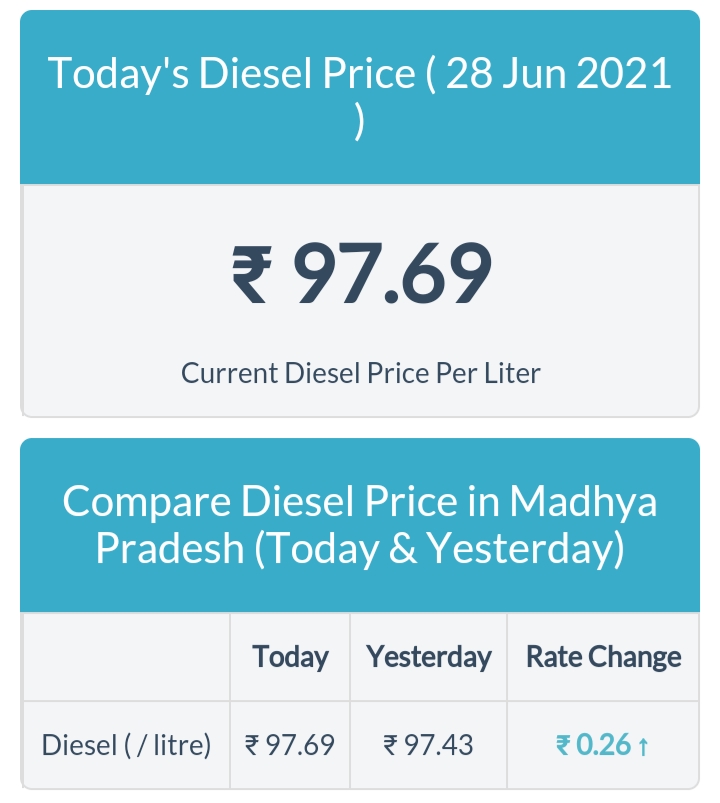
Diesel price in Madhya Pradesh today is fixed by state-run oil marketing companies based the daily ‘Dynamic Fuel Pricing’ mechanism. Here, you can check the current diesel price in Madhya Pradesh, find todays diesel price as well as the quarterly price trend in Madhya Pradesh. New diesel prices in Madhya Pradesh are updated by oil firms daily at 6:00 am IST.

You can also find out how diesel prices in Madhya Pradesh are calculated and how prices are compared to other states. Additionally, find the current Madhya Pradesh diesel price and primary factors impacting diesel prices in India as well as the highest and lowest price recorded during a month.

Read This If You Worry A Lot

The day that I decided to quit my last job and the day that I handed in my notice were almost 90 days apart. In those three months, I worried — a lot. I decided to pursue my desire to become a full-time writer. But shit was getting scary.

Things like “what if I can’t pay my bills?” and “what if I fail?” went through my head. I freaked out, but as it turned out, the solution to my excessive worries was easier than I expected.

Many of us worry about all kinds of things: Work, relationships, money, health. Some concerns are real, but many are unnecessary.

No matter what kind of worry you have, the response in your body is always the same: It increases your cortisol levels.

And an increased cortisol level is something you definitely do not want. Cortisol compromises your immune system. As a result, you will become more susceptible to disease.

Researchers have also found a relationship between cortisol and diabetes, osteoporosis, and heart disease. Also, stress and fear can cause depression, bipolar disorder, panic disorder, and burn-out.

Let’s face it: If you don’t stop worrying, you will die. That’s not me talking. That’s your body talking.

In the past year and a half, I’ve studied worry, stress, fear and anxiety almost every day. I even wrote a book about how you can live a stress-free life. My findings? Don’t try to relieve stress and worry, but eradicate it. Address it — head on.

“Fear defeats more people than any other one thing in the world.”  — Ralph Waldo Emerson

Relief Doesn’t Work

This is what most people do when they experience stress and worry:

  • Take it out on your partner of family
  • Drink alcohol, take drugs, or both
  • Binge-watch Netflix
  • Play video games
  • Go on a holiday
  • Party all night
  • Have sex

Be honest, how long do these things make you forget about your worries? 10 minutes, half hour, a day? It doesn’t last. As soon as you get back to the reality of your life — worry and stress smack you in the face.

Distracting yourself from your life doesn’t work — and yet, many of us keep doing it. I’ve read many books and scientific papers on this behavior. Some say it’s because we have too much free time, some say it’s because of culture, some say it’s because how we are wired.

To be frank, it’s not important to understand the why. We just have to look at the facts: People worry too much, and that can destroy your life. It’s more important to focus your attention on addressing worry.

“Never let the future disturb you. You will meet it, if you have to, with the same weapons of reason which today arm you against the present.” ― Marcus Aurelius

Turn Worry Into Constructive Process

Worry is often about the future. It goes something like this: What if…

“She doesn’t like me anymore?”
“I lose my job?”
“I can’t pay my bills?”
“I fail this exam?”
“I don’t get this promotion?”
“My business doesn’t take off.”

And then we make up consequences. It goes something like this: I have to…

“Be single.”
“Find a new job.”
“Borrow money from my parents.”
“Quit school because I failed.”
“Stay at this job another year.”
“Be ashamed because everyone thinks I’m a failure.”

Then we think: “I can’t handle that.” And finally, we think: “The world is going to end.”

If your thought process is the way described above, worry controls you.

The good news is there is a simple solution: Self-monitoring, which turns worry into a constructive process. In a 2002 study, done by Szabo & Lovibond, students were asked to record their worries.

The results of that study demonstrated that you can turn worrying into a constructive process by focusing on finding a solution to your concerns.

“You have to learn the rules of the game. And then you have to play better than anyone else.” — Albert Einstein

How I Use Self-monitoring To Address Worry

I’m a pragmatic person. I do think that things like meditation and mindfulness help with worry — but not for me. It’s too intangible. Instead, I prefer to take a practical approach like self-monitoring. Here’s how I do it.

  1. Use a note-taking app and create a new note.
    I call my note “Things that I worry about.”
  2. List everything you worry about — and keep adding things to the list.
    Everything that you worry about goes on this list, no matter how small.
  3. Think of a solution for all your perceived problems.
    For example, if your financial situation makes you anxious, you need to create a plan to earn more or spend less.
  4. Then, start executing. 
    Do one thing every day that brings you closer to solving your perceived problem.
  5. Finally, don’t worry about things you have zero control over — those things you have to accept. 
    If you know more about how you can do this; read Meditations by Marcus Aurelius.

This process focuses on action. It forces you to learn the skills you need to overcome your perceived problems. Because problems don’t disappear out of themselves.

Nowadays, I don’t worry anymore because I trust my ability to handle everything that life throws at me.

Because knowledge, skills and character are the only things that no one can take from you—every minute you spend on learning something is well spent.

No matter what happens, trust in your ability to address it. So start now.

Why current Generation are more vulnerable to Mental Illness than their predecessors?

Photo by Anete Lusina on Pexels.com

It is one of the inevitable topics of the millennial generation and that is, “Mental Illness”. It has become one of the terminal topics of all yet it’s high time to focus on our young minds!

So the question here is, why every fourth out of seven has a mental illness? Is it due to a new way of living life? Or is it the society? Well, we can’t blame society for every cause, right? Instead of living in a society, it is us who should be blamed.  Yes, the destruction is due to unawareness which we didn’t appreciate.

These young minds are an asset to our bright future, but what they are suffering from is the worst disease of all. Medically, there is a cure to all sorts of diseases but the question is, where is the essence of this disease? Why is this happening in excess amount to our young buds? Here are some of the elements which can be the reasons for the illness present in our young  minds :

  1. Giving more priority to the unrealistic world of social media: Teenagers are the most popular groups of all ages who dedicate most of their time to social media and thus, for them, it’s ‘The second home’. They dwell so much in these media platforms that the unrealistic world makes them feel like it is reality.

Specially they tend to create fake personalities in front of their friends and colleagues and when they are avoided or not popular then they think of themselves as ‘worthless’.  

It is highly observed that teenagers are dwelling so much into the ocean of social media life that; they start to judge themselves based on; number of likes they got, followers, and people’s comments. This makes them feel depressed and their minds start to break down in this fake world.

Many times, these youngsters are targeted and bullied on social media through certain comments and unknown threats that they don’t even communicate with their parents to provide no harm to their parents.

  • Fractured child-parent relationship: Contemporary parenting can be one of the elements which lead to their child to depression. Since parents are working 24/7, they don’t give much emphasis on their children and often there is a barrier of communication between the parent and child. Due to the unavailability of the parent’s presence, the child feels more ignorance and often lives in his/her thoughts which leads them to have a mental illness.  

We can also see that; these ignorant kids are often lured to follow the wrong path which leads them to devastation as a result.

  • Academic pressures and Moral dilemmas: Kids these days are often pressurised by their parents to score high marks, study in a decent university, and earn pounds which will raise their status in society.

Often, due to this academic pressure children don’t feel themselves and rather they are distracted and even take difficult steps at a tender age. As we can see those suicides are due to academic pressures is in high rates which are also one of the common factors on the mental health in millennials.

  • Pandemic – A Misery to the Millennial generation: This is one of the latest reasons why kids these days feel depressed about the new normal. The social interactions which made them feel positive are gone in the realms of social distancing and quarantine.

Attending online classes is one of the tiring jobs also several factors for them not being productive and lack in the concentration of academia. This leads to a very high amount of stress as we are humans and when we are clutched or burdened in result we act opposite to it, so the impact of online classes makes them vulnerable when they are facing so many pressures at the same time.

  • Addiction leads to depression among youngsters: It is very unfortunate but a fact that the present generation youngsters face different types of addiction in different platforms and therefore they tag themselves as ‘FREAKS’; notably, these addictions vary from one kid to another, some are addictive to social media, some with games, some mislead their minds to pornography world and some are highly addictive towards drugs and sedatives, etc.

There are endless reasons why kids are being addictive but one of the central reasons is due to the exposure to technology at a very tender age. Often, they are misled by their friends and colleagues and due to fewer interactions with elders, they indulge themselves in these forms of bad impact on themselves.

  • The cure to the sickness among youngsters:

Every disease has a cure at its end and to find this cure is that we should look into the core or the root of the disease. As rightly said, love and acceptance is a human need. The kids these days need parent’s support and guidance and a sense of belongingness so that they wouldn’t feel they are alone.

To bring them to their right place it is the elders who can try some old traditions to introduce among the young minds and let them know about the authenticity of their predecessors. As being together, loving each other and living in harmony can make youngsters feel accepted and so the cause of this disease can soon end.  

Youngsters on the other side can also sense their responsibility by being positive and having a good relationship with their family and creating kindness more instead of hatred.

SELF-HELP IS THE BEST HELP

“Don’t start your day with the broken pieces of yesterday. Every day is a fresh start. Each day is a new beginning. Every morning we wake up is the first day of our new life.” …….. Self-Help Quotes

WHAT IS SELF-HELP?

Self-help asserts developing one’s competences or solving one’s own problems, fighting against social, physical, professional, and psychological complications, with or without the association with other individuals having similar interests. Self-help demands the use of one’s own efforts, resources, etc. to achieve things, without depending on others. It is a great virtue. It provides courage to meet the difficulties of life bravely. It is the secret of success in life.

SELF-HELP GENERATES SELF-CONFIDENCE WHICH LEADS TO SUCCESS

The life of man is very complex. He is always placed in adverse situations. Every dawn of man comes with a shining hope and a whole day’s gruelling work and crushing ups and downs, frustrate and betray many dreams he had stored for the future. If his dreams depend on others whims and wishes, then his success is questionable. If for every short decision he waits for other assertion then he/she certainly under the shadow of life long pain.  It is his strong will, determination and repeated attempt that help him to overcome difficult situations. His indomitable will power coupled with his irresistible effort for the liberation, help him to rise above all odds. Supports him every moment to beat dark clouds of devastation. Being self-confident he stands like rock and defeats all oppositions. He who depends on his own efforts and resources is the most successful man because the best kind of help comes from within.
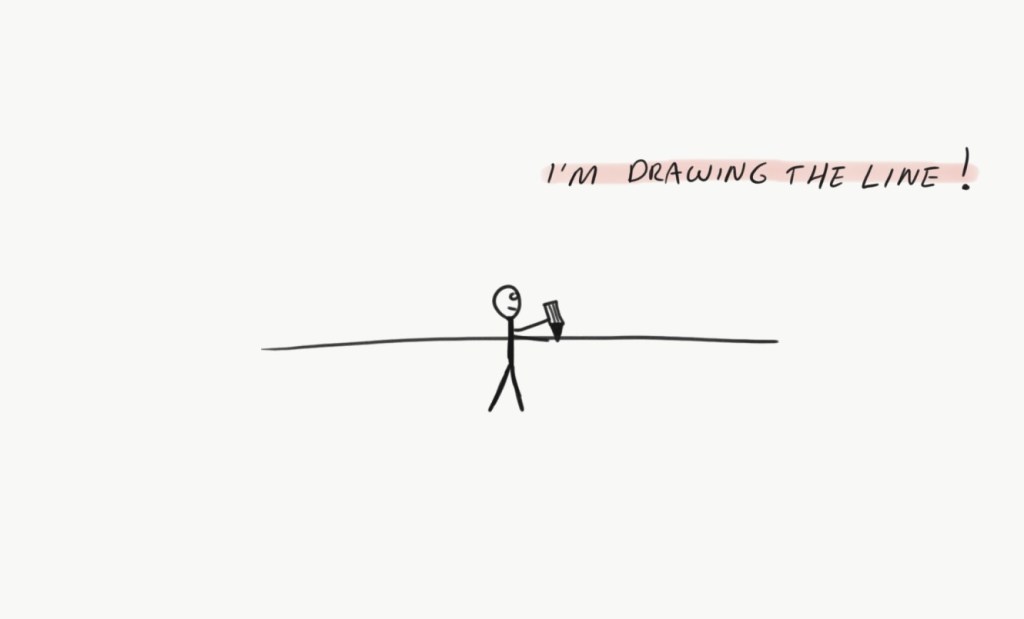
GOD HELPS THOSE WHO HELP THEMSELVES.

God has sent us on this earth with many gifts like a body, mind and a soul. How we make use of these gifts is our own discretion. It is the way we use our faculties that makes all the difference. Some people share hard work and believe that whatever is in store for them, would be theirs ultimately. This blind faith in one’s destiny is in itself defeating and damaging. God helps those who help themselves. We have to make efforts: otherwise, all promising opportunity will vanish and will leave us mourn over our sluggish helplessness. One has to sow the seed, till the land and plough the fields, water them, nurture them carefully and only then can we expect good crop. God’s mercy is also important because for good crop, we must have rains at the right time, but if we have not sown the seeds, rain or no rain, we would not get any crop. So, destiny or luck, no doubt, plays an important part in our life but we can’t depend on that only. Destiny, along with right efforts in the right direction, will bless us with our desires fulfilled.

THE BEST KIND OF HELP COMING FROM WITHIN

The deer do not enter into the mouth of a sleeping lion. The lion has to run after it. The fan does not give air by itself. It has to be operated manually or electrically. A plate full of delicious meal doesn’t go automatically within the mouth, hands pick it up and take it to the mouth. A job doesn’t come to the job seeker, he or she has to put her effort to grab it. There are several examples of self-made men and countries. Though Vidyasagar was born poor, poverty could not dampen his spirit. His courage and determination helped him in every field of activity. Japan which was weakened in 1945 in the atomic bomb explosion has now become a superpower because of self-efforts.

So, leaving behind all weakness, closing all the doors of begging attitude and silly dependency, diminishing expectation and appreciating every little step of achievement, come, let us be winner by changing our views about the happening, rewarding world.

A wise man says……

“You can’t go back and change the beginning, but you can start where you are and change the ending.”

Should reading be an important part of our life?

Let me start it here by pointing out that, if you’re here already and reading, it simultaneously becomes an activity you engage into.. so yes, reading is important.

But the question is how important; am I right? Education doesn’t have to be what you have studied over the years inside an institution; it could be beyond that — books, per se, they have the ability to enable you with a education that knows no bounds, be it a sci-fi comic, a text on Newton’s thesis, or just some legal content; the best thing about reading is you get to choose what you like, what you prefer, what interests you, beyond institutionalised barriers. Reading is essentially a generic term, panning across undefined boundaries, anything could be considered a text, and you just read it. Nothing is good or bad, you have to just invest yourself into it, and surely over a period of time human brain will adapt into what is becoming the ew normal, and you’ll noting changes — good changes, within yourself. You’ll be moving towards a plane where you have the level of objectivity, where you are aware, and won’t be swayed by anyone around you, you will have the power for yourself to act like how you want to.. and isn’t that almost an ultimate goal amongst us beings, to be liberated and be this autonomous being?

Its also significant to not label what you read, because no matter what genre, or what kind of a text you read, the essence of it would always be to analyse it, not just absorb the words at face value, but rather delve deeper into what or why an author writes the way they do, or what does if a certain section written differently could do to a text, brush up your imagination, glide smoothly with any text you adopt, but absorb a lot more, nothing can ever be set-in-stone, people change, time changes, though written words can’t; they have the potential to be perceived the way someone wants to perceive it, and no one can fight over one’s views, that’s counterproductive to what we’ve been trying to establish. However, don’t forget; if someone’s entitled to their opinion, you are entitled to yours and you have the power to keep on bettering it, to be better and as much you exercise reading into your daily existence, you are stepping closer to what I would consider is being a better being — for that, make sure to keep your eyes and brain open, and not rigid. 

The Pursuit Of Happiness Will Not Make You Happy

A few years ago, I gave up my excessive pursuit of happiness. I used to think that the purpose of life was happiness. But that philosophy didn’t work for me. I realized that happiness is always a byproduct. 

When you spend time with people you love, you feel happy. When you invest four years in getting a degree, you feel happy and accomplished when you graduate. You feel happy when you come up with a useful idea at work. You feel happy when you finish a hard workout. You feel happy when you listen to good music. 

You see? Happiness is the byproduct of an action. It can be as simple as having a conversation with someone or listening to a song. 

But happiness doesn’t last. 

It’s a feeling that comes and goes. Some people disagree with that and say you can always be happy. I think you can be happy the majority of time—not all the time. Why? Because even the best life has bad times.

When You Try Too Hard

If you’re unhappy or frustrated, it doesn’t mean you should do everything to become happy again. 

When you try too hard to be happy, you become impatient. You’re more likely to chase pleasure. And that can lead you to a negative cycle that only raises your bar of pleasure. You will need more pleasure to satisfy your desires. 

In the book Positive Emotion, there’s a chapter called ‘Paradoxical Effects of Pursuing Positive Emotion’ that talks about this principle. In that chapter, written by two UC Berkley professors, Brett Q. Ford and Iris B. Mauss, I read the following:

“Those pursuing happiness may set high standards for their levels of happiness. When their happiness falls short of their standards—which is likely when the standards are high—the resulting disappointment and frustration impedes the experience of happiness.”

Increasing your standards of happiness is a dangerous game. Instead of trying too hard to be happy, seek the truth. 

If you’re unhappy, a different job or city is not the answer. You can travel to every country in the world, but if you don’t have inner peace, your problems will follow you wherever you go. 

Daily life is the same for every individual. We all have to wake up, eat, wash, go to the toilet. We will all experience death, loss, and grief. We all get rejected. We all get injured and ill. And your level of happiness will not change anything about being human. 

Sometimes we forget that. We think that everything will be better if we only feel happy. That’s not the case.

Build A Life Around Things You Value

You will never be truly happy when you live a shitty life of your own making; if you live below your potential, give up on life, and don’t reach for something better, you will be miserable. 

By contrast, if you’ve built a life you’re in control of and have goals you’re working towards, you will be mostly happy. 

One of my close friends has 3 kids. He works as a network engineer and many people count on him at a telecom provider. If he doesn’t solve certain network issues, thousands of people will be affected. 

But despite his responsibilities, his boss gives him a lot of freedom. Why? Because my friend made arrangements with him. 

A lot of people assume you have to work for yourself to be free. That’s not true. If you’re employed, your company or organization wants you to do your job. 

If you’re happy and free, you do a better job. That’s why it’s important to have an open discussion at your workplace about the way you work and live. My friend drops off his kids at school and comes home for lunch. He has enough freedom to enjoy his life. That wasn’t always the case. 

Just two years ago he complained a lot about his work situation. But now his life has more balance because he made a few clear decisions. He didn’t even switch jobs. He simply committed to freedom. That means no more spending time with negative co-workers. Instead, he’s doing his best and prioritizing family and health. He no longer “hangs out” with everybody he knows. 

He works, spends time with his family, and goes to the gym. That’s his decision. Sure, he can’t pick up his kids from school when they are done, but he has peace with that. He’s still around a lot in the morning and for lunch. You can’t have everything. But as long as you have freedom, you will be happy.

After Rain Comes …

Look, no matter how free you are, no one is immune to being unhappy at times. But regardless of how bad life is at times, unhappy moments always pass. 

Time moves in one direction. And even the worst times are not here to stay. If you’re unhappy, you don’t have to fight it. Accept it. And go through it. Know that everything will pass. That’s also true for good times. Everything we do or experience is temporarily. 

In The Netherlands, we have this saying, “After rain comes sunshine.” We use it to remind ourselves and others that good times are on the horizon.

That’s the nature of life. Sometimes it’s good, sometimes it’s bad. Once we accept that, we become free from trying too hard to change how our life is during a specific moment. 

Some things, we have to endure. But it doesn’t mean that you can’t change your life. Since all life situations are temporary, you get a new chance every hour and day. You can commit to making your life better by taking action. No matter what your circumstances are, you can build a life that gives you inner joy.

Start now.

How to feel better in a pandemic?

We often feel low, especially during the pandemic. We cannot go out and have fun nor can we physically go to school or work. Yes, the situation is slowly getting better with the distribution of vaccines but it is still a lot to take on our mental health.

So, here are some things you can do in your own house and instantly feel better:

Taking a long hot bath: Our skin releases endorphins in response to warm water. This is why you must have noticed that before taking a shower we tend to be lazy and don’t feel like taking it but once we are in the shower we don’t plan on coming out.

 Make your shower more fun by listening to songs and lighting candles. If you are someone who has a bathtub you can add bath bombs, bath salts, flowers, etc. If you don’t have a bathtub you can use a shower melt which is like a bath bomb but for showers.

Treat for the skin: Now that we are done with our bath. It is time for treating our skin. Doing a small activity like applying a face mask or exfoliating your skin would make you feel good. This will also hydrate your skin and remove the excess oils from it. We often feel great after doing skincare because our skin feels great and we feel relaxed.

Getting ready: just because we don’t have anywhere to go doesn’t mean you can’t look good at home. An issue I faced in the lockdown was not being able to get ready as often. Getting ready is more than just looking good, it also makes us feel more confident. So, wear a good outfit, even if you plan on staying home.

Make the environment cozy: we have to stay in our house most of the time during the pandemic. So, find any place in your house and turn it into your spot. You can decorate it by putting on fairy lights and wallpapers. You can then read your books there, paint or watch movies.

You can also switch things up in your house, move in some furniture or decorate the house. You can do this by adding pictures, posters, or paintings to your walls. You can also add in some indoor plants. Making the house look more lively will automatically brighten the mood. It will also give you a nice change because we are bored seeing the same four walls of our house.

Meditate: we often hear how effective meditating is but we never really try it on our own. Listen to calm music while you meditate. Even doing this for 3-5 minutes will make you feel good.

Cook: I am aware that not everyone is good at it. So, you can try making simple things like a mug cake. It is fun and eating it would brighten your mood.

Watch something light: when you are feeling low I would not recommend watching anything serious. Watch something which will instantly give you light laughter, and improve your mood.

Talk to your friends: during the pandemic, we cannot meet our friends, so video call them instead. Trust me there is nothing better than talking to friends. Whenever I talk to my friends over a video call, it not only brightens my mood up but I keep laughing the entire time. So, call the people who instantly lift your mood.

Book Reviews

The Books are of  knowledge oceans, from every book we learn some thing new and to improve our knowledge and build our personality

BOOK Defination  

we all know that a lot of English words come from ancient Latin – that’s because the Romans occupied England for almost five hundred years from 54BC to 410 AD. … The word book comes from Old English “boc” which in its turn comes from a Germanic root “*bok-“, which means “beech” – as in the beech tree

Types of Book Reviews

Endorsements: Hand-picking Relevant Reviewers Before Your Book is Published. …

Trade Reviews: Publishing Professionals May Advocate Your Book To The Industry. …

Reader Reviews: Individuals Recommending Your Book To Each Other. …

Editorial Reviews: Third Parties Publishing Reviews About Your Book.

Why write book reviews

Book reviews give books greater visibility and a greater chance of getting found by more readers. On some websites, books that have more book reviews are more likely to be shown to prospective readers and buyers as compared to books with few or no book reviews.

How to write a book review

  • Start with a couple of sentences describing what the book is about. …
  • Discuss what you particularly liked about the book. …
  • Mention anything you disliked about the book. …
  • Round up your review. …
  • You can give the book a rating, for example a mark out of five or ten, if you like!

In this days most of people like to read blogs because they have simple and clear to understand content

Some of people read books by help of Book review, its give simple summary to understand that book

Book Reviews

Pin on libros

TOPICS OF BOOK REVIEWS:-

* Goodreads

* LibraryThing

* Reedsy Discovery

* LoveReading

* The Millions

* A Promised Land

* Alice’s Adventures in Wonderland

* Luster

* The Tenant of Wildfell Hall

* Uncanny Valley

1. Goodreads:-

Goodreads
Review Styles: star rating, community reviews
It’s impossible not to mention Goodreads when discussing book communities: it’s the Facebook of book reviews — the ultimate social media platform for bibliophiles. If you’ve somehow managed to go this long without stumbling upon this omnipresent site, here’s the run-down: you can use Goodreads to organize, display, and discuss your virtual bookshelf with other users.
Goodreads recommendations are based on your listed interests. You can follow authors and book influencers ranging from Celeste Ng to Bill Gates. This allows you to see all their reviews, which vary from compact one-liners to critical analysis, and watch the new reviews roll in. For a quick verdict, just take a look at the star rating that they give the book.
Also if you like to browse lists, Goodreads compiles the best and most popular books for every genre. There’s also the annual Goodreads’ Choice Awards to celebrate each year’s new releases, where you can cast your vote or peruse the list of contenders to find a new book to read. It’s a site for every kind of reader, with abundant ways to comment and interact

2. LibraryThing:-

LibraryThing
Review Styles: star rating, recommendation, community reviews
This is the OG of all online book catalogues and discussion boards — take a look and you’ll see that it’s an oldie but a goodie. Of course, the basic functions of LibraryThing are rather similar to Goodreads: there are millions of books that readers can add to their lists, as well as review with star ratings.
While the interface harks back to the earlier days of the world wide web, LibraryThing has a secret weapon that’ll appeal to all readers, especially modern ones: their Zeitgeist. This page displays the crème de la crème of the whole site, from the most popular books to the hottest reviews, which is updated constantly. Just a glance shows that the readers here know how to read between the lines and wield their words!
So if you’re hoping to read or share some in-depth literary thoughts with fellow sharp-minded users , LibraryThing is the site to browse. (You can even access it without creating an account!)

3. Reedsy Discovery:-

Reedsy Discovery
Review Styles: star rating, recommendation, editorial reviews, community reviews (video option available)
Now, if you’re searching for some hidden gems to peruse, Reedsy Discovery’s got your back. While our blog features everything from classics to contemporary hits, Discovery’s specialty is indie publications, many of which are accompanied with succinct comments from experienced reviewers. There’s no better way to broaden your horizon!
Moreover, if casual and creative reviews are more your cup of tea, then rejoice: the burgeoning community of readers on Discovery can leave comments, one-line reviews, and video reviews (calling all Booktubers!) on just about any book. It’s a fun and interactive way to geek out over your favorite reads and discover all the coolest new titles you won’t find anywhere else.

4. LoveReading:-

LoveReading
Review styles: staff and guest contributor reviews
Though it’s UK-based, this prolific site caters to audiences around the world. LoveReading is strictly a reviewing site, with a base of staff writers and carefully selected contributors, so you know the reviews are top-notch. The staff often give quite personal reading experiences in their reviews, which make their recommendations very endearing, like they’re from a close friend. They even offer you presents — well, if you think of giveaways as presents!
LoveReading covers books from every genre you can think of. They also have weekly, monthly, and yearly list features to keep you up to date with the latest stellar releases, so you’ll never be in want of something to pore over.

5. The Millions:-

Review styles: professional and guest contributor reviews
In search of reviews that really dive into the themes, metaphors, and overall executions of interesting and highbrow books? The Millions has got you covered.
Written by a collection of seasoned critics, these reviews are speckled with memorable quotes, elegant analysis, and plentiful comparisons to other works — which means extra reading recommendations for you! If contemporary and literary fictions are your go-tos, then The Millions is the site for all your lit nerd needs.

6. A Promised Land:-

A Promised Land_Barack Obama
Nate Marshall on Barack Obama’s A Promised Land (Chicago Tribune)
A book review rarely leads to a segment on The 11th Hour with Brian Williams, but that’s what happened to Nate Marshall last month. I love how he combines a traditional review with a personal essay—a hybrid form that has become my favorite subgenre of criticism.
“The presidential memoir so often falls flat because it works against the strengths of the memoir form. Rather than take a slice of one’s life to lay bare and come to a revelation about the self or the world, the presidential memoir seeks to take the sum of a life to defend one’s actions. These sorts of memoirs are an attempt maybe not to rewrite history, but to situate history in the most rosy frame. It is by nature defensive and in this book, we see Obama’s primary defensive tool, his prodigious mind and proclivity toward over-considering every detail.”

7. Alice’s Adventures in Wonderland:-

Alice’s Adventures in Wonderland
Merve Emre on Lewis Carroll’s Alice’s Adventures in Wonderland (The Point)
I’m a huge fan of writing about books that weren’t just published in the last 10 seconds. And speaking of that hybrid form above, Merve Emre is one of its finest practitioners. This piece made me laugh out loud and changed the way I think about Lewis Carroll.
“I lie awake at night and concentrate on Alice, on why my children have fixated on this book at this particular moment. Part of it must be that I have told them it ‘takes place’ in Oxford, and now Oxford—or more specifically, the college whose grounds grow into our garden—marks the physical limits of their world. Now that we can no longer move about freely, no longer go to new places to see new things, we are trying to find ways to estrange the places and objects that are already familiar to us.”

8. Luster:-

Luster_Raven Leilani
Parul Sehgal on Raven Leilani’s Luster (The New York Times Book Review)
Once again, Sehgal remains the best lede writer in the business. I challenge you to read the opening of any Sehgal review and stop there.
“You may know of the hemline theory—the idea that skirt lengths fluctuate with the stock market, rising in boom times and growing longer in recessions. Perhaps publishing has a parallel; call it the blurb theory. The more strained our circumstances, the more manic the publicity machine, the more breathless and orotund the advance praise. Blurbers (and critics) speak with a reverent quiver of this moment, anointing every other book its guide, every second writer its essential voice.”

9. The Tenant of Wildfell Hall:-

The Tenant of Wildfell Hall
Constance Grady on Anne Brontë’s The Tenant of Wildfell Hall (Vox)

Restoring the legacies of ill-forgotten books is one of our duties as critics. Grady’s take on “the least famous sister in a family of celebrated geniuses” makes a good case for Wildfell Hall’s place alongside Wuthering Heights and Jane Eyre in the Romantic canon.

“[T]he heart of this book is a portrait of a woman surviving and flourishing after abuse, and in that, The Tenant of Wildfell Hall feels unnervingly modern. It is fresh, shocking, and wholly new today, 200 years after the birth of its author.”

10. Uncanny Valley:-

Uncanny Valley_Anna Wiener
Ismail Muhammad on Anna Wiener’s Uncanny Valley (The Atlantic)
Muhammad is a philosophical critic, so it’s always fun to see him tackle a book with big ideas. Here, he makes an enlightened connection between Wiener’s Silicon Valley memoir and Michael Lewis’s 1989 Wall Street exposé, Liar’s Poker.
“Like Lewis, Wiener found ‘a way out of unhappiness’ by writing her own gimlet-eyed generational portrait that doubles as a cautionary tale of systemic dysfunction. But if her chronicle acquires anything like the must-read status that Lewis’s antic tale of a Princeton art-history major’s stint at Salomon Brothers did, it will be for a different reason. For all her caustic insight and droll portraiture, Wiener is on an earnest quest likely to resonate with a public that has been sleepwalking through tech’s gradual reshaping of society.”
Referance Link:
https://reedsy.com/discovery/blog/book-review-sites
https://lithub.com/the-10-best-book-reviews-of-2020/

How To Be More Assertive

I learned to be assertive from my mother. She always expresses her feelings, is comfortable with saying no, acts in her family’s best interest, and also thinks about the common good.

She’s the most assertive person I know. No one can take advantage of her. If you try, she will let you know about it. And you won’t like it. 

What is assertiveness actually? Robert E. Alberti and Michael L. Emmons are considered the lead experts in this field. Their book Your Perfect Right, first published in 1970, is considered a classic on the topic. They define assertive behavior as follows:

“Behavior which enables a person to act in his own best interests, to stand up for himself without undue anxiety, to express his honest feeling comfortably, or to exercise his own rights without denying the rights of others.”

In general, there are three types of behavior:

  1. Passive: Indirect, dishonest, does not take control, is nice at all cost, focuses on others.
  2. Assertive: Direct, honest, self-worth, to the point, focuses on the self, respects others.
  3. Aggressive: Harmful, egocentric, will to win at any cost, justifies the means, wants to control others.

If you watch our society, most behavior happens at the extremes. How often do you experience dishonesty at home, with your friends, and at work? It’s not always because people have evil intentions. Too often, it’s because most people are passive. They are afraid of the confrontation, and instead, they prefer to lie. 

But there are also a lot of aggressive people. People say that aggression is becoming more common in the world. I don’t know about that, but I do know that no one wants to be around aggressive people. 

The middle is where you want to be. You want to be respectful, firm, and not aggressive. That’s what assertiveness is all about.

An Assertiveness Technique 

But how do you become more assertive? Like anything in life you want to improve, you must practice. And the best way to practice is on aggressive people and in confrontational situations. 

Next time you experience a stressful situation or when you must deal with an aggressive person, do the following: Detach from the person and situation. Tell yourself you’re observing the situation. 

You never want to get emotionally involved. That’s the most important thing if you want to be more assertive. And once you’re detached, you simply get to the point. I know this sounds vague, so let me give you an example.

The other day I called a construction company that’s supposed to fix a leakage problem I had at my apartment. The guy tried to brush me off and wasn’t too subtle about it: “We don’t have anyone right now.”

I paused, detached from the situation, realized it wasn’t personal, and said: “What am I supposed to do? Let everything go to waste when it rains? What would you do?” 

It went on like that for a while until he finally said, “Alright, fine, I’ll come by myself.” Two hours later, he came to my apartment and fixed the leakage. Problem solved. 

Often, we escalate situations that are not necessarily bad. That’s because we allow them to become personal. But we must realize that other people have their own issues. It’s never personal. Or, we do the opposite: We do everything to avoid escalation. But that only works against us.

In the past, if something like this happened, I would say, “Okay. When can you send someone over?” And then I had to wait. That’s classic passivity.

In this world, you have to be assertive to get what you want. You don’t have to act like a bully, but you have to be a little demanding. I see it as honesty. I was simply honest with that guy. I had a problem that needed to be fixed.

It’s All About Practicing

When we become more assertive, we need to be careful not to overdo it. Otherwise, we risk becoming aggressive or overly dominant. Recent research showed that informal leaders were more liked and respected when they had “a moderate amount of assertiveness and warmth.”

That’s very accurate. When we are too nice, we risk that people take advantage of us. When we are too aggressive, we push people away. But if we’re direct and are respectful to people at the same time, we can get much more done together.

Unfortunately, you only become more assertive by being more assertive. You must practice. What helps is to see every social situation as a negotiation.

I highly recommend reading Never Split The Difference by Chris Voss. In fact, I learned the “How am I supposed to do that?” technique from that book. When people give you a proposal you don’t like, ask them that question. In my case, I changed it to “What am I supposed to do?” 

You put the ball in the other person’s court. That’s a good way to deal with difficult situations. Let others come up with a solution. But sometimes, people need a little push to make that happen. And that’s exactly what assertiveness is: A little push in the right direction.

Saying “no”

We often come across situations where we have trouble saying no to people. We feel pressured to say yes to everything. We think it is our duty to say yes because if we say no we are “bad people”.

Let’s look at why we often have trouble saying no:

It makes us look bad: We as human beings always try to please people or try to stay in everyone’s good books. We think if we say no people won’t like us anymore.

No seems like a rejection: growing up our parents would often say no to a lot of things. They did it to protect us but we took it personally. So, now while saying no we think people will take it personally and consider it a rejection.

We feel guilty: we mostly say yes to everything but sometimes, when we do manage to say no, we tend to die with guilt later. We are more affected by the no than the person who asked for our help. That person would have moved on, asked another person, or figured something else out but we keep feeling guilty.

Here are some tips that could help you say no:

  1. Give them an explanation: when people ask us for help they are going to be prepared for a yes or no answer. So we need to remember that they expect a no too. Now an effective way to saying no is by giving an explanation. Providing them an explanation shows that we are considering their feelings.
  1. Adding but after no: Another way you can say no is by using but after it. If someone asks you for help with their work. You can politely reply “no, but I know someone who can help” or you can try saying “no, but I will be able to help on Saturday”. In this way, you are telling them no but with a possibility of helping them out.
  1. Decline politely: Yes, this article is about saying no. But, I am not asking you to be rude. You can politely decline by using phrases like “I would love to help, but I am booked right now”.
  1. Understand your relationship: we have trouble saying no because we think the other person will feel bad and would not like us anymore. That’s when the need to evaluate our relationship with them comes in. If they are really your friend or someone that cares about you, they would understand that you are just busy. They would not have any hard feelings. If they feel bad after a no, think again if you need such people in your life.  
  1. Prioritize your needs: if prioritizing your needs is considered selfish; I don’t see the harm in it. We know that if we can help we would. But, if it something that will consume our time and drain our energy, we need to say no.

Life is going to give us more situations where we will have to decline politely and move on. We need to learn how to say no and feel okay saying it.

5 courses every upcoming entrepreneur must do

In the current business environment, one must always be eager to adapt and learn new skills in order to survive and grow. Here’s a list of 5 courses a budding entrepreneur must do to flourish in the current environment, keeping in mind the trends and skills essential in the present scenario.

1. Digital Marketing

With businesses taking over social media platforms to increase their reach and improve their customer relations, Digital Marketing is the need of the hour. It is a brilliant way to interact, build and promote the brand. The traditional ways of advertising like print, radio and tv ads are not as effective as email marketing, targeted ads, paid searches, etc. It is the new way of doing business and every entrepreneur must know how to grow their business this way.

On some business-friendly platforms like Instagram and Facebook, one can also use analytical tools to know more about their audience like geographical location, age range, gender etc which can give helpful insights about the target audience of the business.

The course includes Social Media Marketing, Email Marketing, Search Engine Optimisation, Google ads and Google analytics.

2. Successful Negotiation: Essential Strategies and skills

Starting a new business requires efficient communication and negotiation skills. Whether it’s negotiating prices and contracts with vendors, suppliers or the customers, pitching the business plan to potential investors, communicating with the stakeholders of the company, it always comes in handy.

In order to grow a business, every entrepreneur should know how to negotiate and build profitable relationships for the business. This course not only improves the business communication skills of the entrepreneur but also, helps him/her in identifying the interests of the other party while negotiating which successfully helps them in finding a middle ground efficiently.

3. Start-up funding

The first step of officially starting a new business is getting funding, convincing investors, banks, financial institutions that the business plan is viable and has the potential to grow. It is important for an entrepreneur to work on his/her pitching skills in order to communicate effectively with the potential investors of the business. He/she should also know the process of getting the funding and the different sources and instruments he/she can select from according to the nature of the business and the funds required.

4. Business Modelling/Strategy

This course is not only essential for the success and future of the business but also needed to pitch the business plan to potential investors. The mere idea, concept and product/service is not enough to attract investors. Such investments generally involve huge amounts of seed capital and therefore, investors like to study the business model to assess the risk, returns, viability, market research analysis, cost structure of the business to determine its potential.

5. Brand Management

In a world where customer loyalty and retention are the priority, this course would help an entrepreneur learn how to retain and build a relationship with its customers. With every brand’s focus on customer relations, this will give the entrepreneur an edge over its competitors if applied effectively.

Customers value brands that are transparent, environment friendly and ones that value their customers and their feedback. Brand Management not only helps in retaining customers but also helps in building long-term relationships with them, thus establishing a stable and loyal consumer base.