Un-Fair and Un-Lovely.

How empowering was it to watch Indians hold the “BLACK LIVES MATTER” placard in one hand supporting the protests in the United States and with the other hand applying a cream of poisonous chemicals to their naturally gifted skin. In this black and white world why do we hate brown? From the soil that gives birth to plants to the earthen pots which store our precious waters to the wood that burns into the flames of tomorrow’s ashes -brown is everywhere.

Beta dhoop me mat khelo, tan ho jaaoge!”, yells the Indian parent while some family in the Europe takes their sons and daughters to play on the beach and get some tan. A land that prays Lord Krishna who is described to be as dark as the thunderous rain clouds and yet portrays him blue because anything is better than black anything is better than brown anything is better than dark.

Etymologically speaking, the Sanskrit word ‘Krishna’ means black or dark. At times, it is also translated as “all attractive”. According to Vedas, Lord Krishna is a dark-skinned God. Even in traditional patta chitras (cloth art) in Odisha, Lord Krishna and Vishnu are always shown having black skin. 

50,000 years ago when our ancestors migrated from the North to the African and Asian continents, they were exposed to the UV rays of the Sun which is saturated at the equator and the tropic of Capricorn. Those days’ sunscreens were not invented hence due to evolution and the wonderful science of human body’s biology it produced melanin under the skin which acted as a natural sun screen. Skin creating its own protective layers, how cool is that?

But we as Indians would rather prefer skin burns and skin cancers than having a healthy skin. When my mother read the matrimony classified newspapers for my elder sibling’s marriage, her face falls down as she looks at those advertisements. No no-hold your horses, it’s not what you are thinking, everybody is progressive nowadays, nobody is asking for dowry. All they ask is – “seeking a fair bride for my son”, “fair and handsome boy with a fit body”, “girl should be white toned and open minded”, “boy should not be dark and not restrict our daughter from wearing her choice of clothing.” (no dowry).

To parents who are afraid because log kya kahenge? Maa lets not look for brides or grooms who are fair, let’s look for individuals who treat people fairly. Let’s not buy besan (gram flour) for face masks rather let’s lather some potatoes in them and fry it in oil as we watch the fair besan turn into a beautiful crispy brown tasty pakodas (fritters). Fairness creams or home remedies for instant glow neither teach us to be a human with a clean heart, a heart free from the ignorance. Instead of handing a tube of glow and lovely to your loved one’s let’s make them stand in front of the mirror holding their head high because any shade is beautiful any shape is beautiful any scar is beautiful. Before teaching to love others let’s start by loving ourselves. It’s time we realise love comes in all shapes and shades, it’s time we loved all shapes and shades.

Forget snow white, I’m chocolate brown, I will write my own fairy-tale. A tale of every brown Indian girl and boy who is torn apart by the expectations of society and yet stands proud with a personality and smile beautiful than any white skinned magazine covers. To every Bollywood song that calls the actress “Gori” I would like to say – “Gore Rang Pe Na itna Gumaan kar. Gora Rang Do Din mein Dhal Jaayega” – don’t show such pride of your fair skin, the fairness will fade in time. What will remain is the virtues, beliefs, kindness and opinions .

Changing the name from fair to glow will not enlighten the young minds but it will give light to the years of colourism and discrimination to continue its course in every generation to come. Brown is beautiful and so is every colour ever discovered.
Honor killing


Honour killing is seen as a dirty behaviour by the member of the family thinking to bring purity to the family. It is an act of murder by the family on the family members to bring honour to the family to eradicate the shame and dishonour brought by the family member. The male member of the family kills the female member who has violated the wishes and honour of the family. This is a kind of pre-planned murder by the members of the family against the member who had bought shame to the family. Mostly these acts are caused due to trigger done by the relatives, society, neighbours by whom the accused feels dishonoured and gets provoked. Mostly these occur against the female who are assumed for sexual and marital offences. In situation where the members should be a support for the female are against them and brings a situation where they should not exist. India is a democratic country as every citizen has their rights and freedom to do acts which does not violate law. In a society where the citizens are equal without any discrimination, honour killing brings discrimination where the family member is considered to bring dishonour by choosing a person of a different caste.(Keane 2016) Caste and status are the main reasons for honour killing in the present world as the caste and status changes for a girl when she goes to her husband house.

HONOUR KILLING IN INDIA


Honour killing is an act of shame caused to the family for which it is otherwise called as shame killing. It is an act of killing when the person does not accept for arranged marriage, marrying a person disapproved by the family, doing inter-caste marriage which is against the wish and will of the family. In India, this type of killing is been carried over since many centuries. From the olden days this has become a practice. It has become a common practice for our country. Supreme Court had brought a decision based on honour killing that, „killing or physical assault being made over young men/women who marries against the wish of the family is illegal.‟(Ercan 2014) This type of killing is a brutal and barbaric activity made by the member of the family. However, in our country, honour killing has been made a separate provision having severe punishment. In India, mostly in places of Punjab, Uttar Pradesh, Haryana and Rajasthan practice of honour killing is more. Due to
the complex socio-cultural problems the crime of honour killing is divulging more and more. The prime factors of honour killing is the high caste members do not accept inter caste marriage to maintain their caste and in case if anything occurs to bring their status down, they would feel such thing need not exist and in that case if the female /male gets married to that person of low status they feel the person need not exist instead of leaving down their status. Even in case the status and gotra is the same, the parents do not accept if the victim wants to go for love marriage. This killing is done to restore their honour which would be reduced due to the act of the young male/woman. In India, honour killing is practiced due to merciful act also. The parties who had committed the act of honour killing ca plea on the circumstance of grave and sudden provocation. Such an idea was been indulged when the act was formed as the act of honour killing is prevailing since ages. Honour killing is a crime which has become predominantly equal to other rigorous crimes. Culture is important for a family but still the young male/female that had been brought up by the family since years are also to be considered by the family. The level of importance given to the culture and status is not given to the members of the family. They think about the society and neighbors and the allegations and news spreading about the victim and get triggered to commit honour killing but does not seek remedy to safeguard the victim. This has become a spreading crime in our country.


EFFECTS OF HONOUR KILLING


Honour killing is not constrained to one gender. Men are also brought as a victim of honour killing. It is inappropriate that the victim is a man or a woman, if they had violated or brought down the name of the family, they are subjected to be killed by the members of the family. However, honour killing are focused on the women, it is not restricted so. It extends to men too. When the men violate the customs, the family members of the women or the male family members tend to join hands to kill him. For the execution of honour killing, the role of male is more. In case to commit the crime, the male descendants of the family form a group to kill the victim and especially if the victim is a girl, the male members would kill the victim. It does not matter about how close and love they had on the victim, they kill the victim if they cross the limits of the family. In certain cases, women also play a part in commission of honour killing. They join hands with the male descendants in executing the crime. They play a role in ensuring the limits of sexual regulations and plan to kill the victim, if the victim is her daughter.

SPECIFIC TRIGGERS OF HONOUR KILLING


Following are the specific reasons for which honour killing is been made(Reddy 2014; Singh 2013):


● Refusal of an arranged marriage: The member of the family be it a male or female member of the family, if refuses to accept the marriage arranged by the family, they would be triggered to be killed for the welfare of the family. It is a kind of shame the family members feel when the person does not accept the marriage arranged by the family.


● Seeking a divorce: The victim of honor killing would be a married party and would have been divorced due to family issues in their marital life. Seeking divorce by the member would bring down the prestige of the family where they feel the victim would rather die than being alive and they themselves kill the person.


● Allegations and rumors about family members: The victim may be subjected to allegations or wrong talks by the neighbors or other members in the society. In that case knowing the true fact or not, the members of the family for their status and prestige would kill the member. Killing the victim according to them brings an additional prestige and status to the family.


● Homo-sexuality: It has become natural where love comes between the people of the same sex. When a couple of the same sex wants to live together the family or the society does not permit it and in turn creates more and more allegations and triggers the members of the family.


● Victims of rape: In a society where women should be protected, they are being raped. In that case it is the duty of the family to accept such victims but the family feels it as a shame and feels the life of the girl is gone and she is completely useless to the society and the family and thus she would be killed by them.


● Inter-caste marriage: Marriage done by the victim with another person of the different caste brings down the caste of the party who seek their caste as their soul and important than their member of the family. In such case, the member who is of higher caste would kill the victim than living by lowering their caste. In case where the victim is of lower caste, and the caste is the heart and soul of their prestige, they do not care about the victim and would kill them despite of the fact that they belong to their family. Not only their family members become the victim the other party with whom they want to live also becomes a victim.

Honor killing is definitely a serious and heinous crime.

The conflict of Kashmir…

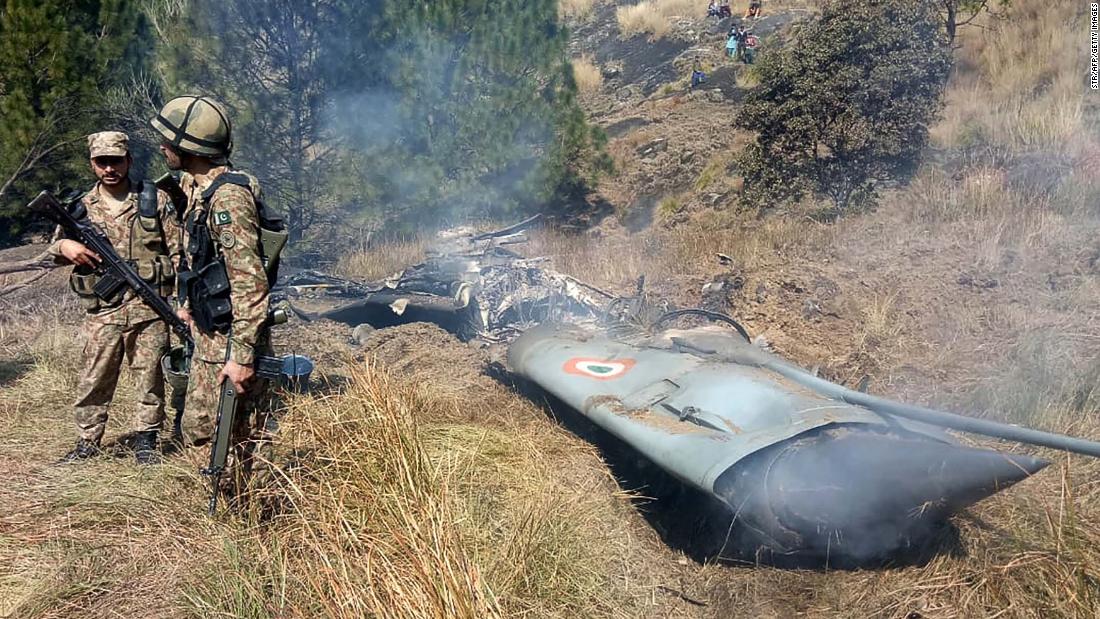
On February 14th 2019, a suicide bomber attacked a convoy of Indian security forces. “We’re getting reports of multiple casualties in a roadside…” He killed at least 40 Indian soldiers here in Kashmir. “The deadliest attack the region has seen this century.” The bomber was part of an Islamic militant group based in Pakistan. “Jaish-e-Mohammed claimed responsibility for that attack.” 12 days later, India carried out airstrikes in Northwestern Pakistan. Then Pakistan shot down at least one Indian aircraft around here. “The most serious escalation in years.” Kashmir is one of the most disputed places on Earth. Over the course of 70 years, it’s been at the center of three wars fought between two massive armies. It’s heavily occupied by more than half a million Indian troops and a deadly collection of militias and terrorist groups.

How Memory of Indian Partition Is Preserved Across Borders | Time
Kashmir is the stage for the relentless conflict between India and Pakistan. But focusing on the two countries can obscure what’s really at stake: The voice of Kashmiris who are caught in a vicious cycle of violence. Kashmir is one of the most strategic places in the world, where 3 powerful countries collide: India, Pakistan, and China. China invaded and took this slice of Kashmir from India. And was given this one by Pakistan. India and Pakistan control these parts, but lay claim to more. This region is at the center of a brutal conflict over these disputed borders. So it’s important to start when they were being drawn. In the mid-1800s, India was a patchwork of several hundred provinces and princely states under British rule. A century later, when British India won independence, the British left and hastily decided to split the region into two. These areas would be a new Muslim-majority country, Pakistan. And this would be the mostly Hindu, but secular, India. The partition was bloody. “Communal hatred flares up within the Punjab.” “1 million people become refugees overnight.” “They flee from savagery and butchery that has never been exceeded, even in India’s stormy history.” Amid the chaos, some princely states were given the choice to join either country. In most cases, the ruling monarchs followed the will of their people. But this state, called “Jammu & Kashmir” was different. It was right along this new border and had a Muslim-majority population, but was ruled by a Hindu monarch. When asked to pick a side, the ruler chose to stay neutral Fearing that the monarch would join India, the Kashmiri population rebelled here in 1947 Armed tribesmen from Pakistan soon joined the fight.

India and Pakistan in Kashmir border skirmish - BBC News
The monarch turned to India for military help and in exchange agreed to join them, which sparked the first Indo-Pakistan war in Kashmir. “Continuing thus increased the threat to world peace and brought the dispute to the eye of the United Nations . The UN Security Council brokered a ceasefire in 1949, which established this line with Pakistan controlling this side and India this one. It also asked Pakistani tribesmen to withdraw and Indian troops to follow, so that Kashmir could hold a direct vote to decide its own future. But neither held up their end of the deal. Pakistan argued that Kashmir’s Muslim-majority population rightfully belonged with them. While India insisted that Kashmir was handed over to them by the Hindu monarch. So they doubled down and added Kashmir to their constution. Both countries continued to tighten their grip around it for many years . “Kashmir. Fighting is going on and heavy casualties in men and equipment have been inflicted on the aggressor.”

India-Pakistan: Latest news on Kashmir crisis
In 1965, the second India-Pakistan war broke out in Kashmir. Thousands of people were killed between the huge armies on both sides. A ceasefire ended the war, but didn’t change this line. Kashmir was kept divided and occupied. And another war broke out in 1971. This time the focus wasn’t in Kashmir — it was in East Pakistan. Here, India helped rebels fight for independence and dealt Pakistan a devastating defeat. This region became a new country, Bangladesh, and Pakistan lost its eastern half. This made Kashmir more important than ever: It became one of the most militarized places on Earth, as India and Pakistan deployed planes, tanks, artillery, and soldiers along the Line of Control. On the political front, in ’87, India reportedly rigged an election, declaring a pro-India party as the winner. Now this was a big turning point for many Kashmiris, who felt they were again denied the chance to vote. Thousands took to the streets in Indian-controlled Kashmir to protest the occupation. But India met the movement for independence with harsh resistance. Which quickly escalated to more violence.
“In January security forces opened fire on demonstrating separatists, turning a two-year old struggling movement into a full-blown popular uprising.” “More than 600 people are killed in clashes between troops and separatists.” Kashmiri militias, just like the Jammu and Kashmir Liberation Front, started recruiting Muslim youth to fight for independence. And increasingly attacked the Indian military. Pakistan saw an opportunity in this insurgency. They helped introduce a new kind of militant group: Radical Islamic fighters who fought for a more pro-Pakistan Kashmir. By the mid ’90s, these groups dominated the insurgency. India responded with incredible military force, deploying 500,000 troops to Kashmir. And they cracked down on militants and protestors. Unarmed civilians were killed and many more were forced to flee the violence. And in ’98 the stakes were raised yet again. “Today India conducted three underground nuclear tests.” “Pakistan today successfully conducted five nuclear tests.” Kashmir became a battleground between two nuclear-armed nations and another war broke out in 1999. “More evidence of the attacks being launched on the Indian-controlled area of Kargil.” “The past two days have seen a number of the fiercest fighting thus far .” “Militant Muslim fighters have also crossed over into some parts of Indian-ruled Kashmir.” The 1999 war ended with another ceasefire, but that did not stop either country.

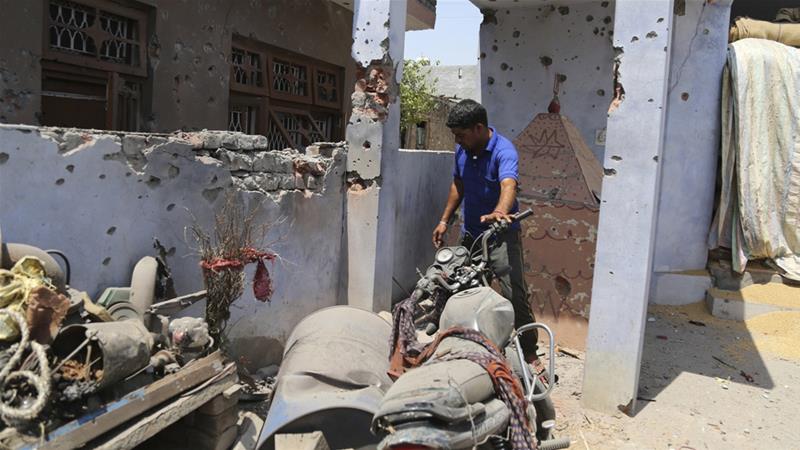
India-Pakistan cross-border shelling hits Kashmir | News | Al Jazeera

Over the years, Pakistan’s militant groups got bolder and launched terror attacks in Kashmir and outside of Kashmir. In 2001, members of Lashkar-e-Taiba bombed India’s parliament building in New Delhi killing 14 people. And in 2008, 10 militants from the same group killed 174 people and wounded 300 in Mumbai. Meanwhile, Indian military cracked down in Kashmir, firing bullets and pellets on unarmed protesters. Leaving hundreds wounded and blind. This is the vicious cycle of violence. The Indian Army’s crackdown drives some Kashmiris to join Pakistani-backed militant groups, who carry out violence against the Indian forces. It’s a cycle that Kashmiri civilians are stuck in the middle of. Which brings us back to 2019. The suicide bomber was 19-year old Adil Ahmed Dar from Pulwama, Kashmir. According to his parents, in 2016, Indian police officers stopped him and humiliated him by forcing his face into the ground. The same year he was shot in the leg at a protest. The next year, Dar left home with his brothers, to join Jaish-e-Mohammed, a Pakistani-supported militia that radicalized him and trained him to be a suicide bomber. A year later, he drove explosives into an Indian military convoy. For more than 70 years India and Pakistan have driven a cycle of violence, retaliation, and exploitation in Kashmir. But beneath it all is the Kashmiri’s wish to make a choice. A wish that continues to be suppressed, again and again, by violence.

Broken wings

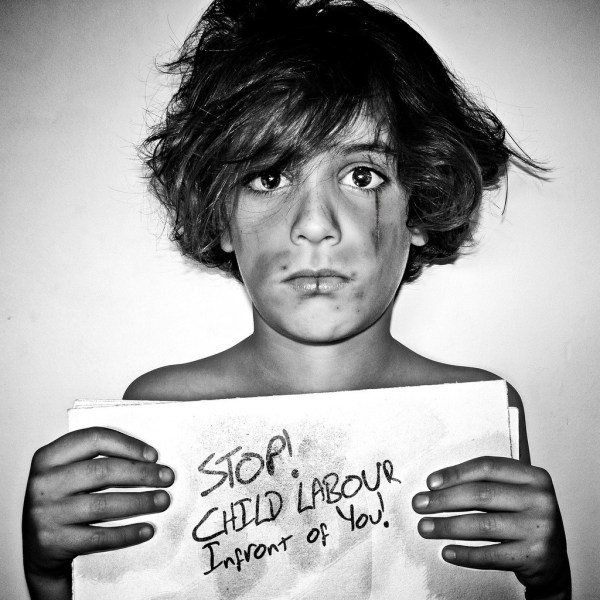
“They began work at 5:30 and quit at 7 at night. Children six years old going home to lie on a straw pallet until time to resume work the next morning! I have seen the hair torn out of their heads by the machinery, their scalps torn off, and yet not a single tear was shed, while the poodle dogs were loved and caressed and carried to the seashore.”

Mother Jones

In the present morden society where everyone run towards their dreams and goals there are people who wish to have ‘Going to school‘ as their unattainable dream!

When we make plans with our friends to dine in a fancy restaurants and complain about how less our pocket Money are! There are children who less then 10 years old yearning money by working more than their Age!

Get admitted in one of the top Schools/University and complaining ‘there is lot to study I want to party & chill’. There are people who dropped out of there schools/University and dreaming your normal life!

In their very own room laying on the fluffiest bed having a great wifi with latest gadgets and your own private space. Where some people are dead frozen while sleeping on streets!

While our Pantries are filled with things need for atleast a month. There are some people dieing of starvation!

I am not saying all the west things to make you all feel bad. I just want you all to feel thankful for the life which we are living is the biggest dream for millions of people out there.

It was a beautiful evening of my senior secondary year. I was returning home from school with my friends on our school bus. It’s the busiest hour in the city so the small travel from school to home took 40 mins. Me and my friends usually used to take a short naps during the travel. But that day was our last day of our exams so we decided let’s have fun!

Our bus stopped on the busiest junction. I turned my head to enjoy the weather outside. My eyes fall on a young girl around 5 years old with red pakoda skirt carring flowers and small accessories from one vehicle. She is trying to sell them before the signal turn from red to green. It’s not the first time I have seen such scene but what made me realise there is something wrong is beside the girl on the platform I saw a beautiful little girl around the girls age. She is carring a school bag on her back and holding her hands with her elder brother.

My bus started moving but I can’t forget the scene I just saw. Somehow I felt guilty in my heart eventhough I am totally unrelated to her situation.

I tried to distract myself by talking to my friends but my eyes keep looking through the window. The next scene hit me even hard there are two children doing their homework on their platform home which is less than 5 feet. There is no lamp in their house they are using the street lamps!

I been traveling this path since I started my high school but I never noticed this! This is what my first taught but I am wrong. When I refreshed my memory I have seen thi place on my first day to school too! And during that time as soon as I saw this slum area I turned my head to look in the opposite area. When this memory comes back I am really ashamed of myself.

I asked my friends to look outside the window of our bus they all looked out they give me a glare like what’s wrong everything seems normal. I started to point out the people who I saw. When they all saw the same thing I saw with my exaggerated explanation. I noticed a rare seen emotion on my friends faces that’s empathy!

In our next school activity we informed it to our class coordinator can we do anything regarding this. Our school suggested that we can do a charity fair!

I know it’s a small pin in a huge ocean but we did some to make their lives better. Even it’s a little thing after seeing the smiles on the children faces we all felt like we had done a big thing. I don’t know how to say but trust me that feeling felt so great.

When we born in this world we can’t decide whom our parents are or how our lifestyle will be. So begin born poor/disabled is not their fault.

But why should this society wants to broke their dreams and shatter their hopes?

People will answer simply that they are not responsible for this people. But I want to ask what makes us different from other living this is Humanity if this humanity is gone are we still humans?

“If we can’t begin to agree on fundamentals, such as the elimination of the most abusive forms of child labor, then we really are not ready to march forward into the future.”

Alexis Herman

Role of Youth in Eradicating Corruption.

Once, Dr. A.P.J Abdul Kalam has rightly said, ” If a country is to be corruption free and become a nation of beautiful minds, I strongly feel there are three key societal members who can make a difference. They are – Father , Mother and the teachers.”

The truth is, corruption is now a worldwide phenomenon. But according to me the fourth and the most important societal member who can eradicate corruption is the YOUTH of our country. The real war has to be fought against these social evils and as the leaders of tomorrow it is our prime responsibility and duty. Why should we create awareness in small children about such vicious crimes ? Because – Things sowed in the minds of young take deep roots.

In reality, it is very difficult to root out the infectious disease known as corruption which has become rampant in every field of life. However instead of bearing it we must challenge it. Some years ago when social activist Anna Hazare started the anti-corruption moment, the maximum crowd was of schhool and college students. Their support is what made the purpose of the protest a succesful one. But was that enough?

Mahatma Gandhi- the father of our nation has quoted ,” A small act of good deed can cause endless ripples.” Youth of our country should remain vigilant and never allow themselves to be exploited by this social evil. Many people say that nothing can be done, but I believe things can change. Of course individual efforts can bring excellence but only collective efforts can be delivered effectively.

In the modern era, our Government is slowly accepting the opinions of young minds and their needs have been put forth as priority.I truly believe that the modernisation and dinamic attitude in the Indian parliament will slowly yet steadily change the phase of our nation. According to me it is not only the duty of politicians and government officials to boycott curroption but also the duty of each and every individual to war against it.

Whenever the circumstances may come, public should not bribe school or college managements to accomodate seat and admissions. We should not bribe traffic police for violating the traffic rules. Corruption has made our country lawless. Muscle and money power has come the law. Our freedom fighters fought all their lives to give us freedom from physical slavery. However we as a educated generation are not free from financial slavery.

Gandhi led the non-violent fight against the british but the currency note which bears his photo is the medium of corruption. What an irony ! Corruption is a virus which can be eradicated if the youth of our country decides to do so. No matter how much the delay we must not pay the bribe at any cost.

Albert Einstein has rightfully said that, ” Evils in the world exist not only because of those who do them but also because of the one’s who just see them annd do nothing to prevent it.” Corruption is like cancer which starts at one part of the system and spreads to every part if not treated or cured at an early stage.

Many years ago we had tryst with destiny and now the time has come when we shall redeem our pledge as the responsible citzens of this nation. Let us wake the Anna Hazare in us and stand for ” India against Corruption”. Only when the last tree has died and the last river has been poisoned and the last fish has been caught will we realise we cannot eat money.

Even if the older generations saw corruption as an immortal enemy, we millenials think of it as a mortal one. So my dear youngsters, ask not what your country can do for you. Ask what you can do for your Country and World at large as one family.

U.S. Defense Economy…

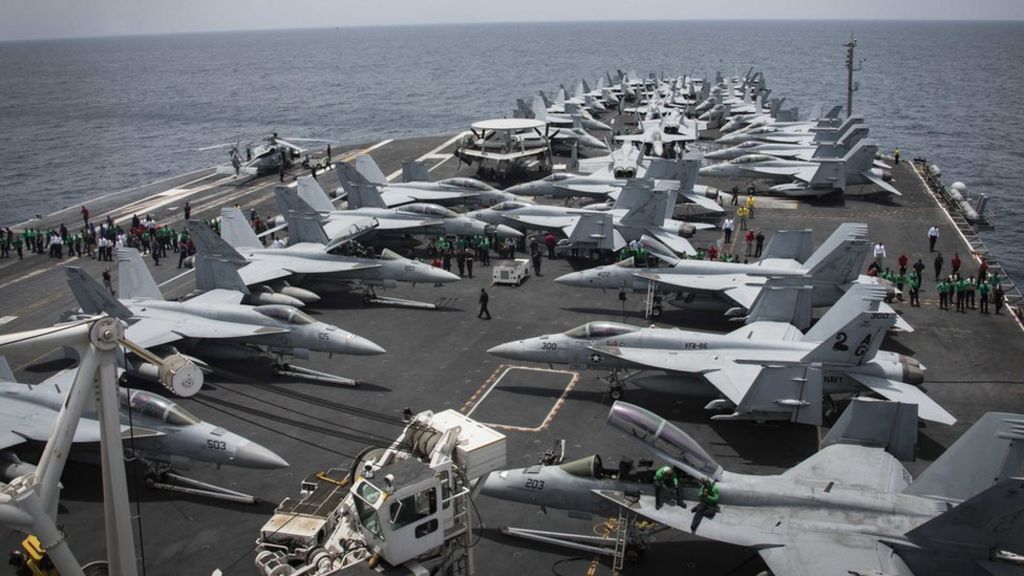
The police, obviously, they’re not in the business of of profiting from private acquisitions. We’ve seen extensive lobbying from defense industries who produce educational videos for police who were spending hundreds of millions of dollars to directly lobby Congress for defense spending, but also for these police programs. The police also have their own lobbying organizations that work toward security budgets and equipment for local law enforcement. The National Fraternal Order of Police is one of them and has lobbied in favor of federal grants that are responsible for the militarization of police. It’s really a variety of Homeland Security grants administered by the cops office, the home, the Department of Homeland Security, etc., that have allowed departments to directly purchase military grade equipment. And this has been essential to stimulating a domestic law enforcement market for military contractors. In some cases, the folks who provide the equipment actually directly assist police departments in making these grants. There’s even a Web site that is sponsored by these defense contractors and other providers of police equipment to aid departments in the production of these grant proposals. This whole industry grew significantly during the War on Drugs campaign in the 1970s.

Iranian threats 'put on hold', says US defence chief - BBC News
Congress passed a law that focused on incorporating cooperation between the military and the local law enforcement, particularly related to countering drug crimes and the war on drugs. Right. That was sort of the first connection between the military and domestic law enforcement. In 1989, Congress passed the National Defense Authorization Act, temporarily allowing the Department of Defense to transfer excess military equipment to federal and state agencies. The program continued until the 1997 National Defense Authorization Act expanded it to include local law enforcement and made it permanent under a new name. The 1033 program that began a massive transfer of military equipment to local police departments free of charge as long as they paid for shipping and maintenance. That 1033 program was the congressional authorization that allowed police departments to basically go online. There were catalogs of of weapons and vehicles and aircraft and watercraft and any kind of military surplus military equipment was available for the asking. And it was at no cost to law enforcement agencies.

Military budget - Wikipedia
Departments may purchase shotguns that are placed in police vehicles as a routine matter, and some departments are purchasing a variety of less lethal weaponry with their own resources. But when we see sniper equipment, armored vehicles, large amounts of body armor, this is often the result of federal spending. Since its inception, over 11,500 domestic law enforcement agencies have taken part in the ten thirty three program, receiving more than 7.4 billion dollars in military equipment. What you end up seeing is as a result of the 1033 program, local law enforcements continue to ramp up what we call special task force, like SWAT teams, gang task force, drug task force. Right. That all utilize this excess military material. In July 2014, Congressman Alan Grayson proposed that legislation to limit the transfer of certain weapons through the 1033 program. The amendment was met with immense opposition failing on a bipartisan vote of 62 to 355.
The people who voted not to change the 1033 program received 70 percent more money in campaign contributions from the defense sector than those who wanted restrictions. One of the really troubling developments about the involvement of the federal within the direct subsidy of purchases of militarized equipment is that this is often really about creating a new marketplace for defense contractors instead of really putting questions of public safety first. Besides providing free military equipment, the federal government also allows the police to purchase new equipment using their own funds. Under the 1122 program, it also gives local police departments the same discounts enjoyed by the federal government. We’ve seen instances across the country where local governing bodies, like boards of selectmen and mayors and city councilors are often unaware that tax dollars have been expended to acquire these kinds of military weapons and military vehicles. What makes both 1033 and 1122 programs so powerful is the lack of clear oversight and accountability.

Trump says 'revved up' economy will fund $54bn rise in military ...
The 1122 program, as an example , isn’t a grant or transfer program and thus isn’t required to be monitored by the federal . Meanwhile, the 1033 program has put lethal weapons within the hands of officers who haven’t any justifiable need for such equipment. We’ve seen instances reported of some small towns, even some college and university police departments that were acquiring military grade weapons with none demonstrable need for the utilization of these or the acquisition of these weapons. After the events in Ferguson, the Obama administration sought to tighten the 1033 program with additional requirements and restrictions after months of confrontations on America’s streets. President Obama today banned the federal government from giving some types of military equipment to local police. We’ve seen how militarized gear can sometimes give people a sense like there’s an occupying force as against a force that’s a part of the community that’s protecting them and serving them. And this led to calls in Congress to eliminate 1033 and eventually measure an executive order by the Obama administration to place some limits on the type of equipment that could be used, things like bayonets and turreted armored vehicles.
The Obama administration also required police agencies to justify purchases of equipment considered potentially lethal. President Trump, however, rescinded all of those measures within two years in office. Obama administration made some efforts to increase accountability in auditing of this. But even then, the restrictions and oversight were quite limited. Under the Trump administration, there’s even less evidence of any oversight. Any sense that we know how this equipment is being used or whether or not officers are being properly trained and how to use it. In some cases, equipment transfer through these programs has simply vanished due to a lack of oversight and poor bookkeeping.

Maximising the economic benefit of Australia's defence projects ...

There’ve been a number of situations where there have been audits of local police departments to try to figure out what they’ve done with this equipment. And these departments have been unable to provide adequate records. We don’t know if this is a local sheriff taking home camping supplies or if this is about, you know, stuff that’s really gone missing, has been resold or has just simply been lost. Oftentimes, the militarization of the police force might be what’s distracting them from their original purpose, protecting our communities.

Why economy of India is slowing down???

India is one among the world’s fasting growing economies. It had been touted as an economic and geopolitical counterweight to China. But recently its growth fell to its slowest pace in six years. Investment has weakened, and unemployment has risen. So what’s causing the slowdown, and how can it be reversed? Since the turn of the century, India’s economy has grown at a rapid rate, helping transform the country. Between 2006 and 2016, rising incomes lifted 271 million people out of poverty, meaning the proportion of Indians still living in poverty has fallen dramatically, from around 55% to twenty-eight . Access to electricity has also improved. In 2007 just 70% of the population had access to power. By 2017, that grew to nearly 93%.

India's economic growth likely to remain subdued in near future ...
More recently, the Indian government constructed around 110 million toilets — a huge step towards better sanitation designed to prevent the practice of open defecation. It’s a signature program of Prime Minister Narendra Modi, known as Swachh Bharat, or Clean India. All this development has been supported by a booming economy, but as lately , that expansion has begun to run out of steam. In the third quarter of 2019, India’s economic output grew by 4.5% – making it the primary time the country’s growth dipped below 5% since 2013. For context, 4.5% growth remains much above that of developed economies just like the U.S., But with 12 million Indians entering the workforce per annum , economists say the country needs annual growth rates to remain above nine percent to make sure there are enough jobs. So, what’s causing this recent slowdown? Well, officialdom argue turbulence in international financial markets is guilty.

Economy News, Latest economy news India, Indian Economy features ...
Political uncertainty and U.S.-China trade tensions mean confidence levels among investors and consumers everywhere have sunk. The United Nations has even warned that a global recession in 2020 is now a “clear and present danger”. But back to India – many economists say the country’s growth problems are literally self-inflicted. One obvious culprit is the shadow banking sector. During the 2000s, India saw an investment boom. It was fuelled by state banks dispensing a load of loans for giant infrastructure projects. But some of the companies taking advantage of these loans couldn’t keep up with the repayments. That meant the state banks weren’t getting paid back and therefore struggled to give out new loans. To keep business moving, shadow banks stepped in. These financial institutions, which operate like ordinary commercial banks but don’t follow traditional banking rules, eventually made up an estimated third of all new loans nationwide. The loans played a pivotal role for the millions of small businesses and consumers who would otherwise have no access to credit. But in 2018, shadow banking giant Infrastructure Leasing & Financial Services, defaulted on its debt repayments. Its collapse sent shockwaves through the economy and shook up more traditional banks that had supported the world.
It became harder for people to shop for expensive items like cars. That hurt India’s automotive industry, which is one among the country’s biggest. It employs about 35 million people and makes up about 7% of India’s GDP. Last summer, the industry suffered its worst sales performance in nearly 19 years, and reports suggest tens of thousands of workers are laid off. The agriculture and construction sectors have also been hurting, with small and medium businesses being hit the hardest. The country’s percentage has been on an overall upward trend since July 2017, rising several percentage points to 7.7%. Higher unemployment means consumers are buying less, resulting in the unfortunate cycle of slower manufacturing, production, investment and job creation.

Indian Economy Will Face Adverse Affects Of Coronavirus Gdp To ...
A survey from the Reserve Bank of India found consumer confidence has fallen to its lowest level in five years. But Indians still have a positive outlook for the longer term , with most consumers expecting to feel more optimistic during a year. However, if things don’t improve, debt could become another issue. Expecting better days ahead, many households have continued to spend, by taking out loans and dipping into savings. Household savings as a proportion of GDP has fallen from 23.6% to 17.2%. Meanwhile, household debt has surged to 10.9% during the same period. Critics say the govt in New Delhi has did not spot these risks and hasn’t done enough to urge the economy moving again. The Reserve Bank of India’s former governor Raghuram Rajan recently blamed the lack of significant reforms and a slowdown in investments since the global financial crisis. Even the country’s chief economic advisor recently admitted reforms are needed to form India more friendly to investors.
India has cut its corporate rate , but labor and land laws are still extremely strict. He also says the country must become pro-market, instead of just pro-business, to avoid costly government bailouts of failing sectors. But not all reforms have been good to the economy. In 2016, Prime Minister Modi tried to crack down on corruption, counterfeits and evasion by banning high value bank notes. In one night, the cash ban made 86% of all cash invalid. Three years later, many analysts say the policy disrupted the economy and did not achieve many of its original goals. In 2017, a replacement nuisance tax placed small businesses struggling and a few of them were forced to shut . In mid-2019, India’s government introduced a controversial new tax on foreign investors. Consequently, India’s stock exchange suffered its worst July performance in 17 years. Just one month later, the measure was scrapped.
The government has now refocused its efforts on international trade and investment, and thus the recent changes to the corporate rate could indeed help attract businesses and investors to India. But if the country wants to be a part of the world’s largest supply chains, it’ll need low and consistent tariff levels to encourage outsiders to take a position for the long term.

The country’s shifting export policy has harmed several of its largest industries, particularly clothing. India’s share of the worldwide apparel market has increased only slightly within the past 20 years. And though the Indian workforce is vast, both Bangladesh and Vietnam now export more. On top of that, the country’s import tariffs on the average are much above the world’s biggest economies. They’re also among the highest of the world’s emerging economies. Even U.S. President Donald Trump has called for the country to bring down its duties.

Has India’s growth actually slowed the maximum amount as we think? The government’s former chief economic advisor Arvind Subramanian caused a good little bit of controversy in June 2019, when he claimed the country’s official stats probably overstated GDP growth by 2.5% from 2011-2012 to 2016-2017. He says the bottom line is that India never recovered from the global financial crisis. The government denies this. But none of this has hurt Prime Minister Modi at the polls – he won by a landslide in the most recent election. So how will he keep his promise and double the dimensions of the economy by 2025? Many economists insist a well-explained economic vision would help. As would more long-term investment, better skilled workers and enhancements to infrastructure. It may not matter who or what’s responsible for India’s recent economic challenges, but bottom line – India’s economic process must recover , and fast.

Social impact of COVID-19 on Indian society

With approximately 7 lakh cases and 21k deaths India has become 3rd most affected country by Corona virus in the world.

Indian society has immensely effected by COVID-19. Indian economy have devastated too.

The COVID-19 outbreak affects all segments of the population and is particularly detrimental to members of those social groups in the most vulnerable situations, continues to affect populations, including people living in poverty situations, older persons, persons with disabilities, youth, and indigenous peoples. Early evidence indicates that that the health and economic impacts of the virus are being borne disproportionately by poor people. For example, homeless people, because they may be unable to safely shelter in place, are highly exposed to the danger of the virus. People without access to running water, refugees, migrants, or displaced persons also stand to suffer disproportionately both from the pandemic and its aftermath.

Let us have a look on how the society is affected by COVID-19 :

Women

Women are at greater risk from the health perspective. Homes which were already unsafe along with families living in poor and substandard conditions have added on to the social inequities like gender-based violence and child abuse, lack of security, money and health.

The report by NALSA documents cases from the start of the lockdown till May 15 and was collected through 28 State Legal Services (SLAs). Some shocking numbers were revealed in the report which mentioned that a total of 144 cases of domestic violence were reported in Uttarakhand. From Haryana, the number of cases were 79 and a total of 69 cases surfaced from Delhi. In financially affected Lower class and lower middle class families, women tend to neglect their own requirements and prioritising other family member’s Issues. Issues like her menstrual hygiene, mental health and nutrition do not feature in the list of priority.

Mental health

Social stress caused by lockdown has many faces and reasons resulting from travelling restrictions and disruption of cultural celebrations, limited healthcare facilities and interruption in regular immunisations in hospitals leading to anxiety and fear among the population, social distancing with friends and family, closure of places of entertainment and leisure, unplanned closure of schools and colleges affecting both students and parents regarding the academic year and the loss of quality education. Inadequate infrastructure, leading to ill-equipped healthcare employees who are fighting endlessly to treat patients and protect themselves from infection at the same time are all quite visible. This major loss and unpreparedness is an aftermath of the negligence of healthcare sector since years. Incapacitated hospitals and distressed primary healthcare are significant reasons behind so much distress among the people for a disease which could be prevented with a little care and precaution.

Mental health of people has disturbed cause of the lockdown. People are in financial troubles and cannot go out, so they’ve started taking impulsive decisions like suicide. Many suicide cases have been reported within past few months.

Migrant workers

The issue of migrant workers was one of the most cruel and highlighted issue in this pandemic where millions were rendered unemployed and stranded without money, food and shelter, criss-crossing the country’s highways to return to their villages and several meeting with accidents and deaths on their way. Unemployment has rendered a large section as directionless, leaving the social health as well as economy in shambles.

Elderly people

Older people are particularly affected by COVID-19. They need special attention during the COVID-19 crisis, and their voices, opinions and concerns are important in formulating responses.

Older persons living in long-term care facilities, such as nursing homes and rehabilitation centers, are particularly vulnerable to infection and adverse outcomes from COVID-19. Older persons who live alone may face barriers to obtaining accurate information, food, medication, and other essential supplies during quarantine conditions and community outreach is required. Older persons, especially in isolation, those with cognitive decline, and those who are highly care-dependent, need a continuum of practical and emotional support through informal networks (families), health workers, caregivers, and volunteers.

Youth

COVID-19 effected the youth of India immensely. Their career hampered because of nationwide lockdown. School and colleges are closed for a particular time period. Board exams got cancelled. It is creating a sense of frustrating among the students and their parents.

Another impact of COVID-19 on the Indian society is distancing from family and friends. Due to social distancing people cannot attend the wedding, birthday parties and many functions.

These were some impacts of COVID-19 on Indian society. There are more impacts as well.

Is Social media becoming curse?

Social networking was often used as a symbol of modern growth every now and then. It has come in an attempt to enable our country and our people to rise to great heights..However we humans still fail to understand the effective use of these social media platforms.Where the very technology is meant to connect us , divides us.It’s going down from becoming a social media benevolence to being a bane. And it’s just because of us humans who lead to destroying this tremendous usage of technology by being the devil and bringing birth to a future of darkness.

Lets take example of trending social apps such as Facebook , whatsapp ,  Instagram, twitter etcWhen anyone isn’t identified in either of these sociable sites, much of our human mindset will be to condemn them because they’re not in the social networking realm, and it’s the degree of which we’re now fascinated with it because it’s now too evident to us, even though their pitfalls are often overlooked..These social media sites have over one billion active users per day, filled with millions of post-uploads and stories per hour.Although others are attempting to build artificial intelligence by granting machines the ability to think like humans, here humans themselves are being regulated like machines by impulses to lose interest and caring for the same.

I said earlier that these sites are becoming bane by contributing to make us lazier. So much lazier that now we’re not even trying to remember anyone’s birthdays or many important dates because we’re indirectly getting to know about it from these sites..So that’s what weakens our bonds with others. people don’t even think any social gatherings, they just end such interactions on Facebook, video chat or voice calls, etc., so they’re totally losing the human touch in shared culture..Infact now in visiting some tourist or religious sites have often lost natural harmony and moment of joy and during that period people are so inshowoff these sites in social places that they are still not involved in learning the real past, tradition and speciality of such locations..We have ignored the true value of sharing time with loved ones. This causes us interact with others miles away and forget the person right next to us. Not creating positive interactions.t just making people so addictive just to keep connection with those who doesnt even matter or stay for us for too long.People have been such a seeker of popularity that they can do anything just to receive people’s views, followers and tweets.This triggered a increase in depression by endless similarities that we create in our minds regarding our lives, about the lives of others depending on what they share on their social media. Of course people only post the positive aspects, and perfectly posed/calculated shots, so things appear to be perfect.

People whose business actually runs through social media are being used wisely, while young people whose age is to build a career and learn life lessons are being seen wasting a lot of time on social media.

Humans should know how to allow good and successful usage of these networking media, such as connecting with those people who genuinely lead to creating jobs in our life through being motivation rather than toxic. Simply by being concentrated, diligent, self-conscious and never forgetting to calculate the influence on society rather than just popularity.

The story of a depressed Teen

I don’t know why am I failing everytime. Is it my overconfidence or lack of confidence. I don’t have a luck or I have a bad luck. Every exam I gave till now is a failure. It’s definitely my lack of work and trying nothing and waiting for the luck. If I can’t do then, it’s better if I hope for the luck, but I can do if I wanna do but still I do nothing and blame it on luck.

I am too depressed to hear it and trying to be happy but my mind is revolving around it. I can’t do anything from moving on. If it’s one failure then it would be easier but failure after failure is hitting me back without time for me to recover. My mother tried to figure out that I am sad even though I tried to cover my face up. That’s what may be true love meant. My heart is aching and I can’t believe the fact that I failed and I am slowly loosing confidence in me and reaching to a fatal state.

I have no one to tell and trying to reduce my pain by writing here. I am hoping to regain my confidence back because that’s only thing that make us sustain in this cruel world. I had thought of many times to work hard and it remained as a thought itself. Lot of failures had surrounded me and the test that I attempted are merely a train of failures. I blame it on luck and again stopped to work hard. I realised that the only thing that I had to do is hard work and there is no short cut.

I have a fear of failure and if I fail then I can easily blame it to some other reason and escape from that blame on me. If I can’t work then I don’t get a work. All these days I believed in luck by working nothing. I will work because I never saw these many failures. If I couldn’t work now then definitely I will loose my confidence and will treat me as a failure. Hope atleast I will work from now. Hope I would have a better future if I work in a featured manner.

Are you really a feminist?

It goes long back in time when women were treated inferior to man. It was in 1848 when the first feminism movement took place, where both men and women rallied for the rights of women. In its early stage such moments focused on bringing women equal to men. But now, as time has passed, feminists focus on justice and equality for all genders. There are feminists and then there are pseudo feminists. Pseudo feminist is a person who claims to be a feminist yet they ignore the whole point of it i.e. equality.  They talk about treating women better than man, which is not the point of feminism. There is a very thin line between a feminist and a pseudo feminist. A feminist will say, everyone can do whatever they want  but a pseudo feminist will say I am a women I won’t do this work. A feminist  talks about equality for all genders but a pseudo feminist will say women deserve more respect. Many people on social media don’t know the real meaning of feminism and in turn they end up being a pseudo feminist.  Respect can’t be gained on the basis of gender, it has to be earned. Because of pseudo feminists, the real feminists are called upon and are questioned. Also, because of this the real issues are sometimes  left unattended and unnoticed.

Internet plays an important role in all this. As we all know, information spreads faster on the web. People start believing what the majority of the people are saying but it’s not always true. This leads to the spread of wrong information and harmful outcomes.  Most of them think feminism is about choice of clothes and choice of whoever they want to talk to, but its more than that.  If a women likes to cook and take care of her house, it’s okay, this doesn’t mean that she is forced to do it or that she’s a slave. Also, if a man wants to do these same things, it’s okay, it’s what he wants to do. Job, work, tasks need not be gender based. People should be allowed to do whatever they want to. All this can be solved with a little bit of knowledge and sense.

India will have an Important role in scaling up vaccine production: PM Modi.

As the whole world is waiting for discovery of corona virus , the next big challenge in front of world is large scale production of vaccine so that it is feasible to common man.India is going to play major role in vaccine production as it has past experience as well as skilled doctors. India is responsible for providing 2/3 of world’s children with vaccine.

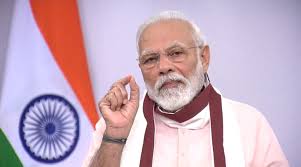
Prime Minister Narendra Modi, in his inaugural address at the India Global Week 2020, said that India will play an important role in developing and in scaling up production of the vaccine once it is discovered.

“Vaccines made in India are responsible for 2/3rd of the vaccine needs of the world’s children. Today also our companies are active in international efforts for development and production of vaccine. I’m certain that India will have an important role in developing and in scaling up production of the vaccine once it is discovered,” PM Modi said.

Speaking on India’s economy, PM Modi said, “India remains one of the most open economies in the world. We are laying a red carpet for all global companies to come and establish their presence in India. Very few countries will offer the kind of opportunities India does today.”

“The pandemic has once again shown that India’s pharma industry is an asset not just for India but for the entire world. It has played a leading role in reducing the cost of medicines, especially for developing countries,” the Prime Minister said.

He also further said that India will lead world in the path of revival post corona virus pandemic in terms of economic as well social development.India is power house of young talents may it be technological or scientific or doctors field.

World over, you have seen the contribution of India’s talent-force. Who can forget the Indian tech industry & tech professionals. They have been showing the way for decades. India is a power-house of talent that is eager to contribute. In these times, it is natural to talk about revival. It is equally natural to link global revival and India. There is faith that the story of global revival will have India playing a leading role,” PM Modi said.

Hope there will be discovery of vaccine soon and life comes back on track.

Treadmills: a torture device?

Treadmill, a machine that can be seen in any gym one steps into regardless of the country one stays in. Treadmill has become an iconic exercise when it comes to the gym. The constant thud underneath your feet. The constrained space. The monotony of going nowhere fast. Feeling like hours have gone by as you slog on it, but in reality, mere minutes have passed by. Running on a treadmill can certainly feel like torture, but did you know it was originally used for that very purpose. Its true the now easy to access treadmill was once used to torture and get troublesome inmates into line.

Photo by Polina Tankilevitch on Pexels.com

In the 1800’s, treadmills were created to punish English prisoners. It was at a time when the English prison system was abysmally bad. Execution and deportations were usually the punishment of choice and those who were locked away faced hours of solitude in tiny confined filthy cells. So social movements led by religious groups, philanthropists and celebrities like Charles Dickens sought to change these dire conditions that the inmates faced and tried to reform the prisoners and prison system. When the movement succeeded, entire prisons were remodelled and new forms of rehabilitations, such as the treadmill were introduced. Invented by an English engineer, Sir William Cubitt in 1818 the original version was vastly different than the commercial ones we know today. Prisoners stepped on 24 spokes pf a large paddle wheel. As the wheel turned, the prisoner was forced to keep stepping up in order to reduce the risk of falling down, similar to modern stepper machines. Meanwhile the rotation of the wheel made gears pump water, crush grain and power mills, which is where the name Treadmill originated. These devices were seen as a fantastic way to whip the prisoners into shape with the added benefit of powering the mills helped rebuild a British economy that was devastated by the Napoleonic wars. It was win-win situation for everyone except of course the prisoners. It is estimated, on an average that the prisoners spent around six hours or so a day on treadmills which can be an equivalent of 5000 to 14000 feet a day which is roughly climbing Mount Everest to its halfway point. They did so five days a week with little food to energize themselves with. Cubitt’s idea quickly spread across the British Empire and America. And within a decade of its creation over 50 English prisons boasted a treadmill and America also quickly surmounted to a similar amount. Unsurprisingly the exertion combined with the poor nutrition being provided saw any prisoners suffering from breakdowns and injuries but unfortunately prison guards did not seem to care. In 1894, New York prison guard James Hardie credited the device to have taming his most boisterous of inmates claiming that the monotonous steadiness, not its severity is what terrorized the inmates. The treadmills lasted in England until the late 19th century, when they were banned for being excessively cruel under the Prison Act of 1898.

Soon the torture device returned with a vengeance, this time targeting the unsuspecting public. In 1911, a treadmill patent was registered in the US and by 1952 was thrust into limelight with the model that we are so familiar with. As an easy and convenient way to improve aerobic fitness, it soon gained a lot of familiarity in the exercise business.            

Thus is the tale of the torture device that soon became a staple in every corner of gyms and exercise squares.

Breaking News: UP gangster Vikas Dubey arrested from Mahakal temple in Ujjain, Madhya pradesh.

Uttar Pradesh gangster Vikas Dubey, accused of killing eight policemen last week, was arrested from a temple in Madhya Pradesh after a nearly week-long chase involving the police across three states. Vikas Dubey was caught in Ujjain around the same time two of his aides were killed in separate encounters in UP. His closest aide, Aman Dubey, was killed yesterday.

Bihar police congratulated MP police for arresting Vikas Dubey.

Vikas Dubey was spotted at Mahakal temple around 8 am, according to the police. He was buying prayer offerings to take inside the temple when the shopkeeper recognized him and reportedly alerted security guards. When he emerged from the temple, the guards questioned him.

He first produced a fake ID card of a much younger man. When prodded further, he hit out at the guards, who dragged him to the police station.

Main Vikas Dubey hoon, Kanpur wala,” he shouted out, when he was beaten while being taken to the police van.

“It is a big success for the police, Vikas Dubey is a cruel killer. The entire Madhya Pradesh police force was on alert. He has been arrested from Ujjain Mahakal temple. We have informed Uttar Pradesh Police,” said Narottam Mishra, Madhya Pradesh Minister.

Dubey – charged in 60 criminal cases including murder, kidnapping, extortion and rioting – had allegedly been alerted to the raid by local policemen and had set up an ambush. When the policemen reached the village, Dubey and his men, armed with AK-47s, fired from rooftops.

UP police is informed about the arrest. However many say that it was planned surrender by Vikas Dubey who allegedly went to temple and made people see him. It is very positive for the state though.

E-commerce sites to display country of origin on products to promote made in India and Atmanirbhar Bharat.

New Delhi: The government had taken yet another big step after ban on 59 Chinese apps to make it compulsory for E-commerce sites to display ‘country of origin’ tag so that users can identify Indian products and help make Atmanirbhar Bharat a success. The online shopping sites have agreed with government to display’country of origin’ and are cooperating with government.

The Government e-Marketplace (GeM) portal, which is used by government departments for public procurement, on Tuesday made it mandatory for sellers to enter the “country of origin” while registering all new products.

The Department for Promotion of Industry and Internal Trade (DPIIT) asked e-commerce players including Amazon and Flipkart to display mention ”country of origin” on each product sold at their platforms.

While GeM says it has taken this step to promote ‘Make in India’ and ‘Aatmanirbhar Bharat’ (Self-reliant India), the move also comes days after a deadly border clash between Indian and Chinese soldiers. Sub-standard and cheap Chinese products often make their way into the Indian market, more so through online platforms. The government has ramped up efforts to curb the inflows of such low-grade imports and their consumption here.

The government has taken such steps to reduce dominance of Chinese products in Indian market and make India self-reliant country. We must support the efforts of government and use as much as possible made in India products.