A mobile phone, also known as a cell phone, is something that all of us are familiar with and own. When the mobile phone was initially introduced, it was used primarily for phone calls and messaging. Today, phones have a computing speed greater than even some larger technological devices like a computer or television, and are so technologically advanced that we do not have to bother with most physical actions that take up time and effort. All of it can be done through the phone and the internet available on it, whether it be banking, paying bills, ordering something, etc. Furthermore, we can stay connected through phones with friends and family on the other side of the globe, through means such as video calling and multimedia messaging. A world of social media has opened through the phone that helps us connect with people all over the planet. However, like every other device, the mobile phone also has its own disadvantages.
The Good and the Bad
Possibly the biggest advantage of the mobile phone is that it has helped us stay connected to the people in our lives. This has occurred not only in the form of voice calling, but now also through video calling and social media contacts. It makes day-to-day life so easy and efficient, and has a range of tools that are accessible to us. For example, we can check the weather, the route to our destination, and use a calculator; all on our phones. Furthermore, it is perhaps the biggest source of entertainment in today’s day and age, with a multitude of games and mass media all available on it. Apart from these, the access of internet through our phones has meant that we can perform all our functions and meet all our life’s requirements through this simple device. It acts as a source of a large amount of information about the world, access to things like YouTube and Twitter, and allows to conduct monetary transactions all through the touch of a finger. In this sense, it is an amazing multipurpose, all-in-one device which is a necessary in our lives.
However, the mobile phone can also be the source of distress and disadvantage in one’s life. People are prone to addiction to their mobile phones, and end up using them for hours on end. This means that there is a lack of real-life communication and interaction, as people get sucked into the online world of their phones. Perhaps the most pressing concern today, especially among teenagers, is social media addiction. People get addicted to social media which has wide-ranging effects on their personal health, both mental and physical. Mobile phones also may cause health hazards, as they emit blue light and radiation which can damage brain cells. Furthermore, the mobile phone has also been the primary cause for lack of privacy in today’s world, as all our personal information is available for everyone to see. It is easy to get pulled into the world inside our phones and waste countless hours of our time on it. The phones almost become our lives, and this means that losing our phones is almost equal to losing our lives.
Conclusion
The mobile phone is a fantastic and necessary invention, but we must keep in mind that it comes with its own curses. How the mobile phone affects our lives depends on how much importance we give to it and how much we use it. It is all about finding a middle-ground in such a case, where you are not addicted or living in in your phone, but also not completely neglecting it and how it can enrich your life and make it more convenient. Regardless of its shortcomings, it is impressive to see how far our society has come through the invention of the mobile phone. Now we have everything within the reach of our hands, and the mobile phone has brought about a revolution in the lives of people in this century.
Alpha Centauri is the third-brightest star in our night sky – a famous southern star – and the nearest star system to our sun. Through a small telescope, the single star we see as Alpha Centauri resolves into a double star. This pair is just 4.37 light-years away from us. In orbit around them is Proxima Centauri, too faint to be visible to the unaided eye. At a distance of 4.25 light years, Proxima is the closest-known star to our solar system. Science of the Alpha Centauri system. The two stars that make up Alpha Centauri, Rigil Kentaurus and Toliman, are quite similar to our sun. Rigil Kentaurus, also known as Alpha Centauri A, is a yellowish star, slightly more massive than the sun and about 1.5 times brighter. Toliman, or Alpha Centauri B, has an orangish hue; it’s a bit less massive and half as bright as the sun. Studies of their mass and spectroscopic features indicate that both these stars are about 5 to 6 billion years old, slightly older than our sun.
Alpha Centauri A and B are gravitationally bound together, orbiting about a common center of mass every 79.9 years at a relatively close proximity, between 40 to 47 astronomical units (that is, 40 to 47 times the distance between the Earth and our sun).Must Watch Sky Events in 2021
In comparison, Proxima Centauri is a bit of an outlier. This dim reddish star, weighing in at just 12 percent of the sun’s mass, is currently about 13,000 astronomical units from Alpha Centauri A and B. Recent analysis of ground- and space-based data, published in 2017, has shown that Proxima is gravitationally bound to its bright companions, with a 550,000-year-long orbital period.
Proxima Centauri belongs to a class of low mass stars with cooler surface temperatures, known as red dwarfs. It’s also what’s know as a flare star, where it randomly displays sudden bursts of brightness due to strong magnetic activity.
In the past decade, astronomers have been searching for planets around the Alpha Centauri stars; they are, after all, the closest stars to us so the odds of detecting planets, if any existed, would be higher. So far, two planets have been found orbiting Proxima Centauri, one in 2016 and another in 2019. A paper published in February 2021 reported tantalizing evidence of a Neptune-sized planet around Alpha Centauri A, but so far, it has not been definitively confirmed.
How to see Alpha Centauri. Unluckily for many of us in the Northern Hemisphere, Alpha Centauri is located too far to the south on the sky’s dome. Most North Americans never see it; the cut-off latitude is about 29° north, and anyone north of that is out of luck. In the U.S. that latitudinal line passes near Houston and Orlando, but even from the Florida Keys, the star never rises more than a few degrees above the southern horizon. Things are a little better in Hawaii and Puerto Rico, where it can get 10° or 11° high.
But for observers located far enough south in the Northern Hemisphere, Alpha Centauri may be visible at roughly 1 a.m. (local daylight saving time) in early May. That is when the star is highest above the southern horizon. By early July, it reaches its highest point to the south at nightfall. Even so, from these vantage points, there are no good pointer stars to Alpha Centauri. For those south of 29° N. latitude, when the bright star Arcturus is high overhead, look to the extreme south for a glimpse of Alpha Centauri.
The southern constellation Centaurus. Image via Wikimedia/ International Astronomical Union/ SkyandTelescope.com.
Observers in the tropical and subtropical regions of the Northern Hemisphere can find Alpha Centauri by first identifying the distinctive Southern Cross. A short line drawn through the crossbar (Delta and Beta Crucis) eastward first comes to Hadar (Beta Centauri), then Alpha Centauri. Meanwhile, in Australia and much of the Southern Hemisphere, Alpha Centauri is circumpolar, meaning that it never sets.
In this image taken at the European Southern Observatory’s La Silla Observatory in Chile, the Southern Cross is clearly visible, with the yellowish star, closest to the dome, marking the top of the cross. Drawing a line downward through the crossbar stars takes you to the bluish star, Beta Centauri, and then to the yellowish Alpha Centauri. Image via ESO / Wikimedia Commons.
Alpha Centauri in mythology. Alpha Centauri has played a prominent role in the mythology of cultures across the Southern Hemisphere. For the Ngarrindjeri indigenous people of South Australia, Alpha and Beta Centauri were two sharks pursuing a sting ray represented by stars of the Southern Cross. Some Australian aboriginal cultures also associated stars with family relationships and marriage traditions; for instance, two stars of the Southern Cross were through to be the parents of Alpha Centauri.
Astronomy and navigation were deeply intertwined in the lives of ancient seafaring Polynesians as they sailed between islands in the vast expanse of the South Pacific. These ancient mariners navigated using the stars, with cues from nature such as bird movements, waves, and wind direction. Alpha Centauri and nearby Beta Centauri, known as Kamailehope and Kamailemua, respectively, were important signposts used for orientation in the open ocean.
For ancient Incas, a llama graced the sky, traced out by stars and dark dust lanes in the Milky Way from Scorpius to the Southern Cross, with Alpha Centauri and Beta Centauri representing its eyes.
A plaque at the Coricancha museum showing Inca constellations. Coricancha, located in Cusco, Peru, was perhaps the most important temple of the Inca empire. Image via Pi3.124 / Wikimedia Commons.
Ancient Egyptians revered Alpha Centauri, and may have built temples aligned to its rising point. In southern China, it was part of a star group known as the South Gate.
Alpha Centauri is the brightest star in the constellation Centaurus, named after the mythical half human, half horse creature. It was thought to represent an uncharacteristically wise centaur that figured in the mythology of Heracles and Jason. The centaur was accidentally wounded by Heracles, and placed into the sky after death by Zeus. Alpha Centauri marked the right front hoof of the centaur, although little is known of its mythological significance, if any.
A depiction of the Centaur by Polish astronomer Johannes Hevelius in his atlas of constellations, Firmamentum Sobiescianum, sive Uranographia. Image via Wikimedia Commons.
Alpha Centauri’s position is RA: 14h 39m 36s, Dec: -60° 50′ 02″
Bottom line: Alpha Centauri is actually two binary stars that are quite similar to our sun. A third star that’s gravitationally bound to them is Proxima Centauri, the closest star to our sun.
NASA’s Kepler mission has confirmed the first near-Earth-size planet in the “habitable zone” around a sun-like star. This discovery and the introduction of 11 other new small habitable zone candidate planets mark another milestone in the journey to finding another “Earth.”
The newly discovered Kepler-452b is the smallest planet to date discovered orbiting in the habitable zone — the area around a star where liquid water could pool on the surface of an orbiting planet — of a G2-type star, like our sun. The confirmation of Kepler-452b brings the total number of confirmed planets to 1,030.
“On the 20th anniversary year of the discovery that proved other suns host planets, the Kepler exoplanet explorer has discovered a planet and star which most closely resemble the Earth and our Sun,” said John Grunsfeld, associate administrator of NASA’s Science Mission Directorate at the agency’s headquarters in Washington. “This exciting result brings us one step closer to finding an Earth 2.0.”
Kepler-452b is 60 percent larger in diameter than Earth and is considered a super-Earth-size planet. While its mass and composition are not yet determined, previous research suggests that planets the size of Kepler-452b have a good chance of being rocky.
Highlighted are 12 new planet candidates from the seventh Kepler planet candidate catalog that are less than twice the size of Earth and orbit in the stars’ habitable zoneCredits: NASA Ames/W. StenzelTwelve New Small Kepler Habitable Zone Candidates
There are 4,696 planet candidates now known with the release of the seventh Kepler planet candidate catalog – an increase of 521 since the release of the previous catalog in January 2015.Credits: NASA/W. StenzelRead more…
While Kepler-452b is larger than Earth, its 385-day orbit is only 5 percent longer. The planet is 5 percent farther from its parent star Kepler-452 than Earth is from the Sun. Kepler-452 is 6 billion years old, 1.5 billion years older than our sun, has the same temperature, and is 20 percent brighter and has a diameter 10 percent larger.
“We can think of Kepler-452b as an older, biggercousin to Earth, providing an opportunity to understand and reflect upon Earth’s evolving environment,” said Jon Jenkins, Kepler data analysis lead at NASA’s Ames Research Center in Moffett Field, California, who led the team that discovered Kepler-452b. “It’s awe-inspiring to consider that this planet has spent 6 billion years in the habitable zone of its star; longer than Earth. That’s substantial opportunity for life to arise, should all the necessary ingredients and conditions for life exist on this planet.”
To help confirm the finding and better determine the properties of the Kepler-452 system, the team conducted ground-based observations at the University of Texas at Austin’s McDonald Observatory, the Fred Lawrence Whipple Observatory on Mt. Hopkins, Arizona, and the W. M. Keck Observatory atop Mauna Kea in Hawaii. These measurements were key for the researchers to confirm the planetary nature of Kepler-452b, to refine the size and brightness of its host star and to better pin down the size of the planet and its orbit.
The Kepler-452 system is located 1,400 light-years away in the constellation Cygnus. The research paper reporting this finding has been accepted for publication in The Astronomical Journal.
In addition to confirming Kepler-452b, the Kepler team has increased the number of new exoplanet candidates by 521 from their analysis of observations conducted from May 2009 to May 2013, raising the number of planet candidates detected by the Kepler mission to 4,696. Candidates require follow-up observations and analysis to verify they are actual planets.
Twelve of the new planet candidates have diameters between one to two times that of Earth, and orbit in their star’s habitable zone. Of these, nine orbit stars that are similar to our sun in size and temperature.
“We’ve been able to fully automate our process of identifying planet candidates, which means we can finally assess every transit signal in the entire Kepler dataset quickly and uniformly,” said Jeff Coughlin, Kepler scientist at the SETI Institute in Mountain View, California, who led the analysis of a new candidate catalog. “This gives astronomers a statistically sound population of planet candidates to accurately determine the number of small, possibly rocky planets like Earth in our Milky Way galaxy.”
These findings, presented in the seventh Kepler Candidate Catalog, will be submitted for publication in the Astrophysical Journal. These findings are derived from data publicly available on the NASA Exoplanet Archive.
Scientists now are producing the last catalog based on the original Kepler mission’s four-year data set. The final analysis will be conducted using sophisticated software that is increasingly sensitive to the tiny telltale signatures of Earth-size planets.
Ames manages the Kepler and K2 missions for NASA’s Science Mission Directorate. NASA’s Jet Propulsion Laboratory in Pasadena, California, managed Kepler mission development. Ball Aerospace & Technologies Corporation operates the flight system with support from the Laboratory for Atmospheric and Space Physics at the University of Colorado in Boulder.
For more information about the Kepler mission, visit:
In terms of marketing, publicity is the public visibility or awareness of a product, service for any organisation or business or company. It may also refer to the movement of information from its source to general public often (but not necessary) via the media. Here are some of the ways by which Influencers impact the publicity of a brand:
1) Building Awareness about the Brand:
Social Media Influencers on various social media platforms establish credibility in a particular industry (like fashion) and there is a huge gap between brands and their end users. Influencers try to bridge this gap as they take consumers through the “decision making phase” and thus help in creating a positive brand reputation.
2) Informing people about the product:
One of the main reasons why consumers trust influencers is that they relate with them on a personal level. Influencers know about the major everyday needs of an individual and hence they keep their followers “up-to- date” about latest trends regarding existing products, services or giving details about latest products.
3) Sponsor products in their profiles:
Sometimes social media influencers prefer fixed payments to feature the products of a brand or feature brands on their profile for a specific period of time or they may feature the products in their social media posts. This directly helps in general awareness of the brand.
4) Giving Prizes:
Social Media Contest is one of the most new ways that increases popularity of brands or product of brands. Business firms collaborate with social media influencers and it is the most cost effective technique to build awareness and general interest in brands. This is a typical strategy and it may require certain condition in exchange of prizes such as following the official page of the brand, tagging friends, liking posts and like.
These things directly help in increasing the online engagement and further increasing general interest in the brand.
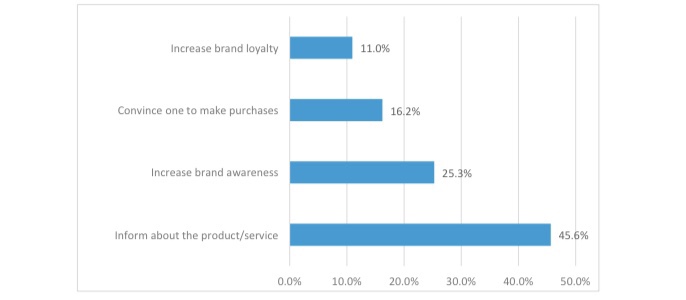
Source: Januz Wielki.
The above graph is from a recent survey conducted in August 2020 and it shows that majority of respondents feel “transfer of information” about a product is the main thing they look when it comes to social media influencers. Increasing brand awareness and brand loyalty are the next two elements that respondents look when it comes to social media influencers.
This acts as evidence that social media influencers are very impactful when it comes to promotion and publicity of a product or a service. In this modern era, where social media is the new “illusion” of people, social media influencers help in building and increasing brand awareness and thereby they assist in promotion and publicity. Good Marketing Managers would tap this opportunity of “social media influencer marketing” to enhance the audience reach of their business.
Developers spend countless hours solving business problems with code. Then comes a never ending part where ops team’s turn to spend countless hours figuring out how to get the code that developers write up and running on whatever computers are available and making sure those computers operate smoothly. Serverless computing represents an enhancement of cloud programe models, abstraction, and platforms, and is a command to the attainment and wide acceptance of cloud technologies.
What is serverless computing?
Serverless computing is a cloud computing implementation model in which the cloud provider deals with machine resources on demand, taking care of the servers on behalf of their customers. It does not hold resources in volatile memory; computing is rather done in short bursts with the results persisted to storage. When an app is not in use, there are no computing resources allocated to the app. It is an execution model for the cloud in which Some of the Common languages supported by serverless runtimes are Java, Python and PHP. Amazon’s AWS Lambda was the first serverless platform and it defined several key dimensions including cost, programming model, deployment, resource limits,security, and monitoring. Supported languages include Node.js, Java, Python, and C programming. Initial versions had limited composability but this has been addressed recently.
Current trend
1.Google Cloud Functions : It provides basic FaaS functionality to run serverless functions written in Node. The functionality is currently limited but expected to grow in future versions.
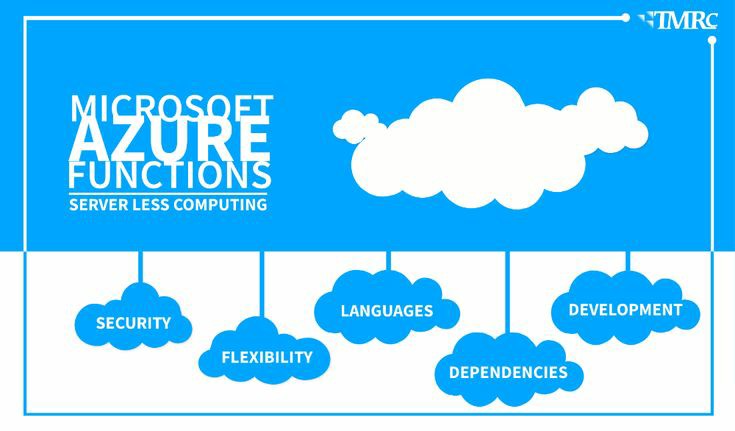
2.Microsoft Azure Functions: It provides HTTP webhooks and integration with Azure services to run user provided functions. The platform supports C , Node.js, Python, PHP, bash, or any executable. The runtime code is open-source and available on GitHub under an MIT License. To ease debugging, the Azure Func-tions CLI provides a local development experience for creating, developing, testing,running, and debugging Azure Functions.
3.IBM OpenWhisk provides event-based serverless programming with the ability to chain serverless functions to create composite functions. It supportsNode.js, Java, Swift, Python, as well as arbitrary binaries embedded in a Docker Container. OpenWhisk is available on GitHub under an Apache open source license.Besides There are several serverless projects ranging from open source projects to vendors that find serverless a natural fit for their business. OpenLambda is an open source serverless computing platform. The source code is available in GitHub Lunder an Apache License. It’s paper outlines a number of challenges around performance such as supporting faster function startup time for heterogeneous language runtimes and across a load balanced pool of servers, deployment of large amounts of code, supporting stateful interactions (such as HTTP sessions), etc
4.AWS Lambda: It is a serverless compute service that lets you run code without provisioning or managing servers, creating workload-aware cluster scaling logic, maintaining event integrations, or managing runtimes. With Lambda, you can run code for virtually any type of application or backend service – all with zero administration. Just upload your code as a ZIP file or container image, and Lambda automatically and precisely allocates compute execution power and runs your code based on the incoming request or event, for any scale of traffic. You can set up your code to automatically trigger from over 200 AWS services and SaaS applications or call it directly from any web or mobile app. You can write Lambda functions in your favorite language (Node.js, Python, Go, Java, and more) and use both serverless and container tools, such as AWS SAM or Docker CLI, to build, test, and deploy your functions.
Advantages
1.No infrastructure to maintain :Serverless computer services, which are small snippets of code meant to execute a single function are executed on pre-existing servers that run functions for countless other customers as well. Since you’re literally using someone else’s computer to execute your serverless functions, there’s no infrastructure to maintain it.
2.No costs : when functions aren’t running As Hacker Noon points out, the costs associated with serverless computing are minimal compared to other cloud services. Access authorization, presence detection, security, image processing, and other costs associated with operating a server, whether physical or virtual, are eliminated under a serverless model. In short, serverless functions can be dirt cheap, and if they aren’t being spun up for use, you aren’t paying anything.
3.Infinitely scalable : Automatic scaling capability of any serverless platform worth investing in is designed to scale based on need. That’s another advantage to serverless computing as there’s never a need to partition a new cloud server or purchase additional computing power for an existing instance. All of that is handled by the serverless computing platform, leaving you with no complication outside of a slightly larger bill for additional computing time.
4.Reduced latency : Cloud flare points out that using serverless functions can greatly reduce the latency experienced by end users. Serverless functions don’t operate from an origin server, so there’s no single location that an end user’s traffic has to be directed to.
5.Reduced software complexity : Serverless computing functions don’t need to take any of that into account–the code just has to be supported by the cloud platform being used. On top of being easier to build, serverless functions require a lot less coding knowledge to build, which opens up development to those at lower skill levels. As cloud native systems inherently scale down as well as up, these systems are known as elastic rather than scalable. Small teams of developers are able to run code themselves without the dependence upon teams of infrastructure and support engineers; more developers are becoming DevOps skilled and distinctions between being a software developer or hardware engineers are blurring.
Disadvantages
1.Security issues : server that runs serverless functions runs them for myriad customers, which opens up a lot of security concerns.
2.Vendor lock-in : Building serverless functions on one platform can mean that migrating to another is difficult. Code might need to be re-written, APIs that exist on one platform may not exist. you’re going to invest in a serverless platform, be sure the vendor you’re considering has everything you need because becoming unhappy with your serverless computing provider a few months or years into your service can be a major problem.
3.Debugging is more difficult : Every time a serverless instance spins up it creates a new version of itself, and that means it’s difficult to collect data necessary to debug and fix a serverless function. Debugging serverless functions is possible, but it’s not a simple task, and it can eat up lots of time and resources.
Conclusion
Evolution of the trend towards higher levels of abstractions in cloud programming models, and currently exemplified by the Function as a Service (FaaS) model where developers write small stateless code snippets and allow the platform to man-age the complexities of scalably executing the function in a fault tolerant manner.This seemingly restrictive model nevertheless lends itself well to a number of common distributed application patterns, including compute intensive event processing pipelines. Most of the large cloud computing vendors have released their own serverless platforms.
Database Management System (DBMS) is a software for storing and retrieving users’ data while considering appropriate security measures.In large systems, a DBMS helps users and other third-party software to store and retrieve data. DBMS allows users to create their own databases as per their requirement.The DBMS manages incoming data, organizes it, and provides ways for the data to be modified or extracted by users or other programs.
DBMS Softwares
MySQL
PostgreSQL
Microsoft Access
SQL Server
FileMaker
Oracle
RDBMS
dBASE
Clipper
FoxPro.
Types of Database Models
Hierarchical Database Model
Hierarchical database model resembles a tree structure, similar to a folder architecture in your computer system. The relationships between records are pre-defined in a one to one manner, between ‘parent and child’ nodes. They require the user to pass a hierarchy in order to access needed data. Due to limitations, such databases may be confined to specific uses.
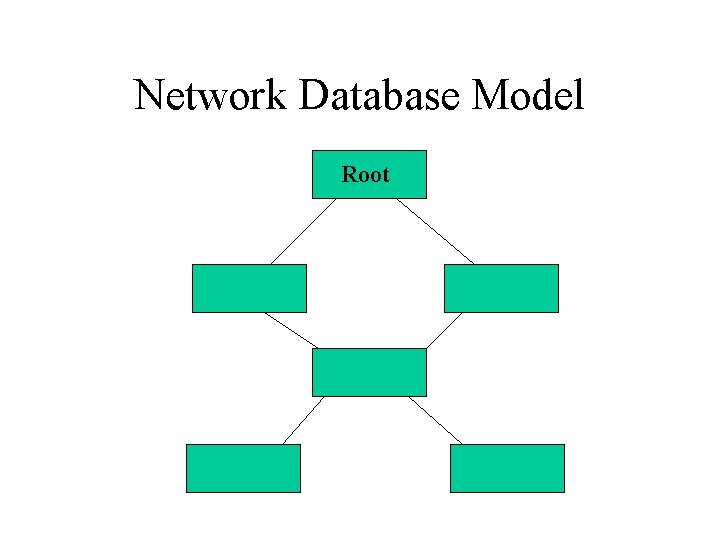
2. Network Database Model
Network database models also have a hierarchical structure. However, instead of using a single-parent tree hierarchy, this model supports many to many relationships, as child tables can have more than one parent.
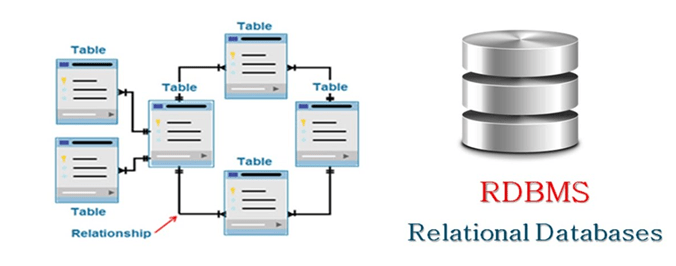
3. Relational Database Model
A relational database is a digital database based on the relational model of data, as proposed by E. F. Codd in 1970. A software system used to maintain relational databases is a relational database management system (RDBMS). Many relational database systems have an option of using the SQL (Structured Query Language) for querying and maintaining the database.
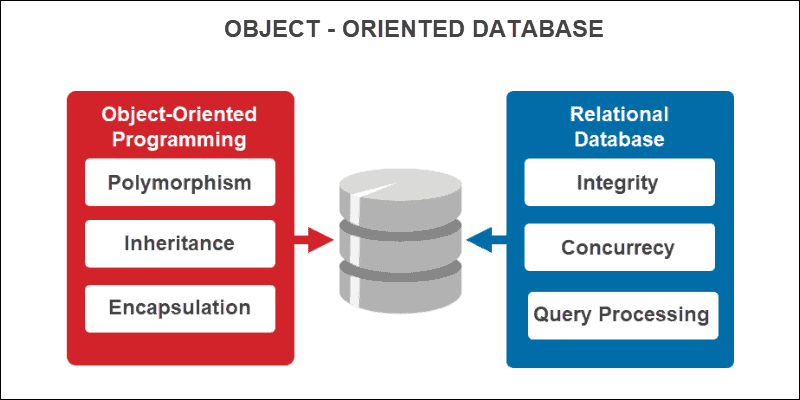
4. Object Oriented Database Model
Object-oriented databases,the information is represented as objects, with different types of relationships possible between two or more objects. Such databases use an object-oriented programming language for development.
Functions of DBMS
The DBMS performs several important functions that guarantee the integrity and consistency of data in the database. The current generation DBMS supports many functions, such as the following:
Stores the definitions of data and their relationships (metadata) in a data dictionary, any changes made are automatically recorded in the data dictionary.
Creates the complex structures required for data storage.
Transforms entered data to confirm to the data structures.
Creates a security system and enforces security within that system.
Allow multiple user access to the data within the computer network environment.
Performs backup and data recovery procedures to ensure data safety.
Promotes and enforces integrity rules to maintain data consistency.
Provides access to the data via utility programs and from programming languages interfaces.
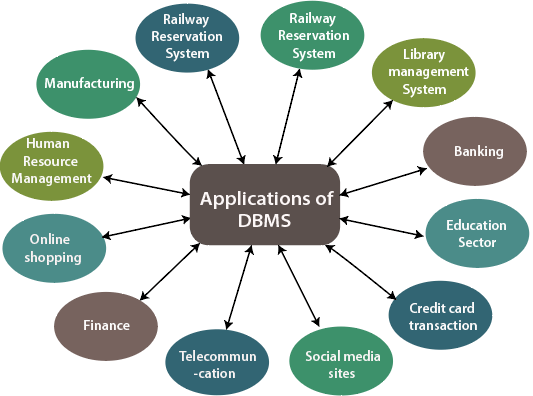
Applications of DBMS
Railway Reservation System
Library Management System
Banking
Universities and colleges
Credit card transactions
Social Media Sites
Telecommunications
Finance
Conclusion
Database implementation plan is essential for any organization that once to boost is sales or increase their customers experience, a good database implementation plan I supposed to have, all the factors and the significance value towards the organization, not forgetting the requirements that are needed. In my opinion, I could have recommended using a computerized, database management system. This is because it is faster to implement and also it requires less amount of time and finance to set up, the future of database lies on the power of the organization .and the funds that they can be able to set aside to implement new database management system.
The Journalism and mass media is the graduates work nationwide and worldwide at newspapers and magazines and in advertising, branding, broadcast news, social media, marketing, media research, photojournalism, publication design, public relations, radio, and other areas.
The Journalism is the activity of gathering, assessing, creating, and presenting news and information. It is also the product of these activities. Journalism can be distinguished from other activities and products by certain identifiable characteristics and practices.
There are five types,
investigative,
news,
reviews,
columns,
feature-writing.
The Rules Of Journalism
#1: Ask questions.
The journalist’s greatest assets is their natural curiosity. Start with the famed five W’s (and one H), then ask some more. Asking “why?” is what gets you the good stuff.
#2: Dig for the story.
If you think you’ve got the whole story, dig around some more. The most fascinating parts of the story are often just under the surface.
#3: Master the language.
As a journalist, language is your main tool. Read as much as you can and as often as you can, research odd words and archaic sayings, look at what’s behind etymology. Learn the patterns behind language and how to use them.
#4: Spelling matters.
Double-check if you aren’t sure about spelling or style (especially in the case of names), and read through messages and articles thoroughly before sending either.
#5: Know thy publication.
Before you pitch, know a publication’s style, editorial staff and content. Publications are usually more than happy to provide back-issues. If you can’t find writer’s guidelines, send a short introductory email requesting them.
#6: Contacts are your career.
Contacts (and your reputation with said contacts) are your entire career. Editors, sources and interviewees are all vital parts of the journalistic process. Without them, you’d be screwed.
#7: Once it’s off the record, keep it that way.
Trusted sources will tell you all sorts of juicy, fascinating, scandalous and personal things in your career as a journalist, often off the record. Shut up about it.
#8: Three is a golden number.
Mind the rule of threes: Have at least three reliable, corroborating sources for every fact; three interviewees for every article; and read through a piece at least three times before you sit down to change a comma – that’s at least.
#9: Rejection is opportunity.
Getting a story rejected means you’ve just opened up a line of communication with a new editor – congratulations. Pitch again. Rejection also gives you a chance to sell the story elsewhere: Sometimes rejection just means it’s not right for them
#10: Editors are teachers.
You can learn a hell of a lot from the experience of your editors, and when given the chance you should. They braved the journalistic battlefield before you, so you can trust their edits and advice. Usually, they’re right.
#11: Mind the word count.
Yes, you can do that in the assigned word count, and the editor will either make you add or cut if you don’t. Here, they always know better. (Remember this piece of key-advice from The Elements of Style and repeat it as your daily editing mantra: Omit unnecessary words.)
#12: Deadlines are holy.
Deadlines exist for a reason: Never skip out on a deadline unless you are incapacitated or dead. If you have to, let your editor know beforehand and have a damn good reason. Then, don’t do it again. Compare deadlines to menstrual cycles: If you skip one, you might just be stressed. If you skip several, you’re in trouble.
#13: Know the law.
Journalism can take you to some strange places. Make sure you know the law and what side of it you’re standing on at all times.
#14: Always do your research.
Make sure that your research is flawless and that you can always match which source gave which fact. Cross-reference, find first-hand information and do your background research before requesting, planning or conducting an interview.
#15: Have it outlined.
Have the skeleton of your idea outlined and ready by the time you pitch the idea. That way you have all the information ready, and it makes your job – and theirs – easier. Your outline should include the article’s proposed headline, the article’s sub-headers and sections (you can write down facts as key-words here) and who you will interview.
#16: Keep and file everything.
Keep prior notes, interviews, sources, tapes, the lot: You never know when you’ll need it, and you probably will.
#17: Guard your vices.
Many great journalists have been crippled or completely destroyed by their vices – and it can be almost anything: Overworking, coffee, manic exercising, painkillers or heavier drugs. Whatever yours is, keep it in check or risk your job.
#18: Burnout is a rabid, fanged monkey.
Burnout is a myth, until you’re there. It’s a mental and physical size of your writing engine, and if you don’t find your way to unwind you’ll get there a lot quicker.
The Mass media refers to a diverse array of media technologies that reach a large audience via mass communication. … Broadcast media transmit information electronically via media such as films, radio, recorded music, or television.
The types of mass media include Newspapers, Radio, Television, Internet, Magazines and more,
…
What is Mass Media?
Journalism.
Social Media.
Films.
Television.
Radio.
Advertising.
Public Relations.
Books, Magazines, Newspapers and Journals.
RULES OF MASS MEDIA
The Privacy Act works to guarantee privacy to individuals and controls how personal information is used. Defamation in the written form (libel) or the spoken form (slander) is illegal in the United States.
Section 315 (Equal Time Rule) ensures that broadcast media cannot favor any one candidate over another by granting one more time than another. The Fairness Doctrine ensured that radio stations offered equal time to opposing viewpoints.
The Freedom of Information Act grants the public, including the news media, access to many government documents. The Digital Millennium Copyright Act, established in 1998, extended existing copyright laws to encompass and protect information online.
OnePlus latest series i.e., Oneplus 9 and Oneplus 9 Pro were found to be manipulating the benchmark results. And now has been delisted from Geekbench. Oneplus has a name in the market, and right now many of you must be questioning it. So, let’s have a look into the case.
Both the devices run on the latest Qualcomm chipset 888 and it makes it obvious for the devices to give you top-notch performance. But it turns out the devices are not performing as their benchmark results demonstrated. It is found that both the devices tend to run at full speed only while using benchmark apps such as Geekbench and Antutu. In this way, Oneplus was manipulating benchmark scores that were not applicable in real-world usage. Since this news was out Geekbench has banned Oneplus 9 and Oneplus 9 Pro from its platform.
But, how Oneplus was able to manipulate?
It seems Oneplus was blacklisting popular apps for their faster cores, which resulted in slowing down the workloads such as web and social media browsing. It is also been found that Geekbench and Antutu were getting full performance while the other apps were not getting it.
After it has been found that Oneplus is manipulating benchmark scores. Geekbench stated on Twitter, “It’s disappointing to see OnePlus handsets making performance decisions based on application identifiers rather than application behavior. We view this as a form of benchmark manipulation. We’ve delisted the OnePlus 9 and OnePlus 9 Pro from our Android Benchmark chart. We will also test the other OnePlus handsets in our performance lab to see if these handsets also manipulate performance in the same way. If they do, we will delist them from the Android Benchmark chart,” it seems from the statement that other Oneplus devices are also at risk of being delisted.
Oneplus also passed a statement saying, “Our top priority is always delivering a great user experience with our products, based in part on acting quickly on important user feedback. Following the launch of the OnePlus 9 and 9 Pro in March, some users told us about some areas where we could improve the devices’ battery life and heat management. As a result of this feedback, our R&D team has been working over the past few months to optimize the devices’ performance when using many of the most popular apps, including Chrome, by matching the app’s processor requirements with the most appropriate power. This has helped to provide a smooth experience while reducing power consumption. While this may impact the devices’ performance in some benchmarking apps, our focus as always is to do what we can to improve the performance of the device for our users.”
Although all this has created doubts regarding Oneplus among tech geeks and some buyers. Let’s see if Geekbench and Oneplus come together to resolve this issue or like the Oneplus 9 or Oneplus 9 Pro other Oneplus devices will be delisted too
India’s transport sector is large and diverse; it caters to the needs of 1.1 billion people. In 2007, the sector contributed about 5.5 percent to the nation’s GDP, with road transportation contributing the lion’s share.
Good physical connectivity in the urban and rural areas is essential for economic growth. Since the early 1990s, India’s growing economy has witnessed a rise in demand for transport infrastructure and services.
However, the sector has not been able to keep pace with rising demand and is proving to be a drag on the economy. Major improvements in the sector are therefore required to support the country’s continued economic growth and to reduce poverty.
Roads. Roads are the dominant mode of transportation in India today. They carry almost 85 percent of the country’s passenger traffic and more than 60 percent of its freight. The density of India’s highway network — at 0.66 km of roads per square kilometer of land – is similar to that of the United States (0.65) and much greater than China’s (0.16) or Brazil’s (0.20). However, most roads in India are narrow and congested with poor surface quality, and 33 percent of India’s villages do not have access to all-weather roads.
Rural Roads-A Lifeline for Villages in India: Connecting Hinterland to Social Services and markets
Railways. Indian Railways is one of the largest railways under the single management. It carried some 19.8 million passengers and 2.4 million tonnes of freight a day in year 2009 and is one of the world’s largest employer. The railways play a leading role in carrying passengers and cargo across India’s vast territory. However, most of its major corridors have capacity constraint requiring capacity enhancement plans.
Ports. India has 13 major and 199 minor and intermediate ports along its more than 7500 km long coastline. India’s seaborne foreign trade being 95% by volume and 67% by value, the ports play a very significant role in improving foreign trade in a growing economy. These ports serve the country’s growing foreign trade in petroleum products, iron ore, and coal, as well as the increasing movement of containers. Indian ports handled cargo of 850 million tonnes and about 9.0 million TEU container traffic in year 2010. Over the last decade, the average annual growth rate of port cargo volume has been about 10%.. The future potential for port sector, particularly container ports is huge considering that the container traffic is projected to grow to 40 million TEU by 2025. Inland water transportation also remains largely undeveloped despite India’s 14,000 kilometers of navigable rivers and canals.
Aviation. India has 128 airports, including 15 international airports. Indian airports handled 142 million passengers in 2010-11 and 1.6 million tonnes of cargo in year 2009-10. The CAGR for the domestic passenger and freight growth over the last decade has been 14.2% and 7.8% respectively. The dramatic increase in air traffic for both passengers and cargo in recent years has placed a heavy strain on the country’s major airports. Passenger traffic is projected to grow more than 15% annually over 2011-13 and it is estimated that the aviation industry, currently 9th largest in the World, will require 30 billion USD investment in the next 15 years to keep pace with the growing demand.
Urban Transport. India is experiencing rapid urbanization with the present urbanization levels at 30% translating to a population of roughly 340 million living in urban areas. The number of million plus cities is presently at 42 and the urban economy accountd for roughly 60% of the GDP. Motorisation rates in India are in double digits as in most developing economies. Only about 20 cities out of 87 cities with a population in excess of 500,000 and state capitals have any kind of organized transport and only 3-4 cities could lay claim to a mass rapid transit system. The share of public transport in cities with population sizes over 4 million has declined from 69% to 38% between 1994 to 2007. Accident and fatality rates are one of the highest in the world affecting primarily the poor and vulnerable without their own means of transport.
Transport infrastructure in India is better developed in the southern and southwestern parts of the country.
The major challenges facing the sector are:
• India’s roads are congested and of poor quality. Lane capacity is low – majority of national highways are two lanes or less. A quarter of all India’s highways are congested. Many roads are of poor quality and road maintenance remains under-funded. This leads to the deterioration of roads and high transport costs for users.
• Rural areas have poor access. Roads are significant for the development of the rural areas – home to almost 70 percent of India’s population. Although the rural road network is extensive, some 33 percent of India’s villages do not have access to all-weather roads and remain cut off during the monsoon season. The problem is more acute in India’s northern and northeastern states which are poorly linked to the country’s major economic centers.
• The railways are facing severe capacity constraints. All the country’s high-density rail corridors face severe capacity constraints. Also, freight transportation costs by rail are much higher than in most countries as freight tariffs in India have been kept high to subsidize passenger traffic.
• Urban centers are severely congested. In Mumbai, Delhi and other metropolitan centers, roads are often severely congested during the rush hours. The dramatic growth in vehicle ownership during the past decade – has reduced rush hour speeds especially in the central areas of major cities.
• Ports are congested and inefficient. The average annual growth of cargo volume in the ports in the last decade was close to 10%, However, capacity utilization in some of the major ports remain as low as 58-60% Both bulk and containerized traffic is expected to grow at a much faster pace in future and by some estimate the container traffic is projected to grow to about 4.5 times of the current volume by 2025. India’s ports need to significantly ramp up their capacity and efficiency to meet this surging demand.
• Airport infrastructure is strained. . Air traffic has been growing rapidly leading to severe strain on infrastructure at major airports, especially in the Delhi and Mumbai airports which account for more than 40 percent of nation’s air traffic.
Centennial Light is the longest-running electric light bulb on record. It has been running continuously since 1901 and it has never been switched off. It is located in Fire Station 6 in Livermore, California. The ordinary dim light bulb looks like any other bulb and there is also a camera that live-streams the light bulb onto the internet.
Link for the official website and live webcam of the light bulb.
It was manufactured in the late 1890s by the Shelby Electric Company, of Ohio, using a design by the French-American inventor Adolphe Chaillet. It has operated for over 100 years with very few interruptions. In 2011, it passed a milestone: One million hours of near-continuous operation. In 2015 it was recognized by Guinness World Records as the world’s longest-burning bulb.
The 60-watt bulb uses a carbon filament. One of the reasons for its longevity is that it seems to have an incredibly durable vacuum seal. There have been some researches done on bulbs manufactured by Shelby Electric Company of that era. But no one really exactly knows how these eternal bulbs were made as they were experimenting with various but the company was experimenting with a variety of designs at the time.
The electric model was quite different when first homes in The U.S had electricity. The servicing was the responsibility of the electric companies and customers would purchase entire electrical systems manufactured by a regional electricity supplier. The companies would also take care of the installation and servicing of any burned out electric bulbs would be replaced for free.
It made more logic for the suppliers to manufacture bulbs that would last longer and would burn out as least as possible. But this business model was later replaced and homeowners were responsible to change the light bulbs. It was soon realized that it would be more profitable to make cheaper bulbs that burned out faster. Since the mid-1900s goods were manufactured with a pre-determined expiry date aimed at forcing consumers into repeat purchases. This phenomenon has only been exacerbated in recent years. This can also be called planned obsolescence.
In 1924, the life span of the light bulbs was at least 2,500 hours. Phoebus cartel was formed in 1925 in Geneva. It comprised of the major incandescent light bulbs manufacturers at that time: Osram, General Electric, Associated Electrical Industries, and Philips. The cartel had directed their engineers to cut the life of the bulbs to 1,000 hours, which the engineers did by adjusting voltage and current. The cartel was intended to operate for 30 years but it was starting to fall apart in the early 1930s after General Electric patents expired and as the cartel faced competition from non-member manufactures from other regions. The cartel ceased its operations after the outbreak of World War II in 1939.
Planned obsolescence is a very critical area it does not only decrease the lifespan of the good but as a consequence, it is also wasteful. It is not sustainable for the environment and the main focus of this practice is to maximize profits. It also reminds us that technological innovations are often not accessible in favor of corporate greed.
Management Information System is the use of information technology, people, and business processes to record, store and process data to produce information that decision makers can use to make day to day decisions.
With advancements in technology, we can observe use of MIS in every industry and business whether it’s to simply keep a record, collect data or process and analyse it to make decisions. In this article, we’ll be understanding how it contributes to a smooth flow of process in the airline industry.
Need for MIS in the Airline industry
Airlines exist to connect people to distant locations very efficiently and safely while making profit for the shareholders. There has to be a trade-off between the three aspects. Thus, the designing of information system is very essential and its management helps them reach the organization’s purpose. The 4 basic factors that the airline industry has to carefully tackle are: Safety, Comfort, Speed, Efficiency. Hence, the importance of the technology of integrated systems has become clearer and unavoidable in the airlines for the future as well.
Airline companies use cutting edge IT Infrastructure and application to support services including employee transition, data centre operations, help desk support and storage operations, internet security services, network management, airport operations, direct distribution and frequent flier programs and various other operating systems.
A good information system in practice can ensure that the operation is able to run efficiently with clear focus on customers. By incorporating better and better technology systems, airline companies can reach out to demands of more customers and also strengthen vital features like security, avoiding delays, reducing the cost of travel.
Role of MIS in the Airline Industry
To store basic data like passenger information, flight details, traffic flow between towns and cities, record of add-on services and fares, flight schedules etc. (Flight Operation System)
To maintain and interpret important data like market share and profit margins to make decision making process easier. (Pricing and Revenue Management System)
To have records of revenues and cost to compare performance with the competitors or with past years performance and find deviations. (Pricing and Revenue Management System)
To have records of all flights and their schedules for effective air traffic controlling. (Flight Communication System)
To have a record of all the employees (pilots, air hostesses, transport and luggage, security guards etc). (HR management System)
To keeptrack of luggage and belongings of the customers flying with the airline. (Baggage Handling Systems)
To keep track of boarding, check ins and landing of each customer in each flight and coordinating the same to give maximum customer satisfaction. (Airport Management System)
To maintain all records of recent fares and discounts allowed to come up with marketing and pricing strategies to survive in the competitive industry with strong competitors. (CRM System)
To keep a record of all the funds and their sources and their allocation and ensure optimum utilization. (Finance System)
To keep a track of expenses and ensure availability of resources like fuel, food, water, life jackets etc whenever needed. (Flight Operation System).
To conclude, in the airline industry, MIS is not only used in the basic departments like Marketing, Finance, Sales and HR like every organisation but also makes the operations flow smoothly in the different stages of the service like airport checking in, baggage handling, flight operations, flight communication etc to ensure that everything is coordinated and the all stages and parts of the process are carried out smoothly and on time.
Every student wants to join a dream college or university.
After schooling, we desire to join a top college or university for the security of our feature
Is a college the same thing as a university? What does “liberal arts” mean? Why are some colleges called public and others private? Here are the basics of the types of colleges.
Let me know about NIT AGARTALA
Institute is committed to developing highly competent young Engineers, Scientists, and Management Professionals to cater to the ever-increasing techno-managerial needs of national and international standards fulfilling professional ethics and societal commitment.
MISSIONS
• To produce techno-managerial human resources in line with global needs, offering a state-of-the-art facility, research, and engineering and allied disciplines.
• To enhance the effectiveness of technical education with innovative systems and devising a mechanism to facilitate the application of research findings to solve real problems of industries/academics.
• To nurture and sustain an academic ambience conducive to the development of intellectually capable and committed professionals so that effective growth is obtained for the region’s economic development and the nation as a whole.
• To establish as the corridor of higher education for the South East Asian countries.
EDUCATION SYSTEM
Presently the Institute offers eight UG courses and PG courses in several fields along with Post Doctoral Fellowships. This Institute is autonomous under NIT being act passed by the parliament.
The Institute recently introduced a new curriculum in IITs where more elective subjects are being offered to make the system flexible. Previously, the Institute used to follow the mark based system of evaluation, but have been switching over to a credit-based system to keep track of the global evaluation methods. Industrial training, Undertaking projects are parts of the education system and students are also encouraged to take various activities for social development through NSS and NCC.
Initiatives
The Institute recently has been converted from State Engineering College to National Institute of Technology. The total seats have been increased from 250 to 420 for the academic session 2007-2008. Recently three Under Graduate courses has been introduced in Electrical & Electronics Engineering, Transportation Engineering and Production Engineering. The Civil Engineering Department will start a PG programme in Structural Engineering to fulfil the requirement of the State. The nonresidential campus is to be made residential with the reopening of two boys hostels and one girl’s hostel for the students admitted for the session 2007-2008. A master plan is under preparation for 335 acres of land where a new campus will be built with modern facilities for the overall requirement of the Institute. The Institute is getting a 33 VK dedicated power supply through Tripura State Electricity Corporation Limited for uninterrupted power supply in the campus. The R. D. Department of Govt. of Tripura took total renovation work of the existing buildings after conversion to NIT. The Institute has also obtained a grant of 12 crore rupees from DoNER for the development of infrastructures like the extension of the Library Building, an extension of the Academic Building, the Centralized Computer Centre, a new water treatment plant and boys and girls common room. The campus is now totally connected through Wi-Fi with WiMAX wireless backbone and all e-journal facilities are available in the digital library of NIT Agartala.
Sensors can be found all over the world. They may be found in our homes and offices, as well as retail malls and hospitals. They’re built into cellphones and play a key role in the Internet of Things (IoT). Sensors are the IoT devices’ front-end. In the Internet of Things, they actually mean “things.” Their primary responsibility is to collect required data from the environment and transmit it to databases or processing systems. Because they are the primary front-end interfaces in a vast network of other devices, they must be individually identifiable by their IP address. Sensors gather real-time data and can be self-contained or controlled by the user. Sensors are vital to the success of many modern enterprises. They can alert you to possible issues before they turn into major issues, allowing firms to undertake preventative maintenance and avoid costly downtime.
Gas sensors, water quality sensors, moisture sensors, and other sensors are examples of sensors.
Processors
Processors, like computers and other electrical systems, are the IoT system’s brain. Processors’ primary function is to turn raw data acquired by sensors into useful information and knowledge. In short, its role is to provide intelligence to the data. Applications can readily manage processors, and one of their most essential functions is data security. They are in charge of data encryption and decryption.
Processors built within microcontrollers, embedded hardware devices, and other devices may process data.
Gateways
A gateway for the Internet of Things (IoT) is a physical hardware or software program that connects the cloud to controllers, sensors, and intelligent devices. An IoT gateway, which can be either a specialized hardware appliance or a software application, is responsible for transferring data between IoT devices and the cloud. An intelligent gateway or control tier is another name for an IoT gateway. The primary function of gateways is to route processed data to appropriate databases or network storage for suitable use. In other terms, the gateway facilitates data transmission. IoT systems require communication and network access to function.
LAN, WAN, PAN, and other gateways are examples.
Applications
Another end of an IoT system is applications. Because it is adaptable to practically any technology capable of giving useful information about its own operation, the execution of an activity, and even the environmental conditions that we need to monitor and manage at a distance, IoT technologies have a wide range of applications. Many organizations from many industries are now using this technology to simplify, enhance, automate, and control various operations. Applications make good use of all acquired data and offer users an interface through which they may interact with it. These apps might be cloud-based and are in charge of rendering the data acquired. Applications are controlled by the user and serve as delivery points for certain services.
Smart home apps, security system control apps, industrial control hub apps, and so on are examples of applications.
The raw data collected by the sensors is transmitted to embedded processors in the IoT Building Blocks. Processors convert raw data into useful information, which they subsequently send to remote cloud-based apps or database systems via gateway devices. The data is subsequently transferred to the apps for effective application and data analysis through big data.
Human intelligence is the intellectual capability of humans, which is marked by complex cognitive feats and high levels of motivation and self-awareness.Through intelligence, humans possess the cognitive abilities to learn, form concepts, understand, apply logic, and reason, including the capacities to recognize patterns, plan, innovate, solve problems, make decisions, retain information, and use language to communicate. There are conflicting ideas about how intelligence is measured, ranging from the idea that intelligence is fixed upon birth, or that it is malleable and can change depending on an individual’s mindset and efforts.Several subcategories of intelligence, such as emotional intelligence or social intelligence, are heavily debated as to whether they are traditional forms of intelligence.They are generally thought to be distinct processes that occur, though there is speculation that they tie into traditional intelligence more than previously suspected.
Various definitions of intelligence tend to converge around similar notions designed to capture the essence of this psychological factor. Jensennotes Carl Bereiter’s definition of intelligence: “what you use when you don’t know what to do” (p 111). After their extensive survey, Snyderman and Rothmanunderscored reasoning, problem solving, and learning as crucial for intelligence. The “mainstream science on intelligence” report coordinated by Gottfredsonhighlights reasoning, planning, solving problems, thinking abstractly, comprehending complex ideas, learning quickly, and learning from experience. The American Psychological Association (APA) report on intelligence acknowledges that “individuals differ from one another in their ability to understand complex ideas, to adapt effectively to the environment, to learn from experience, to engage in various forms of reasoning, to overcome obstacles by taking thought.
For more than a century, psychologists have developed hundreds of tests for the standardized measurement of intelligence with varying degrees of reliability and validityThe resulting measures allowed for the organization of taxonomies identifying minor and major cognitive abilities. J. B. Carroll,for example, proposed a threestratum theory of intelligence after the extensive reanalysis of more than 400 datasets with thousands of subjects from almost 20 different countries around the world.shows a simplified depiction of the taxonomy of cognitive abilities.
This survey of factor analytic studies supports the view that intelligence has a hierarchical structure (ie, like a pyramid). There is strong evidence for a factor representing general intelligence (g) located at the apex of the hierarchy (stratum III). This g factor provides an index of the level of difficulty that an individual can handle in performing induction, reasoning, visualization, or language comprehension tests. At a lower order in the hierarchy (stratum II), several broad ability factors are distinguished: fluid intelligence, crystallized intelligence, general memory, visual perception, auditory perception, retrieval, or cognitive speed. Lastly, stratum I is based on specific abilities, such as induction, lexical knowledge, associative memory, spatial relations, general sound discrimination, or ideational fluency.
Artificial Intelligence:-
INTRODUCTION:-
Artificial intelligence (AI), the ability of a digital computer or computer-controlled robot to perform tasks commonly associated with intelligent beings. The term is frequently applied to the project of developing systems endowed with the intellectual processes characteristic of humans, such as the ability to reason, discover meaning, generalize, or learn from past experience. Since the development of the digital computer in the 1940s, it has been demonstrated that computers can be programmed to carry out very complex tasks—as, for example, discovering proofs for mathematical theorems or playing chess—with great proficiency. Still, despite continuing advances in computer processing speed and memory capacity, there are as yet no programs that can match human flexibility over wider domains or in tasks requiring much everyday knowledge. On the other hand, some programs have attained the performance levels of human experts and professionals in performing certain specific tasks, so that artificial intelligence in this limited sense is found in applications as diverse as medical diagnosis, computer search engines, and voice or handwriting recognition.
Today, Artificial Intelligence is a very popular subject that is widely discussed in the technology and business circles. Many experts and industry analysts argue that AI or machine learning is the future – but if we look around, we are convinced that it’s not the future – it is the present.With the advancement in technology, we are already connected to AI in one way or the other – whether it is Siri, Watson or Alexa. Yes, the technology is in its initial phase and more and more companies are investing resources in machine learning, indicating a robust growth in AI products and apps in the near future.
The following statistics will give you an idea of growth!
– In 2014, more than $300 million was invested in AI startups, showing an increase of 300%, compared to the previous year (Bloomberg)
– By 2018, 6 billion connected devices will proactively ask for support. (Gartner)
– By the end of 2018, “customer digital assistants” will recognize customers by face and voice across channels and partners (Gartner)
– Artificial intelligence will replace 16% of American jobs by the end of the decade (Forrester)
– 15% of Apple phone owners’ users use Siri’s voice recognition capabilities. (BGR)
Unlike general perception, artificial intelligence is not limited to just IT or technology industry; instead, it is being extensively used in other areas such as medical, business, education, law, and manufacturing.
In the following, we are listing down 9 very intelligent AI solutions that we are using today, marketing machine learning as a present thing – not the future.
Siri
Tesla
Cogito
Netflix
Pandora
Nest (Google)
Boxever
Flying Drones
Echo
1. Siri
Siri is one of the most popular personal assistant offered by Apple in iPhone and iPad. The friendly female voice-activated assistant interacts with the user on a daily routine. She assists us to find information, get directions, send messages, make voice calls, open applications and add events to the calendar.Siri uses machine-learning technology in order to get smarter and capable-to-understand natural language questions and requests. It is surely one of the most iconic examples of machine learning abilities of gadgets.
2. Tesla
Not only smartphones but automobiles are also shifting towards Artificial Intelligence. Tesla is something you are missing if you are a car geek. This is one of the best automobiles available until now. The car has not only been able to achieve many accolades but also features like self-driving, predictive capabilities, and absolute technological innovation.If you are a technology geek and dreamt of owning a car like shown in Hollywood movies, Tesla is one you need in your garage. The car is getting smarter day by day through over the air updates.
3. Cogito
Cogito originally co-founded by Dr. Sandy and Joshua is one of the best examples of the behavioral version to improve the intelligence of customer support representatives, currently on the market. The company is a synthesis of machine learning and behavioral science to enhance customer collaboration for phone professionals.Cogito is applicable on millions of voice calls that take place on a daily basis. The AI solution analyzes the human voice and provides real-time guidance to enhance behavior.
5. Pandora
Pandora is one of the most popular and highly demanded tech solutions that exist. It is also called the DNA of music. Depending on 400 musical characteristics, the team of expert musicians individually analyzes the song. The system is also good at recommending the track record for recommending songs that would never get noticed, despite people’s liking.
6. Nest (Google)
Nest was one of the most famous and successful artificial intelligence startups and it was acquired by Google in 2014 for $3.2 billion. The Nest Learning Thermostat uses behavioral algorithms to save energy based on your behavior and schedule.It employs a very intelligent machine learning process that learns the temperature you like and programs itself in about a week. Moreover, it will automatically turn off to save energy, if nobody is at home.In fact, it is a combination of both – artificial intelligence as well as Bluetooth low-energy because some components of this solution will use BLE services and solutions.
7. Boxever
Boxever is a company that heavily relies on machine learning to enhance the customer experience in the travel industry and conveys micro-moments or experiences that can please the customers.Boxover significantly improves customer engagement through machine learning and Artificial Intelligence to rule the playing field, helping customers to find new ways and make memorable journeys.
8. Flying Drones
The flying drones are already shipping products to customers home – though on a test mode. They indicate a powerful machine learning system that can translate the environment into a 3D model through sensors and video cameras.The sensors and cameras are able to notice the position of the drones in the room by attaching them to the ceiling. Trajectory generation algorithm guides the drone on how and where to move. Using a Wi-Fi system, we can control the drones and use them for specific purposes – product delivery, video-making, or news reporting.
9. Echo
Echo was launched by Amazon, which is getting smarter and adding new features. It is a revolutionary product that can help you to search the web for information, schedule appointments, shop, control lights, switches, thermostats, answers questions, reads audiobooks, reports traffic and weather, gives info on local businesses, provides sports scores and schedules, and more using the Alexa Voice Service
Conclusion
Artificial Intelligence is gaining popularity at a quicker pace; influencing the way we live, interact, and improve customer experience. There is much more to come in the coming years with more improvements, development, and governance.
Difference Between Artificial Intelligence and Human Intelligence
Artificial Intelligence: Artificial Intelligence is based on the human insights that can be decided in a way that can machine can effortlessly actualize the tasks, from the basic to those that are indeed more complex. The reason for manufactured insights is learning, problem-solving, reasoning, and perception. This term may be connected to any machines which show related to a human intellect such as examination and decision-making and increments the efficiency. AI covers assignments like robotics, control systems, face recognition, scheduling, data mining, and numerous others.
Human Intelligence: Human intelligence or the behaviour of the human being has come to past experiences and the doings based upon situation, environment. And it is completely based upon the ability to change his/her own surroundings through knowledge which we gained. It gives diverse sorts of information. It can provide data on things related to the particular aptitude and knowledge, which can be another human subject, or, within the case of locators and spies, diplomatic data to which they had to get to. So, after concluding all it can give data on interpersonal connections and arrange of interest.
Below is a table of differences between Artificial intelligence and Human intelligence:
Feature
Artificial Intelligence
Human Intelligence
Emergence
AI is an advancement made by human insights; its early improvement is credited to Norbert Weiner who theorized on criticism mechanisms.
On the other hand, human creatures are made with the intrinsic capacity to think, reason, review, etc.
Pace/Rate of AI and human
As compared to people, computers can handle more data at a speedier rate. For occurrence, in the event that the human intellect can solve a math problem in 5 minutes, AI can solve 10 problems in a minute.
In terms of speed human cannot beat the speed of AI, or, machines.
Decision Making
AI is profoundly objective in choice making because it analyzes based on absolutely accumulated data.
Human’s choices may be affected by subjective components which are not based on figures alone.
Perfection
AI frequently produces precise comes about because it capacities based on a set of modified rules.
For human insights, there’s more often than not a room for “human error” as certain subtle elements may be missed at one point or the other.
Energy Consumption
Modern computer generally uses 2 watts energy.
On the other hand, human brains uses about 25 watts
Modification of AI and Human
AI takes much more time to adjust to unused changes.
Human insights can be adaptable in reaction to the changes to its environment. This makes individuals able to memorize and ace different skills.
Versatility
AI can as it were perform less assignments at the same time as a framework can as it were learn duties one at a time.
The human judgment skills underpins multitasking as prove by differing and concurrent roles.
Social Networking
AI has not aced the capacity to choose up on related social and enthusiastic cues.
On the other hand, as social creatures, people are much way better at social interaction since they can prepare theoretical data, have self-awareness, and are delicate to others’ feelings.
















































 Eduindex
You must be logged in to post a comment.