A bubble is an economic cycle that is characterized by the rapid escalation of market value, particularly in the price of assets. This fast inflation is followed by a quick decrease in value, or a contraction, that is sometimes referred to as a “crash” or a “bubble burst. Typically, a bubble is created by a surge in asset prices that is driven by exuberant market behavior. During a bubble, assets typically trade at a price, or within a price range, that greatly exceeds the asset’s intrinsic value (the price does not align with the fundamentals of the asset).The cause of bubbles is disputed by economists; some economists even disagree that bubbles occur at all (on the basis that asset prices frequently deviate from their intrinsic value). However, bubbles are usually only identified and studied in retrospect, after a massive drop in prices occurs.
How a Bubble Works
An economic bubble occurs any time that the price of a good rises far above the item’s real value. Bubbles are typically attributed to a change in investor behavior, although what causes this change in behavior is debated. Bubbles in equities markets and economies cause resources to be transferred to areas of rapid growth. At the end of a bubble, resources are moved again, causing prices to deflate.
The Japanese economy experienced a bubble in the 1980s after the country’s banks were partially deregulated. This caused a huge surge in the prices of real estate and stock prices. The dot-com boom, also called the dot-com bubble, was a stock market bubble in the late 1990s. It was characterized by excessive speculation in Internet-related companies. During the dot-com boom, people bought technology stocks at high prices—believing they could sell them at a higher price—until confidence was lost and a large market correction occurred.
The research of American economist Hyman P. Minsky helps to explain the development of financial instability and provides one explanation of the characteristics of financial crises. Through his research, Minsky identified five stages in a typical credit cycle. While his theories went largely under-the-radar for many decades, the subprime mortgage crisis of 2008 renewed interest in his formulations, which also help to explain some of the patterns of a bubble.
Displacement
This stage takes place when investors start to notice a new paradigm, like a new product or technology, or historically low interest rates. This can be basically anything that gets their attention.
Boom
Prices start to rise. Then, they get even more momentum as more investors enter the market. This sets up the stage for the boom. There is an overall sense of failing to jump in, causing even more people to start buying assets.
Euphoria
When euphoria hits and asset prices skyrocket, it could be said that caution on the part of investors is mostly thrown out the window.
Profit-Taking
Figuring out when the bubble will burst isn’t easy; once a bubble has burst, it will not inflate again. But anyone who can identify the early warning signs will make money by selling off positions.
Panic
Asset prices change course and drop (sometimes as rapidly as they rose). Investors want to liquidate them at any price. Asset prices decline as supply outshines demand.
Neerja Bhanot, the braveheart flight attendant was never one to run away from a crisis
Flight attendant Neerja Bhanot, an ardent Rajesh Khanna fan, often found herself dreaming up scenarios in which she played a role. For one such hypothetical situation, she asked her mother to suggest a plan of action in case of a hijack.
Her mother told her, “Agar aisa kuch hua toh bhaag jaana (If something like this ever happens, escape).”
To which a confident Neerja replied, “Mummy, tumhari jaisi maa hongi toh desh ka kya hoga? Mar jayungi lekin bhagungi nahin” (If all mothers think like you, then what will happen to the country? I’d rather die than run away).”
Those words came true on 5 September 1986 when Bhanot died while saving passengers on Pan Am Flight 73, which had been hijacked during a stopover in Karachi.
But, the ‘Heroine of the Hijack’ had seen her share of troubles already.
Born to Harish and Rama Bhanot on 7 September 1963 in Chandigarh, she was the darling of her family, which included two brothers, all of whom called her their ‘lado’. She studied in Chandigarh and later in Mumbai, which was where she became a model, endorsing brands like Binaca toothpaste, Forhans and Godrej.
At the age of 19, she was married to a marine engineer and moved to Sharjah, UAE. After two months of abuse, including starvation, verbal taunts and threats, Bhanot left her husband, returned to Mumbai and decided to become a flight attendant.
Bhanot was appointed the senior flight purser on Pan Am Flight 73 flying from Mumbai to the United States on that fateful September day.
During its stopover in Karachi, four armed Palestinian men belonging to the Abu Nidal Organisation hijacked the aircraft, which was carrying around 380 passengers and 13 crew members. Bhanot quickly alerted the cockpit crew by using the hijack code, which allowed the American pilots to escape and thus, ground the plane.
The enraged hijackers ordered her to collect the passengers’ passports. Sensing that the hijacker’s key targets were Americans, Bhanot and her crew hid those passports under the seats and in the trash chute.
Her calming presence also, it is said, kept the passengers’ and crew members’ anxieties in control for 17 hours as she served sandwiches and beverages and tried to boost their morale, even as the terrorists killed a passenger and threw him out of the plane.
When the hijackers eventually decided they had had enough and opened fire, Bhanot worked fast to evacuate as many passengers as she could via the emergency exit. She was shot dead as she shielded three American children from the terrorists.
Out of the 44 Americans on board, 42 were saved owing to Bhanot’s presence of mind. The survivors of the attack conferred the monicker ‘Heroine of the Hijack’ upon her.
Bhanot’s legacy
Bhanot’s calm courage and quick instincts led to a slew of posthumous awards, including the Ashoka Chakra — India’s highest peacetime gallantry award. She was the first woman and youngest recipient of the award. Her citation states: “Her loyalties to the passengers of the aircraft in distress will forever be a lasting tribute to the finest qualities of the human spirit.”
Her story continues to inspire young women, and in order to commemorate her courage, Bhanot’s family used the funds from Pan Am to set up the Neerja Bhanot Pan Am Trust. The trust recognises Indian women who overcome social injustice and airline crew members who go beyond the call of duty in a crisis.
Among other honours, Bhanot was conferred with the Tamgha-e-Insaniyat award by Pakistan, and in 2004, the Indian Postal Service released a stamp in her memory.
In 2016, Ram Madhvani directed a biopic starring Sonam Kapoor as Neerja. The biopic is a stylised thriller with a few lovely glimpses into Bhanot’s personal life, especially her relationship with her mother (played by Shabana Azmi). The film, too, won a number of awards, including the National Award for the Best Feature Film in Hindi.
1922 – TS Elliot’s Wasteland & James Joyce’s Ulysses, Virginia Woolf – Jacob’s Room
1927 – Virginia Woolf – To the lighthouse.
1924 – Manifesto of the Surrealist Moment – Andre Bretel
1937 – Guernica – an anti-war painting.
1914 – Stravinsky – Rise of Spring
Before Modernist was the Victorian Period, certain set of practices that was held sacrosanct up until the 1920’s, and everything that came out post 1920’s questioned everything. Linear chronological narrative was held sacrosanct for ages, and Elliot, James Joyce, Virginia Woolf were subservient to these narrative, alongside the impressionist, and the Credo of Modernism ‘make it new’ campaign by Ezra Pound; Modernist thinkers and philosophers stood for renovation and experiments, ‘Avant Garde’ ‘Sapere Aude’ (dare to know – courage to chart new territories) – after WWI.
Theoretical justification form this break of the past ? Why ? The central image of modernism was a big large void that defined Modernism – Scepticism/disbelief/boredom/disillusionment/restrictive and that this is not ‘it’, and to replace it with something new; and everything that was held important started falling apart. The science that was to make everything better couldn’t hold, the centre was falling apart and one couldn’t make sense of it, here structuralism to poststructuralism – Derrida – meaning is differing.
1990 – Virginia Woolf – Modern Fiction – in the pre-verbal or pre-literate thought your words are not linear, because it’s happening in your mind, therefore chronological pattern never works, it’s always in a flux, therefore she suggests “stream-of-consciousness” – a randomness of a narrative – no structure, a linear mode of storytelling – Virginia Woolf’s Mrs. Dalloway.
Purist, Exclusivist/Universalist – to contain a single meaning – something that is questioned by Modernism. Meta Narratives/Grand Narratives that dictate the Euro – Centric understanding of the world, that make things/life better or easier – Marxism, Religion – Christianity – Redemption.
Single Epistemology (the theory of knowledge)
Post Colonial/Gender/Race came in complicating others.
Moving the Centre by Ngugi wa thiongo, and Afrocentrism.
PPLO is started by G.Sanjay on 2019 as an initiative to serve the lunch to the poor people who starve for food.
PPLO’s motive is to “Reduce Shortage by Donating the Wastage“.
FOOD WASTAGE- A SHORT GLIMPSE AND STATS:
Having food is something to celebrate but have you ever wondered consciously just much food you waste. Have you ever stopped to analyze just how much food is wasted in your household, society, country and the world? It is not something that people, who have food readily available whenever they feel hungry, worry about. However, for people who are not even able to eat one meal a day, often wonder if all the food that is being wasted around them on a daily basis could have filled their stomach.
Food waste is an issue of importance to global food security and the environment. But what a lot people may not realise is that is impacts a country’s economy as well. Every day, food suitable for human consumption is wasted in large quantities in medium and high-income countries at the retail and consumer level. In fact, a significant food loss and waste occur at the production to processing stages in the food supply chain in low-income countries.
Food Wastage in India:
Contrary to the belief of Indians that we don’t waste food, data showed that India wastes as much food as the whole of United Kingdom consumes. In fact, food wastage is an alarming issue in India and country’s streets, garbage bins and landfills have sufficient evidence to prove this. According to the United Nations Development Programme, up to 40 per cent of the food produced in India is wasted and about 21 million tonnes of wheat are wasted annually.
You don’t even have to scour through several resources to see how much food is wasted in the country. During the nationwide lockdown this year, India registered high wastage because of a poor supply chain. Food delivery website MilkBasket lost 15,000 litres of milk and 10,000 kg of vegetables in a single day after delivery agents were denied entry in societies due to lockdown. Farmers in Belagavi district of Karnataka spilt thousands of litres of milk in a river after they could not reach the people due to the lockdown. Several other reports surfaces which showed how much food was wasted.
Food Wastage stats:
Around 67 million tonnes of food is wasted in India every year which has been valued at around Rs 92,000 crores. For context, this amount is enough to feed all of Bihar for a year
Annually, nearly 21 million metric tonnes of wheat rots in India. This figure is equal to Australia’s total annual production
According to old 2018 BMC data, Mumbai generates close to 9,400 metric tonnes of solid waste per day, from which 73% is food, vegetable, and fruit waste, while only 3% is plastic.
National Delhi also generates around 9,000 metric tonnes of waste per day, with the country’s largest landfill located in East Delhi.
Economic Impact:
Food Wastage not only leads to negative environmental impact but also causes economic loss. According to an FAO report, approximately one-third of all food produced for human consumption is lost or wasted. The economic costs of this food wastage are substantial and amount to about $1 trillion each year. However, the hidden costs of food wastage extend much further. In addition to the $1 trillion of economic costs per year, environmental costs reach around $700 billion and social costs around $900 billion.
Global food wastage costs as per FAO report:
3.5 Gt CO2e of greenhouse gas emissions. Based on the social cost of carbon, these are estimated to cause $394 billion of damages per year.
Increased water scarcity, particularly for dry regions and seasons. Globally, this is estimated to cost $164 billion per year.
Soil erosion due to water is estimated to cost USD 35 billion per year through nutrient loss, lower yields biological losses and off-site damages. The cost of wind erosion may be of a similar magnitude.
Risks to biodiversity including the impacts of pesticide use, nitrate and phosphorus eutrophication, pollinator losses and fisheries overexploitation are estimated to cost $32 billion per year.
Increased risk of conflict due to soil erosion, estimated to cost $396 billion per year.
Loss of livelihoods due to soil erosion estimated to cost $333 billion per year.
Adverse health effects due to pesticide exposure, estimated to cost $153 billion per year.
Earlier this year, former Union Minister of Consumer Affairs, Food and Public Distribution Ram Vilas Paswan said that in financial year 2019-20, foodgrain wastage in the country stood at 1,930 tonnes, which was 0.002 per cent of the total procurement. The total procurement in FY 2019-20 was 751.72 LMT (Lakh Metric Tonnes). The minister shared the data on Twitter and asserted that the notion that foodgrain wastage is high in FCI (Food Corporation of India) godowns is not true. While he was right, the truth is that over a thousand tonnes of foodgrains was wasted which could have fed millions of people.
Now that it is clear that food wastage cripples a country’s economy to an extent that most are unaware, some measures that the government needs to take is to include containing wastage in transportation, improve storage facilities. Food processing also needs to be sped up so food is saved and wasted less to feed more.
PPLO’s WORK:
In PPLO Sanjay and his friends collects the food wasted by common people from their schools and houses and test the quality of the food ensuring that only healthier and good food will be served. We then serve the lunch for the poor people in need instead of throwing to the dusbin. If we find the food has been contaminated we convert the food into a manure by composting.
So in PPLO we ensure that the food is not wasted and it is either used to feed humans or to nurture plants.
Why eat lunch?
Lunch is an important meal for everyone. It provides energy and nutrients to keep the body and brain working efficiently through the afternoon. A packed lunch made at home can be a healthy and delicious choice and gives you control over the foods and ingredients included so the mothers or fathers or children who cook their food for loved ones can able to help the people in need by donating their wastage. So, we took a step to serve the lunch to the needs.
We were able to provide lunch for the slum consisting of 370 people from food collected from a single school. So, we can able to feed the whole world if the wastage is managed properly.
Food waste as fertilizer.
Foods which we find contaminated are transformed to manure to Grow plants. We could use all the food waste and prepare a compost out of them which can be used as organic fertilizer. This way we save the earth from the pollution caused by food waste and also do something productive.
Food waste is unique as a composting agent, it is the main source of organic matters. Fruits, vegetables grains, coffee filters, eggshells can be composted.
PPLO MISSION:
FOOD FOR ALL AND WASTE FOR NONE.
PPLO ACCOMPLISHMENT:
PPLO was successful in providing lunch for nearly 400 people from the food remains generated by a school of 527 students.
If you would like to support PPLO or if you need support from PPLO
The elliptical galaxy M87 is the home of several trillion stars, a supermassive black hole and a family of roughly 15,000 globular star clusters. For comparison, our Milky Way galaxy contains only a few hundred billion stars and about 150 globular clusters. The monstrous M87 is the dominant member of the neighboring Virgo cluster of galaxies, which contains some 2,000 galaxies. Discovered in 1781 by Charles Messier, this galaxy is located 54 million light-years away from Earth in the constellation Virgo. It has an apparent magnitude of 9.6 and can be observed using a small telescope most easily in May. This Hubble image of M87 is a composite of individual observations in visible and infrared light. Its most striking features are the blue jet near the center and the myriad of star-like globular clusters scattered throughout the image. The jet is a black-hole-powered stream of material that is being ejected from M87’s core. As gaseous material from the center of the galaxy accretes onto the black hole, the energy released produces a stream of subatomic particles that are accelerated to velocities near the speed of light. At the center of the Virgo cluster, M87 may have accumulated some of its many globular clusters by gravitationally pulling them from nearby dwarf galaxies that seem to be devoid of such clusters today. For more information about Hubble’s observations of M87, see: http://hubblesite.org/news_release/news/2008-30 http://hubblesite.org/news_release/news/2000-20 http://hubblesite.org/news_release/news/2013-32
Bachelor of Management Studies or BMS is an undergraduate program for management studies offered by many universities throughout the world. The course allows you to obtain the knowledge and skills needed to assume management positions in a wide range of organizations. Management studies program provide students with a solid foundation in organizational behavior and human resource management while electives in labor-management relations, negotiation, conflict resolution, compensation systems and organizational development allow students to develop deeper knowledge in specific areas of interest. In addition to business management course, it will equip you to understand how organizations work, how they are managed, and how they interact with object oriented programming using c++ and data structures, national and international environments.
Course Structure
Core and Major Curriculum
This program enables students to develop advanced knowledge and skills in a range of business functions while setting them within the wider context of current business practice. In the first and second years, students have a variety of choices with an understanding of the role of the core business disciplines:
Accounting
Introduction to finance
Operations and Information management
Human resource management
Introduction to marketing
Micro Economics
Organizational Behavior
Business Law
In third year, students will study Organizational Strategy and they will have a choice of subjects from a list of options, based on their own interests and career aspirations. These options offer excellent opportunities to gain relevant work experience to prepare for their careers or add an international dimension to their undergraduate study.
Main Course Descriptions
What is Management?
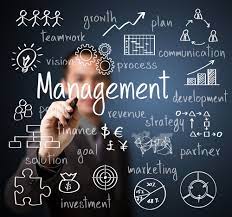
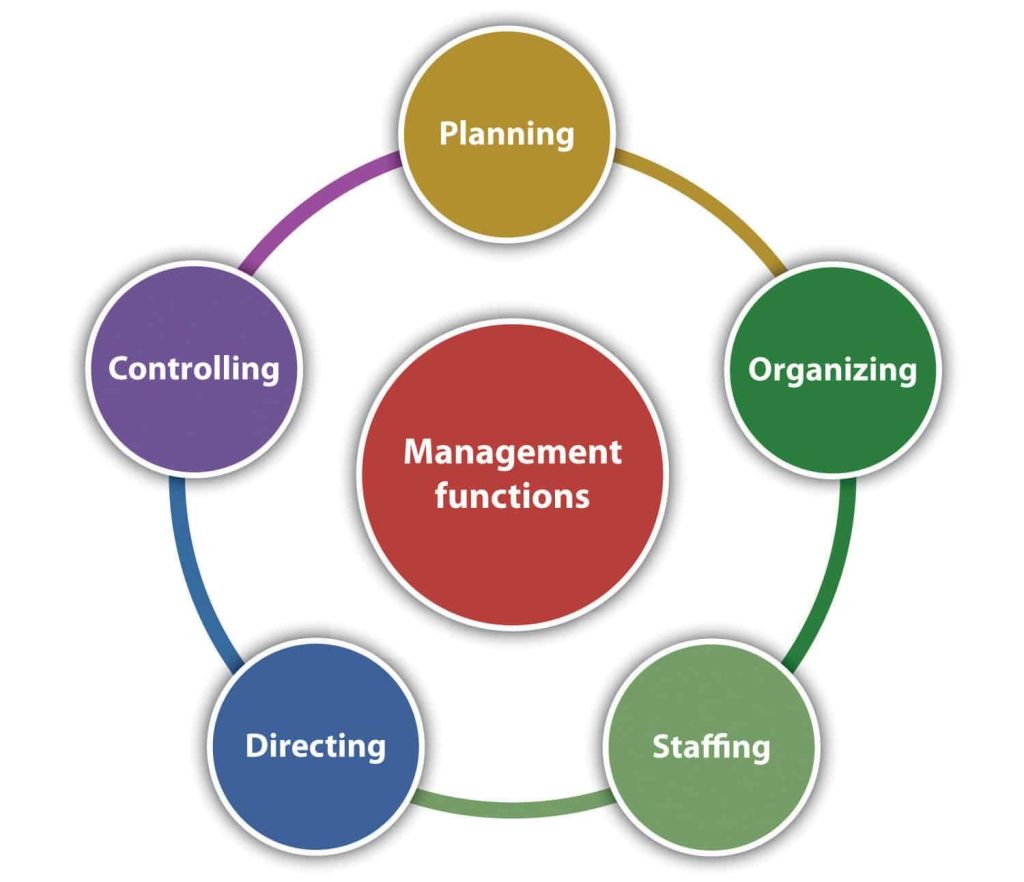
This course gives a brief introduction to the critical management skills involved in planning, structuring, controlling and leading an organization. It provides a framework to help students understand managing and being managed. Thus, leading them to become a more effective contributor to organizations that they join. Students can develop a system view of organizations through examining organizations as part of a context. It aims to train the learners to diagnose and suggest the suitable solutions to various managerial and organizational cases.
What is Human Resource Management
The focus of this course is to explore the principles of leading and managing people efficiently in today’s global enterprises. In this field, students access HR policy and practice in the areas of employment law, job analysis, employee relations and international HRM.
What is Organizational Behavior
This organizational behavior course combines classic arguments and contemporary empirical debates by discussing different elements of organizational structure. It introduces theoretical and empirical research on individual, interpersonal and group effectiveness at work. Course topics can be extended from decision making, motivation, leadership, teamwork to organizational culture. The learning method highly focuses on applying the essential tools of human side of management in role-play exercises and group projects in global organizations.
What is Economics for Management
The objective of the course is to show students how economics theory is related to the applications in managerial decision making and how resources are allocated and coordinated to achieve the organizations’ end goal. It emphasizes microeconomics ideas to solve problems and define the main concepts and models used in economic analysis. “Course topics covered include consumer theory, production, applications to the labor market, market structure, monopoly, oligopoly, product differentiation, pricing, decision analysis, bargaining, auctions, and asymmetric information.”
What is Law and Policy
The primary aim of the course is to make students aware of the basic legal concepts and implications affecting business transactions. It fosters a deeper practical sense of how to critically manage the important relationship between business and the natural environment
What is Organizational Strategy
The first half of the course studies strategic situations and learn how to utilize the analytical tools to evaluate a firm’s position in the industry. Due to the modeling foundation of game theory, students will be tackled the real-world challenges and build the appropriate action plans .The second half of the course explores the evidence of different managerial styles and the impact on firm process, organizational change and corporate culture that constitute today’s collaborative business environments.
Optional Courses
The flexible management courses share a common first year before allowing you to focus on your chosen specialism to enhance your career prospects. The dissertation and optional modules allow students considerable opportunities to focus their studies on areas of special interest. Students are able to choose some elective modules (optional courses) from a selection list include:
Strategic management
Managerial Economics
Bank Strategy and Management
Entrepreneurship
Introduction to International Business
Leadership
Advanced Financial Accounting
Conclusion
Business management focuses on the organising, planning and analysing of business activities that are required to efficiently manage and run a business.You will learn what makes an organisation successful in a saturated global business environment and will gain the knowledge and skills required to work for businesses of all sizes – from multinational companies to start-ups.
To engage a social learner, encourage both group collaboration and presentation. Consider:
Roleplaying historical events or works of literature
Collaborating on maths problems
Working as a class on comprehension questions
Auditory learners like to hear solutions and examples explained to them, and may gravitate towards music subjects and group learning as a way to understand information. Auditory learners often have a high aptitude for distinguishing notes and tones in music and speech.
Qualities often associated with auditory learners include:
Possessing a ‘good ear’ for music and tones
May be distractible
Likes to talk to self / others / hum / sing
Auditory learners might say words out loud or hum tones to better learn them. This strategy is key for keeping musical learners engaged in class lessons.
How to engage them?
If you’re a music teacher, you’re in luck. Auditory learners will be engaged from start to finish. For other subjects however, engaging aural learners requires some tact and forethought.
The key here is your voice (and the voice of your students). Write down something on the whiteboard, then read it out loud. Work on your delivery so you can express learning material in interesting and engaging tones. Similarly, encourage your students to read back their own notes to themselves (and the class). Hearing the sound of their own voice and the voices of others is engaging to auditory learners, but it can be a great learning tool for students of all types.
Other strategies you can try include:
Recording lessons for later listening and reference
Encouraging auditory listeners to ‘teach others’ verbally
Seating them away from distractions
2. Visual and Spatial learner
Visual learners like diagrams, drawing out concepts, charts and processes. They learn by looking at visual concepts, creating them, and watching other people create them. Visual learners might be organised or creative in their application, and find things like colours and shapes useful.
Visual learners often possess the following qualities:
Habitual doodlers / drawers
Observant
Not easily distracted
Enjoys planning
Prefers visual instructions
How to engage them?
To engage a visual learner in the classroom you’ll want to include elements like maps, diagrams and imagery. If you have a projector, try to include relevant images to go along with the course content. In geography and history, maps are helpful, while for maths and logic, go with diagrams.
Charts, images and diagrams will aid most students, so catering to visual learners doesn’t mean you have to ignore other types. When it comes to self-driven learning, encourage the spatially aware to sketch out their ideas, create mind maps and flowcharts. It should probably come to them naturally, but a bit of prompting can always help.
Other tactics you can use include:
Sitting visual learners near the front
Using colour codes and cues
Encouraging note taking and recopying notes during study
3. Verbal learner
Verbal learning includes both writing and speaking. Verbal learners might have a preference for reading and writing, word games and poems. Verbal learners know the meanings of a broad category of words, can use them effectively, and actively seek out new words to add to their repertoire.
Some qualities associated with verbal learners include:
Intellectual
Bookworm
Good story teller
Verbal learners often seek out careers in journalism and writing, administration, law and politics.
How to engage them?
Verbal learners will want to write down notes, talk about concepts and potentially present them as well. The trick with verbal learners is knowing what adjacent types of learning apply to them – are they an outgoing or more introspective verbal learner? Some may lean more to talking, while others to reading and writing. Try to cater to preference while also using their verbal abilities to push personal boundaries every once in awhile.
4. Logical and Mahematical learners
Perhaps unsurprisingly, mathematical learners err towards careers in programming, accountancy, science, research and other number and pattern-orientated careers. Some qualities associated with mathematical learners include:
Pattern recognition
Good with numbers
Predisposition towards grouping and classification
How to engage them?
Mathematical learners will greatly appreciate any type of learning that logically explains the subject at hand. For maths, that’s easy. For other subjects, it requires some effort and planning:
History and geography: Try to include statistics and classification taxonomy in your lesson plans.
Literature: Ask your students “What category of book is this?” Or in poetry, have them learn the meters and explain them to other students.
Music: Teach both musical instrument classification (woodwind etc) and the mathematical relationships between notes.
Art: A good starting point is the colour wheel and the effects of combining different colours.
With logical students, always look to incorporate a system. If you’re unsure, include the students in the development of that system. They’ll benefit from it greatly.
5. Physical and Kinaesthetic learner
Commonly called hands-on learners, kinesthetics prefer to physically engage with the materials of the subject matter. Some qualities associated with physical learners include:
Preference to ‘get their hands dirty’
Energetic, may drum fingers or shake legs
Action-orientated and outgoing
May de-prioritise reading and writing
Physical learners represent about 50% of the population,and gravitate towards careers with lots of hands on work like emergency services, physical education and sports.
How to engage them?
Channeling the energy and excitability of physical learners is key to offering a good lesson. Taking breaks so they can move around can help, but so can encouraging role play and movement within the lesson itself. Physical interaction is also important. The use of props and models will greatly benefit a kinaesthetic learner. Give them something to grab onto and they’ll process information much better than from a book or whiteboard.
Other strategies to engage physical learners include:
Encouraging movement during study (don’t punish them for fidgeting)
Decluttering desks and surfaces so they can focus on learning
6. Social and Interpersonal learner
Social learners show preference towards groups and collaboration. Some, but not all, will gravitate towards leadership within a group. Some of the qualities often associated with this type of learner include:
Extraverted
Good communicator
Sensitive and empathetic
It’s important for educators to understand that not all social learners are extraverted or highly communicative, and that they can also be visual, auditory, verbal, logical or physical learners. The interpersonal aspect perhaps better describes the settings in which they are most comfortable, rather than how they absorb information.
As such, teachers should be cognisant of the breadth of variation between different types of social learners. For example, social doesn’t strictly mean verbal. Some social learners prefer to listen in a group setting, rather than on their own.
How to engage them?
Interpersonal learners like to ‘do’ and to ‘share’. This can sometimes lead to distraction for other students who are more intrapersonal in their learning habits. To prevent this, try to channel social learners into providing value to the group, giving them tasks that use their energy usefully, with a focus on empathy for their classmates.
7. Social and Intrapersonal learner
Solitary learners can be visual, auditory, physical, verbal or logical learners. Fulfilling all the needs of the solitary student will ensure they are fully engaged. Some of the qualities often associated with this type of learner include:
Independent
Introspective
Private
Intrapersonal learners may gravitate towards careers with a lot of self determination or motivation, as well as solitary workloads. Think:
Researchers
Writers and authors
Programmers and coders
How to engage them?
In a classroom environment it can sometimes be difficult to engage a solitary learner. They might sit silently in the back of the classroom, only to ace the exam at the end of semester. For the educator, it’s important to engage them during class. Provide visual materials, books and learning aids. Designate quiet areas, and collaborate with defined sharing time so the solitary learner can feel adequately prepared.
Mixed learning approach
With large classrooms, it’s not always easy to personalise lessons, but using a mixed learning approach throughout coursework can help you cater to each type of learning style. You may decide to focus on a particular learning type each lesson, or incorporate multiple strategies within each lesson. The most important element is first recognising the differences in student learning – the rest will flow from there.
Consciousness, at its simplest, is sentience or awareness of internal and external existence. Despite millennia of analyses, definitions, explanations and debates by philosophers and scientists, consciousness remains puzzling and controversial, being “at once the most familiar and most mysterious aspect of our lives”. Perhaps the only widely agreed notion about the topic is the intuition that it exists. Opinions differ about what exactly needs to be studied and explained as consciousness. Sometimes, it is synonymous with the mind, and at other times, an aspect of it. In the past, it was one’s “inner life”, the world of introspection, of private thought, imagination and volition. Today, it often includes some kind of experience, cognition, feeling or perception. It may be awareness, awareness of awareness, or self-awareness. There might be different levels or orders of consciousness, or different kinds of consciousness, or just one kind with different features. Other questions include whether only humans are conscious, all animals, or even the whole universe. The disparate range of research, notions and speculations raises doubts about whether the right questions are being asked.
Examples of the range of descriptions, definitions or explanations are: simple wakefulness, one’s sense of selfhood or soul explored by “looking within”; being a metaphorical “stream” of contents, or being a mental state, mental event or mental process of the brain; having phanera or qualia and subjectivity; being the ‘something that it is like’ to ‘have’ or ‘be’ it; being the “inner theatre” or the executive control system of the mind.
And that’s why to be health conscious is better than being careless.
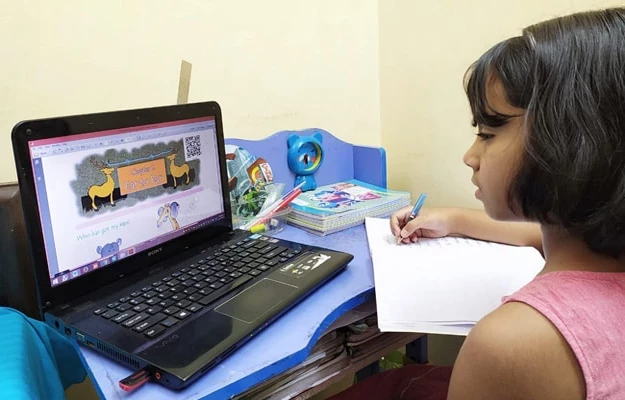
Online study has become a trend and more schools are opting for it with each passing day; more so, in the wake of COVID-19 lockdown.
Advantages
The online method of study has several advantages. It is very convenient as both you and your teacher can interact from the convenience of your respective homes. You can also ask questions and raise queries as you use to do in the classroom.
The online study method becomes more important in case of a natural calamity of emergency. The perfect example in this regard is the recent COVID 19 pandemic that the world is still recovering from. To date, many schools are running online classes, for the safety of students. Online study is indeed a safer alternative to school education.
Disadvantages
Apart from numerous advantages, the online method of the study also presents certain disadvantages. It lacks the filled with enthusiasm kind of environment presented by a classroom. The lively and joyful ambience of a classroom is usually lacking in an online session. Teachers and students interact with each other only on subject matters on one by one basis.
Moreover, overexposure to gadgets presents its own health hazards like headache, weak eyesight and lack of concentration, etc.
Conclusion
Despite the disadvantages, the online study method proved to be beneficial in certain specific conditions. When it is not advisable to leave your home, or it isn’t convenient for you, then in that case online study becomes a blessing in disguise.
India is the one of best and largest place for education systems in the world.
India is the country with over 1,000 universities and 50,000 colleges and institutions. The impact of covid 19 is observed in every sector around the world. The education sectors of India as well as world are badly affected by this.
Due to this pandemic, around 32 crore learners stopped to move schools/ colleges, all educational institutions are halted in India. COVID-19 made all the institutions to grow and opt for platforms , techniques, that are not used before. All the classes suspended and all the examinations, entrance tests are postponed.
This pandemic completely destroyed all the schedules of every student. COVID-19 Impact on education is also leads a great damage on country economy at present and in future.
COVID-19 has created many opportunities and challenges for educational institutions to strengthen their technological knowledge and infrastructure.
The lockdown made the entire education online, the teachers are teaching and assigning works through online by using some apps like zoom, Google meet, teams, YouTube, Facebook, skype .,etc.
India is not fully equipped to make education reach every corner of the country through online process. The students those who are not having access to internet will suffer a lot due to the present choice of digital platforms.
Universities and the government of India are relentlessly trying to come up with a solution to this problem.
Ever imagined reading someone’s mind? Well you can do that once you go through the wonderful experience of learning effective communication. Yes, a simple yet complicated study of human behaviour, attitude, personality can be very well assessed through communication. Maybe you feel it absurd talking about communication since it’s a very typical thing we all inhibit as we grow. But, Let me correct you. It’s an art to communicate EFFECTIVELY.
Communication not only means speaking and listening. It’s more about how you present yourself while speaking and how you behave while listening.
It creates an impact on the person you are communicating with. Suppose you have a business meeting going on and you are wearing your pyjamas while presenting your COMPANY. The clients will lose interest on first sight since your clothes are speaking about you . And what if you go to a night club wearing formals, all eyes will be on you. Not because you look attractive, but you went the wrong place, they will think. Of course clubs welcome party wears! Every place has its own demand, you see. It is essential to get into what the situation demands of you.
For an effective communicator, you have to be a good speaker as well as a good listener. You should be able to ADMINISTER one’s thoughts. We will soon return to this point after learning few basics.
Now, When you are in a formal set up, you should know what your business requires you to be like. In a textile business you should have knowledge of cloth materials while in a transport business you should be aware of the routes where your business is operative. The basic motive behind KNOWING YOUR BUSINESS is that it allows you to interact with your clients, employees, suppliers, in a better way. The basic know-how plays an important role in deciding investment plans, employee- pay, expansion and likewise for the company. Similarly if you are an employee/employer of the company, you should be aware of the current trends and evolutions that may bother your business. Actions are to be taken accordingly. Each and every person concerned should be active in terms of knowledge. When you will go for an interview with no idea of what the company offers, the rejection happens before the communication. It is like hitting hammer on your own legs. Not only it creates negative impact about you but also there are chances of you being tricked by people. They may hire you for irrelevant or undesirable work without you knowing an inch about it. Such cases do exist!
However, Being knowledgeable is not sufficient to interact. You should follow the basic etiquettes of a business.
After making a formal appearance, Your body language while presenting matters a lot.
Body language shows how confident you are and what determination you have to turn the world around. Your behaviour should be active and not like the one of a procrastinator. Organisations employ or contract with only those who have the stamina to do something for their welfare. No one recognises a lethargic and frustrated person. You should be a solution provider for their problems and not a problem yourself.
Good posture and attentive behaviour are the ideology to get attraction towards you.
A smile on the face, tight hand shakes, confident walk
These attributes relate to interviews but apply to all businesses where companies deal with the clients on a daily basis. A serious look is not advisable as much a happy face while dealing formally. Weak hand shakes signal the low confidence level of a person. Similar is the case of walking manner. Remember, you are being judged throughout. Nothing gets ignored when it comes to formal interactions.
There are more of such signals that show your nervousness. While shaking hands, if your hands are getting cold, the interviewer will know it and such observations may affect your selections for jobs having specific demands.
Another example can be your movements. If you are clicking a pen while waiting for your turn in the interview or you are changing your postures very often or clicking your fingers; all of these give a direct impression in the interviewers head. Here, your behaviour speaks about you.
On the contrary, if you are too loud while speaking or too frank/cheerful/excited while interacting with that person of authority, it shows your over confidence or other such attitude as may be undesirable for the post you are being interviewed for. Formal set ups admire moderate personality employees-neither too loud in their behaviour nor too lazy.
Having discussed the basics, we now come to the most important and the final stage of our discussion – Administering the thought process
Now that you know the dressing sense, body language and awareness (knowledge) required for effective communication in formal set ups, we now learn how to read the mind of the individual we are interacting with. It is quite a simple task which comes with experience. Ever imagined how such big organisations manage time to interview a number of applicants ? They are the mind readers. They excel at knowing your personality via your thought process. You are asked questions that reflect you. Your way of speech and your answers decide if you are suitable. This is why interviews are often quick as they read you through your words and expressions.
But what does this has for you? You also can read them up. As humans, we interact and communicate on a daily basis. What you need is work upon it. Make your every interaction effective by being attentive and presentable. You will come up with more ideas to communicate through practice. You should be clear in your speech and responsive to others‘. Give time to others’ complete their point and make place for your words on the same hand. This way you get better at understanding point of views.
Through more such assessments you will become able to grasp ideas before people speak up. You will know what the interviewer is going to ask about. Yes, it happens! You too will start to get an idea of the thought process of a person and analyse his personality. These signals are hard to trace in formal set ups, that is why it comes with experience…
Web hosting is an online service that enables you to publish your website or web application on the Internet. When you sign up for a web hosting service, you basically rent some space on a physical server where you can store all the files and data necessary for your website to work properly.
A server is a physical computer that runs without any interruption so that your website is available all the time for anyone who wants to see it. Your web host is responsible for keeping that server up and running, protecting it from malicious attacks, and transferring your content — such as text, images, files, etc. — from the server to your visitors’ browsers.
Types of Web Hosting Packages
Shared Hosting
This type of hosting is the most common answer for most web hosting needs and it’s an excellent solution for most small businesses and personal blogs. With this type of hosting, you’re sharing one server with other clients. Websites hosted on the same server share all its resources, such as memory, computing power, disk space, and others.
Pros :
Low cost, excellent for small online business websites
No need for specific technical knowledge
Pre-configured server options
User-friendly control panel — hPanel
Maintenance and server administration is taken cared for you
Cons :
Little or no control over server configuration
Traffic surges on other websites can slow down your website
2. VPS Hosting
When you’re using a Virtual Private Server — or VPS for short — you’re still sharing a server with other users. However, your web host allocates an entirely separate partition for you on that server. This means you get a dedicated server space and a reserved amount of resources and memory. In fact, VPS hosting can be great for medium-sized businesses with a rapidly growing number of websites and traffic.
Pros :
Dedicated server space
Traffic surges on other websites have no effect on your performance
Root access to the server
Easy scalability and high customizability
Cons :
More expensive than other types of hosting
Technical and server management knowledge is a must
3. Cloud Hosting
Cloud hosting is currently the most reliable solution on the market. With cloud hosting, your host provides you with a cluster of servers — your files and resources are replicated on each server. When one of the cloud servers is busy or encounters a problem, your traffic is automatically routed to another server in the cluster. This results in little to no downtime, which is excellent if you own a very busy website.
Pros :
Little to no downtime
Server failures have no effect on your website
Allocates resources on demand
Pay-as-you-pricing strategy — you only pay for what you use
More scalable than other web hosting types
Cons :
Hard to estimate the actual costs
Root access is not always provided.
4. WordPress Hosting
WordPress hosting is a particular form of shared hosting, created for WordPress site owners. Your server is configured specifically for WordPress and your site comes with pre-installed plugins for crucial tasks, such as caching and security.
Pros :
Low cost and beginner-friendly
One-click WordPress installation
Good performance for WordPress sites
Customer support team trained in WordPress issues
Pre-installed WordPress plugins and themes
Cons :
Recommended only for WordPress sites, which can be a problem if you want to host more than one website on your server
5. Dedicated Hosting
Dedicated hosting means that you have your own physical server that’s dedicated solely to your website. Therefore, you’re given incredible flexibility over how you want to manage your website. You can configure your server as you wish, choose the operating system and software you want to use, and set up the whole hosting environment according to your own needs.
Pros :
Full control over server configuration
High reliability and security options
Root access to your server
Cons :
High cost, more oriented towards larger businesses
Technical and server management knowledge is a must
Excel is typically used to organize data and perform financial analysis. It is used across all business functions and at companies from small to large. The main uses of Excel include: Data entry.
Excel is a software program created by Microsoft that uses spreadsheets to organize numbers and data with formulas and functions. Excel analysis is ubiquitous around the world and used by businesses of all sizes to perform financial analysis.
The main uses of Excel include:
1 Data entry 2 Data management 3 Accounting 4 Financial analysis 5 Charting and graphing 6 Programming 7 Time management 8 Task management 9 Financial modeling 10 Customer relationship management (CRM) ** Almost anything that needs to be organized!
Excel is used extensively in finance and accounting functions. In fact, many organizations run their entire budgeting, forecasting, and accounting functions entirely out of Excel spreadsheets.
While Excel is defined as a “data” management tool, the data that is most commonly managed is financial. At CFI, we would define Excel as the ultimate financial software. While there are other pieces of financial software that are tailored toward performing specific tasks, the strongest point about Excel is its robustness and openness. Excel models are as powerful as the analyst wishes them to be.
Accountants, investment bankers, analysts, and people in all types of financial career paths rely on excel to perform their daily job functions.
And one should know how to use MS Excel. Its on of the most important skill in today’s corporate world.
Punctuality means doing a work at the proper time. To account an engagement at 10 o’ clock in the morning and to arrive at the place to keep it at 10-30 does not become a gentleman. It annoys the other party and it harms the future of the caller. No one who is unpunctual in attendance to work can be depended on or trusted in. On the other hand, a punctual man is one who knows the value of time. Such a man is a perfect gentleman and everybody has faith in his efficiency and character.
IT GIVES A MEANING TO YOUR LIFE
Punctuality is important in every sphere of life. it is rightly said that punctuality is the crown of a king. It is the most precious jewel to the character of a man. A student has to be punctual at school or college. The manager of a big firm or its common clerk has to be punctual in his office. Equally it is necessary for a factory worker, a politician, or a statesman. The greatest value of punctuality is that it is a great time-saver. An unpunctual man is always worried about time. A student who is unpunctual in his class lags behind others in his studies, he creates confusion both for himself and for others in the class. He is considered a disturbing element and is looked down upon by his teachers as well as his classmates.
MISS IT AND WELCOME YOUR HARM
Many battles have been lost on account of unpunctuality. Many Cases in Courts of Law have been lost, because one of the parties did not come in time; many a train has been missed and business lost to unpunctuality. So, unpunctuality leads to dangerous consequences. Relation of free people knows the value of punctuality. Indians are now a free people and they should cultivate punctuality in everywhere. Unpunctuality is a vice and out of it are born other vices like dishonesty, falsehood, idleness and shirking of one’s duty.
So, we observe how punctuality plays a foremost role in anyone’s life. being unpunctual is a curse, we cannot be as winner as others. Besides, this rhythmic world demands punctuality so that all of us can be successful in life.
In 1936, three years before WWII started, a Russian Orthodox family of four fled to the Siberian “snow forest” to escape religious persecution. The couple, Karp and Akulina Lykov, their 9-year-old son, and a 2-year-old daughter, only took a few possessions with them.
After a trek in the wilderness, they settled somewhere close to the Mongolian border, where they started building a succession of primitive huts. The Lykovs settled down there for good. They even had two more children, who were born in the wilderness.
The family spent their days hunting, trapping, and farming. The mother of the family, Akulina, died of hunger in 1961. She chose to feed her children.1 But the family remained in the wilderness until a geologist discovered them in 1978. The Lykovs lived there without any form of contact with the outside world for 42 years.
1981 was a tragic year. Two of the children suffered from kidney failure, and another member of the family died of pneumonia. Karp passed away in 1988 in his sleep. The only survivor, Agafia, still lives in the wilderness today. The Lykovs were featured in a 2013 episode of Far Out by Vice.
It’s a remarkable story of survival, teamwork, and self-control. Even after the family was discovered in 1978, and realized that there was no war, they decided to live in a harsh place you can only reach by helicopter most part of the year.
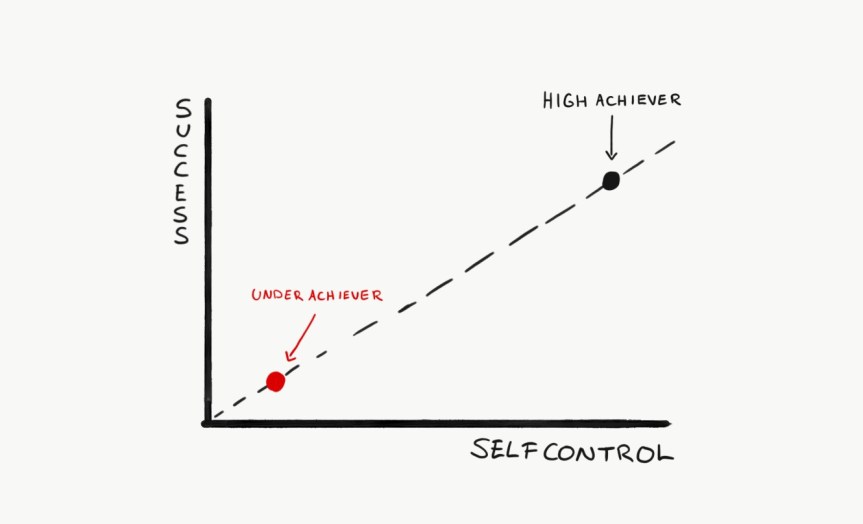
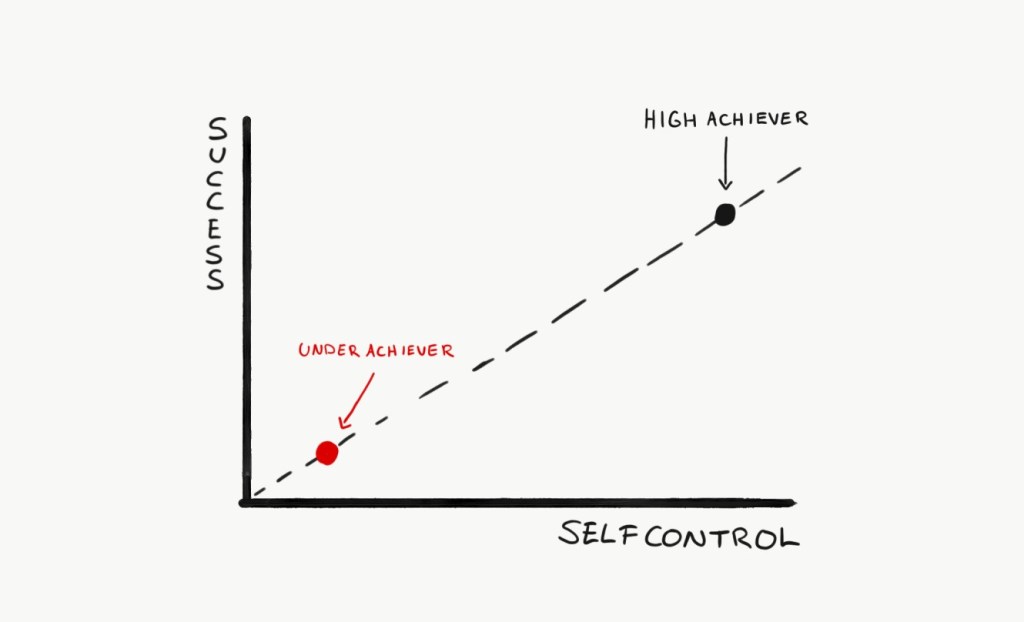
What is Self-Control and Why Does It Matter in Life?
Self-control consists of two components, namely, our ability to (1) resist temptations and (2) exercise control over our emotions and behavior.2
To me, self-control is one of the most important things in life. Without it, I wouldn’t even write this article. Let’s face it, when you share anything on the internet that gets enough views, you always get a bunch of hate. Every time that happens, I feel like quitting. But I also realize that there are people who find these articles useful.
Self-control is what keeps me level-headed. It makes me resist my temptation to get pissed off and walk away. There’s also scientific proof that self-control matters in life.
A 2020 study by Dr. Penny Spikins and James Green from the University of York, confirmed that self-control is one of the most important factors in human evolution:3
“We rely constantly on self-control in every aspect of our lives. Although it is not an ability unique to humans, our elevated levels of self-control may have played a key role in our evolution. Self-control is likely to have been key to many of the traits such as prosociality, that define modern humans.”
The study shows that self-control plays a role in important aspects like deliberate practice, forward planning, time and energy investment, and tolerating discomfort. Think of the Lykovs. Without those factors, they couldn’t survive longer than two weeks.
Self-Control in Daily Life
Most of us want to have a fulfilling career, vibrant social life, good relationships with our loved ones, and be in good physical shape. Here’s the thing: We need self-control to make those good things happen. Let me give you a few examples of what that looks like in daily life.
Eating Healthy
I stumbled upon this question on Quora: “Why is it hard to eat healthy?” The top answer bluntly says, “You lack self control.” That made me laugh because it’s the truth. But we all know that it’s not that simple.
Eating healthy is a problem for many reasons. For example, most of us see food as pleasure—not fuel. In developed countries, we don’t have to worry about getting access to food for our survival.
But your body still has the natural urge to take advantage of food when it’s available. On top of that, there are many biological processes going on that we’re not aware of.
A recent study done at the University of Leeds, using data from 27,334 individuals from 12 European countries, showed there’s a clear link between education and diet.4
In my experience, eating healthy has nothing to do with your ability to resist buying junk food or ordering a pizza—it has everything to do with how much you educate yourself about your body. That’s an important reason why eating healthy is difficult: We lack the self-control to learn about nutrition, longevity, and how our bodies function.
Running a Business
I started my first business in late 2010 with my father. Our business, a laundry technology company, will turn 10 years old this November. We’re glad to reach this milestone because we realize most businesses fail in their first few years.
Recent statistics show that 65% of businesses don’t make it until their 10 year anniversary.5 Why is that?
Again, this is just as complex as eating healthy food. But in my experience, it’s a business’s ability to adapt to changes. Our world is changing faster every year. In our business, we’ve kept adapting our products and services to stay relevant. We’re also driven by serving our clients.
Whenever I see businesses or experts use language like, “We’re the #1 provider of so and so,” or “I have 50 million views,” I cringe. Operating a business has nothing to do with you or your badges of honor. It’s about what you can do for your clients. It requires self-control to stay focused on what matters.
Self Improvement
Why is it so difficult to improve yourself? Every day, we have the choice to do something that pays off later instead of now. Going to the beach, binge-watching tv shows, reading gossip, drinking alcohol, smoking, or every other pleasurable activity in life always gives you an instant payoff.
You temporarily feel good. But in one year, two years, five years from now, you look back and you see no progress in your life. In life, we have to deal with a concept called “entropy.” Entropy is the Second Law of Thermodynamics and stands for the degree of disorder or uncertainty in a system. The basic idea is that everything inside a system moves towards disorder.
That’s why people often say, “Adapt or die.” If you don’t move forward, everything that’s related to you as a human will deteriorate. That’s a scary outlook. But here’s the problem: The degree of deterioration is so small that we don’t notice anything on a day-to-day basis.
You probably feel the same as yesterday, correct? Entropy in humans works over a longer period. That’s why we feel no urgency to improve ourselves today. We need self-control to invest in ourselves despite seeing a lack of daily improvement.
How to Develop More Self-Control
How can we get some? Based on everything you’ve read until now, let me share three things you can do.
1. Direct Your Energy Towards a Useful Pursuit
This is a common theme with every single person who demonstrates a high degree of self-control. There is always a higher pursuit or aim. The Lykovs survived in the wilderness to avoid prosecution and death.
Viktor Frankl famously survived the Holocaust because he was driven to see his wife again. Our lives might not have the same life and death stakes—we still need a pursuit.
And our pursuit must be useful to make it stick. Shallow pursuits that only fulfill your materialistic desires will not motivate you to control your urges. You need something that’s so important you’re willing to do whatever it takes.
When I started my blog, I was dedicated to sharing honest advice without hidden intentions. To me, that was a worthy pursuit. That drove me to write every single day. As of this writing, I’ve published 331 articles on my site.
2. Set Long-Term Goals
On a day to day basis, I rely on a system that keeps me productive. A system is a combination of productivity strategies that help you to stay consistent. Read more about systems here.6
But when it comes to long-term drive, I love to set goals because they will give you a clear sense of direction. In what direction do you want to take your life over the next three, five, ten, and twenty years? This is a very hard thought-experiment if you take it seriously.
Most people say, “I don’t know.” But you shouldn’t let yourself off the hook like that. Practice self-control by forcing yourself to pick a direction in life. You can always adjust. The long-term goals I set for myself five years ago have changed today. But at least they got me moving.
3. Minimize Stress
There’s some evidence that stress sabotages self-control.7 When you’ve had a stressful moment at work, it’s tempting to grab a candy bar (or two) to release the stress, right?
The same analogy is true for every other stress-related behavior. If you examine your life, you’ll find that you do a lot of things to simply manage stress. In fact, I believe that for most of us, that’s all that we do.
When I lived a stressful life years ago, I was only thinking about ways to get rid of that stress. But you’re only treating the symptoms that way. You can take as many vacations or buy as much crap you want from the internet, none of it will relieve your stress. If you truly want to minimize stress, you must design your life in a way that gives you a stress-level you can handle.
For me, that meant doing different work and leaving city life (I was living in London at the time). Some situations simply give us too much stress. A bad relationship is another common cause of stress. Unfortunately, there are no simple “step-by-step” tips for managing stress.
Sure, you can meditate, take long walks, read, or journal—all these things will lower stress—but there’s nothing better than designing a life that causes less excessive stress. But that doesn’t mean we should avoid all stress.
An optimal level of stress is actually great for us and it will slow down entropy. We need to find out what that level is for ourselves. Every person has a different stress tolerance. The key is to improve our self-awareness and understand what stresses us out. Then, we want to lower that to a level that we can handle without getting frustrated.
Conclusion
Let me repeat the definition of self-control again: Our ability to (1) resist temptations and (2) exercise control over our emotions and behavior.
These two aspects will increase the quality of our decisions and therefore, our lives. I hope that all of this inspires you to strengthen your self-control. Directing your energy towards a useful pursuit, setting long-term goals, and minimizing stress are all good ways to set yourself up for more self-control.
Strengthening self-control is one of those things that has no end goal. It’s a never-ending process that will only benefit us the more we master it. When’s the last time you heard, “That person has too much self-control?” Exactly. More is better.






















 Eduindex
You must be logged in to post a comment.