Guru Nanak was the founder of the religion of Sikhism and the first of the ten Sikh Gurus. He was born on 15th April,1469 into a Bedi (Khastriya) family in a Muslim village of Rai Bhoi Di Talwandi, now called Nankana sahib near Lahore. His father was Mehta Kalyan Das Bedi, popularly shortened to Kalu Mehta and his mother was Tripta Devi. At the age of 5 he voiced his interest in divine subjects. At the age of 7 he was enrolled at the village school. He followed her elder sister to Sultanpur to live with her and her husband Daulat khan at the age of 16 years. He was married to Mata sulakhniat about 19 years of age. At the age of 30 he had a vision and disappeared from the village. After three days he reappeared and spoke about god’s path-“ There is neither Hindu nor musalman’ so whose path shall I follow? I shall follow god’s path.” He said that he had been taken to god’s court. There he was offered a cup filled with Amrit(nectar) and given the command- “ This is the cup of the adoration of god’s name. Drink it….I have bestowed the gift of my name upon you. Let this be your calling. “He made four major journeys-first, towards Bengal and assam, second, towards Tamil Nadu, third, towards Kashmir, Ladakh and Tibet, and the final tour towards Bagdad, mecca and medina on the Arabian peninsula. At Mecca, Guru Nanak was found sleeping with his feet towards the Kaaba Mosque. Kazi Rukan-ud-din observed this and angrily objected this and angrily objected. Guru Nanak said,” please turn my feet in a direction where there is no house of god.” The Kazi understand the meaning that “god is everywhere” and was struck with wonder. Guru Nanak preached “god is the doer and without god there is no other.” He advised his followers to practice his teachings in three ways:
Naam Japna: Chanting the Holy name,
Kirat Karo: Earning a living honestly,
Vand Chakko: Helping those with less who are in need.
Guru Nanak expired on 22 September,1539 in Kartarpur at the age of 69.
Editing is a key skill in video production that can make or break the overall quality of a video. However, editing is a relatively simple process to understand. Once you have learned the basics you’ll be able to use your new skills to significantly raise the quality of your videos. Most of all, experimentation is key to becoming a great editor, so don’t be afraid to take the road less travelled.
THE METHODS FOR LEARNING:
Learning Basic Editing Techniques
Acquiring Advanced Editing Techniques
Choosing Ideal Software
1 Film footage to gather some practice material. Film anything and everything, as long as there’s lots of it. Don’t worry about trying to tell a story, just film your surroundings, the local park, your street, your room, or even your pet.
Most modern phones are able to shoot HD footage that is perfect for practicing your editing skills.
If you don’t have a camera handy, or just want to get started on editing, you can download video clips online to practice on.
2 Import the footage into your software. Usually editing software will have what’s called a ‘bin’, a specific place in the program to store all your raw footage.[1] This will look like a list of folders or a large blank space on the left side of the main editing screen.
If you can’t find an import button some software will allow you to drag in the file from your computer into the software.
3 Add clips to the timeline. After you have imported footage into the bins, start dragging them onto the ‘timeline’. The timeline appears as a long horizontal bar that takes up the bottom half of the editing screen.
The timeline is where the majority of the work will be done. Here, you can order, rearrange, and manipulate the footage in a variety of ways
4 Rearrange the clips on the timeline. Although the footage shot may be random, try rearranging the clips into different orders to tell different stories. To do so, click and drag the long rectangular box (that represents the video clip) back and forth.
The clips you place together can affect each other. The viewer of a video will always be thinking about the following clip in the context of the previous one.[3] When you’re watching a movie, TV show or video clip, the cut can become completely invisible if performed correctly.
5 Trim the video clips to change the pace of the video. The name of the tool varies from program to program, but generally it’s called the ‘Trim’ tool. You use this tool to trim the front or back of a clip to make it shorter or to extend it outwards. Click the very edge of a video clip in the timeline and drag it inwards and outwards. This will ‘trim’ the clip.
6 Implement transitions to make cuts more appealing. Depending on the tone of the video being made, a pre-made transition from one clip to another can give the video a breath of fresh air. Navigate to the ‘Transitions’ tab located in most editing software and drag a transition you like to the cut between two video clips.
Although transitions are fun, always be thinking about who you’re making the video for. Too many exaggerated transitions can detract from the quality of a video.
7 Export the video from the editing software to save your edits. Once you’ve finished trimming, rearranging and importing all the footage you like, it’s now time to export the video. The software collects all the edits you made of the clips and ‘encodes’ them into a friendly format.
Sometimes exporting can be intimidating due to the sheer amount of options available to you in the software. If in doubt, always export at 24 frames per second (fps) and at 1080p. This means that you’ll be able to play the final video in the media player of your choice. The quality will usually look better after the video is exported.
If you want to learn video editing then first you should understand very basics of video editing.
Then I think you should first start it with Windows movie Maker and after that goes to some other softwares. I’ll suggesting you some best softwares for video editing :—
Adobe premiere pro
Corel video studio
Light worksFinal cut pro
Sony Vegas movie studio
Cinelerra
Pinnacle studios
iMovie
Pitvi
These are the some software you must try to become a good video editor but as I said you should start with learning basics of video editing.
Some you tube channel where you can lean video editing are :—
Surfaced Studios
Rocketstock
kaptainkristian
Peter McKinnon
PremiumBeat
Buddies I am not a professional editor and not also connected to this video editing feild too much. But I provided you information as best of my knowledge.
Ideally, what should be said to every child, repeatedly, throughout his or her school life is something like this: ‘You are in the process of being indoctrinated. We have not yet evolved a system of education that is not a system of indoctrination. We are sorry, but it is the best we can do. What you are being taught here is an amalgam of current prejudice and the choices of this particular culture. The slightest look at history will show how impermanent these must be. You are being taught by people who have been able to accommodate themselves to a regime of thought laid down by their predecessors. It is a self-perpetuating system. Those of you who are more robust and individual than others will be encouraged to leave and find ways of educating yourself — educating your own judgements. Those that stay must remember, always, and all the time, that they are being moulded and patterned to fit into the narrow and particular needs of this particular society.
Doris Lessing, The Golden Notebook
Feminism in India is a set of movements aimed at defining, establishing, and defending equal political, economic, and social rights and opportunities for women in India. It is the pursuit of women’s rights within the society of India. Like their feminist counterparts all over the world, feminists in India seek gender equality: the right to work for equal wages, the right to equal access to health and education, and equal political rights.Indian feminists also have fought against culture-specific issues within India’s patriarchal society, such as inheritance laws.
The history of feminism in India can be divided into three phases: the first phase, beginning in the mid-19th century, initiated when reformists began to speak in favor of women rights by making reforms in education, customs involving women; the second phase, from 1915 to Indian independence, when Gandhi incorporated women’s movements into the Quit India movement and independent women’s organisations began to emerge; and finally, the third phase, post-independence, which has focused on fair treatment of women at home after marriage, in the work force, and right to political parity.
Despite the progress made by Indian feminist movements, women living in modern India still face many issues of discrimination. India’s patriarchal culture has made the process of gaining land-ownership rights and access to education challenging. In the past two decades, there has also emerged a trend of sex-selective abortion. To Indian feminists, these are seen as injustices worth struggling against and feminism is often misunderstood by Indians as female domination rather than equality.
As in the West, there has been some criticism of feminist movements in India. They have especially been criticized for focusing too much on privileged women, and neglecting the needs and representation of poorer or lower caste women. This has led to the creation of caste-specific feminist organizations and movements
According to Maitrayee Chaudhuri, unlike the Western feminist movement, India’s movement was initiated by men, and later joined by women. But feminism as an initiative by women started independently a little later in Maharashtra by pioneering advocates of women’s rights and education: Savitribai Phule, who started the first school for girls in India (1848); Tarabai Shinde, who wrote India’s first feminist text Stri Purush Tulana (A Comparison Between Women and Men) in 1882; and Pandita Ramabai, who criticized patriarchy and caste-system in Hinduism, married outside her caste and converted to Christianity (1880s). The efforts of Bengali reformers included abolishing sati, which was a widow’s death by burning on her husband’s funeral pyre, abolishing the custom of child marriage, abolishing the disfiguring of widows, introducing the marriage of upper caste Hindu widows, promoting women’s education, obtaining legal rights for women to own property, and requiring the law to acknowledge women’s status by granting them basic rights in matters such as adoption.
The 19th century was the period that saw a majority of women’s issues which came under the spotlight and reforms began to be made. Much of the early reforms for Indian women were conducted by men. However, by the late 19th century they were joined in their efforts by their wives, sisters, daughters, protegees and other individuals directly affected by campaigns such as those carried out for women’s education. By the late 20th century, women gained greater autonomy through the formation of independent women’s own organisations. By the late thirties and forties a new narrative began to be constructed regarding “women’s activism”. This was newly researched and expanded with the vision to create ‘logical’ and organic links between feminism and Marxism, as well as with anti-communalism and anti-casteism, etc. The Constitution of India did guarantee ‘equality between the sexes,’ which created a relative lull in women’s movements until the 1970s.
Work is worship for those who take work seriously and it should be so because your work reflects your personality to some extent and how we do it is also part and parcel of our identity. Here in, comes the real trouble because when you do the work you enjoy, you try to put in your heart and mind into it but, if you are unfortunate enough to be doing the kind of work that you are not proud of, then surely enough it shows in your outcome.
Money, being the prime factor in today’s world and so, when your sole priority is to mint money, then it hardly matters whether you are an engineer or an interior designer. You would try to impress upon the authorities in your field with the sole objective of prosperity in your field. For this, you may go to any extent of unethical attempts, without even thinking about its aftermath.
Mental tension and stress and the related health hazards are all part and parcel of today’ s changing world. Today’s young generation is the first generation of professionals who are earning, four times more than what their parents have earned and so they have a lot of money at their disposal, which is making them spend more All this was possible only because of India’s changing economic condition and the advent of multinational companies with huge capital investment and infrastructure.
In fact, the call centre culture has also changed our lives for the worst, since lifestyle patterns are changing drastically. Initially, youngsters seem to be enjoying the western influence of working like asses on five days and reserving the weekends for parties and celebrations. And to get those two days of relief, they are ready to slog whether they like their job or not. It henceforth, becomes a mechanical slogging where, you are not concerned, whether your mind is at work but it’s just about the finished product that they look forward to. On the whole, we cannot rule out the fact that there are people, who are fortunate enough to bag the job they desire or those who have ultimately landed in those fields, where they have wanted to be. Such people are really lucky in the sense that they do their work with the utmost dedication and they have a fulfilment in life, even if they are not taking home fat salaries like their counter-parts, but don’t have any satisfaction to boost of.
There is a third side to all this and that is trying to derive meaning in whatever meaningless things we are doing to make both ends meet. So even if, one is in a job that is detested by him, he can still work towards generating a positive attitude to one’s Work. Try and enjoy, what one is doing and thus try to attain a sense of satisfaction, that he supposes, he could have otherwise got.
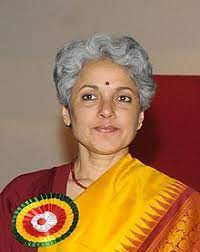
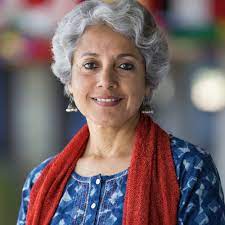
In this highly competitive world, everyone is trying to prove themselves in their areas of interest. Like men, now women are also pursuing their dream wilfully. They are the most competitive persons when compared to men. This doesn’t mean that men are incapable. Just that women are firm and strong enough to prove themselves. You may have a thought why am I talking about women too much? There is definitely a reason. Yeah! Today, I am going to share with you about an Indian Woman who marked her identity in WHO. I think you may have guesses or you should have found who she is? I think, your guess is correct. It’s our Soumya Swaminathan.
Dr. Soumya Swaminathan
Everyone know about the “Father of Green Revolution of India”, Dr. M.S. Swaminathan, right? Soumya Swaminathan was the daughter of Dr. M.S. Swaminathan. She was born on 2nd May 1959 at Kumbakonam, Chennai, Tamil Nadu. Her full name is Soumya Swaminathan Yadav. Her mother, Mina Swaminathan, was an Indian Educationalist. Soumya has two siblings namely Madhura Swaminathan and Nithya Swaminathan. She was married to Ajit Yadav who was an orthopedic surgeon.
Dr. Soumya Swaminathan with her parents and two siblings
Now, let’s see about Dr. Soumya Swaminathan’s educational qualifications and her academic achievements.
She received her M.B.B.S degree from the Armed Forces Medical College, Pune.
She completed her M.D. in AIIMS, New Delhi.
She got her Diplomate of National Board from National Board of Examinations.
She completed her Ph.D., in neonatalogy and pediatric pulmonology.
Let’s see about her Career achievements.
In 1989, she was a Research Scholar in the Department of Pediatric Respiratory Diseases in United Kingdom till,1991.
She also worked as a Senior Research Registar, at Cardiopulmonary Medicine Unit in New Jersey.
In 1992, she joined National Institute for Research in Tuberculosis, as a coordinator and later she became it’s Director.
From 2009 to 2011, She worked as the Coordinator of WHO/UNICEF/UNDP, for a research and training on Tropical diseases in Geneva.
She was the Director of ICMR and Secretory of the Ministry of Health and Family Welfare, in India from August 2015 to November 2017.
From 2017 to March 2019, Dr. Soumya Swaminathan was the Deputy Director-General of WHO.
In 2019, she has become the Chief Scientist of WHO in research about the SARAS CoV-2 and worked hard in this pandemic getting detailed reports from all the countries. And she conducted interview once in two week to make us know the exact situation of the covid.
Let me tell you some of the awards won by her. In 2008, She received Kshanika Oration Award from ICMR. In 2011, she was given an Lifetime Achievement award by the Indian Association of Applied Microbiologists. In 2016, She received Research Endowment Award from NIPER and ASTRAZENECA.
I am inspired so much by Dr. Soumya Swaminathan. Yes, now I have the spark to achieve something big in my career and want to reach heights like her. What about you? I hope you too have your own dreams. Give your full effort and just do it. She had proven herself and made her Father proud. Let’s be like her and make our parents proud. Her achievements show us, how capable women are!! How strong!! Okay, Come on! Women, have confidence in yourself that you can do anything and everything! If you can’t, who can!! Let’s make our India proud.
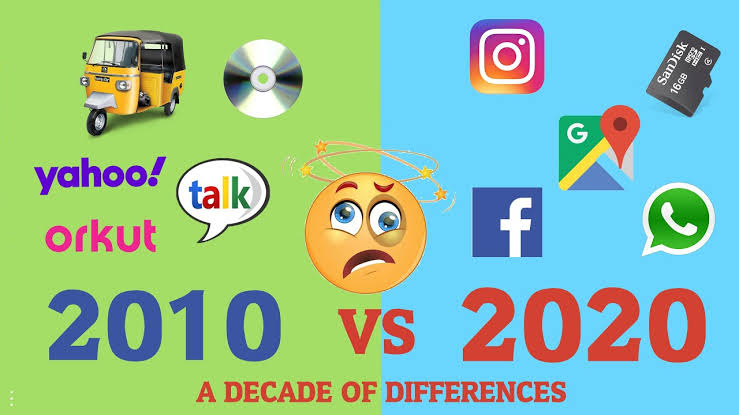
It has been ages since I last smiled at an unknown stranger when our eyes met. Social media, news, movies, has made us so uptight and alert that our natural reflex has shifted from smiling to suspecting them.
We no longer enjoy food as we did
Snapchat and Instagram have made people forget the value of here and now. Instead of being happily in the present moment, we are often more focused on portraying a happy life which may be far from the reality. The satisfaction of the first sip of the morning tea or the first bite of the domino’s pizza doesn’t feel the same as it did a decade ago. The first thought that we have when we see a delicious food now is to click a perfect picture to show other’s how wonderful our life is.
We no longer see Bollywood as we did before
A decade back movie stars were famous for their work and that was enough in itself. Acting was seen as a profession and a job. However, the current Bollywood seems more like a political party than a show business. It is not the work but the lives of the celebrities that we are most interested in. Political leaders are supposed to have opinions and that is what is to be taken seriously by the people. However, now it is the opinions of our favourite celebrities that we are more into.
We no longer have real meaningful bond
The friendship and relationship trends have changed since the last decade. There were more meaningful bonds between link minded people who were true to one another (even behind their back). However, now the long evening chai meets have turned to Starbucks coffee meets. Where though we are physically together, but mentally and emotionally far into two different worlds in our mobile phones.
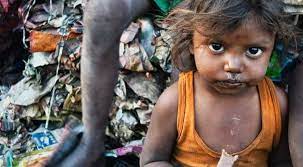
Poverty is defined as a condition in which a person is deprived of fundamental needs of existence. Furthermore, the individual does not have an insufficient amount of food, housing, or clothing. In India, the majority of the poor cannot afford to pay for a single meal each day. They also sleep on the side of the road and dress in filthy old clothing. Furthermore, they do not receive appropriate healthy and nutritious food, as well as medicine or any other required item.
Causes of Poverty:-
Poverty in India is growing due to a rise in the urban population. People from rural areas are flocking to cities in search of better opportunities. The majority of these individuals find a low-wage employment or an activity that just pays for their meals. Most significantly, lakhs of urban residents live below the poverty line, with many more on the verge of destitution.
Furthermore, a large number of people live in slums or low-lying regions. These individuals are generally uneducated, and despite their best efforts, their situation stays unchanged and there is no satisfying outcome.
Furthermore, there are several factors that may be identified as important causes of poverty in India. Corruption, increasing population, poor agriculture, a huge disparity between wealthy and poor, ancient customs, illiteracy, unemployment, and a few more factors are among these causes. A significant number of people work in agriculture, yet the compensation is relatively low in relation to the labour done by employees.
Furthermore, as the population rises, so does the need for food, housing, and money, and in the absence of these resources, poverty spreads rapidly. Furthermore, being extremely poor or extra affluent widens the divide between rich and poor.
Furthermore, the affluent are getting richer while the poor are increasing poorer, creating an economic divide that will be difficult to close.
Effects of Poverty:-
It has a wide range of effects on people’s lives. It also has a variety of impacts, such as illiteracy, bad nutrition and food, inadequate housing, child labour, unemployment, poor hygiene and lifestyle, and feminization of poverty, among others. Furthermore, impoverished people cannot afford a good and balanced diet, attractive clothing, appropriate education, a stable and clean housing, and so on since all of these amenities cost money, and if they can’t afford to eat two meals a day, how can they afford to pay for these amenities?
The Solutions for Ending Poverty:-
It is critical that we act swiftly and appropriately to address the issue of poverty. One approach to addressing these issues is to equip farmers with enough infrastructure. So that they can make agriculture lucrative rather than migrating to cities in search of work.
Illiterate individuals should also be provided the necessary instruction in order to live a better life. Family planning should be practised in order to control the growing population. Furthermore, steps should be done to eliminate corruption so that we can address the wealth disparity.
List of Indian states and union territories by poverty rate:-
India’s GDP per capita income is around $2241 (or 168,075). This is a list of Indian states and union territories rated in terms of poverty as of 2021. Number and Population – The rank is determined by the percentage of persons living below the poverty line and is based on MRP consumption.
State/U.T.
Percentage of population living below the national poverty line
Goa
5.09
Kerala
7.05
Himachal Pradesh
8.06
Sikkim
8.19
Punjab
8.26
Andhra Pradesh
9.2
Haryana
11.16
Uttarakhand
11.26
Tamil Nadu
11.28
Meghalaya
11.87
Tripura
14.05
Rajasthan
14.71
Gujarat
16.63
Maharashtra
17.35
Nagaland
18.88
West Bengal
19.98
Mizoram
20.4
Karnataka
20.91
Uttar Pradesh
29.43
Madhya Pradesh
31.65
Assam
31.98
Odisha
32.59
Bihar
33.74
Arunachal Pradesh
34.67
Manipur
36.89
Jharkhand
36.96
Chhattisgarh
39.93
Telangana
N/A
Andaman And Nicobar Islands
1
Lakshadweep
2.77
Puducherry
9.69
Daman and Diu
9.86
Delhi
9.91
Jammu and Kashmir and Ladakh
10.35
Chandigarh
21.81
Dadra and Nagar haveli
39.31
Conclusion
To summarize, poverty is a national problem, not a personal one. It should also be addressed as soon as possible by the deployment of appropriate solutions. Furthermore, poverty eradication has become critical for the long-term and inclusive progress of individuals, society, country, and economy.
Education is something that a person obtains from his surroundings or from a school. It is a weapon in one’s arsenal. Education is defined as the acquisition of knowledge. Education is a never-ending process in which we learn new things at every turn, and it will continue until a person’s last breath. In this process, there are no age restrictions; anyone can learn at any age they want.
Education can play a significant role in shaping a child’s personality. As a result, educational institutions play a critical role in this. An educational institution should anticipate children’s needs. The teachers and instructors should be very kind and loving to the students, or else the education and institution will be boring and tiresome to them. Education should not only be about learning, but also about having fun so that the children find it interesting. Education has the potential to impact global development in the long run. A well-educated person is always working to improve humanity. Education produced civilized, well-organized people. People who are educated have great ideas and strive for betterment in life. It assists in breaking out of one’s comfort zone, which is where the magic happens.
Physical education is another aspect that plays a significant role in one’s life. When a child receives a better physical education, he will grow up to be a healthy person with a fit body. As a result of their education, people mature. Refinement enters the lives of educated people. Above all, education teaches people the value of discipline. People with a higher level of education understand the value of time much better. In the eyes of educated people, time is equal to money.
Education is more than what we learn within the four walls of a classroom; it is a broader concept. Nobody in the world knows everything because the world is a mystery and we cannot find a solution to everything. We obviously don’t know everything, so we should always be curious and excited when we come across a new discovery. So, if we are ignorant about something, it is almost certain that when we discover it, it will provide us with an incalculable amount of pleasure.
Generally people think that learning through practice is to make someone better than what he/she was earlier . To think so is not complete appropriate . However, it cannot be denied that there is an improvement as a result of learning . But it can lead towards unwanted or undesired changes . A child who plays football, may also learn wrong technique . Indeed , learning has a detailed explanation . The process of learning begins from the birth and continues throughout life. That is why it is said that learning takes place from womb to tomb. Learning means to adjust or adapt oneself according to the situation . There is a change in the behaviour of an individual after learning and he changes himself according to situations . The various psychologists have defined learning in different ways. However, they reach approximately at the same point . There are following definitions of learning by some eminent psychologists.
According to Guilford, ”We may define the term very broadly in saying that learning is any change in behaviour resulting from behaviour.”
According to R.S. Woodworth and D.G. Marquis, ”Learning consists in doing something new provided, this something new to be retained by the individual and reappears in his later activities.’‘
According to G. Murphy , ‘‘From this point of view it would be legitimate to regard learning as modification both of behaviour and of the way of perceiving.”
According to Whitkar, ”Learning may be defined as the process by which behaviour originates or is altered through training or experience.”
On the basis of the above-mentioned definitions, the following conclusions can be drawn :
When it comes to higher study everyone wants to attend the best colleges. If you are a student you also have the same dream. It is also same for an engineering student. I am listing Some best colleges below, which are eventually the dream college for not only engineering student but for every student from every other education field.
MIT
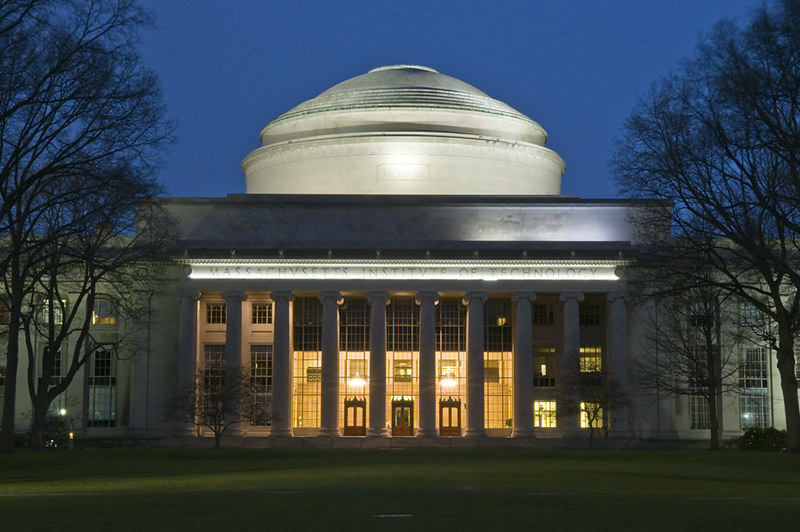
MIT or Massachusetts Institute of Technology, USA: It is one of the renowned colleges in the world, which is situated in Massachusetts of USA. It was established in 10th April of 1861.It accepted 7% students from all over the world. Their moto is “Mind and Hand”. Here UG, PG, master and PhD courses are available .MIT holds the greatest number of Nobel winners, the notable alumni of these college are Kofi Annan, Richard Feynman, Raghuram Ranjan, Jairam Ramesh Katie Bowman and others. Subjects: language, law, Technology, general science, business ,art social & every other subjects . One can admitted here by GRE, GMAT, CAT etc. international examination.
Stanford University
2.Stanford University: It is one of prestigious college for student. It was established in 1891 in the world by Leland Stanford and Jane Stanford. Their Moto is “the wind of freedom blows”. It situated in Stanford in California in USA. Here UG, PG, master and PhD courses are available .The subjects which are taught here are language, law, Technology, general science, business and everything. It accepts 4.3% students from all over the world, it has some Nobel winner students and professors. Notable alumni of this college are Larry Page, Reed Hastings, Mukesh Ambani, Jennifer Connelly, Elon Musk, Stephen Brayer and others. One can admitted here by GRE, GMAT, CAT etc. internal examination.
Cambridge University
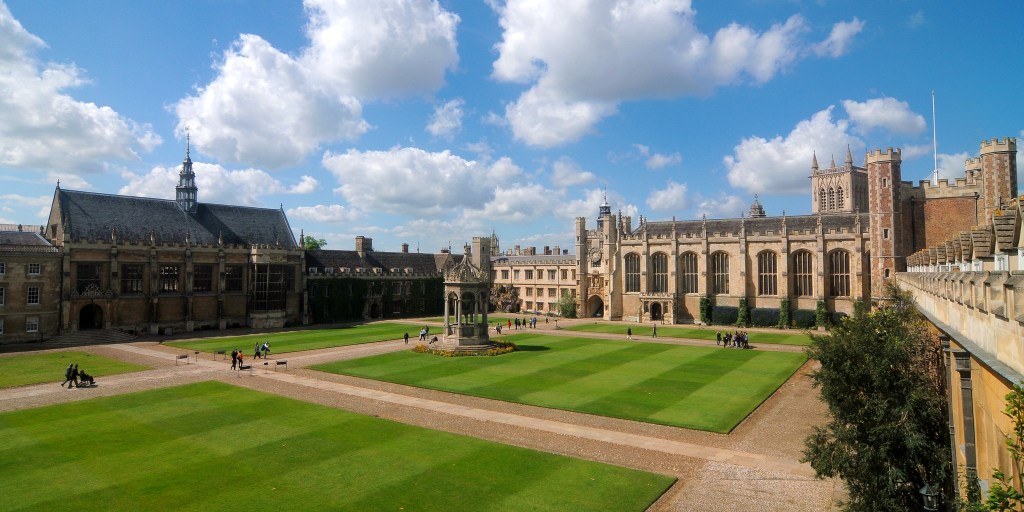
3.University of Cambridge: Their motto is “from this place, we gain enlighten and precious knowledge”. It was first established in 1209 AC .It is one of the oldest and prestigious college in the world. Here UG, PG, master and PhD courses are available . It is situated in Cambridge in UK. It accepted 21% students from all over the world. Subjects taught here are language, law, Technology, general science, business and everything. It also has noble winner students and professor. Notable alumni are Stephen Hawking, Charles Darwin, John Milton, Emma Thompson. Rajiv Gandhi. One can admitted here by GRE, GMAT, CAT etc. internal examination.
NTU
Nanyang Technical University (NTU):It is situated in Singapore. It is one of the oldest University. It was established on 1st August 1981. It has continuously ranked with 100 from all over the world. 36% students from all over the world are accepted in the University. GATE score is acknowledged here for the admission of Indian student. Subjects which are available — language, law, Technology, general science, business and everything. Here UG, PG, master and PhD courses are available .Notable alumni are Melvin Yong, Cheryl Chan, Darryl David, General Tito Karnavian, Inderjit Singh, Shirley Meng and others.
Harvard University
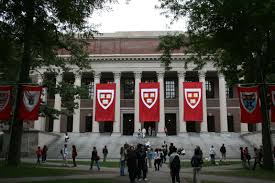
5.Harvard University: It is situated Cambridge, USA. The motto of the University is “truth”. It was established in 1636. It is one of the oldest and most prestigious University. Here UG, PG, master and PhD courses are available. It accepts only 4% students from all over the world .The subject taught here are — language, law, Technology, general science, business and everything. Notable alumni are John Adams, Theodore Roosevelt, John F. Kennedy, Benazir Bhutto, Bill Gates, Michael Obama, Barack Obama. There are so many Nobel Prize winner is from this university. One can admitted here by GRE, GMAT, CAT etc. international examination.
As the current pandemic has got us all confined in our house, a lot of dreams of travelling around the world has been crushed. So instead, how about I take you on a world tour via books!
However, this book tour will happen over a series of 7-8 days, so pack up your luggage accordingly.
This tour begins with the largest continent – Asia.
( PLEASE NOTE THAT THESE ARE SOME OF THE MANY COUNTRIES IN ASIA, THOSE THAT ARE MISSING WILL HAVE THEIR OWN PART IN THE NEXT BLOG OR SO AND THIS BLOG HAS NO PREJUDICE AGAINST ANY COUNTRY OR COUNTRIES.)
Afghanistan
1) Born under a million shadow – Andrea Busfield.
2) A Thousand Splendid Suns – Khaled Hosseini.
3) The places in between – Rory Stewart.
4) A Thousand Rooms of Dreams and Fear – Atiq Rahimi.
5) The Patience Stone – Atiq Rahimi.
Armenia
1) Passage to Ararat – Michael J. Arlen.
2) The Sandcastle Girls – Chris Bohjalian.
3) Armenian Golgotha – Grigoris Balakian.
Azerbaijan
1) Mirror of the Invisible World: Tales from the Khamseh of Nizami.
Bahrain
1) City of Strangers – Andrew Gardner.
Bangladesh
1) A Golden Age – Tahmima Anam
2) The Black Coat- Neamat Imam
3) Banished! – Han Dong
Bhutan
1) Buttertea at sunrise – Britta Das
2) The Kingdom at the centre of the world: Journeys into Bhutan – Omair Ahmad
3) The Circle of Karma – Kunzang Choden.
China
1) Soul mountain – Gao Xingjian.
2) The April 3rd Incident – Yu Hua.
3) The Art of War – Sun Tzu.
India
1) The God of Small things – Arundhati Roy.
2) The White Tiger – Aravind Adiga.
3) The Inheritance of Loss – Kiran Desai.
4) A Suitable boy – Vikram Seth.
5) Midnight’s Children – Salman Rushdie.
6) A Fine Balance – Rohinton Mistry.
7) Sea of Poppies – Amitav Ghosh.
Indonesia
1) This Earth of Mankind – Pramoedya Ananta Toer.
2) Man Tiger: A Novel – Eka Kurniawan.
3) Durga/Umayi -Yusuf Bliyarta Mangunwijaya.
Japan
1) Norwegian wood – Haruki Murakami.
2) Convenience store women – Sayaka Murata.
3)Kafka on the shore – Haruki Murakami.
4) Strange Weather in Tokyo – Hirami Kawakami.
5) The Memory Police – Yöko Ogawa.
6) Killing Commendatore – Haruki Murakami.
7) Manazuru – Hiromi Kawakami.
South Korea
1) Kim Ji-young, Born 1982 – Cho Nam-ju.
2) The Vegetarian – Han Kang.
3) Human Acts: A Novel – Han Kang.
4) The White book – Han Kang.
5) The Hen Who Dreamed She Could Fly – Sun-mi Hwang.
6) If I Had Your Face – Frances Cha.
7)Pachinko – Min Jin Lee.
Thailand
1) Sightseeing – Rattawut Lapcharoensap.
2) Four Reigns – Kukrit Pramoj.
3) Bangkok wakes to Rain – Pitchaya Sudbanthad.
Pakistan
1) Train to Pakistan – Khushwant Singh.
2) The Wandering Falcon – Jamil Ahmad.
Saudi Arabia
1) Girls of Riyadh – Rajaa Alsanea.
Myanmar
1) The Glass Palace – Amitav Ghosh.
Iran
1) The Man who snapped his fingers: Fariba Hachtroudi.
(PLEASE NOTE, THAT ABOVE MENTIONED BOOKS ARE JUST SOME OF THE MANY BOOKS THAT ARE EITHER PUBLISHED BY OR WRITTEN ABOUT THAT COUNTRY.)
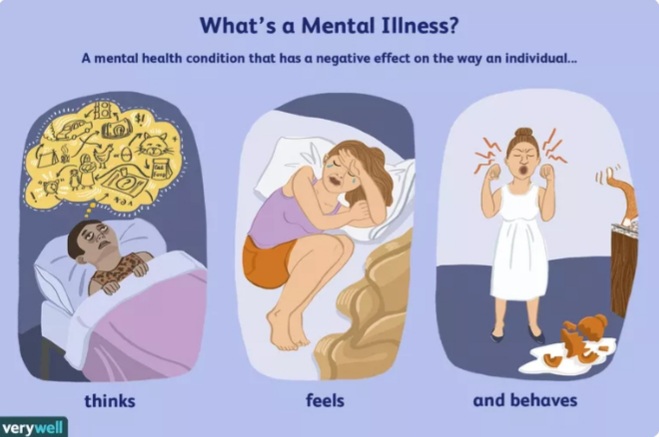
We human beings often tend to pay less attention to our mental health than our physical one, but we all should understand its heavy importance and admit the fact that they can be equally or even more dangerous than the physical issues so one should take immediate help of doctor or councilor in case some abnormalities or issues arises.
Importance of mental health :
Mental and physical health are equally important components of overall health. Mental illness, especially depression, increases the risk for many types of physical health problems, particularly long lasting conditions like stroke, type 2 diabetes and heart disease. Similarly, the presence of chronic conditions can increase the risk for mental illness.
Some mental illnesses :
Mental illnesses are among the most common health conditions in the united states.
* More than 50% will be diagnosed with a mental illness or disorder at some point in their lifetime.
* 1 in 5 children,either currently or at some point during their life, have had a seriously debilitating mental illness.
Causes of mental illness :
There is no single cause for mental illness. A number of factors can contribute to risk for mental illness, such as
* Early adverse life experiences such as trauma or a history of abuse.
* Experiences related to other ongoing medical condition, such as cancer or diabetes
* Biological factors, such as genes or chemical imbalances in the brain.
* use of alcohol or recreational drugs.
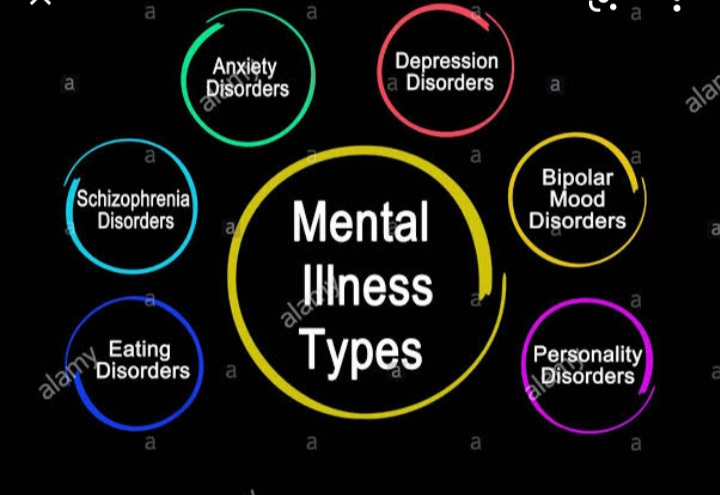
Types of mental illness :
People can experience different types of mental illnesses or disorder and they can often occur at the same time.Mental illness can occur over a short period of time or be episodic. This means that the mental illness comes and goes with discrete beginnings and ends. Mental illness can also ongoing or long term.
There are more than 200 classified types of mental illness. Some of the main types of mental illness and disorders are listed below; however; this list is not exhaustive.
Anxiety Disorders :
People with anxiety disorders respond to certain objects or situations with fear and dread or terror. Anxiety disorders include generalized anxiety disorder, social anxiety, panic disorders and phobias.
Hyperactivity Disorder :
It is one of the most common childhood mental disorders. It can continue through adolescence and adulthood. People diagnosed with ADHD may have trouble paying attention, controlling impulsive behaviors or be overly active.
Disruptive Behavioral Disorders :
It involves a pattern of disruptive behaviors in children that last for atleast 6 months can cause problems in school, at home and in social sitauations.Behavioral symptoms can also continue into adulthood.
Depression and other mood disorders :
While bad moods are common and usually pass in a short period, people suffering from mood disorders live with more constant and severe symptoms. People living with this mental illness find that their mood impacts both mental and psychological well- being, nearly evry day and often for much of the day.
Eating Disorders :
Eating disorders involve obsessive and sometimes distressing thoughts and behaviors including
* Reduction of food intake
* overeating
* Feelings of depression or distress
* concern about weight, body shape, poor self image
Personality Disorders :
People with personality disorders have extreme and inflexible personality traits that cause problems in work, school or social realtionships. Personality disorders include antisocial personality disorder and borederline personality disorder
Substance use Disorders :
Substance use disorders occur when frequent or repeated use of alochol and or drugs causes significant impairment, such as health problems, disability, and failure to meet major responsibilities at work, school, or home. Substance use problems can be fatal to the user or others. Exsmples include drunk driving fatalities and drug overdoses.
In this busy world our brain gets a lot stressed and its very important that we should take due care of it, some of the practices which will help us to do better with our mental health are:
Yoga plays a great role in keeping our mind calm and also helps us to focus and concentrate on things. It also helps us deal with tough situations and gives us the strength to stay away from negativity.
Exercising regularly is a key to healthy body and we all know that a healthy body and a healthy mind goes hand in hand, so we must ensure that we exercise daily to keep ourselves fit.
The environment that we stay in also the company with which we spend time also plays a major role we should be extremely aware while selecting our company and in case we are not able to adjust we should walk away.
Food is the fuel and is of immense importance we should ensure that we are not nutrient deficient also we should ensure that we intake enough amount of water daily.
If karma works, why are so many corrupt people successful? Why do good people have to struggle?
Karma, as a concept, was the idea of cause and effect translated through multiple lives, not just through one.
That by living a good life now and being kind and happy, you will create a positive start for whatever meets you after you pass away.In this sense, Karma isn’t something we will feel any effects of now and is something we will only come to see once we meet our next life.However, even if we do take out that concept the idea is still one of Cause and Effect.Good deeds cause good things, and bad deeds cause bad things, but it never said that we had any control as to what things we gain from what deeds.
When talking about Karma we assume that it is all one big ball of yarn.Different colored strings are so intertwined in this ball that it looks like a rainbow colored sphere where everything is connected.However, the truth may be a little different.
What if Karma did not work like we assume it does?
What if you cannot just treat others nicely and make more money because those two are not connected?
What if you actually had to pull on the money string to get money karma?
And what if, by doing well on the ‘treating others’ string you simply get others to treat you better too?
But then again, maybe that would not be Karma anymore but a very straight-forward matter of cause-and-effect. Most of us do not like this explanation because it means we cannot be as comfortable as we have been. We like the idea of being able to pull on a string that comes easiest to us to uplift our entire lives, for some things just do not come that easy to us. But maybe that is where we have been wrong in what we think Karma is all about. Maybe the successful, but corrupt people, just knew what strings to pull to get to success and have that area of life in order while the rest is crumbling around them. And maybe we do not know how to pull the strings of success so we struggle in a world of niceties and laziness.
Honestly, I do not know how Karma works or if it does. I am probably wrong about it all. Maybe we all are. Karma might just be an idea we tell ourselves to feel more justified in being nice and treating others kindly, but maybe it matters not one bit.
‘Who knows?’
The thing is that it clearly does not work as simply as we make it out to work, for we do see contradictory examples everywhere. But if we take the idea of the ball of yarn, I believe we get a lot closer to how Karma may truly work.
For if you work on your finances every day, if you are charitable and treat others at your job well while still fostering the belief that money will find its way to you, chances stand much better you do create more money for yourself. Psychology supports this concept through things such as the Confirmation Bias, Self-Fulfilling Prophecies and Selective Attention. You will likely find more opportunities and therefore more successes in this area if you do more good deeds here, which is the whole point. If you pull on the green string you will get greener results, but you may not get green results by pulling on the red string. You cannot just do good to get good things returned to you in a completely separate area of life.
Successful people, as corrupt as they may Be, often at least have something they know about success.
Some cheat their way through, others lie their way through, and others hide the truth or weasel their way through with other people, but as long as they find a way that means there has to be something they know we do not. And while we go through life being honest, nice and hard-working there is clearly something that is not leading to more success. That does not mean you have to stop being honest, nice or hard-working, but rather that it may be time to learn about success and money instead of relying on Karma to do it all for you. It’s easy to say that we could just be as corrupt as they are and then we’d be rich and famous too, but I believe it is a little more complicated than that, for there are already quite a few corrupt but unsuccessful people out and about.
Corruption is not the string that will lead to success either.
It’s easy to point the finger towards others but maybe we have to ask ourselves what the things were we did and did not do. Maybe we got the Karma, but maybe it was just by getting something we did not want to get. If you have your health, if you have people that care for you, if you have a roof over your head and clean water, then you already have more than most, which may mean your Karma is quite positive.
Whether or not I am right with my assumptions does not really matter. If I am not and Karma is supposed to work in a way where pulling one string leads to random, but positive, results, then maybe there is just something wrong with the system or maybe you did not yet pull hard enough. Either way, even then learning about success and money and taking actions that lead to results you want to have may just be more reliable way to go.
For if Karma does not exist at least this way will give you more opportunities to create the life you want to create.
I, for one, will take the route that gives me the most likely chance to create the life I want, and if that means doing extra work then so be it!
World’s Second Richest Person and an Ideal For Many
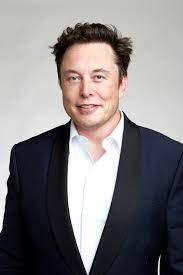
Elon Musk
Elon Musk or Elon Reeve Musk is an entrepreneur business magnate in today’s world who has totally evolved the technological terms of today . He is the founder, CEO, and Chief Engineer at SpaceX early stage investor CEO and Product Architect of Tesla, Inc. He was born in Pretoria, South Africa. He got his Bachelor’s degree in physics and economics from University of Pennsylvania. He started his career by co-founding the web software company Zip2. This startup was acquired by Compaq for $307 million in 1999. After this Musk co-founded online bank X.com that same year, which merged with Confinity in 2000 to form PayPal. The company was bought by eBay in 2002 for $1.5 billion.
SpaceX
Then In 2002, Musk founded SpaceX, an aerospace manufacturer and space transport services company, of which he is CEO and CTO. This rocket firm SpaceX, works on building reusable rockets and aspires to land humans on Mars .
Tesla
Then after this in 2004, he joined electric vehicle manufacturer Tesla Motors, Inc. (now Tesla, Inc.) as a chairman and product architect and became its CEO in 2008. Tesla produces super modern cars that run on lithium batteries and are luxurious and have an auto pilot mode which sounds really impossible to normal ears.
Solar City
In 2006, he helped create SolarCity, a solar energy services company that was later acquired by Tesla and became Tesla Energy. This company Solar City develops solar panels and solar roof tiles and aims at making this world to use the purest and cleanest fuels that are highly renewable so that even their infinite use does not exhaust them.
Neuralink
Neuralink is a startup which develops ultra high bandwidth brain machine interfaces to connect human brains to computers to help cure nervous system problems. The company was launched in 2016 and was first publicly reported in March 2017.
Failure
All this was not always as smooth as it looks. The biggest success of PayPal today was once awarded with “World’s worst business concept of the year”. Elon Musk is a person who has experienced some very adverse situations in terms of his personal life. After all, he went through a very public and long divorce process with his previous wife. He stated that this period was consumed by deep depression. As if that wasn’t enough when the 2008 recession depleted the profitability of Space X and Tesla. Elon was almost broke again and facing a decision to axe one of these two companies. In the end, Elon decided to split any remaining funds between the two companies and later that year. He received word that NASA were committing $6 billion to Space X. Needless to say, both companies survived the storm and Elon even married again just a few years later.
Where most people leave , Elon leaned in and poured is money , sweat, blood, tears in making his companies successful and his passion for design, engineering and the future would have him succeed on both the fronts.
Learning
The main thing to learn is that with the acquisition of PayPal his net-worth rose to 123 Million USD and he could have retired early and rode off into sunset and live happily after ” BUT THAT’S NOT HOW LEGENDS ARE MADE” . Instead he took a gamble and invested his newfound millions into his two separate companies – SpaceX and Tesla .
“GOOD GOVERNANCE SHOULD BE LIKE AIR. IT’S EXISTENCE NEED NOT BE DISCUSSED BUT IT’S ABSENCE WOULD MAKE A HUGE DIFFERENCE”
Nowadays the terms “Governance” and “Good Governance” are being used widely. Major reforms, actions, changes and even donations and institutional activities are basing all their rules and regulations which will help achieve “good governance”.
WHAT IS GOVERNANCE ?
Governance is the process or system by which entities are administered or directed and controlled. It is the process of decision making and the process of deciding the actors who will be involved in the decision making process and implementation of decisions.
The concept of “governance” has been used from past many years and can be used in several contexts such as international or national governance, corporate governance, local governance etc. One of the major actor of governance is “government” and other actors involved in the process of governance are NGOs, private bodies, landlords, research institutes, religious leaders, political parties, military etc.
GOOD GOVERNANCE
The term “Good Governance” originated from the report entitled ” Governance and Development” which was published by World Bank in year 1992. The World Bank defined Good Governance as “the manner in which power is exercised in the management of a country’s economic and social resources for development”.
Thus, good governance is an approach which aims in creating a system which finds justice and peace and ensures the protection of individual’s human rights and liberties. Good Governance is measured by 8 characteristics : Participation, Rule of Law, Transparency, Responsiveness, Consensus Oriented, Equity and Inclusiveness, Effectiveness and Efficiency, and Accountability.
Good Governance is a process of governance that considers the views of minorities and vulnerable groups of society and minimizes corruption while taking decisions thereby boosting the economy.
REFERENCES OF GOOD GOVERNANCE
The importance of Governance is clearly highlighted and explained in Indian Constitution which is based on – Sovereign, Socialist, Secular and Democratic Republic for attaining democracy, rule of law and welfare of people.
The Sustainable Development Goal q6 also describes the linkage between improvement of governance, inclusivity, participation, rights and security.
The Bhagavad Gita also provides numerous indications of good governance, leadership, dutifulness and self realization.
According to former United Nations Secretary-General Kofi Annan, “Good governance is ensuring respect for human rights and the rule of law; strengthening democracy; promoting transparency and capacity in public administration.” He also said that “Good Governance is perhaps the single most important factor in eradicating poverty and promoting development”.
PRINCIPLES OF GOOD GOVERNANCE
Principles of Good Governance
Participation: Participation by each section of the society irrespective of their gender, social class, caste, income etc. The participation of the individuals can be through direct or indirect (through other institutions or representatives) mediums. Participation is an crucial part of governance because it brings forward the major concerns of the society, the issues as well as in identification of potentials of the area.
Rule of Law: It ensures fair and legal frameworks and methods being used in the governance and enforces impartially. This requires full protection of human rights, especially of the weaker sections and vulnerable groups of the society. For this the law needs to be impartial, uncorrupted and judicial.
Transparency : Transparency in a process or system or governance ensures that all the decisions, actions and enforcements are taken only after considering the governing rules or laws or regulations. It signifies the availability of information’s to all the stakeholders and the people who will be affected by the actions or enforcements.
Responsiveness: Good Governance requires timely actions and processes and tries to serve all the stakeholders within a reasonable time frame or specified time frame.
Consensus Oriented: Good Governance requires different interests to sum up into a broad consensus to show the best interest for the community and society. It is necessary for developing sustainable human development and the only way by which cultural, social and historical diversity can be preserved.
Equity and Inclusiveness: Equity and Inclusivity ensures that all the members of the community or society are feeling free to put forward their concern and idea. Nobody should feel excluded. Equity and Inclusivity is highly important for minor or vulnerable groups because it is very important to give them the opportunities to express their issues and ideas for improving and maintaining their well being.
Effectiveness and Efficiency: The results or outcomes of the processes should satisfy the needs of the society and should make the best use of available resources, without exploiting them. It is necessary to identify the potentials and weaknesses of the society or community or area before coming up or implementing any solution. All the outcomes and results should within desirable time frame and should be the best decisions for the welfare of the society.
Accountability: It is one of the most vital requirements of good governance as it ensures that all the stakeholders (government bodies or private institutions or civil organizations or NGOs etc) are accountable to the public. Who is accountable to whom depends on the actions or decisions which are taken in the organization.
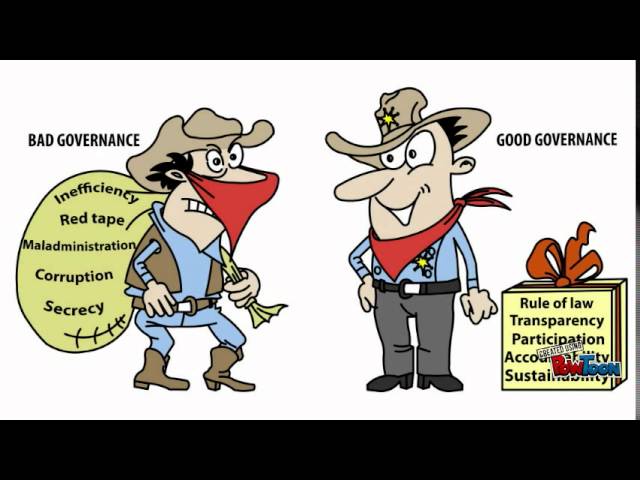
What makes Good Governance different from Bad Governance
CONCLUSION
From the above discussion it is clear that “Good Governance” is the most ideal form of governance but it requires transperancy, accountability and intelligent form of governance which makes it more difficult to achieve. For achieving good governance, a system much be uncorrupted, bias free and free from prejudices.
Thus, there is a need to reform and reformulate strategies for restoring good governance. The government should focus on the principle of : “Sabka Saath, Sabka Vikas and Sabka Vishwas” which will guide the way to achieve inclusive and sustainable development.
























 Eduindex
You must be logged in to post a comment.