Community: meaning and characteristics

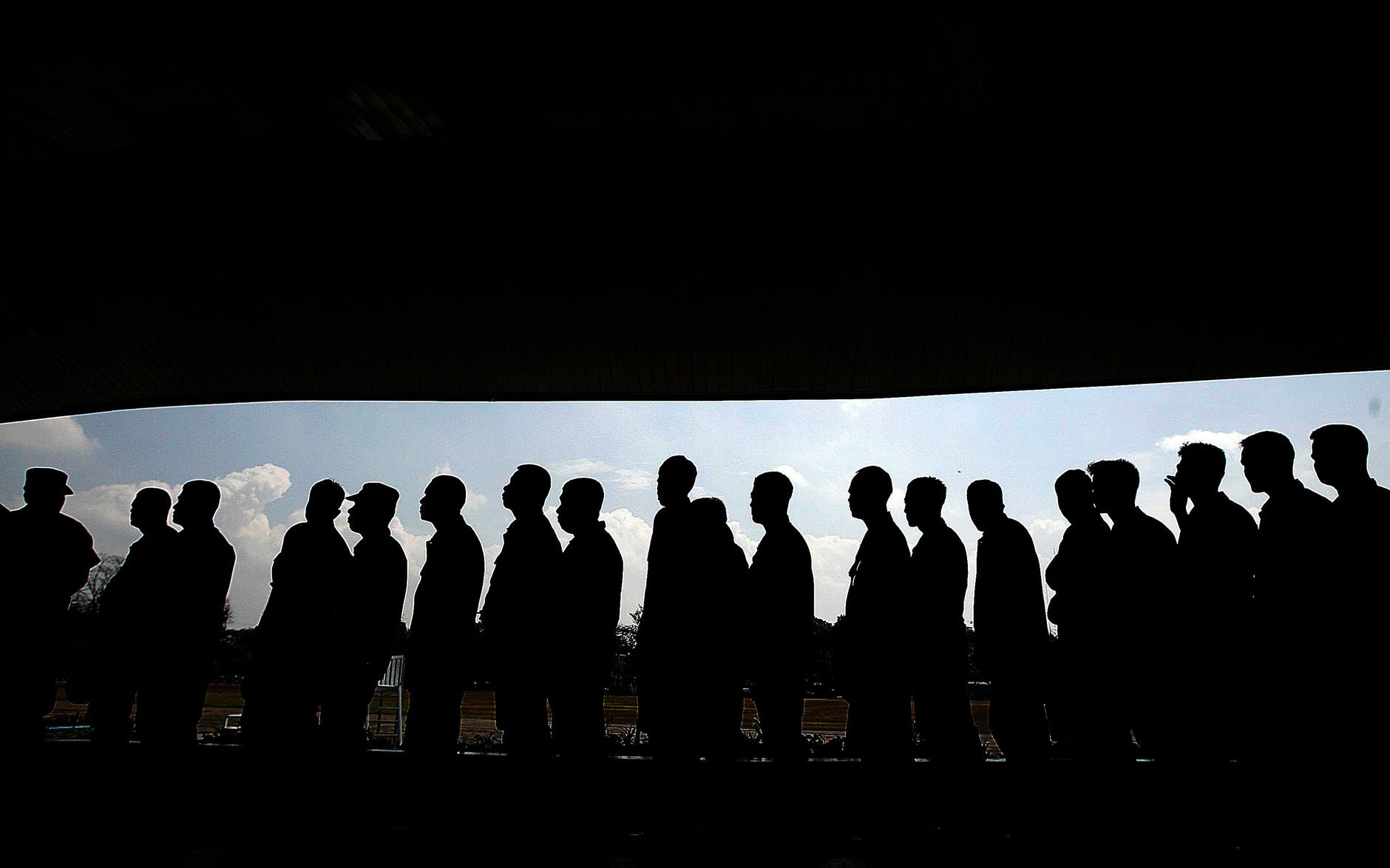
Photo by Keith Wako on Pexels.com

The term ‘community’ is given different interpretations and used in different ways to mean different things. People often use the term community to refer to a racial community, or a religious community, or a national community, etc. It is used in various contexts.

Some definitions of community:

1. Bogardus defined community as “a social group with some degree of ‘we-feeling’ and living in a given area”.

2. Talcott Parsons said “Community is the aspect of all social units.”

3. Lundberg defined community as “a human population living in a limited geographical area and carrying on a common interdependent life”.

4. MacIver said “Community is an area of social living marked by some degree of social coherence”.

5. According to Duncan Mitchell, “community denotes the collectivity of people who occupied a geographical area, are engaged in economic and political activities and constitute a self- governing social unit.

A community is essentially an area of social living. It is marked by some sorts of social coherence. ‘Community’ is an all-inclusive term. It includes all our social relationships. Elements of community: The main bases of community are: 1. Locality and 2. Community sentiment.

1. LOCALITY: A community is a territorial group. It always occupies some geographical area. Locality is the physical basis of community. In contrast to a society, a community is more or less locally limited. Even the wandering tribe or nomad community, for example, has a locality, though changing habitation. A group of people forms community only when it begins to reside definite locality. For example, caste is not a community since it is not necessary that all the members belonging to a certain cast live together in a definite location, whereas a village and a city can be called a community under certain conditions. Living together facilitates people to develop social contacts, gives protection, safety and security. It helps the members to promote and fulfil their common interests.

2. COMMUNITY SENTIMENT: Locality alone cannot make a group, a community. There are cases where people do live together but do not have any contacts or communications. These cannot be placed under community. For example, in a city there can be different localities. The members of these locality need not be sharing any common interests or may not have common outlook. A community is essentially an area of common living with a feeling of belonginess. ‘Community sentiment’ means a feeling of belonging together. The members must be aware of their staying together and sharing common interests. The members develop a sense of ‘we-feeling’. Without a sense of identification, a sense of awareness, a sense of living and sharing some common interests in life, there cannot be a community.

Other Aspects of Community:

1. Stability: A community is not a temporary group like a crowd or a mob. It is relatively stable. It includes a permanent group life in a definite place.

2. Naturalness: Communities are not created deliberately. They are not created by an act of will or by planned efforts. Individuals become its members by birth itself. Membership, hence, is not voluntary. This does not mean that caste is a community.

3. Size of the community: A community can be big or small. A small community can be included in a bigger community. For example, a city and a village may be included in a wider community called district. Thus, the term community is used in a relative sense.

4. Regulation of relations: System of traditions, customs, morals as well as set of rules and regulations are there to regulate the relation between its members.


Garhwali Language it’s time to save it from getting fade.

Garhwali is the Indo-Aryan language of the Central Pahari Region which is mainly spoken by more than 2.5 million people in the Garhwal region of Uttarakhand, northern India, in the Himalayas of India, Uttarakhand. Garhwali is also spoken by Garhwali people living in other parts of India, such as Himachal Pradesh, Delhi, Hariyana, Punjab and Uttar Pradesh. According to various estimates, at least 3.5 million Garhwali migrants live in Delhi and other cities.


HISTORY
During the Middle Indo-Aryan era, there were various languages called Prakrit. Of which, Khas Prakrit language is believed to be the source of Garhwali language.The earliest forms of Garhwali can be traced back to the 10th century and can be found in temple stones, including numismatics, royal seals, copper plate inscriptions, royal orders and grants. An example is the inscription of King Jagatpal’s Temple Grant in Dev Prayag in 1335 AD. Most Garhwali literature survives in vernacular form and is transmitted verbally. But since the 18th century, Garhwali has developed a literary tradition.


LITERETURE & WRITERS
Among the famous Garhwali writers in hiastory of literature are Sudarsan Shah, Kumdanand Bahguna, Hari Dutt Sharma (Nautiyal), Hari Krishna Daurga Dutti Rudra, Urvi Dutt Shastri ,Mahidhar Dangwal, etc. , Satyasaran Raturi, Atma Ram Gairola, Devendra Dutt Raturi, Suradutt Saklani and more. Among historians are Mola Ram, Miya Prem Singh, Hari Dutt Shastri, Hari Krishna Raturi and Vijaya Ram Raturi.
Garhwali literature is thriving despite the ignorance of the government. Today, newspapers like Uttarakhand Khabarsar and Rant Raibaar are published entirely in Garhwali. Magazines such as Baduli, Hilaans, Chitti-patri and Dhaad have contributed to the development of GarhwaliGarhwali language.

Some Notable works of Gharwali writers:
•)Abodh Bandhu Bahuguna – (1927–2004) Garhwali writer. Some nitable writings include Gaad, Myateki Ganga, and Bhumyal.
•)Bachan Singh Negi – “Garhwali translation of Mahabharata and Ramayana”.
•)Lalit Mohan Thapalyal – “Achhryun ku taal”
•)Leeladhar Jagudi – (1944) Writer and novelist. PadmaShri
•)Lokesh Nawani – “Phanchi”
•)Madan Mohan Duklaan – “Aandi-jaandi saans”
•)Chandramohan Raturi – “Phyunli”
•)Chinmay Sayar – “Aunar”
•)Dr. Narendra Gauniyal – “Dheet”
•)Durga Prasad Ghildiyal – “Bwari”, “Mwari” and “Gaari”
•)Gireesh Juyal ‘Kutaj’ – “Khigtaat”.

Struggle of Official RecogItion:
Since the establishment of Uttarakhand in 2000, the state governments have made slow progress in promoting and developing the regional language of Uttarakhand. Like other languages in Uttarakhand, Garhwali, the most widely spoken language, is not officially recognized. In 2010, Hindi became the official language and Sanskrit became the second official language of Uttarakhand. In 2014, after making Garhwali the official language of Uttarakhand and demanding that it be taught at schools and universities for many years, the Uttarakhand State Government established Kumaoni and Garhwali departments at Kumaoni and Garhwali universities, respectively, to study the regional languages. At the national level, Garhwali is always required to be included in the 8th schedule of the Indian Constitution in order to be one of India’s schedule languages. In July 2010, Parliamentary member Satpal Maharaj of Pauli Garhwal submitted a legislative bill to Lok Sabha to include the languages of Garhwali and Kumaoni in the eighth schedule of the Constitution. Like most private citizen bills, the bill has not been discussed in Parliament and has since expired.

SpaceX Claims 5G Plan Could ‘render Starlink Unusable For Most Americans’

SpaceX has said its U.S.-based Starlink customers will see their broadband service badly disrupted if Dish Network is allowed to use the 12GHz band for its 5G cellular network.

The decision is in the hands of the Federal Communications Commission (FCC) as Dish Network and others such as New York-based RS Access lobby the agency to let them use the 12GHz band. But SpaceX isn’t happy.

“If Dish’s lobbying efforts succeed, our study shows that Starlink customers will experience harmful interference more than 77% of the time and total outage of service 74% of the time, rendering Starlink unusable for most Americans,” the company said in a message posted on its website on Tuesday, June 21.

The long-running dispute involves a number of companies that are trying to gain access to the 12GHz band that SpaceX already uses for its internet-from-space Starlink service.

Dish has previously published data suggesting that ground-based 5G networks could comfortably share the frequency with low-Earth orbit satellite networks operated by the likes of SpaceX for its Starlink service.

But this week, SpaceX said that technical studies “dating back as far as 2016” suggest that opening up the band to ground-based 5G networks could adversely impact its Starlink service, and it even accused Dish of attempting to “mislead the FCC with faulty analysis in hopes of obscuring the truth.”

The company led by billionaire entrepreneur Elon Musk also shared a 12-page technical analysis explaining how mobile services envisioned by Dish would “cause massive disruptions to users of next-generation satellite services,” such as Starlink.

It explained that a high-gain antenna, like the SpaceX user terminal, is “designed with sufficient sensitivity to receive very weak signals coming from a desired transmitter,” adding that “such antennas do not, however, ‘reject’ interference coming from other directions.” The result is that interference would “completely wipe out the desired signal.”

In widely reported comments, a Dish spokesperson said its “expert engineers are evaluating SpaceX’s claims.”

Dish announced last week that it has launched commercial 5G services in more than 100 U.S. Cities — covering around 20% of the nation’s population — by using frequencies in other spectrum bands. But whether it can access the 12GHz band as part of its 5G rollout remains to be seen.

SpaceX has launched more than 2,500 Starlink satellites into orbit for its broadband service, which currently serves more than 400,000 customers in 34 countries.

NEWSPAPER MIRROR TO SOCIETY.

Newspaper can be defined as a print medium for conveying current news of various information .

History of newspaper in India:
The first newspaper in India the Bengal Gazette was published in January 29, 1780 by James Augustus Hicky ,which was also known as”Calcutta Advertiser”. It was commonly known as “Bengal Gazette “. The first edition of the newspaper has two pages and was later expanded to page 4. Its size was 35 cm x 24 cm. East India Company did not considered Freedom of the Press good for society. They tried to curb the publication of newspapers. He was a very brave editor. He continued to criticize British authorities and publishing reports attacking East India Company officials for their way of working. British Authorities have arrested Hicky many times. Finally they finished his work of newspaper in 1782 and stopped publishing. Hicky was asked to leave Country. He was sent back to England. A copy of the Bengal Gazette is still preserved in the National Library of Calcutta and the British Museum in London.


Following in Hickey’s footsteps in 1780, a second newspaper was launched “The Indian Gazette” and “Calcutta Gazette” which begins publishing in 1784 and the “Bengali Journal” was started in 1785 which is also the third and fourth newspaper from Calcutta. The previous four newspaper were all published in English. Slowly Newspapers also begun to issue from other parts of the country in different languages and. The Tuesday “Madras Courier” (1785) and “Madras Gazette” (1795) starting from Madras. From Mumbai, “Bombay Herald” was started in 1789. The strict press regulations and censorship imposed by the UK hindered publication of more newspapers in India.In 1818, Lord Hastings abolished these strict censorship measures which leads to the appearance of many new newspapers in various Indian languages. Raja Ram Mohan Roy, who is known to have fought for the freedom of the press, edited a Persian weekly newspaper called “Mirat-ul-Akhbar”. But the editors of this newspaper were foreigners, not Indians. The first Indian language newspaper published by an Indian was “The Bengali Gazette” which was started in Calcutta by Gangadhar
Bhattacharjee in 1816. Pandit Jugal Kishore started Udant Martand the first Hindi newspaper published in India beginning on May 30, 1826, in Calcutta the weekly was published every Tuesday .


Importance of newspaper in India Freedom Struggle:
The newspaper and the press played a very important crutial role in the struggle for independence. The newspapers made the Indian public aware to the cruelty of the British Empire on the people . The press was the main tool for carrying out political tasks, propagating, political education, forming and spreading national ideology, mobilizing and consolidating national public opinion. The press is a powerful weapon in nationalist struggles, and Indian nationalists have led the struggle through the help of press. In fact, many of the great leaders of the freedom movement became journalists themselves and used the press as an instrument to spread their ideas to the masses and people in different parts of the country.


The Vernacular Press Act of 1878, against Indian-language newspapers, was passed in a meeting of the Royal Legislative Council. The law orders the seizure of a newspaper’s publications, papers, and other materials if the government believes the newspaper is publishing instigating material that could be harmful for the government. The Indian press enjoyed considerable freedom until 1908. However, due to the great growth of the nationalist movement, the Press Act was passed in 1908 and the Indian Press Act of 1910. Till 1930 the Indian press enjoyed relative freedom to give free opinion. However, the Press Act of 1932 and the Foreign Relations Act of 1932 refused India’s press freedom. The press was used as an effective weapon in the hands of social reform groups to expose social evils such as class restriction, child marriage, the prohibition of widows remarrying, social inequalities, laws and regulations.At that time it was very useful to uplift the society.


Newspaper at present:
Newspapers today occupy an important place in the world. The presence of newspapers is inevitable in today time. They are the reflections of the world. The press is considered the fourth pillar of democracy. The press is the most powerful of the powerful. They are defenders of truth and human rights. They act as spokespersons for the public. They are the link between the people and their government. It was still preferred by people over other media platforms because of its reliability, at a time when media was seen as a fake system that didn’t work properly.


“A good newspaper, I suppose , is a nation talking to itself ”

By Arthur Miller

What is society?

Photo by Krizjohn Rosales on Pexels.com

Man is a social animal. Psychologists like McDougall say that man is social because of the basic human instinct called gregarious instinct. Gregariousness refers to the tendency of man to live in groups. He lives in social groups, in communities and in societies. Various cases show that ‘man can become man only among men”. Man is biologically and psychologically equipped to live in groups and solitary life is unbearable to him. We very often use words such as groups, community, society, etc., in our day-to-day life. These are not merely words, they are concepts. They carry some precise meaning.

The term society is derived from the Latin word ‘socius’, which means companionship or friendship. Companionship means sociability. As George Simmel pointed out, it is this element of sociability which defines the true essence of society. It indicates that man always lives in the company of other people. Man needs society for his living, working and enjoying life. Society has become an essential condition for human life to arise and to continue. Human life and society always go together.

Some definitions of Society:

1. Morris Ginsberg said, “A society is a collection of individuals united by certain relations or mode of behavior which mark them off from others who do not enter into these relations or who differ from their behavior.”

2. MacIver defined society as “a web of social relationship”.

3. G.D.M. Cole said “Society is the complex of organized associations and institutions with a community”.

Characteristics of Society:

1. Society consists of people: Without people there can be no social relationships, no social life and hence no society.

2. Mutual interaction and mutual awareness: Mutual interaction refers to the reciprocal contact between two or more persons. An individual is a member of the society so long as he engages in relationship with other members of society. Social interaction is possible because of mutual awareness. Social relationships exist only when the members are aware of each other. Society exists only where social beings ‘behave’ towards one another in ways determined by their recognition of one another.

3. Society depends on likeliness: Likeliness refers to the similarities. Just as ‘birds of the same feather flock together’, men belonging to the species called homo-sapiens have many things in common. Society in brief, exists among like beings and likeminded.

4. Society rests on differences too: If men are exactly alike, their social relationships would be very much limited. There would be little give-and-take, little reciprocity. Life becomes boring, monotonous and uninteresting if differences are not there. However, differences alone cannot create society. It is subordinate to likeliness.

5. Co-operation and division of labor: Likeliness and differences create division of labor. It involves the assignment to each unit or group a specific share of common task. Division of labor needs specialization. Society is based on co-operation. It refers to the mutual working together for the attainment of a common goal.

6. Society is dynamic: Change is ever present in society. Changeability is an inherent quality of human society.

7. Social control: Society has its own ways of regulating the behavior of its members. These ways can be formal such as, law, legislation, police, court, etc., and informal such as customs, traditions, manners, etc.

8. Culture: Culture refers to, as Linton says, the social heritage of man. Culture is not society, but an element of society that binds together its component individuals.

Man depends on society for protection and comfort, for nurture and education from old age to death. Society makes our life livable. Society is, therefore, as MacIver puts it, more than our environment. It is within us as well as around us. It liberates and controls our talents and capacities. It stimulates the growth of our personality. Emotional development, intellectual maturity, satisfaction of physical needs and material comfort are unthinkable without society.

Gender inequality: a hindrance to a better future

Gender is a widely used term in the society. No matter where we go, the term gender is mentioned in some way or the other, the very first place being the hospital where we are born. From there on gender becomes a persistent part of our life. However, with gender comes certain disparities which are faced by the people who are categorized under it.

Male and female, the two categories of gender, are assumed to do specific roles from which if they waver in some ways, then are heavily criticized. Male is visualized as the breadwinner in the society whereas the female is visualized as the one taking care of the household. Although in the modern world these assumptions do not hold a strong stance, there are still certain areas where gender inequality strongly prevails.

Whenever there is a talk about gender inequality the category that is affected the most by it is the female part. There are certain restrictions for the females which they are forced to abide by. In many parts of the society, a female child is seen as a burden to the family. She is not given proper educational, social as well as political opportunities in comparison to men. Although we say that our generation has rose above those stereotypes, we all know it is a big lie. People still do not see women to be skilled enough to hold higher positions than men or do any kind of skilled labor. Women are still seen as some fragile and weak section of the society who need to stay at home rather than go out and break the stereotypes and toxic social barriers. In many parts of the world, cases of female infanticide are still prevalent. The women in the certain areas are still denied access to education and most importantly proper health and sanitation. In the universal picture, no matter what field it is, the gender participation graph is not very promising for the case of women. Women also do not get equal pay as per men for the same work that they do. In many so-called developed as well as developing countries, the women are still criticized and are bashed publicly for being confident and breaking the socio political barriers. Although men also face certain discriminations, the struggles faced by women is an important global issue that needs to be solved as soon as possible.

In the world where the death does not discriminate between men and women, then why do we human still be bound by those stereotypes? Men and women both are the two faces of the same coin and are equally important for the smooth functioning of the society. Through the participation of women there can be a lot more opinions and solutions to many problems that are prevalent in the world. Gender equality today can prove to be beneficial in many ways and pave the way to a better and sustainable tomorrow.

Animal Cruelty is a heinous crime which should be stop .

Animal Cruelty :
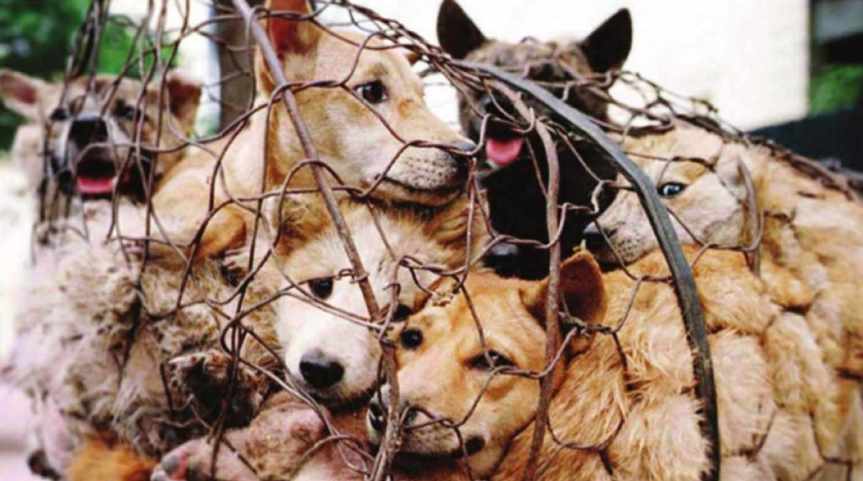
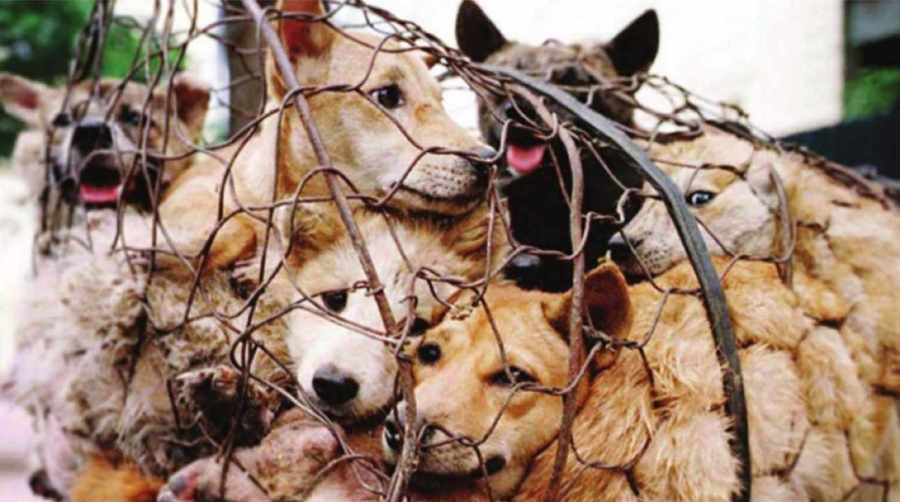
Simply put, animal cruelty harms animals, whether intentional or negligent. While certain activities  such as animal cruelty are generally perceived as cruel, the specific actions that make up animal cruelty vary from person to person and from places to places or different countries. Many  argue that docking a piglet’s tail without anesthesia is cruel, while others say it is common in meat production to prevent injuries later  in the pig’s life.  Animal cruelty defination is different in different areas due to countries laws.
Animal abuse is an pervasive problem which often  is difficult to detect. No species or community is spared from experiencing animal cruelty and neglect. Understanding what animal cruelty means and what it doesn’t mean is one of the first steps to  prevent it from happening again. Animals, whether it’s the food, cosmetics, entertainment, or  pet industry, don’t deserve to suffer.

Is Animal Cruelty Illegal:
The legality of  animal cruelty depends largely  on where the activity takes place . For example,  cruelty to farms and laboratory animals that is illegal in some countries may not be considered banned animal cruelty in some countries, due to differences in national law. In the United States, the best-known legislation to prevent animal cruelty excludes both livestock and laboratory animals from registration.

Animal cruelty in India:
Recently, cases of animal cruelty are increasing in India. The same began to discuss animal rights and the extent of legal protection that  current law provides to animals. The problem is that most of these crimes are either unreported or face disappointing legal responses, as some of the 1960 Animal Cruelty Prevention  Act  and  the Indian Criminal Code are obsolete.
SS Rithika an social activist in context to animal writes about common scenarios of animal cruelty and current laws, procedures, and court decisions dealing with animal cruelty in India. Rithika is also pushing for amendments to these laws to curb the rise in atrocities against animals.

Law related to animal cruelty in India:
The Animal Cruelty Prevention Act of  1960 was amended in 1982. Under India’s newly amended 2011 Animal Welfare Act, animal abuse is a criminal offense  with a fine of at least 10,000 rupees, a fine of up to 25,000 rupees for the first violation, or upto two years of imprisonment. For the second and subsequent violations, a fine of 50,000 rupees or more  and imprisonment of 1 year or more upto 3 years or less. This amendment is currently awaiting approval by the Government of India.  The 1962 law is the law currently in force. The maximum fine under the 1962 Act is  50 rupees (less than $ 1). Many organizations, including  local SPCA, PF, A, Fosterdopt, etc., are actively involved in reporting cases of atrocities to police and assisting the general public in bringing perpetrators to justice. For this reason, there are many changes in the subcontinent.
Under IPC sections 428 and 429, causing mischief by killing or amputating an animal worth more than 10 rupees  is a recognizable crime punishable by two years’ imprisonment, a fine, or both.

Some of the campaign toward animal cruelty:#NoMore50 , #RespectForAnimals , #FarmedAnimals etc.

Korean wave in India.

The  Korean wave has certainly seen a significant  rise in India during the pandemic, and K-Drama and K-Pop are seeing massive demand from fans and new followers as well. In response to the growing popularity of the Korean wave in the country, many  online and offline events are held to show people  what they are consuming online. And these extend not only  to K-Drama and K-Pop, but also  to food, beauty and culture in general.
Korean singer PSY’s 2012 viral hit “Gangnam Style” may have started the Korean wave in India, but it certainly wasn’t the origin. The existence of K-POP in India dates back to the late 90’s when in Northeastern part  in Manipur Bollywood films were not allowed to watch because law imposed by the Separatist group Revolutionary Peoples Front to make Manipur independent.Not so much offered, the locals turned to Korean content and it got it’s popularity from their on.

Increasing demand for Korean content is fueling competition between India’s Amazon Prime Video and Netflix. Amazon Prime Video is the first company to launch Parasite and Minari in the country. Hotstar, MX Player, Viki and Viu are also involved in the Korean wave effect. Discovery + launched the “Star vs Food” series featuring the Korea Tourism Organization (KTO) and K-POP idols to introduce Korean food to India. Some prominent dramas are: Crash Landing on You, Squid Games, Descendants of the Sun and many more more , the reason of these Korean content popularity is that as an audiance, Indian’s  find Korean content relatable to them.

According to Hyun Woo, Kross Komix co-founder, president and CEO Thomas Kim predicts that South Korea’s webtoon, or digital comics, will be the next big thing.Kross Komics is India’s only webtoon platform  launched in December 2019. In just about 1.5 years of operation, the app has been downloaded more than 4.5 million times, about half of which are women. “With the numerous webtoons in the romance / romantic comedy category and the world’s best-selling stories, this new format of content has become a very interesting alternative to the dramas and movies”.

“In 2020, the blockade caused by Covid-19 is said to be one of the reason to the popularity and acceptance of Korean culture in India through dramas available on multiple video streaming platforms and the different Korean music band whose craze is extraordinary. South Korea’s food exports hit a record high,  boosted by social media posts from Asian celebrities and the popularity of the movie like “Parasite” and drama like”Crash Landing on You”. The widespread  of k-pop, k-movies, and k-drama has evolved into a  fan culture, especially among the  urban youth of the country. Following k-pop music and movies, K-Food and cooking have undergone a major makeover to reach the larger Indian market. K-cuisine is all the rage, especially on social media, in the form of food challenges like Mukbang, “said Hwang Il-young, director of the Korean Culture Center India .

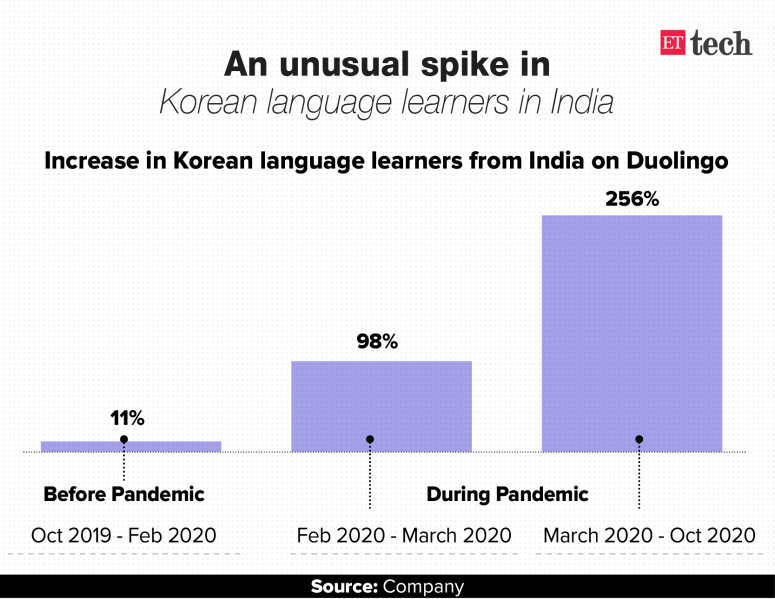
The Korean wave,  the growing global popularity of  Korean culture, swept India a few years ago, but  exploded during a pandemic. Supported by the OTT platform, which has a large investment in Korean programs, the number of people who started watching K-Drama and listening to K-Pop has skyrocketed. Recently, the language learning app Duolingo surveyed 1,013 people in 10  cities in India and found that Korean is  the fastest growing language in India. It was the 7th most popular language for Indians in 2020, but it has risen to the 5th in 2021 and will  continue to rise. Duolingo’s 2021 audio report attributed this primarily to the release of Squid Game in 2021.

Ipl revenue more than Epl?

After the 15th edition of IPL concluded in 2022 with the recently formed Gujarat elephants, led by Hardik Pandya, securing palm, the Board of Control for Cricket in India( BCCI) chairman Sourav Ganguly has said, “ The IPL generates further profit than the English Premier League”.


The English Premiere League or the Premiere League is considered the most viewed football event in the world. The Premier League, is the top position of the English football league system. queried by 20 clubs, it operates on a system of creation and deportation with the English Football League.
still, Ganguly’s statement comes at a time when media companies are are fighting for the elusive media rights to the IPL, the world’s richest sports league, anticipated to cost up to$ 6 billion. Ganguly further stated that he feels proud to see that the game of justice has been evolving in India. He also comment “ I have seen the game evolve, where players like me earned a many hundreds and now have the eventuality of earning crores. This game is run by the suckers, by the people of this country, and by the BCCI, which was formed by justice suckers. This sport is strong and will continue to evolve.”
The IPL generates further profit than the English Premier League. It makes me feel happy and proud that the sport I love has evolved to come so strong,” Ganguly said at India Leadership Council Event while speaking to Deepak Lamba, CEO, Worldwide Media, President, Times Strategic results Limited. The IPL 2022 was held in a much larger scale than the former seasons.

How IPL made cricketers and BCCI one of the richest in global sport ?
The Indian Premier League( IPL) in a span of just 15 times has managed to come one of the biggest sporting leagues in the world. The initial edition of the IPL was played in 2008 and there has been no looking back ever since as the T20 league continues to witness a massive growth in its fashionability across the globe. IPL is arguably the biggest T20 league in the world and has the stylish players from across the globe playing their trade in the competition.
The Indian Premiere league has created millionaires out of youthful cricketers and made BCCI as one of the richest governing bodies in the world of global sport.
Aruguably, the high- octane, big- hitting carnivalesque event provides a must- see product, driving broadcast subscriptions by the millions and pulling in huge advertising profit.
IPL brigades admit a share of the TV rights and backing plutocrat, and around 10 to 15 percent of ticket deals.
They can also induce their own profit through economic shirt or other auspices.

Profit Creators
The BCCI earned$ 533 million from the IPL in 2020, treasurer Arun Dhumal told Indian media, but its finances are marked in secretiveness.
In its 15th time, the BCCI is anticipated to earn fresh profit of ₹ crore per time( ₹,715 crore for 10 times) from the new brigades besides ₹ 444 crore which it has entered from VIVO as a reassessment figure.
When the event expanded to 10 brigades this time from the original eight, the transaction for the rights to enjoy the new votes drew transnational stab including the Glazer family, who enjoy Manchester United.
They were eventually beaten out by Indian mogul Sanjiv Goenka’s RPSG empire, who paid the BCCI$ 930 million to form the Lucknow Super Giants.
The alternate new ballot, the Gujarat Titans, bring the global adventure fund CVC Capital$ 690 million. The brigades spent nearly$ 75 million in the February player transaction, with Mumbai Indians retaining gate- keeper- batsman Ishan Kishan for$ 2 million and Punjab lords paying England’s Liam Livingstone$1.52 million for his services.

Broadcast rights are the BCCI’s biggest plutocrat- incentive. Star India, possessed by Disney, paid$2.55 billion for a five- time TV and digital rights deal that expires at the end of this season.

What is Cyber Crime?


Cyber crime is any criminal related activity done by a person using a computer or network. It can also be defined as any illegal activity done via the internet. Offences that are committed against individuals or group of individuals with a criminal motive to imtentionally harm the reputation of the victim or cause physical or mental harm using modern telecommunication networks such as Internet (e – mails, chat rooms, etc) and mobile phones(bluetooth, sms, mms) is termed as cyber crime.

Listed below are some ways to prevent Cyber Crime:

1)Strong password

Passwords should be of eight characters (including a combination of letters, numbers and symbols).

2) Ensure your software is up-to-date

3) Don’t fall for pop-ups

If an email or pop-up window asks you to enter username or password, don’t do it. Instead, open your browser and visit the site directly.

4) Secure your internet network with a strong encryption passwoed and a VPN

5) Educate yoir children about internet risks

Communicate with them and assure them that they can come to you if they face any stalking, bullying or online harassment.

6) Protect your financial data

Remember this: Legitimate banks or companies will never ask for any personal details or ask you to transfer money into an account.

7) If you fall victim to Cyber crime, then:

a) contact the banks or companies where the fraud occured.

b) place fraud alerts and get your credit reports

c) register complaint with cyber cell or local police station


The empowering story of BTS Leader RM

BTS recently stood up for the Asian community and spoke to the US presidant about Anti-Asian hate. RM, the leader of BTS and a global icon was himself a victim of hate and negativity. He was ridiculed for his looks and the negativity was so intense that he even started to hate himself too. At the age of 16, RM left his family, his good grades, and his more secured future to become a K-pop Idol. But, unlike other trainees, he didn’t have an experience with dancing and even after practising for longer hours and pushing his limits, he would still make a lot of mistakes. He started to blame himself for not being as good as others and even almost quit being a trainee. Luckily, his fellow member J- hope and his dance teachers encouraged him to stay and the rest was history, BTS succeeded. RM thought everything would be better once he debuted but it only made things worse for him. When BTS was starting, netizens called RM ugly and talentless and even asked him to leave the group. We live in a world where beauty, money and perfection are the standards of success. And those of us who fall short in comparison turn to self-hate and RM too fell into that trap. So, how did RM with so much strong self-hate and negativity around him lead the biggest boyband in the world? First, he used his insecurities to fuel his passion for music. Then he apologised for his mistakes and strived to be better. All of this taught him to stand up for himself, stand up for BTS and stand up for the Asian Community. RM chose to be defined by his hard work and passion rather than his faults and limitations. He learned to accept the imperfect. His empowering journey with self love has been changing the world. He inspires his bandmates to make music about the importance of accepting oneself. He inspires their fans, the Army’s to find beauty in their imperfections and just recently, his self love became so powerful that it created a movememt for people to love others as well.

Arrival of Dutch in India

The Dutch are the people of Holland (now the Netherlands). The Dutch arrived in India shortly after the Portuguese. The Dutch have long been experts in sea trading. The Dutch government granted the United East India Company of the Netherlands license to trade in the East Indies, including India, in 1602. Dutch India was more of a geographical location than a political authority. In comparison to the Portuguese and the English, the Dutch had the shortest presence in India of all the European colonial powers.

Dutch history in India
The Dutch East India Company was founded in 1602 and signified the Dutch entrance in India. They arrived in Andhra Pradesh’s Masulipatam (now Machilipatnam). From 1605 to 1825, they occupied the Indian subcontinent. Given the growing demand for Indian spices from Asia in Europe, the Dutch arrived to India with the intention of trading. The establishment of the Dutch East India Company marked the beginning of the modern multinational company (MNC). Following a pact between the Zamorin of Calicut and the Dutch chief, Steven Van der Hagen, Dutch trading in India began on November 11, 1604. The goal was to force the Portuguese off the Malabar Coast, but this was never achieved. The Dutch, on the other hand, soon built commercial facilities in various parts of India and traded cotton, textiles, silk, Indigo, and Golconda diamonds. In 1661, the Dutch conquered the Portuguese and took control of all of Malabar. They had now mastered the pepper trade and made tremendous profits selling pepper, which was known in Europe as “Black Gold.” In the 17th century, nothing could stop the Dutch from capturing Pondicherry from the French in 1693. In the East Indies, the Dutch became a large producer of sugar and coffee, as well as a big exporter of spices and textiles. During their time in India, the Dutch tried their hand at currency manufacture as well. They established mints in Cochin, Masulipatam, Nagapatam Pondicherry, and Pulicat as their trade grew. Furthermore, the Pulicat mint issued a gold pagoda with an image of Lord Venkateswara (god Vishnu). The Dutch minted coins that were all based on local coinages.

The Decline of Dutch power The Dutch East India Company began to fade in the mid-eighteenth century. It was characterised by poor corporate practices, corruption, and political upheaval. Martanda Verma, the formidable monarch of Travancore, defeated the Dutch in 1741 and reclaimed control of Malabar. The fourth Anglo-Dutch war, in which the British navy sunk Dutch ships and seized trading ports, resulted to their bankruptcy in 1799. Finally, the Anglo-Dutch Treaty of 1825 ended the Dutch dominance in India by transferring all Dutch assets to the British.

Arrival of Portuguese in India

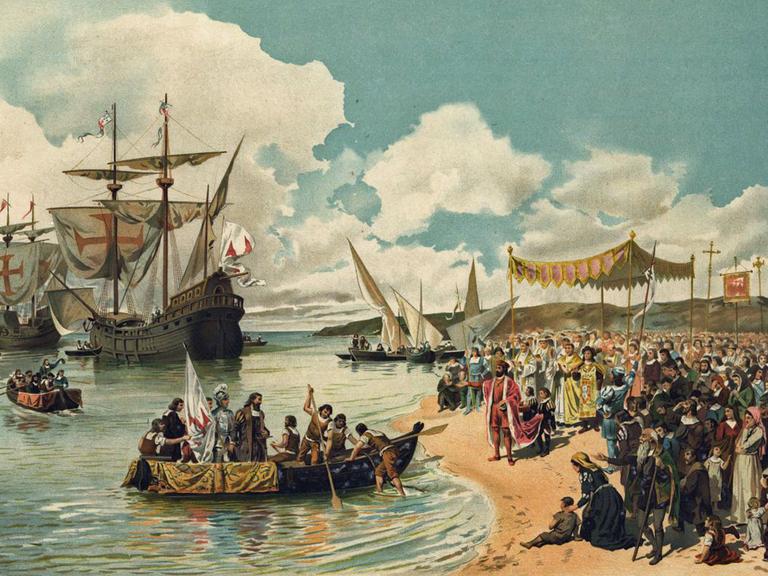
The Portuguese State of India was a Portuguese colonial state on the Indian Subcontinent. Vasco De Gama was the first Portuguese to set foot in India in 1498. However, Portuguese control in India is considered to have lasted from 1505 until 1961. Although Portuguese colonialism outlasted its English counterpart, it had little influence outside of its territories. The Portuguese were the first Europeans to arrive in India and the last to go.

Portugal’s Early Years in India
When Vasco da Gama arrived in Calicut on the Malabar Coast on May 20, 1498, Portuguese colonialism began in earnest. He met with the ruler of Calicut, the Zamorin, and received permission to trade in Calicut. But Vasco da Gama was unable to pay the customs duties and the cost of his merchandise. The Zamorin’s officials detained some of Vasco da Gama’s soldiers when the duties were not paid. This enraged him so much that he kidnapped some Indians and fisherman. However, the voyage was a success in the eyes of the Portuguese authorities in Lisbon. A sea path around the Ottoman Empire was discovered, and the expedition made a profit well in excess of its initial cost.

Expansion of Portuguese Colonialism
Vasco da Gama established a base of operations on the Malabar coast after further conflict with the Zamorin Kingdom. Francisco de Almeida, the first viceroy, placed his headquarters in what is now Cochin. Alfonso de Albuquerque, the second governer of the Portuguese territories in the East, was appointed in 1509. Off the coast of Calicut, a Portuguese fleet led by Marshal Fernão Coutinho arrives. Their orders were quite clear: destroy the Zamorin. The city was levelled and the palace of the Zamorins was taken, but the local soldiers rallied and attacked the invading Portuguese, forcing them to retreat and wounded Albuquerque. In 1510, Afonso de Albuquerque defeated the Sultanate of Bijapur, establishing Goa as a permanent settlement. It would later become the viceroy’s seat and the headquarters of the Portuguese colonial conquests in India. Modern-day Mumbai was likewise a colonial possession until 1661, when it was handed over to the British. From 1799 until 1813, the British conquered Goa for a brief while, eradicating the final vestiges of the inquisition. The capital was moved to Panjim, which was later renamed Nova Goa, in 1843, when it became the administrative center of Portuguese India. For the next century, Portuguese control would be limited to Goa and the enclaves of Diu and Daman.

Cause of Decline of Portugal in India
While the British granted independence to most of India, the Portuguese retained colonial colonies in India. Local anti-Portuguese demonstrations in Goa were violently suppressed. Despite repeated pleas from the Indian government, the Portuguese government, led by dictator António de Oliveira Salaza, refused to hand over its colonial holdings, saying that they were an intrinsic part of Portuguese territory. The invasion of Goa by the Indian troops took place in December 1961. The Portuguese attempted to resist against overwhelming odds, but were quickly crushed by the Indian Army. On December 19, 1961, the Governor of Portuguese India signed the Instrument of Surrender, freeing Goa after 450 years of Portuguese domination in India.

Structures under water

ocean - Major subdivisions of the oceans | Britannica

Oceanography is one of the largest areas of geography as it deals with the largest form on earth, Ocean. More than half of the earth’s surface is covered with water and it mainly consists of oceans. Even though it looks similar when we look from above, there are deep structures inside the water. Just like the land forms we daily see around us; oceans also have a wide variety of structures. In order to gain a clear idea about those, let us look into it in detail:

Major structures

Continental shelf

A continental shelf is the edge of a continent that lies under the ocean. Continents are the seven main divisions of land on Earth. A continental shelf extends from the coastline of a continent to a drop-off point called the shelf break. From the break, the shelf descends toward the deep ocean floor in what is called the continental slope. Even though they are underwater, continental shelves are part of the continent. The widths of the continental shelves vary.

Continental shelf

Continental slopes are regions of steeply sloping seafloor that lie between continental shelves and the deep ocean basins. Regional gradients are typically 2–5°, but locally slopes may be much steeper. Their large-scale morphology is a consequence of tectonic processes: the different elevations of continental crust and oceanic crust, the details of the original rift tectonics on passive continental margins, and the styles of subduction and accretion on convergent margins.

Continental rise

continental rise, a major depositional regime in oceans made up of thick sequences of continental material that accumulate between the continental slope and the abyssal plain. Continental rises form as a result of three sedimentary processes: mass wasting, the deposition from contour currents, and the vertical settling of clastic and biogenic particles.

Abyssal plane

The term ‘abyssal plain’ refers to a flat region of the ocean floor, usually at the base of a continental rise, where slope is less than 1:1000. It represents the deepest and flat part of the ocean floor lying between 4000 and 6500 m deep

Minor structures

Abyssal hills

An abyssal hill is a small hill that rises from the floor of an abyssal plain. They are the most abundant geomorphic structures on the planet Earth, covering more than 30% of the ocean floors. Abyssal hills have relatively sharply defined edges and climb to heights of no more than a few hundred meters. They can be from a few hundred meters to kilometers in width.

Trenches

Ocean trenches are steep depressions in the deepest parts of the ocean, where old ocean crust from one tectonic plate is pushed beneath another plate, raising mountains, causing earthquakes, and forming volcanoes on the seafloor and on land.

Submarine canyons

A submarine canyon is a steep-sided valley cut into the seabed of the continental slope, sometimes extending well onto the continental shelf, having nearly vertical walls, and occasionally having canyon wall heights of up to 5 km, from canyon floor to canyon rim, as with the Great Bahama Canyon.

Ocean has several other wonders hid under its deep waters. If we go deeper new structures unfold.

How to manage separation anxiety in children.

As a parent, it’s sometimes hard to be away from your kids. But it’s an indescribable, heartwarming feeling when you return – their smiles, the running to you with open arms, their tiny arms squeezing your neck. Whether you’ve been gone ten minutes or two days, that moment, this sweet reward, is everything.But what if reunions aren’t possible because the goodbyes are too much for your child to bear? If goodbyes are full of tears and fits, your little one might have separation anxiety.

Separation anxiety is a normal part of development that occurs when toddlers begin to grow more aware and develop stronger relationships with their caregivers. This awareness can make them more apprehensive and possibly feel unsafe without their parent or caregiver.Whether it’s dropping your child off at day-care or leaving your child at home as you head out to work, farewells can be difficult. Your child may understand that mommy and daddy didn’t vanish, but they might not know for how long. All they know is that they feel safest when you’re around.

When does it begin?

Separation anxiety typically develops before age 1 and peters out around age 3, but it can be experienced by older children and young adults as well—particularly during major life changes like transitioning to high school or leaving for college. Certain life stressors can trigger feelings of anxiety about being separated, such as divorce, loss of a pet, new caregiver, a new sibling, a new school or moving to a new place.

Separation anxiety can be normal and temporary. Although it can be difficult for your child, and for you as their parent, remember this indicates a strong attachment between you and your child.However, if you notice your child’s anxiety starts affecting their daily life and academics, talk to their doctor. Things like stomach aches, vomiting, headaches, constant worry about losing you or a loved one to a disease or illness or a reluctance to sleep away from you may be a sign of a more serious emotional problem called separation anxiety disorder (SAD. The main difference between the two is that with SAD their fears keep them from normal activities. Adult separation anxiety can have an onset in childhood or adulthood. Similar to other anxiety disorders, adult separation anxiety can affect your quality of life, but the condition can be managed with treatment. Talk to a medical professional if you suspect you or someone you love is living with this disorder.

Common causes of separation anxiety disorder

Separation anxiety disorder occurs because a child feels unsafe in some way. Take a look at anything that may have thrown your child’s world off balance, made them feel threatened, or upset their normal routine. If you can pinpoint the root cause—or causes—you’ll be one step closer to helping your child through their struggles.Common causes of separation anxiety disorder in children include:

  • Change in environment. Changes in surroundings, such as a new house, school, or day care situation, can trigger separation anxiety disorder.
  • Stress. Stressful situations like switching schools, divorce, or the loss of a loved one—including a pet—can trigger separation anxiety problems.
  • Insecure attachment. The attachment bond is the emotional connection formed between an infant and their primary caretaker. While a secure attachment bond ensures that your child will feel secure, understood and calm enough for optimal development, an insecure attachment bond can contribute to childhood problems such as separation anxiety.

Tips to reduce separation anxiety

Separation anxiety may come and go, but there’s plenty you can do to help ease your child’s symptoms. These tips can help them through this difficult period.

  • Talk to your child in a calm, positive tone. Let your child know what will happen while you are gone, who they will be with and all the fun things they get to do. Even if you feel your child is too young to understand, your positive tone and attitude will send a reassuring message. It may even be helpful to find and read picture books that talk about separation and that goodbyes aren’t forever.
  • Practice separating. Practice leaving your child at home with a caregiver for a short period of time. As time goes on, you can extend the time you are away before returning home.
  • Ease the separation. Leave your child with their favorite stuffed animal or toy.
  • Prepare an activity. Engage your child in a fun activity when the caregiver arrives or ask the daycare teacher to have an activity ready as soon as you drop your child off.
  • Make your goodbye short. Whenever you leave your child or drop them off, keep the goodbye brief. If you act anxious or keep returning for just one more hug or kiss, you may unnecessarily worry your child
  • Follow through on your promise. It’s important that you return when you promised to return as this helps your child build confidence and trust.
  • Aim for consistency. Kids like consistency, so try to schedule the same caregiver whenever possible, so your child feels more comfortable when you leave. Develop a brief, consistent routine for when you leave to create a familiar transition from being with you to being without you.
  • Attention: When separating, give your child full attention, be loving, and provide affection. Then say good-bye quickly despite their antics or cries for you to stay.

Additional tips for older children

Although separation anxiety tends to lower during adolescence, teens can experience it too. it is necessary to make sure an older child still feels safe and emotionally well to start being independent or it can resurface in untimely situations. . Here are some additional tips to help your adolescent child:

  • Acknowledge their fears. Let them know you’re there for them and that uneasy feelings are natural parts of adolescence.
  • Praise them for doing something they are anxious about.
  • Gently encourage, don’t force, them to do things that make them anxious.
  • Wait until your child is anxious before stepping in to help.
  • Remind your child of times when they were initially afraid but still managed to do something.