Health Infrastructure in India

The pandemic has shown that India’s healthcare system is lacking on multiple ares and calls for a rework by all stakeholders. Government expenditure on health, demand-supply mismatch, and chronic shortages are just some of the problems.

In 2020-21, India spent 1.8% of its gross domestic product (GDP) on healthcare. With ‘health and well-being’ one of the six pillars of the Union Budget 2021-22, the government has committed approximately 2.5-3% of GDP now. Data shows that India has 1.4 beds per 1,000 people, 1 doctor per 1,445 people, and 1.7 nurses per 1,000 people. According to the World Health Organization (WHO), India ranks 184 out of 191 countries in health spending. The US spends over 16% of its total GDP on healthcare, while Japan, Canada, Germany etc. spend over 10% of their GDP on healthcare.
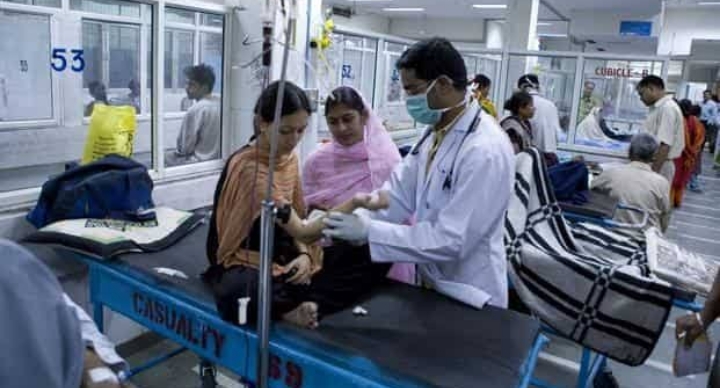
How have facilities coped with the pandemic?

Badly. The capacity of the healthcare system has been stretched to its limits with critical shortages of hospital beds, oxygen concentrators, life-saving drugs, medical supplies, disease surveillance etc. With urban India struggling to counter the onslaught of the second wave of covid-19, rural India’s threadbare healthcare system stands even more stressed.
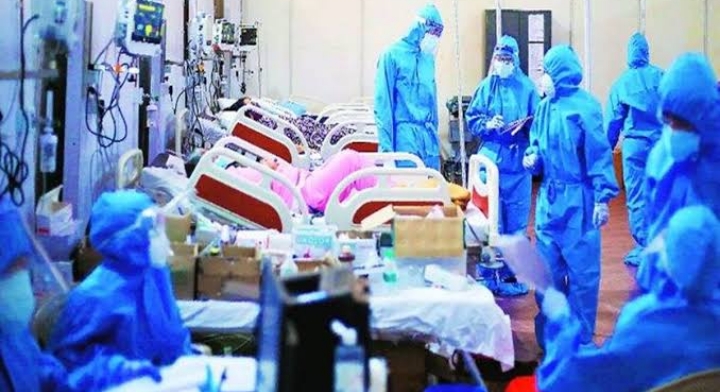
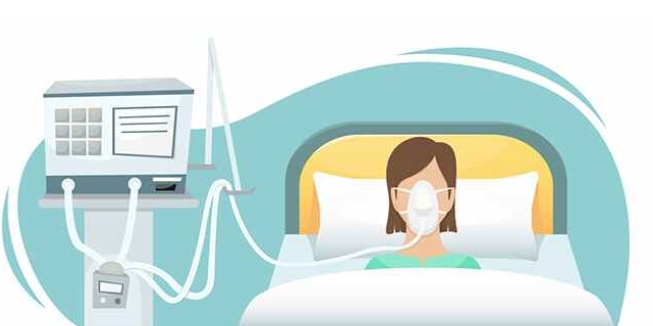
On April 9, Harsh Vardhan said the country had “substantially ramped up” hospital infrastructure, with 75,867 ICU beds and 255,168 oxygen beds. But going by the crisis across states, these numbers seem inadequate. Public health experts say the Centre and the states must now work together to quickly add more beds, ICUs and ventilators and also open temporary Covid facilities. They must ensure uninterrupted supply of medical oxygen. Several states have launched online tracking of hospital beds, but these often fail to display real-time data, leading to harassment of patients. For milder cases, the district administrations can open home care facilities with regular tele-monitoring so that the load on hospitals can be reduced.

Does poor healthcare impact the economy?

At a micro level, increased expenditure adversely impacts savings and consumption levels. Reduced consumption leads to reduced demand, disincentivising producers to invest more in capital formation. In case of firms, poor health conditions impact physical and mental ability, worker turnover, and attendance, leading to lower productivity. At a macro level, lower economic efficiency results in lower production relative to inputs employed, leading to lower economic growth and reduced income generation.

What is needed to improve healthcare?

India is in desperate need of an all-encompassing public healthcare system. The need of the hour is to have a regulator who can work with states and ensure that the focus shifts to affordable health-care, availability of more health-care professionals, well-equipped facilities, and disease prevention instead of disease management. Inequity among states in terms of facilities needs to be minimized. The Centre needs to aim for 100% health insurance coverage.
Government Initiatives

Some of the major initiatives taken by the Government of India to promote Indian healthcare industry are as follows:

  1. In March 2021, various states and UTs started implementation of the ‘Intensified Mission Indradhanush 3.0’—a campaign aimed to reach those children and pregnant women who were missed out or have been left out of the routine immunisation programme due to the COVID-19 pandemic. This is aimed to accelerate the full immunisation of children and pregnant women through a mission mode intervention.
  2. In March 2021, the Parliament passed the National Commission for Allied, Healthcare Professions Bill 2021, which aims to create a body that will regulate and maintain educational and service standards for healthcare professionals.
  3. In the Union Budget 2021, investment in health infrastructure expanded 2.37x, or 137% YoY; the total health sector allocation for FY22 stood at Rs. 223,846 crore (US$ 30.70 billion).
  4. The government announced Rs. 64,180 crore (US$ 8.80 billion) outlay for the healthcare sector over six years in the Union Budget 2021-22 to strengthen the existing ‘National Health Mission’ by developing capacities of primary, secondary and tertiary care, healthcare systems and institutions for detection and cure of new & emerging diseases.
  5. In Union Budget 2021-22, the government announced its plans to launch ‘Mission Poshan 2.0’ to merge ‘Supplementary Nutrition Programme’ with ‘Poshan Abhiyan’ (Nutrition Mission) in order to improve nutritional outcomes across 112 aspirational districts.
  6. The Government of India approved continuation of ‘National Health Mission’ with a budget of Rs. 37,130 crore (US$ 5.10 billion) under the Union Budget 2021-22.
  7. In the Union Budget 2021, the Ministry of AYUSH was allocated Rs. 2,970 crore (US$ 407.84 million), up from Rs. 2,122 crore (US$ 291.39 million).
The Imposter Syndrome

What is Imposter Syndrome?

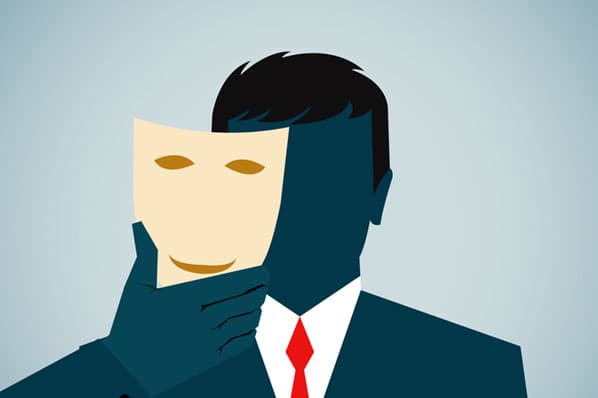
Imposter syndrome basically refers to internal feelings of insecurity or inadequacy that make you believe you are not as competent as people perceive you to be. Basically, it is when we feel like we are frauds, and that anything we have achieved in our lives has been because of pure luck or chance. While in some cases such feelings may cause people to start working harder and meet their own standards of competency, most often they serve as a constant source of anxiety. You may start overworking yourself and spending countless hours trying to get better to make sure no one ‘finds out’ about you.

Especially people who are highly skilled or who have achieved a lot and become successful in a particular field may begin to garner feelings of insecurity and feel that other people are just as skilled, if not even more skilled than them. They start to feel as if they don’t deserve their achievements and success, and that someone more qualified should have got them. Even some of the great people in history like Albert Einstein suffered from this syndrome. He believed himself to be an ‘involuntary swindler’ who did not deserve the recognition his work got. This shows how pervasive and powerful imposter syndrome is, where even a man like Albert Einstein who we now revere as a great scientist that contributed so much to the world, thought of himself as mediocre and undeserving of recognition or praise. This also shows there is no threshold of achievement that puts feelings of inadequacy at rest.

However, it is important to highlight feelings of imposterism are not only felt by highly skilled individuals. Everyone is susceptible to a phenomenon known as ‘Pluralistic Ignorance’ where we each doubt ourselves privately, but think we are alone in thinking that way because no one openly voices their self-doubt. Imposter syndrome is not necessarily a disease or an abnormality, and neither is it always tied to any mental illness like depression or anxiety. Every single person is prone to imposter syndrome, regardless of their race, gender, occupation or mental/physical health. The base cause of this is that we know ourselves from the inside, but we know others only from the outside, so we do not realise that everyone is flawed in some way, not only us. We know all our own shortcomings and weaknesses, but all we know about others is what they tell us, which is far narrower and edited. So we make the mistake of concluding that we have a lot more flaws than others do.

How to deal with Imposter Syndrome?

Perhaps the easiest and most common way to deal with imposter syndrome is to simply talk about it more. We slowly learn that many people around us suffer from the same problem, and become comforted by the fact that we are not alone in such ways of thinking. Once we have this awareness of the syndrome, we can combat it by collecting and revisiting positive feedback and reassuring ourselves of our competence. It also helps us understand that it is simply a negative way of thinking and is not always true.

Apart from this, we must also look inwards and start dealing with it on an internal level as well. This includes things like separating fact from fiction, where we must recognize that even though we have these feelings, they are not objectively true and that we are unreasonably doubting ourselves. We must also stop comparing ourselves with others and try to focus on our own standards of success, not everyone else’s. This is especially important in today’s age of social media, which is the primary cause nowadays for imposter syndrome. We must learn that social media is not real life and that we shouldn’t compare ourselves to what we see on it.

Still, it may be hard to completely eradicate these feelings, but having open conversations about it and self-reflecting and introspection definitely helps us in keeping them controlled. It highlights to us how common these experiences are and that we should not burden ourselves with them. This process of humanizing the world makes us understand that everyone is like us, with their own flaws and problems, and that we all deserve success and fulfilment.   

BEST OF YOUTUBE – PART 1

TANMAY BHAT

He is one of the most hilarious stand-up comedian that I have come across. He is one of the co founder of a comedy group called All India Bakchod. His YouTube channel is a great source of free laughter therapy. His contents include daily vlogs, gaming streams, video reviews.

(Go and check out all parts of Mummy-Papa Pitai review, you’ll die laughing)

AVANTI NAGRAL


Avanti Nagral is a Artist, Song-writer, Influencer and a You-Tube who has completed a dual degree from Harvard University and Berklee College of Music. She uses her music to convey various social messages and creates YouTube contents to break the stereotyped norms by openly discussing sexual topics with her family members in a one-on-one interview, held in a very respectful manner.

(Check out her music video ‘Sun Toh Lo’)

JAY SHETTY

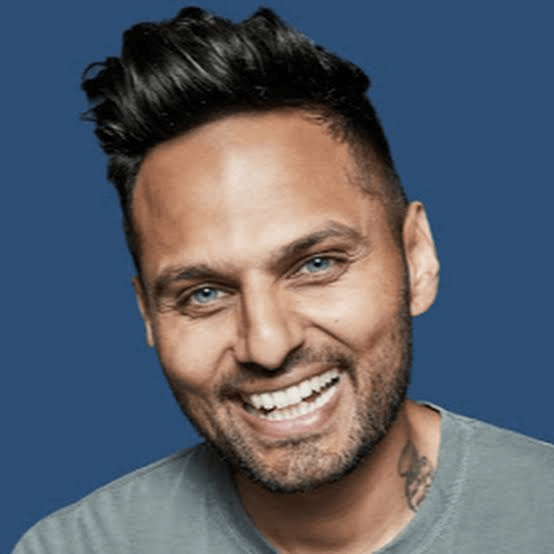
Jay Shetty is a 33 years old monk turned into a life-coach, author, podcaster, you-tuber and an influencer. His channel is inspirational to people of every age group however, his videos focuses on teenagers and young adults. His content includes podcasts and clips where he provides insight on the topics of motivation, wisdom, love and relationships.

THERAPY IN A NUTSHELL

As the name suggests, Therapy in a Nutshell is a YouTube channel owned by Emma McAdam, a Licensed Therapist who makes weekly videos on mental health skills that are easy to understand via YouTube videos and Online Courses. It’s a good platform for people to learn new personal skills and live better. Her video’s cover various topics from Depression, Anxiety, OCD to Sleep disorders and ways to control them. It’s definitely a good investment for people who are curious to learn about mental health.


RANVEER ALLAHBADIA

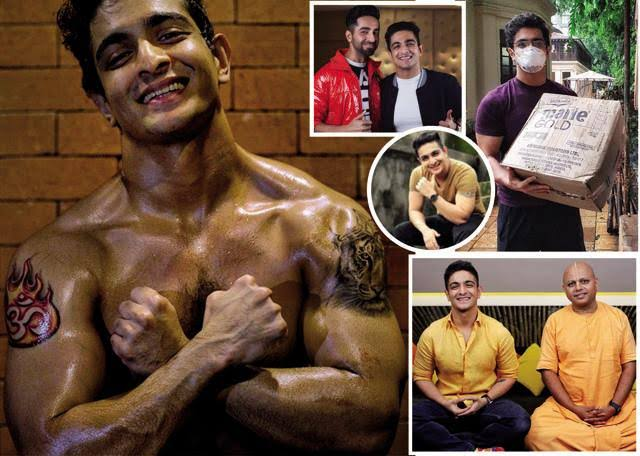
Ranveer Allahbadia aka BeerBiceps is one of the most famous Indian Youtuber, fitness mentor, social media influencer, and entrepreneur. It’s one of the most informative channels that I have come across. It includes videos on a variety of topics from finance, fashion, etiquette, grooming to meditation, yoga, body-building. They conduct one-on-one podcasts with famous Celebrities, Nutritionists, Health Experts, Monks, etc. Hence, his channel is a good source of free knowledge.

Travel the World!!

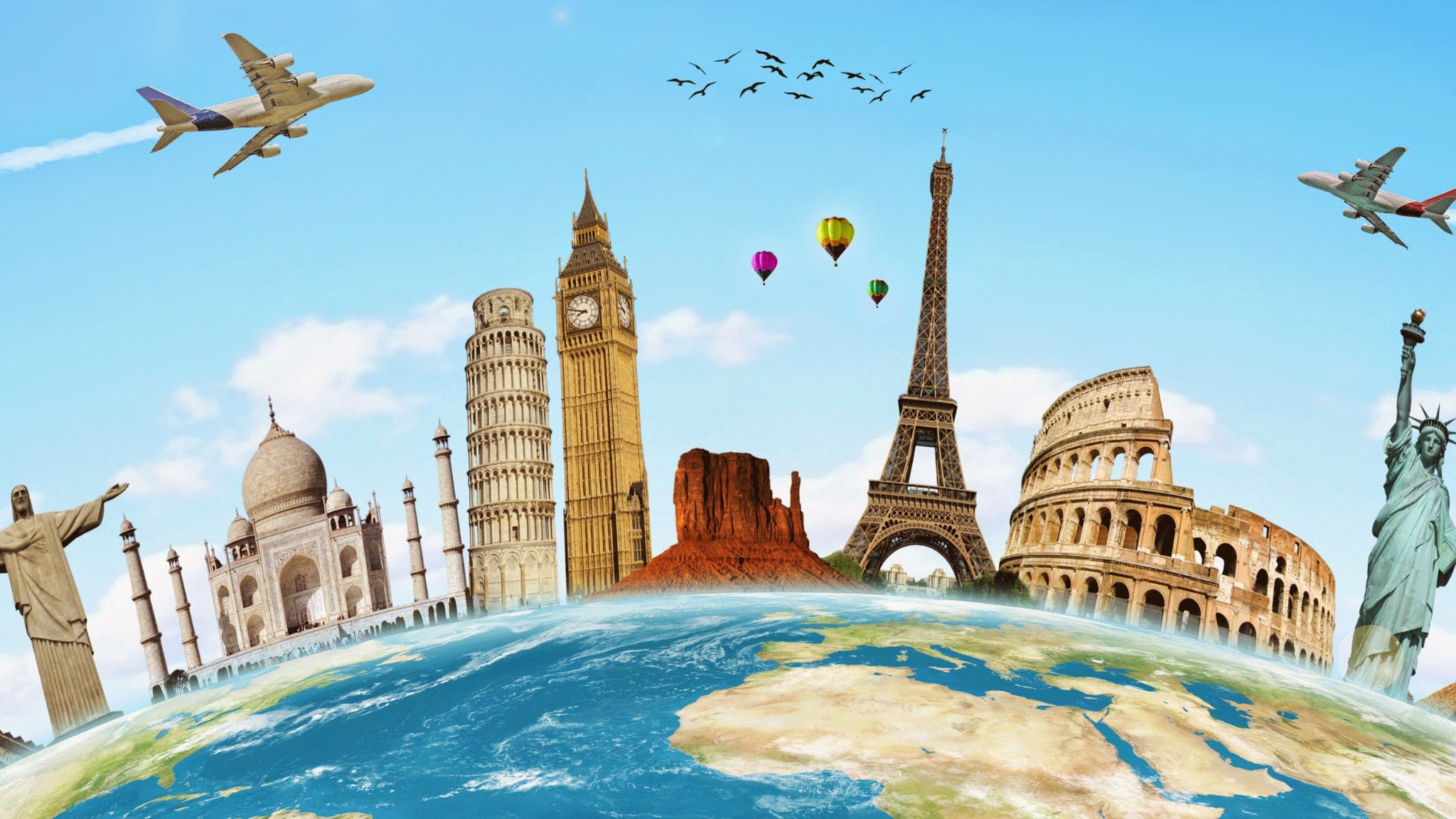
Figuring out how to travel the world is no easy feat, especially when you’re trying to do it on a budget or planning world travel with a family.

There are many factors to keep in mind when evaluating your trip, including what to do before leaving and your budget. To help you get started, we’ve put together a guide on how to travel the world, including everything from how to start looking into your trip to how to save money once you’re abroad.

Get prepared

If you want to travel the world, there are some planning measures you want to take first to ensure you have durable luggage and the proper documents — a passport and possibly visas — and figuring out how much time off you’ll need.

Book travel far in advance

After all that preparation, you’re ready to book your trip around the world, which will likely be a round-the-world plane ticket, a journey by sea, or a combination of flights and ground transportation.

Avoid hidden travel and communication fees

Once you’ve started your trip, there are tips and tricks to help you travel each destination across the world on a budget. City-pass offerings vary by location, but many will give you free or discounted admission to top attractions in a city, as well as fast-track options to cut lines

Choose Restaurants Wisely

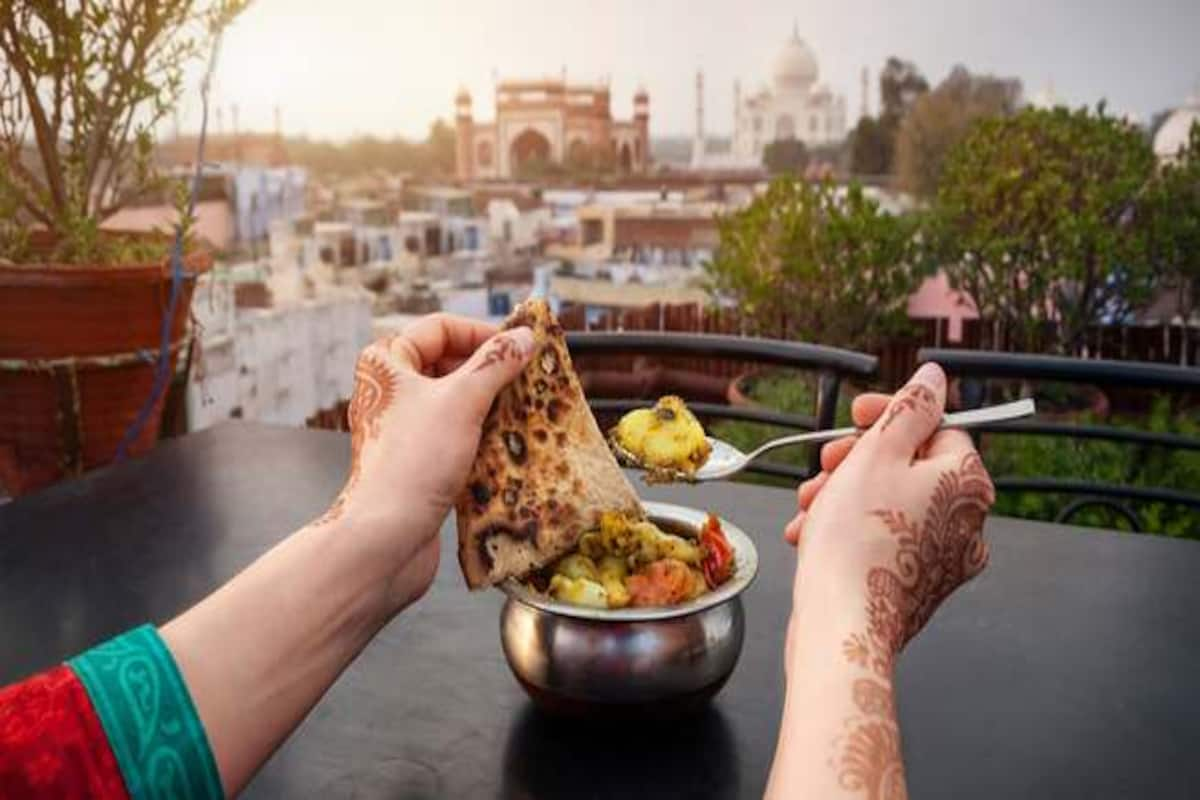
While eating food from around the world is often one of the best parts of traveling, dining out for every meal can become expensive. To save some money: stay away from restaurants located near tourist attractions, which generally have higher prices and lower quality.


Ask about free amenities on flights and at hotels

Some airlines and hotels have free perks available to guests who know to ask for them. On flights, for example, travelers can request everything from ukuleles on some Hawaiian Airlines flights to hot chocolate on Southwest Airlines. Some hotels also offer free amenities that range from night lights, chargers and curling irons

reference-https://www.thetravelmagazine.net/articles

Laws in India children need to know

Out of tons of subjects and important topics missing from our Indian curriculum, laws are one of the most important.

Here are some laws each and every child needs to be aware of, regardless of all variable factors:

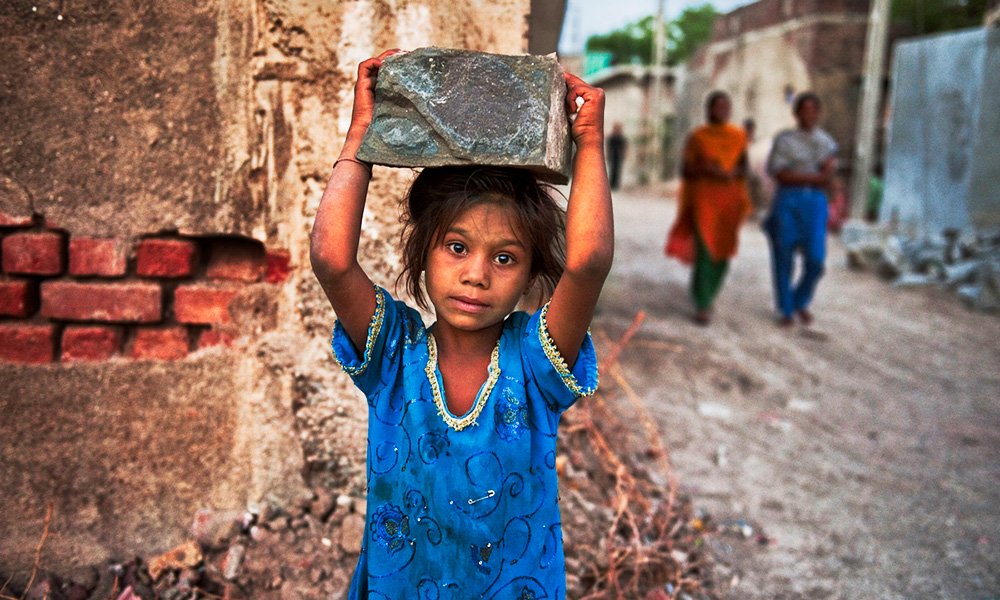
I LAWS AGAINST CHILD LABOUR

Image source: Google | Image by: Nikita Roy 

Children below 14 years of age – can work in family enterprise or entertainment industry as artists with certain conditions

Children between 14-18 years of age- cannot work in any factory, mine or any other hazardous setting, without exception

Children cannot be made to overwork or even work night shifts.

These laws are made clear in article 24 of the Indian constitution and acts that were passed in its pursuance.

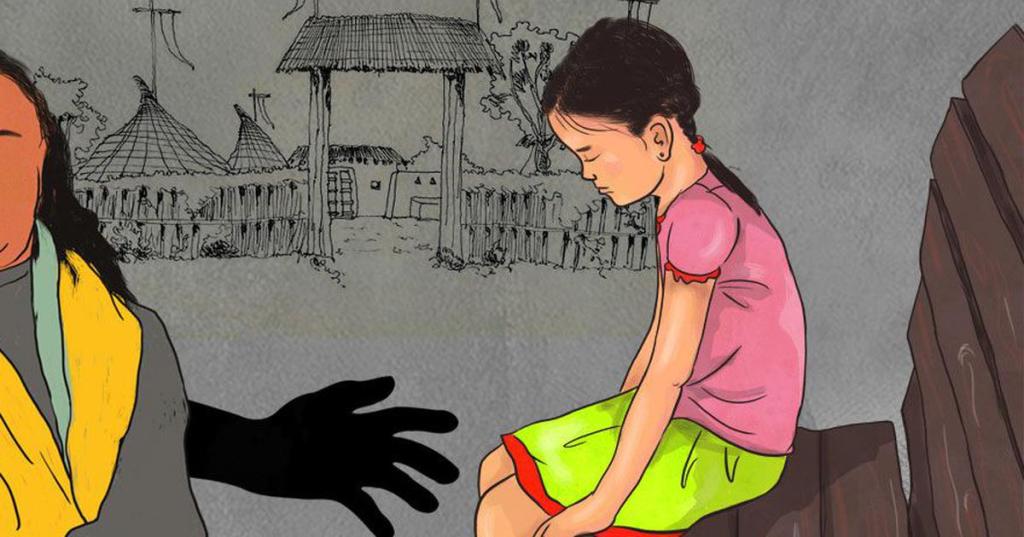
II LAW AGAINST SEXUAL OFFENCES

Image source: Google | Image by: Manisha Yadav scroll.in

The Protection of Children from Sexual Offences(POCSO), amendment Bill 2019 protects children below 18 against:

  • Sexual assault against children
  • Child pornography
  • Harassment
  • Drugs being administered to them to bring about early sexual maturity

POCSO aims at making offences against children gender-neutral.

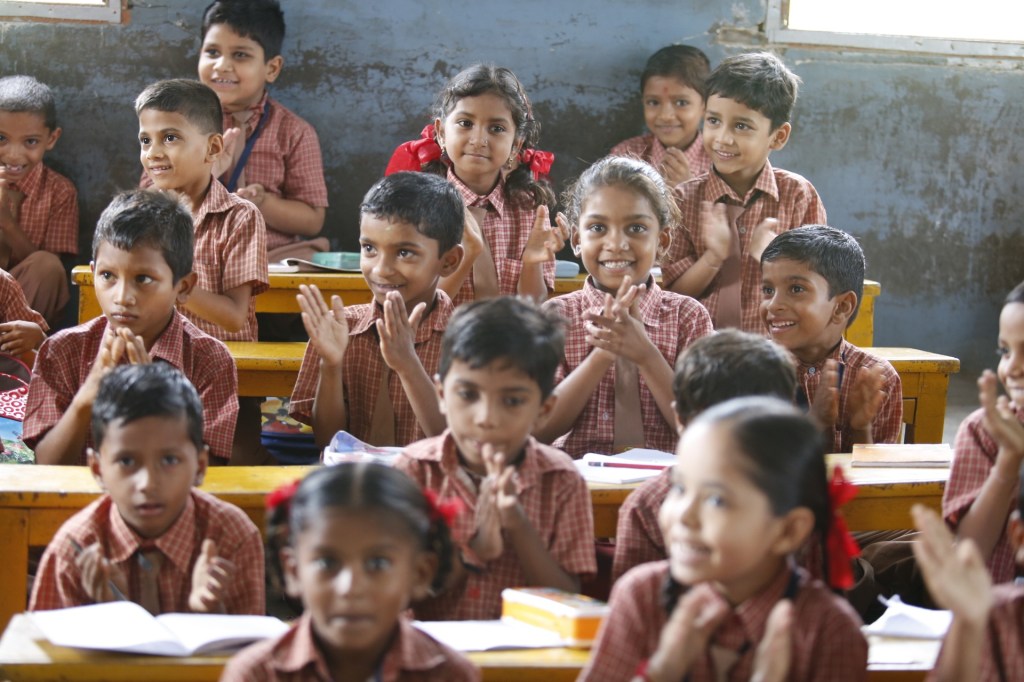
III ENSURING FREE AND COMPULSORY EDUCATION

Image source: Google | Image by: Aprajita Jha

The Right of Children to Free and Compulsory Education Act or Right to Education Act (RTE), 2009, Article 21A of the Indian constitution, ensures free and compulsory education to everyone between 6 to 14 years of age. 25% of seats in all private institutions are reimbursed by the state to which kids are admitted based on economic status or caste-based reservations.

The Right to education of a specially enabled child (under 18 years of age) has separate legislation that is laid down under the Persons with Disability Act.

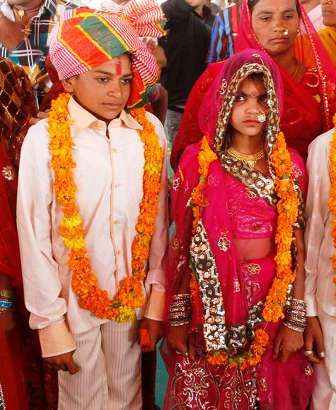
IV PROHIBITION OF CHILD MARRIAGE

Image source: Google | Image by: OBJECTIVE IAS

Any marriage in which either the boy is under 21 or the girl is under 18, is child marriage.

Prohibition of Child Marriage Act, 2006 serves the following purpose:

  • Prevents child marriages
  • Protects the children involved
  • Prosecutes the offenders

Child marriages, under the above-mentioned act, are cognizable and non-bailable offences. This law also prescribes punishment for performing, conducting and abetting child marriage. Permitting or promoting these marriages by the parents of a child is punishable.

POCSO penalizes penetrative sexual assault on a child by anyone related to the child through marriage

Section 375IPC penalizes sexual acts with a girl below 18 years of age, with or without her consent.

V LAWS AGAINST TRAFFICKING

Image source: Google | Image by: Jessica Gooding

The Trafficking of Persons (Prevention, Protection and Rehabilitation) Bill of 2018 addresses this crime affecting mostly children and women.

This bill addresses:

  • Aggravated trafficking for forced labour
  • Begging
  • Trafficking by administering chemical substances or hormones for the purpose of early sexual maturity
  • Trafficking for marrying, under the ploy of marriage or after marriage.
  • Promotion or facilitation of such crimes

So these were some of the children specific laws other basic laws such as the right to equality, right to life, right against discrimination etc. should also be taught to children.

Here are some of the basic ways we can spread awareness:

  1. Including basic laws and fundamental rights in school textbooks.
  2. Making young parents aware of the laws.
  3. Workshops, seminars, etc. in educational institutions.
  4. Including them in cartoon shows and podcasts for children.

To all the parents reading this, ensure your child is safe and comfortable and make them aware of all the laws to ensure their well-being.

To all the children reading this,

If you’re being hurt in any manner, verbal abuse, beatings, bad touch, not being provided with essentials or absolutely anything that is making you feel uncomfortable, REPORT.

Here are some of the few actions you can take:

Image source: Google | Image by: Sage Day

Tell a trusted adult, your parents, grandparents, school counsellors or teachers. You can also tell a friends’ parent, or any other adult you trust.

Don’t have an adult you trust, don’t worry as there is support available, you can always call childline number 1098.

As a child being harassed, you might be threatened to stay mum, but it’s important you raise your voice.

If you think any of your friends or someone you know is being abused or suffering in any manner, you should tell your parents or teachers.

Child-friendly mechanisms are used in all stages of your case and you don’t ever need to hesitate to report when something unfair is happening to you. You don’t deserve that ordeal.

References:

  1. https://byjus.com/free-ias-prep/right-against-exploitation-articles-23-24/
  2. https://www.firstpost.com/india/child-labour-act-govt-allows-under-14-children-to-work-in-non-hazardous-family-enterprises-2242120.html
  3. https://www.business-standard.com/about/what-is-pocso
  4. http://righttoeducation.in/know-your-rte/about
  5. https://timesofindia.indiatimes.com/blogs/legally-speaking/legal-status-of-child-marriages-in-india/
  6. https://www.thehindu.com/opinion/op-ed/preventing-trafficking/article23325538.ece

STARTUP STORIES – YULU

Yulu

Mobility Matters:

The world is evolving at a rapid phase which makes people turn into nimble-footed. People are endeavoring to match their 24 hours between their job and their life. This could be clearly understood when stood in a signal of a busy urban road. They try their level best to spare the time spent on their daily commute. The pandemic has taught us the best lesson that it’s always better to have alternative options to public transport modes. Because at certain times public transport is unreliable, time-consuming and exhausting. There are many possible alternative solutions offered for the same. One such hassle-free solution is to rent electric bikes and pay after the rode ends. This could be a revolution in urban mobility. 

Yulu – the market changer:

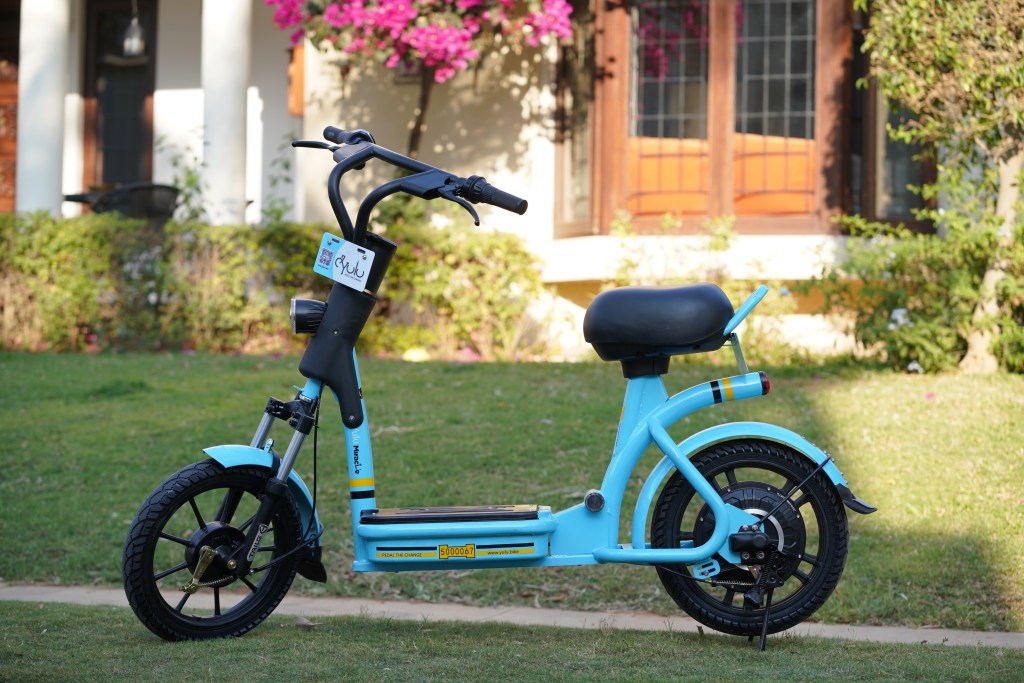
Bangalore is one of the first Indian cities to adopt and explore new technologies. No wonder it’s known as the “ Silicon Valley of India. ”Many Multi-National Companies are headquartered in the city and hence the population is becoming denser day by day. Hence the commute problem is becoming crucial in the city. Yulu came as a game-changer in resolving the problems. Started in 2019 they launched with a fleet of 2000 electric scooters named Miracle. 

You can simply download the Yulu app, find the Yulu zone, unlock the bike by scanning the QR code, ride the vehicle and once you end the ride you will be charged based on the distance you have covered. People like the idea for 2 reasons : * The user interface was easy to use *The bike had a decent range of 60kms and a speed of 25km /hour. Owing to the acceptance of the people in Bangalore, Yulu expanded its fleet in 2020.  The startup operated in 4 major cities of India – Mumbai, Bangalore, Pune, and Bhuvaneshwar.

Reason for their success:

  • Early adopters: They addressed the mobility challenges of India with a service-based vehicle fleet at an early stage. The hassle-free commute experience with proper service and support attracted the consumers easily.
  • Consistent updates: They follow their customers so closely and understand their needs better. They improvised the charging infrastructure, added slots for carrying personal things etc. 
  • Beginner-friendly: Since it’s a vehicle with a maximum speed of 25km/hr, it does not need a license for a ride. This has made the vehicle a beginner-friendly one.
  • Analyzing Algorithms: They have algorithms in the software which analyze the areas and time zones that hold peak demand. Based on the analysis they expand their zones of operation. 
  • Alternative thinking: In the pandemic situation, the usage of YUlu bikes dropped significantly. Then they offered their bikes as service to frontline warriors, delivery executives, etc which has improvised their revenue and has also provided a better reach

The micro-mobility solution provider has been backed by a series of investors and AutomotivePioneer Bajaj. As its revenue has increased almost 2.5 times in the current year its expected to raise the next round of funding for its further expansions.

https://www.yulu.bike/products/miracle/

Tokens in Python

Token :- A token is the smallest unit of program. There are various tokens in python some of them are literals, keywords, identifiers, delimiters, operators, statements and expressions.

1. Literals

It refers to data item that have a constant value. Various type of literals are string literals, None (special literal), numeric literal and boolean literal.

2. Keyword

Python has some reserve words which have predefined meaning to its interpreter. It can’t be used as variable, mrthod or class name.

3. Identifiers

It is a name used to identify a variables, arrays and functions.

4. Variable

Variables are used as containers to store data. The data stored in a variable can be modified whenever needed.

5. Delimiters

Delimiters can be defined as a sequence of one or more character that is used to specify the boundary between separate independent region in plain text or other data streams.

6. Statements

A statements is a unit of code that python interpreter can execute.

7. Operators

Operators are used to specify operations to be performed in an expression.

Leonardo da Vinci -The Man Behind Mona Lisa

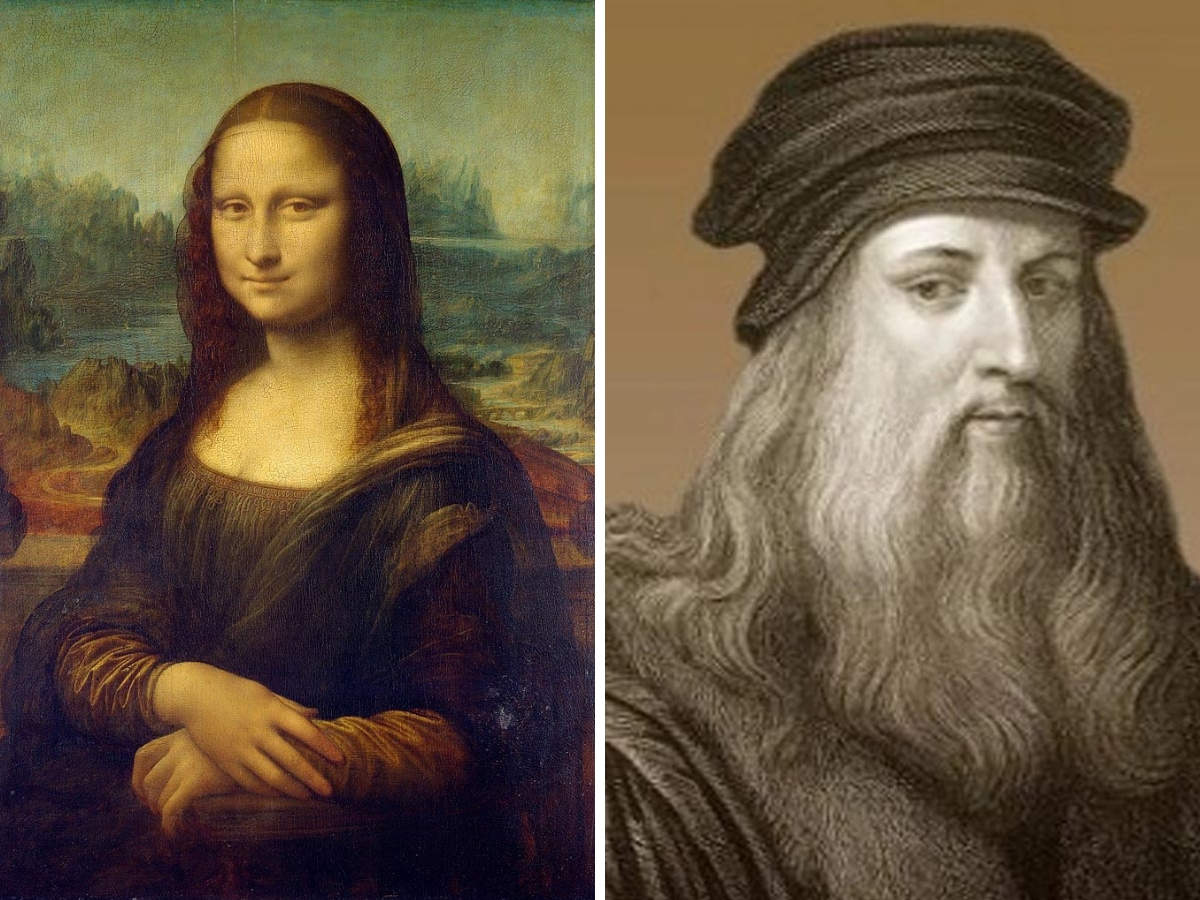
Leonardo da Vinci: Leonardo Da Vinci may have had a condition that  prevented him from finishing Mona Lisa - The Economic Times

Leonardo da Vinci (1452-1519) was a painter, architect, inventor, and student of all things scientific. His natural genius crossed so many disciplines that he epitomized the term “Renaissance man.” Today he remains best known for his art, including two paintings that remain among the world’s most famous and admired, Mona Lisa and The Last Supper. Art, da Vinci believed, was indisputably connected with science and nature. Largely self-educated, he filled dozens of secret notebooks with inventions, observations and theories about pursuits from aeronautics to anatomy. But the rest of the world was just beginning to share knowledge in books made with moveable type, and the concepts expressed in his notebooks were often difficult to interpret. As a result, though he was lauded in his time as a great artist, his contemporaries often did not fully appreciate his genius—the combination of intellect and imagination that allowed him to create, at least on paper, such inventions as the bicycle, the helicopter and an airplane based on the physiology and flying capability of a bat.

Leonardo da Vinci: Early Life and Training

Leonardo da Vinci (1452-1519) was born in Anchiano, Tuscany (now Italy), close to the town of Vinci that provided the surname we associate with him today. In his own time he was known just as Leonardo or as “Il Florentine,” since he lived near Florence—and was famed as an artist, inventor and thinker.

Did you know? Leonardo da Vinci’s father, an attorney and notary, and his peasant mother were never married to one another, and Leonardo was the only child they had together. With other partners, they had a total of 17 other children, da Vinci’s half-siblings.

Da Vinci’s parents weren’t married, and his mother, Caterina, a peasant, wed another man while da Vinci was very young and began a new family. Beginning around age 5, he lived on the estate in Vinci that belonged to the family of his father, Ser Peiro, an attorney and notary. Da Vinci’s uncle, who had a particular appreciation for nature that da Vinci grew to share, also helped raise him.

Leonardo da Vinci: Early Career

Da Vinci received no formal education beyond basic reading, writing and math, but his father appreciated his artistic talent and apprenticed him at around age 15 to the noted sculptor and painter Andrea del Verrocchio, of Florence. For about a decade, da Vinci refined his painting and sculpting techniques and trained in mechanical arts. When he was 20, in 1472, the painters’ guild of Florence offered da Vinci membership, but he remained with Verrocchio until he became an independent master in 1478. Around 1482, he began to paint his first commissioned work, The Adoration of the Magi, for Florence’s San Donato, a Scopeto monastery.

However, da Vinci never completed that piece, because shortly thereafter he relocated to Milan to work for the ruling Sforza clan, serving as an engineer, painter, architect, designer of court festivals and, most notably, a sculptor. The family asked da Vinci to create a magnificent 16-foot-tall equestrian statue, in bronze, to honor dynasty founder Francesco Sforza. Da Vinci worked on the project on and off for 12 years, and in 1493 a clay model was ready to display. Imminent war, however, meant repurposing the bronze earmarked for the sculpture into cannons, and the clay model was destroyed in the conflict after the ruling Sforza duke fell from power in 1499.

Leonardo da Vinci: ‘The Last Supper’ and ‘Mona Lisa’

Although relatively few of da Vinci’s paintings and sculptures survive—in part because his total output was quite small—two of his extant works are among the world’s most well-known and admired paintings.

The first is da Vinci’s “The Last Supper,” painted during his time in Milan, from about 1495 to 1498. A tempera and oil mural on plaster, “The Last Supper” was created for the refectory of the city’s Monastery of Santa Maria delle Grazie. Also known as “The Cenacle,” this work measures about 15 by 29 feet and is the artist’s only surviving fresco. It depicts the Passover dinner during which Jesus Christ addresses the Apostles and says, “One of you shall betray me.” One of the painting’s stellar features is each Apostle’s distinct emotive expression and body language. Its composition, in which Jesus is centered among yet isolated from the Apostles, has influenced generations of painters.

When Milan was invaded by the French in 1499 and the Sforza family fled, da Vinci escaped as well, possibly first to Venice and then to Florence. There, he painted a series of portraits that included “La Gioconda,” a 21-by-31-inch work that’s best known today as “Mona Lisa.” Painted between approximately 1503 and 1506, the woman depicted—especially because of her mysterious slight smile—has been the subject of speculation for centuries. In the past she was often thought to be Mona Lisa Gherardini, a courtesan, but current scholarship indicates that she was Lisa del Giocondo, wife of Florentine merchant Francisco del Giocondo. Today, the portrait—the only da Vinci portrait from this period that survives—is housed at the Louvre Museum in Paris, France, where it attracts millions of visitors each year.

Around 1506, da Vinci returned to Milan, along with a group of his students and disciples, including young aristocrat Francesco Melzi, who would be Leonardo’s closest companion until the artist’s death. Ironically, the victor over the Duke Ludovico Sforza, Gian Giacomo Trivulzio, commissioned da Vinci to sculpt his grand equestrian-statue tomb. It, too, was never completed (this time because Trivulzio scaled back his plan). Da Vinci spent seven years in Milan, followed by three more in Rome after Milan once again became inhospitable because of political strife.

Leonardo da Vinci: Philosophy of Interconnectedness

Da Vinci’s interests ranged far beyond fine art. He studied nature, mechanics, anatomy, physics, architecture, weaponry and more, often creating accurate, workable designs for machines like the bicycle, helicopter, submarine and military tank that would not come to fruition for centuries. He was, wrote Sigmund Freud, “like a man who awoke too early in the darkness, while the others were all still asleep.”

Several themes could be said to unite da Vinci’s eclectic interests. Most notably, he believed that sight was mankind’s most important sense and that “saper vedere”(“knowing how to see”) was crucial to living all aspects of life fully. He saw science and art as complementary rather than distinct disciplines, and thought that ideas formulated in one realm could—and should—inform the other.

Probably because of his abundance of diverse interests, da Vinci failed to complete a significant number of his paintings and projects. He spent a great deal of time immersing himself in nature, testing scientific laws, dissecting bodies (human and animal) and thinking and writing about his observations. At some point in the early 1490s, da Vinci began filling notebooks related to four broad themes—painting, architecture, mechanics and human anatomy—creating thousands of pages of neatly drawn illustrations and densely penned commentary, some of which (thanks to left-handed “mirror script”) was indecipherable to others.

The notebooks—often referred to as da Vinci’s manuscripts and “codices”—are housed today in museum collections after having been scattered after his death. The Codex Atlanticus, for instance, includes a plan for a 65-foot mechanical bat, essentially a flying machine based on the physiology of the bat and on the principles of aeronautics and physics. Other notebooks contained da Vinci’s anatomical studies of the human skeleton, muscles, brain, and digestive and reproductive systems, which brought new understanding of the human body to a wider audience. However, because they weren’t published in the 1500s, da Vinci’s notebooks had little influence on scientific advancement in the Renaissance period.

Leonardo da Vinci: Later Years

Da Vinci left Italy for good in 1516, when French ruler Francis I generously offered him the title of “Premier Painter and Engineer and Architect to the King,” which afforded him the opportunity to paint and draw at his leisure while living in a country manor house, the Château of Cloux, near Amboise in France. Although accompanied by Melzi, to whom he would leave his estate, the bitter tone in drafts of some of his correspondence from this period indicate that da Vinci’s final years may not have been very happy ones. (Melzi would go on to marry and have a son, whose heirs, upon his death, sold da Vinci’s estate.)

Da Vinci died at Cloux (now Clos-Lucé) in 1519 at age 67. He was buried nearby in the palace church of Saint-Florentin. The French Revolution nearly obliterated the church, and its remains were completely demolished in the early 1800s, making it impossible to identify da Vinci’s exact gravesite.

Disinvestment

Disinvestment is the action of an organization or government selling or liquidating an asset or subsidiary. Absent the sale of an asset, disinvestment also refers to capital expenditure (CapEx) reductions, which can facilitate the re-allocation of resources to more productive areas within an organization or government-funded project.

The government undertakes disinvestment to reduce the fiscal burden on the exchequer, or to raise money for meeting specific needs, such as to bridge the revenue shortfall from other regular sources. In some cases, disinvestment may be done to privatise assets. However, not all disinvestment is privatisation. Some of the benefits of disinvestment are that it can be helpful in the long-term growth of the country; it allows the government and even the company to reduce debt. Disinvestment allows a larger share of PSU ownership in the open market, which in turn allows for the development of a strong capital market in India.

Are disinvestment and privatisation related?

The government, whenever it so desires, may sell a whole enterprise, or a majority stake in it, to private investors. In such cases, it is known as privatisation, in which the resulting ownership and control of the organisation does not rest with the government. The government usually avoids doing this. The government mostly retains more than half of the stake in the public sector enterprise so that the control remains in its hands. But when it doesn’t, then the ownership is transferred to the private sector, which results in privatisation. It is also known as majority disinvestment or complete privatisation wherein 100 per cent control goes to the private sector.

Impact of Disinvestment on Indian Economy

Public sector undertakings were established in India as a part of mixed economy with the objective of providing necessary infrastructure for the fast growth of economy & to safeguard against monopoly of industrialist community. However, the entire mechanism did not turn out as efficient as it ought to be, all thanks to the prevailing hierarchy and bureaucracy.

To illustrate the trailing scenario, the average return on capital employed (ROCE) by PSUs have been way too low as compared to the cost of borrowing. For instance, between 1940 and 2002, the average ROCE was 3.4% as against 8.6% average cost of borrowing. PSE survey by NCAER shows that PAT has never exceeded 5% of sales for or 6% of capital employed. The government pays a higher interest though, by at least 3 percentage points.

As per an NCAER study report the cost structure of PSEs is much more than the private sector (the following table shows a comparative scale) :

Lack of autonomy, political interference, nepotism & corruption has further deteriorated the situation. For instance, the head of a PSU is appointed by the Government, who in turn appoints all employees who play major roles in the organization. So directly or indirectly the Government itself controls the appointment of all manpower in these organizations. It is not the business of the Government to do business, i.e. it is best controlled by experts and professional managers.

To address operational inefficiencies in PSEs without comprising on their social objectives, disinvestment policy is often used. However, there are concerns regarding the extent of impact on firm performance since disinvestment may involve transfer of ownership but not control. Analysing data from 1991-2010 on all manufacturing PSEs owned by the central government, this column shows that the average annual efficiency score of disinvested enterprises rose by almost 20%.

Public sector enterprises (PSEs) have an indistinct mandate of meeting objectives beyond the narrow paradigm of profit maximisation. Generating employment, investing in projects that have long gestation periods, setting up operations in certain locations, and regulating prices of some of their products, are some of the objectives that may fall under the social ambit of PSEs. When this multidimensional mandate is combined with an environment free of competitive pressure, PSEs may suffer from operational inefficiencies. To address this inefficiency without compromising on the social objectives that PSEs are expected to achieve, minor disinvestment may be a useful remedial policy.

Implications of Disinvestment on Indian Economy

Disinvestment will be extremely positive for the Indian equity markets and the economy. It will draw lot of foreign and domestic money into the markets. It will allow PSU to raise capital to fund their expansion plans and improve resource allocation in the economy. It will allow the government to stimulate the economy while resorting to less debt market borrowing. Private borrowers won’t be crowded out of the markets by the government and will have to pay less to borrow from the open market. Disinvestment will allow government to have much better control over the market economy without upsetting norms of market behavior.

In future disinvestment will assume the role of a major instrument of policy intervention by government as 48 PSUs listed on BSE as of February 8, 2010, account for close to the 30% of the total market cap of the exchange. This is significant as a total of 4,880 odd companies were listed on the exchange. As of February 8, 2010, the BSE PSU index had a total market cap of Rs 17,14,466.96 crore.

Biriyani & best biriyani joints in kolkata

Biryani is a mixed rice dish originating among the Muslims of the Indian subcontinent. Biryani is an Indo-Aryan word derived from the Persian language, which was used as an official language in different parts of medieval India by various Islamic dynasties.Biryani is popular throughout the Indian subcontinent, as well as among its diaspora. It is also prepared in other regions such as parts of Afghanistan, Iran, and Iraq.

Biriyani made with Indian spices, rice, and meat such as chicken, beef, goat, lamb, prawn, fish and sometimes, in addition, eggs or vegetables such as potatoes in certain regional varieties.different varieties of biryani developed in the Muslim centres of Delhi (Mughlai cuisine), Rampur, Lucknow (Awadhi cuisine) and other small principalities.According to historian Lizzie Collingham, the modern biryani developed in the royal kitchens of the Mughal Empire (1526–1857) and is a mix of the native spicy rice dishes of India and the Persian pilaf.[14] Indian restaurateur Kris Dhillon believes that the dish originated in Persia, and was brought to India by the Mughals.

Different kind of biriyani around all over India :-

Based on preparation style and technique there is two kind of biriyani. Such as – (1). Pakki Biriyani, (2). Kacchi Biryani.

Pakki Biriyani :- In a pakki biryani, the rice, marinated meat, and any vegetables are partially (“three-quarters”) cooked separately, before being combined into layers in a cooking vessel. Different layers of rice may be treated with different spices (e.g., with dissolved saffron or turmeric give the rice different colors and flavors).

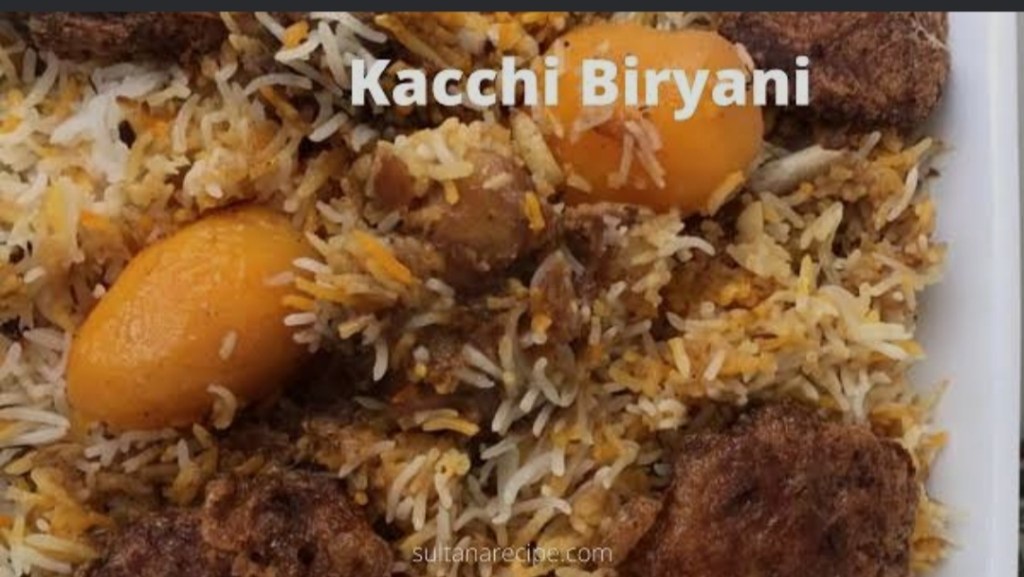
Kacchi Biriyani :- In a kacchi biryani, layers of raw marinated meat are alternated with layers with wet, pre-soaked, raw rice (which may be treated with different spices as above), and cooked together by baking or medium-to-low direct heat (typically, for at least an hour). Cooking occurs by a process of steaming from the ingredients’ own moisture: the cooking vessel’s lid is sealed (traditionally, with a strip of wheat dough) so that steam cannot escape.

In Indian Subcontinent there is various kind of biriyani, such as :-

1). Ambur/Vaniyambadi biryani.

2). Beef biriyani.

3). Bohri biryani.

4). Sindhi biriyani.

5). Bhatkali/Navayathi biryani.

6). Dhakaiya biryani.

7). Degh Ki biryani.

8). Hyderabadi biryani.

9). Kolkata biryani.

10). Chettinad biryani.

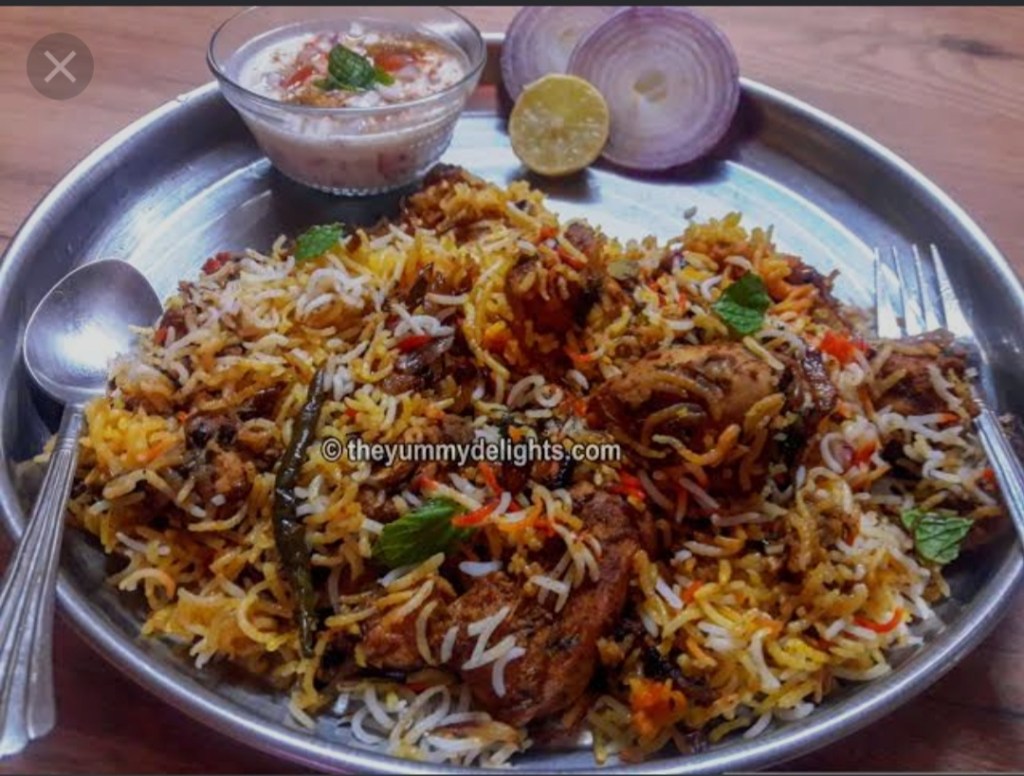
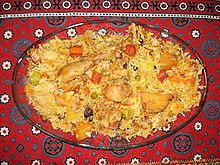
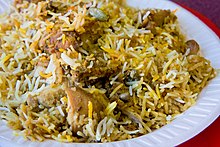
Dhakaiya Biriyani
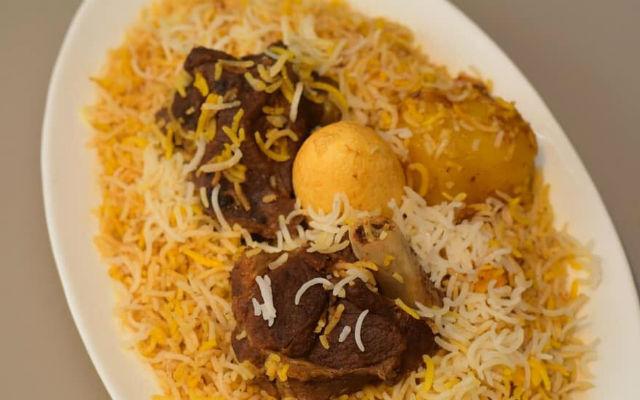
Kolkata Biriyani
Sindhi Biriyani
Hyderabadi Chicken Biriyani

Top 3 famous Biriyani Joints in Kolkata :-

1. Aminia :- Aminia has been treating people to delicious Awadhi style biryani in Kolkata ever since its first outlet opened up in 1929, and its popularity shows no sign of waning.In addition to the succulent meat and the tasty rice, you’re treated to a side of rezala when you order their biryani, which is a curry made from coconut, yoghurt, cream, and cashew nut paste.

Details :- Where: Aminia, 201/1, Rajarhat Road, Meena Tower Central Area, Chinar Park (multiple locations)

When: 11:00 AM to 11:00 PM

Cost For Two: Rs 600

Contact: 8335036781

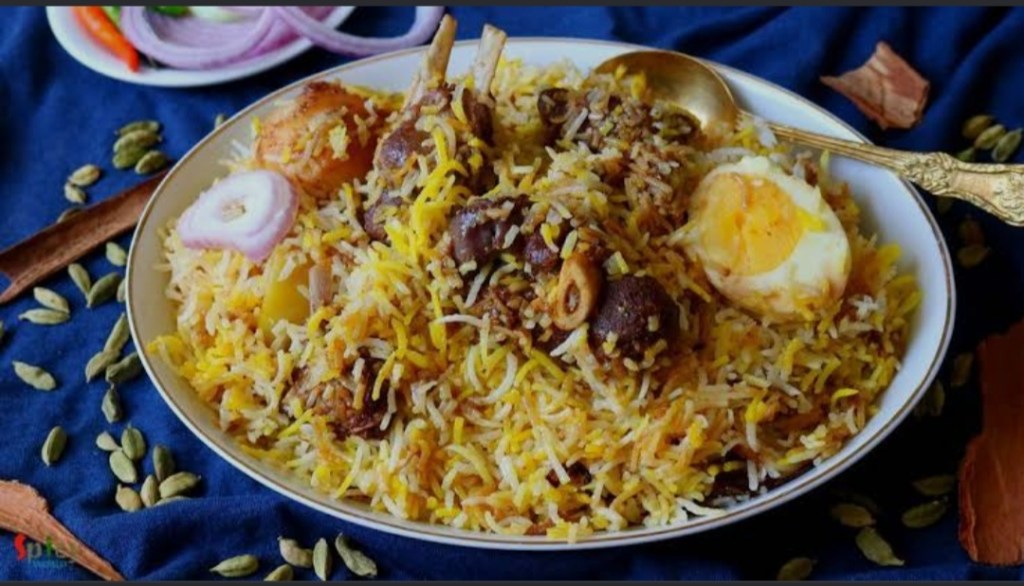
Aminia’s Mutton Biriyani

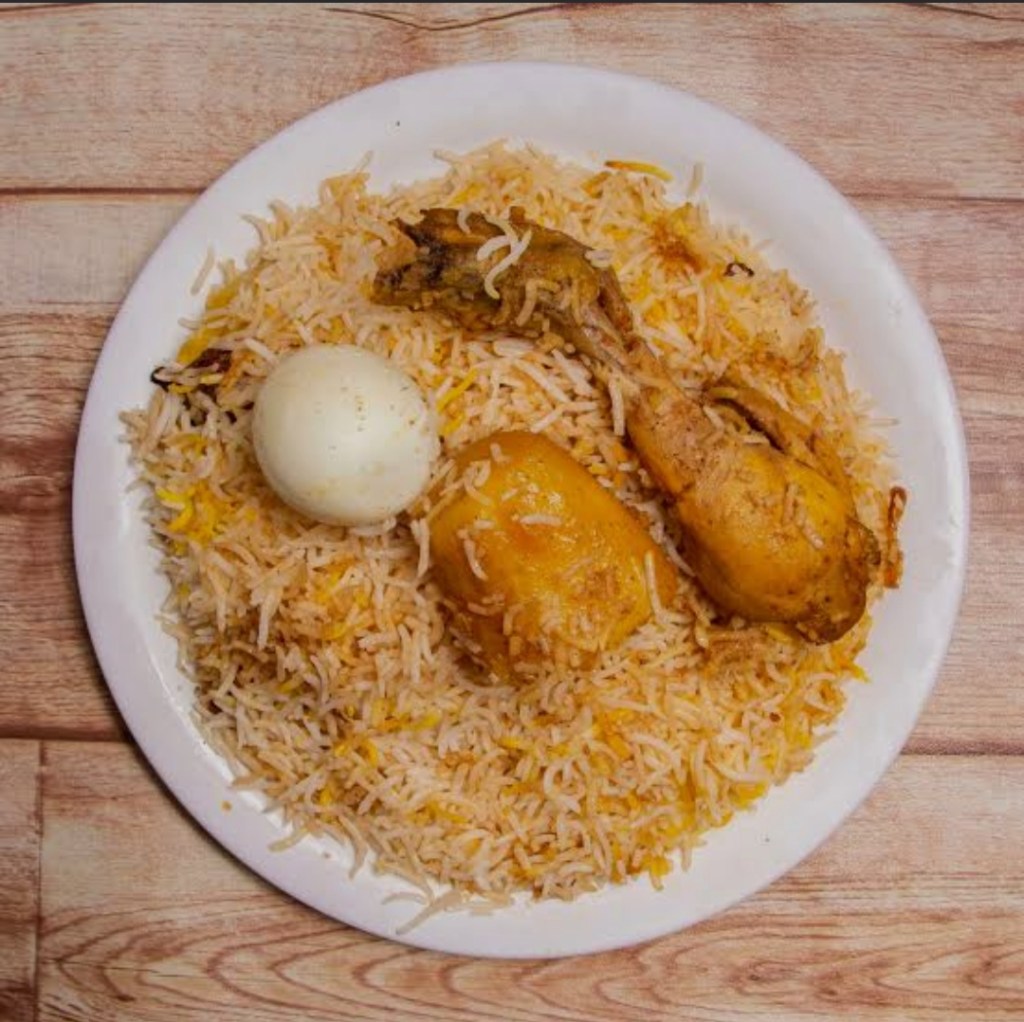
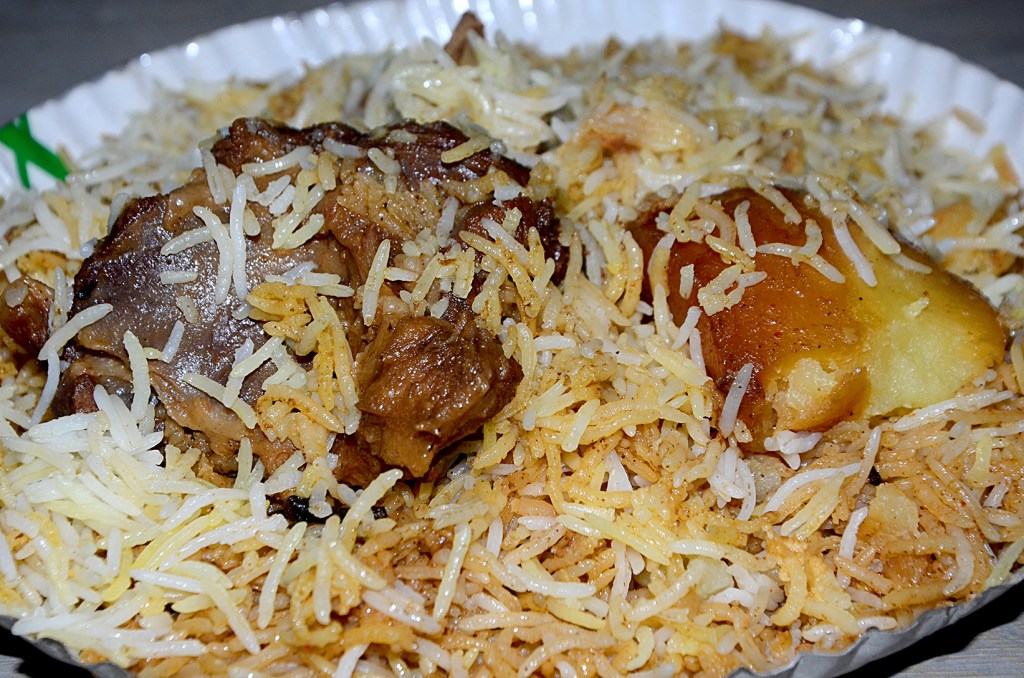
2. Arsalan :- To get a taste of authentic Mughlai cuisine in the city, one place that cannot be missed is Arsalan. Their legendary chicken biryani is served with one succulent piece of meat and a perfectly cooked potato on a bed of rice. There is a must tried sweet iteam called ‘firni’ is amazing.

Details :- Where: Arsalan, 28, Circus Avenue, Near A.J.C. Bose Road Flyover, Park Circus Area

When: 11:00 AM to 11:00 PM

Cost For Two: Rs 700

Contact: 9007007921

Arsalan’s Chicken Biriyani

3. Dada Boudir Biriyani :- There’s an eternal love affair between the people of Kolkata and Biryani.The Biryani Md Kalim Khan, head cook at Dada Boudir Hotel was a childhood friend of Sanjib Saha. Before he joined the restaurant, Sanjib was continuing with the family tradition of serving Bengali meals. Khan started working at Dada Boudir Hotel from 1988 and he brought with him his panache and expertise in Biryani – Dada Boudir Hotel has been serving Biryani since then.

Details :- where : 213, Shri Aurobindo Sarani Rd, Manicktala, Khanna, Kolkata, West Bengal 700006

When : 10am-11pm .

Cost for Two : 500.

Contact : 08276802938.

Dada Boudi’s Chicken biriyani

What is a Bug Bounty Hunter? An Overview

A bug bounty hunter is someone who understands the ins and outs of cybersecurity and is skilled at detecting bugs and weaknesses. Simply defined, a bug bounty hunter examines apps and platforms for bugs that even the in-house development team may overlook. When these professionals find a bug, they report it to the company (or the responsible authority behind the application or platform) and get compensated for their efforts. The advantages aren’t usually monetary in nature.

The concept of a bug bounty is not new, but it has gained hold in India during the previous decade. A bug bounty hunter is not restricted to working for a particular client or firm; instead, all they have to do is find defects and submit them to the appropriate authorities. But why don’t businesses create an in-house bug-hunting team? The rationale behind this is that when a large number of hackers (white hats) are trying to uncover a defect, the chances of the problem being solved fast and easily are substantially higher.

And, if you think about it, firms don’t have to pay their in-house staff on a monthly basis; instead, they can hire people to help them find all the problems and reward them with benefits.

How To Become A Bug Bounty Hunter

Before we get started on how to become a bug bounty hunter, having a cybersecurity expertise or a good understanding of vulnerability assessment will be beneficial.

This is the first and most important item to perform before diving into the getting started process, regardless of the domain. Look for trends in the bug bounty sector, such as what platforms are used, what hacking methods are used, and what tools are used, and so on. This will give you an idea of how to go about getting started as a bug bounty hunter. Cross-site scripting (XSS), SQL Injection, Business Logic, and Information Gathering are some of the major areas to concentrate on.

Training And Education

Cybersecurity is a broad subject that cannot be grasped in a few days. When it comes to studying the ins and outs of vulnerability assessment, people either take a quick course or enroll in a full-fledged course. However, it is entirely up to you and how quickly you want to learn.

You can always enrol in full-time cybersecurity training, such as CEH, if you want to take things a step further. And just because you’re enrolled in a full-time programme doesn’t mean you can’t employ the practical approach. When you first begin to gather expertise, you should start with various online bug bounty programmes.

Another way to learn the game is to read POCs written by other hackers or to watch YouTube lessons. It’s also regarded as one of the most effective strategies to broaden your horizons. When it comes to practising vulnerability assessment or penetration testing, this is one of the most important things to remember. While training colleges give you with a practise platform, self-taught professionals may find it difficult. It is not legal to hack into random websites or platforms on the internet. As a result, setting up a virtual system to practise your talents is always a good idea. You can also try practising on bug bounty programmes on your own. You examine all of the previous year’s bugs, as well as the tactics employed.

Can we ever be able to travel with speed of light?

From more than a century humankind is asking about could we ever be able to travel with speed of light, Is travel with speed of light is possible?. As space enthusiasts, could space ships shown in movies star trek and star wars be possible, can we make warp drives?

Let us first discuss about speed of light. It is a cosmic speed limit. Speed of light is fastest speed of which any two poles in space can communicate with each other. It is a speed at which light travels. In one second a beam of light can make 8 rotations. The standard speed of light if we convert to km/hr than speed of light is 1,079,252,848.8 km/hr(1.07 billion km/hr). Or we can say 299,792,458 meter/sec. So again question arises can this speed be achievable. If we can make to travel with speed of light then to reach to our nearest star Proxima Centauri it will take 4.2 earth years. So if we travel 5 times speed of light then to reach proxima centauri it will take nearly 1 year.

In 1994 a Mexican physicist Miguel Alcubierre published a theory, in which he showed how a warp drive is possible with Albert Einstein’s Theory of General Relativity. He said that in order to make a warp drive it will require a huge amount of negative energy. Negative energy equivalent t mass of Jupiter.

Alcubierre said that if the lift hand side of Einstein’s equation is for curvature of space-time, right hand side is newton’s gravitational constant with T is stress energy factor, then there requires a negative energy in right side to bend fabric of space-time. Alcubierre determined that the ship needed to stay inside a flat space-time bubble, which is such that it can move with any arbitrary speed.

But, Alcubierre’s theory is as real as fiction. As we know that negative energy is not possible and does not exists. Anti matter exists and is different from negative energy. Anti matter is a regular matter with opposite charge but with it has positive mass.

In 2021 paper by physicist Erik Lentz of Gottingen University showed that space time warp bubble solution is possible by positive energies and theoretically move at any arbitrary speed.

Again we have question that is warp drives be possible? The answer is Yes.

In recent papers published by Advanced propulsion laboratory at Applied Physics authors Alexey Bobrick and Gianni Martire showed that how warp drives are possible without negative energy. They showed that we can travel with some fraction of speed of light, but to travel faster than speed of light you would need a superluminal matter. In other words, you would need a matter that travels faster than speed of light. Accelerating anything with mass to speed of light requires an infinite amount of energy. This would be true for any warp engine design, but is impossible.

Gianni and Bobrick showed that there are four types of warp drives, of which Alcubierre showed class 3 type. They showed that Class 1 type of warp drive is physically possible with positive energy and real matter and they don’t travel with speed of light. These classification is based on speed inside the bubble(Vin) and speed outside the bubble(Vout).

These can be achieved by time dilation. Gianni and Bobrick proposed two ways of time dilation, either you go really fast with 90% of speed of light or you put yourself into a strong gravitational field. The stronger the gravitational speed the slower the time passes for passengers. If we make a ship of super dense material, perhaps close to mass of a neutron star then gravitational field will be strong enough for time dilation. They designed a shape, if the ship has diameter of 620 meter with mass of 10% as of sun then time for the passengers inside the ship will be 1/10. The passengers will travel to Proxima Centauri in 9 Earth years but for passengers inside ship will feel as of 10 months.

But to move such a massive ship we need a powerful engine. If we convert its 13% mass to energy than we can get enough energy. The one way is fusion as it converts 1% of mass to energy. The one Bobrick and Gianni proposed that if we take advantage of Gravitational Accretion Energy. This is disklike flow of dust, gas and plasma orbiting around a massive astronomical object. The friction and loss of angular momentum creates huge amount of energy that potentially be harnessed. Accretion disk can convert 10% of any given mass into energy which is highly sufficient.

Now the question is no longer “If” humanity will achieve warp travel, now the question is “When”.

Credit: Arvin Ash: https://youtu.be/PA66ah9b0U4 Reference Papers: Bobrick and Martire: https://arxiv.org/pdf/2102.06824.pdf Website: https://appliedphysics.org/ Lentz: https://arxiv.org/pdf/2006.07125.pdf

Bandwagon Effect

What Is the Bandwagon Effect?

The bandwagon effect is a psychological phenomenon in which people do something primarily because other people are doing it, regardless of their own beliefs, which they may ignore or override. This tendency of people to align their beliefs and behaviors with those of a group is also called a herd mentality. The term “bandwagon effect” originates from politics but has wide implications commonly seen in consumer behavior and investment activities. This phenomenon can be seen during bull markets and the growth of asset bubbles.

Understanding the Bandwagon Effect

The bandwagon effect arises from psychological, sociological, and, to some extent, economic factors. People like to be on the winning team and they like to signal their social identity. Economically, some amount of bandwagon effect can make sense, in that it allows people to economize on the costs of gathering information by relying on the knowledge and opinions of others. The bandwagon effect permeates many aspects of life, from stock markets to clothing trends to sports fandom.

Politics

In politics, the bandwagon effect might cause citizens to vote for the person who appears to have more popular support because they want to belong to the majority. The term “bandwagon” refers to a wagon that carries a band through a parade. During the 19th century, an entertainer named Dan Rice traveled the country campaigning for President Zachary Taylor. Rice’s bandwagon was the centerpiece of his campaign events, and he encouraged those in the crowd to “jump on the bandwagon” and support Taylor. By the early 20th century, bandwagons were commonplace in political campaigns, and “jump on the bandwagon” had become a derogatory term used to describe the social phenomenon of wanting to be part of the majority, even when it means going against one’s principles or beliefs.

Consumer Behavior

Consumers often economize on the cost of gathering information and evaluating the quality of consumer goods by relying on the opinions and purchasing behavior of other consumers. To some extent, this is a beneficial and useful tendency; if other people’s preferences are similar, their consumption decisions are rational, and they have accurate information about the relative quality of available consumer goods, then it makes perfect sense to follow their lead and effectively outsource the cost of gathering information to someone else.

However, this kind of bandwagon effect can create a problem in that it gives every consumer an incentive to free ride on the information and preferences of other consumers. To the extent that it leads to a situation where information regarding consumer products might be underproduced, or produced solely or mostly by marketers, it can be criticized. For example, people might buy a new electronic item because of its popularity, regardless of whether they need it, can afford it, or even really want it.

Bandwagon effects in consumption can also be related to conspicuous consumption, where consumers buy expensive products as a signal of economic status. 

Investment and Finance

Investing and financial markets can be especially vulnerable to bandwagon effects because not only will the same kind of social, psychological, and information-economizing factors occur, but additionally the prices of assets tend to rise as more people jump on the bandwagon. This can create a positive feedback loop of rising prices and increased demand for an asset, related to George Soros’ concept of reflexivity.

For example, during the dotcom bubble of the late 1990s, dozens of tech startups emerged that had no viable business plans, no products or services ready to bring to market, and in many cases, nothing more than a name (usually something tech-sounding with “.com” or “.net” as a suffix). Despite lacking in vision and scope, these companies attracted millions of investment dollars in large part due to the bandwagon effect.

Causes for the Eurozone crisis of 2008

The European debt crisis started in 2008 when many European countries were not able to refinance their government debt or bail out over-indebted banks of their country without the supervision of third parties like the European central bank (ECB), other countries and the International Monetary Fund (IMF). Portugal, Italy, Ireland, Greece and Spain had to some degree failed to generate enough economic growth to pay off bondholders.

There were many reasons behind why the European debt crisis occurred. One of the main reasons was because of the common currency of Europe, the Euro.

Every member of the EU shared the Euro and also had similar monetary policies. But each country had control over its own fiscal policies that decided government borrowing and spending. Because of this, countries like Portugal and Greece kept borrowing and spending and soon, it went out of control. Large amounts of debt began to build up. This was the structural problem of having a common currency for multiple countries but not having rules on forming their respective fiscal policies.

The second cause was the Global Financial Crisis in 2008. Because of this, Industrial production fell and financial institutions plummeted. This discouraged investors. The cost of borrowing also increased as investors demanded more interest. Hence, Greece struggled to keep up as they relied heavily on debt. Their GDP decreased by almost 7% and output fell by 16%.

Third, strict restrictions slowed economic growth. Unemployment was increased, consumer spending was reduced and also reduced lending capital. There were also no penalties for violating debt to GDP ratios that were set up by the EU. This was because it was believed that the only penalty possible was exclusion from the EU and this would lead to a fall in the value of the Euro itself.

Another cause was the increasing central government debt and the high cost of borrowing coupled with the failing financial system. Greece’s debt became 113% of their total GDP and needed countries like Germany to bail them out and pay their creditors. Soon, Spain, Ireland and Portugal also needed bailouts.

Lastly, many of the EU countries had large trade imbalances which contributed heavily to the crisis as a whole. Germany was the only country with a good debt and fiscal deficit situation. Countries like Italy, Spain and Portugal had a large fiscal deficit and an even worse balance of payment position. Some countries went to the World Bank and International Monetary Fund for assistance as they were very financially stable. Amidst all this, the Euro was devalued to boost exports in hopes of helping economic recovery. However, what this did was worsen the debt situation as it increased the dollar value of the existing debt.

TYPES OF TAXES

Taxes

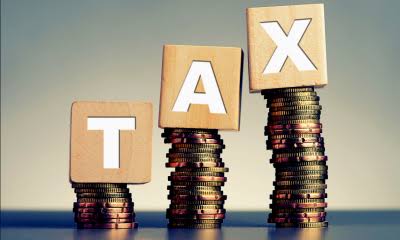
According to Prof. Seligman, taxes are defined as a compulsory contribution from a person to the government to defray the expenses incurred in the common interest of all without reference to special benefits conferred.

Types of tax

In modern times taxes are classified into two types. There are:
✓Direct Tax
✓Indirect Tax

Direct Tax

A Direct tax is paid directly by an individual or organisation to imposing entity.

A tax payer, for example, pays direct taxes to the Government for different purposes, including real property tax, personal property tax, income tax or taxes or on asserts.

Corporation Tax

It is levied on profit of corporations and companies. It is changed on royalties, interest, gains from sale of capital assets located in India, fees for technical services and dividends.

Wealth Tax

It is imposed on property of individuals depending upon the value of property. The same property will be taxed every year on its current market value.

Gift Tax

It is paid to the Government by the recipient of gift depending on value of gift.

Estate Duty

It is charged from successor of inherited property. It is not desirable to avoid payment of taxes. They are levied directly on income and property of persons, who pay directly to the government.

Indirect Tax

On the other hand when liability to pay a tax is on one person and the burden of that tax shifts on some other person, this type of tax is called an indirect tax. Indirect Tax is a tax whose burden can be shifted to others.

Service Tax

It is raised on provision of Service. This tax is collected from the service recipients and paid to the Central Government.

Sales Tax or VAT

It is an indirect tax on sale of goods because liability to collect tax is that of shopkeeper but the burden of that tax falls on the customer. The shopkeeper realizes the tax amount from the customer by including it in the price of the commodity that he sells.

Excise Duty

It is paid by the producer of goods, who recovers it from wholesalers and retailers. This tax in India is levied by the Central Government.

Entertainment Tax

The state government charge such tax on every transaction related to entertainment.

Some examples are movie tickets, video game arcades, stage shows, exhibitions, amusement parks, and sports-related activities.

Goods and Services Tax (GST)

Goods and Services Tax is a kinds of tax imposed on sale, manufacturing and usage of goods and services. This tax is applied on services and goods at a national level with a purpose of achieving overall economic growth. GST is particularly designed to replace the indirect taxes imposed on goods and services by the Central and State.

“It was only for the good of his subjects that he collected taxes from them, just as the Sun draws moisture from the Earth to give it back a thousand fold”
– Kalidas