Poor cyber security – Chinese cyber attacks on Indian vaccine development company servers

The claims of cyber intelligence agencies related to Chinese cyber attacks in India are very important in view of the country’s cyber security. One of these claims is related to US cyber intelligence company Future Recorded, which in its latest report has feared that China’s cyber attack may be responsible for the failure of the power grid in Mumbai last year. 

Reports suggest that labs of two Indian companies that make power grid and COVID vaccine were under Chinese cyber attack. These cyber attack attempts have not only exposed but also have given a future warning for cyber security,

Cyberma, the cyber intelligence firm of rating agency Goldman Sachs, claims that the servers of two Indian companies, Serum Institute and Bharat Biotech, engaged in the manufacture of the Corona vaccine, had been targeted by Chinese hackers for the past few weeks. Certainly these claims of cyber intelligence agencies are yet to be confirmed, but the threat of cyber attack from China is not new, even if it gives a million explanations. 

According to a New York Times report related to Future Recorded’s claim, in Ladakh when tension between India and China was at its peak, on October 12 last year, the power grid was targeted by a Chinese cyber attack that stalled power supplies in India’s commercial capital for several hours, and in the treatment of Corona patients which was a big obstacle. 

There is no reason to doubt the assurance of the Union Ministry of Power that cyber monitoring mechanism is working in the entire power supply system of the country. Not only this, the Indian Computer Emergency Response Team (CERT), the cyber security agency of India, is also not only fully prepared, but has also given power system operation corporation (POSOCO) handling the power grid in the country about the risk of possible cyber attack ,were also warned in November last year. Since cyber attack can be carried out with malware from thousands of kilometers away, there is a need to be very vigilant. 

Future Recorded’s report only shows the severity of this new threat, according to which how a country can be severely harmed without using weapons or fighting nuclear war, by putting malware in the electric grid or other sensitive infrastructure. The methods will not work, we need to be prepared to deal with cyber threats.

Changes in the National Food Security Act

 The NITI Aayog recently circulated a discussion paper on a proposed revision in the National Food Security Act (NFSA), 2013. The NFSA provides a legal right to persons belonging to “eligible households” to receive foodgrains at subsidised price– rice at Rs 3/kg, wheat at Rs 2/kg and coarse grain at Rs 1/kg — under the Targeted Public Distribution System (TPDS). These are called central issue prices (CIPs). A revision of CIPs is one of the issues that have been discussed. The other issues are updating of the population coverage under the NFSA, and beneficiary identification criteria.

Under sub-section (1) of Section 3 of the Act, the term “eligible households” comprises two categories — “priority households”, and families covered by the Antyodaya Anna Yojana (AAY). Priority households are entitled to receive 5 kg of foodgrains per person per month, whereas AAY households are entitled to 35 kg per month at the same prices. Under Schedule-I of the Act, these subsidised prices were fixed for “a period of three years from the date of commencement of the Act”. While different states began implementing the Act at different dates, the deemed date of its coming into effect is July 5, 2013, and the three-year period was therefore completed on July 5, 2016.

However, the government has yet not revised the subsidised prices. The government can do so under Schedule-I of the Act, after completion of the three-year period. To revise the prices, the government can amend Schedule-I through a notification, a copy of which has to be laid before each House of Parliament as soon as possible after it is issued. The Act has prescribed the coverage under “eligible households” — 75% of the rural population and up to 50% of the urban population. On the basis of Census 2011 figures and the national rural and urban coverage ratios, 81.35 crore persons are covered under NFSA currently. This overall figure has been divided among the states and Union Territories, based on the NSSO Household Consumer Expenditure Survey 2011-12. In its discussion paper, the NITI Aayog has suggested that the national rural and urban coverage ratio be reduced from the existing 75-50 to 60-40. if this reduction happens, the number of beneficiaries under the NFSA will drop to 71.62 crore (on the basis of the projected population in 2020).

To make these changes in the law, the government will have to amend sub-section (2) of Section 3 of the NFSA. For this, it will require parliamentary approval.

Besides the Food Ministry and the NITI Aayog, discussions on the proposed revisions include the Chief Economic Adviser and top officers of the Ministry of Statistics and Programme Implementation. According to sources, several meetings have been held under the chairmanship of Prof Ramesh Chand, Member, NITI Aayog, to review the population coverage criterion. If the national coverage ratio is revised downward, the Centre can save up to Rs 47,229 crore (as estimated by the NITI Aayog paper). However, the move may be opposed by some of the states.

On the other hand, if the rural-urban coverage ratio remains at 75-50, then the total number of people covered will increase from the existing 81.35 crore to 89.52 crore —an increase of 8.17 crore. This estimate by the NITI Aayog is based on the projected 2020 population, and, according to the paper, will result in an additional subsidy requirement of Rs 14,800 crore.

Lok Sabha passed the abortion amendment bill, a big step for women's right

All major religions across the world believe that life is a creation, so a person does not have the right to end someone’s life. Voluntary abortion is a punishable offense in India. The right to life is a fundamental right in the Constitution of India. 

Some people believe that reproduction and abortion are a woman’s personal choices and rights. On the other hand many people believe that the ultimate duty of the state is to protect life, not to take life. 
They consider full protection as an integral part of life and abortion as immoral. 
After a great long debate in England, the abortion law was first enacted in 1967 after protests and amendments were made from time to time. There, abortion is allowed only on specific and prescribed basis. In 1973, abortion was legalized by the Supreme Court of America on special grounds and circumstances.
Under the Medical Abortion Act, 1971 in India, abortions can be done up to 12 weeks on the basis of a doctor’s opinion and up to 20 weeks based on the opinion of two doctors, if the life of a pregnant woman and her mental or physical health are in deep danger . Rape can lead to miscarriage within 20 weeks of conception, including failure of pregnancy and birth control measures, or even in the case of a fetus abnormality. There has been a demand for this law amendment in India for a long time. 
The Medical Termination of Pregnancy Amendment Bill, 2020 was introduced in the Lok Sabha on March 2, 2020 by Dr. Harsh Vardhan, Union Health Minister, was passed by the Lok Sabha after discussion on 17 March. There is a proposal for some amendment to increase the upper limit of abortion from 20 weeks to 24 weeks. The bill is in the interest of rape victims, family sexual harassment, sexual protection of minors and personal dignity and female self-respect. It is proposed in the Bill to decide whether a pregnancy can be terminated after 24 weeks in cases of fetal abnormality.
In some cases abnormal fetus or unwillingness are life-threatening situations to the fetus and woman, due to which the abortion will now be done on the prescribed procedure and on a certain basis. Hopefully, the Rajya Sabha will also pass it in the current session. This amendment bill is progressive, fulfills a long expectation and conforms to and empowers the dignity and autonomy of women.

Lok Sabha passed the abortion amendment bill, a big step for women's right

All major religions across the world believe that life is a creation, so a person does not have the right to end someone’s life. Voluntary abortion is a punishable offense in India. The right to life is a fundamental right in the Constitution of India. 

Some people believe that reproduction and abortion are a woman’s personal choices and rights. On the other hand many people believe that the ultimate duty of the state is to protect life, not to take life. 
They consider full protection as an integral part of life and abortion as immoral. 
After a great long debate in England, the abortion law was first enacted in 1967 after protests and amendments were made from time to time. There, abortion is allowed only on specific and prescribed basis. In 1973, abortion was legalized by the Supreme Court of America on special grounds and circumstances.
Under the Medical Abortion Act, 1971 in India, abortions can be done up to 12 weeks on the basis of a doctor’s opinion and up to 20 weeks based on the opinion of two doctors, if the life of a pregnant woman and her mental or physical health are in deep danger . Rape can lead to miscarriage within 20 weeks of conception, including failure of pregnancy and birth control measures, or even in the case of a fetus abnormality. There has been a demand for this law amendment in India for a long time. 
The Medical Termination of Pregnancy Amendment Bill, 2020 was introduced in the Lok Sabha on March 2, 2020 by Dr. Harsh Vardhan, Union Health Minister, was passed by the Lok Sabha after discussion on 17 March. There is a proposal for some amendment to increase the upper limit of abortion from 20 weeks to 24 weeks. The bill is in the interest of rape victims, family sexual harassment, sexual protection of minors and personal dignity and female self-respect. It is proposed in the Bill to decide whether a pregnancy can be terminated after 24 weeks in cases of fetal abnormality.
In some cases abnormal fetus or unwillingness are life-threatening situations to the fetus and woman, due to which the abortion will now be done on the prescribed procedure and on a certain basis. Hopefully, the Rajya Sabha will also pass it in the current session. This amendment bill is progressive, fulfills a long expectation and conforms to and empowers the dignity and autonomy of women.

Soil Degradation

The problems of our time include climate change, loss of biodiversity, lack of drinking water, poor sanitation and the depletion of fuel wood supplies due to unsustainable rates of use. All of these are significant, but it could be argued that land degradation is the most pressing environmental and social problem facing society today, particularly affecting the world’s poor. 

It is estimated that an area equal to the size of China and India combined is now classified as having impaired biotic function (damaged ecosystem structure) as a result of poor land management resulting in soil loss. As populations expand, and as social and cultural changes occur, greater and greater demands are being made on larger areas of landscape and soil. In MEDCs where there has been a relatively long tradition of agriculture (agriculture on an industrial scale) there exists, within the agricultural culture, a knowledge of land management that aims for sustained soil fertility and strives to avoid soil erosion. However even in MEDCs there are occasions when climate and intensive agriculture conspire to bring about unprecedented levels of soil erosion. 

Two types of processes can give rise to soil degradation: 


• Processes that take away the soil (erosion). This mainly occurs when there is no vegetation on the soil. Wind and water can then simply take the soil away. 
• Processes that make the soil less suitable for use. In these processes various chemicals end up in the soil and turn the soil useless in the long run. 


Examples of human activities that lead to soil degradation are: overgrazing, deforestation and unsustainable agriculture. Overgrazing occurs when too many animals graze in the same area. Overgrazing of grasslands leaves bare patches where roots no longer hold the soil together. When this is combined with the action of rain and wind the bare patches become bigger and soil is removed from the area. This happened on a huge scale in the Sahel area in Africa (just south of the Sahara desert) in the 1970s and 1980s. In many African countries the wealth of a man is measured by the number of cattle he has (quantity not quality is important) — this leads to very high stocking levels and overgrazing becomes a problem. This was then exacerbated in the 705 and 80s when a long dry period strongly reduced the growth of the vegetation which was subsequently eaten by cattle. The soil particles were no longer kept in place by roots and were blown away by the wind. This resulted in the death of most of the cattle and, later on, in a terrible famine. As soil formation is a very slow process, it will take many years for the Sahel region to recover. In wet climates it is often rain water that takes the soil particles away, especially when the rain water is flowing down slopes. 


Overcropping depletes soil nutrients and makes the soil friable (dry and susceptible to wind erosion). This reduces soil fertility as no nutrients are being returned to the soil. If the crop fails then the soil surface again becomes susceptible to erosion. This is especially true in dry regions where crop failure can lead to removal of topsoil by wind. During the 1930s, the American Mid West suffered a major period of wind erosion known as the ‘Dust Bowl’. Through overuse of the land an area about twice the size of the United Kingdom, from Nebraska through to Texas, was affected by severe wind erosion. The winds moved soil and dust many thousands of kilometres. 


Deforestation is the removal of forest. This can be done in different ways, ranging from careful removal of some of the trees to complete removal of all vegetation. Of course, the more vegetation is removed, the more the soil will be prone to erosion. As most forests are in relatively wet areas, the erosion will mainly be due to water. Deforestation can have a massive effect on soil erosion, especially in tropical regions. The leaves of forest trees both deflect and slow down the progress of rain drops. This helps to stop them explosively removing soil particles. The root systems of forests help to bind the soil together and give it stability, while also absorbing large quantities of water from the soil directly. The absorbed water is eventually returned to the atmosphere via transpiration. 


Unsustainable agricultural techniques are techniques that cannot be applied over a long period of time without decrease in productivity or increased inputs of chemicals like fertilizers or energy. Urbanization and paving of land in cities for human settlements that result in run-off is also a major factor contributing to soil degradation. The scale of the problem is self evident. Hence, soil conservation methods, sustainable farming techniques and eco-friendly lifestyles are a must to conserve the soil that provides for us and sustains our planet.

Youth demands employment

12670 applicants gave the interview for the post of Chaprasi(Peon). These includes engineers, graduates & post graduates

What are your reactions after seeing the above picture ? Well , whatever your reaction is, just think over that.

Youth, the age group which decides the progress of a country. And we Indians are lucky to have a large no. of youths. Every 5th( 20%) out of the total youth population in the world resides in India.India, at present, is home to the largest population of youth in the world. 

By having such a large population of youth, we could easily be the largest economy of the world. We could easily achieve all the sustainable development goals.

But where are we ? Just see India’s rankings in the fields of poverty, hunger,equality, corruption, unemployment. Out of 189 countries ,India’s ranking was 131 on Human Development Index 2020.

And why are we at such position ? Well , there’s no need to define , the first picture of this blog is self explanatory. Just imagine how would you feel if you’re post graduate but are applying for the exam whose demand is just 8th class. Just think.

We are turning our ‘would be asset’ into a liability.

No. of educated youth is higher than the uneducated ones. Aren’t we indicating that ,”if you want employment , don’t study ?”At the one hand we talk about literacy rate , and on the other hand there’s no job for the literate ones.

And yes, the angry Indian youth is opposing the Indian government. Just see the image below –

Angry Indian Youth tweeted more than 50Million tweets in just an hour on february 25th in demand of employment.

Why is Indian youth not getting proper employment ? Why is there so much anger among the youth ?

Lack of skill training is what everyone calls , the cause of unemployment. But now,let’s not discuss over that.

Let’s discuss the other reason lack of jobs in Indian job market. The no. of jobs is not increasing at the rate the population is increasing in India. If the government invests in creating new jobs and the government policies are well implemented then we could have jobs for our every citizen.

Of course a lot of jobs could be created,which fit well to the need of time. And yes , that skill training portion is also the need of time.There’s a huge share of engineering people in jobless market. And the main reason behind this is lack of skills. The curriculum of Indian universities is still a decade old. There’s no focus on the need of market.

The dream of seeing , our love, our India, leading the world could be fulfilled if and only if we get succeed in turning our youth into asset rather than liability.

Let the peace prevail…🙂🙃🙂

Happy Reading..🙂

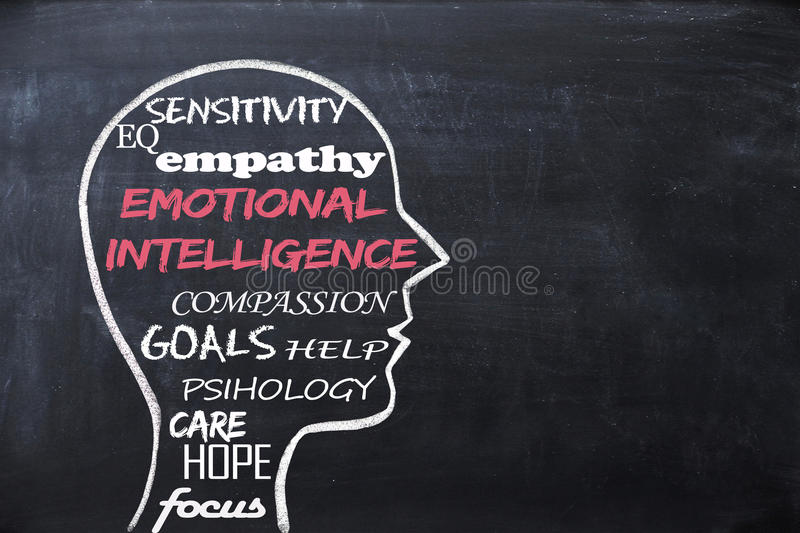
Real key to success- High IQ or High EQ?

Most of the people believe that high IQ is really important to be successful in life and we also had evidence to prove the fact. Just look at some of the most famous people in the history like Shakespeare, Leonardo Da Vinci, Albert Einstein, Isaac Newton, Stephen Hawkins or Marie Curie; they all something in common and that is high IQ.

And it is only recently that scientists have started realizing the importance of emotional intelligence and its contribution in our journey to be successful.

Emotional intelligence is a form of intelligence that is required to function effectively in a workplace. A good IQ is not enough to be successful in life. You may find many people who are academically talented, but are unsuccessful in their own life. They experience problems in family, workplace and interpersonal relationships.

Emotional intelligence is defined as “the ability to monitor one’s own and other’s emotions, to discriminate among them, and to use the information to guide one’s thinking and actions”. Emotional Quotient (EQ) is used to express emotional intelligence in the same way as IQ is used to express intelligence. A person with high EQ is able to express empathy and is able to cooperate and work effectively with colleagues.

Emotional intelligence is receiving increasing attention by schools and employers. Many programmes are being made for improving emotional intelligence as they encourage cooperative behavior, develop better teamwork and are very useful in preparing students to face the challenges of life outside the classroom.

It helps to manage your emotions in stressful situations and encourages positive thinking. It helps us in handling criticism better and instead of getting offended, work on self improvement.

Archaeologists Discover An Ancient Ceremonial Carriage Near Pompeii

An ancient-Roman ceremonial carriage has been unveiled near the Roman city of Pompeii. The four-wheeled chariot made of iron, bronze and tin with mineralized wooden remains, almost in an excellent state of preservation, was found near the stables of an ancient villa at Civita Giuliana, north of the walls of the ancient city in Italy.

The new find is the first ceremonial carriage unearthed while other chariots, used for transport and other purposes, have been previously found at Pompeii,said officials. Moreover, preserved remains of two men and horses who were victims of Vesuvius eruption were discovered last year.

According to the Park officials, the aim of the excavation around Civita Giuliana was to investigate the illegal activity in the area.

Massimo Osanna, the outgoing director of Pompeii archaeological site called the chariot, “An extraordinary discovery that advances our understanding of the ancient world.” The Culture Minister Dario Fransceschini stated that Pompeii always surprise us with its discoveries and it will continue to do so for many years, with 20 hectares still to be dug up.

The eruption of Mount Vesuvius in 79 A.D. buried the once thriving and sophisticated Roman city of Pompeii under meters of ash and pumice. Pompeii is an archaeological site located in the Compania region of Italy, near the coast of Naples. Architect Domenico Fontana first discovered the ruins at Pompeii in the late 16th century and the excavations began in about 1750. spreading over 66 hectares of land, the archaeological site of Pompeii is a snapshot of Greco-Roman life and a UNESCO world heritage site.

World Zero Discrimination Day

 Zero Discrimination Day is an annual day celebrated by the United Nations (UN) and other international organizations. The day aims to promote equality before the law and in practice throughout all of the member countries of the UN. The day was first celebrated on March 1, 2014, and was launched by UNAIDS Executive Director Michel Sidibé on 27 February of that year with a major event in Beijing.

The day is particularly noted by organisations like UNAIDS that combat discrimination against people living with HIV/AIDS. “HIV related stigma and discrimination is pervasive and exists in almost every part of the world including our Liberia”, according to Dr. Ivan F. Camanor, Chairman of the National AIDS Commission of Liberia. The UN Development Programme also paid tribute in 2017 to LGBTI people with HIV/AIDS who face discrimination.

Campaigners in India have used this day to speak out against laws making discrimination against the LGBTI community more likely, especially during the previous campaign to repeal the law that used to criminalise homosexuality, before that law was overturned by the Indian Supreme Court in September 2018.

On zero discrimination day this year, UNAIDS is highlighting the need to bring an end to income, sex, age, occupation, disability, sexuality, gender, race, class, ethnicity and religious inequality. Inequality is growing for more than 70% of the global population, exacerbating the risk of division and hampering socioeconomic development.

As a consequence, COVID-19 is hitting vulnerable people the hardest – poor and socially marginalised communities throughout the world will be the last to receive vaccines for the coronavirus. Many have equated this to vaccine apartheid.

Discrimination and inequalities are closely intertwined. Intersecting forms of discrimination, be it structural or social, against individuals and groups can lead to a wide range of inequalities—for example, in income, educational outcomes, health and employment. However, inequalities themselves can also lead to stigma and discrimination. It is critical, therefore, when looking to reduce inequalities to address discrimination. Members of key populations are often discriminated against, stigmatized and, in many cases, criminalized and targeted by law enforcement. Research has shown that this social and structural discrimination results in significant inequalities in access to justice and in health outcomes.

On this day, everyone should stand up for those who are at the receiving end of societal and institutional discrimination to create a better and safer world that teaches its children love before hate.

An massive iceberg, approx. the size of New Delhi broke off in Antarctica

(Image credit: Halley team/British Antarctic Survey)

An iceberg of 1270 sq. km in size has broken off from Antarctica. This happened in the Burnt Ice Shelf, the Iceberg is apparently is of the shape of Indian capital New Delhi. According to the reports it was breaking at the rate of 1km per day.

Icebergs are pieces of ice that have broken off from glaciers or ice shelves and are now floating in open water, according to the National Oceanic and Atmospheric Administration.

The North Rift crack grew toward the northeast at a rate of about 0.6 miles (1 km) per day in January; but on the morning of Feb. 26, the crack widened a couple hundred meters in just hours. This ice split happened due to a natural process, and there’s no evidence that climate change played a role, according to the statement. The Brunt Ice Shelf, a 492-foot-thick (150 meters) slab of ice, flows west at 1.2 miles (2 km) per year and routinely calves icebergs.

The thickness of the iceberg is 150 meters. A picture of this has also been released by the British Antarctic Survey. According to scientists the incident occurred in the Burnt Ice Shelf area. This disintegration is called ‘calving’, in which vast icebergs separate from the frozen area.

The current calving was first recorded in November 2020. By January 2021, the speed of its breakdown had reached one km per day, on Friday it was eventually declared broken. There is so much snow on Antarctica that if it breaks and melts in the sea, the water level will rise by 70 meters. Many cities and islands will be completely submerged.

Ice calving, also known as glacier calving or iceberg calving, is the breaking of ice chunks from the edge of a glacier. It is a form of ice ablation or ice disruption. It is the sudden release and breaking away of a mass of ice from a glacier, iceberg, ice front, ice shelf.

According to researchers “Our teams at B.A.S.(British Antarctic Survey) have been prepared for the calving of an iceberg from Brunt Ice Shelf for years,” Dame Jane Francis, the director of the B.A.S., said in a statement. “Over coming weeks or months, the iceberg may move away; or it could run aground and remain close to Brunt Ice Shelf.”

Why do icebergs melt?

When an iceberg reaches warm waters, the new climate attacks it from all sides. On the iceberg surface, warm air melts snow and ice into pools called melt ponds that can trickle through the iceberg and widen cracks. At the same time, warm water laps at the iceberg edges, melting the ice and causing chunks of ice to break off. On the underside, warmer waters melt the iceberg from the bottom up. This phenomenon of ice-calving happens over a long period of time but the fast paced climate change had accelerated the process.

The Myanmar Coup

 Myanmar’s military, the Tatmadaw, seized control of Myanmar on February 1, 2021, detaining the country’s de facto leader Aung San Suu Kyi and other members of her party that won the November 2020 elections, citing election fraud, a claim that was refuted by the UEC (United Elections Commission of Myanmar). 

Military coups are not unknown to Myanmar, having spent more than 50 years under military rulers – it was the military that facilitated Myanmar’s transformation to democracy by drafting the 2008 Constitution, touted as a ‘roadmap to democracy.’ But it only created an institutional set-up prone to misuse wherein the Burmese Constitution ensured the military of its supremacy in national affairs, with a political party that contested elections as its proxy. The results of the 2020 election gave the NLD a majority significantly bigger compared to previous elections, serving as a mandate for potential constitutional reform and dismantling military rule.

All of this was effectively undone by the events of February, with mass arrests of political leaders and internet blackouts and the establishment of an executive body called the State Administration Council lead exclusively by military leaders and non-NDP civilians, and it isn’t likely that the Tatmadaw will abide by its promise of holding a new election anytime soon. However, there is still hope for a change in the status quo, with massive resistance from Burmese both within Myanmar and outside it and large mobilizations and strikes by healthcare workers, civil servants and industrial workers, with calls for boycotting products related to the military through the ‘Stop Buying Junta Business’ campaign. A visible sign of the protests is the three-finger salute that was also seen in October last year at demonstrations against the monarchy of King Maha Vajiralongkorn in neighboring Thailand, and the usage of red ribbons as symbols of solidarity. 

The international response has been quite strong with the United States embassy and diplomatic missions of 15 other countries and the European Union issuing a joint statement ‘opposing any attempt to alter the outcome of the elections or impede Myanmar’s democratic transition.’ Nevertheless, the fight for Burmese democracy has spanned many bloody decades of protest, and the military coup has not yet undone all the substantial gains made by the movement for democracy.

Spike In Winter Pollution And Dipping Temperature

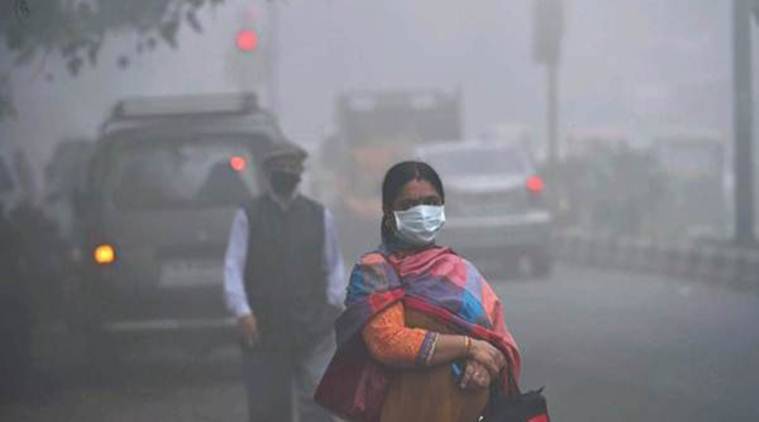
According to recent analysis of a Delhi-based non-profit, Centre for Science and Environment(CSE), the North Indian cities see spike in winter pollution than the average of South Indian cities. Centre for Science and Environment(CSE) extensively analysed real-time and data from 99 cities to shed light on the winter air of 2019 and 2020.
According to the report, the most polluted cities this winter were located in Delhi-NCR, Uttar Pradesh, with Ghaziabad and Bulandshahar topping the list. The cities with the worst pollution rise includes Lucknow, Gurugram, Jaipur, Vishakapatnam, Agra, Navi Mumbai and Jodhpur, while Kolkata is the only megacity in this group. The cities that have met the national 24- hour standard (60 μg/m3) during the winter season are Santa, Mysuru, Vijayapura and Chikkamagaluru.


Out of 99 cities, only 19 showed substantial improvement in PM 2.5 levels, one of these was Chennai. In fact, Mysuru in Karnataka and Santa and Maiha in Madhya Pradesh are the cleanest cities in the country. However, Delhi experienced an increase in the seasonal average but a decline in the seasonal peak. It is important to note that, apart from the megacities, it is the smaller and the emerging cities that are becoming pollution hotspots.
The report said that the levels of PM 2.5 worsened in 43 out of 99 cities. PM 2.5 refers to fine Particulate Matter (smaller than 2.5 micrometers in diameter) that floats in the air, exposure to it is harmful to health, than any other pollutant. The particles are so minute that they cannot be seen through naked eyes. PM 2.5 and PM 10 are harmful as they can enter our lungs easily and cause severe respiratory problems.
Anumita Rouchowdhury, CSE’S Executive Director in charge of research and advocacy, said, “The northern Indo-Gangetic Plain is the most affected, as other regions also experience a rise, but with lesser intensity. However, the average level of PM2.5 during summer and monsoon in 2020 was considerably lower than the previous year due to lockdown, but the winter PM2.5 concentration has risen compared with 2019 in many cities.”
But the question is, why does air quality deteriorate during winter?
During winter, the level of PM2.5 is high. Polluting activities such as burning of biomass to warm up homes, burning stubble at the end of the harvest season, increase in the number of brick kilns are the major reason for high level of PM2.5 in winter. In addition to these, during winter the air near the atmosphere gets denser and cooler in contrast to normal condition in which warmer air mass is over lane by cooler air mass. The cool air trapped by warm air creates a kind of atmospheric lid known as inversion. Other factors such as vehicular and industrial emission led to rise in winter pollution.

The experts call for reforms and action in sectors such as industrial, power plants and waste management to control the rise in winter pollution and bend the annual pollution curve. Other measures to mitigate air pollution are-
1) Creating public awareness about the ill-effects of air pollution.
2) Making stringent vehicle emissions’ norms.
3) Improvement in traffic management.
4) Reducing road dust by changing road infrastructure.
5) Proper implementation of government initiatives to combat pollution.

Birthday Tribute to Great Saint: Pronam to Sant Ravidas Ji

   In India from the ancient period onwards time to time, many great saints were born. One of them is Sant/Saint Ravidas, also called Raidas, (flourished 15th or 16th century), a spiritual poet and a great saint. Sant Ravidas ji was one of the most prominent saints of Indian Bhakti movement. It is believed that Guru Ravidas ji was born on the Magh Purnima day on Sunday in the year 1433 in Kashi present Varanasi in a so called ‘untouchable leather-working caste’, but his knowledge, wisdom, spiritual development and humanitarian activities were at the zenith which cannot be compared with  many upper castes. Undoubtedly, Sant  was endowed with pure and holy soul as he had proved by caste one cannot be great.

       Many researchers believe Sant Ravidas ji met Guru Nanak Dev Ji, the founder of Sikhism and 41 of Guru Ravidasji’s poems were included in the Adi Granth. 

Sant Ravidas ji was a prominent figure in the bhakti movement and a renowned poet of the Nirgun bhakti tradition that valued the worship of a formless God.  In this context, two foreign researchers who have carried out extensive study on Sant Ravidas ji’s activities may be mentioned. One is Dr. Winand Callewaert and another one is Dr. Peter Friedlander as both have published many books and articles on Sant. They have translated his songs also. One is presenting here. It may be mentioned that Prof Dr. Winand Callewaert was a scholar in Sanskrit (studied in India) and taught this subject in foreign countries. He has published many books and articles in English, Dutch and Hindi. Another scholar Dr. Peter Friedlander lived in India from 1977-1982 and learned Hindi in Varanasi. He then studied at SOAS London University and completed his Ph.D. on the life and works of Saint Ravidas in 1991. The following  is a popular verse from Saint Ravidas, translated by Dr Winand Callewaert and Dr. Peter Friedlander,

“Raidas says, what shall I sing?

 Singing, singing I am defeated.

How long shall I consider and proclaim:

 absorb the self into the Self?

This experience is such,

 that it defies all description.

I have met the Lord,

 Who can cause me harm?

Hari in everything, everything in Hari –

 For him who knows Hari and the sense of self,

no other testimony is needed:

 the knower is absorbed”.

(Hari here refers to God who takes away all the sorrows of his devotees).

 Guru Ravidas Ji was against the Varna (caste) system and in his poetry, questioned caste hegemony, valued labour of all sorts, as well as a life of simplicity and morality. He initiated dialogs with upper caste Hindus about caste, social justice, love and forms of worship. He spread the message that “God created man and not man created God”, means everyone is created by God and has equal rights on this earth. This theory in the present days no one can deny as all human beings have equal rights. It is believed that because of his wisdom, in-depth spiritual knowledge and discourse many persons of all castes including the King and Queen of Chittoor presently in Rajasthan were his followers.

   In  Sant Ravidas Ji’s name  a temple has been constructed in his hometown, where Guruji is worshipped every day. His songs are recited every morning and evening in the temple. His birthday is celebrated every year on Magh Purnima day i.e. at the full moon day of Magh month of Indian calendar. 

    Although, Guru Ravidas Ji has passed away long ago but he will be in the heart of millions for his spiritual, devotional and humanitarian activities as his massive contribution to Bhakti movement enlightened us. I extend my respectful Pronam to the Great Soul, Saint and Guru on his 644th birth anniversary. 

The following websites have been consulted while writing the article:

  1. https://en.wikipedia.org/wiki/Ravidas
  2. https://www.yogapedia.com/definition/8501/nirguna-bhakti
  3. https://www.manifestias.com/2019/11/05/saint-ravidas
  4. https://www.britannica.com/biography/Ravidas

Dr. Shankar Chatterjee, Hyderabad

Glassophobia 🎤🤐😰

Glassophobia & shyness are two different things. But people often misunderstood themselves as shy.If you also think that you are just shy of speaking in public, then you need to rethink if it’s just shyness or something worser than this, a phobia of public speaking.

Shyness when crosses the limits then turns to the glassophobia.Sometimes the past negative experiences cause or intensify the fear. It all starts with the thoughts like what will people think about me ? what if I will stumble over my words ? what if I will forget what to say ? what if people start laughing at me ? With time these thoughts intensify and may cause physical and mental problems. Sometimes it may cause the person to suffer from inferiority complex.

Glossophobia is the medical term for the fear of public speaking. It isn’t a dangerous disease but yes it can lead to stress in the extreme cases. It may be due to lack of preparation , & in this case it doesn’t cause that much harm. It’s cause may be one of the most common psychiatric disorders, . Social anxiety disorder.

Anxiety due to lack of preparation or due to amaturity is common to many.In fact, some experts estimate that as much as 77% of the population has some level of anxiety regarding public speaking.Of course many people are able to manage the fear.

But about 10 percent are genuinely terrified and are physically debilitated by even the thought of public speaking. True glossophobics will go to great lengths to avoid speaking in a group situation.If you are the one who faces problems in work,school or in social life due to this anxiety, then it’s possible that you suffer from a phobia of speaking out.

Even the thought of presentations, group activites & answering a question can cause the anxiety.Such people start thinking of excuses to avoid the events where they are going to be the centre of attention.

Physical symptoms of glassophobia may include – Sweating , Increased heart rate , Raise in blood pressure ,Dry mouth , Difficult breathing , Nausea or vomiting in extreme cases, Headache, Muscle tension, Dizziness, Dilation of pupils, need to urinate, vocalised pauses , Shaking or quivering voice , weakened voice tone , Trembling , Panic attack , Feeling lack of energy.

Of course it’s difficult to overcome the fear , but it’s not impossible. Psychotherapy, medication,exposure therapy and herbal remedies , different ones can be applied , depending on the severity of fear. Many people are able to overcome their glossophobia with cognitive behavioural therapy(CBT). There are other ways one can try at home. Like practicing in front of mirror , talking with close ones & then asking them to analyze you , focusing on your way of speaking. According to me , Meditation is the best way to overcome any fear.

Remember , everything you want is on the other side of fear. Choose fight instead of flight.

Happy Public Speaking…🙂

Ways to be optimistic and positive every day

 Years of research and studies have shown that positive and optimistic thinking helps us be happier, healthier and more productive in any field of work. It is the key to living a satisfactory life and ensuring the well-being of the people around us as well. However, it’s very difficult to practice positivity and optimism every day, so here are some tips.


1. Guide your energy. Positive energy invites positive deeds and events, and vice-versa. According to quantum physics, our thoughts have a frequency and a corresponding unique vibration that attracts similar frequencies into our lives. So negative thinking attracts negative energy; positive thinking attracts positive energy. This also applies to group thinking or collective consciousness. When a collection of people together guides their mental energy for a positive outcome, the likelihood of their success is usually lot higher and than otherwise. Their collective energy attracts positivity or negativity.


2. Develop resilience. Positive people develop a mental capacity that allows them to adapt with ease during adversity. They develop a set of powerful mental traits. Resiliency begins with adaptability, acceptance, and gratitude. Success and happiness does not always come from blasting through rocks and impediments, rather from having the faith, courage and ‘letting it happen’ attitude to cope with harsh realities of life.


3. Connect with yourself. The better we understand the nature of the world, the better we can move in the world. The better we understand the nature of ourselves, the better we can move within ourselves. Life is a process of ongoing transformation spurred by the interlinked qualities of curiosity, purpose, and courage. When you know yourself, you can act with a confidence that is your own.


4. Be kind to yourself. It is particularly difficult to stay positive in the face of adversity and failure. For many, even though it may be easy to show compassion to others, it may be hard to accept, embrace, and be compassionate toward ourselves. Some of us blame others for all our miseries and some blame ourselves. Often it’s easy to blame oneself, feel sorry, and/or put oneself down. It is only through being able to let go, have compassion for oneself, and self-encouragement that we can pursue a path of positivity.


Only gradually changing your ways to implement these can improve the quality of your life and help change your outlook towards it for the better, which will eventually result in material gains in the form of happiness and productivity.