Over four lakh 24 thousand people recovered from Coronavirus so far in the country

The Union Government has said, a total of four lakh 24 thousand 433 people affected by Coronavirus have recovered in the country so far.

In the past 24 hours, 15 thousand 350 people recovered from COVID-19 and with this, the recovery rate reached 60.86 per cent.

The Health and Family Welfare Ministry yesterday said, a total of 24 thousand 248 new cases of COVID-19 were reported in the country during the last 24 hours taking the total number of cases to six lakh 97 thousand 413.

In a single day, 425 deaths were reported taking the nationwide toll to 19 thousand 693. Presently, the total number of active Corona cases in the country is two lakh 53 thousand 287.

India and China agree on complete disengagement of troops along the LAC and de-escalation

National Security Advisory Ajit Doval and Chinese Foreign Minister Wang Yi discussed border issues in a telephone conversation last Sunday. The two Special Representatives of India and China on the Boundary Question had a frank and in-depth exchange of views on the recent developments in the Western Sector of the India-China border areas.

The External Affairs Ministry said that the two Special Representatives agreed that both the sides should take guidance from the consensus of the leaders that maintenance of peace and tranquility in the India-China border areas was essential for the further development of bilateral relations. They also said that the two sides should not allow differences to become disputes.

Therefore, they agreed that it was necessary to ensure at the earliest complete disengagement of the troops along the LAC and de-escalation from India-China border areas for full restoration of peace and tranquility.

In this regard, they further agreed that both sides should complete the ongoing disengagement process along the LAC expeditiously. The two sides should also ensure a phased and stepwise de-escalation in the India-China border areas. They re-affirmed that both sides should strictly respect and observe the line of actual control and should not take any unilateral action to alter the status quo and work together to avoid any incident in the future that could disturb peace and tranquility in border areas. It was also agreed that the two Special Representatives will continue their conversations to ensure full and enduring restoration of peace and tranquility in the India-China border areas in accordance with the bilateral agreements and protocols.

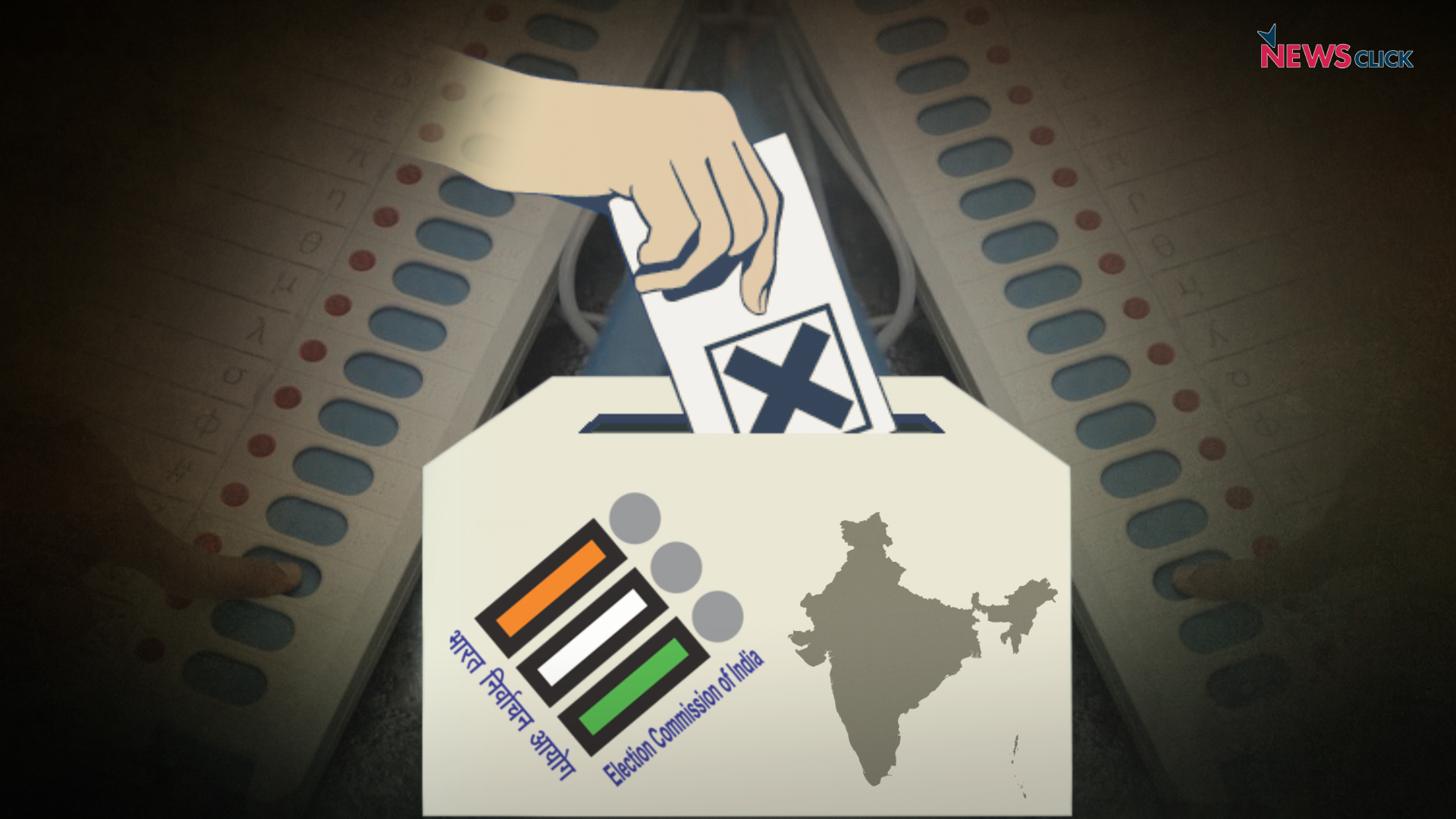
How India’s massive Election System works?

The world’s biggest democracy just had an election. The world’s biggest democratic election It’s a marathon election A mammoth undertaking It’s the world’s biggest exercise in democracy In India, voters picked its central government for the next five years. An eighth of the world’s population was eligible to vote in this election. In the year, 2019, there are 900 million eligible voters in India making this the largest Democratic exercise in the history of humanity.

A vote for reform: Election Commission collaborating with IIT-M on ...

In one of the largest and most populous countries in the world, that isn’t an easy task. India has to reach voters in coastal cities in the south, in the rural regions of the west, and jungles to the east and everywhere in between. And what’s more, they want every Indian citizen to be within 2 km of a voting station. That’s only about 25 city blocks no matter where you are in the country. It’s an incredibly ambitious goal and yet, somehow they’re able to do it. This is the biggest election in the world and I wanted to know how does it work. Every election a team of state officials and security forces, get on a ship within the east of India to require off towards this island. They travel about 100 km to get here, all to securely deliver these Electronic Voting Machines or EVMS, the instrument that logs India’s votes, the heart of this elaborate election process.

Election Commission's crackdown on poll-related monetary ...

India has 2.3 million voting machines for its 900 million voters. So, getting these machines on the brink of every voter may be a big logistical undertaking. That’s why India doesn’t have one polling day , instead, it’s closer to an election month with multiple phases that last weeks. This process takes more than 11 million election officials and security forces, who move from polling station to polling station to polling station from densely populated cities to the rural areas where the majority of Indians live. Once on the island with the EVMs, officials pile on to bike carts and head towards the polling station. Once they arrive, they start setting everything up for the vote.

On Election Day, voters line up, cast their vote, and get their fingers inked to prevent double voting. This is where the process ends for the voters, but for the election officials this is just the beginning. Driving a boat out to a remote island is just one of many ways that officials reach every voter. India’s vast and diverse terrain requires transportation methods of all kinds, like in the jungles of this northern state where elephants transport voting machines to reach a remote town or in the Himalayas where officials hike for hours to bring EVMS for election day. Helicopters, trains, they even use camels. But what makes India’s elections so impressive is not just how they reach everyone in such an enormous country, that’s just half the battle. It’s also the ways they try to include voters of all backgrounds into the process, a challenge that has been a part of India’s elections since the very beginning. India has 22 official languages and hundreds of dialects and when India became an independent nation, less than a quarter of the population could read and write.

Why EC Owes an Answer to the Country Over 'Phantom Votes' | NewsClick

The newly formed Election Commission of India created a range of symbols to correspond to each political party, like an elephant, a lotus, a hand or even an alarm clock so that from the beginning all people regardless of literacy level and language could vote with confidence. Since 1947, the literacy rate has increased significantly, but it’s still only 75 percent, so these symbols are still useful to many when casting a vote. But this is a massive sprawling operation and over the years it’s run into some pretty serious problems like allegations of election rigging and problems with a practice called booth capture, where gangs actually take over polling stations and tamper with the elections. It’s partly because of these problems that the Commission introduced these voting machines in the 1990s.

It also increased security around the elections. These efforts to include all voters and protect elections seem to be working. In 2019, India saw the highest voter turnout yet and for the firsttime women voted just as much as men. India’s elections are only getting bigger and more complicated. India has one among the fastest growing populations within the world. and in 2020, young people will make up more than a third of the country. This is the most important election within the world that takes many officials fanning out across a huge country to assist many millions vote.

Election Commission rejects Opposition demand to tweak VVPAT ...

Let’s counter terrorism together!

Counter-psychological warfare will be perhaps the most elevated need as a non-perpetual individual from the UN Security Council.

India will be back in the United Nations Security Council (UNSC) for a two-year term starting January 1, 2021 at a crucial time throughout the entire existence of the UN. It is trusted that by then COVID-19 will have died down, a U. S. President will have been chosen, and the shapes of another world request may have developed. India is serving for the eighth time and has a record of adding to a portion of the original goals of the UNSC. As a result of the long discussion on the extension of the UNSC, numerous nations which have never served on the Council have started to guarantee their turn. Prior, India, Japan, Pakistan and some others used to get chose all the more oftentimes. Contrasted with the resigning individuals, the recently chosen individuals are all the more politically huge. India’s notoriety for taking adjusted positions and agreement building will be invited by different individuals.

About the challenge

The fundamental challenge for the non-changeless seats happens in the individual local gatherings and their sub-gatherings. Casting a ballot in the General Assembly is to satisfy the prerequisite of nations making sure about a 66% lion’s share of the part states. In the event that there is local support, all nations, aside from those with any complaint against the up-and-comers, vote in favor of them and they sail through without any problem. Yet, territorial underwriting is getting troublesome as nations engrave their names a long time ahead of time and those crouching nations must be convinced to clear the spot through different methods. Last time, it was Kazakhstan which emptied the spot for India; this time, it was Afghanistan. India couldn’t have the support without such motions from well disposed nations. It more likely than not taken some deft action by our central goal to achieve these accomplishments.

Casting a ballot in the General Assembly isn’t without its own fervor. The 66% larger part is guaranteed, however the opposition is to make sure about all the votes cast. In any case, nobody gets that as the voting form is mystery and enemies may cast a ballot against the applicants. For example, out of the 192 votes cast, India got 184 and nobody will ever know the eight nations that didn’t decide in favor of India. In any case, it involves worry that there are such a large number of nations with complaints against India. In the request for the quantity of votes got by every one, the nations chose were Mexico, India, Norway, Ireland and Kenya. Since there was no support in the African Group, Kenya needed to go for a second round against Djibouti. Kenya was the most loved of the West and Djibouti was bolstered by China and the Islamic states. In the Western European and Others Group, Canada lost to Ireland in a quarrelsome challenge.

One exceptional component this year was the COVID-19 impact. Ministers were permitted to enter the General Assembly Hall individually to cast their voting forms rather than the synchronous democratic that normally happens. The crusade was likewise offbeat — it occurred through Zoom discussions and the sharing of leaflets and flyers as opposed to through gatherings at bars and eateries serving haute food around the UN. The competitors may likewise have set aside cash as this is typically an event for rampage spending .

In spite of the fact that India’s prosperity was guaranteed, the new Permanent Representative of India, T. S. Tirumurti, who has gained notoriety for multilateral aptitudes, created a noteworthy media introduction with recollections of India’s real job in the records of the UN. Requested his response to the triumph, he stated, “In the COVID and the post-COVID world, India will keep on giving authority and another direction for a changed multilateral framework. ” How far the UN will have the option to change itself in the new circumstance stays dubious. The normal changes after 9/11 never appeared in light of personal stakes and conventional positions. The UN didn’t prevail in either characterizing fear based oppression or in receiving the Comprehensive Convention on International Terrorism. Counter-psychological oppression will be probably the most noteworthy need for India at the UNSC.

Lasting enrollment

India’s political decision as a non-perpetual part has justifiably lighted the expectation that its journey for lasting enrollment of the Council may succeed. Nothing is farther from reality. Working inside the arrangements of the Charter is a certain something and trying to correct the Charter to include new lasting individuals is very another. The discussion has hurled numerous thoughts, however till today, none of the proposition has the chance of making sure about 66% lion’s share of the General Assembly and the votes of the five perpetual individuals. It is genuinely sure that no development of the changeless individuals will occur under the current arrangements of the Charter. We may censure the changeless individuals for being resolved about ensuring their special positions, however the truth of the matter is that a lion’s share of the UN individuals are against the benefits of the perpetual individuals, especially the veto. India’s presentation in the Council may gain it regard, however it won’t prompt its rise to lasting enrollment as the restriction to any development isn’t India-explicit.

India will have a more prominent at the UN for the following two years as the non-perpetual individuals have an aggregate veto over each goals in the Council. Lasting individuals can forestall selection of goals without anyone else, however they need at any rate nine votes to get a goals passed. India will likewise have an uncommon peep into the interviews office of the UNSC, which is shut to non-individuals from the Council. It is there that hard exchanges happen with no open record, portrayed by arm-bending and dangers of veto. The weight of work of the mission will likewise increment since India will engage in numerous issues wherein it might not have any immediate intrigue. Since India doesn’t have a veto, it will need to continue circumspectly not to outrage anybody, in case they ought to conflict with it when a matter of fundamental enthusiasm for the nation comes up in the Council.

India’s crucial New York has earned a notoriety that it is next just to the lasting individuals in impact. Be that as it may, regardless of whether it will have the option to manage conventional difficulties in novel manners will rely upon the turns and winds in an unsure world.

The heavy burden of social suffering!

The wretchedness the pandemic has caused to the helpless focuses to the repulsive manners by which social orders are composed.

It is a cliché that enduring is a piece of life. Nobody, actually nobody, is excluded from it.

A profound philosophical understanding of this case is given by the incomparable Buddha: the simple actuality of human presence involves enduring in light of the fact that everything on the planet is fleeting , transient. Its impending vanishing is experienced as a misfortune, causing anguish. This basic blemish on the planet keeps all of us in a close perpetual condition of ‘dukkha’ or radical uneasiness.

Unpreventable truth

There is a second, critical sense in which every single individual are liable to anguish. We as a whole experience a profoundly negative, undesirable experience when day by day schedule is disturbed by infection, affliction, maturing, demise, characteristic fiasco or when an incident surprisingly collides with our life. Some portion of their life cycle, all people are similarly powerless against it. Buddha conversed with extraordinary shrewdness about it as do the Indian stories. For sure, most religions on the planet endeavor to address and comprehend this pervasive, certain human enduring that is both physical and mental (sentiments of significant futility, misery and gloom). Incomprehensibly, our very ability to reflect, to recollect our past and envision a future increases this affliction.

Buddha talked not just about the profoundly felt enduring brought about by major, troublesome scenes throughout everyday life yet in addition minor, constant, day by day enduring — offense caused inside a person by an exertion going waste, an unfulfilled desire or a botched chance, by the persevering disturbances inside social cooperations. In a roundabout way, he separated enduring by its length — present moment, wordy or long haul, ceaseless. The incomparable Asoka presented another measurement, certainly recognizing enduring by its source, by what causes it, as emerging inside human office or outside it. Claiming up obligation, he communicated regret at the huge and proceeding with anguish he caused to the individuals of Kalinga. He recognized how the misery brought about by a war he pursued started a chain response, making an ever-enlarging circle of co-victims.

The dim and awful Mahabharata additionally talks about war, a moderately short 18-day scene wherein monstrous human enduring was caused by one gathering on another. Accordingly, we may recognize types of human enduring by their (a) source, (b) power and gravity and (c) length. With these, we can home in on a third type of ‘dukkha’ — in which grave disturbances brought about by people become a suffering component of day by day life, as when humankind was constantly assaulted by the two universal wars.

Horrible pictures

Such giant wretchedness dispensed by one gathering of people on another or by the rulers on the managed may be called socio-political affliction. This indefensible experience, a result of different demonstrations of commission or exclusion by influential individuals in the public arena who do battle, force cruel monetary measures, purposely sow social divisions or work to serve a couple with no respect for the government assistance of the bigger, feeble populace, is totally avoidable. As of not long ago in mankind’s history, this foundational brutality and organized persecution was scarcely perceived the truth about: something not given to however made by people.

It is this man-made enduring that has as of late attacked our lives. It is instigated neither exclusively by COVID-19 nor by the choice to lockdown however generally by how the lockdown has been taken care of, helping us to remember Arthur Schopenhauer’s remark that “the world is Hell, and men are from one viewpoint the wounded spirits and on the other the villains in it”. Lakhs of destitute, shoeless specialists walking many kilometers under the searing sun. A pregnant lady conveying a heap on her head, or lying in a truck pushed by her better half; a mother conveying an infant on the asphalt and minutes after the fact rising up to reestablish her excursion or pulling a wrecked bag on wheels with a four-year-old sticking to it; a 10-year-old crumbling on the side of the road, depleted by the heat;a cart puller from Delhi cycling right to Bihar with all his family and common merchandise; scores stowing away in the guts of a dumper to evade the correctional look of the police, thousands spending unlimited evenings on the stage trusting that the guaranteed train will show up and take them home, hundreds killed on the railroad track or the street by speeding vehicles or trains, their food, blood and chappals thronw all over the place.

These pictures that have flashed past us are breaking, first since they show the sheer corporeality of misery — agony and injury, incredible weariness and depletion, presentation to over the top warmth, stomachs throbbing with hunger, dried throats, sickness and tipsiness; and second, since they display unendurable mental trouble — stifled anger, pain at the predicament of old guardians or little youngsters, nostalgia, dread, loss of poise, mortification, social dismissal, selling out, the relentless acknowledgment that you live with other people who treat you as dispensable waste, as trash. They all join to produce a far reaching assault on one’s personhood joined by a sentiment of overpowering misery that one exists by any means. We have been seeing here a concentrated type of what a large number of individuals experience every day in a few or another piece of the world, distinctly bringing into help that huge scope disturbances, for example, the current pandemic compound basic enduring of millions and point to the repulsive manners by which numerous social orders are presently sorted out.

Moral detachment

There is some kind of problem with this world, and gravely, amazingly amiss with our ethical lack of concern to this every day forswearing of mankind to other people. How could it be that we, bodily creatures, similarly powerless against agony and pain, permit others to encounter expresses that we won’t acknowledge for a moment? How might we acknowledge a procedure of self-development that just neglects to make us moral? By what method can a country be worked without sahahridyata (mutual sentiments, empathy)?How can a social structure exist that renders unnecessary those very individuals who put their life and blood in looking after it? Is it accurate to say that we are occupied with an obsolete ceremony of savagery which we know to be inadequate without the penance of the most valuable, the most imperative among us?

Oh dear, this ethical coarseness — the capacity to separate from foiling conditions, to not see or feel for them, hear or consider them — isn’t only a protective mental methodology to keep normal yet an imbued propensity, comprising what we are, a piece of our preparation since adolescence, a quality in our character. Maybe, it is basic to our picked, liberal way of life — one supported by social and financial procedures that begin in the painstakingly shrouded abuse of others. Without a doubt, a portion of these practices have an old genealogy — for example, the various leveled station framework established on abuse of basic others; others are a lot of a result of present day innovation and association. Doesn’t a typical irreverent string go through the remote control bombarding of regular citizen populaces, the sorted out hardware of destructive savagery, the catastrophic demolition of the earth and the auxiliary destitution of millions?

We are largely at fault in this grave bad behavior. However, this common obligation is reviewed. Those with more influence and riches, the individuals who run the state and the huge companies must bear more noteworthy duty regarding aggregate affliction.

There may have been when a great many people arranged themselves to a world that was minimal more than what Schopenhauer called ‘a reformatory province’, where life itself was seen as discipline, in which nothing untoward or unpredictable was found in the tortures of life. Common cataclysms and man-made abuse were seen as a major aspect of the request for things. This appears to have changed all over the place and in India as well, especially by the experience of the counter pilgrim battle and the energy of contemporary political majority rules system. Today an ever increasing number of individuals consider some others liable for part of their anguish and expect governments that are run in their name to take care of business. Undoubtedly, when suitable, they straightforwardly, freely accuse governments as well. Along these lines, individual residents and governments, be careful!

Reality of life trapped in social media.

The irony with social media is that it has affected most people in the exact opposite way. The general public has become less social than ever before. What everyone does nowadays is just looking at their phones all the time.

Social media has become the tool to compete, to portray your imperfect life in the most perfect manner. You want to post literally everything. Life has become a beautiful display of cosmetic products which are worst when used. It’s all about showing off on the internet because the world needs to know that you are the best. The norm is that you will be judged based on your Instagram profile instead of how you are in real. Well who has time to understand a person when social media can literally show the glossy life the person is leading, the last pub visited, last time they went for a run, the country/city ticket off their list, their milestones, the birthdays of their friends, the shopping they did, the TV show they are watching and you can literally watch the full movie they are seeing in the theaters right at this moment on their stories because if it’s not uploaded on insta than how will the world know they have watched a new movie or wait they themselves won’t believe that they have seen it because the whole time they were just busy capturing it to show it to the world.

Since it’s a massive competition now, You have to look flawless on social media. To capture that one exquisite picture which will be going online, you are ready to spend hours on a Diwali evening rather than enjoying moments with your friends and family because the world needs to know how you were looking. Social media can literally tell you who celebrates which festivals and where. So if you are not at home for a festival, you have to post #MissingFamily instead of actually connecting with your family and even if you are having a video call than everyone needs to look perfect and fake a smile because now a screenshot will go online. Editing is a must, you even change the shade of your arm to make it look whiter because everyone online is no less than a model.

You meet an old friend and all you do is click pics, talk about social media activities of your other friends and occasionally in between, check your new insta feed and WhatsApp messages.

The peer pressure is tremendous. This is the most dangerous thing because upon seeing the near-perfect life of everyone, the best office culture they have, the parties they enjoy every Friday, the coolest things they do on the weekends, the park they visited, the dog they liked, the sport they played, the wedding they attended and I cannot even start on the gym pictures but since everything is right there on your phone so your transition “from not getting at all affected” to “you also start posting the same shit just to show to world that yes you are also having fun” is very easy. Trust me, the things you do online due to peer pressure are higher than anything else, if your colleague is doing great things at work it’s okay but if your friend (Social Media Friend) is visiting a pub every weekend with the coolest people than you want that otherwise, you feel you are a looser.

People have created their own social media rulebook which needs to be followed otherwise you are considered outdated, boring, frustrated from life kinda person. Now is actually a high time to introduce a subject in school to teach the kids how to handle social media, How to handle the social media pressure, how it’s okay to not put everything online, how to have a life outside of it, especially how to talk to a person and have a real good conversation without checking your phone even for 15 minutes. But what about the people who are already educated? Well just learn it from your parents, they are the live example of how you can be happy even without social media.

Social media is good, in fact, it’s great but what it has become today, what it has done to people is simply dreadful. Blessed are the ones who are still not in this trap.

The biggest irony of all is that one is putting this post on social media.

Research proposals

To write a good and impressive research proposal is very important so as get in to the internship or job  you plan to pursue especially in the field of science. The proposal should be structured and should be such that it can convince the reader that you are really interested in the given subject. Do follow the guidelines like word limit and writing style, after ensuring all of this you can start making a draft of your research proposal. What is really important in this whole process is that you should be convinced that this can land you up to the internship or job you aspire.

So let us learn how to write in a detailed way so that you can succeed in the goal you have kept.

  1. Collect source material – It is really important to collect sources which are reliable for your studies. To implement the project it is very much required that you know the basic and pre- requisite knowledge about the research. The knowledge you gain will tend your mind to have an idea about your research and will also show the reader that you have good knowledge about the subject.
  2. Develop a plan- It is very much required that you plan how you are going to start your research idea, what is main is that you think how you are going to present it. There should not be any confusion in your mind , take as much time as you want to prepare it so that you  bring out the best in you.
  3.  Understand the problems- It is really important that you understand the problems that you have to introduce this research idea. What was that difficulty which your idea will remove and how it will not create any other difficulties so as make it look efficient way to opt for.
  4.  Write up –  Before writing it would be really good if you read an ample of research write ups that are the sample to get the way of writing and style to introduce the topics. As you start writing, follow the structure you have made so that there is no ambiguity. Do format your write up do not be in a hurry writing it, create concrete elements in your proposal. Be firm with the language avoid spelling mistakes always check for them in the internet. Use formal language never use informal languages , millennial symbols so as to convey any statements. Do not use confusing languages always make your theory and concept of the subject clear in your proposal.
  5. Evaluate- Do check recheck your draft a hundred times before sending. Do get it checked by your guide, take his or her opinions seriously. Try to rectify the mistakes and update your draft. Try to minimize the mistakes so that the chances of your selection increases.
  6. Originality- Access the internet to check if there are any research idea similar to that of yours. It is really important that your idea to be original because it would be checked thoroughly by the institution you are sending the research proposal.        The last step SEND IT.

    hope you follow all the instruction so as to make a successful research proposal writeup.

MHA allows colleges to hold final year exams.

MHA order says the final exams are to be compulsorily conducted according to UGC guidelines. UGC said it is upto colleges to decide how they want to conduct the exams.

New Delhi: Students in universities and colleges across India will have to now “compulsorily” take their final-year exams this year.

In a press statement issued late Monday evening, the Ministry of Home Affairs (MHA) said: “Ministry of Home Affairs, in a letter to the Union Higher Education Secretary, today permitted conduct of examinations by universities and institutions.”

The MHA statement, however, didn’t clarify the mode — online or offline — in which the exams would be conducted.

“The final term examinations are to be compulsorily conducted as per the UGC guidelines on examinations and academic calendar and as per the standard operating procedure approved by the MoHFW (Ministry of Health and Family Welfare),” it added.

UGC also in favour of holding final exams
Following the statement, senior officials in the University Grants Commission (UGC) confirmed to ThePrint the UGC is also in favour of holding final exams, and will ask all states and central universities to conduct the final exams.

The UGC will allow institutes to conduct exams in the mode most feasible to them, officials added.

“There was a meeting of the commission members today and there is a decision in favour of conducting exams. The MHA and MoHFW have also given the due permission now and the universities will be allowed to conduct exams keeping all the social distancing protocols put in place by the government,” a senior UGC official told ThePrint.

“In the interest of the students and academic credibility, exams cannot be bypassed and institutions must have final exams. How they want to do it and when they can conduct the exams is up to them, but they will have to conduct exams,” the official added.

According to the minutes of UGC meeting, accessed by ThePrint, the commission will give universities time until September to finish their final-year exams either in offline or online mode.

“The commission approved the recommendations of the expert committee regarding conduct of final-year examinations to be completed by the end of September 2020 in offline/online/blended mode,” according to the minutes.

States, which cancelled exams, have to reconsider
According to a resolution passed during the UGC meeting, states that have cancelled exams will have to reconsider their decision and they cannot opt for internal assessment.

Many states, including Maharashtra, Rajasthan, Madhya Pradesh and Kerala, have decided to cancel the final exams for university students, while Gujarat, Karnataka and Uttar Pradesh have been waiting for UGC directions.

The UGC had in May released an academic calendar based on suggestions from an expert committee headed by Haryana University Vice-Chancellor R.C. Kuhad.

The calendar had taken into account the pandemic situation during that time, and suggested that pen and paper exams can be conducted in July if local conditions are favourable.

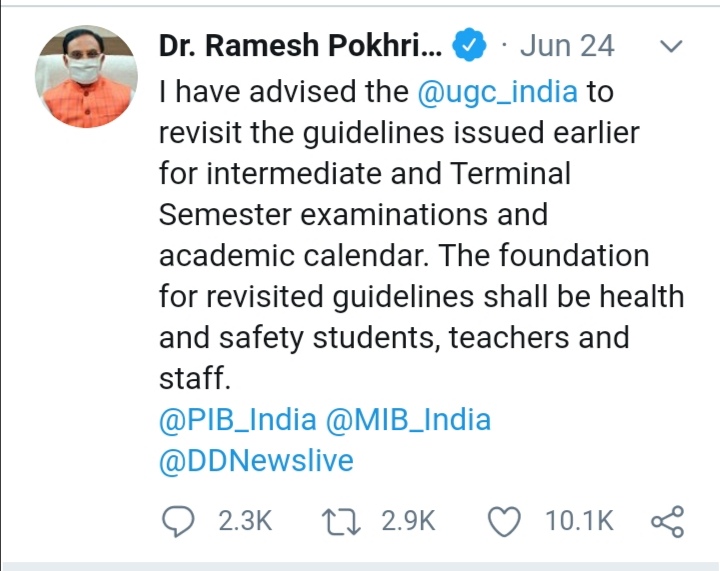
In June, however, looking at the rising number of Covid-19 cases across the country, Minister of Human Resource Development Ramesh Pokhriyal Nishank had asked the UGC to re-visit the guidelines.

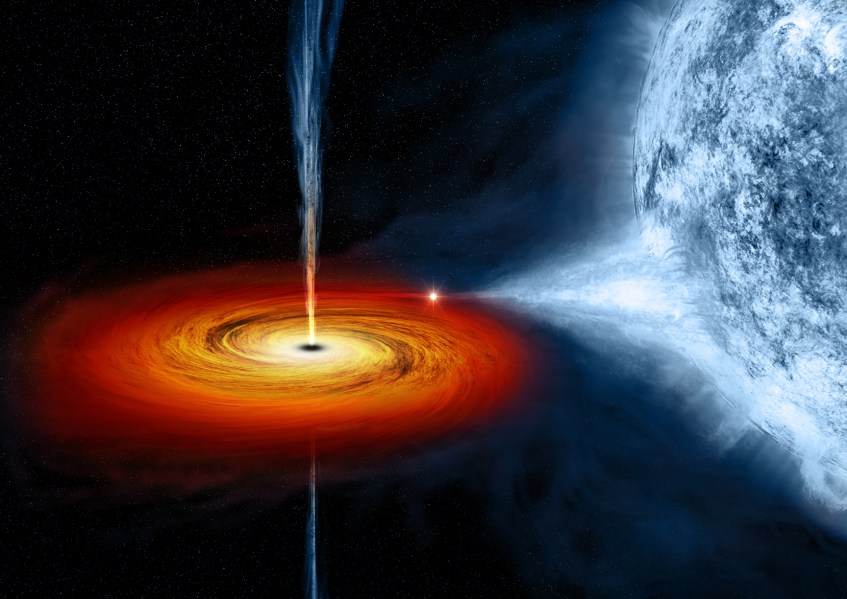
BLACK HOLE: The Singularity

Picture Courtesy: Google

We are always fascinated by stars, planets, universe. We used to think that planets orbiting stars. But they might exist around the supermassive black hole too. People have floated ideas about planets orbiting smaller black holes before, but far less is known about supermassive black holes.

 In 1930 a 20-year-old Indian student named Subrahmanyan Chandrasekhar was sailing from Madras to England to pursue his studies in astrophysics. During the voyage, he toyed with equations describing the stability of stars. And from a few lines of this mathematics, a momentous discovery emerged. Astronomers of the day had only a sketchy understanding of what makes stars tick. They knew that a star is a ball of hot gas engaging in a cosmic balancing act. There is a gas that tries to come out into the vacuum of the surrounding space, but gravity holds it back. In stars like the sun, an equilibrium is achieved, but only if the gas burns fuel to generate heat, which we now know is produced by nuclear reactions in the core. However, uncertainty surrounded the question of what happens when the fuel runs out. It seemed that gravity would inevitably gain the upper hand, causing the star to contract, and the smaller the radius, the fiercer the gravitational force would become at the surface. Astronomers had long been familiar with tiny stars known as white dwarfs, which contain a mass comparable to the sun but squashed into a volume roughly the size of the Earth. These burned-out stellar remnants are so dense that their atoms are pressed cheek by jowl. Further compression would mean the atoms themselves would be crushed, which was initially assumed to be impossible due to the laws of quantum physics. The outermost boundary of the hole is its event horizon.

The event horizon is a point of no return concentrated with energy. Quantum effects at the edge create streams of hot particles that radiate back out into the universe. This is called Hawking radiation, after the physicist Stephen Hawking, who predicted it. As you go deeper into the black hole, space becomes ever curvier until, at the center, it becomes infinitely curved. This is the singularity. Space and time cease to be meaningful ideas and the laws of physics as we know them — all of which require space and time.

It is said until one reaches the center, wouldn’t be able to understand the origin. There is nothing but darkness. The gravity is so strong there that even the light can’t sustain. The general relativity theory by Einstien is very applicable in discussing black hole. There is nothing more interesting and strange thing than the Black Hole theory. It also stretches people’s imagination and thinking capability to another level. Nothing can come out from the black hole’s gravitational force. It says many black holes are there which is surrounded by gas and dust. The stems of gas and dust move in such a way that it seems water is draining down. The particles of black holes run to an infinitely dense point which is very small in size. Many controversies are there among those one says our universe is a latecomer and it also says that there might have universe existed, which contained a black hole.

India:- Medical Negligence, can it be pardoned?

Mediacal profession is viewed as the most devout and mindful calling among others. It is one of the most regarded areas of the general public and there is no forswearing of the way that specialists have been given assignment proportionate to that of the God. In the current occasions additionally, everybody is admiring these experts and hailing them as warriors in white uniform.

Nonetheless, a few occurrences put the specialist customer relationship in an air pocket. Because of some careless clinical experts the whole society is addressed and detested. Indeed, even the smallest carelessness of their part can be lethal for the patient and once the word ‘carelessness’ is appended with any clinical expert it is a major hit to the generosity of that individual.

UNDERSTANDING MEDICAL NEGLIGENCE

What is clinical carelessness?

The Supreme Court in Poonam Verma v. Ashwin Patel and Ors. [(1996) 4 SCC 332] talked about the idea of clinical carelessness and characterized as under:

“Carelessness has numerous signs – it might be dynamic carelessness, insurance carelessness, near carelessness, simultaneous carelessness, proceeded with carelessness, criminal carelessness, net carelessness, perilous carelessness, dynamic and detached carelessness, headstrong or crazy carelessness or Negligence essentially.”

A specialist can be held obligated for carelessness just on the off chance that it tends to be demonstrated that he/she is capable of a disappointment that no other specialist with conventional aptitudes would be liable of it, if acting with sensible consideration. A slip in judgment comprises carelessness just if an expert who is sensibly able with the standard aptitudes and has acted with conventional consideration, would not have made a similar mistake.

Legal PRECEDENTS

The expansive standards regarding this matter have been clarified in detail by the three Judge Bench of the Supreme Court in Jacob Mathew v. Province of Punjab and Anr. [(2005) 6 SCC 1]. In section 41 of the choice, the Court saw that:

“The expert must bring to his errand a sensible level of ability and information and must exercise a sensible level of care. Neither the most elevated nor a low level of care and skill is the thing that the law requires.”

Carelessness can be both a Tort and a Criminal risk. Carelessness as a wrongdoing has by and large an exclusive requirement. Under the misdeed Law, carelessness is built up to the degree of the misfortune brought about. In any case, carelessness under the criminal law is dependent on the degree or measure of carelessness. Courts have emphasized that the weight of building up criminal carelessness lies with the individual calling for it. On the off chance that a specialist has a blameworthy psyche and his/her carelessness prompts the foolishness then the individual submitting the demonstration will be held at risk.

In Dr. Suresh Gupta v. Legislature of NCT of Delhi [(2004) 6 SCC 422] the Supreme Court saw that:

“Among common and criminal risk of a specialist causing passing of his patient the court has a troublesome assignment of gauging the level of recklessness and carelessness claimed with respect to the specialist. For conviction of a specialist for supposed criminal offense, the standard ought to be verification of wildness and intentional wrong doing for example a further extent of ethically culpable lead.

To convict, in this way, a specialist, the arraignment needs to come out with an instance of serious extent of carelessness with respect to the specialist. Unimportant absence of legitimate consideration, safeguard and consideration or coincidence may make common obligation however not a criminal one. The courts have, in this manner, consistently demanded on account of supposed criminal offense against specialist causing demise of his patient during treatment, that the demonstration griped against the specialist must show carelessness or imprudence of such a further extent as to show a psychological state which can be portrayed as absolutely emotionless towards the patient. Such gross carelessness alone is culpable.”

A serious extent of carelessness is required to prove the claim of criminal carelessness under Section 304-An of the Indian Penal Code, 1860. For fixing criminal risk on a clinical specialist a unimportant absence of required consideration, expertise and consideration isn’t adequate, it is required to be demonstrated that there was a “gross carelessness”. Under Indian Penal Code, Sections 52, 80, 81, 83, 88, 90, 91, 92 304-A, 337 and 338 examine the law of clinical misbehavior in India.

The direct of clinical negligence was brought under the Consumer Protection Act, 1986, by ethicalness of a milestone instance of the Indian Medical Association v. V. P. Shantha and others [(1995) 6 SCC 651] wherein the Court saw that:

“clinical consideration was characterized as an “administration” under this judgment that was secured by the Act, and it was additionally explained that an individual looking for clinical consideration might be considered as a shopper if certain models were met for instance there was an installment either for treatment or enrollment, or charges were deferred or it was paid by an insurance agency.”

After this judgment, it was viewed as that a few classifications of patients presently could bring charges against the careless medicinal services suppliers for remuneration under the Consumer Protection Act, 1986. Offices and specialists that offered a wide range of assistance liberated from cost to all customers were not to be held obligated under the Act.

The Supreme Court in V.N. Shrikhande v. Anita Sena Fernandes [(2011) 1 SCC 53] saw that:

“18. In instances of clinical carelessness, no restraint equation can be applied for deciding concerning when the reason for activity has collected to the shopper. Each case is to be settled on its own realities. In the event that the impact of carelessness on the specialist’s part or any individual related with him is patent, the reason for activity will be considered to have emerged on the date when the demonstration of carelessness was finished. On the off chance that, then again, the impact of carelessness is inactive, at that point the reason for activity will emerge on the date when the patient or his delegate complainant finds the damage/injury caused because of such act or the date when the patient or his agent complainant could have, by exercise of sensible persistence found the demonstration establishing carelessness.”

In this way, the Court held that there is no sweeping technique to choose with respect to when the reason for activity has resulted the shopper.

Moreover, Sections 80 and 88 of the Code specifies the barriers for specialists blamed for criminal obligation.

As indicated by Section 80:

“80. Mishap in doing a legal demonstration – Nothing is an offense that is finished unintentionally or disaster, and with no criminal expectation or information in the doing of a legitimate demonstration in a legal way by legal methods and with appropriate consideration and alert.”

As per Section 88:

“88. Act not planned to cause passing, done by assent in compliance with common decency for individual’s advantage – Nothing, which isn’t proposed to cause demise, is an offense by reason of any mischief which it might cause, or be expected by the practitioner to cause, or be known by the practitioner to probably cause, to any individual for whose advantage it is done in compliance with common decency, and who has given an assent, regardless of whether express or inferred to endure that hurt, or to face the challenge of that hurt.”

Enactments

Government at both the Central and the State level has attempted to ensure the nature of human services segment at all levels through declaring various statutes, guidelines and acts.

  1. The Medical Council Act, 2001 – The said Act canceled the Indian Medical Council Act, 1956 as was changed in 1964, 1993 and 2001. The Act accommodates the constitution of the Medical Council of India (MCI). The MCI directs principles of clinical instruction, authorization to begin schools, courses or increment the quantity of seats, enrollment of specialists, norms of expert lead of clinical professionals.
  2. Indian Medical Council (Professional Conduct, Etiquette and Ethics) Regulations, 2002-This guideline sets out the lead of clinical experts, indicating the obligations and obligations of the doctors in and has additionally assembled the general rules required for moral clinical practice.
  3. Screening Test Regulations, 2002-The Regulations accommodates:

“An Indian resident having an essential clinical capability granted by any clinical organization outside India who is covetous of getting temporary or lasting enrollment with the Medical Council of India or any State Medical Council on or after 15.03.2002 will need to qualify a screening test led by the endorsed expert for that reason according to the arrangements of area 13 of the Act.”

  1. Indian Nursing Council-It is a national administrative body for medical attendants and medical caretaker instruction in India. It is likewise liable for consistency in nursing instruction.
  2. Medications and Cosmetics Act, 1940-The essential target of the Act is to guarantee that the medications and beauty care products sold in India are sheltered, viable and adjust to state quality guidelines.
  3. Drug store Act, 1948 – The Act accommodates:

“An Act to direct the calling of drug store. To improve arrangement for the guideline of the calling and practice of drug store and for that reason to establish Pharmacy Councils”

  1. Clinical Termination of Pregnancy Act, 1971 – The Act accommodates:

“An Act to accommodate the end of specific pregnancies by enrolled clinical professionals and for issues associated therewith or coincidental thereto.”

  1. Transplantation of Human Organ Act, 1994-This Act fills in as the essential enactment administering the procedures of organ gift and organ transplantation in India.
  2. Pre-natal Sex Determination Test Act, 1994-This demonstration was authorized to stop female foeticides and capture the declining sex proportion in India. The demonstration restricted pre-birth sex assurance.
  3. Medications and Magic Remedies (Objectionable Advertisement) Act, 1954 – The said Act gives as under:

“It disallows notices of medications and cures that guarantee to have supernatural properties, and makes doing so a cognizable offense.”

Finishing up REMARKS

There are no two different ways about the way that specialists owe an obligation of care towards the patients yet.


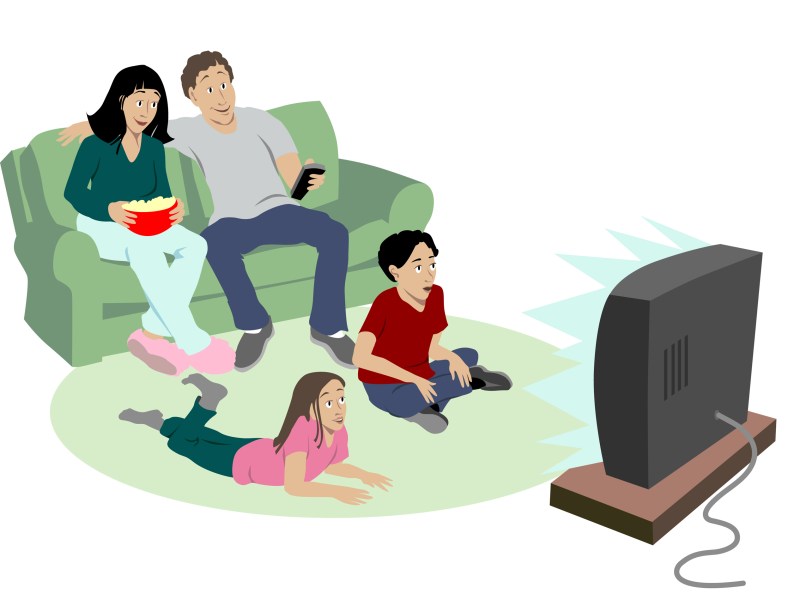
10 Reasons Why TV Consumption is Bad

Picture Courtesy: Google

Television is conquering the media industry with ages. The shows on television leave a major impact on society and the psychology of the audience.

Leaves to time for other works

A study says the average person watches tv for 5 hours and 11 mins, which is 1/5 if the 24 hours. Moreover, we sleep for 7-8 hours per day. So out of 24 hours, we lack time to do something else productive.

Effects on people

Television can conquer the thought and psychology of the people. Television is far from reality. Whatever is shows it highers the expectation of the audience and lead them to think differently without any realistic approach.

Increase health risk

Watching tv too much can higher obesity risks. If one watches TV for a long time sitting down, can be at risk of heart disease. Moreover, it affects eyesight as well. If you sit at the same position and doing nothing the whole day, you won’t burn calories, which is bad for your health

Makes life undisciplined 

TV is a common distraction at home. Running TV always causes distractions, be it study or other home works. Sometimes the distractions cause common accidents.

Negativity 

TV sometimes endorses negativity as well. Continuous watching the daily soaps with household problems and politics can be the cause of negativity. Not only that the action scenes, but crime scenes can also cause psychological problems and negativity to our brains.

Increase shopping habits

The advertisements and television styles encourage people to higher their shopping habits. The kids do not understand monetary problems. Sometimes the desire of the older members overpowers the other problems and higher shopping habits.

Dissatisfaction in life

The TV produces a larger than life image, which is unattainable. So, it brings dissatisfaction to the life of people. People start to believe the unrealistic world and try to deal with a life like that which eventually leaves them unsatisfied with their normal life and ends with unpleasant catastrophes.

People become less social

TV leads people to sit the whole time at a place and do nothing. People who watch TV more, do not talk to others much, and do not interact socially as well. It causes rupture to relationships. People forget to see the people around them who can give them natural happiness, knowledge, and more. Moreover, they can have good moments to nourish in the future.

Alter believes 

TV evolves their script in such a way that it looks attractive. Sometimes in doing so, they misinterpret the facts and beliefs. TV manipulates the audiences thought and alter their beliefs. The visualization is so powerful that people find no way except believing.

Hampers physically 

Mostly kids like to do whatever they watch on the TV in real life. If their favorite hero or heroine doing some risky stuff, they try to do it and end up with bitter experiences.

Watching TV is helpful and harmful as well. Nothing excessive is good for our health. We should keep a balance and time limit while watching TV for a better life.

Pandemic-1918

Book review

The Book “Pandemic: 1918” by “Catharine Arnold”. In this book she shows the eyewitness accounts from the greatest holocaust in modern history. Before Aids or Ebola, there was a ‘Spanish Flu’ which began to spread across the globe and Catharine Arnolds gripping narrative Pandemic 1918 marks the 100th anniversary of an epidemic that altered the world history. In 1918 a new and terrifying virus began to spread across the globe in three successive waves, from 1918 to 1919, and worldwide the pandemic gained the notorious title of “Spanish flu”. Historian Arnold shows a collection of essays and non- fictional stories that colorfully illustrate the everyday impact of the disease. She also put the powerful stories of doctors, nurses and ordinary people and focuses on personal experience to convey the message emotionally and told the horror impact of mysterious disease. Arnold displayed her knowledge with verve and savvy in this substantial and engaging work. She also gives firsthand accounts from those who witnessed and survived the Spanish Flus deadly grip while examining its impact and how amid the world war 1 Allies and Germans suffered massive casualties. It can be a good relatable book during the Covid-19 pandemic in this quarantine period and gives non fictional facts about 1918.

The Korean split: History of South and North Korea

North and South Korea have been separated for more than 70 years, ever since The Korean Peninsula became an unexpected casualty of the intensified Cold War between the two dominant superpowers: The Soviet Union and the United States.

It all started with Japan and Russia fighting for control of The Unified Korea in 1904. Japan, using its victory took over Korea, having already installed a puppet ruler, Emperor Sunjong. He was the last leader of the ‘united’ Korea and also the last ruler of the Joseon dynasty that extended back 500 years.

When he died in 1926, the Japanese completely came into power and controlled the country. They attempted to erode Korea’s unique cultural identity by suppressing Korean language and customs. Tokyo even tried to enforce a law stating that all second names should be Japanese. This created anti-Japanese feeling among the Koreans which lasts to this day.

When the Cold War started, Japan surrendered to the Allies in 1945, eventually, the Japanese empire dismantled in Korea which led the Korean Peninsula to become the victim and it got split into two zones: The North and The South. U.S controlled the South Korea while Soviet controlled the North.

In 1948, the U.S called for a United Nations sponsored voting for all Koreans to determine the future of the peninsula. After the North refused to participate, the South formed its own government in Seoul, led by strongly anti-communist Syngman Rhee. The North responded to the action of the South by installing the former communist guerrilla Kim Il Sung as the first premier of the Democratic People’s Republic of Korea (DPRK) in the capital of Pyongyang.

The growing tensions between the two separated zones led to The Korean War (1950-53) which killed at least 2.5 million people. The war began on 25 June 1950 when the Communist North Korea invaded South Korea. Almost immediately the US secured a resolution from the United Nations calling for the military defense of South Korea against the North Korean aggression. In the matter of days, US land, air, and sea forces had joined the battle. Following the US, China also joined the war favouring the North. In November and December 1951, hundreds of thousands of troops from the People’s Republic of China began heavy assaults against the American and South Korean forces.

The Korean War did a little to resolve the question of which regime represented the ‘true’ Korea. However, it firmly established the feeling of disliking for the US among the North Korea permanently, as the US military bombed villages, towns and cities across the northern half of the peninsula. Since then, there has been extremely little movement across the DMZ between North and South Korea.

South Korea continued strong ties with the west and developed a vigorous economy, and in recent decades has made steps towards becoming a fully democratic nation. Meanwhile, North Korea remained an isolated “hermit kingdom” particularly after the collapse of the Soviet bloc in the early 1990s and economically under developed, as well as virtual police state ruled by a single family for three generations.

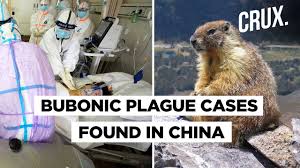
New bubonic plague case suspected after covid-19 in China; Alert sounded.

In this hard times of corona virus pandemic , chine has reported another deadly bubonic plague case in the northern China’s inner Mongolia. The detection of the suspected case of bubonic plague has come to light in statement issued by a local health commission on its website.

As per a media report, a third-level warning alert was issued on Sunday. The warning period has been extended to the end of the year. On July 1, state-run Xinhua news agency said that two suspected cases of bubonic plague reported in Khovd province in western Mongolia have been confirmed by lab test results. The confirmed cases are a 27-year-old resident and his 17-year-old brother. The brothers ate marmot meat, the health official said.

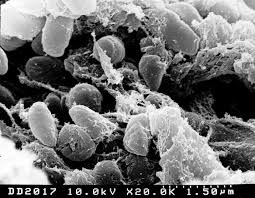
The Yersinia pestis bacteria can be transmitted to humans from infected rats via fleas.  Though the highly-contagious plague is rare in China and can be treated, at least five people have died from it since 2014, according to China’s National Health Commission. 

Bubonic plague symptoms and precautions:

The health commission urged the people in city to take precautions to avoid infection. It is a bacterial disease spread by fleas living on wild rodents such as marmots.

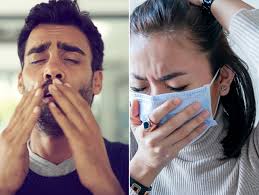
According to World Health Organisation(WHO), the plague can kill an adult in less than 24 hours if not treated in time. Bubonic plague symptoms include headaches, fever and vomiting. Swollen and painful lymph nodes occur in the area close to where bacteria entered skin.

Rajasthan Govt. trying methods for evaluation

Divya Patni

Jaipur: During the COVID-19 situation, Rajasthan government and with State University officials are trying two methods of evaluation due to current scenario. With the number of 20 lakh students enrolled in its university and colleges in the absence of annual/semester exams. The Chief minister Ashok Gehlot announced on that the examinations will not be held due to Covid situation in the state of Rajasthan. The Universities in Rajasthan are not allowed to take the examination before any order by the state government. The state government has the options to do evaluation should be done either on the basis of the exams that were held before the lock down or by the performance of the student in class in specific subjects during entire academic session that will help the students and everyone to face this phase. State higher education minister Bhanwar Singh Bhati said that, they were also examining central government norms for the examination and the changes that would be made the central government by the new norms that will help students as well as the state government to ensure this semester examination will be evaluated by the rules of both central and the state government. In the other states of the country, they are depending upon the internal assessment as the basics of annual scores that students had scored in their last examination/semesters. But, the state university has such a system leaving no scope for the evaluation on the basis of academic performance of students. In country most of the universities held 50 percent of their examination and will find the easy way to evaluate their marking on the basis of the scores of students that had scored by them earlier. In Rajasthan University, none of he honours subject was leaving a question on how to evaluate the students during this situation. It seem to be as a temporary relief to the students of Rajasthan University, In this period some sort of evaluation mechanism has to be developed. Awarding marks or percentage on the basis of last year scores theoretical and practical,”said by Rashmi Jain, vice-principal of Maharani’s College. The scores in degree colleges don’t matter for jobs but it is considered for appearing in the competitive exams. A professor in Mohan Lal Sukadia University, Udaipur. Wondered how to evaluate students who have not appeared in the last semster exams. “The government should have come up with some mechanism or any other way for evalution for the examinations. For the small classes with 30-40 students, even a teacher can create sometimes help but in bigger classes it is difficult to evaluate said by the teachers. Most probably the examination will be held online by a online portal or students will be promoted without giving any type of examination, that will help everyone to face the problems during this pandemic. State Government will soon to be announced their final verdict on this cause. Due to coronavirus the universities are not really prepared to conduct any type of examination theoretical or practical examinations will not be taken physically at the exams centers respectively.