Three terrorists killed in encounter with security forces in J&K’s Anantnag

In the Union Territory of Jammu  and Kashmir, three terrorists were gunned down in an encounter that broke out between terrorists and security forces at Khul Chohar area in South Kashmir’s Anantnag district in the early hours today.

According to police sources, Anantnag Police, 19 Rashtriya Rifles and CRPF laid a joint Cordon and Search Operation in the area based on an intelligence input about the presence of terrorists in the area. As the joint team approached the suspected spot, the hiding terrorists fired upon the security forces who retaliated and eliminated  three terrorists. One AK 47 Rifle and Two pistols have been recovered from their possession.

A senior police officer said that among the three terrorists, two terrorists belonged to Lashkar-e-Taiba (LeT) outfit including one district commander and one Hizb-ul-Mujahideen (HM) Commander from Doda district. He further said that Doda has now become totally free of militants once again.

Self reliant India will be a real tribute to our martyrs: PM Modi

Prime Minister Narendra Modi has said that self-reliant India will be a real tribute to our martyrs. In his Mann Ki Baat programme, Mr Modi said every Indian should resolve to make the country stronger, more capable and self-reliant. The Prime Minister said, no mission can be successfully achieved without people’s participation. Mr Modi said, when people buy local, become vocal for local they play a role in strengthening the country.

The Prime Minister said, the entire country is paying tributes to the valour and bravery of our soldiers who were killed in Ladakh and is indebted to them. He said our brave soldiers proved that they will not let anyone cast an evil eye on the glory and honour of Mother India.

Mr Modi said that the world has noticed India’s commitment and might when it comes to safeguarding its sovereignty and territorial integrity. He said, those who cast an evil eye on Indian soil in Ladakh have got a befitting response. Mr Modi said, India honours the spirit of friendship and it is also capable of giving an appropriate response to any adversary.

Mr Modi underlined the importance of defence sector preparedness. He said, after independence, we should have made efforts in the defence sector, taking advantage of the prior experience, but we did not. The Prime Minister told that today, in the fields of defence and technology, India is taking strides towards self-reliance. 

Best Fantasy movies of all Time

Our Best fantasy movies of all time include Hollywood and Bollywood both. Creating fascinating worlds and outstanding characters features plenty of appeals. It can’t just be a substituted version of our reality. Think more sword and sorcerer, as against different dimension. Fantasy movies are full of magical elements, myth, wonder, escapism, and thus the extraordinary. Humans are depicted as different races like goblins etc.

Everyone thinks fantasy stories are a bit like the Lord of the Rings or Harry potter. Fantasy may be a component of our lifestyle. Fantasy takes us away from our monotonous lives and allows us to enjoy adventure and spectacle, and to imagine a much better world. Movies usually do the same.

Here are some powerful heroic fantasy movies, perhaps the best fantasy movies we will ever see in all of our life time.

Godzilla: King of Monsters

The story follows the valiant efforts of the crypto-zoological agency Monarch.  Its members face off against a cell of god-sized monsters, including the mighty Godzilla. Godzilla strikes with Mothra, Rodan, and his ultimate nemesis, the three-headed King Ghidorah. This is one of the best fantasy movies one should watch.

The Head Hunter

The head hunter is one film on this list that screams fantasy. The premise is simple: an individual (Christopher Rygh) who hunts monsters and takes their heads as trophies. He went in search to kill the one that took his daughter’s life. The highest Hunter has all the quality elements required of a fantasy film. There’s an excellent quest on horseback in medieval armour. In inclusion, actual -like monsters abound. Though it can lack unique elements it visuals made it fantastic.

Thor: Ragnarok

Chris Hemsworth wouldn’t devour as Marvel’s breakout comedy star when he was the first cast as Thor, God of Thunder. But he clothed to be one of the only things about this never-ending mega-franchise. He’s tall, brawny and impossibly handsome, but there’s a self-mocking sparkle in his eye. We would love to include his movie in the list of best fantasy movies of all time.

Hemsworth’s wry toughness evokes the young Sean Connery as Bond, raising an eyebrow at the corniness around him. When he bumbles and stumbles, there’s slight of Grant to his discomfort. And when he’s playing things more or less straight, there’s mean gayness to his reactions. All this humanizes an actor who’s perpetually in peril of being treated as a life-sized action figure.

Kong: Skull Island

Bill Randa joins forces with a map-surveying mission to travel to an uncharted island in Southeast Asia. They’re amid a military escort, courtesy of Lt. Col. Preston and his intrepid helicopter brigade. Along with the soldiers, surveyors, and geologists, like Victor Nieves, who have no idea what they’re certain when the island seems to be home to all or any or any sorts of giant, flesh-eating creatures. And a humongous ape, aka Kong, is at the very best of the natural phenomenon. When the

Helicopters reach and start dropping bombs, Kong takes them out, killing much of the expedition and stranding the rest of them. Soon the crew is split; with Packard assail getting vengeance, while Conrad and Weaver encounter Marlow, an American pilot who’s been surviving among the island’s native people since WWII. Marlow explains that Kong is that the king and guardian of the island which it’s the slithering underground creatures that are the important danger.

PK

PK is that the maximum amount a philosophy as a movie. It takes the unique alien theme, tells the story equally from the lonely alien’s eyes – sometimes, evoking the gorgeous story the tiny Prince – as from his human narrator’s. Starting with the alien’s desperation, PK apprehends the fears and falsehoods that humans weave around faith. PK got baffled when PK decides to wish for his remote, He was not aware of whom he should ask for help.

PK features brave scenes – money extracted at temples, coconuts offered in confusion at a church, god-men dispensing tortuous advice – and powerful lines, including a Muslim girl, bravely asserting, “Itna chota nahin ho sakta hamara Khuda, ki use hamare school jaane pe aitraaz ho”.Capturing faith scrounged into hate, PK’s sterling message, directed sensitively, stands out.

Stardust

Although this film isn’t truly high fantasy one, there are enough fantastical elements within the story to preserve its inclusion on this list. Although the earth is full-clad tolerably, during this case it’s the characters that make it stand out. Besides the fact that it introduced mainstream audiences to the person without fear, the chemistry between Cox and Danes is one of the things that holds the film together. But, no matter how you slice it, fallen stars, evil witches, dead brothers, and a cross-dressing pirate bring a wickedly blast.

Black Panther

Black Panther would always be the best-looking Marvel movie yet. Supersaturated with vivid futurism and as bold and riotous as a rack of dashiki print shirts. I think that what makes a superb movie, regardless of genre, isn’t necessarily the action, or how the actors look, but character and this movie delivers. T’Challa was an amazing protagonist with relate-ability and likability that stayed consistent in war. I liked  T’Challa’s sister and his ex-girlfriend. Killmonger, the villain of the film, deserves credit for his sympathy for others of his race who’ve suffered discrimination from Europeans through history up to the present. He is one of the reasons we were forced to include this movie in the best fantasy movies of all-time list.


Dancing is a Long Journey without any Destination

Summer vacations of young school children open up a whole new arena of hobbies for them to indulge in. These kids enroll themselves in various classes like dancing, singing, arts and craft, and sports. Although dancing is one of the primary activities, not many children these days opt for classical dance styles. Most of them prefer Freestyle or Bollywood. While no dance form is less than another, a few of them are losing their place in society. Lost in today’s times is one such dance form, Kuchipudi.

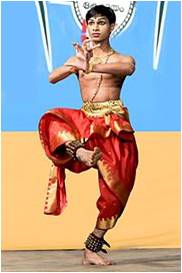
Kuchipudi, one of the eight classical dance styles of India, is a dance-drama performance art that originated in Andhra Pradesh in the Kuchelapuram village of Krishna, about 65km from Vijayawada. It is the only classical dance form that gains its name from a geographic location where it grew largely as a product of the Bhakti Movement in the early seventeenth century A.D.

danceThe history of Kuchipudi can further be traced back to the 1st century B.C. but the more popular stories are from 1502 A.D. According to some local legends, an orphan boy adopted the name Sidhendra Yogi acquiring higher studies, and one day when he asked God to help him cross a river, he vowed to devote his life to religious affairs. He then began to teach Brahmin boys devotional dance which was called Natya Shastra (which translated to offerings to God). In those days Kuchipudi was performed once in a year but was cautiously kept out of the reach of Devadasis. Even today in some coastal areas of Andhra Pradesh Kuchipudi is not accessible by all; it is still performed by all-male troupes.

Kuchipudi today is known for its quick footwork, expressive eye movement, dramatic characterization, and spirited narrative. It is a representation of a fine combination of Nritta, Nritya, and Natya. The performer has to be skilled in speech, dance, and mime.

Earlier Kuchipudi was never a solo affair. Men and boys underwent rigorous training in abhinaya, music, and dancing. The sutradhar (director) played the key role and men played the roles of both the genders. Now it is fast becoming a solo affair enriched by the advent of female dancers.

dance 2With its lilting music and flowing music, Kuchipudi performances are a delight to watch. The beautiful costumes and light makeup of the artists contribute to their vibrant stage presence. While a male wears a dhoti, a female is adorned with a sari that is stitched with a pleated cloth that opens like a hand fan when the dancer stretches or bends her legs while portraying spectacular footwork. Traditional jewelry like a metallic waist belt is used along with ghungroos for producing rhythmic sounds. The eye expressions are given extra importance by outlining them with black kajal.

Indrani Bajpai and Yamini Krishnamurti kept Kuchipudi alive through public performances garnering not only new students but also making it known on the national and international stature. Names like Haleem Khan, Yamini Reddy, Atisha Pratap Singh, and Kalpalathika are trying to keep up with the tradition with their contributions.

Image COurtesy: GOOGLE

How Virtual Reality is Changing the Way We Work

It’s an exciting time for virtual reality, which became a billion-dollar industry in 2016. A variety of companies are adopting VR technology to serve their specific missions, markets and customers. As virtual reality becomes more affordable and accessible to the masses, its widespread use is likely to become as routine to mainstream culture as social media platforms. Because of this, virtual reality has the potential to affect everyone and needs to be understood by students preparing to enter the workforce.

Who is benefiting from VR technology?

Education professionals were among the early adopters of VR technology. Several schools already offer students a VR-based lesson plan. Using Google Cardboard, students can take virtual field trips to distant and exotic locations, like the Great Barrier Reef, Egyptian pyramids and even Mars. The New York Times is also engaging consumers in VR technology with the launch of its new NYT VR app, which uses video and storytelling to create an immersive user experience via a smartphone and headphones. Real estate professionals are also beginning to adopt VR technology. Realtors can now offer clients a 3D virtual tour of desired properties using a VR headset.

What does VR mean for today’s students?

VR is likely to have a significant impact on the future job market. Here are three steps that you can take to make sure you’re VR ready:
1. Do some additional research on businesses currently using VR and consider if the industry you plan on working in can make use of the technology. If so, how can you be an innovator in incorporating VR into your industry – either by bringing ideas to the table or by initiating this change yourself?
2. Engage your fellow students and teachers on the topic and ask for their thoughts on how virtual reality might influence the future. Creative innovation has more fertile ground among many minds.
3. Start getting familiar with VR technology yourself by downloading different apps such as the NYT VR app, which is free on your smartphone or tablet. Understanding VR’s current capabilities and limitations will show you what’s possible and where the technology needs to grow.
Interested in pursuing a technology degree? Learn more here.
Hal Fickett is the CEO of an Orlando-based marketing and design agency called Hal Fickett & Company. Before managing the firm, he was a professional actor, theater producer and worked in marketing and sales for NPR. Hal is currently earning his MBA in Project Management at Herzing’s Orlando campus and is expected to graduate in 2017. He is married to Gina, they attend NewCity church and are expecting their first child in May.

Finding of 100 Earth Like Exoplanet : Kepler K2 Mission Super Exclusive

The largest haul of confirmed planets obtained since the space observatory transitioned to a different mode of observing includes a planetary system comprising four promising planets that could be rocky.

UNIVERSITY OF ARIZONA

An international team of astronomers led by the University of Arizona has discovered and confirmed a treasure trove of new worlds using NASA’s Kepler spacecraft on its K2 mission. Among the findings tallying 197 initial planet candidates, scientists have confirmed 104 planets outside our solar system. Among the confirmed is a planetary system comprising four promising planets that could be rocky.

The planets, all between 20 and 50 percent larger than Earth by diameter, are orbiting the M dwarf star K2-72, found 181 light years away in the direction of the Aquarius constellation. The star is less than half the size of the sun and less bright. The planets’ orbital periods range from five and a half to 24 days, and two of them may experience irradiation levels from their star comparable to those on Earth.

Credit : Third Party Reference

Despite their tight orbits — closer than Mercury’s orbit around the sun — the possibility that life could arise on a planet around such a star cannot be ruled out, according to lead author Ian Crossfield, a Sagan Fellow at the University of Arizona’s Lunar and Planetary Laboratory.

The researchers achieved this extraordinary “roundup” of exoplanets by combining data with follow-up observations by earth-based telescopes including the North Gemini telescope and the W. M. Keck Observatory in Hawaii, the Automated Planet Finder of the University of California Observatories, and the Large Binocular Telescope operated by the University of Arizona. The discoveries are published online in the Astrophysical Journal Supplement Series.

Both Kepler and its K2 mission discover new planets by measuring the subtle dip in a star’s brightness caused by a planet passing in front of its star. In its initial mission, Kepler surveyed just one patch of sky in the northern hemisphere, measuring the frequency of planets whose size and temperature might be similar to Earth orbiting stars similar to our sun. In the spacecraft’s extended mission in 2013, it lost its ability to precisely stare at its original target area, but a brilliant fix created a second life for the telescope that is proving scientifically fruitful.

After the fix, Kepler started its K2 mission, which has provided an ecliptic field of view with greater opportunities for Earth-based observatories in both the northern and southern hemispheres. Additionally, the K2 mission is entirely community-driven with all targets proposed for by the scientific community.

Credit : Third Party Reference

Because it covers more of the sky, the K2 mission is capable of observing a larger fraction of cooler, smaller, red-dwarf type stars, and because such stars are much more common in the Milky Way than sun-like stars, nearby stars will predominantly be red dwarfs.

“An analogy would be to say that Kepler performed a demographic study, while the K2 mission focuses on the bright and nearby stars with different types of planets,” said Ian Crossfield. “The K2 mission allows us to increase the number of small, red stars by a factor of 20, significantly increasing the number of astronomical ‘movie stars’ that make the best systems for further study.”

To validate candidate planets identified by K2, the researchers obtained high-resolution images of the planet-hosting stars as well as high-resolution optical spectroscopy data. By dispersing the starlight as through a prism, the spectrographs allowed the researchers to infer the physical properties of a star — such as mass, radius and temperature — from which the properties of any planets orbiting it can be inferred.

Credit : Third Party Reference

These observations represent a natural stepping stone from the K2 mission to NASA’s other upcoming exoplanet missions such as the Transiting Exoplanet Survey Satellite and James Webb Space Telescope.

“This bountiful list of validated exoplanets from the K2 mission highlights the fact that the targeted examination of bright stars and nearby stars along the ecliptic is providing many interesting new planets,” said Steve Howell, project scientist for Kepler and K2 at NASA’s Ames Research Center in Moffett Field, California.

“This allows the astronomical community ease of follow-up and characterization, and picks out a few gems for first study by the James Webb Space Telescope, which could perhaps provide information about their atmospheres.”

Reference – https://divyanshspacetech.wordpress.com

That wrong step !!

In today’s world, its very common in teenagers to have a boyfriend or girlfriend and they starts thinking that, that is their true love who will stay with them for lifetime and even goes against family, to convince them at any cost, and we also see many many cases of fleeing away of the girl and boy in news .

But do we know that what happens after that? The families finds them with the help of police and it doesn’t affect the boys, but it does affects the girls life, their whole life is ruined, they are stopped from studying further, they are stopped from going anywhere alone because their parents don’t trust them anymore. They may say that we were not mature enough, that’s why we took such step of running away from home, but were they really immature enough? If they were than why didn’t they think about it while confessing their love, why they didn’t they thought that they should stop, they are not mature enough to do these things. To be honest, they were immature, they really were but they didn’t realised that at the right time and took such steps.

So, here the duty of family comes under the play, they should provide love and care to their child, they should provide them such a environment that they can freely talk to their elders on such topics and instead of opposing them directly, parents should understand them and explain them the right thing. They should tell them the difference between right and wrong. And the most important thing is, they should change themselves, they must change their mindset with the era. Living in the modern world with a thinking of older eras ruins everything which needs to be changed. Become friends of your children and try to understand them, give them so much love, care and security that they won’t even think of running away from you and trust your decisions that their parents won’t do anything wrong.

How Starbucks captured the coffee & the world…!!!

With nearly 30,000 cafes across the world , Starbucks has become over just a household name. From its iconic cups, often adorned with misspelled names, to the espresso inside them, Starbucks has catapulted from one coffee bean shop in Seattle to a sprawling $80 billion business over the last 47 years.

Starbucks has a 'void in innovation' and healthy beverages won't ...

Starbucks sales account for 57 percent of the total cafe market. Yes, 57 percent, nearly two-thirds of all coffee sold at cafes in the U.S. comes from a Starbucks. But this impressive expansion hasn’t come without growing pains. With more than 14,000 locations in the U.S. alone, Starbucks has spread itself too thin. Having too many stores has led to fewer transactions at individual stores. To compensate, the company has raised prices. But doing this too quickly or too often can drive customers away. So how did this happen? And what’s a coffee giant to do about it? The year is 1970.
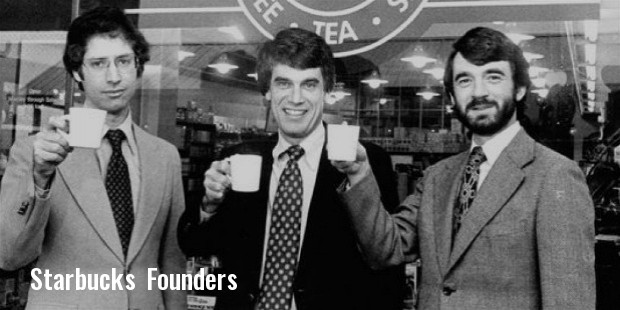
Three college friends, Zev Siegl, Jerry Baldwin and Gordon Bowker decide to get into the coffee business. They found a mentor in Alfred Peet, founder of Peet’s Coffee and the man responsible for bringing custom coffee roasting to the U.S. He knew the coffee industry inside and out, especially the gourmet end. He was the most educated coffee guy in the country at that time. So with Peet’s help, the three friends open Starbucks, a coffee bean shop and roastery at Seattle’s famous Pike Place Market in 1971. Peet provided the young entrepreneurs with roasted coffee beans and connected them with coffee brokers until they could set up their own roastery and source their own beans. For the first decade, the founders opened five more locations in Seattle. At this point, contemporary coffee consumers might have noticed a glaring absence: actual coffee drinks. But that’s the thing about the 70s coffee culture: it didn’t really exist outside the home. There were no coffee bars nor was there much of a requirement for espresso-based drinks. You purchased coffee beans and you either took them home as beans or we ground them for you in the store. Nobody expected to urge a beverage at a Starbucks coffee store until after 1980.

Starbucks Story - CEO, Founder, History | Coffee Company | Success ...
Starbucks’ initial focus was bringing high quality beans to consumers who were more accustomed to instant or canned coffee, but that changed with the addition of one man. The company hired its first really professional Director of Marketing and Sales, and that man was Howard Schultz. And he couldn’t figure out why we weren’t selling beverages. In 1983, Schultz travels to Italy and returns with an idea: turn the coffee bean stores into cafes. Starbucks served its first latte the next year. The experiment was a success, and four years later, Schultz partnered with investors and bought Starbucks for $3.8 million. He was only 34 at the time. Schultz pursued a strategy of aggressive expansion. By the time the company went public in 1992, it had 165 stores, in 1996 it had opened more than a thousand locations, including its first international cafes in Japan and Singapore.
Growth was so rapid that, just three years later, Starbucks opened its 2,000th location. Schultz switched from CEO to Executive Chairman in 2000, at which era Starbucks operated 3,500 stores in additional than a dozen countries. Between 2000 and 2007, the number of Starbucks cafes more than quadrupled, from 3,500 to over 15,000. During this era , the corporate opened a mean of 1,500 stores per annum , including 2,500 in 2007 alone. Sales shot up from $2 billion to $9.4 billion. Consumers were increasingly ditching their kitchen mugs for these iconic paper to-go cups. But then, Starbucks hit a wall: the 2007 financial crash. That year, its rapid growth screeched to a halt and its stock price plummeted by 50 percent as cash-strapped consumers backed away from pricey coffee habits. So, Starbucks brought back Howard Schultz. This news alone caused Starbucks stock to increase by 9 percent.

Xed Knowledge
Schultz halted growth and focused on customer experience. He shuttered cafes – more than 600 in 2008 and another 300 in 2009 – and laid off around 6,700 baristas. A month after his return, Schultz ordered Starbucks to shut all of its U.S. locations for one afternoon so he could retrain more than 135,000 baristas about how to make its signature espresso. Schultz’s goal was to remind customers what they loved about the brand by making the stores an experience, not just a place to get a quick coffee. They stopped selling breakfast sandwiches and brought back in-house grinding, infusing the cafes once again with that fresh coffee aroma. Schultz even mandated the removal of automatic espresso machines. These made service faster, but removed much of the romance and theatre of watching baristas craft each cup of coffee. Schultz’s makeover worked.

Starbucks | Description, History, & Facts | Britannica
The company’s stock soared more than 143 percent in 2009 and same-store sales rebounded. Starbucks has posted positive same-store sales ever since. During Schultz’s makeover of the cafes, Starbucks barely opened any new stores. But the pace picked up again in 2012. By 2017, Starbucks opened nearly 3,000 more locations, ending the year with 28,000 cafes round the world. However, this brings us back to the first problem: profit cannibalization. Over-saturation, particularly in urban locations, has spread sales thin. Because Starbucks has numerous locations, customers do not have to be loyal to only one. So albeit Starbucks overall sales are growing, its individual same-store sales won’t reflect it. Compounding this problem are changing consumer preferences. People are shying away from sugar-laden calorie bombs. which happens to be one of Starbucks’ staples. These signature Frappuccinos contain an average of 57 grams of sugar. That’s more than double the recommended daily limit of sugar. So, to combat these problems, Starbucks is changing once more . The company announced the closure of 150 stores in 2019. That may seem like a drop in the bucket for a sprawling company like Starbucks.

Starbucks App Users Now Drive 17 Pct Of Sales | PYMNTS.com

The company’s biggest undertaking is its new line of upscale stores: Starbucks Reserve Roasteries. These massive, 20,000-square foot stores are designed to be a tourist destination. Here, Starbucks baristas and bartenders’ experiment with different brewing methods and craft new, innovative beverages. These have proven popular. In the first weeks, the Shanghai Roastery made an average of $64,000 every day, which is double what a regular cafe makes in a week.

STAFFING

Staffing may be defined as the managerial function of employing and developing human resources for carrying out the various managerial and non-managerial activities in an organization. The function is concerned with attracting, acquiring and activating the human resources for achieving organizational goals and staffing also involves upgrading the quality and usefulness of members of the organization with a view to getting higher performance from them and in other words the policy of selecting ‘right man for the right job’ should be adopted. The staffing function includes such activities as manpower or human resource planning, recruitment, selection, placement, training and development, remuneration, performance appraisal, promotion, transfers, and so on. Staffing is a continuous function of managers and this is because the organization’s need to retain and maintain its personnel is a need ending process and managers have to keep a regular watch on the size and composition of personnel needed by the organization. As said by Weihrich and Koontz “The managerial function of staffing involves the filling and keeping filled, positions in the organizational structure”.

NATURE OF STAFFING

Staffing is related to people not with goods and it is a human factor related to people and staffing is also influenced by the social, economical, political, and educational environment of the country. Speaking, staffing is a function of far-reaching consequences and the reason is that managers are not shown as an asset in the balance-sheet of the organization whatsoever money we may have to spend on their selection, education, training and development and hence, we may conclude that staffing is a function of a for reaching consequences. According to Theo Haimann “Staffing is also a liability of the management like its other functions which is to be done by a manager continuously”. Recruitment, selection, training, and development of employees is a continuous process and with the increase in the size of the organization, continuity in staffing also increases. Staffing is influenced by the internal and external environment of the organization and the internal environment includes policies regarding promotion, retirement, etc., while the external environment includes the social, economic, political, and educational environment of the country and speaking both internal and external effect the staffing function.

In management selection, training, development, and evaluation of manpower are interlinked and hence convert staffing into a system and it is treated as a sub-system of management system because it is linked with organizational structure. Staffing is done not only to fulfill the present vacancies but also to fulfill the future vacancies and here we have to forecast the number and type of vacancies in near future and the level of the educated and trained people required for fulfilling these vacancies and arrange for the fulfillment, education, and training for these vacancies in advance. Staffing is not a phase of organizing but a separate managerial function and staffing is the responsibility of the managers. Staffing helps in determining and securing qualified and capable personnel for various jobs and it places round pegs in round holes and square pegs in square holes and it aims at economical and better employee performance.

\’Betaal\’ review: These undead shouldn’t have come to life

 Living dead: Betaal could have been a worthy contribution to Indian horror.
    
Instead of soaring, the Netflix\’s steady start crashes and burns, just like its zombies
For any film or television venture into the paranormal to resonate widely, there requires a certain suspension of belief. This rings true in the case of Betaal, Netflix’s latest four-part horror show. Created by Patrick Graham, who also made Ghoul, the series attempts to reinvent the zombie genre with an army of British Redcoats who return from the dead to victimise a village of tribals. Simultaneously, the unfortunate villagers are also slandered as naxals by corrupt industrialists hungry to further their own nefarious agendas.
The premise is original with enough heft to carry forward its zombie central theme, especially in its treatment of adapting the story of Vikram Aur Betaalinto a contemporary setting. Graham’s zombies are part vampires with the powers of hypnosis and a chilling blood thirst that ticks off all the right horror boxes. As promised, the directors, Graham with Nikhil Mahajan slowly build the fear factor introducing the ‘Betaal’ curse that could wipe out humanity. The show’s characters are well fleshed-out, from Vikram Sirohi (Vineet Kumar Singh) battling his own past and moral compass to Panya (Manjiri Pupala), a fiercely brave tribal woman intent on saving humanity.
For the first three episodes, Betaalcomes along nicely, even if it doesn’t reinvent the horror wheel. As the climax approaches, the show loses its somewhat firm tether to the plot. The term kid gloves, doesn’t come close to the imbecilic explanations provided. Whatever benefit of doubt has been doled out is shattered. A particular scene involving the repair of an ancient cannon (in mere minutes with magically procured tools) is jaw dropping. Not in the good way. Other realisations come into focus: zombies awake after centuries with fetid faces and rank hair have pristine red coats and boots. At some point, they drag themselves as if in a stupor. Other times, they’re faster than quicksilver. A child (Syna Anand) – the object of boss zombie, Colonel Lynedoch’s (Richard Dillane) sacrificial desires – continues to gnaw on nerves with her inability to contribute to saving her own life.
As far as performances go, the actors have played their parts with what has been offered to them: perfectly adequate. With above par production value, Betaal at least looks and feels the part of a grim zombie escapade. But its shaky narrative, which violently falls apart, wrecks what could have been a worthy contribution to the oft-wronged genre. It’s unfortunate because the show is not only backed by Shah Rukh Khan but horror behemoth Blumhouse Productions too. To put it succinctly, Betaal tried to deliver the chills but spectacularly froze instead.
Betaal is currently streaming on Netflix

\’Betaal\’ review: These undead shouldn’t have come to life

 Living dead: Betaal could have been a worthy contribution to Indian horror.
    
Instead of soaring, the Netflix\’s steady start crashes and burns, just like its zombies
For any film or television venture into the paranormal to resonate widely, there requires a certain suspension of belief. This rings true in the case of Betaal, Netflix’s latest four-part horror show. Created by Patrick Graham, who also made Ghoul, the series attempts to reinvent the zombie genre with an army of British Redcoats who return from the dead to victimise a village of tribals. Simultaneously, the unfortunate villagers are also slandered as naxals by corrupt industrialists hungry to further their own nefarious agendas.
The premise is original with enough heft to carry forward its zombie central theme, especially in its treatment of adapting the story of Vikram Aur Betaalinto a contemporary setting. Graham’s zombies are part vampires with the powers of hypnosis and a chilling blood thirst that ticks off all the right horror boxes. As promised, the directors, Graham with Nikhil Mahajan slowly build the fear factor introducing the ‘Betaal’ curse that could wipe out humanity. The show’s characters are well fleshed-out, from Vikram Sirohi (Vineet Kumar Singh) battling his own past and moral compass to Panya (Manjiri Pupala), a fiercely brave tribal woman intent on saving humanity.
For the first three episodes, Betaalcomes along nicely, even if it doesn’t reinvent the horror wheel. As the climax approaches, the show loses its somewhat firm tether to the plot. The term kid gloves, doesn’t come close to the imbecilic explanations provided. Whatever benefit of doubt has been doled out is shattered. A particular scene involving the repair of an ancient cannon (in mere minutes with magically procured tools) is jaw dropping. Not in the good way. Other realisations come into focus: zombies awake after centuries with fetid faces and rank hair have pristine red coats and boots. At some point, they drag themselves as if in a stupor. Other times, they’re faster than quicksilver. A child (Syna Anand) – the object of boss zombie, Colonel Lynedoch’s (Richard Dillane) sacrificial desires – continues to gnaw on nerves with her inability to contribute to saving her own life.
As far as performances go, the actors have played their parts with what has been offered to them: perfectly adequate. With above par production value, Betaal at least looks and feels the part of a grim zombie escapade. But its shaky narrative, which violently falls apart, wrecks what could have been a worthy contribution to the oft-wronged genre. It’s unfortunate because the show is not only backed by Shah Rukh Khan but horror behemoth Blumhouse Productions too. To put it succinctly, Betaal tried to deliver the chills but spectacularly froze instead.
Betaal is currently streaming on Netflix

\’Betaal\’ review: These undead shouldn’t have come to life

 Living dead: Betaal could have been a worthy contribution to Indian horror.
    
Instead of soaring, the Netflix\’s steady start crashes and burns, just like its zombies
For any film or television venture into the paranormal to resonate widely, there requires a certain suspension of belief. This rings true in the case of Betaal, Netflix’s latest four-part horror show. Created by Patrick Graham, who also made Ghoul, the series attempts to reinvent the zombie genre with an army of British Redcoats who return from the dead to victimise a village of tribals. Simultaneously, the unfortunate villagers are also slandered as naxals by corrupt industrialists hungry to further their own nefarious agendas.
The premise is original with enough heft to carry forward its zombie central theme, especially in its treatment of adapting the story of Vikram Aur Betaalinto a contemporary setting. Graham’s zombies are part vampires with the powers of hypnosis and a chilling blood thirst that ticks off all the right horror boxes. As promised, the directors, Graham with Nikhil Mahajan slowly build the fear factor introducing the ‘Betaal’ curse that could wipe out humanity. The show’s characters are well fleshed-out, from Vikram Sirohi (Vineet Kumar Singh) battling his own past and moral compass to Panya (Manjiri Pupala), a fiercely brave tribal woman intent on saving humanity.
For the first three episodes, Betaalcomes along nicely, even if it doesn’t reinvent the horror wheel. As the climax approaches, the show loses its somewhat firm tether to the plot. The term kid gloves, doesn’t come close to the imbecilic explanations provided. Whatever benefit of doubt has been doled out is shattered. A particular scene involving the repair of an ancient cannon (in mere minutes with magically procured tools) is jaw dropping. Not in the good way. Other realisations come into focus: zombies awake after centuries with fetid faces and rank hair have pristine red coats and boots. At some point, they drag themselves as if in a stupor. Other times, they’re faster than quicksilver. A child (Syna Anand) – the object of boss zombie, Colonel Lynedoch’s (Richard Dillane) sacrificial desires – continues to gnaw on nerves with her inability to contribute to saving her own life.
As far as performances go, the actors have played their parts with what has been offered to them: perfectly adequate. With above par production value, Betaal at least looks and feels the part of a grim zombie escapade. But its shaky narrative, which violently falls apart, wrecks what could have been a worthy contribution to the oft-wronged genre. It’s unfortunate because the show is not only backed by Shah Rukh Khan but horror behemoth Blumhouse Productions too. To put it succinctly, Betaal tried to deliver the chills but spectacularly froze instead.
Betaal is currently streaming on Netflix

GULABO SITABO: Not the “Pehle Aap” Lucknow

The two puppets are being played on the stage, as sisters, named, Gulabo, and Sitabo. They seem to fight a lot. Hence here’s the movie “Gulabo Sitabo”. Amitabh Bacchan as Mirza, who was deeply in love with the mansion, for which he married a woman 19 years older than him, named Fatima Begum. This is the love story of a landlord and his mansion whose lovestory gets introduced by a villain as the tenant named Bankey Rastogi, owner of a flour mill. He made his work place, his place to romance with his girlfriend, whom he wanted to marry, but as the women’s legacy continues, no money, no honey.
Beside having issues in love stories, Bankey has several other issues in his life, like Mirza, to be sure. Mirza steals his 100watt bulb and sells those in the nearby Bhangar Shop at a very low price, this clearly shows, Mirza had no idea of the market and the price. 
One day, Bankey gets a hard nature’s call and amidst the pressure he pressurises the old wall of the loo, and eventually it rolls down. And the case goes to police station, and a new character gets introduced, Gyanesh Shukla, the ASI expert, also a dealer for the ex-MLA of Lucknow, as his boss was the brother in law of the MLA. This all chaos resembles the confusion and entanglement in Mirza’s love story. 
Gyanesh and Bankey gets teamed up to posses the mansion, which creates a sense of insecurity in Mirza, and he teams up with a lawyer who tries to empty the mansion from the tenants. And than this chaotic love story of an Old Man and his Wife’s mansion continues with the tenants as major villains. This whole story can be streamed on Amazon Prime, anywhere, anytime. 
There are many scenes which will make you think about the character Mirza, beside the acting of Sir Amitabh Bacchan, who is outstanding in doing justice to the character, and there’s other great actors too, like Ayushmaan Khurrana, Vijay Raaz. All actors were brilliant in direction of Director Shoojit Sircar. The story of materialistic love is very beautifully shown and the story gets a mixed rating everywhere. IMDb rates it 6+ out of 10. Whereas on other platforms it has the same mid range rating. 
The Lucknow’s polite ‘Pehle Aap’ is shattered in this movie, the conversation of Bankey and Mirza shows the bitter relationship of a landlord and tenant. The story also shows, that Mirza has his own world created within the mansion, and he didn’t have much idea about the outer world and its rapid changing rates. Bankey who lived with 3 sisters and his mother in a 1 room house, shows though he owned a flour mill and everyone expected him to be rich, but his untimely failed romance led him to a filty lifestyle. The story has many other symbolic and memorable events with a touch of comic. Lastly, this is a perfect movie to watch with your family, and if you have a landlord or tenant, than you can invite them too for occupying the seat beside you. 😉

How Depression Impacts the Immune system!!!

Major depression is a common and sometimes fatal disorder that has been identified by the World Health Organisation as a leading cause of disability worldwide. While antidepressants are undoubtedly effective treatments in about 70% of cases, a substantial proportion of patients remain partially or totally unresponsive to treatment. There is no simple explanation for treatment resistance but there is a possibility that the current antidepressants do not effectively target all of the pathological processes that are responsible for the major symptoms of depression. Thus there is an urgent need to broaden the targets upon which antidepressants are considered to act.

The concept of a disordered immune system playing a major role in the mental state can be traced back to antiquity. However, it is only in the past 30 years or so that clinical and experimental evidence has been obtained clearly demonstrating that aspects of both cellular and humoral immunity were dysfunctional in major depression. In the past 20 years, attention has been directed to the role of the immunomodulators and immunotransmitters, in particular the pro- and anti-inflammatory cytokines. Thus, Maes and coworkers reported that interleukin-6 (IL-6), a major proinflammatory cytokine, was increased in the blood of depressed patients.

It was also apparent that about 45% of patients being therapeutically treated with the proinflammatory cytokine interferon-alpha (IFN) developed major symptoms of depression that terminate when the cytokines was withdrawn. Recently a meta-analysis of 9 cytokines in major depression in which 24 studies were assessed concluded that only the basal levels of IL-6 and TNF were significantly raised. Such clinical observations suggest that proinflammatory cytokines contribute to the major symptoms of depression and now forms the basis of the inflammation, cytokine or inflammatory response hypothesis of depression.

When considering cause and effect, there are three possibilities that may explain the tie between depression and immune system:-

  1. Depression may weaken the immune system and cause increased susceptibility to illness.
  2. Major or long term illnesses may cause mood disorders such as depression.
  3. In some cases, illnesses or conditions may be caused by the same triggers as depression.

New research published has taken an exciting new approach, offering hope for those who currently don’t have effective treatments. It’s part of a growing evidence base that shows our immune system can directly affect our mood – and for some may even be a cause of their depression, rather than a consequence of it. Essentially, we are learning that our immune system can alter the workings of the brain. With around one-third of depressed patients showing consistently high levels of inflammation.

It comes down to the inflammation that is part of the immune’s system response to danger. It is a hugely complicated process that helps our body fight off hostile forces. But if the inflammation gets out of hand then it can cause damage to our body and brain.

Treating Depression and improving Health:-

  1. Get in a Routine:- If you are depressed, you are really in need to get in a routine. A routine will help to stay busy and keeping away the negative thoughts.
  2. Set goals:- When you’re depressed, you may feel like you can’t accomplish anything. That makes you feel worse about yourself. To push back, set daily goals for yourself.
  3. Exercise:- It temporarily boosts feel-good chemicals called endorphins. It may also have long-term benefits for people with depression.
  4. Eat Healthy:- There is no magic diet that fixes depression. It’s a good idea to watch what you eat, though. If depression tends to make you overeat, getting in control of your eating will help you feel better.
  5. Get Enough Sleep:- Depression can make it hard to get enough shut-eye and too little sleep can make depression worse.

These are the five things one need to give priority to, during depression. Other things a person could do to feel good is engaging in fun activities. They would do really good to the person who is depressed. Next thing we could do is to consult a psychologist.

Refrences:-

http://www.healthline.com

Make In India and Self-Reliant

Make in India is a iniciative started by the Union Government of India.This iniciative was started in September of 2014. 25 sectors were considered under this iniciative to manufacture most of the products in India.

The sole motive of this iniciative is to make India a global manufacturing hub. To invite foreign investors, Our government has allowed 100% foreign direct investment in key sectors of the economy.

25 sectors are-

1. Automobiles

 2. Auto components

 4. Biotechnology

 3. Aviation

 5. Chemicals

 6. Construction

 7. Defense manufacturing

 8. Electrical machinery

 9. Electronic system design and manufacturing

 10. Food processing

 11. IT and BPM

 12. Leather

 13. Media and entertainment

 14. Mining

 15.Oil and gas

 16. Pharmaceuticals

 17. Ports

 18.Railways

 19.Renewable energy

 20.Roads and highways

 21. Space

 22.Textiles

 23.Thermal power

 24.Tourism & Hospitality

 25. Wellness

Manufacturing sector contributes 16% to the GDP in India which is aimed to make 25% by 2022.

It is worth mentioning here that chinese manufacturing sector contributes 34% to the china’s GDP.

And in this way there would also be produced millions of job opportunities.

Recently honourable PM Modi announced ‘Aatmnirbhar’ package. here, self-reliance and make in india are co-related to each other.

The dream of being self reliant can’t be made true without active participation of make in india iniciative.

recent clashes are creating situation to put chinese product aside and go with make in india.Now the iron is hot, and there only need is to hit it with mass support.