

Possibly, the worst covid variant named Omicron has been discovered in South Africa and has already spread to many other countries namely United Kingdom, Netherlands, Italy, Australia, Hong Kong and many others including India.The highly contagious virus Omicron was reported to WHO by South Africa on november 24 and has been designated as “Variant of Concern”. India reported it’s very first two cases of the virus on thursday itself in Karnataka. The Health ministry said that the patients are 66 and 46 years and no severe symptoms have been identified so far. Karnataka Chief Minister Basavraj Bommai said on thursday that the state will issue new covid guidelines and have been testing international travellers coming from at-risk countries after two people were detected with being affected with the virus. As part of new guidelines, the centre has made it mandatory to have a negative RT-PCR report for travellers coming from other countries. After India confirmed two omicron cases of the coronavirus in Karnataka on Thursday, there is some good news waiting in the wings. Government data shows that the Narendra Modi-led central government’s door-to-door vaccination drive, ‘Har Ghar Dastak’, has been able to boost Covid-19 vaccinations. With more and more people getting jabbed in the country, it might help in boosting people’s morale as the whole nation gears up to fight against the newly founded strain “Omicron”.
C.V.RAMAM
Sir Chandrasekhara Venkata Raman FRS was an Indian physicist known for his work in the field of light scattering. Using a spectrograph that he developed, he and his student K. S. Krishnan discovered that when light traverses a transparent material, the deflected light changes its wavelength and frequency.He was born in 7th November 1888 in Thiruvanaikoil, Tiruchirappalli His parents was R. Chandrasekhar Iyer, Parvathi Ammal.He did his education in st Aloysius Anglo Indian High school, presidency College.

C.V.Raman Theory proposed a theory that when light that shines through a material is scattered and its wavelength changes from that of the original incident light because of its interactions with the molecules in the material.This is also called as Raman effect.C.V. Raman is also known as Chandrashekhara Venkata Raman. He was a man of brilliant mind who has done his matriculation at the age of 11 and 12th class at the age of 13. Let us solve an interesting quiz on Dr. C.V. Raman which throws light on his life and inventions done by him.07-Nov-2019
He received many awards,
* 1928-Matteucci medal.
* 1930-Hughes medal.
* 1930-Nobel prize in physics.
* 1941-Franklin medal.
* 1954-Bhart ratna.
* 1957-Lenin peace prize.
Things to do at least once in your life.

Living every day, doing our daily chores, when we pause and think. We are often surprised at how fast time passes by as we might have already lived through 20, 30, or 40 years of our lifetime. Although a considerable amount of our lives have passed, when we look back, there are several things that are left unsaid. Several things that are left undone. So many dreams that are left unscathed.
Maybe now is the time to do some of those things, to add more meaning and experiences to our lives.
Here are some of the things that you should do at least once in your life.
1.Own a pet:

There is nothing like being smothered by the unconditional love of an animal. Owning a pet can especially help improve your mood while having a particularly bad day. You can also practice being caring and compassionate as owning pets will require you to do so very often. What you can have as a pet is up to you. A transformation witnessed in you, in terms of loving and caring is guaranteed!
2. Live alone:
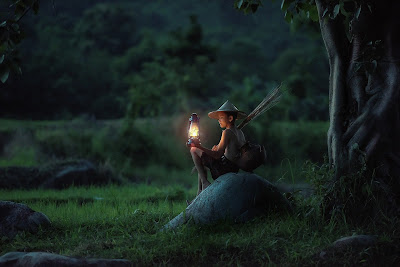
To some it may sound daunting, to some it may sound exciting. Nevertheless it’s an experience one should have in their lives. Sometimes it also becomes the need of the hour to spend time alone at your place. Living alone brings in with it the sense of responsibility, adulthood and freedom unlike anything else. You can choose whatever you want to do without seeking permission from anyone. Unless you have a landlord.
3. Buy something expensive:

How long would you keep criticising every newly launched I-Phone while intrinsically desiring to buy the same? Or anything expensive for that matter. Just go ahead and make that expensive purchase at least once in your life. Here’s a follow-up story that can encourage you to pursue the finer things in life.
Ratan Tata, an Indian industrialist and the former chairman of Tata and sons, spoke about a friend who had the misfortune of losing his pens very often. He ended up buying and using cheap pens as a result of his worrying habit. Ratan Tata gave him the suggestion of buying the most expensive pen that he could afford and see what happens.
His friend went on to buy a 22 carat gold cross pen. 6 months later when Ratan Tata met his friend again, he asked him about his habit of losing pens. His friend replied saying he is very cautious about his expensive pen and has managed to keep it with him till now.
It was the value of the pen that made the difference and there was nothing wrong intrinsically with his friend. If this story doesn’t convince you to buy something expensive, nothing else can.
4. Fall in love:

It might not be possible to plan and pursue such feelings in life. But when you do fall in love with someone you have met, embrace this beautiful feeling. What to do after you fall in love is something beyond my league. But the cliched feeling of butterflies in the stomach while you are near them, or imagining spending a lifetime with them when you are away from them. Is a moment worth living and experiencing.
5. Help a stranger:

There are a lot of people around us who are yearning for our help with something. Donate when an opportunity presents itselves. Reach out to the lone person in the group. Avoid bargaining over petty expenses with the vegetable or fruit vendors. Lend your seat on public transport to someone who has been standing for a while. Buy food for someone. There are plenty of ways we can help as every individual has so much to offer to society.
Although the list ends here, let your spirit keep looking for more things to do at least once in your life.
City as an Organism
An organism is anything that has life i.e. Living . Every city has some characteristics that can be compared to that of a living organism some places of a city act as organs of an organism some bodies (legislature, judiciary, etc.) Function like organs of an organism.
The system of life is growing in size and in complexity, and so do the infrastructures sustaining it. In 2008 the point was reached where more than 50% of the world population lives in cities. That percentage is growing. By 2030, over 60% of the world’s population – nearly five billion people – will be living in urban area. Initially the two life-essential resources for cities were water and food. As cities grew and as technology evolved, the supply of these resources became dependent on energy for processing, for pumps and for transportation. In the process, cities and their resources evolved into a system of life energized by the individuals that populate cities, and fuel its dynamics.
A city protects a cluster of houses. A house protects a cluster of humans and a human protects a cluster of organs. All the way down to the bacteria, cooperative clusters are formed that give the participants a more secure way to live. A house is a body. It supports the body but it also contains all the bodily functions. If we provide the house with these bodily functions the house becomes more sustainable. It is possible to regenerate the waste that the humans produce into energy just as the liver is doing in our body.
|
Body parts |
City parts |
|
Heart |
City centre (CBD) |
|
Blood vessels |
Roads |
|
Brain |
Legislature |
|
Spinal chord |
Secretariat |
|
Nerves |
People |
|
Mouth |
Media Includes newspapers, news channels |
|
Ears |
Judiciary |
|
Nose, lungs |
Green spaces parks, gardens |
|
Kidneys |
Drainage system |
|
Hands |
Services and facilities |
For example, Secunderabad is a city located in the state of Telangana to the north of Hyderabad. This city is compared to as a living organism Heart:– Secunderabad – always busy, connected to all parts of the city. Blood vessels: Roads- means to connect the heart to every other part of the city. Skin:- Jawaharlal Nehru Outer ring road- all around the city; outer covering. Alimentary canal:- P V Narsimharao Expressway- longest expressway of India. Nervous System: Administration Brain: Legislature- law making. Spinal chord :- Secretariat- body which makes sure that laws are implemented. Nerves:- People- who elect representatives to enable reach of their problems to the legislature. Eyes. Birla Mandir One of the most prominent highest points of Hyderabad. View of the entire city from the top of the temple.
Mouth:- Media includes newspapers, news channels and their team- journalists; reporters; cameramen; creative team Local channels that promote tourism of the city and highlight culture of Hyderabad; radio channels. Ears:- Judiciary; mainly lawyers Listen to problems of the people Receptors: High court for the state of Andhra Pradesh and the state of Telangana. Respiratory system:- Nose, lungs, Green spaces parks, gardens. Lakes: Hussain Sagar Tank bund, Necklace road. Two cricket stadiums and many football grounds. Skeleton:- Metro rail Connects parts of the city. Bones join during the course of time- Metro was built in parts and joined later to form a continuous phase. Legs:- Modes of transportation predominant: APSRTC (now TSRTC) buses. Hands:- Services and facilities. Electricity and water supply educational institutions hospitals functions of GHMC. Shoulders;- Hi tech city carry weights of the economy of the city. Hyderabad as an IT hub – IT sector- major contributor to the economy of Hyderabad. Kidneys ;– Drainage system, collection of drainage, disposal or purification of the drains. Hair:- Tourismtourist attractions, add beauty to the city, Major attractions: Charminar, Golconda fort and Ramoji film City, Snow world, Hussain Sagar- Buddha statue and adjoining parks, Nehru zoo, etc.
Communications satellite :

A communications satellite is an artificial satellite that relays and amplifies radio telecommunication signals via a transponder; it creates a communication channel between a source transmitter and a receiver at different locations on Earth’s. Communications satellites are used for television, telephone, radio, internet, and military applications. As of 1 January 2021, there are 2,224 communications satellites in Earth orbit. Most communications satellites are in geostationary orbit 22,300 miles(35,900 km) above the equator, so that the satellite appears stationary at the same point in the sky; therefore the satellite dish antennas of ground stations can be aimed permanently at that spot and do not have to move to track the satellite.

The high frequency radio waves used for telecommunications links travel by line of sight and so are obstructed by the curve of the Earth. The purpose of communications satellites is to relay the signal around the curve of…
View original post 993 more words
TOP FIVE CITIES IN INDIA
There are some most important cities in India,
* Mumbai.
* Delhi.
* Banglore.
* Kolkata.
* Chennai.
MUMBAI:-
Mumbai formerly called Bombay is a densely populated city on India’s west coast. A financial center, it’s India’s largest city. On the Mumbai Harbour waterfront stands the iconic Gateway of India stone arch, built by the British Raj in 1924.India’s share market is also in mumbai.Mumbai is also called as city of dreams.Mumbai is the seventh cheapest city in the world Mumbai is a huge and populous city, the level of crime is high. Travelers can easily become victims so they need to avoid traveling alone on public transport or in taxis, especially at night. There have been reports of British tourists becoming the victims of a scam by taxi drivers.

DELHI:-
New Delhi is the capital of India and an administrative district of the National Capital Territory of Delhi. New Delhi is the seat of all three branches of the government of India, hosting the Rashtrapati Bhavan, Parliament House, and the Supreme Court of India.New delhi is a union territory.It is situated alongside River Yamuna and bordered by Haryana state on three sides and by Uttar Pradesh state to the east.Delhi is relatively safe in terms of petty crime, though pickpocketing can be a problem in crowded areas so keep your valuables safe. Roads are notoriously congested.New Delhi is best known as the location of India’s national government. New Delhi has great historical significance as it was home to powerful people, such as the Pāṇḍavas and the Mughals. The city has many historical monuments and tourist attractions as well as lively marketplaces and great food, such as chaat.The world wonder taj mahal also present in a New delhi.

BANGLORE:-
Bengaluru also called Bangalore is the capital of India’s southern Karnataka state. The center of India’s high-tech industry, the city is also known for its parks and nightlife. By Cubbon Park, Vidhana Soudha is a Neo-Dravidian legislative building.It has a population of more than 8 million and a metropolitan population of around 11 million, making it the third most populous city and fifth most populous urban agglomeration in India.The current estimation of economy of Bangalore and its metropolitan area is US$ 110 billion making it India’s fourth richest metropolitan area.

KOLKATA:-
Kolkata formerly Calcutta is the capital of India’s West Bengal state. Founded as an East India Company trading post, it was India’s capital under the British Raj from 1773–1911. It is known for its grand colonial architecture, art galleries and cultural festivals. It’s also home to Mother House, headquarters of the Missionaries of Charity, founded by Mother Teresa, whose tomb is on site.Kolkata has gained the top spot in the list of the country’s safest cities for the year 2020.Kolkata is also known as the Black City.

CHENNAI:-
Chennai, on the Bay of Bengal in eastern India, is the capital of the state of Tamil Nadu. It is also called Madras.The Chennai Metropolitan Area is one of the largest municipal economies of India. More than one-third of India’s automobile industry being based in the city. Home to the Tamil film industry, Chennai is also known as a major film production centre. It is one of the 100 Indian cities to be developed as a smart city under the Smart Cities Mission.The world second largest beach is in Chennai and The zoological park.There is many place to visit in Chennai.

Environmental Law and Coastal Protections – the CRZ norms
The Modern Technology and Humanity
Since the art of making fire and creating handicraft tools, our civilization has come a long way. Science ad technology is making advances at an amazing rate. Technology has transformed our way of life by providing us all the means of comfort and luxuries. The faster vehicles for travel and facilities for global communication are also the result of technological advancement. It is beyond doubt that technology has made our life hassle-free and comfortable to an unimaginable level.
Technology has altered the physical side of man by providing him with lots of free time to do some services to society. But at present man has become like a machine, without feelings and emotions. They have become very professional fulfilling their duties efficiently. They are satisfied with their achievements and growth and are least bothered about the people who are not lucky enough to enjoy the benefits of life.
Man is not bothered about the problems, the issues which are prevalent in the society causing harm to the public at large. Every individual must work for the upliftment of the society by helping and cooperating in their specialized fields. Society will gain only when there is proper coordination between technology and humanity because the human touch is a must no matter how advanced technology is.
International Day for the Elimination of Violence against Women
What is Urban Renewal
Thinking out of the box

No one remains a stranger to this phrase, But there is nothing more vague and inarticulate than this phrase. From the moment we are born into this world, we are being directed to behave and do things in a certain way. When we reach adolescence, we no longer have to be told to behave in a certain way as we begin to realise what the society expects from us and behave in accordance to their expectations. Finally, when we enter adulthood, we become champions in complying to societal expectations.
After going through all these stages in life, while in a group discussion or a meeting, a team leader or a manager asks us to think outside the box. That’s unfair. Nobody taught us to think for ourselves, even if we did, it fell in the societal pattern of studying, marrying, rearing kids, and retiring.
What is thinking out of the box?
In a professional terminology, thinking out of the box basically means coming up with a new idea (because the contemporary ones didn’t work) that would reap huge benefits for the company. In terms of life, thinking out of the box means being indifferent to societal norms and expectations as you do things your own way. Although my monologue above is defensive towards societal expectations, it is often impractical as not all of us can afford to waste our time and resources on carving a new path, when we can comply with our society and become financially stable and independent.
How to think outside the box?
Nevertheless, we can still incorporate the habit of thinking outside the box to make a difference in our lives when needed. Thinking out of the box does not require racking your brains till you come up with a feasible idea.
Take up a new course
Enrolling yourself for a new course will open doors to learning about new and unfamiliar things. Learning new things will influence your thinking in different areas and aspects of your life. Thereafter when you are confronted with a problem, you will be equipped with knowledge from the specialisation in a certain field that can aid you with thinking out of the box.
Daydream
Although it sounds counter intuitive, daydreaming is an important factor that influences your thinking out of the box. While daydreaming, your brain is led astray from the logical aspects and helps you make connections and co-relations that you couldn’t come up with while racking your brain. So, turn your attention away from the problem you are facing and let your imagination go wild!
Read a book from a new genre
Thinking out of the box would require you to do things differently or try new things. So how about reading from a different genre than the one you usually prefer? Try nonfiction or didactical if you have always preferred fiction. Fiction might have accustomed you to think in a certain manner. To break that monotony in thinking, reading from a different genre might just do the trick.
Pen a poem
The motive behind doing this relatively weird stuff during a serious confrontation is to break free from rational and logical thinking and invite new possibilities and ideas into the situation. Try writing a poem on the basis of your problems. As your mind begins wandering to support your efforts in poetry, you expand your horizon of thinking, leading to thinking outside the box.
So there you go, a vague article on an equally vague topic. Thinking out of the box. Do drop in your thoughts in the comment box. Now that’s a rhyme scheme created which can be considered as the first two lines of a poem. I was wondering how to end this article so I made a rhyme scheme, a.k.a a poem.
Habits of successful people that you can take up.
Getting ahead or wealthy in life can be challenging. There are certain daily habits one must follow to achieve success. These habits enable people to use their potential and get things done on time. Many successful and wealthy people are said to have followed or maintained these habits to get to where they are today. So let us do ourselves a favor today by learning about some of these habits.
1.Positive Attitude

Everyday isn’t going to be a bliss in our lives. Instead, each day brings with it a challenge and problem of its own. But we don’t have to be upset or defeated by them. A positive attitude is one of the key habits of successful people that you can adopt. It is the habit of finding positive attributes in every challenge you face.
You might be overwhelmed and swamped with problems in your lives, but the idea that one day you will emerge as a resilient and a strong person after going through them can be relatively less draining.
After all, we can only control our reactions and not our circumstances.
2. Sharing

The path to success is not always about solitude. It requires you to share your ideas with others and even help others. One doesn’t have to be super rich to help or share with people around them. You can share your ideas with people that can benefit you as well as them. Volunteering for a cause is also a great idea of helping and sharing with your community.
3. Reading

J.K. Rowling says that she used to read anything that comes her way as a child. She states that one must read as much as possible as nothing is as rewarding as reading. Today there are books, e-books and blogs being written on every possible field. You can read from a wide range of reading materials based on your fields of interest.
Reading also helps you develop your vocabulary. You can post or publish your own writings based on the knowledge and vocabulary you have gained by your readings.
4. Being frugal

Frugality is the habit of being cautious with expenditures. Successful people are very thrifty with their money and resources. They draw comparisons while making deals or purchases and find ways to save money. It is also known as being economical. Economically spending can result in reduction of wastage on resources and money. Thus leading to efficiency.
5. Rising Early

Success and wealth has often been associated with the habit of rising early. Early risers can devote more time to their work and get more things done. It is again one of the key habits of successful people that you can adapt. There are several benefits of rising early in the morning such as:
- Enhancement of organisation skills as you plan your day ahead under a peaceful and calm environment in the mornings.
- Rising early gives you enough time to prepare a healthy breakfast which is important to carry on the following tasks of the day.
- Rising early puts you at the advantage of being on time. You get the following tasks of the day done without any delay.
- Finally, early rising also helps you sleep early without leaving you watching your phone during midnight.
These are some of the habits of successful people you can adopt to be successful yourself.
5 Best cities to live in India.

The cities mentioned in this list belong to different states in India. Each city showcases the distinct culture and beauty of their state. Many companies and factories have been set up in these cities since the beginning of globalisation. This has led to people migrating from different parts of the country in search of a livelihood.
Today these cities are commonly rich in manpower and resources which increases its scope of development. Although they are overpopulated, residents and visitors alike benefit from modern facilities and technological advancements that are introduced on a regular basis.
So, welcome to some of the best cities to live in India.
1.Bangalore- The start-up city

Ever came across the news about people quitting their 9 to 5 jobs and starting their own businesses? It might probably have occurred in the city of Bangalore. It is an IT hub for people doing their 9 to 5 jobs, and a start-up city for people starting their own businesses. Bangalore is located in one of the southern states of India. It also bags the title of the third largest city in India.
It has everything you can expect from a tier one city. Shopping hubs, entertainment opportunities, buzzing nightlife, art, culture and so on. Thanks to its rapid industrialisation. The city also has lakes, gardens and generous spaces for recreation. However, the goodness it reeks of also becomes the reason for overpopulation, it is infamously known for its hour long traffic jams!
2. Pune- The cultural capital of Maharashtra

Pune houses some of the best educational centres and IT companies that attract youngsters who are yearning for a livelihood. Housing, transport and food are affordable if spent wisely. Thus, making it one of the best cities to live in India. It is indeed known as the cultural capital of Maharashtra, due to its historical sites, museums and heritage. It is an ideal city for tourism as it has many sightseeing options such as Sinhagad Fort, Khadakwasla Dam, Tulsibaug, Shaniwar Wada, etc.
3. Ahmedabad

Ahmedabad, the city in Gujarat, is famous for its Sabarmati Ashram, which carries the pride of once being Mahatma Gandhi’s residence. Today it has been established into a museum which is visited by millions of tourists every year. Ahmedabad is one of the best cities to live in India due to its affordability and ideal places to stay.
Manek Chowk, Lal Darwaja Market, and the famous shopping centre at Dhalgarwad are some of weekend getaways and visual treats for the explorers of Ahmedabad.
4. Chennai

Chennai is not only the best, but also one of the cheapest cities to live in india. It is the capital city of Tamil Nadu
which is well known for its extravagant temples, beautiful churches, passion for classical music and popular beaches. Like Bangalore, it also comprises factories and industries of the elites that support the economy of the city and its residents.
Chennai boasts awesome connectivity with its expansive transport system of buses, rickshaws and cabs. It also acts as a host of several start-ups and unique initiatives in an effort to suffice development in the city.
5. Navi Mumbai

Navi Mumbai is a booming town, nearer to Mumbai, the city of dreams. It holds the title of the largest planned city in the entire world that boasts of tourist attractions such as Golf courses, waterfalls, wonderful parks, etc. Plans of establishing an international airport and metro train connectivity are being carried on with great enthusiasm.
What makes it one of the best cities to live in India is it’s relatively calmer, less polluted and populated environment in comparison to Mumbai. But it’s relatively higher cost of living and rent can be a turnoff for many.
Want to experience the city lifestyle or planning on settling in a new city? Do check out at least four of the cities mentioned in the list.
COMPUTER SECURITY DAY
National Computer Security Day demands our attention every November 30 because cyber security affects everything from where we bank and how we spend our money to who we elect to public office. We certainly don’t want a replay of MyDoom, the worst email virus in history, which caused $38.5 billion in damage, so let’s get educated on staying safe online!

HISTORY OF COMPUTER SECURITY
National Computer Security Day began in 1988, around the time that computers were becoming commonplace, even if they were yet to become ubiquitous in homes. The 1980s saw not only increased usage of computers, especially in business and government, and the internet was in its early stages.
While hacking and viruses have virtually been around since the early days of modern computing, evolving and increasingly sophisticated technologies began to see more applications, and therefore more security risks due to the simple fact that more data was at risk as computers found their way into banks, government offices, and businesses.
More important data stored on computers and servers meant more valuable information for hackers, and this meant higher profile cases of security breaches. As such, online security became an important concern by the end of the decade, and so National Computer Security Day was created to raise awareness about computer security.
WHAT WE DO IN COMPUTER SECURITY DAY
The most obvious way to celebrate Computer Security day would be to focus on ensuring that your computer, your devices, and the data you have in the cloud are all secure. One very important thing to do for your online security is to have strong passwords and keep them updated regularly, as this reduces the chances of your personal data falling into the wrong hands. If you aren’t the sort of person who’s good at coming up with strong passwords (and let’s be honest, some of us aren’t), then there are a number of password managers which you can choose from to generate random passwords and also save them so you don’t have to remember.
One strategy is to mix upper and lowercase letters with symbols, as this can be harder to guess and also difficult to hack – and passwords increase in difficulty the longer they are. Surprisingly, it doesn’t seem that everyone would think to do this, because “123456” and “password” have remained the two most popular passwords for years now. And don’t use the same password over and over for every online account you have – this ensures that if someone manages to get into one of your accounts, then they can access all of your accounts. Bad idea. So make strong passwords, don’t recycle them, and update them regularly.
Another thing that you can do to celebrate Computer Awareness Day is to update all of your spyware and malware protection software. Follow up with thorough scans, and you should have a more secure computer or device as an end result. While you may be aware that computers require such protection, you should also remember that your other devices such as tablets and smartphones are also vulnerable to malware and spyware – so take the necessary measures to keep them secure.
And if you still have a computer running the outdated Windows XP or Vista, you should be aware that this creates huge security vulnerabilities for you. So upgrade your OS or your device. For the rest of us with more contemporary operating systems, it’s still important to install the regular security updates in order to stay safe.
You can also observe National Computer Security Day by encrypting all of your files and backing them up. Your device should give you the option to encrypt all of your files (this is typically found amongst the settings), and then it’s your choice whether to go for a physical device such as an external hard drive or USB drive or for any of the numerous online cloud storage options. Many of these offer encrypted storage, and while Google’s Drive is probably the best-known, it’s far from the only player in the field. And most of the cloud storage options are free up to a certain limit.
So remember National Computer Security Day, and observe it in whatever way you can because online safety and security are important things.
“RATHER THEN FEARING OR IGNORING CYBER ATTACKS,DO ENSURE YOUR CYBER RESILIENCE TO THEM”
HUMAN BRAIN
The human brain is the central organ of the human nervous system, and with the spinal cord makes up the central nervous system. The brain consists of the cerebrum, the brainstem and the cerebellum. The cerebrum, the largest part of the human brain, consists of two cerebral hemispheres.It controls most of the activities of the body, processing, integrating, and coordinating the information it receives from the sense organs, and making decisions as to the instructions sent to the rest of the body. The brain is contained in, and protected by, the skull bones of the head.

There are three types of brain fore brain, midbrain,hindbrain.The hindbrain includes the upper part of the spinal cord, the brain stem, and a wrinkled ball of tissue called the cerebellum.Brains are made of soft tissue, which includes gray and white matter, containing the nerve cells, non-neuronal cells which help to maintain neurons and brain health, and small blood vessels. They have a high water content as well as a large amount nearly 60 percent of fat.
FUNCTION OF BRAIN:-
* Attention and concentration.
* Self-monitoring.
* Organization.
* Speaking (expressive language).
* planning and initiation.
* Awareness of abilities and limitations.
* Personality.
* Mental flexibility.
* Inhibition of behavior.
The human brain color physically appears to be white, black, and red-pinkish while it is alive and pulsating. The brain itself does not feel pain because there are no nociceptors located in brain tissue itself. This feature explains why neurosurgeons can operate on brain tissue without causing a patient discomfort, and, in some cases, can even perform surgery while the patient is awake.Brain controls vital functions such as breathing, swallowing, digestion, eye movement and heartbeat, there can be no life without it. But the rest of the brain is obviously capable of some remarkable feats, with one part able to compensate for deficiencies in another.
 Eduindex
You must be logged in to post a comment.