In its first physical meeting in two years, the GST Council on Friday effected several long-pending tweaks in tax rates including an increase in the GST levied on footwear costing less than ₹1,000 as well as readymade garments and fabrics to 12% from 5%.
The new rates on these products, a decision on which had been deferred by the Council over the past year owing to the pandemic’s impact on households, will come into effect from January 1, Finance Minister Nirmala Sitharaman said.
The Council approved a special composition scheme for brick kilns with a turnover threshold of ₹20 lakh, from April 1, 2022. Bricks would attract GST at the rate of 6% without input tax credits under the scheme, or 12% with input credits.
While this will please States like Uttar Pradesh that had sought a special scheme for brick kilns, a decision on extending such a scheme for other evasion-prone sectors like pan masala, gutkha and sand mining was put off.
The Council also decided to extend the concessional tax rates granted for COVID-19 medicines like Amphotericin B and Remdesivir till December 31, but similar sops offered by the Council at its last meeting in June for equipment like oxygen concentrators will expire on September 30.
The GST rate on seven more drugs useful for COVID-19 patients has been slashed till December 31 to 5% from 12%, including Itolizumab, Posaconazole and Favipiravir. The GST rate on Keytruda medicine for treatment of cancer has been reduced from 12% to 5%.
Life-saving drugs Zolgensma and Viltepso used in the treatment of spinal muscular atrophy, particularly for children, has been exempted from GST when imported for personal use. These medicines cost about ₹16 crore, Ms. Sitharaman said.
Food delivery tax shift: The Council also decided to make food delivery apps like Swiggy and Zomato liable to collect and remit the taxes on food orders, as opposed to the current system where restaurants providing the food remit the tax.
Revenue Secretary Tarun Bajaj stressed this did not constitute a new or extra tax, just the tax that was payable by restaurants would now be paid by aggregators. Some restaurants were avoiding paying the GST even though it was billed to customers.
“The decision to make food aggregators pay tax on supplies made by restaurants from January 1, 2022, seems to have been done based on empirical data of under reporting by restaurants, despite having collected tax on supplies of food to customers,” said Mahesh Jaising, Partner, Deloitte India.
“The impact on the end consumer is expected to be neutral where the restaurant is a registered one. For those supplies from unregistered, there could be a 5% GST going forward,” he added.
Aircraft on lease: The GST Council has exempted Integrated GST levied on import of aircraft on lease basis. This will help the aviation industry avoid double taxation, the Finance Minister said, and will also be granted for aircraft lessors who are located in Special Economic Zones.
Goods supplied at Indo-Bangladesh border haats have also been exempted from GST.
Carbon Markets: Carbon markets facilitate the trading of emission reductions. Such a market allows countries, or industries, to earn carbon credits for the emission reductions they make in excess of their targets. These carbon credits can be traded to the highest bidder in exchange of money. The buyers of carbon credits can show the emission reductions as their own and use them to meet their reduction targets. Carbon markets are considered a very important and effective instrument to reduce overall emissions.
A carbon market existed under Kyoto Protocol but is no longer there because the Protocol itself expired last year. A new market under Paris Agreement is yet to become functional. Developing countries like India, China or Brazil have large amounts of carbon credits left over because of the lack of demand as many countries abandoned their emission reduction targets. The developing countries wanted their unused carbon credits to be transitioned to the new market, something that the developed nations had been opposing on the grounds that the quality of these credits — the question whether these credits represent actual emission reductions — was a suspect. A deadlock over this had been holding up the finalisation of the rules and procedures of the Paris Agreement.
The Glasgow Pact has offered some reprieve to the developing nations. It has allowed these carbon credits to be used in meeting countries’ first NDC targets. These cannot be used for meeting targets in subsequent NDCs. That means, if a developed country wants to buy these credits to meet its own emission reduction targets, it can do so till 2025. Most countries have presented climate targets for 2025 in their first NDCs.
The resolution of the deadlock over carbon markets represents one of the major successes of COP26.
Mitigation: The Glasgow agreement has emphasised that stronger action in the current decade was most critical to achieving the 1.5-degree target. Accordingly, it has:
1. Asked countries to strengthen their 2030 climate action plans, or NDCs (nationally-determined contributions), by next year.
2. Established a work programme to urgently scale-up mitigation ambition and implementation.
3. Decided to convene an annual meeting of ministers to raise ambition of 2030 climate actions.
4. Called for an annual synthesis report on what countries were doing.
5. Requested the UN Secretary General to convene a meeting of world leaders in 2023 to scale-up ambition of climate action.
6. Asked countries to make efforts to reduce usage of coal as a source of fuel, and abolish “inefficient” subsidies on fossil fuels Has called for a phase-down of coal, and phase-out of fossil fuels. This is the first time that coal has been explicitly mentioned in any COP decision. It also led to big fracas at the end, with a group of countries led by India and China forcing an amendment to the word “phase-out” in relation to coal changed to “phase-down”. The initial language on this provision was much more direct. It called on all parties to accelerate phase-out of coal and fossil fuel subsidies. It was watered down in subsequent drafts to read phase-out of “unabated” coal power and “inefficient” fossil fuel subsidies. But even this was not liking to the developing countries who then got it changed to “phase down unabated coal power and phase out inefficient fossil fuel subsidies while providing targeted support to the poorest and the most vulnerable in line with national circumstances…”. Despite the dilution, the inclusion of language on reduction of coal power is being seen as a significant movement forward.
Adaptation: Most of the countries, especially the smaller and poorer ones, and the small island states, consider adaptation to be the most important component of climate action. These countries, due to their lower capacities, are already facing the worst impacts of climate change, and require immediate money, technology and capacity building for their adaptation activities.
As such, the Glasgow Climate Pact has:
Asked the developed countries to at least double the money being provided for adaptation by 2025 from the 2019 levels. In 2019, about $15 billion was made available for adaptation that was less than 20 per cent of the total climate finance flows. Developing countries have been demanding that at least half of all climate finance should be directed towards adaptation efforts.
Created a two-year work programme to define a global goal on adaptation. The Paris Agreement has a global goal on mitigation — reduce greenhouse gas emissions deep enough to keep the temperature rise within 2 degree Celsius of pre-industrial times. A similar global goal on adaptation has been missing, primarily because of the difficulty in defining such a target. Unlike mitigation efforts that bring global benefits, the benefits from adaptation are local or regional. There are no uniform global criteria against which adaptation targets can be set and measured. However, this has been a long-pending demand of developing countries and the Paris Agreement also asks for defining such a goal.
Finance: Every climate action has financial implications. It is now estimated that trillions of dollars are required every year to fund all the actions necessary to achieve the climate targets. But, money has been in short supply. Developed countries are under an obligation, due to their historical responsibility in emitting greenhouse gases, to provide finance and technology to the developing nations to help them deal with climate change. In 2009, developed countries had promised to mobilise at least $100 billion every year from 2020. This promise was reaffirmed during the Paris Agreement, which also asked the developed countries to scale up this amount from 2025. The 2020 deadline has long passed but the $100 billion promise has not been fulfilled. The developed nations have now said that they will arrange this amount by 2023.
Following are the major observations of the Glasgow Summit :
1. A deal aimed at staving off dangerous climate change has been struck at the COP26 summit in Glasgow.
2. Expressed “deep regrets” over the failure of the developed countries to deliver on their $100 billion promise. It has asked them to arrange this money urgently and in every year till 2025.
3. Initiated discussions on setting the new target for climate finance, beyond $100 billion for the post-2025 period.
4. Asked the developed countries to provide transparent information about the money they plan to provide.
5. Loss and Damage: The frequency of climate disasters has been rising rapidly, and many of these cause largescale devastation. The worst affected are the poor and small countries, and the island states. There is no institutional mechanism to compensate these nations for the losses, or provide them help in the form of relief and rehabilitation. The loss and damage provision in the Paris Agreement seeks to address that.
Introduced eight years ago in Warsaw, the provision hasn’t received much attention at the COPs, mainly because it was seen as an effort requiring huge sums of money. However, the affected countries have been demanding some meaningful action on this front. Thanks to a push from many nations, substantive discussions on loss and damage could take place in Glasgow. One of the earlier drafts included a provision for setting up of a facility to coordinate loss and damage activities. However, the final agreement, which has acknowledged the problem and dealt with the subject at substantial length, has only established a “dialogue” to discuss arrangements for funding of such activities. This is being seen as a major let-down.
Carbon Markets: Carbon markets facilitate the trading of emission reductions. Such a market allows countries, or industries, to earn carbon credits for the emission reductions they make in excess of their targets. These carbon credits can be traded to the highest bidder in exchange of money. The buyers of carbon credits can show the emission reductions as their own and use them to meet their reduction targets. Carbon markets are considered a very important and effective instrument to reduce overall emissions.
A carbon market existed under Kyoto Protocol but is no longer there because the Protocol itself expired last year. A new market under Paris Agreement is yet to become functional. Developing countries like India, China or Brazil have large amounts of carbon credits left over because of the lack of demand as many countries abandoned their emission reduction targets. The developing countries wanted their unused carbon credits to be transitioned to the new market, something that the developed nations had been opposing on the grounds that the quality of these credits — the question whether these credits represent actual emission reductions — was a suspect. A deadlock over this had been holding up the finalisation of the rules and procedures of the Paris Agreement.
The Glasgow Pact has offered some reprieve to the developing nations. It has allowed these carbon credits to be used in meeting countries’ first NDC targets. These cannot be used for meeting targets in subsequent NDCs. That means, if a developed country wants to buy these credits to meet its own emission reduction targets, it can do so till 2025. Most countries have presented climate targets for 2025 in their first NDCs.
The resolution of the deadlock over carbon markets represents one of the major successes of COP26.
Malayalam movies are getting wider audience attention since the development of OTT platforms. Even before that Malayalam film industry was also considered as one of the best industries among Indian film industries. Joji (2021) is one of such movie which gained worldwide attention through its plot, making and casting. This 2021 film was written by Shyam Pushkaran and directed by Dileesh Pothan. In the title itself the makers said it is ” inspired from Shakespeare’s Macbeth”.
The plot revolves around a wealthy family of three sons, their father , daughter in law and grandson Poppy in Kerala. Joji , the character played by Fahad Faasil is the youngest son of the family is the protagonist of the movie who has a negative shade. Joji along with his elder brothers Jomon and Jaison lead a submissive life under their dominating father Panachel Kuttappan. Bincy (Unnimaya Prasad) is the daughter in law of the family. Though the father of the family is old, he is fit and active in the family affairs. The elder sons aids him in agriculture and business, but Joji is financially dependent on the father and running unsuccessful ventures, where Bincy, wife of Jaison manages the household chores and is always in the kitchen. As the movie progresses Kuttappan meets with an accident while engaging in affairs in pond and become paralyzes. However Kuttappan returns home bed ridden and unable to speak. Joji was happy for this but his other brothers arrange for his last rites. But after a surgery the father’s condition gets improved. At this all both sons ask money from him for their ventures , but he rejects. Here, we can see that Bincy is the brain behind these actions by Joji and Jaison. Bincy shares her frustration and also triggers Joji by saying that ” your good days will be wasted on this kitchen slab”. Joji finally decides to kill the father. Then Joji replaces father’s daily medication, and this is witnessed by Bincy. Bincy and Jaison too secretly wishes for the death of their father. Finally the father, Kuttappan dies soon. After the death, Dr Felix, a family friend presides for the partition of the dead father’s estate. After this an encounter with an employer of the plantation results in the death of Jomon. This was also a murder by Joji. Over the next few days the family members finds that Joji is the killer of Jomon, but Joji denies the claim. Towards the end Joji attempts suicide by firing the same air gun he used for killing Jomon. In the suicide note left by Joji he blames the family members and society for all his acts. In the final scenes we can see that Joji survives in the hospital bed , while the police officer asks Joji to confess his crime by blinking his eyes, Joji forcefully does not blink and at this the movie comes to an end.
While analyzing Joji in the light of Macbeth, Joji can be identified as Macbeth, with his aim towards power. The tragic flaw of Macbeth was over ambition. Here Joji’s character also shows this same ambition and power and he needed independence from the dominating power of his father. Macbeth’s ambition began from the moment, when he witnessed and heard the witches. Their prediction was one of the reason for his change. In the same way Dr Felix addressed Joji as “rich” and this triggered Joji. Whereas the character of Bincy (Unnimaya) who is Joji’s sister in law, resembles all the characteristics of Lady Macbeth. By being a mute witness to Joji’s acts, she agrees to all his acts. While Joji longs for power and money, Bincy’s motive behind these acts are independence from the patriarchal family. Like Macbeth and Lady Macbeth, Joji and Bincy are the powerful characters who shares same dependence. Bincy clearly knows the state of mind of Joji. That’s why she says to Joji in his father’s funeral to “wear a mask and come”. Whereas other son Jomon is loyal to their father like Banquo, who was loyal to King Duncan, and in many ways Macbeth’s opposite.
After the murder Joji feels the same kind of frustration and confusion, which Macbeth felt. But on the other hand Bincy is portrayed as powerful than Joji. The dream of dead father, resembles Macbeth’s three apparitions and visions. His soliloquies in the closed room (Joji’s Palace) also resembles that of Macbeth’s. But he was not ready to reveal and confess his crime, that’s why he blamed the society for all his acts. There is a slight deviation in the characteristics of Joji from Macbeth. Macbeth is the one who always was the winner, and this made him greed. He believed that with his greatness in the battlefield he deserves the throne of Scotland. But on the other hand Joji is the one who is an engineering dropout, who doesn’t have any ambition, but only greed.
Towards the end Macbeth is stripped of “honor, love, obedience, troops of friends” and there is a kind of sympathy towards Macbeth in the end. But in this film, the police says to Joji that “you didn’t die, so it is trouble for you and us as well”. Even though Joji resembles the plot and narrative aspect of theatre, there are a lot of variations. With the praiseworthy performance of Fahad Fasil, Unnimaya, Sunny and other casts, Joji fits in the universe of Macbeth. Dileesh Pothan brilliantly fits Macbeth in the twenty first century universe with Joji’s palace. The music and cinematography makes this film a classic one.
The main task for COP26 was to finalise the rules and procedures for implementation of the Paris Agreement. Most of these rules had been finalised by 2018, but a few provisions, like the one relating to creation of new carbon markets, had remained unresolved.
After two weeks of negotiations with governments debating over provisions on phasing out coal, cutting greenhouse gas emissions and providing money to the poor world, the annual climate change summit came to an end on Saturday night with the adoption of a weaker-than-expected agreement called the Glasgow Climate Pact.
The Glasgow meeting was the 26th session of the Conference of Parties to the UN Framework Convention on Climate Change, or COP26. The main task for COP26 was to finalise the rules and procedures for implementation of the Paris Agreement. Most of these rules had been finalised by 2018, but a few provisions, like the one relating to creation of new carbon markets, had remained unresolved. However, due to clear evidence of worsening of the climate crisis in the six years since the Paris Agreement was finalised, host country United Kingdom was keen to ensure that Glasgow, instead of becoming merely a “procedural” COP, was a turning point in enhancing climate actions. The effort was to push for an agreement that could put the world on a 1.5 degree Celsius pathway, instead of the 2 degree Celsius trajectory which is the main objective of the Paris Agreement.
With 7 billion people in the world, it will be a foolish thing to think that everyone thinks the same way, maybe they do in one thing or the other. However, the point is truth is subjective – with as many people, as many opinions, as many ways of living, as many ways of thinking, the truth about non-physical entities/things such as ‘truth’ itself is subjective. Many a times, the opinions, the perspectives get influenced by the surroundings. It in more than a way reflects the values imbibed while growing up.
Beauty, too, is subjective. There is no definite way to define beauty. For a person, beauty exudes calmness, while for someone else, it might be excitement. What might be beauty for one, might not be for the other. It is all about the perspective difference in perspective can be quite infuriating but it doesn’t mean that one is entirely wrong. However, here we are not talking about who is wrong and not. We are trying to bring into everyone’s notice again that beauty has no particular way. It is subjective, relative and not something absolute.
Consider this: For a person with darker skin than yours, you are fair
For a person with a fairer skin than yours, you are dark
For a person taller than you, you are short
For a person shorter than you, you are taller
For a person on a lean side than you, you are on the fat side
For a person on a fat side than you, you are on the lean side.
This list can go on. The relativity and subjectivity of the things, living and non-living alike do not allow us to put a definite meaning to anything.
Indeed, beauty lies in the eyes of the beholder. It depends on the observer’s perspective which in turn is influenced by various experiences, by the values imbibed, by their surroundings, by the knowledge intake, by their ways of thinking. This is why it becomes necessary that the environment in which a person lives should be such it doesn’t not induce some harmful perspective. Any form of shaming about people choices of living in any non-harmful way should not be given a space, not be taught.
In this post-modern era, when uniformity is in the process of being renounced, diversity needs to be accepted, respected and allowed.
Pollution is defined as introduction of harmful particles in the environment.It can be man made or natural.The reason for pollution is many like toxic gas from industry, plastics in water,sound from vehicles etc.
TYPES OF POLLUTION:-
* Land pollution
* Noise pollution
* Water pollution
* Air pollution
* Light pollution.
LAND POLLUTION:-
Land pollution means that contamination of soil or land. Land pollution leads to contamination of ground water.Land pollution is caused due to urbanization, deforestation, mining and throwing plastics in the land.
NOISE POLLUTION:-
Noise is,defined as unwanted sound. Sound which pleases the listeners is music and that which causes pain and annoyance is noise.Noise pollution is majorly from vehicles,industrial works.Noise pollution leads to hearing problems, sleepless,cardio vascular issues and psychological problems.
WATER POLLUTION:-
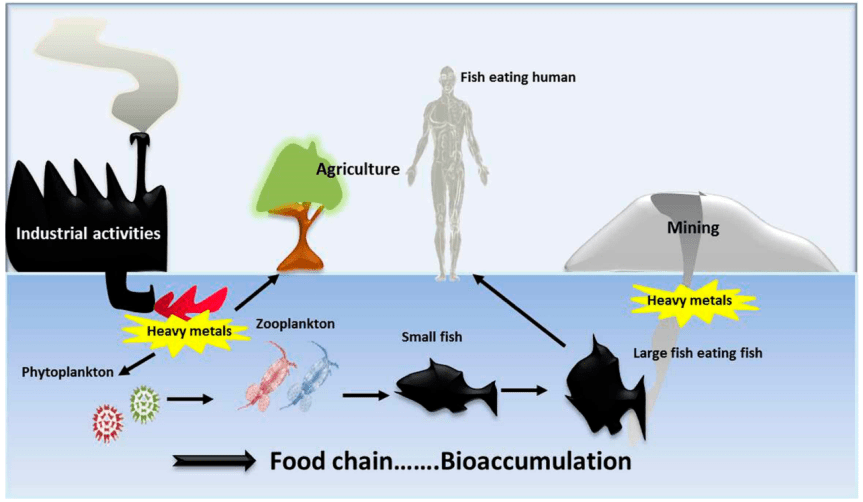
Water pollution is defined as introduction of unwanted materials in the water.It is one of the serious type of pollution Harmful to human, plants and animals.water pollution is caused by industrial waste,oil spills,marine dumping plastics,sewage,mining activities.It leads to serious problems like cancer,diarrheal disease, respiratory disease, neurological disorder and cardiovascular disease.
AIR POLLUTION:-
Air pollution is a mixture of solid particles and gases in the air. Car emissions, chemicals from factories, dust, and mold spores may be suspended as particles. Ozone, a gas, is a major part of air pollution in cities.Some air pollutants are poisonous.It is harmful to all living organisms in the world.Air pollution leads to breathing problems, asthma, heart attack and stroke.
LIGHT POLLUTION:-
Light pollution is unwanted over usage of artificial light.It wash out star light in the night, disturb ecosystem,interferes with space research.Light pollution alters their night time environment by turning night into day.spark from artificial lights can also impact wetland habitats that are home to amphibians such as frogs and toads.
CONTROLLING MEASURES FOR POLLUTION:-
* By controlling wastes.
* With the practice of recycle.
* Going with natural ways.
* Using eco friendly products instead of plastics.
We may consider ourselves to be well-established persons but there are moments when we get shaken up physically, mentally, spiritually, and emotionally. The feelings of insecurity make us lose our self-control. Certain bodily weaknesses crop up and disturb us intensively. Sometimes we become over-conscious and over-influenced by our emotions and may sink into utter confusion.
But joust looks into a tiny machine like a computer. It has its set innate purpose. It has to perform only the desired function, nothing more, nothing less. And if it finds any information extra or lacking it gives a signal and the programmer cannot proceed further unless and until it clarifies the error or lack of information by searching its path. In the same way after identifying one’s own self, one needs to set goals and priorities that are befitting to them. Then one should be able to set and control the ‘self’ and success will be ours.
Self-control is the very elixir of human self and character building. A man without self-control is like a ship without a rudder that cannot resist the waves of the current and keeps floating when the wind blows. He does not have any control over his thoughts, ideas, and decision. Thus having self-control is important otherwise life at every single moment will be challenging.
Taking a trip to a foreign country is a dream left unattended by many. Considering the conveyance charges, hotel expenses, and higher value of foreign currency. But it’s time to chase your dreams as there are beautiful and picturesque views across different countries for which you won’t have to pay a fortune. We will be focusing on countries with almost equivalent or lower currency value to an Indian rupee.
From neighbouring countries to some distant lands, here are some cheapest places to visit from India within your budget.
Bhutan, one of the neighbouring countries of India is home to picturesque views of snowy peaks and lush green forests. A unique feature of Bhutan is that its forests cover 72% of their land, thus making it a carbon neutral, or even carbon-negative zone. Bhutan is famously known for evaluating the happiness index of their country while the rest of the world measures their economic wealth.
Tourists can visit the Buddhist monasteries on the mountains and participate in Bhutanese festivals. Adventurers can immerse themselves in its shadowy forests and wilderness for a phenomenal experience. Hotel rooms and food are similarly prized as in the states of India. It is regarded as one of the cheapest places to visit for Indians.
Conveyance charges
Tourists can travel by flight from Delhi, Kolkata, Bagdogra, Bodh Gaya, and Guwahati in India to Paro international airport in Bhutan. Ticket charges range from 5,500 INR to 11,000 INR (one way), depending on your boarding choice. Railways is the cheapest mode of transport to Bhutan. Trains are available regularly from Delhi, Kanpur and Kolkata to Hasimara, a town on the Indo-Bhutan border.
Hotel Charges
Prices vary based on your choice of accommodation from 2,000 INR and more.
Whether you are an avid adventurer, or a complete opposite, Indonesia has something for both the spectres of personalities. It is a land in possession of pristine waters, scenic islands and diverse cultural tribes. Bali is the most popular and sought after tourist spot in Indonesia due to its extravagant temples, beautiful mountains and exciting nightlife. But there are several other places to visit in Indonesia such as Gili islands, Maluk beach, lake Toba and many more that serve different prospects and interests of tourists visiting Indonesia.
Conveyance charges
Air travel, presumably from Mumbai or Delhi to Jakarta, the capital city of Indonesia may cost you approximately 20,000 INR.
Although conveyance charges are seemingly high, a decent hotel room for a night can cost 2,000 INR. You can further cut costs by opting for home stays.
Laos- For a meditative experience
Image by Pixabay
Are you yearning for a peaceful and a soothing experience during your vacation? Look no further than Laos. Visit the Bokeo national reserve and enjoy the privilege of staying in a treehouse and traveling in a zipline across the forests. You may also spot a black Gibbon, an endangered species of animal found in China and Laos. Witness the longest river cave systems in the world illuminated by miner’s lamps creating stunning visuals only in Laos. There is a lot more to explore in this culturally rich country.
Conveyance charges
The easiest way to travel from India to Laos is by air transport. Flight travel can cost from 10,000 INR to 12,000 INR (one way). Prices may vary based on your boarding point.
Hotel charges
Charges for a hotel room per night may begin from 1,200 INR and above. Depending on the place you choose to stay.
Malaysia- Truly Asia
Image by Pixabay
With Malaysia, it’s probably the time to marvel at some magnificent manmade structures as this country houses the futuristic Petronas Towers, colonial buildings and palaces. Tourists can also indulge in Scuba diving and Snorkeling to witness the amazing coral reefs and lay on its soft sandy beaches. There is also a UNESCO world heritage site, namely mount Kinabalu which is the tallest mountain in the country. Malaysia forms the perfect blend of cities and nature preserves as there are plenty of places to indulge in shopping as well as immerse in the beauty of nature.
Conveyance charges
Air travel from India to Malaysia can approximately cost 16,000 INR (One way). Prices may vary according to the boarding point.
Hotel charges
Prices could range from under 1,000 INR upon booking in advance.
Here’s the list of affordable places for you to fulfil your international vacation dreams.There are also tourism packages available for these places from sites such as makemytrip, yatra, thomascook, and more. The list is short indeed, but it makes it easier to decide
Objectification of women is quite self-explanatory, is it not? In a very simple term, it explains how women are treated as objects rather than breathing, living human beings. This subject has been discussed before, article have been written on the same, petition has been filled for the same. However, I sit to write about it again, for when I discussed about this to an acquaintance, I was asked why am I so hung up on these almost feminist issues, why not I write about ‘pressing issues’ such as poverty and other such issues. I agree that these are important issues but the subject in hand is no less important. The fact that people consider it to be of less importance is really disturbing and bothersome How are we to bring a change when we don’t deem it significant enough to look after.
For a very long time, women have been referred to as ‘weaker sex’, a source of entertainment. This notion has only been promoted in various ways. Bollywood movies have been a very strong medium for the same. The article throws light on one of the aspects in Bollywood movies which in not-so-subtle ways objectify women – ‘Item Songs’. Interestingly, the term ‘item’ refers only to women, specifically very curvaceous women. Moreover, the ‘songs’, the lyrical content of all these item songs unabashedly objectify women. Let’s take for instance, ‘tandoori chicken’ (Fevicol), ‘Chikni Chameli’; ‘Ab Karunga tere saath Gandi Baat’. Oh! The list is endless. The new so called pop songs are not giving it a break. What do songs like ‘Genda Phool’; ‘Chocolate’ among many others are trying to portray?
Yes! Entertainment is always welcomed but not at the cost of women being objectified, being compared to all the objects that one can think of. It affects the mindset of people; it adds to the not so progressive mindset. It in a way says that ‘it is okay if we refer women as such, she has no complaints, look at the way she smiles among all the leering, lustful, predatory eyes.’ However, we all know that it is not okay. In any given real-life situations, no one would love the idea of being cat-called, being called names or whatsoever. Media has somehow come dictate the ways people think, their perspective, their actions. If people can enjoy the actors and actresses enjoying all these in a ‘T.V. screen’, who says it won’t be enjoyable outside the screen, right!
We need to realize that this is unacceptable, not everyone way of entertainment is ‘not’ harmful. The portrait of women as being skinny has somehow fed into the mind of every other person that only acceptable body-shape is being skinny, lean and not otherwise. In other words, body-shaming becomes prominent.
It is important for such discussion to take place more, for more involvement of people in this direction, for raising voice. Moreover, as Sabhana Azmi suggested that it is important for actresses to have a say in the lyrical content. All such lyrics are written by a man – describing a woman through a male gaze. It is very disturbing that people with mighty pen in their swords would resort to writing such lines which can influence a lot of audience. Not one person is to blame, the mind-set of people will take years to change, you cannot expect women to carry knife while always moving around. However, it somewhere needs to start. A little initiative needs to be taken. Somewhere, someone. A conversation about this cannot be ignored. Media can always be important instrument in bringing the wind of change.
With increasing awareness and demand for drastic measure to avert the crisis of climate change. It might actually be possible to keep the impacts well below disastrous. The world is making progress in the right direction as we join hands and unite with agreements such as the Kyoto protocol, Paris agreements to a name a few.
Plant Based Meat.
Although, the biggest culprit in global warming is deemed to be carbon dioxide. Other gases such as nitrous oxide and methane are a lot more potent and thus are a cause of major concern. Methane is largely released during livestock farming. As demand for meat has exponentially increased in the past years, it is without a doubt that if things went on the same as they are. The hope to keep temperature rise well below 2c will merely remain a dream. But with a new innovation of plant based meat. The turnover to eating largely plant based may not seem impossible. A faux meat – made entirely out of plant based ingredients- is intended to taste and look exactly like meat. It is believed that in 30 years or so, all meat and dairy will be replaced and only plant based products will triumph. These plant based substitutes have close to negligible carbon footprint and therefore, it is a sound solution.
Renewable Energy
The demand for energy is ever on the rise. But this demand is being fulfilled mainly by renewable energy sources. In the past years, renewable energy sources like solar panels and wind turbines have been a lot cheaper to install than they used to be a decade ago. Thus, more and more countries are looking to utilize mainly renewable energy sources to fulfil their energy demands. India, also, has promised to increase share of renewable energy to 50% by the year 2030 in the conference held at Glasgow, COP26.
Afforestation.
Deforestation of forests for farming, timber production etc alone contributes to about 15% of greenhouse gas emissions. The amount of trees cut has roughly doubled since the past decade and this a cause for major concern. But steps in the right direction are talking place. Countries like Brazil and Indonesia have invested money to fund agricultural subsidies. And with the efforts of China, India and South Korea alone have managed to sever close to 12 billion tons of carbon dioxide from the atmosphere.
Electric Cars
Electric cars have also been on the rise as a green solution to reducing pollution cause by cars. Countries have also announced future bans on fossil-fueled cars. Car companies like Jaguar, Volvo, Land rover are all looking to end production of fuel based cars.
There is a lot of hope that countries will follow through and estimated control will be very much possible. Green economic growth is the only long term goal.
Its been six years of the advent of the Companies Act, of 2013 that obligated companies to contribute over a specific size and profitability, a portion of their profits or benefits towards societal development, discourses about corporate social responsibility, or CSR, is all over the place. There have been workshops, seminars, meetings, newspaper articles, and award distribution ceremonies galore on the matter. Today, CSR has become an important aspect for all companies in contributing towards both, society as well as increasing the brand value reputation of the companies. As corporate social responsibility (CSR) is not compulsory, many companies might not prioritize it or engage in it. However, there are many companies ranging from middle-class companies to highly valued companies who have contributed a lot to CSR and continue to contribute, knowing its importance. The top 6 companies with the best CSR reputation are:
INFOSYS LIMITED
Image credit: Alamy
Infosys Limited is ranked as the top company in India, contributing the most towards CSR. Being an early adopter of corporate social responsibility (CSR) initiatives, its contributions to the environment and society have been key factors in the holistic growth of its business.
The company spent nearly Rs. 360 crores on various CSR schemes in the financial year 2019-20[1]. It has contributed to many covid relief works and among its main CSR initiatives in the financial year, 2019-20 were a 100-bed quarantine set up in Bengaluru in partnership with Narayana Health City, and another one which had 182 beds for COVID-19 patients for Bowring and Lady Curzon Medical College & Research Institute[2]. This company has also established the Infosys foundation— a nonprofit nodal body aimed at contributing toward community and society development and betterment and also fulfilling its CSR commitments. Infosys Foundation has worked with many non-government organizations for implementing its projects. Highlights of the Foundation’s interventions in the past include the introduction of Aarohan Social Innovation Awards, restoration of water bodies in Karnataka, enabling the pursuit of access and excellence in sports through the GoSports Foundation, and disaster relief efforts in Tamil Nadu, Karnataka, and Kerala[3].
Image credit: The CSR journal
The above graph shows CSR spending of Infosys Ltd. in the last 5 years[4]
ROLEX WATCH CO. LTD.
Image credit: prezi.com
Rolex has been on the top 10 list of the most reputable companies in the world for four consecutive years. Rolex’s success is attributed to the authenticity and longevity of its charity work. By investing in and committing to long-term social enterprise projects, Rolex has an impressive record of over forty years of philanthropic work[5]. The Rolex Awards for Enterprise which were established to commemorate the 50th anniversary of the Oyster Chronometer is a great example of CSR activity carried out by the company. All the individuals who demonstrate leadership and entrepreneurialism in the areas of technology, applied sciences, and the environment are presented with these awards. Since the inception of the Awards, 33,000 people from over 190 countries have applied, and 140 laureates have been selected[6]. These laureates have worked on projects benefitting millions of people in 60 countries across the globe[7]. Several initiatives under the Rolex Perpetual Planet have been taken up for upgrading our environment. These include watching over the Earth’s blue heart, Heroes of the Oceans, and Paula Kahumbu: defending rights for elephants.
MAHINDRA AND MAHINDRA LTD.
Image credit: Avinash Chandra
Mahindra and Mahindra ltd. is known for its contributions to climate change and sustainable business practices. The company spent INR 93.50 crores on CSR initiatives during the financial year 2018-19[8]. The biggest CSR project for educating girls in India known as Nanhi Kali was conducted by Mr. Mahindra. This project provides free education to girls, who belong to low-income backgrounds and also empowers their families. The group works closely with non-profits like Naandi Foundation, which feeds over 1.3 million government school children every[9]. This project also encourages environment-friendly farming practices by working with many small farmers. Mahindra and Mahindra Ltd. has also won the award for India’s best CSR project in the Environment and Sustainability category for its green initiative of project Hariyali, which aims at planting 1 million trees on India’s green cover every year. In the financial year 2019-20, Mahindra & Mahindra planted 1.32 million trees, taking the total tally to 17.93 million trees[10]. Of these, 10.78 million trees have been planted in the Araku Valley, which besides greening the environment, also provides livelihood support to tribal farmers growing coffee in the region[11]. The company’s other CSR projects include Mahindra Pride schools: a unique 90-day livelihood training program for youths from socially and financially disadvantaged communities, Integrated Watershed Management Programme, saving a life with safer roads, employee social options, and covid-19 releif[12].
Image credit: The CSR Journal
The above graph shows the CSR Spends of Mahindra and Mahindra Limited for the last five years.
WALT DISNEY COMPANY
Image credit: Money Inc
Considering the Walt Disney company CSR report, it can be said that it is well organized, and consistent, and is in connection with the global reporting initiative (GRI) too. The company has contributed a lot towards renewable energy, workforce investment, community engagement, charitable giving, and diversity and inclusion. In the financial year of 2019-20, Disney brought online a massive 270-acre, 50+-megawatt solar facility onsite in Orlando, in collaboration with the Reedy Creek Improvement District and Origis Energy USA[13]. The facility generates enough power from the sun to operate two of the four theme parks at Walt Disney World annually[14]. This, along with other initiatives, helped to reduce the net emissions by 47% in FY19 from 2012 levels[15].
Disney has also donated a lot towards workforce investment, supporting the long-term career goals of its employees through education.
The company is investing $150 million over the first five years to cover 100% of employee tuition, books, and education fees[16].
Disney also gave $338.2 million in cash and in-kind donations to non-profit organizations that bring comfort, inspiration, and opportunity to kids, families, and communities around the world[17].
Image credit: Slideshare
COCA- COLA COMPANY
Image credit: India Frontline
Coca-Cola aims to create a sustainable and better future. For this, they follow various activities like Focusing on a World Without Waste, Maximising water conservation, reducing carbon footprint, etc.
In addition to this, all the countries where coca-cola has its market, have increased employment and helped to raise the standard of living which has, in turn, helped to strengthen the national economy.
The company has also launched its project known as the last mile, which aims to expand access to HIV and malaria medicines across Africa. The Coca-Cola Foundation recently awarded a $2 million grant to Project Last Mile—$1 million for South Africa and $1 million for additional countries across the continent—as part of the foundation’s $20 million “Stop the Spread” fund[18]. An additional $500,000 grant from The Coca-Cola Foundation has supported COVAX, a program co-led by the World Health Organization (WHO) to ensure equitable global access to COVID-19 vaccine tests and treatments in the world’s poorest countries[19].
The company also aims at making all its packaging 100% recyclable and also reduce its carbon emissions 25% by 2030 from a 2015 base year[20]
Image credit: research-methodology.net
TATA CHEMICALS LTD.
Image credit: csrbox.org
The CSR model of Tata chemicals limited is very unique. Although the prescribed CSR for 2019-2020 was 21.39 Crores, the company went on to spend 37.81 crores on community development projects[21]. Tata Chemicals spends INR 12 crores on CSR annually, and wildlife conservation accounts for 30% of the budget of the TCSRD[22]. The company has also established the Tata Chemicals society for rural development. The company’s CSR agenda also focuses on empowerment, inclusion—especially of women and socially backward communities, volunteering, technology, innovation, etc. At Okhai, the company provides sustainable livelihood to 900 rural women artisans by applying their traditional handicraft-making skills to create marketable products[23].
Blossom: Promotion and development of native handicrafts •Enhance: Overall enhancing the quality of life, Aspire: Education and vocational skill development, Conserve: Investment in Bio-diversity, natural resource, and climate change management leading to increase in environmental sustainability, Nurture: Health care, sanitary solutions, and safe drinking water are some of the other projects taken up by Tata chemicals ltd[24].
You must be logged in to post a comment.