Now that schools and colleges are limping back to offline mode after long perturbation of Covid 19 pandemic, a question may strike whether offline mode of learning is really better when compared to online learning process. However, both forms of education have their own advantages and disadvantages.
Advantages of online education: 1) It is flexible. All you need is a device with internet connection and can attend your classes from anywhere across the world. 2) Class recordings are available for later reference. 3) It is budget friendly and saves the cost of transportation , lodging and other necesseties that one has to pay whilst physically attending classes.
Advantages of offline learning: 1) Face to face student and teacher interaction helps in better understanding as teacher can give full attention to students, address their issues and solve them. 2) No distractions whilst studying since there are no other modes of entertainment where students might focus on whilst stidying.
Disadvantages of online learning: 1) Students might induldge in other activities such as surfing net, visiting social media platforms etc whilst attending classes which in turn will hamper their learning process. 2) Another disadvantage is technical glitches. Internet connectivity issues might arise during online classes thus disrupting smooth learning.
Disadvantages of offline learning: 1) No recording is available for students for later references. 2) Time management becomes an issue for students living faraway.
Communication is the integral part of our life.It is the process of share whatever we want and sharing ideas,feelings. communication is the key to directing function of the management.
TYPES OF COMMUNICATION:-
There are three types of communication:-
* Formal communication.
* Informal communication.
FORMAL COMMUNICATION:-
Formal communication divided into two types,
* Horizontal communication.
* Vertical communication.
Formal communication is usually takes between the manager to sub manager,sub manager to manager.Who are in the same level of post.
HORIZONTAL COMMUNICATION:-
It is also called as lateral communication.It takes place between one division to another division.
VERTICAL COMMUNICATION:-
Vertical communication as the name suggests flows vertically upwards or downwards through formal channels. Upward communication refers to the flow of communication from a subordinate to a superior whereas downward communication flows from a superior to a subordinate.
INFORMAL COMMUNICATION:-
Informal communication is nothing but the communication takes place without following the formal types is called informal communication.It is also called as grapevine.
HOW COMMUNICATION IS EFFECTIVE:-
Communication is very effective tool.With communication we can able to understand others feelings And delivery of message.If false message delivered it becomes rumor and cause problems in life.
IMPORTANCE OF COMMUNICATION:-
* Basis of Decision-Making and Planning.
* Smooth and Efficient Working of an Organisation.
In this era, where humanisation of nature is taking place at a tremendous rate, where the nature is altered at an alarming rate for the so – called benefits of “we” humans, disturbances are created in the normal functioning of nature and so nature rises in its fury and the fury of nature is not magnanimous but rather too destructive to ignore.
According to Max Mayfield, “Preparation through education is less costly than learning through tragedy”. The point that he is trying to bring into the notice of so- called enlightened society is that if our learning through education is put into action, we would avoid any tragedy, we would invite less destruction. If the foundation is strong, the building won’t be shaken easily.
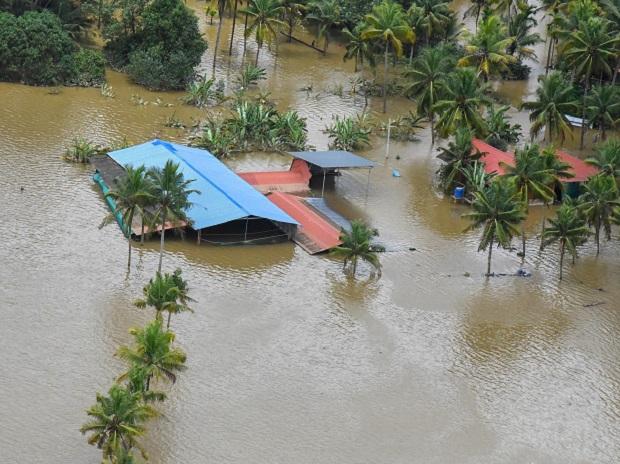
If we look at the recent cases of natural calamities, we would get a better picture of what he is trying to bring into notice. In India itself, we could trace the tragedy that took away the life of many. In the Kerala floods, death toll rose to around 417 people, which was the worst natural calamity to strike the southern states in decades. Kerala faced the flash flooding which occurred due to heavy downpour, but this four months of torrential rain in Kerala became destructive because the situation was aggravated due to the ignorance of local officials.
“This could have been avoided if the dam operators had start releasing water in advance rather than waiting for the dam to be filled up, when they have no alternative but to release water”, water expert Himanshu Thakkar told the BBC.
The ignorance of the local officials along with the failure of India’s Central Water Commission to introduce a flood forecasting system to issue warning gave a major setback not only to the southern states but also to the entire nation.
More than one million people were displaced and kept in relief camp. The money that the Central Government directed towards the recovery of Kerala, could have been avoided if the system, if the infrastructure were in place. Millions of people would have not lost their home if there was some preparedness, if there was some warning, if at all the learning were in place. There are many other places in different parts of the world where such calamities are taking the life of many because we tend to over push the limits of nature.
This is what Max Mayfield tried to explain through his words. The cost not only in terms of money but also in terms of lives could have been less if there was proper crisis preparedness.
Another case or why not say another calamity which is not respecting any so – called political boundaries and the effect of which is slowly taking a drastic grip on us is ‘Global Warming’. It’s high time to realise that, “Global Warming is Global Warning”. Global warming is the increase in the general level of earth’s temperature. Our earth has its own mechanism to combat the disturbances in its functioning but “we” humans tend to aggravate the situation to the extent that the mechanism is at the verge of breaking down.
Burning of fossil fuels like coal, gas to create electricity or to power the cars or for the industrial purpose, results in the emission of profound amount of carbon dioxide in the atmosphere which results in carbon pollution and contribute in making the quality of air severe. It is quite clear the way urban expansion is encroaching upon the wilderness. We clear large patch of forest for the purpose of settlement and other things. When vegetation is cleared or burnt, the stored carbon is released into the atmosphere as CO2, contributing in global warming. The list would be never ending if we look for the causes that involve humans.
The effect of global warming can already be seen clearly – the melting of glaciers, consecutively rise in the sea level and simultaneously flooding of coastal areas, the quality of air from being worse to severe, droughts, expansion of deserts.
The call of the time is “Sustainable Development” which is in par with nature. It was in 1980s that the bad health of environment and consecutively bad health of ours and the concept of sustainable way of living was realised. But why is it that in the last 50 years more species became extinct than ever!
Education is not something which is limited to books, specific to getting qualifications. It would really be a bliss if we would start bringing the knowledge into action, if we would move towards sustainability that we have been learning, if we would start preventing the tragedies through preparedness rather than learning through its cure.
When disaster takes place, timings is essential. Many lives can be saved; destruction can be minimized if actions are taken quickly. But the action can be taken quickly only if there is some preparedness, if there is some alertness. There should be efficient communication system in place for destruction to be minimized.
The government is not always to be blamed for the crisis. We as educated citizens can do a lot, we can channel our learning, our talent through joining various humanitarian organisations that works towards better development, toward preventing and reducing the crisis.
The Kerala case was a big setback to the nation. Though it was a lesson for everyone but it could have been better if we could have prevented it, the southern state could have focussed on other major social issues grouping the society. And the global warming, before it scales to a height, where we would be left helpless, with no idea of what to do next, it would be better if we try to work together to reduce the harmful industrialisation, if we would walk in the path of sustainable development.
So, it’s high time to realise that in this era, we got to be more conscious of what we learn and how do we channel it. As the saying goes, “Learning is a treasure that will follow it’s owner everywhere”. So let it follow your action and put it into right use. It is the collective work in which each and every individual needs to come together to make this world a better place.
National Princess Day comes around annually on November 18, so clear your schedule and prepare for a magical day of pampering and fabulousness. Everyone has a favorite princess (real or fake) and dreams of being treated like one (at least for a day). A dream is a wish your heart makes, and it’s time to make that wish come true.
HISTORY
The first princess to come to our TV screens was Snow White in 1937’s Snow White and the Seven Dwarfs. Based on the fairy tale by the Brothers Grimm, this movie was also the first full length traditional animation film as well as the earliest Disney animated feature film. When Xena: Warrior Princess came out in 1995 and Mulan was released in 1998, they showed everyone that a princess can do more than wear a pretty dress. These two iconic women let children everywhere know that a princess can also be a strong and adventurous warrior. New wave princesses like Moana and Frozen’s Elsa show us that you can still be a princess while maintaining your independence.
We all grew up with animated, and live action, princesses guiding us through life. When thinking of our favorite princesses, our minds instantly go to Disney. However, when it comes to National Princess Day, Disney had very little involvement in its inception. Nest Family Entertainment, a Texas based entertainment company, teamed up with Rich Animation in 1994 to create the animated film The Swan Princess, a musical adaptation of Swan Lake. The studio wanted people of every age to have a day to celebrate like royalty, embodying the kindness and grace that we all associated with princess at the time — and thus, National Princess Day was created.
The definition of a princess is constantly changing. From the 1930s until the 1990s, princesses were meant to be saved by a prince and live happily ever after. Nowadays, princesses create their own happily ever after, save the prince, and then put the prince squarely in the friend zone. So basically, embodying a princess on National Princess Day is to embody, what the kids call, the G.O.A.T (greatest of all time)
FACTS
Almost everyone is fascinated by princesses but few people know everything there is to know about some of the famous fictional princesses of all time. That’s why we’re listing some of the top facts about princesses below.
The only Disney princesses based on a real person is Pocahontas.
Almost all Disney princesses wear blue.
Snow White is the youngest princess and is 14-years old.
Jasmine is the next youngest princess and is 15-years old.
The oldest princesses are Cinderella and Tiana and both of them are 19-years old.
Snow White And Rapunzel are both from Bavaria.
PATHWAY
TIME MAGAZINE RECOGNIZED THIS PRINCESS INFLUENCE – 2013
Princess Kate made Time’s “100 Most Influential People in the World” list for the second time.
PRETTY SMART PRINCESS – 2012
After earning a B.A. in International Relations at Sukhothai Thammatirat University and a Masters of Law and Doctor of Juridical Science degree at Cornell Law School, Princess Bajrakitiyabha of Thailand received an honorary Doctor of Law degree.
A HUMANITARIAN AWARD – 2011
Princess Ameera, a Saudi Arabian princess, received the ITP Special Humanitarian Award for her work with the Alwaleed Bin Talal Foundation.
THIS POPULAR PRINCESS ADVOCATED FOR AIDS – 1987
Princess Diana opened the first hospital unit dedicated to AIDS in Middlesex Hospital. This is the same location where she famously hugged an AIDS patient four years later.
PRINCESS ANN TOOK ON CAUSE – 1970
Princess Ann of England served as president of the Save the Children organization, an non-governmental group that advocates for children rights and supports children in developing countries.
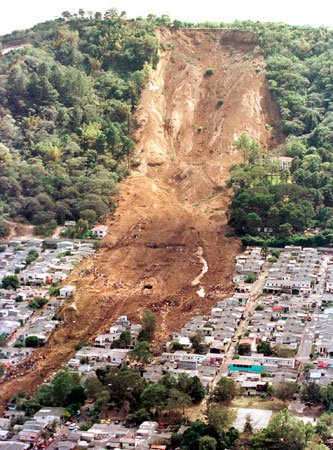
The subject of the article pertains to the landslides with reference to the Himachal Himalayas. Himachal Pradesh due to its location, foots of the Himalayas is extremely vulnerable to landslides – the reason for the same being both natural and anthropogenic. The article explores the frequency of landslides in the state, bringing out the vulnerable districts based on secondary sources, discusses about few life-threatening landslides and the prevention plans along with some recommendations.
Landslides is a type of mass movement which involves, in simple words, downslope movement of rock wastes including soil and ice under the influence of gravity. Some of the reasons for the same among many includes – slope saturation by water is a primary cause of landslides. Flooding can also cause landslides by undercutting banks of streams and rivers and by saturation of slopes by surface water. Human activities tend to disturb the slope by removing of vegetation or by excessive loading of the slope and as such.
Himachal Pradesh is situated in Western Himalayas between 30-degree 22 N to 33-degree 12 N latitude and 75-degree 45 East to 79-degree 4 East. Given its location in the Western Himalayas, it is one of the most multi – hazard prone states – spanning over the area 55673 sq. Km and population of 68,64,602 (Himachal Pradesh State Disaster Management plan, 2017). Vulnerable roadways, human settlements and hydroelectric power plants are most at risk of landslides. About 22% of built-up areas are in high-risk zone; 32% in medium risk zone and 3% in low-risk zone. Almost all the urban areas of the state are prone to the risks of landslides. The reason for the same might be the unscientific land use and unplanned expansion of urban areas leading to overloading and destabilising the slopes.
A large chunk of areas in all the districts fall in High-risk zone followed either by Moderate or Severe risk zone. There are areas which do fall in No Risk Zone but it does not cover large extent. The state has a large network of State Highways and village roads with total length of 2178.988 Kms, of which 1111.552 kms fall in Highly vulnerable zone. Most of the tourist spots in the state are well connected by roads – but many of these roads have recurring problems of landslides which often disrupt flow of tourist traffic.
If we analyse the trend of landslides between 1971-2010, it will be observed that since 1970s, the frequency has only been increasing. Nearly 525 people were killed during 1971-2010. In terms of human casualties, Kullu district is the most affected where 142 people were killed by landslides followed by Shimla (119 people). Bilaspur, Mandi, Chamba, Kinnaur and Kangra were other major landslides affected districts in terms of human casualty.
Post 2010, if we take up the landslide in Kullu district in 2015, it will come to view that the effects are still severe. The landslide in Kullu district was majorly due to excessive rainfall. After a building adjoining the historic Manikaran Sahib Gurdwara caved in due to a massive landslide – it led to the death of 8 persons and 10 injured, the source states (NDTV news). In 2020, in the landslides in Manali, five family members were buried, as per the news article released by Times of India. Yet another landslide case in 2021 in Kinnaur left many people stranded, damaging transport and communication lines severely.
various newspaper clippings point out that the locals are very detestable when it comes to development project. In one of the clippings (The Statesman, 2018), the locals are questioning why is there a need for highway which destabilize hills in the state – after all hills are meant to be climbed. The people are not very in favour of such projects because according to them these tend amplify the adverse effects if natural calamity. So, the government need to go for more inclusive planning with regard to development.
One of the ways through which involvement of local community can be ensured is by bringing them into decision making process – which in turn can be ensured by adopting suitable policies. Transparency in the process of taking suitable steps is extremely necessary; co-operation between local communities, local government and NGOs and other such agencies can be very helpful in proper implementation of government’s plan. It will allow to bridge the gap in communication between various stakeholders. One of the most important suggestions forwarded by many is the implementation of education programme regarding hazard management, specially landsides among the residents.
Various article highlights the need to rethink the model of development being followed – particularly with regard to the exploitation of its hydroelectric potential. For instance, an article published by Down to Earth, 2021 highlights that Erratic rainfall due to climate change or de-glaciation are exacerbated by several anthropogenic factors. According to State Disaster Management Authority – most of Himachal Pradesh hydroelectric power projects in operation or under constitution fall in areas highly-vulnerable to various hazards like landslides. Another article by The Citizen, 2021 too highlights that if reserved forests or Eco sensitive zones are used for hydropower dams and multi-lane roads then this area of the state could be devastated like Uttarakhand. It has been suggested that government need to consider and seek the pinion and advice of geologists, meteorologists, environmentalist and people who live in the affected area before embarking on the projects.
Note: The article is based on secondary sources and has taken the perspectives and viewpoints of various articles and due credit has been ensured.
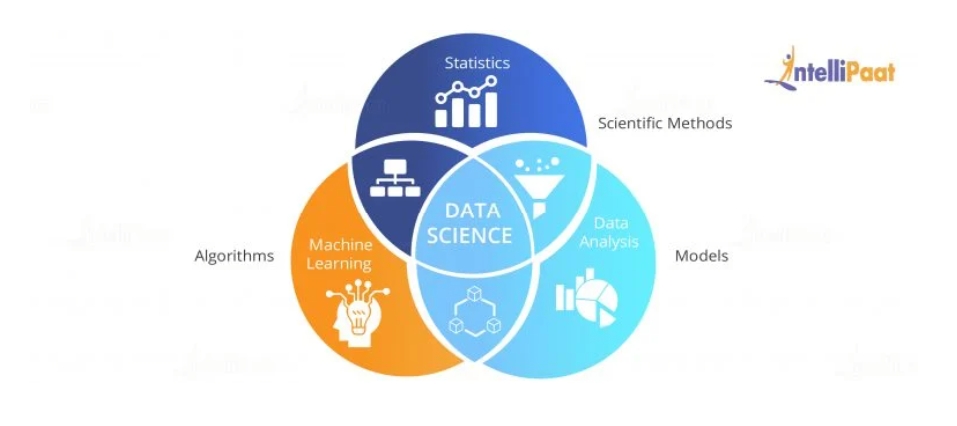
Data scientists combine mathematics, statistics and the use of computer science to extract,analyze data from thousands of data sources in order to build creative and innovative business solutions.Data Scientist’s job involves solving the problems of his or her client by providing solutions using real time data and tools and algorithms.
Industries and Departments in which Data Scientist are hired:-
Data scientists and analysts are largely employed by IT companies, marketing, finance and retail sectors. Companies use Data Scientists to give them a report on what their clients demands and needs and give them innovative solutions on how to cater to them. Oil, gas and telecommunication companies also have started employing data scientists to better cater to their clients. Other sectors and departments that employ data scientists are ● NHS ● Government offices ● Research institutions and universities.
The roles and responsibilities of a data scientist:-
● To handle vast amounts of data and choose reliable sources.
● Developing prediction models and advanced machine learning algorithms
● Verifying data using data investigation and data analysis.
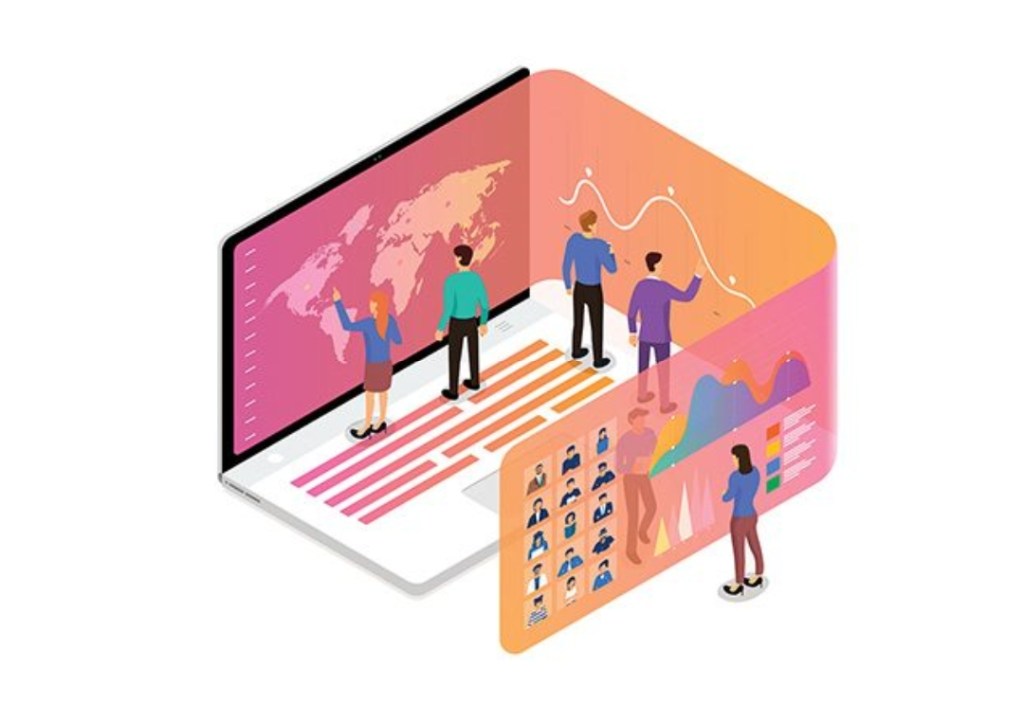
● Using data visualization techniques to present findings.
● Finding solutions to business problems by working with data engineers and data analysts.
Educational qualification For data scientist:-
● Should have a BSc/BA degree in the field of Computer Science/ Software Engineering/Information Science/Mathematics.
● Should have a postgraduate degree/diploma certification in Data Science/Machine Learning.
Career growth of a Data Scientist:-
The life of a Data Scientist starts from an associate data analyst and can go up to the role of Chief Data Scientist.Promotion can take two to five years it is based on the performance.After some experience they get into some higher position.
CONCLUSION:-
Data Scientists are one of the most in demand people in the world. They can skyrocket companies’ shares and make them reach new heights.Data Science is a very high paying industry thus finding a job with a seven-figure salary won’t be a problem. Data Science as an industry has a very bright future.Data Scientists have the ability to change the world’s future.
Food secure future is a significant issue for the United Arab Emirates (UAE) yet in addition for India. Worldwide Food Policy Research Institute (IFPRI), truth be told, cautions that evolving environment, developing worldwide populace, rising food costs and natural stressors will uncertainly affect food security in the coming many years. Notwithstanding, industry specialists and strategy creators accept that the UAE and India can up their synergistic endeavors to handle food security issues towards accomplishing food independence.
This is because the United Arab Emirates is India’s third largest trading partner with the bilateral trade of US$ 59.1 billion in 2019-20. Furthermore, it is a well-known fact that India wants to work very closely with the UAE as a reliable partner in food security. India’s food corridor is slated to attract investments to the tune of US$ 7 billion. Dubai can be a gateway for Indian companies in agriculture and food processing sector to take their products and services globally. This is the opinion of Dr Aman Puri council general of India.
According to him the UA should not be looked at as just a market of 10 million consumers rather it is is beneficial to the entire middle East and North African region. It is considered food secure due to its ability to import food from international markets.
The food technology valley aims at promoting innovation in agriculture to achieve food security from sustainable sources. Dubai is already adopting the new age farming technologies, vertical farming, smart farming, aeroponics, hydroponics, LOT and other new technologies have resulted in a 53% increase in output in agriculture.
The capital intensive nature of the Emirates aptly suits India which needs funding infusions for infrastructure creation. All the sovereign wealth funds have an investor bill capacity of around US$ 1.2 trillion which is growing at a rate of 18 % per annum.
India is on the threshold of a landmark change in the nature of food processing it is now moving towards value-added process and ready to eat foods. Thus, there has never been a better time for the Indian companies to tap the opportunities that the UAE and Dubai throw up. With the peceeding opportunities, both UAE and India face a common challengeas well, in the creation of value chain perspective, that is, end-to-end, farm-to-fork. So, moving forward, the two countries can deepen their collaboration and help each other in achieving this goal.
NEW DELHI: The end of the Diwali week marked a steady increase in new Covid-19 infections. India recorded 80,614 new cases of the coronavirus this week. With 10,789 new cases in the last 24 hours.
While cases in the southern states, namely Kerela and Tamil Nadu continue to gradually drop, a number of states observed a significant spike in cases. Jammu & Kashmir recorded a 34% increase in new cases in the past week.
Other states where the count increased in the current week are Karnataka, with a 17% increase, Maharashtra, Punjab, Delhi, Uttar Pradesh, Bengal, Rajasthan. Experts claim the increase in cases is a result of increased contact among people in the festive period. A major credit for the over-all spike can also be credited to increase in population in the markets. As most people connect the festival with an incentive to shop.
In India, poverty is presently estimated by fixing a poverty line based on a differentiated calorie-norm. This means that the level of poverty depends upon the capacity of a person to purchase food and a person who can buy specific amount of food to cross the poverty line margin for nutrients and calorie intake is above the poverty line. Whereas, the person who cannot buy enough food to meet the required nutrition value of calories and carbohydrates is below the poverty line. This level is not the correct parameter to check the level of poverty.
A task force of the Planning Commission in 1979 defined the poverty line as that per capita expenditure at which the average per capita per day calorie intake was 2400 calories in rural areas and 2100 calories in urban areas. Average per capita expenditures incurred by that population group in each State which consumed these quantities of calories, as per the 1973-74 survey of NSSO, were used as the poverty lines.
The debate on the extent of poverty in India has been a matter of global interest in the recent years. The primary reason for the global interest in the debate is that the levels of poverty in India and China have come to exert significant influence over the trends in world poverty itself.
Within India too, there has been growing contestation around poverty estimates, particularly in the period of economic reforms. First, there are persistent disagreements among economists on whether the rate of poverty decline after economic reforms was slower than in the preceding period. Secondly, the shift to targeted, rather than universal, welfare schemes has witnessed the use of poverty estimates to decide on the number of households eligible to access these schemes. The report of the Expert Group on the estimation of poverty, chaired by Suresh Tendulkar, is the latest input to the “Great Indian Poverty Debate.”
It is to be noted here that many subsidies and programs are launched by the government but these additional increments do not reach the actual people that are in need of them. Instead it is sent back to the businessman and thus a lot of profit is earned on these subsidized goods. Thus, to lower the level of poverty in India, schemes have to be launched in order to directly benefit the people in need.
The Hindu states that, “A final issue with the report, of much long-term consequence, relates to the wisdom of abandoning the calorie norm. It is indeed true that the levels of calorie intakes are not well correlated with nutritional outcomes. However, abandoning the calorie norm altogether and taking solace from the fortuitous fact that calorie intakes appear adequate at the new poverty lines is an arbitrary proposition. It is unclear whether there is any basis, theoretical or empirical, for this relationship to hold true across time.”
the Tendulkar Committee has pitched for a policy position that is stranded between the harsh realities of poverty in India and the fiscal conservativeness of a neo-liberal framework. The real challenge lies in preserving the positives from the report, and strongly persisting with the demand for a universal social security system.
The cargo control room, CCR, or cargo office of a tankship is where the person in charge (PIC) can monitor and control the loading and unloading of the ship’s liquid cargo. Prevalent on automated vessels, the CCR may be in its own room, or located on the ship’s bridge. Among other things, the equipment in the CCR may allow the person in charge to control cargo and stripping pumps, control and monitor valve positions, and monitor cargo tank liquid levels.
Many systems allow the PIC to monitor the ballast system and ship’s stability during load and discharge
Cargo control rooms began to appear on U.S.-flag tankers in the mid-1960s. Prior to this time, valves were operated manually on deck by reach rods and liquid levels were monitored by a roving watch consisting of the mate and seamen on watch. The use of computers in the cargo control room began in the 1980s. As technology developed, computerized systems began to centralize tasks such as cargo control per se, tank level monitoring, and real-time computation of hull stress information in the cargo control room.
Schematic showing various cargoes loaded, trim, and list.
Monitoring systems that do not use computers are still often seen
The design and layout of an individual cargo control room is determined by the ship’s design, owner’s requirements and the capabilities of the shipyard in which the ship is built. Modern cargo control rooms offer some or all of these components: main cargo pump and stripping pump control, valve control, tank level monitoring, and auxiliary functions.
Main cargo pumps and stripping pumps are used to discharge cargo from the ship. From the cargo control room, the person in charge of the discharge can typically turn pumps on and off, set pump speeds, and monitor pipeline pressures on the suction- and discharge-sides of pumps.
A Cargo Contol system is a highly integrated system that controls and monitors cargo activities.
By actuating cargo valves, the person in charge can control where cargo is pumped from, where it is pumped to, and in systems that use throttle valves, can control the relative flow rates of cargo through the valves. Modern cargo control rooms allow the person in charge to remotely control some or all of the valves in the cargo system and monitor the state of all valves. Valve indicators are typically laid out on a “mimic panel” which displays the cargo system piping, valves and pumps in a schematic diagram.
Tank level monitoring is another key functionality often provided in modern cargo control rooms. One aspect of tank level monitoring is overfill alarms, which sound throughout the ship when cargo levels exceed the ship’s design specifications. Many systems allow the person in charge to monitor tank levels at all tank levels. Tank level monitoring allows the person in charge to take early action to avoid oil spills, especially when loading the ship. Tank level information is often sent to computers that calculate hull stresses such as shear forces and bending moments.
Various other functions are available in some cargo control rooms. Many offer the person in charge additional monitoring and control systems, the ability to monitor inert gas systems, and tank pressures. Modern cargo control rooms typically allow the person in charge to control ballast pumps and valves, and monitor oil content of ballast water by the use of oily water separators. In cases where ships carry specialty products, specialized monitoring systems are available in the cargo control room.
This 1981 novel Tar Baby by Toni Morrison explores the mythic image of Tar Baby to evoke the racial stereotyping. The novel brings together different oppositions like white and black, high and low culture, north and south etc. The title of the novel suggests the folk tale of Tar baby. The fable is an archetypal trickster tale and it describes how a fox entraps a rabbit by using the tar figure. The doll or ‘tar baby’ is made by Br’er fox and placed in the roadside to trap his archenemy Br’er Rabbit. Br’er Rabbit speaks to the doll or tar baby and gets angry as it is not responding, and strikes it and get struck. The more the Br’er Rabbit kicks, the more he becomes attached. In the modern scenario, we can consider this theme as a problematic situation that is only aggravated by additional involvement with it.
In the novel Morrison portrays the love and relation between central characters Jadine and Son, two African Americans, with the social background of a racial hierarchy and high and low cultures. Jadine is a beautiful fashion model, who has been sponsored by Valerian Street, a white man , candy manufacturer who marries Margaret Street, the principle beauty of Maine. When the novel begins Valerian is spending his life on the Caribbean island, Isle des Chevaliers. Son is a strong minded man, who washes up on the streets. Ondine and her husband Sydney, through their dialogues reveal the fact that, they have devoted most of their life serving Valerian Street, who considers them as “good Negroes”. There is another major mysterious character named Charlie, who never appears on the course of events of the novel. The novel progresses through the events that happened after the arrival of Son in the island.
The novel revolves around themes like nature v/s civilization, the subordinate black life and the shades of femininity. Morrison made the novel rich with dialogue episodes, symbolism and mythological involvement. Tar Baby powerfully portrays the plight and struggle of African Americans for livelihood in the second half of twentieth century. And this makes Tar Baby an essential read in the historical and cultural writings of American literature.
Imagine this. It’s the beginning of a new academic year in a new school or college and you enter a classroom full of chattering students. Does that sound like a nightmare to you? Do you wish that a teacher or a professor should enter the class soon so that there will be silence and you won’t feel left out? If you do, you know that you are a shy person. Shyness is an obstruction that prevents you from presenting yourself in a social situation. One might even find ways to avoid a social situation due to his or her shyness.
Shy people often wait for the others to begin a conversation and hope to be invited into their friend circle. Once they become comfortable around a bunch of people, they seem to have overcome their shyness and become the life of the party around them.
Why could you be shy?
Image by Pixabay
During such daunting social situations, you might have had this question in your mind, “Why am I so shy?” The answer could range from something serious such as being bullied, or subtle such as lack of experience with social situations. There are also biological aspects such as genetics that influence the trait of shyness within a person. Shyness is often the result of the environment and an individual’s relationship with their parents.
Having had strict or doting parents during childhood could result in the development of shyness in an individual. Shy parents could also render their children to be shy. Public humiliation or overly critical workspaces develop a sense of shyness among adults.
How to overcome your feeling of shyness
image by Pixabay
You might be racking your brain right now, trying to figure out how you can overcome the feeling of shyness like me. But let us first take a moment to figure out our strengths as a shy person. It might seem less likely but you might get pleasantly surprised!
Being shy puts you at an advantage in certain kinds of job profiles. In this aggressive and competitive world, being calm and considerate is valued and anticipated among therapists, counselors and other social-service oriented careers.
Your shyness, which results in a calm and composed stature may seem as less intimidating and approachable for many people. Newbies might feel more comfortable approaching you than the competitive and loud person nearby.
Being a shy person, you might rethink choices you need to make in difficult situations. It might probably slow you down but would help you arrive at the right decision.
With our strengths out of the way, let us focus on the steps you can take to overcome shyness.
Observe your friends or a family member
Image by Pixabay
There are people around us like close friends and family members who relatively lean on the bolder and talkative side of the spectrum. They might be able to get things done by talking and socialising at an event might be easier for them. You can take cues from them and act accordingly when you feel shy.
Start simple
Initiating a conversation with a stranger is often intimidating as we might not always know what to say. You can start simple by introducing yourself and asking questions such as “Where are you from?”, “What kind of hobbies do you enjoy?”, or you can ask for a simple favor or information. Asking questions can help you know the person better and you may find some similar hobbies and interests that you can talk about.
Join groups with similar interests
Find groups of similar interests and hobbies, you will have a lot to talk and share about with people in such places.
Visualise being bold
Image by Pixabay
One of the effective ways to overcome shyness is to imagine yourself as bold and confident. An upcoming social situation need not be feared with the imagination of embarrassment and humiliation. Instead, visualise yourself having a good time talking to people.
So there you go! These are some of the ways you can overcome shyness. Do embrace yourselves as you make progress with overcoming your shyness. There are considerate and helpful people who are willing to accept you the way you are.
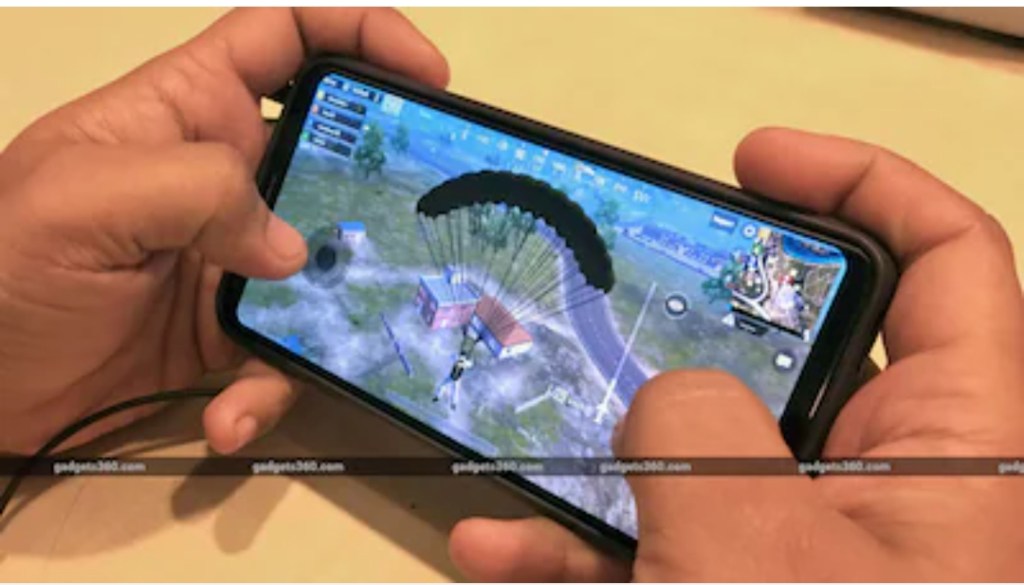
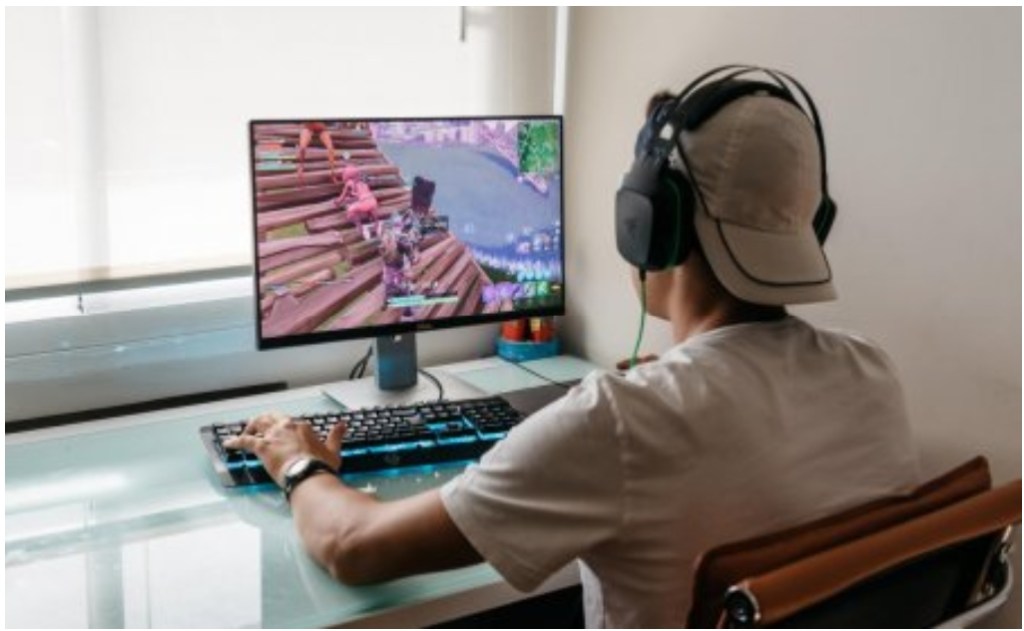
Gaming addiction is a type of mental disorder leads to insomnia,stress, pressure.Gaming is not a waste of time limited time of playing games can reduce pressure.
SIGN OF GAMING ADDICTION:-
* Thinking about game for lot of time.
* Feeling bad when you are not playing games.
* Want to spend more time in games to feel good.
* Having problems in school, office,work because of games.
ALTERNATION OF GAMES:-
In place of playing games you can replace it with:
* Arts ,dance,music.
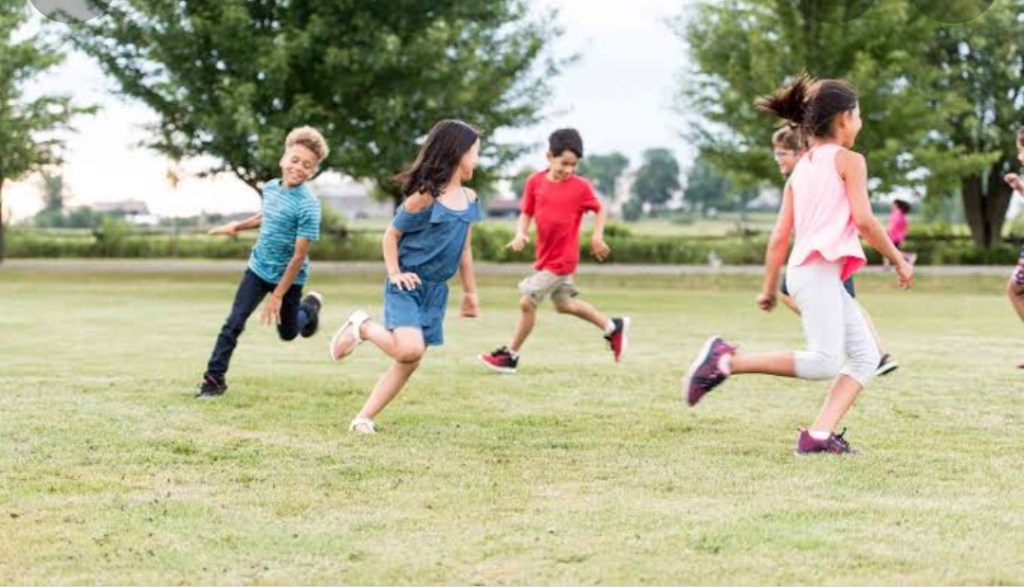
* playing outside.
* playing indoor games like chess,carrom etc.
* you can do exercise,martial arts.
EFFECT OF GAMING ADDICTION:-
* It leads to mental disorder.
* sleepless.
* It creates lack of social interaction.
* Feeling lonely.
IS GAMING A ADDICTION:-
Gaming is not a addiction it is a type of mental disorder.It leads to psychological problems like insomnia,lack of social interaction.By research a normal healthy person can play less than 5 hours per day.
RELIVE FROM GAMING ADDICTION:-
* Schedule your time for Playing games and follow it.
* Replace the video games with the outdoor games.
* Talk to your friends, family.
* uninstall your game from the mobile or computer.
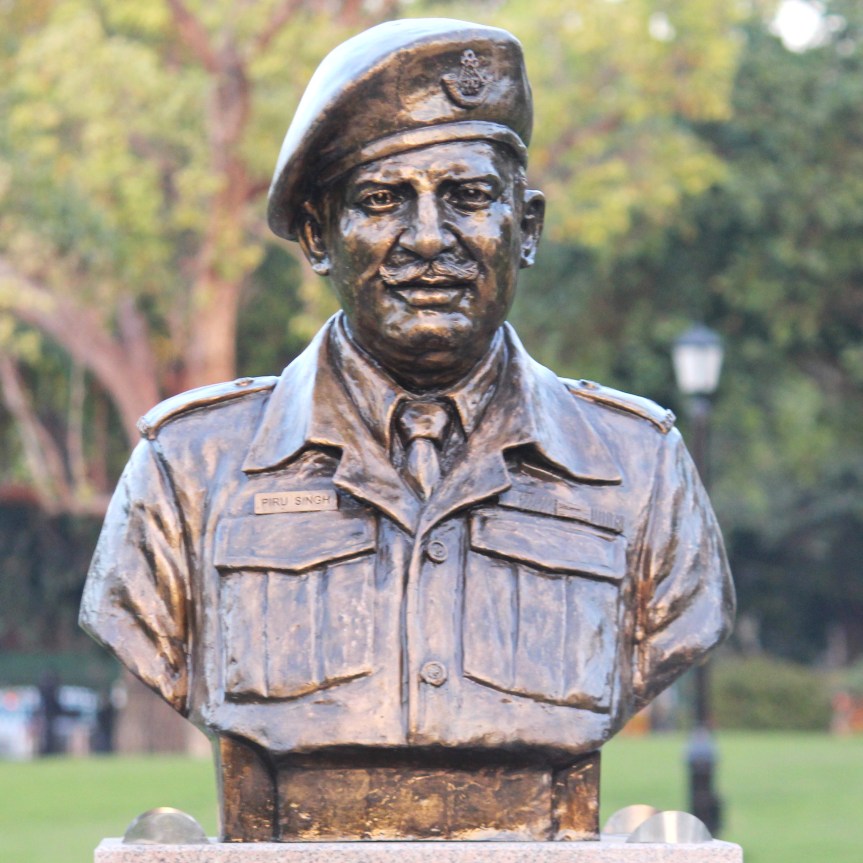
The credo of Indian Military Academy – ‘ The safety, honour, and welfare of your country comes first, always and every time. The honour, comfort and safety of the man you command comes next. Your own ease, comfort & safety comes last, always and every time.’ – is a mantra that every Indian soldier lives by. The commitment of a soldier to his duty and his sheer determination to fulfill it is something that sets him apart from the rest of the crowd. Company Havildar Major Piru Singh, the hero of battle of Darapari, was no different.
Early Life
Piru Singh was born on 20th May 1918, in Rampura village, Churu, Rajasthan.He came from an agricultural family of the warrior clan of the Rajputs. His father Lal Singh and mother Tarawati Kanwar (Jarav Devi) had seven children – three boys and four girls – with Singh being the youngest. Even as a young boy, he loved outdoor life and had an aversion to restricted environments. Singh discontinued schooling at a young age. The rest of his childhood was spent helping his father in his farm. Right from his younger days he had an inclination to join the army. Despite being rejected twice, Singh never gave up and eventually got selected on his third attempt. He joined the British Indian Army coincidentally on his 18th birthday on 20th May 1936.
On joining, Singh was initially assigned to the 10th Battalion of the 1st Punjab Regiment at Jhelum. After completion of his training, he was transferred to the 5th Battalion of the same regiment on 1st May 1937. Surprisingly, the boy who despised school and had no interest in studies had transformed into a committed soldier who took serious interest in education. He cleared the Indian Army Class Certificate of Education and a series of other army examinations and got promoted to the rank of lance Naik within a brief span. He served on the North-West Frontier during his tenure with the 5th Battalion of the 1st Punjab regiment. It took less than a year before he was promoted from Lance Naik to the rank of Naik. In September 1941, he was posted to the Punjab Regiment Centre at Jhelum, as an instructor.
Singh was also a wonderful sportsman and represented his regiment in basketball, hockey and cross-country running at the inter-regimental and national level championships. In February 1942, he was promoted to Havildar and later to the rank of Company Havildar Major in May 1945. Until October 1945, he served the army as an instructor. He was deployed to Japan as part of the British Commonwealth Occupation Force after the Second World War, where he served until September 1947. By the time he returned from Japan, India had been partitioned and therefore the Indian army had undergone reorganization. Consequently CHM Piru Singh was transferred to the 6th Battalion of the Rajputana Rifles Regiment.
Battle of Darapari : Background
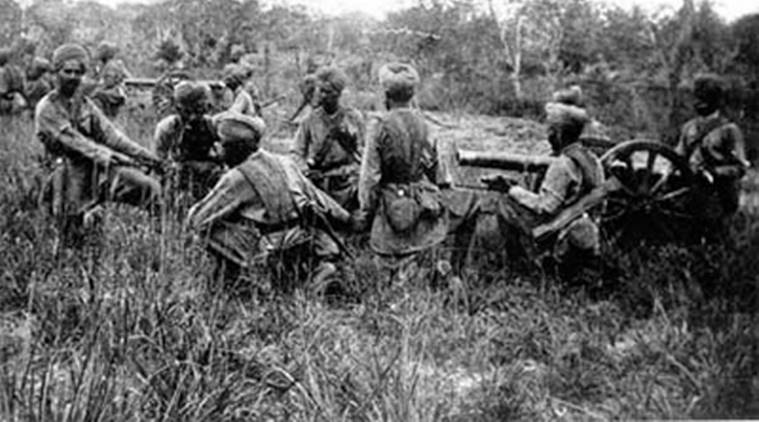
It was during this time around that the tensions between India and Pakistan were escalating, over the control of the princely state of Jammu & Kashmir. Eventually in October 1947, war broke out between the two countries.The Spring of 1948 was utilised, by the Indian Army, to rid the Kashmir valley of the infiltrators. General Thimayya, General Officer commanding Sri division, decided to launch the offensive with the main thrust along the Uri-Domel road by 161 Infantry Brigade under Brigadier L.P Sen. 163 Infantry Brigade under Brigadier Harbaksh Singh was detailed to carry out a divisionary operation towards Tithwal from Handwara. To deal with the enemy forces around the Bagh area, the Poonch Brigade was assigned to carry out a battalion operation towards Bagh. In the third week of May, Dogarpur, Trehagam and Chokibal were captured and on 22nd May, Tithwal sector was captured by the Indian forces.
Source: Wikimedia Commons
Pakistan, enraged by the setback in the Tithwal sector, launched repeated counter attacks and recaptured the village of Tithwal in the hills of Jammu and Kashmir. The Pakistani raiders launched offensive strikes in this region and captured a ring contour on the 8th of July 1948. The enemy pushed to seize control over the positions across the river Kishanganga and the Indian Army was forced to vacate their forward positions across the river. In the wake of this setback , in order to strengthen the advance on the Tithwal sector, Piru Singh’s unit – the 6th Battalion of Rajputana Rifles – was moved from Uri to Tithwal and was assigned to the 163rd Brigade. The unit took position on the Tithwal bridge.
The attacks commenced on the 11th of July. The operation went on for four days till the 15th of July. However, according to the reconnaissance report, the Pakistanis were still in command of two strategically important positions. The capture of these two positions was essential for making any further advancement. The task of securing these two features was assigned to the 6th Rajputana Rifles. Two companies – Charlie ( C ) and Delta ( D ) – were assigned to the operation. The C company was in charge of securing the second position after the D company had captured the first.
Battle of Darapari : The Day of Action
The D Company, of which CHM Piru Singh was a part, was sent to capture the Darapari feature in Tithwal sector. Darapari is a hill feature located at an altitude of over 11000 feet. The path leading to the position held by the Pakistanis had deep ravines on either side and was just about one meter wide. According to the intelligence reports received, the battalion was told that the enemy had not had enough time to dig-in intensively and hence could be dislodged without much struggle. This however proved to be inaccurate. The narrow path through which the battalion was advancing was overlooked by five hidden Pakistani bunkers ,which gave the defending troops a clear advantage in terms of position. The time constraints restricted the battalion from having a proper reconnaissance of the enemy position. In order to take advantage of the darkness, the attack to secure Darapari was planned to take place after the moon had set and was launched at 01.30 a.m on the 18th of July. As the attack advanced, the company was subjected to heavy shelling and within a matter of about half an hour, the casualty count had reached to a whooping 51. The platoon commander Subedar Bhika Singh was hit. A sinking feeling of panic had swept over them and there was absolute chaos amidst the rest of the team. It was then that Piru Singh rose to the occasion and took charge of the team and led his platoon with a determination that not even the raging bullets from the rival MMG posts could waver.
The enemy medium machine guns had been sited to cover all possible approaches. The platoon led by Singh was met with heavy firing from both flanks and a volley of grenades from the bunkers. Neither the murderous firing nor the fact that half of his platoon was either dead or wounded, could falter him. With the battle cry of ‘Raja Ramachandra ki Jai’, he rushed forward to crush the MMG post which was playing havoc with his troops. His exceptional leadership motivated the rest of the crew to follow their leader ferociously. With the curtain of grenades tearing through him, wounding him at several places, he continued to advance. He rushed to the MMG which was causing the maximum destruction and bayoneted the men on guard and occupied the post.
By this time the rest of his men were either dead or wounded and he was the sole survivor of his company. Alone and injured, but with a never-say-die attitude, Singh inched forward to achieve the objective assigned. While advancing towards the second MMG post, a grenade was thrown at him, which wounded him in the face. Neither the blood dripping from his face nor an empty reserve of ammunition could kill his spirits. He crawled out of the trench, hurling grenades at the next enemy post and then jumped to the next trench bayonetting two Pakistani soldiers to death. As Singh emerged out of the trench to attack the third bunker, he was hit in the head by a bullet. Just before he succumbed to his injuries, he had managed to throw a grenade into the enemy trench, which did a perfect job of wiping off the enemies. CHM Piru Singh had thus bravely and selflessly completed his mission before he closed his eyes for the final time.
Source: Wikimedia Commons
Param Vir Chakra
His act of bravery was witnessed by the commander of the C company, who was directing fire in support of the D company. Inspired by Singh’s actions the rest of the company put up a ferocious fight and Darapari was captured against death defying odds.
CHM Piru Singh was awarded the Param Vir Chakra for his single-handed bravery, exceptional leadership and extreme devotion to duty, posthumously. In remembrance of this brave soldier, his unit – 6 Rajputana Rifles – commemorates the Battle of Darapari every year.
Every soldier has a story buried under his gravestone and Piru Singh’s is that of his extreme courage, supreme sacrifice, exemplary leadership and above all his unconditional love for his motherland.
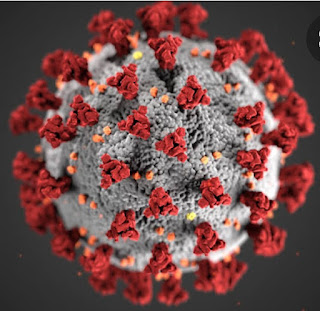
Coronavirus has 3.45Cr new cases right now with 4.64L deaths. Presently it is not spreading severely and has decreased its effect slightly. But still, we should be careful by wearing masks, using sanitizers, maintaining hygiene, and get vaccinated as the third wave is in its way. The covid-19 virus became a part of our daily lives. We should not forget its adverse destruction as it is less right now cause it hasn’t ended yet. It might have started as a small virus in Wuhan city in China, but now it is spread worldwide. It had stopped the world and drove away many people like flood erodes soil.
Coronavirus has made many people jobless, leaving them stuck in the middle of this pandemic fighting with a new virus, and as if it was not enough, food was scarce, and even if they found some food, they didn’t have money to buy it. The Coronavirus was taking the lives of our loved ones, leaving our lives shattered. Many street sellers and small shop owners lost their livelihood. Because of this virus, big companies like Ford only closed their company in India, leaving many employees unemployed. What can we talk about other companies after this?
But this pandemic had some excellent effects, too it brought us together, arose humanity in our hearts, and let us put the world first. People like Sonu Sood helped many people to go to their villages. A girl gave all the money their parents saved for her studies for the betterment of the world. And many other people living in this fast-moving world started realizing that unity is strength; instead of just working for their improvement or providing their family with everything, they began helping others. It brought out kindness and made us realize that we are all human beings. It also increased relations among family members as they started staying at home, their interaction with family increased, thereby family relations improved.
Some NGOs also remembered the street animals, fed them, and proved that we are still concerned about fellow creatures. However, some people who used to stick together and always had each other’s backs are now becoming self-centered. They are not helping other people when they are affected by covid-19. But they do not realize that others won’t help them when they are involved too. Some didn’t help their own family by leaving food at their doorstep or taking them to the hospital when the entire family was affected by COVID. Coronavirus brought out the true colors of the people around us, showing us who truly cares about us.
As everyone stayed at their homes, the pollution decreased immensely, leading to the timely rains and improved the environment. This virus also took away the difference between rich and poor. The rich man has realized that even if he had set aside a lot of money throughout the years, money couldn’t always save a life. Poor people who lived near the roads and didn’t even have food due to no work had no other option than to see their loved ones die in front of their eyes. A woman sat in front of a government hospital with her husband laying in her laps, suffering from Corona, hoping a bed would be free. But her hope shattered when he died in her lap because of no vacancy of beds, and this incident touched many people’s hearts, and this is not the only one; the list goes on.
Youth who lost jobs started freelancing until they found a job. Few people had started their online businesses. Some lost their lives at the start because they were scared of the new virus and, even if they were mildly affected, started committing suicide as they were not used to staying alone in the house, isolated. But we need to be strong as maybe not this virus, but surely life will put you through challenging situations, and you need to be strong enough to face them. The education sector broke because of this virus, and students were most affected. Many students who did so well in the school became uninterested in studies as results were not as they deserved. When they applied for re-evaluation, as many students applied, they didn’t do that properly either. Now they lack motivation and try to study but end up procrastinating about it.
Anyway, Coronavirus at least taught us hygiene. All we can do right now is hope that the future will be better, and more than that, help each other and stay united in thought and spirit while doing the work we are supposed to do.

























You must be logged in to post a comment.