ALL ABOUT 'LPG' POLICY

 In July
1999, the government of India introduced a new industrial policy,
Liberalization Privatization and Globalization (LPG) as a pert of the economic
reform. It focused on liberating the industry from the licensing system(liberalization),
reducing the role of public sector in the economy and introducing private
sector(privatization) and encouraging the foreign-private participation in the
country for the growth of the economy(globalization).

The main
objective of this policy was to increase the standard of living in the nation
and growth of the economy. Also, the nation needed to be strongly independent
and not making money from other countries. Therefore, the focus was to set-up
strong industrial bases which had heavy industries.

Since,
poverty, unemployment and inequalities in income and wealth was and still is a
major problem in the nation, another goal was to reduce them by giving
employment opportunities to as much of the population as possible so that their
living standard could be raised.

Under this
policy, many industries which were reserved under the public sector was
de-reserved by the government since the focus was supposed to be on the private
sector. In many cases, disinvestment was also taking place.

The policy
opened up the opportunities for foreign capital investment. This increased the
foreign participation percentage in the country and in a lot of cases, a 100%
Foreign Direct Investment (FDI) was also permitted.

This
automatically granted the permission by the government required for technology
agreements with the foreign companies investing in our nation. A board namely
Foreign Investment Promotion Board (FIPB) was set-up for the promotion as well
channelization of foreign investment.

Economic
policies by the government like fiscal and monetary policies, infrastructural
factors, economic growth of the country, the mixed economy of the nation that
allows to recognize both public and private sectors are some of the factors
responsible for the new policy LPG.


LIBERALIZATION

It means
freeing the businesses and industries in the nation from unnecessary controls
and regulations. This was done through the following processes –

·       Abolishing the requirement of license
in majority of the industries

·       Removing the restrictions on the
movement of goods

·       Reducing the tax rates

·       Lifting up of unnecessary control
over the economy

·       Simplifying the procedure of
international trade

·       Making the foreign companies invest
in our country


PRIVATIZATION

It basically
means reducing the role f public sector in the economy and giving that power to
the private sector instead. In order to execute, a lot of public sector
enterprises were transferred to the private sector. This is called
disinvestment. As a result, the government held less power and control over the
public enterprises. If the government will not have more than 51% ownership of
the public enterprises, then its rights an ownership will automatically be
given to the private sector.


GLOBALIZATION

This means
the adaptation of various successful policies around the world and integrating
them towards the emergence of a global economy. Till 1999, the government
followed the old policy of strict and attentive international trade due to the
fear being captured again. This policy was to be changed. This was necessary so
that the country won’t be secluded. It needed a great level of international
socialization and interaction. A global economy will be boundary less with the
following characteristics  

·       Free flow of imports and exports

·       Free flow of capital

·       Free flow of information and
technology

·       Free movement of citizens across
borders


TYPES OF MARKET IN THE ECONOMY

 There are
two aspects on which the whole market functions – demand and supply. These are
inter-dependent and without the existence of even one of these, the market
would collapse. So, what is market? Market is basically a region or area where
the byers and sellers come in contact which each other in an effort to make a
sale or a purchase. But there isn’t only one form market where this process
takes place. A market has various forms with a variety of different functions.
Different commodities are served under different types of market. Let’s have a
look at few of them.


PERFECT
MARKET

This is the
type of market that doesn’t really exist in reality. A situation where there is
a very large number of buyers and sellers dealing in homogenous products whose
prices are fixed by the market. Because it is quite difficult to sell a product
at a fixed rate throughout its sales because of numerous sellers available,
this market is very rare, but the closest example could be the agricultural
grains offered in the market like wheat and rice.

One
important fact is that only homogenous product exists in this market. This
means that only those products that are similar in nature will be available
here so that the demand and supply fluctuates leading to a constant change in prices.


IMPERFECT
MARKET


MONOPOLY

This is a
market where only a single seller exists and there is no other competition
because his product doesn’t have any other substitutes. The word ‘monopoly’ is
derived from the Greek word ‘monos’ meaning single and ‘polus’ meaning seller.
A perfect example for this would be the railways in India. There is only
one platform in India that sells tickets for train travels and that is the
IRCTC. It doesn’t have any other competition because there is no other
substitute available for this.

Also, there
are some strong barriers that are made up in this market for a new firm to
enter. This gives the existing firm even more power and therefore, they are the
only ones who get to decide the prices of the commodities. Now because there is
no other substitute, the consumer will have to purchase the commodity at
whatever price it is available.


MONOPOLISTIC

This one is
kind of a mixture of both the above markets. This is a market where there are
large number of firms available who sell products that are closely related but
not exactly the same. Basically, it is the type of market we witness every day.

For example,
soap, toothpaste, shampoo and more. These are the type of products that do have
substitutes, but they are not the same due to the brand.

So, this
market is both perfect market and monopoly market. Here is how. Let’s talk
about toothpaste. There are loads of brands available in the market for this
like Pepsodent, Colgate, Sensodyne etc.. this shows that this market has the
freedom of entry and is full of competition. On the other hand, each product is
different. Even though they are all toothpastes, they are differentiated on the
basis of their brands and their functions.


OLIGOPOLY

Now this is
a market that has a few big sellers who sell homogenous as well as
differentiated products. This market is a mix of monopolistic and monopoly. The
word ‘oligopoly’ was derived from the Greek words ‘oligi’ meaning few and
‘polein’ meaning sell. In India, one of the biggest examples of such market
is automobiles industry. There are various big brands available in the market
who are all selling cars but with different features. Also, these brands are
inter-dependent which means that a change in the price of one firm will lead to
a change in the price of another.

For
instance, if Honda reduces its price by 2% then Maruti will have to reduce its
prices as well since the consumers will be more inclined towards Honda if they
don’t.

Also, since
it is a market of big sellers, there barriers over here as well for a new firm
to enter. The competition would be extremely high.


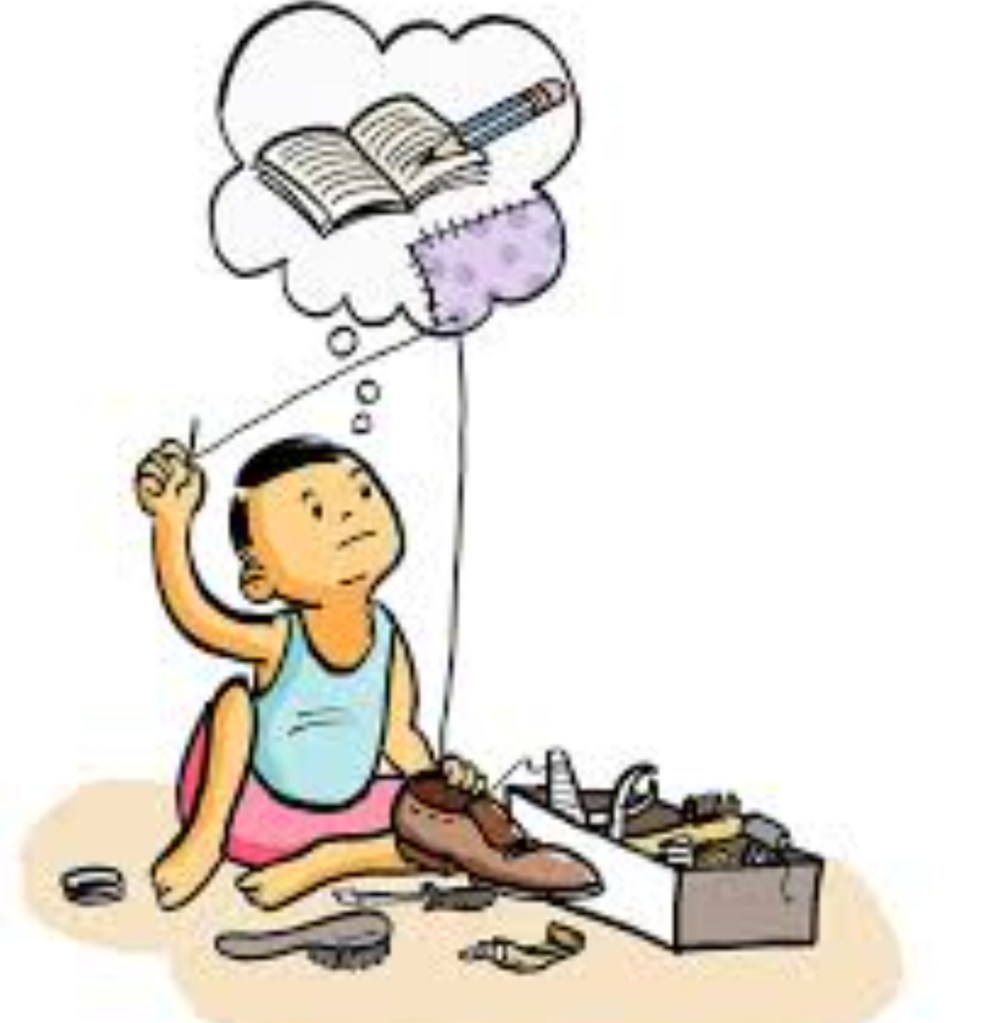
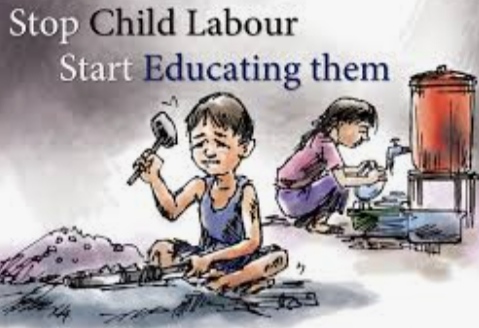
Child Labour

By – Supriya

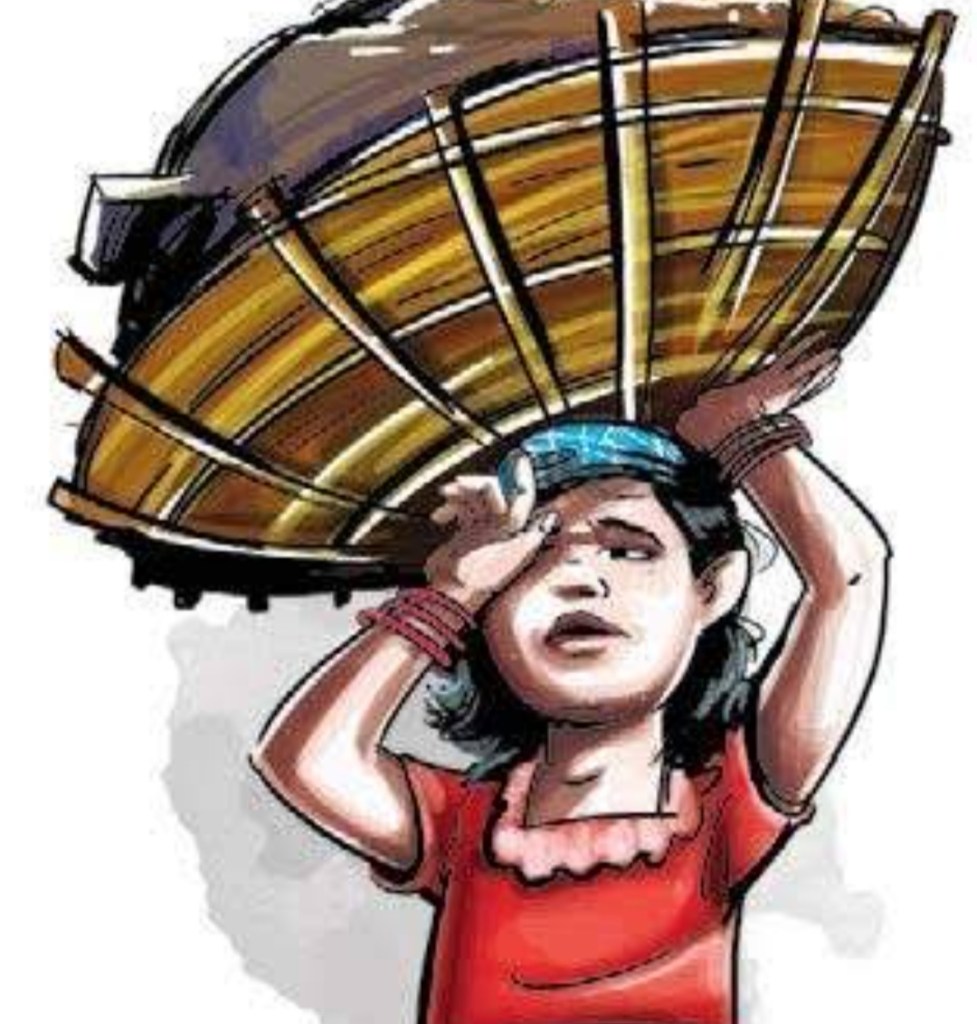
Today’s child is a citizen of tomorrow . The condition of a child foretells the future of any society or nation. Children are the real mirrors of the society – the quality of life of a child reflects how progressive a society is. With the dawn of the twenty first century, one of the problems prevalent globally is the problem of child labour. Millions of children in the world have been forced into child labour owing either to non – schooling or due to dropping out from the school at an early age. Child Labour may be defined as one who has not yet attained the age of 14 years and whose physical, mental and social development has suffered due to his pre – mature employment. Children make up 36% of the country’s total population. We might boast of being the largest democracy on account of numbers , but we definitely don’t seem to be the greatest one. Due to various circumstances , young children are exploited and are forced to forget the pleasures of childhood. At the age when children should be going to schools or playing at playgrounds they are burdened with the hardships of life and denied their childhood. According to the National Child Labour Project 2001 census, there are 12.6 million working children in India. Uttar Pradesh tops this list as 1.9 million innocents are employed in this state alone in various hazardous and non- hazardous activities in agricultural sector, glass factories , carpet industry, brass industries , March-  box factories, on streets as beggars and hotels. However, the fact is that not only in a few selected states but across the length and breadth of the country, a large number of childhood is in a pathetic condition.

According to a recent ILO report, about 80% child labourers in india, and are employed in the agriculture sector. The children are generally sold to the rich moneylenders to whom borrowed money cannot be returned. More than 60,000 children work in extremely inhospitable conditions in the glass and bangle industry under conditions of excessive heat. Almost 4,20,000 children are employed in the carpet industry of India, and than 70,000 work in match-box factories.

Child labour is one of the social evils that has been crippling the Indian society since a very long time.Its presence can be felt everywhere – be it a rural village or a metropolitan city. The small scale industries or Karkhanas are the breeding grounds for child labour.These children are in almost every sector of the economy – both organized and unorganised . Even though child labour is illegal large number of children are found working in factories or Karkhanas, or are working in mines,bidi, carpet , match, fireworks, brass and pandaan, agarbathi and automobiles industries . In urban areas many children work as shoeshine boys, newspaper hawkers, domestic servants and work in hotels, autoshops and plastic recycling factories. The automobile repair- shop industry is one that every one sees in his daily life. We can see these shops in every nook and corner. Young children are being illegally employed in such professions as they can be paid less. Poverty, illiteracy and insufficient resources in family , force the parents to send their children to work . Sometimes , brokers lure parents to force their children into child labour by making false promises.

Elimination of child labour is undoubtedly one of the biggest challenges facing our country. Various articles of the Constitution prohibit the employment of children in factories . Under Article 24, it has been stated that no child below the age of 14 shall be employed in any factory or mine or any other hazardous occupation or work. Similarly, Article 31 provides that the state shall ensure that adolescent children are not forced to accept an employment detrimental to their age and physical ability owing to economic compulsions. Children should be provided opportunities to develop in a healthy manner and in a free and respectful environment in which they are protected against exploitation of their childhood and adolescence. Under the schedules of the Child Labour ( Prohibition and Regulation) Act,1986, employment of children is prohibited in 12 occupations and 51 hazardous processes. The Government of India formulated the National Child Labour Policy in 1987 to tackle this problem . It aims at rehabilitation of child labour, implementation of the National Child Labour Projects, grants-in-aid to the voluntary agencies and promoting international programmes for the elimination of Child Labour. For the rehabilitation of working children, special schools and rehabilitation centres have been established where there is a provision of informal education , vocational training and nutrition for the children relieved from work.

On reviewing the factors behind the prevalence of child labour, we find that the social structure , poverty, family size, poor income, and lack of education are some of the major factors that have intensified the problem of child labour in India. The Gurupadswami Committee report shows that problem of child labour is a direct result of poverty whose elimination in itself is a great problem. Government has been taking proactive steps to tackle this problem through strict enforcement of legislative provisions along with simultaneous rehabilitative measures. The strategy for implementing the scheme under the 5- year plan aims at greater convergence with the other developmental schemes to bring about qualitative changes. The plan intends to focus and reinforce action to eliminate child labour in the hazardous occupations. Through expansion of National Child Labour Projects to additional 150 districts , it is focusing towards linking the child labour elimination efforts with the scheme of Sarva Shiksha Abhiyan to ensure that children in the age group of 5-8 years get directly admitted to regular schools and that the older working children are mainstreamed to the formal education system through special schools functioning under the NCLP scheme . Its other objective is convergence with other schemes of the Departments of Education, Rural Development , Health , and Women and Child Development for the ultimate attainment of the objective in a time – bound manner. However, the problem of child labour is an intense socio- economic issues in India that requires long – term multi – pronged strategies to be carried out on a continuous basis. These strategies should include enforcement of Child Labour Act, strengthening of primary education in rural areas, rehabilitation of child labourers, improvement of economic conditions of child’ s parents through poverty alleviation and employment generation programmes. A strong enforcement of the labour acts may be done to ensure legal action against those who employ children at work. The child labour is an evil that requires awareness and change of approach among all sections of the society. The government , media and NGOs have to unite to play their respective roles in this demanding task – only then the evil of child labour will get effectively curbed.

Thankyou!

HOW TO PROMOTE YOUR BUSINESS?

 What is one
of the most important factors that needs to be done correctly for an
organization to grow when their product is of good quality and have an
affordable price? It’s promotion. The organization needs to ensure that they
are promoting themselves properly to wide range of the population so that more
people can know about them and their business can grow.

Promotion is
basically communicating with your customers or prospective customers with aim
of informing them about your product and persuading them to make an immediate
purchase. In this, you will have to describe your product’s features,
availability, use and more important things that will earn you brownie points
and make the customer buy it.

There are
different ways of promoting yourself and one can use a combination of such ways
to grow their business. Let’s have a look at these tools.


1.ADVERTISING

It is the
most commonly used tools of promotion. Does not need any explanation as we come
across a hundred of ads every day.

In a formal
language, advertising is any paid form of presentation or promotion of the
product by the marketer. It includes the provision of the information about the
product in detail so that the buyer would take an action in favor of the
marketer.

The most
commonly used modes by the companies to advertise themselves have been
televisions, newspapers, magazines and radios. Although, since the past few
years, digital marketing has also been gaining attention impressively. More and
more people are opting for this method as it is easier and more affordable to
use. Plus, it reaches out to more masses considering the whole world is
connected online now due to the pandemic.

It can be
very surely said that advertisement plays a major role in the success of a
business.


2.PERSONAL
SELLING

It is
usually the oral presentation of the product to one or more consumers with the
aim of making them buy it. For this method, a salesperson is appointed by the
company who goes from door to door of the customers to explain them about the product
make a sale. It is generally more time taking and costlier than advertising.
Also, it is not possible for a human to go around in every corner of the nation
to promote the product therefore, the mass reach is very low here. One plus
point though, in personal selling, the seller gets an immediate and clear
feedback from the customer which may not be possible in the case of advertisement.


3.SALES
PROMOTION

These are
basically the short-term schemes initiated by the company to attract more
customers and make them buy the product. All promotional efforts other than
advertising and personal selling comes under this. Some of these techniques may
include free shipping or free return of the product, any giveaways,
competitions with rewards, flash sale of 60-80% off and lot more. These type
incentives attract a large number of people which increases the customer base.


4.PUBLIC
RELATIONS

These mean
the programs organized by a company to protect the image of their product or
themselves, for that matter, in the eye of the public. The business needs to
communicate with its buyers, investors and suppliers since they play a major
role in increasing the sales and profit of the company. Therefore, they need to
have a good public image constantly so that these people would be loyal to
them. A bad image may harm the reputation of the company and eventually people
would start to back-off from them since they do not want to be in touch with a
unsavoury reputed company.


WHY DOES UNEMPLOYMENT STILL EXIST?

 The problem
of unemployment is a serious problem which if not cured, leads to poverty. In
India, this problem is a quite major one. Currently, a whole of 13.3% of the
Indian population is unemployed. Basically, it is a situation where people are
willing and able to work but are not getting any jobs due to many reasons.
These people include only those who are above the age of 18 years because of
the child labor law in India. There are various reasons for this situation to
arise. Let’s discuss them.


1.SLOW
ECONOMIC GROWTH

The actual
rate of growth of the Indian economy is always far behind the rate that has
been planned in the five-year plans. This has been observed since the past five
decades. Due to this, there are low employment opportunities available and
hence, a majority of people are left unemployed. The generation of these
opportunities could not keep up with the increasing labor force.


2.POPULATION
EXPLOSION

The rapid
growth of the population is another prime reason why unemployment is growing.
The human capital in the country is increasing rapidly but the employment
opportunities is not growing enough. This leads to a lot of people being
jobless.


3.UNDERDEVELOPED
AGRICULTURE

The antique
methods of technology used for agriculture is also responsible for unemployment
or underemployment because the population is growing more than the
opportunities available.


4.FAULTY
EDUCATIONAL SYSTEM

The
education system in India right now is still full of defects as it does not
provide the students with any transformational technical and vocational
education. As a result, most of the students are not qualified enough or does
not possess the required education skills for many jobs. This again leaves a
lot of them unemployed.


5.SLOW
GROWTH OF INDUSTRY

There is a
massive shortage of capital and technology that restricts the industries from
growing and developing. This is why they are not able to create more employment
opportunities in the country. It is only possible for them to increase this
opportunity percentage if their own industry will shine bright since they
require more employees. For this, advanced technology is required which is
unavailable.


6.REDUCTION
OF SMALL-SCALE INDUSTRIES

Over the
past few years, a large number of small-scale industries in the villages have
declined. This is due to the change in taste of the consumers. With the
availability of new technology, people have started shifting their choices from
traditional products to modern products. This led to the shutting of these
small-scale industries due to the lack of demand. As a result, not only people
have less employment opportunities but those who did have a job also lost it
and became unemployed.


7.DEFECTIVE
PLANNING

The plans
formed by the government did not stop the migration of rural population to the
urban population and have also failed to encourage labor intensive technology
in the agriculture and industrial sector and as a result, in the rural areas
there is less employment opportunities considering everyone tends to move to
the urban areas.


8.LOW
CAPITAL

There is a
considerably low growth rate of capital in the country in both the agricultural
and the industrial sector and therefore, the employment opportunities is less
since these sectors are not able to grow as much as they should.


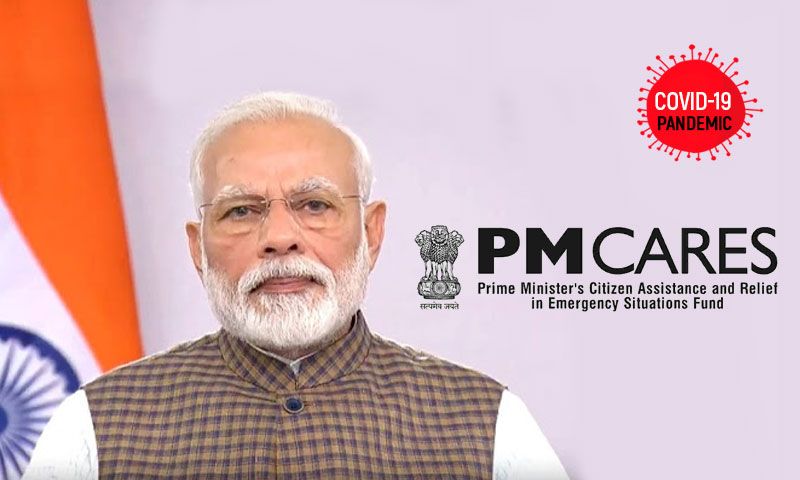
प्रधान मंत्री ने पेश किया पीएम केयर्स फंड का नया संशोधन।

प्रधानमंत्री नरेंद्र मोदी ने कहा कि उनकी सरकार का उद्देश्य देश के हर जिले में कम से कम एक मेडिकल कॉलेज खोलना है। वह गुरुवार को अखिल भारतीय आयुर्विज्ञान संस्थान (एम्स) ऋषिकेश में 35 राज्यों को 35 प्रेशर स्विंग ऐडसोरप्सन(पीएसए) ऑक्सीजन संयंत्र समर्पित करने के लिए आयोजित एक समारोह में बोल रहे थे।

ये प्लांट पीएम केयर्स फंड के तहत स्थापित किए गए हैं। उन्होंने कहा कि कुछ साल पहले देश में बहुत कम एम्स थे लेकिन अब हर राज्य में एक एम्स खोलने का प्रयास किया जा रहा है।

उन्होंने कहा कि नवरात्रि पर्व के पहले दिन के अवसर पर उत्तराखंड आना उनके लिए सौभाग्य की बात है। पीएम ने कहा कि उन्होंने 20 साल पहले इसी तारीख को गुजरात के सीएम के रूप में शपथ ली थी और कहा कि इस यात्रा की शुरुआत उत्तराखंड के गठन के साथ हुई थी।

उन्होंने प्रसन्नता व्यक्त की कि जिस धरती से योग और आयुर्वेद जैसी जीवनदायिनी शक्तियों को बल मिला, उसी धरती से आज ऑक्सीजन प्लांट समर्पित किए जा रहे हैं। महामारी की अवधि के दौरान अपनी सरकार की उपलब्धियों की सराहना करते हुए, पीएम ने कहा कि महामारी से पहले सिर्फ एक परीक्षण प्रयोगशाला से लगभग 3,000 परीक्षण प्रयोगशालाओं का एक नेटवर्क बनाया गया था। उन्होंने कहा कि भारत ने दुनिया का सबसे बड़ा और सबसे तेज टीकाकरण अभियान लागू किया है।

उन्होंने कहा कि पहले देश में एक दिन में 900 मीट्रिक टन लिक्विड मेडिकल ऑक्सीजन का उत्पादन होता था, लेकिन जैसे-जैसे मांग बढ़ी, भारत ने मेडिकल ऑक्सीजन के उत्पादन में दस गुना से अधिक की वृद्धि की।

पीएम ने यह भी कहा कि कोविड -19 वैक्सीन की लगभग 93 करोड़ खुराक दी गई है और जल्द ही देश 100 करोड़ का आंकड़ा पार कर जाएगा।

पीएम ने कहा कि अब सरकार इस बात का इंतजार नहीं करती कि नागरिक अपनी समस्याएं लेकर उसके पास आएं और फिर कोई कदम उठाएं, लेकिन अब सरकार नागरिकों तक पहुंच रही है।

अनन्या कौशल द्वारा संपादित।

नितिन अग्रवाल को राहत, बने रहेंगे विधायक

हरदोई।

सदर विधायक नितिन अग्रवाल को बड़ी राहत मिली है. विधानसभा सदस्यता रद्द करने के लिए सपा नेता द्धारा दाखिल की गई याचिका को विधानसभा अध्यक्ष हृदय नारायण दीक्षित ने खारिज कर दिया है। इसकी जानकारी मिलते ही सदर विधायक के समर्थकों में खुशी की लहर दौड़ गई।


विधानसभा में नेता प्रतिपक्ष रामगोविंद चौधरी ने 11 नवंबर 2019 को विधानसभा अध्यक्ष के सामने याचिका दाखिल की थी। इसमें कहा था कि सदर विधायक नितिन अग्रवाल 2017 में हुए विधानसभा चुनाव में सपा के टिकट पर निर्वाचित हुए थे। 2019 में गांधी जयंती के मौके पर हुए मैराथन विधानसभा सत्र के दौरान सपा ने विह्प जारी की थी कि सपा का कोई भी विधायक उक्त सत्र में शामिल नहीं होगा।

इसके बावजूद नितिन अग्रवाल सत्र में शामिल हुए। विह्प का उल्लंघन किए जाने का आरोप लगा उनकी सदस्यता रद्द करने की मांग की गई थी। पूरे मामले पर चली सुनवाई के बाद विधानसभा अध्यक्ष हृदय नारायण दीक्षित ने रामगोविंद चौधरी की याचिका खारिज कर दी है। सदर विधायक नितिन अग्रवाल ने इसकी पुष्टि करते हुए बताया कि गुरुवार को ही इस संबंध में विधानसभा अध्यक्ष ने आदेश पारित कर दिया था

बता दें कि हरदोई सदर विधानसभा पर कई पंचवर्षीय से नितिन अग्रवाल के पिता नरेश अग्रवाल का दवदवा रहा है. इस सीट पर हमेशा से ही नरेश ही जीतते आये हैं. 2017 के विधानसभा चुनाव में बेटे नितिन अग्रवाल सपा की टिकट पर विधानसभा पहुंचे थे. बाद में वे सत्ताधारी पार्टी भाजपा में शामिल हो गए थे।

अनन्या कौशल द्वारा संपादित।

About that author- Edgar Allan Poe

Edgar Allan Poe established his name in literature majorly as a short story writer and poems with his great command in writing. He is also considered as the architect of the modern short story. Edgar Allan Poe, often discussed through his writing which was usually in the horror genre.

Early Life 

Edgar Allan Poe was born in 1809 in Boston, Massachusetts, U.S. his parents were both actors. He was very young when he lost both his parents and was then taken care of by John Allan and his wife. In 1824 Poe got into the University of Virginia and was doing well academically but had to leave due to financial stress. 

Early career 

After living with Allan for sometime Poe went to Boston and published a collection of poems Tamerlane, and Other Poems in 1827. He also was forced to join the army, because of his poverty. 

He published his next collection of poetry Al Aaraaf, Tamerlane, and Minor Poems in 1829. Both of the collections that were published did not receive much attention. The same year Poe’s father helped him secure him an appointment at the U.S. Military Academy at West Point.

About 2 years later Poe moved to New York  , where he published another collection of his works, Poems.

He later went back to Baltimore to his aunt and began writing stories. His stories were getting published in newsletters, he also won a 50 USD cash prize for one of his short stories MS. Found in a Bottle involving an unnamed narrator who sails a ship and encounters a bunch of terrifying situations along his journey.

Poe was offered the position of an editor at Southern Literary Messenger in Richmond where he married his 13 year old cousin, which is bizarre but it was 1836. 

Poe established himself as a fine literary critic over the years although his writing did not grab people’s eyes until the late 1930s. 

Later Years 

His career was going well but he was still not earning enough, his jobs were not getting him enough money so he went to New York again, where he was often seen drinking. In 1838, he published The Narrative of Arthur Gordon Pym, the only complete novel by him.

A year later, he was the editor of Burton’s Gentleman’s Magazine in Philadelphia and after that he was the editor of Broadway Journal in New York City. While editing in Philadelphia and New York he published several stories like Broadway Journal in New York City. which was published in Burton’s Gentleman’s Magazine while he was editing there, Burton’s Gentleman’s Magazine, his first detective story published in 1842 in Graham’s magazine.

Poe’s work grabbed national attention after the publishing of his poem The Raven which led him to become an editor of the Broadway Journal. Virginia, Poe’s wife passed away due to tuberculosis in 1847 after which he was involved romantically with multiple women. 

Poe moved to Baltimore in 1849, where one morning Poe was discovered lying, almost unconscious and a few days later, he died. The cause of his death is still not known  

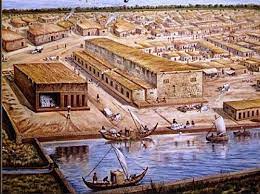
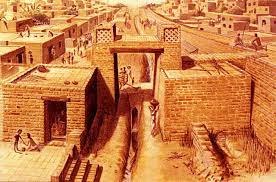
The Indus Valley Civilization

The Indus Valley Civilization is one of the world’s oldest civilization.It is popularly known as Harappan Civilization because the first territory to be carved was ‘Harappa’ in the year 1921 under the oversight of Daya Ram Sahni.

THE INDUS VALLEY CIVILIZATION

The extent of this civilization:

  • In the west is up to Sutkagendor in Baluchistan ( now it is a part of Pakistan ).
  • Alamgirpur ( Uttar Pradesh ) in the East.
  • Daimabad ( Maharashtra ) in south.
  • & Manda ( J & K ) in the north.

This Civilization refer to Bronze Age/ Chatholic Age. Thus, it is also called Bronze Age Civilization.

Some General Facts About Sites located in this Civilization

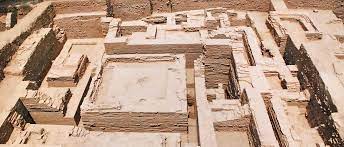
1.Harappa

The Locales of Harappa
  • It had working floors consisting of rows of circular brick platforms which were meant for threshing grain have been found here.
  • Six granaries and sixteen Agnikundas ( firepits ) have been found here.
  • People here knew the process of making tarcoal.
  • Main gate for the entry in the houses of Harappa was in the North Direction.

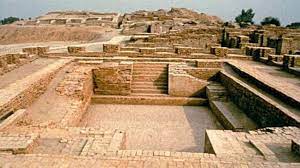
2.Mohenjodaro

The site Mohenjodaro
  • Mohenjodaro was discovered in 1992 under the supervision of R.D.Bannerji
  • The literal definition of Mohenjodaro in Sindhi language is “Mound of the Dead”.
  • There found some evidences that shows how properly assembled were the halls,kitchen, & courtyard were.
  • Seven layers of Mohenjodaro city directs that the city was destroyed and rebuilt seven times.3.

3.Lothal

The locale of Lothal
  • A dockyard have been found at Lothal.
  • In 1957, Lothal was found by S.R.Rao in Gulf of Cambay Gujarat.
  • Red & Black clay pots, copper tools, brick built tank like structure,a bead making factory & a seal from Iran have been discovered at Lothal.
  • Also some liner scale of bronze have been found here.

Besides locales of this civilization there are some more amazing facts such as :

1.Town Planning : It was one of the most distinguishable feature of this civilization.Hence ,this civilization also known as first Urbanization.

2.Economy : Agriculture & Animal husbandry were popular since that age.They used to grow crops like wheat,barley,cotton,mustard. Harappan domesticated sheep,goat,buffalo & pig.They also knew about Tiger,camel,elephant various birds etc however they were unaware of lions.

3.Crafts :The Harappa culture belongs to the Bronze Age,as the people were very well acquainted with the manufacture and use bronze.The weavers also used to wove clothes of wool and cotton.Remains suggests that pottery was also done by people of this civilization. Some Seal were also found. However they were not aware of Iron.

4.Trade: Land and sea trade was in vogue.The most prominent trading partner was Mesopotamia.The mesopotamia inscription refer to trade relation with Meluha which was the ancient name given to Indus Region.

5.Religion: Pashupati seal has been found from Mohejodaro in which a Yogi figure has been depicted.The yogi on the seal is surrounded by buffalo,tiger,elephant,rhinoceros and dear.Hence the Yogi is said to be proto-Shiva.Harappans also worshipped Mother Goddess.

6.Script of Harappa: The Harappas knew the art of writing.There are nearly 4,000 specimens of Harappan writing on stone seals and other objects. Harappan Script is not alphabetical but mainly pictographic.

7.Decline of Harappan Civilization: There are several view points of the different historians on the decline of the Harappan Civilization.According to Wheeler Aryan attack was the cause of decline of Harappan Civilization & as per G.F.Dales and Marshal,Aryans were not responsible for the decline of this civilization.Also James Marshall stated that natural calamities were responsible for the decline of Harappan civilization.

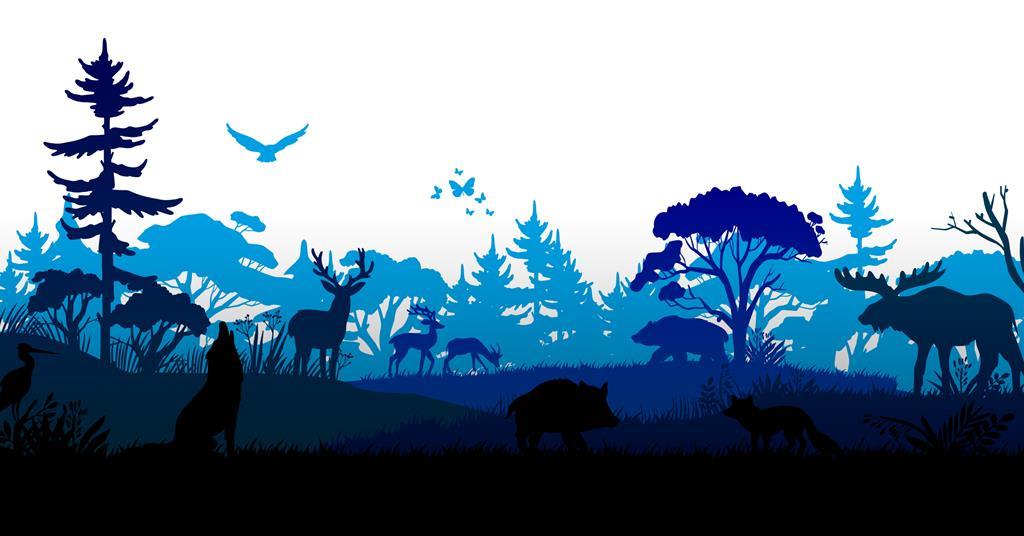
Significance of Biodiversity

Biodiversity in simple words is the biological diversity or the variety of life forms that can be found on earth as well as to the communities that they form and the habitats in which they live. Biodiversity provides us with various benefits directly or indirectly, it plays numerous functions which can be classified as : ecological, economical and social benefits. It maintains balance in the ecosystem by :
✓ Recycling and storage of nutrients
✓ Fighting pollution
✓ Stabilising climate
✓ Maintenance of water resources
✓ Replenishment of Soil and control of soil erosion
Economically provides us with all raw materials for industries, helps in meeting our medical needs and more importantly provides us with food. The biodiversity looks after us in all the aspects in one hand and on the other hand it repairs all the destructions caused by us.

Biodiversity is the basis for our survival. But we human beings are the major reason for its destruction. We are not only pushing other species to danger but slowly demolishing the habitat that we live in, further paving way towards our extinction.

The saddest part is that though most of us are aware of these facts, we are not paying attention to it. But we need to realise the fact that each and every action of us has an impact on the world. We can’t pass out a day without making changes or influencing our surrounding. The process of conservation is incomplete without our participation.So we must realise the need or the urge for conservation of biodiversity. Everyone must be aware of its importance and work towards preserving our future.

Sigmund Freud

One day, in retrospect, the years of struggle will strike you as the most beautiful– Sigmund Freud.

Sigmund freud one of the most influential neurologists known to us

An Austrian neurologist and founder of psychoanalysis. He conducted a lot of research throughout his life, and was wrong about a lot of his studies but he still managed to leave a mark in the science textbooks

Made a profound impact on psychology even though he faced a lot of criticism for a lot of his studies. He had a lot of unconventional ideas, he was filled with them. It is known that he studied and pushed the use of cocaine, this also led to one of his close friends getting addicted to the drug.

Sigmund Freud was born in 1856, Freiberg, Moravia, Austrian Empire

At the age of 17, he went to study medicine in the University of Vienna where he studied physiology under Ernst von Brücke. He spent about 6 years in Brücke’s lab where he compared brains of different animals. 

In 1882 After graduating from The University of Vienna, he started working in the General Hospital in Vienna as a clinical assistant under the psychiatrist Theodor Meynert and Hermann Nothnagel.

In 1885, went to Paris to study neuropathology at a clinic where he also worked under  Jean-Martin Charcot, charot used to work with patients with hysteria which exposed him to psychological disorders and the possibility that psychological disorders might be linked with the mind and not the brain. Charot’s technique of hypnosis left freud quite impressed and was intrigued by the idea of hypnosis 

After his return from Paris he established a clinic for neuropsychology for his clinical practice and this could also be termed as the beginning of his psychoanalytic theories. Freud was partners with the physician Josef Breuer for a long time and also published their work together in 1895 Studien über Hysterie (Studies in Hysteria) which was a result of some previous research conducted and their clinical experience.

The next year in 1886 he married  Martha Bernays with whom he had 6 children, one of being Anna Freud who followed her father and studied psychoanalysis just like him.

Freud’s psychoanalytic theories further  gave birth to multiple concepts. Psychoanalysis is a collection of theories associated with psychology and a group of techniques that deal with the unconscious mind with an attempt to cure mental disorders. It basically involved trying to make the unconscious thoughts of the patient conscious by various methods and when these thoughts were made conscious, they showed improvement. The development of these concepts and techniques were a result of Freud’s working with people and his own clinical experiences.

Now, psychoanalytics is a vast subject and everything mentioned in the article about his contributions was just the tip of the iceberg. It is impossible to cover the whole subject here,it is almost impossible to study and understand all of his work, that is the quality and quantity of work he has done for science and this article doesn’t  justice to his work, so I hope it is at least encouraging enough to get you to read more about his studies.

5 spooky books to read this fall.

Since it is October, it is time for some spooky reads to make this month a little more exciting.

Here are 5 books to read, to satisfy your spooky soul.

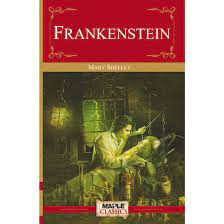
  • Frankenstein by Mary Shelley:

The  Frankenstein portrays the narrative of Victor Frankenstein, a brilliant scientist who triumphs in giving life to a creature he created. However, this is not the ideal specimen he had envisioned, but rather a repulsive creature despised by Victor and mankind in general. The Monster seeks vengeance by murdering and terrorising others.

  • The Year of the Witching by Alexis Henderson:

Immanuelle Moore’s entire existence is blasphemy in Bethel, where the Prophet’s word is law. Immanuelle does her best to worship the Father, observe Holy Protocol, and live a life of submission, devotion, and absolute conformity, much like the other women in the settlement, because her mother’s union with an outsider of a different race has brought shame to her once-proud family. A accident, however, leads her into the forbidden Darkwood that surrounds Bethel, where the first prophet once pursued and killed four formidable witches. Their ghosts are still present, and they bestow upon Immanuelle a gift: the journal of her deceased mother, who Immanuelle learns once sought refuge.Immanuelle is fascinated by the mysteries revealed in the journal, but she can’t comprehend how her mother could have mingled with the witches. However, when she learns more about the Church and its history, she understands Bethel’s ultimate threat is its own darkness. And she realises that if Bethel is going to change, it has to start with her.

  • The Tenth Girl by Sara Faring:

An isolated finishing school stands at the very southern tip of South America. According to legend, people who settle on the land will be cursed. However, for Mavi, a fiery Buenos Aires native fleeing the military government that murdered her mother, it represents an opportunity to start a new life as a young teacher to Argentina’s finest girls.Despite cautions not to wander at night, threats from an intriguing young man, and stories of mysterious Others, Mavi attempts to embrace the weirdness of the enormous home. However, one of Mavi’s 10 pupils has gone missing, and when students and instructors alike begin acting possessed, the powers haunting this unholy cliff will no longer be overlooked. One of these ghosts is guarding a secret.

  • Revenge by Yōko Ogawa,  Stephen Snyder (Translator):

After moving into a new flat, an aspiring writer discovers that her landlord has murdered her husband. Years later, the writer’s stepson thinks on his stepmother’s bizarre anecdotes. Meanwhile, a surgeon’s boyfriend threatens to kill him unless he divorces his wife. The surgeon, however, will come across another exceptional woman, a cabaret singer whose heart beats delicately outside of her body, before she can carry out her crime of passion. When the surgeon promises to fix her ailment, however, he piques the interest of another guy who wants to keep her heart in a custom-tailored bag. Murderers and mourners, mothers and children, lovers and bystanders—their destinies intersect in a darkly beautiful web from which none of them can escape. Yoko Ogawa’s Revenge weaves a macabre tapestry of death—and the afterlife of the living—that is macabre, fiendishly brilliant, and tinged with the occult.

  • The Haunting of Hill House by Shirley Jackson,  Laura Miller (Introduction):

It tells the storey of four seekers who arrive at Hill House, a famously hostile pile: Dr. Montague, an occult expert in search of strong evidence of a “haunting”; Theodora, the lively assistant; Eleanor, a friendless, vulnerable young woman well-versed in poltergeists; and Luke, the future heir of Hill House. Their stay seemed to be destined to be nothing more than a scary experience with unexplainable events at first. Hill House, on the other hand, is gathering its powers and will soon choose one to claim as its own.

A phase we all think is development

It wonderful how Facebook goes on even receiving such huge Slashs, and having such a negative impact on society.

It’s not new such accusations have been made on Facebook or Mark Zuckerberg. His network Facebook, instagram and whatsapp have been biggest giants in social networking among people of all age.

Mark Zuckerberg has been sued for privacy, Hate speech promotion and affiliation, interface in democratic elections in recent years. Now these are some serious offences and how is it he’s never been asked to shut off the company.

Agreed to employment generation, social networking,and benefits from facebook

But is leverage of having by postive impact  is it good . These postive outcome does not beat the negatives influence from the social media. It’s not good leverage,not proffeetriing compared to times of no social media. The negatives will ultimately consume the idea that there was ever a positive impact on us.

The misinformation spread by Facebook and whatsapp has cost many lives. People consume medication from there, believe in government policy, and spread religious misbelief.

It’s also had negative effects on the young generation like obesity, mental health issues, misinformation, narrow agenda seeping unknowingly to young minds, emphasis of unknown profile leading to harassment and online bullying, building crimes such as blackmail and piracy. It has created an unhealthy environment for growing innovative minds. They do have a platform to share their talent,but how often does that plane take off?

Is it good to weigh over good policy over negative retirement we get. Humans find there good things that happen to them in one way or another, while having let negative effects grow to fulfill positive effects. Is that really necessary.These networks have proven unnecessary and unethical more times than they have proven useful. Then how do people continue to use such platform. How government allow such network to exist. How the company themselves call ethical and helpful to society?

Mcaffeine Neem Face Wash

Mcaffeine Neem Face Wash Cleanser With Argan Oil & Vitamin E For Men And Women – 150 ml https://www.amazon.in/dp/B071X49GR9/ref=cm_sw_r_apan_glt_fabc_9B6RQWH965EW0W12D2T2

Factors used in this face wash are Caffeine, Neem, Argan Painting and Vitamin E. These all factor are skin-friendly. They not only clean your skin but also secure your skin. It’s extremely delicate to the skin, makes the skin smoother and vigour.

NIVEA Women Face Wash

NIVEA Women Face Wash for Oily Skin, Milk Delights Besan, 100 ml https://www.amazon.in/dp/B07LCQW2RC/ref=cm_sw_r_apan_glt_fabc_dl_9T8N600AC02KC1FZXA6Q?_encoding=UTF8&psc=1

NIVEA Milk Delights Minding besan Facewash does a nice job as it cleanses well, removing redundant canvas and dirt, without leaving skin dry or any slippery u forward. It adds a subtle fluorescence to the skin on regular employment. Suitable for both, dry and gushing skin.