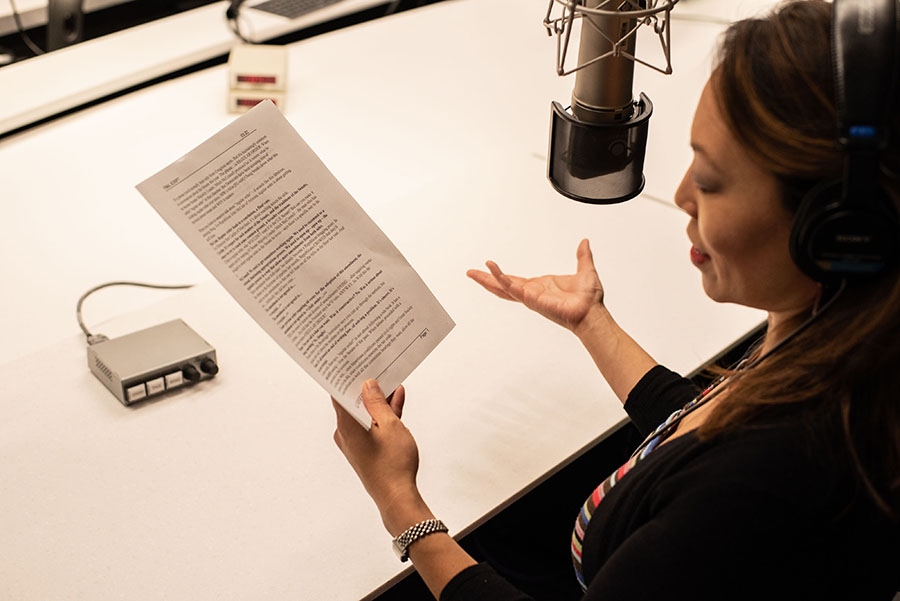
Radio Script

Introduction:
Radio is a way of communicating using radio waves. Radio can be used for numerous purposes. In the early 1990’s, they were used to learn about political happenings and things going around the world. These days they’re used for listening to music and also many radio shows impart knowledge to their listeners. In this article, I’ll be giving an example of how to write a radio script. This is an interview with two great personalities who have done tremendous work in the social field.


Script:
J – Good morning Bangalore! This is Joy and I welcome one and all to radio campfire. So today’s show is going to be very informative and I request you all to pay utmost attention to what is being said and if need be you can as well take down a few pointers/notes. So today we have with us, two very special guests, who have gained great popularity in their respective careers or work fields because of their hard work. Two very known social workers, we have Ms. Eden Everett, who is a Child Welfare social worker and we have Ms. Tessa, who works for children with disabilities. Hello and welcome to my show today. It’s an honour to have you guys here .


EE – thank you for having me.


TS – thank you for inviting us. It’s a pleasure.


J – So I’ve been wanting to invite the both of you for the longest time and it finally happened. I’ve heard a lot about you guys and can’t wait to talk to you further about things that are very important for one and all to know in today’s time.


EE – yes ofc.


TS – I’m excited!


J – So first and foremost, I’d like the both of you to introduce yourselves and talk a little about yourselves. We’ll start with Ms. Eden.


EE – Thank you, Joy. Hello everyone! I’m Eden Everett and I’m a child welfare social worker. I’ve been working in this field from the past 7 years and it’s been a great experience.


J – As we proceed, we’ll talk more about it.


EE – Yes, sure.


J – And Ms. Tessa?


TS – Yes thank you . Good morning everyone. I’m Tessa and I’m a social worker. I work for the children who suffer from various disabilities.


J – That’s great! Thank you for the introduction. So, I’d like you guys to ellaborate a little more and tell everyone what it is that you guys do and how do you help people?


EE – So since I specialise in child welfare assistance, what we do is we serve some of the most vulnerable children, youths and families. We specialise in building on the strenghts of families and helping them to provide a safe and nurturing environment for the children and youths.


J – That’s interesting. And Ms. Tessa?


TS – Yes so, I specialise in helping children with any form of disabilities. We give them assistance and make sure that their environment is as healthy and friendly as possible.


J – Ms Tessa, so the field that you work in,the children are usually very introverted and most of the times they don’t like sharing with their parents about the abuse they suffer because of their disabilities or the difficulties they face! How do you deal with such cases?


TS – So I’ve been working in this field for about 8 years now and I’ve seen every sort of scenarios where the children had to suffer and some cases where the children brought it upon themselves that they want to be treated the way they’re being treated. So most of the children that I spoke to wouldn’t open up to me at first and they’d slowly start talking and sharing their experiences. But some were so traumatized that they wouldn’t even blink an eye, which was very painful for me to look at. But I’ve learnt different ways of communicating with such kids and I’m trying my best to help them in any way possible.


J – that’s amazing! So glad that you took the initiative to do so much research and to help them in any way possible. So Ms. Tessa, there are sometimes, a few cases where the parents give up on their children and keep demotivating their children, constantly reminding them of their disabilities and forcing them to accept that harsh and abusive behaviour that they experience instead of being their support system! What do you have to say about that!


TS – Yes that’s a very good question. About that, there have been also many instances where the parents would give up and they’d start showing their frustration on the children. So what we do is that we not only assist the children but we also help the parents of the children to understand their child’s legal rights. We help parents learn to be advocates and find special services that enable their children to be as independent as possible.


J – That’s so nice of you! I’m so glad that you take so much initiative to help them lead a better life, if not the best.


TS – thank you! That means a lot but I’m still working towards it! I’ve still got a lot to learn.


J – I hope the best for you.


TS – Thank you.


J – what about the services? Are they available at ease or how do you go about that?


EE – Yeah we have groups of social workers alloted in different states. We’ve tried to provide help and service across the country as much as possible and we’re still trying to broaden the network of helpers. We’ve also given out numbers that they could dial in order to receive help or merely even if they just want to talk about it. Any sort of help provided is very crucial and important for us.


J – That’s great. And Ms. Tessa?


TS – I think at the end of the day, if you look at it, though we specialise in different fields of social working and aid, we all comprise or fall under the same category that is social worker or proving aid. So I think when it comes to services, we follow the same pattern. We have groups that are 24/7 at service when required and we have the numbers given out, where the person if unable to meet in person, can talk about their problems and seek help because Joy, as you see there have been quite a few cases where the one suffering just needs someone to listen to him or her and that itself gives them so much peace and encouragement. So it is very important that we realize that even the tiniest amount of help, be it as mere as just listening to the one suffering, might be something very simple for us but in many ways it changes their life.


J – Absolutely true. Any sort of help that can be given out counts and is just as important as any sort of counselling or service provided .


TS – yes

EE – Absolutely. In fact, I’d like to point out that the children or youth I’ve helped these past few years have now taken upon themselves to help kids and youth who suffer from what they were suffering and I feel so proud of them for finally building up that courage and self-esteem to finally get over things or past experiences.


J – Thank you so much for the ending remarks. It was a please having the both if you on my show. I genuinely want to thank the both of you and your teams for the immense help and service you provide for those in need and help them live a happy and better life. And lastly, to all my beautiful listeners, don’t forget to be kind, spread love and always know that hating or looking down on someone will bring you no good. It’s better to realise from the past mistakes and strive to become a kind, empathetic human being. That is all for today. Thank you for listening, stay safe and I’ll meet you guys again next week.


Conclusion:
The above Radio script is just an example of how one could write a script. Just keep in mind that the questions need to be very clear and there must be no communication gap between the interviewer and the one being interviewed as that might confuse the listeners.

Patriarchy and women.

Man is a social animal, and his need to socialise gave rise to society, thus society is made of people. With the birth of society, certain principles and ideologies were born.
Even though society was born 2,000,000 billion years ago, differences in ideologies remain within different societies, however certain ideas and principles remain the same in different societies. The inferior position of women to men, i.e. women’s subordination is prevalent in every society, irrespective of the class they belong to. Women’s subordination alludes to the second-rate position of women, their need to get to assets and choice making. Subordination is a result of patriarchy.

Dr Lerner, the author of ‘Creation of patriarchy’, cites proof for the idea that patriarchy is a cultural invention, not a natural or inevitable phenomenon. Pieces of evidence, suggests that prehistoric hunter-gatherer societies were egalitarian. Patriarchal social structures failed to develop until the Pleistocene era. With the rise in social and developmental advancements, domestication took place, this gave rise to the downfall of the women’s status in the society.

The Oxford Dictionary states, patriarchy as, “a society, system or country that is ruled or controlled by men and giving power and importance only to men”. This patriarchal system comprises male-dominated hierarchy throughout the society. Patriarchy is the principal impediment to women’s development and advancements, regardless the levels of domination, the principles remain the same that is men are in control, despite the levels of domination and oppression that may differ.

The roots of patriarchy are embedded deep into the culture of any society. Some scholars believe the concept of fatherhood took root, at the beginning of the spread of patriarchy. Dr Lerner views that patriarchy was established and developed around 3100 to 600 B.C.

Ancient history showed pieces of evidence of patriarchal structures and ideologies. For instance, in his work, Politics, Aristotle saw women as subjects and objects to men, he believed that they are higher than slaves, but lack authority and that men are superior to women and the latter are properties of the former. He also, believed that the husbands are meant to rule, while the wives are meant to be ruled. Aristotle claimed that women are more apt to scold and to strike, more compassionate, more dependent, jealous than men.

Modern events that occur still prove to us that patriarchal ideologies prevail and continues to be an obstacle to women. A relevant example of patriarchy is the ‘Bois Locker Room’ chat conversations that degraded and objectified and shared the nudes of women without their consent. This gave rise to an uproar among many youngsters shunning the chats and calling for serious action against the members of the group. With a large majority calling for the arrest of these boys, and a minor portion supported the boys and their motives, by using the phrase, ‘boys will be boys’, and slut-shaming the girls.

Subordination of women still occurs despite the class or the society she belongs to. Some ways women are held subordinate in the family, at the place of work and the society are stated below:

• Families prefer male infants to the female ones, whenever a baby girl is born in the family, they are treated differently than the boys in the family. Sometimes, the pregnant lady is forced into an abortion, if the family members come to know that the child is the girl. Female infanticide and illegal abortion still go on in the country even though, there are laws.

• Women are pressured into doing more household works like cleaning and sweeping and taking care of the family members, while men are given opportunities to work and advance.

• Girls lack educational opportunities because their parents think education is primarily necessary for male children. In a patriarchal society, a woman from her childhood does not get an equal chance to develop her qualities, which makes her vulnerable and dependent on the male members of her family.

• Sexual harassment and molestation is another feature. Many women have faced sexual harassment either by the members of their family or people they know of or strangers. Sexual harassment is so common that women don’t even feel the need to report it, however, if they do, it turns into a, ‘He said, She said’ situation, wherein the people in power mostly support the male, and victim shame the women. The #metoo movement that encouraged women to speak up against their perpetrator, were told that they were fame chasers.

• Men control female bodies, and how they are supposed to dress and who are they supposed to talk to. Women have no control or access to fertility or reproductive rights. Domestic violence is another example.

• In most cases, women don’t even choose their life partners; rather the male members of their families that choose their spouse for them.

• Honour killing is another patriarchal feature. Women killed by their male family members if seen interacting with members of the other caste or marrying a guy their family didn’t choose for them.

• Women earn a far lower wage than their men counterparts doing the same work. In India, men and women do not earn an equal wage in agriculture, mining and trade. In America, female football players are paid less than their male counterparts, even after they won the women’s world cup; after standing up and bringing the issue to light, they were ridiculed by saying their level of the game, wasn’t that intense in comparison to their male counterparts. Women in all countries face the same issue of not getting equal pay even after putting in more efforts than their counterparts.

Today, media and entertainment institutes spread patriarchal ideologies by portraying women to be the submissive and dependent type, while men are portrayed as the alpha male and more dominant type. Media and entertainment industries reduce women to bodies and objectify them, thus giving rise to an increase in various acts of violence and sexual assault women.

Movies to play an important role in spreading the ideology of women’s subordination, this gives rise to increase incidents of molestation and rape in urban centres. The film Kabir Singh despite having scenes of domestic violence against the women turned out to be a great blockbuster. The filmmaker of the movie justified the movie and the scenes by saying, “Being in love with someone means having the freedom to assault each other”. This movie gave people or men the excuse of justifying domestic violence as their love for their partner.

As it can be seen, without a doubt that women still witness subordination in various parts of the world, despite the class of society they belong to. However, nowadays women face more freedom than what they did before, as of today, they can go out and set their mark in various fields, divorce their husbands, and also gain access to reproductive rights and use contraceptives to some extent. It is obvious that there have been many important changes in state policy over the last 150 years but these also include some very significant limitations.

Thus, the state is still patriarchal and continues to contribute to the subordination of women.


REFERENCES:

Sultana, A. (2012). Patriarchy and Women’s Subordination: A Theoretical Analysis. Arts Faculty Journal, 4, 1-18.
Retrieved from:https://doi.org/10.3329/afj.v4i0.12929

Collins, G. Historian upends social ideas. Retrieved from: https://www.sun-sentinel.com/news/fl-xpm-1986-05-04-8601260770-story.html

Sidharth Ravi,’Bois Locker Room, a reflection of existing mindset’
Retrieved from: https://www.thehindu.com/news/cities/Delhi/bois-locker-room-a-reflectionof-an-existing- mindset/article31638044.ece

Sparshott, Francis, “Aristotle on Women” (1983). The Society for Ancient Greek Philosophy Newsletter. 107.
Retrieved from:https://orb.binghamton.edu/sagp/107

The Hiroshima Day

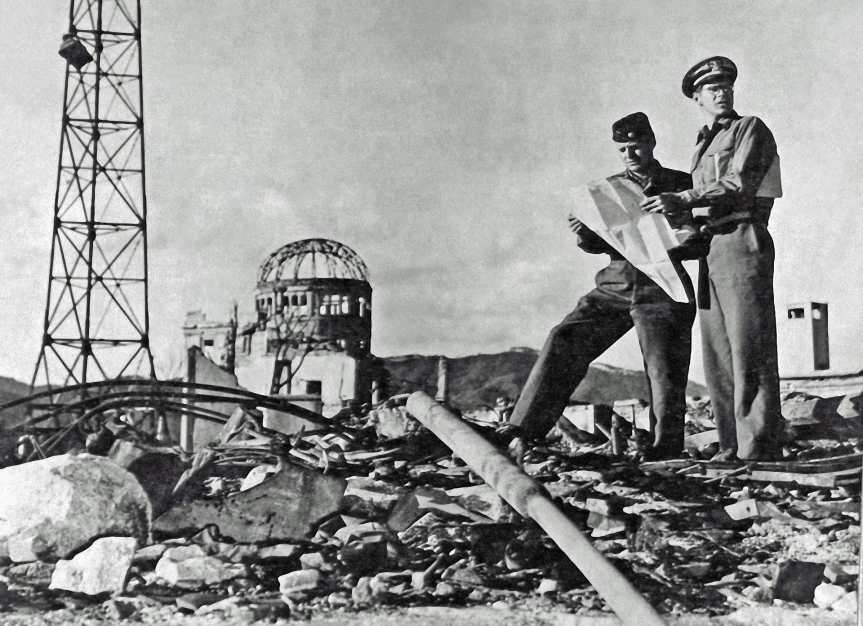
6th August 1945. Imperial Japan had refused to surrender even though all the other Axis powers had. Hitler and Mussolini were dead – the Second world war in Europe had come to an end as far as conflicts were concerned (A long age of a partitioned Germany and the Nuremberg trials would happen later). Roosevelt had overseen the construction of secret weapon and Truman, who came to power in the April of that year, ordered for its use.

Atomic Bomb Dropped on Hiroshima - HISTORY
Hiroshima was the first city in history to suffer a nuclear detonation.

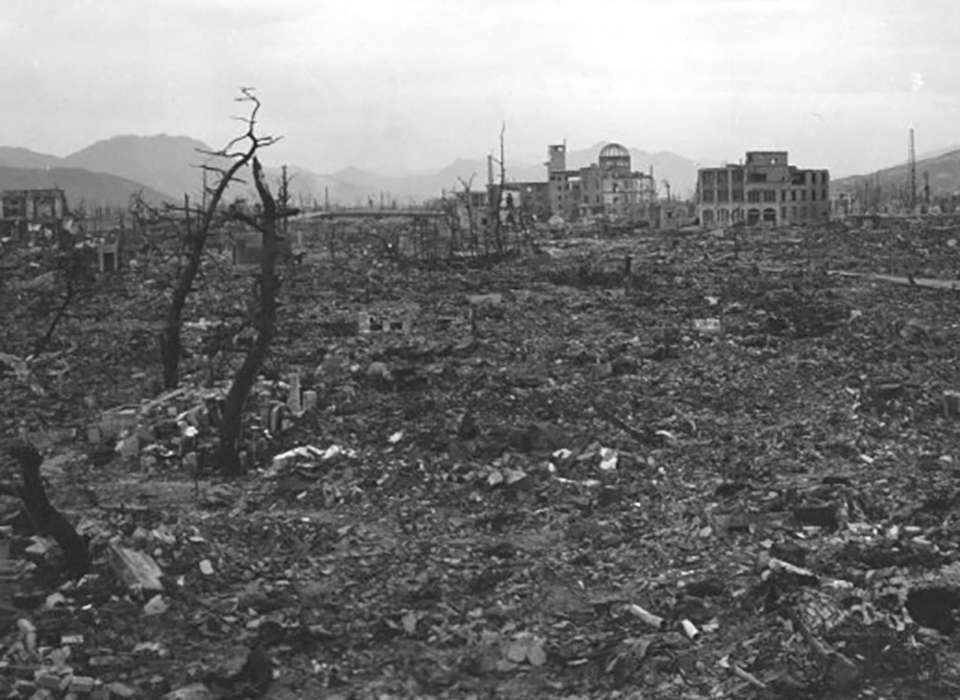
The city of Hiroshima was bombed on the 6th of August 1945 – the first ever atomic bomb attack in human history. 3 days later, another Japanese city – Nagasaki was bombed with the nuclear weapon – forcing Japan to surrender unconditionally and bring the second world war to a decisive end in the favour of the Allied forces. But Truman and most Americans shall never know what it is to be bombed with the weapon. Hiroshima and Nagasaki mark the only instances of atomic bombing recorded. The Allied had failed to bring Japan to its knees and sought the Atom bomb as a quick and effective way. But this quick way, which was a joint plan by the US and its allies – as required by the Quebec Agreement killed a 150,000 people – a 120,000 of them being civilians in Hiroshima alone. And this might have been one of the deadliest attacks on a civilian city by any country involved in a conventional warfare – let alone the US that was trying top be the leader of human rights and civilian liberties.

The Most Fearsome Sight: The Atomic Bombing of Hiroshima | The National  WWII Museum | New Orleans
A 120,000 people and 50sq km of area were eradicated in a matter of seconds.

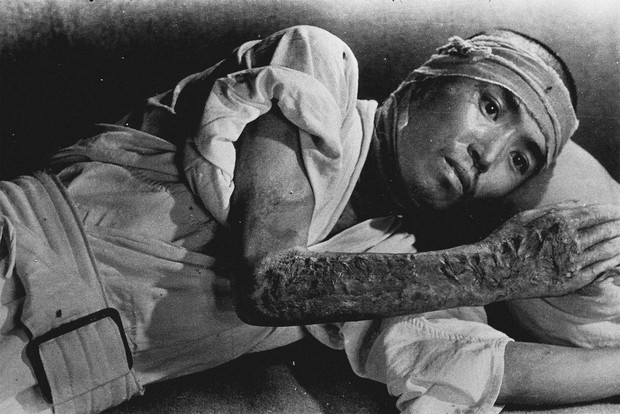
To the Allies, the bomb meant an end to warfare and a sign of American supremacy for the next 5 decades. But to Japan, it meant deaths of 200,000 people in both cities and several decades of nuclear poisoning, radiation induced mutations and cancers that spanned several generations and in some families continue even today.

The University of Texas created a photobook to let the average American – who allegedly yields more pride than sympathy toward the incident – to know of the plight of a nuclear warfare. And people across the world – may it be Chinese, Indian, Pakistani, American, Russian, Israeli or North Korean(if they could read this) would agree that the rhetoric of a nuclear warfare is so blatant in these societies that a bunch of stupid people in the government can lead to a humanitarian and environmental crisis unprecedented in history.

University of Texas photo book aims to show realities of Hiroshima,  Nagasaki blasts to US - The Mainichi
Raditation poisoning killed about 20,000 more people in the later months.

The Hiroshima Day is a reminder of the powers of nature that man has been able to harness and the fact that these powers mean only more responsible behaviour is needed in all of us.

Hiroshima Peace Memorial Park Hiroshima Tickets & Tours - Book Now
The Hiroshima Memorial Park stands as a testimony to those people who bore the brunt of war between two groups who sought nothing but a global supremacy in trade and diplomacy.

Taree zameen pr

REVIEW

Theme -Education 

Title of the movie-Tare zameen pr

Duration -120 minutes

Director -Amir khan & Amol Gupta

cast

Amir khan, Darsheel safary and girija oak

Protagonist

The movie is about a boy named as Ishan Awashti, who found the difficulties in writing and reading. He is a creative boy who had his own sight to understand the world. He is not good in academics. He always found the words running when he tried to read them.  The eight year old loved his family. His brother and mother are always support him but his father wants to prepare him for the race of life. The conception for protagonist in the society (school & home) is that he lazy, trouble maker and rebellious. No one try to find out the struggles of that boy. He always compared on the basis of academic. 

Attitude of parents  family member and friends

The attitude of parents towards their child is always loving and caring. In this movie, the mother of ishan   also loved him very much. She always supports him and help in studies. She cares about him day and night. His mother’s tried to help him and never judge him or compare him with siblings. 

Whereas his father, is always compare him with his sibling. He wanted his child to studies well and cope up with the world. when the school suggest him to out the ishan in some special school he get angry and decided to take out the enrolment of ishan from the current school and enrolled in him a boarding school. His father doesn’t want to accept that his son can have any such kind of problems.

The bonding of ishan and his brother youhan was really good. He always support and love him. He cares about his little brother and tried to engage him studies at his level.

Ishan have only one friend in boarding school, Rajan. He is the only person who found that ishan have a different perspective to understand the things. 

Attitude and role of teachers 

The attitude of teachers toward ishan was not good at all. They always ishan found as trouble maker and messy student. They don’t try to listens his side. According to them, he doesn’t want to learns the things and write them proper way. The teachers are follows traditional method of teaching. They consider the life as the race and school as the training campus. Being teachers they have a different perspective for differently abled children. They called ishan – a trouble maker and abnormal. This movie also focus that the teachers have a mindset that all the children with disabilities should be placed in special and isolation from other children.

Nikumbh (Amir) able to understand the problem of ishan and trying to create a special bond with him. He always tried to motivate ishan directly and indirectly. He found his own childhood in ishan and trying to help him. 

Educational implication

  • The movie shows the traditional method of teaching. In traditional teaching, the teacher decided what to make the read and learn to the student, even in arts class teacher asked them to draw what they have drawn on blackboard.
  •  In traditional teaching, the students consider as the blank board. But need to the student also matters in teaching. What we teach is not enough, what they understand is important.
  • The teacher should have patience and try to find the reason behind the action of students.
  • It is responsibility of a teacher to calm the every curiosity of students.
  • There should be spread the awareness about the inclusive education.
  • The school should involve the parents in educational activities.
  • The teacher should help the children if they found something wrong with the children.
  • There should be a healthy competition in school.
  • The child should not be judges on their academics.
  • The school should try to boast up the self -esteem of students.

Reflection 

‘Tare zameen pr this movie is about the needs of children and methods of teaching in the school. The movie is focus over the methods of teaching in school. While watching the movie I found that the tradition method of teaching focuses on academic more than overall development whereas the modern method of teaching focuses over the participants of students and make them understand the concept behind the topic. 

The movie shows the two types of teachers, one who have willing to understand children and wants to help them not only academics levels but also emotional and personal problems. This is the time when the teachers, parents and society have to understand that only academics can’t help the children but the overall development of child is important.

The movie focuses on inclusion of the education. The perspective of seen the children with the disabilities is really pathetic. More us we see them as the good for thing which shows that are only qualified not educated. Inclusive education gives the opportunity to other children for making positive approach for the children with disabilities. We have to understand the children with disabilities are not different from us, they are just differently abled they don’t need our sympathy, what they need is just a positive and better environment where they can learn, read and write.

……………………

ANIMAL CRUELTY

What is animal cruelty?


Animal cruelty includes a range of dangerous behaviors for animals, from neglect to brutal slaughter. Much of the brutality investigated by humanitarian officials is unintentional neglect that can be solved through education.

Intentional cruelty can trigger a game by deliberately depriving the animal of food, water, shelter, contact, or pet care to the point of cruel, degrading, degrading or killing of an animal.

Why is it important?


All animal cruelty is troubling because it is wrong to inflict suffering on any living creature. Intentional cruelty is a matter of concern because it is a symptom of depression and often indicates that a person may have been a victim of violence or may have been prone to violent acts.

Why can man be cruel to animals?


There could be many reasons. Animal cruelty, like any other form of violence, is often perpetrated by someone who feels powerless, ignored, or even controlled by others. The motive can be to intimidate, intimidate, intimidate or irritate others or to show a rejection of community rules. Some cruelty to animals copied actions that they saw or heard. Some view harming the animal as a safe way to take revenge – or threaten – someone who cares about that animal.

How does it cause animal suffering?


The pain of an animal living with incurable disease or wounds, with or without food or shelter, can be very severe – sometimes even greater than those who have been directly affected by the violence, because their suffering lasts longer. Hungry dying animals experience a host of painful symptoms at each stage of their physical decline. The initial decrease in body fat is followed by muscle loss and atrophy and, finally, weight loss. In chronic hunger, liver damage, heart changes, anemia and skin lesions.

An animal that is not in the right place can be easily hit by extreme heat or cold. During extreme cold or hot weather, it is not uncommon for zookeepers to find their pets – often chained dogs – frozen on the ground or dead on the ground due to a lack of adequate shelter due to the weather. Usually these animals die only on foot away from the homes where their caregivers live.

Dogs that are constantly chained are also the reckless victims, even though they may be illegal in that particular jurisdiction. Because dogs are socially pack animals, isolating themselves at the end of the series causes grief that can lead to aggression, neuroses, and self-destructive behavior. Dogs in chains are also more likely to be victims of starvation, since their incarceration makes them powerless to defend themselves.

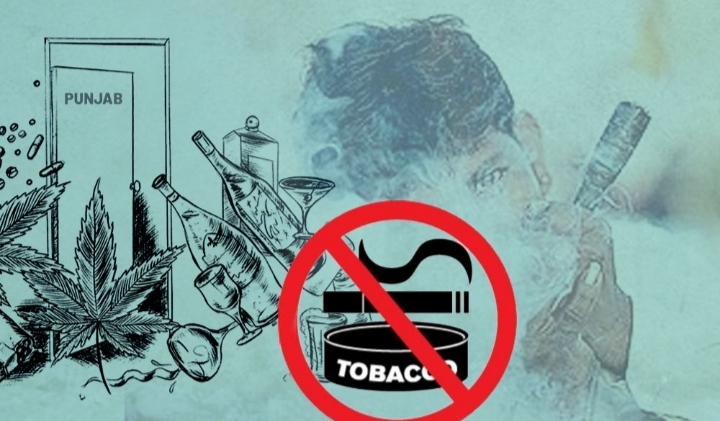
Tobacco Abuse

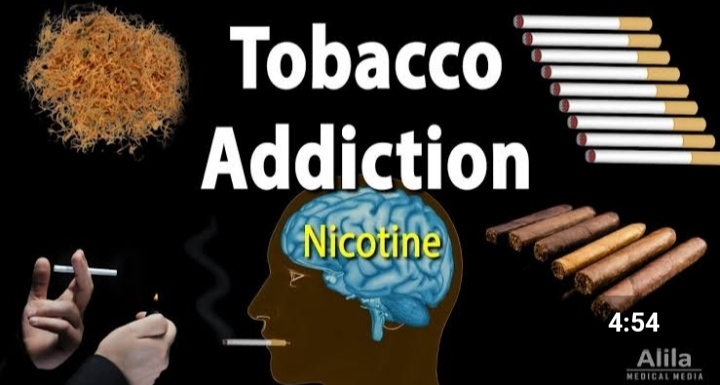
Tobacco is obtained from the tobacco plant Nicotiana tobaccum and Nicotiana rustica. The dried and cured leaves of its young branches make the commercial tobacco used worldwide. Addiction to tobacco is due to ‘Nicotine’ an alkaloid present in it. Nicotine is a stimulant, highly harmful and poisonous substance.

Tobacco is used for smoking, chewing and snuffing. Inhaling tobacco smoke from cigars, cigarettes, bidis, pipes, hukka is called smoking. Tobacco in powder form is chewed with Pan. When powdered tobacco is taken through nose, it is called snuffing.

Smoking Hazards and Effects of Tobacco

When smoke is inhaled, the chemicals get absorbed by the tissues and cause the following harmful effects

Benzopyrene and polycyclic hydrocarbons present in tobacco smoke is carcinogenic causing lung cancer.

Causes inflammation of throat and bronchi leading to conditions like bronchitis and pulmonary tuberculosis.

Inflammation of lung alveoli, decrease surface area for gas exchange and cause emphysema.

Carbon monoxide of tobacco smoke binds to haemoglobin of RBC and decreases its oxygen carrying capacity causing hypoxia in body tissues.

Increased blood pressure caused by smoking leads to increased risk of heart disease.

Causes increased gastric secretion which leads to gastric and duodenal ulcers.

Tobacco chewing causes oral cancer (mouth Cancer).

Prevention of Smoking

Knowing the dangers of smoking and chewing tobacco adolescents and the old people need to avoid these habits. Proper counseling and medical assistance can help an addict to give up the habit of smoking

Puri: First city in India with "Drink-from-Tap" facility

 Puri, located in Odisha, became the first Indian city with 24×7 clean drinking water from tap facility. The “Drink from Tap Project” was inaugurated on 2nd August 2021. The drink from tap facility has been initiated by the Water Corporation of Odisha under the “Sujal” scheme. While inaugurating the project the CM of Odisha claimed that this project will enable the people of Puri to collect water directly from the tap and it would not be necessary to store or filter it further for the purpose of drinking. 

Drink-from-Tap Project

Under the Sujal scheme, the water is taken from the Bhargavi river and then it is channelised to a reservoir. The water is then sent to Samang for water treatment procedures like purification and chlorination. 

Sujal scheme aims to provide clean drinking water from taps to nearly 1.5 million people in 15 towns of Odisha by 2023.  Puri’s water requirement is around 32-34 million litres per day and the plants have been claimed to purify around 42 million litres of water each day. 

The “Drink from Tap” project is said to benefit the 2.5 lakh residents of Puri. As Puri is known as the holy town of Odisha, it would also benefit the 2 crore tourists who visit Puri. Another impact is that it can reduce the number of plastic bottles bought, mostly by tourists. It can drastically reduce the disposal of plastic waste. People can directly consume the water from the 400 fountains installed in the city. 

But it is also important to maintain stringent rules on the quality of water supplied. Contaminated water can pave the way to a number of diseases. Constant monitoring of the water quality is essential. The scheme is in its initial stage and it is imperative to maintain the availability and purity of water in the long run. 

Clean drinking water in India

According to the UNICEF reports, less than half of the people in India have access to safe drinking water. Harmful chemicals such as Arsenic and Fluoride are found in 1.96 million dwellings.  The report also indicates another major concern, that is unavailability of water in many areas. 

School attendance decreases in the areas where children are sent to collect water. They spend hours collecting water which affects their education. In the drought hit states, a 22% rise in school drop out rates was recorded. 

Therefore it is important to ensure the availability of clean drinking water to the people. Safe drinking water is a fundamental aspect of public health.


Realistic Ways to Save Time and Money in College

The transition to college can be stressful, no matter how prepared you are. As a student, you have many decisions to make, like what to major in, which classes to take, and how to get involved on campus.

Add in the responsibility of paying for school, keeping up with a part-time or full-time job, and a steady load of coursework, and it’s easy to become overwhelmed and financially overextended. As a college student, I learned the hard way what happens when you procrastinate and overspend.

Here are a few tips you can use to save time and money in college, so you can worry less—and feel confident about your future.

How to Make the Most of the Time You Have

Learning to manage your time is an essential skill to being successful in college (and in your future career). While the best approach to time management may look different from one person to the next, here are a few ideas to get started.

Once you’ve picked your classes and have your course syllabi for the semester, buy or create a calendar. From here, outline the semester, highlighting essential dates for midterms, papers, presentations, and other assignments. You can colour-code it and get as creative as you like—the point is to see every deadline coming your way. Once you have this completed, try these things:

1.Plan by week


Schedule out your week in a daily planner, whether on paper or on your phone. If you’re like me and like to schedule everything, record when you’ll go to the gym, break for meals, spend time with friends, study, and pursue other activities. If you prefer a rough outline of your schedule, jot in any significant deadlines for a given week. This technique will keep you on track and help you avoid pulling all-nighters, which can mess with your schedule and, potentially, your grades and mental health.


2.Start with the simple to-dos


Completing easy tasks immediately after class—or as soon as you can—are an easy way to cross off your to-do list without worrying about anything on it falling to the wayside. One of my undergraduate classes required self-reflection pieces each week. I always completed them right after class because the material was fresh in my head, which made the writing process quicker and in a way, more genuine.

For a larger writing assignment, calculate how much time you have to complete it and divide that by the minimum number of pages you’re required to write. For instance, if you’re assigned a 20-page paper and you have 12 weeks to complete it, you’ll need to write about 1.66 pages per week to get it done. It seems much more manageable when you look at it this way.

3.Back up your work


Technology is a beautiful thing, but when it fails us, it can have catastrophic effects. Ever have a 15-page paper due the next morning, and your hard drive dies? Your professor may or may not be understanding, and I would guess that you’d prefer to do without the frustration (and extra work) that a similar incident could cause.

So be sure to email yourself a copy of the writing assignment you were working on and save a copy on a USB. This way, if your computer died, I had two options for getting it back. You can also use Google docs to save your work. It never hurts to have multiple copies of your work.

4.Keep distractions at bay


I can’t stress this enough; there is no more significant time waster than setting aside time to get work done and getting distracted by friends, your cat, the weather, the TV, anything. If you know that you are easily distracted at home, then seek out time at the library or in a study room. If you struggle to focus, set aside an hour to study, take a break, and repeat.

Let’s Talk About Money Management

Money is probably one of the most significant stressors facing college students, thanks in part to growing tuition and fees, additional academic expenses like textbooks, and the limited time to devote to earning money. Here are some ideas on how to maximize your budget.

1.Change up your grocery shopping habits


Want to save money on food? Know that thinking cheap doesn’t have to mean scrimping on quality. Most towns and cities have a farmer’s market that offers seasonal produce and other goods at a severely discounted price. If there isn’t a farmer’s market in your area, consider splitting a membership to a warehouse store like spencer’s or Walmart with a few friends or roommates. Planning for regular shopping trips may be enough to let you opt-out of your campus meal plan—and save a fortune on food.

2.Skip the restaurant


As great as not having to cook is, in many cases, what you order at a given restaurant can almost always be made at home for less. For those who see heading out for a meal as a time to catch up and socialize with friends, consider inviting a group over for a communal meal. Not only will you save money, but you’ll also have leftovers and the added fun of making a meal together.

3.Look for freebies


As the old saying goes, “the best things in life are free.” This sentiment rings especially true as a college student. In my experience, most of the outings with friends, guest lectures, and concerts I attended were free and found through local paper, word of mouth, and social media. I made such a routine of it that my the second year, I had barely paid anything for entertainment and other events. The best part was, my friends, became so curious about my adventures that they all started tagging along—and saving money too.

HOW TO IMPROVE WRITING SKILLS?

Writing is an art and not everybody could become an expert without practice. Maybe, everyone can write generally like blogging and things. But professional writing needs certain steps to be followed and practiced. It is not an inborn quality for anyone, it lies in the person’s interest to learn and master it. To stand unique from others and gain appreciation, the person should have a passion for writing from the heart. Here are few steps one could take and follow while writing.

  • HAVE THE HABIT OF READING

Read articles, blogs, and other kinds of stuff as much as you can. The more you read the more you get the ideas and intuitions to write properly. You will also get some inputs before writing. You can notice that it is easier to write after gaining inputs. Reading also helps to improve your vocabulary. One can start the practice of reading from the newspaper. When you read the newspaper, you could get to know at least 5 new words every day. 

  • BRUSH UP YOUR BASICS

Before starting to write, revise the rules in English grammar and writing. Although you don’t need to complete a course on grammar, the basics are required. Build a strong basement with the basics of spelling and grammar. Grammar is very important while writing although it is not paid attention to while speaking.

  • RESEARCH WELL

Ensure you have made the necessary research on the topic. Reach out to the available resources of that topic, make a thorough study and note the key points that are required. This will make you more knowledgeable and you could write easily with a flow. Unless you know more about a topic, you couldn’t expand your ideas and write well.

  • PRACTICE WRITING

To improve your writing, do as much practice as you can. It is the only helper to mould you in the right shape. Learn to frame paragraphs and sentences. Try to bring a coherent sequence of sentences. When you write never doubt yourself or your skills. Don’t do it as a practice, think of it as your job and give your best every time you write. Take up workshops and internships until you feel confident and have become a passionate writer.

  • REVIEW AND EDIT

When you are writing, always start with the rough draft. Read what you have written and make the required changes to make it a better one. Check for spellings and grammatical errors. Edit the rough draft, remove unnecessary words, proofread and frame a fair copy. Try to deliver the content with simple words so that anyone who reads could understand it. Finally, check for plagiarism from the available online tools. This is essential to ensure that your work is not copied from other sources and is unique.

  • HAVE SOMEONE TO READ WHAT YOU’VE WRITTEN

Try to have a person by your side to read, guide, and organize you. The person may be your teacher, colleague, friend, or anyone with enough knowledge in grammar and the language to suggest and give a true opinion on your work. 

These are some of the tips to become a better writer. Nothing comes without effort and so as any language. “Practice makes a man perfect” – so practice more and become a perfect writer. Start simple, make gradual increments and then master the art. Happy learning😊.

Rani Lakshmi Bai- an epitome of bravery and courage.

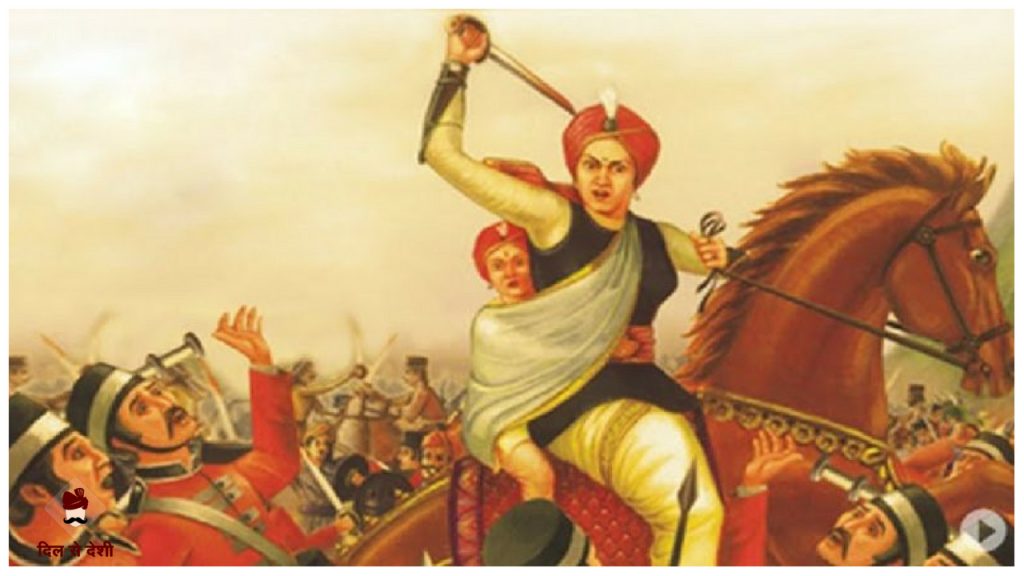
Rani Lakshmi Bai was the queen of the princely state of Jhansi, which is located on the northern side of India in UP. She was one of the leading personalities of the first war of Independence that started in 1857. The name of Rani Lakshmi Bai will be immortal in the history of India. She was considered as the heroine of India’s war of Independence. Her struggle against the British is legendry. She was a true patriot and full of self-respect. She was born on the 19th of November 1835 in the town of Bithur. Her parents were Moropanth and Bhagirathibai. Manikarnika or Manu as she was named at birth, lost her mother at the age of four, Manu was brought up by her father. With education, she also learned skills like sword fighting, horse riding, and using a gun.

  She was married to Gangadhar Rao, the king of Jhansi at the tender age of eight. Thus, she became the Rani of Jhansi. Jhansi is now the district in Uttar Pradesh. There was a treaty between the British and the Raja of Jhansi. One being that if the British needed any help then Jhansi would help them and the other being that the British decide who would be the ruler of Jhansi. On 21st November 1853, Lakshmi’s husband and the only son died. During that period, Lord Dalhousie was the Governor-General of British India. The adopted child was named Damodar Rao. As per the Hindu tradition, he was their legal heir. However, the British rulers refused to accept him as the legal heir. As per the Doctrine of Lapse, Lord Dalhousie decided to seize the state of Jhansi.

  Rani Lakshmi Bai went to a British lawyer and consulted him. Thereafter, she filed an appeal for the hearing of her case in London. But, her plea was rejected. The British authorities confiscated the state jewels. Also, an order was passed asking the Rani to leave the Jhansi fort and move to the Rani Mahal in Jhansi. Lakshmi Bai was firm about protecting the state of Jhansi. Jhansi became the focal point of the uprising. Rani of Jhansi began to strengthen her position. By seeking the support of others, she formed a volunteer army. The army not just consisted of the menfolk, but the women were also actively involved. Women were also given military training to fight the battle. In the revolt, Rani Lakshmi Bai was accompanied by her generals.

  Rani Lakshmi Bai prepared herself well for this fight for freedom. She used to set out on horseback, attired like a man with a metal helmet with a flowing turban, a protective plate bound to the chest, pyjamas, and a sash over them. With weapons like pistols and daggers, Rani was now ready for battle against the British. From the period between Sep-Oct 1857, Rani defended Jhansi from being invaded by the armies of the neighboring rajas of Orchha and Datia. In January 1858, the British army headed its way towards Jhansi. The conflict went for two weeks. Finally, the Britishers succeeded in the annexation of the city. However, rani Lakshmi Bai managed to escape along with her son, in the guise of a man.

   She took refuge in Kalpi. She then attacked the Gwalior fort and the Raja later surrendered. The British army then attacked the fort of Gwalior. Rani and her army fought courageously but got defeated. Rani Lakshmi Bai sustained many injuries. She died on 17th June. It is believed that when she was lying unconscious on the battlefield, a Pandit found her and brought her to an ashram, where she died. For her immense effort, she is referred to as the ‘Icon of Indian Nationalist Movement’. Her story became a beacon for the upcoming generations of freedom fighters.

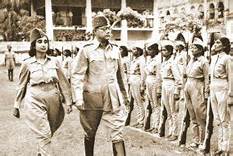
   A lot of literature has been written on the life history of Rani Lakshmi Bai of Jhansi. Heroic poems have been composed in her honor. Rani Lakshmi Bai became a national heroine and is a perfect example of female bravery. When the Indian National Army formed its first female unit, it named the Unit after her. Indian poetess Subhadra Kumari Chauhan wrote a poem in the Veer Ras style about her, while is still recited by children in schools all over India. The Rani of Jhansi was immortalized in bronze statues both at Jhansi and Gwalior.

‘Rani of Jhansi Regiment’ (of Indian National Army)

The crazy ball and the crazy me

Photo by NEOSiAM 2021 on Pexels.com

The balls above bring back memories. Don’t they? Well, they definitely do for me. When I was a kid, mobiles weren’t very popular and so we had to look for other sources of entertainment that included many board games, those plastic bats, plastic cars and later on those remote controlled ones, a soap bubble maker, stuffed cartoons and bears, cartoon characters in balloons and balls- football, stumper ball, leather balls, table tennis balls, plastic balls, even golf balls, balloon balls and my personal favourite -the crazy balls.

Well, what’s so special about them, you ask. Nothing much, except that once thrown they bounce back soo high and the fact that they come in such attractive colors- neon, green, pink, blue, a mixture of pink and blue, green and yellow and soo many more and the rubber like texture of the balls. You couldn’t help but love it.

And this one fine day, when I was out with my mother and visited a stationery, I saw these crazy balls. Not one or two, but a whole packet. I couldn’t believe they still sell this. Now-a-day, kids have so many sources of entertainment and when they do play outside, it’s usually in those professional stadiums. I thought they had stopped making them. So anyways, when I saw the packet, I couldn’t help but want one. With the best puppy like face I could muster, I looked at my mother and pleaded to have one. My mother looked at me in all her seriousness and she said and I directly quote- “Why do you need one? Are you a kid?”. It was when it stuck me, I wasn’t a kid anymore. I was supposed to be all serious and mature. But then again, feeling that child like excitement once again, after soo long felt strange but it felt soo good. I couldn’t help but want it- both that feeling and the crazy ball. And so I looked at my mother and said, “Yes, I am only a kid “. She smiled. What more could she have said and when I didn’t budge she allowed me to have one. Just like those old days, choosing one was soo difficult. There were soo many colors- neon, green, pink, blue, a mixture of pink and blue, green and yellow, red and green. I took the pink and blue ball and clutched it tightly in my hand all the way back home. The crazy ball sure has me crazy over it. So, gotta go. I still have to play with it. And so, if you ever come across any of those or any of your personal favourites, embrace them. Be a kid. Life is short, the pandemic has taught us this, but our childhood was even shorter. And we all miss it somewhere, sometimes. So when life gives you moments like these, don’t just sit and recollect. Go ahead and relive.

CLAUSTROPHOBIA

Claustrophobia is an anxiety disorder that causes an intense fear of enclosed spaces. If you get very nervous or upset when you’re in a tight place, like an elevator or crowded room, you might have claustrophobia. Some people have claustrophobia symptoms when they’re in all types of closed-up areas.

Claustrophobia is often caused by a traumatic event experienced during early childhood. For example, adults may develop claustrophobia if, as a child, they: were trapped or kept in a confined space. were bullied or abused.

Claustrophobia is very common. “Studies have generally indicated that about 7% of the population, or up to 10%, is affected by claustrophobia,” says Bernard J. Vittone, MD, founder and director of The National Center for the Treatment of Phobias, Anxiety and Depression.

Claustrophobia is treatable and people can recover from the condition. For some people, claustrophobia disappears when they get older. If it doesn’t, there are different ways you can treat your fear and physical symptoms, as well as manage your triggers to live an active and fulfilling life.

Claustrophobia can be treated and cured. There are different ways to treat your fear and symptoms so you can have an active and healthy life.

POLO

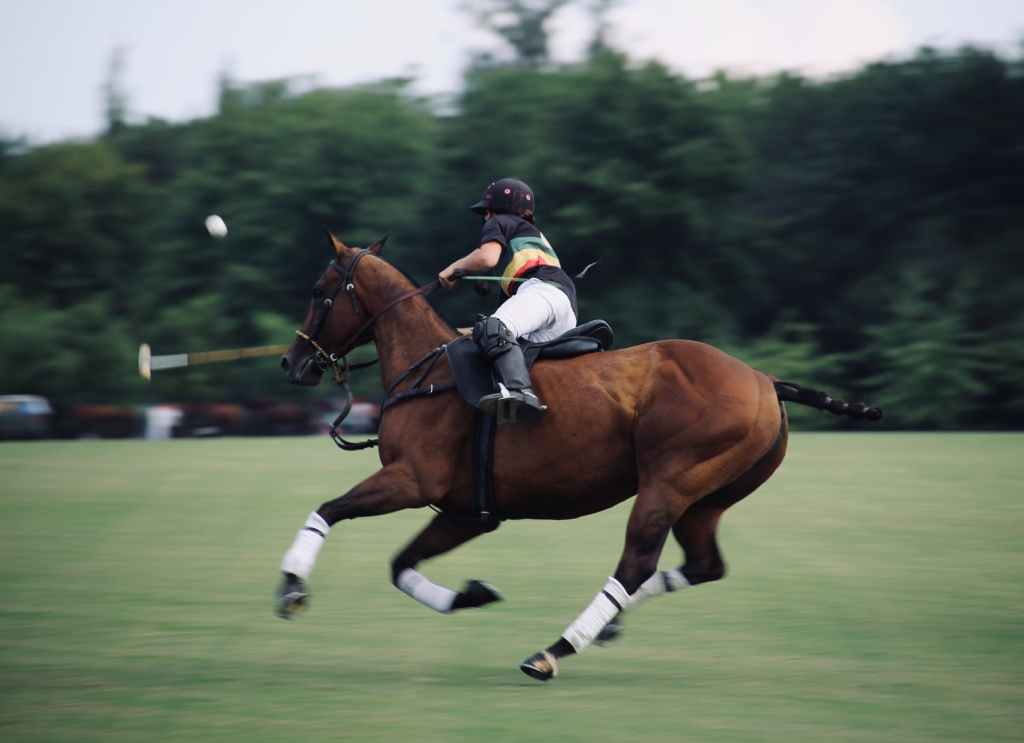
Polo is a horseback ball game, a traditional field sport and one of the world’s oldest known team sports. The game is played by two opposing teams with the objective of scoring using a long-handled wooden mallet to hit a small hard ball through the opposing team’s goal. Each team has four mounted riders, and the game usually lasts one to two hours, divided into periods called chukkas or “chukkers”

Polo has been called “the sport of kings”, and has become a spectator sport for equestrians and high society, often supported by sponsorship. The concept of the game and its variants date back from the 6th century BC to the 1st century AD, originated from equestrian games played by nomadic Iranian peoples. The sport was at first a training game for Persian cavalry units, usually the royal guard or other elite troops.A notable example is Saladin, who was known for being a skilled polo player which contributed to his cavalry training.It is now popular around the world, with well over 100 member countries in the Federation of International Polo, played professionally in 16 countries, and was an Olympic sport from 1900 to 1936.

Polo is played professionally in many countries, notably Argentina, Australia, Brazil, Canada, Chile, Dominican Republic, France, Germany, Iran, India, New Zealand, Mexico, Pakistan, Jamaica, Spain, South Africa, Switzerland, the United Kingdom, and the United States, and is now an active sport in 77 countries. Although its tenure as an Olympic sport was limited to 1900–1939, in 1998 the International Olympic Committee recognised it as a sport with a bona fide international governing body, the Federation of International Polo. The World Polo Championship is held every three years by the Federation.

Polo is unique among team sports in that amateur players, often the team patrons, routinely hire and play alongside the sport’s top professionals.

The playing field is 300 by 160 yards (270 by 150 m), the area of approximately six soccer fields or nine American football fields (10 acres), while arena polo is 96 x 46 metres. The playing field is carefully maintained with closely mowed turf providing a safe, fast playing surface. Goals are posts which are set eight yards apart, centred at each end of the field. The surface of a polo field requires careful and constant grounds maintenance to keep the surface in good playing condition.

Modern Agriculture

Agriculture is the main occupation in India, whilst it is more than an occupation, as it is regarded as the backbone of our country. It does not just a need or merely a source of livelihood but a way of life without which we could not imagine our existence on Earth. On a literal note agriculture means the production and cultivation of crops and livestock on a farm. It provides the highest contribution to national income and is currently the highest contributor to the GDP of India. It is the basic salient factor for the economic growth of a country on the same hand the development of agriculture is very prominent for a country’s development. It plays a crucial role and an integral part in the entire life of an economy which presses the need of its development. Speaking about the enhancement in the field of agriculture there are many methods and technologies in the contemporary world that contributes to its growth. Modern agriculture is the juncture where technologies and agriculture meets.

It is an evolving approach to many innovations in the agricultural field and farming practices that can help the farmers to augment efficiency by implementing several methods and reduce the number of natural resources like water, land, and energy necessary to meet the world’s food, fuel and fiber needs in a more effective form to increase productivity and decreasing environmental impact. It is driven by continuous improvement, using technology, digital tools and data. Precision agriculture allows the farmers to be more accurate that includes the use of Global Positioning Systems which results in the effectual use of resources.

Techniques in modern agriculture

Aeroponics system– It is the process where plants are grown in the air or mist environment without the use of soil. Plants grow in a soilless medium called rockwool. By using this method farmers will have better control over the amount of water to use. Lot of vegetables and fruits like beets, broccoli, cabbage, carrots, cauliflower, cucumber etc can be grown using this method.

Monoculture– It is the raising of a single crop within a specified area which in contrast to the traditional technique of farming , which relied on multiple crops being planted within a specific area. Many indoor farms growing medicinal herbs and flowers are measured to be monoculture farms. Monoculture farming is widely used in both industrial farming and organic farming and has allowed increased efficiency in planting and harvest. It reduced plant opposition for nutrients, space and solar radiation.

Drones in farming – It is an unmanned aerial vehicle applied to farming in order to help increase crop production and monitor crop growth. Sensors and digital capabilities can give farmers a well-heeled picture of their fields. The drones in agriculture have the potential to launch the agriculture industry into a future of sustainability. It is very effective at collecting data to help farmers improve crop health and allows farmers to gain immediate knowledge about the status of the fields.

Hybrid seed technology– It is a cross between two or more unrelated inbred plants. The two dissimilar varieties of plants are cross bred, resulting in a seed that carries one or more favorable traits. They are common in commercial farming, mainly to increase crop yields. It shows enhanced disease resistance, improved crop yields, increased flavor of fruits and vegetables.

Tissue culture – It is a method where the fragments of a tissue plant are introduced into a new, artificial environment, where they continue to function or grow. It is the expansion of tissues or cells separate from the organism. This is naturally facilitated via the use of a liquid, semi-solid or solid. such as broth or agar. It is a fast technique in which thousands of plants can be created in a few weeks time from a small amount of plant tissue and the plants are disease free.

Irrigation technologies-Water is one of the most essential factors in the deciding the survival of plants. The modern methods of irrigation include surface irrigation- flood irrigation, sprinkler- water is sprinkled or sprayed on plants which is similar to rainfall, drip – small diameter pipes with emitter or drippers that lie close to grounds and subsurface. The modern methods are better because it saves more water and also reduces the time and labor.

4 Mysterious places that one must visit!


Have you ever been curious
regarding something mysterious or extraordinary? Do you like to wander into the
woods, or a place which has its own unexplainable aura? Have you ever wanted to
explore the place where you could actually experience Sherlock Holmes in real
life?


If yes, then here are the most 4 interesting and
mysterious places that you would love to visit which could quench your thirst
for curiosity, adventure and can awaken your inner detective as well!


1. Chamoli: The lake of skeletons

Roopkund Lake is located in Uttarakhand. This lake
represents tragedy , melancholy and despair. About 300-600 skeletons can be
seen beneath this frozen lake  every year when the ice melts. According to
, the radiocarbon tests and forensics results state that the corpses date back
to 15th century!

The residents believe that the corpses might be of the
king and queen of Kanauj, who were on their way to pilgrimage but they died in
this lake because of the heavy hailstorm.


2.  ” No Door village”: Houses of
Shani Shingnapur

Shani Shignapur is a small village in Maharashtra
located 35 km away from Ahmednagar. In this place, no building, houses, schools
and shops have doors! The mysterious fact about this village is that in spite
of doors not being there, no single crime or theft has occurred or committed!


People residing in the village believe Lord Shani from
the core of their heart and they also believe that it is due to his blessings
that there is zero crime rate in the village!


 3. ” Cursed Rock” at Shivapur

The Hazrat Qamar
Shrine is listed among the extraordinary places in India as well. It is
famous for its special rock that weighs 70 kg and can only be carried via
single method. 

Eleven people are
required to gather around the rock and they have to chant the name of the saint
loudly who cursed the rock and then the rock rises up in the air magically. The
rock could not be lifted by any other methods no matter how effective those methods
were!  


4. 
Malappuram Mystery!

Malappuram
village is known for its large number of twin births . As soon as one
enters in to the village, one can see twins or triplets everywhere! According to Travel Triangle, The
village is currently home to over 200 pair of twins and two
sets of triplets!
  Moreover, the women who marry a person outside the
village bear twins or triplets too!

According to
doctors, the possible reason behind this mysterious situation might be due to
the chemicals present in the water in that village. The village is also known
as Kodinhi.