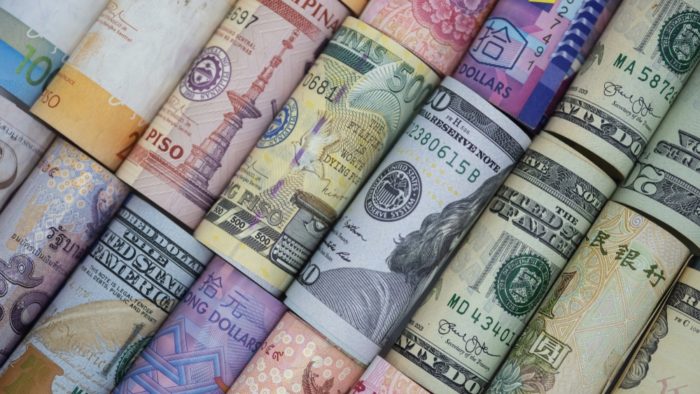
Thinking about currencies, Dollar, Euro, or Pound are the famous currencies that come up in our mind, but they are not known to be the powerful currencies in the 2021 currency power ranking, here we are talking about the most expensive currencies in the world.
Top five powerful currency 2021:
1.Kuwaiti Dinar (KWD) The most expensive currency of 2021, currently its value is 3.31 USD, 2.77 EUR, and 245.92 in Indian Rupees, the reason behind this is that Kuwait has a very stable and strong economy because of its oil-rich land and industry. In Kuwait, you don’t have to pay any kind of tax.
2.Bahraini Dinar (BHD) Securing the second position with its value of 2.66 USD,2.23 EUR, and 197.63 INR. The currency of an island nation in the gulf near Saudi Arabian Bahrini’s economy depends on exporting petroleum products been an oil-rich country in Arabian Gulf.
3.Omani Rial (OMR) Oman has a developed economy all thanks to oil territory. Currently, its value is 2.60 USD, 2.18 EUR, and 193.17 in Indian rupees. The purchasing power of Oman is excessively high, the Omani government has to issue notes of half Omani Rial and one-fourth of Omani Rial.
4.Jordanian Dinar (JOD) Currently, with the value of 1.41 USD, 1.18 EUR, and 104.76 INR, the reason behind it is hard to explain but many experts say that it is was of the government has fixed exchange rates of the currency.
5.British Pound Sterling (GBP) With the value of 1.38 USD,1.16 EUR, and 102.53 INR, the British Pound sterling securing the fifth position, be the best currency in Europe, as a reason for London being the financial capital of the world and involvement of Britain in many economical activities.
After the initial days of dalgona coffee and ludo king match nights, lockdown or rather the pandemic had a numbing effect on all of us. The ever growing numbers of cases and death tolls, all the first world nations under lockdown, the big retailers going bankrupt, everything seemed glee and survival at stake. Depression took its form, irrespective of whether they were spending whole day before a screen or in kitchen cooking, it was bound to have its effects on all. The rising number had an unending effect on all of us, no arguments, but have we ever paused to thing, is the rising numbers deducting the number of recovered patients or rather are they even publishing these numbers? Is our westernized outlook of everything make us only concentrate on the rising cases in America and death toll of Italy? Did we pause to check out the Bilwara model or how Goa or Kerala contained the pandemic? This exactly is Infodemic.
What is an infodemic?
An Infodemic is an overabundance of information, some accurate and some not, occurring during an epidemic. It makes it hard for people to find trustworthy sources and reliable guidance when they need it. Even when people have access to high-quality information, there are still barriers they must overcome to take the recommended action. They make the readers feel overwhelmed or over burdened by whatever is happening around us. “We’re not just fighting an epidemic; we’re fighting an Infodemic,” said Tedros Adhanom Ghebreyesus, Director-General of the World Health Organization (WHO) at a gathering of foreign policy and security experts in Munich, Germany, in mid- February, referring to fake news that “spreads faster and more easily than this virus.” WHO explains that infodemics are an excessive amount of information about a problem, which makes it difficult to identify a solution. They can spread misinformation, disinformation and rumors during a health emergency. Infodemics can hamper an effective public health response and create confusion and distrust among people.
How to tackle this?
To tackle this information a team of WHO “myth busters” are working with companies like Facebook, Google, Pinterest, Tencent, Twitter, TikTok, YouTube and others to counter the spread of rumors, which include misinformation like that the virus cannot survive in the hot weather, that taking a high dose of chloroquine medication can protect you, and that consuming large quantities of ginger and garlic can prevent the virus. These companies, according to news reports, are aggressively filtering out unfounded medical advice, hoaxes and other false information that they say could risk public health. In a rare move, Facebook and Twitter have taken down a post from a head of State that falsely stated that a drug was working everywhere against the coronavirus. (Inspired from an article published in Times of India.)
The Maurya Empire was a topographically broad Iron Age authentic force in old India, managed by the Maurya line from 322-185 BCE. Starting from the realm of Magadha in the Indo-Gangetic Plain (present day Bihar, eastern Uttar Pradesh) in the eastern side of the Indian subcontinent, the domain had its capital city at Pataliputra (current Patna). The domain was the biggest to have at any point existed in the Indian subcontinent, crossing more than 5 million square kilometers at its pinnacle under Ashoka.
The Empire was established in 322 BCE by Chandragupta Maurya, who had toppled the Nanda Dynasty, and quickly extended his power,with Chanakya’s assistance, toward the west across focal and western India. His extension exploited the interruptions of nearby powers in the wake of the withdrawal toward the west by Alexander the Great’s militaries. By 316 BCE, the domain had completely involved Northwestern India, crushing and vanquishing the satraps left by Alexander. Chandragupta then, at that point crushed the attack drove by Seleucus I, a Macedonian general from Alexander’s military, and acquired extra region west of the Indus River.
In now is the ideal time, the Maurya Empire was perhaps the biggest realm of the world. At its most prominent degree, the domain extended toward the north along the regular limits of the Himalayas, toward the east into Assam, toward the west into Balochistan (southwest Pakistan and southeast Iran) and into the Hindu Kush heaps of what is currently Afghanistan. The Empire was ventured into India’s focal and southern districts by the heads Chandragupta and Bindusara, however it prohibited a little segment of neglected ancestral and forested locales close to Kalinga (present day Odisha), until it was vanquished by Ashoka. It declined for around 50 years after Ashoka’s standard finished, and it disintegrated in 185 BCE with the establishment of the Shunga Dynasty in Magadha.
Victory of Magadha and establishment of the Maurya Empire (c. 321 BCE)
As indicated by a few legends, Chanakya ventured out to Magadha, a realm that was huge and militarily amazing and dreaded by its neighbors, however was offended by its ruler Dhana Nanda, of the Nanda Dynasty. Chanakya swore retribution and pledged to obliterate the Nanda Empire.
The Nanda Empire began from the district of Magadha in old India during the fourth century BCE, and went on until between 345-321 BCE. At its most noteworthy degree, the realm governed by the Nanda Dynasty reached out from Bengal in the east, to the Punjab district in the west, and as far south as the Vindhya Range. The leaders of this tradition were acclaimed for the incredible abundance that they gathered.
Chanakya empowered the youthful Chandragupta Maurya and his military to assume control over the seat of Magadha. Utilizing his insight organization, Chandragupta accumulated numerous youngsters from across Magadha and different regions, who were furious about the bad and harsh standard of King Dhana, just as the assets important for his military to battle a long series of fights. These men incorporated the previous general of Taxila, achieved understudies of Chanakya, the delegate of King Porus of Kakayee, his child Malayketu, and the leaders of little states.
Maurya formulated a system to attack Pataliputra, the capital of the Nanda Empire. A fight was declared and the Magadhan armed force was attracted from the city to a far off combat zone to draw in Maurya’s powers. In the interim, Maurya’s general and spies paid off the Nanda’s bad broad, and made a climate of common conflict in the realm, which finished in the demise of the beneficiary to the seat.
Upon the common turmoil in the realm, Nanda surrendered and vanished into oust. Chanakya reached the leader, Rakshasa, and persuaded him that his dedication was to Magadha, not to the Nanda Dynasty, and that he ought to stay in office. Chanakya repeated that deciding to oppose would begin a conflict that would seriously influence Magadha and obliterate the city. Rakshasa acknowledged Chanakya’s thinking, and Chandragupta Maurya was genuinely introduced as the new King of Magadha in 321 BCE, at 21 years old. Rakshasa turned into Chandragupta’s main consultant, and Chanakya took on the situation of a senior legislator.
What boosts up your confidence in social media? Apparently, the amount of kindness and appreciation from the wonderful people here on our site boosts my confidence.
‘Bedazzle‘ by Shamoly Khera is an effective self help book that educates the readers about how confidence sprouts inside everyone, the author has given many instances to make the readers understand some crucial topics. The book is well researched and efficacious.
‘Our ‘weirdness’ is actually our uniqueness. Our only job in this world actually is to not be like anyone else, but be the best version of ourselves.
– From ‘Bedazzle’ by Shamoly Khera.
Interpretation
This book explores the idea of adapting yourself to the environment around you, coming out of your comfortable zone and the significance of perspectives. I loved how the author has elucidated about discerning our aspirations and drives, a lot of you would feel reluctant to take up a job/stream of education you really love, Shamoly Khera has given an interesting example of the different dispositions we watch in the ‘Friends’ series, if you’ve watched the show, then the way the author has drawn a parallel line will definitely fascinate you.
The mindset of an individual matters a lot, in order to become successful or achieve something you should have a clear mindset. The information about the ‘Fixed Mindset’ and ‘Growth Mindset’ is one of the best insights I’ve got from this book. I’ve added some of the best insights in my book journal as well.
This book offers you the beneficial information to boost your confidence, the amount of research and the plausible instances the author has given are really convincing. If you are looking for an insightful self help book, you can go for this one.
We’ve all heard about self-defense since we were young, and living in the terrible world of the twenty-first century, when no one is entirely safe, it’s a responsibility to recognize that we are the only ones who can protect ourselves. If we look at the most fundamental definition, it is the act of defending oneself from external danger.
The “right to self-defense” is a legal term that refers to the use of self-defense in legal jurisdictions. It is critical to know how to defend yourself in today’s environment.
According to statistics, one out of every three women will be the victim of a violent attack at some point in her life. It is taught in training to block an assault, but it is much better if one can escape it!
As a result, the training should also cover how to avoid an attack in the first place. Which form of karate do you want to learn to defend yourself?
Knowing something as powerful as Karate gives you the confidence and strength to believe that you are not weak and that you have the ability to achieve your goals.
Self-defense techniques
1)Jujutsu\sTaekwondo
2)Krav Maga is a martial art that was developed in Israel.
3)Aikido
4)Wing Chun is a martial art that originated in China.
5)Brazilian Jiu-Jitsu is a martial art that originated in Brazil.
6)Muay Thai is a type of Thai boxing.
You may wish to learn self-defense for a variety of reasons. The most obvious reason is that you want to be able to protect yourself or your family if you ever find yourself in a dangerous situation. It is extremely rare to come across someone who wishes to hurt you. You are extremely vulnerable if you have no preparation for dealing with such issue.
According to the Department of Justice and the Centers for Disease Control and Prevention, one out of every six women has been sexually assaulted or attempted sexually assaulted.
The odds were 1 in 33 for men. No attack is ever the fault of the victim, and not all attacks can be prevented. However, we do know that mastering self-defense can assist victims in stopping or escaping their abusers. Self-defense training is required in a variety of situations, including rape.
A mugging or a house invasion are both circumstances in which self-defense training may help you better deal with the threat, defend yourself and your family, and find strategies to limit the harm the criminal can cause. It’s all about how to protect oneself and think effectively in high-pressure situations. It’s all about developing the confidence to better control situations that would otherwise be utterly out of your control.
Slowly, over time, the corporation became aware of the problem and began holding workshops for women working in the same industry. In fact, we now believe that every parent should include self-defense lessons in their child’s education. Self-defense has become a need for every growing child and individual today, alongside school, art programmed, and swimming sessions.
Suitable for children It instils discipline in youngsters, provides a pleasurable pastime, and aids in the development of confidence. Children who acquire self-defense skills are more alert of their surroundings and are taught how to defend themselves against assailants of all ages, including adults and children. It teaches students how to deal with regular bully scenarios without turning become bullies.
2. Women will love it. Self-defense can be beneficial to women and young girls for a variety of reasons. It boosts self-assurance. It also aids them in levelling the playing field with an assailant who may be far larger than they are. It’s also beneficial for any lady looking for a physical, hands-on workout.
3. Men will love it. For the same reasons as women, males can benefit from this training. The training plan is a wonderful all-around workout that complements any other sports activity.
4. Excellent for the Elderly We all know that age has little to do with learning new things. Older people can learn new practices, which will help them improve their health.
Self-defense provides you the tools and abilities you need to analyze a dangerous situation with confidence and manage it successfully. Nothing could be more powerful than that. It aids in the development of confidence and control over your anxieties, and confidence is a superpower in and of itself.
Self-defense enhances your concentration and focus. As a result, you will learn to concentrate under stressful situations.
It allows you to learn simple maneuvers as well as more complex skills to defend oneself during an attack. Knowing how to defend oneself can make you feel less worried in public or afraid when you’re out late at night alone.
Self-defense is a fun and effective method to strengthen your body, burn calories, and enhance your overall health. Exercise also improves your mood, which is beneficial to persons who are suffering from depression.
One must be both physically and emotionally prepared for an attack. By learning self-defense, you will maintain your muscle and endurance through practicing along with other exercise activities. Thus improving your overall fitness will improve.
Your awareness of your surroundings will improve as a result of self-defense. You never know when you’ll be attacked; no one anticipates being attacked, so we must always be aware of our surroundings.
Improving balance not only includes the physical balance of your core muscles but also a mental balance for improving your focus. Self-defense teaches you how to focus on your target while you control your body. Not having balance, it is almost impossible to fight. Body control and balance help in protecting ourselves mentally and physically.
If you get into a battle, movement is crucial. You can’t just stand there and wait for your adversary to strike again; you have to move and react instinctively. It will aid in the development of your reflexes and the acquisition of a fighter’s reflex, allowing you to move fast and strategically in a situation like this.
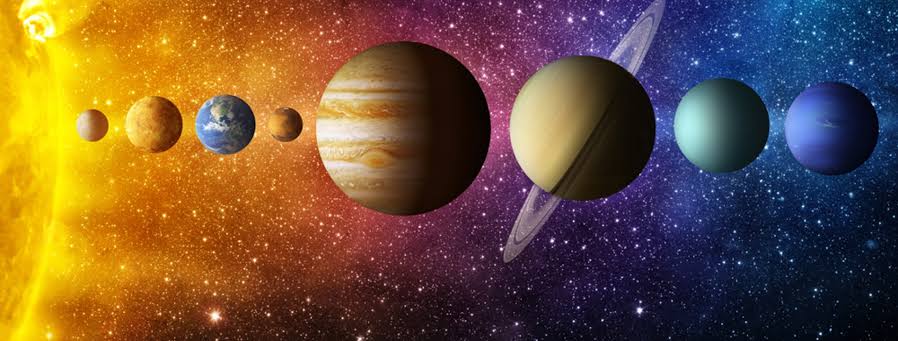
Sun and the celestial bodies which revolve around it form the solar system. It consists of large number of bodies such as planets, comets, asteroids and meteors. The gravitational force of attraction between the Sun and these objects keep them revolving around it.
The Sun
The Sun is a star which is located at the center of our solar system. It is a yellow dwarf star that gives off different types of energy such as infra-red energy (heat), ultraviolet light, radio waves and light.It gives off energy as electromagnetic radiation. It also gives off a stream of particles, which reaches Earth as “solar wind”.
Formation of the Sun
The Sun and the rest of the solar system formed from a giant, rotating cloud of gas and dust called a solar nebula about 4.5 billion years ago. As the nebula collapsed because of its overwhelming gravity, it spun faster and flattened into a disk.
Planets
A planet revolves around the Sun along a definite curved path which is called an orbit. It is elliptical. The time taken by a planet to complete one revolution is called its period of revolution. The four planets grouped together in the inner solar system are Mercury, Venus, Earth and Mars. They are called inner planets. The four large planets Jupiter, Saturn, Uranus and Neptune spread out in the outer solar system and slowly orbit the Sun are called outer planets.
Mercury
Mercury is a rocky planet nearest to the Sun. It is very hot during day but very cold at night. Mercury can be easily observed thorough telescope than naked eye since it is very faint and small. It always appears in the eastern horizon or western horizon of the sky.
Venus
Venus is a special planet from the sun, almost the same size as the Earth. It is the hottest planet in solar system. After our moon, it is the brightest heavenly body in our night sky. This planet spins in the opposite direction to all other planets. So, unlike Earth, the Sun rises in the west and sets in the east here. Venus can be seen clearly through naked eye. It always appears in the horizon of eastern or western sky.
The Earth
The Earth where we live is the only planet in the solar system which supports life. Due to its right distance from the sun it has the right temperature, the presence of water and suitable atmosphere and a blanket of ozone. All these have made continuation of life possible on the Earth. From space, the Earth appears bluish green due to the reflection of light from water and land mass on its surface.
Mars
The first planet outside the orbit of the Earth is Mars. It appears slightly reddish and therefore it is also called the red planet. It has two small natural satellites (Deimos and Phobos).
Jupiter
Jupiter is called as Giant planet. It is the largest of all planets (about 11 times larger and 318 times heavier than Earth). It has 3 rings and 65 moons. Its moon Ganymede is the largest moon of our solar system.
Saturn
Known for its bright shiny rings, Saturn appears yellowish in colour. It is the second biggest and a giant gas planet in the outer solar system. At least 60 moons are present – the largest being Titan. Titan is the only moon in the solar system with clouds. Having least density of all ( 30 times less than Earth), this planet is so light.
Uranus
Uranus is a cold gas giant and it can be seen only with the help of large telescope. It has a greatly tilted axis of rotation. As a result, in its orbital motion it appears to roll on its side. Due to its peculiar tilt, it has the longest summers and winters each lasting 42 years.
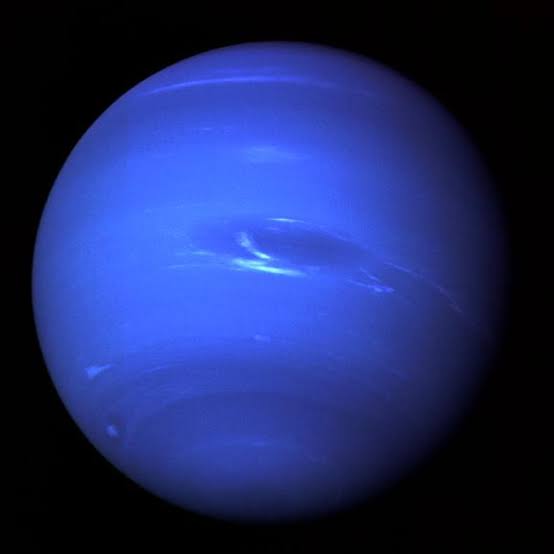
Neptune
It appears as Greenish star. It is the eighth planet from the Sun and is the windiest planet. Every 248 years, Pluto crosses its orbit. This situation continues for 20 years. It has 13 moons – Triton being the largest. Triton is the only moon in the solar system that moves in the opposite direction to the direction in which its planet spins.
The political dynamics are changing in Afghanistan, once again. Is something worse has struck the country or about to reach? A land has witnessed many wars over power and control is again fighting within its mainland after American troops retreated. In February 2020, the Taliban and American government made a deal in Doha that American troops will retreat from Afghanistan and the Taliban to refrain from attacks on US forces. However, this deal didn’t specify any rule and regulation over power and control within Afghanistan and left the country on its own fate. Presently, the Taliban expanding themselves aggressively, by controlling 221 districts out of 320 and still fighting for the left 113 districts, as per the long war journal. And the control of the Afghan government over states are dwindling.
In 1995, a group named Taliban came into existence and with the support of Pakistan’ intelligence agency it became one of the strongest forces in the country. It started capturing prominent cities like Herat, Kandahar and by late September 1996, Kabul. Afterwards, they had full-fledged power and controlled over 90% of the country by 1998. This time period was one of the destructive times for the country, the hardline form of Sunni Islam imposed by the Taliban that restricted women to went out unaccompanied, men had to grow bread at a certain length, music, dance and television were banned by them, chopping hands of a thief and harsh punishments for those who break the law. Then, the attacks of 11 September 2001 (9/11) on New York and Washington DC was the incident that again changed the fate of Afghanistan. The Taliban force denied to hand over the main culprit of the attack who was the terrorist leader Osama-Bin-Laden that induced America to invade Afghanistan. When the American forces invade Afghanistan, the Taliban lost its control over the major part of the country and remained as an insurgent group of the country. Since 2001, the United States has played a vital role in economic, social and political stability and even neighbour countries have started making stable diplomatic relations with the country. However, the effect of the withdrawal of US troops has begun to show in the country with the expansion of Taliban forces in the districts. It could again turn the country into a terrorist’s safe haven.
“Business is all about putting oneself in the customer’s shoes!”
– The Laconic Writer
A New Customer is like an Angel who visits you with Nectar (Money) 😉 However, these Angels lend you their time when they consider the conditions with you and your company as comfortable and trustworthy. In short, these Angels need to be pleased just as we devote our time in prayers pleasing the lord so that he would fetch us some customers. Your prayers are answered because we will be revealing the ways of pleasing your customers and making them approach you. After reading this, you should gain some confidence in effective customer satisfaction services.
Customers approach you through two possible ways: Either they read about your services and felt tempted to try you out or they were told about your impeccable quality of services and thus, this good feedback made them trust you. The former case needs more creativity because in that vast section of content, you want your advertisement to be noticed, either through digital or print medium. Thus, you may have to work on uniqueness to stand out. The way you present your ad matters a lot. Use beautiful and stunning colours in case of print medium while digital medium would demand creativity in the message imparted. The latter case however, includes good customer service and high quality delivery of the same which would incline the customer towards you and force them to generate sweet words regarding your services to others. In the process, you not only get a regular customer but also an appreciating puppet! In short, customer pleasing is all about standing out and being on top of the competition. This is the first stage of customer pleasing before they enter and alight on this journey with you.
Moving to, after they get aboard and select you as their messiah over all other brands.An important point here is, that a business owner mustn’t take regular customers for granted. Just because they visit you almost every time, their importance in your company shouldn’t diminish. Most of the times, people tend to pay more attention to the newly arriving set of customers instead of the regular ones and thus, lose them in the process which isn’t a smart move. Also, since they are your family customers by now, make sure that you treat them with discounts and interesting attractions in an attempt to show that they matter. It is because these regular customers can scatter golden gossiping words that could uphold your company and its services. Regular customers should be your priority because they are responsible in fetching you a fresh set of customers. Attend them first and be extremely courteous to them so that they can, with the power of words, fetch you more regular customers. Of course, making regular customers requires that perfect attitude which should pass right through their hearts.
Interact more with customers so that they don’t feel left out and ignored. However, interact with patience and love so that they don’t get offended with your remarks while leaving with a bad impression which too, with the power of feedbacks, could ruin your business. So, remember to take careful steps in business.
Business is all about being friendly and honey coated! Dip your words in honey and sugar syrup before opening your mouth. Be lenient and patient when it comes to disclosing your services because customers sometimes tend to simply inquire without purchasing. However, a businessman shouldn’t have that myopic perspective of entertaining customers who would make a purchase and ignoring the ones who won’t. As stated earlier, every type of customer is important and shouldn’t be taken for granted because the customer may be testing your patience and estimating the quality of your services through your behavior. At times during such, patience is the key to success.
Introduce attractions like giveaways, buy 1 get 1 free offers, sales, discount coupons, lucky draw competitions, limited period offers etc. to grab attention of your customers. However, remember to set a reasonable rate of your products and services when pricing so as to make it seem appealing. When beginning your business, remember to have economical pricing since you need customers to start with, and after gradually experiencing a hike in the same, slowly but steadily increase the prices at a turtle’s pace. You don’t want to annoy your regular customers with inflation! 50 pounds shouldn’t escalate to 60 pounds in one go! 50 pounds should be increased to 52 pounds in two months and then gradually reach 60 till the end of the year. In fact, that’s what I would do. This is a great strategy to avoid terrified and annoyed customers whom we don’t intend to lose. Nobody wants a downfall after all and the customers too would understand that a hike in prices is obvious by the end of the year! So, be strategic and smart working when it comes to business.
In short, Business is all about honey coated words, excellent customer service, using attractions and benefits to show that customers matter, maintaining good interaction, and possessing the uniqueness to stand out!
positive things. Success means personal prosperity: a fine home, vacations, travel, new things, manual security, giving your children maximum advantages. Success means winning admiration, leadership, being looked up to by people in your business and sodalite. Success
means freedom: freedom from worries, fears, frustrations, and
failure. Success means self-respect, continually fading more real
happiness and satisfaction from life, being able to do more for
those who depend on you.
Success means winning.
Success~achievement~is the goal of life!
HOW TO DEVELOP THE POWER OF BELIEF:-
Here are the three guides to acquiring and strengthening the
power of belief:
1. Think success, don’t think failure. At work, in your home,
substitute success thinking for failure thinking. When you
face a difficult situation, think, ”I’ll win,” not ‘Til probably
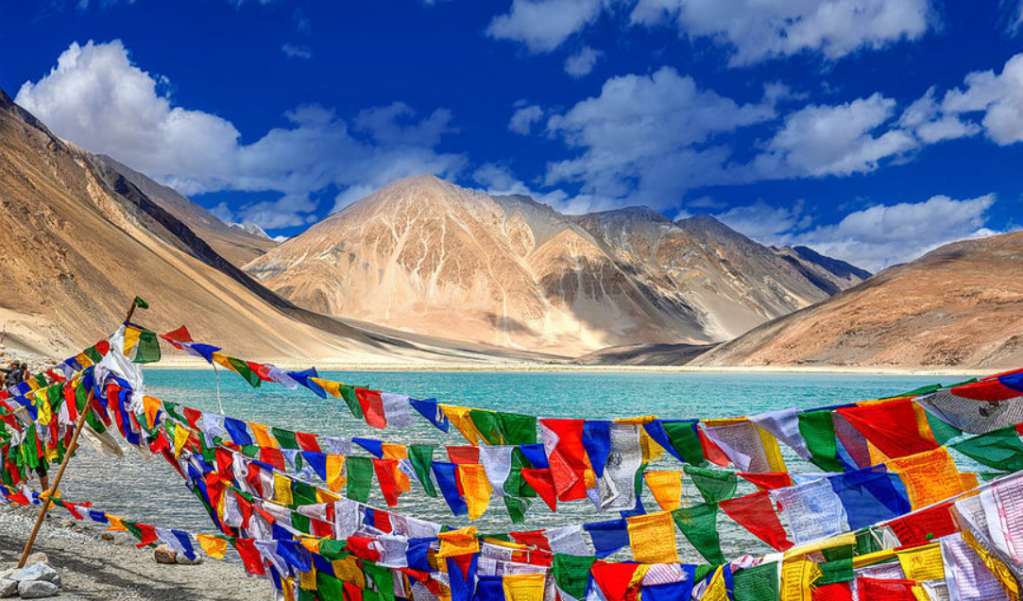
Ladakh – Ladakh is a region administered by India as a union territory, and constitutes a part of the larger Kashmir region, which has been the subject of dispute between India, Pakistan, and China since 1947.It was established on 31 October 2019, following the passage of the Jammu and Kashmir Reorganisation Act. Ladakh is bordered by the Tibet Autonomous Region to the east, the Indian state of Himachal Pradesh to the south, both the Indian-administered union territory of Jammu and Kashmir and the Pakistan-administered Gilgit-Baltistan to the west, and the southwest corner of Xinjiang across the Karakoram Pass in the far north. It extends from the Siachen Glacier in the Karakoram range to the north to the main Great Himalayas to the south. The eastern end, consisting of the uninhabited Aksai Chin plains, is claimed by the Indian Government as part of Ladakh, and has been under Chinese control since 1962.
The largest town in Ladakh is Leh, followed by Kargil, each of which headquarters a district.
Image coutesy – Northlines
State to UT
In February 2019, Ladakh became a separate Revenue and Administrative Division within Jammu and Kashmir, having previously been part of the Kashmir Division. As a division, Ladakh was granted its own Divisional Commissioner and Inspector General of Police.
Leh was initially chosen to be the headquarters of the new division however, following protests, it was announced that Leh and Kargil will jointly serve as the divisional headquarters, each hosting an Additional Divisional Commissioner to assist the Divisional Commissioner and Inspector General of Police who will spend half their time in each town.
In August 2019, the Government of India barred all broadband as well as mobile internet services in the region to prevent the deliberately fabricated falsehood on social media. In January 2020, 2G internet was resumed with no access to social media.
The lockdown started on 5 August 2019 following Revocation of the special status of Jammu and Kashmir via scrapping of the Article 370 of the Constitution of India, Article 35A of the Constitution of India and the introduction of Jammu and Kashmir Reorganisation Act, 2019. Since 5 August, no foreign journalists have been granted permission from the Indian government to report in Kashmir.
According to a September 6 report of the Indian government, nearly 4,000 people have been illegally arrested and detained in the disputed region. Among those arrested were more than 200 politicians, including two former chief ministers of Jammu and Kashmir (J&K), along with more than 100 leaders and activists from All Parties Hurriyat Conference.
The lockdown ended with the resumption of all communication services, allowing 4G and 3G Internet services, in early February 2021.
Central UNI
The Union Cabinet has given its approval of the formation of a Central University in Ladakh. This project cost for the formation of this university will be Rs 750 crore.
In four years the first phase of the university will be completed.
To facilitate the formation of Central University in Ladakh the bill for amending Central Universities Act, 2009 will be introduced.
Establishing this university will aid the propagation of higher education in this region.
The jurisdiction of this Central University will cover the entire region of Ladakh including Kargil and Leh
Other important announcements
The formation of an integrated multipurpose corporation was also announced by the cabinet. This corporation will shoulder development projects in Ladakh.
This corporation will also look after the development of tourism, industries, and various transport services in Ladakh as well as marketing of the regions handicrafts and local products.
This corporation will also aid in the development of infrastructure in this region and will as Ladakh’s the primary infrastructure construction agency.
This corporation will be formed under the Companies Act and will have an authorised share capital of Rs 25 crore with an annual outlay of Rs 2.42 crore.
This corporation will also create job opportunities in this region.
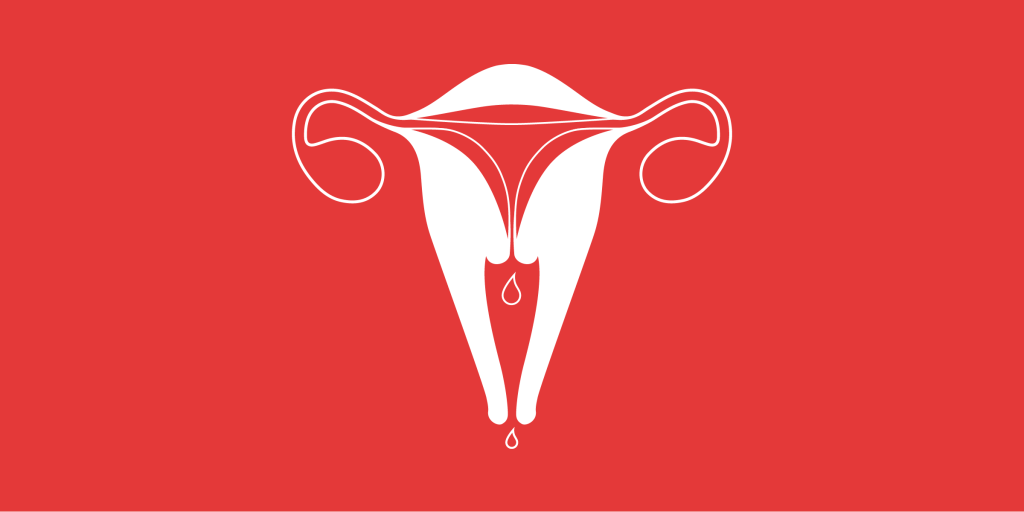
The level of estrogen and progesterone, reproductive hormones, climbs every month as the uterus prepares for pregnancy. The uterine lining becomes dense and spongy as a result of these hormones. This lining is made up of tissue and blood, much like everything else inside our bodies. It provides a variety of nutrients that help pregnancy progress. If there isn’t a pregnancy, progesterone levels drop, and the thick endometrial lining sheds and leaks out of the vaginal orifice. And Menstruation is the result.
Red Wedding . shark week . Time of the week . code red. A slew of terms for one utterance – Menstruation. And not just human beings; Other mammals, such as Old World monkeys and apes, 3-5 kinds of bats, and the elephant shrew, have periods as well.
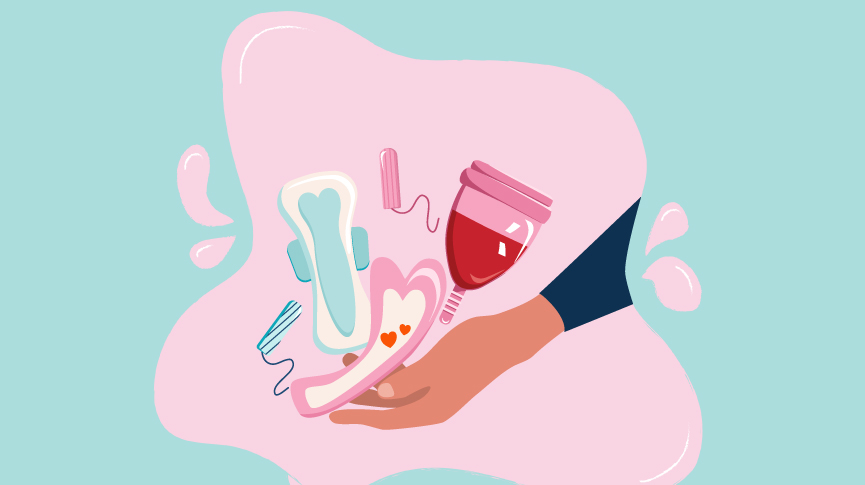
Only 121 million (roughly only 36% of the women) of India’s 336 million menstruating women use sanitary pads, according to the National Family Health Survey 2015-2016. Many women still refuse to use sanitary pads for a variety of reasons, including personal preference and familiarity, a lack of access to or affordability for high-quality commercial sanitary pads, and a lack of adequate knowledge regarding pads.
“More than a third of girls in South Asia miss school during their periods, as they lack access to toilets or pads, and many receive no education about menstruation before reaching puberty,”- A recent report by charity WaterAid and UNICEF revealed.
Because they cannot afford these expensive sanitary goods, many girls and women utilize a new soft cloth or some homemade product. Women may also use hay, ash sand, ash, wood shavings, newspapers, dried leaves, or plastic in extreme circumstances.
In both urban and rural India, qualitative investigations and surveys have revealed the most common reason for not using a sanitary pad is its high price. Pads from high-end commercial manufacturers can cost up to 1.5 times as much as pads from low-cost vendors. Quality sanitary pads are desirable, but the majority of girls from low-income homes cannot afford them.
TAX-FREE SANITARY PRODUCTS
“I am sure all mothers and sisters will be very happy to hear that sanitary pads are now 100 percent exempt from tax,” India’s interim finance minister, Piyush Goyal, at a news conference in New Delhi.
In 2018, India abolished its 12% tariff on all sanitary items, declaring tampons and sanitary napkins tax-free.
But is it enough?
A bundle of ten sanitary napkins, which used to cost roughly 100 rupees, will now cost around 88 rupees when the 12 percent GST is abolished. This could be a woman’s monthly outlay on menstrual products. However, given that 65.07% of India’s population lives in rural regions and relies on manual labor, with many of them subsisting on less than 120 rupees per day, the price of 88 rupees for a packet of sanitary napkins remains exorbitant.
Recently, The Period Products (Free Provision) (Scotland) Act 2021 was approved by the Scottish Government, making sanitary products free for all women and making Scotland the first country in the world to do so in the battle against “period poverty.” It is also the world’s first regulation requiring all public institutions to distribute menstrual sanitary goods, such as tampons and pads.
But why only in Scotland? Periods are not a choice for women. They occur monthly and are a natural phenomenon. Therefore, every woman or girl who is menstruating deserves access to adequate sanitary products, regardless of her family’s income bracket.
It is high time for India and other countries to follow Scotland’s lead and make sanitary products free & accessible for their women.
The word entrepreneur has its origin in the French language. It refers to the organiser of musical or other entertainments. An entrepreneur is one who organises, manages, and assumes the risks of an enterprise. An entrepreneur visualises a business, takes bold steps to establish undertaking, coordinates the various factors of production and gives it a start.Entrepreneurs are the owners of the business Who Contribute the capital and bear the risk of uncertainties in business life. Entrepreneur is action – oriented and highly motivated. He has the ability to evaluate business opportunities, to gather the necessary resources to take advantage of them and to initiate appropriate action to ensure success. Entrepreneur is associated with innovations.He is the main factor of production. Entrepreneur takes decision regarding what to produce, how to produce, where to produce and for whom to produce. He mobilises other factors of production namely, land, labour, capital, organisation and initiates production process. He is responsible for both the profit or the loss. In India, Birla, Tata, Modi are big entrepreneurs.
Many people dream of becoming entrepreneurs someday. But it made me realize that there other factors that needs to be taken into consideration. We need to ask ourselves are we ready to take the challenge to the outside world. Not everyone have the vision, innovation and creativity to become an entrepreneur. The individual must have a positive attitude and accept the responsibility, have discipline to meet their goals, and take action when the opportunity presents itself. Many prefer a job security and rely on a weekly paycheck, while entrepreneurs will take risks and doesn ‘t have that luxury to know the amount of their income.
Starting your own business can be exciting and it can become a well- rewarded experience. Being your own business includes great benefits, Businesses trying to survive the current economic crisis need to pursue competitive advantages and empower them. Competitive advantage results from matching core competencies to the opportunities. The entrepreneur that I interviewed uses her experience, quality, consistency and overall learned what the customers really need and demand. Jane’s skills and experience enable her to respond faster to market changes. Jane has remarkable negotiation and sales skills that make her a most competitive in the market. There are also questions that you need to ask yourself to determine if you are ready to take the next step. Are you able to think of new ideas? Can you imagine new ways of solving problems? Entrepreneurs should think creatively. If you have ideas learn how take advantage of new opportunities. Be your own boss also means that you are responsible for making difficult decisions. The business world involves uncertainty. Do you avoid the uncertainty in life at all costs? If so, owning your own business is not the best.
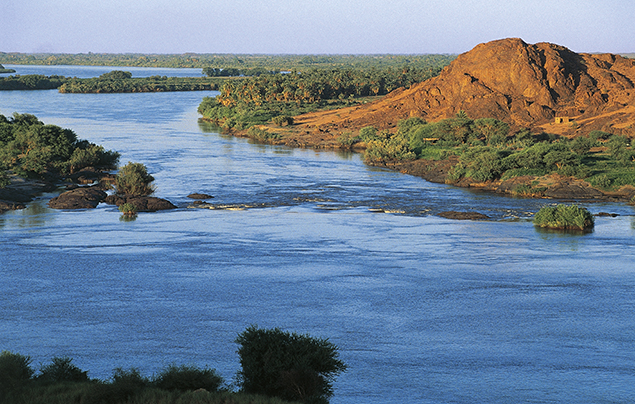
The Nile River flows from south to north through eastern Africa. It begins in the rivers that flow into Lake Victoria (located in modern-day Uganda, Tanzania, and Kenya), and empties into the Mediterranean Sea more than 6,600 kilometers (4,100 miles) to the north, making it one of the longest river in the world. The Nile River was critical to the development of ancient Egypt. In addition to Egypt, the Nile runs through or along the border of 10 other African countries, namely, Burundi, Tanzania, Rwanda, the Democratic Republic of the Congo, Kenya, Uganda, Sudan, Ethiopia, and South Sudan. Its three main tributaries are the White Nile, the Blue Nile, and the Atbara.
The soil of the Nile River delta between Cairo and the Mediterranean Sea is rich in nutrients, due to the large silt deposits the Nile leaves behind as it flows into the sea. The banks of the Nile all along its vast length contain rich soil as well, thanks to annual flooding that deposits silt. From space, the contrast between the Nile’s lush green river banks and the barren desert through which it flows is obvious.
For millennia, much of Egypt’s food has been cultivated in the Nile delta region. Ancient Egyptians developed irrigation methods to increase the amount of land they could use for crops and support a thriving population. Beans, cotton, wheat, and flax were important and abundant crops that could be easily stored and traded.
The Nile River delta was also an ideal growing location for the papyrus plant. Ancient Egyptians used the papyrus plant in many ways, such as making cloth, boxes, and rope, but by far its most important use was in making paper. Besides using the river’s natural resources for themselves and trading them with others, early Egyptians also used the river for bathing, drinking, recreation, and transportation.
Today, 95 percent of Egyptians live within a few kilometers of the Nile. Canals bring water from the Nile to irrigate farms and support cities. The Nile supports agriculture and fishing. The Nile also has served as an important transportation route for thousands of years. Today, some residents of Cairo have begun using private speed boats, water taxis, or ferries to avoid crowded streets. Dams, such as the Aswân High Dam in Egypt, have been built to help to tame the river and provide a source of hydroelectric power.
However, the silt and sediment that used to flow north, enriching the soil and building the delta, is now building up behind the dam instead. Instead of growing in size through the soil deposits, the delta is now shrinking due to erosion along the Mediterranean Sea. In addition, routine annual flooding no longer occurs along parts of the Nile. These floods were necessary to flush and clean the water of human and agricultural waste. As a result, the water is becoming more polluted.
The Nile River also continues to be an important trade route, connecting Africa with markets in Europe and beyond.
A strong password is the main barrier keeping most of your online accounts from being hacked. Without up to date practices, you might be using passwords that cyber-frauds can easily guess within hours. Exposing yourself to identity theft and extortion is a risk you should never take. You will need to create passwords that can fight modern password theft methods.
Weaknesses in your account credentials can be a cybercriminal’s dream. But their success is your nightmare, so you’ll need to take steps to avoid being a victim of password hacking.
Biggest Mistakes Users Make
By using a weak password, you are “opening the door” for hackers and inviting them in. To top it off, there’s high likelihood that what you consider to be “strong” passwords” are really weak ones. Have you ever used any of the following as a password:
Your name. (Like seriously? It doesn’t take a hacker or a malware to crack this)
Your friends or family members’ names. Pet names as well. – Well sure, I love my dog too, but it could be easily guessed, even without a professional on the other side.
Keyboard patterns – “123456” is the leader in most “worst passwords” lists. Followed by the likes of “qwerty” and such.
Your login information. If your username is, let’s say, Ironman, your password shouldn’t be Ironman as well.
Common words – these are too many to list, but let’s just say passwords like “password”, or “admin” aren’t the best options. Also, avoid the names of sports, sports teams or common names for your password.
Avoid using short passwords – The shorter your password, the less time someone needs to crack it. Only 30% of users use passwords longer than six symbols.
How to Create a Strong Password
To protect yourself against the newest hacking methods, you’ll need powerful passwords. If you’re wondering. “how strong is my password?” here are some tips to help you create a strong password:
Is it long? Try for over 10-12 characters minimum but aim to make it longer if possible.
Is it hard to guess? You should avoid sequences (“12345” “qwerty”) because these can be brute force hacked in seconds. Also, avoid common words (“password1”) for the same reason.
Does it use varied character types? Lowercase, uppercase, symbols, and numbers can all have a home in your password. Variety can increase how unpredictable your password is.
Does it avoid apparent character substitutes? For example, you might use the number zero “0” in place of the letter “O.” Hackers code these into their software nowadays, so avoid this.
Does it use any uncommon word combinations? Passphrases might be more secure when using unexpected words. Even if you are using common words, you can arrange them in an odd order and make sure they are unrelated. Both methods can throw off dictionary hacking.
Will you remember it? Use something that makes sense to you but will be hard for computers to guess. Even random passwords can be remembered by muscle memory and being semi-readable. But passwords that lock you out of your account won’t help much.
Have you used it before? Reusing passwords compromises multiple accounts. Make it original every time.
Does it use a rule that’s hard for computers to guess? An example might be a passphrase of three 4-letter words, where you are replacing the first two letters of each word with numbers and symbols. This might look like: “?4ee#2ge?6ng” in place of “treecagesing”
For example:
TGG_bFSF!HwBo9241896 [ The Great Gatsby_ by F. Scott Fitzgerald! He was Born on 9/24/1896 ]
InTlItMbA_rn!4S-mny$ [ I need To log In to My bank Account_right now! 4 Some – mny$]
A passphrase example might be, “coW!burN#movE?pianOh” (using the words cow, burn, move, and piano.)
In the United States, an ‘on-air battery has been created that can hold electricity generated by wind or solar power plants for days before gently discharging it to the grid.
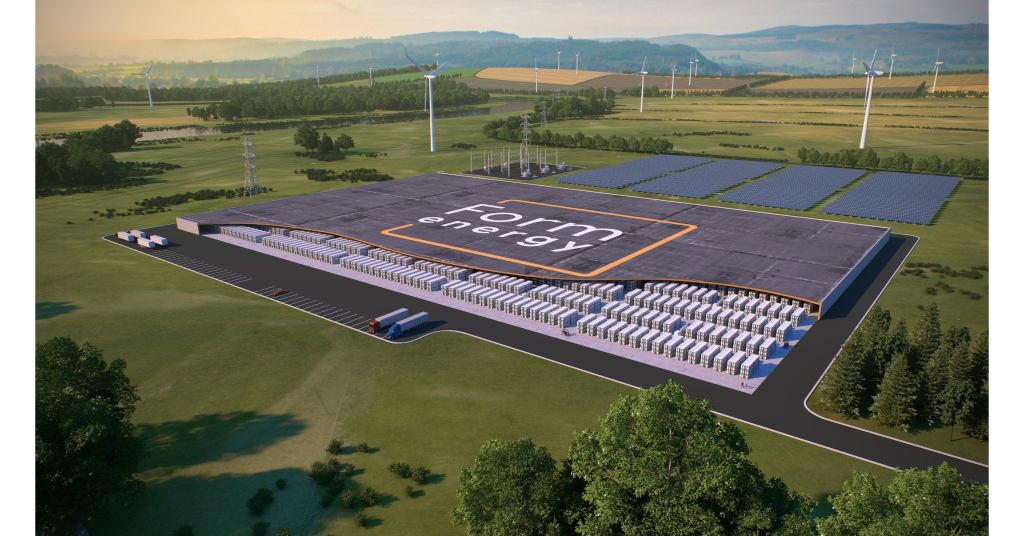
Form Energy intends to stack thousands of its “iron-air” batteries together in massive warehouses, as seen in this illustration.
According to Form Energy, a technological firm based in Massachusetts, it will help combat climate change by eliminating the demand for fossil fuel power plants.
The Iron-Air battery is a ‘new kind of cost-effective, multi-day energy storage device,’ capable of supplying electricity for 100 hours at a fraction of the cost of lithium-Ion, the renewable energy technology’s “holy grail.”
It’s constructed of iron, one of the most abundant elements on the planet, and it operates by inhaling oxygen, changing iron to rust, and then converting rust back to iron.
It is charging and discharging the battery as it takes in oxygen and transforms iron back and forth, a process that allows the energy to be held for longer.
According to the company, the batteries are too hefty for use in electric automobiles since they are intended to handle the difficulty of maintaining a consistent power supply.
This will address one of the renewable energy’s most vexing problems: how to store vast amounts of electricity inexpensively and provide it to power networks when the sun isn’t shining for solar panels or the wind isn’t blowing for turbines.
Solar and wind resources are the cheapest sources of energy in much of the globe, but unlike fossil fuel power plants, they do not provide a consistent supply.
The electric grid now has to figure out how to deal with this supply unpredictability while maintaining electricity dependability and cost.
According to Form Energy, their innovative battery technology is the answer to this rising problem.
According to Mateo Jaramillo, CEO and Co-Founder of Form Energy, the company performed a thorough analysis of all existing technologies and ultimately redesigned the iron-air battery.
This was done to ‘optimize it for multi-day energy storage for the electric grid,’ according to the researchers.
According to the company, the battery they are creating would enable governments to retire thermal assets such as coal and natural gas power facilities completely.
‘We’re attacking the largest obstacle to deep decarbonization with this technology: making renewable energy accessible when and where it’s required, even over several days of harsh weather or grid disruptions,’ Jaramillo explained.
It will also be less expensive, according to the company. Nickel, cobalt, lithium, and manganese minerals are used in lithium-ion battery cells, which can cost up to $80 per kilowatt-hour of storage.
Form hopes to reduce mineral prices for each cell to less than $6 per kilowatt-hour by using iron and to maintain the cost of a whole battery system to less than $20 per kilowatt-hour of energy storage by cramming them into a full battery system.
Renewables will eventually be able to replace traditional fossil-fuel power facilities at this pricing range, according to experts.
Breakthrough Energy Ventures, a climate investment fund sponsored by Bill Gates, Jeff Bezos, and others, is one of the firm’s investors. They’ve also received investment from ArcelorMittal, the world’s largest iron-ore producer.
HOW DOES AN IRON-AIR BATTERY WORK?
According to the company, the primary concept of functioning is reversible rusting.
The battery takes in oxygen from the air during discharging and transforms ferrous metal into rust.
The introduction of an electrical current during charging transforms the rust to iron, and the battery exhales oxygen.
They collect energy from renewable sources, store it for up to 150 hours, and then discharge it to the grid when renewables are unavailable.
Each battery is just around the size of a washing machine.
Each of these modules is filled with a non-flammable, water-based electrolyte similar to that found in AA batteries.
Stacks of 10 to 20 meter-scale cells, which comprise iron electrodes and air electrodes, the elements of the battery that enable electrochemical processes to store and release electricity, are contained within the liquid electrolyte.
Thousands of battery modules are joined together in modular megawatt-scale power blocks, which are housed in an environmentally protected container.
Tens to hundreds of these power blocks will be linked to the energy grid, depending on the scale of the system.
A one-megawatt system, in its most compact form, takes roughly one acre of land.
3MW/acre can be achieved with higher density designs.








 Eduindex
You must be logged in to post a comment.