TAMIL NADU ECONOMY

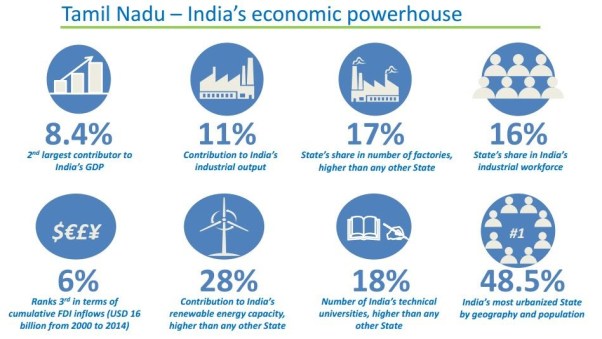
The economic and social development of states in India are not uniform. The western region and southern regions are better off than the other regions. Tamil Nadu is geographically eleventh largest and population wise third largest. Tamil Nadu fares well with many achievements. It stands second to second in terms of contribution to GDP, third highest in terms of capita income, investment, Foreign Direct Investment (FDI) and industrial output. It has been ranked as the most economically free state by the Economic Freedom.

In social and health sector also Tamil Nadu’s performance is better than many other states and better than national average in terms of health, higher education, IMR and MMR.

PERFORMANCE OF TAMIL NADU ECONOMY:

Some of the states like Gujarat and Maharashtra seem to perform well in some of the economic indicators. Kerala tops in literacy, IMR and MMR. In recent years Tanil Nadu’s performance is outstanding and far ahead of all other states in the spheres of health, higher education, growth of MSMEs, poverty alleviation and employment generation. The reason for the relative success of Tamil Nadu lie in extending social policies to cover most of the population. For instance the publisher distribution system, midday meals and public health infrastructure have near universal coverage.
PER CAPITA INCOME:

The per capita GSDP of Tamil Nadu also ($ 2,200) which is higher than that of many other states in India. Per capita GSDP of Tamil Nadu is nearly 1.75 times higher than the national average, as per 2018 data. In term of the per capita income in Tamil Nadu was 1,03,600 in 2010-11 and it has increased to 1,88,492 in 2017-18 as per the budget figures 2018.

HIGHLIGHTS OF TAMIL NADU ECONOMY: Growth of SGDP in Tamil Nadu has been among the fastest in India since 2005. Poverty reduction in Tamil Nadu has been faster than that in many other states. Tamil Nadu contains a smaller proportion of India’s poor population. Tamil Nadu is the second largest contributeor to India’s GDP. Tamil Nadu ranks 3rd in terms of invested capital (2.29 lakh crore ) and value of total industrial output (6.19 lakh crore). Tamil Nadu ranks first among the states in terms of numbers of factories with 17% share and industrial workers of the country. Tamil Nadu is placed third in health index as per the NITI AAYOG report. Tamil Nadu has a highest Gross Enrolment Ratio in higher education. Tamil Nadu has the largest number of engineering colleges. Tamil Nadu has emerged as a major hub for renewable energy. Tamil Nadu has highest credit Deposit Ratio in Commercial and cooperative banks. It has the highest ranks first on investment proposal filed by MSMEs.

“If the nature of the work is properly appreciated and applied, it will stand in the same relation to the higher facilities as food is to the physical body”

-J.C. Kumarappa

Tamil Nadu state has come third after Kerala and Punjab in a health index report. The neo natal mortality rate is 14 lower than that of many other states and that the under 5 mortality has dropped from 21 in 2014 to 20 in 2015.

The Tamil Nadu economy which is not rich in natural resources has good record of agricultural growth, industrial progress, infrastructural development and good record of strong growth of service sector especially banking, education, transport and tourism. It occupies top three ranks in health index, education, development of MSMEs. It has good record of poverty allevation and employment generation. India in general and Tamil Nadu in particular need to work to eliminate female foeticide,reduce the population lying in slums, sleeping on roadsides, beggers and rag picker. Development is meaningless as long as the eyesore continues.

NEWS AS A MEDIA

The word news is gotten from the Latin word ‘Nova’. It can likewise be followed into Sanskrit as ‘Nav’, which means new. It is difficult to characterize news in any single direction. Everybody can have their own meaning of information. Numerous parts of information structure are plainly identified with the quest for objectivity in the feeling of accuracy (Tuchman, 1978). The language of information is straight, explaining on occasion report along a solitary measurement with added data, representation, citation and conversation.

As per the Glasgow Media Group (1980) The language of information is by all accounts in a structure , which would permit of a genuinely straightforward trial of its reality or lie. It resembles being completely constantive (prepositional and fit for being demonstrated to be valid or bogus) and not per developmental. On the off chance that one examinations the news structure, an occasion must be delivered into ‘a tale about the occasion’ and during the time spent doing as such, includes an exchange between two went against modes-that of performative, which is additionally the interpretative and the fabulative(storytelling) mode, and that of constantive, which is likewise definite and authentic mode.

There is little uncertainty nonetheless, of the authentic idea of information. As Smith puts it, ‘the entire thought of information is that it is past the majority of perspectives (1973). In his view, without an attribution of validity by the crowd, news couldn’t be recognized from amusement or promulgation. This is the motivation behind why Gans(1979) apparently sensible supplication for ‘multiperspectival news ‘ is probably not going to get all inclusive approval and why the common pattern in news improvement has been away from philosophical towards nonpartisanship.

Antiquarians have sorted out that a similar essential news esteems have held consistent through time. “People have traded a comparable blend of information… from the beginning of time and across societies,” student of history Mitchell Stephens has composed. How would we clarify the secret of this consistency? The appropriate response, history specialists and sociologists have finished up, is that news fulfills an essential human drive. Individuals have an inborn need-a sense – to realize what is happening past their immediate experience. Monitoring occasions we can’t see with our own eyes induces a suspicion that all is well and good, control, and certainty. One author has called it “a want human mindfulness.”

At the point when the progression of information is discouraged, “murkiness falls,” and tension develops. The world, as a result, turns out to be excessively tranquil. We feel alone. John McCain, the U.S. congressperson from Arizona, composes that in his five and a half years as a POW in Hanoi, what he missed most was not solace, food, opportunity, or even his loved ones. “What I missed most was data – free uncensored, undistorted, plentiful data.” We can consider it the Awareness Instinct.

Noticeable columnists have given their own meanings of information. A portion of these definitions are recorded beneath:

Stanley Walker (New York Herald Tribune) – “News is more eccentric than the breeze. In some cases it is the redundancy with new characters of stories as old as the pyramids and again it could be practically outside the normal experience.”

Joseph Pulitzer (St. Louis Post Dispatch and New York World)- “Unique, particular, heartfelt, exciting, one of a kind, inquisitive, interesting, entertaining, odd and able to be discussed.”

Charles A. Dana (Editor, New York Sun)- “Anything that will make individuals talk.”

Arthur McEwan (Editor, San Francisco Examiner) – “Anything that makes the peruser say,’ Gee! Expert!”

John Chancellor (Correspondent, NBC News)- “News is an annal of contention and change.”

M.Lyle Spencer-“News is any occasion, thought or assessment that is opportune, that interests or influences an enormous number of individuals locally, and that is equipped for being perceived by them.”

Turner Calledge-“News is anything you didn’t know yesterday.”

Willard Bleyer-“Anything opportune that intrigues various people and best news is what has the best advantage for the best number.”

Chilton Bush-“News is generally animating data from customary individuals determine fulfillment and incitement.”

William L. Rewers – “News is the ideal report of occasions, realities or feelings that interest countless individuals.”

The best short definition that anybody has composed is that by late Prof. Willard G. Bleyer, in his reading material (Newspaper composing and Editing, page 30, Houghton Mifflin Co., Boston, 1932) – “News is anything ideal that intrigues various people, and the best news is what has the best advantage for the best number.”

Anything proposes that the paper isn’t restricted like different distributions to one field of interest, for example, science and history-any point might be news under the right conditions. Convenient recommends that it is new, not recently known, an occasion of today, or late yesterday, or the furthest down the line point to some prior conversation. Interest is the main word in the definition. The action word interest underlines that the peruser is relaxed and intentional. Number proposes that the peruser is of different sorts, the paper is distributed for the classes, its extension endeavors to be widespread.

In the present time of innovation, a similar news is accessible to all papers .Difference, anyway lies in the unmistakable quality and now and again the inclination given to it by the paper. That informs a lot concerning the paper. The strategy of the paper chooses such complexities. Rivalry from different media also has done a lot to change the essence of our papers today. Papers are turning out to be more visual by utilizing more tone, dynamic formats and different strategies. This change likewise focuses towards the changing disposition of the crowd. A crisper, really intriguing show is the thing that they search for. To keep on having a fulfilled peruser the paper changes itself thusly. This is a marvel which has happened in the print world. The amount it has influenced a specific paper still needs to be recognized.

WHAT IS MOBILE APPLICATION IMPROVEMENT?

Portabl application improvement is the arrangement of cycles and systems associated with composing programming for little, remote figuring gadgets, for example, cell phones and other hand-held gadgets.

Like web application advancement, versatile application improvement has its foundations in more conventional programming improvement. One basic contrast, notwithstanding, is that versatile applications are frequently composed explicitly to exploit the novel highlights of a specific cell phone. For instance, a gaming application may be composed to exploit the iPhone’s accelerometer or a portable wellbeing application may be composed to exploit a smartwatch’s temperature sensor.

Today, the two most noticeable portable stages are iOS from Apple and Android from Google. Telephones and tablets from Apple come preloaded with fundamental applications, including a full internet browser and the Apple App Store. Android gadgets additionally come preloaded with comparable applications and you can introduce really utilizing the Google Play Store.

Kinds of versatile applications

In the early long stretches of portable applications, the best way to guarantee an application could perform ideally on any gadget was to create the application locally. This implied that new code must be composed explicitly for every gadget’s particular processor. Today, most of versatile applications created are gadget freethinker.

Previously, if an application should have been cross-stage and run on various working frameworks (OSes), there was nearly nothing, assuming any, code that could be reused from the underlying advancement project. Basically, every gadget required its own portable application advancement project with its own code base. Present day cross-stage devices utilize normal dialects like C# and JavaScript to share code across projects; all the more significantly, they coordinate well with application lifecycle the board instruments, like Jenkins. This empowers engineers to utilize a solitary codebase for Apple iOS, Google Android and reformist web applications (PWAs). PWAs are worked to exploit local cell phone highlights, without requiring the end client to visit an application store, make a buy and download programming locally. All things considered, a PWA can be situated with a web crawler inquiry and got to quickly through a program, subsequently disposing of the requirement for web based business vendors to foster local applications for various versatile OSes.

Very much like YouTube recordings, PWA content is downloaded dynamically, which furnishes the end client with a preferred client experience over a customary site that utilizes responsive plan. Reformist web applications may likewise be alluded to as moment portable applications.

Prior to fostering an application, you need to figure out which type you’ll make. Here’s a breakdown of a few sorts of portable application advancement advances with data about each.

Local applications. These applications are constructed utilizing coordinated improvement conditions (IDEs) and dialects for portable OSes like Apple iOS or Google Android. Local applications empower you to tweak important highlights, yet they can be more expensive than different advances.

Crossover applications. These are web applications that behave like local applications. They are created utilizing innovations like HTML, JavaScript and Cascading Style Sheets (CSS). Half and half applications are more savvy to create than local applications and can be made quicker, however they aren’t as highlight rich as local applications.

Reformist web applications. A PWA is a site that looks and acts as though it is a portable application. These applications are created with web innovations like Facebook React.

Epitomized applications. A typified application runs inside a compartment application. Items, for example, the Microsoft Power App intuitive application creation apparatus empower less experienced engineers to fabricate a portable application quickly. Be that as it may, the absence of detachment from the center OS, OS lock-in and the general novelty could present issues.

Systems and libraries. You can utilize this reusable code composed by another person to speed up your improvement of a portable application.

Expenses of fostering a versatile application

The expense of fostering an application can go from barely anything to a huge number of dollars – everything relies upon the kind of application and its expected use. Following is a breakdown of the reaches you can hope to pay for building a portable application:

No-code application manufacturers. A designer doesn’t have to realize how to code if the application has fundamental component necessities. Free instruments, for example, GoodBarber, Appery.io, Shoutem, Appy Pie and BuildFire offer the opportunity to fabricate applications without learning Swift or other programming dialects. Albeit these instruments are restricted in their usefulness and can’t be utilized to make a game with no-code applications, the no-code approach will address most association’s issues.

Endeavor applications. The idea of Citizen Developer, where anybody can fabricate a versatile application, is detonating with instruments like Amazon’s HoneyCode, Mendix and Microsoft Power Suite. These gadgets offer simplified interfaces that can associate with information sources and oversee content stream. The cost is regularly attached to a month to month membership of under $50.

Portable enhanced site. Despite the fact that it’s generally useful to assemble sites for both work area and cell phones, the site content administration apparatus you’re utilizing will probably have modules you can purchase for under $100 to enhance your site for cell phones.

Complex applications. An application that requires highlights, like 3D, gaming or complex computerized reasoning (AI), will probably should be created as a local application. The expense for a complex application can regularly be $250,000 or more. The cost is straightforwardly identified with the shortage of versatile designers.

Pegasus spyware

Pegasus is a spyware developed by the Israeli cyber arms firm NSO Group that can be covertly installed on mobile phones running most versions of iOS and Android. In November 2019, a tech reporter from New York City photographed an interception device displayed at Milipol, a trade show on homeland security in Paris. The exhibitor, NSO Group, placed the hardware at the back of a van, perhaps suggesting convenience of portability, and said it would not work on US phone numbers, possibly due to a self-imposed restriction by the firm. Until early 2018, NSO Group clients primarily relied on SMS and WhatsApp messages to trick targets into opening a malicious link, which would lead to infection of their mobile devices. A Pegasus brochure described this as Enhanced Social Engineering Message (ESEM). When a malicious link packaged as ESEM is clicked, the phone is directed to a server that checks the operating system and delivers the suitable remote exploit.

Pegasus infections can also be achieved via so-called “zero-click” attacks that do not require any interaction from the phone’s owner. It means that your phone could still be hacked even if you’re careful not to click on those malicious links. Most of these attacks exploit vulnerabilities in an operating system that the phone’s manufacturer may not yet know about and so has not been able to fix.

Many of the numbers were clustered in 10 countries: Azerbaijan, Bahrain, Hungary, India, Kazakhstan, Mexico, Morocco, Rwanda, Saudi Arabia and the United Arab Emirates, according to the reports.

In India, more than 40 journalists, three opposition leaders and two ministers in Prime Minister Narendra Modi’s government were reported to be on list. This included the opposition memeber, Rahul gandhi with two mobile phone numbers belonging to him found in the list. Mr Gandhi no longer has the devices so it was not possible to analyse them to determine if he had been hacked. India’s government has denied using unauthorised surveillance.

MY VISIT TO “REPLICA OF AMARNATH”,TIMMERSAIN MAHADEV CAVE, UTTRAKHAND

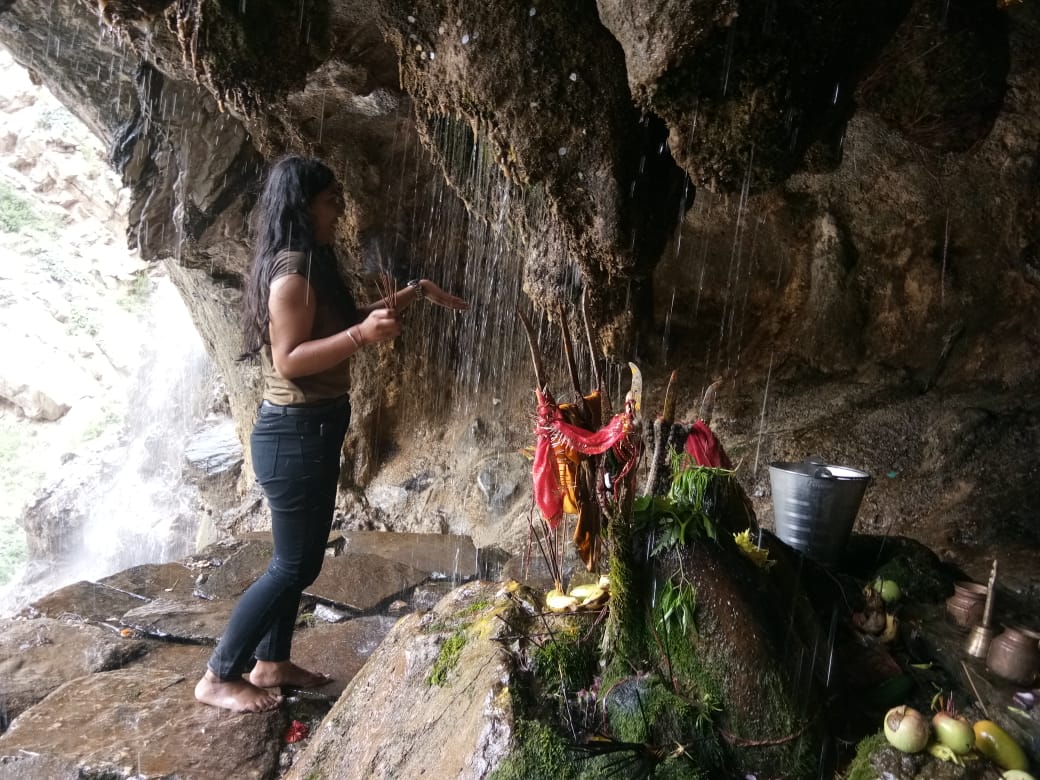
Me at Timmersain Mahadev , replica of Amarnath cave.

Uttarakhand , also known as “DEV BHUMI” or “the land of gods” is famous for its temples famous all around the world . yesterday only I visited a place which is attracting tourists a lot these days , that place is TIMMERSAIN MAHADEV CAVE Timmersain Mahadev is a cave of lord Shiva which is situated in Niti village of Chamoli district of Uttarakhand. Cave is famous as the replica of Amarnath shrine of Jammu and Kashmir. Because of it’s a natural Shivaling of snow, this place is getting popularity day by day. On the lines of Baba Amarnath Yatra, pilgrims are now travelling to Timmersain Mahadev in the Niti Valley of Chamoli district in Uttarakhand. 

Tourism Minister, Shri Satpal Maharaj said “A Shivaling is present inside the caves in Timmersain, which is located about a km before the last village in the Niti Valley of Joshimath block. The Shivaling is always anointed with the water dripping from the hills. While melting, the ice takes the shape of the Shivaling every year which is known as Barfani Baba or Timmersain Mahadev. Baba Barfani sits as a self-proclaimed Shivaling in Timmersain. Every year a Shivaling of more than 10 feet is formed here in winters. It is believed that Lord Shiva stayed at this place during Kailash Yatra. Therefore, this place is famous by the name of Sausa Mahadev. The devotees can now visit the restricted area of Niti Valley without any permission, and they can easily visit Timmersain Mahadev. 

A part from the temple , there is this beautiful valley that is “NITI VALLEY “Niti is a small village located in the Niti valley of Joshimath. Niti is the last village and outpost in Indo-Tibetan border in Chamoli district. At an height of 3600 meters, Niti is situated near southern Tibetan border. The Niti Pass located at 5800 meters connects India with Tibet. During winters, Niti village and valley is covered with heavy snow. The villagers of Niti still follow the traditional methods of lifestyle in the mountains.

You will be amazed to know that Niti village inhabitants move to lower Himalayas in the valley & resides I the alternative village because there is heavy snowfall & no one can live at that place for 6 months from November to April. After these 6 months Niti Village is again filled with inhabitants.

There are some other villages near Niti such as Gamshali, Bampa, Kailashpur, Malari, Kosha , Raini , Timmersain Mahadev, & Tapovan. The disaster which shivered the whole valley of Tapovan & Raini village on 8th of February , come in the way to Timmersain Mahadev cave .

Government of Uttarakhand is trying to get permission to open this valley for tourist & make this a famous tourist place . This place will help Uttarakhand gain employment & tourists at a very high range as Jammu & Kashmir is getting . This is my initiative to make you all know about this place , & my personal advice to you all is , you must come & visit this holy place & see Mahadev in the form of slow Shivaling.

How Indian Education System is getting infected due to Appraisal of Online Classes

Photo by Julia M Cameron on Pexels.com

All our lives have been paused and shattered due to the arrival of the Covid 19 Virus which has devasted humans Globally and created tough times for every Human being who is striving to survive from this fatal disease.

It is no surprise how this deadly virus has become horrible nightwear for everyone and it provided a gift of Loss in every section of society. Globally it had provided huge losses in all types of professional fields. In these challenging times, one of the major sectors had been at a sea since a massive breakdown in the education sector due to the online classes and pandemic life.

Indian Students and unfavorable effects of Covid 19 on Education System :

 It is majorly remarked that 1.2 billion children in 186 countries have been affected by school closures due to the epidemic of the Covid Virus. There is no doubt that E-Learning platforms have gained wide recognition in such time and the importance of technology in the world of humans has portrayed that human needs Technology to survive in such tough times.

As per in the field of Education sector it is noticed that India has around 320 Million learners who had shifted to E-Learning since the nation closure. Living in the era where E-Learning has become a prominent part of every student’s life, has also shown how difficult it has become for both students and teachers in India.

Since India is still a developing country, there are several drawbacks that Indians are facing in this Contemporary Epidemic. The situation of the education system is worse than the deadly disease which is slaughtering human communities.

India being the world’s 2nd largest school system, after China, has certain factors which are weakening the academic life of students, among these factors, there are several factors:  

  1. Lack of  Sufficient Network Ability: As looking into the current situation, Internet consumption has been a major necessary element in a pandemic life. Everyone coming from all sorts of backgrounds and fields needs network connectivity for their respective purpose to fulfil.

The youngsters significantly need network broadband for their daily online classes and as a student network has become a mandatory part to get educated in the present condition. But sadly the scenario of Rural Indian households is much worsening as we get to observe that fewer than 15%, have Internet access ( as opposed to 42% of Urban Indian households).

  • Gender Barrier is still a Hindrance: This might be an unreal fact to process for many people, but rural Indian household is still not developed in gender equality and educating there children especially when it comes to the girl child. 8.5% of Females use the Internet in Rural India and suffer from the obstacle of getting education because either due to unavailability of network or due to prioritizing male child teachings. Hence, there has been more number of dropouts of children from the online education system.
  • Online System – A major obstacle for the older generations :

In our education system, not only students are suffering from the inconvenience set by the online classes, but it is also the teacher community that is in a state of perplexing when it comes to the usage of technology.

There are times when technology made our elder generations uncomfortable because it is something new for them to learn. In this instance, many teachers leave their jobs due to the uncomfortable environment set by the online classes.

So we can say that online classes are somewhere a curse for everyone in the education system.

Future Generation striving with the adversity:   

Though the times are tough for everyone, as a human we should have the enduring capacity to work on our weakness.

Prominently, the youngsters, who would be the future minds must keep this as a note that, as millennial generations, we have many opportunities to turn the curse into a blessing and provide inspiration for many people globally.

As students, we can create an environment a comfortable zone for the teachers and our elders by making them aware of technology, and that we will be some minute steps which can make our country a developed country and not developing.

Ways to Manage Stress

Stress is part of being human, and it can help motivate you to get things done. Even high stress from serious illness, job loss, a death in the family, or a painful life event can be a natural part of life. You may feel down or anxious, and that’s normal too for a while. Talk to your doctor if you feel down or anxious for more than several weeks or if it starts to interfere with your home or work life. Therapy, medication, and other strategies can help. In the meantime, there are things you can learn to manage stress before it gets to be too much. Consider these suggestions:

Exercise : To start with, physical activity can help improve your sleep.  And better sleep means better stress management. Doctors don’t yet know exactly why, but people who exercise more tend to get better deep “slow wave” sleep that helps renew the brain and the body. Just take care not to exercise too close to bedtime, which disrupts sleep for some people. Exercise also seems to help mood. Part of the reason may be that it stimulates your body to release a number of hormones like endorphins and endocannabinoids that help block pain,  improve sleep, and sedate you. Some of them (endocannabinoids) may be responsible for the euphoric feeling, or “runner’s high,” that some people report after long runs. People who exercise also tend to feel less anxious and more positive about themselves. When your body feels good, your mind often follows. Get a dose of stress relief with these exercises: running, swimming, dancing, cycling, aerobics.

Diet : The benefits of eating health foods extend beyond your waistline to your mental health. A healthy diet can lessen the effects of stress, build up your immune system,  level your mood, and lower your blood pressure. Lots of added sugar and fat can have the opposite effect. And junk food can seem even more appealing when you’re under a lot of stress. To stay healthy and on an even keel, look for complex carbohydrates, lean protiens, and fatty acids found in fish, meat, eggs and nuts. Antioxidants help too. They protect your cells against damage that chronic stress can cause. You can find them in a huge variety of foods like beans, fruits, berries, vegetables, and spices such as ginger. Stick to a healthy diet with a few simple tips. Make a shopping list. Carry healthy snacks with you when you leave the house. Stay away from processed foods, and try not to eat mindlessly. Scientists have pinpointed some nutrients that seem to help lessen the effects of stress on the body and mind. Be sure to get enough these as part of a balanced diet: Vitamin C, Magnesium, Omega-3 fatty acids.

Sleep : A common side effect of stress is that you may struggle to fall asleep. If this happens three times a week for at least 3 months, you may have insomnia, an inability to fall and stay asleep. Lack of sleep can also add to your stress level and cause a cycle of stress and sleeplessness. Better sleep habits can help. This includes both your daily routine and the way you set up your bedroom. Habits that may help include: Exercise regularly, Get out in the sunlight, Drink less alcohol and caffeine close to bedtime, Set a sleep schedule, Don’t look at your electronics 30-60 minutes before bed, try meditation or other forms of relaxation at bedtime. The role of your bedroom in good sleep hygiene also is important. In general, your room should be dark, quiet, and cool — 60-65 degrees is thought to be an ideal temperature to stay asleep. Your bed also plays an important role. Your mattress should provide support, space and most of all, comfort.

Meditation : It has been around for over 5,000 years for a reason. Meditation works well for many people and has many benefits. It can lower stress, anxiety, and chronic pain as well as improve sleep, energy levels, and mood. To meditate, you will need to: Find a quiet place, Get comfortable (sitting or lying down), Focus your attention on a word, phrase, object, or even your breath, Let your thoughts come and go and do not judge them.

Deep breathing: When you practice deep breathing, you turn on your body’s natural ability to relax. This creates a state of deep rest that can change how your body responds to stress. It sends more oxygen to your brain and calms the part of your nervous system that handles your ability to relax. Try belly breathing. Get comfortable, close your eyes, and place one hand on your stomach and the other on your chest. Take a deep breath in through your nose. You should feel your belly rise more than your chest. Now, exhale through your nose and pay close attention to how your body relaxes. Repeat.

Indian actors who proved their mettle in Hollywood.

Hollywood movies and American television are replete with extraordinary talent from all over the world. Several actors from India have been part of celebrated movies and shows that come out of Hollywood. From renowned Indian actors such as Irrfan, Om Puri and Nasiruddin Shah, to younger actors such as Dhanush, there is no dearth of talent when it comes to brilliant talent out of India.Actors from India have made waves in Hollywood for many years now, but there are a few stand-out names among them all, both old and new. Take a look at the list of five such indian actors who played a prominent role in Hollywood movies.

1.Irrfan Khan

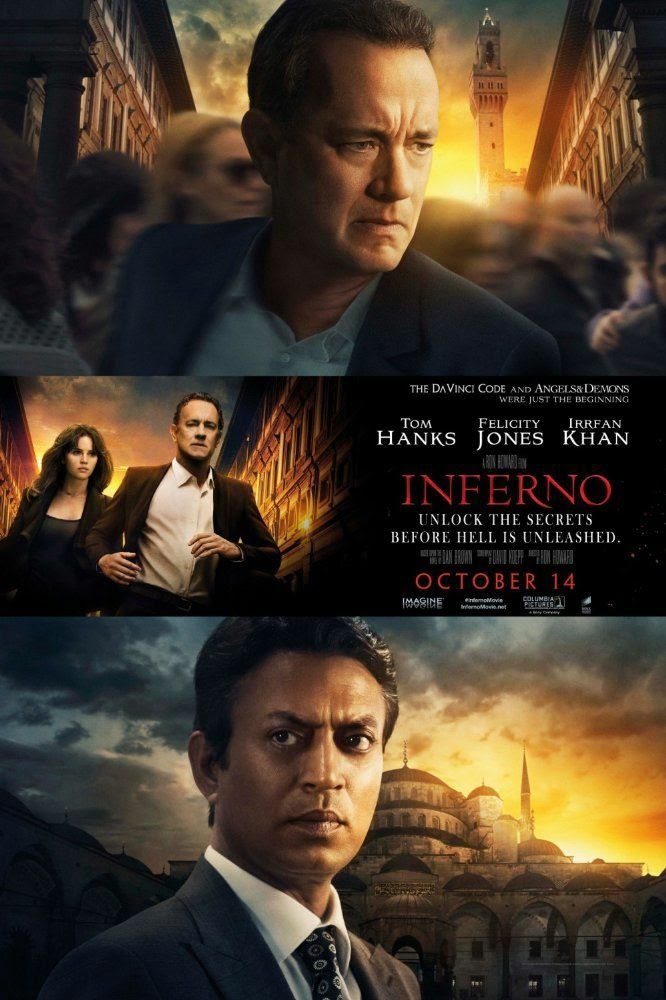
Irrfan Khan was an actor who defined brilliance.The late actor was well-regarded for his varied roles in Bollywood, having starred in dramas, comedies and indie films too. Cited in the media as one of the finest actors in Indian cinema, Khan’s career spanned over 30 years and earned him numerous accolades, including a National Film Award, an Asian Film Award, and six Filmfare Awards. In 2011, he was awarded the Padma Shri, India’s fourth highest civilian honour The late actor’s rendezvous with Hollywood started with A Mighty Heart and The Darjeeling Limited. In 2006, he starred in the lead role alongside Tabu in Mira Nair’s The Namesake. Other movies that he has starred in are Slumdog MillionaireThe Amazing Spider-Man in 2012, Jurassic WorldLife of Pi and Inferno.

2.Anupam Kher 

Anupam Kher is an Indian actor and the former Chairman of Film and Television Institute of India. He has appeared in over 500 films predominantly in Hindi language, and many plays .Apart from being extremely popular in Bollywood and opting for roles that make his versatility evident, Kher was seen playing the role of court-mandated therapist, Dr. Cliff Patel in the romantic comedy movie “Silver Linings Playbook” (2012). He was also seen in ‘Bend it like Beckham’ playing the role of a quintessential Indian father.Kher also appeared in Hotel Mumbai, based on the true events of the horrific 26/11 attacks in Mumbai when terrorists took over several key spots in India’s financial capital, including the celebrated Taj Mahal hotel. In the movie, Kher played the head chef who decides not to escape the hotel when the window of opportunity presents itself and stays back to help the guests who are still trapped inside.

3.om puri

Another veteran Indian actor was Om Puri, known for his roles in Indian arthouse movies. The actor appeared in a number of Hollywood movies, from the Tom Hanks-Julia Roberts starring movie, Charlie Wilson’s War, The Hundred-Foot Journey, where he starred alongside Dame Helen Mirren, and the comedy-drama, East Is East . Om Puri was one of the few actors whose work has travelled from Bollywood to British and Pakistani cinema. The actor was part of Richard Attenborough’s Academy Award-winning film Gandhi. He was also part of Roland Joffe’s City of Joy, Mike Nichols’s Charlie Wildon’s War, Michael . Puri was also paid homage at Oscar Awards 2017.Puri was awarded Padma Shri, the fourth highest civilian award of India, in 1990.In 2004, he was made an honorary Officer of the Order of the British Empire.

4.Aishwarya Rai

The lovely Aishwarya Rai is one of the most popular Indian celebrities the world over & was one of the first of her generation of Indian actors to have crossed over to Western projects, with lead roles in movies like Gurinder Chadha’s Bride & Prejudice, Provoked, The Last Legion with Colin Firth and Ben Kingsley, and as the femme fatale in the comedy-drama, The Pink Panther 2.Rai is touted as one of the most beautiful actresses in commercial Indian cinema and has, for years, been on the jury for the Cannes Film Festival.Rai has received numerous accolades, including two Filmfare Awards, and was honoured with the Padma Shri by the Government of India in 2009 and the Ordre des Arts et des Lettres by the Government of France in 2012. She has often been cited in the media as “the most beautiful woman in the world”

5.Ali fazal

Ali Fazal’s Bollywood journey is filled with hits and misses. However, he had done some notable projects in Hollywood. The actor has starred in Fast and Furious 7 and went on to play the lead in Victoria and Abdul alongside Judi Dench. One star who is slowly making inroads in the West is the versatile Ali Fazal. The actor, who is well known for his role in crime thriller web show ‘Mirzapur’, starred alongside Dame Judi Dench in ‘Victoria & Abdul’. He will soon be seen in ‘Death on the Nile’, a Hollywood adaptation of the Agatha Christie novel of the same name.

Mid-Day Meal (MDM) Scheme

The Mid-Day Meal Scheme was launched in India on August 15, 1995, as the ‘National Programme of Nutritional Support to Primary Education (NP-NSPE).’ In October 2007, it was renamed the “National Programme of Mid-Day Meal in Schools,” commonly known as the Mid-Day Meal (MDM) Scheme. It is the world’s largest school meal programme aimed to attain the goal of universalization of primary education. Under the MDM plan, one meal is supplied to all students enrolled in government schools, local body schools, government-aided schools, special training centers (STC), maktabs, and madrasas funded by the Sarva Shiksha Abhiyan. Cooked lunches are served to every child aged six to fourteen who is enrolled in and attending school. Meals are served to pupils in Classes I through VIII.

Key Points:

(A) Needs –

According to research, a healthy breakfast in the morning hours can be productive for the study of cognitively more demanding subjects, and so these hours can be maximised by offering a simple yet stimulating breakfast in addition to midday meals.

(B) Challenges –

Severe financing The scheme is likely to be pushed back due to the crunch.
The present spending on the Midday Meals Scheme by the Centre is around Rs. 11000 crore. Free breakfast will require an additional budget of 4000 crore, while the School Education Department has seen a budget decrease of over 5000 crore for the fiscal year 2020-21.

Objectives Of Mid-Day Meal Scheme:-

  1. To increase the number of students enrolled in schools who come from underprivileged backgrounds.
  2. To increase the number of pupils enrolled in government and government-aided schools.
  3. To keep the children in grades I through VIII.
  4. To provide nutritional assistance to primary school-aged children, particularly in drought-stricken areas.
  5. To combat starvation and malnutrition while also improving caste socialization.

Features Of Mid-Day Meal Scheme:-

  1. Every school should have a sanitary cooking infrastructure for sanitary mid-day meals.
  2. Mid-day lunches are only to be offered on school grounds on all school working days.
  3. The headmaster or headmistress has the authority to use school money due to the depletion of the mid-day food fund. However, the money will be returned to the mid-day food fund as soon as the school receives it.
  4. AGMARK-certified products are purchased for use in the preparation of mid-day meals in schools.
  5. The school administration committee’s cooked meals are tasted by two or three adult members.
  6. The State Food and Drug Administration might collect samples to ensure the quality and nutritional content of the meals.
  7. The State Steering-cum Monitoring Committee (SSMC) will oversee the scheme’s execution, including the establishment of a system to ensure the meals’ quality and nutritional criteria.
  8. When prepared meals cannot be delivered due to unforeseen circumstances, the following food allowance is given to the children:

(a) Quantity of food grains based on a child’s entitlement, and

(b) The cost of cooking in the individual state.

Issues and Challenges:

  1. Corrupt Practices: There have been reports of simple chapatis being given with salt, water being mixed into milk, food poisoning, and so forth.
  2. Caste Bias and Discrimination: Because food is essential to the social system, many schools require pupils to sit separately based on their caste position.
  3. Covid-19: Covid-19 has created significant risks to children’s health and nutritional rights. Access to critical services, such as Mid-Day Meals, has been hampered as a result of the national lockdown.
  4. Malnutrition is a threat: According to the National Family Health Survey-5, some states have reversed direction and recorded rising levels of child malnutrition.
  5. Global Nutrition Report-2020: According to the Global Nutrition Report 2020, India is one of 88 nations that are on track to fall short of global nutrition objectives by 2025.
  6. 2020 Global Hunger Index (GHI): The Global Hunger Index (GHI) 2020 ranks India 94th out of 107 nations. India has a “severe” degree of hunger.

Green Sahara

In an effort to fight climatic changes, we are taking many steps. The people also the governments all over the world are keen on reducing the risks. People are growing trees in their lawns to keep their environment cool. Trees are a great solution to cool down the earth and reduce the amount of Carbon dioxide in the environment. What if I say the Sahara could be made into a forest with green trees everywhere. Plans are being made to terraform the entire Sahara desert, changing it from a dry, barren land to a lush green space. If successful, the transformation could remove 7.6 billion tons of atmospheric carbon yearly. How could we change the nature of such a vast, isolated land?  Could we afford it’s giant price tag? Have we ever done anything like this before? In this blog, we’ll see what would happen if we terraformed the Sahara Desert.

The Sahara desert is 8.6 million km² (3.32 million mi²) in size. It is roughly the size of America. Terraforming an area this massive wouldn’t be easy, in fact, it would cost about $2 trillion a year. Not only this, there are many obstacles in our way. This price tag would be just the beginning of our obstacles. What kind of environmental domino effect would it create? Plants and trees are the lungs of the Earth, and now we could use a lot more of them. A single hectare of trees can absorb the same amount of carbon dioxide that a man would produce by driving a car for 100,000 kilometres. If we could successfully terraform the Sahara, it would result in millions of hectares of treesbeing added to the battle against climatic changes. All that sounds great, but what are the odds we could pull this kind of transformation off? We already have, just on a smaller scale. China’s Kubuqi Ecological Restoration Project saw the successful greening of one- third of the Kubuqi Desert with 70 different plant species over a 30-year timespan.

How to scale that up for the largest desert on earth? We can plant crops and trees and then pump desalinated water from the coast of the Sahara to irrigate them. To prevent evaporation, the water should be carried by underground pipes directly to the roots. The idea would be to plant Eucalyptus trees because they are hardy, and grow well in hotter climates. Also they grow quickly and could be economically beneficial for the region. As the trees began to root and stabilise, the soil would be replenished with needed nutrients, rainfall amount would increase and the overall temperature of the Sahara would cool by 8°C. Why aren’t we going fast to do that. Not only the funding but also terraforming the desert would come with a fair share of issues.

As the region becomes wet due to the plantation of millions of trees, it may lead to the increase of locust attack. A small swarm eats more than what 2500 people can eat in a day. But the biggest problem apart from this is the environmental domino effect it would create. The Sahara sand gets carried away by the wind and crosses the Atlantic Ocean to deposit in the Amazon forest. The dust picks up moisture and when it falls from the sky rain comes along with it. This dust and rain combination provides the Amazon ecosystem the water that it needs and also fertilizes it. If the Sahara is covered by trees, there would be no Amazon rainforest. So even though the green Sahara reduces the carbon, it would indirectly affect another part of the planet and may lead to its destruction.

Disaster

Disaster is a very common phenomenon in the human society. It has been experienced by people since time immemorial. Though its form may be varied,it has been a challenge for society. The latest development which has been discovered in the world Disaster reports recently is that, the disasters have increased in frequency and intensity. India is one of the most disaster prone countries in the world. It has some of the world’s most severe droughts,famines, cyclones, earthquakes, chemical disasters,rail accidents and road accidents. The high density of population in the developing countries, especially in the high developing countries, especially in the high risk coastal areas, results in millions of people getting affected by natural disasters, especially in recurring disasters like floods, cyclones,storm surges,etc.
A disaster is a serious disruption of the functioning of a society involving human and material loss. Disaster is broadly classified into natural and man-made disasters.

Natural Disasters

Earthquake

The sudden shaking of the earth at a place for a short spell of time is called an earthquake. The duration of the earthquake may be a few seconds to some minutes. The point where an earthquake originates is called its ‘focus’. The vertical point at the surface from the focus is called ‘epicentre’.

Volcanoes

Volcanoes are openings or vents where lava, small rocks and steam erupt onto the earth’s surface.

Tsunami

Tsunami are waves generated by earthquake, Volcanic eruptions and underwater landslides.

Cyclones

A low pressure area which is encircled by high-pressure wind is called a cyclone.

Floods

An overflow of a large amount of water, beyond its normal limits, especially on the rainfed areas is called a flood.

Landslide

The movement of a mass of rocks, debris,soil etc., downslope is called a landslide.

Avalanche

A large amount of ice, snow and rock falling quickly down the side of a mountain is called an Avalanche

Thunder and lightning

Thunder is a series of sudden electrical discharge resulting from atmospheric conditions, this discharge results in sudden flashes of light and trembling sound waves which are commonly known as thunder and lightning.

Man – made disasters

Fire
Massive forest may start in hot and dry weather as a result of lightning,and human carelessness or from other causal factors.

Destruction of buildings
Demolition of buildings by human activities.

Accidents in industries
Chemical, biological accidents that occur due to human error. (e.g.) Bhopal gas tragedy.

Accidents in Transport
Violation of road rules , carelessness cause accidents.

Terrorism
The social unrest of differences in principles leads of terrorism.

Stampede
The term stampede is a sudden rush of a crowd of people, usually resulting in injuries and death from suffocation and trampling.

Tsunami and Floods

A killer Tsunami hit the south east Asian countries on the 26th of December,2004. A massive earthquake with a magnitude of 9.1 – 9.3 in the Richter scale epicentre in the Indonesian island of Sumatra. It triggered one of the biggest Tsunamis the world had ever witnessed. The massive waves measuring up to 30 metres that killed more than 2,00,000 people of Asia. In India, over 10,000 people were killed by this disaster. Tamil Nadu alone accounted for 1,705 deaths.

All the coastal districts were affected, Nagapattinam was the worst hit in the state of Tamil Nadu. Fishermen, tourists morning walkers, children playing in the state of Tamil Nadu. Fishermen, tourists, morning walkers, children playing in beach and people living on the coast were unprepared for the waves. So they were unprepared for the waves. So they lost their life and the most of the loss of lives and damage to property was within 500 metres of the shore. After that the Indian government set up a Tsunami Early warning system at Indian National centre for Ocean Information services (INCOIS), Hyderabad in 2007.

Tsunami – Do’s and Don’ts

  • You should find out if your home, school etc., are in valunarable areas along sea shore.
  • Know the height of your street above sea level.
  • Plan evacuation routes and practise your evacuation routes.
  • Discuss tsunamis with your practise your evacuation routes.
  • Discuss tsunamis with your family. Review safety and preparedness measures with your family.
  • If you see the sea water receding, you must immediately leave the beach and go to higher ground far away from the beach.
  • Don’t go to the coast to watch the Tsunami.
  • Don’t try to surf the tsunami waves.
  • Be aware facts about tsunami.

Floods

Floods are high stream flows,which overlap natural or artificial banks of a river or a stream and are markedly higher than the usual flow as well as inundation of low land.

Types of floods

Flash floods: Such floods that occur within six hours during heavy rainfall.

River floods: Such floods are caused by precipitation over large catchment areas or by melting of snow or sometimes both.

Coastal floods: Sometimes floods are associated with cyclone high tides and tsunami.

Causes of floods

> Torrential Rainfall.
> Encroachment of rivers bank.
> Excessive rainfall in catchment.
> Inefficient engineering design in the construction of Embankments, dams and canals.

Effects and floods

> Destruction of drainage system
> Water pollution
> Soil erosion
> Stagnation of water
> Loss of agricultural land and cattle
> Loss of life and spread of contagious diseases.

Do’s

> To find out if the settlement area is to be affected by flood or not.
> Keeping radio, torch and additional batteries, storing drinking water,dry foods items, salt and sugar, safeguarding materials like kerosene, Candle , match box, clothes and valuable things.
> Keeping umbrella and bamboo poles.
> Keeping first aid box and strong ropes to bind things.
> To dig canals from the farm land, to drain the excessive water keeping sand bags etc.,

Don’ts

> Try to connect electricity once it is cut.
> Operate vehicles
> Swim against floods
> Avoid going on excursions.
> Neglect flood warning messages

During floods

> Curt off gas connection and electricity
> Keep sand bags on drainage holes and bathroom holes.
> Leave immediately through the known passage or prescribed passage
> Drink hot water.
> Use bleaching powder to keep your environment hygenic.
> Before using match sticks and candles, ensure that there is no gas leakage.
> Don’t eat more food when you are affected by diarrhoea.
> Don’t try to take anything that floats in flood.

Disaster Risk Reduction (DRR)

Disaster Risk Reduction: The practice of reducing disaster risks through systematic efforts to analyze and manage the causal factors of disasters. There are four key approaches to public awareness for disaster risk reduction. Campaigns,participatory learning, informal education, and formal school based interventions.

Forecasting and Early warning

Weather forecasting, Tsunami Early warning system, cyclonic forecasting and warning provide necessary information which help in reducing risks during disasters. School Disaster Management Committee, Village Disaster Management Committee, State and central government institutions take mitigation measures together during disaster. Newspaper,Radio Television and social media bring updated information and give alerts on the vulnerable area, risk, preparatory measures and relief measures including medicine.

CBSE vs ICSE

When it comes to education there many boards such CBSE, ICSE, CISCE, NIOS, and etc. But the best two boards are CBSE and ICSE, these are widely accepted in all over the country. In this blog we are going to compare the two boards with their difficultly level, syllabus, preferred language, acceptance, competitive edge, grading system and at last the conclusion.

Introduction

CBSE stands for Central Board of Secondary education, CBSE is a national level board of education controlled by union government of India. It was founded on 3rd November, 1962. There are 21,271 CBSE affiliated schools in India and 220 schools in foreign countries. ICSE stands for Indian Certificate of Secondary Education, It was founded on 3rd November, 1958. ICSE is a exam conducted by Council for the Indian School Certificate Examination(CISCE), a private board of secondary education. There are 2,341 ICSE affiliated schools in India.

Syllabus

CBSE syllabus focuses on more theoretical knowledge, whereas ICSE focuses more on practical knowledge. CBSE majorly focuses on Mathematics and Science. ICSE gives equal importance to all subjects including Arts, Humanities, mathematics, science, languages, and etc. CBSE offers only fewer subjects to study, whereas ICSE offers a wide range of subjects like Hindi, Telugu, Tamil, Malayalam, etc. ICSE syllabus is comparatively more than CBSE syllabus.

Difficulty level

ICSE syllabus is more difficult than CBSE, this is because the length of ICSE syllabus is more than CBSE, they have more concepts, more internal assignments, and more practicals.

Mode of language

ICSE gives more important to English, and the mode of language in ICSE is English, it gives there students the leverage to appear standard exams like TOEFL(Test of English as a Foreign Language) and IELTS(International English Language Testing System). Whereas CBSE does not prefer any particular language.

Acceptance

CBSE board is widely accepted than ICSE in India. Whereas in Foreign countries ICSE is more accepted. Students with ICSE board get advantage in Foreign countries.

Grading system

CBSE uses alphabetical grading system like A1, A2, B1, etc. ICSE uses scores for grading system like 8.5, 9.2 etc.

Competitive Edge

CBSE syllabus is helpful for students who are aspiring to crack national examinations like JEE Main, JEE Advanced, Neet etc. Whereas ICSE syllabus help to crack standard examinations like GRE, SAT, TOEFL and IELTS.

Conclusion

Both boards are comparatively good. Both have its own advantages and disadvantages. If you want your child to study in Foreign in future than ICSE might be the best option for you. ICSE help the student in the development of personality traits, communication skills, hone there skills etc. Where as CBSE, help students achieve there dreams like cracking UPSC, NEET, JEE. Also CBSE is widely recognized in all over India. Parents who work in a profession in which there lot of traveling, then CBSE is the best option for them because CBSE schools are widely available as compared to ICSE schools. You can get admission of your child in any CBSE school without any hesitation.

That’s all from my side. I hope you like. I am not discrimination any board, all these are my opinions. Thank you.

TOP 10 BILLIONAIRES LIST : 2021

The following are the people who secured Top 10 Billionaires post in the world during this pandemic period.

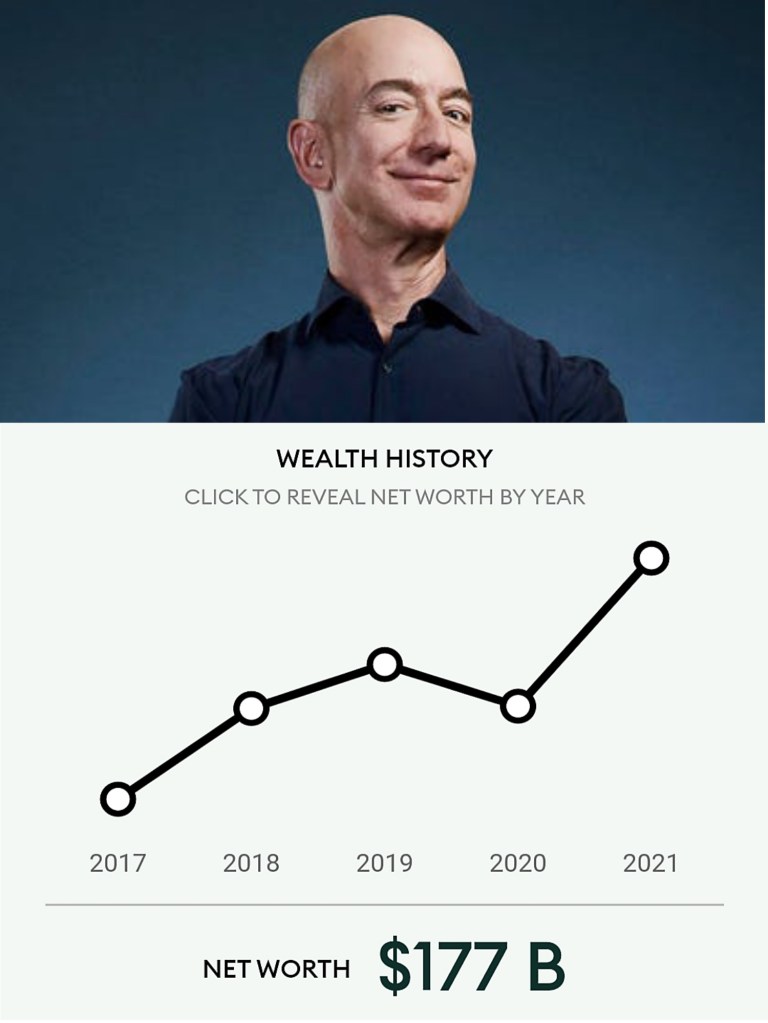
1)JEFF BEZOS :

CEO and chairman, Amazon

Jeff Bezos founded e-commerce giant Amazon in 1994 out of his garage in Seattle.He stepped down as CEO to become executive chairman on July 5, 2021.

2)Elon Musk :

CEO and Chairman, Tesla

BILLIONAIRE NET WORTH : $151B (as of 4/6/21)

Elon Musk is working to revolutionize transportation both on Earth, through electric car maker Tesla — and in space, via rocket producer SpaceX. He owns 21% of Tesla but has pledged more than half his stake as collateral for loans; Forbes has discounted his stake to take the loans into account.

3)Bernard Arnault & family :

Chairman and CEO, LVMH Moët Hennessy Louis Vuitton.

BILLIONAIRE NET WORTH :$150B (as of 4/6/21)

One of the world’s ultimate taste-makers, Bernard Arnault oversees an empire of 70 brands including Louis Vuitton and Sephora.

4)Bill Gates:

Cofounder, Bill & Melinda Gates Foundation

BILLIONAIRE NET WORTH : $124B (as of 4/6/21)

He has invested in dozens of companies including Canadian National Railway and Auto Nation and is one of the largest owners of farmland in the U.S.To date, Gates has donated $35.8 billion worth of Microsoft stock to the Gates Foundation.

5)Mark Zuckerberg :

CEO, Facebook.

BILLIONAIRE NET WORTH : $97B (as of 4/6/21)

Zuckerberg started Facebook at Harvard in 2004 at the age of 19 for students to match names with photos of classmate. Facebook, the social network Zuckerberg runs, has become a go-to communications tool during the coronavirus pandemic lockdown.

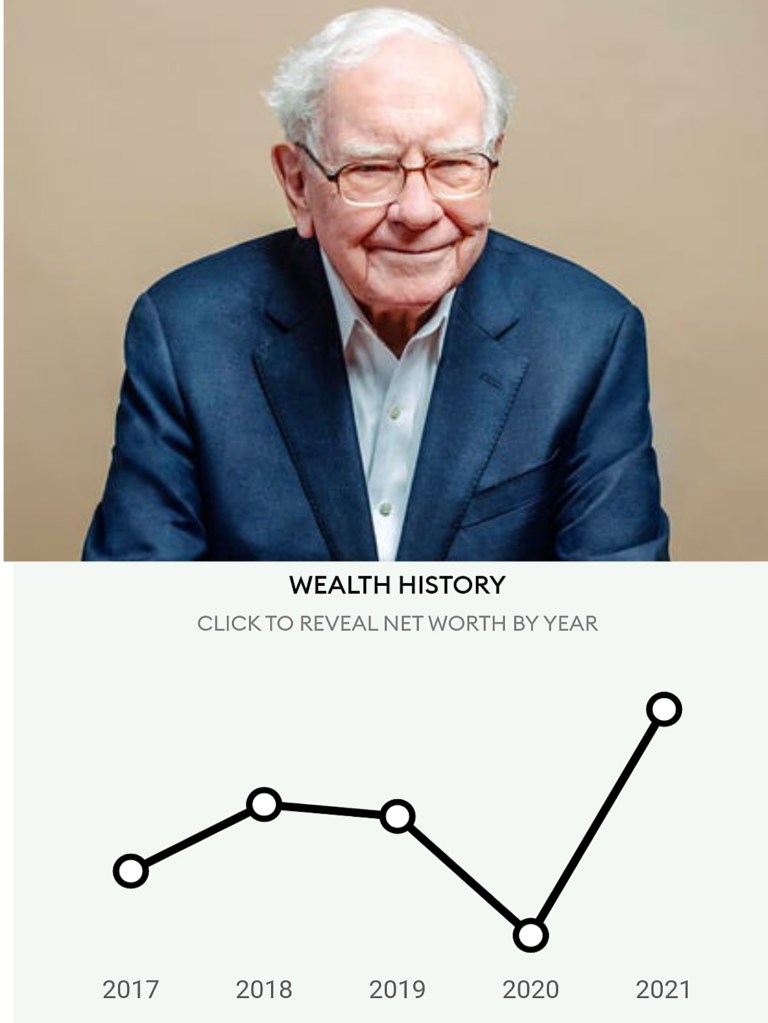
6)Warren Buffett :

CEO, Berkshire Hathaway

BILLIONAIRE NET WORTH : $96B

Buffett runs Berkshire Hathaway, which owns more than 60 companies, including insurer Geico, battery maker Duracell and restaurant chain Dairy Queen.The son of a U.S. congressman, he first bought stock at age 11 and first filed taxes at age 13.

7)Larry Ellison:

CEO and Founder, Oracle.

BILLIONAIRE NET WORTH :$93B

Larry Ellison is chairman, chief technology officer and cofounder of software giant Oracle, of which he owns about 35%.He gave up the Oracle CEO role in 2014 after 37 years at the helm.

8)Larry Page :

Cofounder and board member, Alphabet.

BILLIONAIRE NET WORTH : $91.5B

Larry Page stepped down as CEO of Alphabet, the parent of Google, in December 2019 but remains a board member and a controlling shareholder.

9) Sergey Brin:

Cofounder and board member, Alphabet.

BILLIONAIRE NET WORTH : $89B

Sergey Brin stepped down as president of Alphabet, parent company of Google, in December 2019 but remains a controller shareholder and a board member.

10)Mukesh Ambani :

Founder and Chairman, Reliance Industries.

BILLIONAIRE NET WORTH : $84.5B

Mukesh Ambani chairs and runs $74 billion (revenue) Reliance Industries, which has interests in petrochemicals, oil and gas, telecom and retail.

YOUR PASSION IS WAITING FOR YOUR COURAGE TO CAUGHTUP!

             Hello everyone! We all are different in our way and each of us are passionate of various things. It is more essential to be passionate about something and achieve it through success. Passion is an emotion to be acted upon. Without action, passion yields no worthwhile results. Passion is the fuel in the fire of action. When you have passion for something, you love it even when you hate it.

Know What You’re Passionate About:

           Finding what you are passionate about is a journey in itself. Don’t be frustrated if you don’t feel like you know yet. Keep trying new things. It will come even if you have to build it. If you find your passion, or find yourself hot on its trail, don’t give it up.

            What if you know what you have a passion for but you don’t do anything about it? This is the main problem with passion. You can have all the passion in the world for something but if you never do anything about it, that passion is useless.

            Maybe you work a good job that pays all the bills but it doesn’t allow you to truly follow your passion. You’re afraid of what will happen if you change things up. Yes, change is scary, but it’s not until we leave our comfort zone that we find what we’ve been missing out on.

Find who you are:

             You’re the author of your life. Don’t settle for the bare minimum just because it’s working out right now.

You will never know what you’re truly capable of unless you push yourself.             

But even when you pursue your passion, you will find yourself tripped up by failures and other obstacles. You can’t let that get to you. It happens to everyone on the path of following their passion. Abe Lincoln had a strong passion for building a great country. You think he let a few failures stop him from that? Don’t let obstacles get you down.

What It all needs is courage:

              It all needs a trial and courage to do the works. Mark Zuckerberg says, “The biggest risk is not taking risks”. Don’t care whether it succeeds or fails, just go ahead. Make a trial and do it with a courage. If you can’t, then no one else. Believe in yourself. You can , if you believe you can.

              When we do things, we get success or failure. If it turns success, some may fear of what to do next. The success may encourage more in our passion. If it results in failure, no matter, it would have taught a lesson so than we cannot do the same again.

               Don’t get tired. It may be boring or frustrating to reach our goals. Most of the people give up before they succeed. The one who never gives up, never fails. He might faced a couple of failures, but he does not give up. Fuel yourself with courage day by day. Yeah! your passion is waiting. Just show some courage.

               If you fear of showing off yourself, if you fear of failures, if you fear of your own passion, trust me, You are damn foolish. Courage is knowing what not to fear. Wake up brothers and sisters. To achieve what you want, start working for it from today itself. Don’t hide yourself in the dark. Don’t care of what people say. They keep on saying. People don’t care of what you do, they care of what you made. So, come out of the darkness of fear and light up your life with courage.

“If you have the courage to begin,

                             You have the courage to succeed”

Foods that help with period cramps

Menstrual cramps, are an uncomfortable part of life for many women on a monthly basis.

Get in the habit of drinking 6 to 8 glasses of water per day, especially during your period. Staying well hydrated isn’t just good for cramps, it’s good for your overall health. Hydrating with warm or hot liquids is another option that can also help ease your cramps.

Banana. Bananas contain vitamin B6 and potassium, which can help relieve your cramping symptoms. You can also try banana smoothie. While making your smoothie you can add kiwi or pineapple, it also helps in reducing cramps.

Eat more green vegetables Losing blood every month also means you’re losing iron, which can make you feel sluggish and lethargic. Leafy green vegetables such as spinach can boost your iron levels.

Calcium Dairy products such as milk, cheese, and yogurt are rich in calcium. Consuming dairy products help reduce menstrual cramps.

Magnesium and iron can reduce cramps by relaxing blood vessels Foods rich in magnesium include boiled spinach, dry roasted almonds, oats and cooked black beans. Dark chocolate contains magnesium and fiber.

Eggs and Fish. Eggs contain vitamins B6, D, and E, which all work together to fight off the symptoms of PMS. Rich in iron, protein, and omega-3 fatty acids, fish is a nutritious addition to your diet. Lentils and beans are rich in protein, so they’re good meat replacements for vegetarians. Another source of protein for vegetarians and vegans, is tofu that is made up of soybeans. It’s rich in iron, magnesium, and calcium.

Ginger. A warm mug of ginger tea can reduce pain. You can also drink chamomile tea.