
CONCEPT OF EMOTIONS

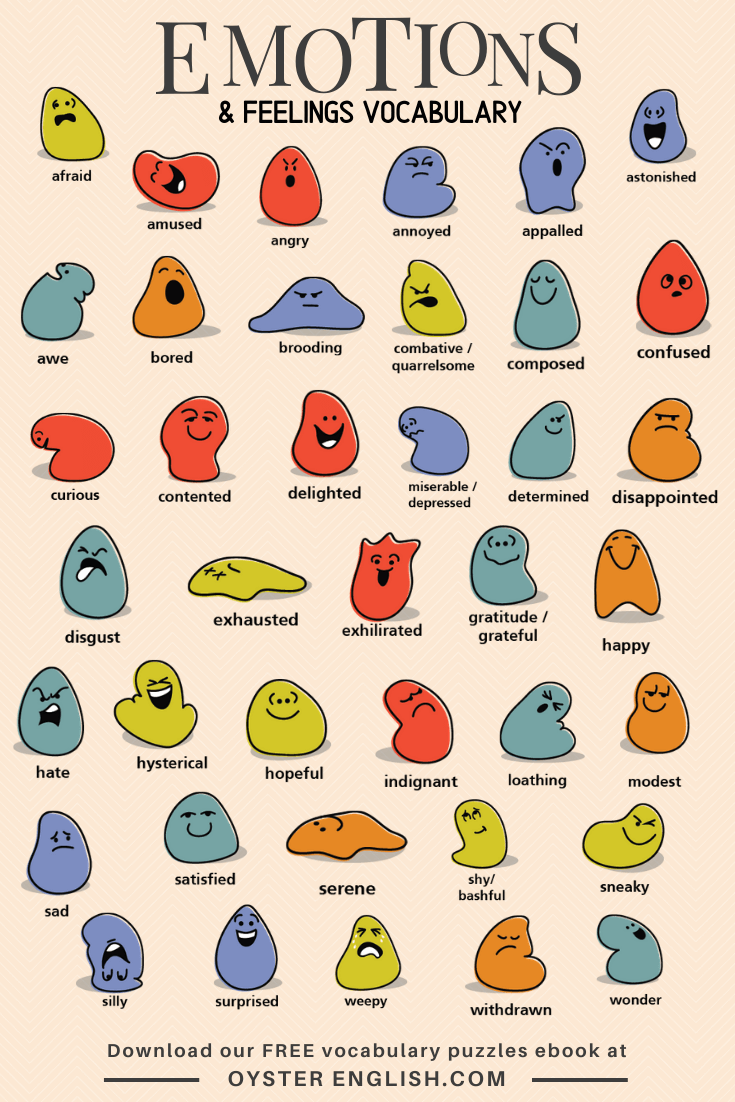
List of Emotions: 54 Ways to Say What You're Feeling

The word ‘emotion‘ is derived from a Latin word ‘emovere’ which means ‘to stirr up ‘ ,to agitate ‘ or ‘excite ‘. Emotions play a very significant role in human life . These are related with internal needs of human beings . Emotions stimulate the mind and as a result emotions became intense . During the stage of emotion an individual appears to feel impatience which enhances physical and mental readiness . To understand the clear cut meaning of emotion , the following definitions may be beneficial :

  • According to Mc Dougall , ”Emotion is a moved or stirred up state of feeling in an individual, linked with some tendency. There are physiological changes associated with each emotion frequently of a muscular or glandular nature”.
  • According to Gates , ‘Emotions are episodes in which the individual is moved or excited”.
  • According to Woodworth, ”It is a moved or stirred up state of an organism. It is a disturbed muscular and glandular activity”.

In simple words , emotions is any strong agitation of the feelings actuated by experiencing love, hate, fear, etc., and usually accompanied by certain physiological changes, as increased heartbeat or respiration and often overt manifestation , as crying or shaking.

Indeed, emotions appear to influence action in various ways. The stronger the emotion, the greater the activity to which it will give rise. It is a well-known fact that emotions disturb our logical thinking . Whenever any emotion is aroused we usually lose our head; functioning of our vital organs changes due to simulation of our nervous system . Emotions change our face expression . Under the influence of emotions , sometimes we are not able to perform the activity naturally . During emotions impossible thing can be made possible. Sometimes under the influence of emotions simple things become complex and intricate.

As a matter of fact, various emotions play a very significant role in the field of games and sports such as fear, anger, pride, jealousy, anxiety, frustration, worry, hope, enthusiasm , vitality, confidence, joy, etc. The emotions of fear, anger, frustration, pride, etc., have a negative effect on the movement of muscles . In fact, such emotions should be under control for better performance in games and sports.


Anger management

Anger is a human emotion. But when its get out of control, it leads to destruction in your relationship, workplace, and etc. It is a unpredictable and powerful emotion, which makes you regret after some time. In this blog, we are going to counter the following topics – What is anger? Types of anger, what is anger management? Anger management techniques, disadvantages of Anger.

Image by Małgorzata Tomczak from Pixabay

What is Anger?

Anger is an intense emotion you feel when something has gone wrong or someone has wronged you. Anger is also a emotion like others. Everyone at some other the point will become angry. When you get angry, your heart beat and blood pressure go up. It can be caused by both internal and external events. You can get angry on a person, an event, or a problem. Also your adrenaline, and noradrenalin levels go up. Anger can have many physical and mental consequences. The external expression of anger can be found in facial expression, body language, and etc.

Types of Anger

  • Passive aggressive It is the indirect way to express negative feeling towards a person.
  • Behavioral it is a type of anger that is expressed physically. It is usually aggressive.
  • Overwhelmed It is a uncontrollable type of anger, it usually causes when a situation is beyond our control. This type of anger results in hopeless situation.

What is Anger management?

Anger management is the way to manage and control your anger. The goal of anger management is to control your emotional feelings that cause anger. It helps you to control your reactions.

Anger management techniques

  1. Think before you speak – it’s easy to say something, But it often regrets, we cannot take our words back. Take few seconds and think and speak. Do not react so fast.
  2. Once you calm, explain the reason for your anger Once you calm down, explain the person the reason behind your anger. Make them understand. This is the best way to control your anger.
  3. Relax Sometimes anger and frustration is caused by problems in our lives, surrounding, etc. Close your eyes and take a deep breathe, think solution for problem, causes for the problem, reasons for problem, and etc. This help you to get solution for your problem.
  4. Change your environment Sometimes changing your environment helps you to change your mood. Go to a place where you can get peace.
  5. Do some exercise physical exercises helps you to reduce your anger. If you feel anger, and just do some exercise like jogging, walking, etc.
  6. Spend time with your friends Spending time with your friends help you to feel better. Explain them the cause for your anger. Get support from them.

Disadvantages of Anger

  1. Outburst of Anger may result in heart attack Anger may effect on our cardiac health, it doubles the chance to get heart attack.
  2. It shortens your life span In a study, it was found that the person who angers often has short life span.
  3. It weakens our immune system You may not believe this but, it is true anger weakens our immune system. Anger imbalance our hormones, which weakens our immune system.

That’s all from my side. I hope you like it.

ANGER MANAGEMENT

Anger is a normal, healthy, negative or negative feeling. Like any emotion, you convey a message, telling you that the situation is annoying, unfair, or intimidating. If your knee-jerk reaction to anger erupts, however, that message will never have a chance to be conveyed. Thus, while it is normal to feel anger when you have been mistreated or abused, anger becomes a problem if you express it in a way that could hurt yourself or others.

You may think that venting your anger is healthy, and that the people around you are very sympathetic, that your anger is justified, or that you need to show your anger in order to gain respect. But the fact is that anger is more likely to have a negative impact on people’s perceptions, distort your judgment, and lead to success.

Consequences of anger

Persistent anger or uncontrolled anger can have devastating effects on you:

Physical health. Constant exposure to high levels of stress and anger makes you more prone to heart disease, diabetes, weakened immune systems, insomnia, and high blood pressure.


Mental health. Persistent anger consumes a lot of mental energy, and it disturbs your thinking, making it difficult to concentrate or enjoy life. It can also lead to depression, depression, and other mental health problems.
Work. Constructive criticism, artistic differences, and heated debate can be healthy. But exclusion only divides colleagues, managers, or clients and destroys their self-esteem.


Relationships. Anger can create lasting scars on your loved ones and can lead to friendships and relationships at work. Outbursts of anger make it difficult for others to trust you, to speak honestly, or to feel comfortable – and especially to children. If you have a hot temper, you may feel like it is out of your hands and there is little you can do to soften the beast. But you can control your anger more than you think. By understanding the real causes of your anger and these anger tools, you can learn to express your feelings without hurting others and keeping your anger from ruining your life.

TECHNIQUES FOR ANGER MANAGEMENT:-


When you are angry, you may experience feelings anywhere from minor irritability to anger. If that happens, try the following:

;Breathe deeply from your diaphragm.
:Give yourself a spoken word.
:Slightly repeat the calm word or phrase “relax” or “calm down.” Repeat as you breathe out until the anger subsides.
:Afterward, express yourself clearly and calmly.

Some Ways to Control Anger


:Exercise like regular exercise is a way to improve your mood and relieve tension.
:Avoid drugs and alcohol, which can make you more prone to depression. Alcohol can also relieve your tension by saying or doing something you used to do.
:Get the support of others. Talk about your feelings and try to work on changing your behavior.
:If you have trouble recognizing when you have angry thoughts, keep a written record of when you feel angry.
:Try to get a different perspective by putting yourself in someone else’s place.
:Learn how to laugh and see jokes in situations.
:Really listen. Listening can help improve communication and can build trust between people. This hope can help you to deal with potentially hostile emotions. A useful communication function is to say to someone, “Let me make sure I understand what you are saying” and then return to them what you think was their main message or opinion. This approach can help to clarify misunderstandings that can lead to frustration, and point out issues where you can ultimately “agree to disagree” without arguing.
:Strengthen yourself by expressing your feelings in a calm and direct manner, without self-defense, hostility, or spiritual suspicion. Read self-help books or seek professional help from a therapist to learn how to use confidence and control skills.

CONCLUSION

If you believe that your anger is out of control and has a negative effect on your health and relationships, seek the help of a mental-health professional. A psychiatrist or other licensed mental health professional can work with you to teach you ways to change your thinking and behavior. A mental health professional can help you deal with your anger in a positive way.

Ask your doctor if medication can be helpful. In some cases, anti-depressants, certain anticonvulsants, and low-antipsychotic may help to treat a sudden attack of anger or rage. Avoid alcohol, benzodiazepines that work temporarily like Xanax, or street drugs that can cause you to say or do things in a hurry. Choose your therapist carefully, and make sure you talk to a professional who is trained to teach anger control skills and assurance techniques.

Anger

Anger is one of the basic human emotions, as elemental as happiness, sadness, anxiety or disgust. These emotions are tied to basic survival and were honed over the course of human history. Anger is related to the “fight, flight, or freeze” response of the sympathetic nervous system, it prepares humans to fight. But fighting doesn’t necessarily mean throwing punches. It might motivate communities to combat injustice by changing laws or enforcing new norms.

Of course, anger too easily or frequently mobilized can undermine relationships or damage physical health in the long term. Prolonged release of the stress hormones that accompany anger can destroy neurons in areas of the brain associated with judgment and short term memory and weaken the immune system. For those who struggle with chronic anger, or for those who only experience occasional outbursts, learning skills to identify and navigate this powerful emotion can lead to growth and change.

What causes anger?

The question of why some shrug off annoyances while others explode in rage is a fascinating one. One model of anger, put forth by psychologist Jerry Deffenbacher, posits that anger results from a combination of the trigger event, the qualities of the individual, and the individual’s appraisal of the situation.

The trigger is the event that provokes anger, such as being cut off in traffic or yelled at by a parent. The qualities of the individual include personality traits, such as narcissism, competitiveness, and low tolerance for frustration, and the pre-anger state, like levels of anxiety or exhaustion. Perhaps most importantly is cognitive appraisal—appraising a situation as blameworthy, unjustified, punishable, etc. The combination of these components determines why and if people get mad.

How can I manage my anger?

If you are often carried away by anger, it can be helpful to understand the patterns that trigger you. It’s possible to intervene at different points along the way to deal with anger effectively.

1. Sleep: Sleep deprivation makes it harder to control angry impulses, so regular, healthy sleep can prevent you from being provoked.

2. Consider alternative interpretations: And ask yourself what evidence you have to support your angering interpretation. Consider different perspectives.

3. Take deep breaths: Take long, slow, deep breaths, using the diaphragm rather than the chest.

4. Avoid the “catharsis myth”: Venting anger, acting with aggression, and viewing aggressive content does not tend to release anger effectively.

5. Know that it’s ok to get mad: If you have been wronged, treated unfairly, or provoked, you should get angry, but express it assertively instead of aggressively.

How can I manage anger that’s warranted?

In cases of warranted anger, such as a coworker who never contributes to collaborative projects, you may want to use a different set of anger management tips. In those situations:

1. Distance yourself from the angering situation. This will help you stop ruminating and develop a clear path forward.

2. Dedicate time to thinking about how to solve the root problem so it doesn’t occur again.

3. Express your anger assertively, with a solutions-oriented approach, rather than aggressively.

ANGER

Anger is an emotion which is a little more dangerous than the rest of them. Anger can be triggered due to financial problems, family problems, being surrounded by people you dislike, personal issues, etc. No one likes being angry nor do we like being surrounded by people who have a bad temper.

Everyone releases anger differently. Some like to shout at people, some like to break things, some tend to self-harm. Well, these methods do help release the anger, but they aren’t healthy ways of dealing with a situation.
Let’s have a look at how anger affects our relationships.
Some people take their anger out on the family. Sometimes when parents do not have control over things at their work, they come home and try to control the lives of their families.
Many parents often fight regularly at home and make the environment of the house hard to live in. Did you know that children who grow up in an abusive environment are usually too sensitive or completely numb? These children also show a sign of aggression or anger. They also suffer from anxiety and depression.
Some people also tend to substance abuse when they are angry. Using drugs, alcohol, tobacco, in large quantities. Some of these substances also cause more anger. Substance abuse is bad for a person’s mental, or physical health. It is also bad for the people around them.
Anger makes us do things we regret. It messes our relationships with people around us because we say things that we don’t mean to and do things we don’t want to.
I am not asking you to never take your anger out. Anger is an emotion that needs to be taken out. Taking anger out does not have to be destructive. We need to find constructive or healthy ways to take out our anger.
We are angry for a reason. So, the first step to calm the anger is to ask ourselves why we are angry. Once we find out why we are angry we can start working on it. Anger is our brain’s way of telling us to find a solution to an issue.
So, if it is a person that makes you angry, you might want to break ties with them.
If you feel angry with a job, maybe it is time to quit the job.

If we don’t listen to what our anger wants. Chances are the anger will keep sticking around until we make significant changes in our life. So, next time before you lash your anger out make sure to ask yourself what got you angry.
Some other healthy ways of dealing with anger are by doing physical activity like playing sports or working out. This will allow you to be constructive with it. In my boarding days when I would get angry, I would play squash. I would imagine the ball as my problem and hit the racket with full force. To tell you the truth it did help and make me feel good.

This way our anger is coming out in constructive ways. We need to learn to channel our anger to improve our lives instead of destroying it.

To be angry is your foolishness…

If we try to search the root of anger, then it is revealed that the reason for this is external activities. There are some of them who are acting against us in some form or the manner. But don’t you agree that when external circumstances are against us, then we should become more supportive of ourselves. But normal human beings do just the opposite. 

When conditions are not favourable, we become more aggressive. We become angrier. Whereas we do so internally. Internally it bothers us more. Things become completely hostile to us. You suffer more than what you were angry about,  the person who is going against himself. 

Can you call him a sensible person? Certainly, he would be considered a mindless person. If this is a pleasant experience for you, then you should be angry day and night. You should always be angry. Nobody will have any problem. If you are enjoying it.

So keep doing this, nobody has a problem. But if it becomes annoying for you, then tell me who has chosen this trouble for yourself? If there are many people around you, then you will try to hold someone else responsible for this problem. These people do what they want to do. But are you also doing what you want?

This is the most important question. Have you prepared your mind for what you want to do? How do you live if you trouble yourself due to internal conditions, then you tell me how wise it is.

Now you tell me by being angry, your aggression is an identity of wisdom or your senselessness? When you understand this senselessness, then only you will have a truly happy experience. When you realize that your anger is a sign of your mindlessness, then your anger will suddenly disappear in a few days.

DON’T LET YOUR ANGER CONTROL YOU.

Anger is a common, normally healthy, human emotion. But if it goes out of control and becomes destructive, then it can lead to problems—dilemmas at work, in your relations, and the overall state of your life. 

Anger is “an irrational state that varies in intensity from mild irritation to intense fury and rage,” according to Charles Spielberger, Ph.D., a psychologist who specializes in the study of anger. Like other emotions, it is accompanied by physiological and biological changes; when you get angry, your heart rate and blood pressure go up, as do the levels of your energy hormones, adrenaline, and noradrenaline.

Anger can be induced by both external and internal events. You could be annoyed at a specific person or event, or your anger could be caused by agonizing or thinking about your difficulties. Thoughts of traumatic or infuriating situations can also trigger hostile reactions. Failing to control your temper can begin to a variety of difficulties like stating things you lament, shouting at your kids, abusing your co-workers, posting rash emails, growing health problems, or even resorting to material violence. But not all anger problems are that severe. Instead, your rage might mean losing time pondering about bothering matters, becoming frustrated in traffic.

Controlling your anger doesn’t signify getting annoyed. Instead, it means discovering how to identify, cope with, and display your rage in healthful and productive ways. Anger control is a skill that everyone can acquire. Even if you believe you hold your temper under check, there’s always scope for progression. Wrath is an emotion that can vary from mild exasperation to extreme fury. While numerous people classify violence as a completely “negative emotion,” it can be positive. Resentful reactions may push you to reach up for someone or they may lead you to build convivial change.

Although when left unchecked, hostile reactions can direct to destructive behavior, like shouting at someone or damaging goods. Bitter emotions also may make you retreat from society and transform your rage within, which can affect your energy and welfare. Anger can become unsettled if it’s felt frequently or too deeply or when it’s displayed in harmful forms, which can take a toll physically, psychologically, and ethically. For this purpose, anger control tactics can be useful and can aid you to explore fine means to display your emotions.

Concentrate on the bodily responses of rage: While it may appear unreasonable, harmonizing in the way your body responds while you’re annoyed usually reduces the fiery force of your rage.

Get running: A quick walk or run nearby the block is a fabulous opinion. Physical movement discharges repressed energy so you can approach the circumstances with a calmer front.

Apply your feelings: You can use vision, olfaction, sound, touching, and taste to instantly reduce tension and calm down. You can try hearing your favorite music, relishing a mug of beverage.

Stretch areas of tautness: Rotate your arms if you are tensing them, for instance, or lightly rub your nape and scalp.

Steadily count till ten: Concentrate on the counting to make your rational mind make up with your emotions. If you still feel out of control by the time you reach ten, start counting again.

Acquire adequate sleep: Deprivation of sleep can intensify cynical thoughts and leave you seeming disturbed and gruff. Try to take seven to nine hours of good quality slumber.

Workout frequently: It’s an efficient method to burn-off anxiety and relieves tension, and it can leave you sensing more comfortable and positive during the day. Try to spend at least 30 minutes every day. 

Be clever regarding booze and narcotics. Even consuming too much caffeine can make you more irritable and prone to anger.

Despite all your attempts, something will occur that will provoke your fury; and seldom it will be defensible anger. Life will be filled with disappointment, grief, failure, and the random activities of others. You can’t correct that, however, you can improve the approach you let such issues concern you. Managing your hostile acknowledgments can prevent them from causing you even more miserable.

COVID 19 and domestic issue

In this crucial time of fighting together against COVID-19 the people all over the country are bound by law to stay at home and follow the lockdown as directed by Honourable Prime Minister Narendra Modi.During Period it has been observed that cases of domestic violence are increasing rapidly.Domestic violence includes any kind of harm physically,emotionally and sexually by one member of family to another.In this time all the members of family are at home together there are more chances of differences to be caused due to distinct views, beliefs. Lots of cases of domestic violence are being reported nowadays. The main cause of this domestic violence is lack of education,lack of values and respect for each other.Surviving in this society doesn’t mean that a person could do anything just to please or calm down its own anger. In case of domestic violence one hurts another in order to calm down its anger which is not justified neither by values nor by law.To fix this issue of domestic violence one always needs to be calm. There must be proper polite discussions on knowledgable or interesting topics to make proper use of quarantine period.One must keep the feeling of respect towards another. This COVID-19 give us plenty of time which should be used in a good manner.The problem of domestic violence mainly arises from anger,aggression so people must take care of these feelings. They must do things which please themselves but do not offend others.Whether it is upper society or lower caste the cases of domestic violence  are everywhere so this must be stopped and the only solution is to stay calm,be positive, do not over react and give time to older as well as younger ones.

Anger management

Getting angry on someone is the most easiest thing because it almost happens all the time. Can we control anger? Can we stop before we get it? Anger is a sudden reaction of the pressure inside that occurred due to disagreement of your opinion. Anger has a great impact because we speak without control. Words that come out of our mouth were actually came from our heart. Usually people hide the true opinions and try to fake friendships. But due to this sudden process the opinion of us over others comes out in a sudden manner.

Things done can never be undone so think before you do. Thinking about done doesn’t erase done. Neither can we change the past not set the future. So think about present because it’s the only thing that’s in our control. May be I can modify the sentence as present is also not in our hands atleast we have a feel that it’s in our control. The feel of real is not real but we are atmost in real. It gives us confidence and hope of our chances to change our present. Going with the flow is a old phrase which makes our lives flow like a wave in a sea. Have focus because its something that stops us from making something. Our conscience reacts only when it’s emergency, so depending on it is not trustworthy.

Have a clarity over your doing. Anger can’t be stopped from getting started. But we can decrease the intensity. We don’t know the initial point of the anger when it’s about to start. But we can remember it only after the incident. So try to stop the origin isn’t in our hands because it happens all of sudden and we don’t have control over it. So try to save ourselves from becoming worse is the only option left with us. We get to know about ourself at the time of anger. We need to control ourselves by shifting our thought to some other thoughts.

Manage your anger by thinking of something else and let your brian think in different direction. Have a shift over your thoughts and manage your anger. Don’t try to stop anger because you can’t stop it. Try to control the intense when you have conscience over your doing. It decreases the intense of your anger and thereby letting you mange your anger.