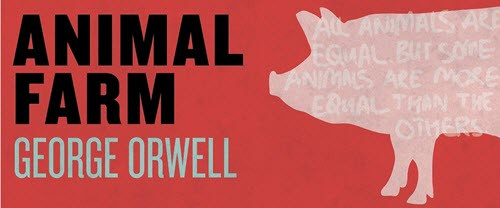
When I picked up the book first, I did it with the assumption that the book would be circling around basic morals and lessons that our children usually learn when they get acquainted with their surroundings, this assumption was based on the mere fact, that the book is based on the lives of farm animals. But a very much-needed reality check came, once the short intricate book progressed in my hands.
George Orwell, the author of this 112 pages worth book, uses his gift of simple writing to bring forth a complex life cycle. His writing explains and describes the enormity, complexity, and the need for various important concepts like war, education, laws, government, development, etc in the most straightforward way possible.
While this book may only last for a few hours, it gives various lessons, that can last you a lifetime. George Orwell manages to explain the recurring need for war, the persisting inequality in our society, the struggles of an updated education system, and many more concepts in detail, with just the help of a few farm animals.
Further George Orwell not only provides a wholesome end to the book, but he also manages to bring a conclusion to the vicious cycle of life, in his effortless way.
In the end, the book makes you question a lot of things around you. It opens your eyes to the realities of life in the most captivating way. And persuades you to question, analyze, and conclude everything around you in your way.
Classics are usually stereotyped as boring and hard to understand. But rest assured that not only will this book end in just the knick of time, but it will also provide you a much-needed understanding of life, in the most simplistic way.
Should you read this book ?
Yes, absolutely. Don’t get intimidated by its must-read classic status, Because it will be a book to treasure for a lifetime.
Women are capable of accomplishing anything. Create great ideas, build businesses, and make a great difference in the world. Nonetheless, we don’t see enough of this message in mainstream media. However, the realm of literature has provided us with many incredible stories of women’s perseverance, knowledge, wit, boldness, and drive.As such, here are some excellent novels written by women authors for women.
I Know Why the Caged Bird Sings by Maya Angelou
The caged bird attempting to escape has long been a symbol of resistance to injustice. Maya Angelou employs this sign to express her desire to leave a life of strife, racism, and misogyny. I Know Why the Caged Bird Sings is an autobiographical novel about Angelou’s childhood in the 1930s.
We encounter prejudice, rape, and rejection from her community, even from her own mother, as we follow this impoverished, disenfranchised black girl. Maya Angelou discovers as an adult how her own strong spirit, compassion, and generosity to others is the greatest way to be free. The book is a strong and beautiful storey of courage and breaking free from one’s captivity.
We Should All Be Feminists by Chimamanda Ngozi Adichie
We Should All Be Feminists is an interesting piece on women’s rights and equality. This book-length article discusses how the term “feminism” is sometimes connected with misunderstandings and prejudices like brainwashing.
To counterbalance this, Chimamanda Ngozi Aidchie provides the reader with a simplistic yet compelling description of feminism: equality for women in social, political, and economic terms. She confronts common feminist misconceptions front on. Even after her own friends called her a terrorist supporter, Aidchie continued to clarify that the term “feminist” has little to do with hostile, resentful, and men-hating women. The central theme of this novel is a narrative of a life-long battle to achieve equality between the sexes.
According to the author, feminism is important since it helps to tackle women’s silence and exploitation.By how successive generations educate their children, the concepts of gender equality and feminism continue to struggle with all these terms.
The Terrible by Yrsa Daley-Ward
The Terrible is a novel about a lady attempting to manage her life on her own. Yrsa Daley-Ward recounts personal aspects of her childhood without her father and the terrible facts she had to discover in this stunning piece of painfully honest prose.
These realities are referred to as “the terrible.” As a young lady, the writer couldn’t comprehend the mental strain of having encountered tremendous pessimism and tribulations so early on in life. Having grown up as the only kid of colour in a white area, she was educated by a family of radical Christians, and witnessed her mother being devastated by several bad relationships.
Later in the book, the book relates Daley-Ward’s life as an adult, when she, too, had to deal with “the terrible.” She discovered it was continually expanding and having a much more huge psychological strain on her as she became hooked to narcotics and experienced repeated mental breakdowns.
The author reaches the climax and confronts “the terrible” after suffering all of the negative stuff that has occurred to her. She can only break free and recover if she recognises the consequences of her trauma and embraces her self-sustaining positivity.
The Girl with the Louding Voice by Abi Daré
The title of this novel hints at the main character. The tale of Adunni, a young Nigerian girl who aspires to acquire an education but ends up in an arranged marriage, is told in “The Girl with the Loud Voice.” As she escapes her violent husband and her native town, her resolve to attend school, which her mother encouraged Adunni to accomplish, triumphs.
The plot follows Adunni on her trip, which is packed with perilous, life-changing, and remarkable experiences. On her journey, she gains access to literature such as English dictionaries when she finds herself working as a maid in Lagos. Eventually, she comes upon an opportunity to learn. Her irrepressible attitude and perseverance drive her on the path to the “louding voice,” making this book a fantastic piece of how battling for your ambitions will be rewarded.
Notwithstanding the many difficulties in her journey, she never quits on her aim of escaping poverty. The end result reminds readers of the author’s message: pursue your goals, and you might just bring about change.
Wow, No Thank you: Essays by Samantha Irby
Wow, No Thank You is an essay collection in which Samanth Irby describes her life as a married woman in her forties. She compiles a fantastic series of stories in which she finds herself in situations that many people can relate to. All throughout the novel, humour is a recurring motif, as Irby makes amusing comments on her own behaviour and life choices.
The author’s inner voice, however, is at the heart of the book, pushing us to be more sensitive to things. That discourse also enables us to notice these things that no one else notices, which frequently results in pretty funny circumstances. Irby demonstrates how her internal thoughts influences her clothing and footwear, food preferences, cleansing items, and so much more.
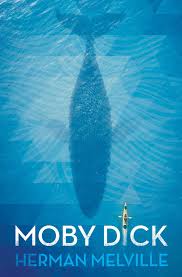
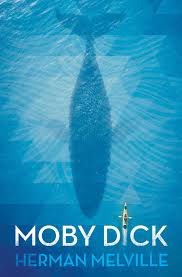
Herman Melville (1819-1891), the author of Moby Dick, is recognized today as one of America’s greatest writers, although there was a time when critics as well as readers rejected his writings. He wrote more than ten major novels, based on experiences that he had gone through himself. Some of his adventures in real life were more exciting than the ones he describes in his novels, but none was as strange and thrilling as the story he tells in Moby Dick. Melville was born in 1819 in New York City. His parents, like many other Americans, were of mixed nationality, being partly English and partly Dutch. The Melville family was a well known one, but had become poor at the time of Herman’s birth. He was forced to give up school at the age of fifteen in order to earn his living. He tried his hand at various jobs: farming, teaching at schools, working in offices-in fact, any work that he could find. Finally, in 1839, he went to sea as a common sailor. His first voyage took him to the port of Liverpool, in England. He found life at sea so attractive that he decided to remain in this profession.
In December 1840, Melville joined the crew of a whaling-ship, the Acushnet, and went on a long voyage to the Pacific. After sixteen months on board, he and a shipmate ran away from the ship when it stopped at Nukhera, an island in the group of islands in the Pacific known as the Marquesas. They spent several weeks on this island, where they were in danger of being killed and eaten by cannibal tribes, before returning to America on another ship. Melville described these adventures in two of his novels which became instant hits-Typee and Omoo.
Between 1840 and 1843, Melville worked on two other whaling ships, the Lucy Ann, and the Charles and Henry. His experiences on these ships were used by him in writing Moby Dick. He gave up his sea-going life in 1844 and devoted himself completely to writing. In 1850, he met the great American writer, Nathaniel Hawthorne, who encouraged him to write Moby Dick, and to whom this novel was dedicated.
About the book
Moby Dick is a book with several layers of meaning and can be read at different levels. At one level, it is an exciting tale of adventure. There are many other well known stories of adventures at sea, but what makes Moby Dick special is the fact that it provides a rare glimpse into a particular kind of life-life on a whaling-ship, or whaler, which Melville knew at first hand.
This is the story of Captain Ahab, the captain of a whaling-ship, the Pequod, and his unending battle against a white whale, to which sailors had given the name Moby Dick. Because of its unusual colour and its great size, Moby Dick had become a valued prize for all whale-hunters. But in the case of Captain Ahab, there was an element of personal enmity and a desire for revenge as well. In an earlier meeting with Moby Dick, Ahab had lost one of his legs, which was bitten off by the whale. Thereafter, he had only one goal in life-to kill the white whale. After months of pursuit through the oceans, the man and the whale came together at last; the battle is resumed. The story is narrated by a sailor called Ishmael, who becomes a witness to the battle between Ahab and Moby Dick.
MOBY DICK as an Allegory
It becomes clear from the beginning that the author wants us to read his story as an allegory-a story with hidden spiritual meaning. Almost everything in the book has symbolic value and represents something abstract. The names of the major characters in the story are taken from the Bible, which was a source of inspiration for Puritans, a religious group.
Moby Dick can be read, at one level, as a tale of adventure. However, the fame of this book rests chiefly on the complex spiritual and religious elements that Melville wove into the story. Moby Dick is regarded as an epic, like our own Mahabharat or Ramayan, or the Iliad and the Odyssey, which were written by the Greek poet Homer, thousands of years ago.
An epic is a long tale which presents before us a vast, many-sided picture of human life and nature. Everything in an epic is on a grand scale there may be hundreds of characters, engaged over a long period of time in numerous exciting adventures. Most epics are stories of great battles, in which human beings perform heroic, almost superhuman deeds. These battles often represent wars between the forces of good and those of evil, with the former becoming victorious in the end.
Moby Dick is also an allegory in which ordinary objects, characters and events become ‘symbols’, representing abstract qualities or emotions. In poetry, for example, the rose is often used as a symbol to represent beauty and love, both of which are abstract things. Another common example of a symbol is the national flag of a country-though only a piece of cloth, it can give rise to the powerful but abstract emotion of patriotism. Many men and women have sacrificed their lives to protect the honor of their national flag.
The early American writers were mostly Puritans from New England. The Puritans, who became powerful in England in the sixteenth and seventeenth centuries, belonged to a Christian group which believed that God had created man only to serve and obey Him and that it was the duty of every human being to lead a pure and strict life, avoiding all forms of temptation. For a Puritan, life was a constant struggle against Evil. They believed that they were the only true Christians. In the sixteenth century, a group of Puritans left England and sailed to America, because they felt they did not have the freedom to lead the kind of religious life which they wanted. The part of America where they settled was known as New England.
Herman Melville was brought up as a Puritan and was deeply influenced by other Puritan writers. It was natural for him, therefore, to see life as a struggle between the forces of good and evil. Moby Dick is a powerful expression of this Puritan view of life, although there are other elements in it as well, taken from other cultures and religions that Melville became interested in. When we read Moby Dick as an allegory, symbolizing the battle between good and evil, it is not always easy to decide which qualities a character represents. Is Ahab a symbol of Goodness, and does Moby Dick symbolize Evil? This is what one might think at the beginning of the novel, since Ahab is shown as a heroic character, possessing superhuman courage and determination, while Moby Dick, the whale, is described as a killer. But gradually, we begin to see that there are many sides to both Ahab and Moby Dick. The whale turns into a mysterious supernatural power, which is beyond human understanding, while Ahab appears to become inhuman in the way he ignores the pain and suffering of others in his thirst for revenge. The line separating good from evil is not clear; both good and evil are seen to be parts of a larger design, balancing each other. Here, Melville seems to move away from a Puritan view of life and may have been influenced by other religions such as Zoroastrianism (the religion of the Parsis) as well as Buddhism and Hinduism.
It isn’t just children that benefit from reading. Reading is one of the best forms of self-education for adults too. While it can be easy to watch a YouTube video or listen to a podcast, reading still takes the cake when it comes to comprehension and increasing your education. As you’ll see when you read on, there are plenty of benefits that you can get from reading.
So, what are the benefits of reading books ?
1. Increases intelligence –
Reading plays an important part in shaping the intelligence of an individual.
Exposure to vocabulary through reading newspapers or novels not only leads to higher score on reading tests, but also higher scores on general tests of intelligence. It helps to dive into a different dimension and helps to think from the character’s perspective. Plus, stronger reading skills may mean higher intelligence later in life.
2. Increase vocabulary –
If you don’t know the specific word for something, then you will have fewer nuances of it’s meaning. When reading, you’ll expose yourself to more words which allows for understanding on different level. Reading an hour a day will expose you to four million words per year. These words when you learn while reading, can incorporate in your daily life as well.
3. Improve concentration –
If you are looking for ways to improve your memory and concentration and also relieve stress, reading will help. The brain-stimulating activities from reading have shown to slow down cognitive decline in old age with people who participated in more mentally stimulating activities over their lifetimes. Reading helps to build patience and concentration.
4. Reading helps to cure depression –
According to a study in University of Liverpool, reading helped patients suffering from depression with their social well-being.
Reading helped build self-confidence, lessening cultural isolation, building a sense of community and fostering increased communication skills.
5. It helps us to understand people better –
Reading fiction has often been claimed to broaden the mind. Now scientists have found that enjoying a novel really does help us to understand other people’s points of view. It seems that the age-old tradition of story-telling has an important role in helping us to develop empathy.
6. Improves communication skills –
Reading definitely helps in improving communication skills . It increases the vocabulary and gives you confidence while speaking as you have more knowledge. Reading increases your exposure to world and expands your horizon which in turn makes you a better communicator.
7. Reading increases your general knowledge –
The more your read, the more exposed you are to new facts and ideas. This exposure helps you to understand, reconnect and come up with your own ideas.
8. It sharpens the memory –
As you read, you take several pauses, create the scenes in your head and let your imagination flow as the book progresses. In a way, you are working out on the brain which could have been idle otherwise. You are rightly exercising the huge part of the human cerebrum which in turn keeps different parts active at the same time. As you read, you a picture, run videos of the scenes in your head. In this respect, many cells are exercised and this help to sharpen the memory.
THE THREE MISTAKES OF MY LIFE : WRITTEN BY CHETAN BHAGAT
In late 2000, a young boy in Ahmedabad called Govind dreamt of having a business. To accommodate his friends Ish and Omi’s passion, they open a cricket shop. Govind wants to make money and thinks big. Ish is all about nurturing Ali, the batsman with a rare gift. Omi knows his limited capabilities and just wants to be with his friends. However, nothing comes easy in a turbulent city. The 3 Mistakes of My Life is a book from Chetan Bhagat, a well-known author, and writer. The story lines based on love, historical disasters, religion, friendship, cricket, excitement, business, and humor. In other words, the book shows the picture of the real life of a common Indian and elaborate Indian mentality. He has presented the facts, neutrally narrated a story. It’s the story about three friends Omi, Govind, and Ish. The story is presented through Govind’s eyes and it’s his three mistakes of life. Govind is a true Gujarati, interested in coming up on his own in life, through business. Ish is an avid cricket player whose passion lies in playing, teaching, and watching cricket. Omi is a priest’s son who doesn’t have any ambition and moves along with his two friends. These simple people’s journey in life, how their lives get affected by the worst disasters in Gujarat’s history is portrayed in a simple yet efficient way. This book also teaches you how your dreams crash into pieces by unexpected events but how with support from people around you, you get back on track, focus and rebuilt your dreams.
This novel especially comes when people only want to come up with excuses to show or feel how different they are rather than see the common aspects and bring oneness, which can keep us together and achieve our common goal of growth, peace and prosperity. The language is simple, it connects well with India’s youth, the narration has improved, all in all, Chetan has improved in all the departments of writing a book. He has again proved that to be the best novelist, you don’t need fabulous vocabulary, or you don’t need awesome critics review, all you need is a threat to connect to people’s minds. Truly his best book ever
Something which kept me quite on to the edge was the reading journey taken up by Ann Morgan. It was quite wonderful of her to take up such a wonderful opportunity. As someone who loved to read I felt myself more closer to her perspective. I was able to identify myself with her and the way she spoke and carried herself, the more I noticed, the more I realized her idea of the world.
The fact that we can understand a person by looking at their book shelf was a quite a point, Because we are what we read upon. What we encounter and read enhance us. They make us who we are. The socialization and books make us realize our potential. A good book is worth a good friend because it moulds you into a better version of yourself.
Reading about various things under the sun and not just sticking to one genre is very important for a reader. He/she must be ready to break the barriers and go beyond their comfort zone because it is only when we explore, we learn about the unknown and hidden and the voiceless. These are very important, because what the world need is a good reader because a good reader knows the world better than anyone else. The person will be objective and not subjective. A good reader knows the bias and learns to be impartial and be more open to the world. They know the difference between empathy and sympathy.
What Ann Morgan stresses again is that fact that if we need something so badly, then the whole world will be with us. Just like how Paulo Coelho said in Alchemist that if we really want something then the whole world will conspire. She brings in and stress some long forgotten words and values.
I hope that more people realize the value of reading in their lives and learn to be better people and change the nation and break away from the stereotypes.
The Books are of knowledge oceans, from every book we learn some thing new and to improve our knowledge and build our personality
BOOK Defination
we all know that a lot of English words come from ancient Latin – that’s because the Romans occupied England for almost five hundred years from 54BC to 410 AD. … The word book comes from Old English “boc” which in its turn comes from a Germanic root “*bok-“, which means “beech” – as in the beech tree
Types of Book Reviews
Endorsements: Hand-picking Relevant Reviewers Before Your Book is Published. …
Trade Reviews: Publishing Professionals May Advocate Your Book To The Industry. …
Reader Reviews: Individuals Recommending Your Book To Each Other. …
Editorial Reviews: Third Parties Publishing Reviews About Your Book.
Why write book reviews
Book reviews give books greater visibility and a greater chance of getting found by more readers. On some websites, books that have more book reviews are more likely to be shown to prospective readers and buyers as compared to books with few or no book reviews.
How to write a book review
Start with a couple of sentences describing what the book is about. …
Discuss what you particularly liked about the book. …
Mention anything you disliked about the book. …
Round up your review. …
You can give the book a rating, for example a mark out of five or ten, if you like!
In this days most of people like to read blogs because they have simple and clear to understand content
Some of people read books by help of Book review, its give simple summary to understand that book
“Writing is the best way to talk without being interrupted.”
Jules Renard
Today’s article discusses as to what makes writing an interesting task which will be highlighted by our special guest that is Alpha – The Typewriter.
Hello Peeps! I am glad to be here with you and speak on this interesting topic. I know I have been introduced already, but I would like to do that again. This is Alpha – A Silver Reed Typewriter. Just in case you aren’t aware of the tasks a typewriter performs, we were used in ancient times (and perhaps even today) to write on a piece of paper. In short, we were alternatives for pens! The keyboard used for the computer today is inspired by the typewriter because it comes with a similar design as on us. However, we refused to offer the flexibility of making mistakes. A single mistake, be it in the spelling, grammar or punctuation, couldn’t be rectified. Instead, you were supposed to start all over again by inserting yet another sheet of paper unlike the keyboards today that offer a delete key, thereby making room for amendment of mistakes.
Moving to the mainstream now. Writing has always been amazing since ancient times and shall always continue to remain an astounding art form. Even in the most difficult of times in the ancient period, writing was never forgotten. Instead, it always remained alive as long as humans existed. I will now be discussing what makes writing an interesting task through a step by step approach.
“The Flexibility To Write Anything!”
Writing isn’t limited to any topic that you must choose. There isn’t any obligation as long as you are working on a paid job and are assigned topics. You are free to write as per your choice and there is no possibility of people judging you on the basis of that (unless you tend to not select a controversial topic, you are safe ;)). In short, there is no obligation when it comes to choosing your own topic.
“The Possibility Of Attaining Fame!”
You never know what impact or influence your writing has on the audience. Perhaps you could attain fame for that which sounds amazing, doesn’t it? The best thing is to know that your content is influencing and inspiring readers which for an author, is an indescribable feeling!
“Room For Infinite Creativity!”
Writing is a generous process that houses your creativity thereby enhancing your write ups. You have no limit to imagining and coming up with any sort of creativity you wish to involve. Thus, writers are free to choose any insensible, fictitious topic on the pretext of creativity which is a bonus!”
“No Time Limits!”
There aren’t any time limits honestly, unless you choose to create one! You are free to utilize your own time and people won’t be mad at you for that because writing leaves the impression of ‘a mind boggling task’ so you are free to work according to your convenience.
“Spreads Insightful Messages With Ease!”
Writing, in its various forms including writing prompts helps spread intense messages which could be philosophical or social with utmost ease and pleasure. Through quotes you could pen down certain inspirational thoughts in less words thus, providing the flexibility of Laconicism.
“Freedom To Write In Any Way!”
You are free to write in any possible way. This facility is mostly due to the presence of various genres in the writing process. Drama, Fiction, Sci – Fi, Mystery or Horror, you are free to commence your favourite one from the list.
Thus, I would conclude stating that writing is all the more interesting when you personally have the will and interest to work on it. Though writing doesn’t come with many restrictions or limitations, the one rule that applies is, that you MUST admire the process! Don’t hesitate. The process is exhilarating.
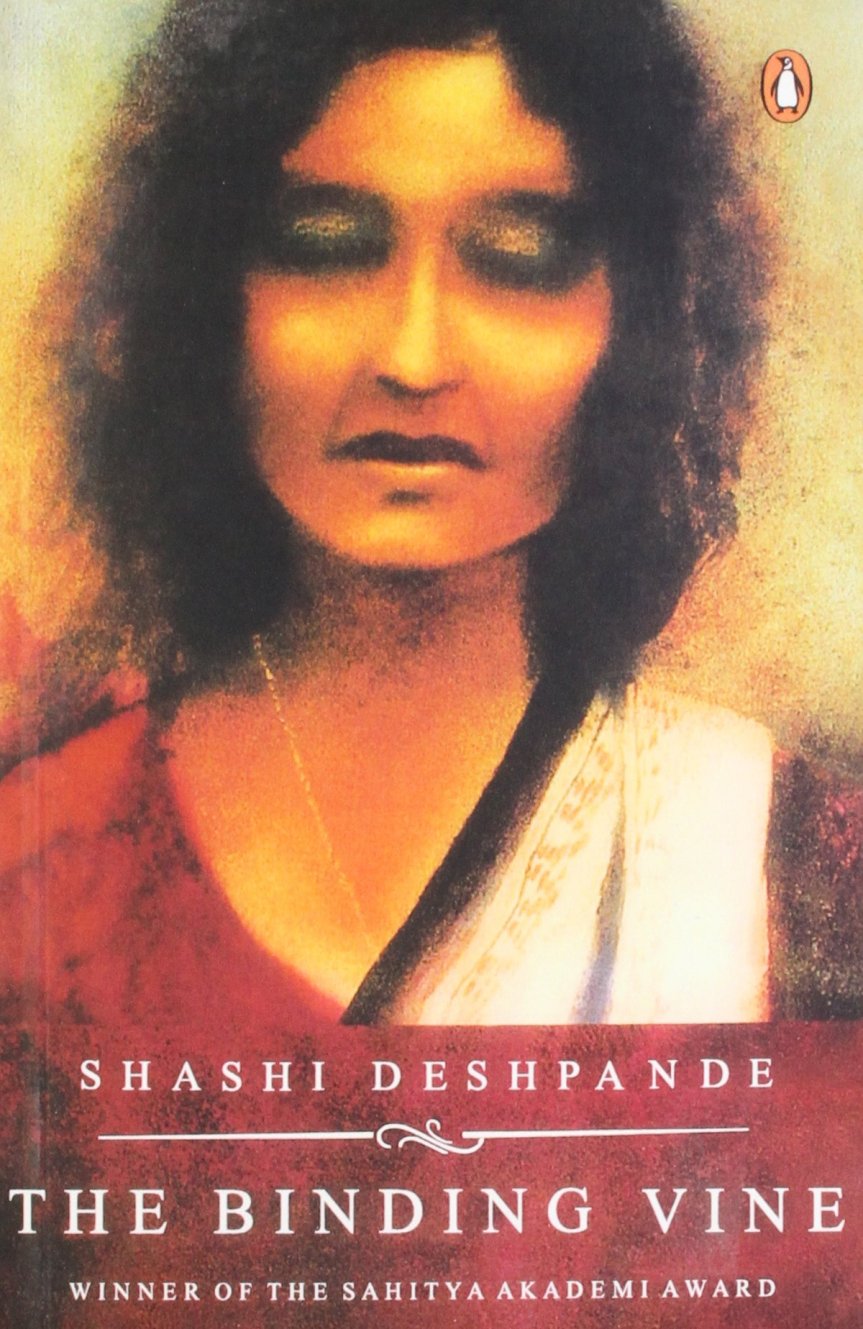
Sashi Deshpande is a Sahitya Academy winning Indian novelist best known for her works The Dark Hold No Terrors and That Long Silence. Her novels generally centre around educated middle-class urban Indian female protagonists who struggle against the oppression of an overtly patriarchal society. She is critically acclaimed for her sensitive and realistic portrayal of women who are fettered to their roles as daughters, wives and mothers. They are conscious of the social inequality and question the deliberate efforts made by men to maintain this. In The Binding Vine, Deshpande introduces women from various backgrounds who collectively question the subordinate status ordained to them by society. This essay seeks to analyse the lead female characters from the novel with reference to feminist theories by Simone De Beauvoir and Virginia Woolf.
“…thus she is called ‘the sex’, by which is meant that she appears essentially to the male as a sexual being.”
Simone De Beauvoir
“What were the use of my creation, if I were entirely contained here?” This quote from Wuthering heights by Emily Bronte in the beginning of the novel runs as a common theme throughout The Binding Vine. The novel uses stream of consciousness method as it follows the life of Urmi, a middle-class college lecturer who encounters several women in her life. With her as the anchor, Deshpande reveals the sufferings of women from different sections of the society. The novel begins by describing Urmi’s personal grief upon losing her infant child. She becomes detached from the world and struggles to get back to her normal life. She is financially independent and is confident in asserting her freedom and agency. She chooses her own husband by marrying Kishore who works in Merchant Navy and is barely ever home. He asserts himself sexually and does not provide the emotional support that she desperately craves. Urmi’s character reinforces Beauvoir’s point that “…thus she is called ‘the sex’, by which is meant that she appears essentially to the male as a sexual being.” Despite being socially and financially independent, Urmi is still scene as a sexual object by her husband.
Urmi later gets acquainted with Shakuntai and her daughter Kalpana. Shakuntai had moved to Bombay in search of her husband who has deserted her for another woman. Coming from the lower strata of the society, she is uneducated, financially unstable and struggles by toiling hard to look after her three children. Her daughter Kalpana is a strong woman who is forced to marry her uncle Prabhakar. Having been molested by Prabhakar since a young age, Kalpana turns down the offer. This enrages him and he brutally rapes her. Though Kalpana is critically injured, Shakuntai hesitates to file a case against Prabhakar and even goes as far to blame her daughter for her current condition. This is due to the internalised patriarchal ideology that the assaulter is entitled to do so as a man while the victim is responsible for ‘encouraging’ the crime. Furthermore, she herself is under constant threat of being held responsible for the downfall of her family as the society always blames women for disrupting its ‘honour’. Just like Beauvoir, Deshpande focuses on the unrealistic standards set by the society on women that expects them to be the perfect loyal caretaker who submissively accepts the will imposed on them by men. Women are always considered as the inessential and the other while the men are the subject and the absolute. Beauvoir further explains this internalisation by saying that “Thus, woman may fail to lay claim to the status of subject because she lacks definite resources, because she feels the necessary bond that ties her to man regardless of reciprocity, and because she is often very well pleased with her role as the Other.” Shakuntai blaming her own daughter for being a rape victim simply emphasises the fact that women themselves unconsciously perpetuate their role as the inessential subordinate.
Another significant character explored in the book is that of Mira, Urmi’s late mother-in-law. Kishore’s step-mother Akka hands Urmi a trunk consisting of Mira’s diaries and poems. Urmi learns how Kishore’s father saw Mira at a wedding and fell in love. “Since then he had “single-minded pursuit of an object; marrying Mira””. She is married off to him against her wishes and falls victim to a life of marital rape. Mira is forced to suppress her aspirations to be a writer, her only channel of outlet being the scribbles of words on her diary. Her writings clearly describe her revulsion and fear for the sexual acts with her husband and it is evident that she’s slowly spiralling into depression. Writing serves as her sole tether to her life on earth. After marriage, she is renamed ‘Nirmala’ by her in-laws which stands testimony to the society’s attempt to estrange women from her individuality after marriage.
"Niramala, they call, I stand statue-still.

Do you build the new without razing the old?

A tablet of rice, a pencil of gold

Can they make me a Nirmla? I am Mira."
Mira’s mental health improves as she joyously awaits the birth of her child, but she dies soon after childbirth. Kishore’s father marries Akka solely for the purpose of looking after the baby. This further reinforces the male perspective pointed out by Beauvoir that “woman has not been socially emancipated through man’s need – sexual desire and the desire for offspring – which makes the male dependent for satisfaction upon the female.”
In spite of being a skilled writer, Mira is shunned away from the literary world. Her husband and her family never encouraged her passion and she was forced to lead a domestic life. Her frustration on being stifled of her skills are evident in her works. This is further reinforced when she narrates her encounter with Venu, a renowned poet. Upon reading a few of her poems, he says “Why do you need to write poetry? It is enough for a young woman like you to give birth to children. That is your poetry; leave the other poetry to us men” . Where Venu is celebrated as a great poet of Indian literature, Mira’s voice is silenced and confined to four walls. She never had the luxury of having a room of her own that Woolf confirms is a necessity for a writer. She was forced to write late at night in secret while the men were asleep. Mira represents the generation of women writers who, despite being talented, were blatantly excluded from the literary world by men. Through Mira, Deshpande resonates the concerns raised by both Virginia Woolf and Adrienne Rich on the struggles of being a female writer in a patriarchal society.
The Binding Vine also features characters such as Urmi’s friend Vanna and Shakuntai’s sister Sulu, who perform their role as the archetypal role of ‘women as angels’. They try hard to maintain the societal pressure of being what Beauvoir explains as “‘truly feminine’ – that is, frivolous, infantile, irresponsible, the submissive woman.”
Despite the numerous struggles of women portrayed in the novel, Sashi Deshpande hints at positivity towards the end of the novel. Urmi convinces Shakuntai to disclose the identity of Kalpana’s assaulter resulting in a gathering of a mass of protestors who fight hard for her Justice. Urmi resolves to translate Mira’s poems to English and to publish them. She also encourages Vanna to stand up for herself and moves on from her personal grief to fight alongside women for a collective cause. Like Beauvoir and Woolf, Deshpande urges women to stand together like ‘binding vines’ against the oppression of patriarchy. The novel celebrates women’s solidarity as friends, companions and sharers of life.
Menakapriya, P. “Portrayal of Women in Shashi Deshpande’s the Binding Vine and Manju Kapur’s Difficult Daughter.” IOSR Journal of Humanities and Social Science (IOSR-JHSS), http://www.iosrjournals.org
“Writing permits me to be more than I am. Writing permits me to experience life as any number of strange creations.”
Alice Walker
Today’s article is an interview with Inky- The Inkpot. Yes! The same Inkpots that were used in ancient times for Fountain Pens! We thought of listening to all it had to say and yes, the interview with it was damn interesting!
The questions were as follows:
Our First Question For You Is, That What Do You Think Of The Writing Medium Used In This Era?
I feel extremely left out. By using me, people enjoyed writing all the more. Yes! Refilling the ink was necessary and may seem a hard task today, but writing with a fountain pen containing a cute feather perched on its top made the process, all the more merrier. The writing medium used in this era is mainly the laptop, if I am not wrong. This medium is easier, actually extremely easier as compared to me but that, I am afraid, doesn’t make writing a fun task anymore, is what I think!
Indeed! Since Length Of Write Ups Has Increased Nowadays, We Refrain From Using You Because That Would Make Writing A Tedious Task. Could You Suggest A Way Of Making Writing A Fun Task Through The Present Medium, That Is The Laptop?
Yes! I totally understand that writing has now intensified its nature. Earlier, write ups were a priceless art form, but today almost every individual is interested in getting into this area of creativity. Maybe that’s the reason, write ups have become meticulous and elaborate today and laptops make work easier. Well, in order to make work on the laptop interesting, I would suggest that you frame your write ups in a way that not only people but also you visualize them. Try to imagine the story yourself while framing it. This will automatically make your task interesting.
That Was Such An Important Point! What According To You Is The Worth Of Writing?
Writing is a precious art form and almost every person can write, if he has the will to. Writing has had its worth since the ancient times, when kings used me along with the fountain pen for sure, in order to state certain important messages and send them over to other kingdoms. Even today, write ups are used to send impactful messages across the globe. It is a great art form for introverts who fear to express their thoughts in public 😉
Indeed! I Am Eager To Use You At Least Once While Writing. Are You Available Now?
I am so glad to hear this, but I regret to say that I have entered the antique section and am no longer easily accessible. It is because of our decreasing demand today! Well, you can always visit museums in order to meet my relatives! However, I have seen certain people who are creatively shaping their pens by applying a feather at the top. Perhaps, you could try that but inkpots (we) won’t be of any use to you now!
Okay! I Will Definitely Try Doing That. What Do You Have To Say About Emails?
That makes me even more dejected. Letters were not only an effective medium of communication but also helped in enhancing cordial relations during the ancient period. Emails, no matter how formal they are, cannot ensure the happiness that letters provided when they popped into the nearest post! In short, all I have to say is that though the digital medium has made writing easier and convenient for man, it doesn’t meet the ‘buoyancy’ factor today. However, writing was, is, and shall always remain an important art form.
True! Lastly! Do You Wish To Address The Future Writers?
Indeed! Writing is an amazing art that requires utmost love and interest from your side. Don’t hesitate to get your words out in the world. Writing also, gives you an option to remain anonymous. So, if you are afraid to speak out, then write it down and get it published. Let the world know what you think. However, if you are interested in story writing then be that. Introduce the world to your creativity. Burying your head into your hands and adopting a demure approach won’t help!
” Life is not a problem to be solved. Just remember to have something that keeps you busy doing what you love while being surrounded by the people who love you”- Ikigai by Hector Garcia and Francesca Miralles
IKIGAI is a Japanese concept referring to have direction or purpose in life, providing a sense of happiness and fulfillment and towards which the person may take action, giving them satisfaction and a sense of meaning.
This book touches on various elements of life that certainly we all are aware of, but always fail to implement in our daily life by giving ourselves unnecessary excuses. This book talks about how every person in this world has the ikigai ( a reason for being ), and by asking a few simple questions to yourselves, you can discover yours and live a prosperous and happy life. The authors of the book have beautifully put down all the ideas and facts which will persuade you to live your life to the fullest. The authors in the book bring the Japanese secret for the readers from the wise people of OKINAWA Island in Japan on how to live a happy and long life.
The best part of this book is, unlike many other self-help books, this does not go on and on. There are very few chapters. The idea or the message which the authors try to convey is straightforward. Read the book carefully, and it will surely teach you how you can bring meaning and joy to every day by following your IKIGAI .
Overall, a wonderful book to read if you feel stuck in your life or just want to make some changes in your life.
“If people cannot write well, they cannot think well, and if they cannot think well, others will do their thinking for them.”
George Orwell
Today’s article features Keyla – The Laptop who shall be explaining The Smart Ways Of Writing. Good Morning Folks! This is Keyla. I am currently a renowned medium for the writing process. I understand that most of the ancient mediums of writing are depressed due to their extinction because of me. I apologize for that, from the core of my heart. However, it’s not our fault if people find writing on us, an easier task! It totally is based on the perspective of people who have regarded us deeply. I also admit that the digital medium involving me, doesn’t make writing a merrier process. Yes! That’s true. But, as I stated, the human perspective is something that gets into the way!
Anyway, since humans are glued to the digital medium and their love for me won’t diminish (is what I think, until some other medium doesn’t turn up ;)), I am here to explain the smart ways of writing easily without burdening yourself! So, I will be explaining that in a step by step approach!
Love The Writing Process!
A simple way is to love the process and admire the lengthy write ups! Writing long stories shouldn’t make you feel sleepy. If that is so, then you must avoid writing, because only a sound person, ecstatic regarding the process, can compose a good story.
Jot Down Those Ideas!
Every time you feel an idea pass through your mind, the sensible thing to do is to jot it down promptly before you lose sight of it! These ideas can prove helpful in composing good content!
Write In A Speech Format!
When you write, ensure that your content is interactive and not merely descriptive. Innovative content is much more interesting, than descriptions with facts! In short, address the readers and make them feel one with your content! Let them feel as if they are enjoying this conversation with you!
Write, When You Feel Like It!
Mood factor plays an important role in the writing process, so write only when you have the proper mood and stable state of mind to make the task interesting!
Write In Bits!
If you have a large amount of content to write, then you are free to work on it, in bits. Don’t try to write it in a single day, as it may stress you out and then disrupt the writing mood! However, if you are a huge writing fan and just can’t wait to read your completed story, and feel that you are well enough to write in a single day, then you are free to do so! The only thing that matters is that your mood remains intact.
Gobble Down Certain Interesting Words Or Facts Mentioned In Other Books!
There is an exception to this rule! You must read a lot here! Only when you read, can you write after all! Try reading all sorts of novels that would contain some interesting ideas which could be highlighted in your book! Don’t worry! Copyright issues aren’t prevalent here! 😉 That is what makes writing an interesting task. The more you read other works, the more you learn. You do not get blamed for copying. Instead, you get admired for learning whenever you read!
Write Frequently!
In order to not feel burdened for writing huge content later, make sure to practice writing frequently. After all, practice makes perfect, doesn’t it.
Imagine Your Content And The Story It Poses!
Try imagining all that you write. This makes it extremely easier to frame your content because you yourself feel lost in the process. So, an important thing to do is, not only make the readers, but also make yourself one with the process!
Thus, Lastly, I would conclude stating that the smartest way of writing is creating your own imaginative world and getting lost in that, visualizing yourself as a part of the story and getting one into that. So, write with love and utmost devotion. Have the power to get into that world you just created through your content!
Yellow Scribe is here to help you with that. Consult them and make your publishing dream come true! Let people be introduced to your creativity!
“Being business minded requires you to always approach things with humility and respect.”
– Strive Masiyiwa
We are by now familiar with two types of approaches which are of course, positive and negative but we miss out on another important one within the positive approach, the one that very subtly lets a wee bit of negativity drift in so that something positive can happen. Let us name it the Pogative Approach that uses negativity to make something positive occur in business. For instance, cheating with the delivery of your services to get a surplus is a good example of this approach. Thus, the point to be highlighted is that most businessmen resort to the Pogative Approach and assign it the positive tag. However, this approach isn’t acceptable in business owing to the fact that it has the capacity to damage your reputation which may only break the chain of regular customers and as stated in the earlier articles, you don’t want to compromise with the regular ones because they have the power to fetch you a new queue of customers through feedback. Thus, businessmen must shun the myopic perspective and have an agile future vision.
Before inaugurating your business on a large scale, it is better to begin as an entrepreneur because a bigger company comes with reputed customers and you don’t want to deal with them without any previous practice. You don’t want to mortify yourself by not being able to impart those perfect customer service skills. You don’t want a bad image owing to lack of expertise. That’s exactly why, we move from basics to advanced level of expertise because as the saying goes, Practice makes Perfect. Thus, practicality comes into handy as it lends us a helping hand towards the topsy turvy business route. Everything in life surely has stages. So, a company owner must have run errands or worked as an entrepreneur which is essential as it helps us understand whether or not we are interested in business. It can be considered the first stage. Many a times, after going through this basic stage, a person realizes that business isn’t his piece of cake, which eventually helps him back off and prevent future losses!
When customers come into the picture, businessmen have to adopt an emotional approach. Though, it may be a lipstick of sham that feeling needs to reach and penetrate deeply in the customers’ heart so that they feel impressed and prefer you yet again in the future. This is what constitutes customer service. However, instead of pretending to be emotional, it is advisable to be true to your feelings and respecting each and every customer who trusts you with their hard earned money. You don’t want to dupe them by showing a ruthless image that can never be dropped in the near future since First Impression is the Last Impression as we all know. Of course, you aren’t expected to have deep rooted loving emotions for each and every customer, but you surely must possess those ethics that dislocate your intentions of betraying them through lack of commitment. In short, emotions and ethics share a close relation which makes adopting the emotional approach mandatory since every customer matters.
Every business is a convenient spot for customers thus, expecting variety in conveniences is acceptable. Thus, one should adopt a flexible approach that welcomes all sorts of services to the society so that customers feel satisfied enough to approach you. For instance, if your business includes website designing then make sure you incorporate all sorts of web related activities. You too want a variety of sources that fetch you income, don’t you? Thus, don’t adopt a rigid approach and remember to remain open to the market trends as you digest new services in. Flexibility also comes into limelight when you are expected to fine tune your services. Don’t be rigid with the manner of your services and try streamlining them with new facilities each and every time, as the market trends transform! As we all know, we can either introduce new services or evolve convenient features in the existing one to make it look like a new service. Thus, both of these require a broad based mindset which accepts feedbacks be they in the form of criticism and takes these in a positive manner to enhance the quality of ones services.
Let us understand all of these approaches through a short story. Let us imagine a company selling children’s wear. The owner before beginning this business had been working as an entrepreneur and stitched pretty garments at home which received great demand later. Thus, it helped the owner evolve into a huge business since she had gained some expertise in customer handling and felt the need to occupy a bigger platform for herself. Customers receive a warm attitude that doesn’t back in pleasing them which lures them all the more. She stitches garments even better than the customer demands, which obviously melts them. They pledge to choose her always because the love mixed with the services clearly touches the customers’ heart. It’s been a year or so, she surveyed some people who informed her that including ladies wear could help which she flexibly considers with a positive approach and tries her hand on this new endeavor. She effectively learns the same and drags attention of women on a large scale after 6 months owing to the efforts she puts into perfectly constructing those beautiful garments with unique patterns that every lady feels eager to try out. In short, dedicated and flexible approach that accepts feedback helped her succeed and have a huge business. After ladies wear, she tried incorporating teen wear and this variety gained wider public admiration. In short, one mustn’t hesitate in introducing new services or trying hands on multiple ones so that success touches our feet!
Set in the late 1960s and early 1970s, against the backdrop of the dense forests of Jharkhand and Bengal where a large tribal population is present, the story is an account of the harrowing experiences of Dopdi Mejhen, while she was in police custody for inciting a tribal uprising and murdering an upper class landowner. The undercurrent of the story is dark and chilling and harks back to the time of the Naxalite uprising in 1967.
In the story, the protagonist, Dopdi Mejhen is a young woman of 27 years. She is a political extremist and outlaw. A bounty of One Hundred Rupees is placed on her head. The story is set against the Naxalite movement in Bengal during 1967. Dopdi Mejhen belongs to the Santhal tribe. She is Robin Hood like figure to the landless peasants of Bhakuli. She, her husband Dulna Majhi, along with their comrades are responsible for the killing of wealthy landlord Surja Sahu and his son, which explains the bounty placed on her head. The tension between the peasants and upper caste men exists because of the drought in the area. The peasants attacked and killed the landlord one night, who had occupied all the wells and tube wells which were the only source of water for the village. This incident brought upon the fury of the government which launched Operation Forest in order to capture the escaped couple, Dopdi and Dhulna, who are believed to be hiding in the Jharkhani forests, which explains the deployment of the antagonist of the story, Senanayak, an elderly Bengali specialist in combat and extreme left politics as explained by the author.
Senanayak is adamant to capture Dropdi, in which he succeeds in the end. Senanayak’s hunt for Draupadi and other tribal extremist revolutionaries has already instilled in the latter an experienced knowledge that if they are caught, they will be countered – which is not the official police encounter but rather the undocumented state sponsored killings. As she is apprehended, Senanayak feels both triumphant and despondent at the same time. This despondency is due to the fact that Dropdi chose to stake herself for her community, ululating with the force of her entire being right before she is taken into custody alerting her fellow comrades to escape, therefore outmanoeuvring the attempt of Senanayak to quell the Naxal insurgency. Senanayak instructs the army officers to ‘do the needful’ by raping her in order to extract the information about rebel uprising. The men easily succeed in stripping Dopdi in the narrative, which is the culmination of her political punishment by the representatives of the law.
Ironically, the same officers who violated her body, insist that she covers up once she is ‘done with’ before they can take her to Senanayak. She walks out, naked, bruised and wounded, refusing to hide the evidence of brutality and unwilling to be shamed. This disturbs the officers and Senanayak, who are unsure of what to do with this woman, who forces them to confront their own depravity. She remains publicly naked at her own insistence rather than saving her modesty, insisting that this is the place where the male dominance stops. She confronts Senanayak, laughing. Her laughter, bursting forth from her bloodied lips, continues to be unintelligible to the officers, especially Senanayak. Her laughter and her blood challenge the Senanayak and show that she refuses to be shamed into submission. Senanayak finds himself bereft of language, too scared to speak at the end – ‘and for the first time Senanayak is afraid to stand before an unarmed target, terribly afraid’. Senanayak is completely defeated as she rejects the system of male dominance that was supposed to undermine her. Her sexually mutilated body is a weapon of naked protest. The body raped and tortured is used as a weapon in the end. Dropdi refuses to be emotionally wounded even though she is physically wounded. She recognises that a woman’s body is an asset through which they can resist the socio-political objectification of their bodies and overcome oppression.
There is a clear resemblance between the Draupadi described in the ancient Hindu epic, the Mahabharata and the Dopdi described in Mahashweta Devi’s short story. They almost share the same destiny. The Draupadi in the Mahabharata suffers terribly as she is a queen condemned to a life of living incognito and is disrobed in the presence of the entire court. Her dignity and prestige was compromised. Yet she was the one who fought to win her respect back and prayed to Lord Krishna to protect her. As mentioned in the scriptures, Lord Krishna blessed Draupadi with a saree that was so long that its end could not be found. However, in the short story, Dopdi is on her own and nobody comes to her rescue or to clothe her. She fights her oppressors while being fully naked and her nudity becomes her strength as it forces her rapists to come face-to-face with the heinous crime they had committed. Just like the Draupadi of Mahabharata refused to tie her hair till she bathed in the blood of Duryodhana, the Dopdi of Devi’s story refuses to wear her clothes till her rapists realise the implications of their actions. Devi presents a strong woman who, despite facing marginalisation and exploitation, transgresses conventional sexual and societal standards. Dopdi subverts the physicality of her body from powerlessness to powerful resistance.
Ah, Heidi, that brings light to the heart! What comfort you have brought me!
Peter’s Grandmother in ‘Heidi’ (Johanna Spyri)
Heidi is a child who warms the heart of each and everyone she meets, be it the beautiful characters she meets and interacts with or the readers who only meet her through the words of Johanna Spyri. A girl so pure and untainted that all you want is a happy ending for her.
Reading the book as a 12-year-old brought me immense joy and happiness. From the moment we first met her, a bundle of clothes being taken up the mountains to live with her gruff grandfather because her aunt couldn’t care for her, her aura shone through the pages and made you feel like you were actually accompanying her. I felt bad for her when her aunt was describing the rumors about ‘Uncle Alp’ her grandfather, felt happy for her when ‘Grandfather’ turned out to actually be the most caring and kind human being who loved Heidi with all her heart. I could almost see the beautiful sunset that lit up the mountain tops that she saw on her first trip up with the goats and her excitement dripped off the pages every time she did something new.
Reading the book again as an adult brought me the same happiness. The same sense of wonder and sympathy. I was hooked once again and dragged into the Swiss world of Heidi, the moment I opened the first page. I experienced anew the fear and confusion she felt at suddenly being sent away to Frankfurt, a city that was so much of a contrast from the mountains and nature she had gotten used to. At the same time, I laughed along with Sara, the invalid she was sent to accompany, at the ridiculous exploits she still got up to. I laughed at Miss Rottenmeier, the housekeeper’s, dismay at having to deal with a child who seemed to know nothing of the basic alphabet let alone etiquette.
As any children’s book, Heidi gets her happy ending when she is sent back to her Grandfather in the alps by Mr. Sesemann, Clara’s father, when he sees how homesick she is. She returns home a changed girl though. While still maintaining her innocence and carefree nature, she has grown into quite a capable young woman who brings a lot of change in her mountain friends, getting even Peter, who hated studying, to read a hymn a day for his poor old, blind grandmother.
‘Heidi’ is a book that I think I will enjoy reading even when I am much much older. A book that will bring back the feelings I felt as a child every time I read it. Well-written and a timeless classic, it is a book that captures the innocence of child, the confusion they face when put in an unfamiliar environment, the ease with which children adapt. It is also a book that poignantly captures the homesickness any human feels in a place they don’t belong and the beauty that is nature. It is a book filled with a lot of emotions while still remaining light-hearted. Many things made an even more profound impact on me when I read it as an adult. A lot of themes like the power of rumors and the misconceptions of people about ‘Uncle Alp’ hit me more as an adult. The helplessness Clara feels, stuck in a wheelchair all her life, and the immense happiness she experiences at being able to walk again. The resignation with which Peter’s grandmother accepted her fate and the peace she felt when her days were filled with the light that Heidi brought in with her every time she visited. While I did feel happy reading all the good things and sad at all the bad things, reading them again at a much more mature age put them in a different light.
This is a book, I feel that everyone must read at least once if not twice. A book that will bring you so much joy no matter your age. A book that reveals a lot more layers than you would expect from a children’s book. A book I am sure I will pick up once again to read the next time I come across it on my shelf. A book I will fall in love with all over again no matter how many times I have read it.
























 Eduindex
You must be logged in to post a comment.