Struggles of big dairy companies in India!!!

India is that the world’s biggest producer and consumer of dairy. In 2018 alone, India produced 186 million metric tonnes of milk — about 410 billion pounds and 22 percent of the milk produced globally. Almost all of that is consumed domestically thanks to India’s dairy-heavy diet — think creamy curries, yogurt drinks, and a popular type of butter called ghee. A quick note before we proceed: this includes milk from buffaloes, which are an important source of milk in many developing countries. the point is that India loves milk.

What is pushing India's small dairy farmers out of business?

In 2011, the French dairy company Danone hoped to capitalize on this by opening a division in India. Danone opened its own processing plant in Haryana and tried to capture some of India’s 1.2 billion dairy lovers. But less than a decade later, Danone shuttered their dairy business in India. That same year, the corporate made 28 billion dollars worldwide and was within the top three global dairy companies. With all this success, elsewhere, why did Danone’s dairy business sour in India? Let’s start with some background on Danone. Their business is broken down into three categories:

  1. 1.specialized nutrition, like supplements and formula for babies;
  2. bottled waters and seltzers;
  3. dairy and plant-based alternatives.

That one makes up over half of their global sales, but it’s also the one that failed in India. Danone does still sell specialized nutrition products in the country, but they don’t break out those sales figures separately. This is the same company as Dannon in the U.S. The company decided to rebrand to make the spelling less confusing for American consumers. Anyway, now for some background on India’s dairy industry. There are about 75 million dairy farmers in India. Most of them are women who own one or two buffaloes or cows to supplement the family’s income. Nearly half of India’s milk is not sold, but consumed by the farmers household. This makes India’s dairy industry much more fractured and localized than other countries where Danone operates. Take the company’s native France and one of its biggest customers, the U.S. Each has far fewer dairy farms with herds that dwarf India’s one or two animal average. This was Danone’s first big problem in India: sourcing milk is difficult. Of the half not consumed by farmers’ households, only about 15 percent goes to big organized companies or government run cooperatives. The rest goes to hundreds of small, local milk processors.

Tainted milk: Branded dairy in India sees 5% increase in ...

The largest companies like Amul, Mother Dairy, and Nestlé have tiny percentages of the market, and they’ve been there for decades. Market research firms Mintel and Euromonitor declined to release specific market share numbers to CNBC. However, a 2016 piece in The Economic Times of India citing Euromonitor put the figures at about 7 percent for Amul, 3.7 percent for Mother Dairy, and 2.9 percent for Nestlé. In short, tapping into the existing dairy infrastructure is effective but time consuming. Imagine the effort of contacting dozens or hundreds of local and regional dairies, processors, or individual farmers. But establishing a separate supply chain altogether is very expensive — a lesson Danone learned the hard way. And when Danone did get milk, the company focused on the wrong products. Danone pushed plain yogurt and flavored yogurt drinks — popular in places like the U.S. and France with high profit margins to boot. But in India around the time when Danone arrived, yogurt comprised only 7 percent of the dairy consumed.

The real money was in ghee, a type of clarified butter, and plain old fluid milk, a product with razor-thin margins dominated by those hundreds of local small-scale producers. Analysts explained to CNBC the simple reason why Indian consumers shunned Danone’s prepackaged yogurt. And if Indian consumers did want to buy premade yogurt, they had a slew of cheaper options than Danone. Dairy never accounted for more than 10 percent of Danone’s sales in India, a far cry from its global 50 percent. Its specialized nutrition arm picks up the slack, and the company announced a renewed focus on that division when it shuttered its dairy operation. Meanwhile, two of their biggest competitors, Amul and Nestlé, made nearly five billion and 750 million from dairy, respectively. But not all hope is lost for Danone’s dairy in India.
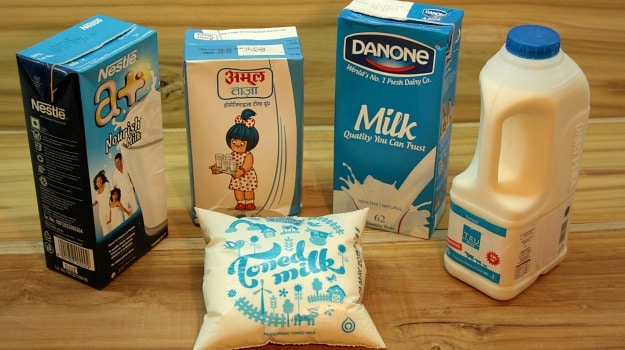
Amul, Nestle, Mother Dairy, Tru & Danone: Which Milk Tastes the ...

In January 2018, the same time that Danone ended its dairy production there, the investment arm of the company announced its part in a 26.5 million dollar investment in Epigamia, an Indian yogurt startup. This could be a sustainable move for Danone in India’s dairy industry because Epigamia offers consumers products that add value onto the plain yogurt they will make cheaply reception . But perhaps most importantly is this: while much of the population still makes yogurt the old-fashioned way, analysts predict that a growing number of consumers will want to buy premade options as they move into corporate jobs in developing urban centers. Very large numbers indeed. If only 5 percent of India’s 1.35 billion people decides to buy prepackaged yogurt, that’s over 67 million consumers — more than the entire population of Danone’s native France.


Why Apple was not so popular in India???

Apple sells millions of iPhones every year. In the year 2018, the tech giant reported selling close to 47 million units worldwide. But not all markets are created equal. India has been one of the hardest countries to crack for the Cupertino giant. Although it’s been over a decade since Apple began selling iPhones in India, the company can’t seem to get a big bite of the world’s second-largest smartphone market. India is a very price-sensitive market, which means that people pay a lot of attention to what value they are getting out of the price that they are paying for a particular product.

In the case of Apple, there’s a lot of premium being paid for the brand itself, and that’s where the price-conscious Indian consumer thinks about that if they are getting the same kind of features or specs from another phone that they can get a lower price, that makes it tougher to sell something at a much higher premium. Apple is definitely feeling the pressure. Samsung and Xiaomi accounted for the majority of smartphone sales in India in quarter three of 2018, garnering 22 percent and 27 percent respectively of the smartphone market. In contrast, Apple made up only about 1 percent of India’s smartphone market share, trailing behind Chinese phone makers Vivo and Oppo. It’s also worth noting that the premium smartphone market in which Apple operates still makes up less than 5 percent of the overall smartphone market in India.

7 Key Strategies That You Must Learn from Apple's Marketing

Most of the smartphones in India that sell, they are below $200 and Apple does not have any play in that segment. This environment is one that competitors like Samsung have begun to adapt to. The South Korean powerhouse is launching its Galaxy M series budget smartphones to appeal to the Indian market. In contrast, Apple doesn’t seem too keen on changing up its India strategy. I got some ideas for you, OK? I talked to some people at Walmart yesterday. An arrangement with Walmart Flipkart to take over India with a budget phone rather than doing it piecemeal? For us, we’re about making the best product that enriches people’s lives. And so, we’re not about making the cheapest. For us, what we’ve seen is, there’s enough people in every country in the world that we play in that we can have a really good business by selling the best phones. Still, some tech investors see Apple as being out of touch with the India market. You think they are going to slash prices? I think they have to. How can you sell a $1,000 phone in a market like China where the GDP per person is $10,000? In India it’s $2,000. And if you go back to the September earnings release, they talked about the fact that India was way below where they thought.

Apple postpones launch of online store in India - The Economic Times

Well, if your average GDP person is $2,000 and you’re trying to sell a $1,000 phone, it’s gonna be probably pretty hard to sell it. They probably want to eat. Another issue for Apple: stiff tariffs. I think iPhones have a specific disadvantage in the India market because of the local regulation. There is a very high import duty on the phones that are not manufactured locally in India. So for most of the big players in the India market, they are manufacturing locally so they do not have to pay that high import duty. Samsung has been manufacturing phones in India since 2007 and just last year opened the world’s largest mobile phone factory on the outskirts of New Delhi. Chinese phone makers Xiaomi and Oppo have also invested millions of dollars to build manufacturing plants in the country. That’s not to say Apple has completely ignored India.

The tech giant already manufactures its lower-cost iPhone SE and iPhone 6s models locally, through a partnership with Taiwanese manufacturer Wistron. This year, Apple is also expected to move its production of the iPhone X series into Foxconn’s plant in southern India. If you look at how we’ve done over the years, we’ve gone from a $100-$200 million business to last year we had we exceeded $2 billion. That $2 billion was flat year over year after a rapid rapid growth. And so we have more work to do. We’d like to put stores there. We would like some of the duties and so forth that are put on the products to go away. But even with its local hardware production push, Apple still fails to provide Indians with a robust software experience.

Apple iOS 13 Release: Should You Upgrade?

Apple has introduced turn-by-turn navigation for the India market. Before that, that significant part was missing. And beyond that, there’s not a lot of customization that Apple has done for the India market. There are not a lot of apps that specifically cater to the India market. Past complaints for Apple Maps also included missing major landmarks and having very sparse data of cities and towns. But again, Apple is working on a solution. The company has hired thousands of engineers at its mapping facility in Hyderabad to improve its services. Apple Pay is also not an option in India, though similar payment services from Samsung and Google have already been rolled out. Finally, unlike in most other markets, Apple can’t rely so much on its brand recognition to sell devices in India. The other challenge for Apple in India is that it cannot have its own retail stores or own Apple stores because of some regulatory issues, which means it has to have partners on the retail side, whether it’s the Apple premium resellers, which you see in many other countries as well, or with the third-party resellers. In order to have a larger presence in the market.

Apple has to have partnerships with thousands of these resellers, which in a country as big as India, can be challenging. Apple is still a premium status symbol for many Indians, but one that is out of reach for the majority of the population. With phones from Chinese brands like OnePlus, which was India’s best selling premium smartphone brand for the second quarter in a row, offering similar features at a fraction of the cost, Apple may have a very tough time getting a bigger slice of the India market.

Apple - Localizing the Message - Global Marketing Professor

Why Australia is least affected by recession!!!

America’s economy is approaching a big milestone. If it keeps humming until July 2019, it’ll be the longest expansion in U.S. history. It would be exactly one decade and one month old by then. But there’s another country with an even more impressive run It’s even called the ‘lucky country’ Three big lessons from Australia.

  1. Be smart.
  2. Be organized.
  3. Be lucky.

So, if I’ve got any advice for other countries, it’s try and be as lucky as Australia That luck has to do with Australia’s treasure trove of natural resources. You know Australia is on the other side of the world and sitting on tremendously valuable minerals right at the point where the Chinese economy is just around the corner and exploding. Australia and every one its natural resources were within the right geographic neighborhood even as the Chinese economy began to begin . And it just so happens that China did a big fiscal stimulus in 2008 and spent a great deal of money building new cities. So all of these resources were drawn from places like Australia. So that also served as a huge tailwind at a time when developed markets were in a whole lot of trouble.

What Currency Is Used In Australia | Australian Dollar : Compare ...

The year 2008 was a time of economic turmoil The Global Financial Crisis hit and markets crumbled around the world. But as it turns out this was also a year for Australia’s economic management to really show off At the time the government had a very helpful and very low level of debt. One reason? Pension reform in the 1990s. Australia set up a compulsory retirement system called the superannuation system. It requires employers put money into its employees’ retirement savings.

Since companies and citizens have to build up retirement savings, some of the financial burden to pay off pensions was taken off of Australia’s government As other economies reeled in the wake of the 2008 crisis, the Australian Government was then able to put money directly into people’s bank accounts This boosted consumer spending in order to stimulate growth In 2008, the Australian Government unlike some other developed market governments actually jumped in very quickly with fiscal stimulus, so that helped to kind of minimize the effect of the crisis The country’s numbers continued to look sluggish after the financial crisis. But they never quite dipped low enough or for long enough to satisfy the definition of a recession. It takes two quarters of negative growth to fall into a recession. Australia’s economy did post a couple of negative quarters since 2008, but no country’s perfect. Overall Australia’s economy has been managed pretty much in recent years partly due to a robust and stable financial institution.

Reserve Bank of Australia – Australia's LGBTQ Inclusive Employers

Australia has an independent financial institution and it is a very well-run financial institution . It also has a floating exchange rate and the exchange rate helped it adjust to international shocks. Australia’s economic reforms gave it flexibility in times of hardship. For example, floating the Australian dollar In 1983, Australia’s government moved the dollar onto a floating exchange rate This meant that the dollar would be valued by supply and demand instead of being subject to influence from its government or its central bank It allows the economy to react to shocks as well Typically when an economy is hit by some sort of negative shock. The currency will adjust. It will depreciate and that helps promote exports. Another reason behind Australia’s economic diary lies in its immigration policy. Since the late 1990s, Australia has seen growth in temporary migration, many arriving to the country on student or temporary work visas. The number of temporary migrants peaked in the year 2000. However a recent change to immigration law in 2018 gave visa applicants more hurdles to get through if they wanted to come to the country Even when our GDP per capital average incomes aren’t rising by much because the number of people continues to rise that means the total GDP continues to rise at even more rapid pace Part of that’s underpinned by much faster population growth Most experts think Australia’s economy remains strong in 2019, but it’s not without risks.

Australia’s suffering at the instant from pretty weak wage growth. That’s worrying a lot of people. There’s a lot of fear right now that China is hitting a wall. That will hit demand for Australian products. The good news is to the extent that the Chinese are buying commodities hopefully will find buyers from overseas for many of those commodities if the Chinese are not there The bad news is the rest of the world economy is not doing that well.

Australian economic growth slows, enters per capita recession ...

Negotiating- The Art, a small story!!!

I think there is an art to it it’s a craft, the negotiating training this morning in the office and the reason, negotiating it be is because it’s the one area of the deal where people need me the most and they need me the most they think I have the most confidence and the confidence that I have going to the deal comes from experience and it comes from honestly – practice practice practice because no matter what you’re selling you’re selling. Two different people you’ve got a seller and a buyer and in every negotiation you’ve got price you’ve got pressure and you’ve got persistence those are the three P’s remember that is it can be a nice little instructional.

The negotiations between Disney and Lucasfilm - A negotiation case ...

An iPhone cost to make now you’re not going to negotiate the price of an iPhone because there’s too strong demand but let’s say there wasn’t strong demand then you can negotiate or you can find a retailer who’s going to sell it to you for cheaper because it doesn’t cost nearly as much to make that phone. As it does for you to buy it real estate is the same way a deal that’s listed from 10 8 down to 10 so 10 million bucks the offer originally came in at 8 million dollars okay that seems like it’s way too far apart. If I go to the seller he’s going to say you got to come up they’re going to say oh no this is my offer so what do you do what do you do you remember the price you want to try to get – which in this instance was around 8 and a half that’s where we thought we’d get a deal done and the legacy price what the seller paid seller paid six point five. So, even at our low terrible awful offer that sellers making money that’s a good thing to remember and to consistently remind each side and then you let time saturate the emotions of the deal and you use repetition you only paid six five even if this bullshit offer you’re making money.

The Art of Negotiation in Project Management

There are clients who are losing million and they use pressure right the fear of a falling market and the fear of missing out every seller fears they’re not going to get their price going forward because maybe the market could change every buyer has a little fear that they’re going to lose it a little fear they’re going to miss out and then you’re trying to find the price in the middle where both sides will say we came to that number because that’s the max or the minimum that I’m willing to go to get this deal done.

Can a Business Simulation Game help develop Negotiation and ...

How Jack Ma inspired me!!!

Jack Ma- every 5 years we have a review for our strategy now our strategy is always to look at the 30 years and 10 years every strategic decisions we make we have to ask one question this decision we make solve society problem because we believe the biggest social property you solved the most successful you are so if we do it this cannot solve any social problems we don’t do it second is this project is going to be successful in 10 years. If it’s it’s going to be successful in 10 years let’s do it if it’s going to be successful in one year or one month normally we forget about it because why you can be successful in one year or one month.

Alibaba billionaire Jack Ma: I know nothing about tech or marketing

We all have to put parham and 5 years ago we had a big debate about 10 years later 20 years what are the things this china society the world leave want so we say happiness and health strategy to happiness and health we believe Holly do you know the movie industry bring people happy because today nobody is happy rich people are happy poor people not happy you know at least when I watch movie after you’re happy but right. So, I think we should have partner with the Hollywood especially like a lot of you know we have a different way of living and in China the movie we have a lot of heroes but China movies heroes always dead the American me movie here will never die if all the heroes die who want to be the hero so my movie I want to make the hero live right so this is this is I think we should learn a lot and it’s all about two years so we have another eight years ago I want to make our company that it’s it’s not ecommerce it’s something that giving people inspirations given people.

Alibaba's co-founder Jack Ma to retire | The Passage

In the eBay model why about this model I told myself for is the gum set or a hat that will care about what the other people and the other thing Forrest Gump said nobody make money out of the catching whales people make money by catching shrimps so

 We serve small business or not if you want to win in business you have to think bigger than the service or product you

They also teach all the tricks all the turns all the dips all the tosses in the air did it matter as much as the experience we provided to students every person wants to feel loved every person wants to feel like they belong but they want to feel wanted appreciated validated and see and so we’ve always at our school thought bigger. We thought about they may come in for a service but they come back and they refer others because we enrich their lives we focus on the essential human needs like love like care like belonging that across cultures across demographics everybody wants to feel or experience.

Jack Ma and Jerry Yang talk about Yahoo's big Alibaba investment ...

I love Jack Ma’s message thinking five or 10 years from now because what people are worried about let’s say right now for the next six months it’s going to come and go but what stands the test of time are the deep down worries and fears that we all share so if you want to have a successful business you have to think bigger than the service or product you provide because people may come to your dance school people may come to your coffee shop by random chance but that’s not what’s going to keep them there and that’s not what’s going to make them refer clients to you now I’ve got a special bonus clip for you but before we get to it today’s question is how have you been thinking small in your business and what can you do to change that to really make an impact on your customers.

How Starbucks captured the coffee & the world…!!!

With nearly 30,000 cafes across the world , Starbucks has become over just a household name. From its iconic cups, often adorned with misspelled names, to the espresso inside them, Starbucks has catapulted from one coffee bean shop in Seattle to a sprawling $80 billion business over the last 47 years.

Starbucks has a 'void in innovation' and healthy beverages won't ...

Starbucks sales account for 57 percent of the total cafe market. Yes, 57 percent, nearly two-thirds of all coffee sold at cafes in the U.S. comes from a Starbucks. But this impressive expansion hasn’t come without growing pains. With more than 14,000 locations in the U.S. alone, Starbucks has spread itself too thin. Having too many stores has led to fewer transactions at individual stores. To compensate, the company has raised prices. But doing this too quickly or too often can drive customers away. So how did this happen? And what’s a coffee giant to do about it? The year is 1970.
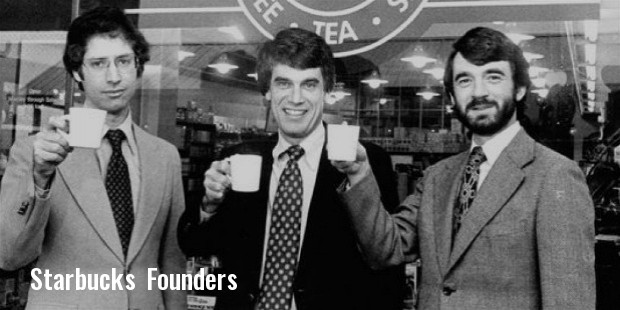
Three college friends, Zev Siegl, Jerry Baldwin and Gordon Bowker decide to get into the coffee business. They found a mentor in Alfred Peet, founder of Peet’s Coffee and the man responsible for bringing custom coffee roasting to the U.S. He knew the coffee industry inside and out, especially the gourmet end. He was the most educated coffee guy in the country at that time. So with Peet’s help, the three friends open Starbucks, a coffee bean shop and roastery at Seattle’s famous Pike Place Market in 1971. Peet provided the young entrepreneurs with roasted coffee beans and connected them with coffee brokers until they could set up their own roastery and source their own beans. For the first decade, the founders opened five more locations in Seattle. At this point, contemporary coffee consumers might have noticed a glaring absence: actual coffee drinks. But that’s the thing about the 70s coffee culture: it didn’t really exist outside the home. There were no coffee bars nor was there much of a requirement for espresso-based drinks. You purchased coffee beans and you either took them home as beans or we ground them for you in the store. Nobody expected to urge a beverage at a Starbucks coffee store until after 1980.

Starbucks Story - CEO, Founder, History | Coffee Company | Success ...
Starbucks’ initial focus was bringing high quality beans to consumers who were more accustomed to instant or canned coffee, but that changed with the addition of one man. The company hired its first really professional Director of Marketing and Sales, and that man was Howard Schultz. And he couldn’t figure out why we weren’t selling beverages. In 1983, Schultz travels to Italy and returns with an idea: turn the coffee bean stores into cafes. Starbucks served its first latte the next year. The experiment was a success, and four years later, Schultz partnered with investors and bought Starbucks for $3.8 million. He was only 34 at the time. Schultz pursued a strategy of aggressive expansion. By the time the company went public in 1992, it had 165 stores, in 1996 it had opened more than a thousand locations, including its first international cafes in Japan and Singapore.
Growth was so rapid that, just three years later, Starbucks opened its 2,000th location. Schultz switched from CEO to Executive Chairman in 2000, at which era Starbucks operated 3,500 stores in additional than a dozen countries. Between 2000 and 2007, the number of Starbucks cafes more than quadrupled, from 3,500 to over 15,000. During this era , the corporate opened a mean of 1,500 stores per annum , including 2,500 in 2007 alone. Sales shot up from $2 billion to $9.4 billion. Consumers were increasingly ditching their kitchen mugs for these iconic paper to-go cups. But then, Starbucks hit a wall: the 2007 financial crash. That year, its rapid growth screeched to a halt and its stock price plummeted by 50 percent as cash-strapped consumers backed away from pricey coffee habits. So, Starbucks brought back Howard Schultz. This news alone caused Starbucks stock to increase by 9 percent.

Xed Knowledge
Schultz halted growth and focused on customer experience. He shuttered cafes – more than 600 in 2008 and another 300 in 2009 – and laid off around 6,700 baristas. A month after his return, Schultz ordered Starbucks to shut all of its U.S. locations for one afternoon so he could retrain more than 135,000 baristas about how to make its signature espresso. Schultz’s goal was to remind customers what they loved about the brand by making the stores an experience, not just a place to get a quick coffee. They stopped selling breakfast sandwiches and brought back in-house grinding, infusing the cafes once again with that fresh coffee aroma. Schultz even mandated the removal of automatic espresso machines. These made service faster, but removed much of the romance and theatre of watching baristas craft each cup of coffee. Schultz’s makeover worked.

Starbucks | Description, History, & Facts | Britannica
The company’s stock soared more than 143 percent in 2009 and same-store sales rebounded. Starbucks has posted positive same-store sales ever since. During Schultz’s makeover of the cafes, Starbucks barely opened any new stores. But the pace picked up again in 2012. By 2017, Starbucks opened nearly 3,000 more locations, ending the year with 28,000 cafes round the world. However, this brings us back to the first problem: profit cannibalization. Over-saturation, particularly in urban locations, has spread sales thin. Because Starbucks has numerous locations, customers do not have to be loyal to only one. So albeit Starbucks overall sales are growing, its individual same-store sales won’t reflect it. Compounding this problem are changing consumer preferences. People are shying away from sugar-laden calorie bombs. which happens to be one of Starbucks’ staples. These signature Frappuccinos contain an average of 57 grams of sugar. That’s more than double the recommended daily limit of sugar. So, to combat these problems, Starbucks is changing once more . The company announced the closure of 150 stores in 2019. That may seem like a drop in the bucket for a sprawling company like Starbucks.

Starbucks App Users Now Drive 17 Pct Of Sales | PYMNTS.com

The company’s biggest undertaking is its new line of upscale stores: Starbucks Reserve Roasteries. These massive, 20,000-square foot stores are designed to be a tourist destination. Here, Starbucks baristas and bartenders’ experiment with different brewing methods and craft new, innovative beverages. These have proven popular. In the first weeks, the Shanghai Roastery made an average of $64,000 every day, which is double what a regular cafe makes in a week.

How to open a Franchise without money- US…

let’s talk about to open a franchise with no money so the first thing you can do, if you want to open a franchise with no money down is go to your friends and family look. I understand that that’s something that you may not want to do sometimes that’s a toughest conversation asking friends and family for money but I would assume if you’re willing to open a franchise and you have some skill sets you have a certain level of intelligence and a certain level of ambition so assuming that you have a good reputation and a good rapport with your friends and family then that’s the first place that you can go to get money to fund your franchise.

hamburger and fries photo
Photo by Jonathan Borba on Pexels.com

Now when you’re approaching them for the money it’s important to be tactical and strategic about it and you don’t just say hey! can I borrow ten thousand dollars can I borrow twenty thousand dollars can I have fifty thousand dollars you have to go into it strategically so go into it with a business plan this is the franchise that I want to buy this is the amount of money that I need to get started this is a lot the amount of money that I think I will make with the franchise this is the time period which I can pay the money back to you and get on that loan repayment plan, another way to approach getting money from feds and friends and family to fund your franchise is to ask them to be a partner with you so although they may not want to work in the franchise themselves maybe they’re more willing to give you money or lend you money for the franchise if they are an owner or an investor with you so maybe you’re the one that runs the franchise and you handle the day-to-day operations the sales managing the staff managing the overall business and they get a percentage of the profits as a way of paying them back.

close up photography of starbucks disposable cup
Photo by Adrianna Calvo on Pexels.com

The next way that you can fund a franchise is to get a loan and before you read about that real quick with the franchise so now in getting a loan to open a franchise business it’s important to note that one you’re going to need to have good credit and two you’re going to need to have an income that can support paying back. The loan and three the likelihood is you are still going to need money for the down payment on that loan if you get us an SBA loan which is Small Business Administration they require a minimum of 10% down from you in order to fund that business so what does that mean if you need $100,000 for your franchise business then that means you need to come up with $10,000 in order to here that loan so the question is how will you come up with that $10,000 and there’s a number of options that we’ll go over in a second of how you can do that one way you can do that is what we already talked about which is getting money from friends or family it’s so even with the Small Business Administration having a ten percent minimum requirement that you have to put towards the loan in order to open a business.

white and blue come on in we ere open signage
Photo by Tim Mossholder on Pexels.com

Most lenders that issue SBA loans are going to require anywhere from 20% to 30% in order for you to secure that loan so again in that example if you’re looking to open up a business that’s a total of $100,000 you’re going to have to figure out a way to come up with twenty to thirty thousand dollars in order to secure that loan and so in a second I’m going to tell you about a strategy of exactly how you can do that without having to ask your friends or family for money another way that you can fund a franchise without having any money so to say is seeing if you have any 401k or retirement plans now as someone who has managed over a hundred million dollars over the course of career as a financial advisor typically. I would not recommend for someone to take money out of their 401k and that’s not what I’m recommending to you. So, I want to make sure that you get that clear because there are severe penalties and tax consequences that you should consult the tax advisor about but there are ways that you can leverage your 401k so if you’re still working with your employer you can take out a loan against your 401k in order to fund a business and when you take out a loan there’s one thing that you have to be very careful about the thing that you have to be careful about is that if you leave that employer and you have an outstanding loan they are going to make you repay that loan within a certain period of time usually it’s 60 days if that is the case if you don’t come up with the money and repay the loan for the 401k they count it as an early distribution you’re going to have to pay taxes on that money depending upon if it’s a pre-tax 401k and you may have to pay some penalties. 2 guys opened up first location they were going to need 300 just over $300,000 in order to get first location open so they had a significant equity in their home at that time and want to went ahead and apply for a home equity loan they secured a three hundred and ten thousand dollar home equity loan use that home equity loan to fund the business and to pay for the business about a year or so later they actually wind up moving they sold their house the home equity loan was paid for paid off and now they own the franchise in the business completely outright don’t have any loans on the business and then the last way that you can potentially buy or open a franchise with absolutely no money is to talk to the franchiser again it’s not about the resources it’s about your resourcefulness so it never hurts to ask them and to make a pitch if you’re truly excited and confident about the opportunity.

download

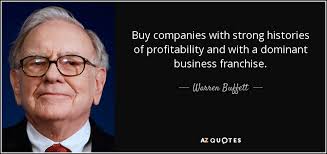
Image source: AZ quotes

SWOT in Business

SWOT is an evaluation-process of external and internal factors through the process of communication which can also be termed as empirical Analysis. This analysis is based on observations and experiments which act as strategic management. SWOT in Business stands for:

             S- Strengths

             W- Weaknesses

             O- Opportunities

              T- Threats

Swot analysis is applied in laying down the policies of large organizations. An organization, based on SWOT  analysis, can make a relative/comparative study of its strengths, weakness, opportunities, and threads. On the basis of SWOT analysis, a business organization by exploiting its strengths and opportunities can achieve its multifaced goals, by overcoming its weaknesses and rendering its threads innocuous. SWOT analysis trains us in deriving the maximum benefit from the opportunities and the strengths, it is also identified with the term (WOTS-UP).

In other words, SWOT analysis is a technique that enables a business organization to make the best use of its strengths based on the opportunities and by doing so, an organization can keep the possible threads at bay by overcoming its vulnerable areas.

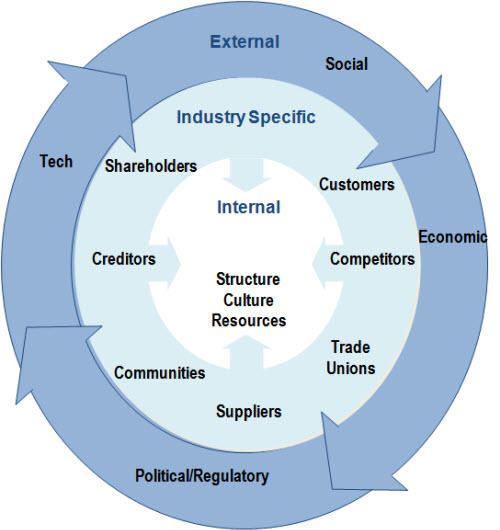
INTERNAL FACTORS

 1. STRENGTH

  Every individual and every organization possesses some strengths or characteristics or peculiarities. These peculiarities are known as positive points, such as the right pronunciation or right scent in communication, vocabulary, language, command and group discussion, etc., are the positive qualities which fascinate their audience and in course of discussion or debate, satisfying the audience with a clear and valid explanation to their queries, etc., are the major strengths. An effective personality becomes the strength in organizational communication. So strength is a very important factor for anyone.

2. WEAKENESSES

Like strengths and positive assets, there are certain weaknesses in every individual or an organization. Identifying weaknesses and marking them is an important factor. These shortcomings are known as ‘Negative Points” such as faculty and erroneous pronunciation, fast or impatient articulation, inability in drawing others attention and faculty or casual-listening as an audience, non-seriousness, or a casual approach towards communication in a business organization.

– From LEGO SWAT

EXTERNAL FACTORS

3. OPPORTUNITIES

In any business, it is essential to avail of opportunities. In the career of any business organization, professional or individual, there are a plethora of opportunities which can be transformed to destinations or in other words can be described as the gateway to one’s destination, for instance, some professionals by benefiting from e-commerce, have attained a global dimension in their business.

4. THREADS

 Society and the external environment give rise to threats. Every organization, business, profession, or an individual has to go through a rigmarole or a series of difficulties/challenges, on way to success. These threads give way to opportunities, such as the discovery of new means of communication e.g., internet, e-commerce, and e-banking, etc.,

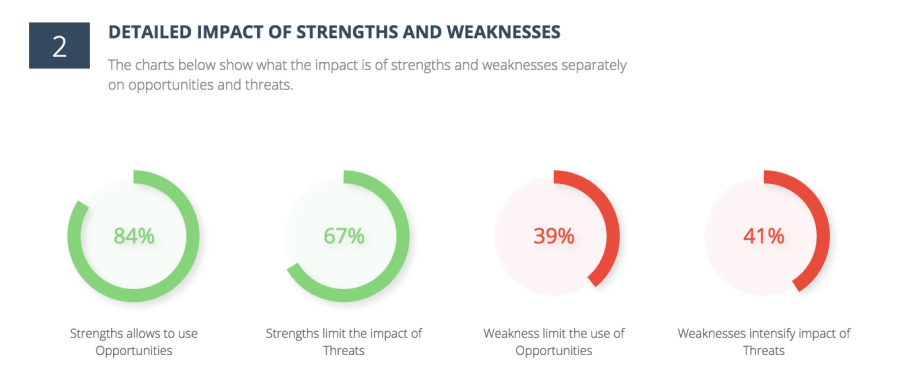
As there are always two sides to a coin, in every business or professional area, the strength and weaknesses march together. Each thread provides opportunities. In this analysis, threats, and opportunities (T-O) and weaknesses and strengths (W-S), through the equation, their interrelated analysis is done, which is also know as TOWS Analysis.