Jack Ma’s Ant Group chooses Hong Kong and Shanghai for its Mega IPO

One of China’s biggest tech firms has chosen to stay home for its blockbuster IPO, shunning Wall Street where Chinese companies are facing heightened Scrutiny because of rising geopolitical tensions.

Ant Group announced on Monday that it is planning “a concurrent initial public offering” in Hong Kong and on Shanghai’s Star Market, China’s answer to the Nasdaq extending a series of mega tech listings amid the fallout in US-China trade relations.

Ant Group, previously known as Ant Financial, is an affiliate of Alibaba Group Holding, the owner of the South China Morning Post.

Ant is affiliated with E-commerce giant Alibaba, which raised a record $25 billion when it debuted on Wall Street in 2014 still the world’s second largest IPO to date. Ant owns Alipay, one of the most popular payment apps in China, and also offers online financial services such as loans, investments and credit scoring systems.

While the provider of the Alipay service is still discussing the size and timing of the share sale, the outcome is likely to be one of the largest initial public offerings in years. Stock analysts are valuing Ant at more than US$200 billion, higher than state-owned China Construction Bank and just shy of Bank of America’s market capitalisation.

Alibaba received a 33 per cent equity interest in Ant Financial in September last year under a restructuring that also ended a profit-sharing arrangement between them, according to its prospectus in November. While Alibaba does not control Ant Group, its co-founder and China’s richest man Jack Ma effectively controls about 50 per cent of the voting interest in Ant Group, according to its annual report.

The public listing will enable Ant, which operates the Alipay wallet used across Alibaba’s e-commerce networks, to work toward several goals: digitize China’s service industry, such as getting mom and pop shops in far-flung regions to use its payments service; drive domestic demands, such as being a conduit of government-issued coupons for consumers amid coronavirus pandemic; expand globally through its e-wallet partners in nine countries; and finally, invest in new technologies.

Bankers are valuing Ant at a staggering $200 billion, according to sources from Reuters. The company declined to comment on its valuation. If Ant sells 10% of the company in the IPO, it would generate $20 billion in proceeds, which would place it third in terms of the largest IPO deals ever, just behind Alibaba’s $22 billion IPO and Saudi Aramco’s $25 billion IPO.

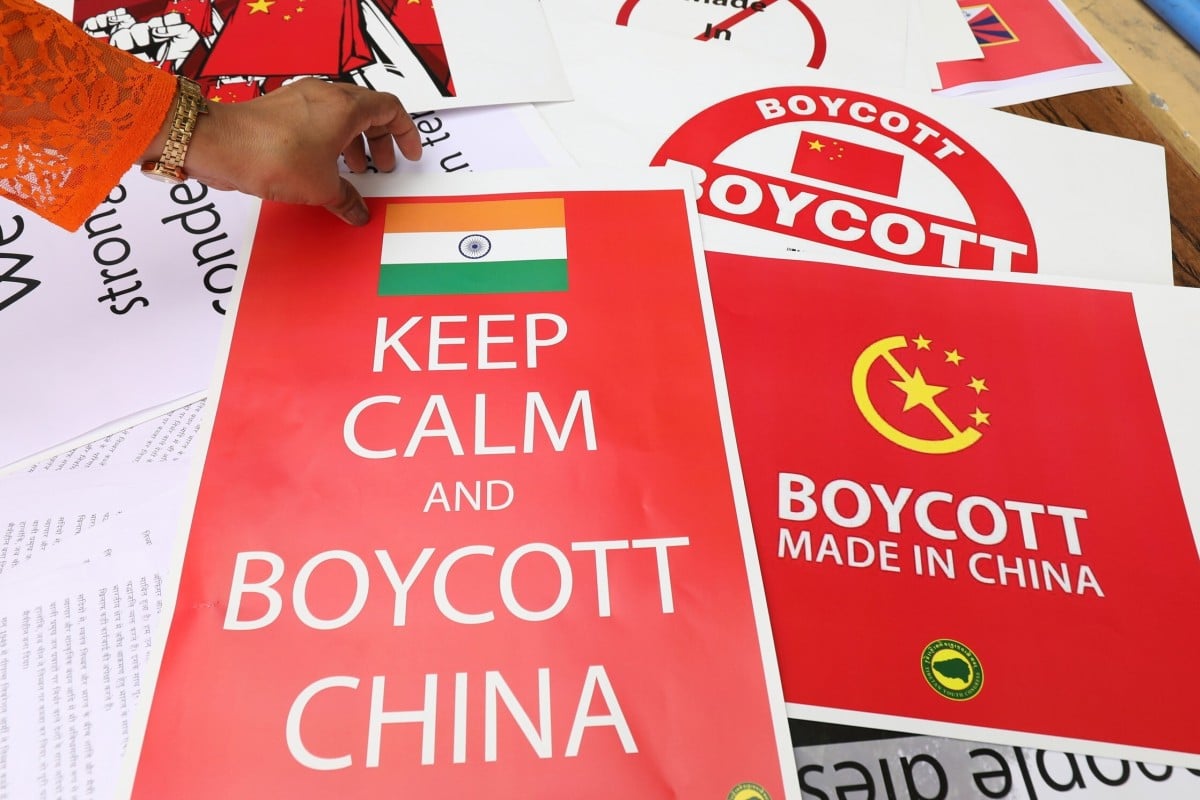
#BoycottChina, A Tough Terrain to India’s Self Dependency

Posters of Boycott China Campaign

What happened at Galwan valley of Indian Ladakh had raised tensions between India and China to all time high. The clash between Indian and Chinese forces led to nationwide outburst against China.

Fuelling this, there had been a sudden disagreement for buying any Chinese product or services. This is to make sure that Chinese economy doesn’t receive a single penny from India and its citizens, making it obvious after China bearing malice towards its neighbours, specifically India. The initiative has greatly boosted with GOI’s (Government of India) decision of banning 59 Chinese applications in India and by increasing the import taxes on Chinese goods or services. The Indian armed forces had already been deployed at disputed regions of border and are ready for any surprise from counter side.

With Governments and Armed forces holding tight on attempts to self-reliant India, the dice of responsibility falls our side too. By us I mean, all the common or less common citizens of India whose decision of just boycotting Chinese products could shatter its trade. Already many huge economies of the world have turned against China, amid Corona virus outbreak and deaths of 600,000 (still rising) innocent people.

Boycotting Chinese items won’t be that easy as it sounds, one has to spend a little more of their money while switching to non-chinese brands, as the only PSP (product selling protocol) of Chinese products is its cheap pricing. This pricing gets balanced with its poor quality and doesn’t last any longer. Yet, Chinese products have kept its dominance in certain sectors of Indian market.

The mobile phone sector

India had imported mobile phones worth $11.3 billion from China in 2016-17, and that was about 68 per cent of all mobile phones (both push-button feature phones and smart devices) imports into the nation that year. In 2017-18, even as the duties were imposed, the value of mobile phone imports from China climbed to $15.6 billion, or 71 per cent of the mobile phones imported. As the tax measure began to hurt and local manufacturing of mobile phones gathered momentum, imports of these devices from China halved to $7.4 billion and about 41 per cent of all mobile phone imports in 2018-19. Imports of phones, by value, from China declined further in 2019-20 but not the share, which remains at 40 per cent. If we just speak of alternatives, we have few options of some Korean, Taiwanese, American and just few Indian tech companies. These options are:

  • LG
  • Samsung
  • Nokia
  • Apple
  • Asus

The drop in electronic imports gradually implemented by the GOI in recent years but this won’t be enough and buyers need to push their expenses to continue supporting the campaign of #boycottchina.

Other imports from China include toys, gift items, fabrics and garments, and thousands of small value items that are popular with consumers. CAIT (Confederation of All India Traders) estimates that there are some 3,000 items that can be easily substituted with India-made products in the first phase of the boycott of Chinese goods campaign. The list of China-made items popular with consumers includes fairy lights with tiny LED bulbs that are used to decorate homes during festivals, idols of deities, home decors, kite strings and even incense sticks (agarbattis). It is estimated that about 80 per cent of the incense sticks sold in India are imported from China.

For all of it to happen, for this campaign to succeed we all should hold our horses and should maintain an adequate transition of market into indigenous domain. This would be the only secure and once for all time solution to problems India facing with the dragon as war could never be a solution. It would just tear up economies at both ends and loss of Brave Indian soldiers shouldn’t happen any further.

Does Pandemics Reset Humanity?

Outbreak of novel corona virus toward the year’s end 2019 have halted the entire world on the wheels, the infection is in discriminatory to such an extent that it did not separate any nation whether created like China, Europeans, Canada and creating like India. It Would never look whether you are rich, a clergyman, a spouse of a president , a poor a matured or a kid. its pace is spreading to such an extent that inside two or multi month it became pandemic started from a city in china.

A virus, which is catastrophic too, has arrive at all over the world however something important called to be HUMANITY is absent and escaped the reach of masses. a contamination of a virus could enter , go starting with one individual then onto the next however Humanity which can be spread , learn develop , rehearsed is elusive and battling for worldwide effort. like the notorious COVID-19. we have seen mayhem everywhere throughout the world , the major on are talked about however list are perpetual in the decade.

To settle on reset humankind, we should comprehend the significance of the term pandemic uninvolved of different terms episode, plague. A flare-up is spreading a malady in a specific region, plague is spreading for huge scope in a nation and pandemic is a worldwide scale occasion of spreading the sickness. for example Covid 19 began as flare-up in Wuhan area, China and turned as pestilence when complete China is affected, at last WHO declared it as Pandemic when rest of the world like Spain, USA, India, Korea are affected and nonstop spreading.

Out of enduring have risen the most grounded souls; the most monstrous characters are burned with scars As statement expressed, pandemic like covid 19 brought sufferings financially( workforce deficiencies, low gracefully) socially( self separation) assemble quality towards greater condition cordial. With pandemics diminishing carbon dioxide outflows into air because of low transportation and gracefully, expanded force slices because of increment request on the way towards sustainable power source, expanded disengagement towards developing of greens at homes is only resetting needs of people.

These difference in needs are not constrained to condition just, yet in addition monetarily, low interest prompts builds quality and diminishing costs, political objective of social prosperity with most noteworthy need, Individually, expanded communication with family, diminished relocation and upgraded asset usage, broadly, expanded social reconnaissance for containing the pandemics, low loan fees for money related help, universally, common exchange on social circle than financial circle.

Does pandemics reset humanity and priorities in the end always

With serious outcomes, danger of national security, loss of jobs, day pay misfortune for normal .laborers, increment clinical expenses on isolation, increase everyday costs by social removing are on one hand, where worldwide reaction of protectionism by restricting air travel from specific nations, lock down of vacationer puts because of pandemic impacts the nations severely.  After the Spanish influenza in 1918, with huge loss of populace, the recharged intrigue has given to wellbeing segment with expanded innovative work for immunizations, observing for tainted. Be that as it may, it doesn’t halted the expanded industrialization with helpless sanitation urban bunches. Be that as it may, in contemporary world, the nations like India, endemic with pandemic like intestinal sickness which is significant reason for high number of passing’s, government has started different plans like Mission Indradhanush for immunization, swachh bharat for sanitation has demonstrated outcome by decreasing the quantity of cases and force of spread. Despite the fact that the changed needs like intestinal sickness free India ought to go with increment wellbeing spending plans, framework, specialist persistent proportion where India must core interest.

As Hegel said in his persuasive strategy, each proposal have absolute opposite and join produce blend, Pandemics like Covid 19 resets the needs, resetting mankind required long haul endeavors from political and individual on equivalent balance. Worldwide settlements, for example, International Treaty on Climate, Refugees, Epidemics ought to be followed in letter and soul, innovative work ought to keep the worldwide norms, customary qualities, for example, Korean welcome of welcome, Indian Namaste ought to be advanced.

The Fates of Chinese Uighur Muslims

Uighur (Uyghur) Muslims are among the oldest Turkic-speaking people mostly residing in the northwestern part of China, in Xinjiang. The main Uighur populated cities are Kashgar, Silk Road, and Urumqi, the capital of Xinjiang.

When China re-established control after crushing the short-lived state of East Turkestan, a large population of Han Chinese (the majority ethnic Chinese) migrated to Xinjiang. This move caused a lot of economic disparities and ethnic tensions grew as the Uyghurs were mistreated and discriminated against.

A 2009 protest in Urumqi turned violent, killing 200 and injuring about 800 people. Violence increased soon after including knife-attacks, suicide-bombers, and bomb blasts. Most of these attacks were pinned to Uighur Muslims and they were tied to overseas Muslim terrorist groups.

China identifies itself as a “socialist state under the people’s democratic dictatorship led by the working class and based on the alliance of workers and peasants.” The current political leadership has been termed a “consultative democracy,” “people’s democratic dictatorship” and “socialism with Chinese characteristics” by its leaders.

In recent years, with the disclosure of the mistreatment of Uighur Muslims, China has been criticized for a lot more trouble. The UN and other Human Rights activists have been trying to help protect the oppressed.

Uighur Muslims have been subjected to many constraints. Those who’ve fled the country have many stories of torture to speak. Those who’ve returned have been separated and punished.

A New York Times article wrote about Abdurahman Tohti, who left Xinjiang and immigrated to Turkey in 2013. “When his wife and two young children returned to China for a visit a few years ago, they disappeared. He heard that his wife was sent to prison, like many Uighurs who have traveled abroad and returned to China. His parents were detained too. The fate of his children, though, was a mystery. He spotted his 4-year-old son, years later, in a video on Chinese social media that had apparently been recorded by a teacher. The boy seemed to be at a state-run boarding school and was speaking Chinese, a language his family did not use. Mr. Tohti, 30, said he was excited to see the child, and relieved he was safe — but also gripped by desperation. “What I fear the most,” he said, “is that the Chinese government is teaching him to hate his parents and Uighur culture.””

Many countries including but not limited to Saudi Arabia, Russia, North Korea, Venezuela, UAE, Qatar, Oman, Pakistan have written to the UN in support of the way China is handling the terrorizing groups, the Uyghurs. The letter these countries signed and sent included, “Faced with the grave challenge of terrorism and extremism, China has undertaken a series of counter-terrorism and deradicalization measures in Xinjiang, including setting up vocational education and training centers.” They attested to not finding any Human Rights violations in the “training centers” and added that since the people have been institutionalized, there hasn’t been even a single terror attack. Going as further as saying that the people “now enjoyed a stronger sense of happiness, fulfillment, and security.”

The Uighur activists have stated otherwise for decades, maintaining that the discrimination has persisted long before the “terror” attacks started. They have stood by their innocence in their involvement in the attacks and have also denied all ties to overseas terror organizations.

Below, is the timeline of a few (not all) key protests, attacks, and other decisions made with respect to the Uighur Muslims.

These are incidents that have been publicized internationally. It is quite possible that much more has been kept under wraps.

2003 

  • 21st December – Uighur “terrorists” demand freedom of expression and internet access
    • A Muslim separatist group branded as “terrorists” by China has said it was willing to disband if the communist state offered freedom of expression and internet access to Uighur Muslim minorities.

2009

  • July – Urumqi Han Chinese vs Uighurs Riots kill 200 and injure 1700
    • Several hundred were arrested and students were shot at by the police
    • More than 260 vehicles and 200 shops and houses were attacked and damaged.
    • “False” news of claiming 6 boys raping two innocent girls made the rounds prior to the riots and as a response internet and messaging services were shut off.

2010

  • June – Gheyret Niyaz, an Uighur journalist sentenced for 15 years
    • Gheyret Niyaz was sentenced for 15 years for speaking to a foreign-journalists during the 2009 Urumqi riots.
  • 30th July – 3 Uighurs jailed for website work
    • Uyghur American Association (UAA) said that 3 men were sentenced to 10, 5, and 3 years respectively.
    • Officials have not confirmed the charges despite already sentencing them.
    • Their main offense is to found and manage an Uyghur-language website.

2011

  • 18th July – – A knife and bomb attacks in Hotan
    • Suspected to be Uighur terroritsts
  • 30th – 31st July – A series of knife and bomb attacks in Kashgar
  • 15th September – China sentences 4 to death over Xinjiang attacks
    • The four Uighur men were found guilty of murder, arson, and running a terrorist organization.
    • Accused to incidents in Kashgar and Hotan in July.

2012

  • 2nd August – China jails 20 Uighurs for terrorism and separatism
    • Charges against the accused include making explosive devices, promoting religious extremism and plotting “holy war”

2013

  • October – 3 Uighur men sentenced over a fatal car crash in Tiananmen Square, Beijing
  • December – 16 people killed in a riot in a village. Another 8 were killed later near Yarkland county.

2014

  • 27th January – 12 dead in Xinjiang violence caused by “terrorists”
    • Xinhua news agency described the incident as “organised, premeditated terrorist attacks”. But the report gave no reason why the hair salon and the market were targeted.
  • February – Chinese authorities have shot dead eight people trying to attack police officers in Xinjiang,
  • 1st March – mass knife attack at the Kunming train station.
  • 30th April – knife and bomb attach at Urumqi’s central train station
  • 22nd May – suicide-attack on an open-air market in Urumqi’s predominantly Han-populated Shayibake district killed 31 people and 94 injured.
    • Officials blame Uighur Muslims
    • Claim these “terrorists are swollen with arrogance.”
  • 27th May – Chinese Police arrest Xinjiang “terror gang”
  • 21st June – Police kill 13 assailants of the Xinjiang attackers
    • Linking them to the October 2013 attacks, where 3 men were already sentenced.
  • 30th June – China jails 113 Uighurs for terrorism
  • 2nd July – China bans Uighurs Muslims from fasting for Ramadan.
    • Not the first time.
  • 5th July – Chinese Uighurs defy Ramadan fasting bans
  • 11th July – Muslim students forced to eat during Ramadan
  • 31st July – Imam of China’s largest mosque killed in Xinjiang
    • Jume Tahir, 74, was reportedly stabbed after he led the early morning prayers at the Id Kah mosque.
    • Reason of the death remains unclear
    • A hasty burial was performed the same afternoon
    • Police sealed off roads and cut internet and text messaging links.
  • 3rd August – China claims Xinjiang “gangs” killed 37
    • 59 of the 215 attackers were killed by security forces.
  • 12th October – Kashgar attack killed 22.
  • 18th November – Shache attack in which 15 were killed, including 11 attackers.
  • 11th December – Xinjiang Officials hold debated to ban veils for Muslim women.
  • 8th December – 6 people linked to the May 2014 market attack sentenced to death

2015

  • 27th May – Chinese authorities claim having busted 181 terror groups in a yearlong operation.
  • 14th July – 3 “Xinjiang Terrorists” shot dead by police
    • A woman was also injured
    • Police found “terrorist” suspects shouting Anti-China slogans
    • Police also detained 28-year old Uighur woman, and 3 children.
  • China police checkpoint attack kills 18 in Xinjiang
    • China refused to comment
    • Hospitals informed that many police officers here hurt
    • Local radio reported that the attackers used knives and bombs while speeding through the checkpoint.

2016

  • 7th June – police ordered residents to provide DNA samples and other biological data to apply for travel documents
  • 19th October – Notice was issued, warning citizens
    • Those who failed to turn in their passports risk being barred from leaving the country.
  • 20th October – China confiscates passports of Xinjiang People
    • Apparently aimed to combat terrorism.
    • Hand in their travel documents to the police for “safekeeping”
    • All residents must not apply for permission to leave the country before they can retrieve their passports

2017

  • 15th February – Eight assailants dead in a knife attack after killing 5 and injuring 10.
  • 1st April – no beards, no veils
    • Only older men are allowed to have beards
    • Women are not allowed veils as part of the “project: Beauty”

2018

  • 10th August – China mosque demolition issue in Ningxia
    • Hundreds of Muslims in north-western China are engaged in a standoff with authorities to prevent their mosque from being demolished.
    • On 3rd August a notice was posted outside the mosque that it would be forcibly demolished
    • Reason: it had not been granted the necessary planning and construction permits.
    • Many asked why the construction hadn’t been halted during the 2 years of construction
  • 31st August – UN alarmed by reports of China’s mass detention.
    • UN criticized the “broad definition of terrorism and vague references to extremism and unclear definition of separatism in Chinese legislation”
    • The UN committee called on Beijing to:
      • End the practice of detention without lawful charge, trial and conviction;
      • Immediately release individuals currently detained under these circumstances;
      • Provide the number of people held as well as the grounds for their detention;
      • Conduct “impartial investigations into all allegations of racial, ethnic and ethno-religious profiling”.
  • 10th October – China Uighurs: Xinjiang legalises ‘re-education’ camps

2019

  • February – Uighurs kids and youth ask china to show them that their parents are still live in the detention camps
  • 2nd May – Chinese police monitor Xinjiang Citizens using an app
  • 24th October – Jailed Uighur academic Ilham Tohti wins Sakharov Prize
    • The Sakharov Prize for free speech is awarded by the EU Parliament annually in memory of Soviet physicist and dissident Andrei Sakharov.
  • 28th November – Uighur activists claim China is running hundreds of more camps than it claims
  • 23rd December – Hong Kong protesters rally in support of Uighurs
  • 23rd December – TESCO finds a Christmas card with a cry for help message from the Uighur makers in China
  • 28th December – In China’s Crackdown on Muslims, Children have not been Spared.
    • Children of parents who have either been killed or detained are taken away from relatives and placed in state-run boarding schools.
    • These schools are designed to “assimilate and indoctrinate children at an early age, away from the influence of their families.”
    • These schools are tightly guarded and are off-limits
    • Media and official documents cover this up by claiming “education is a key component of President Xi Jinping’s campaign to wipe out extremists’ violence in Xinjiang.”
    • Many Xinjiang activists have described these schools as “incubators of a new generation of Uighurs who are secular and more loyal to both the party and the nation.

2020

  • 15th January – Leaked reports reveal China’s human rights violations against Uighurs
  • 27th February – UN demands unfettered access to China’s Uighur region
  • 3rd March – Uighurs forced to work in Chinese factories for meagre pay
  • 29th June – reports surfaced that China forced birth control on Uighurs to supress population.
    • Chinese scholar, Adrian Zenz’s report prompted multiple international called for the United Nations to investigate
    • Mr. Zenz’s report was based on a combination of official regional data, policy documents, and interviews with ethnic minority women in Xinjiang. It alleges that Uighur women and other ethnic minorities are being threatened with internment in the camps for refusing to abort pregnancies that exceed birth quotas.
    • Women with fewer than 2 children were forced to get fitted with an IUD
    • China denies allegations and calls them baseless.
    • Uighur growth rates fall 84% since 2015.
  • 13th August – China denies detaining 1 million Uighurs
    • Uighurs enjoyed full rights but “those deceived by religious extremism… shall be assisted by resettlement and re-education”, officials said.

India’s Kashmir Conflict

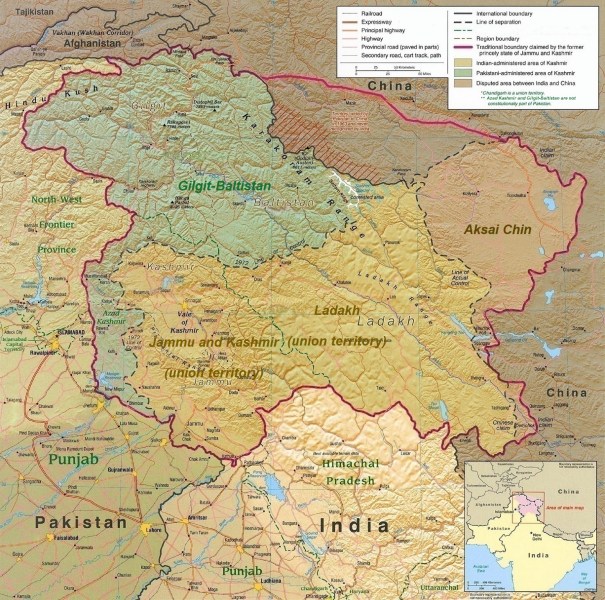
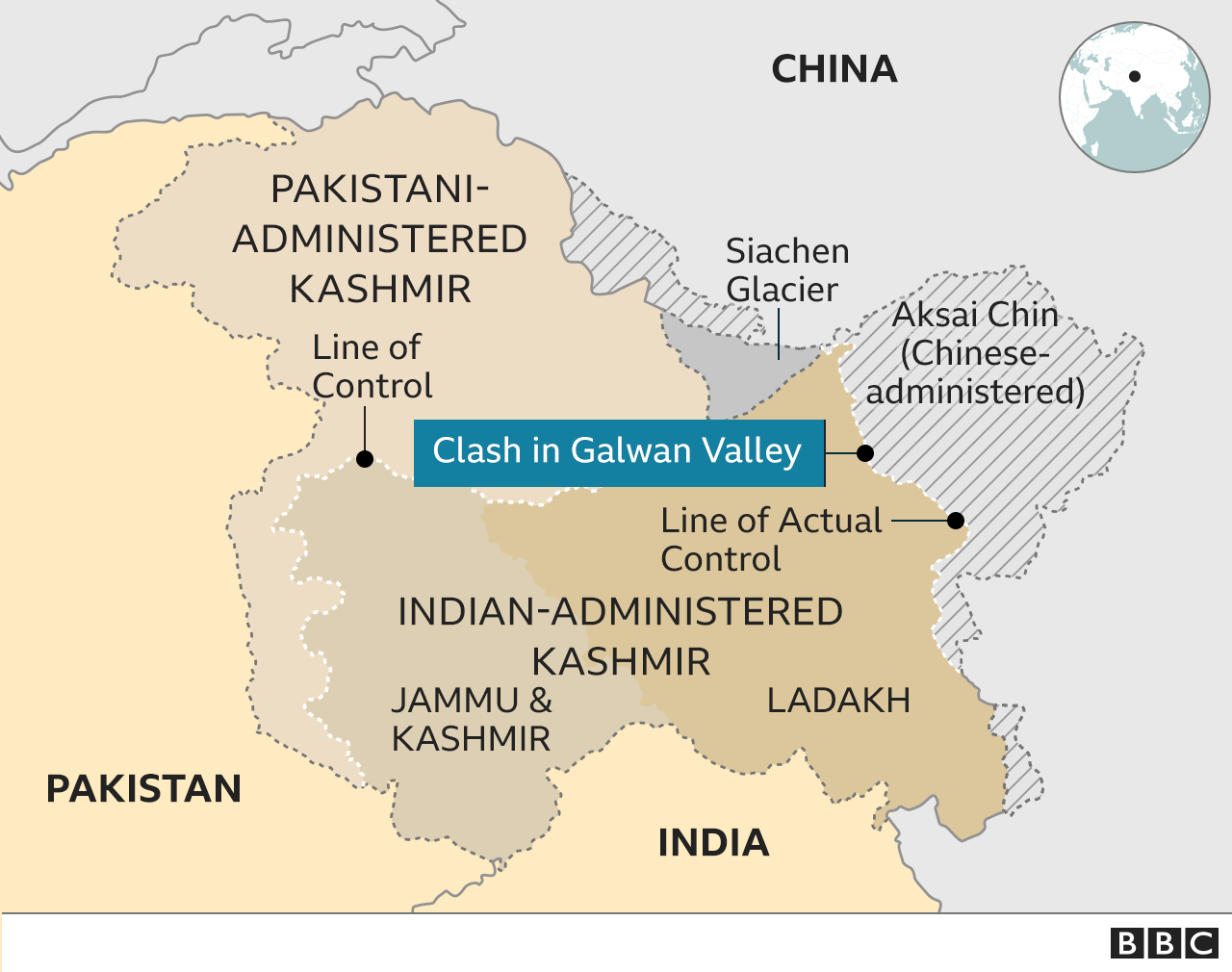
The Conflicted Map Of J&K with Ladakh

With over seven decades crossed since 1947 followed a continuous stretch of never-ending bloodsheds in the Kashmir valley or for the reason of it.  Just in past 27 years, around 41,000 lives have been lost due to this Indo-Pak dispute. The Indian army had lost many of its brave soldiers who sacrificed themselves for the safety and security of people in the valley and rest of India. With more than 950,000 soldiers deployed in Kashmir, making it world’s most strongly guarded place, shows the threat level in the valley. The current Kashmir when compared to the Maharaja Hari Singh’s Kashmir is divided into 3 major parts. Two pieces of territory are illegally occupied by the Pakistan (30%) and China (15%). The regions under Pakistan are Gilgilt, Baltistan and the Pakistan occupied Kashmir (POK) and the region under China is Aksai-Chin which is vastly inhabited by humanity.

The Indian controlled Kashmir (55%) owns 60 per cent of the population of Kashmir in total. The Jammu and Kashmir initially under the Sikh Empire of Maharaja Ranjit Singh, saw a shift in powers with arrival of east India company and british. The empire then switched into the Dogra Empire which was overtaken by Maharaja Gulab Singh and this continued until the independence of India in the year 1947. It was this time, when the britishers before leaving Indian territory kept an opportunity for all the 565 princely states of Indian peninsula to either join an Islamic state named Pakistan or a democratic republic of India. This stretched the long run tensions between the communities of muslims (in favour of an Islamic state) and the rest of people into a massacre of centuries. A bloodshed that no one in the world saw before, it is estimated that up to one million people were killed during the violence in 1947, and around 50,000 women were abducted. Some 12 million people were displaced from their homes in the divided province of Punjab alone, and up to 20 million in the subcontinent as a whole. Few princely states opt to merge with Islamic state of Pakistan and majority of them joined the republic of India. Kashmir on the other side chose to remain an independent state under Maharaja Hari Singh. He decided to stay independent because he expected that the State’s Muslims would be unhappy with accession to India, and the Hindus and Sikhs would become vulnerable if he joined Pakistan. On 11 August 1947, the Maharaja dismissed his prime minister Ram Chandra Kak, who had advocated independence. Observers and scholars interpret this action as a tilt towards accession to India. Pakistanis decided to pre-empt this possibility by wresting Kashmir by force if necessary. Pakistan made various efforts to persuade the Maharaja of Kashmir to join Pakistan. In July 1947, Mohammad Ali Jinnah is believed to have written to the Maharaja promising “every sort of favourable treatment,” followed by the lobbying of the State’s Prime Minister by leaders of Jinnah’s Muslim League party. Faced with the Maharaja’s indecision on accession, the Muslim League agents clandestinely worked in Poonch (west territory of Kashmir) to encourage the local Muslims to an armed revolt, exploiting an internal unrest regarding economic grievances. The authorities in Pakistani Punjab waged a ‘private war’ by obstructing supplies of fuel and essential commodities to the State. Later in September, Muslim League officials in the Northwest Frontier Province, including the Chief Minister Abdul Qayyum Khan, assisted and possibly organized a large-scale invasion of Kashmir by Pathan tribesmen. Several sources indicate that the plans were finalised on 12 September by the Prime Minister Liaquat Ali Khan, based on proposals prepared by Colonel Akbar Khan and Sardar Shaukat Hayat Khan. One plan called for organising an armed insurgency in the western districts of the state and the other for organising a Pushtoon tribal invasion. Both were set in motion.

With Pakistan’s tribesmen invasion, the Kashmir was set on fire, loot, and atrocities to Kashmiris by the Pathan’s were so grieve that it could be hardly penned down. The pathan’s did whatever they could to terrorize Kashmiri’s, they abducted, raped and murdered thousands of girls and women of all ages. This was being done to scare Kashmir and its ruler for their indecision for accession into Islamic state of Pakistan. The Pakistan’s muslim league and its military knew this for sure, that newly formed independent nation of Jammu & Kashmir is heavily outnumbered with its line of defence and weapons. The Maharaja made an urgent plea to Delhi for military assistance. Upon the Governor General Lord Mountbatten’s insistence, India required the Maharaja to accede before it could send troops. Accordingly, the Maharaja signed an instrument of accession on 26 October 1947, which was accepted by the Governor General the next day.

While the Government of India accepted the accession, it added the proviso that it would be submitted to a “reference to the people” after the state is cleared of the invaders, since “only the people, not the Maharaja, could decide where Kashmiris wanted to live.”; it was a provisional accession. The largest political party, National Conference, headed by Sheikh Abdullah, endorsed the accession. In the words of the National Conference leader Syed Mir Qasim, India had the “legal” as well as “moral” justification to send in the army through the Maharaja’s accession and the people’s support of it. The Indian troops, which were airlifted in the early hours of 27 October, secured the Srinagar airport. The visiting journalist at Srinagar city witnessed an incredible sight where volunteers of National Conference (Local political party of Kashmir) was patrolling the city from tribal Pakistani invaders and Minority Hindus, Sikhs were moving freely among Kashmiri Muslims. This was a true example of community harmony in Kashmir.

After securing Sri Nagar, the Indian army troops were set to retrieve other portions of Kashmir, captured by the Pakistani tribesmen and military. Yet, in the meantime the then prime minister of India, Mr J. L. Nehru made an announcement over all India radio, that India would seek United Nation’s (UN) mediation into this matter. This was greatly opposed by the then home minister of India, Sardar Vallabhbhai Patel. Later, with intervention of United Nations group under Sir Owen Dixon (UN mediator) who came up with a plan of seizing the military conflict by mapping a stamp on territories already under control. This led regions already secured by the two countries under their jurisdictions and UN formed a Line of Control between the western and Eastern parts of Kashmir. To this day, India claims the entire region of Kashmir as per the legal instrument of accession signed by the Maharaja of Kashmir, making the whole of Kashmir an integral part of Republic Of India.

Later in the year of 1962, another war broke but this time it was between India and China. The war zone was the regions of Ladakh province to the east of Kashmir. After this Indo-China war of ’62, China captured another part of Maharaja Hari singh territory, the Aksai-Chin. India to this date demands both of its territories and had raised its voice into United Nations Security Council from time to time in the recent past. Whatever is good for Kashmir and safe for Kashmiri dreams should be implemented, to make sure that no more innocent lives are lost, no more brave soldiers are sacrificed for the love of their motherland.

The Bubonic plague

The Chinese Authorities on Sunday warned of a bubonic plague in inner Mongolia as it was suspected that people there are actually getting infected by the plague. Bubonic plague has happened in the past in Europe around Twelfth century, at that time it had killed Millions of people and due to the plague one third of the population of Europe was wiped out. It was then called the black death.

This is a rare but very serious bacterial disease caused by Yesinia Pestis a type bacteria, this disease can be spread by Rodents and infected fleas. When an infected flea bites you, the y pestis enters into your body and travels through the lymphatic system of your body and then starts to multiply itself in the lymph nodes. As lymph nodes are the perfect medium for them to replicate these nodes then becomes tense and inflamed and as these inflamed lymph nodes becomes sore and would eventually after some time become filled with Pus.

Any disease can be identified if we know the symptoms. Though the symptoms of this plague is not much different from other normal diseases but there are some symptoms which would  indicate that its this disease. The protrusion of lymph nodes which can be as big as chicken eggs, this protrusion can be in different parts of the body like groin, or under the armpits, this is the major symptom. There are also chances that one may have fever, chills, pain in the head, tiredness, some body pains which can be a symptom of this disease.

This disease is curable, as the medicine for this disease is developed. The time between exposure and the first symptom to  appear is twenty four hours. If checked in time it can be treated as the recovery rate is very high. This plague can take a serious turn if it reaches the lungs, when this happens it is called the pneumonic plague but it only happens to some people, because of this the mortality rate of this plague is increased by thirty percent if the pneumonic plague is not treated in time.

The transmission of this disease is just by the infected fleas, rodents , mice .Human to human transmission is rare but yes if a person develops Pneumonic plague then the transfer can happen by the the droplets of the sneeze or exchanging body fluids. If a person dies because of the Bubonic plague, the dead body of this person can actually infect the plague to his close relatives as the source of the infection is still active inside the body.

In the past the plague was treated by quarantines and self isolation , Antibiotics have been developed to treat plague. The disease can be treated if early diagnostics is taken and a person can be recovered.

WHO has put  guidelines about the plague in the website, which says that  from 2010 to 2014 there has been three thousand two hundred and forty eight cases where five hundred and twenty eight people died. So people should take strict prevention measures so as to stop the spread of this plague.

Why China is being aggressive at LOC

Its moves are influenced by a large group of components — from the breaks in the worldwide request to the decrease of India’s savvy power.

The progressing pressures along the Line of Actual Control (LAC) represent the greatest national security challenge to New Delhi in any event 20 years. The conflicts in Galwan Valley in eastern Ladakh have guaranteed 20 Indian carries on with, the main episode of fatalities on the India-China outskirt in 45 years. China has resuscitated its case on the whole Galwan Valley and has requested that India pull over from the zones. Satellite pictures in the open space recommend that China has set up guard positions in the valley just as the contested “Fingers” of Pangong Tso. The two sides are occupied with a go head to head at Hot Springs. Regardless of different rounds of military-level talks, strains are probably not going to ease given the multifaceted nature of the ground circumstance.

What prompted the current circumstance? In 2017, India and China consented to agreeably resolve the Doklam stalemate that went on for over two months. No blood was spilt at that point, and no shots discharged. The National Democratic Alliance government drove by Prime Minister Narendra Modi has been mindful so as not to disturb China’s residential and international sensitivities. Excepting intermittent joint articulations gave with pioneers from the U. S. also, Asia-Pacific nations, reasserting India’s promise to “opportunity of route” (a hidden analysis of China’s cases over the South China Sea), India has avoided reprimanding China on questionable points, regardless of whether its “de-radicalisation” camps in Xinjiang, crackdown on fights in Hong Kong, or debates with Taiwan. However China decided to build strains along the LAC. Why?

Salami cut methodology

One well known contention is that China’s turn, driven by neighborhood factors, for example, India’s foundation redesign and its choice to change the status of Jammu and Kashmir and Ladakh, was careless. For some square kilometers of land, this contention goes, China has lost India deliberately, toward the West. A few specialists have guaranteed that the strains on the fringe are driving India more profound into a vital grasp with the U. S. Be that as it may, it’s not as simple as it appears. There is a reasonable move in Chinese international strategy post the COVID-19 flare-up. This is found in China’s rising pressures with the U. S. , its dangers against Taiwan, rehashed maritime occurrences in the South China Sea, and another security law for Hong Kong. The strains along the LAC are a piece of this move. To comprehend this move, one needs to get a feeling of the wellsprings of China’s lead.

The present China is an eager rising force which needs to reorient the worldwide request. In contrast to the Soviet Union of the 1940s (in the beginning phases of the Cold War), China isn’t an ideological express that means to send out socialism to different nations. Be that as it may, similar to the Soviet Union of the post-war world, China is the new superpower on the square. At the point when it was rising, China had received distinctive strategic positions — “conceal your ability and stick around for your opportunity”, “serene ascent” or “tranquil turn of events”. That time is finished. Under President Xi Jinping, the Chinese think they have shown up. With the worldwide economy in the doldrums, globalization in a hopeless emergency emphasizd by the COVID-19 episode, and the U. S. under an independent President taking the most forceful situation towards China since Richard Nixon, Beijing accepts the worldwide request is at a limit. It is retaliating through what game scholars call “salami strategies” — where a predominant force endeavors to build up its authority piece by piece. India is one cut in this salami cut system.

View of decay

China doesn’t consider India to be a ‘swing state’ any more. It considers India to be a partner in-progress of the U. S. Its activities were not careless, taken at the danger of losing India deliberately. Its activities are a consequence of the vital misfortune that has just occurred. On the off chance that India is the thing that numerous in the West call the “stabilizer” to China’s ascent, Beijing’s distinct message is that it isn’t hindered by the stabilizer. This is a message to India, yet to a large group of China’s adversaries that are collaborating and anxious to enroll India to the club.

Inside this more extensive system there could be a large group of components — nearby, provincial and worldwide — that affected China’s moves. At the point when the majority of the world’s enormous forces are wrestling with the pandemic, revisionist powers, for example, China have more space for international moving . Europe has been crushed by the infection. The U. S. is fighting in a political decision year the COVID-19 episode just as the most profound financial emergency since the Great Depression. Its worldwide authority is unwinding quick. The Indian economy was in a difficult situation even before COVID-19 struck the nation, hindering its ascent. Social change over the Citizenship (Amendment) Act (CAA), 2019, and the National Register of Citizens had debilitated the Indian commonwealth. India’s conventional clout in its neighborhood was slipping: strains with Pakistan have been high keeping the soldiers involved in the outskirt regions; Nepal raised limit issues with India; Sri Lanka is expanding its international strategy and China is making profound advances into that locale; and Bangladesh was profoundly annoyed with the CAA. Indeed, even in Afghanistan, where Pakistan, China, Russia and the U. S. are engaged with the progress procedure, India is out. Progressively significant, a year ago’s Balakot airstrike was deliberately tragic. It might have helped Prime Minister Modi win a re-appointment, yet there was no proof that demonstrated that Indian strikes hit the aggressors. India lost a fly to the neighbor and its pilot was caught and later discharged by Pakistan. The entire activity uncovered the chinks in our defensive layer, disintegrating India’s discouragement. A conversion of every one of these elements, which point to a decrease in the nation’s keen force, permitted China to make forceful proceeds onward the LAC.

This is a key snare. India has reached here incompletely in light of the absence of profundity in its key reasoning. A profound grasp of a declining U. S. isn’t an answer the same number of contend; rather, it’s a piece of the issue. Pakistan grasped a far steadier U. S. during the Cold War to check India. What befell Pakistan from that point ought to be an exercise for India. What India needs is a national security methodology that is decoupled from the impulses of residential legislative issues and tied down in neighborhood authenticity. It should face China’s harassing on the fringe now, with a drawn out spotlight on improving limits and winning back its amicable neighbors. There are no convenient solutions this time.

How Jack Ma inspired me!!!

Jack Ma- every 5 years we have a review for our strategy now our strategy is always to look at the 30 years and 10 years every strategic decisions we make we have to ask one question this decision we make solve society problem because we believe the biggest social property you solved the most successful you are so if we do it this cannot solve any social problems we don’t do it second is this project is going to be successful in 10 years. If it’s it’s going to be successful in 10 years let’s do it if it’s going to be successful in one year or one month normally we forget about it because why you can be successful in one year or one month.

Alibaba billionaire Jack Ma: I know nothing about tech or marketing

We all have to put parham and 5 years ago we had a big debate about 10 years later 20 years what are the things this china society the world leave want so we say happiness and health strategy to happiness and health we believe Holly do you know the movie industry bring people happy because today nobody is happy rich people are happy poor people not happy you know at least when I watch movie after you’re happy but right. So, I think we should have partner with the Hollywood especially like a lot of you know we have a different way of living and in China the movie we have a lot of heroes but China movies heroes always dead the American me movie here will never die if all the heroes die who want to be the hero so my movie I want to make the hero live right so this is this is I think we should learn a lot and it’s all about two years so we have another eight years ago I want to make our company that it’s it’s not ecommerce it’s something that giving people inspirations given people.

Alibaba's co-founder Jack Ma to retire | The Passage

In the eBay model why about this model I told myself for is the gum set or a hat that will care about what the other people and the other thing Forrest Gump said nobody make money out of the catching whales people make money by catching shrimps so

 We serve small business or not if you want to win in business you have to think bigger than the service or product you

They also teach all the tricks all the turns all the dips all the tosses in the air did it matter as much as the experience we provided to students every person wants to feel loved every person wants to feel like they belong but they want to feel wanted appreciated validated and see and so we’ve always at our school thought bigger. We thought about they may come in for a service but they come back and they refer others because we enrich their lives we focus on the essential human needs like love like care like belonging that across cultures across demographics everybody wants to feel or experience.

Jack Ma and Jerry Yang talk about Yahoo's big Alibaba investment ...

I love Jack Ma’s message thinking five or 10 years from now because what people are worried about let’s say right now for the next six months it’s going to come and go but what stands the test of time are the deep down worries and fears that we all share so if you want to have a successful business you have to think bigger than the service or product you provide because people may come to your dance school people may come to your coffee shop by random chance but that’s not what’s going to keep them there and that’s not what’s going to make them refer clients to you now I’ve got a special bonus clip for you but before we get to it today’s question is how have you been thinking small in your business and what can you do to change that to really make an impact on your customers.

Alternative for Chinese apps !!!

let’s talk about the alternatives to popular Chinese apps:

  1. Cam Scanner is something a lot of people use and it has had its issues in the past I mean last year Kaspersky found a Trojan module in the app and it had gone away but it came back and now it’s banned again but there are some alternatives you can use so there’s Google Drive which has a simple scan feature that not many people know about and there’s Adobe scan and Microsoft Office lens both of which are feature packed like Cam Scanner now Adobe scan is something I prefer because I like the fact that it can detect the document is scanning be the ID card or resaved or a whiteboard or your usual documents it also has different editing tools OCR support and scanned images don’t have any watermark on them.
  2. Chinese browsers the CM browser APIs browser and of course the infamous UC browser which in the past has been in the news for taking unnecessary permissions showing spammy ads so yeah you shouldn’t be using these browsers anyway but if the browser you should be using is Firefox I know there’s chrome too of the sleeve but I am recommending Firefox for its privacy focused approach first of all Firefox brings a clean and blood-free experience unlike UC browser and like I said it’s focused on privacy and security. It blocks a lot of trackers automatically so that’s great plus it has all the great features like visual tab truly secure private browsing etc so Firefox is a great alternative to basically any browser out
  3. Share it and Xender are another really popular apps on this whole band list but of late they have become kind of spammy and bot especially share it now I personally used to use Xender a lot to transfer files from a phone to PC but offline something really cool and really easy called Google files now snap drop isn’t an app it’s a web-based service. Just tap on the device and send any file.
  4. ES File Explorer is another infamous app that has had its issues in the past the app has been reported to you know share app recommendations at spyware Android devices and beat shady engendered now lot of Android skins almost all the Android skins come with the old fine manager apps but if you want a third-party fire manager app there are a lot of great options, if you want a simple free file manager this obviously files by Google and if you want to create paid option there’s solve Explorer now, FX file explorer because it’s privacy focused there are no ads it’s free version because the most handy features like multiple windows support for most archive formats.
  5. Tik-Tok has been banned and no it’s not the only video sharing platform from China that has been banned this also like and ye I’m not sure how do you pronounce it but there are some good alternatives to Tik-tok. Triller-the app and it does not take any unnecessary permissions and number of celebrities posting videos on the platform so that’s good plus it brings Tik-tok features as you can see you can create music videos and there are different tracks to choose from like Tik-tok and you also get the feature where you can collaborate with other users.
  6. Viva video is a video editing app that has gone really popular in India now this is an app that was banned back in 2017 as well for spying on Indian users. So it’s obviously kind of shady but there are some great video editing apps you can use on Android now that’s in short if you want the same port at UI or the tools similar to what you get in viva video or you can use Kine master. It is more feature like multi device timeline all the video editing tools different textiles effects transitions.
  7. Helo the social media app that got really popular India because of its original language support has been banned too and you can use share chat instead which also brings the same so share chat is an app based out of India and it offers content in 15 region languages which is great, there’s no English support and when, basically people posting memes quotes whatsapp for words and things like that.
  8. Screen recorder lab that also got pretty popular but it’s been banned now but you don’t really have to worry because there are a lot of great screen recording apps on the Play Store my recommendation is the screen recorder no ads painting simply first of all this is ad free and support different resolutions different frame rates and an Android 10 devices this for parental audio recording which is awesome. If you want to record a gaming sessions so this is a simple great alternative that just works when compared to do you recorder.
  9. Hide is a photos and videos hider app that was flagged recently for its privacy issues and now it’s been bad now there are a lot of alternatives to hide photos and videos. The alternative is keep safe, keep safe uses cipher 256 encryption which is the same protocol used in many banking apps and it’s an app that lets you protect or hide apply with documents videos and photos it also has great features like phase down auto lock encrypted, backups, trash recovery and breaking alerts. It kind of brings everything you need so, use this instead of all type well there are a lot of other apps with these privacy issues and if you want alternatives for every single one of them we have an extensive detail.

Are products really ‘Made In China’ ???

Made in China. We’ve become accustomed to seeing the label on products manufactured in the world’s second biggest economy. But buying one of these products in China instead of say, the U.S., doesn’t guarantee you’re getting a better price. Chinese tourists have built a reputation for being big spenders abroad, spending a whopping $277 billion in 2018, much more than any other nationality. A lot of times, people think that purchasing something in China will be inexpensive, but that isn’t always the case. So how much of a difference are we talking? If we bring four products from four popular western brands to compare. Starbucks, H&M, Adidas store, a Godiva store. To keep things consistent, we will be using 2019’s average foreign exchange rate. The products compared are:

  1. A standard black t-shirt at H&M.
  2. Starbucks Grande Cappuccino.
  3. Godiva Chocolates.
  4. An Adidas hat.

Now let’s compare:

  1. The shirt at H&M is priced nearly the same in the U.S. and China.
  2. A Grande Starbucks cappuccino will cost you $4.63 in Beijing, but in Los Angles, California, $3.95.
  3. This case of Godiva chocolates, called Pearls, is priced at $7.24 in Beijing, but only $3.95 in LA.
  4. The Adidas hat will set you back $42.27 in China, nearly double the price of a similar hat in the U.S.

This experiment has made clear that pricing are complicated. So much so, that websites have popped up like the Mac Index, a site that compares Apple product prices from around the world. So many ads for Apple here in this area. According to an analysis done by Tech Insights, the cost to make an Apple iPhone 11 Pro is $490.50. Yet according to The Mac Index, the price to buy one is $1,318 in Japan, $1,477 in the U.S., $1,658 in Mainland China and more than $2,000 in Turkey and Peru. Prices vary across countries due to factors like demand, tariffs and tax refunds. And then there’s the supply chain: the network of people, organizations, activities, information and resources involved in the creation of a product.

close up of camera over black background
Photo by ATC Comm Photo on Pexels.com

Apple’s current CEO Tim Cook is considered by some to be a mastermind in supply chain. He first joined Apple in 1998 with a mandate to clean up the company’s manufacturing and distribution. Over time, he closed factories and warehouses, instead opting for contract manufacturers in China. That’s great for Apple’s profit margins, but it’s certainly not praised by President Trump, who has asked Apple to make its products in the U.S. If, say, iPhone production was moved to the U.S., instead of China, different analyses show the price for the consumer could go up from anywhere from $30 or $40 to hundreds of dollars to even $30,000-100,000. That’s partially why, despite Apple pledging to invest more money in American manufacturing, it maintains China as its hub for making its gadgets.

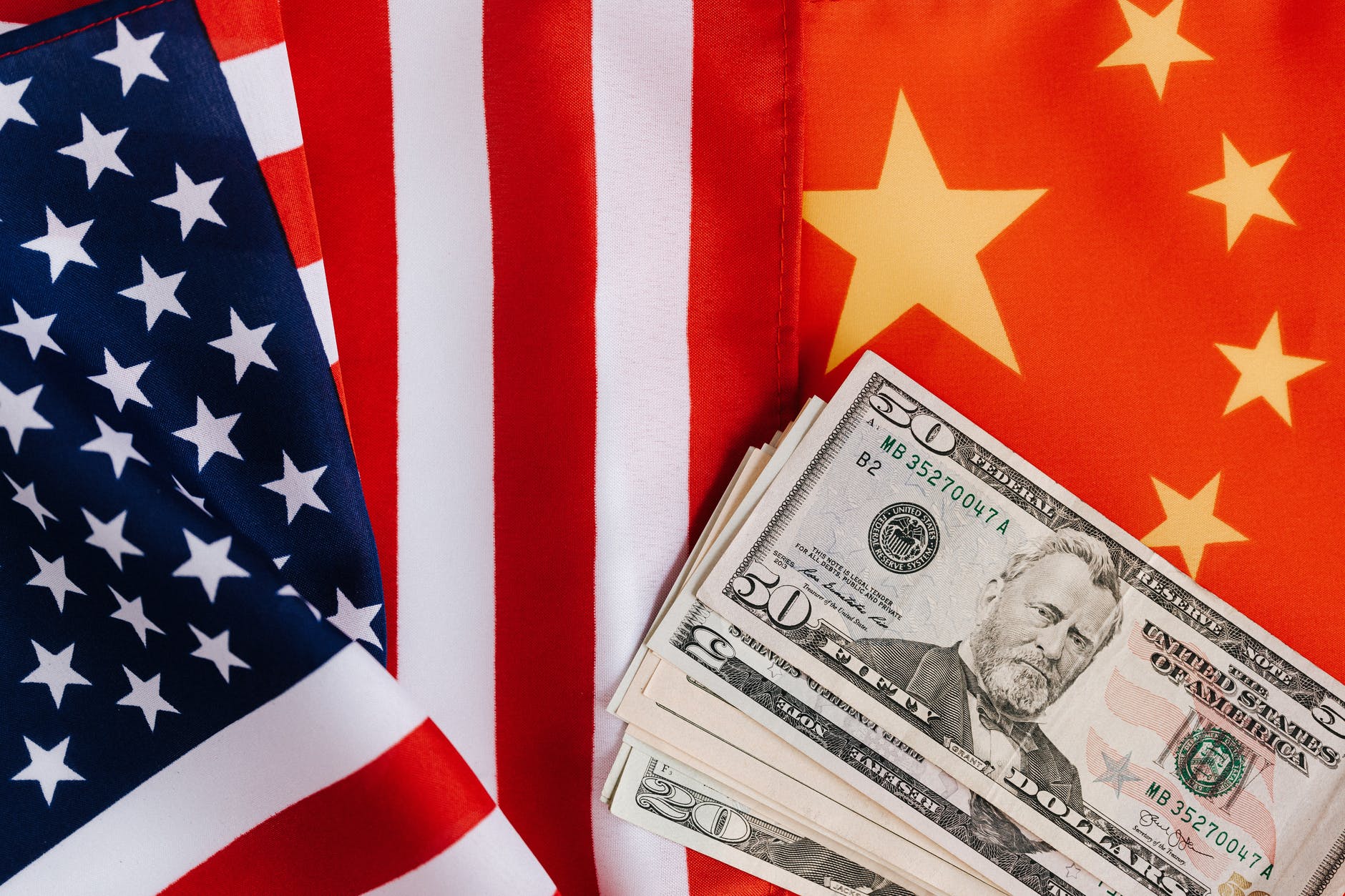
american and chinese flags and usa dollars
Photo by Karolina Grabowska on Pexels.com

That’s Omar Slim, a senior portfolio manager at global asset manager, PineBridge. When you hear about made in this country or that country is really quite relative and it’s a simplification of things because it’s most likely made in a number of countries. Here’s an example. Let’s say we want to make lasagna for dinner. If Jeff cooks the ground beef and prepares the cheese, Sarah makes the tomato sauce and layers the ingredients into a pan; and Blair, who bought all the ingredients, puts it in the oven, who gets the credit for making the lasagna? Now, let’s apply that to Apple’s iPhone. While the phone might say ‘Made in China,’ some of its parts come from other parts of Asia, Europe and even the U.S. Even though an iPhone may be assembled in China, it’s still tariffed in China as a U.S. product because Apple is an American company. The brand makes that clear with by, ‘Designed by Apple in California. How they’re treated in terms of customs, they will be treated as a U.S. product. So regardless of where they come, it’s essentially a U.S. product. Same for Chinese products going into the U.S. and same for, for instance, European cars.

India simply cannot afford to boycott Made in China — Quartz India

China became a popular manufacturing hub in the 1980s after it started to open to the world. It became known for its cheap labor costs, lax regulations and business-friendly environment. As China’s manufacturing sector grew, it took the crown from Germany as the world’s top exporter in 2010. While Made in China has become synonymous with cheap and low-quality products, China is hoping to change that. In 2015, it launched a Made in China 2025 initiative, which aims to shift its economy from low-end manufacturing to high-end, high-tech products. In 2017, Tim Cook said China lost its place as a low labor cost manufacturing nation many years ago. The U.S.-China trade war resulted in a tit-for-tat increase in tariffs on many products.

Petition · Political Parties: Boycott 'Made in China' products in ...

With increasing costs being passed on to consumers, many companies are looking to diversify their supply chain, instead of being so reliant on China. That sentiment has only grown, following the coronavirus pandemic’s hit on the global manufacturing industry. Along that supply chain, there will be some companies, that instead of manufacturing it in China, if they could, they could try to replace. In fact, companies including Apple, Microsoft and Google are reportedly looking into moving some of their hardware production from China to Vietnam or Thailand. But that might be harder than it sounds. The other countries will have a hard time to compete along with the fact that the infrastructure is shown that it’s quite good, along with the fact that in certain countries would not want to compromise the relationship with China.

70 Reasons that makes us Proud to be Made In India - Sanjay Dalmia

The reality today is that a product likely has many components which are sourced globally. A phone may be designed in the U.S, but its screen is sourced from South Korea, the sensors and microchips may be from Taiwan or Germany, with its assembly in China. So, the next time you see a product with the words, “Made in China,” remember that the full story is seldom pure, and never simple.

Trust A Snake But Not China

I am in tears to see how our entire nation stands completely united behind our PM Narendra Modi on China issue. Never in my wildest of dreams could I have imagined that political stalwarts from nearly all parties except Congress ranging from former Defence Minister Sharad Pawar to former UP Chief Minister Mayawati to former Railway Minister and presently Chief Minister of Bengal Mamata Banerjee well known as worst critic of PM Modi among others would all speak in one voice that they fully stand with PM Modi on China issue and shall back every move taken by him. Even Arvind Kejriwal who is CM of Delhi and did not attend the all party virtual meeting chaired by PM Modi too made it amply clear that he stands fully with PM on China issue!

                                       I am also in tears to see how Telangana CM K Chandrasekhar Rao visited the family of late Colonel B Santosh Babu who was the Commanding Officer of 16 Bihar Regiment and  who also led from the front and was martyred in recent Galwan face-off along with 19 others. Rao gave a cheque of Rs 4 crore to late Col Babu’s wife and also another cheque of Rs 1 crore to his parents. He also offered a Group 1 job to the late Colonel’s wife and made her a Deputy Collector in the State and also gave a 6,400 sq ft residential land in Hyderabad to the family! Certainly, the supreme sacrifice rendered by late Col Babu cannot be ever compensated by money or anything else but it will ensure that their families are not left on streets to fend for themselves as most unfortunately we saw in the aftermath of the 1962, 1965 and 1971 wars!

                                      Needless to say, the dastardly, ghastly and most cowardly betrayal by Chinese troops who suddenly attacked Indian troops led by late Col Santosh Babu in a similar way as terrorists do has shocked not just India but the whole world. This latest betrayal by China has only served to vindicate what former Defence Minister late George Fernandes had said about China that, “Our real enemy is China whom we must sort out first. Pakistan is a small fry and can be handled later.” Another former Defence Minister Mulayam Singh Yadav too considers China as our real enemy.

                                 Even former Supreme Court Judge – Justice Markandey Katju had termed Pakistan and Bangladesh as “fake countries” created by Jawaharlal Nehru and Indira Gandhi and had predicted that ultimately they would be merged with India in coming years! So then who is left? It is China! My best friend Sageer Khan too termed China as India’s biggest security threat for whom he said that we must have long term plans to crush them. Sageer also said that Pakistan is no worry as it can be crushed anytime as we did in 1971 when it was partitioned most easily when Bangladesh was born. Pakistan just keeps talking about cutting India into thousand pieces but even after nearly 50 years when we partitioned them, it has not been able to do anything except to rant, rant and rant!

                                         So our real worry is China. We must recruit more soldiers to fight with China on equal strength as they currently outnumber us. Our strength is about 11 lakh and their strength is more than 20 lakhs! We must buy latest fighter plane like Rafale from France as early as possible.

                                          We must guard ourselves from getting complacent and relaxed by just saying what we keep hearing also in some news channels repeatedly that, “This India is not what it was in 1962. This is India of 2020. Even China which spends lavishly on defence much more than what we spend has too come a long way since 1962.” We must never forget the age old time tested dictum that, “The more you sweat in peace, the less you bleed in war.” We cannot take a strong power like China for granted!   

                                         We must strive to remove all our weaknesses in defence and it is heartening to note that the current dispensation led by PM Narendra Modi and Defence Minister Rajnath Singh is exactly doing that! They have ensured that China releases our ten soldiers whom they had taken captive for which they must be commended and not condemned! We too released their soldiers including a Colonel rank officer. Rajnath Singh has just recently left for Russia on a three-day visit during which he is likely to press for the timely delivery of the S-400 missile defence systems and discuss ways to further expand bilateral military ties, amid the escalating border row with China! This is the crying need of the hour also!   

                                                Days after the India-China face-off in Galwan river valley, the family of Ladakhi writer and explorer Ghulam Rasul Galwan – from whom the Valley gets its name – recalled another brutal encounter on the same land, this one a century ago, that their ancestor had with Chinese soldiers. Manzoor who is Ghulam Rasul’s great grandson lamented rightly that, “It pains us that more than 100 years on, Chinese transgressions have continued.” Now again they have betrayed us and attacked without any cause! Even a snake cannot be as dangerous as China!

                                                 So it must be reiterated that we should never trust China and should never lower our guard under any circumstances. It is China which has constantly helped Pakistan to fight against us by providing them nuclear weapons, missiles and what not! It is again China which has mala fidely provoked Nepal with whom we enjoy good relations to declare many areas which belong to India as their own territory by bringing and passing a resolution in this regard just recently in Parliament!

                                            Again it is China which is provoking our other neighbouring countries like Sri Lanka to turn totally against us! It is China to whom Pakistan has ceded huge territory of PoK. It is China which wants to occupy the whole of Kashmir! It is China which is luring Pakistan into debt trap and want to eliminate its identity as a nation itself!

                                            It goes without saying that China cannot be loyal to anyone. It backstabbed us in 1962 after giving emotional slogans like “Hindi Chini Bhai Bhai”. This explains why now Zee News Channel has very rightly raised another slogan titled “Hindi Chini Bye Bye”!   

                                                Asserting India’s full and firm claim on the Galwan Valley of Ladakh, New Delhi has told Beijing that making “exaggerated and untenable claims” is contrary to the understanding reached in talks between military commanders on June 6. Anurag Srivastava who is the official spokesperson of the Ministry of External Affairs said suavely that, “Given its responsible approach to border management, India is very clear that all its activities are always within the Indian side of the Line of Actual Control. We expect the Chinese side to also confine its activities to its side of the LAC.” He minced no words to say that, “The Chinese side unilaterally attempted to change the status quo, took premeditated and planned action and was directly responsible for the casualties suffered by both sides. This could have been avoided had the agreement at the higher level been scrupulously followed by the Chinese side.”

                                                While calling the dastardly attack on Indian troops as “a premeditated action by China”, Lt Gen BS Jaswal (retd), former Army Commander, Northern Command, said he would have supported the use of firearms by Indian troops in the face of such “barbarism”. Jaswal who commanded this sector in 2010 said, “When the CO, 16 Bihar went to Patrolling Point PP14 and asked them to withdraw, they refused and a scuffle ensured. They attacked the commanding officer and our boys reacted. Our disadvantage was that we weren’t carrying any tools… Meanwhile, the Chinese got reinforcements which led to so many casualties.” He rightly added that, “I salute my boys. They caused double the casualties unarmed.” It was widely reported that they lost about 45 to 60 soldiers but Chinese kept quiet on such reports. Just recently they conceded that two officers of theirs died including a CO in a bloody confrontation with Indian troops on the night of June 15 in Galwan Valley. It is for the first time since Vietnam war that the PLA of China has suffered so many casualties!

                                               To be sure, Gautam Bambawale who is former India’s ambassador to Beijing while describing the killings of soldiers at Galwan as an “inflexion point” in India-China relations said it was time for New Delhi to make a “deep reappraisal” of its policy towards China, because the old template that has been defining their relationship for the last 30 years was “no longer working”. He further said that, “The current paradigm of India-china relationship was set in December 1988 during then Prime Minister Rajiv Gandhi’s visit to China. The key thing of that template was that while we continue our efforts to find a resolution of the boundary dispute, while ensuring peace on the border, the interactions and exchanges in other fields must proceed forward. After that there have been several agreements and understandings, in 1993, 1996, 2005, 2013 and several others. The world has changed in the meanwhile, the two countries have changed, but our relationship has continued to be defined within that template. I think this particular incident should change that.”

                                            Following the violent border face-off with China on June 15 that left 20 Indian soldiers dead and 45-60 Chinese soldiers dead, Defence Minister Rajnath Singh told the military top brass during a review meeting that the government has given the forces freedom to “give a befitting reply” if there is further escalation from the other side. PM Modi while praising the valour of the 20 army personnel killed in the clash said they “taught a lesson” to those who were eyeing Indian territory. Col (Retd) Sonam Wangchuk who is a hero of the Kargil war and Maha Vir Chakra awardee said that, “After this incident, we lost 20 boys but in return the casualties that we inflicted were more than double, around 40-43. I am sure we retaliated hard. The Chinese never admit their casualties. This happened in 1962 as well. Our one Kumaon company killed a thousand of theirs, while we lost 130 boys. Even at that time, they did not admit their casualties. Most probably this time too they will not admit it.”

                                                        It is heartening to note that the commanders will no longer be bound by restrictions on the use of firearms. A significant change has been made in rules of engagement (ROE) by the Indian Army by which “complete freedom of action” given to commanders deployed along the contested Line of Actual Control (LAC) to “handle situations at the tactical level”. The commanders will have full authority to respond to “extraordinary situations” using all the resources at their disposal. It was also disclosed that, “With the changes in the ROE, there’s nothing that limits the ability of Indian commanders to take whatever action they deem necessary on the LAC. ROE have been amended  to address to address the brutal tactics being employed by Chinese troops.”   

                                                    On Congress leader Rahul Gandhi’s question on whether the Indian soldiers were sent in “unarmed”, External Affairs Minister S Jaishankar tweeted that, “Let us get the facts straight. All troops on border duty always carry arms, especially when leaving post. Those at Galwan on 15 June did so. [It is a] longstanding practice (as per 1996 & 2005 agreements) not to use firearms during faceoffs.” It must also be noted that Article 6 of the agreement on confidence building measures in the military field along the LAC, signed by India and China in November 1996, states that, “Both sides will not open fire or conduct blast operations or hunt with guns or explosives within two kilometers from the Line of Actual Control.” It is China which has mocked at it by violating it flagrantly defying all that is prescribed in it!

                                   Clearly, China is now on the backfoot as it sacked the Army Commander for its Western Theatre Command ground forces responsible for handling the Sino-India border and who oversaw Chinese aggression in the Eastern Ladakh region and that too ahead of the all-important Corps Commander level meeting and appointed Lt Gen Xu Qiling as the new Commander. Both in the Doklam 73 day standoff and now Ladakh standoff, there is one common denominator: General Zhao Zongqi who is the PLA’s Western Theatre Command’s big boss who was masterminding everything. It is he who masterminded both the standoffs and has cultivated the reputation of being ruthless on the border. But now Xi Jinping has made him the scapegoat by sacking him. The Chinese don’t want to admit that it was their President who got his army’s nose bloody. So it is far more convenient to pin the entire blame on the sacked Lt General! It is very much possible that this sacking took place because India matched up to Chinese build up and kept developing its infrastructure relentlessly despite Chinese PLA’s strong attempts to block it somehow!  

                                      It is a no-brainer that the reason behind Chinese aggression is that it wants to hamper and stall the construction of the winding 255 km Darbuk-Shyok-Daulat Beg Oldie Road. This road will allow the Indian Army to easily access its last military post South of the Karakoram Pass. China was opposing the construction of this road, because once completed, this road will allow India to put retaliatory pressure on the Dragon at the Karakoram Pass, Chip Chap river area, Trig Heights, Hot Springs, Galwan and Depsang Plains. China wants to make the Daulat Beg Oldie sector inaccessible for India as part of its larger diabolical conspiracy of achieving its evil design of connecting Tibet with Pakistan occupied Gilgit-Baltistan. But thanks to our strong political leadership under PM Modi that India didn’t buckle and the political along with the military leadership made it absolutely clear that there will be no hiatus in road building along the Sino-India border. It is China which has to move back and restore the status quo as was the case in April 2020!

                                               Former Chief of Army Staff and now Minister of State for Road Transport and Highways – Gen VK Singh too very rightly suggests that, “The first thing that has been given out is to boycott Chinese goods, let’s start with this. Let’s hurt them economically… War and use of force is the last resort always and every time. When all other means fail then you resort to this. There are many means available.”  

                                                 To be sure, P Stobdan who is an expert on the Himalayan region very rightly points out in Hindustan Times dated June 20, 2020 in his enlightening article titled “How the Galwal Valley tragedy can transform Himalayan geopolitics” that, “India must respond to China’s move, not just through military means but through a forward-looking strategic, economic and connectivity vision matching China’s BRI project. It must think about reconnecting and resuming old trade links. Ladakh is a geostrategic axis or a pivot point for India to reach out to Central Asia, Europe and Russia. The Dorbo-Shayok-DBO road should be called the Ladakh economic corridor. It should be India’s approach to go beyond the Himalayas. Otherwise, India is destined to remain defensive in posture. This, however, is contingent on India reworking the governance priorities in Ladakh. The region has already remained neglected for a long time due to Article 370 and 35A.” He also rightly suggests that the area must be populated more as it is the locals who have the best understanding of the border.

                                          Air Chief Marshal RKS Bhadauria while referring to the situation on the Line of Actual Control and addressing a combined graduation parade at the Air Force Academy in Dundigal said, “We are well prepared and suitably deployed to respond to any contingency. I assure the nation that we are determined to deliver and will not let the sacrifices of our soldiers go in vain.” Speaking to media-persons later, he also said: “The Army is in total control of the situation at the Galwan Valley and the Air Force is ready to support the Army’s efforts by deploying additional forces to meet any emergency.” He also said: “The IAF has stepped up deployment in Leh and Srinagar. We are aware of the full situation. Be it at LAC, be it deployments beyond LAC. All the air deployments, their postures, the kind of deployments… We have full analysis and we have taken the necessary action that we need to take to handle any contingency that may arise with this kind of deployment. All actions have been taken. We know what their (Chinese) fields are. We know what their air fields are, where they are deployed, what are the operational bases.”    

                                     It would perfectly be in order to pay heed to what the IAF chief RKS Bhadauria advised that, “The security scenario in our region mandates that our armed forces remain prepared and vigilant at all times. The development at LAC is a small snapshot of what we are required to handle at short notice. Please join me in paying tribute to Colonel Santosh Babu and his brave men who sacrificed their lives while defending the LAC in Galwan Valley. The gallant action in a highly challenging situation has demonstrated our resolve to protect the sovereignty of our country at any cost.”

                                             It is but obvious that all the major countries whether it is USA or European Union or Australia have stated that they stand fully behind India and strongly condemned China for its Army’s cowardly and unprofessional acts! US Secretary of State Michael Pompeo has blamed China for escalating tensions along the border with India and openly termed it a “rogue Actor” in the neighbourhood. He also said that, “The PLA has escalated border tensions – we see it today in India, the world’s most popular-populous democracy. And we watch as it militarises the South China Sea and illegally claims more territory there, threatening vital sea lanes, a promise they broke again. It’s no longer enough to listen to what the Chinese Communist Party is saying. We can see their actions. I ticked through a few of them: Hong Kong, Tibet, Xinjiang, what they’re doing in India, what they’ve done in the economic zones along the Philippines and Malaysia and Indonesia and Vietnam, the coercion on Australia – when they had the audacity to demand that there would be an investigation of how this virus got from Wuhan to Milan, how this virus got from Wuhan to Tehran, how this virtus got from Wuhan to Oklahama City and to Belgium and to Spain, and decimating the global economy.” Can such a notorious nation be ever trusted? Certainly not!

                                Ostensibly, the writing on the wall is clear. Chinese can never be trusted. A snake can still be trusted as it may turn out to be non-poisonous also but China is full of poison and venom against not just India but even its own people where it rules by force and can never be trusted under any circumstances! The Galwan incident in which we lost 20 soldiers is the first such killings on the Sino-Indian border in 45 years. India has done the right thing by now removing all restrictions on soldiers of not opening fire as China has betrayed us most cruelly and most wrongly! Chinese soldiers fear Indians and this we saw when how the 1967 Nathu La conflict between India and China which started with pushing and jostling before a Chinese soldier opened fire and shot dead the Indian Commanding Officer. Indian forces retaliated very hard and we killed 340 soldiers of China but they could kill only 88 of our soldiers!

                                            In conclusion, the bottom-line from this latest dastardly incident is: Trust a snake but not China. It is China which is the root cause of all aggression directed by small neighbouring countries like Pakistan and Nepal against India! China intruded more than 600 times when Dr Manmohan Singh was PM and we lost more than 700 km. Overall, India lost more than 43,00 square km area in Congress rule which was catastrophic! Additionally no roads and no infrastructure were developed in border areas in last more than 70 years about which even former Defence Minister AK Antony of Congress party itself had lamented! We must highlight the nefarious designs of China and its brutal killings of our soldiers in all international forums and just like this time our soldiers ensured that Chinese soldiers and officers were killed in future also soldiers must have full freedom to open fire and this is what Centre has done now very commendably!

                                           On a concluding note, it is high time and we must now stop showing extra generosity towards China. It was India under Jawaharlal Nehru as PM who when America offered it a permanent seat in Security Council offered it instead to China due to which we have suffered immeasurably! What did we get in return? Backstabbed most grievously by the unprovoked 1962 Chinese well planned unprovoked invasion on India! Chinese’s sole and firm opposition till now in 2020 for India getting a permanent seat in UN Security Council and membership of India in Nuclear Suppliers Group (NSG)! The only silver lining in the dark cloud is that the present dispensation has clearly manifested that it will not kowtow before it as had happened earlier for which it must be commended and not condemned!           

Sanjeev Sirohi, Advocate,

s/o Col BPS Sirohi,

A 82, Defence Enclave,

Sardhana Road, Kankerkhera,

Meerut – 250001, Uttar Pradesh.

Facial recognition technology and how its affecting us.

Technology, evolving everyday getting smarter and smarter in order to ease our daily lives. One such technology is the facial recognition technology. It is the not only a hot brand on the tech market but also on the television front, it has been showcased in Tv shows and movies for years. Like any other technology it grows sophisticatedly and its usage has also expanded accordingly. These sensors have been upgraded to such a level that they can uniquely identify not just faces or animals but every individual fish that it can scans. That is the level of sophistication the facial recognition technology has achieved, but with its expanse it also brings about numerous privacy and civil liberty issues that need to be addressed. The biggest users of this technology worldwide are the Law enforcement departments. The use of this is so blatant that in an estimate around one in every two American has had their photos searched in this manner. Whenever this issue is raised not just in America but in any of the countries that this is so widely used, the authorities use the “we want to prevent atrocities” line, which would be sufficient if it did not come at the price of personal freedom.

Photo by Andrea Piacquadio on Pexels.com

 Many countries have used this extensively but none other than china, the leading brand for infringing people’s right. They use a project called “Skynet” to monitor nearly every person’s movement, which includes whom you meet, where you go and even track all your movement for the past week. What makes this technology even worse is that even though it is still being used it is still a work in progress, which means its error rate is very high with only a measly 20% success rate. Even though this has such a large failure rate, nations worldwide continue to use it. Just a few years back Sri Lankan authorities mistakenly linked a Brown university student to a terrorist attack. With all of these concerns, a public domain company Clearview.ai has launched its services. To put this into perspective, Clearview.ai has collected data from nearly 3 billion images, which to this date is larger than any other facial recognition database on this planet. The founder Hoan Ton-That has scrapped photos from nearly all publicly available domains, and has become a front runner in the worst possible way. With their below the belt techniques and illegal means of acquiring photos of people, the company has also received cease-and-desist order from Facebook, YouTube and twitter this year. However, they have refused to do so and in fact even going so far as to claim that they have a first amendment right to harvest data, which is completely false. What is of a greater concern is that Hoan has previously developed apps like ViddyHo which tricked its users into sharing their emails and then spammed their contacts. Not only this but since its emergence Clearview.ai has tried to pitch itself to white supremacist candidates to ensure their victory. They have even quietly tried to offer their services to entities in Saudi Arabia and the United Arab Emirates who have had a history of human rights violations. With such a large freehand to companies like Clearview.ai we seem to be headed to some dark times indeed.

What could be done to limit these companies are stringent laws to be placed so that companies are required to acquire permission from the person they are collecting data from. We individually cannot do much for this however with a comprehensive nation-wide policy some measure can be taken to ease the illegal flow of information that companies like Clearview.ai seem to obtain.

What happens next is for all of us to see.

Situation getting more tensed between India and China at Ladakh

Recently how our brave 20 soldiers were martyred at Ladakh border, is really painful for all of us. . From all over the states, the situation is getting too much tensed and everyone wants the revenge from China. At other side China is not ready to even accepting it’s mistake. This is not good. Our Govt. is also now in action. Various steps had been taken for it .

The real problem is that China is that only nation who had 14 nation’s borders are connected. And at all there China is claiming some region under him. This is not only the problem, China is also saying over 23 countries had taken the land which is part of it’s country. China is the major manufacturer hub for all over the country. That attracts all the countries, but the problem arises when it trying to capture the land of it’s neighbouring countries.

But China also Know that India is not likely a weak country, India is a major powerful developing country, and at any time ,this nation can really give tough competition globally. India also had support from various Asian countries as well as super POWER USA also a friendly nation of India. And on the conflicts of Ladakh, india will never tolerate the China’s hypocrisy. Necessary action are already taken from military and Air Force both. Many fighter jets are taking rounds on the border of Ladakh. And in any mis happening, we can take the control over there.

So at last we should pray for the martyred soldiers, any necessary action must be taken from our Govt, and China have to accept it’s mistake. And should take step out of our land.Otherwise the war must be go on and it has several results too.

Russia assures support to India amid violent face-off with China at Galwan Valley

India and Russia enjoy close ties and have frequently engaged at the highest level, both Indian Prime Minister Narendra Modi and Russian President Vladimir Putin have spoken to each other several times this year including on COVID crisis.Later next week, the \foreign ministers of the three countries are scheduled for the RIC (Russia, India, China) meet. The Russian envoy called the existence of the grouping an “undisputable reality” which is “firmly fixed on the world map”. 

Commenting on the current stage of the trilateral cooperation amid the border skirmish, he said, “There are no indications that it might be frozen”Also, Russia is set to host SCO and BRICS summits later this year. 

Meanwhile, Pakistani Foreign Minister SM Qureshi also spoke to his Russian counterpart and the Russian foreign ministry readout of the talks reveals that Russia does not support Pakistab’s priorities as had been claimed by Islamabad.

One more attack = Indo-China WAR!!!

The relation between Indian and Chinese army are now being worse. India holds a record of never attacking any of the army first till date. Many near by countries think that India is weak and cannot attack first, but this is our spirituality and religion to avoid any fight, but when the things get worse there need to be done something. India never approach any army for fight it always keep the things calm and to solve the problem with words and not the wars. India always gave a extraordinary action in case of any mischief done by the opponents, India carried out many operations like:

  • Operation Vijay
  • Operation Meghdut
  • Operation Surya Hope
  • Operation Brasstackes
  • Operation Cactus and many more to list…

India also gave a very strong answer of the Pulwama attack. India has the strongest army and technology support from Russia and US.

police army commando special task force
Photo by Somchai Kongkamsri on Pexels.com

Recantly, India was betrayed by dragons during a normal peace talk Chinese army betrayed Indian army by sudden attack on our prestigious soldiers. In this betrayal our 20 soldiers lost theirs lives for India:


  1.  Col B Santosh Babu
  2.  Nb Sub Nuduram Soren
  3.  Nb Sub Mandeep Singjh
  4.  Nb Sub Satnam Singh
  5.  Hav K Palani
  6.  Hav Sunil Kuma
  7.  Hav Bipul Roy
  8.  Nk Deepak Kumar
  9.  Sep Rajesh Orang
  10.  Sep Kundan Kumar Ojha
  11.  Sep Ganesh Ram
  12.  Sep Chandrakanta Pradhan
  13.  Sep Ankush
  14.  Sep Gurbinder
  15.  Sep Gurtej Singh
  16.  Sep Chandan Kumar
  17.  Sep Kundan Kumar
  18.  Sep Aman Kumar
  19.  Sep Jai Kishore Singh
  20.  Sep Ganesh Hansda

_112919157_kashmir_military_clash_x2_640-nc

Image source: BBCnews

In return Indian army gave an dangerous answer with their 35 troops by killing. PM Modi gave freedom, if in near future again this type of activities are done by Dragons than Indian army can do anything without any upper orders. Indian army are ready with thier backpacks and loaded arms and waiting for activities by dragons and it will be close to WAR.

download (1)

Image source: Navbharatimes.com