
Stagflation: a serious economic issue

Photo by Reynaldo #brigworkz Brigantty on Pexels.com

Stagflation is a situation wherein there persists both inflation(consistent rise in the prices of all the goods and services available in a country) as well as stagnation(lack of any economic development). Since 1970, there have been paradoxical developments in most developed nations of the world. There has been a considerable fall in the level of production and employment on one hand, and rise in the general price level on the other. That is nothing but inflation and stagnation coexisting. Inflation and unemployment are mutually exclusive economic phenomena. There has always been an trade off between these two in an economy. Thus, when both of this coexist, it leads to the rise of a paradoxical situation called Stagflation.

The features on stagflation include:

  • Rise in general prices.
  • Rise in the wage rate.
  • Reduction in the level of demand for goods and services.
  • Reduction in the level of production.
  • Emergence of excess capacity.
  • Increase in involuntary unemployment (a situation wherein people are willing to work at the prevailing wage rate but do not get any work).

Causes of stagflation:

  • Increase in the supply of money.
  • Rise in wage rates under pressures from trade unions.
  • Consistent rise in agricultural prices, owing to the government policy.
  • Rise in administered prices.
  • Credit expansion by the banks.
  • Increase in saving and investment.
  • Reduced demand for labor resulting in unemployment.
  • Rise in prices of petroleum and coal.
  • Increase in industrial capacity.

Stagflation is certainly a more difficult proposition than inflation. In the words of Haberler, “The combination of unemployment and inflation is a very delicate matter, if we fight recession, we stimulate inflation and if we fight inflation, we stimulate recession.

Some measures to control stagflation:

  • Creation of bank credit and supply of money must be checked.
  • Excise duty and other indirect taxes need to be reduced to stimulate production.
  • Consumption level is to be very carefully encouraged.
  • Labour intensive enterprises are to be encouraged to stimulate employment.
  • Appropriate income policy needs to be pursued to strike against the problem of inflation.
  • Wage rate must be suitably regulated.

Stagflation not only causes economic unrest but also leads to social instability. There are many instances where the rich gets richer and the poor gets poorer. There seems a moral dispute within the people resulting in hoarding, black marketing ,etc. Thus, stagflation is an serious economic hindrance which needs to be kept in check.


Tuberculosis: a global emergency

Tuberculosis is a specific infectious disease caused by myobacterium tuberculosis. The pathogen primarily affects lungs and causes pulmonary tuberculosis. It can also affect the intestine, bones, joints, lymph gland, skin and other tissues of the body. Tuberculosis remains a worldwide public health problem. There are 15-20 million cases of infectious tuberculosis in the world. Eight million new victims and 2.9 million deaths are known to occur every year. The disease is credited with killing over one million women and nearly 1,70,000 children every year. WHO has declared TB as a global emergency.

FACTORS CAUSING TUBERCULOSIS:

  1. Agent Factors: Tuberculosis is caused by a facultative intracellular parasite myobacterium tuberculosis. The most common source of infection is the affected human himself whereas the milk of the bovine (affected cattle) is also an active source of spreading the disease. Patients remain infected as long as they remain untreated. Effective antimicrobial treatment reduces infectivity up to 90% within 48hours.
  2. Host factors: Tuberculosis affects people of all age groups. It is more prevalent in males than the females. It is not a hereditary disease but inherited susceptibility is an important risk factor. Man has no inherited immunity against tuberculosis. It is acquired as a result of natural infection or BCG vaccination.
  3. Social factors: Social factors include many non- medical factors such as poor housing, poor quality of life, overcrowding, population explosion, malnutrition, lack of education, etc.

Tuberculosis is transmitted mainly by droplet infection which is generated by sputum positive patients with Pulmonary tuberculosis. In most cases the bacteria affects the lungs. Pulmonary tuberculosis destroys the lung tissue, rupturing blood vessels in the process.

CONTROL OF TUBERCULOSIS:

The control measures consists of two components, namely:

  • Curative component
  • Peventive component

CURATIVE COMPONENTS include case find in and chemotherapy whereas PREVENTIVE COMPONENTS include vaccination. The first step in tuberculosis control is early detection of sputum positive cases followed by chemotherapy.

To tackle this global emergency, the National Tuberculosis Program me was initiated in 1962. The long term goal of the programme is to “reduce the problem of tuberculosis in the community sufficiently and quickly to the level where it ceases to be a public health hazard.”

Despite effective case finding and therapeutic tools and declined mortality, tuberculosis still remains to be a serious communicable disease worldwide.

Don’t say something you regret out of anger

There once was a little boy who had a very bad temper. His father decided to hand him a bag of nails and said that every time the boy lost his temper, he had to hammer a nail into the fence.

On the first day, the boy hammered 37 nails into that fence.

The boy gradually began to control his temper over the next few weeks, and the number of nails he was hammering into the fence slowly decreased. He discovered it was easier to control his temper than to hammer those nails into the fence.
Finally, the day came when the boy didn’t lose his temper at all. He told his father the news and the father suggested that the boy should now pull out a nail every day he kept his temper under control.

The days passed and the young boy was finally able to tell his father that all the nails were gone. The father took his son by the hand and led him to the fence.

You have done well, my son, but look at the holes in the fence. The fence will never be the same. When you say things in anger, they leave a scar just like this one. You can put a knife in a man and draw it out. It won’t matter how many times you say I’m sorry, the wound is still there.’”

Speak when you are angry and you’ll make the best speech you’ll ever regret. – Ambrose Brierce

Control of Air pollution

National air quality monitoring programme

  • Central pollution control board is executing a nationwide program of ambient air quality monitoring known as National air quality monitoring programme.
  • National Ambient Air Quality standards prescribed specific standards for residential, ruler, Industrialand other sensitive areas.
  • N. A. M. P, four air pollutants – Sulphur Dioxide, oxides of Nitrogen, suspended particulate matter and respirable suspended particulate matter (pm10) have been identified for regular monitoring at all the locations.
  • Network consists of 683 operating stations covering 300 cities and town in 28 states and 9 union territories of country.
  • Annual average- Annual arithmetic mean of minimum 104 measurements in a year taken twice a week 24 hour at uniform interval.
  • The level of air quality necessary with an adequate margin of safety to protect the public health vegetation and its property.

Air quality index

  • Air quality index is tool for effective dissemination of air quality information to people.
  • There are six categories namely – good, satisfactory, moderately, polluted, poor, very poor and severe.
  • The propose 82 I will consider 8 pollutants PM 10, PM 2.5 NO2, SO2 Co, O3, NH3 and Pb.

Control of air pollution

  • Control measures
    1. Technological
    2. Legal
    3. Economic

Technological approach

  • Adapting Lifestyle that uses less energy and pollutes less or using energy sources that produce less amount of pollutant as by-product.
  • Remove pollutant generating stuff from energy sources
    • example- Remove sulphur from coal before burning it.
  • Reduce the energy used without changing the way of life
    • Use more energy efficient car and replace existing bulb with CFL bulb and LED bulb.
  • Check the generation of pollutant their burned
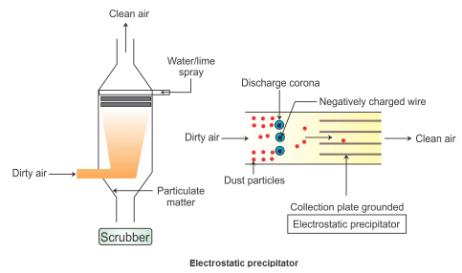
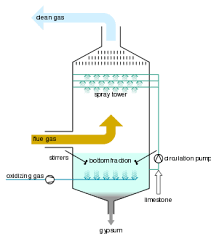
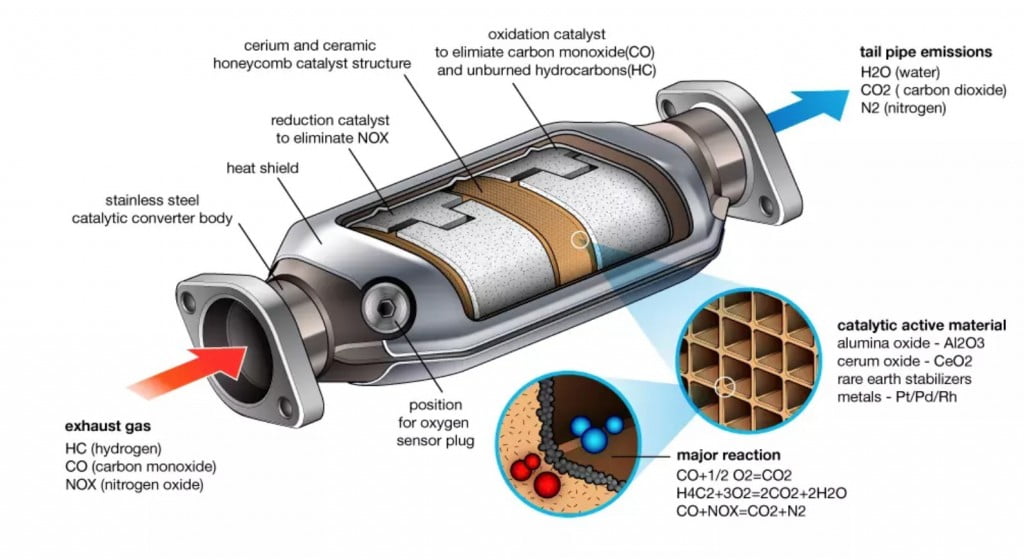
    • Catalytic converter, electrostatic precipitator, scrubber, Bag house collection of particulate emission, cyclone separator etc.
    • Encouraging mass transportation.

Legal approach

  • After Stockholm conference, 1972 the Government of India under article 253 of the Constitution of India in enacted the Air Act, 1981 for the prevention control and abatement of air pollution.
  • To empower the central and state pollution control board. Air Amendment Act, 1987( for prevention and control of pollution) was enacted but this was not strong enough to play precautionary role.
  • After Bhopal disaster of Environment protection Act was passed in 1986 this act has punitive power to restrict any activity that would harm the environment.
  • To regulate vehicles pollution, the central motor vehicle act of 1939 was amended in 1989.
  • As per the current requirement all the transport vehicles must carry a fitness certificate which is to be renewed each year after the first two year of new vehicle registration.
  • National fuel policy announced on October 6, 2003 , a phased program for implementing the emission standards in India by 2010.

Economic approach

  • Cost consideration of air pollution involves 2 factor:-
    1. Cost of controlling the air pollution
    2. Cost of not controlling the air pollution
  • Determination of cost of first in straight forward but that of second is difficult and can be subjective to some extent.
  • Direct air pollution control in India
    • Fuel wood and Biomass burning
    • Transport

Control

  • Using low sulphur coal.
  • Use Proper air pollution control devices in industry
  • Individual efforts to control air pollution
    • Inform to Road Transport office and PCB about the vehicle polluting the environment
    • Regular engine tune up replacement of old more polluting vehicles
    • Shifting to less polluting fuels
    • Using mass transportation
    • Do not use CFC containing sprays for freshners that deplete the ozone layer.
    • Planting more trees
    • Say no to fire crackers in Diwali and other occasions.

SHOR IN THE CEREBRAL CORTEX

The Krakatoa volcanic eruption in Indonesia created the loudest sound ever reported at 180 dB in the year 1883. Do you know what’s louder than that? My mind thinking, producing thoughts faster than the blink of an eye. ‘Writer must be some mad scientist solving scientific equations in her brain’, one might think. On the contrary, the equations my brain analyses are the thousand possibilities of one single situation.

Everyone is looking at me. They are talking about me. Is it my hair? Is it the shirt I’m wearing? I think the world knows about that one time when I mispronounced the word ‘laminate’ as ‘lemonade’ in 6th grade. This is it. Life gave me lemons and the lemonade I made is SOUR.

An organ made of soft tissues and approximately two clenched fists in size has the power to make and break one’s life is a big accusation on our Brains. But who is to be blamed then?

I would like to someday adopt a Fish and a Cat and a Dog. But what if the cat eats the fish and the dog chases the cat and then they all flee my house and I’m left alone with my thoughts again. You would call it unnecessary paranoia and you would be right. I don’t really reside in my body; I’m simply paying rent to it. This rented house of mine has two windows, I call them my eyes. I guess my mind is the prison and I’m never going to get out of it.

I’m a visitor inside my brain and now my thoughts have chained me to my bed and I’m stuck. Hello, is anybody there, you got keys to my cell?

Wait a minute there is nobody here miles and miles away then who really locked the cell from outside? I give it one small push and it opens with a creak. The door to my prison was never locked? I was staying there voluntarily!

The Brain is powerful. How many doors in your life, you think are locked but aren’t? How many times have you been stuck in the mental prison of overthinking? Something that really had a simple solution. There is an old African line that says, ‘When there is no enemy within, the enemy outside can do us no harm.’ Cerebral Cortex is that part of the brain which produces thoughts, the capability of imagining things beyond reality. It is the strongest force in your life. It will force its opinions on you – ‘you are not good enough’, ‘you cannot do it’, ‘what will they say about you?’,’ stop, you are not made for this.’

Dear Mind of mine, thank you for your opinions but every overthinking thought you produce is equivalent to nothing. We bring it to life with the attention we give it. Stressful thoughts knock on our doors and we tell them ‘STAY OUT’. But that makes them knock louder.

BUT HOW DO I CONTROL AND DESTROY THOSE THOUGHTS?

The secret is – don’t mind the mind. This is the natural state of existence. This is the law of universe. In Science, the first law of Thermodynamics states that, ‘You cannot create or destroy energy but you can transfer it from one thing to another.’ Thoughts will arise and yes you will fill them but you don’t have to fight, control or defeat you mind. Just stay neutral in between those thoughts and it will dissolve into silence. A peaceful state of mind.

Or we can order a pizza and transfer the energy we spend on overthinking into the process of eating this slice of cheesy heaven. But why does the circle pizza come in a square box? And why is a slice of pizza triangle? Did mathematicians invent the pizza? Is pizza the SYMBOL OF ILLUMINATI?! WHAT IF…..and just like that the writer fell into her rabbit hole of overthinking and the Shor (noise) in her Cerebral Cortex was louder than the Shor in her city.

HACCP

“Hazard Analysis and Critical Control Points”.
It is basically a preventive approach to food safety which is used to find and then eliminate the biological, chemical and physical hazards which may or may not be there in production processes and can cause the final products to be unsafe and unhealthy for human consumption. These are certain principles which have been designed by the government to ensure the food quality and safety. It is a various step process that is followed in any food industry.
The HACCP system is followed at each and every level of food chain i.e. in food production and preparation processes which also includes packaging, distribution and even consumption by the consumer. It is therefore known as FARM-TO-TABLE process.
This technique was originated by NASA in the 1960s and US food and drug administration gave a particular definition to this. The main objectives of the HACCP system are –
• Prevention of food-borne diseases so that no one is affected after the consumption of food.
• This system mainly focuses on quality assurance unit i.e. maintains the quality of the food.
• HACCP system tends to reduce the cost of analysis of food.
• It also reduces the losses which occur due to product recall.
• And finally it helps in protecting the reputation of government.

HOW TO CONDUCT A HACCP PLAN??????
Conducting a HACCP plan is a 5 step process as mentioned below –

  1. Collection of HACCP resources and assembling of HACCP team which will look into the all steps.
  2. Description of the product by the team and deciding its method of distribution.
  3. Developing a complete list of ingredients and raw materials which are to be used in the production of the final product.
  4. Developing a flow diagram of the process i.e. how the product will be manufactured, its complete process.
  5. Meeting the requirements for the product to be manufactured safely.

PRINCIPLES OF HACCP
There are 7 main principles of conducting successfully a HACCP plan.

  1. To conduct a hazard analysis is the first step in which all the potential physical, chemical as well as biological hazards in the production of the product are identified.
  2. To determine all the critical control points (CCPs). At this step, all the control measures are thought to be applied. Basically at this step, those points are identified where control measures can be applied for the safety. This step is very essential to eliminate hazards completely from the product.
  3. To establish critical limits is the next step i.e. in this step the control measures are actually applied and also the maximum and minimum limits are set for the preventive measures. To each point found in the last step, a critical limit is applied. These limits assure the food safety.
  4. To establish monitoring procedures is the next step in which all the planning which was done yet is monitored and it should be done on a regular basis. This step assures that there is no mishandling of any procedure of the complete plan.
  5. To establish corrective actions is the next step in which appropriate correct actions are taken if after monitoring it is observed that the critical limits are not met. The corrective actions for each point and limit are already pre-decided.
  6. To establish verification procedures is the next and most important step in which the complete HACCP plan is validated. The complete verification of the plan is required to assure that the precautions and preventions are taken carefully.
  7. To maintain record keeping and documentation procedures is the final step in which the record is maintained and established which must be done regularly. It is necessary for validation procedures.

“Not all scars are visible”- Mental health

You might consider yourself to be physically healthful but do you possess a healthy state of mind? How frequently do you consider mental pressure, anxiety or an ill mood? We all must be conscious of the point that a healthy mind as well as a healthy body, both are a part of what makes us whole. Consequently, looking after mental health is as fundamental as caring for the physical health.

A healthy mind encompasses the ability of individuals that allows him or her to withstand the stressful and troublesome situations of life, work productively and contribute their presence in the community. But multiple times people are not competent to look after what they think intense in their minds. That is when the mental disorder begins. A consequence of which they might suffer from depression, anxiety, autism, schizophrenia, obsessive-compulsive disorder, dementia and many more. These disturbances makes them feel sad and makes their mood low. They may face severe mood fluctuations of highs and lows and make them unable to cope with even simple life problems. They may face problems while concentrating and have reduced ability to think keeping them confused all day long.

Accordingly, factors that may affect mental health are:

  • Abuse: This may be physical, sexual, oral or psychological.
  • Physical indisposition: This includes diseases, injuries or other physical disabilities.
  • Social connections: Includes any separation, divorce, family loss etc.
  • Difficult characters: people who exhibit irrelevant behaviour, extreme lying, violence, inappropriate actions.

Have you ever heard about the terminology D.O.S.E?

If not, then this might surprise you as holding a healthy mind starts right here. D.O.S.E exists for Dopamine, Oxytocin, Serotonin and Endorphins. Dopamine among the four is the fundamental chemical that emanate positive emotions in the body. Let’s understand how these chemicals function:

Dopamine: This is something that we can consider as ‘The Happiness Drug’. This motivates us towards our goal that we aspire to accomplish in our existences. Without Dopamine one never would have had the enthusiasm to achieve what they strive for, and the essential happiness We may also refer it to the slight joy that we feel in out day to day life.

How to retain a Healthy Mind?

Now as we know that a healthy mind prepares a happy mind, we also need to comprehend how to do so. A healthy mind is what helps us throughout our entire being therefore the following could be done for our mental health:

  • Being active: Exercising will support the physical as well as mental health.
  • Talk to yourself: Make time and efforts into bridging relations with yourself, keep telling yourself that You are worth enough.
  • Keep learning: Keeping the mind healthy; learning new skills, languages, sports, information etc. has proved constructive.
  • Quit the addiction: Healthy mind is related to a healthy body, any alcoholic or drug addiction would impede the situation.

An unhealthy mind is considered the worst place to be. This state of mind would make you either win or vanish. Make some time for your mind. Care for it and it would take care of you.

CHEMICAL AGENTS IN MICROBIAL CONTROL

The chemical agents are mostly employed in disinfection and antisepsis. The proper use of these agents is essential to laboratory and hospital safety. Many disinfectants are available and each has its own advantages and disadvantages, but ideally the disinfectant must be effective against a wide variety of infectious agents. The disinfectant must be stable upon storage, odorless, or with pleasant order, soluble in water and lipids for penetration into microorganisms, and have a low surface tension through that it can enter cracks in surfaces.

  1. Phenols
    In 1867, Joseph Lister employed it to reduce the risk of infection during operations and phenol was the first widely used antiseptic and disinfectant. Today phenol and phenolics such as cresols, xylenols, and orthophenylphenol are used as disinfectants in laboratories and hospitals. Lysol is made of a mixture of phenolics which is commercially available disinfectant. They act by denaturing proteins and disrupting cell membranes.
  2. Alcohols
    Alcohols are the most widely used disinfectant and antiseptic. They are bactericidal and fungicidal but not sporicidal. Ethanol and isopropanol are the two most popular alcohol germicides. Small instruments like thermometers can be disinfected by soaking them for 10 to 15 minutes in alcohol solutions. 70% ethanol is more effective than 95% as water is needed for proteins to coagulate.
  3. Halogens
    Halogens exist as diatomic molecules in the free state and form salt like compounds with sodium and most other metals. Iodine and chlorine are the most important antimicrobial agents. Spores can be destroyed at higher concentration. Iodine is often applied as tincture of iodine, 2% or more iodine in a water-ethanol solution of potassium iodide. Skin scars result and sometimes iodine allergies can result.
    Chlorine is mostly used as a disinfectant for municipal water supplies and swimming pools and also employed in dairy and food industry. It may be applied as chlorine gas, sodium hypochlorite or calcium hypochlorite, all of which yield hypochlorous acid and then atomic oxygen.
  4. Heavy metals
    Heavy metals such as mercury, silver, arsenic, zinc and copper were used as germicides and these have nit been most recently superseded by other less toxic and more effective germicides. A 1% solution of silver nitrate if often added to the eyes of infants to prevent ophthalmic gonorrhea but now erythromycin is used instead of silver nitrate because it is more effective. Silver sulfadiazine is used on burns. Copper sulphate is an effective algicide in lakes and swimming pools. The action of these heavy metals is mostly on the proteins, and they combine often with their sulfhydryl groups, and inactivate them. They may also precipitate cell proteins.
  5. Quaternary ammonium compounds
    Detergents are organic molecules that serve as wetting agents and emulsifiers and are amphipathic in nature and hence solubilize otherwise insoluble residues and are very effective cleansing agents and are efficient from soaps, which are derived from fats.
    Only cationic detergent are effective disinfectants characterized by positively charged quaternary nitrogen and a long hydrophobic aliphatic chain. They are mostly used as disinfectants for food utensils and small instruments and as skin antiseptics.
  6. Sterilizing gases
    Gases may also be used as sterilizing agents in order to sterilize many heat-sensitive items such as disposable petri dishes and many syringes, heat-lung machine components, sutures, etc. Ethylene oxide gas is used for this purpose as it readily penetrates packing materials, even plastic wraps and is both microbicidal and sporicidal and kills by combining with cell proteins.
  7. Hydrogen peroxide
    Hydrogen peroxide effects our direct and indirect actions of oxygen as it forms hydroxyl free radical which is highly toxic and reactive to cells. As an antiseptic, 3% hydrogen peroxide serves a variety of needs including skin and wound cleansing, bedsore care and mouth washing. When it is applied to a wound, the enzyme catalase in the tissue decomposes the hydrogen peroxide into water and free oxygen. The oxygen causes the wound tissues to bubble and the bubbling removes microorganism mechanically.
  8. Acids and alkalis
    Aqueous solutions of ammonium hydroxide remain a common component of detergent, cleanser and deodorizers. Organic acids are widely used in food preservatives because they prevent spore germination and bacterial and fungal growth. Acetic acid in the form of vinegar is a picking agents that inhibits bacterial growth, propionic acid is commonly incorporated into breads and cakes to retard molds, benzoic acid and sorbic acids are added to beverages, syrups to inhibit yeasts.

USE OF PHYSICAL METHODS IN MICROBIAL CONTROL

Although microorganisms are beneficial and necessary for human well being, microbial activities have undesirable consequences such as food spoilage and disease. To minimize there destructive effects, it is essential to kill a wide variety of microorganisms or inhibit their growth.

  1. Heat
    Heating is still one of the most popular ways to destroy microorganisms. Fire and boiling water have been used since the time of Greeks for sterilization and disinfection. Exposure to boiling water for 10 minutes is sufficient to kill or destroy vegetative cells and eukaryotic spores, but not enough to kill or destroy bacterial endospores, hence boiling does not sterilize but can be used for disinfection of drinking water and objects not harmed by water. This can be carried out within an autoclave. Hot and saturated steam enters a chamber and the desired temperature and pressure which is usually 121°C and 15 pounds is reached. At this temperature and pressure the steam destroy all vegetative cells and endospores. Moist heat is thought to kill so effectively by degrading nucleic acids and by denaturing enzymes and other essential proteins It may also disrupt cell membranes.
    Pasteurization is a process where many substances such as milk, are treated with controlled heating at temperatures well below boiling. There are two types of pasteurization- flash pasteurization or high temperature short term (HTST) pasteurization and the other method used is ultra high temperature (UHT) pasteurization.
    Dry heat sterilization can also be used on many objects in the absence of water. The items to be sterilized are placed in an oven at 160 to 170°C.
  2. Low temperatures
    Another convenient method to inhibit the growth and reproduction of microorganisms is to use lower temperatures like freezing or refrigeration. Mostly this method of control is used in food microbiology. Freezing items at -20°C or lower stops microbial growth because of the absence of liquid water and the ice crystal destruction of cell membranes at this temperature. This method is also used for long term storage of microbial samples in the laboratory in the form of glycerol stocks. This method of control at low temperatures slows microbial growth and reproduction but does not half it completely. Fortunately most pathogens are mesophilic and do not grow well at low temperatures around 4°C. Thus, refrigeration is a good technique only for short-term storage of food and other items.
  3. Filtration
    The filters simply remove the microbes instead of killing them. The material used mostly is glazed porcelain, asbestos or other similar materials. Membrane filters are also used and have replaced depth filters in recent times. These filters are used to remove most vegetative cells, but not viruses from solutions ranging in volume from 1 ml to many liters.
    The other way this method is used is in the laminar flow biological safety cabinet where the air is sterilized by filtration. These cabinets contain high efficiency particulate air(HEPA) filters.
  4. Radiation
    The radiations like ultraviolet and ionizing can be used for sterilizing objects. UV radiation is used as a sterilizing agent only in a few specific situations like UV lamps are placed on the ceilings of room for in biological safety cabinet to sterilize air and other exposed surfaces. Commercial UV units are available for water treatment. Pathogens and microorganisms are destroyed when a thin layer of water is passed under the lamps (water purifiers).
    Ionizing radiation penetrates deep into objects and is an excellent sterilizing agent. It destroys bacterial endospores and vegetative cells of both prokaryotic and eukaryotic origin but not against viruses. Gamma radiation from a Cobalt 60 source is used in the cold sterilization of antibiotics, hormones and plastic disposable supplies such as syringes and petri dishes.