Covishield Gap reduced for Keralites going abroad

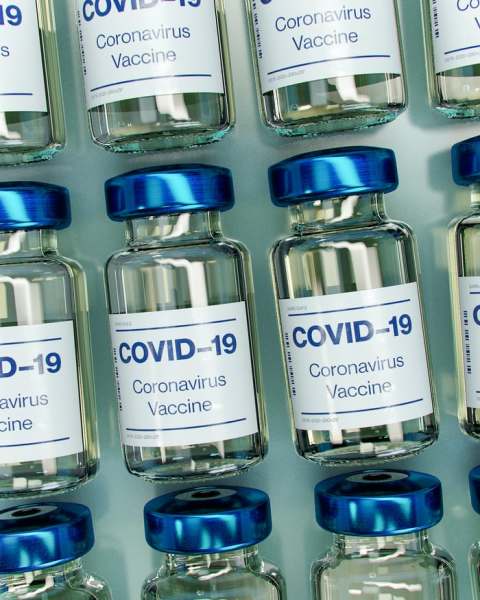
Kerala government had recently informed the Centre about the issues being faced by people who are travelling to foreign countries and later stated that they require certificates with passport numbers as many nations are only accepting the certificate of Oxford-AstraZeneca vaccine: Kerala government made a decision on Friday regarding those who need to travel abroad for some important purpose such as jobs, education etc. Kerala government decided to issue a covid 19 vaccination certificate with passports for such people. As per the order, person who took a jab of Covishield and wants to get travel clearance will be eligible for second dose after about four to six weeks.

Earlier the gap between the doses was about four to six weeks but later the government changed it. The central government increased the gap between two jabs and set it to twelve to sixteen weeks. The state government gave a statement related to it “A person who took Covishield jab and wants to get travel clearance will be eligible for second dose of Covishield after 4 to 6 weeks. Since currently Covid-19 portal does not permit to administer the second dose of Covishield within a period of less than 12 weeks, this is to be recorded separately by the districts,“.

The order declared the District Medical officer as an authorised person who would issue certificate of vaccination in a proper prescribed format. “Since the World Health Organisation (WHO) has already cleared Covishield vaccine, the same may be given as preference to people travelling abroad. Covishield vaccine will be provided from the vaccine procured by the State,” said the Kerala government. For ensuring that vaccines are being given to eligible person other documents could be used such as live visa, admission document for students, job confirmation letter/work permit for employees.

In a letter by the state government led by Pinarayi Vijayan to central government, they informed them about the situation Indians are facing while travelling abroad for education or job purposes. They stated that travelers are requiring proper certificate with their passport numbers as many nations are only accepting certificate by Oxford – AstraZeneca vaccine. And the Indian manufactured covishield vaccine is developed by Oxford University – AstraZeneca and is manufactured by Pune based – Serum Institute of India (SII) .

In the order, a statement was released by Kerala health department “All the issues were brought into the notice of Government of India to make provisions in CoWIN for permission to include passport details in CoWIN. It was also requested to give permission to the State Government to issue vaccination certificate with changes till provisions are made available in CoWIN. Further, it was requested to permit beneficiaries going abroad to take Covishield as per the previous schedule of 4–6 weeks and to make provisions in the CoWIN portal to document such vaccination given at 4 -6 weeks. However, no orders/letters are received from Government of India so far. In the above circumstances, Government has issued these directions.” Now the central government is expected to take any action on that.


HOW WELL ARE STUDENTS TAKING ONLINE EDUCATION?

The outbreak of the COVID-19 pandemic in 2020 brought many dramatic changes in our social as well as personal lives. Our routines are changed, our habits and majorly our system of education.

Source: Google

Though the work from home culture is in its second year, the schools and universities are still trying to adapt themselves to the online mode of education. The introduction to digital classes was first seen as a major setback for the aged teachers who are not gadget-friendly or prefers an interactive physical class as the sole place for good teaching.

Over the course of time, these teachers have become quite familiar with the online teachings, yet, that special gap that will always tend to loom and show the differences of physical classes over the virtual ones.

Yes, it is quite true and agreeable that digital classrooms pave the way for the education of the future when most of the world has turned online in every sphere. But, how truly does it help students, especially the pre-primary or the primary ones? They are the ones who are most dependent on the ‘touches’ of the teachers, or be in a classroom- their first step to the world beyond home, socializing with others.

Major drawbacks online education brings:

Not affordable for all families in India:

Money stands a major factor here, in India. It is not a hidden fact to us that India is home to people of different social strata and financial standing. A handful of people across the nation cannot afford schools for their children. The Hindu in 2019 reported that 30 out of 100 children complete their school. The reasons may vary but we can’t deny the reality. The monetary conditions of families can be counted as a major reason. Well, this is the calculation done before the pandemic happened. As we see many children cannot afford proper schooling, we can predict how tough would it be for them to do classes “online”.

Online education could not serve to educate a major part of India because the poor folks cannot afford a smartphone in many parts of the country- leave alone a laptop or personal computer.

Network Accessibility:

India is a country of diversities, even geographically. Thus some groups of the population tend to live in extremely remote places like forests, or foothills of the Himalayas, or deltas of the Sundarbans. Such remote villages lack basic amenities to survive like proper water supply or electricity. To make a phone call one has to travel miles. So, this leaves us with the question, how can the children attend online classes?

This makes us think, is education moving from a basic right to a privilege?

Less personal interaction:

The virtual classes, how much fun it seemed at the beginning, could not hide its one of the major drawback for long. The lack of personal touch makes us the students detached from the school/ university vibe.

Yes, we hated the monotony of attending regular classes, but can’t deny the fact the monotony, the disciplined life, the constant monitoring of our mentors helped us in our studies. Secondly, school/university isn’t only about what we learn from books, we met real people, made friends and learn to live. But, beginning a session with online classes has made this quite impossible, we are making friends, but a part of the puzzle is missing.

Practicals:

Some of the subjects of the curriculum cannot be done with the help of online classes. In schools, physics, chemistry, biology practicals, or when we move up to the higher education subjects which require the teaching of gadget handlings like cinematography, engineering, or medical field is quite difficult on the students’ part.

The strain on eyes:

Since childhood, we came across our parents warning us not to watch too much television or going close to it, as it would harm our eyes. So, 2020 brought us to the days where most of our time is being spent staring at our mobile or laptop screens, not just adults but nursery children as well. This extended screen-time is causing eye strains, headaches and sometimes migraines to many.


Though throughout our school and college lives, we used to brood, What if we can attend our classes staying at home and not miss the attendance( tbh after passing school, it’s the attendance we mostly care about). But now, the one year of being in a virtual class, a part of us do miss the hustle and bustle of college life. We crave being back in those classrooms, feel those benches, or plan mass bunking our classes. Yes, though being a necessity now, online classes seem to take away a major part of our student life.

Disrupt, Divide, and Develop

The Effects of Covid-19 on Education

The pervasive nature of the Covid-19 pandemic has created one of the largest disruptions of education in human history, countervailing all efforts to provide education for all children. It caused unprecedented changes and continues to change numerous aspects of education that we took for granted. In March 2020, schools around India began closing to avoid the spread of Covid-19. These sudden closures led to confusion and uncertainty amongst students, especially those who were appearing for their board exams. For other students, these abrupt closures brought about a perplexing break from school. These ostensibly temporary closures were made permanent once the nationwide lockdown was effectuated and students were separated from their schools.

According to data by UNICEF and UNESCO, more than 1 billion children were at risk of falling behind due to school closures during the pandemic. Schools for more than 168 million children globally have been completely closed for almost an entire year. Around 214 million children globally, which is equivalent to 1 in 7 children, have missed more than three-quarters of their in-person learning. Furthermore, more than 888 million children worldwide continue to face disruptions to their education due to full and partial school closures. 

In India, the closure of 1.5 million schools in 2020 impacted 247 million children enrolled in elementary and secondary schools. In early March 2021, only eight States and Union Territories had reopened classes 1 to 12; 11 had reopened classes 6-12 and 15 had reopened classes 9-12. However, the ongoing second wave has caused the complete closure of schools yet again, as well as either the cancellation or postponement of board exams, competitive exams, and entrance exams. 

We began a new academic year like never before – from our homes. To continue the process of education, schools were compelled to adapt, adopt, and evolve. The biggest change has been the abandonment of traditional notions of schooling and the shift to online learning and teaching. Teachers have had to adapt to teaching online, a complete shift for those who’ve had many years of traditional classroom teaching experience. The fun and exciting trip to school has been diminished to clicking a link to join our classes. Interactive classes have become eerily similar to videos on our laptop or phone screen with a tincture of interaction arising when teachers ask us whether we’re present. The extreme sport of completing notes just before the teacher calls out our names has become the tedious process of scanning our notes and sending them as a pdf. Eating with our friends in the school canteen has been replaced with us eating alone during classes. Our classmates have become little rectangles on our screens. Outdoor sports have disappeared from the list of extracurriculars that we did in school. The end of school or college life is marked by video calls instead of grand graduation ceremonies. A lot has changed. 

These changes have led to some pernicious problems. The blurring of lines between school and home has led to students feeling overworked. This holds true for teachers too as they answer questions, clear doubts, and create lesson plans at all hours of the day. Students often have to study and sleep in the same rooms now. According to scientific studies, this often leads to a decrease in productivity and concentration. Students, especially younger ones, are easily distracted during online classes, despite attempts to marshal concentration and focus, as a classroom atmosphere is non-existent. Teachers are unable to pick up cues such as body language and facial expressions, making it challenging to connect with and understand their students. Problems such as eye strain and headaches are more common now due to the drastic and unavoidable increase in screen time for students. Online classes are often disrupted by copious internet problems, power cuts, background noise, and vexing software problems. All forms of practical education have been eliminated. A lack of clarity on important events such as board exam and entrance exam dates has led to the upheaval of students’ plans that were formulated before the pandemic began, fueling a rise in students’ anxiety and uncertainty.  

Covid-19 has also been a catalyst to the widening of socio-economic gaps in society on numerous fronts. While the virus cossets no one, the fact that it has disproportionately affected students belonging to less affluent households, especially those in rural India, is indubitable. Undoubtedly, access to the internet and an appropriate device are the lifelines of online education. 

A UNICEF report from August 2020 highlighted that only 24% of Indian households have access to the internet. While television and radio were purported as an alternative, there is no substitute for an actual teacher. A more recent survey conducted by Learning Spiral in February 2021 revealed that more than 50% of Indian students in rural and urban areas don’t have access to the internet. Moreover, only 47% of the households that have access to the internet own a device that can access the internet. It also revealed that, while 27% of all Indian households have access to the internet, only 28% of those are in rural India, even though rural India comprises of nearly 71% of India’s households.

Families in rural India are plagued with other impediments to online education –  insufficient or no smartphones, having to borrow smartphones (and therefore may not get them at the time needed), not having enough money to buy an appropriate internet package, and patchy connectivity even if they have internet access. The severity of these problems is incalculable and more prevalent than in urban households.   

Assuming that the problems stop here would be specious. The closure of schools has obstructed the “Mid Day Meal Scheme”. India has about 120 million children enrolled in the scheme in over 1.26 million schools across the country. However, due to the disruptions caused by Covid-19, many States and Union Territories have been forced to stop this initiative, depriving children of their basic nutritional needs. This scheme also serves as a huge incentive for children to attend school. Therefore, its removal may negatively impact both their health and their education. Furthermore, incidents of domestic abuse and child labour have drastically increased as students can no longer be protected by going to school. 

The Covid-19 pandemic has been atrocious but there has been a silver lining. The pandemic has led to an “academic revolution” that, unfortunately worsened certain differences in our society, but has also alleviated certain differences. 

Even before Covid-19, there was high growth in and adoption of education technology. Projections have shown that the overall market for online education may be valued at $350 Billion by 2025. There has been a significant surge in the usage of language apps, virtual tutoring, video conferencing tools, online learning software, etc. This is not only providing alternative paths for education but it is also future-proofing education. Through programs such as Coursera and edX, students can attend classes that they normally wouldn’t have had access to. India is considered the largest marketplace for Massive Open Online Courses (MOOCs) after the USA.

In certain aspects, online learning has made school more inclusive and obviated numerous hindrances to education. The use of videos in class greatly benefits visual learners. The use of tools such as online polling and chats have improved the class participation of those who otherwise may have hesitated to speak up. Notes, videos, and other study material that are sent to students can be reviewed anytime so the pressure on students to complete their work “before the bell” has been reduced. Furthermore, differently-abled students who found it difficult to attend school in-person can now attend classes with their friends from their homes. 

As students are attending classes from their homes, commuting to school no longer blocks their schedules. This gives them more time for extracurriculars such as internships, online courses, and online competitions. It also allows them more time to do the things they enjoy such as singing, cooking, writing, and painting. Students are also honing their online collaborative skills and improving their digital literacy, this will immensely benefit them in the future as the entire world shifts online.    

Hopefully, the move to online learning creates a new, permanent, and more effective method of educating students. While this “new normal” has had certain benefits, we must remember the value of education for all and prudentially strive to shrink the divide caused by this unavoidable transition to online learning.     

India-US a major relation in the world today, says Jaishankar

External Affairs minister Jaishankar on his first visit to U.S. after Biden said the importance of India-US relation: On his first visit to the United States after the end of Trump administration and beginning of the Biden administration, External Affairs Minister S Jaishankar called the relationship of India and US as one of the most important relationships in the world.

On wednesday S Jaishankar told H R McMaster the former national security advisor (during administration of Trump) that “I think our relationship has come a long way. It is, today, one of the major relationships in the world,” during a webcast discussion.

“My own sense is that I Washington today there is a real appreciation of the potential of this relationship … and it’s true of New Delhi as well,” he said. He also added that the challenge today is for the other countries to  learn to work with each other more effectively in this multipolar world.

He further added that “I see a big change in the American mindset in that regard, The United States has not only an enormous ability to reinvent itself, it also has a great ability to assess its situation and re-strategize, in a way. And I do think today that when it comes to the big issues of our day …we have fundamental convergences. Convergences which are societal convergences, which are geopolitical . And I think the challenge before us is how to translate those convergences into actionable policies” .

In July Mr. S Jaishankar gave an statement saying that America need to go “beyond alliance” and should learn how to work in a multipolar world with plurilateral arrangements. But since Biden administration came into power after Trump administration, the country has again started to recommit itself to the multilateralism as a pillar of its foreign policy. During Trump administration major policies were based on the idea of America First.

S Jaishankar also said that “I think there needs to be that realization that this could easily happen to us. In many cases, it has happened to us and the right response, therefore is to help each other out and I am glad to say we’ve [ India] seen a tremendous outpouring of international support and solidarity at this time,”. Mr. Jaishankar emphasised on the changing world after epidemic. Jaishankar also said to world that when you have a big problem the only way out is global cooperation.

Mr. Jaishankar also shared his views on increasing strategic anatomy. He said “I think …the conversations are beginning to change towards more resilience …how do you de-risk the world,“. He also said that world is going to change a lot due to pandemic. He said “We can’t have a world which is part vaccinated and part neglected, because that world is not going to be safe. ‘How do we get through the global challenges in a global way?’ I think that’s the big question,“. He also said regarding the countries pursuing their national interest at the cost of everything else and he said that it is going to cause problems for everyone.


‘THE LIPSTICK EFFECT’


As Covid-19 streaked the globe in March, many businesses soared or plummeted as the pandemic wrought sudden sweeping change on the market environment. While some businesses like medical suppliers, drugs and chemists, small scale mask manufacturers, online education platforms, digital gadget markets soared high while many other businesses like restaurants, bars, hotels, malls etc were forced to shut down. Imposing lockdowns led to panic buying wherein consumers started buying essential goods like monthly groceries and hoarding them. Some switched to selective and cheaper buying. Unemployment soared and consumer spending fell causing major global economies to slide into recession.


This shift in consumption pattern created an altogether different trend where less costly consumer goods dominated purchases. The stock market reached its highest level with Nifty crossing 15000 mark and Sensex soaring as high as 35000. All this seems contradictory to what the situation validates.   


Economists accredit these gains to  ” The Lipstick effect “.


What is ‘The lipstick effect’


The lipstick effect is a theory in economics propounded in 2001 by ‘Leonard A Lauder’ chairman of a cosmetic company ‘Estee Lauder’. It states that at times of economic crisis or in periods of recession consumers demand shifts from costly and expensive luxury goods to less costly luxury goods. Consumers buy luxury goods even if there is crisis. During times of such economic distress consumers confidence in economy falls and their demand shifts to such goods that doesn’t affect their income much. In other markets besides the cosmetic industry For eg: instead of going on a tour to some country or buying expensive fur coat or jacket consumers prefer to go to cinemas, restaurants or simply buy less costly gadgets.

 
During the great depression American economy saw 25% increase in cosmetic sales, while in 2008 when economies were under recession cosmetic company L’Oreal saw 5.3% increase in sale of its products. In 2001 during 9/11 attacks when the US economy was under pressure Lauder saw a significant increase in sale of lipsticks in his company. He, thus appraised that there was a negative effect between economic condition and lipstick sales. This is how ‘The lipstick effect’ came into existence. However, all these examples majorly focus on lipstick but the word ‘lipstick’ is used in generalized sense and includes all other luxury goods that consumers purchase even at the time of crisis.
 

What the lipstick effect has to say in Indian context ?

 
Pandemic has impinged economy leading to tremendous fall in GDP, employment, Investment and most important of all consumer’s demand. The lockdown and the period afterwards saw a mixed bag of varied demand patterns. Broadly three different demand patterns were working simultaneously – normal demand, pent-up demand and inventory build-up. In August 2020 Boston consulting group reported that while there has been a rise in consumption of essential goods like health products, and home entertainment, positive sentiments ware also noticed around other essential items like personal care products, packaged foods and discretionary segment like apparel, cosmetics, consumer electronics. In September 2020, Shopper stops reported 33% increase in eye-makeup sales. In quarter two of 2020-21, Godrej consumers’ business saw 5% increase in its sales. Share prices of many such brand rose for eg: share price of Cinthol soap rose to 36% from 33% before the pandemic.
  

Is the lipstick effect glimmer of hope for the brands in the new normal ?

 
The lipstick effect offers an interesting insight that even during slump, trusted brands find a place in consumer’s wallet and are purchased as usual. However, this can be observed only in the case of less expensive goods and doesn’t apply to all the categories. Ceding many of their activities and expenditures including eating out due to growing fear consumers seem reluctant to spend at costly restaurants. Due to travelling restrictions their outing trips have reduced leading them to save more money for their future expenditure. Apart from saving for future, consumers have adapted themselves to this new normal and started spending on things like refurbishing their homes, decorating rooms with less costly luxury goods maybe a vase or pot that they always wanted to spend on, buying things for their new hobbies and all those small acts that cheer and give hope to them. A new car purchase might have been postponed, or a foreign tour has been cancelled but small pleasures every now and then have taken a toll over other spending.  by small acts that keep them happy just like purchasing a lipstick is.
 
As J.K Rowling has rightly said “Happiness can be found even in the darkest of times; if only one remembers to turn on the light”. Even after the fatality of the pandemic demand by consumers will still be exceptionally characterized by irrationality and altogether opposite behavior. But what brings light to the overall situation is how well these branded businesses grab this opportunity and contribute their parts in comforting this economic crisis. Advertising can rekindle this hope. Using creative themes like togetherness, warmth, joy can help. Be kind, hopeful, positive and get the consumer to see more of your brand as a friend, supporter and a well-wisher.  


Signing off
Janhavi Thakre


The very familiar but not known to many: Chinavirus

The former US president Donald trump may be wrong about many things, however calling covid-19 as the “chinavirus” was not one of them. This pandemic has shattered the world, nearly 34.7 lakh people have already lost their lives, but the pandemic is relentless and unforgiving, with no intention of stopping the virus is spreading rapidly, hitting multiple times, causing waves of cases and deaths, rendering people jobless, hungry, suicidal, and in depression. Wherever it goes it stays and brings mass destruction along with it. Its goal? Global domination for a long time. With all these fearful idiosyncrasies of the virus, one must wonder who created it. Can a disease of this magnitude occur naturally? If so, then why didn’t the world face this pandemic a long time back? Is this the wrath of god or the doing of the devil?

The answer to this has been discovered. This is the doing of man. The “China virus” originated in a laboratory and the variants belong to it. A type of biological warfare, but done in the most perverse of ways, the sufferers being the entire world. This statement has been supported by a number of investigators and scientists, in much detail. China knew that the virus (which was not just SARS but a more deadly modification of it) had escaped from the lab and so, it closed down Wuhan to itself, but not the travel of international flights from Wuhan which carried suspected infected individuals. It has long tried to hide the fact that the virus was its own doing, and blamed it on bats and wet markets, which still continue to function as of today. When the rest of the world suffered, china profited from the helplessness of other countries and was healthy, back on its feet again. The unsettling part of china’s wet market claims is that if its so clear that the virus has originated from them, then why not let scientist of other countries investigate it at the proper time? Was china busy clearing up evidence from its labs? The WHO that supported China’s claims, itself seemed not to have been able to enter for a year.

There have been deflects from the chinavirus to the UK, South African and the Indian variants. These deflects and the continuous focus on the devastation the virus has been causing, has caused the point of origin of the virus seem of less concern. However, china is liable to give a reasonable explanation and pay for what it has done. These variants will naturally originate because of mutations caused due to the varying climatic conditions of different countries; however, the original virus was from china. This large-scale destruction cannot be caused by any random naturally occurring microorganism, but a specifically engineered bioweapon. However, what is atrocious is the fact that apart from the Indian and Australian media, not many are speaking up against china. It is because either they are too uplifted for China or afraid to cry out against China due to their diplomacy. Had it not been a superpower, everyone would have talked against it.

As more evidence surface each day against china (causing the “mysterious” deaths of many Chinese scientist who are speaking up) it will have to face lawsuits from all over the world. China does not recognise any international court of law; however, this will be of little importance as China has businesses and assets all across the world and if any court has sufficient evidence in any case, they will simply have to bind China’s assets in the country where prosecutions have won against China. There is a great deal of avarice on Wall Street and companies who are still willing to operate in China, but if China is sanctioned for its total lack of respect for the rule of law and for its criminal responsibility to deliberately infect the world while closing Wuhan to its own towns domestically, the international powers are going through a criminal case in China.

China should have at the proper time alerted the world about the virus, closed down international fights and not denied the fact that the virus is transmitted through persons. Rather it is trying to profit from vaccines, closing down oxygen supply to Indians who are suffering with the chinavirus, and blaming other countries on the pretext of variants. China should be shunned; it should pay for the losses of lives in developing countries and supply medical help rather than take objection on covid-19 being called the china or Wuhan virus. If we don’t stop it now, we only encourage it to do another “accidental” attack on the world.

LOCKDOWN WIDENS THE VOID BETWIXT QUEER COMMUNITY AND SOCIETY

The past year was indeed a difficult time for the world owing to the COVID 19 pandemic and the lockdown imposed following it. Though the entire population got affected by this adverse conditions, there were certain minor communities and groups like the transgender community which had the bitter taste of it. There were active discussions and discourses on the impact of the lockdown on women facing domestic abuse, but the atrocities and adversities faced by the LGBTQ communities were the least spoken about. Being the have-nots of normal society, the life of the queer community in a pandemic affected locked down scenario was found to be the worst. 

The basic social liberties were always denied to the queer accounting to their physical and psychological divergence and aberant sexual orientation. They were neither included in the mainstream by the government nor had any access to public health care, education, steady job opportunities etc which along with the lack of support from their families resulted in the financial subsiding of the community. In many cases, staying home also became a potential danger to many, where they fell prey to violence from their family members or partner.

For a section whose normal daily life in itself is a hurdle, life in lockdown was nothing but catastrophic. While the majority of us worried about being confined into the comforts of our home during lock down, these destitutes were perturbed over losing the shade over their head. The Indian Hijra community who depended on the streets for their livelihood got literally ‘locked’ inside their residences with no basic supplies or access to money. As they were disdained from the ordinary jobs, street dancing, prostitution and begging were their only source of income and these ‘jobs’ required immense social interaction which was impossible during lockdown. The void between the society and queer community got widened with the imposition of lockdown and the already outlying community was pushed off to further disdain. The society along with the government should consider them at least as humans if not as citizens and take necessary measures for eradicating the stigma regarding the marginalized communities by making them a part of relief programs. 

HEALTH MINISTRY WAVES GREEN FLAG TO COVID 19 VACCINES IN INDIA

It’s been almost a year since the first case of COVID 19 was reported in the country. Around one crore people have effectively recovered from the pandemic while almost one and a half lakh lost their lives to it. The government has taken diverse measures to bring the pandemic under control but the high contagiousness of the virus made it hard for them to repress its spread. Countries and organizations around the globe were actively engaged in developing COVID 19 vaccines since its inception in China. Russia was the first country to successfully conduct the trials and roll out the vaccine for its public.

India on its way to mass vaccinating the country has approved two different vaccines; COVISHILED, a variant of AZD1222 vaccine developed by Oxford University and AstraZeneca manufactured by Serum Institute of India and  COVAXIN, manufactured by Hyderabad-based Bharat Biotech in collaboration with the Indian Council of Medical Research (ICMR), making them India’s first vaccines against the pandemic. Drug Control General of India (DCGI) VG Somani has granted permission for the restricted use of the vaccines and has confirmed the effectiveness of the vaccines on their trial runs. He said that “We’ll never approve anything if there is slightest of safety concern. The vaccines are 110 per cent safe” and also added that the COVISHIELD was found to have an efficiency rate of 70.42 per cent.  The Subject Expert Committee (SEC)  has reviewed Bharat Biotech’s data on “safety and immunogenicity” and gave permission for “restricted use in an emergency situation in the public interest” and has also recommended an accelerated approval of the request to Bharat Biotech International for phase-III trials of COVAXIN. The approval was given after India conducted a dry run across its states and union territories on Saturday as part of rehearsing the massive vaccination drive.

The Government is planning to vaccinate one crore healthcare workers belonging to both the private and public service sector as the initial step of the vaccination process. A digital platform named CoWIN has been introduced by the government, which will serve as a centralised system to record all details about the people to be vaccinated and helps in scaling and processing the vaccination drive. The second round of the vaccination drive will see the frontline and municipal workers of state and central service departments getting vaccinated. Using the latest electoral roll for Lok Sabha and Legislative assembly elections, people above 50 years of age will be identified and will form the third round of vaccination drive. People belonging to the geographical areas where the COVID infection is highly prevalent and people from high populated areas will also be vaccinated. The introduction of the COVID vaccines will be an added armour in India’s fight against the pandemic and the first step in bringing the country and its people back to normal life.

LIFE AFTER COVID: THE NEW NORMAL

The government of Kerala has decided to reopen schools, colleges and movie theatres in the state starting from the first week of January 2021 as the final phase of unlocking process of the lockdown imposed due to the COVID 19 pandemic. Schools and colleges were among those institutions which were closed down earlier in March 2020 even before the lockdown was declared and movie theatres were closed down when the Prime Minister affirmed a nationwide lockdown on 24th March 2020.

The reopening of schools on 1st of January strictly adhering to the COVID 19 protocols is the initial step towards unlocking in the education sector. With limited hours of functioning, the classes for 10th and 12th standard would begin with a restricted number of students. Only 50 per cent of students will be allowed at a time and in schools having more than 300 students, the number will be reduced to 25 per cent as per directions from the General Education Department. The school management is supposed to ensure safety by providing masks, sanitisers, soap, digital thermometer etc in the institutions. Social distancing has to be maintained and if necessary, the classes will be conducted in shifts. Each school should constitute a COVID-19 cell, chaired by the principal or headmaster. The cell should meet once a week to review the situation.

The colleges will be reopened for final year graduates, postgraduates and research scholars with a limited number of students similar to schools. Students, teachers and other staff with COVID-19 symptoms and those in quarantine should complete the days stipulated by the Health Department. The premises of the institution, furniture, stationery, staff room, water tank, kitchen, canteen, laboratory, library, and toilets should be disinfected before reopening. Each student is ensured to have five class hours in college as the government is putting efforts to compensate for the time lost owing to the pandemic. Online classes will be continued for the rest of the students.

Chief Minister Pinarayi Vijayan has announced that the movie theatres can function from the 5th of January 2021 which was shut down for almost a year though film shootings have resumed in the state by June 2020. All COVID 19 restrictions issued by the health department have to be followed with a 50 per cent occupancy of seats. Stringent measures will be taken against the theatres violating the prescribed protocols. Fifty per cent occupancy, staggered show timings, social distancing, thermal screening, adequate protection gear for the staff, and compulsorily providing phone numbers for “contact tracing” were some of the changes that were called for.

Even though we’ve entered into the final phase of unlocking, the government is directing adequate safety measures to prevent another wave of the pandemic. The tourism, entertainment, sports and education sectors have started their path back to normal. With the COVID 19 vaccine expected to be made available in the next two weeks, the government is expecting things to get normal in the coming months.

Experience of a 2020 Graduate

Every year when we passed a class, be it Kindergarten, 4th grade or 10th grade, we feel like we’ve grown and moved onto bigger things in life. Our teachers always made us feel like a wiser, more responsible person every time we moved up a class. When we graduated from school, a deep sorrow along with excitement for experiencing college life filled us. Passing the 12th grade is the ultimate goodbye from our friends and family, our teachers, the school we’ve been in for years, and the city we grew up in. Never did our previous years’ graduates were stuck in a limbo, out of school but not in a college. A long gap with nothing to do in it, no motivation and no goal. 

Every day of 11th and 12th, we heard our teachers and parents tell us the importance of the stream we choose and the things we learn in the duration of these two years. The final year of school, 12th grade is the most important year of the entire school life in terms of both academics and fun. 

From the very first day of 12th, we are told to study hard as it will play a great role in determining the college we get into and the career we choose. Even though it is the last year of school life, our focus remains more on our marks, completion of our syllabus, multiple coaching or tuition classes, and comparing our score to others. We forget to spend some of our time doing what we’ll actually miss and remember, hanging out with friends, extracurricular activities, going to the canteen, roaming around in the school, and so much more. 

The 2020 graduates have had the worst farewell or introduction into college. Some of us couldn’t even give the exams we had prepared for with all our might. When we were done with our exams, there was a long waiting period. All of the plans, going on a trip, having the time of our lives, were unsuccessful as we couldn’t even leave our houses. 

Having spent the last seven months in isolation, with uncertainty about our future, has really affected our mental health. Those who have taken admission into colleges have to adapt themselves to online college life with many hours spent in front of their laptops. Those who have not yet taken admission are also under a lot of stress as they are wasting away the important time of their life.

Competitive exams such as NEET (National Eligibility Cum Entrance Test), JEE (Joint Entrance Examination), CLAT (Common Law Admission Test), et cetera were postponed which severely stressed out the ones who had been preparing for these exams for the past two years. 

The results were delayed and the admission processes in some colleges have still not begun which is making the graduates anxious. This is in stark contrast to all the previous years’ experience which was full of joy and excitement, not stress and anxiety. 

Hopefully, everything will be back to as it was before!

Impact of COVID on personal life.


“Kya se kya hogyaaa” if you are an Indian, you must have use this sentence to explain this lockdown. Still, we are not able to collect that when and how it happened. More than 7 months in home, after staying away for this many days huh!! Wasn’t a dream for all of us and also was a real challenge, isn’t it?

This blog is for those who were out from there home town and had to return back. Actually, I guess many of us has returned, but, those who didn’t are lucky and also not so lucky.  Like everything has pros and cons of it and both has to be faced by every individual in respect of there action.

Let me first clear that we are not going to discuss about the business world and COVID impact on it because when we say business we mean surviving through ups and downs with tactics and making profit. But, the great impact of it was felt in every individuals life and I’m sure that something has changed in every one of us. So, I’m gonna talk about that according to my experience and level of thinking. You are free to judge here.

So, Dec 2019 has started and everyone was excited for the coming year. We can say that 2019 was little rough for all of us till that time when we were hoping for 2020. We heard about the COVID that time but we were not soo serious about it because we all have thought about it as some kind of regular flue which will be gone in few days.
But, as we entered 2020 we came to know that it is not going to end soon. And them march 2020 came when govt announced total lockdown in country.

Some of us still didn’t BELIVED that this was really happing, but soon we all. And then second news we got about work from home.
Hush! What a relief that was. Now, work and family was together. For some days it was like best thing to do but after that it became a trouble. As, staying at hom for work.e and still not able to have a good time really makes you uncomfortable, isn’t it?. We all must have started felling left out from certain things, while there were many things which again started to build up. People started working on their bonds and relationship stuffs  with there loved ones. but, it also make them distracted from there work. And at last they all understood that office was best because that place had full concentration for work.

Now, let’s see the bachelor side of view. How lockdown or COVID put an impact on them?. I guess, pretty well because they are adjustable. They got some break from everything. Yeah! Even though they didn’t have such hard job to do but still for a class 1 student it’s class 1st syllabus what is hard for them. And they also weren’t getting paid. What really didn’t worked for them is not meeting there friends daily and staying in house. These bachelors have hot blood so they can’t just sit at one place for long time. And second thing was now they were under restrictions. Those who were not living with there parents from many years will be getting that being with them after so many days for these many days was a kind of trouble, right?. Like we weren’t far from them but living 24hr with them after many days needs some kind of adjustment and understanding after living alone with all the pockets money. But, at last we all came out of it and I’m pretty sure now it will be difficult to live alone again, na!.

Overall we can say that this COVID was a drastic things but it also did some good things which can’t be ignored.

So, leaving you all here with a question, How you felt this COVID impacted on personal life? Tell us below in comment section about your answer.

See yaa..

Vaccination and COVID-19

How long has it been since we went to school met our friends or had a family dinner at some restaurant? Since March 2020, we have all been advised to stay home and sanitise ourselves in order to stay safe. Sanitizers and masks have been added to our daily use products, all because of one tiny yet dangerous virus Covid-19!

The world is now waiting anxiously for a vaccine against this dreaded virus. Researchers around the world are working round the clock to develop vaccines to combat the pandemic. Currently, more than 165 vaccines against the corona virus are under process and 27 vaccines are undergoing human trials. Vaccines typically require years of research and testing before reaching the clinic. Today, scientists all over the world are racing to produce a safe and effective vaccine by next year.

When did the efforts start

Efforts to make a successful Covid-19 vaccine began in January 2020 with the deciphering of the SARS-CoV -2 genome. The first vaccine safety trials in humans started in March but the road ahead remains uncertain. Some trials will fail and others may end without a clear result. But a few may succeed in stimulating the immune system to produce effective antibodies against the virus.

• India and vaccine against Covid-19

Like many other countries, India too is immersed in the efforts to develop successful vaccines to counter Covid-19. Thirty different Indian companies are trying to produce a vaccine to fight the infection. 7 out of these have received approval from the World Health Organization. These vaccines are in different stages of testing and clinical trials now.

COVAXIN

COVAXIN is developed by Hyderabad based Bharat Biotech International Limited in collaboration with ICMR and NIV, Pune. This is the first vaccine from India to get regulatory approval. The vaccine makes us an inactive version of a virus to spike up production of antibodies in the host body. It recently initiated Phase I and Phase II of clinical testing.

ZyCoV-D

ZyCoV-D is being developed by Zydus Cadila based in Ahmedabad. The Phase I trials of the vaccine have already begun. Extensive research was done regarding the same in collaboration with medical labs in Europe and US.

• Russia and vaccine against Covid-19

Russia is one of the countries worst affected by Covid-19. The country has been pushing extensively for a Covid-19 vaccine for quite some time now; Russia too is a part of the race to produce the world’s first Covid vaccine. It is possible that Russia would be ready with its first domestic corona virus vaccine soon. The clinical trials were conducted by the Gamaleya National Research centre of Epidemiology and microbiology. There seem to be no reports of side effects on the volunteers. All the participants showed immunity and the country is planning for the serial production of the vaccine by September. By the beginning of next year, Russia hopes to manufacture several million doses of corona virus vaccines per month.

• Oxford University’s efforts to develop a vaccine

The university of Oxford has partnered with AstraZeneca, a British-Swedish pharmaceutical company to develop an adenovirus vector vaccine to combat Covid-19. The vaccine prototype is currently in Phase III of testing. Trials of the vaccine developed by Oxford University show it can trigger an immune response. The vaccine which has so far been found to be safe and effective is expected to be made available for the masses by the end of 2020. This vaccine would also be the first such vaccine to have a large scale testing in India. The observatory data for this vaccine is expected to be available by November this year. The company has tied up with Pune based serum institute of India to mass produce the vaccine once the company gets required approvals and licensing from medical boards.

• Some methods used to make vaccines for Covid-19

Different scientists across the world try different techniques and formulas to develop vaccines. The Oxford researchers have put small sections of the corona virus genetic code into a harmless virus that infects chimpanzees. They appear to have developed a safe virus that looks enough like the corona virus to produce an immune system. Some other scientists have used pieces of raw genetic code, either DNA or RNA. When these are injected into the body it would start producing bits of viral proteins which the immune system can learn to fight. There is also work on corona virus vaccines called ‘plug and play’ vaccines. This method is new and less tested.

Thank you for reading. Have a nice day!🌼

85% of the parents of this state are in favor of the school opening from September, the education department told the plan.

The biggest question among the Corona virus epidemic is about the opening of schools and colleges. Some people are in favor of opening the school and many are against it. Meanwhile, a survey has revealed shocking results. The survey has been conducted by the Education Department of the state Haryana adjacent to Delhi.

In this survey of Haryana Education Department, it has been found that about 85% of the students of class 10th and 12th in the state are in favor of opening school from September 2020. Despite the dangers of the Corona epidemic, these parents are ready to send their children to school.

The survey was conducted online by the state school education department. In this, parents of a total of 76,019 students of class 10th and 12th of various government schools of the state attended. It included a few schools from all the 22 districts of the state.

What questions were asked from parents
These four questions were asked by the education department to all parents –

  • Should schools be opened by September 2020?
  • Are parents ready to send their children to school from September 2020?
  • Have any of your family members conducted the Kovid test?
  • Have any of your family members been found to be Kovid positive? … so how will the schools be opened now.

An Education Department official said that ‘most of the students of 10th-12th students are in favor of opening of schools. Therefore, the department has decided to run trial run by opening two schools in different districts first. Government Senior Secondary School in Karnal and Government High School in Sonepat will be opened for four days. Dates will be revealed soon. ‘ In these four days, every movement of the school will be recorded on cameras. How students come to school, how they enter, how classes attend, or not touch each other, how they get out of school .. All these things will be recorded. Classes will be held in small groups instead of classrooms. After the trial, a team of seven members of the education department, including health and hygiene experts, will watch these video recordings to see if all the rules are being followed. If there is a shortage, teachers will be asked to remove it the very next day. These recordings will be shown to every teacher before school opens. The education department is preparing to open schools for class 10th and 12th from September 21.

Students have to submit written consent of their parents for this. An official of the Directorate of School Education has told that the ‘School Management Committee will conduct a survey from the parents of all the students from class 9th to 12th. If 60 percent or more of the parents are in favor of opening the school, it will be recorded in the school register. However, all these things are still in the planning stage.

Impact of COVID-19 on the Education Sector


The lockdown following the global outbreak of the novel Coronavirus has led to drastic changes in the education sector. The country-wide shutdown of schools, colleges and other educational institutions leaves the sector with no choice other than commencing e-learning for the continuation of studies. E-learning means learning over the internet. Different forums such as Zoom, Google Meet, Microsoft Team, et cetera are being used to conduct classes for all school and college-going students. In a country like India, which has such high poverty rates, this new system of e-learning seems quite elitist. For attending these classes, all teachers and students must have a smartphone, a proper internet connection as the classes go on for hours and a suitable place where they can teach and learn without disturbances. However, all of this seems difficult if not impossible for students of poor families, residents of remote areas, and those who have crowded homes. Neither students nor teachers were prepared to face such issues, thus, due to the lack of preparation and proper infrastructure, the education sector has become inefficient. 

With the onset of the unexpected global pandemic and subsequent switch to e-learning, teachers had to face many problems. They were expected to learn and adapt to new technology and use it effectively to teach. Doing household chores along with teaching online proved tough for many teachers. Everything they did in school while being face-to-face with students, from taking attendance to conducting exams, they now have to do it digitally. They are also facing harassment in their online classrooms as students feel free to abuse them by sending inappropriate texts and disrupting the class in many other ways while hiding behind their computers. Teachers of the elementary section have problems in teaching, engaging and disciplining the young kids. In these tough times, their income has either been reduced or delayed while their work has only increased. All these factors clubbed together have negatively affected the mental health of teachers. 

Students are missing precious classes which will affect their curriculum in the long run. E-learning cannot replace the traditional way of schooling. Many students do not have their own smartphones or laptops so that they can join online classes on a daily basis as well as a proper internet connection. Those who do, face other problems such as lack of motivation to study, inability to properly engage in the classroom, feeling uncertain about the future and many more. They feel isolated as their routine of attending school regularly has been disrupted and they have been unable to meet their friends for a long time. With the blade of all these pressures hanging on their necks, students are battling many mental health problems. 

Due to all the issues of e-learning, the quality of education is worsening. The sudden changes are more than what the education sector can cope with at such times. It would be highly irresponsible and life-threatening to open educational institutions amid the coronavirus outbreak. Thus, all we can do is try to help the people around us and hope that the world successfully finds a cure for COVID-19 at the earliest. 

Women participation in equity markets grows during Covid-19 pandemic

Women participation in equity markets has surged during the pandemic and experts believe the growing need to share household expenses with rampant pay cuts and lay-offs has brought them to trading.Additionally,women are looking for alternatives to the decreasing bank’s fixed deposit (FD) rates, they added.Interestingly, most of such women are first time investors and a large number of them are housewives.”As retail participation has grown during the lockdown, this has been true for women as well. In line with the overall investors population, women are looking for alternatives to decreasing FD rates,” said Shankar Vailaya – Director, Sharekhan by BNP Paribas.”Lockdown has just been an accelerator allowing women to deepen their capital market knowledge via digital solutions,”Vailaya added.Online brokerage house Upstox said it has witnessed a growth of 32 per cent in account opening by women from April to June 2020, compared to the preceding three months.Of these, 70 percent of women are first time investors. Additionally, more than 35 per cent of the brokerage house’s women customers are housewives.According to Upstox, around 74 per cent of female customers are from Tier 2 and Tier 3 cities like Visakhapatnam, Jaipur, Surat, Ranga Reddy, Nagpur, Nashik, Guntur, among others.Out of the overall number of active female customers, 55 per cent are traders, whereas 45 per cent are investors (those that invest in equity delivery).It has seen a jump in active female customers by 53 per cent from April to June 2020, as compared to preceding three months. Nikhil Kamath, who co-founded Zerodha and True Beacon, said they have added 11 lakh clients since March 1, 2020. Of these, women clients are 1.8 lakh. He further said the average age of such women is 33 years.Tejas Khoday, co-founder and CEO, of FYERS, said in the last four months the stock broking fintech startup acquired over 20,000 new customers, of which 10 per cent were women traders.But, the overall traffic online includes 15 20 per cent women traders. Moreover, they are more inclined to invest than trade.In terms of expectations, Khoday said women want high profits in a very short period of time without too many entry/exits. But this could also be because most of them are first-time investors.