The Fascination of Blue

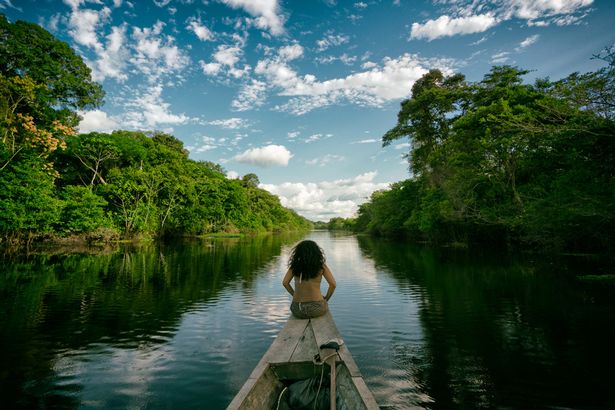
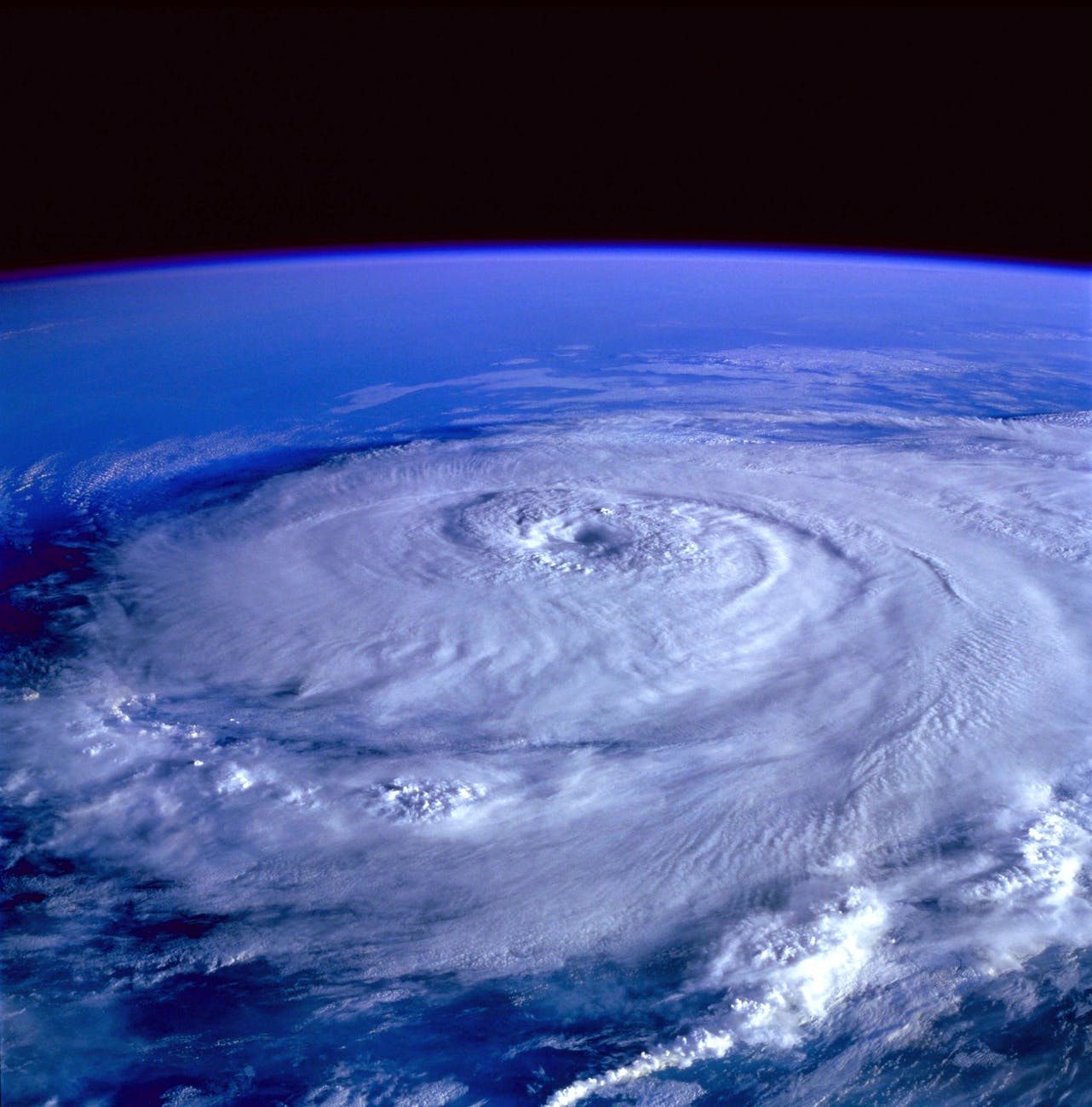
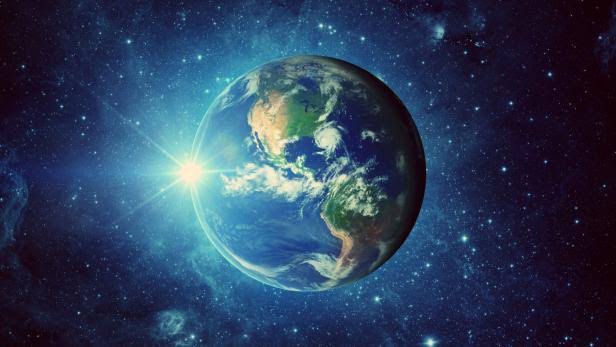
Photo by Pixabay on Pexels.com

The fascination is something that comes in handy when you indeed are gifted with the weird yet beautiful planet of the solar system. Yes, earth, though this earth has many things to provide us and above all give us our life, a place to call home and a guardian to protect us too it also has many secrets, some of them we can find but some are way deep than our reach and all this is what makes it more fascinating and mysterious in its way.

So, today this article will provide you more facts and data to help the level of fascination to be more than just a child’s dream of a candy house.

Rolling It Up

  • Round- Round way flat- Though we have always learned from childhood that our home is round but what if I tell you it’s flat around the equator and the melting of ice is also helping in the broadening of its waistline. Earth rotation, many other forces, and motion are responsible for changing the earth’s shape, it still will be able to hold this not-so-round sphere shape for a long time.
  • The Purple and long DayDo you know that many scientists believe that our earth once was purple in color because at that time as a molecule Retinol was used as the way to absorb green light instead of chlorophyll. Our day use to be 6 hours long but as our moon keeps slowing down the rotation of the earth today we have 24hrs long days and it will keep on increasing after every century.
  • Magic is in Air: Every one of us believes in the magic of something or anything but what if I say that it’s actually true that magic is in the air and every day the dust or cosmic dust as we call them is falling on the earth surface around 60 tons every day. Our earth is not just having cosmic dust but also there is no record of having the information about who gave it the name Earth as every else planet is named after Greek god just not the earth.
  • The big Appetite: Our earth is close enough to the sun, though having many benefits over the doom but we still have some pressing issue of the big, old and angry star our Sun. As every old star gets old, exhausts its hydrogen and collapses into gravity, and then consumes everything around him to create a void-filled hole, a black hole. So do can happen with our sun and taking all of us in the process but we don’t need to worry it’s still a long way down.
  • The apple that fell: As the apple fell so do the gravity gets its virtue but even though we know there is everywhere gravity and not just our solar system but each and everything is under the direct effect of gravity which is keeping everything in its static position, but then also some of the places or point of the gravity bed is so high and so low that they make a noticeable difference. This variation is known as Gravity Anomili.
Why is Earth the only planet with life?

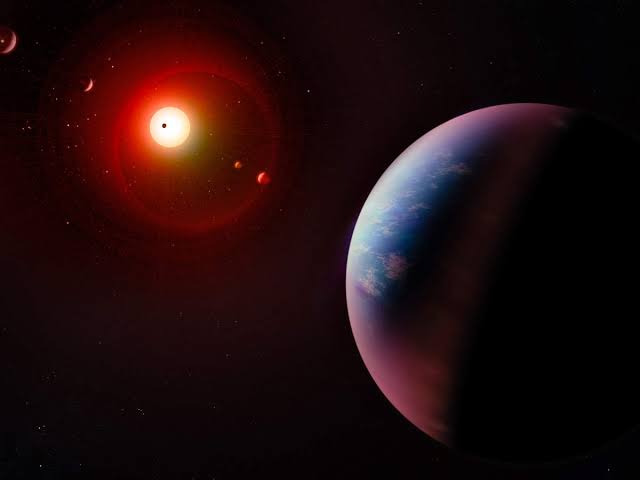
Not so fast,Earthling ! Outer space is a big place, and one thing scientists have learnt from studying life on Earth is that organisms can thrive in all sorts of harsh environments. Meanwhile, astronomers have discovered nearly 4,000 Earth like planets beyond our solar system and are spotting more everyday. Some of these ” exoplanets ” orbit their stars in the “Goldilocks zone”, a distance that neither too hot nor too cold to support liquid water and possibly alien life. Who knows? Maybe an alien kid somewhere up there is wondering if you exist.
Why does Mars have a face on it?

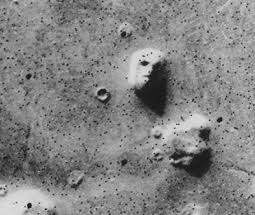
When the Viking I aur picture pictures of Mars in 1976, one photo became a hit for its apparent portrayal of a mountainous Martian face resembling An Egyptian Pharaoh. Eager to set the record straight on this crowd- pleasing Mars anomaly, NASA used a satellite to re photograph the region in 1998 and 2001. The high resolution images revealed a natural geological feature rather than a monument to Martiankind.

How many exoplanets might support life?

After analysing the known exoplanets and comparing that data with what they know about the Milky Way, astronomers at Cornell University predict that as many as 100 million worlds in our galaxy could support complex life.

So why we haven’t met aliens yet?

Because space is big. The galaxy might be teeming with life, but the gulfs between stars make visiting our neighbours an impossible mission – at least for now. Remember, it would take thousands of years to travel to the closest star outside our solar system using modern spaceship technology.

What about the possibility of life closer to home?

Where? Like in London? Ah, you mean in our solar system! Mars was once considered a top candidate for alien life,but so far we haven’t found any Martians. ( Anything that lived on the red planet is most likely long dead). Astronomers seeking signs of life are now turning their attention to the solar system’s moons instead of its planets.

Why did people once think Martians lived on Mars?

Astronomers peering at mass in the 17th,18th, and 19th centuries saw signs of life everywhere. Seas ! Continents ! Canals that carried water to Martian farms ! But modern telescopes, probes, and NASA landers ruined the fun by revealing our planetary neighbor’s dry details:It’s just a lifeless ball of red rock. Early astronomers had confused Mars’s ancient seas and riverbeds for signs of civilisation.

Which of the solar system’s moons might have life?

The Frozen surface of jupiter’s moon Europa hides a liquid Ocean that might contain alien creatures. Enceladus, one of Saturn’s many moons, has a sea the size of Lake Superior under its icy surface. And Titan, Saturn’s largest moon, has vast lakes of liquid methane. If life existed here, it would be truly alien.

How are astronomers searching for alien life?

  • BY DIGGING: Robotic rovers are sampling Martian soils for science of ancient life.
  • BY VISITING: Probes are being dispatched to spots across the solar system that might harbor life today.
  • BY LOOKING: NASA’S Earth- and space -based telescopes have been scanning galaxy for earth like exoplanets outside our solar system capable of supporting life.
  • BY LISTENING: In 1960, scientists began scanning the universe with special telescope for radio signals from alien civilizations. The project is called SETI, for the Search for Extraterrestrial Intelligence. It hasn’t picked up any alien broadcast yet, but we haven’t stopped listening.

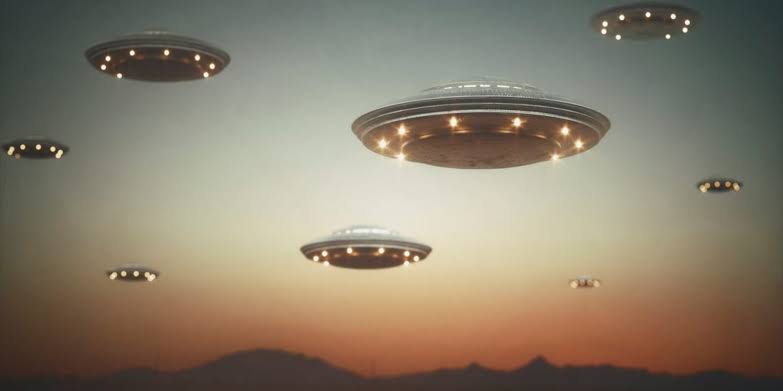
Why is the U.S government hiding evidence of alien life?

Ah, you must be thinking of the “Rosewell incident”, in which an unidentified craft crashed near the small town of Roswell, New Mexico, U.S.A., in 1947. Conspiracy theorist claim the craft was a flying saucer and that the U.S military whisked away the wreckage along with the bodies of its alien pilots. The U.S government released a report on Rosewell in the mid -1990s claiming the debris was actually a crashed balloon in its top-secret “Project Mogul,” which used high-altitude sensors to monitor for enemy nuclear-missile tests. “Likely story,” claim the conspiracy theorists.

References :

WHY? – Answers to everything, Image publications.

Six unfigured places on Earth

Most of us always wanted to explore the Outer-space to discover various unique planets or Aliens, but have we ever wondered that our planet Earth holds many unexplainable secrets that even scientists couldn’t able to explain. There are many Mysterious places on our planet which we have to still figure out, and those places are:- 

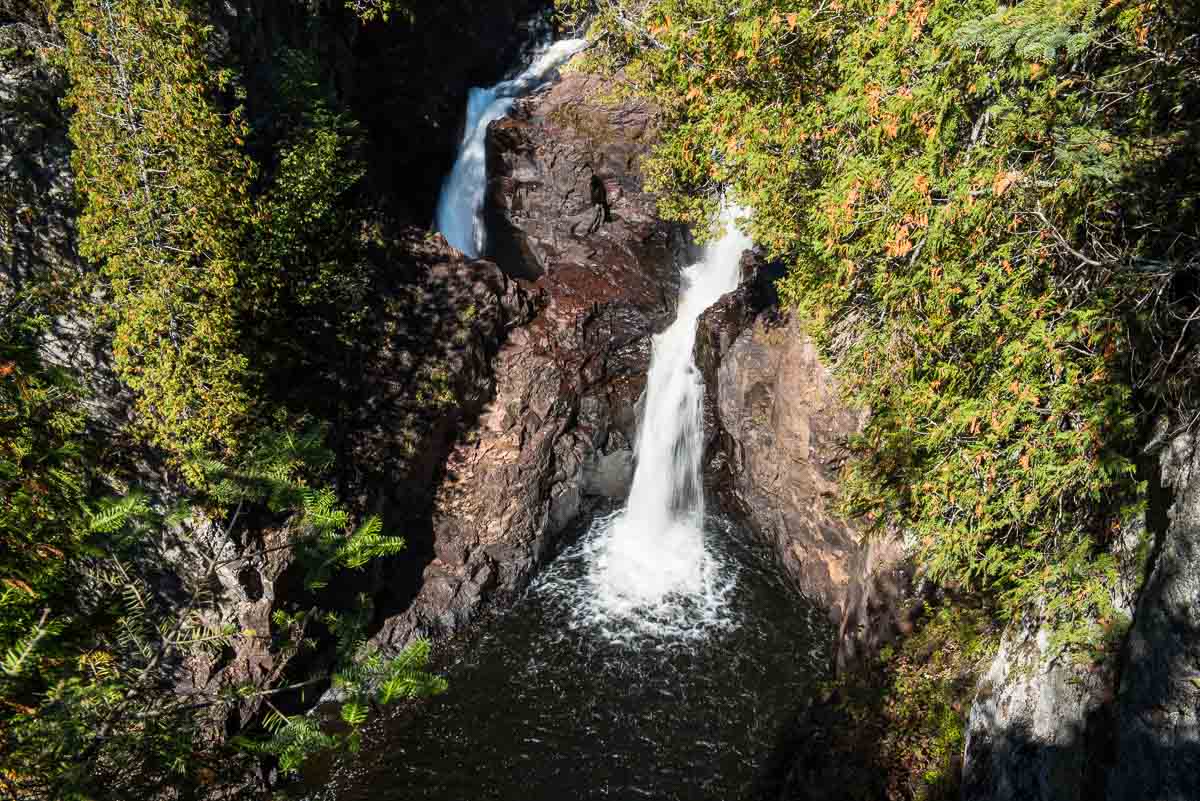
Devil’s Kettle Falls

Photo Credit : MN Trips

There is a place in the United States of America called by the name Minnesota which is known for this mysterious waterfall which is known as Devil’s Kettle Falls. This Waterfall has been puzzling the scientist, geologists and Hikers for many decades because as it looks like an average waterfall that drops about 800 feet of water but the interesting part about this waterfall has two different bodies of falling water. One side of the body of waterfalls on Lake Superior and the other one falls straight into a huge natural hole in the ground, where this water lead is still a mystery. Many researchers or curious people who visited this place has poured many items like dye, sticks, ping pong balls and even logs into the kettle but one of them found any trace of a thing in the water or the nearby area. 

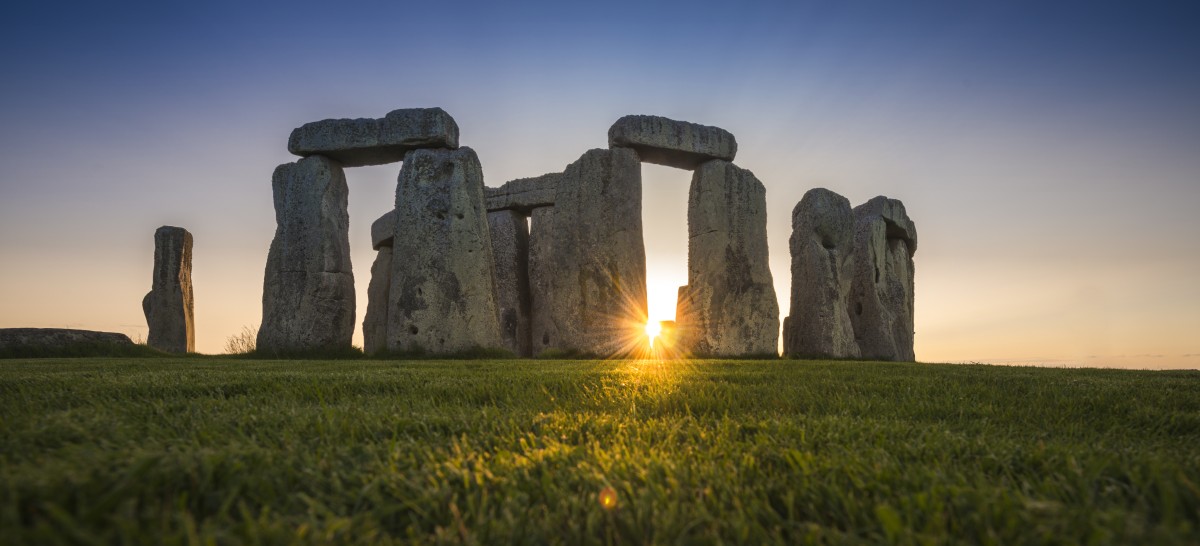
Stonehenge 

Photo Credit : Olympus Europa

It is a unique prehistoric monument on Salisbury Plain located in Wiltshire, England, two miles (3 km) away from the west of Amesbury. It is considered to be one of the architecturally sophisticated and only surviving lintel led stone circles in the world. According to the Encyclopedia Britannica, Stonehenge was constructed in six stages between 3000 and 1520 BCE. Nowadays we have machines that can help us lift heavy materials to build huge buildings and monuments, but back in those days when Stonehenge was built no one had access to this type of technology. Many questions are arising that how can anyone have lifted stones weighing anywhere from four to thirty-seven tons and also that why were they doing this, archaeologists have come up with plenty of theories to explain this phenomenon some guessed that the men who built Stonehenge used a system of sledges rollers and boats others hypothesized that it was built with a weighted levy system well many of these guesses seem to make sense to a certain extent to this day no one has a definitive answer.

The Hessdalen Lights

Photo Credit : Pinterest

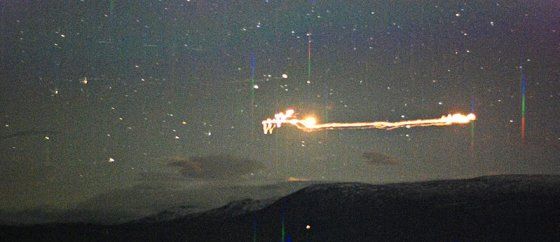
This is an unidentified light which are 12 kilometres long located in a Hessdalen valley in rural central Norway. The residents of Hestia land valley Norway have to live with this burning question every single night it has to Lin Valley brightly coloured lights appear in the sky in different colours and shapes for the last four decades and possibly longer. This phenomenon has continued to puzzle scientists, according to some theories these lights could be caused by a nearby radioactive lake emitting particles that light up in the air as they evaporate other scientists think that the base of the valley contains a lot of sulfuric acids when it comes into contact with the water it causes sparks to appear in the sky even though there are many different guesses as to why this town gets their very own light show every night scientists still haven’t come up with a definitive answer.

The Boiling River in the Amazon

Photo Credit : Wonderopolis

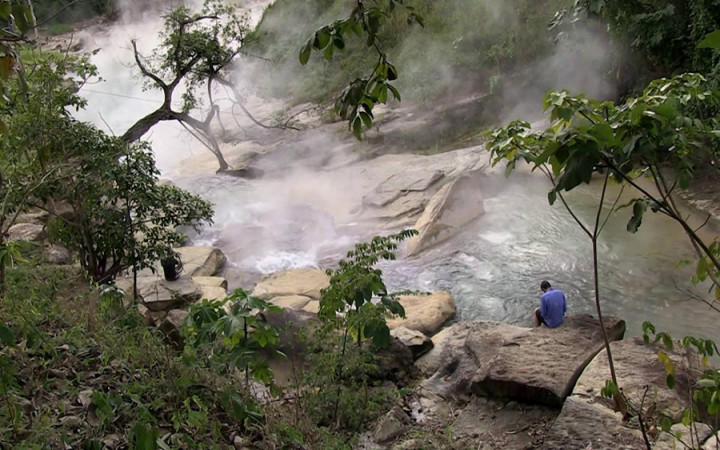
In the Amazon forests lies a floating river in the forested region of my Mayantuyacu that boasts temperatures so hot that any person or animal that falls into it boils alive from the inside out. This river runs at an unbelievable 196 degrees Fahrenheit dang that’s hot locals used the water to brew tea and sometimes they cook with it well this river’s high temperature is incredibly intriguing what makes this natural phenomenon a mystery is a fact that no one can figure out what makes the water so hot. According to geophysicist Adres Ruzo, boiling waters are typically attached to an active volcano or magmatic system like the boiling River Trail in Yellowstone National Park in the US but in the town of my Mayantuyacu, there are no active volcanoes within 400 miles. Over the centuries residents of this town believed that the river had magical healing powers and used it spiritually and medicinally. Ruzo guesses that hot geothermal waters pour in from cracks in the earth heating the temperature of the river but this has yet to be scientifically proven. 

Movile Cave

Photo Credit : Britannica.

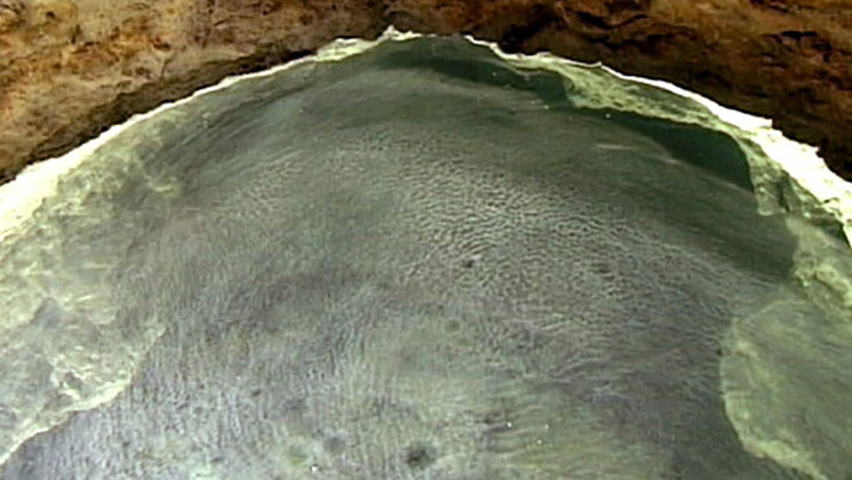
There’s a place on earth with its ecosystem and atmosphere similar to another planet well the name of that place is movile cave which is located in the southeastern part of Romania remain closed in complete darkness for approximately 5.5 million years. It wasn’t until workers discovered the cave when they were looking for a place to build that anyone learned about it scientists carved out an opening to the cave and found that a completely sustained ecosystem was thriving inside as a pathway was carved through the rock past numerous tunnels. Scientists found a lake of sulfuric water that stinks, the air was filled with hydrogen sulfide and had 100 times more carbon dioxide than Earth’s air contains needless to say this air is completely toxic what’s even crazier is that a whole ecosystem has been existing in this cave with 33 species that can’t be found anywhere else on earth this cave gives us a glimpse of what could exist on other planets with completely different atmospheres how it managed to exist on earth all this time is still a question. 

Circles of Namibia

Photo Credit : Science

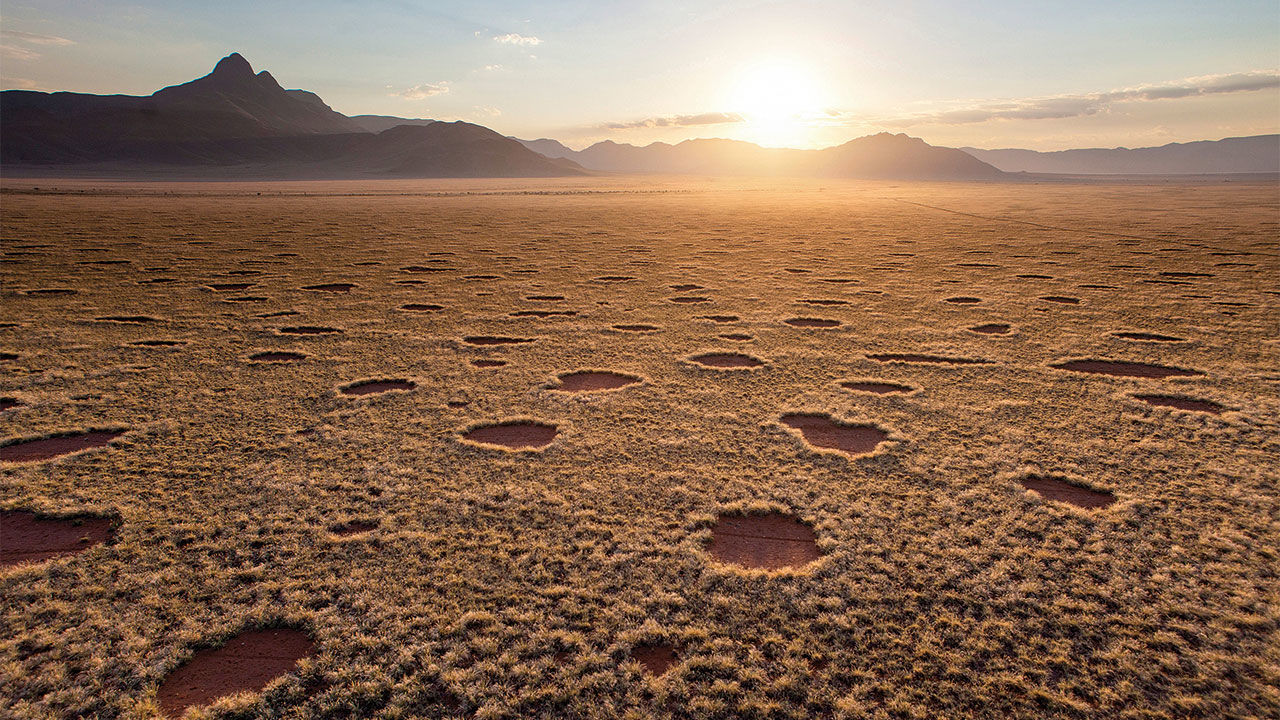
Namibian deserts are full of elephants, snakes, antelope and also hundreds of evenly placed circles which makes the mysterious part of this desert, this brutally hot desert is home to a vast array of wildlife but even more interesting are the fields of grass with evenly spaced holes and now these circles are almost perfect and range anywhere from 10 to 65 feet in diameter many scientists have offered up theories as to why these circles appear instead of other more random shapes. In 2013 environmental scientist Norbert Juergens hypothesized that termites were the cause of these circles but like all the hypotheses that came before his, it was later disproved.

Top 5 venomous snake species

Snake are deadliest animal. Whenever one encounters it many get hurt or you can easily say they are dangerous to humans. They have aggressive nature. They are very dangerous especially for rural area people’s. There are estimated 3,500 snake species out of which 600 are venomous. Their estimated yearly attacks ranges from 53 lakhs to 54 lakhs, out of which more than 1 lakh people die due to their attack.

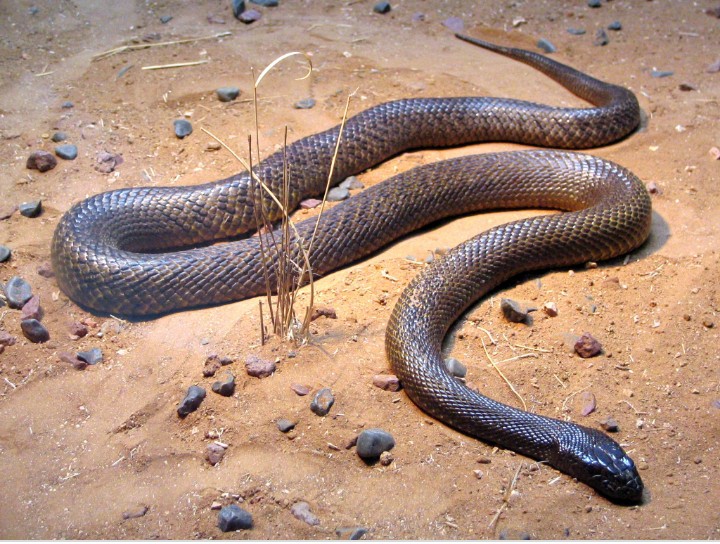
1) Inland Taipan

They are also known as fierce snake. They has the most toxic venom in the world. The average quantity venom give by this snake is 44mg while the most given is 110mg, which is enough to kill 100 people. Its venom consists of neurotoxins, Hemotoxins (procoagulants) affecting the blood, myotoxin affecting the muscles, nephrotoxins affecting the kidneys and hemorrhaggins causing hemorrhage. Its venom paralysis the body and cause hemorrhage. It is found in Australia.

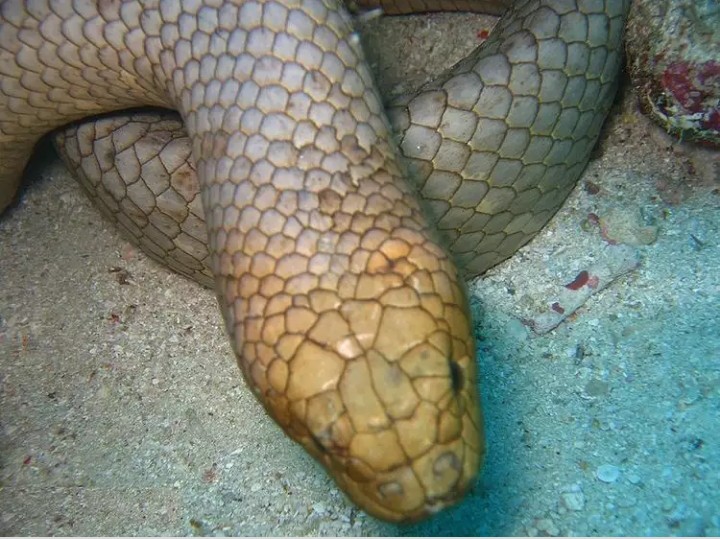
2) Dubois sea snake

Dubois sea snake is also known as reef shallow sea snake. It is a species of venomous sea snake. Adult sea snake grows upto 4.86ft but usually grow upto 2.6ft. It is most venomous sea snake and one of the top three most venomous snakes in the world. The venom is lethal and contains neurotoxin that act on the nerve cell, myotoxins acting on muscles. The venom of this snake paralysis the respiratory system which ultimately cause death of the person. They feed on fish and swallow the whole fish. True incident of sea snake bite has not been recorded but they might have caused bite in rural area where taking record might not be possible. They are not aggressive but can bite if feel threatened or surprised. Fisherman’s are more likely to get trapped in their bites often when they try to remove them from fishing net. They are found in Australia, and some parts of Indian Ocean and Timor sea.

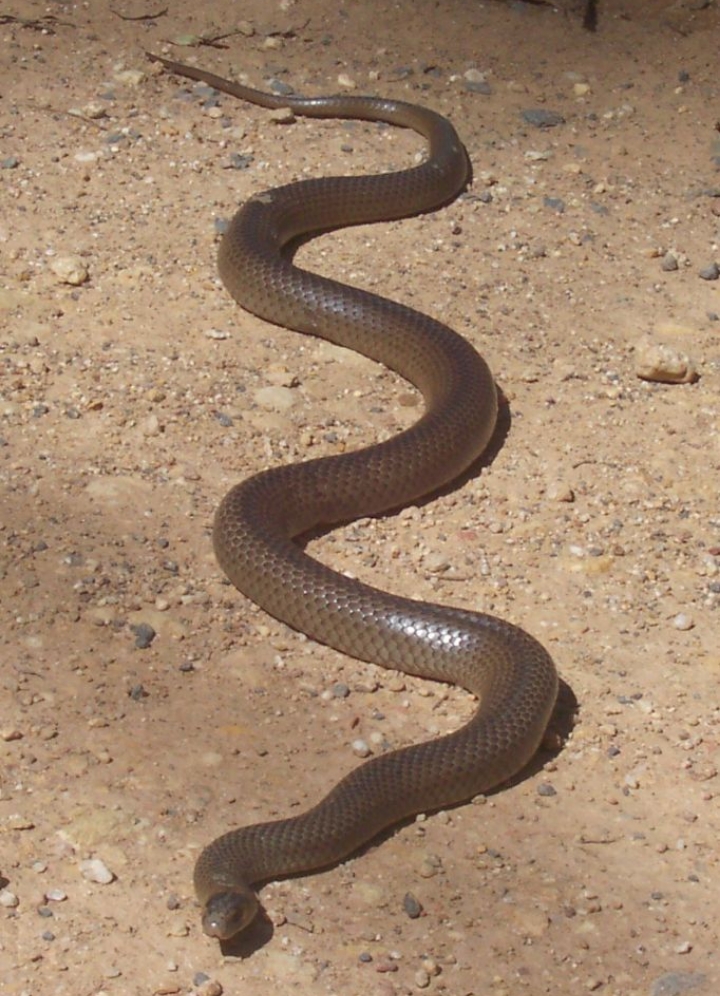
3) Eastern brown snake

Eastern brown snake or also known as common brown snake. This snake is highly venomous snake in the family Elapidae. Adult eastern brown snake goes upto 2m or 7ft. The venom of the snake mainly affects the circulatory system, coagulopathy, hemorrhage, cardiovascular collapse and cardiac arrest mainly the death occurs due to cardiac arrest. And one of the main components of venom is prothombinase which breaks down prothrombin. It is responsible for about 60% of snake bite death in Australia. They are native to eastern and central Australia and southern New Guinea.

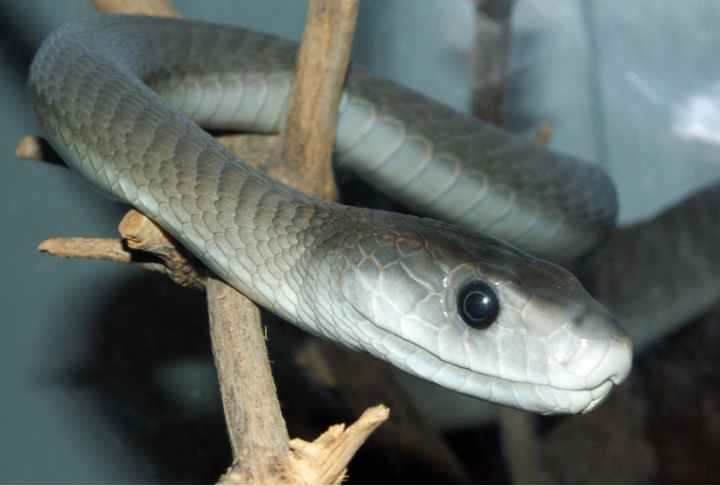
4) Black mamba

Black mamba also belongs to highly venomous species of family Elapidae. It is second longest venomous snake after king cobra. It grows upto 2m (6ft 7in) and commonly grow to 3m (9ft 10in). Its colour varies from grey to dark brown and it’s species is both terrestrial and arboreal (found on trees). It is native to parts of Sub Sahara Africa. Its venom is composed of neurotoxins and it’s induce symptoms within ten minutes and is frequently fatal. This species of snake is aggressive but only attack when threatened or cornered. It constantly bites more than once and it’s bite derive 100mg-120mg of venom, the highest venom recorded is 400mg. It is considered as snake of medical importance by World Health Organization. Its venom if not treated on time will result in respiratory failure, cardiovascular collapse and ultimately death.

5) Boomslang

Boomslang snake is one of the venomous snake of family Colubridae Average adult Boomslang is 100-160 cm in total length and exceeds to 183cm. Colouration is very different like males are light green with black or blue scale edge while females may be brown. Their weight varies from 175 to 510 g. The Boomslang snake is able to open its jaws up to 170 degree when butting. It is found in sub Saharan Africa, south africa, Botswana and Namibia. Its venom is hemotoxin and disables coagulation process and the victim die as a result of internal or external bleeding. Its venom cause hemorrhaging in to tissue such as muscles and the brain tissue. Its venom is slow acting. This snake is timid and only bite if attempted to handle, catch or kill.

SAVE ENVIRONMENT

The natural environment and conditions in which humans live are referred to as the environment. Regrettably, this environment is under great danger. Human actions are mostly to blame for this issue. These human actions have undoubtedly wreaked havoc on the natural world. Most importantly, the survival of all living creatures on Earth is jeopardized by this destruction. As a result, environmental protection is critical.

The environment is made up of the air we breathe, the soil we live on, the trees that provide us with oxygen, and other flora and animals on the planet. Without such a hospitable atmosphere, survival on the planet would have been impossible. However, we have observed a continuous degradation in the quality of the environment around us as a result of the recent boom in urbanization.

“Save the environment” should be a top priority for everyone today. The term “environment” refers to the complete environment, which includes water, air, sunlight, plants, animals, and other elements that provide favourable conditions for development and growth.

Ways of Saving Environment:

First and foremost, tremendous emphasis should be paid to tree planting. A tree is, above all, a source of oxygen. Unfortunately, numerous trees have been felled as a result of building. This will undoubtedly reduce the amount of oxygen in the atmosphere. The more trees that are planted, the more oxygen is produced. As a result, planting more trees will improve the quality of life.

People must also pay attention to forest conservation. Forests are extremely important to the environment. Deforestation, on the other hand, diminishes the size of forests all over the world. Forest conservation efforts must be launched by the government. Forest destruction must be made a criminal act by the government.

Another key aspect of environmental protection is soil conservation. Landslides, floods, and soil erosion must all be controlled to accomplish this. Afforestation and tree planting should also be included in the soil conservation plan. Other options include terrace farming and the use of natural fertilizers.

Environmental protection through Waste Management is a significant tool. Waste disposal must be done properly. Above all, this would aid in maintaining the health of the environment. The government must ensure that the streets and other polluting land areas are cleaned regularly. In addition, every home should have a toilet. The government must also supply sufficient public restrooms.

The greatest threat to the environment is most likely pollution. Air pollution is caused by smoke, dust, and hazardous substances. Industry and cars are the primary sources of air pollution. Chemicals and pesticides also pollute the environment and the water supply.

The Advantages of Environmental Conservation:

To begin with, the global climate will stay normal. Global warming has been caused by environmental damage and pollution. Many people and animals have died as a result of this. As a result, preserving the environment will help to prevent global warming. People’s health would improve. Many people’s health is deteriorating as a result of pollution and deforestation. People’s health would undoubtedly benefit from environmental conservation. Most importantly, preserving the environment will minimize the prevalence of numerous diseases.

Animals would undoubtedly be protected if the environment was preserved. Many species will not go extinct as a result of environmental preservation. Many endangered species would likewise see a rise in their numbers. The level of the water would rise. Groundwater levels have been substantially lowered as a result of environmental damage. Furthermore, pure drinking water is in short supply throughout the world. Many people became ill and died as a result of this. Saving the environment would undoubtedly prevent such issues.

PLANET EARTH

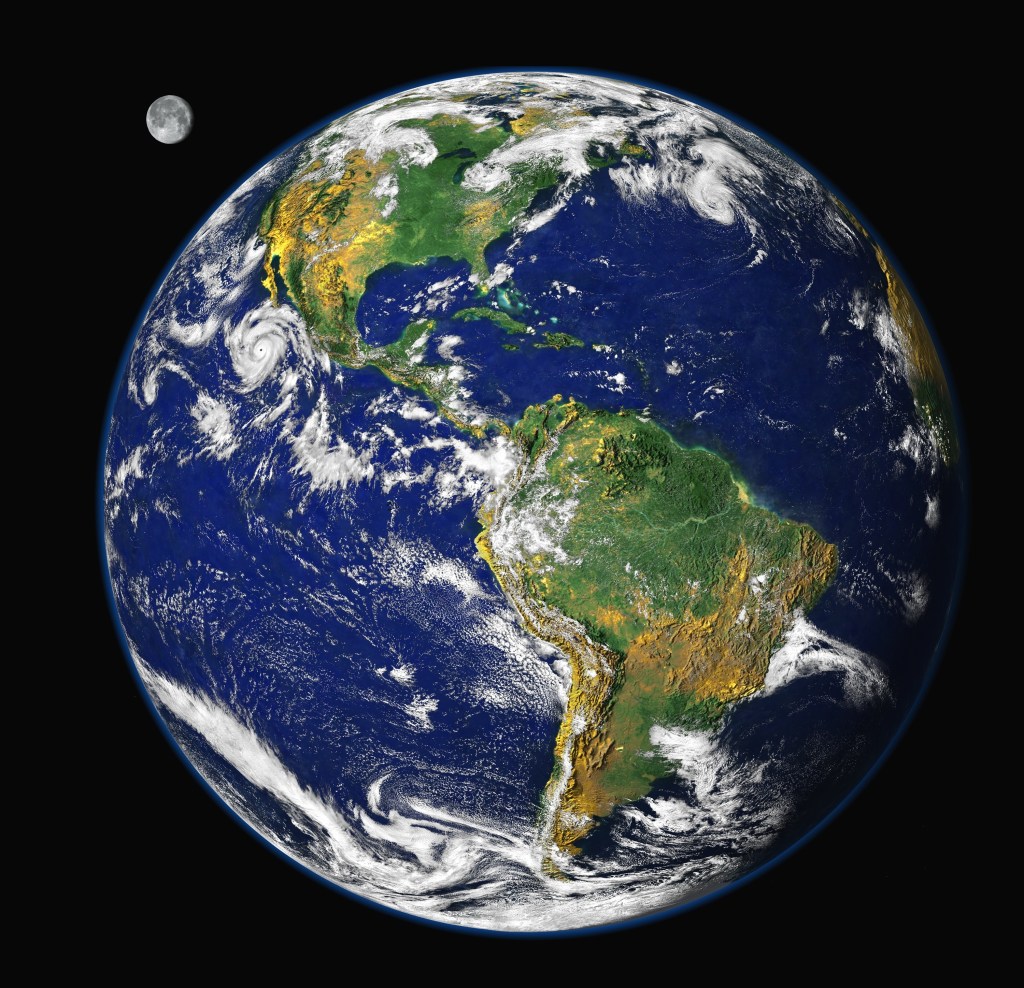
Earth, our home planet, is a world unlike any other. The third planet from the sun, Earth is the only place in the known universe confirmed to host life.

With a radius of 3,959 miles, Earth is the fifth largest planet in our solar system, and it’s the only one known for sure to have liquid water on its surface. Earth is also unique in terms of monikers. Every other solar system planet was named for a Greek or Roman deity, but for at least a thousand years, some cultures have described our world using the Germanic word “earth,” which means simply “the ground.”

Our dance around the sun

Earth orbits the sun once every 365.25 days. Since our calendar years have only 365 days, we add an extra leap day every four years to account for the difference.

Though we can’t feel it, Earth zooms through its orbit at an average velocity of 18.5 miles a second. During this circuit, our planet is an average of 93 million miles away from the sun, a distance that takes light about eight minutes to traverse. Astronomers define this distance as one astronomical unit (AU), a measure that serves as a handy cosmic yardstick.

Earth rotates on its axis every 23.9 hours, defining day and night for surface dwellers. This axis of rotation is tilted 23.4 degrees away from the plane of Earth’s orbit around the sun, giving us seasons. Whichever hemisphere is tilted closer to the sun experiences summer, while the hemisphere tilted away gets winter. In the spring and fall, each hemisphere receives similar amounts of light. On two specific dates each year called the equinoxes both hemispheres get illuminated equally.

Many layers, many features

About 4.5 billion years ago, gravity coaxed Earth to form from the gaseous, dusty disk that surrounded our young sun. Over time, Earth’s interior which is made mostly of silicate rocks and metals differentiated into four layers.

At the planet’s heart lies the inner core, a solid sphere of iron and nickel that’s 759 miles wide and as hot as 9,800 degrees Fahrenheit. The inner core is surrounded by the outer core, a 1,400-mile-thick band of iron and nickel fluids. Beyond the outer core lies the mantle, a 1,800-mile-thick layer of viscous molten rock on which Earth’s outermost layer, the crust, rests. On land, the continental crust is an average of 19 miles thick, but the oceanic crust that forms the seafloor is thinner about three miles thick and denser.

The sun won’t die for 5 billion years

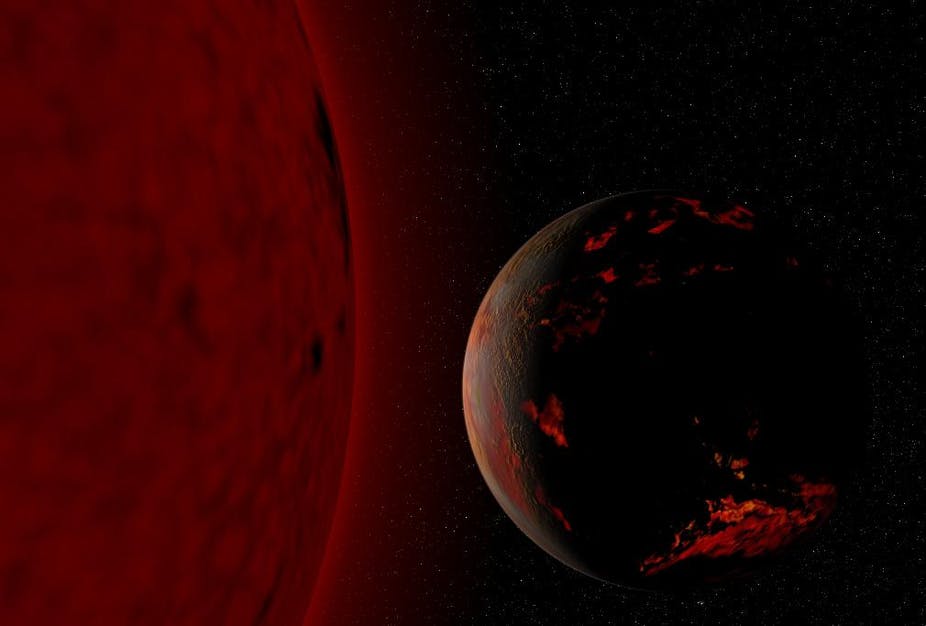
In a few billion years, the sun will become a red giant so large that it will engulf our planet. But the Earth will become uninhabitable much sooner than that. After about a billion years the sun will become hot enough to boil our oceans.

The sun is currently classified as a “main sequence” star. This means that it is in the most stable part of its life, converting the hydrogen present in its core into helium. For a star the size of ours, this phase lasts a little over 8 billion years. Our solar system is just over 4.5 billion years old, so the sun is slightly more than halfway through its stable lifetime.

After 8 billion years of happily burning hydrogen into helium are over, the sun’s life gets a little more interesting. Things change because the sun will have run out of hydrogen in its core – all that’s left is the helium. The trouble is that the sun’s core is not hot or dense enough to burn helium.

In a star, gravitational force pulls all the gases towards the centre. When the star has hydrogen to burn, the creation of helium produces enough outward pressure to balance out the gravitational pull. But when the star has nothing left in the core to burn, gravitational forces take over.

Eventually that force compresses the centre of the star to such a degree that it will start burning hydrogen in a small shell around the dead core, which is still full of helium. As soon as the sun begins to burn more hydrogen, it would be considered a “red giant”.

The process of compression in the centre allows the outer regions of the star to expand outwards. The burning hydrogen in the shell around the core significantly increases the brightness of the sun. Because the size of the star has expanded, the surface cools down and goes from white-hot to red-hot. Because the star is brighter, redder and physically larger than before, we dub these stars “red giants”.

Earth’s fiery demise

It is widely understood that the Earth as a planet will not survive the sun’s expansion into a full-blown red giant star. The surface of the sun will probably reach the current orbit of Mars – and, while the Earth’s orbit may also have expanded outwards slightly, it won’t be enough to save it from being dragged into the surface of the sun, whereupon our planet will rapidly disintegrate.

Life on the planet will run into trouble well before the planet itself disintegrates. Even before the sun finishes burning hydrogen, it will have changed from its present state. The sun has been increasing its brightness by about 10% every billion years it spends burning hydrogen. Increased brightness means an increase in the amount of heat our planet receives. As the planet heats up, the water on the surface of our planet will begin to evaporate.

An increase of the sun’s luminosity by 10% over the current level doesn’t sound like a whole lot, but this small change in our star’s brightness will be pretty catastrophic for our planet. This change is a sufficient increase in energy to change the location of the habitable zone around our star. The habitable zone is defined as the range of distances away from any given star where liquid water can be stable on the surface of a planet.

With a 10% increase of brightness from our star, the Earth will no longer be within the habitable zone. This will mark the beginning of the evaporation of our oceans. By the time the sun stops burning hydrogen in its core, Mars will be in the habitable zone, and the Earth will be much too hot to maintain water on its surface.

Uncertain models

This 10% increase in the sun’s brightness, triggering the evaporation of our oceans, will occur over the next billion years or so. Predictions of exactly how rapidly this process will unfold depend on who you talk to. Most models suggest that as the oceans evaporate, more and more water will be present in the atmosphere instead of on the surface. This will act as a greenhouse gas, trapping even more heat and causing more and more of the oceans to evaporate, until the ground is mostly dry and the atmosphere holds the water, but at an extremely high temperature.

As the atmosphere saturates with water, the water held in the highest parts of our atmosphere will be bombarded by high energy light from the sun, which will split apart the molecules and allow the water to escape as hydrogen and oxygen, eventually bleeding the Earth dry of water.

Where the models differ is on the speed with which the earth reaches this point of no return. Some suggest that the Earth will become inhospitable before the 1 billion year mark, since the interactions between the heating planet and the rocks, oceans, and plate tectonics will dry out the planet even faster. Others suggest that life may be able to hold on a little longer than 1 billion years, due to the different requirements of different life forms and periodic releases of critical chemicals by plate tectonics.

The Earth is a complex system – and no model is perfect. However, it seems likely that we have no more than a billion years left for life to thrive on our planet.

Acid Rain

“The unthinkable is that we’re distorting this atmospheric balance. We’re shifting the chemical balance so that we have more poisons in the atmosphere – ozones and acid rain on ground level – while we’re also changing the thermal climate of the earth through the greenhouse effect and – get this – simultaneously causing destruction of our primary filter of ultraviolet light. It’s incredible. Talk about the national-debt crisis – we’re piling up debts in the atmosphere, and the piper will want to be paid.”

~ Michael Oppenheimer

Introduction

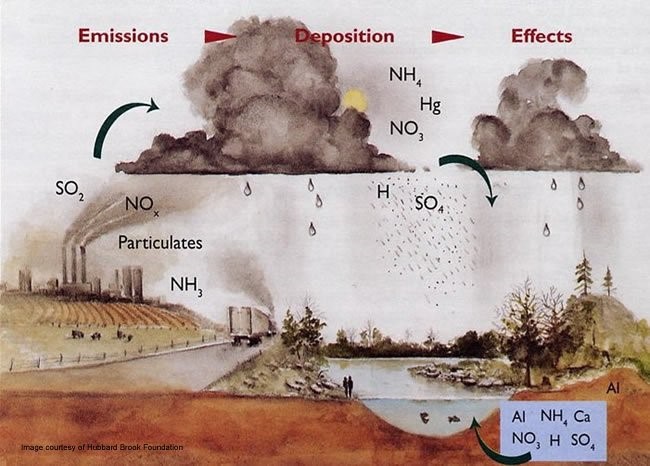
Acid rain, or acid deposition, is a broad term that includes any form of precipitation with acidic components, such as sulfuric or nitric acid that fall to the ground from the atmosphere in wet or dry forms. This can include rain, snow, fog, hail or even dust that is acidic.

Acid rain is caused by a chemical reaction that begins when compounds like sulfur dioxide and nitrogen oxides are released into the air. These substances can rise very high into the atmosphere, where they mix and react with water, oxygen, and other chemicals to form more acidic pollutants, known as acid rain.

It can have harmful effects on plants, aquatic animals, and infrastructure.

Effects of Acid Rain

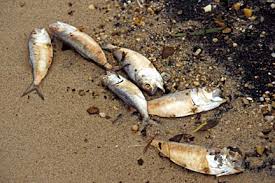
The ecological effects of acid rain are most clearly seen in aquatic environments, such as streams, lakes, and marshes where it can be harmful to fish and other wildlife. As it flows through the soil, acidic rain water can leach aluminum from soil clay particles and then flow into streams and lakes.

Acid rain has been shown to have adverse impacts on forests, freshwaters, and soils, killing insect and aquatic life-forms, causing paint to peel, corrosion of steel structures such as bridges, and weathering of stone buildings and statues as well as having impacts on human health.

Acid rain also causes the corrosion of water pipes. Which further results in leaching of heavy metals such as iron, lead and copper into drinking water.

Prevention

1. The only precaution that we can take against acid rain is having a check at the emission of oxides of nitrogen and sulphur.
2. We have so far seen the details of acid rain and its harmful effect on animals, plants and the monuments.
3. Being responsible citizens, one should be aware of the harmful effects they cause and of the industries which give out nitrogen and sulphur compound wastes unethically. 4.A great way to reduce acid rain is to produce energy without using fossil fuels. Instead, people can use renewable energy sources, such as solar and wind power. Renewable energy sources help reduce acid rain because they produce much less pollution.

Acid Rain in India

Analysis of rainwater samples from Nagpur, Mohanbari (in Assam), Allahabad, Visakhapatnam and Kodaikanal in the decade 2001-2012 showed a pH level varying from 4.77 to 5.32, indicating that these places have actually been receiving ‘acid rain’. Rainwater with pH below 5.65 is considered acidic.

As energy requirements in India will grow rapidly in tune with the economy, coal dependence is expected to increase threefold over the current level of consumption, making the clouds of acid rain heavier over many highly sensitive areas in the country – the northeast, parts of Bihar, Orissa, West Bengal ,etc ,.

The rains in the Indian Ocean and the Arabian Sea and the Bay of Bengal have become acidic. Studies show the importance to regularly monitor more places for acid rains. But the mechanism to study acid rains is at present inadequate in India. imd stations are not located in the most polluted areas in the country.

Link

Bioterrorism

From the past two decades , it is stated that the threat of biological warfare is not a myth but a harsh reality of the world . Due to the outbreak , we can recognise the high risk and consequences of bioterrorism.

This editorial provides you the overview of bioterrorism , it’s symptoms , causes , measures and impact on humans in present scenario .

Introduction

A bioterrorism attack is the deliberate release of viruses, bacteria, or other germs to cause illness or death. These germs are often found in nature. But they can sometimes be made more harmful by increasing their ability to cause disease, spread, or resist medical treatment.

Biological agents spread through the air, water, or in food. Some can also spread from person to person. They can be very hard to detect. They don’t cause illness for several hours or days. Scientists worry that anthrax, botulism, Ebola and other hemorrhagic fever viruses, plague, or smallpox could be used as biological agents.

Despite patchy intelligence, France started its own biological weapons programme in the early 1920s. It was headed by Auguste Trillat, an inventive German-educated chemist who envisioned and tested the sustained virulence of airborne pathogens.

The goal of bioterrorism is usually to create fear and/or intimidate governments or societies for the purpose of gaining political, religious, or ideological goals. Bioterrorism may have a different effect on societies than would weapons such as explosives.

Symptoms

The symptoms of exposure to a biological agent might include sore throat, fever, double or blurred vision, rash or skin blisters, exhaustion, difficulty talking, confusion, descending muscle weakness, nausea, abdominal pain, vomiting, diarrhea, and coughing.

History

Historically, biological weapons have been a threat to humans for many centuries. At those times, very crude methods such as fecal matter, animal carcasses, etc. were used to contaminate water sources, but now the concentrated forms of biological agents such as dried spores and genetically modified organisms are available, which are fatal even in minute quantity.

During the Indo-Pakistan war of 1965, a scrub typhus outbreak in north-eastern India came under suspicion. India’s defense and intelligence outfits were alert to the outbreak of pneumonic plague – well known in biological warfare – in Surat and Bubonic plague in Beed in 1994, which caused several deaths and sizeable economic loss.

Prevention

There are some points that you need to consider during the outbreak :

  • If you become aware of a suspicious substance, quickly get away.
  • Cover your mouth and nose with layers of fabric that can filter the air but still allow breathing. Examples include two to three layers of cotton such as a t-shirt, handkerchief or towel.
  • Depending on the situation, wear a face mask to reduce inhaling or spreading germs.
  • If you have been exposed to a biological agent, remove and bag your clothes and personal items.
  • Follow official instructions for disposal of contaminated items.
  • Wash yourself with soap and water and put on clean clothes.
  • Contact authorities and seek medical assistance. You may be advised to stay away from others or even to quarantine.
  • If your symptoms match those described and you are in the group considered at risk, immediately seek emergency medical attention.
  • Follow the instructions of doctors and other public health officials.
    Avoid crowds.
  • Wash your hands with soap and water frequently.
  • Do not share food or utensils.

Link

LARGE SOLAR STORM APPROACHING EARTH – BLACKOUT

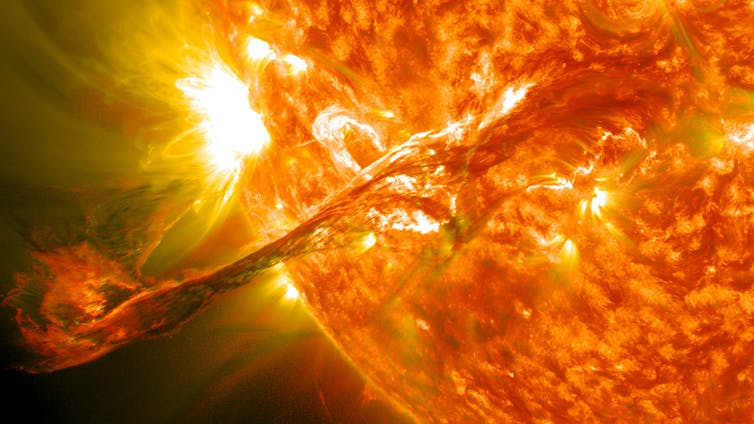
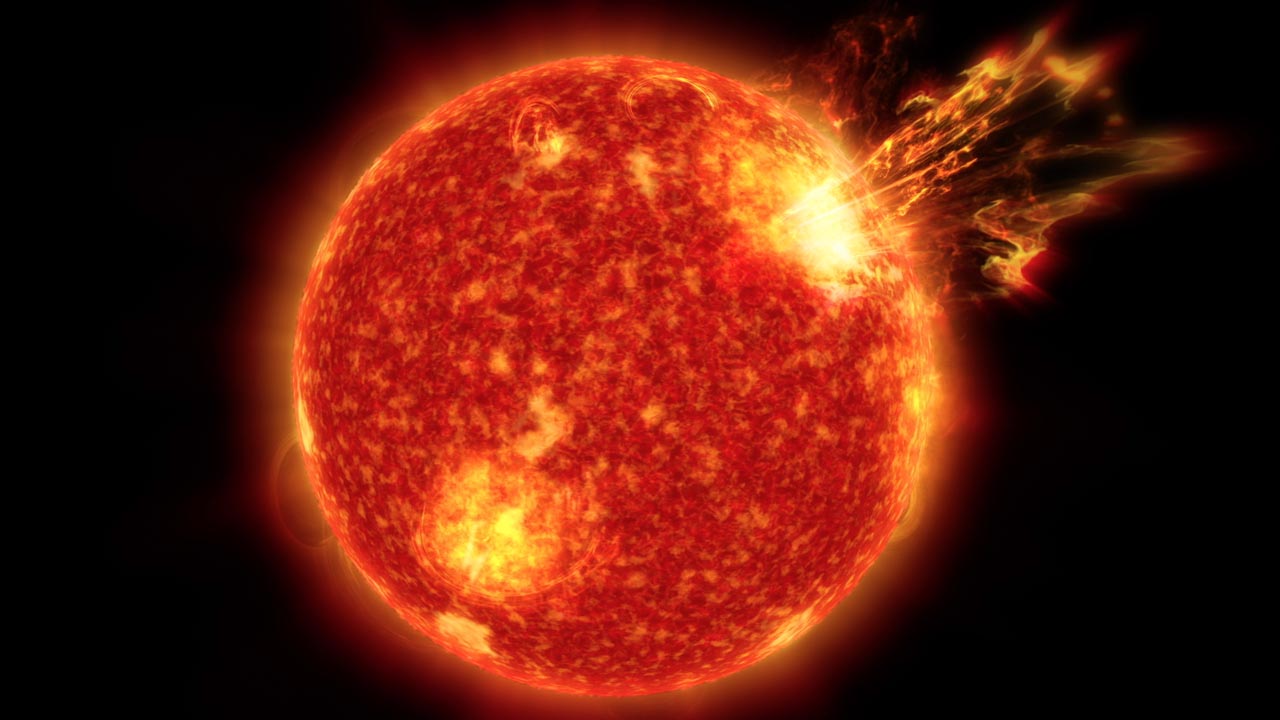
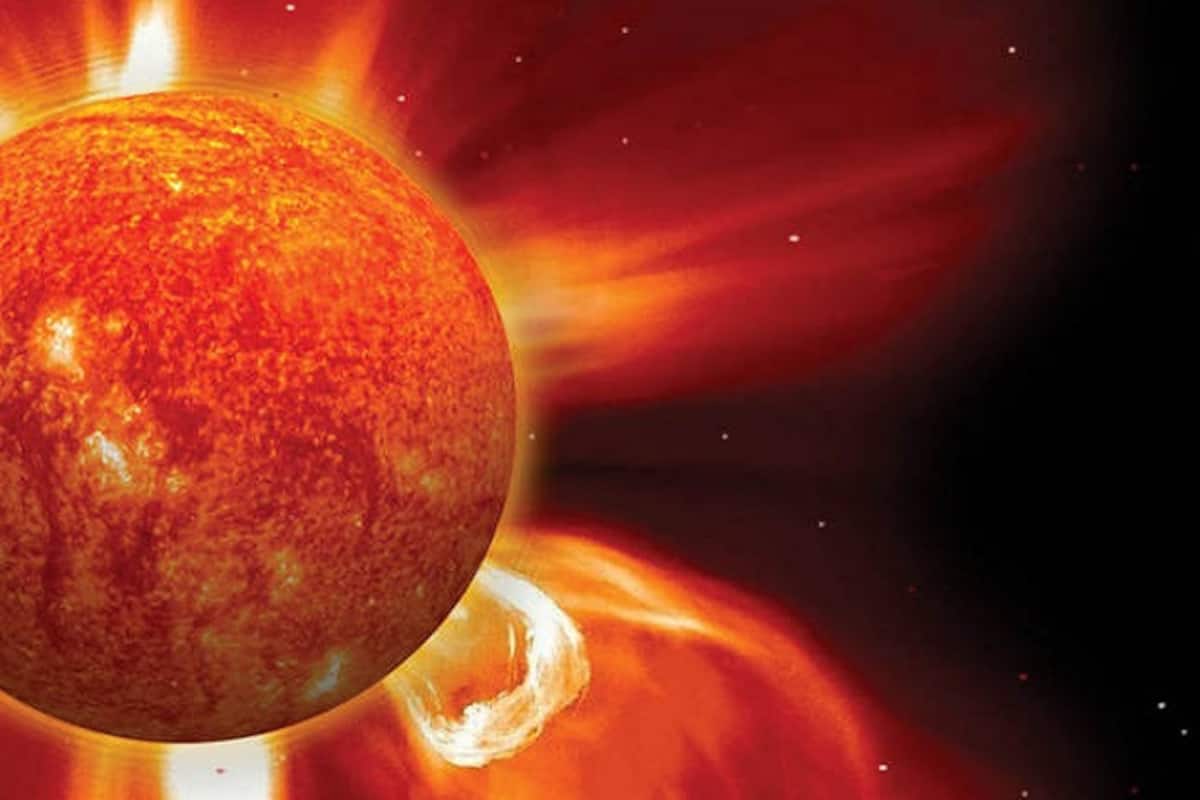
Huge charged particles ejected from the sun is called solar storm.

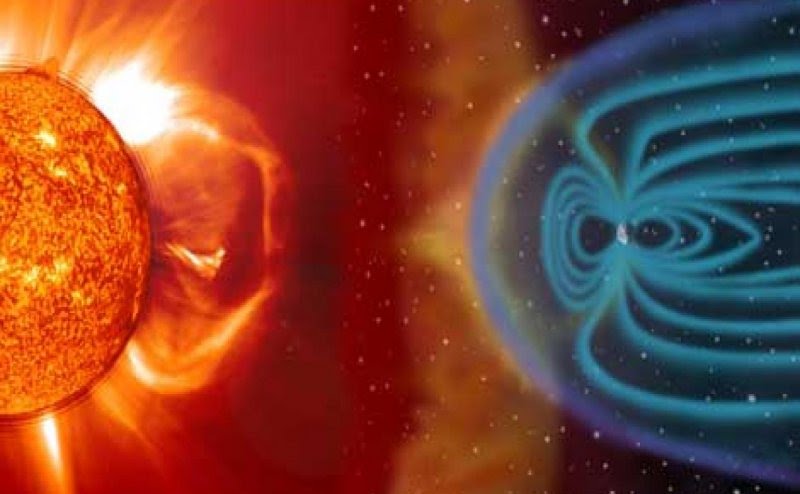
According to website Spaceweather.com, the storm that originated from the Sun’s atmosphere and can have a significant impact on a region of space dominated by Earth’s magnetic field.

A powerful solar storm is approaching the Earth at a speed of 1.6 million kilometers and this storm will hit the Earth either on Sunday or Monday.

According to the US space agency NASA, the solar storm is moving towards the Earth at a speed of about 1.6 million kilometers per hour and maybe its speed will increase further. NASA said that satellite signals can be interrupted by solar storms.

Scientists have feared that this great solar storm may hit our Earth in two days pic.twitter.com/MlWUeZ56aw

Effect of solar storm

The outer atmosphere of the Earth can be heated which can have a direct effect on satellites.

This can cause interference with GPS navigation, mobile phone signal and satellite TV. The current in power lines can be high, which can also blow transformers

Power lines can carry a lot of currents, which can blow transformers

There is also a possibility of blackout of HF (high frequency) radio communication that is dependent upon current X-ray Flux intensity. According to the latest prediction, the flare can cause a wide area blackout of HF (high frequency) radio communication for about an hour.

Due to the solar storm, there will be a view of beautiful celestial lighting for the people living at the North or South Pole. The people living closer to these areas can expect to see beautiful aurora at night.

Madagascar Droughts: Climate Change

Madagascar is the fourth biggest island in the world, situated in the Indian Ocean. The island country is deemed as ‘Megadiverse’ by Conservation International with more than 250,000 species of plants and animals most of which do not exist anywhere else. Almost 90% of the species found on the island are endemic. The island of 28 million people is one of the poorest countries in the world and has been ravaged by many natural and human-induced hazards.

So we can confidently say that the country is extremely rich and unique biodiversity. On the eastern coast of Madagascar the Rainforests of Atsinanana comprising of six national parks with an endemic rate of species touching almost 80%. This area has also been added to the World Heritage List since 2007. The area is considered important to both ecological and biological processes and it also supports the rare species of Lemurs and many other primates.

Deforestation has been a major issue in Madagascar and this has also threatened the Lemurs and them and many endemic species of the island heavily rely on these forests. Madagascar witnessed rapid deforestation for long a time and this only accelerated by the end of the 19th century due to French Colonization. The forested areas were gradually converted into coffee fields and the country lost its original forest cover by almost 80%. As of today, the primary forest cover stands a little over 10 percent.

Deforestation has not only affected the ecology of the country but has also affected the soil quality and increased soil degradation. Subsistence agriculture is quite common among the inhabitants of the islands. Slash and burn is another method that has affected the forest cover of the island as these methods are not beneficial after a certain population cluster. Another big reason for the rapid deforestation is illegal logging and this benefits private entities and large corporations. The country has also seen a rapid growth in its population which currently is estimated at 26 million, up from 2.2 million in 1900. This has increased the requirement for more land for cultivation.

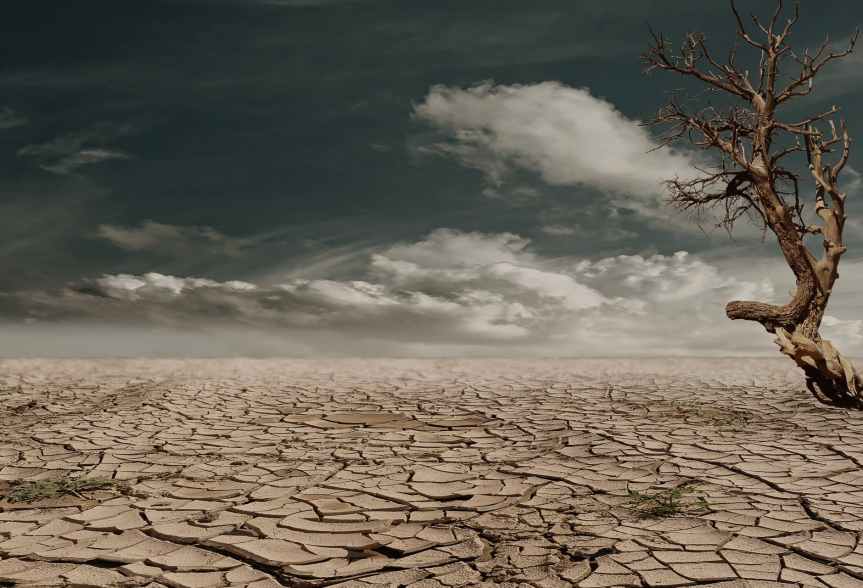
Currently, Madagascar is going through a very severe drought and deforestation can partly be a reason for this phenomenon. But there are other issues of cause too. Due to climate change, Madagascar has also suffered the consequence of the increased frequency of extreme weather events. It’s the worst drought in 40 years and has taken grip of the Southern part of the island. Due to low rainfall various streams, rivers and small dams built for irrigation dried up last year. The majority of the people in the south of the country rely on rain-fed, small-scale agriculture to survive.  With no rainfall and non-existent agriculture output, there has been an emergency in the country with severe food scarcity. Many people in the region have resorted to eating insects, wild roots.

According to experts’ deforestation, drier soils and higher temperatures due to climate change are the likely cause of droughts.

Climate experts

The island is already suffering from the covid-19 virus combined with the pressure of droughts and famines have caused strain to the poor country. Food and other aids are being provided to the affected areas of the country but supply is still not aligning with the current demand. A long-term solution will be required to tackle this situation as this problem is only going to get more serious in the future.

References:

Renewable resources .

Replacing traditional sources of energy completely with renewable energy is going to be a challenging task. However, by adding renewable energy to the grid and gradually increasing its contribution, we can realistically expect a future that is powered completely by green energy.

– Tulsi Tanti

A way to live a new life . Without any destruction , without worrying about the future . Live a life where we can grow together , develop a life with renewable resources.

Introduction

A renewable resource, also known as a flow resource, is a natural resource which will replenish to replace the portion depleted by usage and consumption, either through natural reproduction or other recurring processes in a finite amount of time in a human time scale.

When such recovery rate of resources is unlikely to ever exceed a human time scale, these are called perpetual resources. Renewable resources are a part of Earth’s natural environment and the largest components of its ecosphere. A positive life-cycle assessment is a key indicator of a resource’s sustainability.

Renewable resources are an energy source that cannot be depleted and are able to supply a continuous source of clean energy.

Renewable resources also produce clean energy, meaning less pollution and greenhouse gas emissions, which contribute to climate change.

Examples of renewable resources.

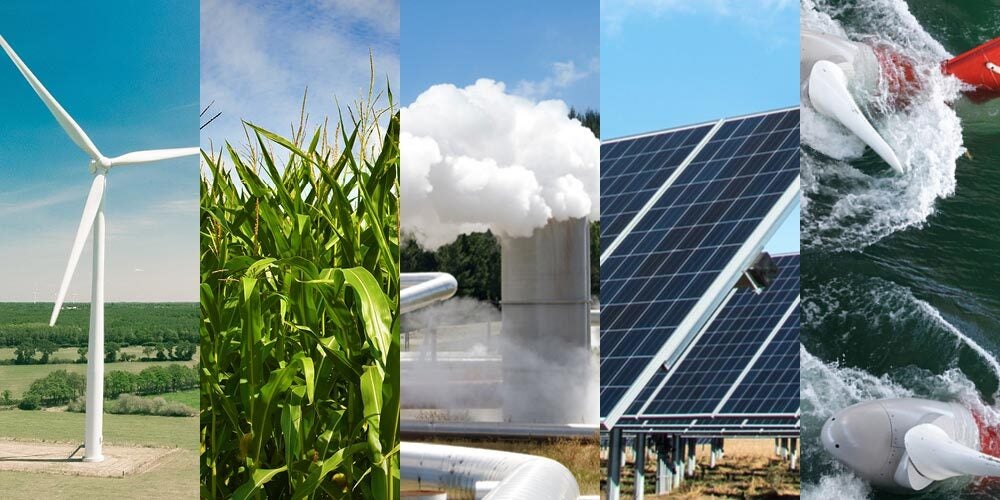
  • Biomass .
  • Biogas.
  • Tidal Energy.
  • Wind Energy.
  • Geothermal Energy.
  • Radiant Energy.
  • Hydro Electricity.
  • Compressed Natural Gas.

Types of renewable resources.

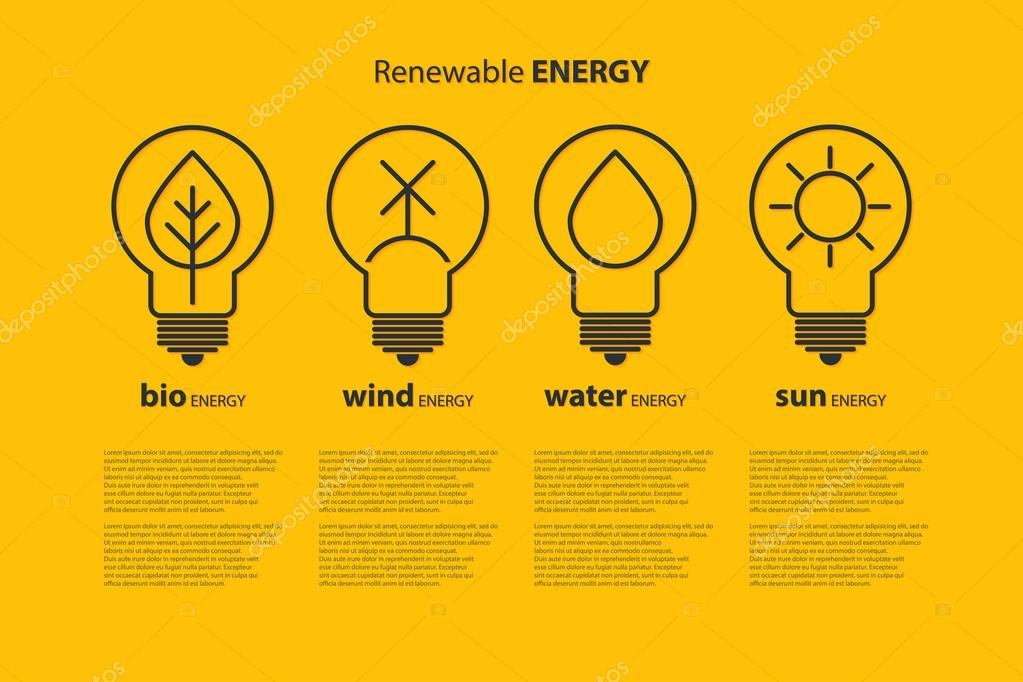
1) Solar energy. Sunlight is one of our planet’s most abundant and freely available energy resources. 2) Wind energy. Wind is a plentiful source of clean energy. 3) Hydro energy.
4) Tidal energy.
5) Geothermal energy. 6) Biomass Energy.

Impact of renewable resources.

Environmental impact

Renewable energy projects have also contributed in improving environmental impacts such as reduction of carbon dioxide gas, awakening community about the climate change. The study observed very small impacts on the people living in a particular area, tourism, cost of energy supply, and educational impacts. Significant impacts were observed in improvement of life standard, social bonds creation, and community development. They also observed that the renewable energy projects are complex to install and are local environmental and condition sensitive. Their forecasting, execution, and planning require more consideration and knowledge as compared to other projects.

Social impact

These resources also provide social benefits like improvement of health, according to choice of consumer, advancement in technologies, and opportunities for the work, but some basic considerations should be taken for the benefit of humans, for example, climate conditions, level of education and standard of living, and region whether urban or rural from agricultural point of view. Social aspects are the basic considerations for the development of any country. The following social benefits can be achieved by renewable energy systems: local employment, better health, job opportunities, and consumer choice.

Advantages of renewable resources.

  • Renewable energy won’t run out.
  • Maintenance requirements are lower.
  • Renewables save money.
  • Renewable energy has numerous health and environmental benefits.
  • Renewables lower reliance on foreign energy sources.
  • Higher upfront cost.
  • Intermittency.
  • Storage capabilities.

Conclusion

Renewable energy is becoming an important resource in all over the world . I do agree that people might exploit the resources for there own benefit . But the government is working on that aspect and trying to provide resources that can help our future households .

There are a lot of different ways of building a prosperous society, and some of them use much less energy than others. And it is possible and more practical to talk about rebuilding systems to use much less energy than it is to think about trying to meet greater demands of energy through clean energy alone.

– Alex Steffen

Link

China wants to launch asteroid-deflecting rockets to save Earth from Armageddon

A Long March 5B rocket launches Tianhe, the core module of China's new space station, on April 28, 2021.

Chinese scientists are planning to fire more than 20 rockets into space to divert an asteroid impact that has a small chance of one day ending life on Earth.

Their target is an asteroid named Bennu, a 85.5-million-ton (77.5 million metric ton) space rock that is on track to swoop within 4.6 million miles (7.5 million kilometers) of Earth’s orbit between 2175 and 2199. Although Bennu’s chances of striking Earth are slim — at just 1 in 2,700 — the asteroid is as wide as the Empire State Building is tall, meaning that any collision with the Earth would be cataclysmic.

The estimated kinetic energy of Bennu’s impact with Earth is 1,200 megatons, which is roughly 80,000 times greater than the energy of the bomb dropped on Hiroshima. For comparison, the space rock that wiped out the dinosaurs delivered about 100 million megatons of energy.

Scientists at China’s National Space Science Center calculated that 23 Long March 5 rockets, each weighing 992 tons (900 metric tons), pushing against the rock simultaneously would be necessary to divert the asteroid away from a fatal course by nearly 6,000 miles (9,000 km) — 1.4 times the Earth’s radius. Their calculations are detailed in a new study published in the forthcoming Nov. 1 issue of the journal Icarus.

This is a mosaic image of asteroid Bennu, from NASA’s OSIRIS-REx spacecraft.
A mosaic image of the asteroid Bennu, taken by NASA’s OSIRIS-REX spacecraft.  (Image credit: NASA/Goddard/University of Arizona)

“Asteroid impacts pose a major threat to all life on Earth,” Mingtao Li, space science engineer of the National Space Science Center in Beijing and lead author of the new study, wrote in the paper. “Deflecting an asteroid on an impact trajectory is critical to mitigating this threat.”

The Chinese scientists’ plan would sidestep the need to stop the asteroid by more direct, yet riskier, means — like the atomic bomb method popularized by Bruce Willis in the film “Armageddon.” In reality, nuking the incoming space rock would break it into multiple smaller chunks that could still collide with Earth, leading to devastating consequences.

The Chinese plan follows a similar, yet slightly more costly, past proposal made by the United States. The NASA plan, called Hypervelocity Asteroid Mitigation Mission for Emergency Response (HAMMER), would send a fleet of 30-foot-tall (9 meters) spacecraft with battering rams to bump the asteroid off course. NASA simulations suggest that 34-53 blows from HAMMER spacecraft, launched 10 years before Bennu collides with Earth, would be needed to shift the asteroid.

NASA and the ESA (European Space Agency) will be the first to test a novel asteroid nudging method in two joint missions launching November 24 of this year. The DART mission (Double Asteroid Redirection) will send a spacecraft to arrive a year later at the 7 million mile (11 million kilometer) distant Didymos asteroid system. Once there, the NASA spacecraft will slam into Didymos’s moonlet — a rock in orbit around the asteroid. The ESA’s mission, Hera, will then monitor how DART has budged the moonlet off-course.

Bennu is a B-type asteroid, which means that it contains high amounts of carbon and, potentially, many of the primordial molecules present when life emerged on Earth. NASA already sent a spacecraft, called Osiris-Rex, in pursuit of samples from the asteroid. Osiris-Rex arrived above Bennu in October 2020, floating above it for long enough to collect loose pieces from its surface with its 10-foot (3 m) arm. Osiris-Rex is expected to return to Earth with its spoils in 2023.

Long March 5 rockets are the workhorses of China’s space program, completing most of the deliveries to China’s space station and launching Chinese probes to Mars and the moon. The rockets have caused concern in the past due to their uncontrolled reentry to Earth. In May, the 22-ton (20 metric ton) section of a Long March 5 rocket fell to Earth, either burning up or landing in the sea near the Arabian peninsula. In May 2020, fragments from a previous March 5 rocket were believed to have crashed into two villages in the Ivory Coast.

Long March 5 rockets are the workhorses of China’s space program, completing most of the deliveries to China’s space station and launching Chinese probes to Mars and the moon. The rockets have caused concern in the past due to their uncontrolled reentry to Earth. In May, the 22-ton (20 metric ton) section of a Long March 5 rocket fell to Earth, either burning up or landing in the sea near the Arabian peninsula. In May 2020, fragments from a previous March 5 rocket were believed to have crashed into two villages in the Ivory Coast.

The Amazon

The forest is a peculiar organism of unlimited kindness and benevolence that makes no demands for its sustenance and extends generously the products of its life activity; it affords protection to all beings, offering shade even to the axe-man who destroys it.

– Gautama Buddha

Today , let’s feel the presence of fresh air , waterfall , trees , flora and fauna . Being a citizen of a country , which is well known for its resources , different species, mixed economy and different cultures. It is important for us to see the world of flora and fauna.

Well you get to know by the heading , today we are gonna talk about THE AMAZON’S which is well known for its vast species .

Introduction .


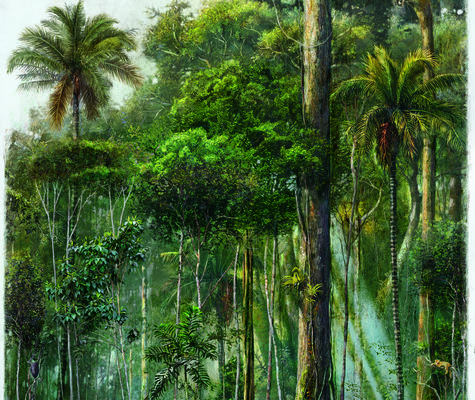
The Amazon jungle or Amazonia, is a moist broadleaf tropical rainforest in the Amazon biome that covers most of the Amazon basin of South America. This basin encompasses 7,000,000 km2 (2,700,000 sq mi), of which 5,500,000 km2 (2,100,000 sq mi) are covered by the rainforest. This region includes territory belonging to nine nations and 3,344 formally acknowledged indigenous territories.

The majority of the forest is contained within Brazil, with 60% of the rainforest, followed by Peru with 13%, Colombia with 10%, and with minor amounts in Bolivia, Ecuador, French Guiana, Guyana, Suriname, and Venezuela. Four nations have “Amazonas” as the name of one of their first-level administrative regions, and France uses the name “Guiana Amazonian Park” for its rainforest protected area. The Amazon represents over half of the planet’s remaining rainforests, and comprises the largest and most biodiverse tract of tropical rainforest in the world, with an estimated 390 billion individual trees divided into 16,000 species.

The name Amazon is said to arise from a war Francisco de Orellana fought with the Tapuyas and other tribes. The women of the tribe fought alongside the men, as was their custom. Orellana derived the name Amazonas from the Amazons of Greek mythology, described by Herodotus and Diodorus.

Flora and Fauna.

Wet tropical forests are the most species-rich biome, and tropical forests in the Americas are consistently more species rich than the wet forests in Africa and Asia.

This constitutes the largest collection of living plants and animal species in the world.

The region is home to about 2.5 million insect species, tens of thousands of plants, and some 2,000 birds and mammals. To date, at least 40,000 plant species, 2,200 fishes, 1,294 birds, 427 mammals, 428 amphibians, and 378 reptiles have been scientifically classified in the region.

The biodiversity of plant species is the highest on Earth with one 2001 study finding a quarter square kilometer (62 acres) of Ecuadorian rainforest supports more than 1,100 tree species.

Human impact on Amazon jungle.

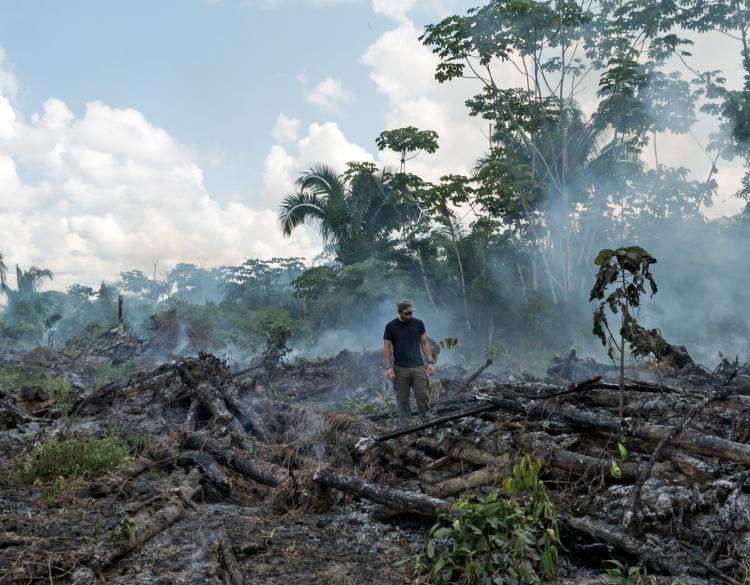
The human impact on the Amazon rainforest has been grossly underestimated according to an international team of researchers. … They found that selective logging and surface wildfires can result in an annual loss of 54 billion tonnes of carbon from the Brazilian Amazon, increasing greenhouse gas emissions.

Lead researcher Dr Erika Berenguer from Lancaster University said: “The impacts of fire and logging in tropical forests have always been largely overlooked by both the scientific community and policy makers who are primarily concerned with deforestation. Yet our results show how these disturbances can severely degrade the forest, with huge amounts of carbon being transferred from plant matter straight into the atmosphere.”

The second author, Dr Joice Ferreira from Embrapa in Brazil, said: “Our findings also draw attention to the necessity for Brazil to implement more effective policies for reducing the use of fire in agriculture, as fires can both devastate private property, and escape into surrounding forests causing widespread degradation. Bringing fire and illegal logging under control is key to reaching our national commitment to reducing carbon emissions.”

The forest is not a resource for us, it is life itself. It is the only place for us to live.

-Evaristo Nugkuag Ikanan

Link

Universal destruction

How could it be possible that when the time gets worse we often ignore the vulnerable?

Nikhil Meshram

We are living in the world , where no one can intrude . A life , where you can’t touch the one you want . A life, where one has to stay away from his own . A life , where no one can go in one’s home . Yes , it’s a life we are living ‘ A life of a LOG’ .

Coronavirus , I believe it’s not a new word in your dictionary . This eleven letter word creating a massive destruction all over the world . I know you are well aware but the real question is , are you following the protocols properly?

Firstly let’s get some knowledge about coronavirus.

The origin .

The recent outbreak began in Wuhan, a city in the Hubei province of China. Reports of the first COVID-19 cases started in December 2019.

Coronaviruses are common in certain species of animals, such as cattle and camels. Although the transmission of coronaviruses from animals to humans is rareTrusted Source, this new strain likely came from bats, though one study suggests pangolins may be the origin.

However, it remains unclear exactly how the virus first spread to humans.

Some reports trace the earliest cases back to a seafood and animal market in Wuhan. It may have been from here that SARS-CoV-2 started to spread to humans.

Coronaviruses are a group of viruses that can cause disease in both animals and humans. The severe acute respiratory syndrome (SARS) virus strain known as SARS-CoV is an example of a coronavirus. SARS spread rapidly in 2002–2003.

The new strain of coronavirus is called severe acute respiratory syndrome coronavirus 2 (SARS-CoV-2). The virus causes coronavirus disease 19 (COVID-19).


Around 80%Trusted Source of people with COVID-19 recover without specialist treatment. These people may experience mild, flu-like symptoms. However, 1 in 6 peopleTrusted Source may experience severe symptoms, such as trouble breathing.

The new coronavirus has spread rapidly in many parts of the world. On March 11, 2020, the World Health Organization (WHO)Trusted Source declared COVID-19 a pandemic. A pandemic occurs when a disease that people are not immune to spreads across large regions.

It’s okay take a deep breath . Yes, it’s a lot to take in but we all know how china played with the whole world .

The protocols.

  • Wear masks ,
  • Wash hands ,
  • Use sanitizers ,
  • Social distancing , etc,.

Is it important to follow protocols ?

You say NO , I say ‘if you want to die you can easily ignore the protocols ’ . Well I don’t want to die , I have my whole 20s , 30s and so on…… .

According to the survey, people have been moving around freely, meeting different social groups and attending gatherings, going to malls and markets. This indicates that a pandemic fatigue has set in after after a year of restrictions on movement, social distancing and strict mask wearing norms.

Well , if you are saying this is what following protocols is than I am happy to stay home rather than chilling around like a monkey . Like really , a monkey also has a common sense that when to do chilling and when to fight for himself . What we are doing is putting masks in our pocket to showcase the world that I have one . Haha it’s kinda funny .

We long to return to normal, but **normal led to this**. To avert the future pandemics we know are coming, we MUST grapple with all the ways normal failed us. We have to build something better. I hope this piece, in showing what went wrong, helps.

Link :