Something about India

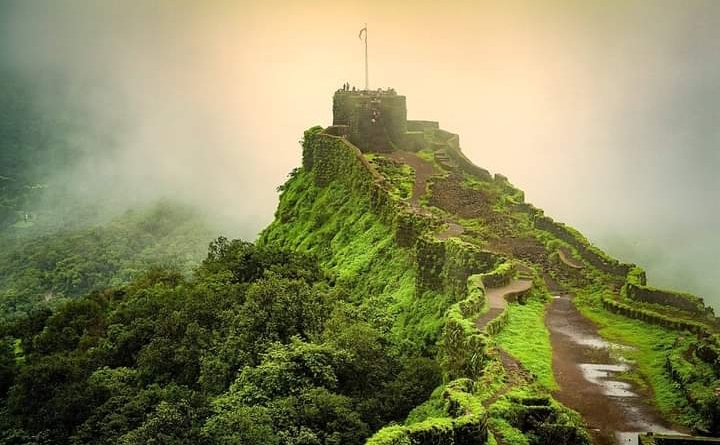
Photo by Still Pixels on Pexels.com

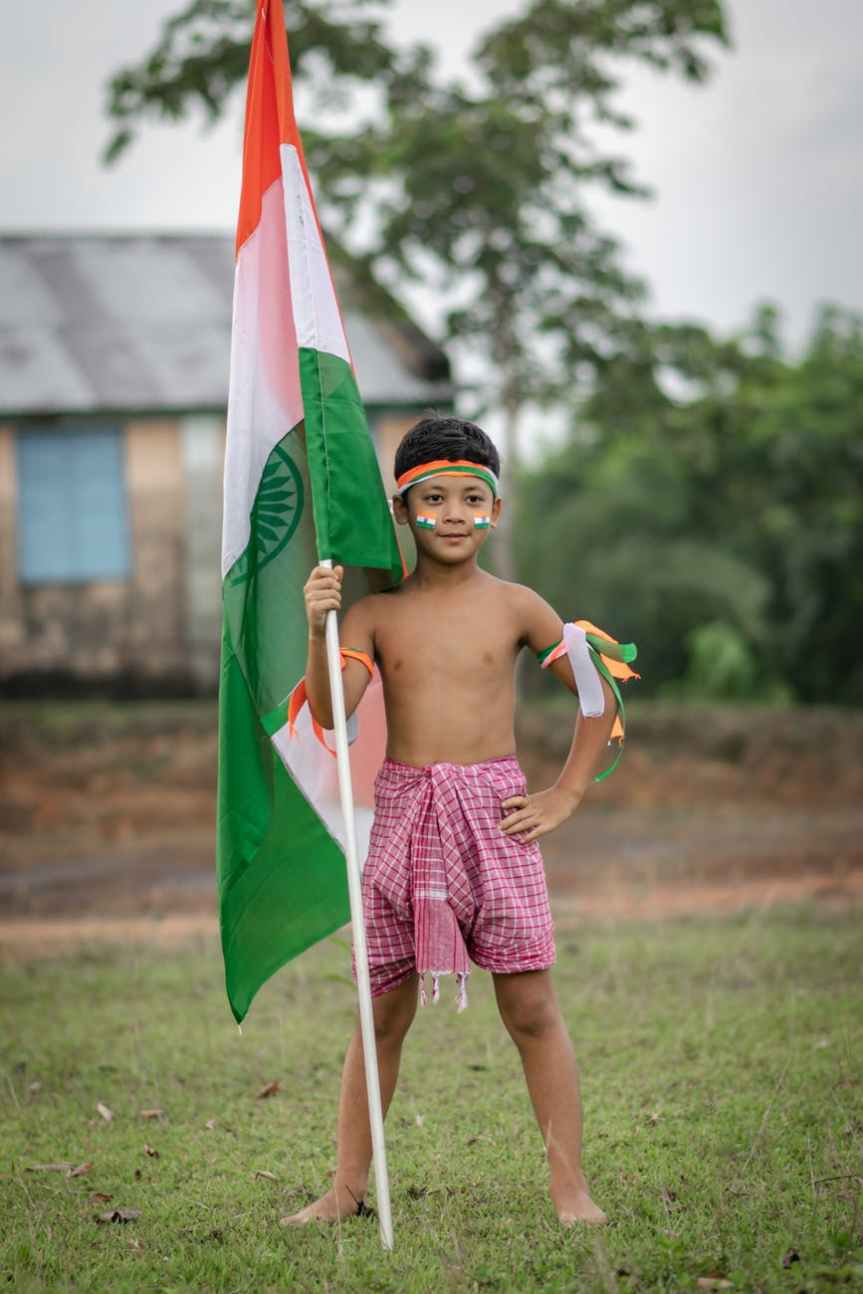
India is in her 75th year of independence and about to enter the 76th year. India- the 7th largest country by size, the 2nd most populous country and the world’s largest democracy. Celebrating our 75th Independence day, let us have a brief look on some interesting facts about India.

  1. India has, in the last 100000 years, not once invaded any country. She truly imbibes the spirit of ‘ Vasudhav Kutumbakam’ (‘The whole world is a family’).
  2. Algebra, Trigonometry and Calculus – prominent fields of study in mathematics finding their uses even in physics and all related fields, originated in India.
  3. The Baily Bridge- the highest bridge in the world,  located in the Ladakh valley between the Dras and Suru rivers in the Himalayan mountains, was built by the the Indian Army in August 1982.
  4.  Hinduism, Buddhism, Jainism, and Sikhism, followed by 25 percent of the world’s population, find their roots of origin in India.
  5. Jews and Christians have lived in India since 200 B.C. and 52 A.D. respectively. “Unity in diversity” forms the very foundation of India.
  6. The value of “pi” was first calculated by the Indian Mathematician Budhayana. He gave the concept of the Pythagorean Theorem in the 6th century, long before the European mathematicians.
  7. Quadratic Equations were used by Sridharacharya( 11th century). The largest numbers the Greeks and the Romans used were 106 whereas Hindus used numbers as big as 10*53 (i.e. 10 to the power of 53) (as early as 5000 BC- Vedic period)
  8. Ayurveda is the oldest school of medicine known to the whole world (founded by the father of medicine, Charaka, 2500 years ago.) , chess originated in India about 1500 years ago and yoga about 5,000 years ago.
  9. Bhaskaracharya had calculated the time taken by the earth to orbit the Sun hundreds of years before the astronomer Smart. (predicting it to be around 365.258756484 days.)
  10. India has the third highest number of billionaires (140 billionaires), after USA and China.
  11. India has the oldest cuisine in human history and the Indian tea dates back to 750 BCE.
  12. Shampooing is an Indian concept. (earlier herbs were used as shampoo)

Source: https://knowindia.gov.in/my-india-my-pride/interesting-facts-about-india.php

The most interesting things about Pune

For new-comers Pune may appear to be arrogant, rude and not-so-friendly, but after spending some time in Pune you will realize that they are actually sweet, a bit arrogant but kind. When you login in Pune you can’t logout.
For them who wants to live in Pune, here are some most interesting things about Pune you should know.

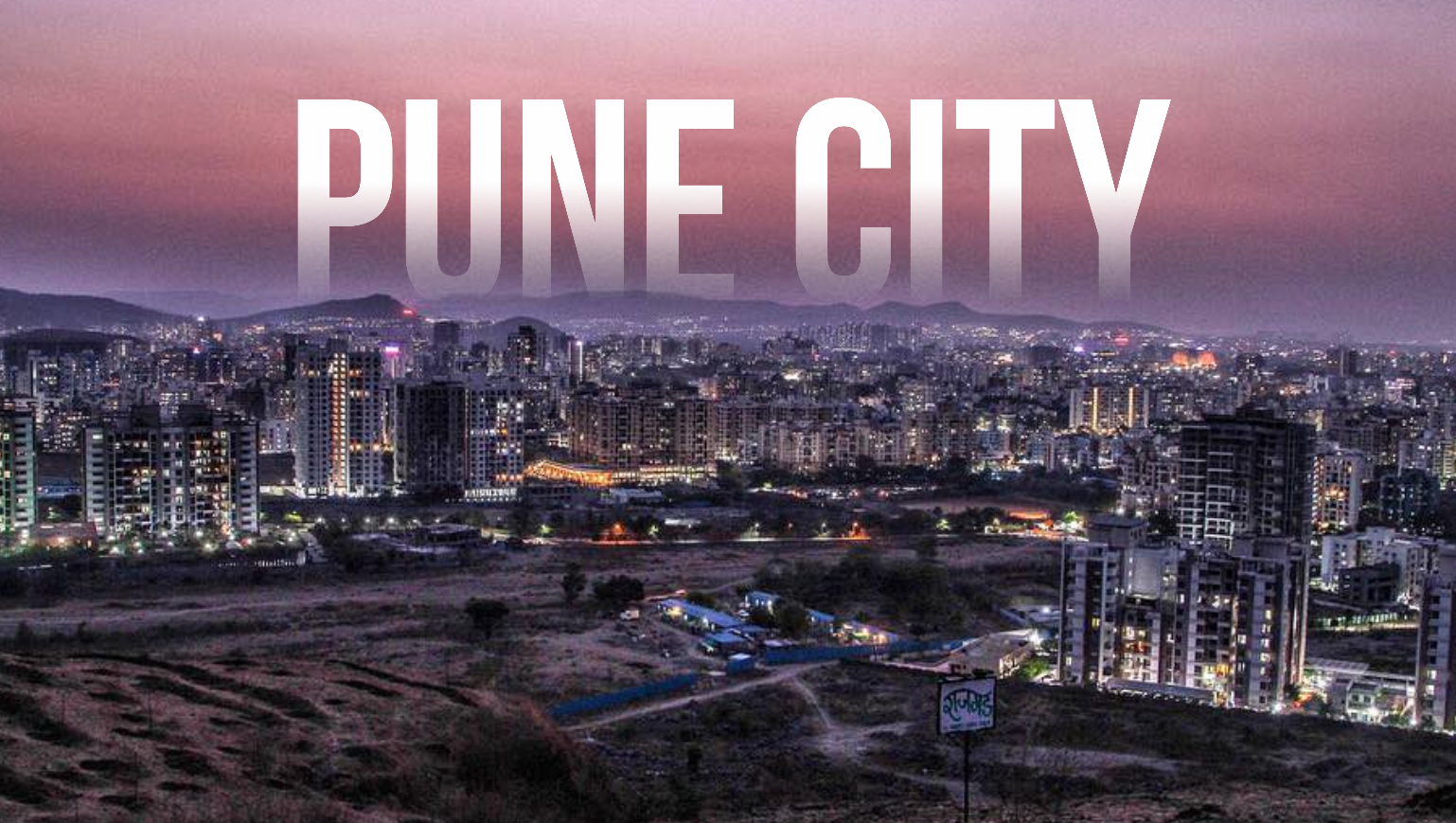
Pune, formerly known as Poona is the second-largest city of Maharashtra, after Mumbai and eighth-most populous city in India.

India’s first indigenously-run girl’s school was started in Pune by Savitribai Phule along with her associate Fatima Sheikh.

Pune is widely regarded as the second major “IT hub of India” and the top “automobile and manufacturing hub of India”
Pune is where Badminton originated in India.

Pune has 21 engineering colleges, which is highest in the world in a given city. There are many popular and old institutes in Pune and because of this in our Marathi language we called Pune as “ Shikshanache Maherghar ” it means Hometown of Education.

Pune has the highest number of software companies in India.

Beside this Pune has some unique things that you will only see in Pune.

1. Puneri Patya

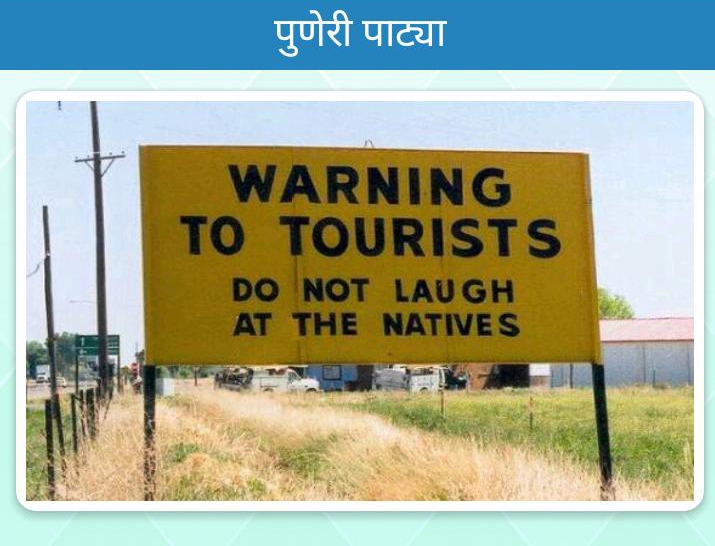
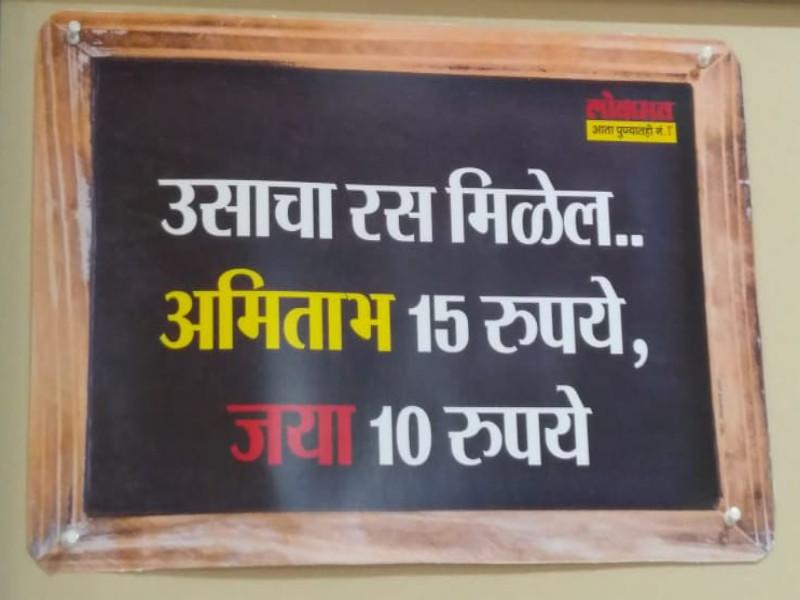
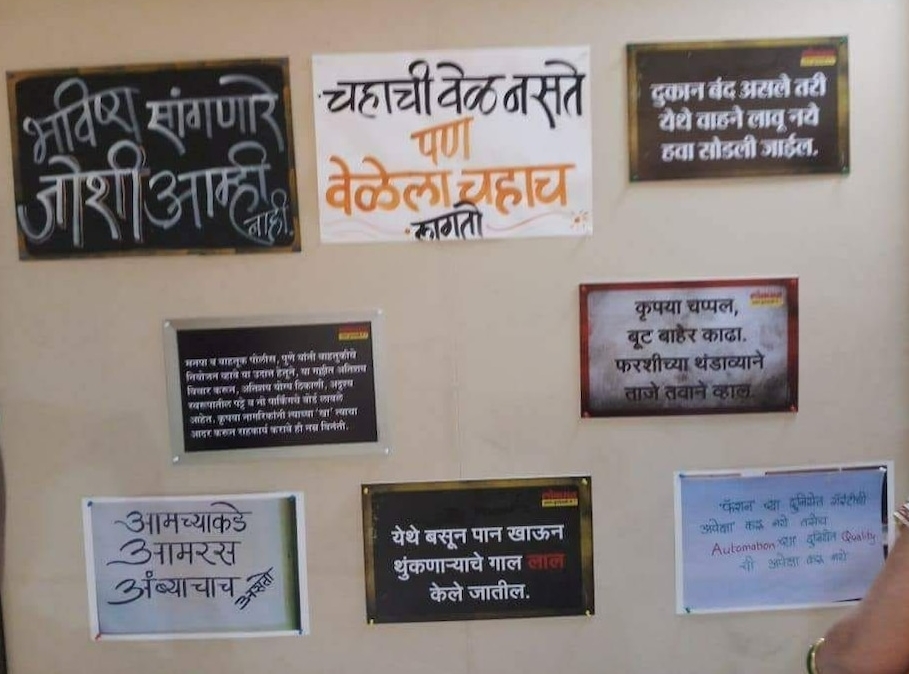
People who mostly come from outside the city come across those ubiquitous Puneri Patya, which are known for their bluntness and arrogance, while they appear funny to the uninitiated. A typical Punekar thinks and acts as though they have the sole right to educate people in their own ways. A Punekar believes in calling a spade a spade. They want order and discipline around them, which is absent when it comes to traffic though. They don’t want to repeat the same thing to visitors or passers-by. Hence, the Patya culture has been thriving in Pune dishing out advice, warnings and at times, threats to those who have not adopted the city’s culture.
From this unique way of expressing their thought we can say that Punekars love to educate others and finding the mistakes of other peoples.
Being a Punekar myself, I never found these Patya strange. However, some people from other cities always made fun of these signages. It seems pun is part of Pune’s life as these signages indicate.

2. Puneri Misal

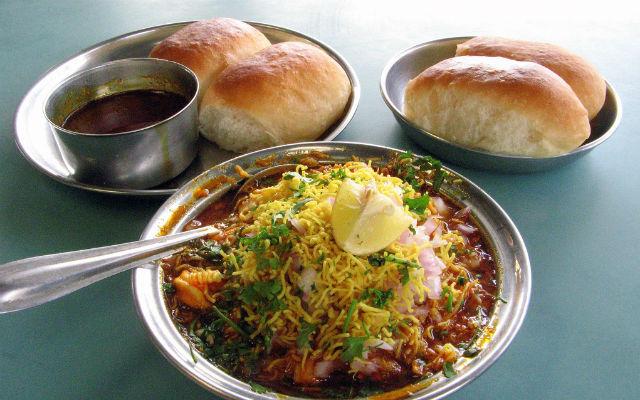
Famous Puneri Misal you should definitely try if you are traveling to Pune. Misal is like full time meal for Punekars, they can eat Misal all day without getting bored. Misal the local spicy snack of Punekars. It is the all time favourite dish of Punekars and you would find every restaurant and even the smallest hotel at the corner serving them.

3. No work between 1pm to 4pm

In Pune during some time in afternoon like about 2 hours from 1pm to 4pm you will notice that every shop even the smallest one at nook is closed.
Outsiders an those who are new at Pune think this habit of Punekar a bit weird, outsiders find it strange that almost all shops are closed for some hours in the afternoon since their owners take a nap during that time.

4. Puneri Chaha

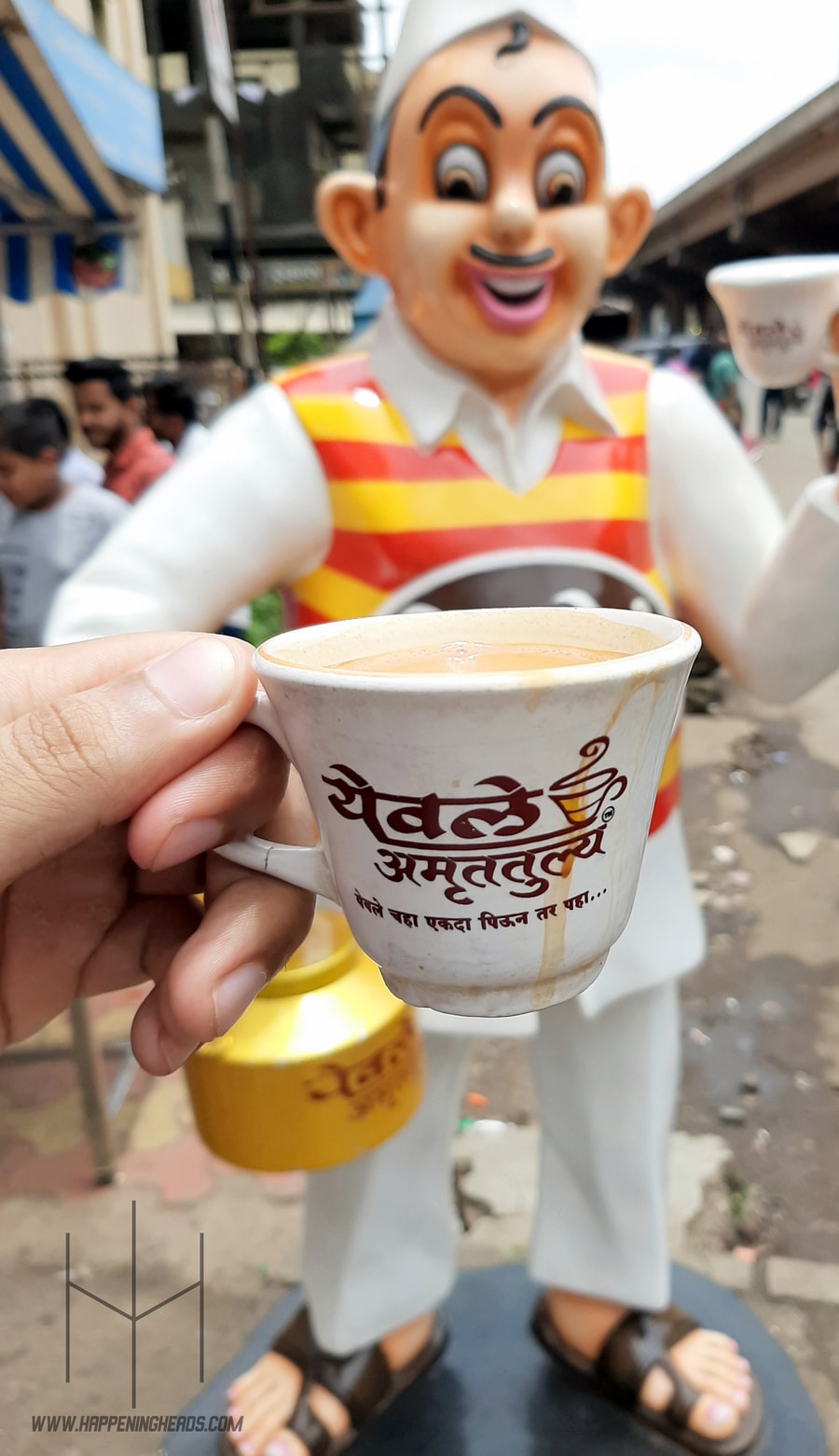
Pune’s most favourite and famous tea destination “Yewale Amruttulya”. You will find it strange that, a tea shop is as famous as Starbucks. Many people travel far away just to taste “Yewale Amruttulya”, you have to stand in long lines just to taste a tea.

Terrorism

Terrorism is a criminal act that seeks to instil terror in ordinary people. It is a danger to mankind. It covers anybody or any organisation who spreads violence, such as riots, burglaries, rapes, kidnappings, fights, bombs, and so on. Terrorism is a cowardly act. Terrorism is also unrelated to religion. A terrorist is a terrorist, regardless of whether he or she is Hindu or Muslim.

Types of Terrorism

Terrorism is classified into two types: political terrorism, which causes widespread alarm, and criminal terrorism, which involves abduction for ransom money. Political terrorism is even more dangerous than criminal terrorism since it is carried out by well-trained individuals. As a result, it becomes difficult for law enforcement organisations to apprehend them in a timely manner.

Terrorism spreads at both the national and international levels. Regional terrorism is the most violent type of terrorism. Because terrorists believe that dying as a terrorist is precious and holy, they are prepared to go to any length. All of these terrorist organisations are formed for a variety of reasons.

Causes of Terrorism

There are several major causes of terrorism, including rapid population growth, politics, social and economic problems, dissatisfaction with the country’s system, a lack of education, corruption, racism, economic inequality, and linguistic differences. Terrorism is used as a weapon to show and justify one’s point of view. The most well-known riots are those between Hindus and Muslims, although there is a distinction between caste and terrorism.

The Effects Of Terrorism

Terrorism instils fear in individuals, and as a result, people in the country feel insecure. Terrorist attacks damage millions of products, take the lives of thousands of innocent people, and slaughter animals. After witnessing a terrorist attack, disbelief in mankind grows, giving rise to another terrorist. There are several forms of terrorism in various areas of the country and throughout the world.

Today, terrorism is not just a concern in India, but also in our neighbouring nation, and governments all over the world are working hard to combat it. The September 11, 2001, terrorist attack on the World Trade Center is widely regarded as the world’s biggest. Osama bin Laden attacked the world’s tallest skyscraper, resulting in millions of injuries and the deaths of thousands of people.

Terrorist Attacks in India

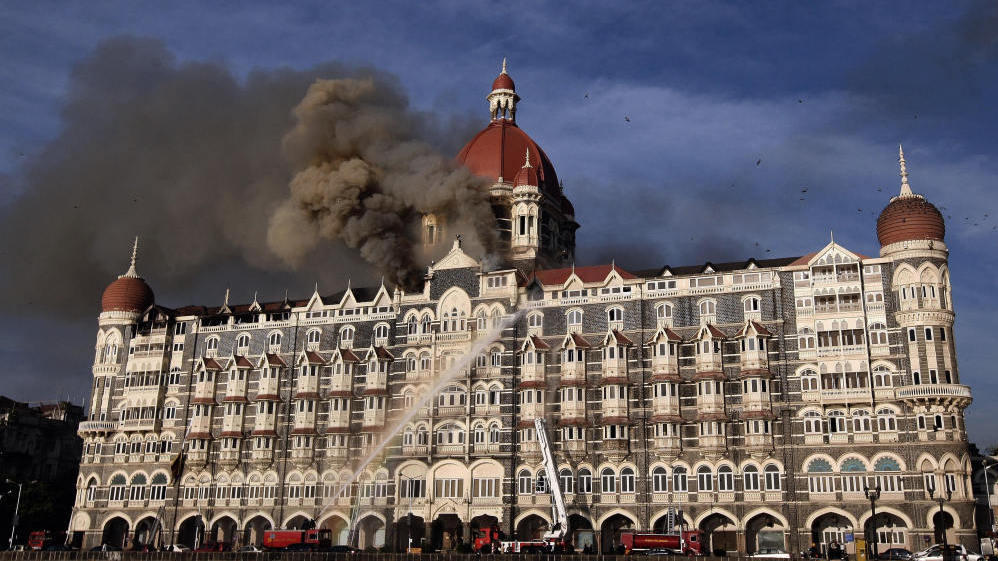
India has suffered several terrorist attacks which created fear among the public and caused huge destruction. Here are some of the major terrorist attacks that hit India in the last few years: 1991 – Punjab Killings, 1993 – Bombay Bomb Blasts, RSS Bombing in Chennai, 2000 – Church Bombing, Red Fort Terrorist Attack,2001- Indian Parliament Attack, 2002 – Mumbai Bus Bombing, Attack on Akshardham Temple, 2003 – Mumbai Bombing, 2004 – Dhemaji School Bombing in Assam,2005 – Delhi Bombings, Indian Institute of Science Shooting, 2006 – Varanasi Bombings, Mumbai Train Bombings, Malegaon Bombings, 2007 – Samjhauta Express Bombings, Mecca Masjid Bombing, Hyderabad Bombing, Ajmer Dargah Bombing, 2008 – Jaipur Bombings, Bangalore Serial Blasts, Ahmedabad Bombings, Delhi Bombings, Mumbai Attacks, 2010 – Pune Bombing, Varanasi Bombing.

The recent ones include 2011 – Mumbai Bombing, Delhi Bombing, 2012 – Pune Bombing, 2013 – Hyderabad Blasts, Srinagar Attack, Bodh Gaya Bombings, Patna Bombings, 2014 – Chhattisgarh Attack, Jharkhand Blast, Chennai Train Bombing, Assam Violence, Church Street Bomb Blast, Bangalore, 2015 –  Jammu Attack, Gurdaspur Attack, Pathankot Attack, 2016 – Uri Attack, Baramulla Attack, 2017 – Bhopal Ujjain Passenger Train Bombing, Amarnath Yatra Attack, 2018 Sukma Attack, 2019- Pulwama attack.

Agencies fighting Terrorism in India

To combat terrorism in India, many police, intelligence, and military institutions have created specific agencies. In India, major anti-terrorism agencies include the Anti-Terrorism Squad (ATS), the Research and Analysis Wing (RAW), and the National Investigation Agency (NIA).

Conclusion

Terrorism has evolved into a worldwide concern that must be addressed at the outset. Terrorism cannot be handled only by law enforcement forces. People all across the world will need to band together to combat the rising menace of terrorism.

BUDDHIST PILGRIMAGES IN INDIA

Buddhism, an esoteric tradition and way of life, arose to teach people how to experience life in a more meaningful way, bringing intrinsic serenity and pleasure. It aspires to live in perfect harmony with the greatest outpouring of love, honesty, and compassion possible. There’s a lot to discover about this 2500-year-old religion and its global appeal. Explore these locations to be awestruck by their beauty and to learn more about Buddha’s teachings.

Bodh Gaya

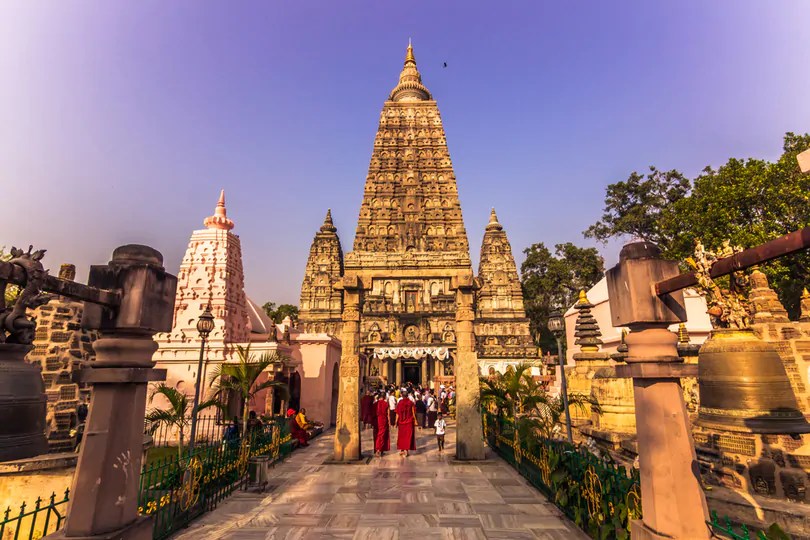
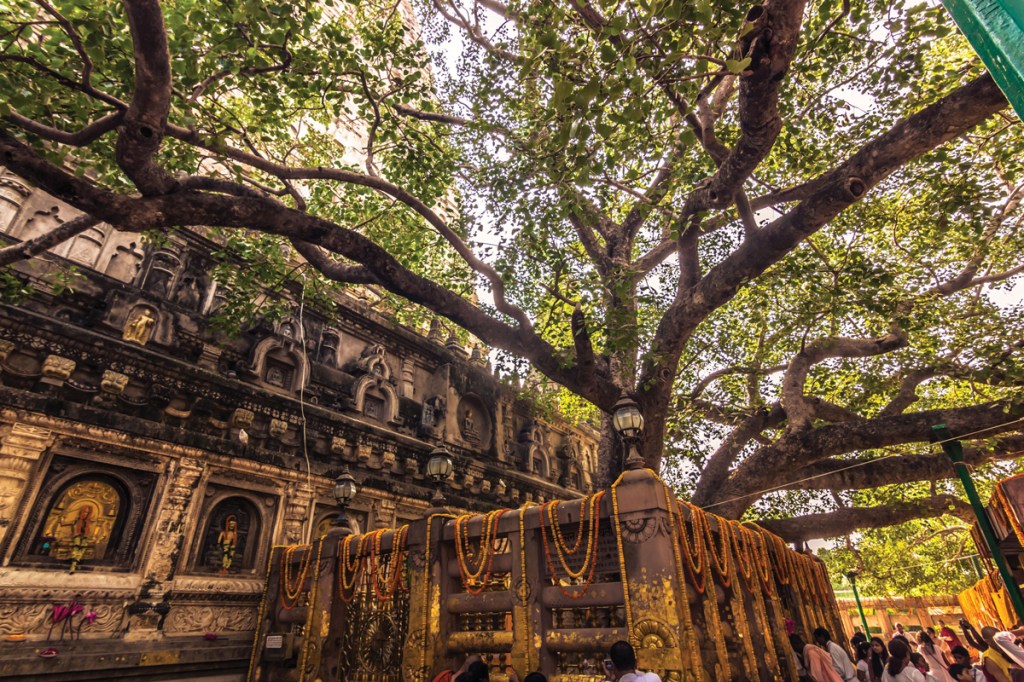
Bodh Gaya is India’s Buddhist epicenter. The tiny village of Bodh Gaya in Bihar reverberates with a serene atmosphere infused with profound devotion. This 2,500-year-old Buddhism cradle, studded with temples and monasteries, welcomes people from all across the globe to soak up its spiritual and holy vibes, follow Lord Buddha’s footsteps, and hear about his teachings at the very spot where he attained enlightenment. The serenity pervades every wind in this tiny village. Prince Siddhartha, better renowned as Lord Buddha, is claimed to have taken shelter under the most sacred tree in the vicinity, the Bodhi tree, there he meditated till enlightenment.

The beautiful Mahabodhi Temple, a UNESCO World Heritage Site, is one of Lord Buddha’s four sacred shrines. The renowned sandstone temple stands 52 meters tall in the heart of Bodh Gaya town, amidst lush green gardens. The existing Bodhi tree, most likely the sixth generation of the first, a prominent emblem in Buddhism, is located to the left of the Mahabodhi Temple. It commemorates the spot where Lord Buddha attained enlightenment underneath the first Bodhi tree. Buddha meditated for about a month in Bodhgaya under a holy fig tree. Bodhi Day, which honors Buddha’s enlightenment under the Bodhi tree, is observed every year on Dec 8 by Buddhists all around the world.

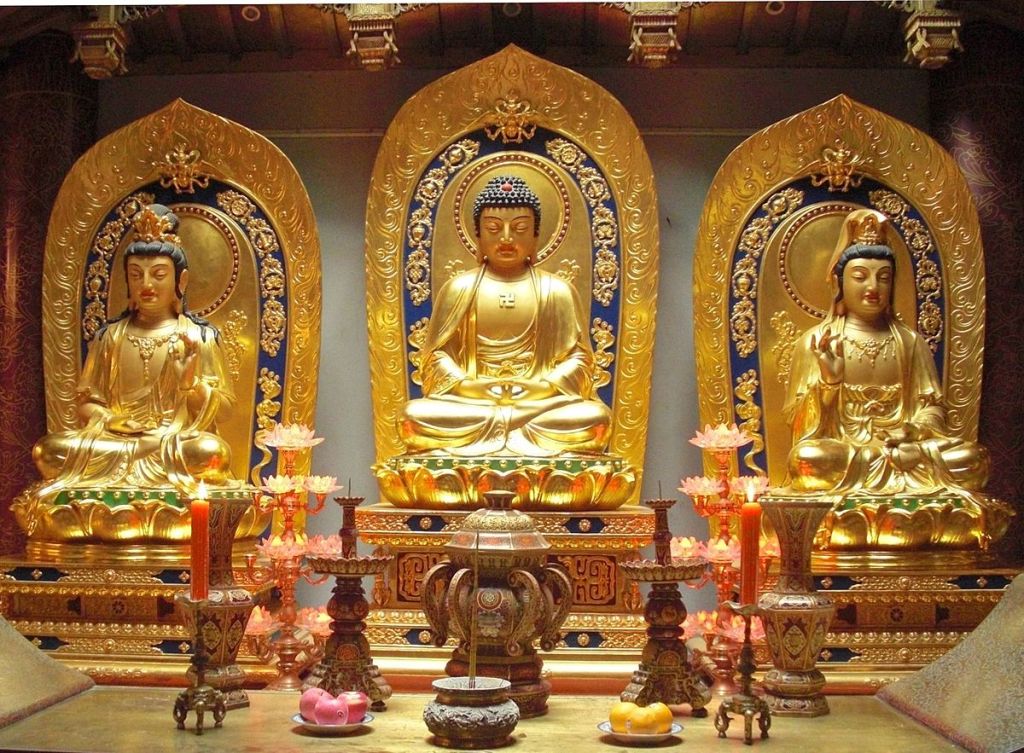
It’s a delightful surprise, with exquisite engravings and arch motifs on the tower. A golden figure of Lord Buddha in his renowned bhumisparsha mudra, with one finger touching the ground and asking it to witness his enlightenment, can be found inside the temple. A statue of Mayadevi, Lord Buddha’s mother, is housed in a room at the top.

Sarnath 

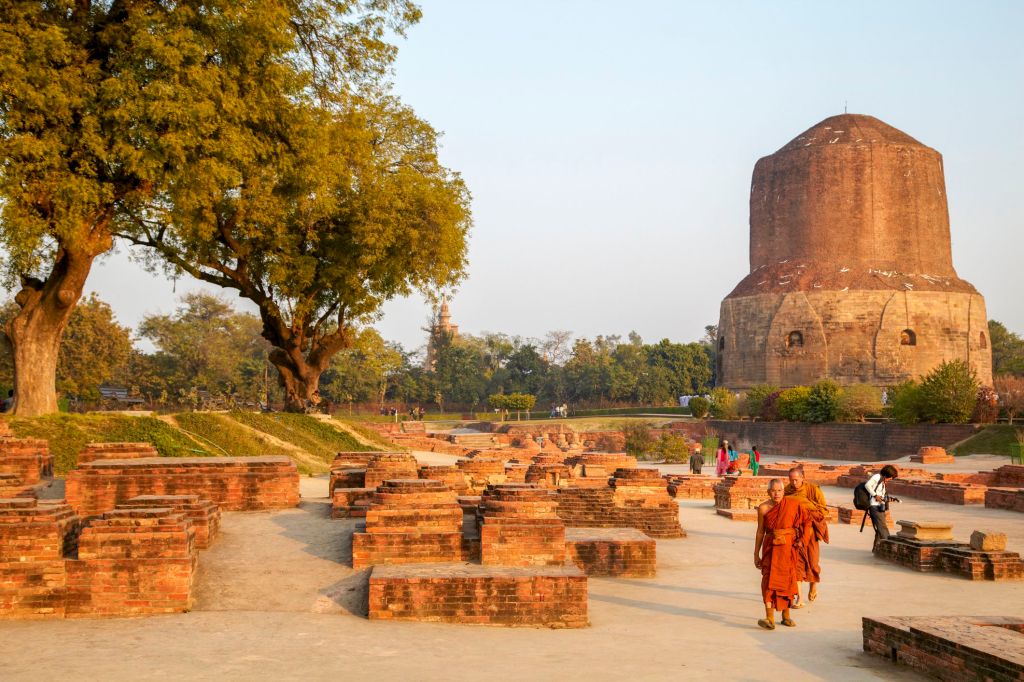
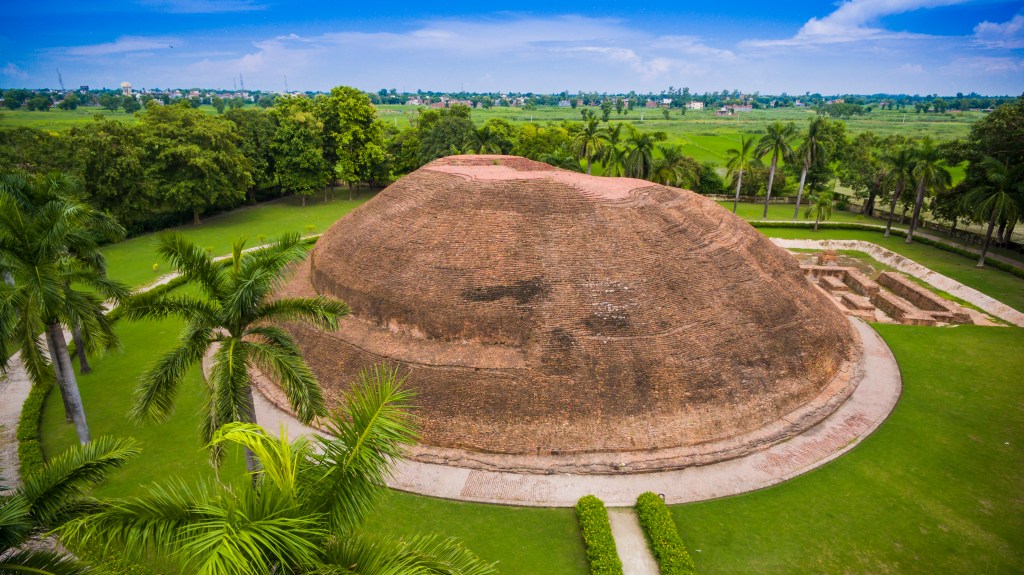
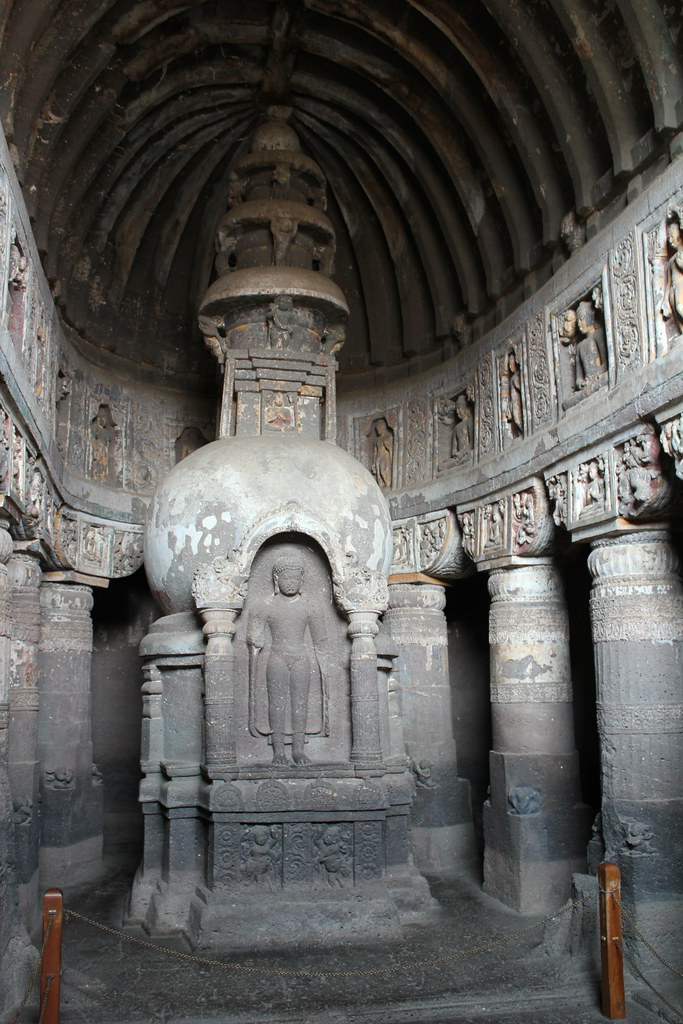
Sarnath,10km from Varanasi, was the starting point for Buddha’s teachings and preaching. Buddha gave his first lectures after nirvana in this very location. Sarnath is one of India’s four holiest Buddhist sites, with constructions like the Dhamekh Stupa and Chaukhandi Stupa highlighting its historical importance.

The solid cylindrical structured Stupa made of red bricks and stone reaches a height of 43.6 m and a diameter of 28 m. This historic site is significant because it represents the site where Lord Buddha delivered His first teaching to His 5 monks following achieving enlightenment in Bodh Gaya. Buddhist pilgrims from all across the world come to Sarnath to worship Lord Buddha.

Lord Buddha’s remains were dispersed and buried beneath 8 mounds after his enlightenment, with the embers and urn buried beneath 2 additional mounds, for a total of 10 such memorials housing Lord Buddha’s relics.

Great Indian Emperor Ashoka of the Maurya Dynasty, who reigned over almost the entire Indian subcontinent from c. 268 to 232 BCE, constructed multiple Stupas across India bearing relics of Lord Buddha and his disciples, to spread Buddhism. At 249 BCE, he ordered the construction of the Dhamek Stupa at Sarnath, which was later reconstructed in 500 CE, as well as several other Sarnath structures.

Kushinagar

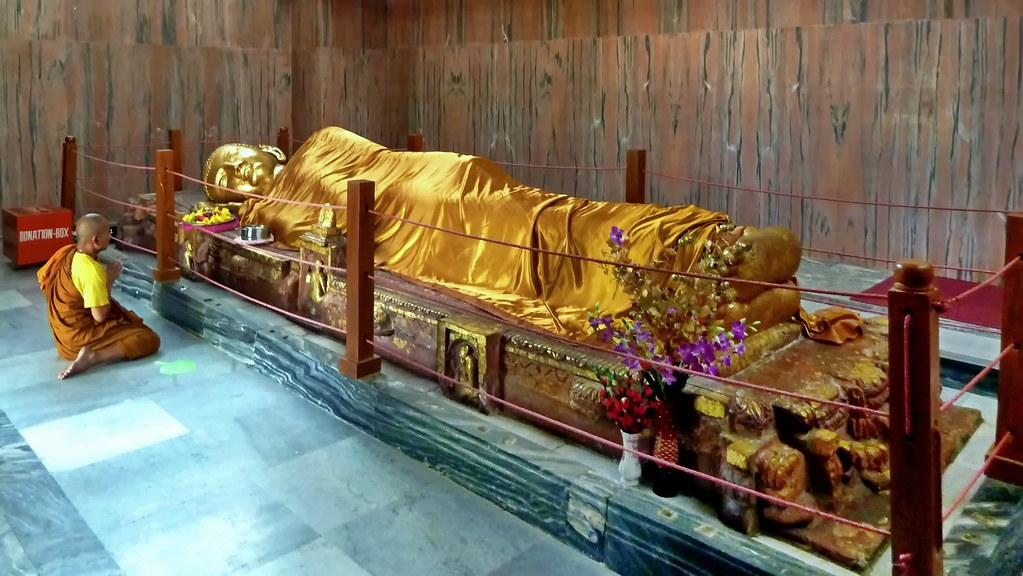
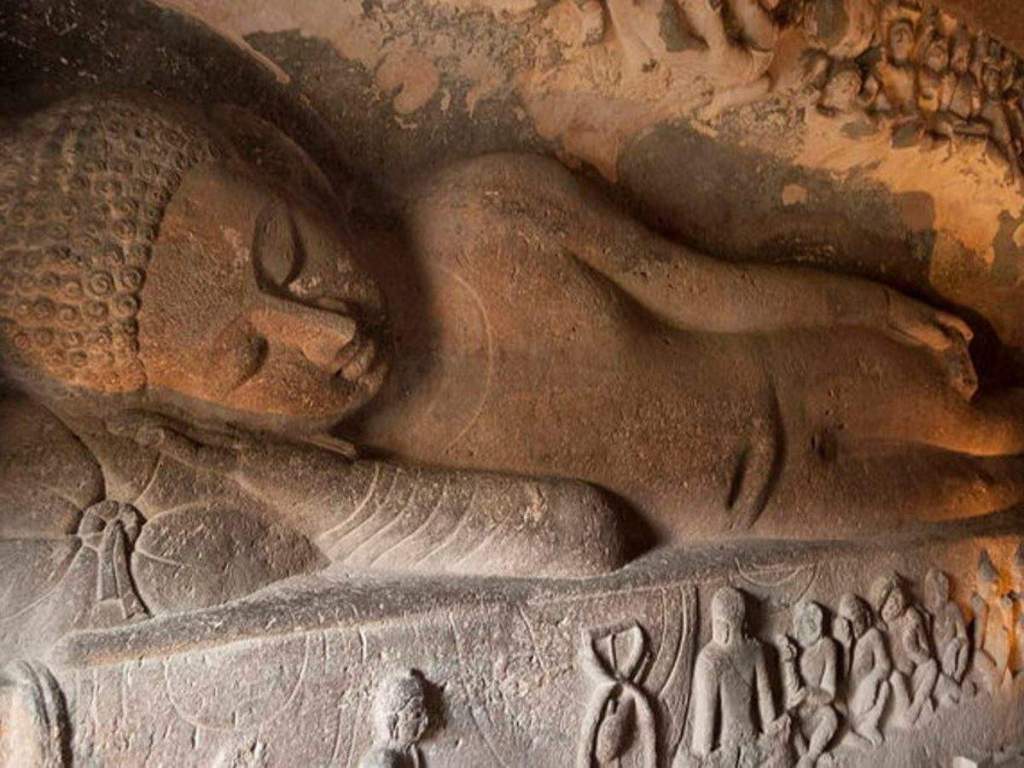
Kushinagar is a well-known tourist destination associated with Gautama Buddha, located 51 kilometers east of Gorakhpur on National Highway No. 28. Buddha delivered his last and final preaching here in 483 BC. The statue of Lord Buddha in nirvana, which towers 6.10 meters tall and dates from the 5th century A.D., is built of monolith red-sandstone. The ‘Resting-Buddha’ is seen lying on his right side, facing west. It is a holy pilgrimage place since it is where Lord Buddha breathed his last.

Kushinagar’s other attractions include the Indo-Japanese Temple, Burmese Temple, Chinese Temple, Thai Temple, Korean, Sri Lankan, Tibetan temples, 15-acre Meditation Park, and Museum.

Tawang Monastery

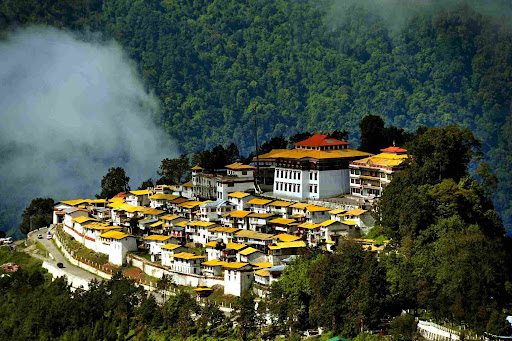
Tawang Monastery, the largest monastery in India and the second largest in the world, located in Tawang city of Tawang district in the Indian state of Arunachal Pradesh, serves as the valley’s social, cultural, and spiritual hub. This monastery, perched on a hill about 10,000 feet above sea level, is India’s largest, with views of ravines to the south and west, a short ridge to the north, and a gradual slope to the east. During the winter, it is buried in snow, which enhances its splendor.

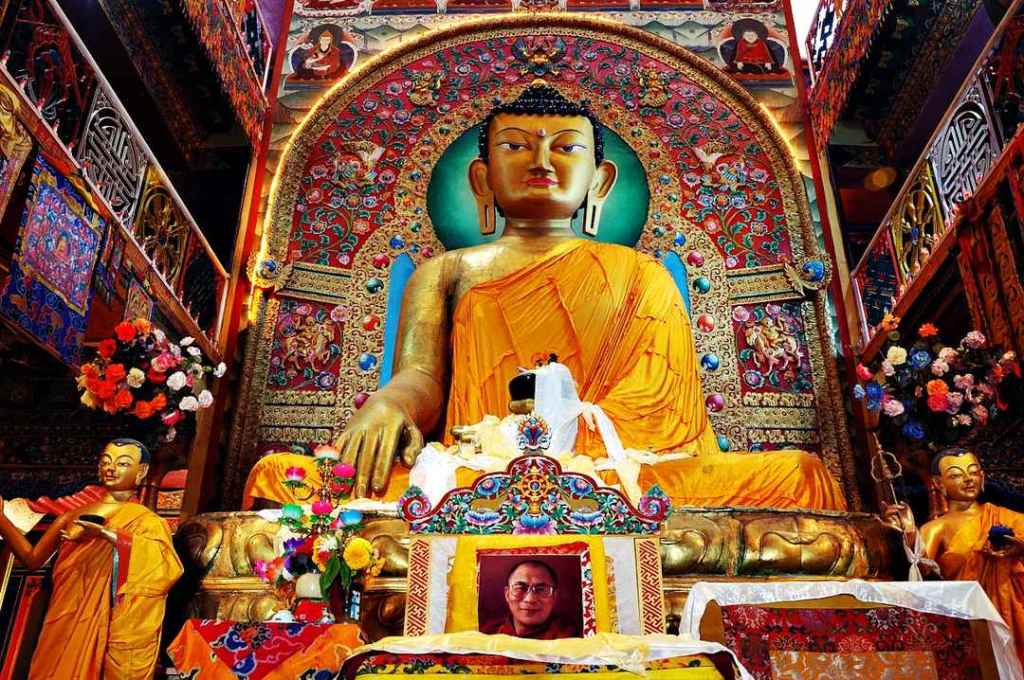
The Mandalas or Kying-Khores are painted on the Kakaling’s ceilings and inner roofs, while saints and divinities are depicted on the inside walls. On the monastery’s northern flank, after Kakaling, is the main gate. It has a 925-foot-long eastern wall. A 25-foot-high golden statue of Lord Buddha, perched on a lotus throne and flanked by his two chief attendants, Maudgalyayana and Sariputra, each bearing staff and a bowl, is a major attraction of the monastery. The Tawang Monastery, which is three stories tall and is enclosed by a 925-foot high compound wall, houses 65 residential buildings.

The monastery is historically notable as it was founded in 1681 per the wishes of Ngawang Lobsang Gyatso, the 5th Dalai Lama. The word ‘Tawang’ translates to ‘chosen by a horse,’ and legend has it that a horse belonging to the founder, Mera Lama Lodre Gyatso, chose the current monastery’s location. Tsangyang Gyatso, the sixth Dalai Lama, was born at Tawang, making it a significant Tibetan Buddhist pilgrimage destination.

Ajanta Caves

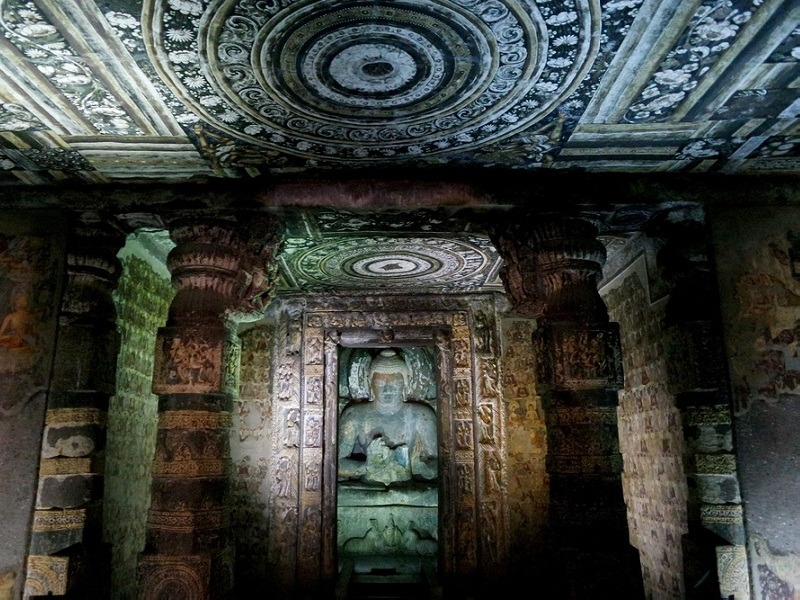
The Ajanta Caves, 107 kms from Aurangabad and 60 kms from Jalgaon, were designated as a UNESCO World Heritage Site in 1983. A protected monument in the care of the Archaeological Survey of India, it is a cluster of 32 Buddhist caves not far from a medieval village of the same name. Ajanta’s thirty rock-hewn caves, built into a cliff’s scarp, are either chapels or monasteries. Paintings adorn the cave walls, many of which retain their original colors. Exquisitely carved sculpture adorns the building’s outer walls. The Ajanta paintings’ Buddhist motif embodies the essence of Lord Buddha’s life and previous earthly events.


5 Forts You Must Visit Near Pune

“Forts are the very basis of a kingdom. They are the real treasure, the real wealth of a kingdom. They are our best form of defense against the enemies. Forts themselves are the kingdom.”

Rulers of almost every dynasty in Maharashtra gave tremendous importance to the construction and maintenance of forts. That’s one of the reasons you will find a fort in every nook and cranny of Maharashtra. Pune is a city that has a large number of forts around it. Many of these forts were built by Chhatrapati Shivaji Maharaj, the great Maratha warrior king. These Forts are like real treasure of Maharashtra.

So here are top 5 forts near Pune you must visit.

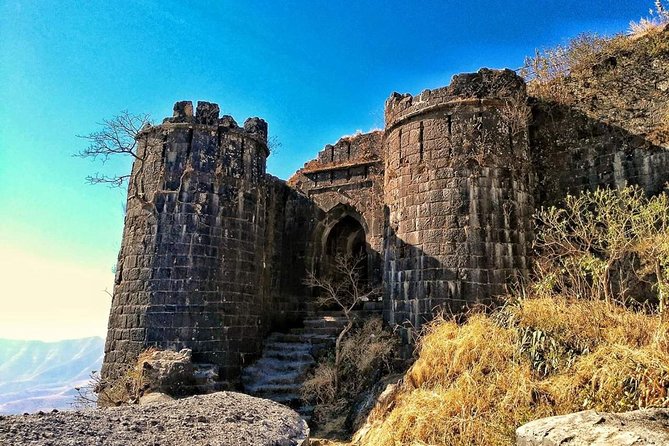
1. Sinhagad Fort

Sinhagad Fort Formerly known as Kondhana is one of the most beautiful fort to visit near Pune.

The forts has been the site of many battles, with the Battle of Sinhagad (1670) being the most notable of all. The fort was named ‘Lion Fort’ (Sinhagad) to honor the sacrifice of Subhedar Tanaji Malusare by Chhatrapati Shivaji Maharaj, who lost his life while fighting the Mughals in the battle.

The fort, built on the top of a hill, offers an amazing view of the lush greenery surrounding it. Pune Darwaza and Kalyan Darwaza are the two entrances to the fort, with the former being the main entry point for visitors. There are a few temples and a memorial built for Tanaji Malusare inside the fort.
Although there is a motorable road till the entrance, trekking to it is preferred by many youngsters. The 13-km trek has a medium difficulty level which makes it one of the best forts near Pune for trekking.

Distance from Pune : Around 30 km via Sinhagad Ghat Road and Sinhagad Road

2. Torna Fort

The historical significance of Torna Fort is that it was the first fort captured by Chhatrapati Shivaji Maharaj; thereby, making it the foundation of the Maratha empire. With an elevation of over 4600 feet above sea level, it is also the highest fort near Pune. Over the years, it has become one of the favourite destinations for anyone who wishes to experience history amidst the opulence of natural beauty.

Torna Fort is also a popular trekking hotspot, and the best time to visit it, is in between September and December. The trek begins from Velhe village as its base. One will first get the exalted view of the fort in the distance after a walk of 200 m. The entire trail is dotted with rocky patches hemmed by dense vegetation. The 4-hour trek goes through various structures like Bini Darwaza, Menghai Goddess Temple, Budhla Machi and the majestic Zunjar Machi. If you are trekking to the fort during the monsoon, be a little careful as the trail becomes slippery in patches. The view from top of the fort is very beautiful and mesmerising.

Distance from Pune : Around 71 km

3. Shivneri Fort

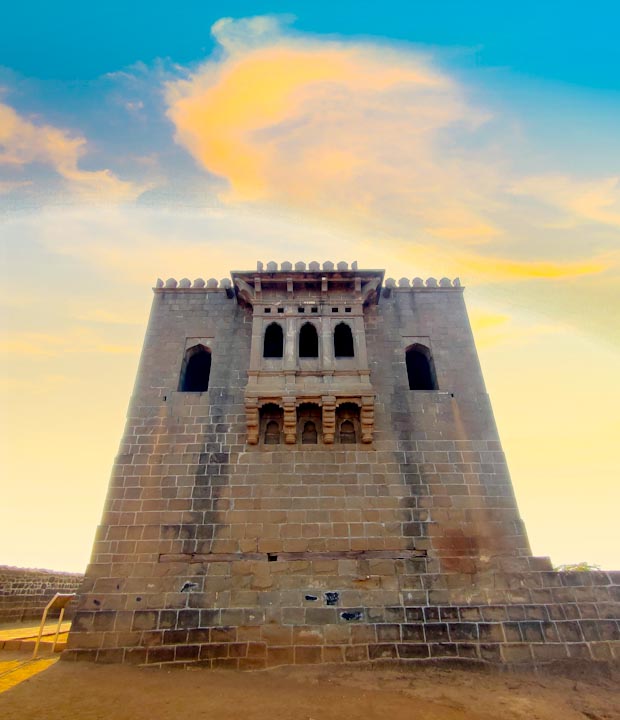
Shivneri Fort : the birthplace of Chhatrapati Shivaji Maharaj, the founder of the Maratha empire. Located near Junnar town, the military fortification has a memorial of Chhatrapati Shivaji Maharaj, known as Shiv Kunj right in the center.

The fort offers a panoramic view of the picturesque mountainous and beautiful lakes in the backdrop.

The fort has been rightly rated as one of the most favorite places for sightseeing as it has some interesting spots, such as the temple of Goddess Shivai.

Distance from Pune: 93 km

4. Raigad Fort

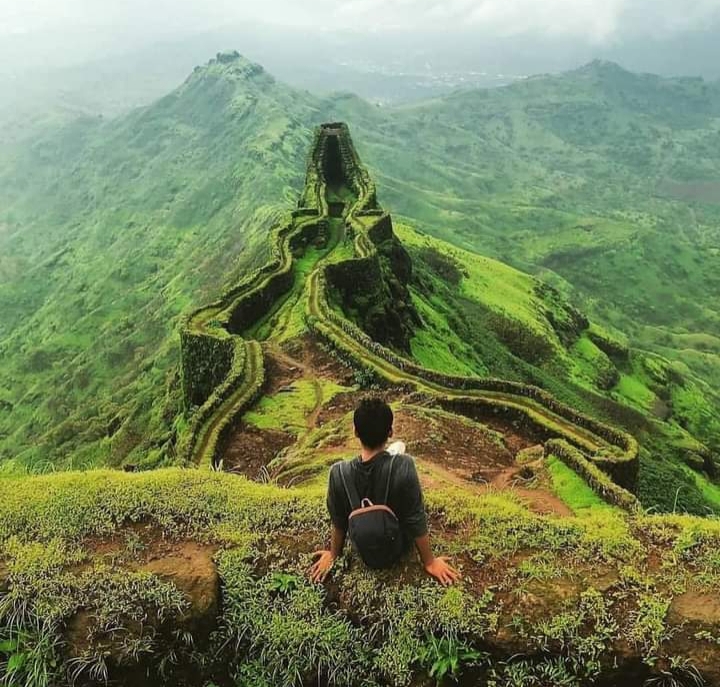
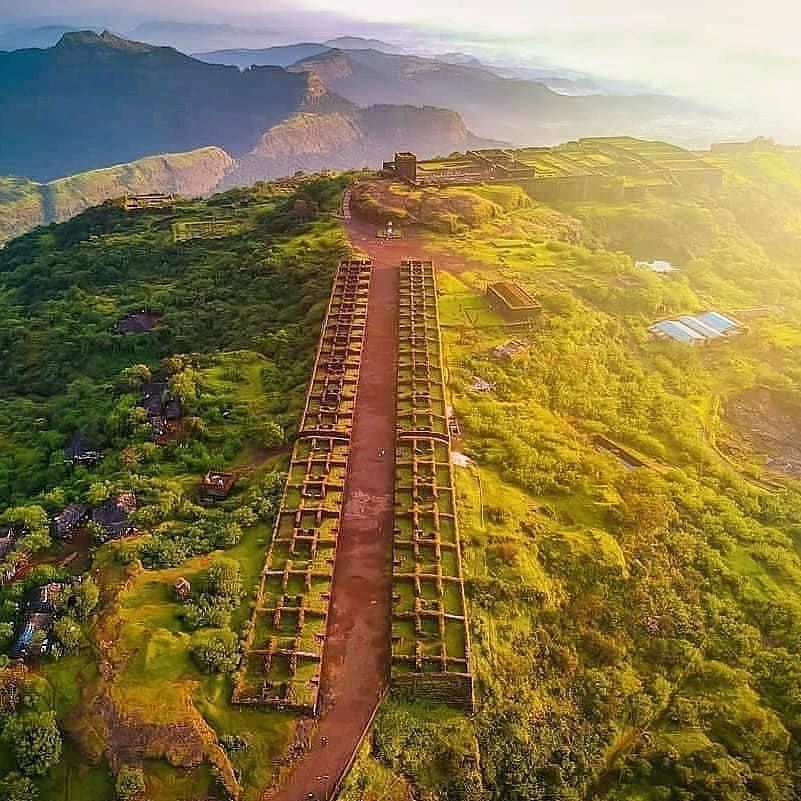
Raigad Fort is another witness to the glorious past of the Maratha empire, be it the coronation of Chhatrapati Shivaji or the various battles that were fought here. The hill fortress was the capital of the Maratha empire during the reign of Chhatrapati Shivaji Maharaj. Though many portions of the fort are in ruins, the remaining structures stand tall, testifying why Raigad Fort was called the ‘King of Forts’ as well as ‘Gibraltar of the East’. There are towers, grand entrances, artificial lakes, a Shiva temple and many other structures inside the fort.

Raigad Fort is a favourite among adventure enthusiasts because you have to either use the ropeway or trek to the fort, which is 2700 feet above sea level. Those who want to trek to the fort need to climb around 1700 steps from the foothills to reach the fort.

Distance from Pune : 131.4 km via Tamhini Ghat Road and Mulshi Road

5. Pratapgad Fort

If you want to indulge in a day full of adventure, history and scenic beauty, Pratapgad Fort is the place to be. It is one of the most well  historical marvels in Maharashtra. Pratapgad Fort is also known as the Valour Fort as the heroic battle between Chhatrapati Shivaji Maharaj and Afzhal Khan took place here. The fort is divided into parts – the upper fort and the lower fort. The lower fort is largely occupied by Bhawani temple, whereas the upper fort includes several eye-catching structures.

As Pratapgad Fort is located near Mahabaleshwar, it is frequented by several tourists. Around two to three hours of strolling around are enough to check out every nook and corner of this architectural beauty and its majestic surroundings. The best time to visit is around March and September as the weather remains pleasant during these periods.

Distance from Pune: Around 140 km

The International Day of Indigenous people

One of the most tragic instances in history would be that of the holocaust – a word that in itself is a definition of six years of European geopolitics. In Russia, Palestine and China, the expulsion of the White Army, the expulsion of the Arabs and the brutual suppression of cultures across China in the name of cultural revolution respectively bring to picture the way in which states and not just people can sometimes be the enemy of people. However, there have been several such instances in history, most of them hidden because they were carried out by the more ancestors of the ones who ended up being economically and intellectually influential communities.

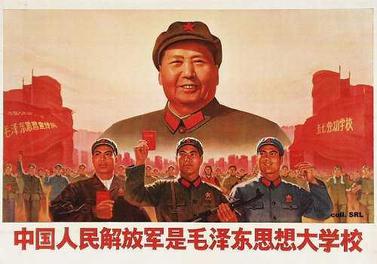
Cultural Revolution - Wikipedia
A poster calling out for Chinese Cultural Revolution

Human history is a record of forced displacements both internal and external, ethnic cleaning and genocides and murders both to the dismay and sponsored by states. When Captain Cook discovered the down under, it led a massive import of British criminals on the continent. With them came officers, scientists and explorers. The businessmen and civilians searching for more opportunities came in later. The people of the continent – the Australian arboginals, the Maoris from Oceania and many more tribes were reduced to a mere holder of small patches of lands and often no land at all by the British who had a superior military.

When the first Irish and British settlers landed in the new World of America, the red Indians offered them food and shelter which soon became a situation where the Red Indians had to fight for the survival of their lives and their cultures which was systematically and quite institutionally taken away by the New World settlers. Similarly, when the Spanish invaded Latin America, it meant a complete and absolute dissolution of their traditions and a genocide that would annihilate their population to an extent where even after 400 years, they would not attain the same.

The Last Days Of The Incas - HistoryExtra
Machu Pichu stands as a testimony to the Grand Incan Empire in the Andes before the Spanish arrived.

To add to all these miseries are the tales of the Rohingya community from Myanmar, the Tamils in Sri Lanka, the Kashmiri Pandits in Indian state of Jammu and Kashmir, the now diminishing sea faring communities in Philippines and Malaysia and many more. Japanese and Italian unifications were also carried out at the cost of the local traditions, cultures and ways that the communities living there had been practicing for a millennia. In India, the use of English and Hindi have slowly gobbled up on the rich culture of local languages that the communities had. In fact, many communities from the state of Bihar and Uttar Pradesh have completely given up on their languages. Bihar – a state where only 6% people had Hindi as their mother tongue now has a minority of about 20%!!

World loses about 1 language every 15 days!!!

Wikipedia defines Indigenous people as – “Indigenous peoples, also referred to as first peopleaboriginal peoplenative people, or autochthonous people, are culturally distinct ethnic groups who are native to a place which has been colonised and settled by another ethnic group. ” But, a broader definition is the fact that indigenous people are defined by their cultures which is at a steady loss across the globe. The most important thing is to treasure the fragments of their traditions that still remain. Because a rainbow is better a rainbow.

COVID-19 and Indigenous peoples | United Nations For Indigenous Peoples

Happy International Day for the Indigenous communites.

Death anniversary of World poet

India marks the 80th death anniversary of the great Bengali polymath Rabindranath Tagore on 22nd day of Bengali month Srabon, known as Baishe Srabon, solemnly marking the day when the poet and playwright passed away.

Rabindranath Tagore, the first non-European person to win a noble prize in literature, was known for reshaping the structural framework of Bengali literature and music, along with other Indian art forms with the adrent of modernism in the late 19th and 20th century.

WHY INDIA STRUGGLES TO WIN MEDALS IN OLYMPIC ?

India is nation of 1.3 billion individuals yet we are aching for gold medals. Though little nations like France, Japan and Germany have more gold medals than our complete awards till now. What could be the explanation ? Do our people need potential or difficult work ? No, we have potential however we don’t utilize it.

Since our youth we are advised to do well in examinations, we scarcely have any games period in our school. Numerous nations have sports like gymnastic, volleyball and swimming in their school however we don’t have any. A few guardians don’t permit their children to play any games since they imagine that it could influence their scholarly.

In our nation sports like cricket are given more significance. Cricketers are viewed as God though scarcely anybody knows the names of our Hockey players which is our national sport. Cricket isn’t directed in Olympics. Simply 10 to 12 nations play cricket and we feel extraordinary in the wake of winning a World cup directed between those 12 nations. Cricket is a game which brought by Britishers while games like Kabaddi and wrestling are from India.

Tokyo Olympics Daily: India wins hockey bronze after years of  disappointment | Financial Times

Our Government additionally spend extremely less cash on sports. A portion of the players don’t have appropriate equipment. They additionally need to battle a great deal since some of them come from small towns. They need to confront analysis which the players of different nations don’t confront.

After this load of issues we anticipate that our country should win medals and assuming we don’t, we censure our players. We have been playing Olympics from 100 years while China from 69 years then additionally they have all out 250 gold medals though our all out awards are scarcely 40. Our players are not lacking anyplace they simply need our help and legitimate offices. Assuming we need our nation to more win medals in next Olympics then we should chip away at these issues.

Tokyo Olympics​: India celebrates wrestler Bajrang Punia's wrestling  bronze- The New Indian Express

The Quit India Movement Day

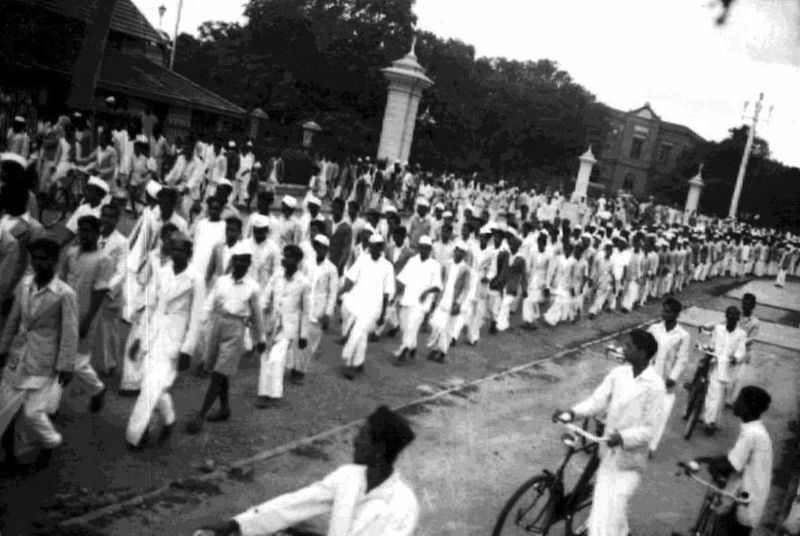
August 8th marks a very iconic day in Indian history. The Indian National Congress declared its ultimatum for the British to leave India. This movement in itself had contested set of consequences – the strengthening of the Muslim League, the rise of freedom struggle motivated Subash Chandra Bose to invade the British camps in Noth East and Gandhi, for the fist time in his career was willing to go agressive even if he had his own definitions of the word – when he announced, “karo ya maro” (Do or Die).

Quit India Movement: Who gave the slogan 'Do or Die' - Oneindia News

The Quit India movement came up at the heels of the failure of the Cripps Mission that was sent by the Raj to secure Indian cooperation towards the British war efforts in the second world war. The leader of the mission, Sir S. Cripps was left wing British statesman who was sympathetic to the cause of Indian self rule but was also a member of the war cabinet of 1942.

The proposals of the mission were refused by the Congress which had seen similar proposals in the first world war where the Raj had promised more autonomy but ended up imposing harsher taxes that resulted in the Non-Cooperation movement, the Rowlatt and Jalia Walah Bagh massacres. The Indian National Congress resigned from its positions in all provincial governments and announced the Quit India Resolution that led a national movement that was difficult for the British to look after in the face of the then ongoing second world war. Virtually all of the INC leaders were jailed for the next three years and the Muslim league got enough time to build itself a support that shook the years Gandhi had spent projecting himself and his colleagues as leaders of a secular, united state of India. To add to it was the vehement opposition Hindu nationalists showed to the movement where many, including the Hindu Mahasabha and Veer Savarakar denounced the movement pointing out to the power vacuum it might cause and quite correctly predicitng the Muslim League partially filling the same.

The British soon left the subcontinent – too weak due to the war to control a population that was showing both civil disobedience and had an army of its own – a reference to the insurgency and attacks the INA had started in the Raj’s territories.

The Quit India movement – with all its pros and cons and consequences formed a very important phase in the history of modern India.

Jinnah expected India and Pakistan to be best of friends - Telegraph India
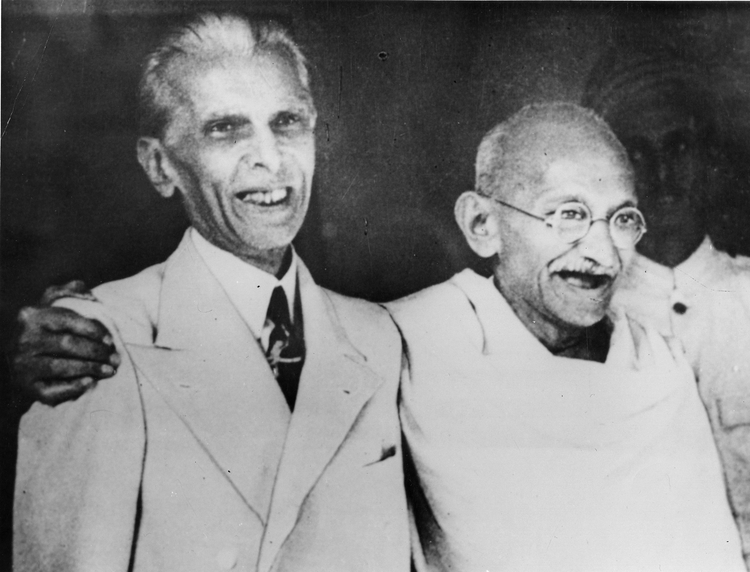
Jinnah and Gandhi had quite different outlook and faced different consequences due to the Quit India Movement – one failed in his projection of a secular and inclusive India, the other successfully used it to campaign for Pakistan

What is the National Sport of India?

Every Indian School child is taught that the peacock is India’s National Bird, Tiger is the national Animal, Jana gana Mana is the national Anthem, and Hockey is the national sport.

But in India, the Ministry of Youth Affairs and Sports in 2012 cleared that no particular sport is recognised as India’s National Game.

Some people called Hockey as the National Sport probably because of the international success that hockey gained since it’s Olympic debut in the early 20th century. In 1928, the Indian men’s hockey team made their debut at the Olympics, and won 6 gold medal between 1928-1956. Though their performance declined later.

Similarly, some people believe Kabaddi as the National Sport of India because Kabaddi too is most popularly played in India. Kabaddi is one of the Oldest sports in our country.

But the truth is that the national game of India is neither Hockey nor Kabaddi. There is no sport which has been declared or recognised as the National Sport of India till date.

First Athletics Gold in Olympics

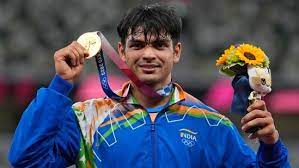
Neeraj Chopra won Gold in the men’s Javelin throw final with a throw of 87.58 to win the first gold medal in athletics for India and the second gold overall.

This is India’s 7th medal at Tokyo Olympic, the best ever medal haul for India at a single edition of the games.

The first Gold medalist in Olympics for India was Abhinav Bindra in shooting and Neeraj becomes the second Gold medalist for India in the history of Olympics.

So far, India won 1 gold, 2 silvers and 4 bronze at Tokyo Olympics.

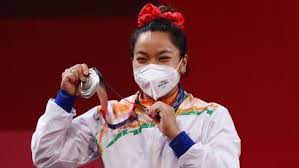
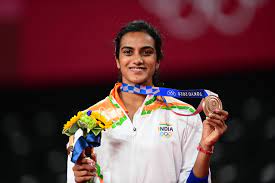
Sixth medal for India at Tokyo Olympic

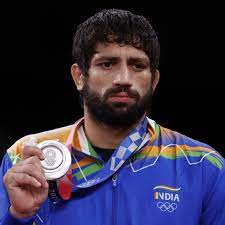
Bajrang Punia became the sixth ever Indian wrestler to win an Olympic medal, and the second wrestler from India to win a medal at Tokyo Olympics.

Indian wrestler Bajrang Punia defeated Kazakhstan’s Daulet Niyazbekov to win the bronze medal in men’s freestyle 65kg wrestling at Tokyo Olympics.

Punia won the 6th medal for India at the games this year, and the 4th bronze for the nation.

Now India is eyeing it’s highest Olympic medal haul in an Olympic campaign (as India equals best ever Olympics medals haul of 6 medals now.)

National Handloom Day

 7th August is celebrated as the National Handloom Day to mark the significance of the Handlooms in Indian history. This day, in 1905, the Swadeshi movement was launched. The foreign clothes were discarded as a mark of protest against the colonial rule and revival of Swadeshi goods, especially the Indian textiles were promoted. 

History of Indian Handloom

The origin of Indian Handloom can be traced back to ancient times. One of the earliest hand woven fabrics had a design of a swan (hansa). Some finely woven clothes were also found in Mohenjodaro which was from the era of Indus Valley civilization. The beautiful Indian Floral prints date back to the 18th century. 

Many renowned personalities such as Bernier, Voltaire, and Daniel Defoe had expressed their love for the fine beauty of Indian Handlooms. The colonial era played a major role in the decline of Indian handloom industry. The machine made British clothes were promoted and Indian textiles were suppressed using heavy duty tax levied on it. This period saw a boom in the machine made clothes which were made available at a very affordable price. 

The Indian Handloom has played a significant role in our fight for independence. Mahatma Gandhi reintroduced Khadi and popularized hand spinning and weaving. The spinning wheel, famously known as the “Charkha” became a symbol of self-reliance(Swadeshi) and boycott of British goods. 

Because of the tough competition with the British clothes, many artisans in India lost their livelihood. Several families of weavers struggled to revive their livelihood in the post-independence period. A number of institutions were established to promote the handlooms. The All India Handloom Board was established in 1945. To popularize the Handloom industry, the All India Handloom Fabrics Marketing Co-operative Society was formed in 1953. Later, in 1982, two institutions were merged to form the All India Handlooms and Handicrafts Board. 

There are different types of textiles made in different parts of India. Some popular works include, Chanderi work from Madhya Pradesh, Muga silk from Assam, Kanjeevaram silk from Tamil Nadu, Pashmina from Kashmir, Phulkari from Punjab, Daccai from West Bengal, Brocades from Banaras, Tie and Dye print from Gujarat and Rajasthan and many more.

The tourism sector has helped in increasing the foreign demand of Indian Handloom. Today, with the growth of international clothing brands, the Indian Handloom industry faces a tough competition. A large number of artisans from the rural and semi-urban areas are involved in the Handloom industry. It is a source of livelihood for many women in the rural areas. 

 These beautiful textiles are made manually, using skilled and detailed work by the artisans. Indian Handloom should be encouraged because it is an integral part of our history and the pride of our culture.


Domestic Violence

Domestic violence is defined as violence and abuse that occurs in a domestic environment, such as cohabitation or marriage. Domestic violence is defined as any type of behaviour that attempts to acquire authority and control over the victim, not simply physical abuse. It may afflict people from many areas of life and is usually directed at a partner, spouse, or close family member. We will discuss the causes and repercussions of domestic violence in an essay.

Causes of Domestic Violence

Domestic violence frequently targets women and children. Domestic abuse is a heinous crime that kills many people. Illiteracy and economic reliance on males are two of the most prevalent causes of domestic violence. This dilemma is exacerbated by a male-dominated culture. Furthermore, dowry is one of the major causes of violence against newlywed wives. Physically abusing women and making obscene statements is widespread in many areas of the world.

Furthermore, children are frequently victims of this cruel behaviour. It is critical to identify society’s double standards and hypocrisy. Frequently, the abuser is either insane or in need of psychiatric counselling. Domestic violence, on the other hand, is the result of a series of reckless behaviours displayed by a segment of society. It is also crucial to highlight that the abuser is not the only one who is accountable; those who allow this to happen and behave as quiet bystanders are equally to blame.

Types of Domestic Violence

Domestic abuse has a variety of negative consequences that vary depending on the type of domestic violence that occurs. It might be physical, emotional, sexual, or pecuniary in nature. A physical abuser employs physical force that injures or endangers the victim’s life. Hitting, punching, choking, slapping, and other forms of violence are included. Furthermore, the abuser refuses the victim medical attention. There is also emotional abuse, in which the perpetrator threatens and intimidates the victim. It also entails damaging their self-esteem.

It involves threatening someone with danger or disgrace in public. Emotional abuse can also include continuous name-calling and criticism. Then there’s sexual abuse, in which the perpetrator uses force to get undesired sexual intercourse. If your spouse does not consent, it is considered sexual abuse since it is coerced. Finally, there is economic abuse, in which the abuser has power over the victim’s money and economic resources.

They use this to impose control over them and make them completely reliant on them. Economic abuse occurs when your partner needs to beg you for money. The victim’s self-esteem suffers as a result.

Why is domestic violence an issue?

Domestic violence has a significant influence on people’s overall health and well-being. It is due to the fact that it causes bodily harm, anxiety, and despair. Furthermore, it affects social skills and increases the probability that they may engage in health-harming behaviours such as self-harm or drug addiction.

How does domestic violence affect a woman?

Domestic abuse has a negative impact on women’s health. It has severe ramifications for their mental and physical health, including reproductive and sexual health. It also covers injuries, gynaecological issues, despair, suicide, and other issues.

Conclusion

To summarise, domestic violence can take various forms, including physical aggressiveness such as kicking and biting, as well as sexual or emotional abuse. It is critical to recognise the indicators of domestic violence and report the abuser if it occurs around or to you.

The Rise of Medical Tourism in India

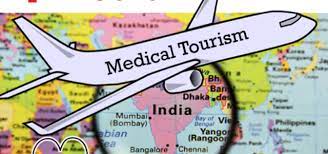
In India, health care is one of the largest sectors, in terms of revenue and employment, and is expanding rapidly. During the 1990s, the Indian health care sector grew at a compound annual rate of 16%. The total value of the sector is more than 34 billion U.S. dollars in 2010 and grew up to 160 billion U.S. dollars in 2017 and was estimated to reach up to a value 372 billion dollars by 2022. A major proportion of this growth is predicted to be attributable to the growth in the business of medical tourism. According to Britannica Medical tourism, also called health tourism, surgical tourism, or medical travel can be defined as the international travel undertaken for the purpose of receiving medical care.

Medical tourism in India has gained momentum over the past few years. According to the Confederation of Indian Industries (CII), approximately 150,000 patients arrived in India in 2005 from across the globe for medical treatment in 2016, the number of visitors arrived in the country amounted to 361,000. The medical tourism industry in India was valued at around $3 billion in 2015, and it was expected to grow to $9 billion in 2020 before covid-19 struck.

There are several characteristics that make India an appealing destination for visitors seeking health services. These include its well-trained health practitioners, a large populace of good English-speaking medical staff, a good mix of allopathic and alternative systems of medicine, the availability of super-specialty centers, use of technologically advanced diagnostic equipment, and finally and more importantly, the availability of these premium services at competitive cost.

The costs of comparable treatment in India are on average one-eighth to one-fifth of those in the West. For instance, a cardiac procedure that costs anywhere between US$40,000–60,000 in the United States is priced at US$30,000 in Singapore, US$12,000–15,000 in Thailand and only US$3,000–6,000 in India. Likewise, the associated costs of surgery are also low. A study by the India Brand Equity Foundation (IBEF) showed that India is more cost-competitive than other leading medical tourism destinations like Thailand.

Health services in India have the additional advantage of providing a good mix of allopathic and alternative systems of medicine. For instance, while New Delhi has emerged as a prime destination for cardiac care, Chennai has established a niche for quality eye care, and Kerala and Karnataka have emerged as hubs for state-of-the-art Ayurvedic healing.

The opportunity for profit in this sector has encouraged several large corporations and several non-resident Indians (NRIs) to invest money in setting up super-specialty. These facilities now dominate the upper end of the private sector and cater predominantly to medical tourists and affluent sections of the society.

Even the Government of India has responded promptly to tap the potential of this sector. In its effort to capitalize on this opportunity the Government has undertaken measures to promote India as a ‘global health destination’. The National Health Policy strongly encourages medical facilities to provide services to users from overseas (Ministry of Health and Family Welfare 2002). The Indian Ministry of Tourism has started a new category of visas for medical tourists called the ‘M’ or medical visas. This program that ensures that people who need critical, life-saving treatment should get their visas in a timely manner. Being able to easily obtain a visa is one of the primary reasons that people seeking treatment come from abroad to visit India to get that treatment that is provided at a reasonable price. Having procedures done in a timely manner has saved countless lives, and is likely to save much more in the future.

If the present trend continues, trade in health services will become one of the biggest sectors in India. India has become one of the premiere medical tourism destinations in the world for many good reasons. The lower cost does not mean lower a quality of care. The quality of care compares to that received in any Western country. However, the growth of this sector could pose a potential threat to the already crippled public health system in India