” What mental health needs is more sunlight, more candor, and more unashamed conversation.” – Glenn Close
Mental health plays a supreme role in everyone’s life . It is mental health only which affects how we think , how we behave , how we feel , & how we cope up with life . It also help us determine how we cope up with stress , relate to others & make choices . It is important at every stage , from childhood to adulthood & aging . This includes our physical , psychological & social well being .
WHAT CAN AFFECT OUR MENTAL HEALTH ?
Many factors affect our mental health , some of them are , biological factors , such as genes & brain chemistry , family history & mental health problems in the family . This affects a lot , because they are present already in you , they are biological factors & outside factors have no affect hand & effect on you mental health . Sometime your very own experience in your life make you mentally ill , experiences such trauma , abuses , accidents leads to poor mental health . Not only biological factors , family history or bad experiences affect our mental health , but our way of living the life decides the how our mental health is . Our diet , food habits , physical activity also tells us our state of mental health . you can improve your mental health by meditating , doing yoga , by involving in physical activities .
What are the signs that I might have a mental health problem?
When it comes to your emotions, it can be hard to know what is normal and what is not. There are warning signs that you may have a mental health problem, including
A change in your eating or sleeping habits
Withdrawing from the people and activities you enjoy
Having low or no energy
Feeling numb or like nothing matters
Having unexplained aches and pains
Feeling helpless or hopeless
Smoking, drinking, or using drugs more than usual
Feeling unusually confused, forgetful, angry, upset, worried, or scared
Having severe mood swings that cause problems in your relationships
Having thoughts and memories that you can’t get out of your head
Hearing voices or believing things that are not true
Thinking of harming yourself or others.
Not being able to perform daily tasks like taking care of your kids or getting to work or school
WHY IS MENTAL HEALTH IMPORTANT ?
Mental health is very important , it tells you how to behave to a particular situation , how to cope up with stress . It helps us to stay physically fit & mentally strong . By being in good mental health one can carry good relationships with everyone . It increases your work productivity , helps you to contribute a handsome amount of efforts for the community . It makes you realize your full potential & caliber with which you can outshine anywhere & everywhere.
Mental health challenges affect millions of people around the world. In any given year, unfortunately, misconceptions and myths around counselling and talk therapy often discourage people from seeking help and contribute to the stigma surrounding mental health issues. The truth is that counselling has the ability to help almost anyone with mental health concerns, social issues and personal development. But another truth is that every person is very unique – they will respond to and experience counselling differently and a method that works for one person is not necessarily going to work for someone else. If you have tried counselling before and didn’t find it helpful we encourage you to try again, with a different counsellor and/or different method.
Myth 1: Counselling is only for major issues or “crazy” people : Yes, counselling can help you through major life issues and traumas but those aren’t the only situations where counselling can work for you. Sometimes we just need someone unbiased to talk to about a situation or feelings we’re having – and that’s okay. It’s normal to seek help for problems large and small or simply when you’re not feeling quite yourself and you don’t know why. Counselling does not need to be used as a reactive measure when life gets hard. It can also be preventative and help provide you mental and emotional tools and strategies to use in future times of stress. We see physicians for prevention through annual check-ups – we can think of counselling in the same way.
Myth 2: Admitting that you need help and going for counselling means you’re weak: The concepts of weakness and vulnerability tend to get confused with each other. There is vulnerability in sharing what you’re going through and what you’re feeling, but that is not a sign of weakness. It is courageous to open up to someone. It’s an act of strength to take steps to better yourself when you’re not feeling your best. Vulnerability is not a weakness but rather a quality to take pride in, not be shameful of.
Myth 3: Counselling doesn’t help or will make the situation worse : Every person is different, and every person has different needs – the results from counselling are not going to be identical for everyone. But most of the time, counselling will provide you with support, new perspectives, and a plan to tackle your problems.
Myth 4: The counsellor doesn’t know me, so they can’t help me : When things aren’t going quite right and we want advice, we turn to our family and friends – people that know us and care about us. Having social connections is extremely important for maintaining mental wellness but our loved ones normally don’t have the skills or the objectivity needed. We’re not recommending that you turn away from loved ones or that their advice can’t be helpful, but counsellors are an excellent additional resource to guide you through difficult times. An unbiased, impartial trained professional can give insight into the situations and feelings that you’re having that you would not be able to get from people that are close to you. Professional counsellor’s training and experience can help beyond the well-intentioned advice of your loved ones.
Myth 5: Counselling takes a long time and costs a lot : The length of time, or number of sessions needed with a counsellor will greatly vary depending on many factors, such as:
How long you’ve been dealing with the issue
The severity of the problem
The time you need to make any necessary changes (i.e. Habits, copying mechanisms, etc.
Myth 6: Couples counselling is only for people that have problems in their relationship : Just like you need to water a plant to make it grow, or practice an instrument to master it, you also need to work on a relationship if you want it to thrive. Take the plant analogy – you wouldn’t just water your plant when its leaves are wilted and it’s near death. You would water it on a regular basis, even when it’s healthy looking and vibrant. Working on skills with your partner like communication, conflict resolution, and intimacy when your relationship is strong, is just as important as building on those skills when times are tough. Having the desire to improve your relationship with some help doesn’t mean your relationship isn’t good or that it won’ last – it means that you care enough about your partner to invest in the relationship.
Myth 7: They will blame my parents for everything : Every struggle you go through is unique. And the process to heal from those struggles is going to vary. Much of your work with your counsellor will be guided by you – the areas of your life you want to focus on: past, present and future. For some situations it can be helpful to analyze your past and see how your environment and the people around you shaped how you respond to things today. Some situations are best solved by looking at current behaviours. Regardless if you and your counsellor analyze your past or your present, the most important thing to keep in mind is that counselling is not about assigning blame, but learning how to have a healthy mental outlook and have healthy relationships with yourself and others.
Myth 8: All counsellors are the same – If you didn’t have success with one, counselling won’t work for you : You don’t “click” with every single person you meet and everyone doesn’t respond the same way to the same exact form of any kind of treatment. Counsellors and counselling treatments are no different and not every counsellor will be a perfect fit for you. That’s okay. We want you to see results from your counselling experience. When you request counselling from Calgary Counselling Centre, we ask many questions to make sure you are assigned to the type of counsellor you prefer and that you’ll receive the type of treatment that is most likely to achieve the best results. If after a few sessions the relationship with you and your counsellor doesn’t seem to be a match, you can request another counsellor. We promise, your counsellor will not be offended by this, on the contrary, they want the best for you.
Bipolar disorder, also known as manic depression, is a mental illness that causes extreme mood swings between emotional highs (mania or hypomania) and lows (depression). The word bipolar itself means two extremes. Hence, it is a mental health condition characterized by extreme shifts in moods and mental states. Depression causes feelings of sadness or hopelessness, and you lose interest or pleasure in most life activities. When your mood shifts to mania or hypomania, you may feel euphoric, full of energy or unusually irritable. These mood swings can affect sleep, energy, activity, judgment, behavior and the ability to think clearly. People with bipolar disorder may have trouble managing everyday life tasks at school or work, or maintaining healthy relationships. There is no known cure, but there are many treatment options available that can help to manage the symptoms.
Causes
The exact cause of bipolar disorder is unknown, but several factors may be involved. For example, researchers believe that certain people with bipolar disorder have biological differences that cause chemical imbalances in the brain. There is also the factor of genetics, as bipolar disorder is more common in people who have a first-degree relative, such as a sibling or parent, with the condition.
Types
Bipolar I disorder: This involves manic episodes lasting 7 days or more, or severe mania that requires hospitalization. The person may also experience a major depressive episode that lasts 2 weeks or more. Thus, this type is characterized by extreme and severe highs and lows.
Bipolar II disorder: This features both mania and depression, but the mania is less severe than in bipolar I, and doctors call it hypomania. A person with bipolar II may experience a major depressive episode preceding or following a manic episode. Hence, here there are briefer, less extreme periods of elation with longer periods of depression.
Cyclothymic disorder: Also known as cyclothymia, this type includes symptoms of hypomania and depression that last for 2 years or more in adults or 1 year in children. These symptoms do not fit the criteria for wholly manic or depressive episodes.
Other types: People with these disorders experience symptoms that do not fall into the above categories. The symptoms may stem from drug or alcohol use or medical conditions, for example.
Symptoms
The three main symptoms of this illness are those mentioned earlier; mania, hypomania, and depression. These symptoms also vary depending on the type of bipolar disorder. The most serious type is Bipolar I, where a person experiences both mania and depression very deeply.
Mania is an emotional high that makes people feel excited, impulsive and euphoric. But these exceed ordinary feelings of joy, causing racing thoughts, rapid speech, sleeplessness, hypersexual feelings, and risky actions. Hypomania is generally associated with bipolar II disorder. It is similar to mania, but not as severe.
Depression causes things like low mood, dwindling interest in hobbies, changes in appetite, feeling worthless, sleeping too less/too little, and suicidal thoughts. Basically, life loses all colour for a person experiencing depression, and it is very hard for them to enjoy anything or feel any positive emotions.
Treatment
Though it cannot be cured, bipolar disorder can be controlled with treatment. Medication is the cornerstone of bipolar disorder treatment, and psychotherapy can help many patients learn about their illness and how to cope with it, preventing future mood episodes. Treatment aims to stabilize the person’s mood and reduce the severity of symptoms. The goal is to help the person function effectively in daily life.
Medications known as ‘mood stabilizers’, such as lithium, are the most commonly prescribed type of medications for bipolar disorder. These medications are believed to correct imbalances in brain signaling. Because bipolar disorder is a chronic illness in which mood episodes typically recur, ongoing preventive treatment is recommended. Bipolar disorder treatment is individualized, as individuals react differently and symptoms vary widely. It is important to get a correct diagnosis and find a suitable treatment as per the individual.
People suffering from bipolar disorder have their life split in two realities; elation and depression. For someone constantly bouncing between emotional states, it can be hard to find the balance which will help lead a healthy life. Hence, we should also support the people in our lives suffering from bipolar disorder and help them cope with such extreme and debilitating emotions.
Schizophrenia is a chronic and severe mental disorder that affects the way a person thinks, behaves, expresses emotions and perceives reality. It affects around 20 million people worldwide, so it is not as common as other mental illnesses like depression or anxiety disorder. However, it is perhaps the most chronic and disabling one. It is quite evident when people are suffering from schizophrenia, as they act very abnormally and differently. This is why schizophrenics often have problems doing well in society, school, work or in their personal relationships, as they appear to have lost touch with reality and do not know how to behave like a normal, sociable people. Hence, schizophrenia is associated with considerable disability and greatly affects educational and occupational performance.
Causes
Till today, the exact causes of schizophrenia are still unknown. Research conducted on the topic suggests that it may be a combination of genetic, physical, psychological and environmental factors that cause it. So the causes may range from genetic inheritance, chemical imbalances in the brain, and the use of certain drugs and medication, to external environmental factors like trauma, excessive stress, etc.
Symptoms
As mentioned before, schizophrenia causes a wide range of symptoms on a mental, behavioural and emotional level. These symptoms may vary in number and degree from one schizophrenic to another, but there are some commonly seen symptoms among all of them;
Hallucinations – Seeing or hearing things in their heads, which are not there in reality. A hallucinating schizophrenic may see or hear something that do not exist, but they fully believe that it is a real experience.
Delusions – These are false or fictitious beliefs that schizophrenics have which are not real. Such delusions could be that someone is constantly following them when no one is, or delusions of grandeur where the schizophrenic feels as if he/she is some great, famous person.
Disorganized Thinking (Speech) – This means that schizophrenics lack proper communication skills and do not have much interactive capability. They may only half answer questions or not respond at all, and their speech might be meaningless and incomprehensible.
Disorganized Motor Behavior – Even their body movements and postures are often abnormal. The behavior may be childlike and unpredictable, and often is not focused on performing any task. They may even require help to perform daily life functions like brushing teeth, eating, etc.
Negative Symptoms – This generally refers to their lack of ability to function like a normal human being. They may lack hygiene and care for themselves. They may also lack emotion, or express emotions at wrong times, like showing happiness at a funeral.
Treatment
Since schizophrenia is chronic, even treatment for it is lifelong. Unfortunately, schizophrenia cannot be cured, but it can be controlled. Treatment can help the afflicted person manage the symptoms of the illness and avoid hospitalization. There is no blanket treatment plan and doctors will often tailor it to suit the individual persons. The cornerstone of schizophrenia treatment is medication. Schizophrenics will most commonly be given antipsychotic drugs to keep control of the mental disabilities and allow the person to think and function somewhat normally. Along with this, even psychosocial support from family members and in the form of counselling can help a person develop coping skills in life. This is especially important because schizophrenics often have suicidal thoughts and tendencies, and having a social support system helps them in averting these thoughts and gives them hope.
It is important to highlight here that there is a stigma, and discrimination against people with schizophrenia is common nowadays. They are also often abandoned by their families or relatives thinking that they are beyond saving. We must learn as a society that such people are not as fortunate as us, and suffer from inflictions that we cannot even imagine. Society must be educated on the fact that they are not dangerous or scary people, and must be encouraged to seek help. Hence, we must do all we can to support schizophrenics and provide them with the best help we can.
According to a study of more than 170,000 people published at the Psychology Bulletin in 2013, the average adult’s network of friends have reduced in the past decades. It’s no wonder many people feel lonelier than ever.
Feeling lonely, however, is not a direct cause of being alone. It’s possible to feel lonely in a crowd.
Loneliness, in fact, is more dangerous than isolation because it increases a person’s mortality rate.
If it’s so dangerous, how do we fight loneliness then?
Wondering What to Do When You Feel Lonely? Here Are some Tried and Tested Tips.
Watch Inspiring Ted Talks.
Ted Talks are inspiring and informative. I don’t know why, but watching a few Ted Talks really help when I feel lonely and helpless. Watching TED talks will not only give you a motivational boost while your studying, it could also inspire your next career move. Better than that, it could help you improve your interview techniques and confidence in meetings helping you advance your career once you get your foot in the door.
Look Through Old photos
Old photos bring back a time, a place, and a life that are long gone. Perhaps, it reminds us all; that everything shall come to an end at some point. I believe an old photo is a physical instillation of our memory from the past.Human emotions are fickle things. They are ever changing. Tears don’t indicate anything in particular. They’re just a bodily response.
Dance (Naked)
Sometimes, we feel lonely because we’re actually alone. So take this chance to do the things you can only do when you’re alone, like dancing naked or jumping on the bed with your shoes on. Doing crazy stuff alone will give you a good laugh.
Take A Bath
Where do good ideas come from? In the shower, right? Taking a nice, long, and relaxing bath is a great way to be bask in your alone time, instead of drowning in self-pity. Ladies, prepare a glass of red, chocolates and magazines. Gents, take a bubble bath with that scotch and enjoy life.
Adopt A Cute Pet
All pets are cute no matter whom you want to adopt. A furry cat or dog will cheer you up. The playfulness of pets, plus the troubles (and fun) you’ll experience while training them will make you forget about your troubles. Even a goldfish or pretty parrot can do wonders for your mood.
Go on a solo date to eat your favorite food
You know the problem with group and couples dates? The annoying “So what do we do?” and “Where do we eat?” questions. When you go on a date with yourself, you’re sure to go somewhere you actually like and you don’t have to wait around for others to decide.
Start Gratitude Journal
It’s hard to feel down when you know that you have a lot to be thankful for. When you don’t know what to be thankful for, just write what you feel. Sometimes, it can help you identify why you feel lonely in the first place.
Create Something New
Wondering how to not feel lonely, when you actually prefer to be alone? Getting bored is a prerequisite of feeling lonely. And what’s one of the main causes of getting bored? Having nothing to do. So keep yourself occupied! Try a new recipe. Create a scrapbook. Finish that DIY project you’ve been postponing for so long.
Behave like a tourist in your own city and do crazythings
Dress up like a tourist, and do all the cheesy touristy things in your city. Eat the local delicacy, tour the crowded tourist spots and explore new locations you’ve never heard of. Take pictures with monuments and come home and rejoice those memories.
Read any book especially a fiction
Please don’t pick a Dummies book on how to stop feeling lonely. Reading self-help when you’re feeling miserable will make just you feel worse. Read a good novel instead. Losing yourself in a good story or identifying with a powerful character will boost your confidence and fill you with a sense of adventure.
Sing your heart out and have your own concert in your room
The part “your heart out” basically means with vigorous or intense conviction. This is the basic intent of the sentence — that it’s okay to do that something as long as the person is doing it with great conviction or considerable effort.
To sing your out more literally means to sing with great conviction or great gusto and sincerity. Of course, it doesn’t mean to sing loudly at the top of your voice, which then isn’t necessarily a positive thing. To sing care-free like there is nobody else in this world except you.
Go For A Quick Run
Running is scientifically proven to make you happier. Even 30 minutes of walking can instantly lift your mood, according to a 2006 study published at Medicine & Science in Sports & Exercise.
Volunteer for a cause
Focusing on the needs of others steers your mind away from sad thoughts. It’s impossible to feel lonely when you’re feeding the homeless, reading to kids at an orphanage, or dancing with grandmas at a salsa class. Helping the less fortunate will also fill you with immense gratitude.
Watch a Movie or Series
Watch a movie alone or call some friends to go with you—it doesn’t matter. What’s important is you immerse yourself in an interesting story that’ll erase your gloomy thoughts. Watch a chick-flick, or a super hero movie—anything but a tear jerker, really —and grab lots of candy and popcorn.
“What to do when you feel lonely?”
I can’t imagine how many people have Googled that phrase when they felt the pangs of loneliness. Unfortunately, it’s not the best question to ask. Would you ask a doctor for a prescription before they check your symptoms?
Instead of trying things randomly, hoping one solution will do the trick—losing hope and feeling worse when it doesn’t—it’s better to identify the cause of your loneliness first. If you were previously happy in your own company, what could’ve caused you to feel lonely this time? Do your friends make you feel lonely? Is it your work or surroundings, perhaps? The cause of your loneliness will clue you in on the appropriate solution.
Do your friends make you feel lonely? Is it your work or surroundings, perhaps? The cause of your loneliness will clue you in on the appropriate solution.
Loneliness is an emotion, mostly triggered by a sad memory. Unfortunately the brain loves to overanalyze things, so even momentary loneliness can escalate to longer spells because of thoughts like “Why do I feel so alone?” and “Am I a loser no one loves?” When this happens, just acknowledge the feeling and don’t overreact.
These are some of the things I do when I’m hit by this gruesome feeling of being alone even if I have more friends than I can count. What are your tips to feel less lonely? Do share in the comments!
MENTAL HEALTH had been trending across social media platforms after the sudden demise of the Bollywood actor Sushant Singh Rajput who chose to end his life. This incident occurred on 14th June 2020, when India was still under lockdown. Had this happened in a normal situation it would not have garnered this amount of attention probably. But this sent shock waves throughout the country as the actor had always been known to have a smiling face and charming self. There was no clue that he was so unhappy with himself and his life. His death awakes many questions on mental health, suffering, depression and nepotism in Bollywood. Many big names in Bollywood were trolled and blamed for indirectly killing him. Everyone on social media seemed concerned on mental health and even offered a lending ear to their friends and followers. They spoke about how mental health is as important as physical wellbeing and how everyone should support each other and spread only love and no hate. These were the same people who later on started trolling the Bollywood industry, star kids and other big names of the industry. Hypocrisy was very evident. Another disturbing aspect was that the actor’s family was not given privacy. News reporters were practically thrusting microphones and cameras under the nose of the family members of the late actor not allowing them time to even come to terms with their loss and grieve. The irony was that on one side everyone was trying to be friendly, understanding and wanting to spread only positivity and love, and, on the other side trolling and blaming people and not giving space to the family members. The most traumatic part according to me was that the pictures of the late actor’s dead body started circulating on the internet. The police department had to officially announce that this is immoral and anyone found circulating these pictures will be punished. Some youtubers and news channels took it a level higher and started demonstrating how Sushant would have possibly hanged himself. This was not it, his personal life and relationships were also brought under public scrutiny this just made everything worse.
AN INSIGHT INTO MENTAL HEALTH
MENTAL HEALTH is still something which is not completely understood and accepted by our society. It is not given the attention and importance it deserves. According to the World Health Organisation, mental health is defined as –
“Mental health is a state of wellbeing in which an individual realises his/her own abilities, can cope with the normal stress of life, can work productively, and is able to make a contribution to his/her community.”
Any person no matter the age, gender, community, society, etc. is at a risk of developing a mental disorder. Financial status, fame or luxuries does not guarantee a good mental heath. Even a very successful and ambitious individual can develop a mental disorder.
MYTHS
There are some myths and superstitions regarding mental health that needs to be popped.
Children are not affected by mentaldisorders: this is a big lie. As I have mentioned before, mental health affects anyone whatever the age or gender of that person. Children can also be affected based on their upbringing and their surroundings. The family background and environment will take a toll on the mental status of the child.
People with mental health issues are violent andunpredictable: we often have this misunderstanding that people who smile and laugh are happy and the ones who are sad are depressed. This is very wrong. Many studies have shown that people who are depressed tend to laugh at silly things and always try to have a smile on. They are friendly and jovial and in no means have an intention to hurt others.
Mental disorders are incurable: with proper medication and help mental disorders can be brought under control if not cured completely. But many people have been cured over time, a living and known example is actress Deepika Padukone. The right support and help can get you out of anything.
Personality weakness or character flaws cause mental issues, people can snap out of it if they want to: this is one of the most common myths that people have. Being lazy has nothing to do with mental health. Depressed people do not wish to stay that way, they do want to come out of it and enjoy life. They try their very best to be happy.
Mental health issues are rare: 1 in 8 people are affected with mental health issues. Most of the times we don’t realise that we have mental disorders or chose to ignore it, which is very wrong.
Having a mental illness means you’re crazy: this is completely false. Having mental health problems does not in any way imply you’re crazy, it just means you’re vulnerable.
TYPES OF DISORDERS
Here is the list of a few common types of mental disorders.
Anxiety disorder
Mood disorder
Personality disorder
Post-traumatic stress disorder
Eating disorder
CONCLUSION
All things considered, I would request every one to take care of their mental and physical wellbeing. In these trying times, we should support each other and move forward. Do not hesitate to seek help from professional and please don’t self-diagnose. Remember NOTHING IS IMPOSSIBLE.
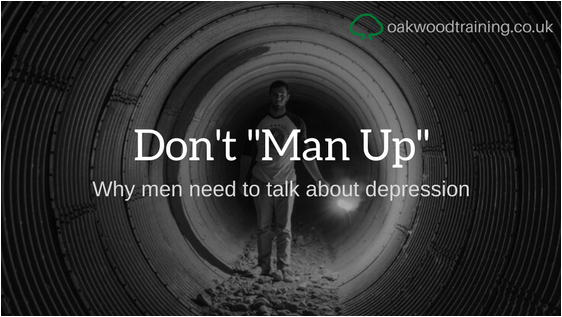
Men are often seen as strong beings that are in control of their emotions. They try to act tough whenever they feel overwhelmed by despair or hopelessness by trying to deny it or covering it up like nothing. But depression has become a common problem today affecting the daily lives of many. It is taking a heavy toll on the work and home life of people all the while expecting them to tough it out.
Depression affects millions of men of all ages and backgrounds targeting even those who are close to them – partners, family, and friends. But it is a treatable health condition, not a sign of emotional weakness. However, male depression affects your life deeply, changing the way you think, act, and feel. Sometimes it can be intense and unrelenting all the while affecting your relationships, sleep and diet patterns, and overall sense of enjoyment in life.
Depression in men often gets overlooked since they tend to be less adept at recognizing symptoms than women. This can result in it going untreated which can have serious consequences.
Signs of Depression:
The classic signs are despondent mood, disturbance in weight and sleep, and concentration problems. The overlooked or stealth signs include physical pain, anger, and reckless behavior. Men often feel agitated and turn to substance abuse. They lose control over negative thoughts and feel hopeless and helpless.
How to deal with depression:
It takes courage to seek help though, be it from a loved one or a professional. Most men suffering from depression respond well to self-help steps.
Connect socially
Maintain a healthy lifestyle
Seek help from a professional
Connect socially: The first step involves finding people you can really connect with, someone with whom you can share your feelings without any fear of judgment from them. Understand that you already have a non-verbal communication with those who are close to you but fighting depression needs actual words. Improve your social network and push yourself for social activities. This will help you interact with people acting as a diversion for your mood. Sometimes solving others’ problems gives a better boost to your morale than solving your own.
Maintain a healthy lifestyle: The second step is maintaining a healthy lifestyle at any given time. Aim for a good night’s sleep at least eight hours long. Identify your stress triggers and find ways to regain control of your life by overcoming them. Practice relaxation techniques or meditation. Yoga helps keep your body active and soothes your mind. Indulge in more activities that interest you like taking a walk or listening to music. A positive lifestyle also includes regular exercise and a balanced diet.
Seek help from a professional: Lastly, you could also seek help from a mental health professional. Even to the most skeptical males, therapy often does wonders by bringing a sense of relief to the mind. After all, there is nothing unmanly in talking to a stranger about your problems if it is doing well to you in the end.
Why do we wait for something big and devastating to happen that opens our up eyes for issues that are serious and should be taken care of ?
Recently with the famous actor Shushant Singh Rajput passing away, as he committed suicide shook the whole nation about how a person who was so happy, excelling in his career, what made him take such a step? Suddenly I see whole of the social media getting flooded with things on mental illness, depression , anxiety , importance of it and so on .….
This issue isn’t something new that has born recently. It has always been a serious issue which all of us in some way or the other have neglected. There are plenty of people out there who have, and who are still suffering from mental disorders severely and some acutely. Mental health is something we all need to take care of.
MENTAL ILLNESS AND DEPRESSION
Clinical depression has been linked to other mental illnesses, such as anxiety disorders, panic disorder, social phobia, and generalized anxiety disorder.
MY EPIPHANY…
Depression is debilitating.
Some people acknowledge it, some think it’s an attention call. For me, depression is like that bundle of laundry that you don’t want to show in your Instagram pictures. I never want to show my heap of laundry to the world, I want my life to seem content and put together, as if I folded and put away all my laundry right out of the dryer.
Depression can be the hardest when others just don’t understand you. Never ask anybody how they can be so sad that they could contemplate suicide. Because honestly most of the people in that situition don’t know. How did they make it to this moment? What did they do to deserve this sorrow?
Nobody really knows how to explain depression to someone. It’s so different for everyone and comes in so many different forms. Some people explains their depression as a weight that holds them down. Others describe it as a shadow that looms in the back of their mind, always taunting and trying to tear them down and then sometimes, depression is described like they are sinking. It’s like dabbling in an ocean of poison and barely catching your breath before you’re dragged back under. I don’t think people understand that depression is persistent. Some days it doesn’t feel as burdensome, it doesn’t tug and pull as hard. And other days, it knocks you down before you can even get out of bed.
I am always fighting this constant battle with myself past many years .. Yes! Me I may smile and laugh and seem happy, but know that, somewhere, in the back of my mind I’m struggling. It makes me feel like a failure, no matter what my successes. I feel worthless and like I’m a burden on everyone around me. After entering my teenage years till now I’ve been aggressive, argumentative used to reacting quickly on situations without understanding them, used to getting upset on small little things and have been called dramatic. It has become one of my biggest triggers, because most of my life I haven’t had that fight to defend it.
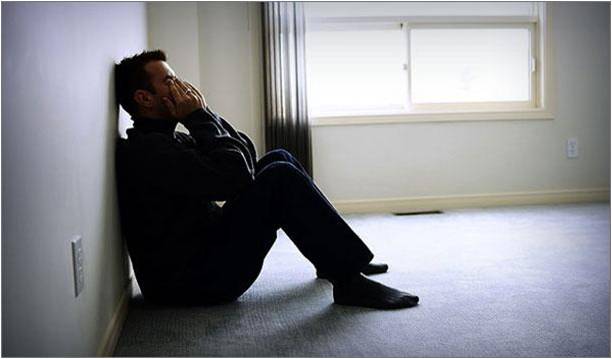
I get sad without any reason so often that I’ve created safe spaces. Currently, my safe place is my bathroom floor. Probably about at least 1 time in a month you can find me locked in my bathroom on the floor, crying. The lock on that door is the only form of power I feel I have when I feel everything is parting away. Many times I have found myself on that bathroom floor contemplating life and how to make it past that very moment, will I? I have to say how thankful I am that I haven’t followed through. Life is so hard. Sprinkle on some depression, heck, dump it on – and life is now even more hard. Sometimes the low gets so low that it seems to take over, overwhelming you in a way that you could not have imagined beforehand.
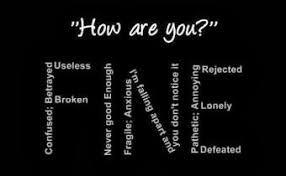
Dressed from Penny to Gucci it’s a misconception that smile is the finishing touch to most outfits.We all give off the impressions that we are happy but this can be a very inaccurate representation of what we are actually experiencing. People always say you should talk to someone, tell someone,but how do you put words on something so hard to even understand yourself? How do u explain someone that u want to live your life in peace but also you don’t know how you can? How do u explain that this no longer feels like a choice, that it controls you not the other way around.
Of course we are encouraged to TALK more these days but some of us including me wont even know where to start. some of us will Feel like we don’t have anyone to talk to and others will simply be sick of talking. Sometimes we do so much talking and thinking about whats going in our heads that we get even more confused by our own thoughts. This often leads us to say ‘ENOUGH’ and once again putting back on the brave face and deluding smile. By this we fail to get to the roots of our suffering. I am guilty of smiling so many times when I am actually freaking out from inside. Why is it so hard to accept our own sufferings ? Well its not facile to accept your suffering because of thoughts in your head and ultimately your ego believes that you shouldn’t be suffering. That makes suffering and challenges we experience in life so much more daunting, arduous and scary.
Depression doesn’t have a face. you never know who is the girl around you always happy and cheerful must be struggling from inside or the boy who shows himself so tough maybe he needs someone to listen to him or be there for him. Nobody really knows how much the other person is hurt. We could really be beside someone who’s world is falling apart and we wouldn’t even know.
THE BIGGEST MISCONCEPTIONOF THOSE WHO ARE SUICIDAL
People who believe those are suicidal are selfish- that they only think about themselves and not their loved ones. This is wrong ….. often those who are suicidal truly believe their loved are better off without them because they are such a burden.
Ergo, its important to be kind and tell others how much they mean to you even on their bad days. Often, people tend to not give enough importance to the person who’s suffering from mental issues and rather than giving a smile or telling the person that ‘they understand’, ‘they’re listening’ and that ‘they are there for the person’ they slightly bob their head, as if they understood yet they don’t.
There are people who often say that we can talk to them and they are always there, but when the time comes and we actually need help , they tell us to help our selves or often come to the conclusion that ‘we are in the problem because of our own wrong doings’.This far more worsens the situation for the person going through it. We are nobody to judge which problem is big or small because we all are different and feel different emotions.
I HOPE YOU CHECK UP ON PEOPLE OFTEN EVEN IF THEY HAVE A BRIGHT SMILE, BECAUSE OFTEN BEHIND THAT BRIGHT SMILE THEY MIGHT BE FIGHTING THEIR OWN HIDDEN BATTLES.
Whenever someone says you have hurt them, don’t shut them out. You don’t get to decide if u have hurt them or not. Don’t make them feel like a fool for expressing their feelings. Don’t always be self-righteous and think you can never make a mistake. If knowingly or unknowingly your actions hurt someone, avoid doing it. You can save someone just by being kind and being there for them.
WHAT TO SAY :
You are not alone in this
You are important to me
You have me! And prove them not just saying it for heck of saying
I am not going to leave in your tough times
Tell them you care for them and what worth they hold
Tell them you understand ( only if you really do)
Assure them they are not weak or defective
Emphasize that there’s hope
It’s possible that you can say all the “correct” things and your friend will still become upset with you. Each individual have their own unique thoughts and feelings, and being irritated and upset is the nature of depression. Sometimes people will take it out on those trying to help them because they are hurting and don’t know where to direct those bad feelings. Whoever is nearby becomes a convenient target. If this happens, try not to take it personally. Stay serene and continue to do what you can to love and support your friend in whatever way they will allow.
WHAT NOT TO SAY :
Avoid saying such phrases
Don’t think about it
Be positive
I know how you feel – never say this because nobody really knows how the other person feels or is going through
Count your blessings
Your mood is bringing everyone down around you
Just smile and let it go
Its all in your head
No one ever said life was fair
Many people with depression think they are just feeling sad, and that it will go away with time. For some people, it does just that. But for 15 million others, depression is a constant feeling that does not go away on its own. In fact, WHO found that depression is the second greatest reason for disability in the world.
I know everyone out there may not have depression, but everyone definitely have something hard they’ve experienced, everyone have something to share and everyone have something to relate to. We are nobody to judge someone else’s problem no matter how big or small it is. Well small issues only take a bigger step and why wait for that oblivious stage to come,why not lend a hand in the initial stages.
Let’s be vocal about our hard times, it’s healing, not embarrassing.
WE SHOULDN’T IGNORE WHAT IS HAPPENING IN OUR HEAD BECAUSE ITS WHERE ALL OUR HOPES AND DREAMS LIVE.
What a dreadful night it was, when my body was as cold as ice, I was frozen in the month of may and was constantly shaking with the fear of losing someone. Thinking about that dreadful situation itself gives me anxiety. Coping up with anxiety is not at all easy my friends, it is like climbing up the Mt.Everest with naked feet, where you feel the chills of the cold wind and the hot aggressive waves of heat passing through your spinal cord. Why does this happens, why does the blood pressure dances like a columbus. Why does the brain cells dance like a hippi and why do we feel nervous or tensed as if there’s a war going outside our house and the people will eat us up.
Everydayhealth.com
Difference between anxiety and getting anxious
Anxiety is a feeling of nervousness, uneasiness or feeling worried. When I was lying cold in the bed, I was constantly shaking and my mind felt numb, thinking about what will happen next, why is my life like this, should I call out for help, should I share it with the others? But you are not able to do anything at that moment, you just want to stay still for a while, even listening to songs never helps. You just want to be alone with your thoughts because anxiety leaves you lifeless and unhappy. This is what anxiety is, a monster under your bed, which enters in your mind like an unwelcomed guest and creates a havoc in your body.
Feeling anxious is a different thing, it is not constant, it comes according to the situation. Anxiousness is a feeling of distressed, uneasiness or stressed about a particular matter for a short span of time. For example, many of us feel anxious while giving a speech, examination or also at the time of giving an interview. Many of us feel anxious while talking to someone, while stepping out of our comfort zone or even going to the parties. The symptoms remain the same that you will feel cold or sweaty but the condition of anxiety is even worse.
There are various kinds of anxiety disorders and the two of them are:
1.Panic Disorder: It is a state of disorder where you get constant panic attacks and you will feel as if you are in real danger or the world is going to end. It is a feeling of terror and you lose your control over things, over your behaviour. They can occur anytime, anywhere, where a person feels that this is a harmful or dangerous situation and it can cause a panic attack. The symptoms of panic attack are feeling sweaty, having numb toes or feeling hot or cold.
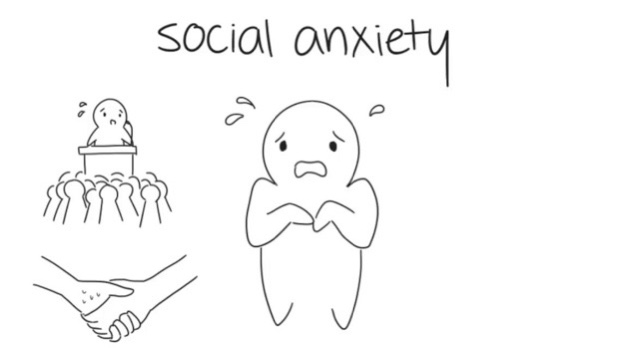
2.Social Anxiety Disorder(SAD): Also known as Social Phobia, it a situation where one has abnormal amount of anxiety and fear of going out and having social interactions or even talking to the strangers. It is a situation where the person feels that he/she is being watched and judged by people. As a result people often avoid going out and do not interact with them. The symptoms can be a rapid heart rate, nausea and feeling sweaty.
How does the society takes it and how should we deal with it?
Mental illness is still a stigma in our society, where people feel anxious about sharing it with others because they feel that the society will mock at them and will never understand their situation. Over the years the word ‘anxiety’ has been thrown around lossely. Society takes it up as a condition of normal stress or tension, but they do not understand the real meaning of anxiety, they don’t know that it is a monster which threatens or blackmails us. But the society will never accept this, they have painted a different picture for themselves regarding ‘anxiety’ and always think that it is not more than stress from which we will get rid of after sometime. We should not focus on what the society thinks, we should focus on our health and fight with this monster inorder to get cured from this mental-illness. We should try to maintain calm and should not panic and try to meditate. Doing regular exercise will help us to get rid of this problem. We should always think positive in every situation and try to stay away from the things that can bring us near to the anxiety. The biggest cure for this problem is that we should share our problems with the person on whom we trust and who will never mock at us, be it family or friends. Society will always try to put you down and will always mock at you and you should always try to ignore them because they are the main reason for anxiety and mental illness. You have to accept that it will take time to get rid of this and have to follow the right steps and the right therapy and accept that you are still a normal person, nothing can disturb your life.






















 Eduindex
You must be logged in to post a comment.