True Leader stands by his people through every circumstance

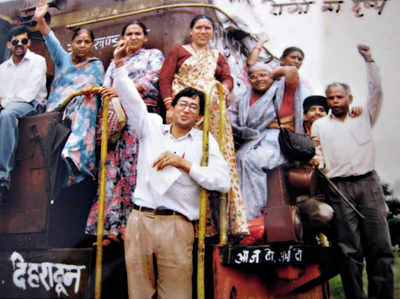
 Union Home Minister and Minister of Cooperation Shri Amit Shah has said that a true leader stands by his people through every circumstance. In a series of his post on X, Shri Amit Shah said, Prime Minister Shri Narendra Modi ji flew directly to Bengaluru from Greece this morning, to meet the ISRO scientists behind India’s successful moon mission, Chandrayaan 3. His inspiring address to the scientists in Bengaluru was an ode to India’s stupendous achievement that reached the skies.

Union Home Minister and Minister of Cooperation said that the 23rd of August is a historic day for India, as it marks the accomplishment of its lunar mission Chandrayaan 3. Today, Prime Minister Shri Narendra Modi ji announced it as ‘National Space Day’, so that the story of India’s scientists’ success behind this mission reaches every future generation. This decision will continue to inspire Indian scientists to achieve newer heights in the realm of space exploration, holding the pride of the ‘Tiranga’ aloft.

Shri Amit Shah said that with the historic success of India’s lunar mission, our scientists have imprinted an indelible mark on the sands of time. To commemorate this achievement, Prime Minister Shri Narendra Modi ji named the landing spot of Chandrayaan-3 ‘Shivshakti,’ and the location where Chandrayaan-2 fell ‘Tiranga’, to remind us that ‘No failure is permanent.’

***

A Struggle of many people to make Uttarakhand a state.

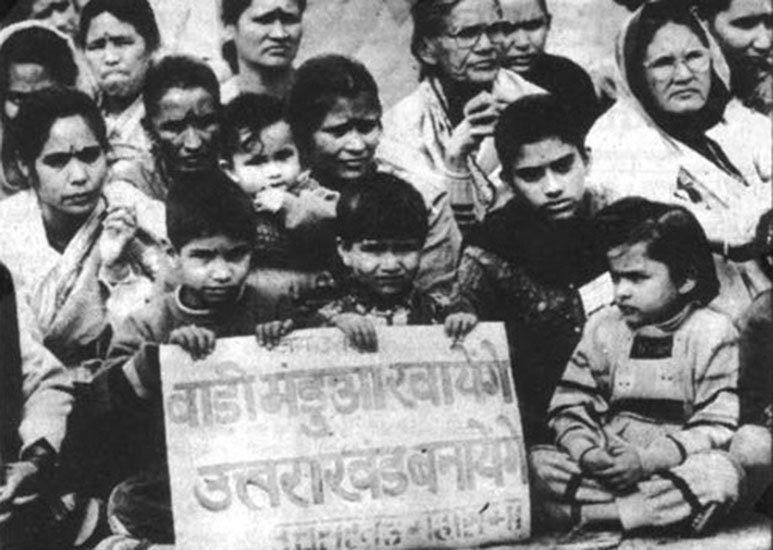
Uttarakhand became a state on November 9, 2000. The establishment of Uttarakhand was achieved after a lot of hard work and sacrifice. The voice for Uttarakhand to become a state was first raised in a special session of the Indian National Congress in Srinagar, May 5-6, 1938. In 1994, after a series of events, demand gradually increased for another state eventually which took the form of a mass movement, leading to the formation of India’s 27th state by 2000.

In March 1994, Uttar Pradesh Chief Minister Mulayam Singh Yadav recommended the Mandal Commission to secure 27% of government positions and places in schools and universities for socially and economically weaker classes,which was later on carried on. The Hill region OBC population was very small at 2.5% and reserving OBC seats meant that all government seats would go to the plains of Uttar Pradesh. This led to intensified protests against the nation.

In 1994, the students throughout the region participated in separate state and group movements for reservations. The Uttarakhand movement was further intensified locally by the anti-Uttarakhand statement by then-Chief Minister of Uttar Pradesh, Mulayam Singh Yadav. Uttarakhand leaders continued to support their call for another state until their death. State officials went on strike for three months, and the Uttarakhand movement was exacerbated by the blockade and confrontation with police. Uttarakhand activists in Mussoorie and Khatima were shot dead by police. On October 2, 1994, in Delhi, the capital of the country, a large-scale demonstration and protest was held in support of the state under the support of Samyukta Morcha. Uttarakhand activists marched to Delhi to participate in the struggle. Activists who participated in peaceful demonstrations near Ranpur Tiraha Junction in Muzaffarnagar were tortured and shot dead openly without warning. Police officers were also charged with obscene behavior and rape with female activists. Satya Pokhriyal was a leader who led all people out of misery and other Andolankari helped others and showed courage. Several people were killed and many were injured. These incidents has fueled the Uttarakhand movement. The next day, October 3, the destruction of gunfights across the region and protests over multiple deaths broke up.

On October 7, 1994, a female activists died after police brutally attacked her in Dehradun while she protested against the shooting at Rampur Tiraha and many activists attacked the police station in return. A curfew was imposed in Dehradun on October 15, and one activists was also killed on the same day. On October 27, 1994, then Indian Minister of Home Affairs Rajesh Pilot met with state activists. Meanwhile, a brutal police attack in Srinagar’s Sriyantra Tapu killed several activists while they were protesting.


On August 15, 1996, then Prime Minister H.D. Deve Gowda announced at the Red Fort of Delhi the forming of a new state Uttarakhand.

In 1998, the BJP-led coalition government at the centre sent the “Uttarakhand Bill” through the President of India to the Uttar Pradesh state government . The Uttar Pradesh State Assembly passed , the Uttarakhand bill with 26 amendments and sent back to the central government. On July 27, 2000, the central government submitted the 2000 Uttar Pradesh Reorganization Bill to the Parliament of India. Lok Sabha passed the bill on August 1, 2000, and Rajya Sabha passed the bill on August 10, 2000. The Uttar Pradesh Reorganization Act was approved by then President of India, K.R. Narayana on August 28, 2000 and on November 9, 2000, the new state of Uttaranchal was established as the 27th state of India, now known as Uttarakhand.

How to be successful in life?

There are 8 very simple rules that you can follow to become truly successful.

Be Passionate

And do what you for love. If you don’t love it, then why do it? If we build careers or continue in jobs that aren’t our passion, we’re selling ourselves short. It’s like the guy that is a tech consultant that wanted to be the lead singer of a band. I’ve written about love and careers before and I think that the takeaway here is that if you do what you want to do, you will be more creative, more motivated, more tuned-in, and much more likely to be very financially and personally prosperous. Katherine Hepburn said it best.

Work Hard

Don’t ever fool yourself success comes from really hard work. And you might find that although you’re doing all of the heavy liftings, there is satisfaction in a job well done. But remember that you need to rely on others, so make sure that you surround yourself with colleagues that share your same work ethic.

Be Good

Focus always proceeds success which is not possible without a clear emphasis on what matters most. And leaders constantly need to remind themselves of this vital truth. Focus requires the pursuit of a mission and vision.


Push the Limits

Don’t constrain yourself to think inside of the box and don’t allow fear to get in your way. Today, people expect more than ordinary so you need to be extraordinary to get noticed and build strong relationships with your target market. Whether you sell a product or service, you must deliver the utmost experience.

Focus

And by that, I mean damn good. Successful people strive for greatness, not mediocrity. So push yourself (and your team) to ensure that you’ve reached your ultimate potential. And be sure to celebrate your wins, that not only breeds confidence among your team, it will keep your colleagues engaged and also will keep your clients or customers enfranchised. If you haven’t read the book From Good to Great, grab a copy.

Serve

Customer service excellence has always been and will always be one of the critical competitive advantages for any business. Meeting your customer’s needs will help you build a very strong and memorable brand. Be responsive, listen, and observe then you will create value. Learn from mistakes in service.

Create Ideas

In addition to service: ingenuity, authenticity, and forward-thinking will ultimately drive your brand. Aspiration is part of the creative process.
You must always continue to innovate, especially in a competitive market space. Push the envelope when it comes to ideation.

Be Persistent

Business development and entrepreneurship should be built out of love and any great love requires passion and persistence to capture your dream. Although you will experience setbacks and failures, you will also find success and triumph.

Reference

https://ce.uci.edu/careerzot/8-simple-ways-successful-8-inspiring-leaders/

IS BEING AN INTROVERT AWFUL ?

Above all else, let me clear out that one ought not get befuddled between the words “introvert” and “being shy”. An outgoing/ extrovert person can likewise feel timid here and there and that doesn’t imply that he/she is an introvert. An Introvert is a tranquil individual that doesn’t prefer to talk definitely and likes to remain quiet about their contemplations for the most part. They are somewhat individual that returns home just to unwind and have the opportunity to think. However, that doesn’t imply that a friendly individual can’t be a contemplative/introvert person. Similarly as they partake in the calm opportunity to get themselves, they’re probably a contemplative person somewhat. Being a contemplative person is regularly viewed as frail. They aren’t exactly on par with the social butterflies, who simply appear to float through life.

OPINION: Introverts still make great leaders – The Lancer Feed

However, that is false, there isn’t anything amiss with being a introvert. The primary issue is with society, which doesn’t see it similarly. Society has instructed us that being an introvert or thoughtful person is the most exceedingly terrible thing you can be and that everybody should need to be outgoing.

The Perks Of Being An Introvert | Writers Write

They are informed that being active is acceptable and being modest and calm is terrible. They are advised in schools to lift hands, take an interest in a class or we lose marks. For introverts, those are a portion of the exceptionally hard principles to accomplish. Insights say that half of Indian populace is comprised of introverts. So society is saying that 675 Million individuals need to change what their identity is to be acknowledged, to be effective and to be content. I’m additionally told this thing since youth that I should change myself and become a outgoing individual. Indeed, presently likewise my companions, educators and direct relations bother me as a bashful individual and they request that I go along with them in their discussion which I don’t need. Furthermore, some of the time it’s truly irritating.

How to Know If and Why You're an Extreme Introvert | SocialPro

Continuously recollect inside this enormous gathering of self observers are individuals like Emma Watson, Michael Jordan, Albert Einstein, Elton John, Audrey Hepburn thus a lot additional moving individuals. Being an Introvert has not prevented any of them from accomplishing their objectives or being cheerful. Pioneers like Abraham Lincoln, Rosa Parks and Mahatma Gandhi. Every inconceivable pioneer and all are introverts. Being a thoughtful/introvert person has no impact on how glad you or fruitful you will be the length of you see it in the correct manner. In the event that you consider yourself to be a thoughtful person and think its the most exceedingly awful thing on the planet, you are never going to be really content with yourself. In any case, in the event that you acknowledge yourself as a introvert and you’re cheerful, there isn’t anything in your method of you accomplishing your objectives.

Introverted Leadership
INTROVERT LEADERS

So in conclusion there is noting wrong in being an introvert. I am an introvert myself and I don’t feel like to change myself for the society and so should you. As long as you are happy others opinion doesn’t matter.

Also, in case you are an extrovert and you see an individual sitting at the side of your working environment simply contemplate what incredible thoughts he/she is coming up with.

In a World of Extroverts, What Does it Mean to Be an Introvert at School

RESOURCES:

https://timesofindia.indiatimes.com/readersblog/wakeup-india/is-being-an-introvert-bad-23079/

AN INCIDENT THAT RESTORED MY FAITH IN HUMANITY

Prior to disclosing to you my story , I need to make myself clear that I am not saying that humankind has totally evaporated from our reality. Yet, it is truth that we people have gotten insatiable and egotistical. More often than not we don’t help other people except if we see our benefit. These days, cash has gotten more essential to us than others. I additionally sort of accepted that thing, however after that one incident I came to realize that there are as yet pleasant individuals in world, who will help other people without seeing their benefit.

Save The Humanity – We Care For Everything

So, it was around 10 years prior, I was 7 years old around then. It was the long stretch of February and was recent days I was felling extremely debilitated, it was such a lot of that we chose to visit the doctor. The specialist recommended me a medicines, yet those prescriptions were of high dose which consequently demolish my condition. Scarcely any days after that I understood that I was unable to move my limbs much. My parents got truly stressed and we visit to the specialist once more. I got conceded in the emergency clinic yet my condition didn’t improve, it continued getting decline. Then, at that point two of my Mom’s companions came and encouraged to go to the next clinic which was in other city. We went their and we came to realize that my left half of body got paralyzed.

My folks couldn’t really accept that what they heard, they were stunned. I got conceded in that hospital. Since that emergency clinic was not in our city, we dealt with issues particularly me since I was unable to eat custom made food. Close to my ward there was additionally an old individual conceded. His family used to live in that city just , so they brought him hand crafted quality food and other important things. Be that as it may, one day his family visited my ward and connected with my folks. They felt terrible for me and said to my folks that “You can uninhibitedly get in touch with us on the off chance that you need anything”. Following day, when his family came they brought nourishment for us too. We were so moved by their thoughtful gesture. Also, regardless of being a finished outsider to us. They brought food and other important things for us practically ordinary, even after that grandpa got discharged. Following one and a half month I got released, despite the fact that I was not totally well.

They offered us to live in their home since we may require help. In any case, we declined the offer since we would prefer not to give them more difficulty, since they previously helped us a great deal in this range of one and a half month. We chose to go to our home yet following not many months we went to their home to express gratitude toward them, since we were so moved by their thoughtful gesture. We felt so fortunate to met them. They were really heavenly messengers in human structure. They helped us in our difficult stretches. Besides, they additionally gave us moral help and support my parents. They energized me while I was recovering and they wished me wellbeing and accomplishment before we left.

This thoughtful gesture reestablished my confidence in humankind. It caused me to accept that there are as yet pleasant individuals in our reality. Furthermore, in all honesty we as a whole have encountered such incidents in our life which have made us puts stock in humankind. As a result of such individuals “Humankind” actually exist in our reality.

Humanity Online Assignment Help | Thoughtful Minds

Things to learn from the Japanese

Photo by Engin Akyurt on Pexels.com

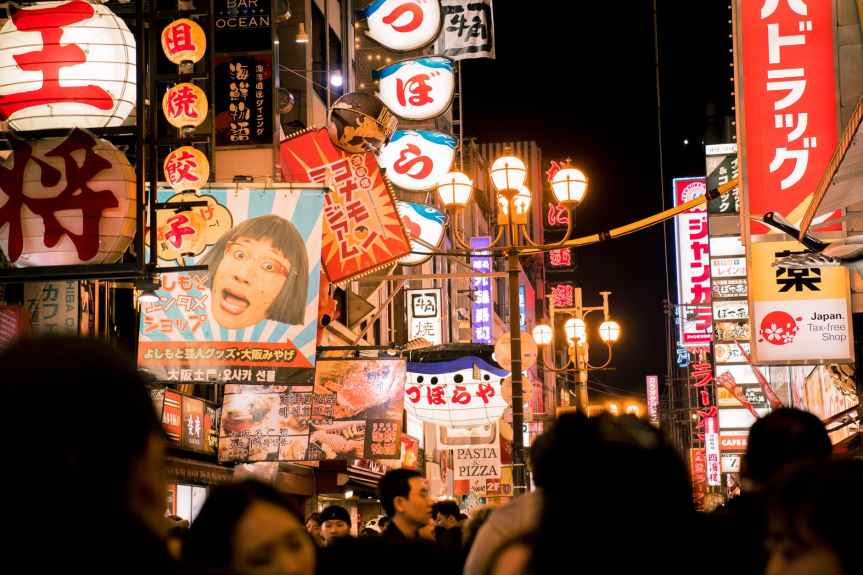
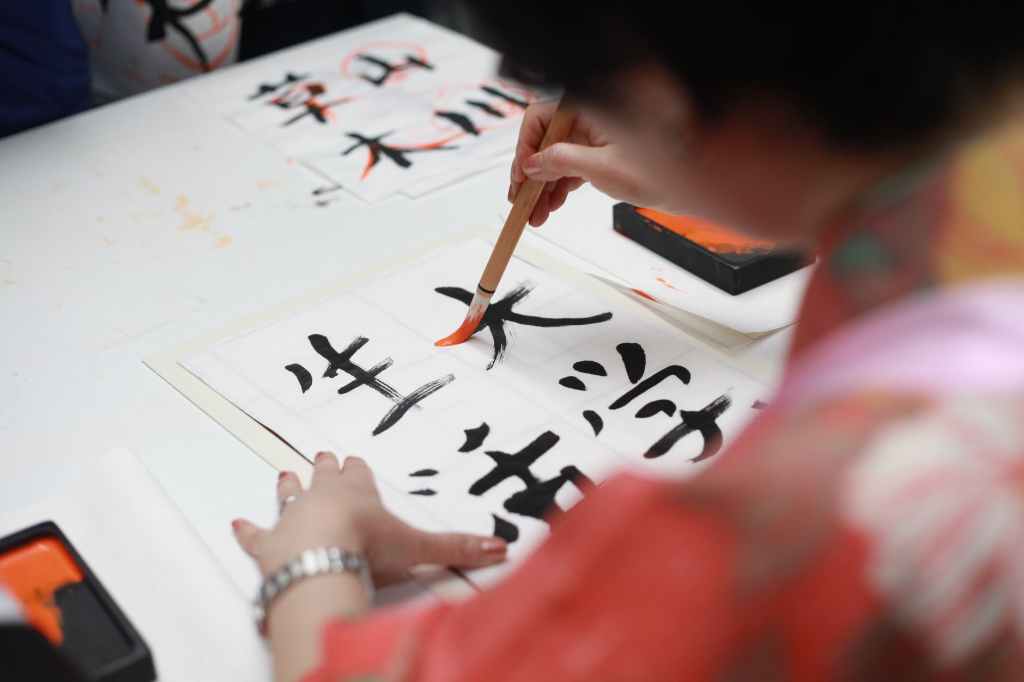
Japanese people have a unique way of living that provides many lessons for people willing to open their minds and understand their incredible culture. Japan boasts a nation of people who are incredibly kind, good-natured and polite.

The few things I learnt from them are :

REVERENCE TO PEOPLE

Japanese are masters of showing respect. Whether it’s the way they greet people they don’t know or their incredible attention to detail when it comes to developing relationships. The Japanese are mindful of respect at all times.

HARDWORK TO ACHIEVE GOALS

They work extremely hard to achieve their goals. Its for this reason that they’re one of the most pioneering, forward thinking nations on the planet! They work really hard in their careers, so they can support their families and work on self-growth.

VISIONARIES

Japan has some of the most pioneering technology companies on the planet, including Toyota, Nippon and Honda. The country has propelled its technological advancements to the forefront of human history. We must learn to believe in our vision, even if no one has achieved that.

DISCIPLINED LIFE

Discipline is akin to respect in Japan. To be disciplined is not to give in to your urges but to live a life that is respectable and based on profound will to do good for people.

CLEALINESS

In Japan, there is a general obsessiveness with cleanliness that starts in the home and extends to public spaces like parks and schools. It certainly makes the country an extremely pleasant place to be.

My source of inspiration 방탄소년단

“Tell me your story. I want to hear your voice, and I want to hear your conviction. No matter who you are, where you’re from, your skin color, gender identity: speak yourself.”

-BTS(UNICEF)

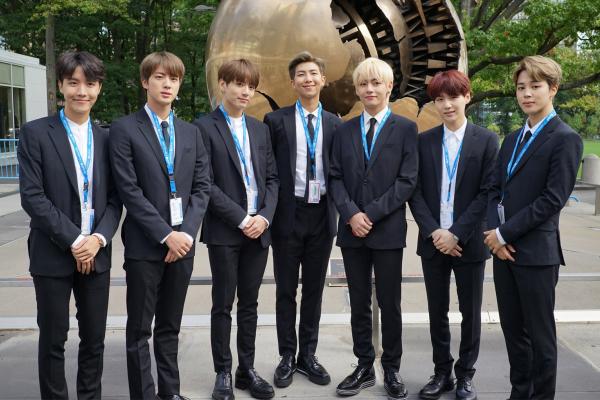
Bangtan Boys also known as BTS is a Korean-pop group, currently the biggest phenomenon of the music industry with a huge fandom named A.R.M.Y. It is a seven-member boyband and their names go like this, Kim Namjoon(RM), Kim Seokjin(Jin), Min Yoongi(Suga), Jung Hoseok(Jhope), Park Jimin(Jimin), Kim Taehyung(V), Jeon Jungkook. BTS debuted on 13th June 2013 under Bighit Entertainment. 

BangTan Sonyeondan

BTS, through their songs, talk about personal issues and society’s expectations, and commentary on youth. They focus on mental issues, depression, and almost everything that people usually don’t prefer to talk about. Moreover, they are inspiring and touching the hearts of millions of people every day through their lyrics. From the beginning of their career, they told stories that are very much familiar to our stories like teenage love affairs, the desire to achieve everything, society’s expectations on you, depression. So basically, it’s like a guy next door story which we all can relate. 

 “If you want to love others, I think you should love yourself first.”

-RM

“Don’t be trapped in someone else’s dream

-V

Back in 2013, BTS was completely unknown to the world they hardly had 200 to 300 people to cheer them up. All seven of them used to live in a small dorm with very little to no luxury, they were discriminated against by the other companies as they come from a small and completely underrated company(Big Hit). They were never invited to big shows, got so much hatred and criticism from the pop community because of their looks, clothes, make-up, and were accused of false plagiarism. But despite the hardships they have faced, they’ve pushed themselves and never lost hope. They fought together, stood against the negativity, and motivated themselves to just moved on to make a better version of themselves every day. They released 22 albums till now each album sharing a different story. They have learned to love themselves for who they are and accept their flaws. Just like that, they want us to love ourselves and end self-hatred and bring peace into our lives.

BTS albums sold till now

 “In the middle of the road, at the moment you want to give up, shout out even louder: “So what?”

-BTS

And now, their efforts paid off. They have won 370 awards including National awards, Billboard awards, Asian artist awards, the American Music Awards, etc. 549 nominations including the Grammys. And attained 26 Guinness World records and broke the records of Michael Jackson and The Beatles. They got covered by TIME magazine as “The next generation heroes”. They are the brand ambassadors of Hyundai, FILA, Louis Vuitton, Samsung, Coca-Cola, and many more. BTS delivered a speech at the UN general assembly as a part of the “LOVE MYSELF” campaign that they have launched in 2017 and partnered with UNICEF’s “End Violence” program. BTS generates 4 trillion Korean won as economic value to their country per year and 1.42 trillion won as added value per year, according to the 2018 report( Hyundai Research Institute). BTS contributes 1.7% of total Korean consumer goods export.

“Love myself, love yourself, peace.”

-Suga

“Find your name, find your voice by speaking yourself.”

-RM

Their growth is phenomenal.

From small dorms to spacious hotel rooms.

From congested practice rooms to a multi storey building.

From 200 fans to millions of ARMYs.

From a few lightsticks to an ocean of purple lights.

From small-town boys to Global leaders.

From ordinary teenagers to legends.

 “In the dark night, don’t be lonely, Like the stars, we shine, Don’t disappear, because you’re a great existence, Let us shine”

-BTS(Mikrokosmos)

 “Purple is the last colour of the rainbow colours. So means I will trust and love you for a long time.”

― Kim Taehyung
BTS with their first award
BTS awards by 2021

They have achieved everything they wanted but always stay the same as they were a few years ago. This is a story of models, dancers, singers, philanthropists, the next generation leaders, and more importantly our well-wishers. 

Their journey is worth telling, as an ARMY I will not stop narrating this story to the world.

credits to the right owners of the pictures used.

Kindness

Kindness is an act of showing generosity, empathy, and friendliness towards others. A kind person always possesses positive energy towards them. One prominent trait about kind people is that they treat everyone the same. We often notice some selfish people who only try to please their superiors and treat other people with disrespect.

Kind people are always surrounded by people who love them. Their friendly and helpful nature is what attracts everyone towards them. They are also very compassionate, emphatic, and sympathetic. They not just listen and understand the issues people face but they also try to help them.  

Kindness is important in today’s World, where no one cares about each other. Everyone just lives for themselves without helping the people in their surroundings. We all wish to be kind, but then we think about how selfish everyone is, and that no one cares about us. This should motivate us to be kind because we don’t like how people are mean and selfish. So, we need to be kind so others don’t feel this way.

Imagine this situation, a person mistreated their waiter and made them feel low. Now, the waiter comes to serve you. If you empathize with them and make them feel good about the situation, they will always remember your act of kindness.

 Even small acts of kindness given below help create a positive change in someone’s life.

  • Treating people equally
  • Helping the animals in need
  • Listening to people’s issues and empathising with them
  • Making someone feel better on a bad day
  • Not being rude to people
  • Forgiving people
  • Being a helping hand to people
  • Giving honest compliments
  • Being polite and not using harsh language

All these acts mean a lot to the people we are kind towards. Whenever we do something kind, we always feel good inside. It makes us happy. In the same way, we love meeting people who are kind and friendly. No one likes meeting selfish people who only care about themselves.

I still remember the acts of kindness people showed towards me. Once when I had to recharge my metro card, I was short of a coin or two I think I dropped it on the way. But, this kind lady standing in line paid for me. I asked her to take the money I have but she refused and went by. Now, this may obviously seem like a small thing to her, but I will always remember her act of kindness.

In the World of cruel, inconsiderate, and selfish people even small acts of kindness like opening a door for someone or helping someone pick the groceries mean a lot to the person we helped. Giving food to the needy or feeding the dogs on the streets are all things we need to do in our daily lives. We cannot just die living for ourselves. If we have the money and the resources that could help the people around us, we need to do it. Street animals do not have a job that would provide them food. We as human beings have built buildings and roads everywhere and took away nature from animals. It is our duty to give them food, water, and shelter.

Acts of kindness do not make a person small. It only makes them look bigger. People will always appreciate you for your kind behavior. I hope you are now going to help make the World a better place to live in where we treat everyone with love and compassion.

ALL THAT GLITTERS IS NOT GOLD

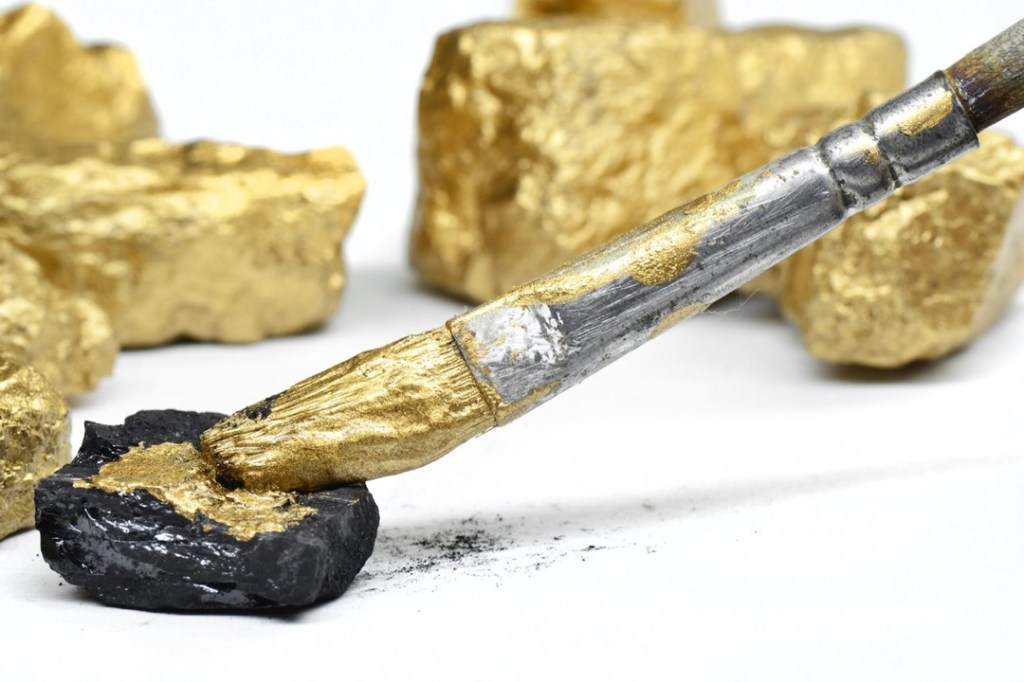
The line “all that glitters is not gold” occurs in William Shakespeare’s well-known play The Merchant of Venice”. It comes as a shock to Prince of Morocco when he, led by the exterior glitter of gold, chooses the gold casket and loses the lottery of caskets. The line has since then become a proverb. It means, in simple words, that appearances are deceptive. The seemingly beautiful and valuable object may turn out to be something most ugly and worthless.

Therefore, like all proverbs, ‘all that glitters is not gold contains the time-tested truth. It enjoins upon us to be cautious in our approach while judging the worth of a person or object. We should not be led by external appearance. A seemingly good apple may be rotten at the centre. A person may smile and smile, and yet prove to be a villain. An extremely beautiful face of a woman may hide her ugly, vicious character. A charming Cleopatra often proves to be a siren.

It is, of course, human to be attracted by good and beautiful persons and things. When a young man falls in love or goes to select a life partner, he is first tempted or repulsed by the outward appearance of the girl. If he does not pause and judge the real character of the girl, he is destined to rue and suffer for his choice throughout his life. So, it is equally true in the case of a girl in the choice of her would- be husband.

There is a beautiful story in the Bible which warns us against falling in to the seemingly attractive exterior. Eve gets attracted to the beautiful and yet forbidden fruit of knowledge (an apple). She fails to resist the temptation of tasting it. The moment she and Adam eat the forbidden fruit, they are thrown out of the Paradise forever. They bring upon them and their progeny (the whole mankind) endless sufferings in many forms.

In our modern world of glitter and glamour, there are many temptations around us. Most of us get attracted to glittering cars and bikes, gadgets and products of several kinds. Youngsters force their parents to buy them, which land their parents in vicious debt circles. The young men and women realise quite late how some of these attractive gadgets tell upon their health and ruin their careers.

Advertisements on the screen and in newspapers often coax people to buy things which are neither worth their money nor as useful as claimed. Most of us are misled by the utility of some products as they are advertised by some beautiful actresses, popular actors or other celebrities.

Marketing Mix

In every business it is important to have an efficient marketing plan or strategy to promote their product, to engage more customers or to understand consumer behaviour, to upgrade their pricing strategy. For this in 1960s, an academic and marketer E. Jerome McCarthy proposed the idea of ‘marketing mix’.

Marketing mix is basically a mixture of 4Ps to enhance business model with Price, Product, Place and Promotion. These 4Ps can be used as marketing tools by any business for achieving their market goals and targets.

Components of Marketing Mix

  1. Product

Product means anything which is for sale any physical product or any service rendered to customer.  Product should the meet expectations and demand of customers in the market.Some of the marketing decision which every seller should think of  such as branding, packaging, product range, product design, packaging and labelling, guarantees and warranties.

2. Place

In marketing mix, place refers that where seller choose to sell his product whether it is warehouse, street market, online platforms, supermarkets, etc. It depends upon the nature of the product i.e. if product is perishable, shops are preferable to sell that product and if product is non-perishable both shops and online platforms are suitable.Marketing decisions related to place includes: market coverage, inventory, transportation, location, distributors, warehousing and franchising.

3. Price

Price is the main aspect for the business and customer. Each and every customer gets affected from price of the product which consumer is selling. Price reflects the cost or value of the product. Seller should set the price as per the demand of customer and the actual cost of the product. Accurate price can change the customer’s preference form one product to another. Other important aspect of pricing is what price has been set by your competitors? This can help any business in setting their pricing strategy. Pricing strategy can make profits for the business or can cause loss to the business if it is not accurate.Price market decisions includes: payment method (card or cash), credit payment, pricing strategy, allowances for distributors and discounts for customers.

4. Promotion

Promotion means to tell or convey about the product to customers through advertising, marketing and sales promotion. It can be through offline mode such as T.V. magazines, newspapers, radio etc. and online mode like websites, ads on social media, etc. It depends upon the seller of the product which way or method he chooses to communicate about his product to customers and according to response from his customers, he should continue with that particular promotion method.Marketing decisions for promotion involves: advertising, sales promotion, public relation, direct marketing, what and how to communicate to customers.

In 1980s Booms and Bitner proposed a model of marketing mix which consist of 7Ps, generally he added 3 more Ps to marketing mix i.e. Process, People and Physical Evidence which is beneficial for Service Marketing.

5. Process

Process describes the chain of delivering the goods or services to the customer. Process examination involves the evaluation of each and every step like procedure of distribution, payment system and relationships with customer. Evaluating, modifying and improving different steps of process will help business to maintain their efforts and to check that methods are new and as per recent trend. Process related marketing decisions involves: blueprint service, process design, checking system failures, monitoring service performance, allocation of resources required.

6. People

In marketing mix, ‘people’ refer to those who all are involved in the process of delivering of goods; managing the process; handle customer relationship, etc. Employees, staff, workers or labour all are included in ‘people’, basically all those who are a part of business. For any business it is necessary to employ right people to manage all the business related process. Marketing decisions related to people includes: staff recruitment and training, attending customers, handling complaints and failures, handling social interactions.

7. Physical Evidence

 Physical evidence means evidence of the product which has been purchased by the customer. It can be receipt, brochures, tracking information, invoices, etc. It is beneficial for both customer and seller to have a record or any document of transaction. It also relates to validation of the product, authenticity of the product check by the customer through their websites, logo etc. Here, marketing decisions includes: interior design like furniture and scheme, facilities like equipment access, brochures, stationery, surrounding conditions, and signage.

References:

https://en.wikipedia.org/wiki/Marketing_mix

https://blog.hurree.co/blog/marketing-mix-7ps

Republic day

India celebrates Republic Day on January 26 annually with a lot of pride and fervor. It is a day that is important to every Indian citizen. It marks the day when India became truly independent and embraced democracy. In other words, it celebrates the day on which our constitution came into effect. On 26 January 1950, almost 3 years post-independence, we became a sovereign, secular, socialist, democratic republic.

History of Republic Day

While we got independence from British rule on August 15, 1947, our country was still lacking a concrete constitution. Moreover, India also did not have any experts and political powers which would help in the functioning of the state affairs smoothly.  Up until then, the 1935 Government of India Act was basically modified in order to govern, however, that act was more bent towards the colonial rule. Therefore, there was a dire need to form an exclusive constitution that would reflect all that India stands for. Thus, Dr. B.R. Ambedkar led a constitutional drafting committee on August 28, 1947.  After drafting, it was presented to the Constituent Assembly by the same committee on November 4, 1947. This whole procedure was very elaborate and took up to 166 days to complete. Moreover, the committee organized sessions were kept open to the public. No matter the challenges and hardships, our constitutional committee left no stone unturned to include rights for all. It aimed to create the perfect balance so all citizens of the country could enjoy equal rights pertaining to their religions, culture, caste, sex, creed and more. At last, they presented the official Indian constitution to the country on January 26, 1950.

Moreover, the first session of the India Parliament was also conducted on this day. In addition to that, 26th January also witnessed the swearing-in of India’s first president, Dr. Rajendra Prasad. Thus, this day is very important as it marks the end of the British rule and birth of India as a Republic State.

Republic Day Celebrations

Indians celebrate January 26 each year with lots of enthusiasm and zeal. On this day, people forget their religion, caste, creed, sex, and more. It brings together the country as a whole. It truly shows the diversity of our country. The capital city of India, New Delhi, celebrates it with a Republic Day Parade that showcases the might of the Indian Military and the cultural diversity of our country.These parades take place in other cities as well, where a lot of schools participate in. It is a delight to watch the children and professionals put in so much effort. The way they grace the parade makes one proud of their country.  We also do National Flag Hoisting on this day. In New Delhi, after the President of India hoists our National Flag, 21 guns salute follow it with the national anthem played by the military band.Further, in schools, March Past takes place and it is mandatory for every student to attend the celebrations. In many schools, they distribute sweets on this day as well. While it is a very joyous day, we must not forget the struggle of freedom that our forefathers took part in. Moreover, it is a day to celebrate the spirit of freedom and make sure to help India reach greater heights in the future.

Why economy of India is slowing down???

India is one among the world’s fasting growing economies. It had been touted as an economic and geopolitical counterweight to China. But recently its growth fell to its slowest pace in six years. Investment has weakened, and unemployment has risen. So what’s causing the slowdown, and how can it be reversed? Since the turn of the century, India’s economy has grown at a rapid rate, helping transform the country. Between 2006 and 2016, rising incomes lifted 271 million people out of poverty, meaning the proportion of Indians still living in poverty has fallen dramatically, from around 55% to twenty-eight . Access to electricity has also improved. In 2007 just 70% of the population had access to power. By 2017, that grew to nearly 93%.

India's economic growth likely to remain subdued in near future ...
More recently, the Indian government constructed around 110 million toilets — a huge step towards better sanitation designed to prevent the practice of open defecation. It’s a signature program of Prime Minister Narendra Modi, known as Swachh Bharat, or Clean India. All this development has been supported by a booming economy, but as lately , that expansion has begun to run out of steam. In the third quarter of 2019, India’s economic output grew by 4.5% – making it the primary time the country’s growth dipped below 5% since 2013. For context, 4.5% growth remains much above that of developed economies just like the U.S., But with 12 million Indians entering the workforce per annum , economists say the country needs annual growth rates to remain above nine percent to make sure there are enough jobs. So, what’s causing this recent slowdown? Well, officialdom argue turbulence in international financial markets is guilty.

Economy News, Latest economy news India, Indian Economy features ...
Political uncertainty and U.S.-China trade tensions mean confidence levels among investors and consumers everywhere have sunk. The United Nations has even warned that a global recession in 2020 is now a “clear and present danger”. But back to India – many economists say the country’s growth problems are literally self-inflicted. One obvious culprit is the shadow banking sector. During the 2000s, India saw an investment boom. It was fuelled by state banks dispensing a load of loans for giant infrastructure projects. But some of the companies taking advantage of these loans couldn’t keep up with the repayments. That meant the state banks weren’t getting paid back and therefore struggled to give out new loans. To keep business moving, shadow banks stepped in. These financial institutions, which operate like ordinary commercial banks but don’t follow traditional banking rules, eventually made up an estimated third of all new loans nationwide. The loans played a pivotal role for the millions of small businesses and consumers who would otherwise have no access to credit. But in 2018, shadow banking giant Infrastructure Leasing & Financial Services, defaulted on its debt repayments. Its collapse sent shockwaves through the economy and shook up more traditional banks that had supported the world.
It became harder for people to shop for expensive items like cars. That hurt India’s automotive industry, which is one among the country’s biggest. It employs about 35 million people and makes up about 7% of India’s GDP. Last summer, the industry suffered its worst sales performance in nearly 19 years, and reports suggest tens of thousands of workers are laid off. The agriculture and construction sectors have also been hurting, with small and medium businesses being hit the hardest. The country’s percentage has been on an overall upward trend since July 2017, rising several percentage points to 7.7%. Higher unemployment means consumers are buying less, resulting in the unfortunate cycle of slower manufacturing, production, investment and job creation.

Indian Economy Will Face Adverse Affects Of Coronavirus Gdp To ...
A survey from the Reserve Bank of India found consumer confidence has fallen to its lowest level in five years. But Indians still have a positive outlook for the longer term , with most consumers expecting to feel more optimistic during a year. However, if things don’t improve, debt could become another issue. Expecting better days ahead, many households have continued to spend, by taking out loans and dipping into savings. Household savings as a proportion of GDP has fallen from 23.6% to 17.2%. Meanwhile, household debt has surged to 10.9% during the same period. Critics say the govt in New Delhi has did not spot these risks and hasn’t done enough to urge the economy moving again. The Reserve Bank of India’s former governor Raghuram Rajan recently blamed the lack of significant reforms and a slowdown in investments since the global financial crisis. Even the country’s chief economic advisor recently admitted reforms are needed to form India more friendly to investors.
India has cut its corporate rate , but labor and land laws are still extremely strict. He also says the country must become pro-market, instead of just pro-business, to avoid costly government bailouts of failing sectors. But not all reforms have been good to the economy. In 2016, Prime Minister Modi tried to crack down on corruption, counterfeits and evasion by banning high value bank notes. In one night, the cash ban made 86% of all cash invalid. Three years later, many analysts say the policy disrupted the economy and did not achieve many of its original goals. In 2017, a replacement nuisance tax placed small businesses struggling and a few of them were forced to shut . In mid-2019, India’s government introduced a controversial new tax on foreign investors. Consequently, India’s stock exchange suffered its worst July performance in 17 years. Just one month later, the measure was scrapped.
The government has now refocused its efforts on international trade and investment, and thus the recent changes to the corporate rate could indeed help attract businesses and investors to India. But if the country wants to be a part of the world’s largest supply chains, it’ll need low and consistent tariff levels to encourage outsiders to take a position for the long term.

The country’s shifting export policy has harmed several of its largest industries, particularly clothing. India’s share of the worldwide apparel market has increased only slightly within the past 20 years. And though the Indian workforce is vast, both Bangladesh and Vietnam now export more. On top of that, the country’s import tariffs on the average are much above the world’s biggest economies. They’re also among the highest of the world’s emerging economies. Even U.S. President Donald Trump has called for the country to bring down its duties.

Has India’s growth actually slowed the maximum amount as we think? The government’s former chief economic advisor Arvind Subramanian caused a good little bit of controversy in June 2019, when he claimed the country’s official stats probably overstated GDP growth by 2.5% from 2011-2012 to 2016-2017. He says the bottom line is that India never recovered from the global financial crisis. The government denies this. But none of this has hurt Prime Minister Modi at the polls – he won by a landslide in the most recent election. So how will he keep his promise and double the dimensions of the economy by 2025? Many economists insist a well-explained economic vision would help. As would more long-term investment, better skilled workers and enhancements to infrastructure. It may not matter who or what’s responsible for India’s recent economic challenges, but bottom line – India’s economic process must recover , and fast.

Why Australia is least affected by recession!!!

America’s economy is approaching a big milestone. If it keeps humming until July 2019, it’ll be the longest expansion in U.S. history. It would be exactly one decade and one month old by then. But there’s another country with an even more impressive run It’s even called the ‘lucky country’ Three big lessons from Australia.

  1. Be smart.
  2. Be organized.
  3. Be lucky.

So, if I’ve got any advice for other countries, it’s try and be as lucky as Australia That luck has to do with Australia’s treasure trove of natural resources. You know Australia is on the other side of the world and sitting on tremendously valuable minerals right at the point where the Chinese economy is just around the corner and exploding. Australia and every one its natural resources were within the right geographic neighborhood even as the Chinese economy began to begin . And it just so happens that China did a big fiscal stimulus in 2008 and spent a great deal of money building new cities. So all of these resources were drawn from places like Australia. So that also served as a huge tailwind at a time when developed markets were in a whole lot of trouble.

What Currency Is Used In Australia | Australian Dollar : Compare ...

The year 2008 was a time of economic turmoil The Global Financial Crisis hit and markets crumbled around the world. But as it turns out this was also a year for Australia’s economic management to really show off At the time the government had a very helpful and very low level of debt. One reason? Pension reform in the 1990s. Australia set up a compulsory retirement system called the superannuation system. It requires employers put money into its employees’ retirement savings.

Since companies and citizens have to build up retirement savings, some of the financial burden to pay off pensions was taken off of Australia’s government As other economies reeled in the wake of the 2008 crisis, the Australian Government was then able to put money directly into people’s bank accounts This boosted consumer spending in order to stimulate growth In 2008, the Australian Government unlike some other developed market governments actually jumped in very quickly with fiscal stimulus, so that helped to kind of minimize the effect of the crisis The country’s numbers continued to look sluggish after the financial crisis. But they never quite dipped low enough or for long enough to satisfy the definition of a recession. It takes two quarters of negative growth to fall into a recession. Australia’s economy did post a couple of negative quarters since 2008, but no country’s perfect. Overall Australia’s economy has been managed pretty much in recent years partly due to a robust and stable financial institution.

Reserve Bank of Australia – Australia's LGBTQ Inclusive Employers

Australia has an independent financial institution and it is a very well-run financial institution . It also has a floating exchange rate and the exchange rate helped it adjust to international shocks. Australia’s economic reforms gave it flexibility in times of hardship. For example, floating the Australian dollar In 1983, Australia’s government moved the dollar onto a floating exchange rate This meant that the dollar would be valued by supply and demand instead of being subject to influence from its government or its central bank It allows the economy to react to shocks as well Typically when an economy is hit by some sort of negative shock. The currency will adjust. It will depreciate and that helps promote exports. Another reason behind Australia’s economic diary lies in its immigration policy. Since the late 1990s, Australia has seen growth in temporary migration, many arriving to the country on student or temporary work visas. The number of temporary migrants peaked in the year 2000. However a recent change to immigration law in 2018 gave visa applicants more hurdles to get through if they wanted to come to the country Even when our GDP per capital average incomes aren’t rising by much because the number of people continues to rise that means the total GDP continues to rise at even more rapid pace Part of that’s underpinned by much faster population growth Most experts think Australia’s economy remains strong in 2019, but it’s not without risks.

Australia’s suffering at the instant from pretty weak wage growth. That’s worrying a lot of people. There’s a lot of fear right now that China is hitting a wall. That will hit demand for Australian products. The good news is to the extent that the Chinese are buying commodities hopefully will find buyers from overseas for many of those commodities if the Chinese are not there The bad news is the rest of the world economy is not doing that well.

Australian economic growth slows, enters per capita recession ...

Position of interstate trade in india

Introduction

“Democracy is the art and science of mobilising the entire physical, economic and spiritual resources of various sections of the people in the service of the common good of all.” To an extent the Article 301 of the Indian Constitution could be said to the derived or influenced from such a philosophy with the objective to protect the National integrity and unity with the help of hassle free flow of trade throughout the country. An intention to unify different fields and different regions with the help of this freedom guaranteed in Art. 301 Even then for all practical purposes this freedom could not have remained absolute in order to ensure that a privatized market Grab economy does not further exploit the already starving population of India. Therefore this freedom was made subject to the other provisions of this Part (Part XIII). But as the researcher proceeds with the analysis of the position of inter-state trade it becomes clear that these provision which act as restrictions on this freedom bestowed by Article 301 is been severely hinders it . And therefore the Concept of Free Trade as envisaged by the constitution makers has remained a concept only with the amount of barriers and complications involved in interstate trade today. The free flow of trade and commerce are sine qua for the economic enhancement domestically as well as internationally has not given to the Indian Markets. The European Union is an amazing example of such a trade union which has opened up trade barriers among the countries of the union and has shown dramatic advancement in the field of trade and commerce. It is time for India to overhaul its current taxing system and central as well as state policy towards free trade.

Thus in this project the researcher will analyse the case laws which are responsible for the current position of the interstate trade and also the effect of Part XIII on them to determine how effective the provisions have been to strike a balance between the economic development and advancement of the country on one hand and the protection of the majority who were likely to the exploited and starved if the free market was allowed to thrive at the whims of capitalists.

An Analysis Of The Provisions And The Case Laws

The Constitution Makers have borrowed the concept of freedom of trade from the Australian constitution (Section 92) but the Indian version has a couple of changes in the scope of its application, and they are

  1. that the freedom guaranteed is not limited to among the states but ‘throughout the territory of India’ and,
  2. the privilege of trade being free is not qualified by the adverb ‘absolutely’ as in the Australian constitution.

And the reasons for these changes in the adaptation of this Article, from the Australian constitution, lies in the rest of the Articles of the Part XIII starting from Article 302 till 307. The Freedom is not absolute as the rest of the provisions impose several restrictions and exceptions to this freedom. Another very important aspect of the Part XIII of the Constitution is that it is not subject to any other part or provision of this constitution. In the simplest sense any kind of tax that is levied on any particular activity which involves interstate transaction can be taken to be a restriction on the freedom of trade. But as taxes are also necessary for the functioning of the Centre and the State all of them cannot be treated as restrictions violating the Article 301. This question was first brought up in the Atiabari case in which the Apex court held that tax laws are not outside the scope of ‘the Freedom’. And therefore the Assam State Legislature had to amend the provision as to meet the requirements of the exception in Article 304(b) so that the tax that it imposed did not amount to a direct and immediate impact of the movement of the goods. This case has also gone into the historical background of the Making of this constitution in which it discusses that the makers of the Constitution were fully aware of the fact that economic unity was an absolute prerequisite for the stability and progress of the federal polity. Considering the possibility that there might be several political parties in the future, unlike the only congress majority then, with different ideologies and following different ‘isms’ for pursuing socio-economic goals is likely to give rise to a mechanism wherein the regional pull (by regions with higher influence) will affect the economic policy which in turn will have negative impact on the overall development of the economy of the nation as a whole. Thus the object of Part XIII to avoid such a possibility and to ensure that the political freedom won and political unity which had been accomplished by the Constitution, had to be sustained and strengthened by the bond of economic unity. But this harsh approach towards the taxing power of the state was later review by a larger bench in the Automobiles case. Therefore to ensure that this freedom of trade did not evolve to be an absolute one legitimate restrictions like compensatory taxes or regulatory measures will not be taken into account as restrictions hampering the trade and thus would stay out of the purview of the Article 301. The court also dilated further on the issue raised in Atiabari about the problem of economic integration due to diversity in several fields. The two questions however stood out:

“ first that how to achieve a federal, economic and fiscal integration, so that economic policies affecting the interests of India as a whole could be carried out without putting an ever-increasing strain on the unity of India, particularly in the context of a developing economy. And 2nd that how to foster the development of areas which were under-developed without creating too many preferential or discriminative barriers”

“first, in the larger interests of India there must be free flow of trade, commerce and intercourse, both inter-State and inter-State; second, the regional interests must not be ignored altogether; and third, there must be a power of intervention by the Union in any case of crisis to deal with particular problems that may arise in any part of India.

Scope Of Articles 301, 302 & 304 Vis-A-Vis Compensatory Tax:

Considering the above doctrine dilated by court, it is clear that whenever a law is challenged on the ground of violation of Art. 301, the court has also to determine the effects of the operation of the impugned law on inter/intra state trade in addition to applying the doctrine of pith and substance to determine the basis of the Levy.The Vijayalakshmi Rice Mills Case is another recent case which deals with the ability of the state legislatures to the levy of cess without violating Art. 301. It was contended that the cess levied under the Act (Andhra Pradesh Rural Development Act, 1996) did not correspond to any of the entries in List II or III of the Seventh Schedule and this rendered the cess invalid andmoreover the there was no quid pro quo in the levy of cess, and hence could not be said to be a fee. On the argument of the respondent that it was in fact a fee and therefore it came under Entry 66 of List II. But the court on this ground made it clear that co-relationship between the totality of the fee and the totality of expenses of the services was indispensible even though mathematical precision wasn’t necessary between the service rendered and the fee realised. Thus a fee levied for rendering to the service of rural development was held viable and the validity of the act was upheld. Thus with this position of the case laws on the Freedom of trade and commerce, the following is the likely procedure to be followed while deciding a case. First is to check whether the law, be it taxation or non-taxation, violates the Freedom in Art. 301. And to do that first it is necessary to know the scope of operation of such law, whether the operation of the act of that law affects movement of trade, commerce or intercourse throughout the country.

If it is so then the next question is: What is the effect effect of operation of the law on the freedom guaranteed under Article 301? If the effect is to facilitate free flow of trade and commerce then it is regulation and if it is to impede or burden the activity, then the law is a restraint. After finding the law to be a restraint/restriction one has to see whether the impugned law is enacted by the Parliament or the State Legislature

GST: To Strengthen The Unified And Integrated Domestic Trade.

The Goods and Service Tax Bill which was supposed to be enacted by now is still pending as a bill due to various complications. The GST if enacted would have drastically impacted the inter-state trade and it is likely so that whenever in the future the GST will be enacted it will do its job. One of the several advantages of the GST is that it will not only replace the existing Sales tax by central and the state governments but also subsume most of the indirect taxes on the supply of goods and services. It includes central excise duties, additional custom duties, cesses levied by the union and surcharges in case of the Centre. And in case of the States it would replace purchase tax, state excise duty, luxury tax, octroi, entry tax in lieu of octroi. Under the GST regime the CST was to be reduced to zero by 1st April of this year! But the States have lobbied against it as after that the Centre alone would levy IGST and the exporting state will transfer to the centre the credit of SGST used in the payment of the IGST Purohit in his article says that the implementation of the IGST mechanism would prove to be a daunting task as all statewise exports and imports would have to be recorded. Moreover he says that “the importing state will have to give set-off as soon as the import takes place and will get it back only after a delay of a month or so. Given the fiscal scenario of the states today, the states exporting goods may not find it possible to fulfil their commitment to transfer the tax amount promptly to the central pool.”

Thus this model seems to be built on various assumptions which might require more time, efforts and planning than anticipated.

POOR vs RICH

We live in a society comprised of two classes called the rich and the poor with a lot of differences between them. These are also referred to as the dos and don’ts of the society. The rich make up barely 40% of the population and have control over 60% of the resources while 60% of the population makes use of the remaining 40% of the resources. However, the divide between rich and poor, despite all ‘isms’ such as communism, capitalism, and socialism keeps growing all the time making the condition of the poor worse than it has all along been. However, the financial condition is not the only difference between the rich and the poor.

• Control of Life:

• Rich believe they are in control of their lives.

• Poor feel they are subject to various of life and life controls events taking place in their lives.

• Money:

• Investing in schemes to make more money is like a game for rich.

• The poor are all the time terrified of investing in the stock market with the result that more often than not, they lose money.

• It is apparent to all that the poor are playing not to lose money while the rich are playing to win more.

• Opportunities and Obstacles:

• Rich people see the opportunities while poor see the obstacles first.

• Poor keep thinking how they will overcome these obstacles whereas rich keep their focus on opportunities as they have the resources to overcome obstacles easily.

• Dreaming:

• Rich dream big and, therefore, strike rich.

• Poor dream small with the result that they have to remain content with whatever they get.

• Doers and Dreamers:

• Rich are doers; they take concrete steps to fulfill their dreams.

• Poor just dream about their dreams.

• Company:

• The company of rich people includes rich and successful.

• Poor people have the company of unsuccessful and daydreamers.

• This difference in company proves vital in deciding the future of the rich and the poor.