Discovery of Uranus

The discovery of Uranus is an important milestone in the history of astronomy. Uranus is the seventh planet from the sun and is the third-largest planet in our solar system. It was discovered by Sir William Herschel on March 13, 1781. Herschel was a German-born British astronomer who had a keen interest in studying the stars and planets. He had built his own telescopes and was known for his expertise in optics.
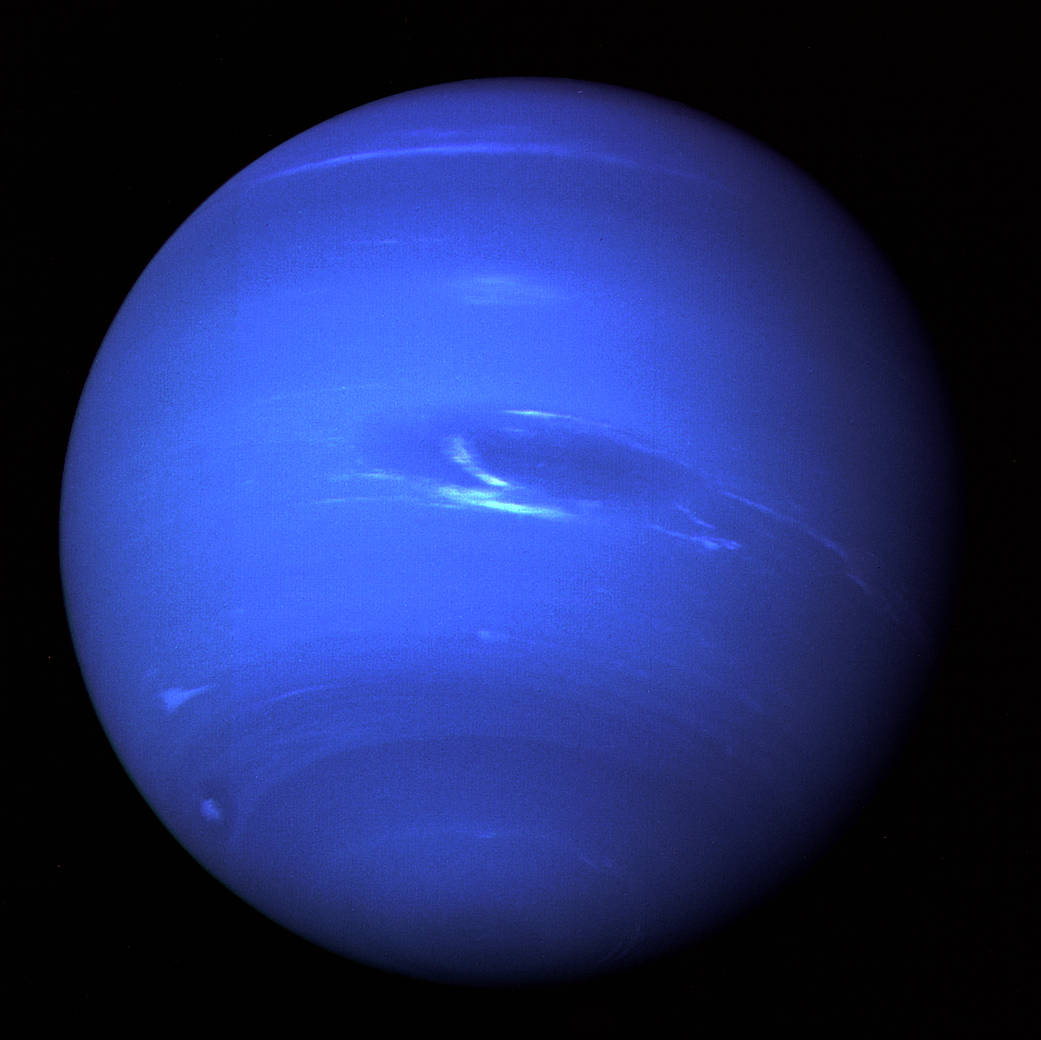
Source – NASA

In 1781, while observing the night sky from his garden in Bath, England, Herschel noticed an object that he initially thought was a comet. However, as he continued to observe it over the course of several nights, he realized that it was something much larger and farther away than a comet. Herschel’s discovery of Uranus was significant for several reasons. First, it was the first planet to be discovered since ancient times. The other planets, including Mercury, Venus, Mars, Jupiter, and Saturn, had been known since ancient times, and Uranus was the first new planet to be added to the list. Second, it provided evidence that there were other planets in our solar system beyond the orbit of Saturn. Prior to Herschel’s discovery, it was believed that Saturn marked the edge of our solar system.

The discovery of Uranus was also significant because it challenged existing beliefs about the nature of the universe. At the time, it was believed that the planets orbited the sun in a predictable pattern based on their distances from the sun. However, Uranus did not follow this pattern, and its orbit was difficult to explain using the existing models of the solar system. This led astronomers to question their understanding of the laws of physics and the nature of the universe.

After Herschel’s discovery, astronomers around the world began studying Uranus in more detail. They found that it was a gas giant planet with a distinctive blue-green color. They also discovered that it had a system of moons and a ring system, similar to those of Saturn. Over the years, astronomers have continued to study Uranus using telescopes and space probes, providing new insights into the planet’s composition, atmosphere, and history.

To conclude, the discovery of Uranus by Sir William Herschel in 1781 was a significant event in the history of astronomy. It was the first new planet to be discovered since ancient times and challenged existing beliefs about the nature of the universe. Herschel’s discovery opened up new avenues for scientific inquiry and inspired generations of astronomers to study the planets and the stars. Today, Uranus remains an important object of study for astronomers, providing insights into the workings of our solar system and the universe beyond.

What are Dwarf Planets?

 Dwarf planets are a category of celestial objects that are similar to planets, but are smaller in size and lack certain characteristics that define a planet. The classification of a celestial object as a dwarf planet was introduced by the International Astronomical Union (IAU) in 2006.

The IAU defines a dwarf planet as a celestial body that orbits the Sun, is spherical in shape, and has not cleared its orbit of other debris. This means that while a dwarf planet is similar to a planet in terms of its shape and orbit, it has not become dominant in its orbit and there are other objects in its vicinity. Currently, there are five officially recognized dwarf planets in our Solar System: Pluto, Eris, Haumea, Makemake, and Ceres.


Source – Shutterstock Images

Pluto is the most well-known dwarf planet and was formerly considered the ninth planet in our Solar System. It was reclassified as a dwarf planet in 2006 due to its size and orbit. Pluto is located in the Kuiper Belt, a region beyond Neptune that contains many icy objects. It has five known moons and a highly eccentric orbit that brings it closer to the Sun than Neptune for part of its orbit.

Eris is the largest known dwarf planet and is located in the scattered disc, a region beyond Neptune that contains many objects with highly elliptical orbits. It was discovered in 2005 and is named after the Greek goddess of discord. Eris has one known moon and a highly elliptical orbit that takes it far beyond Pluto.

Haumea is a dwarf planet located in the Kuiper Belt. It is named after the Hawaiian goddess of childbirth and fertility. Haumea has an elongated shape and rotates rapidly, completing a full rotation in just four hours. It has two known moons and a highly elliptical orbit.

Makemake is another dwarf planet located in the Kuiper Belt. It was discovered in 2005 and is named after the creation deity of the Rapa Nui people of Easter Island. Makemake is one of the largest known objects in the Kuiper Belt and has a highly reflective surface.

Ceres is the only dwarf planet located in the asteroid belt between Mars and Jupiter. It was the first object to be discovered in the asteroid belt and was considered a planet for a brief period in the 19th century before its size was determined. Ceres is the largest object in the asteroid belt and has a rocky surface.

In addition to these five recognized dwarf planets, there are many other objects in our Solar System that could potentially be classified as dwarf planets. These include objects in the Kuiper Belt, the scattered disc, and even some of the larger asteroids in the asteroid belt.

The study of dwarf planets is important because they provide valuable information about the formation and evolution of our Solar System. Many dwarf planets are thought to be remnants from the early Solar System, and their study can help us understand the conditions that existed during that time.

In conclusion, dwarf planets are a category of celestial objects that share similarities with planets but have not cleared their orbit of other debris. There are currently five recognized dwarf planets in our Solar System, including Pluto, Eris, Haumea, Makemake, and Ceres. The study of dwarf planets is important for understanding the history and evolution of our Solar System.

What if it rains diamond instead of water?

Rain of diamonds

We people live in Earth experience rain more often. It brings out joy to some and sorrow to some. Climates changes and all other factors are becoming reasons for acid rains in urban areas and many rural areas are turning into desert without rain. 

In those areas, raining of water itself considered as precious thing like diamond whereas in Saturn the rain is not made of water instead they rain diamonds.

[Courtesy: Discovery news]

Saturn and it’s diamonds

Scientists believe that there are about 10 million stones like this in the atmosphere of Saturn. Every year about 1,000 covered rocks rain down in Saturn as stated by NASA. So, Why it rains diamond in Saturn? Are they the real diamonds?
Saturn, the planet with rings has these diamonds rocks in its atmosphere. These rocks are formed because of the gaseous mass present in the atmosphere, they are very intense. When the lightning storm occuring in the planet strikes the Methane(CH4) gas, it converts it into soot like compound which contains mostly of Carbon molecules.
When the Saturn rays which are extremely high in temperature hits the Soot, they break the molecules separating the Carbon and Hydrogen. The newly formed compound will be heavy and is attracted by the gravity. 
The falling compound is subjected to high pressure and increase in temperature transferring Carbon to Graphite and then into Diamonds while falling to the surface. This is how it rains Diamond in the six planet of the Solar System.
The large diamonds are in centimetres which are suitable for a diamond ring. These diamonds fall on the surface of the planet. 
Who knows may be in the future diamonds would be harvested in Saturn.
Studies state that as like Saturn,  planets like Jupiter, Uranus and Neptune also rain diamonds.

International day of Tropics

The serenity of the lulling ocean is a wondrous thing to behold..more precious than the gems coveted and covered in platinum or gold…

Oksana Rus

Introduction

International day of Tropics is observed every year on June 29th . This day is celebrated to highlight the different challenges and opportunities faced by the nation as well as by the people who lived in tropical areas .

Firstly , you want to know about things like :

What are tropics ?

Why we celebrate international day of Tropics ?

Or

Is it worth it to talk about these things and is it really important ?

Well hold your horses and try to calm .

What is tropic day and why we celebrate it ?

Well a tropic day is celebrated to highlight the importance of Tropics , it signifies extraordinary and astounding diversity of tropical nations .

The Tropic defined as a area /region between tropic of Cancer and tropic of Capricorn . The day aim at promoting tropical regions and awareness to the people about the diversity of these regions .

While these regions go through little seasonal changes on day to day basis because of some factors like tomography , climatic variation that causes changes in temperature and make these regions warm.

This day introduced to the world when in June 29th , 2014 twelve leading tropical research institutes come together and collaborate. The inaugural state of the Tropics report was launched . The report offers some unique perspective for the increasing the importance of these regions .

United Nations General Assembly adopted resolution A/RES/70/267 in 2016, which declared that 29 June of each year is to be observed as the International Day of the Tropics.

The International day of Tropics briefly explained the issues affecting the tropical zone’s all over the world. To raise awareness and important role the countries played to Sustainable goals .

International day of Tropics 2021

As per the state tropics report the theme of this year is “ THE DIGITAL DIVIDE IN THE TROPICS ”

With the record of sustainable development goals as well as developmental scope . The biodiversity of these regions are maximum and its loss is also greater there. Tropical regions comprise 98% world’s mangrove forests, and around 99% mangrove species.

Due to the subpolar zone the Sun is directly overhead which is one of the region of extinction of flora and fauna in the Tropics. The region is subjected to myriad and need immediate attention to ensure sustainable development.

More than 50% of renewable water resource could be founded their. But the threat lies which causes eviction of lives in the Tropics.

Importance :

Due to the problems it’s our duty as a human being to spread awareness about the implications in climate changes , deforestation , urbanization , global warming effect the biodiversity and lives in Tropics.

The International day of Tropics organize many events in which people share their stories , events and lives in these areas and formulate strategies to ensure the development of such regions .

You who sacrifice fortunes to see the luxuriance of the tropics or the polar lights of the arctic, must pay more dearly to see the One for whom the luxuriance of the tropics is poverty and the polar lights are a tallow candle.

Nikolaj Velimirović, Prayers by the Lake

Link:

Is it the end or the begining of new era.

“Everything that has a beginning has an ending. Make your peace with that and all will be well.” ~

Jack Kornfield

Life is not always meant to fill with bliss and happiness . It also has its demon and darkness . And we are unable to understand the consequences that can be happen in future .

This is what we are facing now and it’s popularity is all over the world . Well well .. we all met the celebrity i.e., known as “ CORONA VIRUSE ”

Yes yes I know how much amazed we all were when we get to know about it . The excitement leads to the death of 1/4 of a population . Let’s move on from the gossip girls .

“But you are involved in the world, and your actions have consequences for other people, and if you don’t recognize that, then that’s the supreme kind of cruelty. Everyone shares someone else’s fate to some extent.” ~

Malcolm Bradbury

Like a gentle men he is . Malcolm has distracted us from the main theory that is “ Every action has equal and opposite reaction ”

From the past decades , census has been directly pointing out the deterioration in Nature . It leads to the extinction of wild life . More than one million of species had been reportedly facing problem and extinct .

So what do you think . Is it a revenge that nature is taking in the form of corona virus ?

Or

Is it a lesson to the human kind for playing with the nature ?

Well in both questions we get one thing clearly that is human kind has to pay .

Based on the report by WHO more than 3.3 million people died due to COVID19 in January . Their are “excess death” of people which caused mass havoc in the mind of the people all over the world .

So where were we virus , death , human kind , extinction . Ohh yeah now I remember we were talking about the hate of nature for human beings . Ops , sorry . Don’t mind sometimes I just flow with sentiments .

Well , yeah we were talking about the devastation in the human world by nature .

I am not a socialist or a misanthrope . I loved nature as much as you do . But what we didn’t understand is that how much we hurt our environment . And when we come to the realisation .

It’s being like OJO run his lovely Siren on MOJO . What , who is Siren . Siren is OJO’s favourite truck . Yeah I know I am very funny .

Reality hits us with the truck in the form of COVID .

I really do talk about COVID in this editorial rather than I used in my daily life .

We need to recreate our life in the form that It will not harm the nature . I know it’s a tough time to speak about this but until we will not stop ourselves for our wrong doing . It will come back to us and hit it with the force that no human kind can protect themselves from the destruction.

Embrace a new perspective.

Let move together to the new world where we can live with nature

This given editorial is written under one’s perspective. I am not judging anyone’s decision . You have youern own perspective and i am standing with that .

The World of Extremes- Mercury

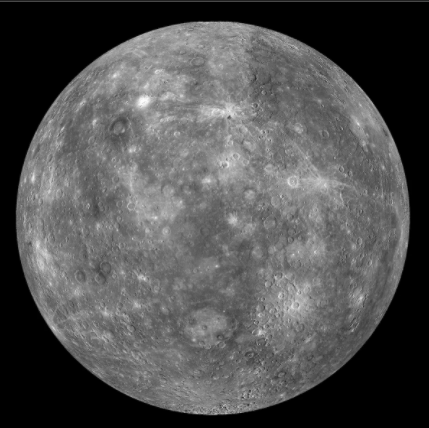
The closest planet to the Sun is Mercury. Everyone knows that. But did you know that Mercury has the Caloris Basin which is 1,550-kilometer-wide! Mercury is the smallest planet in the solar system. It has no moons of its own. If you stand on the surface of Mercury, the Sun would appear three times larger than seen from earth. Mercury is smaller than Ganymede and Titan. It is 2400km in radius. It is a rocky world, one of the terrestrial planets, and has a weak magnetic field generated by its core. It has a very thin, almost nonexistent atmosphere. Its landscape is more cratered than any other terrestrial planets(lots of bombardment from solar debris). Are you ready to learn more about this small yet exciting planet?

Image result for Mercury. Size: 170 x 160. Source: www.universetoday.com

Some facts about Mercury:

Radius- 2440 km

Orbital period (Length of a year)-  88 Earth days

Length of a day- 59 Earth days

Surface temperatures-  -183°C(-300°F) to 430°C(800°F)

Axis tilt- 0 degrees

Distance from the Sun- 0.39AU

Moons- none

Gravity- 0.38 Earth’s gravity

Mercury’s History

Mercury was formed from rocky materials that could withstand the high temperatures close to the Sun.  Early Mercury lost most of its original atmosphere due to the constant lashes of the solar wind. Mercury was subject to impacts from incoming solar system debris during a period called the “Late Heavy Bombardment,” which ended about 3.8 billion years ago. Mercury has retained many of the craters from that era of its history. It is assumed that, the more craters on the surface of a planet or object, the older the planet or object is. So, Mercury’s surface is quite old. The Caloris Basin was created as a result of a 100-kilometer-wide asteroid crashing into the surface, about 4 million years ago.

Missions to Mercury

Mariner 10 was the first mission to visit Mercury in 1973 and circled the planet three times. Through its specialized equipment, it measured Mercury and sent the first-ever close-up images of its surface. 

In 2011, the MESSENGER(Mercury Surface, Space Environment, Geochemistry and Ranging ) spacecraft entered into Mercury’s orbit for a multi-year mission. The data from MESSENGER is remarkable. 

Mercury’s secrets uncovered

There is strong evidence of water at the poles. Mercury’s core is larger than expected- it takes up 85 percent of the planet! The core is probably solid and surrounded by a liquid layer of molten iron, a layer of iron sulfide above that, and silicate rocks that make up the crust. Mercury is the densest of all the terrestrial planets. Volcanism helped shape Mercury’s surfaces. Its landscape is split by large cliffs called scarps, which formed as the surface broke apart. It is made up of 60 percent iron which is twice as much as Earth has, and 40 percent other minerals. Mercury’s very thin atmosphere contains- hydrogen, helium, oxygen, sodium, calcium, potassium and water vapor. Scientists found traces of dark materials which could be organic compounds(carbon-based). It is possible that these organic compounds and the ice deposits were delivered by comets which bombarded it.

I hope you learnt something more about Mercury than it just being the closest planet to the Sun.

https://en.wikipedia.org/wiki/Mercury_(planet)
https://solarsystem.nasa.gov/planets/mercury/overview/

To MARS, Or Not To MARS ?

Strap yourself in, we are going on a trip in our favorite rocket ship, steering through the clouds like little Einsteins. Climb aboard and get ready to explore, the Red Planet- Mars. From hostile deserts, to lonely islands and the highest mountains, wherever there is space to expand into, humans do so.

Hence it is hardly surprising that we are all ready to set foot into Mars and create the first permanent colony outside of Earth maybe even terraform another planet and turn it into a second blue home.

If you don’t know who is Elon Musk, then you better start googling his name and get to know him. Not only is he the billionaire founder of Tesla Motors, this a.k.a. Iron man superhero Tony Stark has ambitious plans to send humans to Mars by 2025.

If this is a trip then like any other, there is a need for a checklist with list of items to be taken to Mars and items we can conveniently leave back on Earth. Let’s get started fellow Martians.

A MARS COLONY CHECKLIST :

  • PORTABLE OXYGEN GENERATOR- You need to breathe. In case of emergency, a standby kit to generate oxygen is required. But considering humans, we might need a mask too because air is our favourite natural element to pollute.
  • PORTABLE SOLAR POWER KIT- Low battery and no charger sounds as scary as the trip itself. Whatever electronics you are bringing, as long as there is no electricity, forget about your entertainment. You don’t want to die of boredom.
  • PORTABLE WATER FILTER- We know there is frozen water on the planet. But we dont know if ita drinkable. All the ice deserves a drink, so bring a filter and soda-making machine if excess luggage permits (check with your airline)
  • PLANT SEEDS- Once you run out of your snacks you should look into farming. Be prepared, bring some seeds and check some tutorials on gardening (preferably in space).
  • LONELINESS- Self isolation might be needed to avoid radioactive exposure, well looks like the year 2020 is indeed a good practice for it. Also aren’t we all lonely from inside (No? just me? Okay…. *crawls back into my hole*)
  • NUCLEAR REACTORS- For creating a safe atmosphere and not the nuclear weapons that Nations own for “defense purposes” Let those weapons stay on Earth along with the people who threaten to use them because there isn’t much spice in their lives.
  • MULTIMILLION DOLLAR SPACESHIP – So large that it could fit the 150 Million homeless around the world, people who have been disappointed by the Politicians and their promises.
  • A HIGH TOLERENCE – A tolerance level higher than what we have to everything on social media and to the lifestyle of new generations.
  • MAA KE HAAT KA KHANA – A nice Tupperware tiffin box with food made by your Moms because, The M.O.M on Mars doesn’t cook or do ALL your work. (M.O.M –Mars Orbiter Mission also called Mangalyaan)

Lastly a desire to get away from it all. Elon Musk is not crazy, but a visionary, a modern adventurer who dares to dream. NASA is behind him by committing to send the first batch of astronauts on his mission. More than 200,000 people have signed up for the one-way ticket to Mars including Leonardo DiCaprio. Musk hopes to send 1 million people to the Red Planet and a ticket is estimated to cost around USD200,000 for each passenger (Hefty I know, but you get to travel with Leo as your travel buddy, hopefully this space- SHIP doesn’t sink).

Well as scary and uncertain as everything sounds it all comes down to one very important factor, Does Mars have Wi-Fi?

Solar Eclipse- Everything you need to know!!!

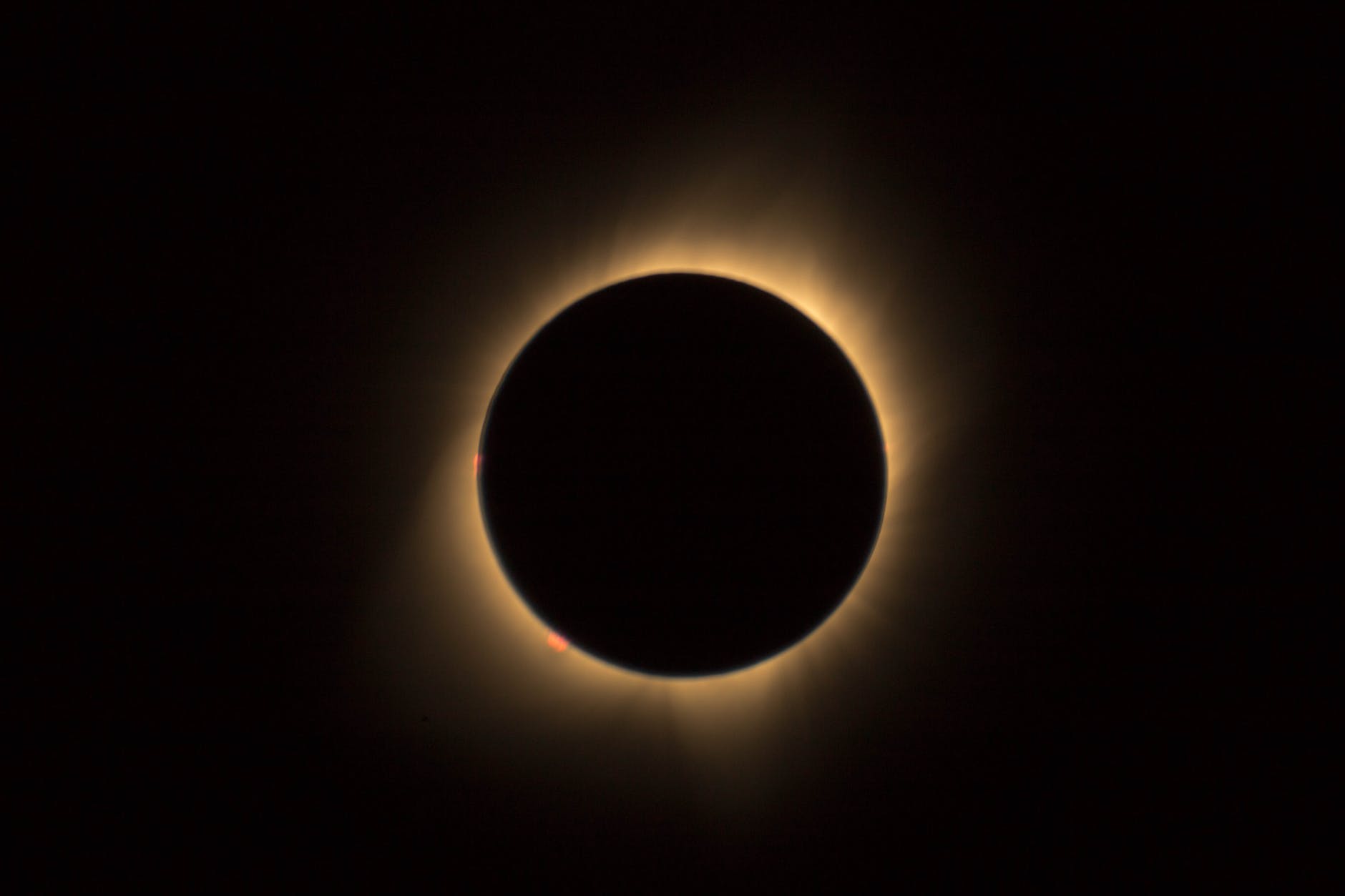
Solar Eclipse a sight is rarely seen on earth. On this day the sun will look like a shining ring. This will be neither partial eclipse nor complete. The shadow of the Moon will cover  almost 99% of the Sun rays. Which will cause the side of the sun remain illuminated and the middle part of the sun will be completely covered by the shadow of the moon.

astronomy circle dark eclipse
Photo by Drew Rae on Pexels.com

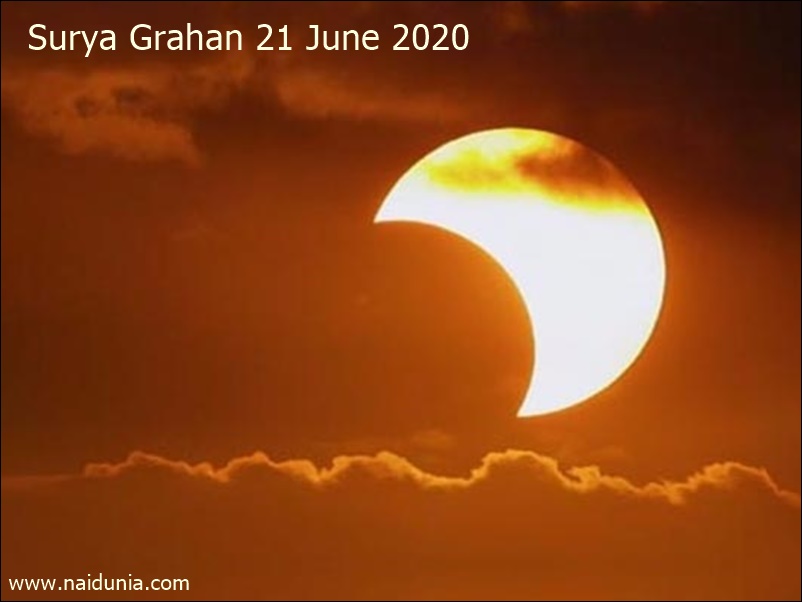
Solar eclipse will be addressed on 21st June 2020 from 10:20 AM  to  1:49 PM which will be visible in India and according to astrology this day will be impressive as many planets and constellations will be matching which did not match from past 500 years! Sutak period will start from 10:17 AM on 21 June it self. This solar eclipse will be in Mrigashira, Ardra, Nakshatra and Gemini. During this eclipse, 6 planets i.e. Jupiter, Saturn, Mars, Venus, Rahu and Ketu will be in retrograde state; Rahu and Ketu are always retrograde. Such position of planets will make solar eclipse impressive. According to astrology, eclipses can become a factor of natural disasters, which may cause disaster like earthquake, typhoon or storm.

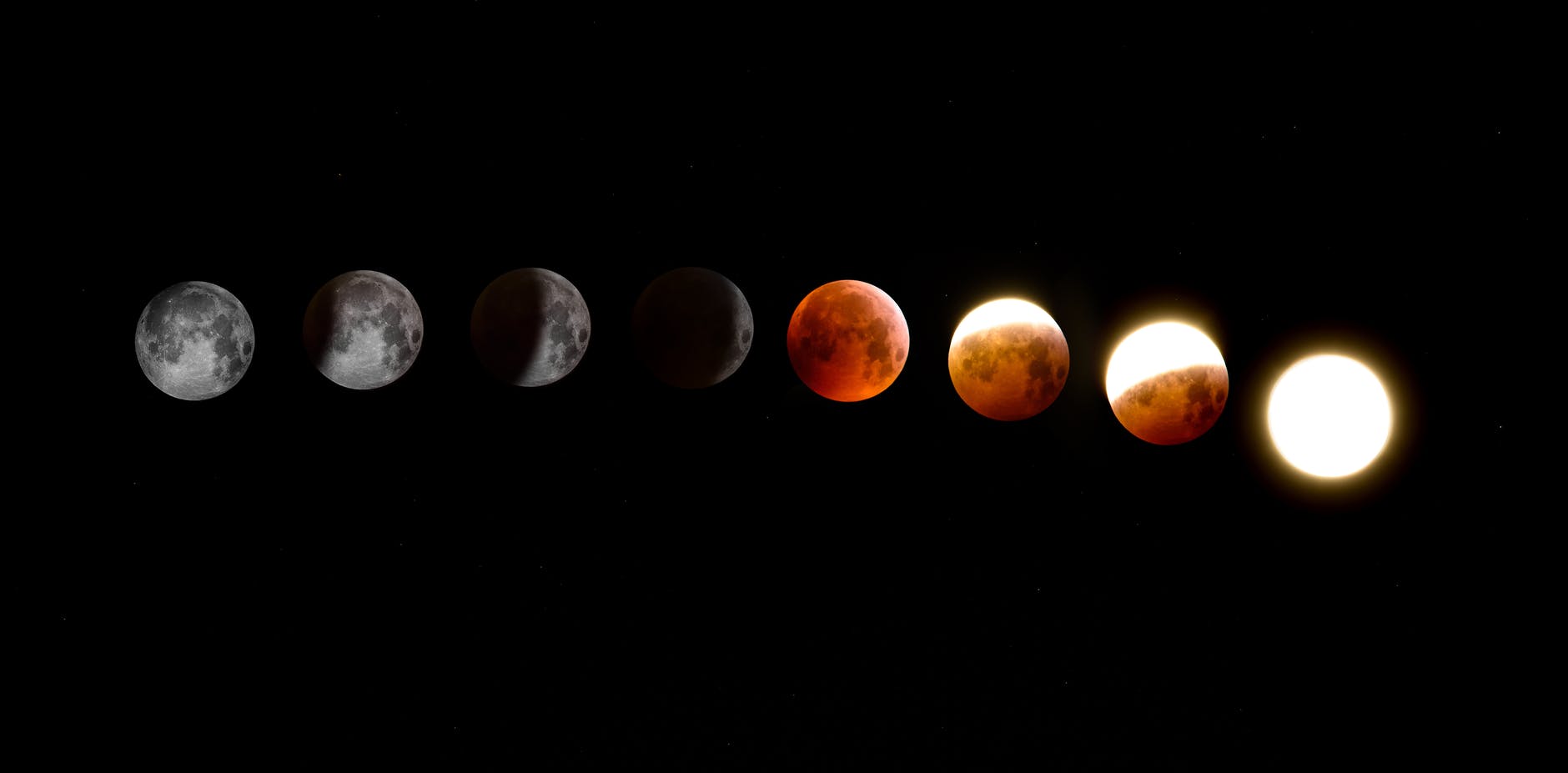
phases of the moon
Photo by Alex Andrews on Pexels.com

Precautions should be taken during the solar eclipse every time like; Solar eclipse should not be viewed with naked eyes. During this time the rays emanating from the sun are vary harmful and hence can damage the eyes. Therefore, to see this, special types of equipment should be used like Welding glasses, X-ray sheet keep a not that your face and body should be covered fully as the rays may damage the skin. According to religious beliefs, do not do any auspicious work at the time of eclipse. At the time of the eclipse, neither should you eat or drink anything. It is believed that before eclipse, basil leaves should be put in food and drink to make it safer. In the eclipse period, remembering the Lord, do puja, chanting, charity etc. religious work which will be good for family and ourself too. As soon as the eclipse of the eclipse begins, cover the place of worship in the house during the eclipse. After the eclipse, take a bath and clean the place of worship and sprinkle Ganga water. Pregnant women should be very careful and stay away from the sun full day as it may affect the infant.

Surya Grahan Time: 12 घंटे पहले से लग जाएगा सूर्य ग्रहण का सूतक, यह होगा समय

Image Source: Naidunia.com