Solar Energy for The Future

N kavya

Solar energy is any type of energy generated by the sun. Solar energy is created by nuclear fusion that takes place in the sun. Fusion occurs when protons of hydrogen atoms violently collide in the sun’s core and fuse to create a helium atom. Solar technologies convert sunlight into electrical energy either through photovoltaic (PV) panels or through mirrors that concentrate solar radiation. This energy can be used to generate electricity or be stored in batteries or thermal storage.

The Process of Solar Energy –

This process, known as a PP (proton-proton) chain reaction, emits an enormous amount of energy. At its core, the sun fuses about 620 million metric tons of hydrogen every second. The PP chain reaction occurs in other stars that are about the size of our sun and provides them with continuous energy and heat. The temperature for these stars is around 4 million degrees on the Kelvin scale (about 4 million degrees Celsius, 7 million degrees Fahrenheit).

In stars that are about 1.3 times bigger than the sun, the CNO cycle drives the creation of energy. The CNO cycle also converts hydrogen to helium but relies on carbon, nitrogen, and oxygen (C, N, and O) to do so. Currently, less than 2% of the sun’s energy is created by the CNO cycle.

Nuclear fusion by the PP chain reaction or CNO cycle releases tremendous amounts of energy in the form of waves and particles. Solar energy is constantly flowing away from the sun and throughout the solar system. Solar energy warms the Earth, causes wind and weather, and sustains plant and animal life.

The energy, heat, and light from the sun flow away in the form of electromagnetic radiation (EMR).

The electromagnetic spectrum exists as waves of different frequencies and wavelengths. The frequency of a wave represents how many times the wave repeats itself in a certain unit of time. Waves with very short wavelengths repeat themselves several times in a given unit of time, so they are high-frequency. In contrast, low-frequency waves have much longer wavelengths.

The vast majority of electromagnetic waves are invisible to us. The most high-frequency waves emitted by the sun are gamma rays, X-rays, and ultraviolet radiation (UV rays). The most harmful UV rays are almost completely absorbed by Earth’s atmosphere. Less potent UV rays travel through the atmosphere and can cause sunburn.

The sun also emits infrared radiation, whose waves are much lower frequency. Most heat from the sun arrives as infrared energy.

Sandwiched between infrared and UV is the visible spectrum, which contains all the colors we see on Earth. The color red has the longest wavelengths (closest to infrared), and violet (closest to UV) the shortest.

Natural Solar Energy

1. Greenhouse Effect
2. Photosynthesis
3. Fossil Fuels
• Harnessing solar Energy (The methods use either active solar energy or passive solar energy)
• Photovoltaics
• Concentrated solar energy
• Solar Architecture

Advantages & Disadvantages of Solar Energy

1. Advantages
• Solar energy is clean. After the solar technology equipment is constructed and put in place, solar energy does not need fuel to work. It also does not emit greenhouse gases or toxic materials.
• There are locations where solar energy is practical. Homes and buildings in areas with high amounts of sunlight and low cloud cover have the opportunity to harness the sun’s abundant energy.
• Solar energy complements other renewable sources of energy, such as wind or hydroelectric energy.


Homes or businesses that install successful solar panels can produce excess electricity. These homeowners or business owners can sell energy back to the electric provider, reducing or even eliminating power bills.

2. Disadvantages
• Solar energy equipment is also heavy. To retrofit or install solar panels on the roof of a building, the roof must be strong, large, and oriented toward the sun’s path.
• Both active and passive solar technology depends on factors that are out of our control, such as climate and cloud cover. Local areas must be studied to determine whether or not solar power would be effective in that area.
• Sunlight must be abundant and consistent for solar energy to be an efficient choice. In most places on Earth, sunlight’s variability makes it difficult to implement as the only source of energy.


Mini Movie Review|It touched the hearts but not the brains

A character played by Kirti Sanon personifies surrogacy through Mimi who was aspired to chase her dreams but couldn’t fulfill it.

Nothing like you are expecting!!

Cast: Kirti Sanon, Pakaj Tripathi, Sai Tamhankar, Supriya Pathak, Manoj Pahwa

Director: Laxman Utekar

In a patriarchal society like India, women have always been under the umbrella of the community. It’s barely seen in the families who support a girl’s dream and accept her to be a dancer.

The movie begins with the introduction of a foreign couple who came to India in the search of a surrogate. After long hours of work, they were finally able to find a girl with the help of the driver (a role played by Pankaj Tripathi) in a hotel. Mimi(the girl) was a dancer and getting influenced by its flexibility they decided to offer her 20 lakhs to be the surrogate. Being an ambitious 25-year old woman agrees to take the risk for the same of becoming a famous Bollywood actress. She decides to live at her friend’s house by convincing the parents saying, she is going to a film shoot. With the required procedure, Mimi becomes the surrogate, and for the first four months, she was having a good time with the pregnancy. However, after eight months tests revealed that the baby is suffering from some mental disorder. This news outraged the couple and they decided not to accept the baby after birth and told Mimi to abort. This became the turning point in her life. She sacrificed all her dreams by deciding to give birth to the child and raise him. Later, the couple returned to her after 2 years when they came to know that the baby was born healthy. Mimi refused to give the child back and in the end, they decided to adopt a girl.

Message

  • A girl is also born with a dream and her character is not decided with what she pursues but what she is.
  • The support of family is crucial in the darkest times. Mimi faced all the criticisms from society but her parents never let her alone and accepted her as she was.
  • Killing is not an option. It’s not the fault of a child to be born unhealthy.
  • One loyal friend is more important than a group of unloyal ones. The driver and the friend were with Mimi till the end, helping her go through all the difficulties with a smile.

Every coin has two sides. Even though the movie won the hearts of the audience, it faced several criticisms like not following the laws related to a sensitive topic of surrogacy, using the term casually, and disrespect towards the decision of abortions.

It played with the emotions well, yet failed to manipulate the thoughts.

Affordable places to visit in india

India the land of culture, heritage, devotion and beauty. There are many beautiful places to visit in India and we cannot talk about all places in this article. So, here are 4 affordable places to visit. If you are travel lover then this is great for you all.

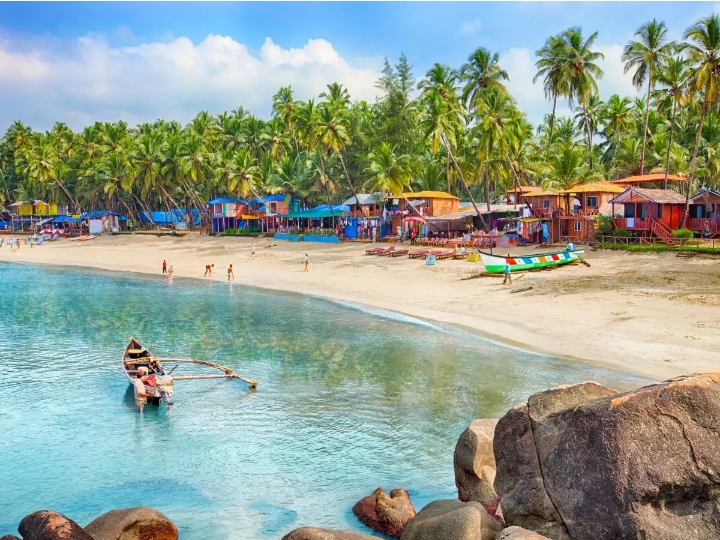
1) Goa

Goa is one of the cheapest country to visit. Alcohol is also very cheap here. You can have unlimited fun and crazy party all night and can even return with full pocket. The best time of the year to visit is October to March. Must visit places to visit is Calangute Beach, Fort Aguada, Dudhsagar falls, Anjuna beach. Goa is also known for its cruise and its water sports. You can check many websites for price. Average 4 days/ 3 Nights will cost you around 12,000 per adult on twin sharing with many amenities.

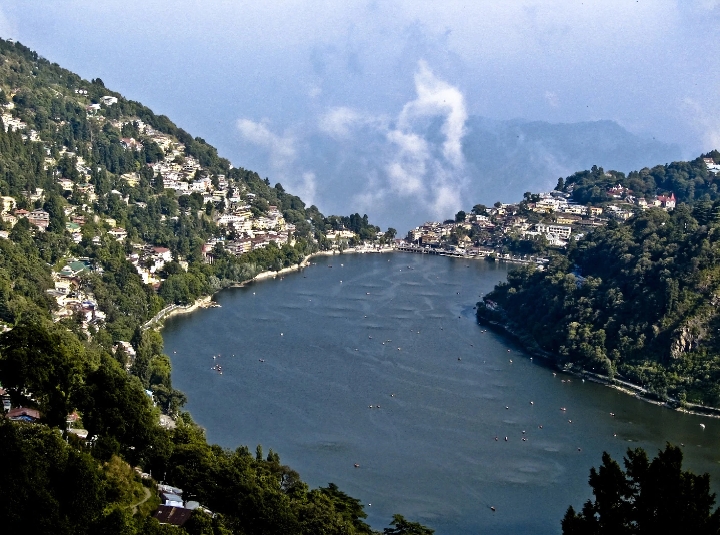
2) Nainital, uttarakhand

Nainital is famous for its misty lakes and mountains. Nainital is very beautiful hill station. It is also known for its cheap hotels and meals. You can do boating here at barely any cost. The area of interest lies in its name which it has gotten from the eye shaped Lake the Naini Lake thus due to this eye shaped Lake it’s called Nainital. Must visit places include Naini Lake, Tiffin top, Snow view point, Mall road, Eco cave gardens and High Altitude zoo. Average 3 days/ 2 Nights will cost you around 4,500 Rs per adult on twin sharing with other amenities as well. It can be seen that how much affordable is this place. Best time to visit is throughout the year.

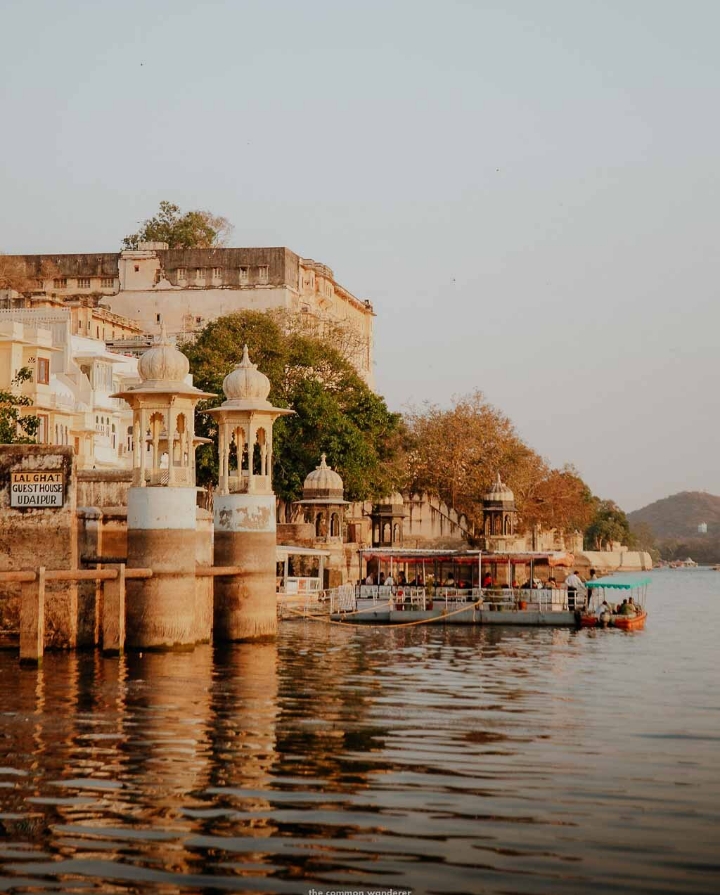
3) Udaipur, Rajasthan

Udaipur also know as city of lakes. It is also called as Venice of East. It is also termed as jewel. It has abundance of natural beauty, awesome architecture and breathtaking temples. Must visit places include Lake pichola, City Palace, Fateh Sagar Lake, Jaisamand Lake, Sajjangarh palace, Jagdish temple. In addition to this it cost very less on average 6 days/ 5 night stay cost you around 17,700 INR per adult on twin sharing. Best time to visit is from October to March.

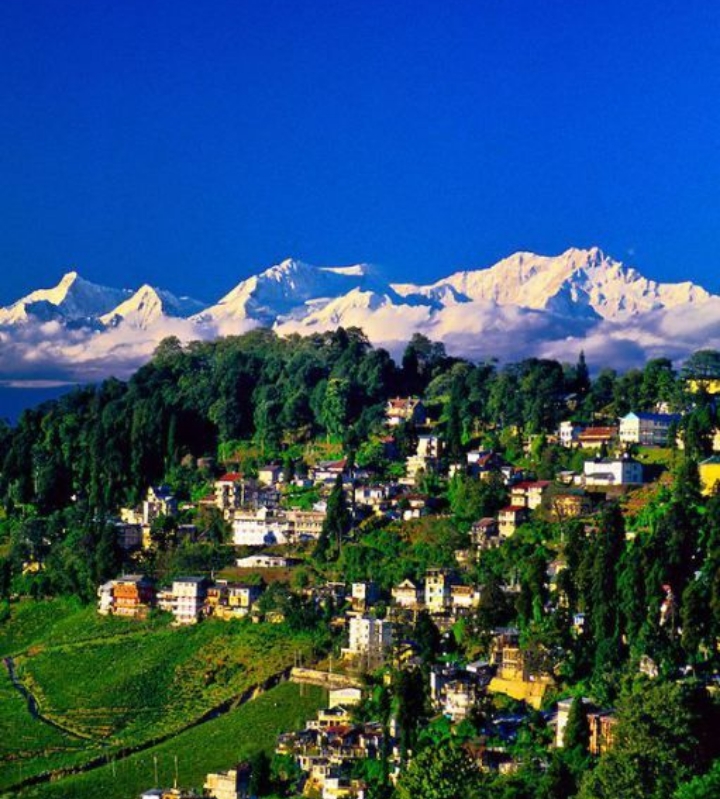
4) Darjeeling, West Bengal

Darjeeling also know as Queen of Himalayas, has jaw dropping and mesmerizing sunrises, the breathtaking beauty of the hills, the charm of past and all those beautiful smile of beautiful people. It is one of the most appealing hill station. And all chai lovers it offers best quality chai. Hotels and lodges are at reasonable price and it’s also cheap. Must visit places include Darjeeling Himalayan railway, Tiger hill, Batasia loop, Himalayan mounteering institute, Darjeeling ropeway and Nightingale park. Average 4 days/ 5 nights will cost around 8,375 Rs per adult on twin sharing. Best time to visit is from February to March and September to December.

So these are the places that have jaw dropping and breathtaking beauty. Apart from this they are also very affordable and hence you can easily visit with low money in your pocket. You can even check rates on different websites and there you may can get offers too. Hope you all like it.

“Save Water ,Save Life”

‘Water is a driving force of all nature’- Leonardo Da Vincci.

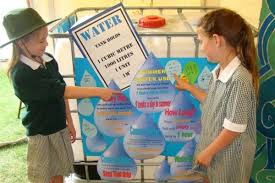
A children holding a poster with the request SAVE WATER is actually sending across a severe warning……………

We are headed for a water crisis and a very serious one at that. Do you really think it is an issue we can dare to neglect? I do not think so.Water is very essential for all life forms to survive and grow. For any personal, commercial, industrial, or any other use the water is required.Life without water is impossible. Also, the drinkable water is quite low and if we continue to wastewater at the speed we do today, the day is not far when we will have to fight for water. But still, let me ask you one question, are we actually working in the direction of saving water? The rightful answer would be no.

Water management & conservation of resources:

The problem with these issues (water management and conservation of resources) is that there are numerous parties with vested interests that tend to play down these serious threats staring us in the face in a not so distant a future. While most authorities that are respected are unanimous in their conclusion of global warming as a serious threat, there are others who look upon the very phenomenon of global warming as a typical case of environmental Cassandras trying to hog the limelight. If you have to seriously address issues like global warming or water crisis, one leading to the other, corporate houses which depend on numerous factories that create all the filth shall have to take steps that would seriously create a big dent in their pockets. No corporate house would be eager to do this.

Therefore, they purposely overlook the fact that the sources of fresh water are limited. If you are so concerned with your immediate profit that you tend to overlook the disastrous results in the long run for all life on this earth, you are no less than plain stupid! The extent to which the corporate sector can be callous can be clearly understood from the following example:-

A proposal by South India Bottling Company Private Limited (SIBCL), a Coca-Cola franchisee, to set up a 280 million (US $ 6,500,000) soft -drinks unit in Gangaikondan village of Tirunelveli district in southern Tamil Nadu, has run into trouble. Many local residents, political parties and environmentalists have raised concerns that the water-intensive plant will deplete and contaminate groundwater and draw from Tamiraparani River, that cannot fully meet even drinking water and agricultural needs of local communities. Research by the India Resource Centre revealed a number of discrepancies and misinformation in SIBCL’s public statements regarding its water usage and daily production. We can also remember in this context that the world leaders really fight it out when something as dangerous as poisonous gas emissions bave to be curtailed. Indeed, how myopic can people be!

However, blaming corporates and factories would not be a complete part of the solution. There is the other side of the picture too. A 2006 United Nations report focuses on issues of governance as the core of the water crisis, saying There is enough water for everyone’ and “Water insufficiency is often due to mismanagement, corruption,lack of appropriate institutions, bureaucratic inertia and a shortage of investment in both human capacity and physical infrastructure.” Official data also shows a clear correlation between access to safe water and GDP per capita.

While the observation made by the UN is true, the role of climate change in aggravating a terrible water crisis around the globe is also An Inconvenient Truth as Al Gore calls it. According to a UN climate report, the Himalayan glaciers that are the sources of Asia’s biggest rivers-Ganga, Indus, Brahmaputra, Yangtze, Mekong, Salween and Yellow-could disappear by 2035 as temperatures rise. Approximately 2.4 billion people live in the drainage basin of the Himalayan Rivers. India, China, Pakistan, Bangladesh, Nepal and Myanmar could experience floods followed by droughts in coming decades. In India alone, the Ganga provides water for drinking and farming for more than 500 million people. The west coast of North America, which gets much of its water from glaciers in mountain ranges such as the Rocky Mountains and Sierra Nevada, would also be affected.

What would happen if this wastage of water is allowed to continue? News reports about the Gangotri Glacier receding have become fairly common. Can you imagine India without the Ganga? Are we going to silently bear with the progressive destruction of the most precious resource, and leave our future generations to face some bloody war for the control of water resources?

How can we Save Water?

you know there is many points you can do in your day to day life for water conservation.Each of these methods of water conservation is simple and easy and certainly things that anyone can take advantage of.

1. Turning the water off when brushing your teeth or washing your hair can save a lot of water. In fact, as much as 160 gallons of water can be conserved each month when you turn the water off.

2. Purchase water-efficient products and appliances for your home. This includes dishwashers, sink systems, bathtubs and more. These products pay for themselves in no time at all.

3. Plant you garden in the spring and you can save since water requirement levels are less during this season.

4. Do not use water to defrost foods. Although many people do use this method it requires a lot of water consumption to do this.

5. Check for leaks. This includes the toilet and the sinks in the home. Even a small leak could cause an extensive amount of extra water usage and more money added to the water bill.

6. Stop using extra water when you flush by avoiding placing anything in the toilet. This includes tissue and cigarette butts. Using this method to eliminate these items will cost you an additional 5 to 6 gallons of water per flush.

7. Insulate your pipes. This will prevent them from freezing in the winter while also helping heat water up faster, among other benefits.

8. When washing clothes, make sure that you are washing full loads of laundry only. You are wasting a lot of water washing only half of a load.

Why Indians ignore global issues like climate change

Climate change is a change in the climate or environment of  the planet . it is not a natural process ,but an outcome of human activities and interference with nature. Climate change is not an issue of today or yesterday. It’s been started for a very long time. Transformation or variation in nature has been started in nature since the age of industrialization. climate change is the biggest threat for humanity .It is making our earth inhabitable. . Human civilization was developing at the cost of nature. And after that we all have followed their footprints for getting luxurious lifestyle, comfort, easiness .

development is required , but should not be done at the cost of nature.

Climate change is most worriment issue of today’s world. but the point is whether all countries are equally serious about it. Solemnity about this global issue varies from country to country , because economical condition of countries, lifestyle of their people, education level, women’s condition in countries are not same . That is why it is obvious to have difference in their awareness and  actions. the more people will aware the more they will take action. Awareness relies  on the economical, political and educational level of the country . climate change is such a issue that is difficult to understand .the  . having knowledge is worthless if proper actions are not being made and implemented. All the countries are accountable for this global issue ,however  their contribution is  unlike . the hazardous impact of climate change will not be as per of countries contribution . the planet is affected by this.

Climate change increase flood risk. The global average surface temperature has increased 2 degree since the pre – industrial era . Every upcoming year is becoming warmest year ,breaking the record of previous years.  incidents of wild fires have become more apparent of become more apparent ,extinction of wild species ,demolition of ozone layer ,shrinking glaciers , increasing sea level and intensity of tornados, avalanches , new epidemics , water ,air ,soil pollution and heat waves . it more likely to face adverse effect in forthcoming days.

India is the 4th largest emitter of greenhouse gas after china , united state  and EU . For country like india , it   is not possible to pay more attention on this global issue , when they have major issue like corruption , poverty, population, unemployment, education system, basic sanitation, healthcare system, women’s safety, infrastructure, agriculture distress etc. The germanwatch institute presented the result of the global climate risk index 2020.India is also in the top 10 countries. India’s climate risk index is 18.17 and is the major victim of extreme heat ,flood and sand storm among other divesting natural events . Global disasters are making headlines everyday .for instance California wildfire ,Uttarakhand wildfires, Australian bushfires, tycoon and floods etc. Human civilization has put itself in a great hazard by its activities.

India is a developing country and is not responsible much for it as compared to other countries. Two third of people  in india are  living in poverty,: they lack a basic need. Middle class aim to have decent well paid job, hope to own a house of their own, seek to have a secure retirement  and want to secure the  healthcare and  educational need of their family. Affluent section are  busy in their luxurious life. In India citizens are tackling with more sever issue such as food security ,shelter, employment ,lack of good education and politics is concern with other things .

 In Indian politics climate change is not a major issue. Indian politics revolves more around religion , faith, party system ,temple, cast etc. Good education makes people aware and it leads the country toward new innovations  and breakthroughs ,which will ultimately help us in fight with climate change .In agriculture  sector we need new crop seed  with climate resilient feature because our land will have to face more flood ,droughts and extreme heat. We need new innovation in renewable energy sector ,people will only switch their  energy source when they find renewable energy source as cheap as traditional one. Although many major automobile companies have launched electric vehicle ,electric cycle but they are so expensive that middle class can’t  afford to buy. Research and development in this sector will help them to reduce the price while improving its  functionality .one main thing we need to ensure  that  these electric vehicles must use renewable energy for their charging.

People’s participation is crucial in any anti climate action plan proposed by government .There is lot of examples  of individual endeavours  such as Greta Thunburg, Devaki Amma from Kerela state of India who alone grew a forest and Anupam  Mishra know for the conservation of rivers and water sources. So everyone has a place in fight with climate change .

Lack of coordination  at  both national  and international level. countries have made many agreements , protocols, pacts and organization to combat the climate issue like IPCC ,UNFCC,RIO SUMMIT ,PARIS PACT,MONTIAL PROTOCOL ,COP SUMMIT but we can clearly see the lack of seriousness in world politics. Their words are more than action. Like all developing countries, India’s concern about economic development and poverty alleviation is justified. And must be fully respected in any global climate regime, As virtually stated  explicitely in the UNFCCC  (United Nations Framework Convention on Climate Change).

At world level, the largest polluter or carbon emitter –US walked out  of the global agreement. However , later US  rejoin the paris agreement United state has produced  6.6 billion matric tons of carbon dioxide in 2019,the second largest emitter in the world after china. india is  the third largest emitter of greenhouse  gases.   For  the first time The Paris Agreement has  brought  together entire countries with a common goal of limiting   global warming to below 2 degree Celsius .  To attain this long  term temperature goal, countries motive to reach global peaking of greenhouse gas emissions as soon as possible  to achieve a climate neutral world by mid century.

Agriculture

When tillage begins, other arts follow. The farmers, therefore, are the founders of human civilization.”

— Daniel Webster

Introduction

It all started thousand of years ago , when the human civilization came into existence . Agriculture was a key to survival . People were farming for there domestic purpose , not for the others .

As the civilization started to grow accustomed of agriculture , they grew food in surplus that enabled people to live in cities. Plants were independently cultivated in at least 11 regions of the world.

The development of agriculture enabled the human population to grow many times larger than could be sustained by hunting and gathering.

It was the beginning of different civilization in different parts of the World. From those civilizations , one of them was our’s The Indus Valley Civilization . Vedic literature provides some of the earliest written record of agriculture in India. Rigveda hymns , describes plowing, fallowing, irrigation, fruit and vegetable cultivation.

Some of the ancient and historical evidence suggests rice and cotton were cultivated in the Indus Valley.

Agriculture : In India and World today .

India ranks second worldwide in farm outputs. As per 2018, agriculture employed Indian work force and contributed 17–18% to country’s GDP.

In 2016, agriculture and allied sectors like animal husbandry, forestry and fisheries accounted for 15.4% of the GDP (gross domestic product) with about 41.49% of the workforce in 2020.India ranks first in the world with highest net cropped area followed by US and China.The total agriculture commodities export was US $ 3.50 billion in March – June 2020.

Agriculture is the primary source of livelihood for about 58% of India’s population. Share of agriculture and allied sectors in gross value added (GVA) of India at current prices stood at 17.8 % in FY20.

During 2019-20 crop year, food grain production reached a record of 296.65 million tonnes. In 2020-21, Government of India is targeting food grain production of 298 million tonnes.

India is among the 15 leading exporters of agricultural products in the world. Agricultural export from India reached US$ 38.54 billion in FY19 and US$ 35.09 billion in FY20.

Agriculture is an important industry in the United States. The agriculture industry, which includes both crops and livestock, is responsible for producing most of the world’s foods and fabrics. Agriculture impacts so many things that it’s hard to imagine a world without this important industry.

Schemes and Initiatives

Due to the high requirement of agriculture . It is important for the government to take initiatives and provide better infrastructure to the farmers. However , the required level of investment for the development of marketing, storage and cold storage infrastructure is estimated to be huge.

The Indian Council of Agricultural Research (ICAR), established in 1905, was responsible for the search leading to the “Indian Green Revolution” of the 1970s. The Union Minister of Agriculture is the president of the ICAR. The Indian Agricultural Statistics Research Institute develops new techniques for the design of agricultural experiments, analyses data in agriculture, and specialises in statistical techniques for animal and plant breeding.

Schemes by government for Indian agriculture :

  • Dairy Entrepreneurship Development Scheme.
  • Rainfed Area Development Programme (RADP)
  • Paramparagat Krishi Vikas Yojana (PKVY)
  • Pradhan Mantri Krishi Sinchai Yojana (PMKSY)
  • National Agriculture Market (e-NAM)
  • Pradhan Mantri Kisan Maandhan yojana.
  • Pradhan Mantri Fasal Bima Yojana (PMFBY)
  • Kisan Credit Card (KCC) scheme.
  • Pashu Kisan Credit Card Scheme.
  • PM-Kisan Scheme.

Conclusion

Agriculture sector is one of the prominent sector in India as well as all over the world . India is becoming self – sufficient in pulses and other crops .

Gone are the days , when India was unable to provide sufficient amount of food to the citizens . Gone are the days , when people used to think agriculture was not as important as other sectors . Gone are the days , when people used to think less of farmers . And gone are the days , when people were less educated about agriculture.

Farming is a profession of hope.

— Brett Brian

Link

Climate change : In India and World today .

Let’s double down on solar energy, let’s be more energy-efficient, let’s weatherize our homes. We can build a better, healthier economy based on good-paying, clean energy jobs.”

Ian Somerhalder, Actor

Being one of the second largest country , climate change in India is having profound effect on India and all over the world . India is ranked fourth among the list of countries most affected by climate change in the period from 1996 to 2015 .

With 7% of global emissions , India emits about 3 gigatonnes (Gt) CO2eq of greenhouse gases each year; about two and a half tons per person, which is half the world average.

Due to the rise in temperature , the Tibetan plateau are causing problem to Himalayan glaciers . It directly effect in increasing the flow rate of the Ganges , Brahmaputra, Yamuna and other major rivers.

The Indira Gandhi Institute of Development Research has reported that, if the prediction of the Intergovernmental Panel on Climate Change is correct about Global warming than it may cause fall of GDP upto 9%.

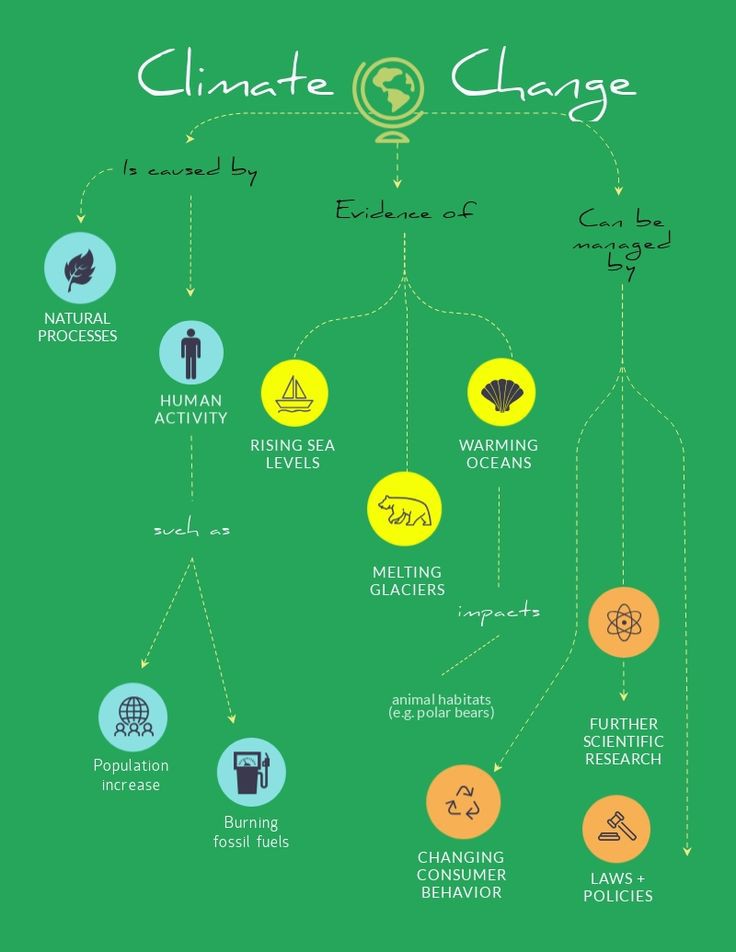
In all over the world , climate change is drastically affecting the change in temperature of the globe 🌎 . Climate change includes both global warming driven by human-induced emissions of greenhouse gases and the resulting large-scale shifts in weather patterns.

Causes :

Human envision and green house gasses are two important causes in the climate change. Greenhouse gases affect Earth’s energy balance and climate .Human activities have added greenhouse gases to the atmosphere. Human activities are changing the climate.

Other causes :

  • Power Plants.
  • Farming .
  • Deforestation.
  • Fertilizers.
  • Oil drilling.
  • Natural gas drilling.
  • Permafrost.
  • Garbage .
  • Volcanic eruption.
  • Pollution.

Campaigns

There are many campaigns that are going on . One of them is The ActNow campaign . It was launched at the UN Climate Change Conference (COP 24) in December 2018, with a call from Sir David Attenborough in conjunction with the award-winning “People’s Seat” initiative.

It signifies individual action on climate change and sustainability. By changing our habits and making choices that have less harmful effects on the environment, we can tackle the climate emergency and build a more sustainable world.

It is also working with other campaigns like The Good life goals , Anatomy of action , 170 actions to combat climate change , lazy person guide to saving the world , connect4climate , climate neutral now , trash hack , stop the waste , Think. Eat. Save. , Clean seas , breathe life , glowing glowing gone . Their may be others as well .


Prevention :

Becoming more energy efficient is a great way to prevent pollution. It causes the power plants to expend less energy that can lead to the production of greenhouse gases. … Replace your light bulbs with energy-efficient light bulbs that help you save electricity too.

  • Speak up!
  • Power your home with renewable energy.

  • Weatherize, weatherize, weatherize.
  • Invest in energy-efficient appliances.
  • Reduce water waste.
  • Actually eat the food you buy—and make less of it meat.
  • Buy better bulbs.
  • Pull the plug(s).

Conclusion

In the times , where the world is changing and taking measurements for saving the globe . Many Environmentalist , Actors , Politicians , Countries are taking precautions and actions on the climate change . It is our duty to prevent our world from falling . Take Initiative To Save The World .

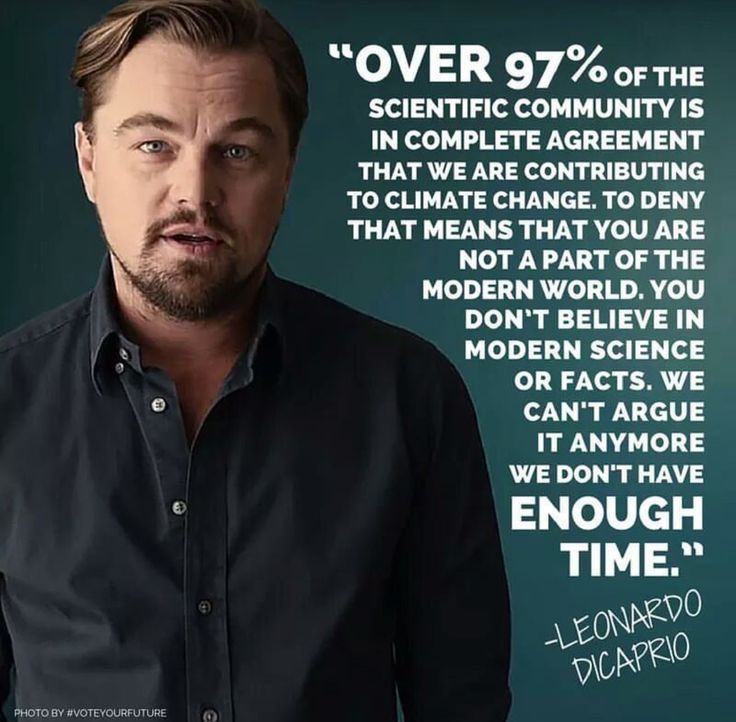
Climate change is real. It is happening right now, it is the most urgent threat facing our entire species and we need to work collectively together and stop procrastinating.

Leonardo Di Caprio, Actor & Environmentalist

Link

International Day Against Drug Abuse and Illicit Trafficking

Drug abuse and the illegal trade of drugs have been a huge concern. No matter what steps have been taken, this illegal trade continues to take place undercovers around the world.

It is well known; how injurious drugs are for health. Overconsumption of drugs can cause serious illnesses like cancer, lung or heart disease, and increases the chances of having a stroke. Drug abuse can also affect the mental health of a person and result in mental disorders.

What is Drug Abuse and Illicit Trafficking of Drugs?

Drug abuse refers to the use of drugs and certain chemicals in amounts that are harmful to the body. Taking drugs in heavy amounts causes addiction, which often leads to illegal buying and consumption of drugs.

The illicit trafficking of drugs refers to the illegal trade of drugs. The question here arises, are there legal drugs? The answer is yes. There are drugs which legal like- nicotine, caffeine, alcohol, and other such drugs that are given on medical prescription. Such drugs bind upon the age, and regulations liking driving and location where it is being consumed.

Different nations have different drugs forbidden by law. Cocaine, marijuana, ecstasy are some of the drugs that are illegal at different places.

What is International Day Against Drug Abuse and Illicit Trafficking?

The International Day Against Drug Abuse and Illicit Trafficking is observed on June 26th every year since 1987, after the United Nations General Assembly decided to see this day to spread awareness about drug-related issues among people. This year’s theme, ‘Share Facts on Drugs, Save Lives’, aims at educating people about the effects of drug consumption, its treatment, and ways to combat misinformation about drugs.

People consume different drugs to create pleasure for themselves. Especially the youth consume it; mostly in peer pressure. Other reasons can also make people opt for drugs like any stress; be it personal or professional. When such drugs are consumed in heavy amounts its results are dangerous. It can even result in death due to the failure of organs. It can also cause hallucinations, reduce memory power, lowered attention, insomnia, and difficulty decision making.

Drug abuse for a long time can even cause depression and anxiety. People who are addicted, even overuse their medically prescribed drugs by buying them from different medical stores.

People commit crimes due to drug abuse as they lose control over themselves and their conscience. There have been cases where people have become ill-tempered and have murdered or attempted to murder people just because of some small argument. Their relationships with their families and friend have been destroyed. They have lost their jobs and are living chaotic life. They get aggressive and violent over time.

It is important to talk to people who abuse drugs and find out the reason for their condition; what made them fall into this trap, and not just push them away. if medical help is required, they can be sent to rehabilitation centers to make them addiction-free and help them live a normal life. things happen around us, but we often tend to ignore such things walk away; without bothering about it as it has nothing to do with us. As responsible people and for the sake of humanity we must try and help such people.