Toxicology and its effects

Toxicology deals with the science of poisons. Chemicals/substances which are toxic in nature are present in the environment and find their way to the organisms through food chain, contact or respiration. The lower doses of these chemicals get accumulated in the body tissues and impair the growth/function while their higher doses are lethal. The human environment gets affected through these chemicals when they become part of the food chain. Soil-water-plant-animal activities are resulting in environmental degradation in form of deforestation, erosion, silting up of reservoirs, wastelands, air, soil and water pollution and desertification. Changing land uses, faulty irrigation systems, excessive use of chemicals in agriculture are causing the problems of soil and water pollution, toxic residues in food items and resource degradation. This in turn affects land productivity and human health.

Technological development and economic growth have brought about a rapid increase in the production of a variety of chemicals including pesticides for use in agriculture, industry and public health. This has brought countless benefits to our society in a way to improve our living standards, food production and sanitation. These man-made chemicals while on one hand are beneficial, also cause hazards to men and environment. With increasing stress on industrial and agricultural expansion programmes, in both developed and developing countries, the environmental risks of these chemicals on animal and plant life are also increasing at threatening rate as more than 1000 new molecules are introduced into the environment every year. The emergence of these chemicals and their environmental consequences have lead to the evolution of new branch of science, generally known as environmental toxicology which include the hazardous effects that these toxins have on humans, other animals and plants.

The toxicological studies on these chemicals in different laboratories of the world have established the hazardous potential of carcinogenicity, mutagenicity and teratogencity of some of the commonly used chemicals in agriculture and industry. A few of them have also been found to cause injury to immune system causing immuno-toxicological problems leading to depleting competence of the living organisms to mount resistance to viral, bacterial and fungal infections, In fact, immunotoxicological processes may be a basis of well documented toxic and allergic hypersensitivities as well as a myriad of disease entities of unknown etiology including autoimmune disorders and malignancy.

The Challenge

Lester Brown of World Watch Institute in 1997 cautioned that all the basic indicators of food security, grain production per person, carry over stock of grain, area of croplands signal a tightening situation during 1990’s Growth in food production is slowing with the grown in demand, driven by population growth and the rising affluence continues to be strong. The population growth is a big challenge. Stabilizing climate means reducing carbon emissions and hence fossil fuel burning. Improving energy efficiency is equally important. Securing future food supplies will affect every facet of human existence from land use policy to water use policy. Environmental concerns will have over riding priority if a healthy human life is the goal. He further states that environmental disruption could disrupt the economic progress.

Human Life Style and Environment

Modern life style with sufficient food, comfort, luxury, leisure and changed cultural habits also introduces in the environment thousands of chemicals, machinery and equipment’s. The polluted surroundings are the bonus. In addition to disastrous effect on environment, the environmental pollutants may have direct effect on human health which may be again acute in the long term. The long term effect cannot be known immediately, it is expressed only after long time of the exposure and this is of great human concern. Long term health effect lead to induction of genetic damage and/or cancer caused by environmental pollutants associated with some of our modern life style. Here mutagenic and carcinogenic efficiencies of indoor pollutants like cigarette smoke (both main stream and side stream), smoke released during burning of mosquito repellents and radiations emitted from our housing materials and consumer goods are noteworthy.

Today, cancer has become the biggest “killer” after heart disease. It is well established that alteration in gene(s) of a normal cell i.e. mutation, is responsible for initiation of cancer thus cancer is genetical in origin and starts from somatic mutation. This is ample evidence that mutations in human somatic calls are indicators of cancer.

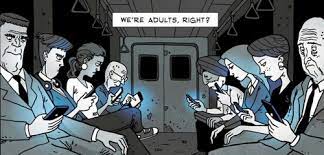
DOES TECHNOLOGY PLAY A ROLE IN MAKING PEOPLE MORE ISOLATED ?

Do you remember the days when you want to go out or converse with your friends so bad but because of your sluggishness you wind up looking over your social media ? In this cutting edge period of innovation we are practically becoming captives of it. We can abandon our companions yet not our cell phone. Looking through Instagram or Twitter have become the piece of our every day schedule.

Effects of social media on us

Yet, do we understand that we are turning out to be more isolated by doing this. Particularly, subsequent to getting quarantined. Since, we invested the vast majority of our energy in our phone during quarantine. We have gotten far off from our friends. Despite the fact that we live with our families we don’t talk much with one another in light of the fact that we as a whole are on mobile phones.

Influence of technology on kids

Kids as well as managing a similar issue. They have restricted their physical activities like playing around with friends or spending time with friends. The only game in which they are engaged are video games. A portion of the children play vicious computer games which can influence their creating cerebrum. Also it can likewise influence their eyes.

Children are fate of a nation on the off chance that they will stay isolated nation won’t advance. They will need fundamental human manners like correspondence and meeting behavior. So it is necessary for us to distanced from this world of technology for sometime and live in a real world.

WHY BIODIVERSITY IS SO IMPORTANT??

 Biodiversity is soul for life!!💚


Biodiversity has become an important issue on the global arena. The importance of biodiversity is increasingly being recognised as of vital concern on the local, national and international levels. The challenge is how to find practical and workable ways to increase biological diversity. Obviously action needs to be taken on the governmental level. However there are also ways that individuals, and groups of individuals can begin to act on their own right and help create ecological change and increase biodiversity.

The issues and challenges around achieving biodiversity are many and therefore likely require many solutions in order to be find the most effective solution, or combination of solutions, for a given area.

One highly effective solution which has recently emerged is called a “Rewilding Stick”. Rewilding Stick is a highly-scalable method suitable for leveraging the planting efforts of either a single individual, or of a large group of individuals.


SCIENCE AND TECHNOLOGY

Science and Technology have now become crucial parts of our life and our life has many luxuries and we are able to utilize them because of science and technology. It has helped us to do all these in short time because of the advancement in science and technology. Every day new technologies get introduced in the field of science and technology which makes human life easier and comfortable. And now it is difficult to imagine our loves without science and technology. Because of this we are now living in modern civilization and our evolution has occurred. This development in the field of Science and Technology is present in every aspect of our life and has great contributions in it.

There have been many new inventions in the field of Science and Technology which has changed the overall perspective of humans towards life and helps in modernizing the human civilization. Hence, people get the chance to enjoy the lives more comfortably and make it more pleasurable. In other days, humans now have a simple life because of science and technology. It has now expanded its wings into the fields of medical, education, manufacturing and many other areas.

WHAT IS SCIENCE ?

Science is the consists of systematic study of the behavior and structure of physical and natural world through observation, experiment and technology with the application of scientific knowledge for practical purposes. And Like everything, Science also has a journey and it has long lasting impact on the humans. Science has large contributions in the evolution of human.

WHAT IS TECHNOLOGY ?

“Technology” is the application of this scientific knowledge for practical purposes. Thee mobile, laptop etc. have now become the essential parts of our life and make use of connectivity or communication or smart technology for doing our activities. From the machines used in industries to the robots created, all fall under technological invention. So, in simpler words we can say that technology has made our lives comfortable.

Science and Technology: India

Ever since British rule, India was famous for many things and after gaining independence, science and technology, played a great role in shaping the present and future of India. Now, it has emerged as an essential source of creative and scientific developments all over the worlds. All these advancements have led to the improvement of Indian economy and assisted development in various fields including Space Technology, Mathematics, Space Technology and many more. Some of the prominent examples of these developments are railway system, smart phones etc. Such advancements only helped in launching Chadrayaan 2 and helped India earn critical acclaim from all over the world.

In conclusion, we must admit that science and technology have led human civilization to achieve perfection in living. However, we must utilize everything in wise perspectives and to limited extents. Misuse of science and technology can produce harmful consequences. Therefore, we must monitor the use and be wise in our actions.

Advancement in science and technology has changed the modern culture and the way we live our daily life.

Nanoparticles – the future?

A nanoparticle (NP) is an ultrafine unit with dimensions measured in nanometres (nm; 1 nm = 10−9 metre). Nanoparticles exist in the natural world and are also created as a result of human activities. Because of their sub-microscopic size, they have unique material characteristics, and manufactured nanoparticles may find practical applications in a variety of areas. The small size of nanoparticles is especially advantageous in medicine; nanoparticles can not only circulate widely throughout the body but also enter cells or be designed to bind to specific cells. Those properties have enabled new ways of enhancing images of organs as well as tumours and other diseased tissues in the body. Some examples of NP used for medical purposes are metallic NP, carbon nanotube, liposome, gold NP, silica NP and many more. 

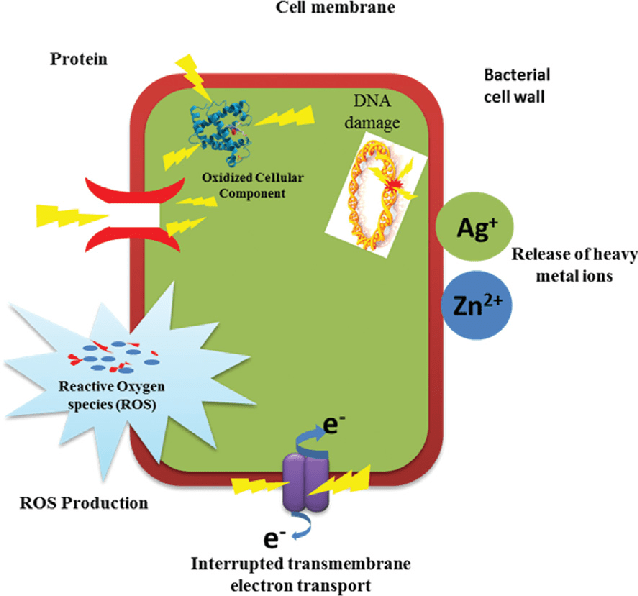
The massive use of nanomaterials in biomedical applications enhanced research interest to explore the antibacterial mechanisms of NPs. NPs can alter the metabolic activity of bacteria by maintaining contact with bacterial cells via electrostatic interaction, Van der Waals forces, receptor-ligand and hydrophobic interactions. Further, these NPs can cross the bacterial membrane and assemble along the metabolic pathway influencing the shape and functioning of the cell membrane. Finally, NPs interact with the bacterial cell basic components causing oxidative stress, permeability and gene expression changes, diverse alterations, electrolyte balance disorders, protein deactivation, and enzyme inhibition 

These NPs work on a bacterial cell in three ways, they are as follows:

 Dissolved metal ions: Metal oxide NPs release metal ions and these metal ions are absorbed through the cell membrane. Each metal ion has its sensitivity to different microorganisms. For instance, Ag+ ions react with the sulfhydryl group in enzymes and other cellular constituents leading to cellular dysfunction. Ag+ also prevents cell wall synthesis in Gram-positive bacteria. Ag+ ions can also interact with DNA inhibiting the growth by obstructing DNA replication and cell division.

 Reactive oxygen species: The toxicity of nanomaterial can be mainly attributed to the production of reactive oxygen species ROS that inhibits bacterial growth by restricting amino acid synthesis, lipid peroxidation and DNA replication. The presence of NPS excessive production of ROS leads to an unbalanced state, which results in oxidative stress, creating damage to the basic individual components of bacterial cells. ROS namely Superoxide radical, hydroxyl radical, hydrogen peroxide that is generated by different levels of activity and toxicity.

 Direct contact / Non-oxidative mechanism: The non-oxidative mechanism involves direct interaction on NPs with the cell wall. Direct contact is often but not in all cases a necessary mechanism of toxicity. Direct contact inhibits enzymes and proteins involved in cell metabolism, thus disrupting the normal functioning of the bacterial cell.

(Nanotechnology for Diagnosis and Treatment of Infectious Diseases – Scientific Figure on ResearchGate. Available from: https://www.researchgate.net/figure/Mechanisms-by-which-nanoparticles-kill-bacteria-cells-Notes-Certain-NPs-and-their-ions_fig3_262116106)

Nanoparticles can be used as tags or labels, which will help us in the detection of infectious agents even in small sample volumes directly in a very specific, sensitive and rapid format with lower costs than current in-use technologies. Also, the earlier detections will help in accurate and prompt treatment of the disease. however, nanoparticles that are used in nanomedicines can travel through a mother’s placenta and can assist in the formation of free radicals. 


•Asian Journal of Pharmaceutical Sciences, Vol. 15,  Issue 1, January 2020, pages 42-59https://doi.org/10.1016/j.ajps.2019.03.002

Ashish Ranjan, Nikorn Pothayee, Mohamed N. Seleem, Stephen M. Boyle, Ramanathan Kasimanickam, Judy S. Riffle, Nammalwar Sriranganathan, Nanomedicine for intracellular therapy, FEMS Microbiology Letters, Volume 332, Issue 1, July 2012, Pages 1–9, https://doi.org/10.1111/j.1574-6968.2012.02566.x

https://www.microscopemaster.com/nanotechnology.htmlhttps://www.ncbi.nlm.nih.gov/pmc/articles/PMC7148861/

https://www.nanowerk.com/spotlight/spotid=23695.phphttps://www.sciencedirect.com/science/article/pii/S1818087618309103#fig0005

Artificial Intelligence

Artificial intelligence (AI) refers to the simulation of human intelligence in machines that are programmed to think like humans and mimic their actions. The term may also be applied to any machine that exhibits traits associated with a human mind such as learning and problem-solving.

Artificial intelligence (AI) is intelligence demonstrated by machines, as opposed to the natural intelligence displayed by humans or animals. Leading AI textbooks define the field as the study of “intelligent agents”: any system that perceives its environment and takes actions that maximize its chance of achieving its goals. Some popular accounts use the term “artificial intelligence” to describe machines that mimic “cognitive” functions that humans associate with the human mind, such as “learning” and “problem solving”.

AI applications include advanced web search engines, recommendation systems (used by YouTube, Amazon and Netflix), understanding human speech (such as Siri or Alexa), self-driving cars (e.g. Tesla), and competing at the highest level in strategic game systems (such as chess and Go), As machines become increasingly capable, tasks considered to require “intelligence” are often removed from the definition of AI, a phenomenon known as the AI effect. For instance, optical character recognition is frequently excluded from things considered to be AI, having become a routine technology.

Artificial intelligence was founded as an academic discipline in 1956, and in the years since has experienced several waves of optimism, followed by disappointment and the loss of funding (known as an “AI winter”), followed by new approaches, success and renewed funding. AI research has tried and discarded many different approaches during its lifetime, including simulating the brain, modeling human problem solving, formal logic, large databases of knowledge and imitating animal behavior. In the first decades of the 21st century, highly mathematical statistical machine learning has dominated the field, and this technique has proved highly successful, helping to solve many challenging problems throughout industry and academia.

The various sub-fields of AI research are centered around particular goals and the use of particular tools. The traditional goals of AI research include reasoning, knowledge representation, planning, learning, natural language processing, perception and the ability to move and manipulate objects. General intelligence (the ability to solve an arbitrary problem) is among the field’s long-term goals. To solve these problems, AI researchers use versions of search and mathematical optimization, formal logic, artificial neural networks, and methods based on statistics, probability and economics. AI also draws upon computer science, psychology, linguistics, philosophy, and many other fields.

The field was founded on the assumption that human intelligence “can be so precisely described that a machine can be made to simulate it”. This raises philosophical arguments about the mind and the ethics of creating artificial beings endowed with human-like intelligence. These issues have been explored by myth, fiction and philosophy since antiquity. Some people also consider AI to be a danger to humanity if it progresses unabated. Others believe that AI, unlike previous technological revolutions, will create a risk of mass unemployment.

Artificial Intelligence Characteristics

  • Deep Learning. Deep learning is a machine learning technique that teaches computers to do what comes naturally to humans, to learn by example.
  • Facial Recognition
  • Automate Simple and Repetitive Tasks
  • Data Ingestion
  • Chatbots
  • Quantum Computing
  • Cloud Computing

Following are some sectors which have the application of Artificial Intelligence:

  • AI in Astronomy. Artificial Intelligence can be very useful to solve complex universe problems
  • AI in Healthcare
  • AI in Gaming
  • AI in Finance
  • AI in Data Security
  • AI in Social Media
  • AI in Travel & Transport
  • AI in Automotive Industry

Next Destination: Space

If you are bored from drives, lakes, beaches, resorts, mountains, deserts, valleys, trenches and even underwater sea-diving and have shit ton of money in store, this article is for you. And even you don’t have that kind of money, then hang on. Hopefully, there will be cheaper space-crafts for us as well very soon. And, you would have probably guessed by now. I am talking about this new adventure sport, recently launched in market, very very recently. Last week, Richard Benson, a British Businessman in his ship virgin galactic, made a quick visit to space and another famous businessman, Jeff Bezos is ‘all set to launch’ today. They are opening what we call space-tourism for the wealthy mass of the world.

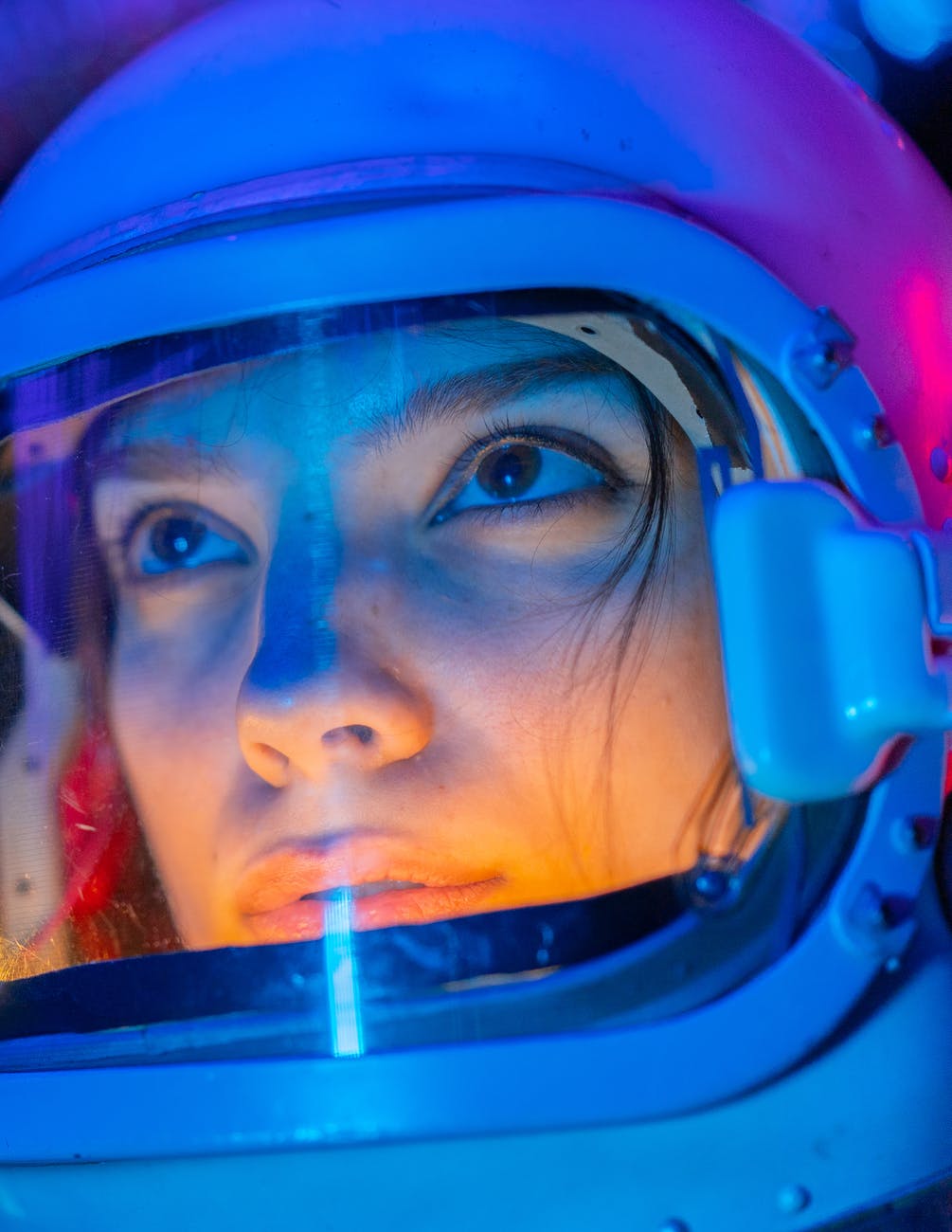
Photo by Mikhail Nilov on Pexels.com

Space-tourism, as the name itself explains, refers to humans travelling to space for

  • amusement
  • diversion
  • enjoyment
  • fun
  • hobby
  • show-off
  • spending money

what-ever your reason might be, thereby making space accessible to all us non-astronauts who are clearly not interested in space for any scientific purposes, thank you very much. This isn’t the first time a space tourist has visited space. In the year 2001, US millionaire Dennis Tito PAID US $ 20 Million to travel via the Russian Soyuz spacecraft thereby visiting the international space station and even ended up spending 8 days there. There were 7 more people until 2009, before the Russian company closed off this private sale of tickets. And so, now if it makes you think about this ‘amidst nowhere’ proposals or this private floating marriage or even spending your weekend up there, it might someday be your dream come true. Just hang on there for a while, or year, or a decade, maybe.

Till now, Space Adventures was the only private company sending private customers to space. Now, there are 3 more participants in this ‘Race to the Space’- all set to explore this new venturing tourism domain with its high profits and the intense thrill that comes with it- both for the tourists as well as organizers.

  1. Richard Branson’s Virgin Galactic- Started in 2004, its a reusable space plane and can fly off into sub-orbital space. It uses VSS unity space-plane lifted using VSM Eve- a large carrier aircraft. A single ticket is estimated to be priced at  between $300,000 and $400,000 and offers a 2.5 hours flight with 6 min of weightlessness. The space-ship was separated 45 minutes into the flight. It can carry 6 passengers- 2 crew-persons and 4 customers.
  2. Jeff Bezos’s blue origin- Founded in 2000, it works towards vertical take-off into the sub-orbital space as well as vertical landing. It aims for an 11 minute flight after separation and a few minutes of weightlessness. It shows you the curvature of earth before returning. Blue origin flight can take up-to 6 passengers. Unlike other companies, Blue Origin works at providing holidays at affordable rates. So, look out for this one. it might very well plan your next holiday.
  3. Elon Musk’s SpaceX-This company was formed in 2002. Its dragon capsule uses a reusable Falcon rocket to launch itself into space. It is capable of carrying up-to 7 people. The mission is expected to last 3-4 days.

Space tourism has a very high significance in the near future. Seeing the number of millionaires and billionaires across the world, the market is estimated to comprise nearly 2.4 million people in the near future and is a boost to the world economy. And who knows, maybe space tourism might even help us to expand life throughout the space and find us a new place to live in this infinite space. But whatever it may do in this regard, it is bound to increase our interest in space exploration and we might as well make an engineer or a scientist out of it or a wonderful sci-fi and maybe the next world-hit movie. Success of this industry will bring in investments that will lead to development of more advanced technologies in the future. And if we are unable to find somewhere to live, we might end up making one for ourselves. Who knows?

With this rosy picture, painted in our minds, we need to loo at the harms it offers to not only us but the already degraded-due-to-human-activity- “EARTH”. The soot or black carbon that is emitted by rockets gets accumulated in the stratosphere and cannot be washed away by rains and wind and hence, will stay in this region of the atmosphere for years thereby causing serious damage as well as causing elements to escape the earth’s recycling process. After a particular height when we escape the earth’s atmosphere or in the region where the atmosphere thins we are exposed to harmful radiations and solar flares. Also travelling via a space craft can affect our vision, cognition, balance and motor control. The industry has just begun. It might lack the necessary safety equipment or might avoid them in the absence of safety protocols.

The space is a dangerous area we are willing to venture. Before further developments in this field, we need to ask ourselves if space is even meant for humans? Or if we haven’t done enough damage to nature and our surroundings as it is? Is it all worth the harms it offers? Can we do without it? And if we can’t, isn’t it better to leave it to those experts who might extract a lot more than just fun out of it?

The Accidental Discovery !

  • An enzyme that produces some mycotoxins less deadly has been discovered by a group of Agriculture and Agri-Food Canada (AAFC) researchers at the London Research and Development Centre in London, Ont.

    WHY IT MATTERS?
  • Mycotoxin infection in crops can have a massive monetary impact for farmers and biofuel producers, and consumption by humans or livestock can have serious health concerns, including death.

  • The discovery was an accident as per Dr. Mark Sumarah, a mycotoxin and fungal expert at the London Research and Development Centre.
  • Sumarah and his colleague Dr. Justin Renaud were initially seeking to discover more a few mycotoxin referred to as orchotoxin A and therefore the possible risk of it to contaminate Canadian grapes, and subsequently wine. Sumarah says orchotoxin A may be a significant mycotoxin worldwide, but there was not much data on its effect in Canada.
    Mycotoxins are toxic metabolites generated by fungi that inhabit crop species which prevents them to survive on plants, but when consumed they will put the health of humans and livestock at risk.

  • Long time ago, the investigators were observing the fungus Aspergillus to look for orchotoxin A, and located that Aspergillus produced not only orchotoxin A, but another sort of mycotoxin known as fumonisin. Sumarah says this wasn’t unforeseen, but what was a shock is that the fungus produced varieties of fumonisin that nobody had glimpsed in the past. The most interesting thing about these compounds was that although every formerly known fumonisin contains a nitrogen molecule, these new ones didn’t .
  • This made the scientists curious. Sumarah, and Renaud did further work to decide that nitrogen is the single-most valuable factor in the toxicity of fumonisins.

  • The scientists figured it had to be an enzyme. The team then successfully separated the enzyme responsible for transforming some fumonisins into types that need nitrogen, and began work in partnership with Lallemand Inc. through a Canadian Agricultural Partnership project to commercially create the enzyme for the decontamination of fumonisins.
    Lallemand may be a privately held company based in Quebec that produces yeast, bacteria the main target of the enzyme for the corporate like Deoxynivalenol (DON), fumonisins can contaminate crops  and cause infection or develop challenges for livestock, and become concentrated in distillers grains from biofuel production.
  • Sumarah says that fumonisins are a worldwide problem and he has colleagues in areas where corn is a staple in the diet, such as South Africa and Latin America, who are concerned about fumonisins related to human health. Fumonisins are linked to esophageal cancers and there’s suspicion they’re linked to ectoderm birth defects and other cancers
  • Although commercialization of the enzyme is several years away, the research trio have an interest find an enzyme which will tackle DON.

reference- https://www.country-guide.ca/crops/accidental-discovery-could-be-a-mycotoxin-game-changer/

https://www.agric.wa.gov.au/mycrop/diagnosing-fusarium-head-blight-cereals

High crop yield possible, Former NASA scientist makes amazing discovery

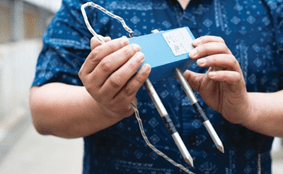
  • A former NASA scientist Parag Narvekar has created sensors to enhance farm produce for farmers in Nashik, Maharashtra. He claims that new sensors will assist farmers to understand the weather and adjust their use of irrigation and fertilisers. According to Narvekar, the new sensors are more cost-effective than the already existing ones and have made sensors of Rs 10,000 that earlier use to cost Rs 1.5 lakh.

Cost-effective Sensors to Improve Farm Produce

  • A resident of Nashik, Narvekar owns a company Sensartics that makes weather sensors and offers cost-effective solutions to farmers. Narvekar’s company has also collaborated in the past with more organisations to provide solutions to local farmers’ problems. In February this year, Sensartics collaborated with Sahyadri Farmers Producers Company (FPC) to establish sensors in Nashik’s grape farms to safeguard the farmers from losing their harvest because of odd weather. The team installs sensors at the root zone levels of the plants. These sensors calculated temperature, soil moisture and soil electrical conductivity. Sensors placed in the canopies measured humidity and leaf wetness other than temperature.
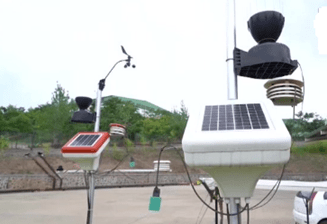
  • Narvekar, with his team at Sensartics, has also established village level local weather stations that can provide precise weather forecasts beneficial for the local farmers, the efforts of Narvekar and his company have brought state-of-the-art meteorological stations within the reach of farmers.
  • With this they Gained greater clarity around the potential of sensors to improve agriculture and food security.

reference- https://d-lab.mit.edu/research/mit-d-lab-cite/internet-things-low-cost-sensors-agriculture

https://www.researchgate.net/publication/321740995_A_Cost-effective_Smart_Farming_System_with_Knowledge_Base

What if we are living in a Video Game?

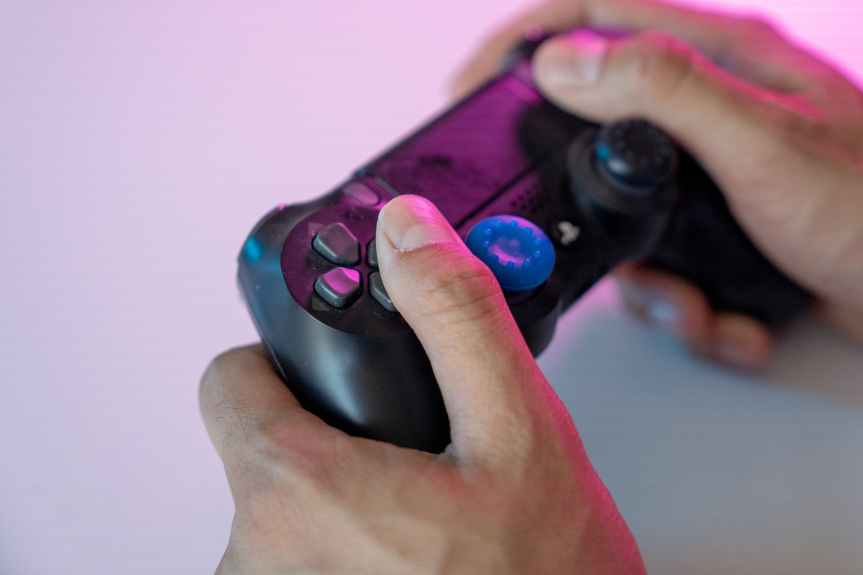
Kids these days are so head over heels into video games, do you ever think what if we are pawns in a video games ourselves, some alien species with the controller?

Rizwan Virk, a computer scientist and video game designer, published a 2019 book, The Simulation Hypothesis, that traces the path from today’s technology to what he calls the “Simulation Point,” the moment at which we could realistically build a Matrix-like simulation.

I know nothing about computer science, but this idea that we’re all characters in an advanced civilization’s video game is, well, kind of awesome.

Pretend I know absolutely nothing about the “simulation hypothesis.” What is the simulation hypothesis?

The simulation hypothesis is the modern equivalent of an idea that’s been around for a while, and it is the idea that the physical world that we live in, including the Earth and the rest of the physical universe, is actually part of a computer simulation.

You can think of it like a high resolution or high-fidelity video game in which we are all characters, and the best way to understand it within Western culture is the movie The Matrix, it’s become a cultural phenomenon now beyond the film industry.

In that movie, Keanu Reeves plays the character Neo, who meets a guy names Morpheus, who is aptly named after the Greek god of dreams, and Morpheus gives him a choice of taking a red pill or a blue pill. And if he takes the red pill, he wakes up and realizes that his entire life, including his job, the building he lived in, and everything else, was part of this elaborate video game, and he wakes up in a world outside of the game, which he did. That is the basic version of the simulation hypothesis.

Are we living in a simulated universe right now?

There are lots of mysteries in physics that are better explained by the simulation hypothesis than by what would be a material hypothesis.

The truth is that there’s much we simply don’t understand about our reality, and I think it’s more likely than not that we are in some kind of a simulated universe. Now, it’s a much more sophisticated video game than the games we produce, just like today World of Warcraft and Fortnite are way more sophisticated than Pac-Man or Space Invaders. They took a couple of decades of figuring out how to model physical objects using 3D models and then how to render them with limited computing power, which eventually led to this spate of shared online video games.

I think there’s a very good chance we are, in fact, living in a simulation, though we can’t say that with 100 percent confidence. But there is plenty of evidence that points in that direction.

Watch season 18, episode 7 of South Park if you haven’t gotten the hint already!

Think of how sometimes when you walk into a room with a purpose but the moment you enter, you forget the reason you walked in for? Who knows some work might have come up so the gamer playing you had to leave? So, you go blank for a few seconds, but when the gamer comes back, you are back on track as well.

Think of how every time you fell down. Who knows that isn’t because the controller from the gamer’s hand maybe because he was balancing his plate of food in his hand while playing?

What if the old people are being played by the gamers with low frame rate and bad internet connectivity?

When I say there are aspects of our world that would make more sense if they were part of a simulation, I mean there are a few different aspects, one of which is quantum indeterminacy, which is the idea that a particle is in one of multiple states and you don’t know that unless you observe the particle.

Probably a better way to understand it is the now-infamous example of Schrödinger’s cat, which is a cat that the physicist Erwin Schrödinger theorized would be in a box with some radioactive material and there was a 50 percent chance the cat is dead and a 50 percent chance the cat is alive. Now, common sense would tell us that the cat is already either alive or it’s dead. We just don’t know because we haven’t looked in the box. We open the box and it’ll be revealed to us whether the cat is alive or dead. But quantum physics tells us that the cat is both alive and dead at the same time until somebody opens up the box to observe it. The cardinal rule is the universe renders only that which needs to be observed.

Isn’t the hypothesis that we’re living in a flesh-and-blood physical world the simpler explanation?

A very famous physicist, John Wheeler, was one of the last physicists who worked with Albert Einstein and many of the great physicists of the 20th century. He said that physics was initially thought to be about the study of physical objects, that everything was reducible to particles. This is what’s often called the Newtonian model.

But then we discovered quantum physics and we realized that everything was a field of probabilities and it wasn’t actually physical objects. That was the second wave in Wheeler’s career.

The third wave in his career was the discovery that at the core level, everything is information, everything is based on bits. So Wheeler came up with a famous phrase called “it from bit,” which is the idea that anything we see as physical is really the result of bits of information. He didn’t live to see quantum computers come into reality, but it’s looking more like that.

So I would say that if the world isn’t really physical, if it’s based on information, then a simpler explanation might in fact be that we are in a simulation that is generated based on computer science and information.

How close are we to having the technological capacity to build an artificial world that’s as realistic and plausible as The Matrix?

There are 10 stages of technology development that a civilization would have to go through to create a hyper realistic simulation. We’re at about stage five, which is around virtual reality and augmented reality. Stage six is about learning to render these things without us having to put on glasses, and the fact that 3D printers now can print 3D pixels of objects shows us that most objects can be broken down as information.

But the really difficult part — and this is something not a lot of technologists have talked about — is in The Matrix, the reason they thought they were fully immersed was they had this cord going into the cerebral cortex, and that’s where the signal was beamed. This brain-computer interface is the area that we haven’t yet made that much progress in, but we are making progress in it. It’s in the early stages.

So my guess is within a few decades to 100 years from now, we will reach the simulation point.

Applications of Artificial Intelligence-II

In part-I, we have discussed the meaning, scope, stages of AI, few applications, and benefits/uses of AI in society. in this article, we are going to see about the transportation and medical applications of AI.

AI in Social Problems:

Litterati

It is a crowdsourced litter clean-up app and a global database for litter. Identifies litter type, distribution, and location and helps to find more sustainable solutions.  

In 2017, 1.1 billion cigarettes were found all over the world.

AI in Road Transportation:

Road transport is a major sector where AI can be applied more prominently. AI can make transportation modes much safer, cleaner, smarter, and more efficient. 

Self-driving cars

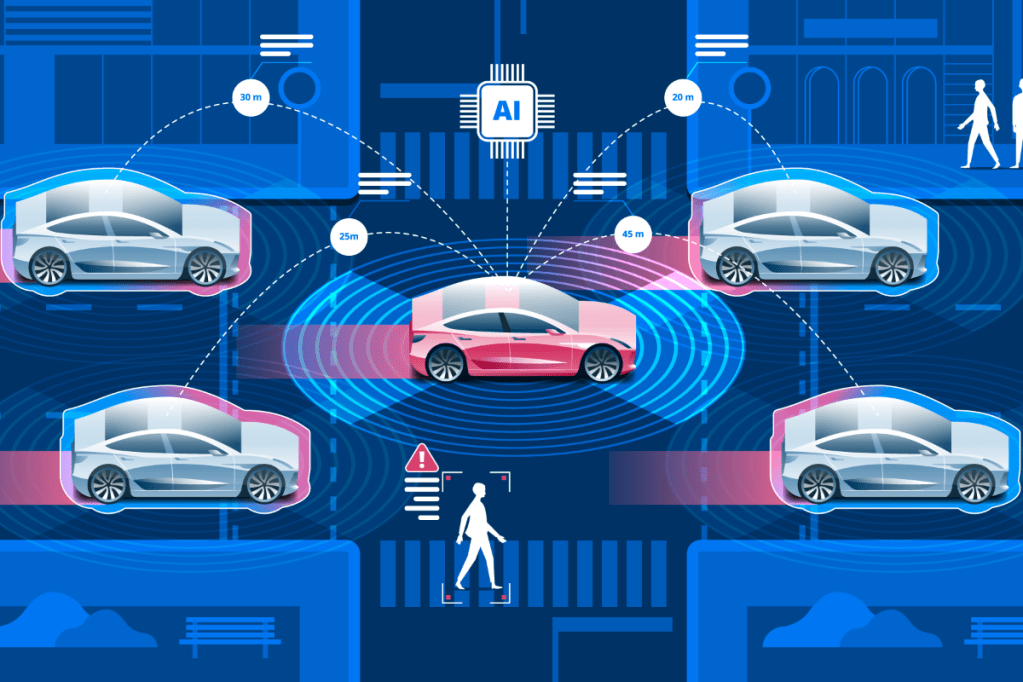
Self-driving cars are a combination of sensors, cameras, radar, and AI technologies like machine learning and neural networks. Developers use a large amount of data from image recognition systems. Neural networks identify the pattern in data i.e., images from the cameras and sensors. It identifies the traffic signs and signals, boundaries, trees, pedestrian walks..etc.

One such technology developed by Google is Google Waymo Vehicle

Google Waymo Vehicle

It is an example of self-driven cars. It is almost an autonomous vehicle but still needs a human to perform certain functionalities but can drive in ideal conditions. 

Levels of Autonomous Cars

LEVEL 0: No Advanced Driver Assistant System(ADAS) is used. The human driver should drive.

LEVEL 1: ADAS assists the driver by its alert systems by its rear-view cameras, but the driver should take care of the steering, brakes, and acceleration

LEVEL 2: Human presence is important even though ADAS will take care of the steering, brakes, or acceleration.

LEVEL 3: ADAS can take driving tasks and parking can be performed under certain conditions. But still, human is the main driver here and need to take care of the circumstances.

LEVEL 4: The driver need not pay much attention as ADAS can take over the driving.

LEVEL 5: No human help is required. ADAS can drive the vehicle under any circumstances.

Truck platooning

Truck platooning is also an example of Artificial intelligence. It is a heavy coupling of trucks. The first truck is occupied by the human driver and the rest are fully automated. They maintain a minimal distance between them and accelerates at the same rates. It might be a risk during traffic and unexpected accidents might occur. In the future, the risk factor is expected to be less.

AI in Medical Sector:

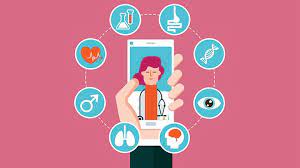
AI helps health professionals to diagnose the patient faster and more accurately. 

AI is developing innovative drugs and treatments by reducing medical and diagnosis errors by predicting adverse reactions. Lowers the cost of healthcare work providers and patients.

Problems at the healthcare centers

Due to more number of patients, general practitioners and primary care surgeons are over-burdened because of which there are extremely long waiting at the hospitals.

Solution  

Your.MD

Your.MD aka Healthily is the world’s first AI-based health assistant which provides personalized advice about their medical complaints. This app records the symptoms and, maps them with the clinical data compiled from public sources. Engages about thirty doctors to research illness.

Research

It creates a pre-primary care market and eases the burden of medical staff and helps improve their work through digital screening of non-accurate conditions.

Google Launchpad Studio

Creates an ecosystem of applied Machine Learning startups and focuses on healthcare.

BYTEFLIES is the first company to use this studio.

Supervises Learning for Telemedicine 

Technology can be used for good and bad so there is a need to be vigilant. The latest technologies are typically applied to the wealthy. 

But,

“AI has the potential to extend knowledge and understanding to a broader population. Image-based AI diagnoses of medical conditions could allow for a more comprehensive deployment of the telemedicine”. 

Google deep mind

Google deep mind can diagnose diabetic retinopathy like a highly trained ophthalmologist via telemedicine.

‘BETTER DIAGNOSE WITH LESS HUMAN EFFORT’

It uses a portable fundus camera which is deployed in the screening site and transmits images securely to the cloud software platform for analysis and automatically generates a report which facilitates compliance with follow-up examinations.

credits to the right owners of the images used.

Applications of Artificial Intelligence-I

What is AI?

Artificial Intelligence is the intelligence exhibited by machines based on the premise that intelligence is not ‘real’ or human’. It mimics cognitive functions exhibited by humans such as learning and problem-solving.

Artificial intelligence based on Natural intelligence

What is the scope of AI?

Jobs related to AI will increase exponentially in the coming days. It helps to find smart solutions to the problems in various fields in medicine, agriculture, education, security, and so on.

Three stages of Artificial Intelligence. We are near to the second stage.

Applications of AI

  • Machine Learning includes Deep Learning- Neural network
  • Vision includes Image & pattern recognition- Facial recognition
  • Hearing includes Voice and speech recognition
  • Natural Language Processing(NLP) includes Natural Language Understanding(NLU)- Natural Language Generation(NLG)
  • Robotics
  • Expert Systems

We are currently using the following AI-based applications:

  1. Image recognition: Recognizes objects, places, people, and actions in an image.
  2. Speech recognition: Allows humans to use their voices to communicate with the software.
  3. Language translation: Translates a word or sentence from one language to another. Ensure that the translated word is culturally and linguistically correct.
  4. Product analysis: Enables companies to leverage data to reveal user engagement with products or services and tracks the activities, likes, and dislikes of the user.
  5. A/B testing: Determines the version of a webpage and compares two versions and delivers better performance.
  6. Sentiment analysis: Analyze a piece of text to determine the writer’s attitude. It can be categorized as positive, negative, or neutral.

Let’s see few examples of Artificial Intelligence

  1. SIRI: Siri is a popular personal assistant offered by Apple which uses Machine Learning and Voice recognition.
  2. COGITO: It improves the intelligence of customer services by analyzing the human voice emotion and provides real-time guidance.
  3. NETFLIX: Uses predictive technology and provides the user with movie recommendations based on the user’s likes.

Use of Artificial Intelligence in society

“AI is a huge benefit to the society as it enhances the efficiency and throughput while creating new opportunities for revenue generation, cost savings, and job creation.”

-Anand Sampat(Datmo)

‘Robots and AI will destroy jobs’ is nothing but fiction and not fact. But instead, AI creates job opportunities in the market.

“The unparallel combination of human and machine will become the new normal in the workforce of the future”

– Matthew Lieberman

The presence of Artificial intelligence enhances our lifestyles and creates efficient businesses.

“Machine allows humans to do the most interpersonal and creative aspects of work”

 -Chalmers Brown(Due company)

AI platforms will provide real-time insights combined with the explosion of computer power.

“Smart homes will reduce energy usage and provide better security for humans. Marketing will be more targeted and health care will become more effective with smart devices”.

 – Naresh Soni

Start-ups using Artificial Intelligence 

  1. NEST: Alphabet Nest uses AI to learn a home owner’s habit resulting in a reduction of energy consumption. It adjusts the house temperature according to the weather hence energy consumption can be controlled.
  2. COMFY: Comfy offers services for reducing energy consumption in office buildings.
  3. PG&E: Pacific gas and electric company(PG&E) connected 200,000 solar customers, accounting for one in every four houses with solar rooftops.

AI benefits multiple Industries and society will be benefitted from the use of facial recognition, digital content analysis, accuracy in identifying patterns.

“AI risks are real if we don’t understand the quality of the incoming data and set AI rules which are making granular trade-off decisions at increasing computing speeds”

-Mark Butler

Facial recognition: Facial recognition is a biometric technology used to identify human faces and can be used for security purposes. 

Example: Snapchat

Snapchat differentiates between images of objects, pets, sports, and food. It suggests relevant borders and stickers. Identifies your location and suggests location-based filters.

Snapchat filters use Machine Learning and image classification techniques called Convolution Neural Networks(CNN).

LINUX

After it’s first launch , thousands of programmers and users got attracted towards LINUX . Today we can say that Linux is the first choice of millions of people all over the globe . It is different from other operating systems as it comes with a host of positive developments . This is because of what LINUX offers to users and programmers , such as scalability , security , consistency , user friendliness , freedom and non pirated enterprise software . Many of the advantages of Linux are an aftermath of its origins , deeply rooted in UNIX .

Linux is Free : Linux is a freely distributable operating system . The first thought that comes to mind is what does free means . When we say Linux is free that does not mean it is always free of cost . Here , free implies the freedom to work . You can download the Linux for free from Internet , without registration and without going into per user per year kind of licensing . You are free to use , free to customize , free to modify , free to distribute and also free to brand your modified variant . Modification is possible because its source code is freely available . This makes the Linux free . It has already been explained that no licensing is required for Linux . Again , this does not mean that there is no license . Like any other software Linux also has a license . Linux comes with GNU Public License (GPL) . The license states that anybody who may want to use and apply Linux can do so . Anybody has the right to change Linux and eventually redistribute a changed version , on the condition that he makes available the code after redistribution . In other words we can say that you are always free to grab a kernel image , for any of your functionality as long as your client can still have a copy of that code .

Linux is Hardware Independent : Linux is compatible with nearly all available hardware . As mentioned in the previous section , its source code is freely downloadable and that also comes with the GPL license , you are free to follow the documentation available and customize so as to work with your unsupported hardware . This makes the Linux hardware independent .

Linux is Secure : Linux has proven , beyond doubt , the sound security level it offers . This security aspect is the key feature of Linux and its security model is entirely based on UNIX , which we all know is very robust and of proven quality . In Linux , security is not only restricted to the security from internet threats but it is also very much secure from other system related breaches or malpractices . Linux offers security at all levels , such as User level , Application level , System level , Device level , Inner threats , External threats .

Linux is Scalable : When Linux was in the gestation process , its creators wanted to make an operating system that was extensively suitable for any application , any hardware , and any process . They wanted it to work with computers with high power and capacities like of super computers , mainframes , and with computer for personal use like PCs , laptops and even with computers of limited resources like Palmtop , PDAs , etc., so that Linux fits everywhere .

Longest running light bulb since 1901: The case of Planned Obsolescence

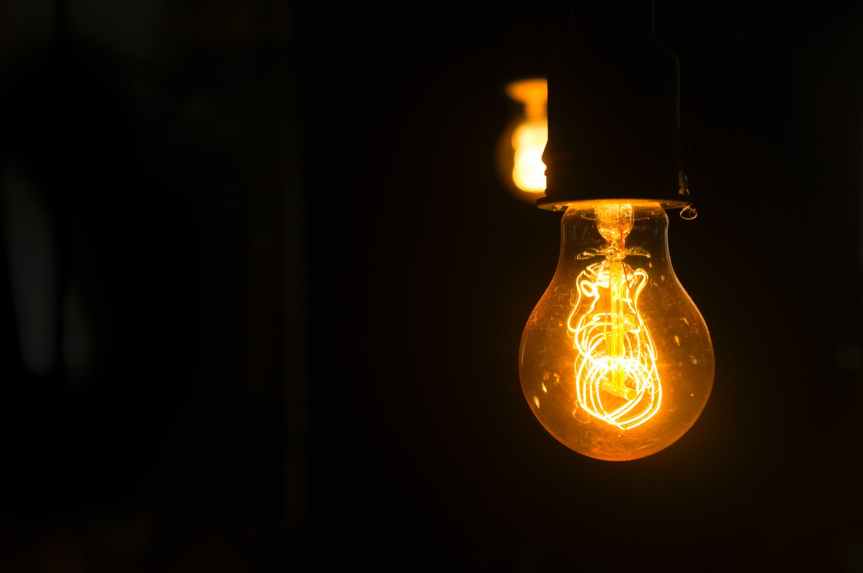
Centennial Light is the longest-running electric light bulb on record. It has been running continuously since 1901 and it has never been switched off. It is located in Fire Station 6 in Livermore, California. The ordinary dim light bulb looks like any other bulb and there is also a camera that live-streams the light bulb onto the internet.

Link for the official website and live webcam of the light bulb.

http://www.centennialbulb.org/photos.htm

It was manufactured in the late 1890s by the Shelby Electric Company, of Ohio, using a design by the French-American inventor Adolphe Chaillet. It has operated for over 100 years with very few interruptions. In 2011, it passed a milestone: One million hours of near-continuous operation. In 2015 it was recognized by Guinness World Records as the world’s longest-burning bulb.

The 60-watt bulb uses a carbon filament. One of the reasons for its longevity is that it seems to have an incredibly durable vacuum seal. There have been some researches done on bulbs manufactured by Shelby Electric Company of that era. But no one really exactly knows how these eternal bulbs were made as they were experimenting with various but the company was experimenting with a variety of designs at the time.

The electric model was quite different when first homes in The U.S had electricity. The servicing was the responsibility of the electric companies and customers would purchase entire electrical systems manufactured by a regional electricity supplier. The companies would also take care of the installation and servicing of any burned out electric bulbs would be replaced for free.

It made more logic for the suppliers to manufacture bulbs that would last longer and would burn out as least as possible. But this business model was later replaced and homeowners were responsible to change the light bulbs. It was soon realized that it would be more profitable to make cheaper bulbs that burned out faster. Since the mid-1900s goods were manufactured with a pre-determined expiry date aimed at forcing consumers into repeat purchases. This phenomenon has only been exacerbated in recent years. This can also be called planned obsolescence.

In 1924, the life span of the light bulbs was at least 2,500 hours. Phoebus cartel was formed in 1925 in Geneva. It comprised of the major incandescent light bulbs manufacturers at that time: Osram, General Electric, Associated Electrical Industries, and Philips. The cartel had directed their engineers to cut the life of the bulbs to 1,000 hours, which the engineers did by adjusting voltage and current. The cartel was intended to operate for 30 years but it was starting to fall apart in the early 1930s after General Electric patents expired and as the cartel faced competition from non-member manufactures from other regions. The cartel ceased its operations after the outbreak of World War II in 1939.

Planned obsolescence is a very critical area it does not only decrease the lifespan of the good but as a consequence, it is also wasteful. It is not sustainable for the environment and the main focus of this practice is to maximize profits. It also reminds us that technological innovations are often not accessible in favor of corporate greed.

References: