Nationwide awareness campaign on Safer Internet Day to promote safe and responsible use of the internet

The Ministry of Electronics and Information Technology (MeitY) spearheaded a nationwide awareness campaign on Safer Internet Day, observed on February 11, 2025, to promote safe and responsible use of the internet. Organized under the theme ‘Together for a Better Internet’, the campaign aimed to educate and sensitize internet users about cyber hygiene, online safety practices, and emerging cyber threats. This initiative was conducted under the Information Security Education and Awareness (ISEA) program in collaboration with NIC, NIXI, C-DAC, NIELIT, MyGov, NeGD, and various partner institutions. The National Informatics Centre (NIC) played a crucial role in amplifying the outreach efforts through its extensive digital infrastructure and communication networks.

Cyber awareness drive

As part of this extensive campaign, 1,521 awareness workshops were conducted across 35 States/UTs, 599 districts, 493 blocks/tehsils, and 134 gram panchayats, reaching over 3.08 lakh beneficiaries. These workshops covered key topics such as cyber threat mitigation, digital security best practices, and responsible online behavior. Additionally, a series of expert talks, quizzes, and competitions were organized to further reinforce awareness.

Strengthening digital resilience

To maximize outreach, promotional messages and expert interviews were broadcasted on a Pan India basis in 11 major Indian languages, covering vital topics such as cyber hygiene practices, common cyber threats, and the mechanism for reporting cybercrimes through the toll-free National Cybercrime Helpline Number (1930). These messages were disseminated through FM stations, Prasar Bharati, and Vividh Bharati networks, achieving an estimated reach of 2.27 crore listeners. On digital platforms, social media outreach led by MyGov, NIC, and ISEA teams garnered over 5.49 lakh impressions and 63.57 lakh views through 680 creative posts.

An online awareness workshop, titled Navigating the Digital Highway: Safeguarding Your Online Journey’, was also organized for the officials of MeitY and other government ministries, departments, and organizations, engaging 1,217 participants in discussions on digital safety. The session sensitized participants on best cybersecurity practices and also provided demonstrations of insightful security tools, such as PIC2MAP, deviceinfo.me, coveryourtracks.eff.org, stopNCII.org, SecureEraser app, etc. which help in verifying online content authenticity, preventing identity fraud, analyzing device fingerprints, and securing personal data. The workshop was highly appreciated by participants for its practical approach and relevance in addressing contemporary cybersecurity challenges.

About ISEA

The Information Security Education and Awareness (ISEA) Project, implemented by MeitY, aims to strengthen cybersecurity awareness and build skilled human resources in Information Security. The recently approved ISEA Phase-III (October 2023) seeks to develop 2.25 lakh trained individuals in cybersecurity over five years, including 45,000 skilled and certified cybersecurity professionals (CISOs, Deputy CISOs, and aspirants) and 2.3 lakh students and researchers in formal and non-formal courses. Additionally, the project aims to cover over 12 crore beneficiaries from diverse backgrounds—school children, teachers, college students, faculty, women, senior citizens, government employees, MSMEs, and NGOs—through mass awareness initiatives under the Cyber Aware Digital Naagrik campaign.

Bharat NCX 2024 Officially Inaugurated: Strengthening Cyber Defense and Strategic Decision-Making Across India

Daily writing prompt
Who are your current most favorite people?

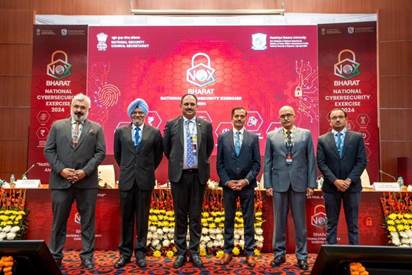
The Bharat National Cyber Security Exercise (Bharat NCX 2024), a landmark initiative to fortify India’s cybersecurity resilience, was inaugurated today at a high-profile ceremony organized by the National Security Council Secretariat (NSCS) in collaboration with Rashtriya Raksha University (RRU). The 12-day exercise is a critical step in preparing India’s cybersecurity professionals and leadership to tackle evolving threats with advanced cyber defense, incident response capabilities, and strategic decision-making.

In his Inaugural AddressLt Gen M. U. Nair, PVSM, AVSM, SM (Retd), the National Cyber Security Coordinator, stated, “Bharat NCX 2024 equips our nation’s cyber defenders and leaders with the skills to mitigate complex threats. From technical exercises to strategic decision-making, this initiative ensures our preparedness to manage crises at all levels.”

Prof. (Dr.) Bimal N. Patel, Vice Chancellor of RRU, delivered the Keynote Address, highlighting the integration of education, research, and innovation in addressing cybersecurity challenges. He remarked, “This exercise not only strengthens technical skills but also prepares leadership to navigate national-level cyber crises through informed decision-making.”

Key Features of Bharat NCX 2024: The exercise includes immersive training on cyber defense and incident response, live-fire simulations of cyberattacks on IT and OT systems, and collaborative platforms for government and industry stakeholders. A Strategic Decision-Making Exercise will bring together senior management from across sectors to simulate decision-making in a national-level cyber crisis, enhancing their ability to respond to high-pressure situations with strategic acumen. The CISO’s Conclave will feature Chief Information Security Officers from government, public, and private sectors sharing insights, participating in panel discussions, and exploring the latest trends and government initiatives in cybersecurity. On the sidelines, the Bharat Cybersecurity Startup Exhibition will showcase innovative solutions from Indian startups, emphasizing their role in enhancing the nation’s cybersecurity infrastructure. The exercise also highlights leadership engagement and capacity building, fostering a unified approach to emerging cyber challenges.

The event runs from November 18 to November 29, 2024, culminating in a comprehensive debrief to consolidate lessons learned and establish best practices in cybersecurity.

*****

GOI Measures for Safety, Security and Empowerment of Women

 The Government accords highest priority to improving sex ratio in the country and ensuring healthy life for women. Some major initiatives taken by the Government in this regard are as follows:


  • Beti Bachao Beti Padhao (BBBP) ensures protection, survival and education of girl child.
  • Mission Saksham Anganwadi and Poshan 2.0 aims to address the challenges of malnutrition in children, adolescent girls, pregnant women and lactating mothers through a strategic shift in nutrition content and delivery and by creation of a convergent eco-system to develop and promote practices that nurture health, wellness and immunity.
  • Pradhan Mantri Matru Vandana Yojna (PMMVY) provides partial compensation for the wage loss and seeks to improve health seeking behaviour among the pregnant women and lactating mothers. The revamped PMMVY under Mission Shakti also aims to promote positive behavioural change towards girl child by providing additional cash incentives for the second child, if that is a girl child.
  • Rollout of Comprehensive Primary Health Care including health promotion through Ayushman Bharat-Health & Wellness Centers (AB-HWC).
  • Janani Shishu Suraksha Karyakram (JSSK) to eliminate out-of-pocket expenses for pregnant women delivering in public health institutions and sick infants accessing public health institutions for treatment.
  • Janani Suraksha Yojana (JSY) to provide financial assistance to pregnant women for encouraging institutional delivery.
  • Pradhan Mantri Ujjwala Yojana empowers women and protects their health by providing LPG cylinder free of cost.


As a result of the above measures, the sex ratio at birth has improved from 918 (2014-15) to 937 (2020-21) and the life expectancy at birth has improved from 69.4 years (2014-18) to 69.7 years (2015-19).

The Government has taken several initiatives to enhance women’s participation in labour force. The labour laws have specific provisions relating to women workers besides all other rights under labour laws which, inter alia, include:


  • The Equal Remuneration Act, 1976 provides that there shall be no discrimination in an establishment or any unit thereof among employees on the ground of gender in matters relating to wages by the same employer, in respect of the same work or work of similar nature done by any employee.
  • The Maternity Benefit Act, as amended in 2017, provides paid maternity leave from 12 weeks to 26 weeks for two surviving children. It also has enabled provision of “Work from home”, after availing of the maternity benefit by the woman, where the nature of work being assigned of such nature, for such period and on such conditions mutually agreed upon by the employer and the woman employee.
  • Vide notification dated 29th January 2019 under Mines Act 1952, the Government allowed the employment of women in the aboveground mines including opencast workings between 7 pm and 6 am and in below ground mines working between 6 am and 7 pm in technical, supervisory and managerial work where continuous presence may not be required.
  • The Government has also enacted the four Labour Codes, namely the Code on Wages, 2019; the Industrial Relations Code, 2020; the Code on Social Security, 2020, and the Occupational Safety, Health and Working Conditions Code, 2020, which inter alia promote participation of women in workforce in a dignified manner through a number of provisions, some of which are as follows:
  • No discrimination on the ground of gender in matters relating to wages, recruitment and in the conditions of employment,
  • Women are entitled to be employed in all establishments for all types of work even before 6 AM and beyond 7 PM subject to their consent and other adequate safety measures.


Some of the major initiatives taken by the Government for improving economic empowerment of women are as follows:


  • Sakhi Sadan (Working Women’s Hostel) scheme provides safe and affordable housing for working women and thereby encourages more women to seek employment.
  • Palna, the National Crèche Scheme, ensures that women take up gainful employment through providing a safe, secure and stimulating environment to the children.
  • Hubs for Empowerment of Women (HEW) at National, State and District level have been approved under the new ‘Mission Shakti’. The support under HEW is available for guiding, linking and hand holding women to various institutional and schematic set-up for their empowerment and development including equal access to healthcare, quality education, career and vocational counselling/training, financial inclusion, entrepreneurship, backward and forward linkages, health and safety for workers, social security and digital literacy at various levels across the country.
  • Pradhan Mantri Mudra Yojana (PMMY) has been initiated by Government, inter alia, for facilitation self-employment. Under PMMVY, collateral free loans upto Rs. 10 lakh are extended to micro/small business enterprises and to individuals to enable them to setup or expand their business activitiesMajority of the beneficiaries under this yojana are women.
  • Stand Up India scheme promotes entrepreneurship amongst women, SC and ST categories, i.e., those sections of the population understood to be facing significant hurdles due to lack of advice/ mentorship as well as inadequate and delayed credit.
  • Pradhan Mantri Kaushal Vikas Yojana aims to enable a large number of Indian youths including women to take up industry-relevant skill training in securing a better livelihood.
  • Deen Dayal Antyodaya National Urban Livelihoods Mission focuses on creating opportunities for women in skill development, leading to market-based employment.
  • Pradhan Mantri Awaas Yojana aims to provide housing under the name of woman also.
  • Sukanya Samriddhi Yojna – Girls have been economically empowered by opening their bank accounts under this scheme.
  • Skill Upgradation & Mahila Coir Yojna is an exclusive training programme of MSME aimed at skill development of women artisans engaged in coir Industry.
  • Prime Minister’s Employment Generation Programme is a major credit-linked subsidy programme aimed at generating self-employment opportunities through establishment of micro-enterprises in the non-farm sector.


VARIOUS SECURITY FORCES AND AGENCIES AND THEIR MANDATE IN INDIA

There are external and internal threats to India’s security and various specialized Indian forces deal with these threats. External threats are typically handled by the armed forces of the Department of Defense, while internal threats are handled by the Department of Home affairs .

Security forces

1.Indian Armed Forces

2.Central Armed Police Force

Indian Armed Force

The defense forces are divided into four sub-heads.

  1. Indian Army Personnel.
  2. Indian Air Force Personnel.
  3. Indian Navy Personnel.
  4. Indian Coast Guard Personnel.

The Supreme Commander of the Indian Armed Forces is the President of India. All three of these services are under the Department of Defense.

Indian Army

The Indian Army is the land component of the armed forces. It evolved from the armed forces of the East India Company, eventually transforming into the British Indian Army and the Indian Army after independence.
It is commanded by the Chief of Staff of the Army (COAS). It is considered the second largest active army in the world. The mission of the Indian Army is to ensure national security and protect India’s sovereignty, territorial integrity and harmony against foreign aggression and threats. This also includes providing humanitarian assistance and aid to civilians during natural disasters and unexpected times.

Indian Navy

India has a coastline of 7516.6 km. The Indian Navy secures India’s maritime borders and interests. It also protected Indian merchant ships by fighting pirates on the high seas, and at the same time, it aided civilians in disasters. It is commanded by the Chief of Naval Staff, an Admiral. The Indian Navy is deployed under three commands: Eastern Naval Command – Vishakhapatnam is the headquarters. Western Naval Command – Mumbai is the headquarters The Southern Naval Command – Kochi is the headquarters. The navy is used to support foreign policy goals, build “bridges of friendship” and strengthen international cooperation.

Indian Air Force

The Indian Air Force was officially established on 8 October 1932. The force was known as the Royal Indian Air Force in recognition of its service during the Second World War. . After Independence, the term “Royal” was dropped. It is considered the 4th largest air force in the world. The primary responsibility of the Indian Air Force is to secure Indian airspace and conduct air wars in times of conflict. In addition to the wars of independence for India and humanitarian action, she has participated in many UN peacekeeping missions. An Air Marshal is the commander of the air forces in India. The Air Force Network (AFNet), launched September 14, 2010, is a digital information network that enables rapid and accurate response to threats. It is a fiber-based network.

Security Forces Dealing with Internal Threats

There are many divisions of Central Armed Police Force, which deal with internal threats.

Central Armed Police Force (CAPF)

  1. Assam Rifles (AR)
  2. Border Security Force (BSF)
  3. Central Industrial Security Force (CISF)
  4. Central Reserve Police Force (CRPF)
  5. Indo Tibetan Border Police (ITBP)
  6. National Security Guard (NSG)
  7. Sashastra Seema Bal (SSB)

Duties of various security forces and agencies The Ministry of Home Affairs (MHA) has many responsibilities, the most important of which are internal security, management of paramilitary forces, border management, center-state relations, administration of territories. of the Union, disaster management, etc. Article 355 of the Constitution ordered the Union to defend each State against external aggression and internal disturbances and to ensure that each State’s government was carried out in accordance with the provisions of the Constitution.

‘Sankalp Smarak’ dedicated to the nation by CINCAN

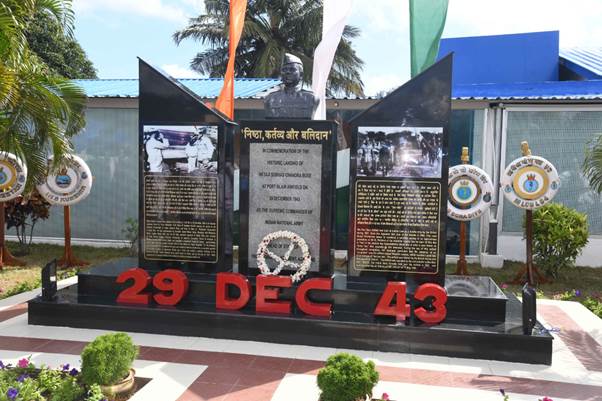
 In order to preserve this important event in history, a Sankalp Smarak was dedicated to the nation by Lt Gen Ajai Singh, Commander-in-Chief Andaman and Nicobar Command (CINCAN), exactly 78 years after Netaji’s arrival on 29 Dec 2021 at 11:30 am. The Smarak is a tribute not only to the resolve of the soldiers of the Indian National Army and their innumerable sacrifices but also reminds us of the values enshrined by Netaji himself, “Nishtha, Kartavya aur Balidan” or “Commitment, Duty and Sacrifice” that continue to underscore the ethos of the Indian Armed Forces and the resolve of the Indian Soldier.

In the saga of India’s freedom struggle, 30 December 1943 holds a special place etched in time. It was on this day that a national flag was hoisted for the first time on Indian soil, at Port Blair. It is also significant is that Netaji escaped British surveillance from Kolkata on 16 Jan 1941 and stepped back on Indian soil after nearly three years, at Port Blair Aerodrome on 29 Dec 1943 at 11:30 am and unfurled a National flag the next day. Netaji’s visit to the islands as the Head of the Provisional Government of Azad Hind and Supreme Commander of Indian National Army marked a symbolic fulfilment of his promise that the Indian National Army would stand on Indian soil by the end of 1943. This historic visit also marked a declaration of Andaman and Nicobar Islands as the “first liberated territory of India”.

The location of Netaji’s historic arrival on 29 Dec 1943 (accompanied by Sarvashri Anand Mohan Sahay (Secretary with Ministerial Rank), Captain Rawat – ADC and Col DS Raju (personal physician of Netaji), lies within the premises of what is now Andaman and Nicobar Command’s Air Station INS Utkrosh, in close proximity to the present-day runway. Upon his arrival as the Supreme Commander of the Indian National Army by a Japanese Air Force Aircraft, Netaji was accorded a ceremonial guard of honour by soldiers of Indian National Army at the Air Field.

During the dedicated ceremony held on the occasion, Soldiers of the only Quad Services Command of India led by the Commander-in-Chief himself along with other senior officers, soldiers and families paid homage, honouring the sacrifices of the soldiers of the Indian National Army. The event was conducted in a simple and solemn ceremony befitting the occasion.


Nampi/Rajib


Central University in Ladakh

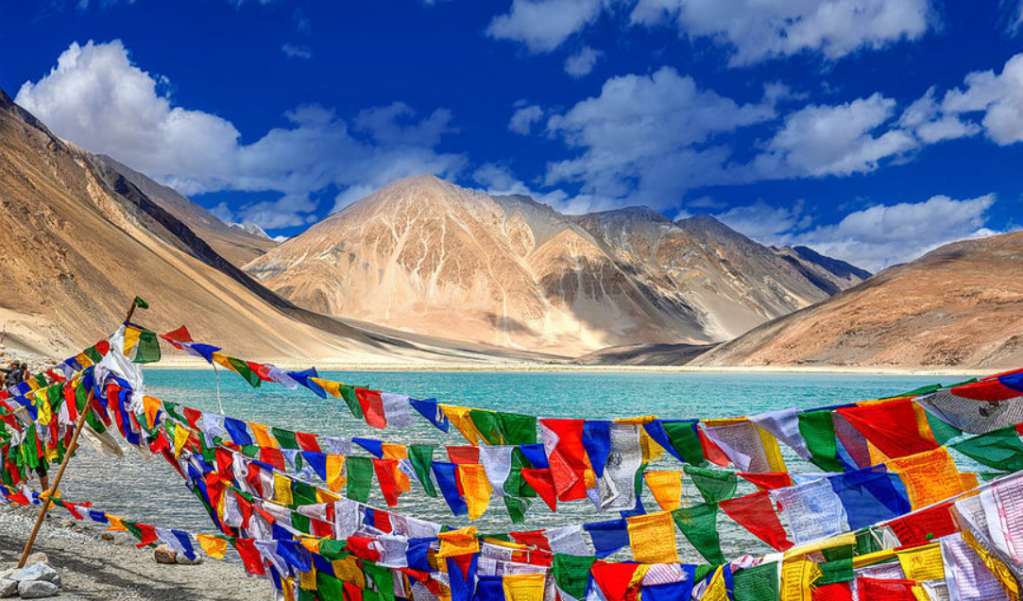
Ladakh – Ladakh is a region administered by India as a union territory, and constitutes a part of the larger Kashmir region, which has been the subject of dispute between India, Pakistan, and China since 1947.It was established on 31 October 2019, following the passage of the Jammu and Kashmir Reorganisation Act. Ladakh is bordered by the Tibet Autonomous Region to the east, the Indian state of Himachal Pradesh to the south, both the Indian-administered union territory of Jammu and Kashmir and the Pakistan-administered Gilgit-Baltistan to the west, and the southwest corner of Xinjiang across the Karakoram Pass in the far north. It extends from the Siachen Glacier in the Karakoram range to the north to the main Great Himalayas to the south. The eastern end, consisting of the uninhabited Aksai Chin plains, is claimed by the Indian Government as part of Ladakh, and has been under Chinese control since 1962.

The largest town in Ladakh is Leh, followed by Kargil, each of which headquarters a district.

Image coutesy – Northlines

State to UT

In February 2019, Ladakh became a separate Revenue and Administrative Division within Jammu and Kashmir, having previously been part of the Kashmir Division. As a division, Ladakh was granted its own Divisional Commissioner and Inspector General of Police.

Leh was initially chosen to be the headquarters of the new division however, following protests, it was announced that Leh and Kargil will jointly serve as the divisional headquarters, each hosting an Additional Divisional Commissioner to assist the Divisional Commissioner and Inspector General of Police who will spend half their time in each town.

In August 2019, the Government of India barred all broadband as well as mobile internet services in the region to prevent the deliberately fabricated falsehood on social media. In January 2020, 2G internet was resumed with no access to social media.

The lockdown started on 5 August 2019 following Revocation of the special status of Jammu and Kashmir via scrapping of the Article 370 of the Constitution of India, Article 35A of the Constitution of India and the introduction of Jammu and Kashmir Reorganisation Act, 2019. Since 5 August, no foreign journalists have been granted permission from the Indian government to report in Kashmir.

According to a September 6 report of the Indian government, nearly 4,000 people have been illegally arrested and detained in the disputed region. Among those arrested were more than 200 politicians, including two former chief ministers of Jammu and Kashmir (J&K), along with more than 100 leaders and activists from All Parties Hurriyat Conference.

The lockdown ended with the resumption of all communication services, allowing 4G and 3G Internet services, in early February 2021.

Central UNI

The Union Cabinet has given its approval of the formation of a Central University in Ladakh. This project cost for the formation of this university will be Rs 750 crore.

  • In four years the first phase of the university will be completed.
  • To facilitate the formation of Central University in Ladakh the bill for amending Central Universities Act, 2009 will be introduced.
  • Establishing this university will aid the propagation of higher education in this region.
  • The jurisdiction of this Central University will cover the entire region of Ladakh including Kargil and Leh

Other important announcements

  • The formation of an integrated multipurpose corporation was also announced by the cabinet. This corporation will shoulder development projects in Ladakh.
  • This corporation will also look after the development of tourism, industries, and various transport services in Ladakh as well as marketing of the regions handicrafts and local products.
  • This corporation will also aid in the development of infrastructure in this region and will as Ladakh’s the primary infrastructure construction agency.
  • This corporation will be formed under the Companies Act and will have an authorised share capital of Rs 25 crore with an annual outlay of Rs 2.42 crore.
  • This corporation will also create job opportunities in this region.

The Pegasus spyware hack reveals that Apple needs to substantially improve iPhone security.

Apple has always been proud of the secure service it provides to its customers. It often pokes fun at Android, speaks at length about privacy during keynotes, and has released few features that have irritated the other Big Tech companies. However, the new Pegasus spyware disclosure has left Apple red-faced, indicating that the Cupertino-based tech company has to beef up its security. Journalists and human rights campaigners from all around the world, including India, were targeted by the malware.

The Amnesty International Security Lab discovered evidence of Pegasus infections or attempted infections in 37 of the total 67 cellphones examined. 34 of them were iPhones, with 23 displaying evidence of a successful Pegasus infection and the other 11 displaying signs of an attempted infection.

Only three of the 15 Android cellphones, on the other hand, revealed signs of a hacking effort. However, there are two things to consider before assuming that Android phones are safer than iPhones. One, Amnesty’s investigators confirmed that Pegasus evidence was located on the iPhone more than anywhere else. Android’s logs aren’t large enough to retain all of the data required for decisive findings. People have greater security expectations than the iPhone, for two reasons.

Apple has often said in previous years that the iPhone is a more secure phone than Android, and this assertion holds whether Pegasus is there or not. However, the Pegasus tale demonstrates that the iPhone is not as secure, or rather unhackable, as Apple claims. This is reflected in Amnesty International’s statement.

The issue is especially concerning because it affected even the most recent iPhone 12 devices running the most recent version of Apple’s operating system. That’s usually the best and last level of protection a smartphone maker can provide.

“Apple strongly opposes cyberattacks against journalists, human rights advocates, and anyone working to make the world a better place,” Ivan Krstic, head of Apple Security Engineering and Architecture, said in a statement to India Today Tech. Apple has led the industry in security innovation for over a decade, and as a consequence, security experts believe that the iPhone is the safest and most secure consumer mobile device available. Such attacks are very complex, cost millions of dollars to create, have a short shelf life, and are used to target specific persons. While this means they pose no harm to the vast majority of our users, we continue to work diligently to secure all of our customers, and we’re always implementing additional safeguards for their devices and data.”

How did the iPhone’s security get hacked?

Pegasus zero-click assaults were used to hack the iPhones, according to the study. It claims that thousands of iPhones have been infected, but it cannot confirm the exact number of phones that have been affected. ‘Zero-click’ assaults, as the name implies, do not involve any activity from the phone’s user, giving an already strong virus even more potential. These attacks target software that accepts data without first determining whether or not it is trustworthy.

In November 2019, Google Project Zero security researcher Ian Beer uncovered a similar vulnerability, revealing that attackers may take total control of an iPhone in the radio vicinity without requiring any user input. Apple released a software update to remedy the problem but confessed that it was powerful enough to damage the devices.

Because zero-click attacks don’t involve any user interaction, avoiding them becomes extremely tough. Even if you are aware of phishing attempts and use the best online practices, you may still be targeted by this malware.

What does Pegasus have access to?

While there is an amount of data on who was impacted and how they were affected, no investigation has been able to uncover the data that was gathered. However, the options are limitless. Pegasus may gather emails, call logs, social network posts, user passwords, contact lists, photos, videos, sound recordings, and browser history, among other things.

It also can turn on the cameras or microphones to acquire new photos and recordings. It can listen to voice mails and gather location records to figure out where a user has gone, and it can do all of this without the user accessing their phone or clicking on a strange link.

Prevent covid from impactig your credit score

 – Since the beginning of March, COVID-19 has turned millions of Americans’ financial situations upside down.

While the economy is showing signs of recovery, many Americans are still unemployed and having to dip into their savings to cover basic living costs. To that end, the question remains: How do you protect your credit score? Read on for some tips.

• Contact your lender aas soon as possible if you can’t make a payment. On-time payments are the largest factor affecting your credit score. Many lenders continue to offer emergency support such as deferral or forbearance options that may allow you to reduce or suspend payments for a fixed period. However, if those terms are set to expire soon, you should “call your lender to discuss what options are available,” says Rod Griffin, senior director of consumer education and advocacy for the credit reporting agency Experian.

• Look for ways to boost your credit score. If you have limited credit history, building credit can be challenging. Experian’s free tool, Experian Boost, can help raise your FICO score instantly by giving you credit for on-time utility, phone and streaming service payments.

This type of alternative financial data, known as “consumer-permissioned data,” allows you to manage your data with confidence and qualify for better credit. In fact, two out of three Experian Boost users see an increase in their credit score with an average increase of about 12 points. That’s enough to make a significant difference when applying for a loan or any type of credit.

• Consider getting a balance transfer credit card or one with an introductory offer. Handled responsibly, this actually has the potential to increase your credit score while either buying you time to pay off your debts or getting a “welcome bonus” of perhaps hundreds of dollars. If you’re looking for personalized credit card options, tools like Experian CreditMatch can help you get the right card based on your financial profile.

• Pay attention to your utilization ratio. Your credit score is based on your total balance-to-limit ratio (a.k.a. “utilization rate”). Adding a new credit card increases your total available credit. As long as your total credit balance remains the same, you’d be decreasing your utilization rate, which can potentially boost your credit score. Be sure to transfer balances to the card with lower interest and be mindful of temporary low interest rates.

While any balance can cause scores to decline, you should keep your utilization under 30 percent, both overall and on individual accounts. Shooting for a top credit score? “Keep your utilization in the single digits, or even better, pay your credit card balances in full each month,” says Griffin.

• Fight fraud by checking your credit report regularly.According to the Federal Trade Commission., there’s been a huge jump in attempted credit – and debit-card fraud since the pandemic hit; consumers have lost more than $100 million to COVID-19-related fraud

Zomato IPO opened for subscription

Indian Twitter is abuzz with activity as online food delivery service provider Zomato’s initial public offering (IPO) worth ₹ 9,375 crore opened up for subscription. India’s biggest this year – will be available for subscription till Friday, July 16, 2021. The price band of Zomato IPO is fixed at Rs 72-76 per share of the face value of Rs 1 each and the company aims to raise Rs 9,375 crore through the offer.The IPO comprises a fresh issue of equity shares worth Rs 9,000 crore and an offer for sale (OFS) worth Rs 375 crore by existing investor Info Edge (India), which is the parent company of Naukri.com, according to the information provided in the red herring prospectus.

What is IPO?

An initial public offering (IPO) refers to the process of offering shares of a private corporation to the public in a new stock issuance. Public share issuance allows a company to raise capital from public investors. The transition from a private to a public company can be an important time for private investors to fully realize gains from their investment as it typically includes share premiums for current private investors. Companies must meet requirements by exchanges and the Securities and Exchange Commission (SEC) to hold an initial public offering (IPO). An IPO can be seen as an exit strategy for the company’s founders and early investors, realizing the full profit from their private investment.

How does IPO work?

Prior to an IPO, a company is considered private. As a private company, the business has grown with a relatively small number of shareholders including early investors like the founders, family, and friends along with professional investors such as venture capitalists or angel investors.

When a company reaches a stage in its growth process where it believes it is mature enough for the rigors of SEC regulations along with the benefits and responsibilities to public shareholders, it will begin to advertise its interest in going public.

Typically, this stage of growth will occur when a company has reached a private valuation of approximately $1 billion, also known as unicorn status.

Zomato.

Zomato was founded as Foodiebay in 2008, and was renamed Zomato on 18 January 2010 as Zomato Media Pvt. Ltd In 2011, Zomato expanded across India to Delhi NCR, Mumbai, Bangalore, Chennai, Pune and Kolkata. In 2012, the company expanded operations internationally in several countries, including the United Arab Emirates, Sri Lanka.

With the introduction of “.xxx” domains in 2011, Zomato also launched zomato.xxx, a site dedicated to food porn. In May 2012, it launched a print version of the website named “Citibank Zomato Restaurant Guide,” in collaboration with Citibank, but it has since been discontinued.

  • On 21 January 2020, Zomato acquired its rival Uber Eats’ business in India in an all stock deal, giving Uber Eats 10% of the combined business.
  • On 29 June 2021, Zomato signed a deal with Grofers to invest nearly $120 Million in the online grocery firm by acquiring 9.3% stakes of the company

Breaches in security of users

On 4 June 2015, an Indian security researcher hacked the Zomato website and gained access to information about 62.5 million users. Using the vulnerability, he was able to access the personal data of users such as telephone numbers, email addresses, and Instagram private photos using their Instagram access token. Zomato fixed the issue within 48 hours of it becoming apparent. On 15 October 2015, Zomato changed business strategies from a Full-Stack market to an Enterprise market. This led Zomato to reduce its workforce by 10%, or around 300 people.

Securitization

The notion of Securitization is among the most significant conceptual innovations to have emerged out of the debate on the nature of Security. It is associated with the Copenhagen School of security studies which is linked to the likes of Barry Buzan and Ole Wæver. However, overtime, the concept has also been taken up and adapted by those outside the realm of Copenhagen School.

What is securitization? The work of Copenhagen School and their initial development of the concept of securitization as the basis for a new framework of analysis can be understood as a fusion of two works. First being Buzan’s notion of different sectors of security and second, Wæver’s concept of securitization. Later authors have asked the question of how to define security in the context of the ever-broadening agenda. The all important question was- what is a security issue and what is not one? They argue that we need a principle to help answer this. Otherwise, it would become way too broad a concept and effectively.

To answer the question of what is a security issue and what is not a security issue, they say that security as a concept is fundamentally about survival. Therefore, an issue is a security issue when it is represented as possessing an existential threat to the survival of a referent object. This is the same basic principle that is found in the conventional notion of national security and defence. One of the ways to identify an existential threat is to see the response it generates because when an issue is presented as an existential threat, it legitimizes the use of exceptional political measures. For example: A State’s right to self-defence when under attack, it can legitimately use extraordinary measures that go beyond normal day-to-day politics. It can declare emergency and suspend or change its functions during it. An appropriate understanding of Securitization would thus be: shifting an issue from the realm of normal politics to that of emergency politics by presenting it as an existential threat.

One of the most striking implications of the Securitization Theory is that it believes that security need not always be a good thing. It states that more securitization need not always be better as securitization of an issue brings with it emergency politics where space and time for deliberation and participation is constricted and also results in a militarized mode of thinking. Thus, thinkers like Wæver argued that in most cases we should aim for Desecuritization. It refers to shifting an issue out of the realm of emergency politics back to the that of normal political or technical debate. He also suggests that the condition of Asecurity is optimal. It refers to a condition where occurrence of securitization is minimal or absent and issues, unless necessary, are not conceptualized in terms of security.

Securitization Theory has had significant impact on the way security is studied as it offers a clearly identifiable research agenda. It studies societal security as an alternative to focusing solely on the state. It offers an analytical framework and also a site of critical opportunity for thinking through the important questions of the nature of contemporary security politics.

India as the elected Non-Permanent member of the UNSC

India has been elected as a non-permanent member of the UN Security Council.

For this two-year term, India is the only endorsed candidate from the Asia Pacific States. The country has won 184 votes out of the 192 ballots cast in the entire elections.

The country’s term as the non-permanent member of the UNSC would commence from January 1, 2021. It of course, isn’t the first time when India has served in this position as the country is all set for its 8th term as the non-permanent member at the Security Council.

The previous eight years for India have been for the terms 1950-1951, 1967-1968, 1972-1973, 1977-1978, 1984-1985, 1991-1992 with the last term being in 2011-2012.

The countries such as Ireland, Norway and Mexico have also won the Security Council elections along with India for the non-permanent membership.

Ministry of External Affairs had launched a brochure during the election campaign which outlined India’s priorities. According to that, the country will be directed by five priorities under the predominant theme of New Orientation for a Reformed Multilateral System (NORMS). These priorities include would include:

Firstly, the new opportunities for progress. As a constructive contributor to the security of the global commons and undoubtedly a rule-abiding democracy, India will work positively with the partners with the aim to bring inclusive and innovative solutions which would foster development. The objective specifically revolves for greater engrossment of women and youth to shape a new paradigm. The idea behind it is to present a platform for a coherent, nimble, pragmatic and effective collaboration to ensure complete sustainability of peace in a generation of rapidly shifting global security landscape.

To an effective response to International terrorism, India had also planned to pursue strong and result-oriented action by the Council which is aimed at addressing the abuse of the Information and Communication Technology by terrorists. It is also aimed at disrupting their nexus with transnational organised criminal entities and their sponsors. Additionally, it will also be halting the flow of terror finance. Thus, strengthening operative and normative frameworks for greater coordination with other multilateral mediums.

Reforming the mentioned multilateral system will also commence. Thereby addressing the widespread concerns of the inadequacy and lack of existing multilateral establishments to deliver outcomes or meet the new challenges.

The reformation of the multilateralism is looked as a must for the post-COVID19 era. The first and the most vital step which is sought at the moment is the reform of the Security Council itself. It looked to amend so that it reflects contemporary realities in order to be more effective.

A comprehensive approach which will also be taken towards the International peace and security as India’s vision for the same is steered by the dialogue and cooperation, mutual respect, and ofcourse its commitment to international law.

However, streamlining the UN peacekeeping is an overdue task. Greater clarity, professionalism, direction must be ensured in the UN Peacekeeping Operations.

Thus, promoting the technology with a human governance stands as a driver of solutions. To this, India mentions to encourage partnerships which will harness the benefits of technological innovations. Ultimately reducing the human suffering, enhancing the ease of living and building resilient communities.

The country looks to pursue these priorities through the Five-S approach plan: Samman (Respect), Sahyog (Cooperation), Samvad (Dialogue), Samriddhi (Prosperity) and Shanti (Peace).

Horrors of Remote Work

Before the pandemic hit the world, working at remote locations or rather work from home was supposedly believed to give a sense of joy. But now, work from home has become the new normal with the trend hitting most of the multinational corporations. But as we are trying to combat the virus by confining ourselves to our homes, some data theft ‘viruses’ are lurking outside our homes. With most of us using the setups outside the security layers of office, data thieves are trying to tap on those setups to maximize their wealth.

Remote work might be enjoyable in all aspects, but it also possesses certain downsides which can be horrifying both the recipient and the sender of the network. Looking at various perspectives as well experiencing some, I would like to highlight a few such instances:

  1. Public Wi-Fi network. Usage of public Wi-Fi internet connection to do office work can be very unsecure owing to the malicious parties trying to tap the internet traffic to collect confidential information. Potential malwares such as Trojan horse, virus, worms, spyware, rootkits etc. can very easily damage your service with irreparable effects.
  2. Unlocked device. When working in a public location or at home, sometimes we have the tendency to just leave it and get up to do some chore or to even just get a glass of water. In the meantime the confidential data such as office website, servers or mails gets exposed to the stranger or children at home, which can lead to data leakage, thus compromising the security.
  3. Use of personal devices and networks. Most companies have started this policy where you can use your personal setups such as laptop or desktop at your home. Usually the IT Department configures all the required software in your personal device and you can use it for professional reasons. Issue arises when you are using the same device for your personal work such as installing an app or browsing in such websites which can have malicious content and thus your system, data and majorly, your confidential office data gets compromised. But then the question arises, who is to be blamed here? Is it the organization who allowed the associate to compromise company’s data with the personal setup without enough security firewall? Or is the associate who should have taken care while using it for personal uses?
  4. Wary of VPN. Many a times, the remote workers are over-confident about the confidential data-security and since VPN can make the internet connection a bit slower, people tend to just overlook it. But what they forget in the meantime is that Virtual Private Network (VPN) can restrict the flow of information or data to the intended recipient as well as encrypt the data.
  5. Exposure of home router. It’s a human habit to either go for very weak password or avoid password altogether, lest one might forget. And such a habit can easily throw us into the devil’s mouth.
  6. Opening ‘all’ kinds of e-mails. Hackers and phishers wait for the opportunity to bask in glory when they send us a very catchy and a ‘congratulatory’ kind of mail and wait for our ‘one-click’ on that mail. And after that, everything becomes a history.
  7. Device always switched-on. If we get a notification on our setup asking to restart the system in order to install the updates, we tend to reschedule it to the point when we can avoid it altogether. Non-updated device are the most-prone device to each and every kind of threat.

Just a heads up, these are some, but not exhaustive, lists of threats and danger one can face from remote work. Nevertheless, these also have their own solution but it demands a chunk of our attention and intervention. So from the next time, when you sit down and switch on your system to work, always remember there is an extra pair of eyes looking upon you.

Abort the virus, inside and outside.

Till then, stay safe.

Why Australia is least affected by recession!!!

America’s economy is approaching a big milestone. If it keeps humming until July 2019, it’ll be the longest expansion in U.S. history. It would be exactly one decade and one month old by then. But there’s another country with an even more impressive run It’s even called the ‘lucky country’ Three big lessons from Australia.

  1. Be smart.
  2. Be organized.
  3. Be lucky.

So, if I’ve got any advice for other countries, it’s try and be as lucky as Australia That luck has to do with Australia’s treasure trove of natural resources. You know Australia is on the other side of the world and sitting on tremendously valuable minerals right at the point where the Chinese economy is just around the corner and exploding. Australia and every one its natural resources were within the right geographic neighborhood even as the Chinese economy began to begin . And it just so happens that China did a big fiscal stimulus in 2008 and spent a great deal of money building new cities. So all of these resources were drawn from places like Australia. So that also served as a huge tailwind at a time when developed markets were in a whole lot of trouble.

What Currency Is Used In Australia | Australian Dollar : Compare ...

The year 2008 was a time of economic turmoil The Global Financial Crisis hit and markets crumbled around the world. But as it turns out this was also a year for Australia’s economic management to really show off At the time the government had a very helpful and very low level of debt. One reason? Pension reform in the 1990s. Australia set up a compulsory retirement system called the superannuation system. It requires employers put money into its employees’ retirement savings.

Since companies and citizens have to build up retirement savings, some of the financial burden to pay off pensions was taken off of Australia’s government As other economies reeled in the wake of the 2008 crisis, the Australian Government was then able to put money directly into people’s bank accounts This boosted consumer spending in order to stimulate growth In 2008, the Australian Government unlike some other developed market governments actually jumped in very quickly with fiscal stimulus, so that helped to kind of minimize the effect of the crisis The country’s numbers continued to look sluggish after the financial crisis. But they never quite dipped low enough or for long enough to satisfy the definition of a recession. It takes two quarters of negative growth to fall into a recession. Australia’s economy did post a couple of negative quarters since 2008, but no country’s perfect. Overall Australia’s economy has been managed pretty much in recent years partly due to a robust and stable financial institution.

Reserve Bank of Australia – Australia's LGBTQ Inclusive Employers

Australia has an independent financial institution and it is a very well-run financial institution . It also has a floating exchange rate and the exchange rate helped it adjust to international shocks. Australia’s economic reforms gave it flexibility in times of hardship. For example, floating the Australian dollar In 1983, Australia’s government moved the dollar onto a floating exchange rate This meant that the dollar would be valued by supply and demand instead of being subject to influence from its government or its central bank It allows the economy to react to shocks as well Typically when an economy is hit by some sort of negative shock. The currency will adjust. It will depreciate and that helps promote exports. Another reason behind Australia’s economic diary lies in its immigration policy. Since the late 1990s, Australia has seen growth in temporary migration, many arriving to the country on student or temporary work visas. The number of temporary migrants peaked in the year 2000. However a recent change to immigration law in 2018 gave visa applicants more hurdles to get through if they wanted to come to the country Even when our GDP per capital average incomes aren’t rising by much because the number of people continues to rise that means the total GDP continues to rise at even more rapid pace Part of that’s underpinned by much faster population growth Most experts think Australia’s economy remains strong in 2019, but it’s not without risks.

Australia’s suffering at the instant from pretty weak wage growth. That’s worrying a lot of people. There’s a lot of fear right now that China is hitting a wall. That will hit demand for Australian products. The good news is to the extent that the Chinese are buying commodities hopefully will find buyers from overseas for many of those commodities if the Chinese are not there The bad news is the rest of the world economy is not doing that well.

Australian economic growth slows, enters per capita recession ...

Google adds more security features, New users to benefits the Most

So Google adds more security features for new users. We all know that Google collects our statistics to make the user journey better. But that is simply the vibrant factor we are looking at. But no longer the security and privacy worry being raised. To make things extra impervious and better, Google has now determined to exchange the way it collects and save users’ data. Hence Google adds more security features. According to these features, it will now delete them by using default.

Google’s attempt for better security

The new Google privacy function will now auto-delete your place History, search, voice and YouTube undertaking records through default. This has been announced via a blog post. So, if you enable get entry to your area history, search history, and extra data, you will be capable to allow the auto-delete alternative. All can be done from the Activity settings. However, if you have already finished that, your settings won’t trade. But instead, Google will give you a regular reminder about the auto-delete controls. By this, you can change them each time and also alternate them every time you desire.

Announcement

Alphabet and Google Sundar Pichai have announced new security improvements. It will keep your information safe. This includes adjustments to its statistics reservation practices throughout core merchandise. This is necessary because it holds much less information by way of default.
Location History is off by default. Your auto-delete option will be set to 18 months by default when you first turn it on. This is starting from today itself.
Web and App Activity auto-delete will also default to 18 months for new accounts.

Flip the setting

“It simply indicates the data will be assembled through all the actions you do. It will then mechanically and continuously deleted right after 18 months. This will be done as a substitute than stored until you select to delete it.
“You can continually flip these settings off. And even trade your auto-delete option as well,” Pichai stated in a statement late Wednesday.

Auto-delete control

Google final the latest year to gave rise to auto-delete controls. This control gives customers the desire to have Google robotically. And it can help continuously delete Location History, search, voice and YouTube history. But it may take from 3 t0 18 months. Google says it’s only possible when location and web history are turned on.

“But we will keep reminding you about the auto-delete controls. This can be done via in-product notifications and emails. Hence you can choose the auto-delete setting that works for you,” stated Pichai.

On YouTube, auto-delete will be set to 36 months via default. But this is only if you create a new account or turn on your YouTube History for the first time.
Current customers can, however, choose the 3 or 18 months auto-delete option.

Is this also applicable for Gmail and Drive?

“Default retention periods will now not follow to other products like Gmail, Drive and photos,” stated Pichai.
Google stated it will make it simpler to access key Google Account controls from Search.

Soon, when you’re signed in to your Google Account, you’ll be able to search for matters. This may include “Google Privacy Check-up” and “Is my Google Account secure?” And discipline only viewed to you will exhibit your privateness and protection settings. This is important so that you can except issues assessment or alter them.

Access to Incognito mode

“We’re also making it less complicated to access Incognito mode in our most popular apps, with the aid of long-pressing on your profile picture in Search, Maps and YouTube,” stated Pichai.

It’s on hand on the Google App for iOS and coming quickly to Android and different apps.

We’re also in progress to make it work to continue to be in Incognito mode. This would be available across Google apps, like Maps and YouTube, and will have greater to share soon,” he added.
Each year, extra than 200 million human beings go to privacy Checkup.
The organization is increasing it to new programming languages entirely of Java and Go. And also releasing additional tools to assist builders to use machine getting to know to beautify privateness protections.

Upcoming features

Furthermore, Google will make Password Checkup (the tool to be aware of if your password has been compromised) a part of Security Checkup (the device to shield your Google account). They will continue to invest in the privacy and security of the users. Google adds more security features will help more in securing our privacy. Already added features as well as the upcoming features, is the parts by which we can take a breath of relaxation for the security of our data.