The Success Story of Sugar Cosmetics

When Vineeta Singh and her partner, Kaushik Mukherjee started fab Bag in 2012, it was their second entrepreneurial venture. It was a monthly makeup and beauty subscription for women in which a subscriber would receive a bag of 4 to 5 beauty products every month. These products would be selected from various brands based on the customer’s preferences and skin type. It was in 2015 that they made another attempt and began Sugar Cosmetics. With Fab Bag, Vineeta realized that a lot of the foreign and local makeup brands were not suited for Indian skin tones. This is how they set up Sugar cosmetics with the aim of providing affordable and compatible products catered to Indian complexion. This meant a lot of their products could be used by consumers even if they had to use public transport for long distances to go to work. In 2022, it has established its place in India’s beauty industry, competing with famous brands like L’Oreal and Lakme.

Vineeta Singh, CEO and Co-founder of Sugar Cosmetics

For the initial two years, Sugar stayed as an online-only brand, after which, it started to move into offline retail. Today, this Mumbai-based D2C (Direct to Customer) brand has over 2500 outlets in over 120 cities across India. In five years, it has managed to cross Rs.100 crore revenue, with the company witnessing its biggest leap in success right after the COVID-19 lockdown.

According to Abhay Pandey, general partner at A91 Partners and one of the backers of the cosmetic company, what really helped this brand was its perfectly timed beginning when India was witnessing two major trends- a rapidly growing beauty business and increasing internet usage by consumers. By launching as a digital-only start-up, they were able to gain a set of loyal consumers. These consumers, mostly millennials, felt empowered by the consumer-oriented products of the company. The founders began Sugar based on three core ideas – listening to consumers, staying away from discounting and focusing on content for consumers. This is the strategy they have always stuck to and it has proved very useful for them. The company sells basic makeup products like foundation cream, concealer, eyeliner, lip-liners, mascara, lipsticks, as well as skin-care products and makeup kits. Lipsticks and Lip crayons contribute to 65% of their revenue, with best-selling brands like ‘Matte as Hell’, ‘Nothing Else Matters’, and ‘Seal the Show’.

The COVID-19 situation saw the company depend strongly on social media marketing to survive and strengthen its relationship with consumers. Sugar had always managed an omnichannel presence even before the lockdown. They collaborated with a lot of YouTube and Instagram influencers when they started to attract millennials and urban Indian women to their products. When COVID-19 hit, it was not the easiest time, with many companies being forced to shut down their operations. Sugar also saw a complete halt in sales during the lockdown in the months of April and May. Warehouses and retail outlets were shut down. However, they started to get an increasing amount of sales from June onwards as the retail team at Sugar figured out how to make the entire sales online. They made full use of their app which was launched in 2020, and their social media presence to continue with customer engagement. Their app has been downloaded 100,000 times and they boast a huge online presence, with 2 million followers on Instagram. According to Vineeta Singh, content was and is one of their main focus points. They aim to build a brand with great influencer and social media marketing.

While their products are manufactured across USA, Germany, India and South Korea, and they have distributors in America, Sugar Cosmetics remains focused on the Indian market.          

Relevance of Vocational Education in India


Vocational education primarily deals with skill developmentaimed at increasing the employability of an individual. It is also known as Career and Technical Education (CTE) and as Vocational Education and Training (TVET). In consists of several practical courses that help people in building skills and experience which would be directly beneficial in a certain career path. In times of economic crisis, such as now, unemployment rises exponentially. In such a scenario where uncertainty looms over the youth’s future, vocational education serves as a safety net for many. While some vocational courses are offered at secondary and senior secondary levels in school, vocational education primarily takes place in post-secondary and college level. A 2019 report by the World Bank highlighted the importance of vocational education as a means for workers to compete in changing labour markets. 

The labour market is evolving at a fast speed, and with most employers now demand knowledge of practical skills from their workers. Enrolling in vocational courses would not only benefit those who wish to add certain skills to their resume, but also to those individuals who wish to start earning as soon as possible. In a country as fraught with economic inequalities as India, many out-of-school adults wish to start earning as soon as possible. For a majority of India’s youth, mainstream education after grade twelve serves little purpose. They wish to learn skills that would guarantee employment in a short time, primarily because of a lack of resources that could fund higher education. There is, however, another demographic that stands to gain from vocational education. Individuals who are clear about their career path can take up skill-centric courses that would contribute to their training for a prospective job. For instance, those who wish to pursue a career in flying may directly enrol in aviation programmes without pursuing an academic degree. 

The government of India recognises the role of education and skill-development in economic growth. As a result, several institutions across India are either partially or wholly funded by the Central government and various State governments. Industrial Training Institutes or ITIs offer full-time vocational courses, and they are provided recognition and certification by the Ministry of Labour, Government of India. Some several colleges and universities also offer part-time vocational courses, sometimes through distance learning. However, the government needs to streamline the courses offered by various national and state-level institutions for the youth to become more compatible with the existing job market. The critical elements of existing vocational training programs need to be modified even as these programs are made more flexible to accommodate the dynamic labour market which is vulnerable to changes due to forces of globalisation acting upon it. Issues specific to the Indian context also need to be taken up, such as high drop-out rate, lack of partnerships with the private sector, untrained and underqualified teaching faculty and red-tapism. In addition to this, the focus should be there on building an accessible channel of continuous skill up-gradation so that the workforce could update its skills and not become obsolete after the passage of some time.

17 Essential Tips for Young Entrepreneurs

Youth is the biggest resource of the Nation. Today’s generation is not only smarter but also ahead in innovation and dare to build their own empire at the prime of their youth. Though it takes a lot of efforts, a right amount of motivation and guidance can help the young budding entrepreneurs go a long way. Well who learn from than the experienced businessmen who started out at your age and now are known as the Young minds who made it to Big Shots.

Here are 17 essential tips for young entrepreneurs inspired by 17 people who made it under 17 years of age:

  • Dare to Dream:

Dr.A.P. J Abdul Kalam once rightfully said, ‘Dream is not what you see while sleeping, it is something that doesn’t let you sleep.’ Your dreams don’t have to look like anyone else’s. You get to define what success looks like in your life. Dare to dream your own unique dream of what living well looks like.

  •  Have a Vision:

The founder and CEO of Tumblr, David Karp, notes that an entrepreneur is someone who has a vision for something and a desire to create it. Keep your vision clear at all times. Having a vision means we have a clear sense of purpose.

It means we have a much larger picture of our business, than simply setting and reaching short term goals and tackling problems as they come along. In business, having a clear vision is absolutely critical. It is an extremely powerful tool to achieve the results you want.

  •  Do what you are Passionate about:

Where you care about DOING that thing, rather than what you get at the END of doing that thing. The dictionary definition of passion is “a strong feeling of enthusiasm or excitement for something or about doing something” The spark of passion when gets action it fires up and lights the way ahead.

  •  Take Action:

The world is full of great ideas, but success only comes through action. Walt Disney once said that the easiest way to get started is to quit talking and start doing. That’s true for your success as well. Work in silence, let your success make the sound.

  •  Face your Fears:

Overcoming fear isn’t easy, but it must be done. Arianna Huffington once said that she found fearlessness was like a muscle — the more she exercised it, the stronger it became.

  •  Take the Risk:

We never know the outcome of our efforts unless we actually do it. Jeff Bezos said it helped to know that he wouldn’t regret failure, but he would regret not trying.

  •  Believe in Yourself:

As Henry Ford famously said, “Whether you think you can, or think you can’t, you’re right.” Believe that you can succeed, and you’ll find ways through different obstacles. If you don’t, you’ll just find excuses.

  •  Rome was not built in a day:

No one succeeds immediately, and everyone was once a beginner. As Steve Jobs wisely noted, “if you look closely, most overnight successes took a long time.” Don’t be afraid to invest time in your company.

  •  Plan for raising funds & capital:

Richard Harroch, a venture capitalist, has this advice for upcoming entrepreneurs: “It’s almost always harder to raise capital than you thought it would be, and it always takes longer. So plan for that.”

  • Set goals and targets:

Ryan Allis, co-founder of iContact, pointed out that having the end in mind every day ensures you’re working toward it. Set goals and remind yourself of them each day.

  • Learn from your mistakes:

Many entrepreneurs point to mistakes as being their best teacher. When you learn from your mistakes, you move closer to success, since learning from failure is the first step towards succeeding.

  • Adapt to the market:

Bill Gates once said that your most unhappy customers are your greatest source of learning. Let unhappy customers teach you where the holes in your service are.

  • Put customer needs at the top:

“Customer is the king,” is the first rule of any market and business organizations.

  • Manage Energy, not Time:

Your energy limits what you can do with your time, so manage it wisely. Plan a proper schedule keeping your physical and mental potential as priority.

  • Invest your money wisely:

Investing your money can allow you to grow it. Most investment vehicles, such as stocks, certificates of deposit, or bonds, offer returns on your money over the long term. This return allows your money to build, creating wealth over time.

  • Be Consistent and determined:

       Consistency in your business is far more important that you can imagine. Being consistent allows you to establish awareness, build trust and deliver your services efficiently and profitably.

Whether you are establishing your brand or determining the course of your sales and marketing strategy, you have to recognise the power of consistency. Give yourself an advantage over fickle competitors by becoming consistent in how you operate your business, and what you present and offer to your customers.

  • Deliver more than expected:

Google’s Larry Page encourages entrepreneurs to deliver more than customers expect. It’s a great way to get noticed in your industry and build a loyal following of advocates.

Being a successful entrepreneur takes a lot of work, a lot of vision and a lot of perseverance. These 17 tips, from entrepreneurs who have already found success, will help you navigate the path much more easily.

Struggles of big dairy companies in India!!!

India is that the world’s biggest producer and consumer of dairy. In 2018 alone, India produced 186 million metric tonnes of milk — about 410 billion pounds and 22 percent of the milk produced globally. Almost all of that is consumed domestically thanks to India’s dairy-heavy diet — think creamy curries, yogurt drinks, and a popular type of butter called ghee. A quick note before we proceed: this includes milk from buffaloes, which are an important source of milk in many developing countries. the point is that India loves milk.

What is pushing India's small dairy farmers out of business?

In 2011, the French dairy company Danone hoped to capitalize on this by opening a division in India. Danone opened its own processing plant in Haryana and tried to capture some of India’s 1.2 billion dairy lovers. But less than a decade later, Danone shuttered their dairy business in India. That same year, the corporate made 28 billion dollars worldwide and was within the top three global dairy companies. With all this success, elsewhere, why did Danone’s dairy business sour in India? Let’s start with some background on Danone. Their business is broken down into three categories:

  1. 1.specialized nutrition, like supplements and formula for babies;
  2. bottled waters and seltzers;
  3. dairy and plant-based alternatives.

That one makes up over half of their global sales, but it’s also the one that failed in India. Danone does still sell specialized nutrition products in the country, but they don’t break out those sales figures separately. This is the same company as Dannon in the U.S. The company decided to rebrand to make the spelling less confusing for American consumers. Anyway, now for some background on India’s dairy industry. There are about 75 million dairy farmers in India. Most of them are women who own one or two buffaloes or cows to supplement the family’s income. Nearly half of India’s milk is not sold, but consumed by the farmers household. This makes India’s dairy industry much more fractured and localized than other countries where Danone operates. Take the company’s native France and one of its biggest customers, the U.S. Each has far fewer dairy farms with herds that dwarf India’s one or two animal average. This was Danone’s first big problem in India: sourcing milk is difficult. Of the half not consumed by farmers’ households, only about 15 percent goes to big organized companies or government run cooperatives. The rest goes to hundreds of small, local milk processors.

Tainted milk: Branded dairy in India sees 5% increase in ...

The largest companies like Amul, Mother Dairy, and Nestlé have tiny percentages of the market, and they’ve been there for decades. Market research firms Mintel and Euromonitor declined to release specific market share numbers to CNBC. However, a 2016 piece in The Economic Times of India citing Euromonitor put the figures at about 7 percent for Amul, 3.7 percent for Mother Dairy, and 2.9 percent for Nestlé. In short, tapping into the existing dairy infrastructure is effective but time consuming. Imagine the effort of contacting dozens or hundreds of local and regional dairies, processors, or individual farmers. But establishing a separate supply chain altogether is very expensive — a lesson Danone learned the hard way. And when Danone did get milk, the company focused on the wrong products. Danone pushed plain yogurt and flavored yogurt drinks — popular in places like the U.S. and France with high profit margins to boot. But in India around the time when Danone arrived, yogurt comprised only 7 percent of the dairy consumed.

The real money was in ghee, a type of clarified butter, and plain old fluid milk, a product with razor-thin margins dominated by those hundreds of local small-scale producers. Analysts explained to CNBC the simple reason why Indian consumers shunned Danone’s prepackaged yogurt. And if Indian consumers did want to buy premade yogurt, they had a slew of cheaper options than Danone. Dairy never accounted for more than 10 percent of Danone’s sales in India, a far cry from its global 50 percent. Its specialized nutrition arm picks up the slack, and the company announced a renewed focus on that division when it shuttered its dairy operation. Meanwhile, two of their biggest competitors, Amul and Nestlé, made nearly five billion and 750 million from dairy, respectively. But not all hope is lost for Danone’s dairy in India.

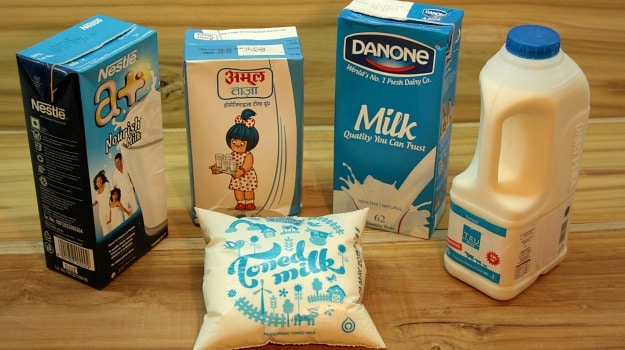
Amul, Nestle, Mother Dairy, Tru & Danone: Which Milk Tastes the ...

In January 2018, the same time that Danone ended its dairy production there, the investment arm of the company announced its part in a 26.5 million dollar investment in Epigamia, an Indian yogurt startup. This could be a sustainable move for Danone in India’s dairy industry because Epigamia offers consumers products that add value onto the plain yogurt they will make cheaply reception . But perhaps most importantly is this: while much of the population still makes yogurt the old-fashioned way, analysts predict that a growing number of consumers will want to buy premade options as they move into corporate jobs in developing urban centers. Very large numbers indeed. If only 5 percent of India’s 1.35 billion people decides to buy prepackaged yogurt, that’s over 67 million consumers — more than the entire population of Danone’s native France.

Why Apple was not so popular in India???

Apple sells millions of iPhones every year. In the year 2018, the tech giant reported selling close to 47 million units worldwide. But not all markets are created equal. India has been one of the hardest countries to crack for the Cupertino giant. Although it’s been over a decade since Apple began selling iPhones in India, the company can’t seem to get a big bite of the world’s second-largest smartphone market. India is a very price-sensitive market, which means that people pay a lot of attention to what value they are getting out of the price that they are paying for a particular product.

In the case of Apple, there’s a lot of premium being paid for the brand itself, and that’s where the price-conscious Indian consumer thinks about that if they are getting the same kind of features or specs from another phone that they can get a lower price, that makes it tougher to sell something at a much higher premium. Apple is definitely feeling the pressure. Samsung and Xiaomi accounted for the majority of smartphone sales in India in quarter three of 2018, garnering 22 percent and 27 percent respectively of the smartphone market. In contrast, Apple made up only about 1 percent of India’s smartphone market share, trailing behind Chinese phone makers Vivo and Oppo. It’s also worth noting that the premium smartphone market in which Apple operates still makes up less than 5 percent of the overall smartphone market in India.

7 Key Strategies That You Must Learn from Apple's Marketing

Most of the smartphones in India that sell, they are below $200 and Apple does not have any play in that segment. This environment is one that competitors like Samsung have begun to adapt to. The South Korean powerhouse is launching its Galaxy M series budget smartphones to appeal to the Indian market. In contrast, Apple doesn’t seem too keen on changing up its India strategy. I got some ideas for you, OK? I talked to some people at Walmart yesterday. An arrangement with Walmart Flipkart to take over India with a budget phone rather than doing it piecemeal? For us, we’re about making the best product that enriches people’s lives. And so, we’re not about making the cheapest. For us, what we’ve seen is, there’s enough people in every country in the world that we play in that we can have a really good business by selling the best phones. Still, some tech investors see Apple as being out of touch with the India market. You think they are going to slash prices? I think they have to. How can you sell a $1,000 phone in a market like China where the GDP per person is $10,000? In India it’s $2,000. And if you go back to the September earnings release, they talked about the fact that India was way below where they thought.

Apple postpones launch of online store in India - The Economic Times

Well, if your average GDP person is $2,000 and you’re trying to sell a $1,000 phone, it’s gonna be probably pretty hard to sell it. They probably want to eat. Another issue for Apple: stiff tariffs. I think iPhones have a specific disadvantage in the India market because of the local regulation. There is a very high import duty on the phones that are not manufactured locally in India. So for most of the big players in the India market, they are manufacturing locally so they do not have to pay that high import duty. Samsung has been manufacturing phones in India since 2007 and just last year opened the world’s largest mobile phone factory on the outskirts of New Delhi. Chinese phone makers Xiaomi and Oppo have also invested millions of dollars to build manufacturing plants in the country. That’s not to say Apple has completely ignored India.

The tech giant already manufactures its lower-cost iPhone SE and iPhone 6s models locally, through a partnership with Taiwanese manufacturer Wistron. This year, Apple is also expected to move its production of the iPhone X series into Foxconn’s plant in southern India. If you look at how we’ve done over the years, we’ve gone from a $100-$200 million business to last year we had we exceeded $2 billion. That $2 billion was flat year over year after a rapid rapid growth. And so we have more work to do. We’d like to put stores there. We would like some of the duties and so forth that are put on the products to go away. But even with its local hardware production push, Apple still fails to provide Indians with a robust software experience.

Apple iOS 13 Release: Should You Upgrade?

Apple has introduced turn-by-turn navigation for the India market. Before that, that significant part was missing. And beyond that, there’s not a lot of customization that Apple has done for the India market. There are not a lot of apps that specifically cater to the India market. Past complaints for Apple Maps also included missing major landmarks and having very sparse data of cities and towns. But again, Apple is working on a solution. The company has hired thousands of engineers at its mapping facility in Hyderabad to improve its services. Apple Pay is also not an option in India, though similar payment services from Samsung and Google have already been rolled out. Finally, unlike in most other markets, Apple can’t rely so much on its brand recognition to sell devices in India. The other challenge for Apple in India is that it cannot have its own retail stores or own Apple stores because of some regulatory issues, which means it has to have partners on the retail side, whether it’s the Apple premium resellers, which you see in many other countries as well, or with the third-party resellers. In order to have a larger presence in the market.

Apple has to have partnerships with thousands of these resellers, which in a country as big as India, can be challenging. Apple is still a premium status symbol for many Indians, but one that is out of reach for the majority of the population. With phones from Chinese brands like OnePlus, which was India’s best selling premium smartphone brand for the second quarter in a row, offering similar features at a fraction of the cost, Apple may have a very tough time getting a bigger slice of the India market.

Apple - Localizing the Message - Global Marketing Professor

Negotiating- The Art, a small story!!!

I think there is an art to it it’s a craft, the negotiating training this morning in the office and the reason, negotiating it be is because it’s the one area of the deal where people need me the most and they need me the most they think I have the most confidence and the confidence that I have going to the deal comes from experience and it comes from honestly – practice practice practice because no matter what you’re selling you’re selling. Two different people you’ve got a seller and a buyer and in every negotiation you’ve got price you’ve got pressure and you’ve got persistence those are the three P’s remember that is it can be a nice little instructional.

The negotiations between Disney and Lucasfilm - A negotiation case ...

An iPhone cost to make now you’re not going to negotiate the price of an iPhone because there’s too strong demand but let’s say there wasn’t strong demand then you can negotiate or you can find a retailer who’s going to sell it to you for cheaper because it doesn’t cost nearly as much to make that phone. As it does for you to buy it real estate is the same way a deal that’s listed from 10 8 down to 10 so 10 million bucks the offer originally came in at 8 million dollars okay that seems like it’s way too far apart. If I go to the seller he’s going to say you got to come up they’re going to say oh no this is my offer so what do you do what do you do you remember the price you want to try to get – which in this instance was around 8 and a half that’s where we thought we’d get a deal done and the legacy price what the seller paid seller paid six point five. So, even at our low terrible awful offer that sellers making money that’s a good thing to remember and to consistently remind each side and then you let time saturate the emotions of the deal and you use repetition you only paid six five even if this bullshit offer you’re making money.

The Art of Negotiation in Project Management

There are clients who are losing million and they use pressure right the fear of a falling market and the fear of missing out every seller fears they’re not going to get their price going forward because maybe the market could change every buyer has a little fear that they’re going to lose it a little fear they’re going to miss out and then you’re trying to find the price in the middle where both sides will say we came to that number because that’s the max or the minimum that I’m willing to go to get this deal done.

Can a Business Simulation Game help develop Negotiation and ...

Are products really ‘Made In China’ ???

Made in China. We’ve become accustomed to seeing the label on products manufactured in the world’s second biggest economy. But buying one of these products in China instead of say, the U.S., doesn’t guarantee you’re getting a better price. Chinese tourists have built a reputation for being big spenders abroad, spending a whopping $277 billion in 2018, much more than any other nationality. A lot of times, people think that purchasing something in China will be inexpensive, but that isn’t always the case. So how much of a difference are we talking? If we bring four products from four popular western brands to compare. Starbucks, H&M, Adidas store, a Godiva store. To keep things consistent, we will be using 2019’s average foreign exchange rate. The products compared are:

  1. A standard black t-shirt at H&M.
  2. Starbucks Grande Cappuccino.
  3. Godiva Chocolates.
  4. An Adidas hat.

Now let’s compare:

  1. The shirt at H&M is priced nearly the same in the U.S. and China.
  2. A Grande Starbucks cappuccino will cost you $4.63 in Beijing, but in Los Angles, California, $3.95.
  3. This case of Godiva chocolates, called Pearls, is priced at $7.24 in Beijing, but only $3.95 in LA.
  4. The Adidas hat will set you back $42.27 in China, nearly double the price of a similar hat in the U.S.

This experiment has made clear that pricing are complicated. So much so, that websites have popped up like the Mac Index, a site that compares Apple product prices from around the world. So many ads for Apple here in this area. According to an analysis done by Tech Insights, the cost to make an Apple iPhone 11 Pro is $490.50. Yet according to The Mac Index, the price to buy one is $1,318 in Japan, $1,477 in the U.S., $1,658 in Mainland China and more than $2,000 in Turkey and Peru. Prices vary across countries due to factors like demand, tariffs and tax refunds. And then there’s the supply chain: the network of people, organizations, activities, information and resources involved in the creation of a product.

close up of camera over black background
Photo by ATC Comm Photo on Pexels.com

Apple’s current CEO Tim Cook is considered by some to be a mastermind in supply chain. He first joined Apple in 1998 with a mandate to clean up the company’s manufacturing and distribution. Over time, he closed factories and warehouses, instead opting for contract manufacturers in China. That’s great for Apple’s profit margins, but it’s certainly not praised by President Trump, who has asked Apple to make its products in the U.S. If, say, iPhone production was moved to the U.S., instead of China, different analyses show the price for the consumer could go up from anywhere from $30 or $40 to hundreds of dollars to even $30,000-100,000. That’s partially why, despite Apple pledging to invest more money in American manufacturing, it maintains China as its hub for making its gadgets.

american and chinese flags and usa dollars
Photo by Karolina Grabowska on Pexels.com

That’s Omar Slim, a senior portfolio manager at global asset manager, PineBridge. When you hear about made in this country or that country is really quite relative and it’s a simplification of things because it’s most likely made in a number of countries. Here’s an example. Let’s say we want to make lasagna for dinner. If Jeff cooks the ground beef and prepares the cheese, Sarah makes the tomato sauce and layers the ingredients into a pan; and Blair, who bought all the ingredients, puts it in the oven, who gets the credit for making the lasagna? Now, let’s apply that to Apple’s iPhone. While the phone might say ‘Made in China,’ some of its parts come from other parts of Asia, Europe and even the U.S. Even though an iPhone may be assembled in China, it’s still tariffed in China as a U.S. product because Apple is an American company. The brand makes that clear with by, ‘Designed by Apple in California. How they’re treated in terms of customs, they will be treated as a U.S. product. So regardless of where they come, it’s essentially a U.S. product. Same for Chinese products going into the U.S. and same for, for instance, European cars.

India simply cannot afford to boycott Made in China — Quartz India

China became a popular manufacturing hub in the 1980s after it started to open to the world. It became known for its cheap labor costs, lax regulations and business-friendly environment. As China’s manufacturing sector grew, it took the crown from Germany as the world’s top exporter in 2010. While Made in China has become synonymous with cheap and low-quality products, China is hoping to change that. In 2015, it launched a Made in China 2025 initiative, which aims to shift its economy from low-end manufacturing to high-end, high-tech products. In 2017, Tim Cook said China lost its place as a low labor cost manufacturing nation many years ago. The U.S.-China trade war resulted in a tit-for-tat increase in tariffs on many products.

Petition · Political Parties: Boycott 'Made in China' products in ...

With increasing costs being passed on to consumers, many companies are looking to diversify their supply chain, instead of being so reliant on China. That sentiment has only grown, following the coronavirus pandemic’s hit on the global manufacturing industry. Along that supply chain, there will be some companies, that instead of manufacturing it in China, if they could, they could try to replace. In fact, companies including Apple, Microsoft and Google are reportedly looking into moving some of their hardware production from China to Vietnam or Thailand. But that might be harder than it sounds. The other countries will have a hard time to compete along with the fact that the infrastructure is shown that it’s quite good, along with the fact that in certain countries would not want to compromise the relationship with China.

70 Reasons that makes us Proud to be Made In India - Sanjay Dalmia

The reality today is that a product likely has many components which are sourced globally. A phone may be designed in the U.S, but its screen is sourced from South Korea, the sensors and microchips may be from Taiwan or Germany, with its assembly in China. So, the next time you see a product with the words, “Made in China,” remember that the full story is seldom pure, and never simple.

How Starbucks captured the coffee & the world…!!!

With nearly 30,000 cafes across the world , Starbucks has become over just a household name. From its iconic cups, often adorned with misspelled names, to the espresso inside them, Starbucks has catapulted from one coffee bean shop in Seattle to a sprawling $80 billion business over the last 47 years.

Starbucks has a 'void in innovation' and healthy beverages won't ...

Starbucks sales account for 57 percent of the total cafe market. Yes, 57 percent, nearly two-thirds of all coffee sold at cafes in the U.S. comes from a Starbucks. But this impressive expansion hasn’t come without growing pains. With more than 14,000 locations in the U.S. alone, Starbucks has spread itself too thin. Having too many stores has led to fewer transactions at individual stores. To compensate, the company has raised prices. But doing this too quickly or too often can drive customers away. So how did this happen? And what’s a coffee giant to do about it? The year is 1970.
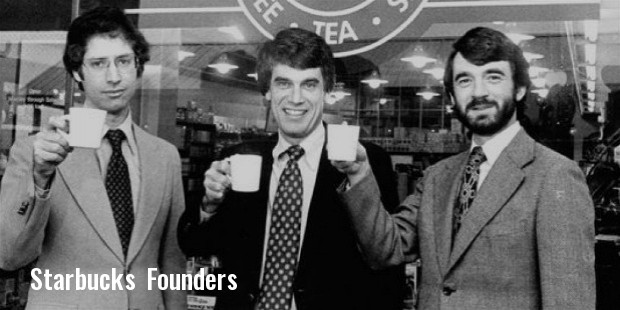
Three college friends, Zev Siegl, Jerry Baldwin and Gordon Bowker decide to get into the coffee business. They found a mentor in Alfred Peet, founder of Peet’s Coffee and the man responsible for bringing custom coffee roasting to the U.S. He knew the coffee industry inside and out, especially the gourmet end. He was the most educated coffee guy in the country at that time. So with Peet’s help, the three friends open Starbucks, a coffee bean shop and roastery at Seattle’s famous Pike Place Market in 1971. Peet provided the young entrepreneurs with roasted coffee beans and connected them with coffee brokers until they could set up their own roastery and source their own beans. For the first decade, the founders opened five more locations in Seattle. At this point, contemporary coffee consumers might have noticed a glaring absence: actual coffee drinks. But that’s the thing about the 70s coffee culture: it didn’t really exist outside the home. There were no coffee bars nor was there much of a requirement for espresso-based drinks. You purchased coffee beans and you either took them home as beans or we ground them for you in the store. Nobody expected to urge a beverage at a Starbucks coffee store until after 1980.

Starbucks Story - CEO, Founder, History | Coffee Company | Success ...
Starbucks’ initial focus was bringing high quality beans to consumers who were more accustomed to instant or canned coffee, but that changed with the addition of one man. The company hired its first really professional Director of Marketing and Sales, and that man was Howard Schultz. And he couldn’t figure out why we weren’t selling beverages. In 1983, Schultz travels to Italy and returns with an idea: turn the coffee bean stores into cafes. Starbucks served its first latte the next year. The experiment was a success, and four years later, Schultz partnered with investors and bought Starbucks for $3.8 million. He was only 34 at the time. Schultz pursued a strategy of aggressive expansion. By the time the company went public in 1992, it had 165 stores, in 1996 it had opened more than a thousand locations, including its first international cafes in Japan and Singapore.
Growth was so rapid that, just three years later, Starbucks opened its 2,000th location. Schultz switched from CEO to Executive Chairman in 2000, at which era Starbucks operated 3,500 stores in additional than a dozen countries. Between 2000 and 2007, the number of Starbucks cafes more than quadrupled, from 3,500 to over 15,000. During this era , the corporate opened a mean of 1,500 stores per annum , including 2,500 in 2007 alone. Sales shot up from $2 billion to $9.4 billion. Consumers were increasingly ditching their kitchen mugs for these iconic paper to-go cups. But then, Starbucks hit a wall: the 2007 financial crash. That year, its rapid growth screeched to a halt and its stock price plummeted by 50 percent as cash-strapped consumers backed away from pricey coffee habits. So, Starbucks brought back Howard Schultz. This news alone caused Starbucks stock to increase by 9 percent.

Xed Knowledge
Schultz halted growth and focused on customer experience. He shuttered cafes – more than 600 in 2008 and another 300 in 2009 – and laid off around 6,700 baristas. A month after his return, Schultz ordered Starbucks to shut all of its U.S. locations for one afternoon so he could retrain more than 135,000 baristas about how to make its signature espresso. Schultz’s goal was to remind customers what they loved about the brand by making the stores an experience, not just a place to get a quick coffee. They stopped selling breakfast sandwiches and brought back in-house grinding, infusing the cafes once again with that fresh coffee aroma. Schultz even mandated the removal of automatic espresso machines. These made service faster, but removed much of the romance and theatre of watching baristas craft each cup of coffee. Schultz’s makeover worked.

Starbucks | Description, History, & Facts | Britannica
The company’s stock soared more than 143 percent in 2009 and same-store sales rebounded. Starbucks has posted positive same-store sales ever since. During Schultz’s makeover of the cafes, Starbucks barely opened any new stores. But the pace picked up again in 2012. By 2017, Starbucks opened nearly 3,000 more locations, ending the year with 28,000 cafes round the world. However, this brings us back to the first problem: profit cannibalization. Over-saturation, particularly in urban locations, has spread sales thin. Because Starbucks has numerous locations, customers do not have to be loyal to only one. So albeit Starbucks overall sales are growing, its individual same-store sales won’t reflect it. Compounding this problem are changing consumer preferences. People are shying away from sugar-laden calorie bombs. which happens to be one of Starbucks’ staples. These signature Frappuccinos contain an average of 57 grams of sugar. That’s more than double the recommended daily limit of sugar. So, to combat these problems, Starbucks is changing once more . The company announced the closure of 150 stores in 2019. That may seem like a drop in the bucket for a sprawling company like Starbucks.

Starbucks App Users Now Drive 17 Pct Of Sales | PYMNTS.com

The company’s biggest undertaking is its new line of upscale stores: Starbucks Reserve Roasteries. These massive, 20,000-square foot stores are designed to be a tourist destination. Here, Starbucks baristas and bartenders’ experiment with different brewing methods and craft new, innovative beverages. These have proven popular. In the first weeks, the Shanghai Roastery made an average of $64,000 every day, which is double what a regular cafe makes in a week.

Track2Training – Training Youth for Future Jobs

Importance of training employees for your organization

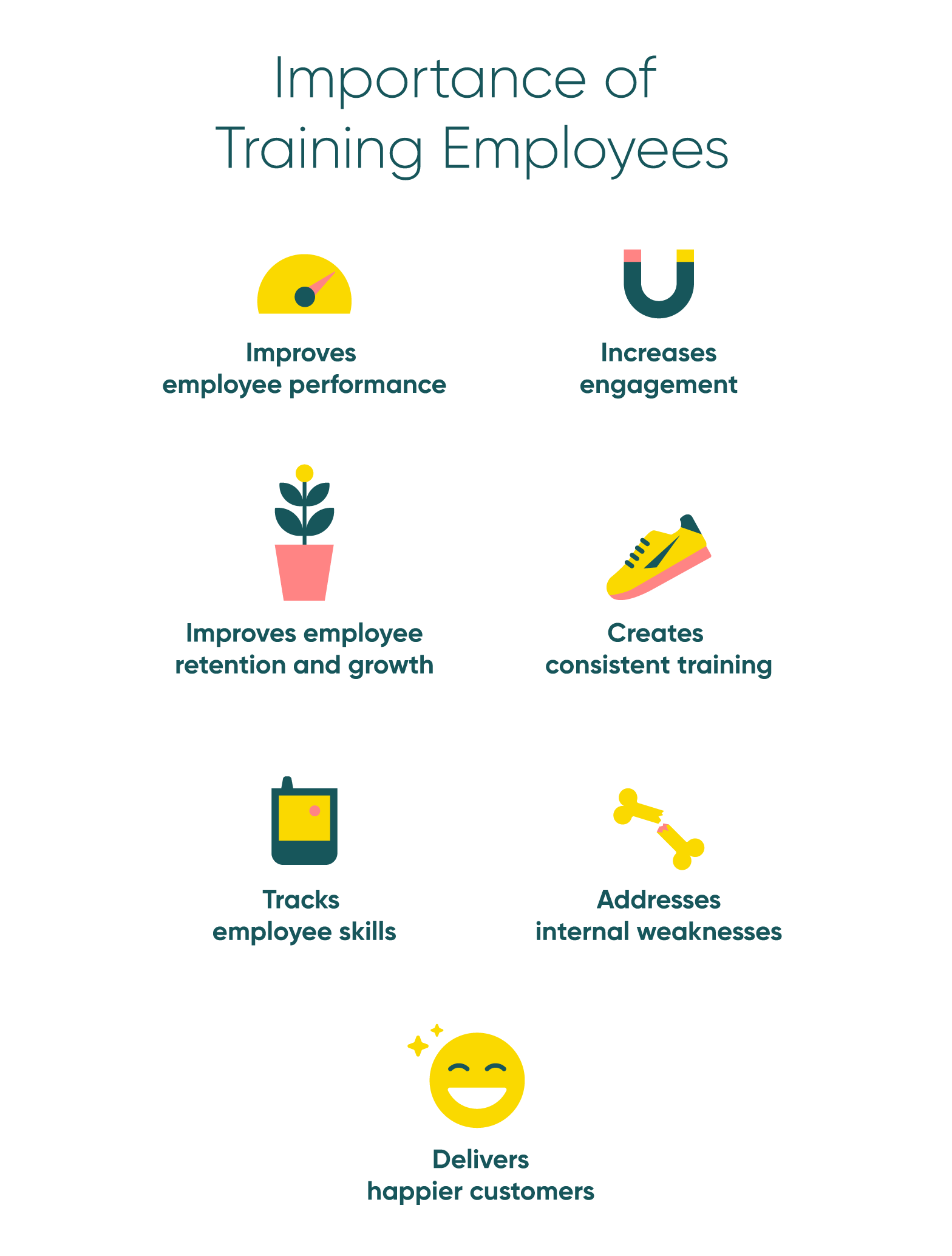
To fully understand how to deliver great training, it’s vital to know why training is significant for employees. We’ve created an infographic that highlights the importance of training employees in an organization:

Importance of training employees

1. Improves employee performance

The prime motivator for employee training is to improve productivity and performance. And when executed well, it does just that. It provides your employees with the expertise they need to fulfil their role and make a positive impact on your business. The skills they learn empower them to deliver a better quality of work with a fast turnaround rate. 

It also gives your hires a clear understanding of their roles and responsibilities within your organization. They know their targets and they’re equipped with the tools to effectively meet them. 

2. Increases engagement

Engaged employees have an increased level of productivity – it’s as simple as that! Through training, you’re continuously engaging your employees and enabling them to engage back. There is two-way communication, opinions and internal workings are shared, meaning your employees are always up to date with what’s going on. This makes them more emotionally invested. They care about their role and are more willing to commit their time and energy to the company.

3. Improves employee retention and growth

It’s common knowledge that the hiring and onboarding process can be a costly and time-consuming task. And a powerful by-product of increased performance and engagement through training is improved employee retention

Training boosts a feeling of value in employees. It shows that you’re committed to providing them with the resources needed to ensure they’re doing a good job. In turn, they’re more likely to enjoy their work and remain in your organization for longer. It also nurtures them further in their career within your organization. One of the biggest benefits is that you’ll have more opportunities to hire from within, reducing recruiting and onboarding costs for your business.

4. Consistency in training

Creating consistency within an organization is difficult. But training helps reduce a disparity between your teams. Each employee has a baseline knowledge of their individual and their team’s goals, putting everyone on the same page. Additionally, employees all receiving the same training means they share responsibility and are aware of their role on the team.

5. Tracks employee skills

With eLearning, particularly with a learning management system (LMS), you can track the training your employees have taken. This has two big advantages.

Through insightful reports, you know if your employees are up to date with their training. Reports are a powerful tool if you’re delivering onboarding training or have to prove training has taken place, as is usually the case for compliance training. Tracking your training also helps you to provide better training for your employees. It enables you to identify what they are and aren’t engaging with. So, you can improve your course content based on these insights, ensuring that your employees get better training overall.

6. Address internal weaknesses

A lack of awareness of internal weakness is a hazardous thing within an organization. Training overcomes this as you can educate your employees on important subjects that help overcome and avoid any issues. Additionally, it creates a knowledge-sharing environment – your employees learn from managements’ and each others’ past mistakes and wins. This ensures that recurring mistakes are reduced and your employees know the strategies for success.

7. Happier customers

Perhaps the most impactful aspect of employee training is its beneficial effect on your business’s growth. Simply put, better-trained employees make more productive team members, that serve your customers better. The result of this is that your customer retention increases – happier customers stick around for longer and buy more. This can powerfully fuel your business’s growth.

Discover how to start training your employees

With such great results, it’s essential you start your employee training strategy. Find out how to get started in our guide to employee training from Track2Training.