Speech on Dowry


My favorite subject has always been English speaking and writing, so why not share it with you all?

So, “Dowry” is our first topic.


“I left my home, I left my parents, but it wasn’t worth’

they didn’t want me, they just wanted diamonds.”

The phrase I started with isn’t really a quote, but more a vision of a girl who has left everything for a new family, but they aren’t happy with her, they are happy with the dowry she brought with her. Isn’t this heartbreaking? But do any of us here even understand what dowry is exactly?

People believe that dowry is just money given by a bride’s family to a groom’s family at marriage, however, this is not the case.  

Dowry is a sum of money, property, or any other thing given by the bride’s family to the groom’s family at the time of marriage, but is there ever a limit to greed? Never, even after marriage, many women are tortured or physically abused as a result of it.

But when such a thing started, does it have any end? We are filled up with such questions.

It is an ancient custom and it continues to be expected and demanded as a condition to accept a marriage proposal in some parts of the world.


In Hindi, we call it Dahej or Dahej pratha it is followed in India for a very long time even before the British period. The thought behind this pratha is to ensure that the daughter is financially stable and well treated after her marriage but its a nightmare for many of the women out there, parents who can’t afford the demands of the groom and his family, and sometimes they have to take the marriage loans to get their daughter married. Sometimes the demands of the family get too much that marriages are canceled and such things leave their scar on the women and their families. 

The dowry system is essentially a manifestation of Indian society’s patriarchal structure, in which males are regarded as superior to women in terms of physical and mental qualities. With such a cultural system in place, women are frequently regarded as second-class citizens, only fit for household duties. Such beliefs are frequently linked to them being considered as a financial burden by their father and then by their husband. The dowry system, which feeds the perception that a girl child is a potential burden on family income, worsens this attitude. 

“I live in a society where giving and taking dowry is a pride.”

In our country, dowry is frequently used to demonstrate social status. The amount of money spent on a daughter’s wedding or the amount of gold given to them is frequently used to determine one’s social worth. This viewpoint strongly supports the practice of dowry demands. The boy’s family rises in social status as a result of the dowry their new bride brings in, which is a measure of his wealth.

Dowry was very popular in India, in ancient times. It’s not the case now though, but it isn’t finished even. It is even practiced in many parts of the country now also.


Do you know, how it changed over a period of time? What makes it a change? 


Everything over time has played its role and changed it, but we the youth were the most to make it possible. 


“It takes 2 hands to clap.” You won’t give, they won’t take.


Nowadays, the groom’s family does not even consider dowry, they just care about the girl. Also, from bride’s family, they just deny it directly if they are asked for it. But such families are still in small numbers. 

Moreover, females have become so independent and blunt they don’t want to marry a person who even thinks about it. 

But where we played the role? 

We played and have to play an important role until such practices get abolished. We need to educate everyone, that a life of girls matters, those materialistic things, money, or property are worthless over a female. 

We not only even need to educate people but also to stop such practices if we see them being practiced and just report them as the law is there.  


Several laws have been passed to prevent the practice of dowry and the discrimination it causes against women. The Dowry Prohibition Act was passed on May 20, 1961, to eliminate this heinous practice from society. Not only does the statute make it illegal to accept dowry, but it also makes it illegal to provide it. Property, valued security, such as cash and jewelry, are among the items that are exchanged during the marriage. Making dowry demands is punishable by a minimum of 5 years in prison and a fine of 15,000 rupees. Sections 498A of the Indian Penal Code and Section 198A of the Criminal Procedure Code deal with acts of cruelty committed by the husband or his relatives against the wife. The addition of Section 113A to the Indian Evidence Act allows the bride’s family to accuse the husband’s family of aiding and abetting the suicide of their daughter within seven years of the marriage. 


The government and people have always shown support for a social cause and we do need to too. Let’s just abolish it until a girl says

“I left my family, I left my parents, yes it was worth it

they wanted me, not the diamonds.”


Advertisements and Body Image

Advertisements have the power to shape the belief of a person and convince them into buying a particular product. But often these advertisement campaigns, especially the ones related to beauty products, promote an unrealistic body image which affects the consumer’s state of mind. They glorify and emphasize the importance of physical appearance and set certain standards of beauty. 

 This can affect not only the mind but also the social and emotional state of a person. It can lead to low self esteem issues and impact their overall well-being. Youngsters and teenagers are the most vulnerable to this negative impact of advertisements. They idealize the body image shown in the advertisements and end up with body dissatisfaction or taking drastic measures in order to change the body. 

The issue of Body Image

Body image refers to one’s perception about one’s size and shape of body. Body dissatisfaction is experienced when the person feels that they do not fit into the perception of body image. This can lead to unhealthy habits like chronic dieting . 

Nationwide Surveys conducted in the USA during the 1970s, 1980s and 1990s,  indicated that both men’s and women’s body image perceptions were becoming more and more negative with the growth of print and television advertisements. 

When it comes to beauty products or fashion related content, the models are always shown to be extremely thin. This stereotypical standard of beauty leads to body related anxiety issues and eating disorders among women. Likewise, Men are always stereotyped to have a physically strong, lean, and muscular body. 


Similarly racist attitudes are also promoted by many fairness product’s advertisements. Fairness creams, powders, etc. showcase fair skin as the standard of beauty. This issue of fairness creams was widely questioned and criticized recently, especially on social media.


Some advertisements set unattainable goals for the consumer. For instance the unrealistic standards are set like a totally spotless and ever-glowing face, or always having silky smooth hair. These notions of beauty are far from reality, they are unlike the people that we see in our everyday life. Trendy clothes, perfectly smooth skin,etc. is glamorized to the extent that people consider it to be the “perfect body”. 

However, due to recent debates around the issue of body image being shaped by advertisements, some advertisements have started promoting body positivity. More advertisement campaigns that promote body positivity and inclusivity are required for normalization and acceptance of the non-stereotypical body images in society.


CASTE SYSTEM IN INDIA IS A GREAT EVIL..

The Caste System is a major evil in Indian society.

Originally, India from its past had this caste system in the society. From the kings reign to till the current society, the caste system is in existence. Caste system, in the king’s era did not give rise to discriminations but the recent society made this a great way of discriminating This caste system, in present India, is misleading the society and its citizens towards bad decisions. It is forcing the people even to the things that should not be attempted.

During the king’s reign, the four-fold caste system was followed. The four castes were namely, Brahmins (teachers, intellectuals/priests), Kshatriyas (Warriors/rulers), Vaishyas (Traders, merchants), Shandra (Laborer’s) and the last category are untouchables (cobblers, street sweepers, larine cleaners etc.). According to Hindu Vedas, it is believed that the Brahmins originated from the head of Brahma, Vaishyas from the thigs of Brahma, Sudras from the feet of Brahma and kshatriyas from the hands of Brahma. That’s why Brahmins were given priority and importance, even treated as Guru.

This system coming to the present society is divided into OC Copen Category), OBC (other Backward classes/castes) SC(scheduled Castes), ST (Scheduled tribes). This present (or) recent division gave rise to discriminations and Conflicts in the society. The people who OC feel that they are great and treat the other classes as interiors. The reservations for the lower classes made the administration particularly in education worse..

If observed, the incidents that took place recently because of caste feeling in the people, made us think whether we are living in a human society, and is humanity. existing questions arise in our minds. If considered, a Situation that took place in Hyderabad A couple loved each other and got married, the girl belongs to upper caste and the boy was from lower caste. The girl’s father was not happy with his daughter’s marriage with a low caste boy .Up to what extent this caste feeling took him is, he brutally killed the poor boy as he belonged to the lower caste and married his daughter. This is where we feel, whether the humanity is existing or not.

The worst thing is, people while electing their representative not all, but most of the people vote for the leader of their caste. This is a really sad thing being in a democratic country .Some political leaders also show partial bias on the people of their caste and wish to always favor them. The most dreadful thing is a party representing a particular Caste in India, it might be a regional party or national party. Even though many rules and laws were made, a kind of feeling in the people exists even to this day..

This caste system creates a lot of disturbances in the Society and gives rise to violence among the people. Like the above incident, continuously the same kind of incidents took place; one after the other, here and there in the Country. The politicians fight and criticize each other by naming their castes which makes the term democracy meaningless.

So, this caste system is the greatest evil that is misleading. people into bad thoughts and decisions. This should be eliminated (or removed (or) put an end to it, in order to establish peace in the country). According to Article 17 in the Indian constitution, the act of untouchability was prohibited. But, here and there in society, it is still in practice. Caste system in India is very rigid, and cannot be removed easily. If people are educated then some changes can be expected. But the bad news is even the educated people follow and believe the caste and act accordingly.

Finally, concluding that the caste system in India is a major evil in the society We cannot expect a model society. It cannot be removed easily from the minds of the people. so, a model society con peaceful society can be attained only through the complete eradication of the caste system.

Covid -19, Society and Law

Introduction

Humankind is going through a new and unprecedented experience with the rapidly spreading Covid-19 pandemic. We still do not know who ‘patient zero’, the first person to be infected and transmit it to others, was. The severity of this virus, which has caught the world by surprise, lies not only in the delay of laboratories in finding an effective and efficient vaccine, but also in the fact that the measures taken to counter it differ considerably from what was previously adopted to confront various acute crisis, whether health, political, social or economic.

There is no doubt that the Covid-19 pandemic will change the face of human society, but it forces us to ask some important questions. Will this change only affect the healthcare systems, or will it extend to consumption patterns, value systems, political regimes and legal systems, thus leading to the fall of the huge financial and economic empires? Will the major transformations the world will undergo be determined by how we recover from the effects of this situation?

According to the World Health Organization, the problem does not lie in Covid-19 alone but rather in the fear, panic and terror caused by the spread of this virus, and amplified by the media, which has been presenting the situation as if it were the end of the world. Barring the measures adopted by China, where the virus originated, the methods used to manage the crisis around the world are somewhat similar. To some extent, China succeeded in curtailing the spread of the virus, thanks to the spirit of discipline in its people, and due to its health infrastructure, the plethora of research centres and laboratories, and the ability to control the sources of information from the onset. Most other countries have wasted precious time after the first cases appeared, relying on legal and security control in dealing with the pandemic and information about it, rather than establishing a single entity to disseminate information backed by science.

The current crisis is not of the pandemic alone. Rather, it is of the far-reaching consequences on human behaviour. Addressing these repercussions should not be limited to taking ad-hoc costly measures limited to the current situation but should prompt us to think about putting into place innovative measures and actions that go beyond the pandemic. Measures like imposing quarantines, enacting new laws to manage the pandemic, using modern tools for e-learning and telework, ensuring a minimum standard of living for all, granting loans, exemptions from paying water and gas bills and taxes, assisting the unemployed, and using the military to assist in security measures during the epidemic have cost countries billions of dollars. These are funds that could have been invested in infrastructure or other major projects, but instead have now been used to respond to the immediate needs of the people.The pandemic will radically change the modern world, leading to three likely outcomes.

The first outcome

A new theory will be integrated within political science in the future. Indeed, traditional legitimacies in the systems of government, which are derived from ballot boxes, hereditary legitimacy or religion, are beginning to decline, leaving room for a new theory called the “theory of achievements”. Since the Cultural Revolution of Mao Zedong in the 1960s, China has worked on this emerging legitimacy, as the Chinese Communist Party has distinguished itself from the rest of the Communist parties in the world.

The second outcome

The traditional conflict between wrong information and right information will transform into a conflict between convincing information and unconvincing information, as legal arsenals and control tools are no longer effective in the spread and prevalence of correct information. The method of producing information and choosing its dissemination channel is becoming a means of turning it into convincing information, regardless of if it is true or false.

The third outcome

The process of monitoring people will transition from external to internal control using smartphones. This is also what happened in China, to curb down on misinformation on Covid-19 during its early stages and as a preventive measure in the absence of a vaccine. These smart devices have become effective tools for measuring citizens’ reactions at home to what is happening in their surroundings.

A coming human revolution

Humankind is going through a humanitarian revolution, the kind that has occurred only thrice before: first, after the discovery of fire; second, with the advent of agriculture; and third, following the industrial revolution. The most prominent sign of this ‘fourth revolution’ is the predominance of new technology and the supremacy of modern means of communication, which have spawned a conflict between two major concepts of using the internet. The first can be described as social perception with a human connect, while the second is non-social perception, and can be termed as wild and unbridled. The humanitarian-minded perception is likely to win this conflict, as this human revolution is making its mark on our social existence and old behaviours. This will impact the current value system and will have political andeconomic implications.

The post-epidemic stage will see the emergence of a new human being, whose daily behaviour and thinking will differ from what it was before the Covid-19 outbreak. The political, legal and economic systems will have to adapt to this new human being. Despite the timely importance of the current safety measures being put into action around the world, there is a great need for these to be integrated into a comprehensive post-pandemic thinking. In fact, we will find ourselves faced with a generation who thinks differently from the pre- pandemic generation.

In light of the impact of Covid-19 on the individual and collective behaviours of society and State, and people’s continued thirst for information, it is necessary to keep in mind the post- pandemic world when it comes to decision-making. The Covid-19 storm will pass and mankind will survive, despite the loss of many lives. Humankind will soon live in a world that is very different from the one before the virus. However, the pandemic will succeed where the other movements of the 20th century have failed in their struggle to establish democracy and human rights, and preserve a safe environment for all.

Rules of Happiness

Be silent in the heat of Anger.

As we all do, In anger we never think twice before saying anything and this is the main reason behind the poor relationship. We cause harm to both others and us both.

Avoid caring what people think.

Before doing anything we always think to much about others think if I do that. And this leads to unhappiness and doubt on ourselves.

Don’t waste time in explanation.

There is no need to explain yourself always. Sometimes we have to believe on our own capabilities and prove others that what I did is right decision for me.Time reveals Everything.

Privacy is Everything.

Never tell everyone, everything. Everyone is not happy with your success. Don’t reveal your path to anyone before you achieve something.

Don’t screw your present, thinking of past.

Start working for your success now. Past has gone it never come back but why we waste our present and future by thinking of past. We design our future by make use of present.You are responsible for everything that you do. So start working for your future.

Stop overthinking, Sometimes it’s okay to not know answers.

We just ruin our life by overthinking. What we overthink is never going to happen. So just relax and enjoy your life without thinking anything.

It’s okay to not be okay.

Everyone’s mental state is not same. And sometimes It’s okay to feel low. It’s okay to be sad. We just have to believe on ourselves. And do what we want. Its okay, everything will be alright soon…

Don’t compare own life with others.

Everyone is different. And if we compare ourselves with other then we just ignore our own capabilities. So believe in yourself,your capabilities.

Don’t let others to disrupt your inner peace.

Sometimes, some people come in our life just to pull us down. But we have to focus on our goals. If we disrupt our inner peace then they will succeed in their intentions. We have to focus more whenever we meet any problems in between our goals.

We are always unattractive in the eyes of society.

No matter what we do, society will never going to appreciate us. So don’t worry about the society and do whatever you want. We always worry about “Chaar log” but no one ever saw them.

Take a charge of your own happiness, we are only responsible for ours not others.

RTI ACT and Investigative Journalism.

Just like citizens, the RTI act has enabled lot many journalists in the country to investigate regarding their concerned issues. RTI act over the years has become an important weapon for journalists to divulge hidden and lesser known information. RTI act has become so crucial and an “everyday thing” for some journalists that they have build their entire career out of it.

Some of the famous cases where RTI act has helped journalists in their investigation procedure are:

1) Chhatrapati Shivaji Memorial Project by journalist Mr. Vishwas Waghmode:

Mr. Waghmode, a journalist at the time in The Indian Express investigated the controversial Chhatrapati Shivaji Memorial project. According to him, the initial cost quoted by the contractor was Rs.3826 crores which was supposed to be the lowest bid as opposed to the government’s bid which was Rs.2500 crores. The government in order to resolve this issue set up a committee led by the chief secretary in order to renegotiate the cost which successfully got the cost down to the government’s estimate of Rs.2500 crores. Mr.Waghmode in connection with this case stated that the rules do not allow renegotiation but rather they are supposed to issue fresh tenders. He further added that the opposition was alleging the government had reduced the height of the statue in order to reduce the cost which the government vehemently denied.

In order to have the “genuine information”, he took the help of RTI act. Mr. Waghmode discovered and revealed how the government had in reality decreased the height of the statue and the horse by 7.5m. But in order to show that the height of the statue was not reduced, they had instead increased the height of the sword by 7.5m. He further revealed that since the sword was straight, the amount of money required to build the sword was quite less when compared to the reduction in height and that in turn helped them reduce the cost by a substantial amount.

RESULT:

When all of this came into the public eye, the State Government could not justify why the height of the sword was increased and was in deep shame.

2) HONORARY DOCTORATE SCAM by Shyamlal Yadav.

When we talk about investigative journalism in India, we can never ignore this name, that is, Shyamlal Yadav. In 2018, Mr. Shyamlal Yadav in The Indian Express published a series of investigative reports on how India has emerged as one of the biggest markets for “predatory” publishers of substandard research journals.


On February 6, 2018, The Indian Express scrutinised over 500 RTI applications filed over 470 higher educational institutions to find that monitoring authorities, and hundreds of politicians and bureaucrats were awarded such degrees between 1997 and 2017.

The list for instance included former director of IISC, who received 18 honorary doctorates from public universities between 2006 and 2012 when he was chairman of NAAC’s EC. The list also had several UGC chairmen who had such degrees during their tenure.


RESULT:
Rules were made by higher authorities in 2019 after the investigative report via RTI files whereby NAAC officials, family weren’t allowed to accept honorary doctorates from institutions under their watch. RTI was used to dig out crucial facts in this case.

3) Discontinuation of LIC policies by Shyamlal Yadav

Shyamlal Yadav got information through RTI from Life Insurance Corporation (LIC) that there were 59 million insurance policies those were lapsed permanently due to discontinuance of premium. And the premium deposited since then had become LIC property. Despite many efforts LIC did not provide the info on total money deposited against those policies till the date they lapsed. As a result, Indian Express published the story about the discontinuation.


RESULT:


Within 25 days of publication of the story, LIC issued fresh
advertisements regarding renewal of policies.

4) Streams of Filth by Shyamlal Yadav:

This was an investigation by Shyamlal Yadav regarding water pollution in India that took over one year. About 39 RTI applications regarding expenses by Government on water projects were filed.
It came into notice that large amount of money was spent by Government for water purification projects but there was little effect on nation’s lifelines.
The story was published in The Indian Express and was selected by UNESCO as one of the 20 best Investigative pieces in the world.


RESULT:
Central Pollution Control Board said the rivers of India are not just polluted but severely toxic.

Kadambini Ganguly: India’s First Female Doctor.

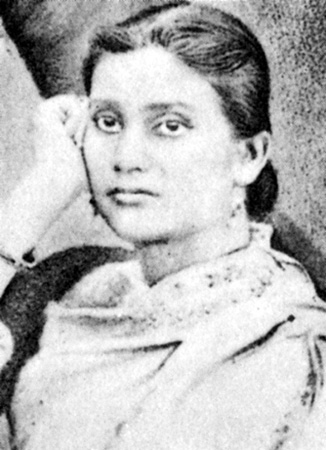
160 years ago, on this day, July 18, Kadambini Ganguly was born in a Bengali family in Bhagalpur, Bihar. As a child, she was rebellious with regard to sexism and patriarchy and was very hard-working as a student.

Picture of Dr. Kadambini Ganguly.

During her childhood, she had witnessed that in her area many women used to die without treatment as women could not get proper treatment because all doctors were males and Indian social culture didn’t approve a male doctor treating a female patient. From here, she dreamt of becoming a doctor during her childhood.

However, things didn’t happen according to her. She was married off at young age and thus she thought her dreams would go down the gutter. But it was then her husband who supported her in every walk of her life. She did her schooling partly at Banga Mahila Vidyalaya and partly at Bethune School. In 1878, she became the first female to pass the University of Calcutta entrance examination.

Within few years, she became one of the first few female graduates in the country alongside Chandramukhi Basu. When she wanted to study medicine, she was denied admission by University of Calcutta as the university wasn’t allowing female students back then. Dwarkanath Ganguly, Kadambini Ganguly’s husband challenged this patriarchal rule and in 1883 Kadambini Ganguly was the first female to take admission in Calcutta Medical College.

Kadambini Ganguly received a scholarship of two years and in 1886 she was awarded the GBMC award and thus making her the first female to have a degree in Western Medicine in the whole of South Asia.

It is also important to note that during that time people didn’t approve a female getting education and as a result she received strong opposition regarding her academical choices from conservatives even from her neighbourhood and relatives.

Bangabashi, a magazine of that time that was run by the then conservatives also called her a “whore” and this obviously didn’t go well with the Ganguly couple. Dwarkanath Ganguly legally filed a court case against the magazine and this resulted in 6 months jail term for the editor of the magazine.

Kadambini Ganguly also went abroad for her studies and got her further education in Edinburgh College of Medicines for Women. She quickly earned three different diploma degrees. Soon, she became popular in entire South Asia and Europe. Her name became so popular that the then King of Nepal invited her to treat his ailing mother.

Kadambini Ganguly had even advocated for social change in India and especially for women. It was due to her efforts that Bethune College in Kolkata added the Fine Arts course in their college. She was also one of the six female delegates to fifth session in Indian National Congress and even organised Women’s Conference in 1906 in Calcutta.

Authors of that time described Kadambini Ganguly as one of the “greatest” and the “most accomplished woman” of her time. And truly, all of us agree to it. Because of courageous women like her, so many women in the world must have got inspired to achieve their dreams. Kadambini Ganguly will always remain immortal in all her hearts.

Evolution of Panchayati Raj System in India.

Since the beginning of India’s foundation, Panchayats have been the pillar of Indian rural set up. According to Mahatma Gandhi, development and governance in India should not be in big cities and towns but in rural areas and small villages because majority of Indian population resides in villages.

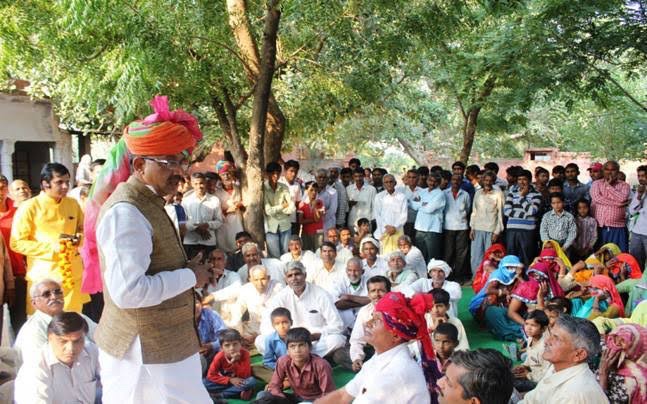
A Panchayati Raj meeting in India. Picture Credits: India Today.

The Panchayati Raj system in India derives its existence from Indian Constitution under Part IX under the head The Panchayats. When power is taken away from Central and State Governments and given to local government, it is called decentralisation.

Most of our Indian states like Uttar Pradesh, Maharashtra are internally very diverse. There is thus a need for power sharing within these states. Federal power sharing in India needs another tier of government, below that of the State governments. This is the rationale for decentralisation of power. Thus, this resulted in a third-tier of government, called local government. People have better knowledge of problems in their localities.

The need for decentralisation was recognised in our constitution. Since then there have been several attempts to decentralise power to the level of villages and towns. Panchayats in villages were set up in all states. An independent institution called the State Election Commission has been created in each state to conduct Panchayat elections.

A major step towards decentralisation was taken in 1992. The Constitution was amended to make the third-tier of democracy more powerful and effective. Now it is constitutionally mandatory to hold regular elections to local government bodies.

Now it is constitutionally mandatory to hold regular elections to local government bodies. Seats are reserved in the elected bodies and the executive heads of these institutions for the Scheduled Castes, Scheduled Tribes and Other Backward Classes. At least one-third of all positions are reserved for women. The State governments are required to share some powers and revenue with local government bodies. The nature of sharing varies from State to State.

Rural Local Governments is popularly known by the name panchayati raj. Each village or a group of villages in some states have a gram panchayat. This is a council consisting of several ward members often called panch, and a president or sarpanch. They are directly elected by all the adult population living in that ward or village. It is the decision making body of the entire village. The Panchayat works under the overall supervision of the gram sabha. All the voters in the village are its members. It has to meet at least twice or thrice in a year to approve the annual budget of the gram panchayat and to review the performance of the gram panchayat.

The local government structure goes right up to the district level. A few gram panchayats are grouped together to form what we call as a panchayat samiti or block or mandal. The members of this representative body are elected by all the panchayat members in that area. All the panchayat samitis in a district together constitute the zilla parishad.

Despite of the many flaws, Panchayats have contributed a lot maintaining the rule of law inside villages and educating the rural population about various different matters pertaining to their interests.

UNAIDS- Achievements and Challenges.

As of 2018, about 38 million people in the world are infected with HIV and out of these about 21 million people were living in Africa alone. South Africa, Nigeria and India are the worst affected countries with over 7 million, 3 million and 2 million people with HIV infection respectively. Interestingly, India is on third position with over 2 million of its population infected with HIV; however it has the lowest HIV rate in the world due to its vast population.

Source: UNAIDS.

UNAIDS acts as a global cogent body that protects HIV infected people from discrimination and aims to provide them a safer environment by creating awareness among the masses. It also provides deliberate and strategic advocacy and cooperates with different governments and private bodies to achieve its goals.

Achievements of UNAIDS.

1) Because of UNAIDS’s effective advocacy, different Government responses towards every aspect of HIV and AIDS was positive with good leadership and management.

2) UNAIDS’s advocacy also inspired many countries to change and abolish discriminatory laws that used to keep HIV patients on the fringes. It also convinced many countries to make laws in favour of women’s rights so that stigma faced by women decreases.

3) In 2019, 67% of all people living with HIV were accessing treatment. 68% of adults aged 15 years old and above had access to treatment, 53% of children had access to treatment and 73% of the female adults also had the access to treatment.

4) About 85% of pregnant women living with HIV had access to antiretroviral medicines to prevent transmission to their child in 2019.

5) UNAIDS also worked a lot in raising awareness about HIV and related stigma all over the world. It focused on myths related to HIV which ultimately led to a positive attitude of public towards HIV patients.

CHALLENGES FACED BY UNAIDS

There are a lot many challenges attached to HIV infection and thus it also becomes difficult for UNAIDS to deal with the issue at times. It is a social difficulty too and HIV patients suffer in silence because misconceptions about HIV.

1) HIV and Violence on women:

Every week, about 5500 young women aged 15-24 years become infected with HIV.

In Sub-Saharan Africa, five in six new infections among adolescents aged 15-19 years are among girls. Young women aged 15-24 years are twice more likely to be living with HIV than their male counterparts.
More than one third (35%) of women around the world have experienced physical and/or sexual violence by an intimate partner or sexual violence by a non-partner at some point of time in their lives.

2) HIV and Tuberculosis:

Tuberculosis remains the leading cause of death among people living with HIV, accounting for around one in three AIDS related deaths.
In 2018, an estimated 10 million people developed Tuberculosis and 9% of them had HIV.

3)HIV and COVID-19, newest of all:

A new analysis by UNAIDS has revealed that COVID-19 is going to have a detrimental effect on low and medium income families and countries around the world on supplies of the generic antiretroviral medicines used for HIV treatment.
The lockdowns and border closures imposed by Governments to stop Covid-19 have impacted both production of the medicines and their distribution.

It’s important for us as a society to support the HIV-AIDS patients and their families morally, socially and make a stigma-free environment for them.

May Malala Come in Every Lap!

Let’s peep in the alleys of the most promising international icon with exceptional zeal:

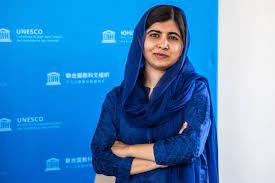
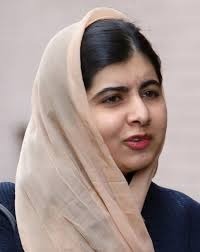
Malala Yousafzai (Pic Source: Google)

We Human beings are succumbing every minute to fear & bigotry since the mysterious accident by which life sprang on Earth .And also every era-produced Malala pick up the flag of humanity with the brave philanthropic hymns. The world which is now somehow livable, is about to celebrate the 24th birthday of an exceptional mental strength as well as of such a magnificent lens and throw a glance on the pager of her life:

The journey of an ordinary human to an extraordinary one started on July 12 , 1997 at Mingora in Pakistan. Since childhood, with the touch of her father. Ziauddin Yousafzai, a school owner and an educational activist himself (whom Malala termed as the ‘Falcon’) Malala got herself involved in human rights advocacy, especially education of women in her native swat valley in Khyber Pakhtunkhwa where the local  Taliban had banned girls from attending schools . Then the little mind rarely couldn’t take so much time to realize the bluffing of terror patriarchy and resolved to eradicate it for a harmonious life of every girl with a backbone.

When she was only 11 years old, She gave a speech in Peshawar on “How dare the Taliban take away our Basic Right to Education” In 2009 , She started blogging as a short step towards the zenith of her life. In 2011 , She was awarded ‘Pakistan’s  National youth peace prize’ In that year, Archbishop Desmond Tutu, a south African activist, nominated her for the International Children’s Peace Prize of the Dutch International children‘s advocacy group kids Rights Foundation.

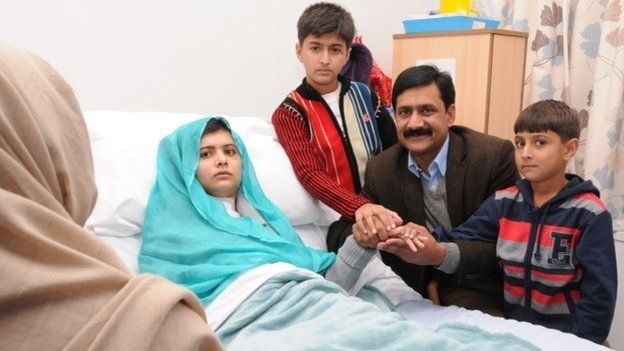
With Malala’s growing popularity, dangers too stealthily came along her way. On October 09, 2012, the Taliban ascended to the peak of inhumanity by shooting this 15-year old child  returning from school by bus. One bullet went through her head, neck and ended in her shoulder. Though her health was critical, her fighting spirit made her recover from the malign wounds and after almost 1 year restarted attending school.

Malala with her lovely Family, during her hospitalization (Pic Source: Google)

Eventually, Malala got a massive outpouring of support in the limelight. On July 12, 2013 on her 16th birthday Yousafzai delivered a speech at the United Nations. There she sad:

“The terrorists thought that they would change our aims and stop our ambitions but nothing changed in my life except this weakness, Fear and hopelessness died ; Strength, power and courage were born.”

–Malala

There Malala challenged orthodoxy, illiteracy & terrorisms:

“The extremists were and they are, afraid of books and pens… They are afraid of women… Let’s speak of our books and pens — our most powerful weapons.”

–Malala

On that very auspicious day, Ban Ki-moon, Secretary General of the UN, pronounced “Malala Day” in honor of The young leader’s activism. He assured that no child should have to die for learning and nowhere should teachers to teach.

When the second voyage of Malala’s life had just started to roll out the wheels, European parliament awarded her the ‘Sakharov Prize’ in 2013.

In the next year, conches of ‘Satyam’ blew when Malala became the youngest ever Nobel Prize Laureate. She received the award along with Kailash  Satyarthi, Indian children’s rights activist. This unparalleled and unequal ‘Global Teacher‘ became a gentle advocate of Peace.

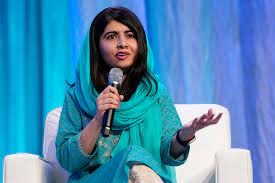
Malala Yousafzai (Source: Google)

In April 2017, United Nations secretary general Antonio Guterres appointed Yousafzai as a UN messenger of peace to promote girls’ education. She was also given Honorary Canadian Citizenship in 2017.

In the meanwhile, Yousafzai family launched the Malala fund in 2014 to ensure girls around the world have access to 12 years of free, safe & quality education, though later she revealed her extreme grief:

“The shocking truth is that world leaders have the money to fully fund primary AND secondary education around the world – but they are choosing to spend it on other things, like their military budgets. In fact, if the whole world stopped spending money on the military for just 8 days, we could have the $39 billion still needed to provide 12 years of free, quality education to every child on the planet.”

Malala wrote in her Website (https://malala.org/)

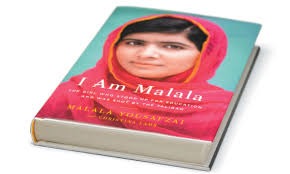
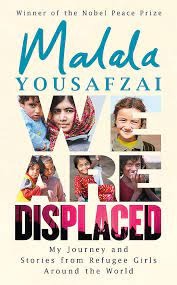
This torch bearer of Pakistan as well as of the enter world have offered the opportunity to go through the reviews by publishing books:

However Malala has taught all the Homo sapiens sapiens what education is, what consciousness is, what backbone is and what fearlessness is. We all are hopeful — this gene of Brave is/will be straight at the nook and corner of this world — every mother will stealthily smile, seeing her fearless child crying in its subconscious mind.

Why society only loves women who sacrifice ?

We must have heard from our relatives and people from our older generation that a good woman or a good wife is the one who knows how to ‘adjust’. We also must have come across conversations where patriarchs have often said things like “to maintain a good relationship, a woman must adjust” or “till the time things don’t go worse a woman should learn to adjust and shouldn’t go for judicial recourse”.

Photo Credits: First Post


These casual patriarchal phrases raise many important questions: do women need to face the worse to get justice? Do women need to tolerate abuse from their partners till the time abuse doesn’t go extremely physical or sexual in nature? Do only women need to give up on their dreams and just look after their families?

Patriarchy apologists, however appraise some women in our society and they are only those women who unwillingly or willingly give up on their dreams and career in order to maintain a ‘happy’ family or women who stay with their ‘cruel’ in laws. This proves that the more a woman sacrifices or the more a woman tolerates abuse, the more she is loved and the more she is considered as an “ideal woman”.

But the moment a woman stands up for herself, the moment she focuses on her dreams and career instead of caring about maintaining a family, the moment she stops adjusting, the same patriarchy apologists start slut shamming her or shamming her simply. In this case, she becomes a “bad example” for all other women just for standing up for her simple basic rights.

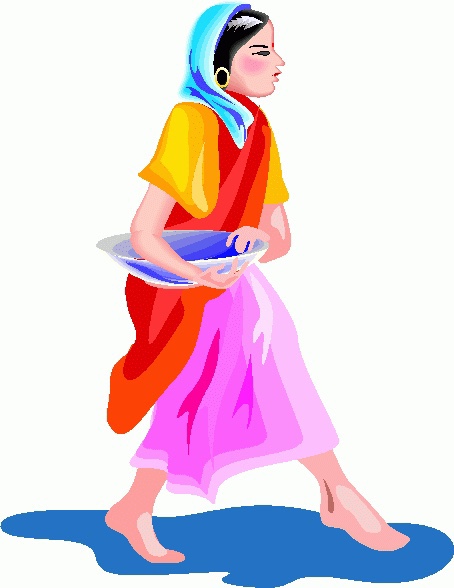
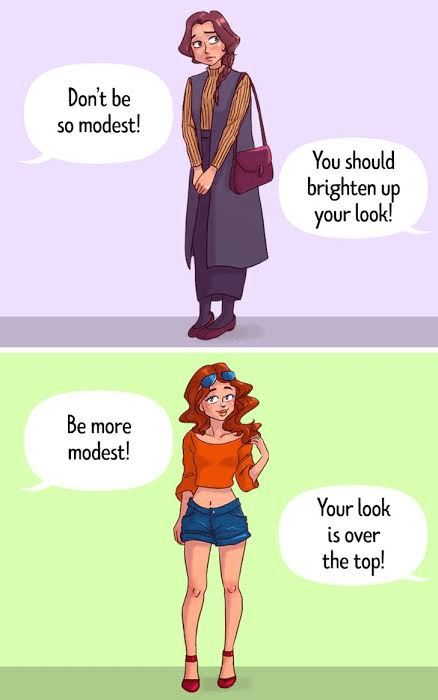
This also reminds us about how society has taught us that a mother only becomes “a true mother” when she is sacrificial. In India, people question a mother’s identity even if she chooses to wear a western outfit. Do women now even have to sacrifice on their preferred clothes? Women wearing western are seen “incapable “of raising a child? How does a simple piece of fabric decides a woman’s worth? Mothers are also judged by our patriarchal world for being into a particular profession, for example, those engaged in beauty and wellness or into travelling. How does a mother’s profession makes her “less of a mother”?

Photo Credits: Clipart Library.

It’s high time we stop romanticising women who suffer because of internalized patriarchy. The only thing our patriarchal society has to understand is that a woman’s personal choices are her own fundamental rights and she can exercise them as and when she wants.

JOURNEY TO SANITY – DOUBLE STANDARDS

EMOTIONS ARE GENDER NEUTRAL

We have been conditioned in such a way that it is believed, that women are supposed to be fragile and sensitive in nature where as men are supposed to be thick-skinned and emotionally numb. However, in reality emotions are gender neutral. It’s not manly to be strong and harsh. And similarly, it’s not feminine to be weak and to cry. The experiences faced by men or women might be different but since they are both humans and have emotions, it is not wrong to express it.
(So, the next time someone tells you to man up and stop crying, you know what to say)

SHARING RESPONSIBILITIES AND RESPECTING THE OPINIONS OF YOUR PARTNER DOES NOT MAKE YOU A ‘JORU KA GULAM

Understanding, Compassion and Mutual – Respect should be the basis for any healthy relationship. It is the basic need of a human to be heard and acknowledged. Hence, it doesn’t make a man a ‘Joru Ka Gulam’ if he is respectful to the opinions of his partner and understands him/her. Society in general tends to question and mock those changes that question their years of belief. In order to avoid their inner-conflict, they discourage the progressive mass so that they don’t have to change and no one can question them. (Yes, kind of like a defence mechanism – Pointing fingers at the other person before they point at you).

FAMILY RESPONSIBILITY SHOULD NOT BE THE SOLE RESPONSIBILITY OF A MAN OR A WOMEN.

Two people form a relationship and they are called partners for a reason. They are part responsible for every aspect of a household. So why should the burden of the entire family fall on the shoulders of a single person. It is normal for a woman to have a successful career and to support a family financially. (No, it doesn’t make him less manly by earning less or letting his wife handle finances). Similarly, household chores should not be the sole responsibility of a women. It doesn’t make a man submissive if he cooks for his partner or does basic household chores. Rather, such relationships are built on mutual respect and compassion which tend to last longer.

STRONG, BRAVE AND INDEPENDENT ARE NOT TERMS SYNONYMOUS WITH MEN.

It is acceptable for a women to be strong yet sensitive, to be scared yet courageous enough to face it. Adjectives like strong, brave are often used for men, whereas it’s completely normal for a women to have each of those qualities. We have women officers who are equally as brave as the men. There are men who prefer household work over finances and it doesn’t make them dependant on their partners or submissive in any way.

Do not forget to read more from the series 🙂

JOURNEY TO SANITY – ACCEPTANCE

JOURNEY TO SANITY – SUNSHINE 🌤️

JOURNEY TO SANITY – MINDFULNESS

JOURNEY TO SANITY -JOURNALING

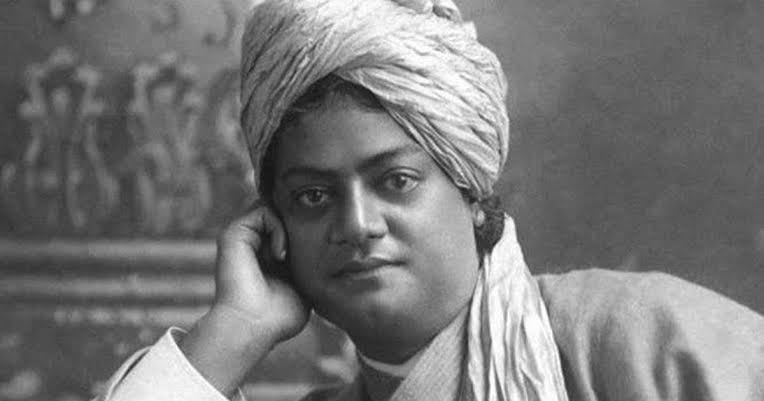
Swami Vivekananda: A Tribute to the Godly Figure.

Swami Vivekananda as we all know was born on January 12, 1863 in Calcutta (present day Kolkata). Swami Vivekananda was never religious in his early life but was always interested in spirituality and meditation from young age.

Swami Vivekananda got educated from Calcutta University and had keen interest in subjects like history, religion, social science, philosophy and like. Today, July 4 is his death anniversary and us know five important incidents from his life.

1) Swami Vivekananda at Parliament of World Religions, 1893.

Photo Credits: India TV

Swami Vivekananda became extremely popular when he went to Chicago in 1893 for Parliament of World Religions where he represented India and Hinduism. He addressed Americans as “Sisters and Brothers of America” in his speech which led to widespread appreciation. In this event, he spoke about how the land of Vedas, Yoga and Saints has taught tolerance and universal acceptance to the world.

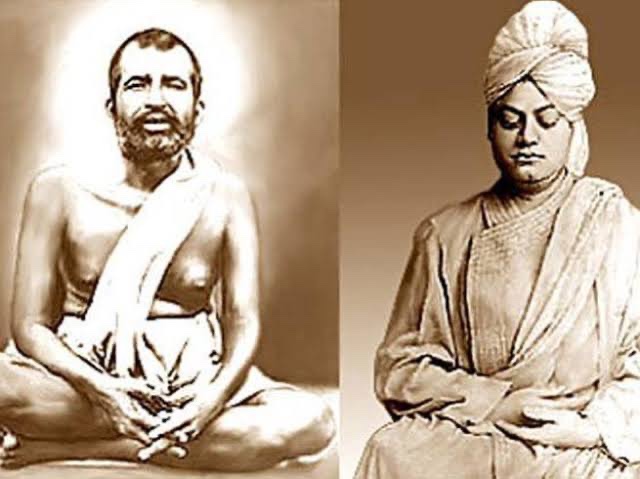
2) First meet of Swami Vivekananda and Ramkrishna Dev.

Photo Credits: Navbharat Times.

Swami Vivekananda met his mentor Ramkrishna Dev first in Dakshineswar Temple in Kolkata where Ramkrishna Dev used to reside but their relationship began when they met at the house of Surendra Nath Mitra. Ramkrishna Dev asked Swami Vivekananda to sing and impressed by his singing talent Ramkrishna Dev invited Swami Vivekananda to Dakshineswar.

3) Life in Dakshineswar, Kolkata.

Photo Credits: Scroll.

Swami Vivekananda’s constant meetings with Ramkrishna Dev became important and life changing moments for him. Initially, Swami Vivekananda was amused and nervous when he first interacted with Ramkrishna Dev. After giving many tests, Swami Vivekananda finally accepted Ramkrishna Dev as his spiritual teacher in 1882. He remained there until Ramkrishna Dev’s death in 1886.

4) Enlightenment of Swami Vivekananda.

Photo Credits: The Indian Express

Swami Vivekananda once asked Ramkrishna Dev whether there’s any God or not (as Ramkrishna used to keep telling him about God ), to which Ramkrishna Dev replied “I am the proof that God exists”. After three days, Swami Vivekananda retuned to him and asked whether Ramkrishna Dev can show him God or not. Ramkrishna Dev asked a counter question that whether Swami Vivekananda has the courage to see God or not to which Swami Vivekananda replied “Yes”. After this, Ramkrishna Dev placed his foot on Swami Vivekananda’s chest and Swami Vivekananda lost his consciousness after that. He restored his consciousness after twelve hours but he was totally changed by then.

5) Establishment of Ramkrishna Mission and relationship with Sharada Devi.

Photo Credits: Old Indian Photos.

Swami Vivekananda founded The Ramkrishna Mission on May 1, 1897 to honour and recognise the efforts and teachings of Ramkrishna Dev. Swami Vivekananda also had a very respectful and loving approach with Sarada Devi as he went to Chicago in 1893 only after taking her blessings.

At the end let’s apply Swami Vivekananda’s words in real life and as Indians, we should always move towards social equality and individual freedom which were his primary teachings.

Culture and history related

INTRODUCTION:-

Cultural history brings to life a past time and place. In this search, cultural historians study beliefs and ideas, much as intellectual historians do. In addition to the writings of intellectual elites, they consider the notions (sometimes unwritten) of the less privileged and less educated. These are reflected in the products of deliberately artistic culture, but also include the objects and experiences of everyday life, such as clothing or cuisine. “Culture” can also imply everyday attitudes, values, assumptions and prejudices, and the rituals and practices that express them, from magical beliefs to gender roles and racial hierarchies. In this sense, our instincts, thoughts, and acts have an ancestry which cultural history can illuminate and examine critically. Historians of culture at Yale study all these aspects of the past in their global interconnectedness, and explore how they relate to our many understandings of our varied presents.Cultural history is an effort to inhabit the minds of the people of different worlds. This journey is, like great literature, thrilling in itself. It is also invaluable for rethinking our own historical moment. Like the air we breathe, the cultural context that shapes our understanding of the world is often invisible for those who are surrounded by it; cultural history allows us to take a step back, and recognize that some of what we take for granted is remarkable, and that some of what we have thought immutable and natural is contingent and open to change. Studying how mental categories have shifted inspires us to think how our own cultures and societies can evolve, and to ask what we can do as individuals to shape that process.

5 Fascinating Culture and History Topics to Explore Today:-

clip_image002
If you’re absolutely in love with the experience of reading and learning, then it only stands to reason that you’ve read your share of non-fiction books over the years. It’s not hard to see why, either. Non-fiction literature on topics like history, culture, and people are so much more than just collections of information. They’re also part of our collective story as human beings. That said, if regional interest reading material isn’t on your radar yet, it definitely should be. Local interest books are a wonderful way to explore a wide range of different topics from unique points of view that you might not have the chance to experience otherwise. The following are just a few options to consider the next time you’re looking for something new to explore.
 

1. Business and Entrepreneurship:-

Thanks to modern technology and the Internet, more people than ever before are exploring the wide, wonderful world of going into business for themselves. Topics like economics, business management, and product development are no longer just topics of interest for CEOs and company managers. These days, just about everyone is interested in what makes businesses of all types tick.Thanks to modern technology and the Internet, more people than ever before are exploring the wide, wonderful world of going into business for themselves. Topics like economics, business management, and product development are no longer just topics of interest for CEOs and company managers. These days, just about everyone is interested in what makes businesses of all types tick.

2. Ethnic Studies and Immigrants:-

Many people tend to think of America as not having much of a culture of its own. However, it would be more accurate to say that it’s a perfect patchwork of all the cultural influences that have made it what it is today. Our country would quite simply not be the same wonderful place without the immigrants that have called it home over the years.Exploring regional interest books on various communities and ethnic groups in America is a wonderful way to discover the amazing backstories of American immigrants and minorities through the ages. Learn how the contributions of immigrant Japanese, Italians, Irish, Chinese, and more helped shape their communities throughout history. Enrich your understanding of notable African American communities from all over the nation. Explore the many cultural influences as they relate to your own hometown’s backstory.

3. Food, Drink, and Restaurants:-

Food and drink is another incredibly hot topic these days. Just about everyone is exploring the possibilities offered by farm to table dining, food truck culture, craft brewing, or fusion cuisine. Local interest literature offers you the opportunity to dig even deeper and get to know your favorite culinary topics on an entirely new level.Explore the origins and influences behind the local cuisine in your hometown or in regards to your favorite vacation spots. Discover the rich traditions behind Cajun cuisine or learn all about how food trucks came to be considered such an essential Los Angeles staple. Explore the backstories behind individual eateries, farms, and local ingredients throughout history.

4. Hauntings and Paranormal:-

You’d be hard-pressed to find anyone who doesn’t appreciate a well-told ghost story. Stories of hauntings, paranormal phenomena, and unexplained happenings only become more fascinating when they’re rooted in history and based on real-life accounts.Regional interest literature is perhaps one of the best, most detailed ways to explore the history of hauntings and paranormal phenomena in America. Devour fascinating volumes devoted to some of America’s most infamously haunted cities, like Nashville, Boston, Charleston, and New Orleans. Even Reno and Las Vegas come alongside their own chilling tales of historic hauntings rooted in a fascinating past.

5. American Sports History:-

It’s hard to think of anything more American than sports. Whether you’re into baseball, football, hockey, or golf, the chances are excellent that you’ve been following your favorite teams in one capacity or another since childhood. However, there’s a lot more to being an avid sports enthusiast than stats and averages.Local interest history allows you a rivetingly intimate look at your favorite sports as they relate to American culture throughout history. Absorb the personal backstories of local legends that influenced the way sports are played forever. Learn more about the nation’s finest, most noteworthy college teams. Delve into the histories of famous venues, techniques, and strategies.With Arcadia Publishing’s robust collection of regional and local interest literature in your corner, the possibilities are wide open as far as all you can discover and learn. Start exploring today, and get to know all of your favorite topics, cities, and points of interest on an intimate new level.

Reference Links:-

https://history.yale.edu/undergraduate/regions-and-pathways/cultural-history
https://www.arcadiapublishing.com/Navigation/Community/Arcadia-and-THP-Blog/April-2016/5-Fascinating-Culture-and-History-Topics-to-Explor

National Doctors Day: Are we doing enough to protect our life savers?

Typically, in an Indian household when a child grows up, Indian parents expect them to be doctors or engineers. But do we respect and love the same children when they actually become our life savers?

July 1, every year, is celebrated as National Doctors Day in India as this date marks both birth and death anniversary of prominent Doctor Bidhan Chandra Roy who was also the Chief Minister of West Bengal in early years of post independent India.

In 1991, Government of India established National Doctor’s Day to recognise the contributions of Dr. Bidhan Chandra Roy and also honour the Doctors nationwide.

Currently, the doctor-patient ratio in India is 1:1445 which is lower than WHO’s prescribed ratio of 1:1000. Doctors work day and night for their patients’ well being and this even increased since March 2020 due to COVID-19. But how much we as citizens give them in return?

India has suffered because of acute shortage of Doctors since the beginning as they never got the remuneration they deserve. This has always led to brain-drain in India as Doctors shift to other developed countries for better career prospects as they receive better salary and opportunities there.

Since the beginning of COVID-19, the only hope to get out of this deadly pandemic were Doctors and health care workers. Whenever our loved ones contract the virus, we immediately look towards our doctors with a helpless eyes, and Doctors without caring about themselves tirelessly give their life and time for us.

Some incidents in the recent past haven’t been so fruitful though. Doctors and other healthcare workers were brutally assaulted during the entire first and second wave and this is another downfall our country has witnessed.

Even on eve of Doctors day, two doctors were assaulted in Delhi yesterday after having a heated argument with two fellows. From an assault in June 2020 in Hyderabad to several such incidents in all parts of the country like Madhya Pradesh, Maharashtra, Assam and many more shows that we as citizens have failed our doctors.

Citizens have to understand by doing such acts of violence, their loves ones whom they lost won’t return. Yes, if any citizen feels their loved ones faced hospital casualties, they’ve a right to protest and they can take the legal procedures but they must not come into emotions and act violently.

Indian Medical Association has held several protests to voice for the rights of doctors. Nearly, 3000 Doctors resigned last month in Madhya Pradesh after High Court declared their strike as “illegal”. Several more prominent as well as junior Doctors in the country have vowed to not serve India as they feel citizens do not treat them with dignity.

If this goes on, India would have a vast decline in doctors per thousand people ratio and all the lives of Indian citizens will be at stake because private hospitals charge a lot and most Indians won’t be able to afford them due to mediocre and low income.

India would face a dangerous phase just like it faced in the second wave of pandemic if things continue like this till the upcoming third wave which will probably hit India by the end of 2021 as predicted by health experts. Stricter parliamentary laws against anyone who assaults doctors and moral policing of citizens can improve the doctor-citizen relationships however.