Greater focus on nurturing entrepreneurship in Tier 1 and Tier-2 cities of India

 The Minister of Commerce and Industry, Consumer Affairs, Food and Public Distribution and Textiles, Shri Piyush Goyal today called for greater focus on nurturing entrepreneurship in the Tier 1 and Tier 2 cities of India. He was delivering the Keynote Address at the 3rd Meeting of National Startup Advisory Council virtually today.

It may be noted that 45% startups in India are from Tier 2 and 3 cities and 623 districts have at least 1 recognized startup. From 2018-21, almost 5.9L Jobs have been created by startups. In 2021 alone, almost 1.9L jobs have been created.

Department for Promotion of Industry and Internal Trade (DPIIT) had constituted the National Startup Advisory Council to advise the Government on measures needed to build a strong ecosystem for nurturing innovation and startups in the country to drive sustainable economic growth and generate large scale employment opportunities.

Besides the ex-officio members, the council has several non-official members, representing various stakeholders such as founders of successful startups, veterans who have grown and scaled companies in India, persons capable of representing interests of investors, incubators and accelerators into startups, representatives of associations of stakeholders of startups and representatives of industry associations.

The Minister said that 25th December, the birth anniversary of former Prime Minister Shri Atal Behari Vajpayee, is being celebrated as Good Governance Day in India. He expressed the hope that a robust Startup ecosystem would help formalize the economy and help in improving the Ease of Living and the Ease of Doing Business and in turn help promote the ideals of Good Governance. He observed that ‘Startup India’ movement had brought a ‘change in mindset’ from ‘can do’ to ‘will do’ and helped us move past traditional notions of entrepreneurship.

The Minister said that our startups turned COVID-19 crises into an opportunity and made 2021 the Year of unicorns with 79 Unicorns now thriving. Underscoring that India is now home to the 3rd largest startup ecosystem in the world, Shri Goyal said that he believed in the power of ideas. Simple solutions can make an extraordinary impact, he added.

 Quoting Prime Minister Shri Narendra Modi, Shri Goyal said that the priority of the Government can be expressed in four words, “Minimum Government, Maximum Governance” and called for minimum Government interventions in the lives of citizens. He said that our vision is to build a New India committed to the economic progress and well-being of 135 crore Indians, especially those who have been left behind.

The Minister assured that the Government, as an enabler, is committed to develop a robust startup ecosystem by providing exceptional benefits such as 80% rebate in patent filing and 50% on trademark filing, relaxation in public procurement norms, Self-Certification under Labour and Environment Laws, Funds of Funds for startups of Rs. 10,000 Crore, Income Tax exemption for 3 out of 10 years, Seed Fund Scheme of Rs. 945 Cr and creating Open Network for Digital Commerce (ONDC), which will create new opportunities and remove some monopolistic tendencies in certain spheres.

Shri Goyal said that apart from mass jobs creation, our startups have the potential to catalyse India’s integration in Global Value Chains and increase our footprint in global markets. He urged successful entrepreneurs, especially unicorns to share their experiences with students and youth in order to inculcate startup culture and entrepreneurial spirit at grassroot levels, especially in regions like the North East of India. He asked academia, government and industry to work hand in hand to promote entrepreneurship at the grassroots level.

Urging the youth to take risks in entrepreneurship, the Minister said that you never know until you try, therefore, making mistakes should be normalised and failures should not be seen as the end of entrepreneurial journey.  We must learn to celebrate failure too, he added.

Shri Goyal called upon startups to explore the unexplored areas like rural tourism in terms of agri-stays, hotels and homestays that would help create additional income for farmers.  Shri Goyal opined that the youngsters of the nation must be encouraged to visit villages, experience rural life and come up with solutions to rural problems.  He also asked successful startups to focus on rural economy and work on solutions such as drip irrigation, natural farming etc. to improve the lives of farmers.

Speaking of the need to augment Seed Capital, Shri Goyal said that we must encourage the flow of domestic capital in our startups. He added that there was a need to make ‘Startup India’ a symbol of Self Reliance and Self Confidence. The Minister called for a participative approach from all stakeholders to achieve such an ambitious target.

Six national programmes were presented to the Minister as part of the third National Startup Advisory Council meeting to strengthen the startup ecosystem in the country. The key interventions discussed were National Capacity Building Programme for Incubators, providing thrust to the startups engaged in manufacturing sector, empowering the larger pool of Family Offices and High Networth Individuals (HNIs) to invest in startups, accelerating Deep-tech Startups which would act as a catalyst in empowering pioneers, establishing an international platform and a gateway for Indian startups to go global, propelling participation of women in the startups and a holistic programme which aims at enabling global mentorship, market access, international opportunities and B2B connects.

The video conference was attended by several Startup leaders, investors, banks, senior government officials representing various ministries/departments and key stakeholders of the startup ecosystem.

****

5 reasons why working in startup is good idea


If you are confused whom to choose MNC or startup here’s my 5 reason why it should be a startup.

Learning
While you can learn and get help from your nice colleagues in MNC, at startup you can learn a lot other interesting things.

Pushing the limits
As a startup they need everyone to push there limits to find there new strength as this may not be available on established MNCs, you might wanna start at a startup.

Community
You might get some friends in MNC but while it comes to startup most of them wants to start, needs help and are willing to help, making it a nice community.

No boss
Startup too have bosses but as they are in early phase  they are more of a friend, helper and mentor, so if you are new in office work you might wanna choose startup first.

Future
If your startup grows you too will get credit of it unlike in MNCs you can use it in CV and show how much it has grown and what are the role you played in its growth.

This are not the only reasons sometimes they can give you lifelong friends, experience and if you are dedicated to work, journey in startup is lot more fun.

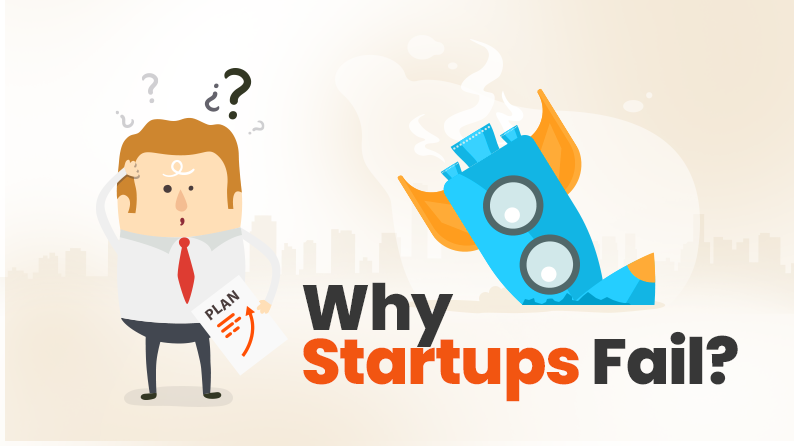
Why Most Of The Startup Fails? -10 Reasons Why Startups Fail.

Helllo Friends !….. ,You may have often seen that most of the start-ups got closes in their first year They have an idea but still, the company got closed So in this video, we will talk about the top 10 reasons behind every startup fail. If you are also planning to start your own venture so please consider all these 10 reasons. The first thing is what is the type of industry Whichever industry we have chosen is that right for us or not? For Example – As you guys, all know I was a marketing head at an E-commerce company Where I realized that too many things are going wrong in this industry. The cost of the product that we are selling is for 4800 and the same product was selling on Amazon is for 4100 on his platform. Including all the taxes and profits. How is it possible? Then I realized that they are playing a Big game.

 We were placing orders for 100 products but they might be placing an order for 50k products maybe that’s why they are able to sell their products in such competitive pricing. There are chances that they have a lot of funds that’s why they are trying to destroy the market So that no other e-commerce platform wouldn’t d be able to compete with them. Another big reason behind this they are considering their logistic cost to zero They consider their logistic cost as loss for now There are so many factors which make me realize that if I want to open an e-commerce store like Amazon or Flipkart so I wouldn’t be able to flourish Because I don’t have the same amount of fund that they have or how long I would able to fight with them 1or 2 years. 

After then I will be broke like so many other’s companies. Now come to the second point and that is a faulty business model I think that If I do this business so I would be profitable. But, If I do overall calculations so I will find myself in the loss For example – we open a factory and product costing is coming 80rs And what we do next is we made all the plans regarding the selling price and all Then we decided that we will sell this product at a profit margin of 95 rupees. Then we did all the packaging and branding of that product. Then we got to know that the price of raw material frequently fluctuates. In starting, the price of raw material was 60 rupees and now it is available for 110 rupees. So now Can I increase the price of my product? No, Because we did all the branding and marketing of that product for the pricing of 95 rupees. 

Or maybe at the timing of calculating the total cost we made some errors. We didn’t include rent and employees salary under that calculation. In short, we have to make our strong business model. If we don’t want to let our startup fail. There are many businesses which are in auto-pilot mode in which money comes automatically. Like I told you about Trivago Business model Now comes to the third point and that is marketing myopia. In this topic, I have already made a video but let me tell you how marketing myopia affects business model. Sometimes, we feel that our product is the most optimum product for the consumer. For example – You decided that you are going to make pager that is used a long time ago for only sending the messages. If you know about it, drop a comment below with yes. You are making pager in this modern era and telling everyone that your pager is a touch screen. But the consumer needs a touch smartphone with a strong camera, display, processing power.

 But No you have already decided to sell pager. By doing things in this way your business will come to an end like Nokia. Along with that, we also have a week feedback system. In initial days every business product is going through the developing stage. Right now even they don’t know what kinds of problems customer’s are finding in their products. We think that our product is good For example – My protein business, we think that the quality and taste of our protein powder is superior. The chocolate favors of our protein powder are good. This is what we exactly think. But until we asked the customer’s about our product feedback and asked them how was our product? We have to ask our customers about possible changes and other things. 

When we received feedbacks and work on it so the customers become loyal to us. Maybe he couldn’t buy my product before but I simply called him and develop my product according to his feedbacks After then I said thank you because of him I able to make changes in my product. Now, there are high chances that he will buy one more time from me and if he like my product then he will recommend others. Ultimately my customer base will be increased So basically we have to build at least one feedback system doesn’t matter what kind of business we are doing. So we can get in touch with the consumers directly And know where our product is lacking and what kind o possible changes can be done. If you are in the service industry, for example, you own a salon. you should always ask your customer about his experienced and his suggestions. 

Many companies use feedback form so that is also the part of the system. Next point is you do n’t have a passion for doing business. He just got into the business because of the peer pressure. I have seen that go daddy makes websites for businesses for 100 or 1000 rupees. Will try to expand his father’s business by running ads But why would I do it? Because my friends are doing business People don’t know about the industry and they do not have any experience but still, they do business. What happens after then, if business got fail they feel demotivated. Ultimately the company got wasted Along with that, the other problem is we don’t have enough skills for starting a business. For example – I want to open digital marketing and a web development company but I don’t know anything about both of them But I feel like I am a good manager so I will hire employees who know these skills And I will manage all of them and will make money by doing these. In order to do something, you have to learn that skills first otherwise anyone will make you fool. Your own team will make you fool. They will tell you it will take around 1 month to make this website. 

But if you have knowledge about that you can tell him that no it will hardly take 1 week to complete the website If someone is doing digital marketing so maybe their strategy will be different So at that point, you can also add up your strategies which will work. Because as a boss it’s totally your responsibility to do the project in the right way. None of your clients will blame your employee, they will blame you for anything which goes wrong. Ultimately, all the clients will go away and the company will shut down There’s a huge blunder for any startups which is lacking necessary skills. Even if you don’t have a passion still you can do business by learning it, But if you don’t have the required skills for running a business then you are going to face a huge failure. 

The next point is we have a wring team members. What we did is we hired some of our cousin’s brothers or sisters and also hired our best friends and all. Because we think we have a good understanding so that we can do great business. Yes, understanding between team members is necessary but there should also have some skills set. For example – I know about digital marketing but doesn’t have knowledge about sales. Because of that, I can’t pitch my services to potential customer’s. So do I need someone in my team who knows digital marketing or knows about sales? Second example – I have all the knowledge about digital marketing but I need a guy knows about finances Who can file my GST and handle all the other things related to finance and tax. 

Because no one knows about everything So what mistake we made is we hired our siblings and friends And we tell them to learn while doing the work Ultimately this thing will lead us to waste of time, money and resources and at the end, the company will come to an end. So we should make a team of those who know different skills set. So by doing this thing altogether, we can become an idle team and grow our company. There is no doubt that understanding between members is also important so don’t avoid it as well as. But the most important thing is to complement other’s The next thing is the cash burn rate cash burn rate is how much money do I need in a month to run my company.

 It should be a total of all the expenses like marketing cost, rent, the salary of employees, and all. For example, we have a 10 lakh rupees and the rate of cash burning rate is 1 lakh rupee per month. So it means we can run our company for just 10 months. So we have to keep this thing in our mind with the purpose of making it profitable within 10 months. Otherwise, after then we will have to shut down it. Or If you have already started a business without knowing your cash burning rate Or you think you will decide your cash burning rate after a few months. So it means your company is going to close soon and all the money will be wasted. And the last point is which includes two sub-points. 

First one is you failed to raise funding for your start-ups. You have a good business model but you always failed while pitching your business model in front of the investor. And because of that your business usually fails We have already made a series of funding to investors. So you can check that series. Funding to investors is also a kind of art. You have a good business model and burning cash rate is also low and you may also cross the break-even point But in order to grow your company to a big level. you need some funds Along with that, the second point is you are hungry for the funding in your initial days of business. 

Equity of your company gets dilute by receiving quick funding. In the starting days of business, you have to dilute 30-40% of your company equities for some funding. And because of that, all the power you had earlier is now shifted to the investors. For example – If you are able to cross break-even point within 8-10 months. it means your company is in profit. In this stage, you need to work on your company 1 year more to make it more profitable and capture some more market share After then you can go for funding if you want to. There are many companies who shut down just because of , They all were just running behind the funding and then had some issues with the investors and because of that, they didn’t give any funding to them. 

Big Basket Business Model – How Big Basket Earns

Hello Friends ! Big Basket, our grocery leader in India so the story starts in 1999 when there was a .com boom and this is one of the 1st e-commerce company who came to buy online after 2 years they added grocery too in starting a lot of people came online but you know in starting people don’t buy online only COD can operate at that time and not online payment so people came but did not buy it so they analyze and they came to offline and in south India they got a huge success they opened a fab mart and sell everything in it but still it did not make much profit and in 2006 Birla group overtook it and in 2011 they again return online under sell retail network in 2011 only they got a funding do try to understand this.

If you want to have a grocery business so what are the options 1st is inventory modal, means I will buy product directly from the company at a discount rate next I will be selling to my target audience and rest is my profit 2nd is market place, like amazon and flipkart do here if I will get an order then I will transfer to other and they will deliver it 3rs is hybrid here I am doing the both 1st and 2nd logically they did marketplace, they captured small-small grocery shop and made a pact with them and now the orders they get via there app and website, they do forward to these small grocery shops and deliver the product via a delivery boy so this was the simple process slowly they got the findings and they started to grow and then they shifted to inventory model because in this there is a lot of margin and you can too control your quality they have 18000 listed products, more than 1000 brands and still it’s going under loss.

 but slowly and slowly there revenue is increasing last year they did Rs1176 crore revenue and had a loss of Rs191 crore they had a 1500 ticket size and 650 ticket size if one opts for express delivery there target is by the end of 2020 we gonna to take 2000 crore revenue in my opinion fab mart too was a good business model but in 1999’s internet used to be a new technology and people don’t trust internet and online payment, not good speed, and not visual websites so they took a good step by coming to offline market and made money and reinvested afterword so from 2011 they are in loss, but in coming years they will be coming in profit because it’s inventory modal will keep on increasing with the advent of revenue there expenses will tend to decrease they do a simple strategy by ranking it’s customer basically. 

If you order today then you are not it’s customer so suppose in 3 month you ordered 2-3 times, then you became a silver customer for them silver customer means that this is our potential customer and their platinum customer comes 95% repeatedly so your expenditure get’s decreases time to time countanously in 13 funding round, they had taken 884 million dollar and recently they had taken 300 million dollar funding from Alibaba in June 2015 they acquired deliver and that inquisition was good according to me because of this they are able to deliver products on time before that in inventory modal they used to get delay in delivery time.

Now they can deliver vegetables in 2 to 3 hours in vegetable you need to deliver within 1 hours and not in 2 to 3 days so this thing is possible due to delivery acquisition and I will be giving them +1 in grocery they operate in 35% of profit margin and in other item 10-12% margin you may be finding it more but if you see there expenditure-website, app, delivery and many more things to run this makes there expenditure and still they are under loss there is 2 trillion dollar economy in this globally out of which 300 billion dollar online is there if we take globally then it will fluctuate 15-30% in online retail .

If you want to do this type of business then target the cities because in cities there is a lot more awareness, less acquisition cost and you will be getting at a less rate ultimately will tend to sell in your products and will increase your potential customer in village your accusation cost will tend to rise due to lack of education .

“STARTUP INDIA SEED FUND SCHEME” an initiative by govt for startups

SISFS , was launched by shri Piyush Goyal minister of Commerce & Industry, Consumer Affairs & Food & Public Distribution and Textiles

We all are know to India’s journey of giving opportunity to startups . Though we have may startups firms in India , but they don’t survive in long run , one of the main reason behind this is Indian startup ecosystem suffers from capital inadequacy in the seed and ‘Proof of Concept’ development stage. The capital required at this stage often presents a make or break situation for startups with good business ideas. Many innovative business ideas fail to take off due to the absence of this critical capital required at an early stage. The problem starts with seed funding , here is a short note on what is seed funding :

Seed funding : For growing a tree we need seed , so as to grow our business we need capital , and that is too at an early stage , Seed funding, or seed capital, is a relatively small amount of money that is used to start a business, fund research, or develop a product. The term’s reference to a “seed” is quite fitting. A tiny seed can someday grow into a lush forest. A tiny investment can help a struggling startup grow into a successful enterprise.

About the SISF Scheme: The Startup India Seed Fund Scheme aims to provide financial assistance to startups for proof of concept, prototype development, product trials, market entry and commercialization. On February 5, 2021, the Government of India made an official announcement about the approval of SISFS. It has been approved for a period of four years and was implemented with effect from April 1, 2021. Under the guidance of our honorable prime minister , Shri Narender Modi ji & Shri Piyush Goyal , minister of commerce & industry , this scheme was launched.

  • The Scheme aims to provide financial assistance to startups at the very initial stage of their project
  • It has been approved for a time period of four years, starting from 2021-22
  • Rs. 945 Crore corpus will be divided over the next 4 years for providing seed funding to eligible startups through eligible incubators across India
  • It is expected that the Startup India Seed Fund Scheme shall help over 3600 startups in the country
  • This scheme is in line with the Atmanirbhar Bharat Campaign launched in May 2020
  • Seed Fund to an eligible startup by the incubator shall be disbursed as follows:
    • Up to Rs. 20 Lakhs as a grant for validation of Proof of Concept, or prototype development, or product trials
    • Up to Rs. 50 Lakhs of investment for market entry, commercialization, or scaling up through convertible debentures or debt or debt-linked instruments

Who are eligible for SISFS ?

The eligibility criteria for a startup to apply under the Startup India Seed Fund Scheme shall be as follows:

  • The startup must be recognised by the Department for Promotion of Industry and Internal Trade (DPIIT)
  • It must have incorporated not more than 2 years ago at the time of application
  • Preference would be given to startups creating innovative solutions in sectors such as social impact, waste management, water management, financial inclusion, education, agriculture, food processing, biotechnology, healthcare, energy, mobility, defense, space, railways, oil and gas, textiles, etc.
  • The startup should not have received more than Rs 10 lakh of monetary support under any other Central or State Government scheme
  • Shareholding by Indian promoters in the startup should be at least 51% at the time of application to the incubator for the scheme

How will SISFS work ?

1. Department for Promotion of Industry and Internal Trade

The Seed Fund will be disbursed to eligible startups through eligible incubators across India DPIIT

Nodal Department EAC

2. Experts Advisory Committee

Government Representatives & Industry Experts Incubators

3. Govt assisted/Not-Govt assisted Incubators

Operational for at least 2-3 years Startups

4. DPIIT-recognized Startups

Incorporated less than 2 years ago

Crowdfunding and How it works?

Crowd Funding dates back to 1713 when Alexander Pope united his subscribers to find the translation of Homer’s Iliad into English. He had promised to include the 750 donors’ names in the book in exchange for two gold guineas.

The Internet has modernized crowdfunding by connecting people in search of funds with the general public. Crowd funding is generally defined as the collective – ‘Crowd pooling funds’ to support a specific project or an organization. Crowd fund serves as an alternative source of capital to support a wide range of ideas and ventures. Crowd funding can also be a great way to fund ideas and it can also be a great way for new businesses to get some funding in the initial stages.

An entity or individual raising funds through crowd funding typically seeks small individual contributions from a large number of people. Crowdfunding campaigns have a specified target amount to be raised. It can also be a goal and an identified use of those goals.

The entrepreneur of the company usually offers donors non monetary goods in return for their donation. The reward is personal satisfaction. This makes crowd funding a very efficient and cost effective method to raise money. Some of the most popular platforms for crowdfunding are Kickstarter and Indiegogo.

But we also have to realize that not all the companies or entrepreneurs are successful in funding their campaign. The majority of the campaigns fail. They usually fail to hit their financial targets. Kickstarter’s success rate sits around 38%.

The ways to Endure a successful campaign

One of the ways to ensure a successful crowdfunding is when the entrepreneur defines the objective of their campaign. They also need to factor in how much money is being spent, thus consideration of the costs is also very critical. The entrepreneur also has to be content creator and talk with experts to improve upon the product or the idea. Wise use Networking is also very important to increase the reach of the campaign.

The different types of crowdfunding are:

Donation based crowdfunding

Donation based crowdfunding involves amassing high amounts of donations without needing to provide the investors with anything in return. It is usually used for charities and NGOs.

Rewards based crowdfunding

Rewards-based might seem similar to Donation based crowdfunding but there are key differences that make it one of the most popular forms of crowdfunding. This form of crowd funding is also the most feasible to startups to utilize. One of the main differences is that investors are provided with different tiers of rewards which directly correspond with the numerous wage pledges.

Equity based crowdfunding

This form of crowd funding is increasingly getting very popular among startups. One of the primary reasons is that startups are usually short of money and by providing investors with shares in their company can be a great way to raise funds rapidly.

Royalty based crowdfunding

It is a type of crowd funding that gives its backers a smaller percentage of the revenue that’s gained once the venture or project becomes successful and starts to generate money. One big difference between Equity based funding and this one is that backers will only get royalties based on sales that are made from the product they invested in.

Loan or debt based crowdfunding

This form of crowd funding is beneficial for the owners of the company because they do not need to give shares and royalty. Instead this is more similar to a typical loan where the project initiator has to repay the amount within a certain period of time. It can also be used to raise a comparatively large amount of money.

References:

4 MUST READ BOOKS TO START YOUR OWN STARTUP

1. ZERO TO ONE

Zero to One presents at once an optimistic view of the future of progress in American and a new way of thinking about innovation. It starts by learning to ask the question that lead you to find value in unexpected places.

2. THE LEAN STARTUP

Rather than wasting time creating elaborate  business plans, the lean startup offers entrepreneurs- in companies of all sizes – a way to test their vision continuously, to adopt and adjust before its too late. The author provides scientific approach to creating and managing successful startups in a age when companies need to innovate more than ever.

3. THE FOUNDERS DILEMMAS

The founder dilemmas draws on the inside stories of founders like EVAN WILLIAMS of twitter and TIM WESTERGREN of Pandora, while mining quantitative data on almost ten thousand founders.

People problems are the leading cause of failure in startups. This book offers solutions.

4. HOOKED

The author of this book provides practical insights to create user habits that stick , actionable steps for building products people love, fascinating examples from the iPhone to Twitter, Pinterest to Bible app, and many other habit forming products.

QUESTIONS YOU NEED TO AS YOURSELF BEFORE STARTING A BUSINESS

1. Why are you starting the business?

First of all defining the why behind what you are doing is most important, If you aren’t clear about why you are doing what you are doing then its better to quitting that thing.


2. What value are you going to add in other peoples life?

Ask yourself whether you are going to add value to other peoples life, whether you are going to bring comfort in others life. If the answer is yes, then definitely your business will sustain in the market.

3. How well are you mentally prepared to start the business?

For starting a business you need to be mentally strong enough. Running a business includes a lot of problem solving tasks, pressure ,bear losses, patience. Therefore you need to be mentally strong enough to handle all such situations.

4. Is there any easier way ?

Most entrepreneurs think if the problem is hard then there should be a complicated solution to the complicated problem but if your are creating any product then always think how you can make it more easier for its end consumers.

5. Is it really worth it ?

Ask yourself that it is actually worth it doing this particular thing because you are going to spend a lot of time on that thing, I know you can’t predict this too early but being realistic is more important that being optimistic.

The utterly butterly delicious story of Amul

Over the years, Amul, one of the most beloved brands of our country, has become the taste of India, just as its tagline claims. Every Indian millennial has grown up listening to the jingles of its many dairy products, and the Amul girl, the brand’s mascot in the polka-dotted dress, has become a nostalgia-evoking symbol. Amul has truly come a long way since its founding in 1946.

The beginning

Amul was formed as a part of a cooperative movement against Polson Dairy in Anand, Gujarat, which procured milk from local farmers of Kaira District at very low rates and sold it to the then Bombay government. Everyone except the farmers benefited from this trade. The farmers took their plea to Sardar Patel, who had advocated farmers’ cooperatives since 1942. The result was the formation of the Kaira District Co-operative Milk Producers’ Union Limited in Anand.

The union started pasteurising milk produced by a handful of farmers for the Bombay Milk Scheme and grew to 432 farmers by the end of 1948. The rapid growth led to problems including excess production that the Bombay Milk Scheme couldn’t accommodate. To solve this issue, a plant was set up to process all that extra milk into products such as milk powder and butter.

Amul is born

The late Dr. Verghese Kurien, rightly called the Milkman of India, was Amul’s true architect. His journey at Amul began in 1949 when he arrived in Anand to manage a dairy as a government employee. He went from helping farmers repair machinery to revolutionising India’s dairy industry with the White Revolution (or Operation Flood), the largest dairy development programme in the world.

The new dairy with the milk processing plant was ready for operation in October 1955, the year that also saw a breakthrough in dairy technology —buffalo milk was processed to make products for the first time in the world. The word ‘Amul’, derived from ‘Amulya’, which means ‘precious’ or ‘priceless’ in Sanskrit, was used to market the range of milk products developed by the Kaira Union. It is also an acronym for Anand Milk Union Ltd.

Dr Kurien had a vision. He wanted to offer small-scale dairy farmers quality-control units and centralised marketing, which were missing at the time in the dairy economy. Thus, the Gujarat Cooperative Milk Marketing Federation (GCMMF) was created in 1973 to market milk and all milk products produced by six district cooperative unions in Gujarat. GCMMF is the largest exporter of dairy products in India and Amul is the umbrella for all of its products.

Awards, accolades, and a global presence

Over the years, Amul, together with GCMMF, has won numerous awards. Some of these include the Rajiv Gandhi National Quality Award, 1999; the Golden Trophy for Outstanding Export Performance, 2009-10; Best Marketing Campaign, 2014; and World Dairy Innovation Award, among many others. Amul earned recognition all over the world when GCMMF  introduced it on the Global Dairy Trade (GDT) platform, where only the six top dairy players across the world sell their products.

More than a mere slogan

Amul’s famous slogan, which is now a part of its logo, was created in 1994 by Shri Kanon Krishna of a Mumbai-based advertising agency called Advertising and Sales Promotion (ASP). According to Amul, the Taste of India slogan is more than just corporate positioning or advertising jargon. This slogan lends meaning to the brand’s never-ending commitment to taking quality food and products to the rural man, which he otherwise couldn’t have afforded.

The Butter Girl

Amul did not always have the round-eyed moppet as its mascot. The Butter Girl was born in 1966 when Sylvester daCunha, the then MD of the advertising agency handling Amul butter’s account, created her for its campaign. It was a pleasant change from the dull, corporate ads that the previous agency had come up with. Being a seasoned marketer himself, Dr Kurien gave daCunha complete creative freedom to create and release the ads without taking the company’s permission. 30 years later, the Utterly Butterly Girl still wins hearts wherever she is, whether on a billboard or on the packet of butter.

Amul is not just a brand; it is also a movement that represents farmers’ economic freedom. The name is now a household term that is here to stay, and the chubby-cheeked Amul girl will continue to cast a spell on the public.

10 FINANCIAL BOOKS YOU SHOULD READ

Financial education is something that everyone should know about it .Everybody should know about how to handle their expenses ,how to plan their future, how to start their start-ups .So here is 10 books that helps you in many ways and you should read this book before start your earning or startups. I hope you all find these books as interested as I liked them. Here is the list of 10 books:-

  1. Rich Dad Poor Dad (1997)

    Author:-ROBERT T KIYOSAKI
    Genre:-Financial Investment , non-fiction
    Description:-Robert T Kiyosaki is an American author and business man .he is the founder of Rich Global LLC and the Rich Dad company. he wrote rich dad poor dad which is one of the best selling book of New York times .It has sold over 32 million copy . He wrote in book how people denied to accepting the truth and how the fear and greed control them through out their life. He also talks about financial strategies . It’s one of the best book on financial education.

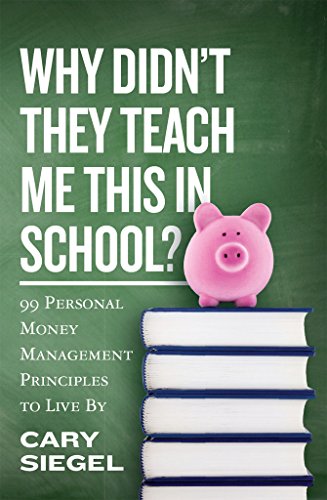
2.Why Didn’t They Teach Me This in School? (2017)

Author:-Cary Siegel
Genre:- Financial education ,Business
Description:-Cary Siegel is a MBA graduate from a university of Chicago. After Graduating from one of the top business school. He started his carrier in sales and marketing and lead several companies in sales and marketing. He shared his experience and finance lesson that he learned through out of his life.
Why didn’t They Teach Me This in School? covered numerous topics like budgeting, spending, credit cards, investing, mortgages, insurances and much more which you will never learn in your school.

3. The Automatic Millionaire (2003)


Author:- David Bach
Genre:- financial Investment, self-help
Description:-David Bach is an American author, Motivational speaker ,entrepreneur and founder of Finish rich.com.
He wrote many books on finance such as Finish Rich series and Automatic Millionaire series.
The Automatic Millionaire is about how can you become financially stable without taking so much risk or if you are frugal then you must read this book.
“The first person who deserves your money is yourself” by DAVID BACH

4. The One-Page Financial Plan (2015)

Author:- Carl Richards
Genre:- Financial Investment and education
Description:- Carl Richards is a certified Financial planner and the author of The Behavior gap and appearing weekly on New York times since 2010.
The one page financial plan is all about how can you do budgeting and make savings to be fun. Set your future goals but change your strategies according to the situation.

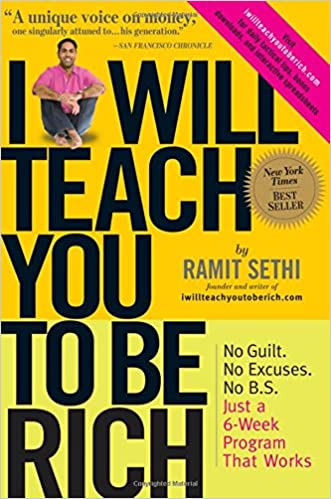
5. I Will Teach You to Be Rich (2009)

Author:- Ramit Sethi
Genre:-Financial education and Investment
Description:-Ramit Sethi is an American personal finance advisor and entrepreneur. he is the best selling author of New York times in 2004.
i Will teach you to be rich talks about how people blame others about their financial problems, smartly spending your earning and start investing from today as it will help you in future.

6. Your Money or Your Life (1992)

Author:-Joseph R. Dominguez, Monique Tilford, and Vicki Robin
Genre:- Financial education and Investment
Description:- Author talks about the minimize spending ,excessive investing and save for Emergencies .

7.  Think and Grow Rich (originally published:-1937)

Author:- Napoleon Hill
Genre:- Non-Fiction, Self-help, Financial education
Description:-Oliver Napoleon Hill was an American author who wrote so many self-help books. Think and Grow rich is one of them and it’s one of the best self-help book of all times.
Hill talks about the belief in yourself ,becoming a stubborn and never your change your decision once you decided and accompany those who are mastermind on your field.

8. The Millionaire Next Door ( originally published:-1996)

Author:-Thomas J. Stanley, William D. Danko
Genre:- Non-fiction
Description:- Thomas J. Stanley was an American author and business theorist . He wrote The millionaire next door which was the New York times best sellers.
The millionaire next door covered about the healthy spending and avoid silly mistakes that mostly people do to handle their financial expenses. It’s one of the most practical book that I had ever read till now

9. Zero to One (2014)

Author:-Blake Masters and Peter Thiel
Genre:- Business, Politics and Government
Description:-Peter Theil is German-American billionaire entrepreneur and venture capitalized. he is the co-founder of PayPal ,Palantir technologies .he was the first outside investor in Facebook .he was ranked four on the Forbes Midas list 2004. peter write about how he thinks about his business and how an you shape the future of the world in the process.

10. The Lean Startup(2011)

Author:-Eric Ries
Genre:-Self-help book
Description:- Eric Ries is an American entrepreneur, blogger and author of The Lean Startup.
the lean startup talk about the customer needs and quickly learn about it, changing the strategies according the customer needs and previous result. Eric Ries divide the book in three section:-
1. vision
2.steer
3.Accerlate

I hope you liked the article .Thank you for giving your precious time to read this article if you like the article pls tell us and comment your feedbacks .
Have a Good day and Happy Reading.

STARTUP: TYPES OF STARTUPS AND WHAT MAKES THEM SUCCESSFUL

Types of Startup

There are 2 types of Startup

. Bootstrap:- This type of investment comes from self or family funds and investments. Their main objective is to earn profits and account for only 10% of overall startups in India.


. Investor Funded:- Investor funded startup companies run with investor funds. Their main objective is growth irrespective of profit or loss and account for nearly 90% of overall startup stories in India.

The sectors that had the maximum registered startups are food processing, product development, application development, IT consulting and business support services. Photo: iStock

Essentials for Success of Startup

. Initiative:- A successful startup is one that helps in the ground level problem-solving rather than profit-making. It should help in giving a solution that is yet to be discovered.


. Socially Impactful:- It should have a social impact as well, catering to the larger masses of the society.


. Employment Creation:- A startup that have a potential to become successful is more committed towards economic growth employment growth as compared to making profits.

Discover 8 outstanding success stories | Erasmus+

Interesting products on Kickstarter-2

Hug – The Insulated Collapsible Mug

“Creativity is making marvelous out of Discarded” 

Plastic Cups Pollution:

The world uses about 500 million plastic cups every year. That’s really a massive amount. Imagine these plastic cups dumped as a pile. These piles add up every year and the number tends to increase due to the increase in population. These wastes make the environmentalists who are bent over backwards in attempts of cleaning up the wastes feel exhausted. The plastic cups are not used intentionally. They are used because of the lack of an alternative. Many people have guilt about using these plastic cups. Most of us would have thought of having a reusable, variable size and handy cup. But we are provided with either or options which is just partially beneficial.

Hug – The Mug:

“Every lock has a key. Every problem has its solution” 

Ruary Hewson has carefully observed the situation and has come up with an exquisite design. The features of the mug are listed as follows:

  • Double Walled Insulation: The Mug is double-wall insulated which makes it suitable for all environmental conditions, You can also heat it up in the microwave and have your drink piping hot. 
  • Customizable Height: The height of the cup we use varies according to the drink and time of the day. Hug has an option for every such choice. It has 9 customizable height options to choose from. 
  • Patent Pending Lock Mechanism: Hugcomes with a lock mechanism to lock at the height of your choice at a jiffy. The lock and unlock mechanism is built to last for 1000 cycles of its use.
  • Pocket-friendly and quick: Hug can easily fit into the pocket of your jeans, sweatshirts, purses and what more do we need? The speed of stretching it can be done in a blink of an eye. It can be done within 3.4 seconds. 
  • Recycled: The cups are fully made from Recycled plastic which means it recycles the past used plastics and prevents the future use of plastics. 
  • Spill-proof: The major hassle in using cups is spills caused by them on our precious assets. Hug is way cooler. It is completely spillproof and provides you with an unperturbed user experience. 
  • Cool and Colourful: Hug comes with 4 vibrant colours to choose from and thus removing the restrictions of you to be cool with your cup. 

Facts about Hug:

  • Hug is backed by 4500 backers for $ 2,04,205 which is 45 times higher than the amount targetted for. 
  • The campaign is about to end in 4 days and rock with the delivery by next year.

SWOT ANALYSIS OF UDAAN

SWOT Analysis is a framework used to evaluate a company’s competitive position and to develop strategic planning. It helps in assessing internal and external factors, as well as current and future potential.

A SWOT analysis is designed to facilitate a realistic, fact-based, data-driven look at the strengths and weaknesses of an organization, initiatives, or within its industry. The organization needs to keep the analysis accurate by avoiding pre-conceived beliefs or gray areas and instead focusing on real-life contexts. Companies should use it as a guide and not necessarily as a prescription.

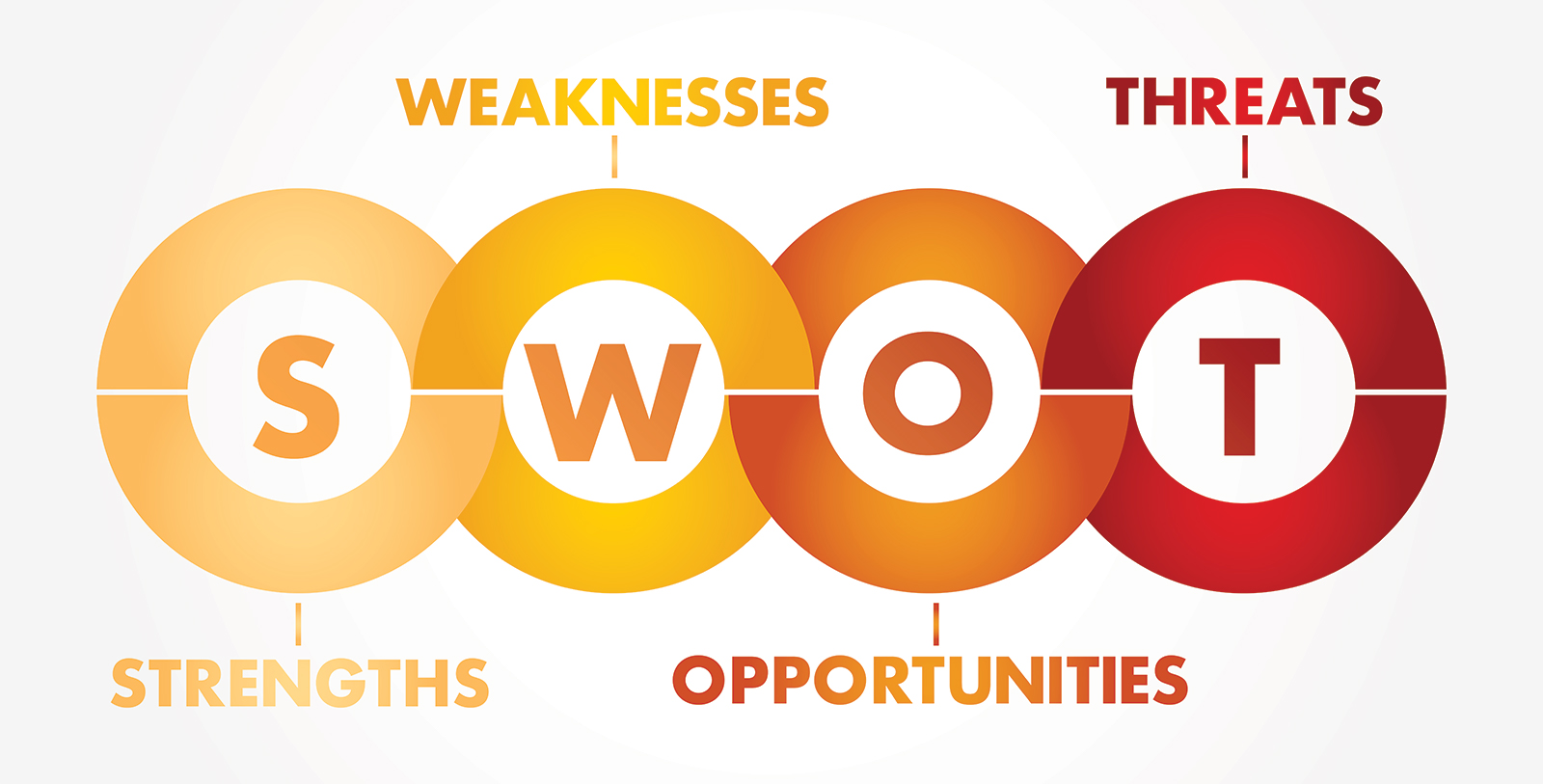
Meaning of SWOT

Strengths- S stands for Strength. It refers to the areas of expertise or any other unique factor that can act as a asset in growth of an organization and provides with an upper edge over its competitors.

Weaknesses- W stands for Weaknesses. It refers to the drawbacks and areas in which an organization needs to work upon to face the competition in the market.

Opportunities- O stands for Opportunities. It refers to the favorable conditions or occasions that can act beneficial in growth of the organization.

Threats- T stands for Threats. These are the unexpected and unfavorable conditions or occasions that can act as a barrier in growth and working of an organization

Why you need to conduct a personal SWOT analysis | Marriage-Stanley &  Associates %

STRENGTHS OF UDAAN

1.Strong Foundation Team:- The founding members of the company already had the required knowledge and experience after working at Flipkart. Due to this, many other Flipkart employees also joined the startup, which helped them in increasing their efficiency and productivity. It enabled the engineers to work on their creativity, which is encouraged at Udaan.

2.Innovative Idea:- The company emerged with a new idea of providing online services to retailers and wholesalers. It provided with a platform for B2B Commerce that can help them in effectively competing with the big retailers and the big branded stores and websites. This helped them to enlarge their customer base.

3.Large and Satisfied Customer Base:- The company has around 1,50,000 sellers on its platform that is increasing each day with increase in downloads and website visits.

WEAKNESS OF UDAAN

1.Unable to manage its Expenses- The expenditures of the company increases with increase in revenue amount but the hike in expenditure is more than the proportion of revenue

2.Supply Chain Issues- The company often struggles in finding potential suppliers to meet the requirements in different geographical areas and deliver the product on time.

3.Requirement of Internet- There are still some areas that don’t have internet facility. These people stay deprived acting as a barrier in covering all geographical areas.

OPPORTUNITIES FOR UDAAN

1.B2C – The company should develop a platform that deals B2C i.e. Business to Customers along with its current department. This will help in increasing the customer base and revenue sources of the organisation.

2.Management Consulting- The company should consult a consultant. This will help the company to manage their resources in a better manner.

3.Setting up of Outlets- The company is currently dealing through online platform. Investing in setting up offline outlets in different geographic area can help in boosting customer base.

THREATS FOR UDAAN

1.Cost:- In an ecosystem where company has to face a lot of competition to survive in the market. Many a times the company has to offer its products and services at a higher price as compared to market due to high amount of cost incurred in the process that can compel its customers to switch to another company.

2.Economic Factors:- The company has invested a handsome amount of money as capital. A small change in economic factors can have a huge impact on the company.

3.Decreasing Profits:- The company though increasing its revenue each year is not able to boost the profits too. The profits are decreasing each year which is a major threat and needs a quick action.

UDAAN: A LEADING B2B STARTUP

Udaan is a Private start-up run by Hiveloop Technology Pvt. Ltd based in Bengaluru that was able to secure its space in unicorn club i.e. a Privately Held start-up valued at $1 billion or more. It is a B2B i.e. a Business to Business marketplace.

It was founded in 2017 after analyzing the market by using Beta App that was launched in November 2016 by Former Flipkart employees Amod Malviya, Sujeet Kumar and Vaibhav Gupta.

While Malviya was Chief Technology Officer at Flipkart, Kumar was the Senior Operations Executive and Gupta was Senior Vice-President of Business Finance and Analytics Department at Flipkart.

Udaan is a B2B marketplace which connects traders, wholesalers, retailers and manufacturers on a single platform via a mobile app.

Udaan helps businesses discover customers, suppliers and products across categories and connect them in order to get the best deal. The platform also facilitates secure payments and gives logistics support.

There are around 1,50,000 sellers on Udaan platform across India offering products such as apparels, electronics, staples and fast-moving consumer goods (FMCG) to wholesale buyers.

Udaan has so far secured a total funding amount of $ 1.2 Billion over 6 rounds.

Its first capital infusion came in November 2016, when it raised $10 million from Lightspeed Venture Partners.

Their latest funding was raised on Jan 6, 2021 from a Series D round.

The start-up offers an employment to more than 5,000 employees working as a valuable asset for the organisation.

 The organisation was able to achieve 6,286 downloads in last 30 days showcasing the success path.

It has 8,16,978 website visitors in last 30 days including visitors from India and abroad.

startups: 5 startup trends to watch-out for in 2020 - The Economic Times


STARTUP: A NEED OF HOUR

A startup is a young company founded by one or more entrepreneurs to develop a unique product or service, bring it to market and make it irresistible and irreplaceable for customers.

Startups are rooted in innovation, addressing the deficiencies of existing products or creating entirely new categories of goods and services, thereby disrupting entrenched ways of thinking and doing business for entire industries.

FACTORS THAT BOOST THE SUCCESS OF A STARTUP

Expertise of Founder in Domain An organisation is an artificial person and the founder is the one who determines whether it will survive or not. The founder needs to ensure that he/she has acquired adequate skills and knowledge about the domain and should not just step into it without any prior experience in the specific field. The more experience is held by its founder, more are the chances of its success.

Passionate and Supporting Team An organisation needs support of its members. A leader or a manager is nothing without his/her followers or sub-ordinates respectively. They need the support to create wonders. If an organisation is able to find such passionate and supporting employees, then the startup will definitely be able to crate a goodwill in no time.

Committed and Hard Working Employees Employee is that asset of an organisation that converts other assets into money. Capital is of use without Human Capital. Committed and Hard working employees don’t work for money but work for the belonging towards organisation. They give their best for success of organisation.

Innovation A market where the demand and requirements of consumers changes drastically, a new business needs to bring something new and out of the box that leaves a favorable impact on mind of customers to create a customer base.

Not letting go even a small opportunity of Growth A new organisation should grab each opportunity to show its uniqueness. Every opportunity have only two results either success or a learning that can act as a base for future success.