B+ TREES

The B+ tree is almost identical to the binary search tree. It is a balanced tree where the search is directed through internal nodes. The data entries are present in the leaf nodes of the B+ tree. B+ trees support both random and sequential access since the leaf nodes are interconnected with each other through links.

STRUCTURE OF B+ TREE

The general node structure of B+ node is as follows 

  • It contains up to n – 1 search-key values K1, K2, . . ., Kn-1, and n pointers P1, P2, . . ., Pn.
  • The search-key values within a node are kept in sorted order; thus, if i < j, then Ki < Kj.
  • To retrieve all the leaf pages efficiently we have to link them using page pointers. 
  • The sequence of leaf pages is also called a sequence set.
  • In a B+ tree, the tree structure tends to grow on the insertion of new records and shrinks on the deletion of existing records. Hence it is called a dynamic tree.

CHARACTERISTICS OF B+ TREE

The following are the characteristics of the B+ tree:

  • The B+ tree is a balanced tree and the operations such as insertion and deletion keep the tree balanced.
  • Each node, except for the root node, must be compulsorily occupied with at least 50%.
  • Searching becomes so simple because traversing from the root to the relevant leaf nodes results in the record.

INSERTION OPERATION

Algorithm for Insertion:

Step 1: Find correct leaf L.

Step 2: Put data entry onto L.

  • If L has enough space, done!
  • If there is no space, split L (into L and a new node L2)
  • Allocate a new node
  • Redistribute entries evenly
  • Copy up the middle key.
  • Insert index entry such that it points to L2 into the parent of L.

Step 3: This can happen recursively. To split the index node, redistribute entries evenly, but push up the middle key. (Contrast with leaf splits).

Step 4: Splits “grow” tree; splitting the root increases the height. The tree grows either wider or one level taller at the top.

DELETION OPERATION

Algorithm for deletion:

Step 1: Start from the root to find the leaf node L with the entry.

Step 2: Remove the entry,

  • If L is at least half-full, done!
  • If L has only d-1 entries,
  • Try the redistribution technique by borrowing keys from the adjacent node (sibling) with the same parent node as L.
  • If a failure occurs when tried to re-distribute, merge L and sibling.

Step 3: Whenever a merge occurs, entry (pointing to L or sibling) must be deleted from the parent of L.

Step 4: Merge could pass the entries to the root, reducing the height of the tree.

MERITS OF B+ INDEX TREE STRUCTURE

1. In the B+ tree the data is stored in the leaf node so searching of any data requires scanning only of leaf node alone.

2. Data is ordered in the linked list.

3. Any record can be fetched in an equal number of disk accesses.

4. Since the leaf nodes are linked, performing range queries is easy.

5. Since keys are used for indexing, the height of the tree is less.

6. Supports both random and sequential access.

DEMERITS OF B+ INDEX TREE STRUCTURE

1. Extra insertion of non-leaf nodes.

2. There is space overhead.

IS SOCIAL MEDIA POLARIZING SOCIETY?

PROLOGUE

Today, society isn’t just the buyer of data however the maker too. Practically 1.49 billion individuals sign into Facebook day by day. All things considered, around 6,000 tweets are tweeted on Twitter each second. From the hour of its commencement, more than 40 billion photos have been posted on Instagram. Web-based media should turn into an extension between far off individuals, yet it has become a divider between close individuals.

Tragically, counterfeit news has become an industry today and is common all over. Its development, thus, prompts a developing doubt in the traditional press. Counterfeit news has contributed drastically to the reverberation chamber wonder. “Reverberation chamber” alludes to a circumstance where explicit thoughts, convictions, or information focuses are solidified through reiteration of a shut framework that doesn’t permit elective or contending thoughts or ideas.

A PEEP INTO ASCH CONFORMITY EXPERIMENTS

Incredible social analyst Solomon Asch had led a progression of mental trials called the Asch Conformity Experiments during the 1950s. These trials expected to comprehend the degree to which an individual’s perspectives are affected by a gathering. Through the series of investigations, Asch, amazingly, tracked down that an individual was able to try and offer an off-base response just to adjust to the larger part see. The respondents furnished wrong responses for various reasons. Some of them were hesitant to be derided or considered as exceptional. Others dreaded judgment or shame. Some of them likewise accepted that the gathering should be preferred educated over them, so they ought to go with their viewpoint. Method for correspondence and commitment have fostered a great deal since the 1950s, yet the human intuition to fit in stays as before. This clarifies the effect of phony news on the web, which adds to a spellbound society.

HOW IS SOCIAL MEDIA POLARIZES SOCIETY?

Clients in a social framework bond more with ones who are like them in assessment than with ones who are divergent. This is called client homophily. An investigation did by Aalto University on expanding polarization via online media found that elements like client homophily and algorithmic sifting lead to upholding and supporting conviction frameworks. This frequently guarantees that we don’t open our psyches to assorted feelings. Individuals look for educated and reliable thoughts through channels just from individuals they trust. They even search for news that affirms their perspective to mollify themselves. This outcomes in individuals developing inflexible assessments of issues and not the appropriate range to the issues. For instance, Twitter regularly prompts individuals to follow individuals holding a comparative perspective.

Most web-based media destinations are more than able to play abettors. The provisions of receptiveness, lack of definition, and anonymity that were intended to invigorate underestimated networks are currently giving trawlers the qualification to discourteous remarks. This additionally makes space for mean expectations to develop. Also, there has been a developing pattern of deception principally because of predispositions or human mistakes. A steadily developing society of phony records is likewise noticeable. It is fundamentally accomplished for pushing a political plan or annoying individuals. These days there is disinformation also. Disinformation alludes to counterfeit news made deliberately.

OTHER FACTORS OF POLARIZATION

In the early occasions, the print machine was viewed as inconvenience by the Ottomans. The speed at which books were printed and conveyed led to doubt. The principal Greek printing house set up in 1627 distributed a booklet focusing on Jews. Books were just a medium, actually like web-based media is today. Forbidding books and accusing web-based media are the outcomes of comparable wrong rationale. On the off chance that web-based media had an inclination towards evil, stories couldn’t ever have discovered a method of articulation. Web-based media likewise houses numerous accounts of lost kids being discovered, canines being embraced, cash being raised for different causes, and comparative great deeds and human cases.

As indicated by the BI-2018 review, the quantity of people with admittance to TV has is 835 million. Cell phone entrance has developed to around 300 million. The quantity of every day dynamic clients on WhatsApp and Facebook are 200 million and 194 million, individually. The details plainly feature that online media in India is as yet a specialty marvel. Web-based media stages are multilingual, multicultural, and are comprehensive. These stages permit equivalent freedoms for all, independent of class, belief, race, religion, sex, age, or monetary assets. Consequently faulting web-based media for each online wrongdoing doesn’t appear to be persuading.

TOWARDS THE END

Online media is catching society in thin, uneven, and ordinarily counterfeit perspectives. This is disturbing. There isn’t anything amiss with being stubborn. In any case, being inflexible in suppositions is without a doubt wrong. There are consistently different sides to a similar coin. It isn’t care for online media has unfriendly impacts as it were. Online media has a few efficacies also. It interfaces far off individuals and works with the fast scattering of data.

While web-based media faces the worldwide difficulties of data barrage, which is verifiable and counterfeit, it likewise empowers underestimated networks to get to their privileges and voice their viewpoints. So it relies upon the client how he chooses to utilize online media as an instrument or as a weapon. Ideally, individuals will figure out how to be more liable for what they offer, and web-based media stages will recover their tragically missing trust.

Impact of Social Media on Youth

In today’s society, we are all witnessing how social media is evolving on a daily basis. The majority of individuals on the planet use social media. This is very popular among the younger generation. Even if you look at statistics, you will find the same scenario. Every day, the popularity of social media grows. The effects of social media on youngsters are also seen in other aspects of our life.

Social Media Trivia: Brush Up Your Knowledge

Here are some statistics that were done on social media.

  • The average time spent by the people per day on the social network is 1.72 hours.
  • For the teenagers, the numbers are much higher which is up to 27 hours per week.
Impact of Social Networking Sites on the Youth | The Knowledge Review

In today’s society, social media has become an integral part of many young people’s lives. Many young people continue to engage in social media without stopping to consider the influence of social media on youth. The consequences might be beneficial or bad, but they are usually detrimental if they are not linked with a commercial or professional purpose.

It is a major issue for the majority of people in today’s society because what is more important?

Is it more essential to be concerned about “Facebook” friends than those with whom we meet face to face in our everyday lives? What is the long-term influence of social media on today’s youth?

There are many advantages to using sites such as Twitter, Facebook, Pinterest, LinkedIn, Tumblr, Google +, Gaming sites, Instagram, and blogs, but there are also many disadvantages. If we want to make sound decisions, we must go deep within ourselves and conduct extensive study on the subject.

Positive Impact of Social Media on Youth

  • It keeps connected to their friends when they are not able to see each other always when they want to.
  • Social media keeps you updates about the important things that are going across the globe currently or maybe in your locality. It is a great benefit to know about everything just by the simple click of your finger.
  • The youths have the perfect place to express themselves in such a way in which they won’t be allowed to do in public. This is something which makes the youth feel better about them and they hold some position in society.
  • It helps you in developing social skills and the best part is that a number of friendships can begin from the social website. Youths generally like make new friends and know about others as much as they can. All of this is possible with the social media platform.
  • One more interesting impact of social media on youth is that it feels fun to interact with peers rather than talking to them face to face.

Negative Impact of Social Media on Youth

  • People in today’s age place such a high value on social media that it has become their top priority. They like being on social networking sites and neglect all of the things that should come first for them, such as family, sports, and school.
  • We can only see the virtual aspect of a person on social media sites. This implies that we can only see the aspect that they want us to see. Many people strive to present themselves to others as someone they are not.
  • Young people have a bad tendency of bullying their classmates, which is understandable to some extent. However, when it comes to cyberbullying, it has a significant impact on the other peer because it may appear on anyone’s newsfeed and quickly go viral. Such factors can sometimes lead to despair and suicide ideation.
  • Some young people are extremely susceptible to influence. They may feel the urge to modify their physical appearance and compare themselves to everyone they see on social media.
  • Social media provides a powerful temptation. It might become an addiction for the young and cause them to get distracted.

Positive Impact of Social Media on Youth in different Sectors

Educational Aspects

  • Social media allows teachers to quickly interact and connect with students and others.
  • Students have free and simple access to internet sites where they may obtain all of the information.
  • Grades have improved, and the rate of absentees has decreased.
  • According to a poll, around 59 percent of schools confess that their students use social media for instructional purposes. In addition, 50 percent of them utilise social media to discuss school tasks.

Political Aspects

  • The participation of the voters has increased. The users of the platform of Facebook have admitted that they get the inspiration to vote in an election when they see online their friends have voted too. A survey reported that those who visited Facebook more than two times in a single day were more likely to attend a political meeting or rally- 43% more people said that they are sure to vote.
  • Social media gives birth to the idea of change in politics. Social networking gives the social movement cheap as well as a quick method for distributing the information and make the people come together.

News/ Awareness

  • Around 30% of the people of America get their news from online. The information in the social networking sites spreads much faster than any other forms of media.
  • More than 50% of people in the world nowadays get the breaking news from a social media platform
  • The social networking sites provide the benefits academic research to the people along with the online access. This helps the people to get access to the resources that were unavailable before
  • The people who use the platforms of social media get empowered and informed to change their communities and themselves.

Social Aspects

  • With the help of social media, people can communicate with friends and this enhanced communication online strengthens the relationship between them. Survey says around 52% of the teens that remain online say social media have helped them with their friendships and around 88% of the people say that staying online has helped them stay in touch with the friends they don’t see regularly.
  • As said earlier, young people always have this tendency to make new friends. Around 57% of the teens that remain online say that they make new friends on social media.

Jobs for the Youth

  • Social media is one of the best ways for marketing products, connecting with people and find business opportunities.
  • It helps the employers to get the employees and those who are in search of new jobs. Around 87% of the job recruiters have found their employers through LinkedIn, around 30% through Facebook and 15% through Twitter.
  • The social media sites are the reasons for creating thousands of job opportunities for the people and they have brought new avenues of income.

Negative Impact of Social Media on Youth in different Sectors

Work/School

  • Social media helps the students to cheat on school assignments and for those who work can get some idea about their work.
  • If social media is used on a light scale, it will help the students to improve their grades. However, for those students who are heavy users, their grades tend to fall incredibly. A study shows that students who are using Facebook have an average GPA of 3.06 while those who don’t use Facebook have an average GPA of 3.82.
  • On average of 106 minutes in every 90 minutes that is spent on Facebook college students drop their grades to12.
  • The social media platform affects the productivity of the employees to .51%. These workers are generally between the age of 25-34 and check their social media during work.

Lacking Privacy

  • One thing that is seen common among the young people is they often get too open in the public and share their personal information. Most of the people don’t read the privacy policies and are unaware that their information that the information is read by the insurance companies, advertisers and the IRS.
  • They expose themselves to the governmental and corporate intrusions. The justice department of the US gather hundreds of pieces of information from the social networks and email every year.

Cyber Bullying

  • One of the very prime negative impact of social media on youth as some of the negative minded individuals use it for bullying someone.
  • People use it for sending intimidating messages to others that sometimes create trauma for the others as well.
  • Misinformation or false propaganda is another negative impact of social media on youth.

Google&#39;s new update to Protect Children Online

 Currently, the number of children involved in online activities are increasing by the day. With online classes and other activities, cyberspace is the new learning space for the kids. It is extremely important to provide a safe digital space for the children. Google is all set to launch a new set of updates to ensure online safety for children under the age of 18. 

What are the New Updates?

The new updates focus on protecting the minor users of Google. They are working on multiple fronts to keep the online space safe. The key points of the update includes giving more control over the digital footprints, changes in advertising and digital well-being tools. 

The new update aims to give more control to the minors over their digital footprints. It allows the children or their guardians to request removal of their images from Google search results. It will reduce the online exposure of the children below 18. 

The location history of all those below 18 be will be turned off by default and it cannot be turned on without the supervision of the parents or guardian. Google search will also have the ‘safe search’ feature by default. It will remove any explicit results while searching. The Google Assistant will also have ‘default protections’ for the minors. 

13 is the minimum age limit to create your own Google account. The Youtube videos uploaded by the people above the age of 13 and below 18 will be by default posted in the private mode. Google also said that it will remove the “overly commercial content” from Youtube Kids. Google will also prevent age sensitive advertisements from being displayed to children and teenagers. The personalized advertisements based on age, gender and interests will be blocked. However, advertisements based on the context, such as the person’s search request are still allowed. 

In order to ensure digital well-being the content can be filtered out . It allows people to block access to news, webpages, podcasts on devices, using the filters on the Family Link app. The Family Link app lets parents set rules in order to ensure safe online learning, playing or searching space for their children. 

After a lot of criticism of the tech companies alleging that they were not doing enough to protect children, there was pressure on these companies to take up steps to ensure protection. Previously, in 2019, Google had to pay a fine of 170 million dollars for violating the Children’s Online Privacy Protection Act (COPPA) for collecting data from the minor users without parental consent. 

Google has emphasised that its objective is to work with “kids and teens, parents, governments, industry leaders, and experts in the field of privacy, child safety, wellbeing, and education to design better, safer products for the kids and teens.”

DOES TECHNOLOGY PLAY A ROLE IN MAKING PEOPLE MORE ISOLATED ?

Do you remember the days when you want to go out or converse with your friends so bad but because of your sluggishness you wind up looking over your social media ? In this cutting edge period of innovation we are practically becoming captives of it. We can abandon our companions yet not our cell phone. Looking through Instagram or Twitter have become the piece of our every day schedule.

Effects of social media on us

Yet, do we understand that we are turning out to be more isolated by doing this. Particularly, subsequent to getting quarantined. Since, we invested the vast majority of our energy in our phone during quarantine. We have gotten far off from our friends. Despite the fact that we live with our families we don’t talk much with one another in light of the fact that we as a whole are on mobile phones.

Influence of technology on kids

Kids as well as managing a similar issue. They have restricted their physical activities like playing around with friends or spending time with friends. The only game in which they are engaged are video games. A portion of the children play vicious computer games which can influence their creating cerebrum. Also it can likewise influence their eyes.

Children are fate of a nation on the off chance that they will stay isolated nation won’t advance. They will need fundamental human manners like correspondence and meeting behavior. So it is necessary for us to distanced from this world of technology for sometime and live in a real world.

#EDUCHAIN- BLOCKCHAIN IN EDUCATION

“If we teach today’s students as we taught yesterday’s then we rob them of tomorrow.” During the pandemic, technology facilitated education in the best way. Therefore the intertwining of blockchain and education #EdChain will certainly be really. Blockchain is an immutable, decentralised form of database that stores information. As the name suggests, it is a chain or a series of blocks that store data like the date, time and amount of transactions.

The most important feature associated with blockchains is security. Each block within a blockchain contains a hash of the previous block. Hashing makes it difficult to alter the blocks. Thus it ensures immutability. Incentivising miners ensures integrity as they disapprove malicious transactions. These mechanisms ensure the high security of data.

The intertwining of blockchain and education would help improve teaching and learning in various dimensions.

Decentralized control over data

Blockchain can store data related to students’ credentials. It can also store details like the skills or courses that students have learnt. Consequently, a centralized authority will not control this data. It would also enable the students to share this data with their prospective employers. Furthermore, students can store data related to both classroom learning and skill enhancement. It would ensure accuracy in the resumes. The security mechanisms of blockchain ensure the safety of the data. Students cannot alter past educational certificates stored on the blockchain so it would ensure accuracy. Blockchain also takes care of privacy. This is because blockchain would store the hash of the data rather than the data itself. Students can also encrypt data before storage at the option of the student. We already have many blockchain-powered applications that facilitate the record-keeping of digital credentials and intellectual property.

Ensuring accuracy

Students cannot alter their past educational certifications. Therefore, employers would get the most accurate information about their skills. This would also help find the perfect matches between employers and job seekers. A distributed ledger system like blockchain supports safe chronological academic records. By integrating transparency and accuracy blockchain can create a strong relationship between employers and job seekers.

Make learning engaging

Blockchain can also make learning more engaging. This would help us to move forward from the conventional tools of teaching and learning. Blockchain’s OpenSource framework is a tool that can enhance online teaching and learning. It would also facilitate the personal development of students. New technologies combined with blockchain can provide personalized learning. Consequently, we can customize the content to suit the needs of different students. We can also have gamified online education to make learning interesting.

Smart Contracts

Students can also enter into various Smart Contracts with the university through blockchain. These contracts can be related to various payments like tuition fees or examination fees. The contracts will provide convenience and safety of transactions at the same time. Smart Contracts in Blockchain can help automate administrative tasks. Additionally, this would also reduce overhead costs related to administrative tasks.

Efficacy in Selection

Blockchain would certainly reduce CV fraud by streamlining the data provided by the students. It can also make appropriate matches between employers and job seekers by suiting their requirements. Blockchain-based university diplomas would certainly be a good leap forward in the selection of job seekers

SUCCESSFUL INITIATIVES

Digital Credentials Consortium is an initiative that aims to enhance the record-keeping of digital academic credentials. The initiative started in 2018, intending to create a safe mechanism for storing digital academic credentials. It will enable the students to hold a lifelong record of their academic achievements. Students can easily share this data with the employer as well. The students will also get other benefits like safety, security and privacy. Moreover, they will not be required to pay fees to get copies of their credentials from the university. It would also benefit the educational institutions by managing records securely, eliminating the risk of identity fraud. Thence they can save the cost and time required in admin work. Subsequently, the employers would get the benefit of easy access to accurate records.

MIT is one of the leading institutions that has developed blockchain applications to streamline academic accreditation. It believes that the intertwining of blockchain in education can be used for various purposes.MIT Media Lab and Learning Machine’s Blockcerts is a platform. It allows educational institutions to incorporate blockchain accreditation in their programs. The University of Nicosia offers accredited courses through verified certificates on the blockchain. Southern New Hampshire University issues bachelor and diploma degrees in a digital format on the blockchain besides in a traditional paper format.

CONCLUSION

Educational technology has made good progress over the last 20 years but, there is a long way to go. Modern technologies like blockchain can facilitate progress effectively. According to the Gartner, 2019 CIO Survey around 2% of higher education respondents has already incorporated blockchain. On the other hand, 18% are planning to do so. However, 47% are not interested in incorporating blockchain in education. The possible reason behind this seems to be a wait and watch approach. Keeping in mind the hype and potential risks of blockchain respondents probably aim at playing safe. Record keeping is the most promising use of blockchain besides security and privacy. Overall we have numerous universities and enterprises aiming at enhancing education by intertwining blockchain with it. These universities use blockchain not only for record-keeping but also for teaching and learning purposes.

We need to have an accepting attitude towards change. Amalgamating technology in education may seem difficult. But it is the need of the hour. New technology can improve the existing methods by saving time and cost at the same time. Many universities have already explored this walk still we need more efforts in this regard. As they say, change is the only constant, so we need to be more receptive to this change.

#EduRob- ROBOTICS IN EDUCATION

INTRODUCTION

“Our future success is directly proportional to our ability to understand, adopt and integrate new technology into our work.” During the pandemic, technology facilitated both work and learning. Keeping this in mind, the idea of intertwining Robotics in Education seems convincing. According to the research by Global Market Insights, Artificial Intelligence in the education market will surpass USD 6 billion by 2024.

A PEEP INTO THE EFFICACY OF ROBOTICS IN EDUCATION

Technology in education, popularly called edtech is the need of the hour.

Audio Visual Media

Robotics can use audiovisual media to impart quality learning. Online learning requires a lot of attention from students and a proper system to deliver on the part of teachers. Therefore, Robotics can also make use of Virtual Facilitators like gesture recognition, 3-D gaming and computer animation to create interactions with students, making learning engaging. Subsequently, gamification tools can make the subject more engaging. Also, Chatbots can address queries by providing tailor-made answers.

Combat the Paradox in Employment

India has witnessed a paradox in employment. Indian recruitment is going through a peculiar phase. Surprisingly, almost 8 million youngsters enter the job market every year; still, companies find it tough to fill vacancies for crucial roles. The main reason for this is the enlarging skill gap. Many times students do not possess the skill set required by companies for crucial roles. Artificial Intelligence (AI) in Robots can help re-skill and up-skill students. Subsequently, Robotics can use AI and predictive analysis to map high demanded skills to boost career prospects.

Streamline admin work and universal access

Teachers have to spend their precious time and energy on admin tasks and paper checking. They can use this time to impart knowledge. Here Robotics comes into play as it can streamline these tasks. Robotics in Education gifts us universal access wherein students belonging to different linguistic communities can learn freely.

Customized Learning

The most fundamental efficacy of Robotics in Education is customized learning. Different students have different problems. Therefore, we require different methodologies to address them. Some students have good grasping power while some learn at a slower pace. Subsequently, AI in Robots can smartly customize learning by giving challenging tasks to fast learners and going at a slower speed for slow learners. It can also communicate with learners, simulating human experiences by voice or hologram.

Catering to differently abled students

Today, we have a plethora of online courses for upgrading skills available. But unfortunately, these courses are unable to cater to the needs of differently-abled students. In such a scenario, Robotics attains prime importance. AI in Robots can create customized lessons to suit the learning needs of differently-abled students as well. During the video conference for Smart India Hackathon, 2019, an engineering student from Dehradun presented her program that could help dyslexic students by utilizing the benefits of AI. Hence, Robotics can unclip the wings of specially-abled children by enabling them to learn the latest skill sets.

A GLANCE AT SOME SUCCESS STORIES

Some counties have already very well amalgamated technology with education. Columbia is running full-time online schools as a substitute for bricks and mortar schools. The schools use digital resources like digital grade books, digital portfolios, learning games and real-time feedback of students. Finland has goodwill as an educational powerhouse, imparting quality learning. It is also known for making the most advanced application of digital technology in formal and extracurricular activities. Finland has successfully used Robotics through humanoid robots and mobile apps. The robots can understand and speak up to 23 languages. The robots can also give feedback to teachers about the problems that students face. Robotics enhances the overall interest in STEM (Science, Technology, Engineering and Mathematics) by developing critical thinking skills.

Robotics in E-Learning is not an unexplored arena. Air Force technicians use Intelligent Tutoring Systems like SHERLOCK to detect electrical system problems in aircraft. We can use a similar system in education as well. Another pertinent instance is Duolingo which is one of the most famous apps used for learning foreign languages. Carnegie Learning’s MATHia was awarded the “Best Use of AI in Education”. It is a learning engine that adjusts itself according to the capacity of students.

THE FINAL THOUGHT

Robotics can certainly pave a new path for Education. It provides adaptive learning to help students ace subjects. It would help impart quality education through an engaging methodology.Skill upliftment through a digital medium can provide a flexible approach besides adding shimmer to one’s resume. Today various fields are making optimum use of Robotics. Hence we need to deal with the challenges associated with it. The primary challenge before us is preparing students for this change. We need to instill an understanding that AI would simply complex things while eliminating boundaries in learning. At the same time, one also needs to understand that there are roles requiring creativity, emotional intelligence. Only humans can play these roles well. We ought to bust the myth that utilizing Robotics in various fields would not lead to unemployment.

The purpose of using Robotics in Education is not to replace the existing people but to enhance the quality of Education. Thus the need of the hour is striking a balance and combining both AI and human abilities. Another challenge is that there is a vast need for Research & Development in this field as we are just in the initial phase of usage. Extensive Research and further innovation would ensure successful implementation.

Adapting to changes always seems difficult. But we need to understand that change is the only constant. Therefore, we must be more receptive to it.“Robotics in Education is not meant to eliminate humans but to facilitate them”.

WHY IS SOCIETY SCARED OF CONFIDENT WOMEN?

INTRODUCTION

Men often consider workplaces like offices and positions of power as their original territory. But unfortunately, a woman walking down the same corridor seems really hurting. Maybe, the patriarchal society does not dare to accept a woman’s success. Society has sadly conditioned men to see women as inferior. Society has suppressed women for the longest time. Men have gotten so used to seeing women as the weaker sex that they cannot see them prosper. The story does not belong to the present day. Society is writing it since ancient times. A legitimate example would be the terror in the hearts of men on seeing Razia Sultan’s regime.

CONSTANT FEAR OF SUCCESSFUL WOMEN

A woman with a solid and confident personality strikes terror in the hearts of men for no fault of hers. Suppose a woman questions a decision or expresses her point strongly. In that case, she is instantly stereotyped as a devil for violating the conventional code of conduct. As a retaliation, men usually title strong women as challenging to work with or get along or tough to handle. This is the most common solution men use when they cannot accept a confident and booming woman. The frustration is so deep that they even derogate the assumption that the woman must have done sexual favors to impress her boss.

The issue is not that superficial as it may seem to be. Instead, it is something much deeper rooted. More than a mere stereotypical gender face-off, it brings out the fickle-mindedness of society.  For long years the community has conditioned men to see themselves as superior and women tolerant of it. The television and film industry is the trendsetter for the country. But unfortunately, in the majority of cases, successful and confident working women are often portrayed as mean, cold-hearted, or harsh. If a man is career-driven, then he is praised for his determination. But if a woman does the same, she’s seen as selfish or irresponsible towards her family. Successful working women are rarely portrayed as affectionate mothers or wives. This brings out a bizarre assumption that a career deteriorates motherhood in a woman.

WHY ARE WE SO INSECURE?

Insecure people do pull down everyone, but when this pulling down does a gender bias, things get ugly. The whole proposition takes a dramatic turn because men often see it as a role reversal. They often look at this role reversal as a threat to their masculinity. Since the earliest times, a man is seen as the breadwinner for the family. This label further cements their superiority over women. This is because it is a certification of the fact that women are dependent upon men. In such a scenario, when women break their cocoons and move out, it scares men to the core. Men are in constant fear of losing their supposed superiority over women. Men cannot accept that women can break their shackles and be on an equal footing to them.

POSITION OF THE SOCIETY

This fear of losing power is so deeply rooted that it is visible even between a husband and a wife. If a wife starts earning equal to or more than her husband, she often hurts her husband’s ego and falls prey to numerous taunts. But this does not mean that only men are at fault, the society has an equal contribution. Very conveniently, society says that behind every successful man, there is a woman. Still, it cannot believe the vice versa. Community respectfully uses the term “working women” for females when they move out of their homes. But it mockingly uses the phrase “house husband” when a husband takes care of the household. This clearly highlights that despite shouting about equality at the rooftops, society is still uncomfortable for it at heart.

THE FINAL THOUGHT

Not liking a woman just because she is successful or confident brings out society’s own insecurities. If a husband supports his wife the same way his wife helps him, things will improve. It is certainly wrong to stereotype that all men are afraid of confident women. Husbands have started supporting their wives to fulfill their dreams. This precious support is unclipping their wings.

Men have begun respecting women at top management levels.  The traditional rigid roles of men being the protector provider and women being dependent ought to be challenged. Masculinity is no certificate of superiority. Equality comes where we judge a person on his merit and not his gender. Gender bias is certainly corrosive to society and progress as well. There is nothing wrong with healthy competition. In fact, it actually brings out the best in a person and helps him to flourish. But when this competition is a pure consequence of the power play between sexes, it does become problematic.

#MediChain- USING BLOCKCHAIN IN MEDICINE

INTRODUCTION TO THE IDEA

“Healthcare is yet to be transformed by technology.” The renowned American businessman, Joshua Koshner has very rightly given this statement. Developed countries like the USA plan to spend 20% of their GDP on healthcare in future. The Healthcare industry spends jarring costs due to data breaches and inefficient practices in data management. In this case, Blockchain comes to the rescue. It can certainly pop this spending bubble with great ease.

WHAT IS BLOCKCHAIN?

Blockchain is an immutable, decentralised form of database that stores information. As the name suggests, it is a chain or a series of blocks that store data like the date, time and amount of transactions. There are various types of blockchains like public, private and permissioned. A public blockchain allows anyone to contribute to the network. Hence public blockchains are both decentralised and democratic. Opposite to this, permissioned blockchains allow only verified participants to join the network. Private and permissioned blockchains are similar in function with one difference. The difference is that a particular organisation owns a Private blockchain.

The most important feature associated with blockchains is security. Each block within a blockchain contains a hash of the previous block. A hash is a cryptographic key. These keys are stored in the shared ledger. The keys are also connected by a mesh of nodes that join them. Each node contains a copy of the whole chain which is synchronised and updated constantly. Therefore hashing makes it difficult to alter the blocks. Thus it ensures immutability. Moreover, incentivising miners ensures integrity as they disapprove malicious transactions. These mechanisms ensure the high security of data

HOW DO WE USE BLOCKCHAIN IN MEDICINE?

Blockchain has a wide range of applications in the field of medicine.

STORING PATIENT DATA

Blockchain can keep a decentralised, incorruptible and transparent log of patient data. Since the Blockchain would be private, it would store the sensitive data safely with complex codes involved in it. Decentralisation of data would also allow patients and faculty to access the information, saving the time involved therein. Therefore, Blockchain can create a constantly updated single ledger of health records for rapid transfer by authorised parties.

SECURE DATA STORAGE

The safety and security of patient data have prime importance. Over 176 million patient records were leaked due to data breaches between 2009 and 2017. Important details like health and genomic testing records were stolen. In such a case blockchain provides safety of data through its security features. Each individual can have a private key that would unlock data only when required. Thence, blockchain can store data safely and securely.

SEAMLESS SHARING DATA TRANSFER

The data stored on the blockchain can be readily shared with healthcare providers. This can be done through a shareable private key. Hence blockchain can easily eliminate the time wasted in sharing information with health care providers. It would ensure speedy treatment without time lag. Therefore, Blockchain would improve Health Information Technology (HIT).

PREVENT INEFFICACIES

Surprisingly, a whopping amount of $11 billion is wasted annually due to inefficiencies in data management. The processes involved in obtaining data access related to medical records are very time-consuming. These processes not only exhaust the staff resources involved but also lead to delays in inpatient care. Decentralisation of medical records helps save the time wasted in providing data access to faculties. This way Blockchain would facilitate faster diagnosis and treatment.

SUPPLY CHAIN TRACEABILITY

Decentralisation has serious implications in terms of supply chain traceability. It ensures full transparent supply chain management. Patients can get appropriate answers to concerns related to the supply chain. The ledger once created, can record data at every step of the shipping journey. It would record important details like the information about the supplier.

TRACKING DISEASE OUTBREAKS

Blockchain can help in real-time disease reporting. It would also facilitate the recognition of disease patterns. This can in turn help in identifying transmission parameters.

SAFETY OF GENOMICS

In 2001, the cost to process a human genome was $1 billion. But today, it is just $1000. Hence, the ability of genomics to improve health has certainly become a financial and scientific reality. But these days genomics data theft has become a serious issue. A large number of companies bring individual DNA sequencing. Therefore the security of genomics data is a serious concern. Blockchain provides a potential solution to this. It can provide an online market, where scientists can buy encrypted data for research purposes. This would also eliminate the middlemen and time involved in the purpose earlier. So, blockchain is a perfect fit for this purpose as it can store precious genomics data safely.

A GLANCE AT SOME SUCCESS STORIES

Blockchain in healthcare is certainly not an unexplored arena. Several platforms have already reaped the benefits of blockchain and others are planning to do so. BurstIQ is a platform that helps companies manage patient data safely and securely. Factom has employed blockchain technology to store digital health records safely. Factom also received a grant of $200000 from the U.S. Department of Homeland Security to integrate data from Border Patrol cameras and sensors. MedicalChain maintains a record of the origin and patient identity. In May 2018 MedicalChain launched a telemedicine platform to consult doctors via video call. Guardtime which is located in California helps healthcare companies to implement blockchain technology in their operations. The company uses blockchain for cybersecurity applications. Robomed has combined AI and blockchain to offer patients better treatment. The company also uses chatbots to collect patient information and share it with the medical team. The Taipei Medical University has recently implemented blockchain technology including Robomed’s network. This was done to store and secure medical records more easily.

Most importantly, the government agency, the Centre for Disease Control and Prevention (CDC) uses blockchain to monitor diseases and report outbreaks. Additionally, IBM is working with CDC to develop a blockchain-based surveillance system. Subsequently, this would also help public health agencies to collect patient data effectively.

THE FINAL THOUGHT

Developed countries spend a good share of their Gross Domestic Product (GDP) in healthcare. The U.S government plans to spend 20% of its GDP on healthcare soon. Hospital costs are whopping and inefficient practices in data management further aggravate the. Blockchain can reduce these costs substantially. Estonia has been an initiative taker in this regard. It began harnessing the benefits of blockchain technology in healthcare in 2012. Today almost all of the healthcare billing in the country is processed through blockchain.  Almost 95% of patient data is ledger-based while 99% of prescription data is digital.

Today, blockchain is used in various fields like education, finance and data management. Blockchain has a wide variety of applications in healthcare. It facilitates the secure transfer of patient medical records, supply chain, management and handling of genetic code. Inculcating blockchain technology can improve the efficacy of operations in health care. Currently, we are in the initial phase of using blockchain. Therefore, we need extensive research in this field. We also need pilot surveys to understand the efficacy and limitations of the technology. Blockchain will not only reduce costs but would also improve the safety and security of data.

The significance of innovations is indispensable. Also, change is the only constant. Therefore, encouraging innovations and accepting changes is the need of the hour.


WHAT WILL LIFE BE LIKE IN 2050 ?

After 29 years from now we will sore new heights in technology and medical science. Try not to get befuddled on the off chance that you see robots and distinctive A.I machines at your work place. Possibly we could go to Mars and different planets. 4G and 5G will turn out to be exceptionally normal and think about what perhaps it would not be being used around then.

Yet, not to fail to remember that now our mother earth is confronting such a lot of a global warming, contamination, deforestation, ozone layer depletion and the list goes on. A few specialists accept that a large number of the cities or nation will get vanished in next 10 to 20 years. These generally incorporates cities close to seaside area on the grounds that the degree of ocean water is rising step by step. Because of global warming polar caps are melting and colder areas are becoming hotter.

We may likewise confront water shortage in 2050 in light of the fact that fresh water is just 2.5% on earth and we are not conserving our natural resources. Not notice that oxygen that we inhale will likewise be exceptionally less in 2050 in light of the fact that now additionally because of contamination air we inhale is becoming poisonous step by step which can influence our lungs gravely. The measure of harmful gases like Sulfur dioxide, nitrogen dioxide and carbon monoxide are influencing air quality index(AQI) gravely. A few specialists say that we may have to convey our own oxygen cylinder in 2050.

Regardless of the amount we dominate in our innovation however we will require these regular assets to live healthy. What will be the reason behind living in such developed society in the event that we can’t be healthy. So we need to save our natural resources and limit contamination assuming we need to live heathy in 2050.

The most interesting things about Pune

For new-comers Pune may appear to be arrogant, rude and not-so-friendly, but after spending some time in Pune you will realize that they are actually sweet, a bit arrogant but kind. When you login in Pune you can’t logout.
For them who wants to live in Pune, here are some most interesting things about Pune you should know.

Pune, formerly known as Poona is the second-largest city of Maharashtra, after Mumbai and eighth-most populous city in India.

India’s first indigenously-run girl’s school was started in Pune by Savitribai Phule along with her associate Fatima Sheikh.

Pune is widely regarded as the second major “IT hub of India” and the top “automobile and manufacturing hub of India”
Pune is where Badminton originated in India.

Pune has 21 engineering colleges, which is highest in the world in a given city. There are many popular and old institutes in Pune and because of this in our Marathi language we called Pune as “ Shikshanache Maherghar ” it means Hometown of Education.

Pune has the highest number of software companies in India.

Beside this Pune has some unique things that you will only see in Pune.

1. Puneri Patya

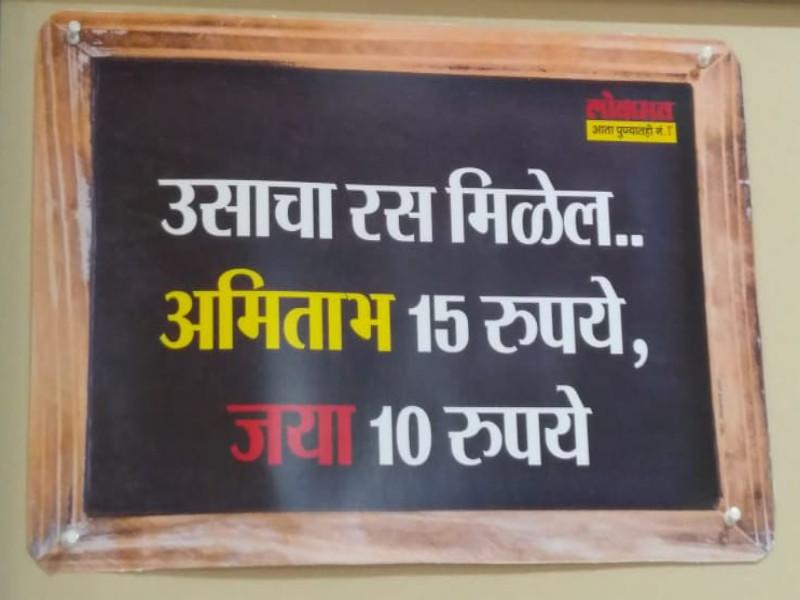
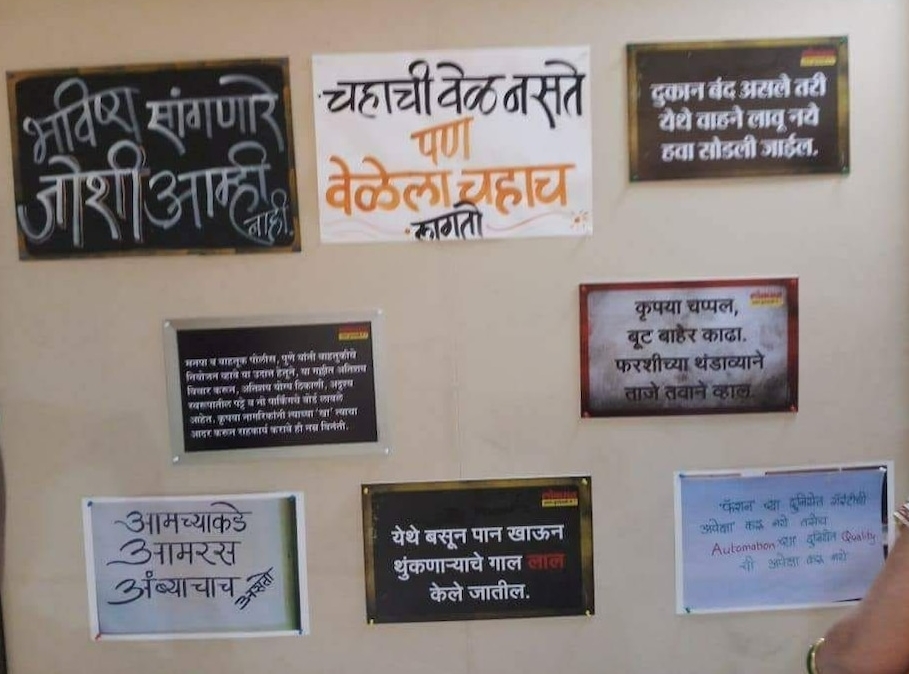
People who mostly come from outside the city come across those ubiquitous Puneri Patya, which are known for their bluntness and arrogance, while they appear funny to the uninitiated. A typical Punekar thinks and acts as though they have the sole right to educate people in their own ways. A Punekar believes in calling a spade a spade. They want order and discipline around them, which is absent when it comes to traffic though. They don’t want to repeat the same thing to visitors or passers-by. Hence, the Patya culture has been thriving in Pune dishing out advice, warnings and at times, threats to those who have not adopted the city’s culture.
From this unique way of expressing their thought we can say that Punekars love to educate others and finding the mistakes of other peoples.
Being a Punekar myself, I never found these Patya strange. However, some people from other cities always made fun of these signages. It seems pun is part of Pune’s life as these signages indicate.

2. Puneri Misal

Famous Puneri Misal you should definitely try if you are traveling to Pune. Misal is like full time meal for Punekars, they can eat Misal all day without getting bored. Misal the local spicy snack of Punekars. It is the all time favourite dish of Punekars and you would find every restaurant and even the smallest hotel at the corner serving them.

3. No work between 1pm to 4pm

In Pune during some time in afternoon like about 2 hours from 1pm to 4pm you will notice that every shop even the smallest one at nook is closed.
Outsiders an those who are new at Pune think this habit of Punekar a bit weird, outsiders find it strange that almost all shops are closed for some hours in the afternoon since their owners take a nap during that time.

4. Puneri Chaha

Pune’s most favourite and famous tea destination “Yewale Amruttulya”. You will find it strange that, a tea shop is as famous as Starbucks. Many people travel far away just to taste “Yewale Amruttulya”, you have to stand in long lines just to taste a tea.

TRENDING TECHNOLOGY

Can a robot ever be conscious and how would we know if it were?🕘

Some people think we could easily build and identify a conscious robot, while others insist that it’s impossible – it all depends on what you think consciousness.

Technology’ is one of the keywords of our world, yet it is also one of the most confused. As an analytical category it seems necessary for our understanding of all of humanity’s history, and indeed beyond. We are probably comfortable with asserting that humans have had technologies since the Palaeolithic, and a menagerie of animals, from crows to chimps, have even been identified as tool users. As an actors’ category ‘technology’ is of surprisingly recent vintage, although cognate terms – techne, arts, and so on – have a much longer history. Yet even for a recent English word ‘technology’ has come to embrace often conflicting meanings. In this essay review I have three aims. First, I will offer a summary of Eric Schatzberg’s important new opus Technology, which untangles and clarifies the history of ‘technology’ and its cognates as actors’ categories. Second, I will conduct a critical analysis, arguing that Schatzberg, while helpfully placing past ways of thinking about technology into two camps, ones he calls the ‘cultural’ and ‘instrumental’ approaches, makes a misstep when he favours the former over the latter.

Third, I offer an extension of my preferred instrumentalist definition, one which highlights an essential property of technologies – their power to intervene over scales – in a way that, I suggest, offers a new, invigorating direction of study for historians of science and technology.

There is disagreement over whether machines can ever be conscious, let alone how we would know if one were. Your view may depend on how you see consciousness.

If the subjective feeling of consciousness is an illusion created by brain processes, then machines that replicate such processes would be conscious in the way that we are. How would we know this? Daniel Dennett at Tufts University in Massachusetts thinks a Turing test, in which a machine has to convince a human interrogator that it is conscious, should, if conducted “with suitable vigour and aggression and cleverness”, be enough.

Data Science

A deep dive into the course revolutionising business worldwide.

What is Data Science?

According to Wikipedia Data Science is an interdisciplinary field that uses scientific method, processes, algorithms and system to extract insights from structured and unstructured data.

There is an humongous amount of data being generated every minute and so, industries need experts who can solve problem fast.
Currently, many popular universities across the world offer postgraduate programs specialising in Data Science.

Why is Data Science is important for students and businesses?

The importance of data Science brings together the domain expertise from programming, mathematics, and statistics to create insights and make sense of data. When we think about why data science is increasingly becoming important, the answer lies in the fact that the value of data is soaring heights.
Data science is high in demand domain and explains how digital data is transforming businesses and helping them make sharper and critical decisions. So data that is digital is ubiquitous for people who are looking to work as a data scientist.

Is Data Science a good career?

Data scientists are in constant demand because it is a data-heavy world! Data scientists are a new growing breed of professionals, highly in demand today.
Data science has been called “the sexiest job of the 21st Century” by Harvard Business Review. The Scope of Data science is getting more popular in recent times. Data scientists are professionals who can simplify big data through coding and algorithms and turn it into a problem-solving solution for the business.

What Will I Study?

A chance to study subject like
• Machine learning
• Data analytics
• Business analysis
• Data visualisation
• Cloud computing
• Database systems
• Internet technology
• Algorithm

What Exams Do I Need To Take?

Most of the universities in the United States prefer students to undertake the GRE/GMAT exam.
Many universities in Australia, Canada, UK, Ireland and New Zealand assess the student based on their academic background and may not ask for GRE/GMAT scores.

Career Opportunities?

Being one of the most sought – after courses in these days, Data Science is a field to ripe opportunities for you, not to mention handsome remuneration.

Career option after data science
• Business Intelligence Developer
• Data Scientist
• Marketing Analyst
• Statistician
• Quantitative Analyst

Digital Literacy

 In the times of increasing dependency on digital technology, digital literacy plays a vital role for learning or working in this virtual world. Digital literacy refers to the skills and knowledge to access and use the digital technology responsibly.It is also called the survival skill in this digital world. 

It does not only mean the knowledge to use digital platforms, it also includes other skills such as critical thinking, practical and functional skills, efficient communication, curating information, collaboration, creativity, E-safety, cultural and social understanding, required while operating a digital platform. Digital literacy is extremely important to overcome the obstacles while learning or working in the digital era. 

It does not refer to just a technical know-how or the ability to read content online. It includes the understanding of basic rules, social practices and ethics while using cyberspace. The digital world is filled with information on various topics. It becomes imperative to know how to access and consume credible information. Awareness about the fact that every piece of information received online may not be true is extremely important. 

Most of the content online is shareable. Therefore it is important to check the credibility of the information and know the impact that the shared information can have on others. The content is also searchable. So it is important to know how to search for relevant information. Not every information we see online may be the latest one, its relevance needs to be checked before consuming or sharing it further. 

The cyberspace is interconnected with each other, people can connect here easily. Digital communication is always two-way.  Most of the content has the option to receive feedback. So it is an important aspect of digital literacy to learn effective communication skills for the digital platform. Communication can be both formal or informal in cyberspace. Nowadays, a number of career options require online collaboration and digital communication skills. 

The online behaviour of users also plays an important role. Often people do not realise the consequence of their actions online and take their digital presence for granted. Digital literacy makes people aware to make a safe cyberspace and avoid cyber bullying, abuse and harassment. It is crucial to know about the basic internet safety measures like setting a strong password, maintaining password secrecy, privacy settings in social media, reporting fake accounts etc. 

Digital literacy is being promoted in educational institutions so that the students can find and consume accurate information. The students can access diverse learning content from the digital space, especially from the facilities like the digital library. 

In this constantly changing world of technology, Digital Literacy is a lifelong learning process. The basic knowledge of functioning digitally and constantly learning about the latest updates and features of cyberspace has become essential in today’s world. 

What to expect from an Internship

1. Networking

One of the most rewarding takeaways from internship is definitely Networking. It helps build professional relationship right at beginning of your professional career. Networking during an internship is really important for your career growth and social life. The power of relationships can provide you with professional opportunities in the future that you would never dreamed of. It will help you to hear tips and gain advice from others who are successful. There are so many advantage of networking, it will definitely help you to build a great future. Exchanging information on challenges, experiences and goals is a key benefit of networking because it allows you to gain new insights that you may not have otherwise thought of. Similarly, offering helpful ideas to a contact is an excellent way to build your reputation as an innovative thinker.  

In the future, these contacts could be potential references and may be also help connect you to new opportunities.


2. Soft Skills

Apart from enhancing skills in your professional domain, internships come bearing gifts in the form of soft skills. Alongside time management, teamwork and communication skills, you also learn to work with people who get on your nerves, adapt to demanding superior and long work hours and take accountability for your work. Skills like punctuality, multi-tasking, creative thinking, problem solving will help you with your full time job.

3. Working World Experience

Internship essentially serve as blueprint of how professional offices work. Regardless of the responsibilities, most internship follow a similar profile. Through an internship, you can learn more about responsibilities, hierarchies and schedules in a real time office. When students have an opportunity to experience real-world situations, it allows them to practice the skills they learn about in their books and truly understand the task at hand. Teamwork is an extremely important thing in the industry.

So if you want to try those big girl pant before buying them, an internship is your way to go!!

4. Compensation

We are gonna be loud and clear for everyone to hear, experience does not pay bills. You’ll come across internship offering ‘learning’ and ‘experience’ as compensation for your work. And often, in the rush to add a few lines to your resume you may be tempted to take up the first internship that comes your way. Trust me, there are tons of internship out there that will monetarily compensate you for your efforts and skills.

If an internship offers you all of these just grab it!!