UNIX

UNIX Full Form - GeeksforGeeks

UNIX is a multi-user and multitasking operating system. in a multi-user environment. the computer can receive the commands from a number of end users programs, access files, and print documents simultaneously.

The host computer, which has a UNIX operating system, provides services to the terminal, such as file access services. four terminals are connected to one host computer and all the terminals are sharing resources from the host computer.

Features of UNIX

The general and additional features of UNIX operating system are :

  • File and Processes : file and process are two entities that are supported by UNIX. A file contains information, such as text, code or directory structure that you need to save in the computer, The file is stored in the hard disk of the computer at a particular location, which can be easily remember whereas a process is the name given to a file or a programs that is currently running . UNIX provides various tools that enable you to control a process, change the sequence of the process, and kill the process.
  • Multi-user system: UNIX supports multitasking system as the kernel is designed to handle multiple processes. A single user can run multiple process simultaneously. For example, an end user can print a file and edit another file simultaneously. The kernel handles the multiple processes as foreground and background process. The current process runs in the foreground and the other processes run in the background. This multitasking feature is an advantage for the programmers, as they do not have to close the editor and run the program; this can done simultaneously.
  • UNIX toolkit: The UNIX toolkit provides various tools that are enable you to perform different tasks in UNIX as kernel alone cannot perform every task. The tools that are included in the UNIX toolkit are:

1:- General purpose tools , such as vi editor

2:- Text manipulation utilizes filters that are used to retrieve the output from two or more commands simultaneously .

3:- Compiler and Interpreter .

4:- Network administration and system tools , such as mailx and pine.

  • Pattern Matching :- UNIX supports pattern matching feature that enables you to retrieve the output according to the required pattern . Pattern matching in UNIX can be implemented using a special characters , such as * known as metacharacter .
  • Programming Facility :- UNIX provides a programming facility known as shell that is developed specifically for programmers and not for the users .

Math 2.0 day

Today is math 2.0 day, but what exactly does that even mean?.With or without knowing we all use math several times every single day. The subject is also important for the advancement of technology. And thus, to celebrate the combination of maths and technology, Math 2.0 Day is celebrated on July 8. Read on to know other details.

Imagine the way the world used to be viewed! Math as known to be important but not thought to be something you could make a living at and the rising tide of technology was considered a fad! Math 2.0 Day reminds us that technology is here to stay!

Every year, Math 2.0 Day is celebrated on July 8. The day is observed to highlight the importance of the combination of maths and technology. The day was formed to celebrate the achievement made through the combination of maths and technology. Math 2.0 Day also helps to educate the masses about the benefits of maths and technology. Without maths and technology, it would have been impossible for us to achieve the various entertainment mediums we have now.

History of Math 2.0 Day

In 2009, the Math Interest Group formed Math 2.0 Day. Math is extremely important for the advancement of science, technology and education.Math 2.0 Day is a celebration of the blending of technology and mathematics. For a lot of us, math wasn’t a favorite subject, we’d spend the entire period staring at the equations and wondering what sort of livid madman designed these torture chambers on paper. Ultimately, however, we realized that math is utterly indispensable in our modern world. If you’ve ever wondered who uses math in their day to day careers, you aren’t alone and we have some answers for you.

Programmers deal with mathematics every day, as it’s the framework upon which all computer operations are formed. Everything from the order of operations to quadratic equations is necessary to make even the simplest program. Scientists are one of the biggest users of mathematics, whether they’re calculating the statistical variance of their data or figuring out how much to add to their chemistry experiment, it’s involved at every step.

One presumes you live in a house, drive a car, or operate a computer? The engineers responsible for designing those things so that they work, and especially in the case of the house, use math to ensure it doesn’t come crumbling down on your head. Math 2.0 day celebrates all these mathematical heroes and more.

How to celebrate Math 2.0 Day

If you’re like me, you probably have your old math books from college laying around. I suggest busting them open and studying them again. Who knows, in the intervening years you may have secretly developed a love for those dancing numbers. If not, make sure that you stop by those people who use math every day and thank them for doing the work so you don’ thave to.Mathematics is one of the most important fields in the world today, and just about everything we know and love is built on its back.

The Story of the Best Selling Video Game of all time: Tetris

Tetris has its origin in the Dorodnitsyn Computing Centre (Research Lab). It was one of the foremost research institutes of the Russian Academy of Sciences, located in St Petersburg, Soviet Union (Now Russia). Created by software researcher Alexey Pajitnov in 1984, Tetris is a simple tile-matching game that took the world by storm upon it’s release.

It was developed for Electronika 60, which was a computer, made in the Soviet Union. This period was the final stage of the Cold war Era and computers were becoming more popular as well.

The game wasn’t intended as a commercial product just like the creation of the music record. But it was to be distributed freely among academic institutions around the Soviet Union and the economic bloc of countries aligned with the USSR in Eurasia, Africa, and the Americas that demonstrated use cases for the software.

As USSR was a communist state, so Pajitnov did not technically own the program as the game was under the ownership of the state. Pajitnov along with the help of a colleague, Dmitry Pavlovsky, and a teen computer programmer, Vadim Gerasimov continued to work on the game project even though commercializing it would have been a risky move under the Soviet government. Gerasimov further ported the game from the old and bulky Elektronika 60 to the more widely used (IBM) compatible PCs.

As Elektronika 60 had no graphics output, the individual blocks in the game were made of different text, but with the port in PC, they were able to support color graphics. This brought the game to life.

Pajitnov and Gerasimov had started distributing Tetris for (PC) in 1985 among their friends and colleagues in various math or computer conventions. Soon the sharing spread and the game was smuggled outside USSR to Hungary. During mid-80s U.S and Japan had a more prevalent console market whereas, in Europe, gaming was primarily done on computers. There was a non-existent software market in Russia and most software was usually copied in floppy disks.

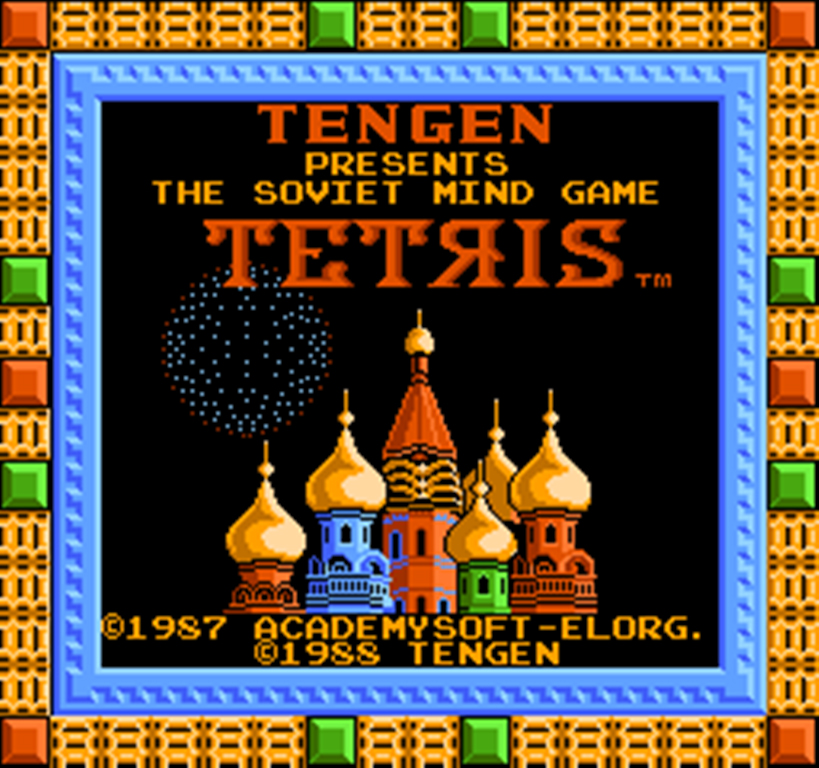
Welcome screen of 1987 version of Tetris

In 1986 Robert Stein, a salesman from the UK-based software company Andromeda spotted Tetris at Hungary’s Institute of Computer Science. He was convinced by the potential of the software and he struck an agreement with Pajitnov to sell the games internationally. But legally Tetris was still under the ownership of the Soviet government.  There was one problem, the agreement was only for the PC and not for any other platform and Stein has struck a deal with Sega to launch the game on their platform. Later Henk Rogers, another salesman from the Netherlands wanted to find a good launch game for the Nintendo’s new Game Boy handheld. The Soviet government was not happy with the Stein deal. But Rogers convinced the Soviet government and they agreed and he also formed a good relationship with Pajitnov. Later Andromeda’s license of Tetris was deemed illegal. Nintendo was given the right to launch the game on its console. The GameBoy was a platform to showcase one of the first video games exported from Russia. The game was a commercial hit and it has been ported to the most number platforms to date. The game also holds the record as the best-selling game of all time. In 1996, Pajitnov was able to reclaim the ownership of the rights and formed the Tetris Company, along with Henk Rogers. Even though he missed collecting the potential royalties for Tetris which were over hundreds of millions, he was still able to secure the future royalties.

References:

BYJU’S: India’s most valuable Unicorn.

Photo Credits: BYJU’s

What’s the business about?,

BYJU’s is an Indian multinational educational company which was founded in 2011 by BYJU Raveendran and Divya Gokulnath. Today, it’s the most valuable unicorn in India and world’s most valuable technological educational company.

History of BYJU’S

In 2011, Mr. Raveendran and Ms. Divya Gokulnath founded an educational company with the help of their students which provided online video based learning programmes for students of kindergarten to Grade 12th.

In 2015, with the help of Think and Learn Ltd., the business firm launched its first ever app named BYJU’s: The learning app. After that, in 2017, BYJU launched its second app for mathematics for kids and subsequently they also launched another app for parents to help them track their child’s learning course.

Rose to fame: BYJU’s

By 2018, BYJU’s had more than 15 million users and 9 hundred thousand paid users. In 2019, BYJU’s won sponsorship rights for Indian Cricket Team jersey. Popular Indian actors Mohanlal and Shah Rukh Khan are the brand ambassadors for Byju.

Major Services provided by BYJU.

Initially, educational content was only made for students from classes kindergarten to 12. But now BYJU also trains students for Indian competitive examinations like IIT-JEE, NEET, CAT, UPSC and it also trains students for international exams like GMAT and GRE.

In 2019, the company announced that it would soon start providing classes to students in their respective regional languages in India. The same year it also announced the commencement of an international app for students living in countries outside of India.

Byju’s also launched its Future School which is a Kids Coding Platform where kids are taught to code online by experts.

The video tutorials in the app are about 12-20 minutes long and they’re digital animation videos for classes 4th to 12th and hence this makes it easy for students to grasp and learn.

Road to most valued start up!

BYJU’s has raised 350 million dollars from UBS, private equity Equity Giant Blackstone and also from Abu Dhabi state fund ADQ, Phoenix Rising and Zoom.

Byju’s has raised over 1.5 billion dollars in last eighteen months because of the increase in online learning and teaching due to the COVID-19 pandemic.

Byju’s has also acquired several other small business in the recent past like White Hat Jr, Scholr, Osmo and Toppr. In fact, it’s latest fundraising comes from popular educational chain, The Akash Educational Services, estimated at about 950 million dollars.

According to Mr. Raveendran, the 21st century illiterates are not those who can’t read and write, but those who can’t learn, unlearn and relearn.

WINDOWS XP

Windows XP is still going strong

Windows XP is a line of proprietary operating system which was developed by Microsoft and is meant to be used for general purpose computers , such as home computers and business desktops , notebook computers and various types of media centres . Windows XP succeeds Windows 2000 and Windows ME , and is the first consumer – oriented operating system produced by Microsoft to be built on the Windows NT kernel and architecture . The most popular operating systems versions are Windows XP Home Edition , which is primarily meant for home users , and Windows XP Professional , which boasts additional features , such as support for Windows Server domains and dual processors , and is meant for professionals and other experts . Windows XP Media Centre Edition has additional multimedia features . Windows XP has an edge over the earlier versions of Microsoft Windows because of enhanced efficiency and better stability .

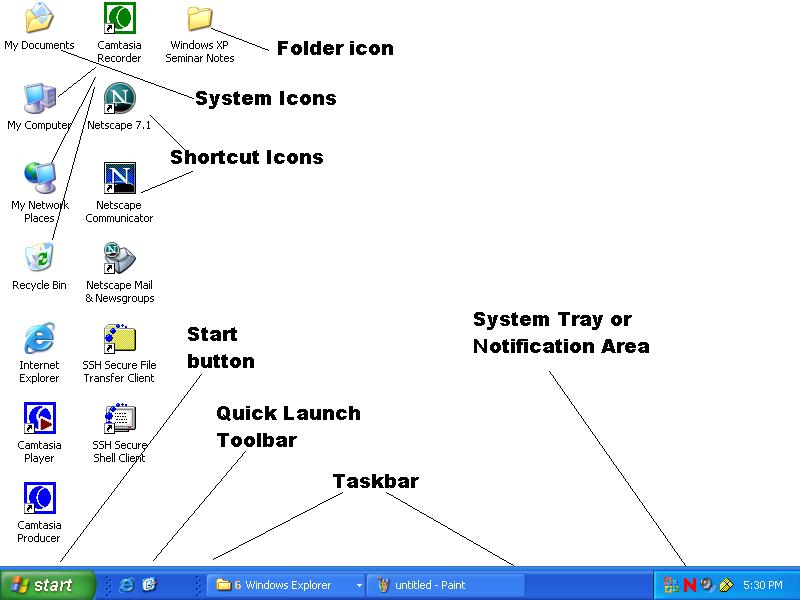
Windows XP helps you access and manage your files on the pc using a Graphical _User Interface GUI . All Programs and files stored on the PC are represented as pictures that are called icons . These icons are stored on the desktop .

Components of Windows XP

Windows XP

The Windows XP user interface consists of various components and concepts that help make Windows XP user friendly and intuitive . Some of the important components are :-

  1. Desktop
  2. Start Menu
  3. Taskbar
  4. Icons
  5. Recycle Bin
  6. Windows
  7. Applications
  8. Folders
  9. Files
  10. Control Panels

SPACE DEBRIS

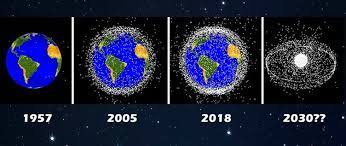
Space debris is the combination of natural(meteoroid) and artificial(man-made) particles. Natural debris orbits around the sun and artificial debris orbits around the earth. Hence they are called Orbital Debris. This can be any man-made object in the orbit moving in the earth’s orbit. Such debris includes nonfunctional spacecraft, abandoned launch vehicle stages, mission-related debris, and fragmentation debris.

In this article, we are going to focus on Artificial Debris, the Reason for its cause, and its prevention.

Space debris

What is Artificial space debris?

Any non-functional man-made object in space is called Artificial debris. 

They come from 

  • Satellites and spacecraft which are failed.
  • Satellites whose life has ended.
  • Rocket dismantle stages during the launch.
  • Hardware like nuts, bolts, payload covers, etc.
  • Solid propellant slag.
  • Cast aways during space activities like human wastes.
  • Fragments due to battery explosions, collisions, etc.

When two satellites collide they produce thousands of particles that are dangerous and can cause further destruction which makes Earth’s orbit unfit for satellite launches.

Artificial means man-made satellites

The number of satellite and rocket launches as of April 2021 is given below:

Number of rockets launched(excluding failures) since 19575560
Number of satellites carried by rockets launched11139
Number of satellites still in space7389
Number of satellites still functioning3170

Let’s have a look at the number of satellites launched only in 2020 and 2021(April)

Satellites launched in 20201283
Satellites launched in 2021 (April)853(65% of 2020)

History

In the year 2009, 19,000 debris over 5 cm in size were tracked. 

In July 2013, more than 170 million debris smaller than 1 cm(0.4), around 670,000 debris of 1 to 10 cm in size, and approximately 29,000 larger debris were detected.

By July 2016, nearly 18,000 artificial debris were orbiting the earth.

In October 2019, nearly 20,000 artificial objects including 2,218 were tracked.

The speed with which the debris travel is more than 28,000 kph(23 times the speed of sound).

Have you heard of Kessler syndrome?

NASA scientist Donald Kessler in 1978, proposed that more launches could increase the junk around the earth which results in the chain reaction of collision of objects in space and further making the earth’s orbit unfit for satellites.

This situation would be extreme, but some experts worry that a variant of this could be a problem one day, and precautionary steps should be taken to avoid the problem.

How do they track space debris?

The USA and Russia have set up tracking networks to monitor the orbital space object population. The European Union is also starting to develop its ways to track debris.

Powerful lasers are used to measure the distance of these objects, like radar or sonar. When a laser beam hits the debris and bounces back to Earth, ground crews can measure how long it takes to figure out where they are and where they are going it alerts the ground stations in case of collisions. But usually, laser technology is used to detect the movement of satellites and if the same technique is used to detect the debris then continuous monitoring should be there since debris are found randomly in space.

Detection of objects through laser technology

India’s status on tracking debris

NETRA(Network for space Objects, Tracking, and Analysis)

Till now, ISRO was dependent on NORAD(North America Aerospace Defense Command) data,

which is available in the public domain, to keep track of space debris and monitor our active and passive satellites. However, this global data is not accurate but NORAD keeps accurate data available for those who are members of its network. Therefore, ISRO cannot access the data.

But now, ISRO has decided to set up telescopes and radars in four corners of the country to get accurate data and avoid unwanted collisions of the satellites.

In September 2019, India launched the early warning system NETRA to secure satellites and other assets in space.

Can satellites be protected from space debris?

There are two ways in which the satellites and spacecraft can be protected:

  • Computer programs can search for possible collisions between large debris. This system is used in the International Space Station to detect. These operations are expensive and can disturb delicate experiments. Space tracking networks can only track objects more than 100 mm in size. Even a 10 mm object can cause big trouble this cannot be called 100% effective.
  • A debris shield can be designed to provide additional protection for a spacecraft. One way is to increase the thickness of the craft but that can increase the mass of the craft/satellite. Hence, a specially designed shield called the Wipple shield was used. It was made of two thin walls separated by some space. It was observed that this wall was more resistant to debris. The outer layer absorbs a lot of debris energy so that the inner wall is not punctured.
Protection of satellites through shields

Space debris Removal

Removing space junk, especially larger pieces before they fragment is not easy. The best way to do this is retarding the force and deorbiting the junk. When it drops in altitude less than 400 km above the earth it is burnt.

For years NASA, ESA, and other space agencies are studying debris removal technologies. Some of the ideas include the usage of nets to gather junk and robotic arm. Japanese are now developing a type of satellite that uses magnets to catch and destroy the debris. Last year, UK has successfully cast a net around a dummy satellite.

Clearspace one

Clearspace-1 will be the first space mission to remove debris from the Earth orbit, it was planned to launch in 2025. The technology demonstration satellite was first developed by the Swiss Federal Institute of Technology in Lausanne. 

Clearspace one

Many countries are trying to invent new technologies to reduce the threat of debris. Russia invented a Self Destroying Satellite. Australian researchers are developing the Hunter-Killer satellite to neutralize space junk. Finland has developed a Wooden Satellite and planning to launch this year.

credits to the right owners of the pictures used.

5G Networking Technology

What is 5G Network?

In Telecommunications, 5G is the fifth generation technology standard for broadband cellular networks, which cellular phone companies began deploying worldwide in 2019, and is the planned successor to the 4G networks which provide connectivity to most current cell phones. 5G networks are predicted to have more than 1.7 billion subscribers worldwide by 2025, according to the GSM Association. Like its predecessors, 5G networks are cellular networks, in which the service area is divided into small geographical areas called cells. All 5G wireless devices in a cell are connected to the Internet and telephone network by radio waves through a local antenna in the cell.

In telecommunications, 5G is the fifth generation technology standard for broadband cellular networks, which cellular phone companies began deploying worldwide in 2019, and is the planned successor to the 4G networks which provide connectivity to most current cell phones. 5G networks are predicted to have more than 1.7 billion subscribers worldwide by 2025, according to the GSM Association. Like its predecessors, 5G networks are cellular networks, in which the service area is divided into small geographical areas called cells. All 5G wireless devices in a cell are connected to the Internet and telephone network by radio waves through a local antenna in the cell.

HOW DOES 5G WORK?

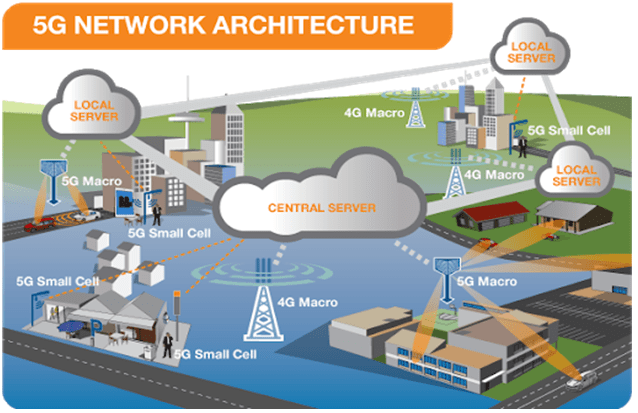
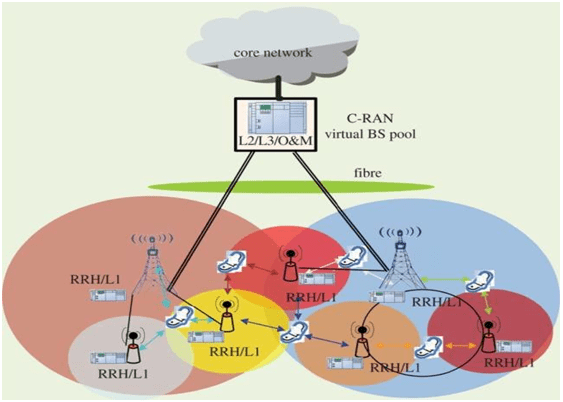
5G network architecture illustrating 5G and 4G working together, with central and local servers providing faster content to users and low latency applications.

A mobile network has two main components, the ‘Radio Access Network’ and the ‘Core Network’.

The Radio Access Network – consists of various types of facilities including small cells, towers, masts and dedicated in-building and home systems that connect mobile users and wireless devices to the main core network.

Small cells will be a major feature of 5G networks particularly at the new millimetre wave (mmWave) frequencies where the connection range is very short. To provide a continuous connection, small cells will be distributed in clusters depending on where users require connection which will complement the macro network that provides wide-area coverage.

5G Macro Cells will use MIMO (multiple input, multiple output) antennas that have multiple elements or connections to send and receive more data simultaneously. The benefit to users is that more people can simultaneously connect to the network and maintain high throughput.  Where MIMO antennas use very large numbers of antenna elements they are often referred to as ‘massive MIMO’, however, the physical size is similar to existing 3G and 4G base station antennas.

The Core Network – is the mobile exchange and data network that manages all of the mobile voice, data and internet connections. For 5G, the ‘core network’ is being redesigned to better integrate with the internet and cloud based services and also includes distributed servers across the network improving response times (reducing latency).

Many of the advanced features of 5G including network function virtualization and network slicing for different applications and services, will be managed in the core. The following illustration shows examples of local cloud servers providing faster content to users (movie streaming) and low latency applications for vehicle collision avoidance systems.

Example of a local server in a 5G network providing faster connection and lower response times

Network Slicing – enables a smart way to segment the network for a particular industry, business or application. For example emergency services could operate on a network slice independently from other users.

Network Function Virtualization (NVF) – is the ability to instantiate network functions in real time at any desired location within the operator’s cloud platform. Network functions that used to run on dedicated hardware for example a firewall and encryption at business premises can now operate on software on a virtual machine. NVF is crucial to enable the speed efficiency and agility to support new business applications and is an important technology for a 5G ready core.

When a 5G connection is established, the User Equipment (or device) will connect to both the 4G network to provide the control signalling and to the 5G network to help provide the fast data connection by adding to the existing 4G capacity.


Where there is limited 5G coverage, the data is carried on the 4G network providing the continuous connection. Essentially with this design, the 5G network is complementing the existing 4G network

5G Configuration:-

Advantages of 5G Networking:-

High resolution and bi-directional large bandwidth shaping.

Technology to gather all networks on one platform.

More effective and efficient.

Technology to facilitate subscriber supervision tools for the quick action.

Most likely, will provide a huge broadcasting data (in Gigabit), which will support more than 60,000 connections.

Easily manageable with the previous generations.

Technological sound to support heterogeneous services (including private network).

Possible to provide uniform, uninterrupted, and consistent connectivity across the world.

Disadvantages of 5G Networking:-

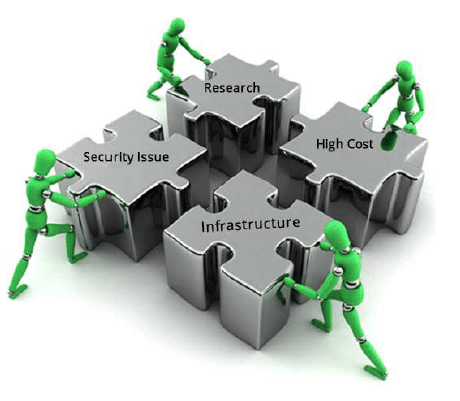
Technology is still under process and research on its viability is going on.

The speed, this technology is claiming seems difficult to achieve (in future, it might be) because of the incompetent technological support in most parts of the world.

Many of the old devices would not be competent to 5G, hence, all of them need to be replaced with new one expensive deal.

Developing infrastructure needs high cost.

Security and privacy issue yet to be solved.

Conclusion

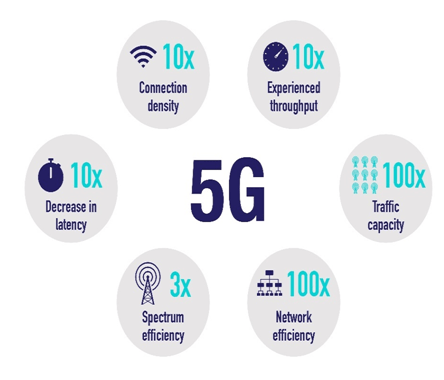
5G will be able to sustainably satisfy the requirement of the 1000-time traffic growth. 5G will provide users with fiber-like access data rate and “zero” latency user experience. 5G will be capable of connecting 100 billion devices.

How Archives transformed in the Digital era

The Word archive is derived from the Greek word ‘Arkheion’. The word was further referred from ‘Archon’, which meant a magistrate who oversaw the town hall where all the official public documents were stored. The Word Archive came to use for the first time in the 17th century.

Archives are also known as ‘memory institutions’ because they record and preserve memories and form a significant part of culture, community, official and unofficial history of any place or region or state, or any institution. Their function is to collect, store and preserve artefacts and documents of historical, cultural, and legal importance from the yesteryears and the present so that they remain accessible, informative, and useful to future generations. In general, any organization, government institution or individual can build archives. The National Archives, UK has described archives as “collections of records or documents, selected for lasting preservation due to their historical value, significance as evidence, or as a source for research studies”. International Council on Archives (ICA) has defined archives as “documentary result of various human activities conserved for its long-term value”. They further described archives as contemporary accounts created to can provide a true and verified version of past events.

The significance of the archives lies in the orderly collection of crucial source documents accumulated over an individual’s or organizations’ lifespan and preserved, which can serve as evidence or reference for future work. As archives are the repositories housing various historical documents and records of value, archival research is facilitative for scholars and researchers looking for data to assess and facts to study from the original documents. However, owing to the vastness and diversity of ample archival documents and records, archival analysis is a hectic and tedious job. Access to the artefacts and documents stored in an archive is not an easy task and requires permission from the respected authority. In addition, most of the information stored in traditional achieves is paper-based and thus, is susceptible to decay with time. The aforementioned limitation of traditional archives can be overcome by archiving documents and artefacts in various digital formats, which can ensure that the information is preserved for a substantially longer period.

With the advent of newer digital technologies, it became easier and more convenient to store and preserve the information in the digital space. With the assistance of new digital tools and methods, the process of transcending information from the physical world to the digital world became much efficient and easier. 

Digital archiving is an area where the relationship between digital tools/methods and information preservation can be witnessed. It is a blend of the former and current storage of information. Their function is similar to traditional archives, as repositories of elaborated collection of information in various digital formats at a virtual location. This also makes digital archives more accessible and democratic as the physical constraints are eliminated.

Advantages of Digital Archives:

  • The the digital archive allows “anywhere-anytime” accessibility to users ensuring a reduction of time, cost, and money.
  • The redundancy of information stored in digital archives can be reduced, which can promote ease of access.
  • No geographical site is required to build a digital archive, which is cost-effective.
  • The simultaneous requests of access from multiple users can be addressed by creating multiple copies of information stored, which can overcome the issue of bottlenecks encountered in traditional archives.
  • Managing and navigating objects or records stored digitally are easier in digital archives, which allow developing capacity to preserves terabytes of information.
  • Digital archives are less subjected to bureaucracy like traditional archives, which can ensure data accessibility to the general public.

Digital archives are not perfect. Many times due to the digital divide and other constraints, researchers are not able to access the information. Sometimes the information challenges the authority and due to this, the information can be unavailable in the digital archives because of censorship. But there is no denying that digital archives have transformed the way information is stored and processed.  

References:

[GUIDE] How to install the Windows 11 Insider Build.

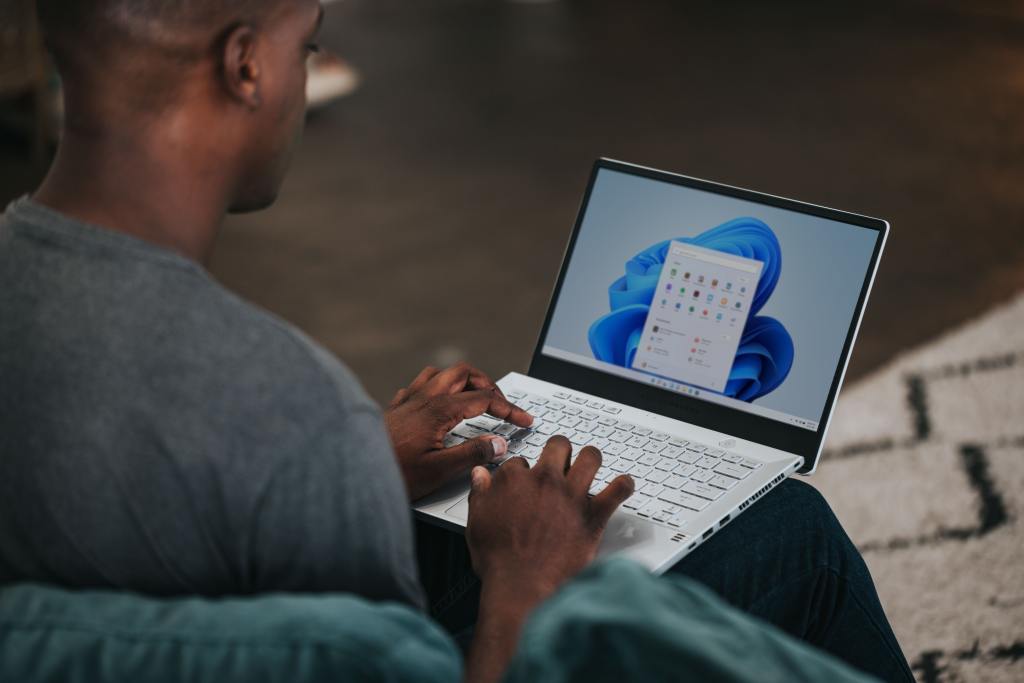
At a virtual event on 24 June 2021, Microsoft unveiled “the next generation of Windows”, Windows 11. It is the successor of the Windows 10 May 2021 update (also known as version 21H1), and it came out with big improvements and key features like:-

  • A new, more Mac-like interface.
  • Integrated Android apps.
  • Microsoft Teams integration.
  • Widgets.
  • Snap Groups and better multitasking.

Today I am going to show you how to install the Insider Build of Windows 11, but before check out the minimum system requirments to run Windows 11 on Microsoft’s official website.

Before Installing

Back up any file that you would deem essential somewhere safe (e.g USB drive, Cloud storage, etc…). Download the ISO then get a USB drive minimum of 8GB or more and create a bootable USB drive. Next, go into the BIOS and follow these steps:-

Enable TPM-

If INTEL, you need to enable PTT (TPM)

BIOS> Security> Intel Platform Trust Technology> Enable> Save and Exit.

IF AMD, You need to enable fTPM (TPM)

BIOS> Advanced> CPU Configuration> AMD fTPM Switch> Enable> Save and Exit.

Disable Compatiblity Support Module (CSM) and turn Secure Boot OFF (on few motherboard).

NOTE- TPM 2.0 is required but in some cases, it ran in TPM 1.2. Make sure to check your TPM version and enter BIOS and enable your TPM settings.

Steps for installing Windows

  1. ISO method

Connect your bootable USB and turn on your PC, press F8 (or ESC, F1, F11 depending on your motherboard) to go into the boot menu select your USB drive and it’ll take you to WIndows installation.

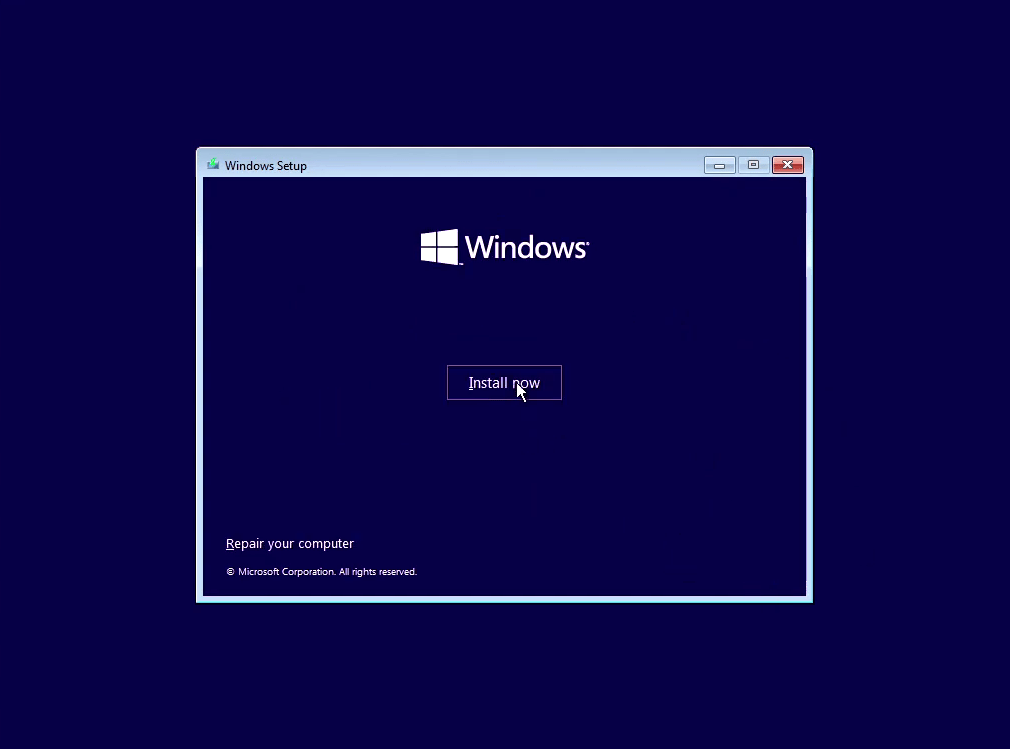
Click on “Install now”
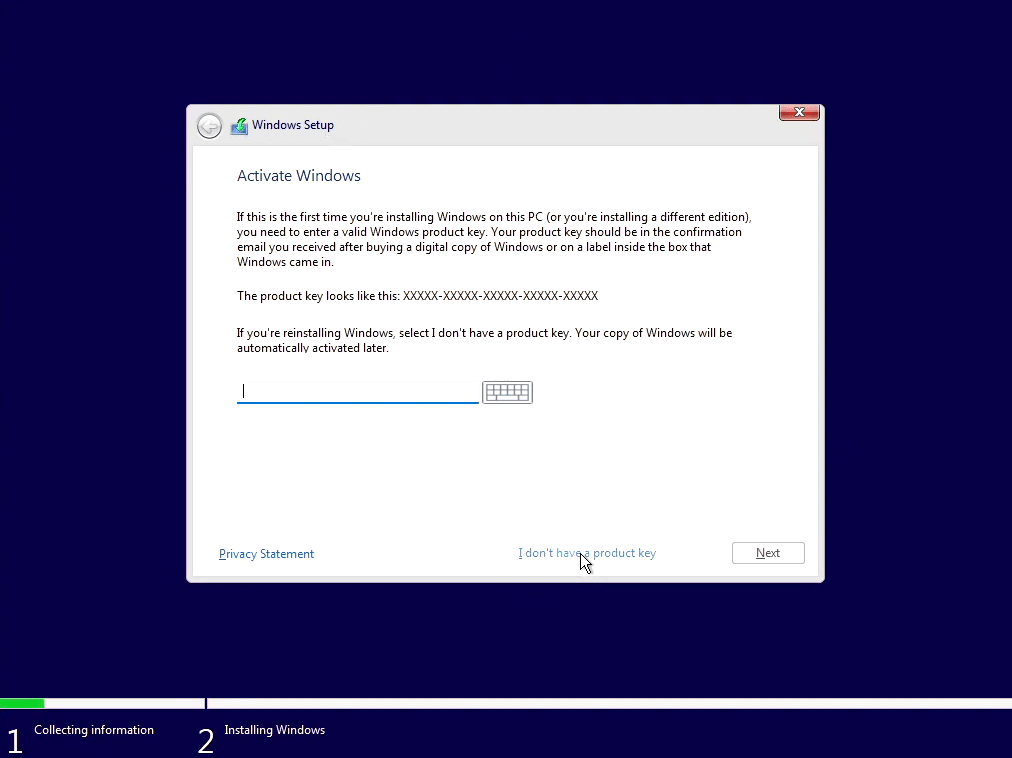
Click on “I don’t have a product key”
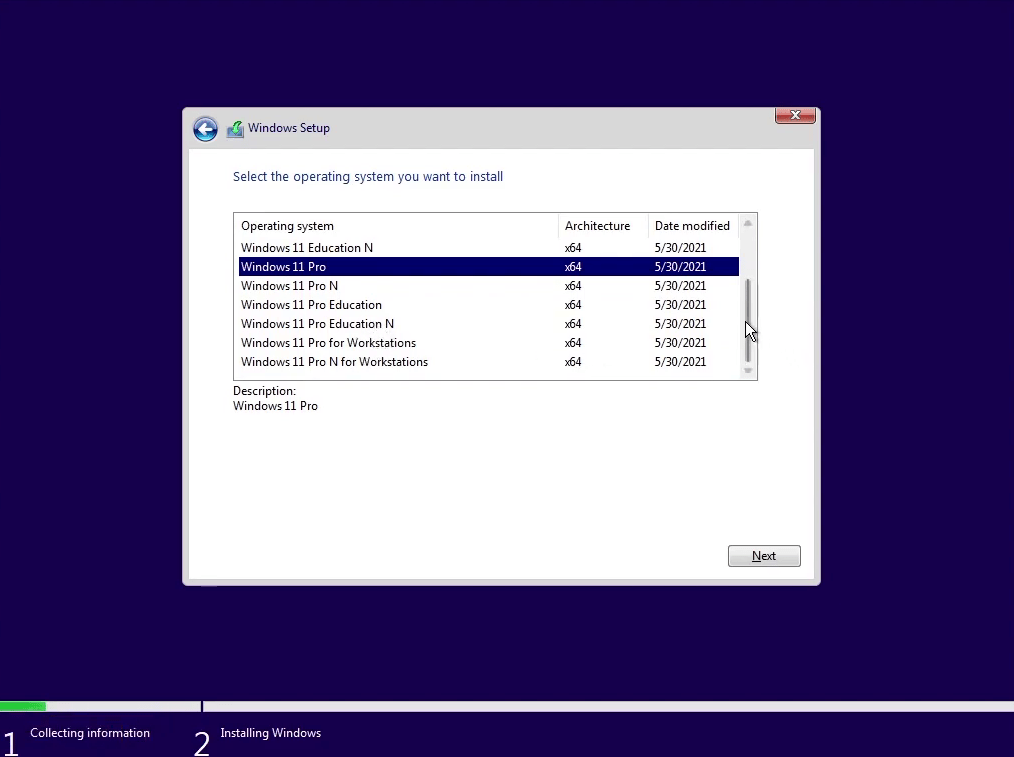
Select the edition of Windows you would like to install and click Next and Click on “I agree on terms and condition” and again click Next.
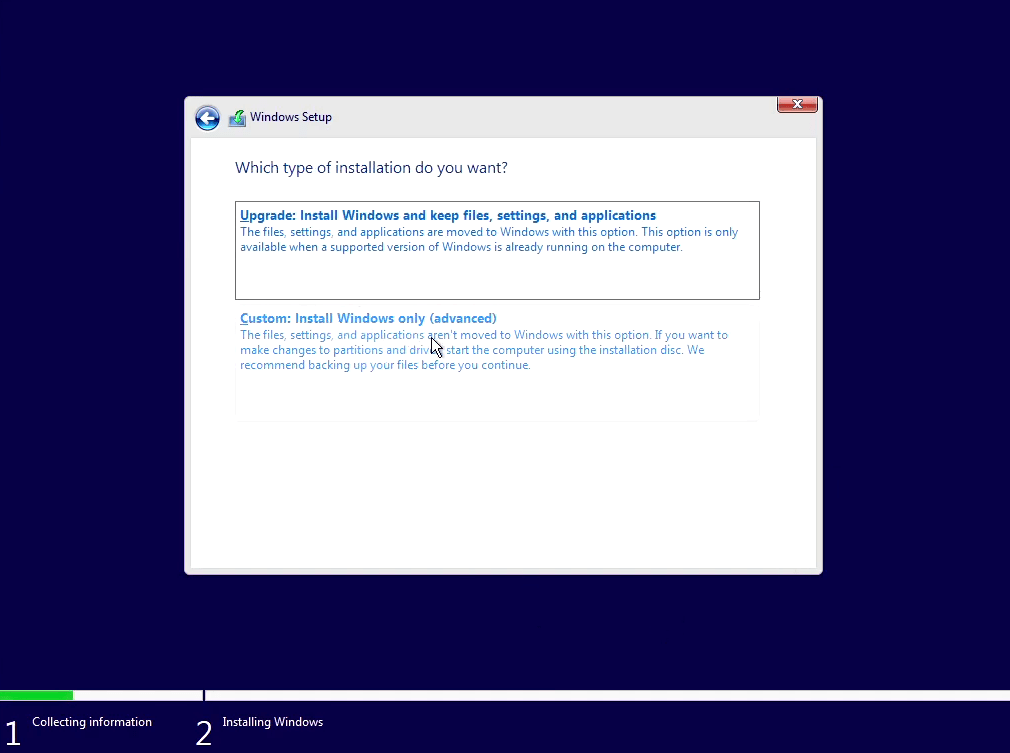
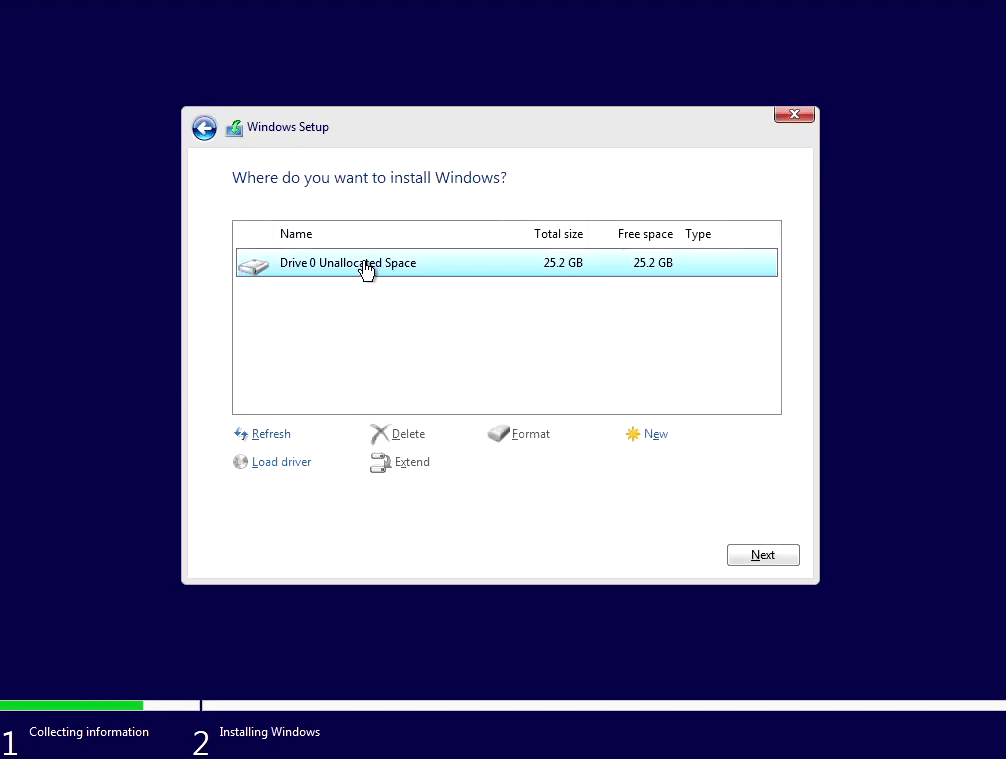
Now, click on “Custon: Install Windows Only (advanced)”.
Click on “New” to make new partiton or select the partition you want and click on “Next”.
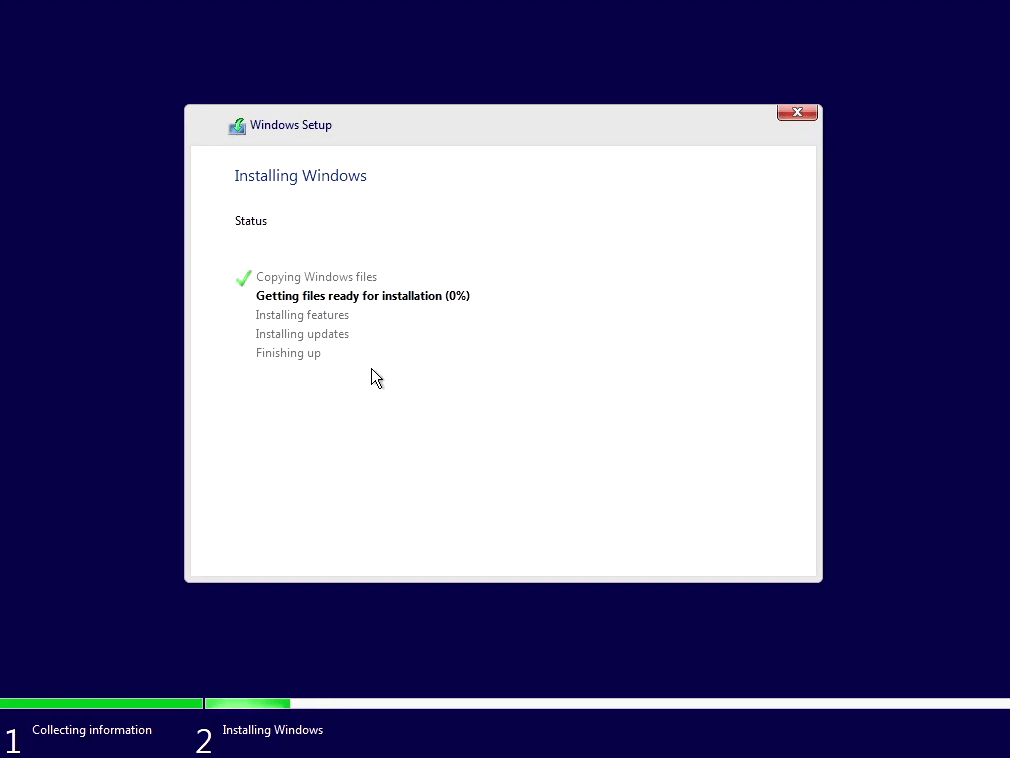
Now, wait for the installation to complete (don’t turn your PC off during the process). It will “Restart” several times and will come to the Setup screen.
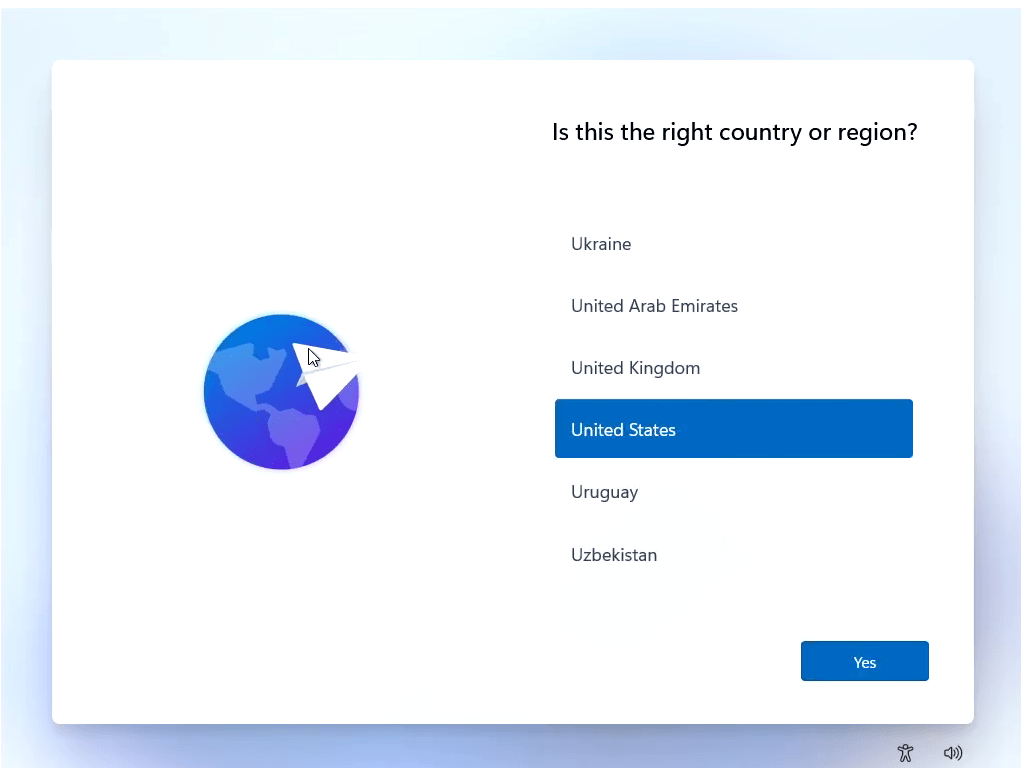
Now Select your Region, Time and Date, Username, Password, Preference, and complete the setup.
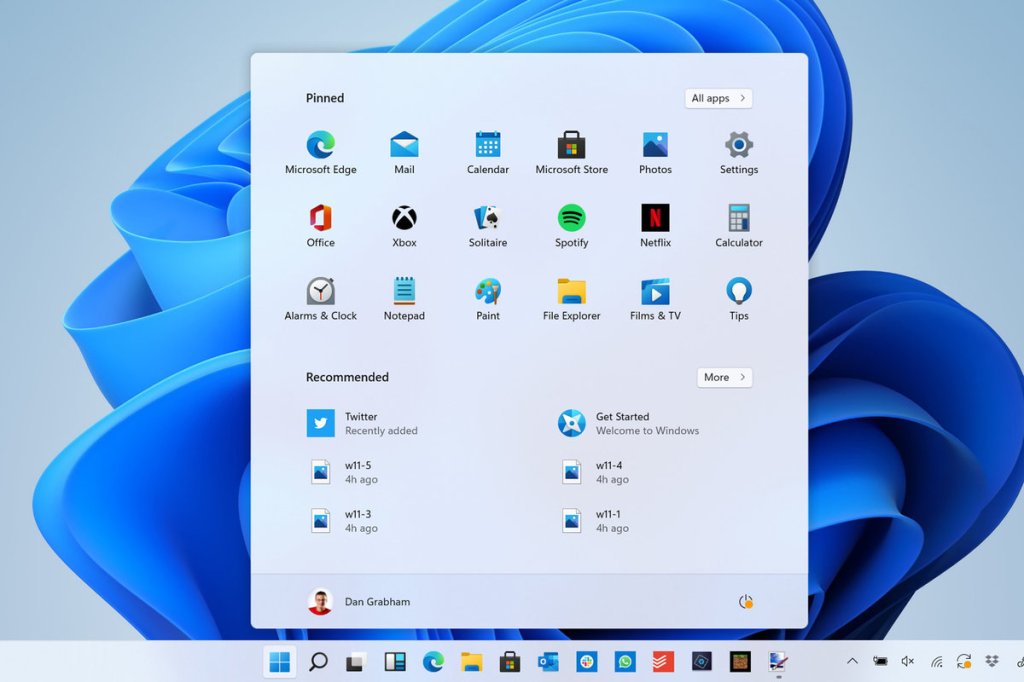
Windows 11 Insider build

After completing the setup you’re good to go. Enjoy the latest Windows on your PC.

Post installation tweaks

  • Install drivers related to your PC.
  • Join the Windows Insider Program via Settings > Windows Update > Windows Insider Program.
  • Check for Windows Update.

2. Upgrade Method

Installing windows 11 via the Windows Insider development ring:

  • Go to Settings > Privacy > Diagnostics & feedback and check that option instead of “Basic” to “Full”.
  • Now to join the Insider Program, go into Settings > Update & Security > Windows Insider Program and click on “Get Started”, then follow the prompt and select “Pick your Insider settings” and choose “Dev Channel”, now click confirm and reboot you PC.
  • Now check for Windows Update and install “Windows 11 Insider Preview 10.0.22000.51 (co_release)”
  • Follow the Post Installation Tweaks and you’re good to go.

WARNING! As this is the Insider Build it can contain some bugs and cons and may not be ideal for a daily driver for many users.

Top five technologies

AI-as-a-service

Artificial Intelligence (AI) is one of the most transformative tech evolutions of our times. As I highlighted in my book ‘Artificial Intelligence in Practice’, most companies have started to explore how they can use AI to improve the customer experience and to streamline their business operations. This will continue in 2020, and while people will increasingly become used to working alongside AIs, designing and deploying our own AI-based systems will remain an expensive proposition for most businesses. For this reason, much of the AI applications will continue to be done through providers of as-a-service platforms, which allow us to simply feed in our own data and pay for the algorithms or compute resources as we use them. Currently, these platforms, provided by the likes of Amazon, Google, and Microsoft, tend to be somewhat broad in scope, with (often expensive) custom-engineering required to apply them to the specific tasks an organization may require. During 2020, we will see wider adoption and a growing pool of providers that are likely to start offering more tailored applications and services for specific or specialized tasks. This will mean no company will have any excuses left not to use AI.


5G data networks

The 5th generation of mobile internet connectivity is going to give us super-fast download and upload speeds as well as more stable connections. While 5G mobile data networks became available for the first time in 2019, they were mostly still expensive and limited to functioning in confined areas or major cities. 2020 is likely to be the year when 5G really starts to fly, with more affordable data plans as well as greatly improved coverage, meaning that everyone can join in the fun.Super-fast data networks will not only give us the ability to stream movies and music at higher quality when we’re on the move. The greatly increased speeds mean that mobile networks will become more usable even than the wired networks running into our homes and businesses. Companies must consider the business implications of having super-fast and stable internet access anywhere. The increased bandwidth will enable machines, robots, and autonomous vehicles to collect and transfer more data than ever, leading to advances in the area of the iot and smart machinery.


Autonomous Driving

While we still aren’t at the stage where we can expect to routinely travel in, or even see, autonomous vehicles in 2020, they will undoubtedly continue to generate a significant amount of excitement.
Tesla chief Elon Musk has said he expects his company to create a truly “complete” autonomous vehicle by this year, and the number of vehicles capable of operating with a lesser degree of autonomy – such as automated braking and lane-changing – will become an increasingly common sight. In addition to this, other in-car systems not directly connected to driving, such as security and entertainment functions – will become increasingly automated and reliant on data capture and analytics.It won’t just be cars, of course – trucking and shipping are becoming more autonomous, and breakthroughs in this space are likely to continue to hit the headlines throughout 2020.With the maturing of autonomous driving technology, we will also increasingly hear about the measures that will be taken by regulators, legislators, and authorities. Changes to laws, existing infrastructure, and social attitudes are all likely to be required before autonomous driving becomes a practical reality for most of us. During 2020, it’s likely we will start to see the debate around autonomous driving spread outside of the tech world, as more and more people come round to the idea that the question is not “if,” but “when,” it will become a reality.


Personalized and predictive medicine Technology is currently transforming healthcare at an unprecedented rate. Our ability to capture data from wearable devices such as smartwatches will give us the ability to increasingly predict and treat health issues in people even before they experience any symptoms. When it comes to treatment, we will see much more personalized approaches. This is also referred to as precision medicine which allows doctors to more precisely prescribe medicines and apply treatments, thanks to a data-driven understanding of how effective they are likely to be for a specific patient.Although not a new idea, thanks to recent breakthroughs in technology, especially in the fields of genomics and AI, it is giving us a greater understanding of how different people’s bodies are better or worse equipped to fight off specific diseases, as well as how they are likely to react to different types of medication or treatment. Throughout 2020 we will see new applications of predictive healthcare and the introduction of more personalized and effective treatments to ensure better outcomes for individual patients.

Computer Vision

In computer terms, “vision” involves systems that are able to identify items, places, objects or people from visual images – those collected by a camera or sensor. It’s this technology that allows your smartphone camera to recognize which part of the image it’s capturing is a face, and powers technology such as Google Image Search.As we move through 2020, we’re going to see computer vision equipped tools and technology rolled out for an ever-increasing number of uses. It’s fundamental to the way autonomous cars will “see” and navigate their way around danger. Production lines will employ computer vision cameras to watch for defective products or equipment failures, and security cameras will be able to alert us to anything out of the ordinary, without requiring 24/7 monitoring.Computer vision is also enabling face recognition, which we will hear a lot about in 2020. We have already seen how useful the technology is in controlling access to our smartphones in the case of Apple’s FaceID and how Dubai airport uses it to provide a smoother customer journey. However, as the use cases will grow in 2020, we will also have more debates about limiting the use of this technology because of its potential to erode privacy and enable ‘Big Brother’-like state control.

All About Windows 11

On 24th June 2021, the much awaited Windows 11 was launched by Microsoft. Microsoft launched there next generation of windows after 6 years. In this blog, we are going to discuss the features of Windows 11, Who can all upgrade to Windows 11? Hardware requirements for windows 11 upgrade. Here starts the blog

FEATURES OF WINDOWS 11

Android apps

You can easily download android apps in Windows 11. All the android apps are stored in New Microsoft store via Amazon’s app store. There are nearly 5,00,000 apps available in Amazon app store, including Netflix, Pinterest, Uber, Disney plus. All you need to create a amazon app store account. There are many free and paid apps are available in it. Every app in the google play store is not available in the amazon app store.

Microsoft Teams

Windows 11 has an inbuilt Microsoft video chat teams platforms. Making it easier for the users to access. With this, you can easily chat and talk to your friends in your contacts. You can also connect with your friends who uses Other windows, Mac, Linux and android. You can teams in your windows 11.

GIVES YOU BEST EXPERIENCE FOR GAMING

If you are a gamer, then window 11 is for you. Millions of people daily play games in windows. Windows 11 will give you the best experience ever, it supports all pc games, you can play games with high graphics. Windows 11 level unlocks the potential of the system’s hardware. With Xbox game pass now, gamers can get access to 100 plus newly added games.

NEW INTERFACE

Windows 11 has a clean, shadow and round cornered interface with a redesigned start menu which eliminates the tiles on the right side of the screen.

NEW SECURITY FEATURES IN WINDOWS 11

  1. Trusted Platform Module A TPM is one of the most prominent feature in windows 11. TPM is a chip that secures the confidential data like user credentials, passwords, keys etc. This helps you to protect your data from any other hackers or some malware.
  2. No passwords for Windows 11 Are you confused right, but it is true. Now windows 11 is using strong authentication methods like face lock, fingerprints and biometrics making the window 11 very secure.
  3. Secured core pcs Now there is a double layer protection for your pc. They are twice more resistant to the malware and viruses.

BETTER VIRTUAL DESKTOP SUPPORT

Now, Windows 11 will support virtual desktop set up just like MacOS.

EASIER TRANSITION FROM MONITOR TO LAPTOP

The new OS include features like Snap Groups and Snap Layout, Collection of apps that you are using available at taskbar. You can easily switch and minimized the apps just like the macOS. They can also let you unplug and plug easily from the monitor without losing them.

WHO CAN ALL UPGRADE TO WINDOWS 11?

Microsoft is now making Window 11 available free upgrade to all windows 10, windows 7, windows 8 and windows 8.1.

HARDWARE REQUIREMENTS FOR WINDOW 11 UPGRADE

  1. RAM: 4GB or greater.
  2. Storage: 64 bits or greater storage to install windows 11.
  3. Processor: 1 Gigahertz(GHz).
  4. Graphic cards: DirectX 12 with WDDM`2.0 driver.
  5. System firmware: UEFI, Secure Boot capable.
  6. Display: high definition(720p) display, 8 bits per color channel.

I hope you like this blog, if you like it kindly like and rate it. It really gives me motivation. Thank You.

Evolution of Computers

As of now 2021, Computers become very important for our daily life. Computers are in each of every sector like banking, gaming, health care sectors. 20 years back, computers were just used in some purposes only. But now computers become very important for each of every sector. In this blog we are going to discuss the following topics. What is a computer? Why computers are important? Evolution of Computers, and at last Is Computer Science the future of the world?

Photo by Tranmautritam from Pexels

WHAT IS A COMPUTER?

A Computer is machine that can be programmed to carry out sequences of arithmetic or logical operations automatically. Computer consist of two things, one is Hardware and the other is Software. The all physical components of computer like keyboard, CPU, mouse, monitors etc. Comes under the Hardware. The programs, files and programming languages comes under the Software.

EVOLUTION OF COMPUTERS

  1. In 1882, the first computer was invented by Charles Babbage.
  2. In 1880, Herman Hollirith developed in computer which can record and store information in it.
  3. In 1936, the first programmable computer was developed by Konrad Zuse.
  4. In 1947, Bell Telephone Company invented transistors which were the key component of the computer.
  5. In 1953, IBM(International Business Management) came out with there first computer.
  6. In 1962, the first computer video game was invented.
  7. In 1963, Douglas Engelbart invented the computer mouse.
  8. In 1974, IBM and Apple were the companies to sold personal computer(pc) to the people.
  9. In 1991, the first laptop computer came out.

WHY COMPUTERS ARE SO IMPORTANT?

Communication

Due to the use of computers, the communication become much more easier with the help of internet. Now you contact any person in the corner of the world. We can send messages to every person in the world within seconds, all this happen because of computers.

Business

With the help of computers, Huge transactions can be made within seconds. Computers are used to store details about there product in business. Computers are used to keep of record of profit and loses of the company.

Education

Due to the covid-19 pandemic, all schools shifted there education in online mode. Teachers use computers to teach children online. Due to computer, a student can learn anything which he wants from his home itself.

Hospital

Computers are used in hospitals to keep the track record of the patients admitted to the hospital. They are used to detect diseases. They help doctors to perform an operation.

And there are many more reasons why computers become so important in this world.

IS COMPUTER SCIENCE THE FUTURE OF THE WORLD?

Now we came to the most interesting topic in this blog. Nowadays, people are showing more interest towards computer science. Computer science is the most famous branch of education. New emerged careers such Artificial intelligence, Data science and full stack Developer are highest paying jobs in the world, all these are the parts of computer science. Due to the covid-19 pandemic the opportunities of other careers are some what decreased. But the opportunities in Computer science was tend to grow double. There are many career options in computer science. Experts suggest that the growth rate of computer science is 16 percent through 2028. With this we can say that Computer science is the future of the world.

I hope you like this blog, If you like this blog kindly like and rate it. It gives me motivation.

STARTUP STORIES – YULU

Yulu

Mobility Matters:

The world is evolving at a rapid phase which makes people turn into nimble-footed. People are endeavoring to match their 24 hours between their job and their life. This could be clearly understood when stood in a signal of a busy urban road. They try their level best to spare the time spent on their daily commute. The pandemic has taught us the best lesson that it’s always better to have alternative options to public transport modes. Because at certain times public transport is unreliable, time-consuming and exhausting. There are many possible alternative solutions offered for the same. One such hassle-free solution is to rent electric bikes and pay after the rode ends. This could be a revolution in urban mobility. 

Yulu – the market changer:

Bangalore is one of the first Indian cities to adopt and explore new technologies. No wonder it’s known as the “ Silicon Valley of India. ”Many Multi-National Companies are headquartered in the city and hence the population is becoming denser day by day. Hence the commute problem is becoming crucial in the city. Yulu came as a game-changer in resolving the problems. Started in 2019 they launched with a fleet of 2000 electric scooters named Miracle. 

You can simply download the Yulu app, find the Yulu zone, unlock the bike by scanning the QR code, ride the vehicle and once you end the ride you will be charged based on the distance you have covered. People like the idea for 2 reasons : * The user interface was easy to use *The bike had a decent range of 60kms and a speed of 25km /hour. Owing to the acceptance of the people in Bangalore, Yulu expanded its fleet in 2020.  The startup operated in 4 major cities of India – Mumbai, Bangalore, Pune, and Bhuvaneshwar.

Reason for their success:

  • Early adopters: They addressed the mobility challenges of India with a service-based vehicle fleet at an early stage. The hassle-free commute experience with proper service and support attracted the consumers easily.
  • Consistent updates: They follow their customers so closely and understand their needs better. They improvised the charging infrastructure, added slots for carrying personal things etc. 
  • Beginner-friendly: Since it’s a vehicle with a maximum speed of 25km/hr, it does not need a license for a ride. This has made the vehicle a beginner-friendly one.
  • Analyzing Algorithms: They have algorithms in the software which analyze the areas and time zones that hold peak demand. Based on the analysis they expand their zones of operation. 
  • Alternative thinking: In the pandemic situation, the usage of YUlu bikes dropped significantly. Then they offered their bikes as service to frontline warriors, delivery executives, etc which has improvised their revenue and has also provided a better reach

The micro-mobility solution provider has been backed by a series of investors and AutomotivePioneer Bajaj. As its revenue has increased almost 2.5 times in the current year its expected to raise the next round of funding for its further expansions.

https://www.yulu.bike/products/miracle/

Battery Recycling in India

Growth of Batteries:

Electronics are indisputably ruling the world. Right from the intractable mobile phones in our hands , to the versatile appliances that cook up our sustenance in the kitchen, the influence of electronics in our day to day lives is inexorable. Initially these devices were powered directly with AC power supply . As technology improved , people expected things to be handy so that they can carry them wherever they go. This is where the batteries came as a lifesaver. Although initially the batteries were huge in size and expensive , due to exploration of various chemistries they substantially got better. 

A Bloomberg report says that battery prices have been reduced by 88% in the last decade. They have always predicted that battery prices would fall to $100 per KWh by the year 2024. This indicates that the usage of batteries will increase at a rapid phase in the upcoming years.

Batteries a boon or bane?

When there are numerous advantages involved in an invention , it will forsure have its downside. Batteries were never an exception. Although the life of batteries has increased over the years , it will degrade after a certain period of time. Have you ever wondered where these batteries end up after their degradation? They end up in land and water bodies and contaminate their natural state. As a result of this the organisms living in the land and water ecosystem are subjected to hazardous chemicals which are causing reversible and irreversible effects on their heath. The dumping of batteries in an improper manner will also lead to global warming and depletion of groundwater levels. This Proves that batteries are definitely a bane if they are not properly disposed of.

Currently there are 250,000 EVs on the road in India which clearly states the amount of batteries that will reach its end of life by the year 2027-2028. Apart from these there are tons of batteries used in day to day devices we use. Imagine the effects on our country if these batteries are not properly disposed of. 

Every problem has its solution:

Problems lead us to ways of alternative thinking. One significant way to make the situation better is to recycle the batteries. But the percentage of batteries recycled is comparatively low. Indian government is significantly planning to recycle lithium ion batteries and are also offering support to companies which involve proper recycling of batteries. Tata chemicals have initiated battery recycling process in the year july 2019 with a smaller quantity of 100 kgs and now has expanded its capability to tonnes per month. They are also planning to enlarge their factories to facilitate recycling in a battery way.

Startups which are recycling batteries in India:

Even though some of the corporate ventures are showing interest in recycling batteries , some startups are really trying their level best to recycle the lithium ion batteries. This is a daring attempt and it must be appreciated in every possible way. Some of the startups which recycle batteries in India are as follows:

  • Lohum Cleantech.
  • Ziptrax Cleantech
  • Nunam batteries.
  • Ebikego

There are many other startups working behind the curtains to recycle and reuse the Lithium Ion Batteries. As consumers we have the responsibility of supporting these firms by providing them with batteries after their degradation and promoting the usage of recycled batteries.

https://arstechnica.com/science/2020/12/battery-prices-have-fallen-88-percent-over-the-last-decade/

Legal analysis of doxxing


What is the definition of doxxing?
Doxxing, short for “dropping dox,” is an internet attack in which hackers collect personal information and documents, hence the “dox” element of “dropping dox,” in order to reveal the true identity of someone who wanted to remain anonymous.
Doxxing is a harmful act carried out by hackers against someone with whom they disagree or detest. The goal is usually to make the victim feel humiliated or harassed. Hackers, for example, might divulge the identify of an anonymous message board troll in order to embarrass that person. They might want that person to lose their job or be shunned by their coworkers or friends.


Doxxing comes in a variety of forms:—


Doxxing celebrities
Journalists frequently gather information about a celebrity’s personal life and publish it on their social media platforms. Doxxing, on the other hand, isn’t exactly common in the entertainment world. The hacker reveals personal information about the celebrity, such as credit card numbers, email addresses, social security numbers, and phone numbers.

Doxxing with a flaw
Doxxing is occasionally carried out by online vigilantes who are too indolent to conduct full research or examinations on their targets to ensure they are dealing with the correct person. Rather, they mistakenly link people to unrelated activities or events. As a result of such “bad” doxxing, innocent persons face the following consequences:
Loss of reputation, job loss, harassment, physical damage, or death are only few of the consequences.

Doxxing for retaliation
Doxxing can be used as a method of retaliation. They disclose publicly identifiable details about their rivals on the internet to humiliate them.

Doxxing swapping
Swatting is a doxxing technique. When someone falsely accuses someone of committing a crime, police (or a SWAT squad, as the case may be) are dispatched to the victim’s home to harass them. The victim of doxxing, on the other hand, is frequently killed.

Doxxing is a method of exposing criminals.
While most swatting is done for fun, some people use it to commit serious crimes like murder. They publicise personal information about their opponents on the internet and encourage others to harm them. The purpose could be personal vengeance or expressing disagreement or animosity toward a particular cause, religion, activity, or race..


Is it legal to doxx someone?
Doxxing is usually not deemed illegal if the content exposed is in the public domain and was obtained legitimately. However, regulations intended to prevent stalking, harassment, and threats may make doxxing unlawful in your jurisdiction.
It also relies on the specific information disclosed. Giving someone’s true name, for example, is less risky than giving out their home address or phone number. Doxxing is both immoral and unlawful, and you could face serious legal consequences, including imprisonment, if you are caught harassing people and releasing their personal information. Detecting and prosecuting these kinds of crimes can be difficult.