Water being a state subject, management of water is mainly State Government responsibility. However, the Central Government supports States/UTs towards sustainable management of water resources. The Government of India is actively promoting the use of treated waste water for non potable use such as flushing, fire protection, vehicle washing, landscaping, horticulture etc. Further, the use of more efficient water using appliances and location specific water efficient sanitation alternatives is being encouraged.
The National Water Policy-2012 mandates recycle and reuse of water as general norm and advocates treatment to specified standards before reuse of waste water. It provides for properly planned tariff system to incentivize reuse of treated water in various sectors including industries, agriculture and others. It mentions that reuse of urban waste water from kitchen and bathrooms, after primary treatment should be encouraged in toilets ensuring no human contact.
Besides, a National Framework on Reuse of Treated Waste Water has also been adopted by Department of Water Resources, River Development & Ganga Rejuvenation. The Framework acts as a guiding document for the States to formulate their Reuse Water Policy and implement the same in a time bound manner. A draft policy template has also been developed as part of the framework to aid the preparation of reuse policy by the respective State Governments.
Under Swachh Bharat Mission-Urban (SBM-U) 2.0, launched on October 1, 2021, with a view to achieve garbage free status, which also involves a component of used water management to ensure that no untreated waste water is discharged into the environment, all used water is safely contained, transported, and treated, along with maximum reuse of treated used water, in all cities with less than1 lakh population. The cities with population more than 1 lakh are provisioned to be funded under the Atal Mission for Rejuvenation and Urban Transformation (AMRUT) 2.0 scheme of Ministry of Housing and Urban Affairs (MoHUA) for used water management. The treated used water is recommended to be used for flushing toilets, gardening, agriculture, horticulture, industrial, municipal, and water body rejuvenation.
Bureau of Indian Standards (BIS) BIS has formulated a special publication, namely, SP 7:2016 ‘National Building Code of India 2016 (NBC 2016)’ covering all aspects of planning, design, construction and operation and maintenance of buildings including plumbing services, planning and design of water management system and strategies for water efficiency. Part 9 of the Code ‘Plumbing Services (Including Solid Waste Management)’, Section 1 ‘Water Supply’, clause 4.2.4 and 4.2.4.1 suggests use of treated waste water for purposes such as, water for flushing, landscape irrigation and cooling towers for HVAC system.
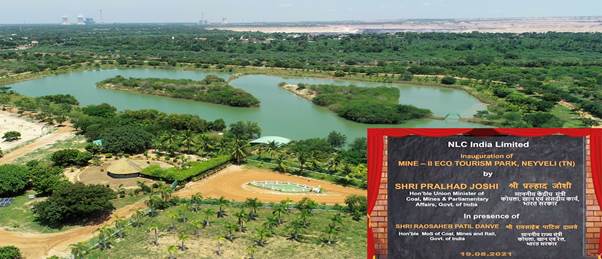
As directed by the Coal Ministry, coal/lignite PSUs are taking several steps for conservation and efficient use of mine water by supplying the same in its command areas for community usages such as drinking and irrigation. Mine water discharged from the operational mines as well as water available in abandoned mine voids of Coal/Lignite PSUs are benefitting approximately 18 lakh people living in about 900 villages in the proximity of coal mining areas.
During the current fiscal, coal/lignite PSUs planned to supply around 4000 LKL of mine water for community use of which 2788 LKL has been supplied till December 2022. From this 881LKL has been used for domestic purposes including drinking. The beneficiaries of mine water are mainly tribal people and those living in remote areas. This endeavour is in line with the Government’s Jal Shakti Abhiyan of water conservation effort.
In 2022-23, Coal India Ltd. (CIL) has already surpassed its annual plantation target of 1510 hectares by expanding its green cover to 1600 hectares ending December of FY’23. CIL has planted over 31 lakh saplings in the current fiscal till December, 2022.
Greening initiatives inside mine lease area during the last five years in 4392 hectares has created a carbon sink potential of 2.2 LT/year. Coal/Lignite PSUs have covered around 2230 Ha land under plantation in the current fiscal till December 2022 and around 360 Ha under grassing. Use of new techniques like seed ball plantation, seed casting through drones and Miyawaki plantation in its various mines are in place. Mined out areas, overburden dumps and other disturbed areas are concurrently reclaimed as soon as they get delinked from the active mining zones. These afforestation activities and green belt development works are also creating carbon sinks. The dense tree coverage also helps to control air pollution, arrests the suspended dust particles emitted during mining operations.
Water is the most essential element of life and livelihood. And India is having a hard time, coping up with the severe crisis of water. India constitutes 16 per cent of the world’s population, but the country has only four per cent of the world’s freshwater resources. With the changing weather patterns and recurring droughts, India is now declared as “water stressed”.
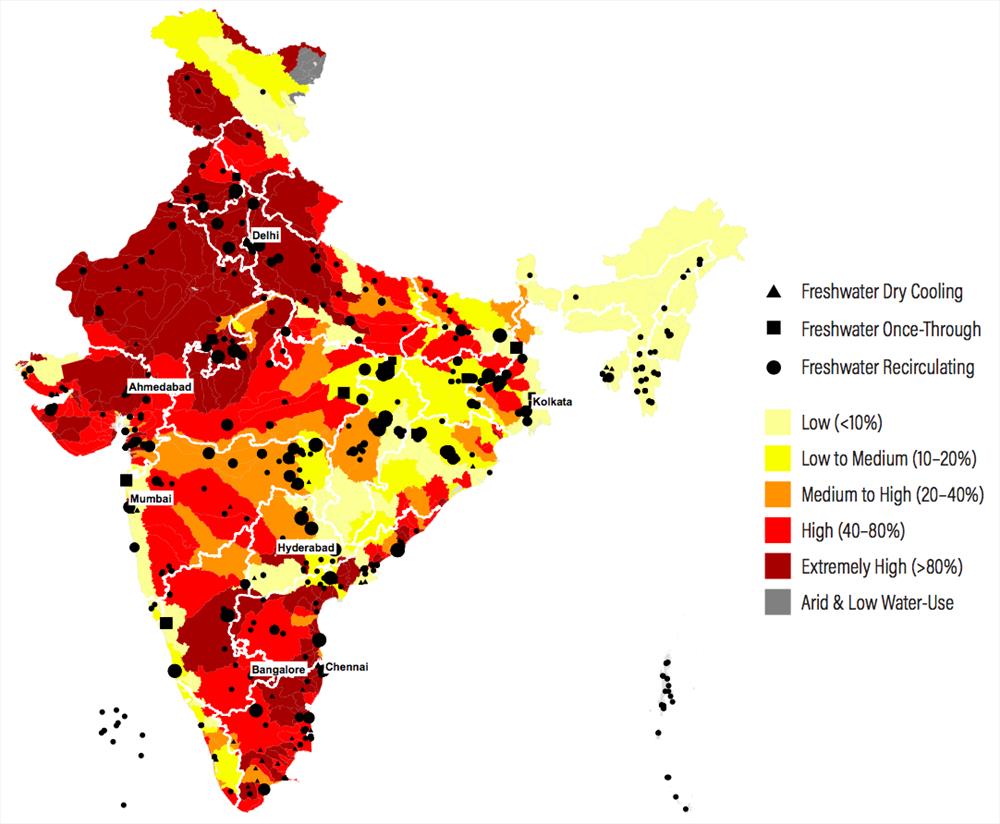
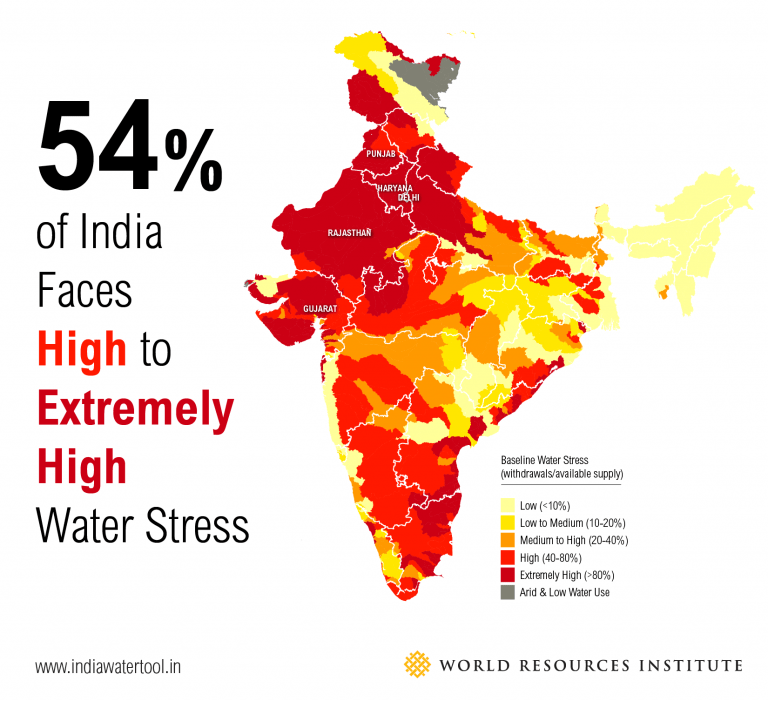
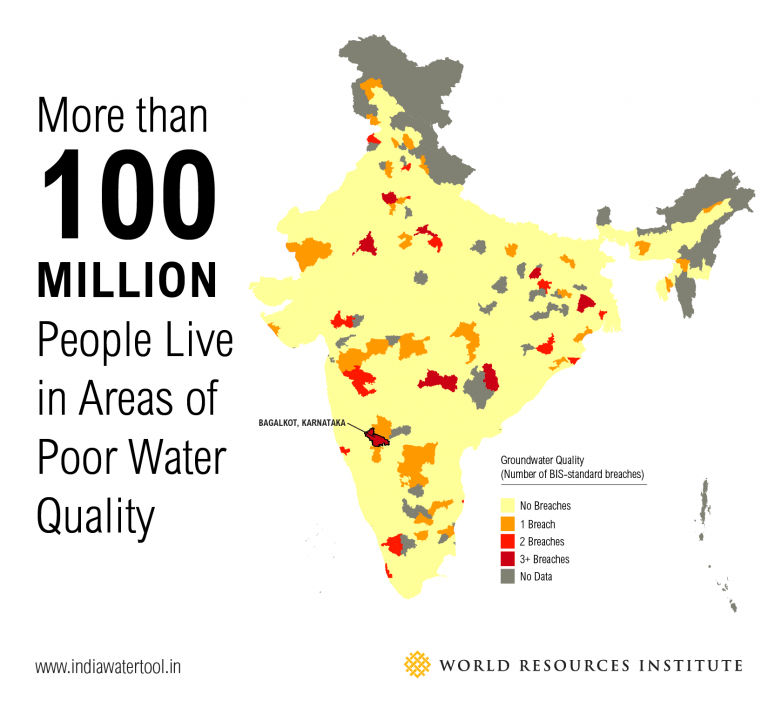
Statistical representation of India‘s Water Crisis
Background
Archaeological researchers had assumed the fall of Great Indus Civilisation was due to a catastrophic water scarcity caused either by shifting rivers or by drastic climate change that forced people to abandon city settlements. And history seems to repeat for present day India again. According to a NITI Aayog report in 2018, about 600 million people, or nearly half of India’s population, are facing extreme scarcity of water. The three-fourths of India’s rural households do not have stable running water supply and rely on sources that can cause serious health risks. The report also stated that India has become the world’s largest extractor of groundwater, accounting for 25% of the total. Moreover, 70% of the water sources were labelled as contaminated .And the conclusion of the report was ‘India is suffering from its worst water crisis in its history.’ It also pointed out 21 Indian cities to be run out of groundwater by 2020.
Reasons behind Water Crisis in India
1. Climate Change : The North-East monsoon is responsible for 10%-20% rainfall of the total rainfall in India, while the South-West monsoon provides approximately 80% of rainfall. In 2018, the North-East monsoon decreased by 44% and the South-West monsoon was deficient by 10%, causing the total rainfall in the area to decrease by 36 percent in comparison to the 50-year average. Because of the lower rainfall, water levels in reservoirs across the country decreased and led to extreme shortages of water in many major cities of India
. 2. Ground Water Extraction: Groundwater meets more than half of the country’s need of water supply and nearly 89% of the groundwater extracted in India is used for irrigation purposes. The traditional techniques of irrigation are also to blame for the water crisis as they result in a majority of water loss and evaporation during the irrigation process.
3. Pollutions in Our Rivers: Due to the lack of long term water management plans, most of the country’s rivers either run dry or have remained polluted over decades. The national river of Ganges is also the one that is most severely polluted, which is mainly resulted from untreated sewage of densely populated cities, industrial waste as well as due to religious ceremonies in and around the river.
4. Wastage of Unmanaged Water : According to the Central Water Commission, even though climate change has resulted in a reduction in rainfall and lack in underground water reservoirs, the country still receives enough rainfall to meet the needs of over 1 billion people. However, India only catches only 8 percent of its annual rainfall due to poor rainwater harvesting. Also for lacking the treatment of wastewater reuse, approximately 80% of domestic wastewater is drained out as waste and ends up flowing into salt water bodies.
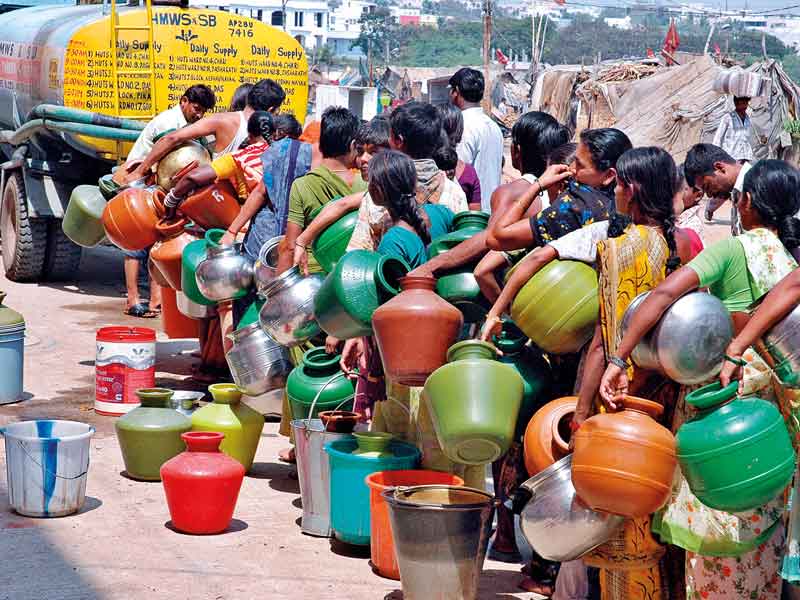
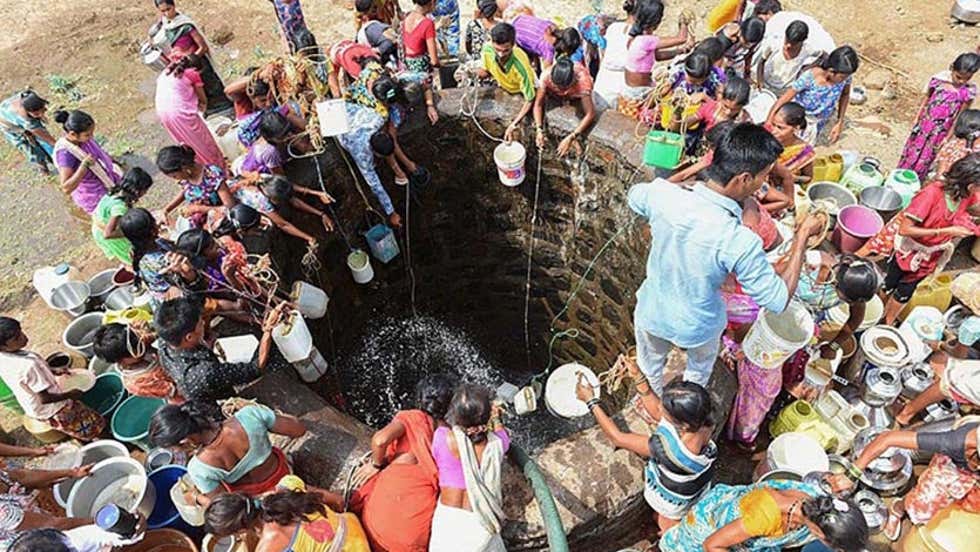
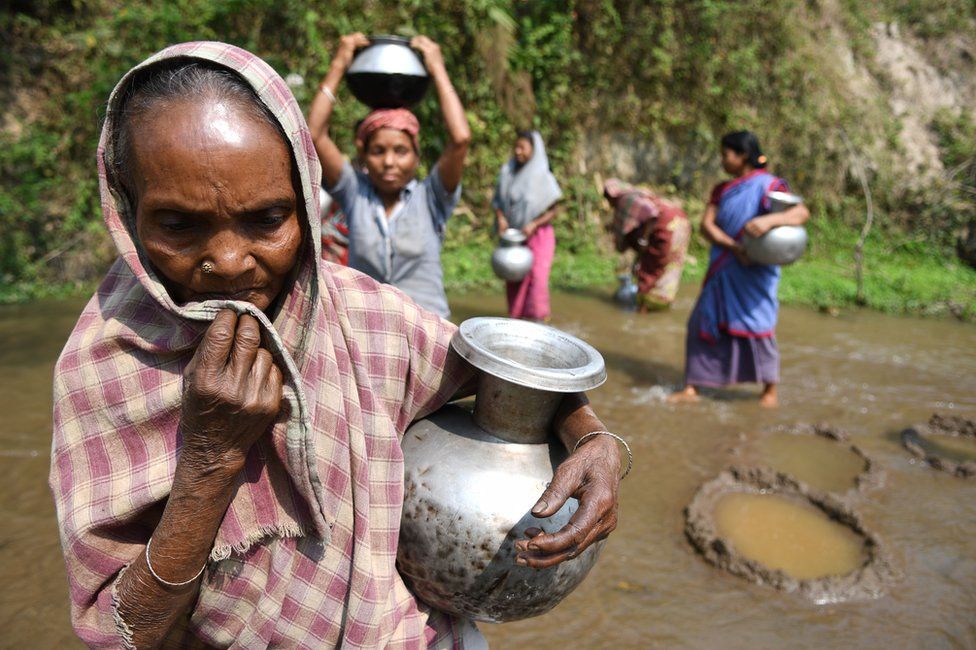
Struggle for daily water collection in water-stressed areas of India
Effects of Water Crisis in India: Where We Stand Today
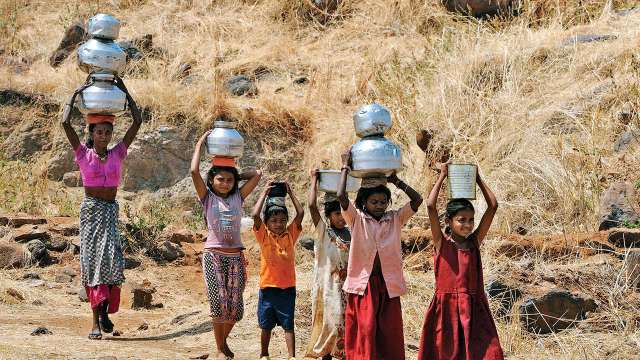
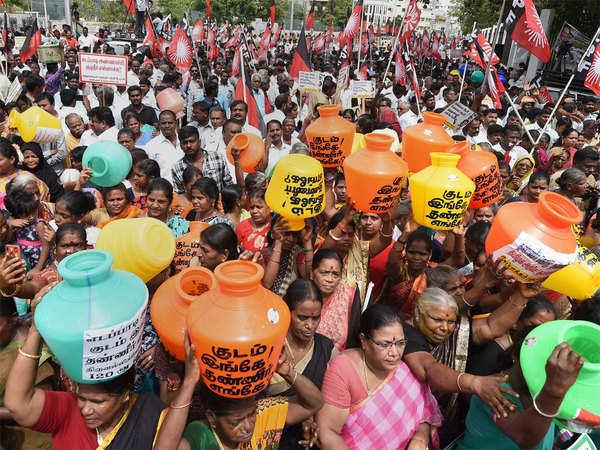
As many as 256 of 700 districts have reported ‘critical’ or ‘over exploited’ groundwater levels, according to a data from the Central Ground Water Board (2017). Fetching water in India has been perceived as a women’s job for centuries, especially in the rural areas. As groundwater resources come under increasing pressure due to over-reliance and unsustainable consumption, wells, ponds drying out fast, escalating the water crisis and placing even greater burden of accessing water on women. A rural woman in Rajasthan walks over 2.5 kilometres to reach a water source, according to a report by the National Commission for Women. Moreover, according to a non-profit named Water, women around the world spend a collective 200 million hours fetching water for their family. In addition to the time spent collecting water, millions may also spend significant amounts of time finding a place to go to relieve themselves. This makes up an additional 266 million hours lost each day. The acute crisis has even led to polygamy in one drought-prone village of Maharashtra. This involves having more than one spouse to collect water. The arrangement is termed as ‘water wives’.
The struggle for women
The Solution to the Crisis: Future Stands
Children also becoming victims of Water Crisis
The Government has taken up the most important role to eradicate the crisis by forming the Ministry of Jal Shakti and launching “Jal Jeevan mission”- Rural in 2019 to promote “Har Ghar Jal” by 2024. Goa and Telengana have achieved the first two Indian states to reach “Har Ghar Jal“, while Andaman & Nicobar Islands and Puducherry became first Indian Union Territories to reach the milestone. In 2021, “Jal Jeevan mission”-Urban was launched to complement the project. “Jal ShaktiAbhiyan-Catch the rain” is also introduced to capture and reuse of rain water at the grassroot level as a Jan Andolan. Along with this, for the cleaning and filtration of Ganges river “Namami Gange” had been rolled out as a national flagship mission. Coastal Reservoirs, Desalination of sea water and improved irrigation techniques are now been adopted to address the crisis.
Conclusion
Along with time, active participation from every layer of society in solving the water crisis of India is being witnessed. The youth has come forward with an appealing message to properly addresses the crisis and solve the drawbacks together. Now, the emerging awareness spreading among masses India can hope for a better future to handle the crisis more effectively.
Water an absolute necessity of life. How weird, a thing which doesn’t have taste, colour or smell plays the most important part in our life. It is our daily basic necessity, it is so basic that even we have started ignoring it’s presence. The importance of anything is only realise when we are deprived of that.
We have started misusing this resource. We waste a lot of water while brushing, bathing and even pollute water bodies by contaminating it with harmful Chemicals and industrial waste which, leads to death of water organism. We have forgot that what is not our property it belongs to everyone who is present on earth.
The value of water is realised by those who are deprived of it. Almost 90% of the world’s population to not have access to clean drinking water they are forced to drink muddy and dirty water. Those people use every drop of water very cautiously. We should at least think of them if we save even a single drop of water if we can, this will contribute to a great cause.
We should take a youth from today itself that we should not waste a single drop of water. Saving water means saving life, there are many people who died because of drought and many other reason like drinking contaminated water. Do think about them and please save water if you can. Be a responsible citizen and it is our responsibility.
Weight loss is of two types. Healthy And Unhealthy and most of the time the main concern of this generation is the body. They overlook the diet. For most of the people,weight loss means skipping meals and increasing exercises. This technique is rather an illogical and harmful way of loosing weight. We may end up loosing some pounds by following such techniques but we also gain fatigue,weakness,low immunity and no proper metabolism. Eating low calorie,less nutritious foods throughout the day without no proteins or intake of other vitamins,minerals and fibres can lower down our metabolism and if metabolism slows down it can cause a slower pace in achieving a healthy weight loss,severe constipation which can make us feel uneasy and a prolonged constipation can lead to a swelled up stomach or the development of stones which can cause jaundice and cancer. Thus overlooking the metabolism while loosing weight can effect us in adverse way.
There are different ways of increasing metabolism for a healthy weight loss. First,before anything else,we should look after our digestive system. Easily digestible and healthy foods increase the digestion rate and thus enhances metabolism. Its easy to digest healthy foods and can easily provide us energy by breaking down at a faster pace and the calories from such foods are easier to burn. It is already said,a person who has a balanced diet with nutritious foods in it,they can easily loose weight if they follow a proper exercise and physical health routine. The body burns more calories while digesting proteins rather than fats or carbohydrates. Thus,to make the diet more healthier,we can add eggs,meat,fishes and beats in our diet.On the other hand,a person who has a disbalanced diet,concentrating on only one nutrient or comprising of just junk food will find it difficult to burn the calories and the extra fats.which gets stored in their bodies. Junk foods take longer time to break down and the calories they contain do not burn easily. This is how a proper diet leads to a proper digestive system which in turn stimulates better metabolism which helps in weight loss. We may also added vitamin B1,B2 and B6 as they are equally important for increasing metabolic rate
The body is a machine. If it’s not active,it gets rusted. A balanced diet cannot help unless there is a presence of a PROPER exercise routine. Even if for half an hour,high intensity workouts help to burn the calories and steadies the metabolism rate. Full body exercises,stretches and basic exercuses for the abdominal muscles can be a good start for the beginners. Increasing metabolism is not possible if the consumption of calories is more than the calories which get burned but sometimes even after trying alot our metabolism may not increase. It can be due to presence of any diseases in our body like hypothyroidism. In such a case,diet and exercises should be decided after consulting a doctor. Building muscles does not only makes our body look fitter and more attractive but it also has many hidden benefits. People with more muscles have a better metabolism rate as one pound of muscles uses 6 calories to sustain whereas each pound of fat uses 2 calories. Thus,muscle training can help us to a great extent to burn fats and engance the metabolism rate. But however,aerobic exercises are equally useful.
And the major ingredient to a better health?drink lots of water. Water doesn’t just calm our thirst but also our body. People who drink 8-9 glasses of water have a good metabolism rate as calories need water to be processed and burn. Water is important for digestion. If our body is dehydrated,the process kf metabolism slows down. Thus,to increase the metabolism rate one should nwver underestimate the power of water. The best part is water doesn’t have much calories but helps to burn hundreds of calories. Drinking water before and after every meal will help the body to break down the food easily while keeping us hydrated. Cucumbers,tomatoes and other such vegetables and fruits with high water content can also be consumed to boost up our calorie burning capacity.
Last but not the least,never cheat on sleep. When sleeping our body produces a hormone named ghrelin(increases hunger)and releases less of the hormone reption(helps a person to feel full). Thus,enough sleep balances the hormones and prevents overeating
Saliva contains a lot of water. Saliva also contains electrolytes, mucous, and enzymes in minute amounts. It’s necessary for breaking down solid foods and maintaining oral health.
When you drink enough water, your body generates adequate saliva. However, as you become older or take certain medications or therapies, your saliva production may decrease.
If your mouth is drier than usual and increasing your water intake isn’t helping, see your doctor.
It regulates your body temperature
Maintaining your body temperature requires staying hydrated. During physical exercise and in heated situations, your body loses water through sweat.
Sweat keeps your body cool, but if you don’t replace the water you lose, your body temperature will rise. That’s because when you’re dehydrated, your body loses electrolytes and plasma.
If you’re sweating more than normal, make sure you’re getting plenty of rest.
It protects your tissues, spinal cord, and joints
Water keeps your joints, spinal cord, and tissues lubricated and cushioned. This will allow you to enjoy physical exercise while also reducing the agony caused by ailments such as arthritis.
It helps excrete waste through perspiration, urination, and defecation
Water is used by the body to sweat, pee, and pass bowel movements.
Sweat helps to keep your body temperature in check whether you’re exercising or in hot weather. Water is required to replace the fluids lost via sweating.
To have good faeces and avoid constipation, you also need enough water in your system.
Your kidneys are also responsible for removing waste from your body through urination. Adequate hydration is beneficial.
Your strength, power, and endurance are all affected by hydration.
If you engage in endurance training or high-intensity sports like basketball, you may be more susceptible to the consequences of dehydration.
Exercise in the heat without adequate hydration can result in dangerous medical issues such as low blood pressure and hyperthermia. Seizures can be caused by severe dehydration.
It aids in digestion
Experts affirm that drinking water before, during, and after a meal will assist your body break down the food you eat more easily, contrary to popular belief. This will aid in your digestion and allow you to get the most out of your meals.
The body adjusts to variations in the composition of food and stomach contents, whether they are more solid or liquid, according to a reliable source.
It helps with nutrient absorption
Water not only aids in the digestion of food, but it also aids in the dissolution of vitamins, minerals, and other nutrients. The vitamin components are subsequently delivered to the remainder of your body for usage.
It’s a relief to hear the rain. It’s the sound of billions of drops, all equal, all equally committed to falling, like a sudden outbreak of democracy. Water, when it hits the ground, instantly becomes a puddle or rivulet or flood………………….Alice Oswald
Among many other season which Bengal enjoys, the rainy season is one of them. It starts in the first week of July and continues up to September. It sets in with heavy showers which brings great relief after the hot days of Summer. The earth bursts into green grass. The wrinkled plants turn green. The dry ponds, pools and rivers are filled up with water. Nature bears a charming scenery everywhere. The farmers’ hearts swell with joy. They become busy with preparing land for sowing. The timely rainfall proves to be a happy boon to them. It brings the crop on nicely without irrigation. Thus, the rainy season is very useful and important.
But the rainy season is also the source of troubles. The village roads turn muddy. The accumulation of water here and there stops the movement of vehicles. The communication system is cut off. The possibility of the spread of many diseases becomes more. Not only this, the excessive rain causes flood. The crops are damaged and the lightly built houses collapse. People are rendered homeless and helpless. The outdoor work is prevented. The poor are bound to suffer.
However, the rainy season is liked by many people. They find the beauty, joy and attraction of the spring and the autumn in this season. The green scenery everywhere makes nature look like the newly married bride. The half-fed animals of summer look blithe and boony because of the abundance of fodder in nature. The frog’s crock, the peacock’s dance, the peasants’ song and the drizzle of rain water make nature throb with life. Thus, the rainy season is as enjoyable as the spring and the autumn.
Water is a vital part of our everyday lives and is used by our body in many different ways. It is so important that humans can’t survive for more than a week without fresh water. However, a lot of us underestimate the importance of drinking water daily and do not truly appreciate what water does for our bodies. Depending on factors such as location, fat index, age and sex, the average human is between 55-60% water. In fact, the brain alone is made up of 73% water, the lungs are 83%, and even bones contain some amount of water. Despite all this, many people take it for granted, not drinking even close to the adequate amount of water needed for bodily functions to take place properly. So, an understanding of how water helps us may encourage people to drink water more frequently.
Some of its Benefits
You need water to stay hydrated and maintain an adequate amount of fluid in your body. Water helps in the production of sweat, which keeps body temperatures cool as you exercise. When you perspire, the excess heat from your body is lost to the atmosphere through evaporation, regulating your body at an optimal temperature. Water also prevents your muscles from getting tired as fast and allows you to have a quicker recovery post-workout.
Drinking more water can actually help in weight loss. When your stomach senses that it is full, it sends signals to the brain to make you feel full. This reduces your hunger and makes you less likely to overeat.
There is a strong correlation between your mental energy levels and how hydrated you are. Water is needed in every cell in your body and your brain cells are no exception. Water helps transport oxygen and nutrients to the brain for optimal mental function.
One of the most common causes of headaches is dehydration. When you are dehydrated, the brain contracts temporarily due to fluid loss. Hence, drinking water helps in preventing headaches and other minor health problems.
Constipation occurs when the stools in your colon don’t get enough water. When you are dehydrated, water is diverted from the large intestine to hydrate the rest of your body. So, ample amount of water needs to be consumed to ensure healthy bowel movements.
Kidney stones are hard deposits of salt and minerals that form within the kidney or urinary tract. You need enough fluids in your system to dilute the concentration of minerals that can turn into these stones. Hence, water prevents the formation of kidney stones.
When your skin is dehydrated, it will become dry, tight and flaky. Staying hydrated can reduce the appearance of ageing, making you look younger and fresher.
How much water should you drink?
The body constantly loses water throughout the day, mostly through urine and sweat but also from regular body functions like breathing. To prevent dehydration, you need to get plenty of water from drink and food every day. The recommended daily water intake for adults is 8 – 10 glasses of 250ml each glass. However, there is no universally agreed quantity of water that must be consumed daily, and the amount may vary depending on the person. Many internal and external factors determine how much water a person should drink per day. So, we must identify in our own lives whether we think we are getting enough water or not. In case you are feeling excessive thirst, dry mouth, dry skin, headaches, sleepiness, dizziness, etc., it is an indication that you are not drinking enough water.
It is also important to highlight that though drinking ample amount of water everyday is important, one should not overdo it. Drinking too much water can lead to water intoxication, which is when the levels of salt and other electrolytes in your body become too diluted. While it is rare, this can be a medical emergency if the electrolytes in your body fall too low and too fast.
At the end of the day, we should drink an adequate amount of water as per our requirements. This will allow us to reap the benefits of water, and prevent symptoms of not drinking water.
Liquid water may still flow on Mars, but that doesn’t mean it’s easy to spot. The search for water on the Red Planet has taken more than 15 years to turn up definitive signs that liquid flows on the surface today. In the past, however, rivers and oceans may have covered the land. Where did all of the liquid water go? Why? How much of it still remains?
Observations of the Red Planet indicate that rivers and oceans may have been prominent features in its early history. Billions of years ago, Mars was a warm and wet world that could have supported microbial life in some regions. But the planet is smaller than Earth, with less gravity and a thinner atmosphere. Over time, as liquid water evaporated, more and more of it escaped into space, allowing less to fall back to the surface of the planet.
Where is the water today?
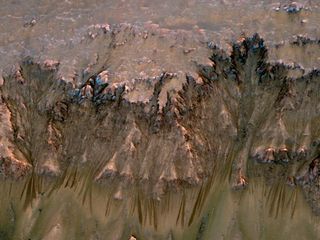
Liquid water appears to flow from some steep, relatively warm slopes on the Martian surface. Features known as recurring slope lineae (RSL) were first identified in 2011in images taken by the High Resolution Imaging Science Experiment (HiRISE) camera aboard the Mars Reconnaissance Orbiter (MRO). The dark streaks, which appear seasonally, were confirmed to be signs of salty water running on the surface of the planet.
“If this is correct, then RSL on Mars may represent the surface expression of a far more significant ongoing drainage system on steep slopes in the mid-latitudes,” a research team member told Space.com in 2012.
“The detection of hydrated salts on these slopes means that water plays a vital role in the formation of these streaks,” the study’s lead author, Lujendra Ojha, of the Georgia Institute of Technology in Atlanta, said in a statement. Vast deposits of water appear to be trapped within the ice caps at the north and south poles of the planet. Each summer, as temperatures increase, the caps shrink slightly as their contents skip straight from solid to gas form, but in the winter, cooler temperatures cause them to grow to latitudes as low as 45 degrees, or halfway to the equator. The caps are an average of 2 miles (3 kilometers) thick and, if completely melted, could cover the Martian surface with about 18 feet (5.6 meters) of water.
Frozen water also lies beneath the surface. Scientists discovered a slab of ice as large as California and Texas combined in the region between the equator and north pole of the Red Planet. The presence of subsurface water has long been suspected but required the appearance of strange layered craters to confirm. Other regions of the planet may contain frozen water, as well. Some high-latitude regions seem to boast patterned ground-shapes that may have formed as permafrost in the soil freezes and thaws over time.
The European Space Agency’s Mars Express spacecraft captured images of sheets of ice in the cooler, shadowed bottoms of craters, which suggests that liquid water can pool under appropriate conditions. Other craters identified by NASA’s Mars Reconnaissance Orbiter show similar pooling.
Evidence for water on Mars first came to light in 2000, with the appearance of gullies that suggested a liquid origin. Their formation has been hotly debated over the ensuing years.
But not everyone thinks that Mars contains water today. New research reveals that RSL may actually have formed by granular flows formed by the movement of sand and dust.
“We’ve thought of RSL as possible liquid water flows, but the slopes are more like what we expect for dry sand,” lead author Colin Dundas said in a statement. “This new understanding of RLS supports other evidence that shows that Mars today is very dry.”
That idea may have been washed away by the recent discovery of a possible subsurface lake near the Martian South Pole.
An underground lake?
Researchers made a big splash when they announced that Mars might be hiding a lake beneath its southern pole. The European Mars Express spacecraft used its Mars Advanced Radar for Subsurface and Ionosphere Sounding (MARSIS) to detect the proposed water. Ground-penetrating radar sent radar pulses to the surface, then timed how long it took for them to be reflected. The properties of the subsurface layers affect how long it takes for the beams to return.
MARSIS’ investigation revealed that the Martian south pole is composed of multiple layers of ice and dust to a depth of about nearly 1 mile (1.5 kilometers) spread over a 124-mile-wide (200 km) region.
“This subsurface anomaly on Mars has radar properties matching water or water-rich sediments,” Roberto Orosei, principal investigator of the MARSIS experiment and lead author of the new research, said in a statement.
MARSIS also revealed the presence of a subsurface lake among the pockets. According to the radar echoes, the lake is no more than 12.5 miles (20 km) across, buried nearly a mile beneath the surface. The scientists aren’t certain of the lake’s depth, but they have confirmed that it is at least 3 feet (1 meter) deep. According to the researchers, the lake must have salt to keep from freezing.
“This is just one small study area; it is an exciting prospect to think there could be more of these underground pockets of water elsewhere, yet to be discovered,” Orosei said.
Not all researchers are as certain about the presence of liquid water.
“I think it’s a very, very persuasive argument, but it’s not a conclusive or definitive argument,” Steve Clifford, a Mars researcher at the Planetary Science Institute in Arizona, told Space.com. “There’s always the possibility that conditions that we haven’t foreseen exist at the base of the cap and are responsible for this bright reflection.”
More than three decades ago, Clifford proposed that Mars could harbor liquid water beneath its polar caps in the same way that Earth does. On Earth, lakes beneath the Antarctic and Greenland ice sheets are created when heat from within the planets melt the glaciers in patches. Clifford told Space.com that a similar scenario could happen beneath the Martian polar ice caps.
“The bright spot seen in the MARSIS data is an unusual feature and extremely intriguing,” Jim Green, NASA’s chief scientist, said in a statement. “It definitely warrants further study. Additional lines of evidence should be pursued to test the interpretation.”
“We hope to use other instruments to study it further in the future,” Green said.
Liquid gold
Water may seem like a very common element to those of us stuck on Earth, but it has great value. In addition to understanding how Mars may have changed and developed over time, scientists hope that finding water will help them to find something even more valuable — life, either past or present.
Only Earth is known to host life, and life on our planet requires water. Though life could conceivably evolve without relying on this precious liquid, scientists can only work with what they know. Thus they hope that locating water on celestial bodies such as Mars will lead to finding evidence for life.
With this in mind, NASA developed a strategy for exploring the Red Planet that takes as its mantra “follow the water.” Recent orbiters, landers, and rovers sent to Mars were designed to search for water, rather than life, in the hopes of finding environments where life could have thrived.
That has changed, however, with the flood of evidence these robots have returned. Curiosity determined that Mars could indeed have supported microbial life in the ancient past, and the next NASA rover — a car-size robot-based heavily on Curiosity’s basic design — will blast off in 2020 to look for evidence of past Red Planet life.
Yes, it’s one of those articles which will ask you to drink water. I know you already don’t want to read it because we all know the benefits of drinking water. We have been hearing about that since we were little. So, I am not going to bore you by listing all the reasons you should drink water.
Water is plain and boring. Which sane person would keep drinking a transparent fluid and feel happy about it. Right? Like, go grab a coffee, tea, or a soft drink.
So a while ago, I was thinking about why I don’t drink water. Turns out it was mostly because I do not like the taste of it. I don’t think it is something I can keep drinking all day. So, I decided to spice things up a little.
Here are some things that I tried and, it helped me increase my intake of water.
So, after I came up with this idea of drinking more water. I was honestly motivated. So the first thing I did was buy a beautiful bottle and a glass with a built-in straw. You must be thinking about how that helped. Well, it did. Drinking water in something you like would make you want to drink more water. I now carry my bottle whenever I go out mostly because I think it looks cute.
Did you know drinking water with a straw increases your intake of water? So go grab a glass bottle with a metal straw. They are reusable and won’t harm the environment.
The next thing I did was add flavour to the water. Yes, let’s get rid of the plain taste of water. Instead of drinking plain water, you can drink fruit-infused water. You can easily make fruit-infused water by adding the fruit of your choice in cold water and letting it sit for 2-4 hours. It will not just keep you hydrated and feeling fresh but it will also remove the toxins from your body.
I usually add lemon, mint, and cucumber. But, to change things up I like to add blueberries and strawberries. You can come up with your own recipes or check out a few recipes online.
If you are one of those people who are very busy in your life that you forget to drink water. I have a solution for you too. Download a drinking water app from the play store or app store. It will give you reminders to drink water. It is fun and you won’t forget to drink water.
Another thing that I do is always keep water next to me especially when I am working on an assignment. So whenever I am tired, I take a sip of water then continue. It gives my brain a little break and helps me stay hydrated.
Remember how I told you at the start that I won’t tell you the health benefits of drinking water. It is because I want you to try these tips and let me know the changes you saw in yourself after increasing your intake of water.
Technology has always aimed in making our lives better – be it the automatic machines or smart devices- appliances have long brought convenience to our lives.
But in the World of Climate Change and Environment preservation, we need technology to focus on Sustainability in order to save resources for the future generations.
CLEAN WASHING, LESS WATER
Washing Machines and Dish Washers have gained popularity across various parts the country due to their efficiency and convenience. But are they also water efficient?
The advertisements for various washing machines now have started to show how one can save more than two buckets of water when the clothes are washed in the machine as compared to when they are washed by hand. Dishwashers nowadays use ultrasonic technology to reduce consumption of water while making sure there is no reduction in the efficiency of cleaning. Due to technology we have been able to invent appliances that help in deeper cleaning and use less water.
DAILY ROUTINE, WATER WASTAGE
Right from brushing our teeth to taking a shower we use water that very conveniently reaches our house in pipes and showerheads
But not to worry about saving water anymore as the latest achievement in the field of technology is OPTIMIZED showerheads designed to maintain the flow pressure while drastically reducing the water consumption. One can research and purchase the one which best suits your showering needs and also saves water.
FLUSHING ACTION, SMART SOLUTION
Technologists have been continuously working towards designing a flush system to produce an alternative which is more hygienic and water-efficient in its operation.
Apart from standard improvements, there are new water treatment systems being developed which could help recycle sink water to flush toilets in Indian homes in the near future. Such a system would save gallons of water, while making the required amount available for comprehensive and hygienic flushing action.
SUSTAINABILITY BEGINS AT HOME
The simplest method for conserving water is to turn off the tap whenever possible.
Running the water when you’re brushing your teeth, for example, wastes at least a quart of water. That may not seem like much, but it can really add up over time: a family of four could save at least 60 gallons of water a month by simply turning off the faucet.
FLOWING FAUCETS
New faucets utilize several different kinds of aerators, but all conserve water without sacrificing pressure. Older faucets use three to seven gallons of water per minute, while newer ones can cut that to around two gallons per minute, or even less.
WASTING WATER FOR WASHING WASTE
New low-flow toilets use 1.6 gallons per flush. They work as well as the older types but use considerably less water. Homeowners can also consider using dual-flush toilets, which offer two settings, depending on the type of waste in the bowl.
WATER HEATER, PRESERVE DROPS
A small pump that runs on minimal electricity can be attached to your hot water system and can help keep hot water circulating when it’s not in use. This prevents waste of up to 10 gallons of water while waiting for the shower to heat up. Tank less water heaters offer the same convenience, but cost more; a recirculation system can be sometimes be installed for as little as $300.
FIX LEAKS, SAVE GALLONS
Have water leaks in your home fixed right away. Even a tiny leak can quickly add up to a huge amount of wasted water. A faucet leak of just one drip per second can waste more than 2,000 gallons of water in a year, according to the U.S. Geological Survey.
These are some of the latest technologies that have brought the twin objectives of more hygienic homes and water conservations to the fore. As more manufacturers innovate, such technologies are projected to become standard in all Indian homes. Helping create cleaner homes at the cost of less water is also a mission of MODERN TECHNOLOGY AND SCIENCE, a movement dedicated to creating a more sustainable future for our water resources. You can also support such initiatives they’ve undertaken and join in to help conserve water for a healthier tomorrow.
World Oceans Day is a worldwide initiative by the United Nations to spread knowledge and awareness about the vast expanse of oceans on Earth. It is based on the idea of preserving the infinite number of life forms and coral reefs that are a part of the ocean and being aware of how human actions can harm their natural habitat. The principal focus of this initiative is to bring the oceans at the forefront of global environmental discussions, and plan and execute a sustainable method to save our oceans and the planet at large.
When is World Oceans Day?
We celebrate World Oceans Day on June 8, and a lot of activities at global, national and community levels are organised worldwide to observe this event.
What is the History of World Ocean Day?
World Oceans Day was first proposed by Canada’s International Centre for Ocean Development and the Ocean Institute of Canada in 1992, at the Earth Summit in Rio de Janeiro. Since 2002, the World Ocean Network has been instrumental in garnering support and organising worldwide activities on June 8. A huge network of more than 2000 organisations worldwide are invested in making sure that the ocean is protected from any damage due to technology or other human actions.
Why is World Oceans Day Important?
The composition, temperature, currents and life in the oceans drive every natural system that makes Earth habitable for humankind. Even the balance of oxygen that we breathe is primarily dependent on the ocean. The health of our oceans has become a matter of grave concern, due to the damage they have endured.
Dedicating a particular day to this cause not only helps in spreading awareness among people, but also in mobilising conscientious civic and political efforts towards addressing this global problem. Though spending just one day celebrating the oceans is not enough to bring about the changes required to conserve marine ecology, it works wonders as a starting point for people, especially young minds, to come together to take action against any damage done to ocean.
Other Important Facts About World Oceans Day
Knowing about World Oceans Day is not enough for your children to be able to grasp the whole concept of how important the ocean is for human survival. To encourage your children to celebrate our oceans and strive to make a difference, you could share some fun facts on World Oceans Day and how important the oceans are:
• 97% of Earth’s water is in the oceans, which is home to more than 200, 000 known species and millions of unidentified organisms.
• The oceans purify the air we breathe by absorbing 30% of the carbon dioxide in the air, which also helps in reducing the effects of global warming and climate change.
• Oceans are the world’s largest source of protein, and more than 2.6 billion people depend on the oceans as their primary source of protein.
• 40% of the oceans of the world are today affected by human actions causing pollution, depletion of fisheries, loss of coral reefs and endangerment of marine species. Seven out of the 13 great whale species are endangered today.
•13, 000, 000 tonnes of plastic leak into the ocean water each year. It has been predicted that there will be more plastic than fish in the ocean by 2050. Over 100, 000 marine wildlife animals are killed each year due to plastic contamination of the oceans.
• Each year a new theme is assigned to this day to cover different aspects of marine life and human dependency on oceans. In 2020, the celebratory theme on World Oceans Day is “Gender and The Ocean”, which emphasises the harm that gender disparity can bring to our oceans.
• The President of UN General Assembly has launched a global campaign “Play It Out”, against the use of plastic.
• Marine Protected Areas have been chalked out as an initiative to protect the oceans from illegal fishing.
• Jellyfish as a species is older than dinosaurs and has been on this earth for more than 650, 000 years.
• 75% of the world’s volcanoes are located under the Pacific Ocean around Ring of Fire, the largest zone of active volcanoes.
World Ocean Days Activities for Kids
It doesn’t matter how small their hands are, children can drive this movement and even inspire adults to participate. Here are a few activities that your kids can organise on World Oceans Day:
Clean-up Drive
Invite all the children in the neighbourhood to the beach or any water body close by to clean the area. This will help them to understand how much litter ends up in the oceans through different waterways polluting the habitat of marine life.
Ocean Themed Programme
An ocean theme-based arts and crafts competition can attract a lot of attention from children of all ages. You can engage kids in a drawing competition and then display their creative works. You can even inspire a few young writers to submit stories and poems based on marine life.
Ocean Hunt
Treasure hunts are an intriguing way to engage children. Keeping the spirit of World Oceans Day, you can organise an ocean hunt by creating puzzles around facts from the oceanic world, leading to prizes like ornaments made out of sea-shells, passes to any nearby aquarium, books with interesting facts about the ocean, etc.
Storytelling Competition
It is safe to say that all kids love stories, especially when they get to be the judge of who is the best storyteller. Engage the adults around and encourage them to bring in their theatrical talents to entice the kids with amazing storytelling skills. You can always use the sounds of the waves or wild animals from the ocean to enhance your performance.
5.Let the Kids Instruct
No child will say no to an opportunity to give some sound advice to his/her parents. Ask the children to make a list of human actions that harm our oceans and come up with instructional ideas to preserve them. Organise a session with all the adults, where the kids present their points of view on how to keep our oceans and planet safe.
Human and it’s bonding with nature has helped him to understand various aspects and secrets hidden in it. Nature has some how been more powerful than the abilities of man and has tested his patience at regular intervals. But our environment has most oftenly provided with the resources which has helped the dynasties to follow up. Human has been moving to places since ages in search of better good and cleaner water to drink. And water being one of the most essential item for the survival has not let itself down, instead has helped human in anyway it could be it as a thirst remover or helping out with food to eat.
On the occasion of “Ocean Day” Which is usually celebrated every year on “8th of June”, we will acknowledge how benefitted we are by these water resource, how are these getting affected day by day and what initial steps can we take to save it and help remain it clean.
Oceans and other water resources have often helped humans to survive either helping through drinking source or travelling or even providing food in hard times. But other than this:
1.These have been a greater source of oxygen generators and helping out in dumping the emissions of carbon dioxide. Thus helps in maintaining the adequate oxygen level for all living beings to live.
2.Moreover it also helps to maintain the temperature of the earth or in simple words it helps in regulating the climate conditions and helps in maintaining a balance of hot and cold environment around the globe.
3.But one of the greatest benefit to human is that oceans and areas near oceans or sea are a good place to enjoy holidays or weekends and trips. It not only freshes the mood of individuals but also gives them a close touch to nature and it’s essence of calmness. People usually perform various water activities, like jet skiing, under water Coral visit, sometimes even swimming also and alot more.
4.Other than all these, it is a good source of sea food generation and people widely invest in eating these cuisine. And many more benefits of it.
But in today’s era, we humans are not really taking care of these resources and rather are deteriorating the quality of these, which truely is affecting oceans, life in it and therefore ourselves also. So the major things which are deteriorating the quality are:
1.Throwing of plastic and things made of plastic in it.
2.Releasing out wastage of the cities or nearby areas into it.
3. Melting of glaciers , leading to rise of water levels and thus a major threat to cities around these oceans. This is due to increasing temperature of earth due to emissions of carbon content.
4.And a lot many things which are making these resources dangerous.
But what can be done and initials steps can be taken to protect these very important resources from getting degraded:
1. The prior is to limit the usage of plastic and things made of it.
2. Cleaning of beach, so that the waste around it does not get mixed up in the ocean when the waves come by.
3.Limit the carbon content being released in the atmosphere every day, by shifting to sustainable form of energy and reducing the use of energy sources emitting these harmful gases.
4.During having a tour around the ocean, never threw any waste out in these pure resources.
5. Understand the importance of marine life and also these oceans and thus aware yourself and others around you to protect these resources.
So the reason to celebrate Ocean day is to aware every one about the importance of these essential component of our earth and showcase how these resources play an essential role in our day to day life and this is surely a way to thank these and make sure to protect them from any kind of mistreatment.
But what people usually do on ocean day. The activities mainly include:
1.People conduct and connect with various awareness campaigns for protecting this resource.
2. Most people conduct clean up drives, which are mainly concentrated on collection of waste around the beaches and also in the oceans and make sure these remain cleaner.
3.Most people also prefer not to eat sea food on this day.
4.Spend times with their family in the evening discussing about the importance of this resources and key steps to help it remain cleaner.
So the key aspect of “Ocean Day” is to understand the importance of water, how it is an essential component for our survival and how can we help it remain clean and pollution free . But the key point to focus is, the care of oceans or any other water resource must not remain focused on these specific days only and rather much be worked on for each and every day in the calendar and thus protect our earth from
Water pollution is a rising global crisis. According to the UN, today 2.1 Billion people live without safe drinking water. Nowadays water pollution is increasing at an alarming rate, which makes the use of water unsuitable for human consumption.Experts believe that India also face a huge challenge regarding water scarcity as they fear the country has just five years to solve its water crisis . Otherwise hundreds of millions of lives will be in danger.
Water bodies can be polluted by a variety of substances including toxic chemicals, radioactive substances. etc but the main sources of water pollution include:
1.There are various sources of water pollution, but the domestic source is the primary reason for water contamination. Around 80% of water pollution is caused by untreated domestic sewage
2.Another source of pollution is the industrial effluents along with the raw, untreated sewage discharged from drains into the rivers and canals. Oil leaks from ships , pollutants released from processing plants and waste disposal areas , effluents from factories and industries using radioactive material have harmful effects on marine habitats such as if the level of water pollution increases vigorously then algae would flourish rapidly which releases dangerous toxins causing damage and harm to the fish, dolphins, sea turtles and other aquatic life.
3.A significant source for the pollution in the river Ganga is the dumping of dead bodies, animal carcasses, and corpses into the holy river. Washing of dirty things in the water, and human excreta along the river banks also contribute to pollution. Also a large number of dairy farms in urban areas discharge their wastes into the river.
4.India generates 26000 tonnes of plastic everyday , but 40% of it remains uncollected causing littering of the marine life and hazardous effects to river systems. Single use plastic is being used worldwide and is considered to be the main reason for land pollutants and water pollution.
5. Animal agriculture uses about 70% of agricultural land, and is one of the leading causes for deforestation and water pollution.
6. Mining also causes water pollution which includes metal contamination, increased sediment levels and acid mine drainage.
Various solutions and other implementable ways can be used to limit the pollution of our water resources. These include:
1.Organic farming ,expanding wetlands, growing mangroves reduces water pollution.
2.Capturing rainwater, reusing treated wastewater for irrigation along with proper sewage treatment and management curbs the water crisis.
3.Trees moderate air and water pollution, reduce heating and cooling costs, and provide shade and shelter. Afforestation helps in reduce water pollution and preventing soil erosion.
4.Dispose waste properly.
5. Plan an active role in conserving water. Spread awareness and support projects and initiatives for water treatment
Environmental monitoring shows that the 3 month nationwide lock down due to the corona virus outbreak has resulted in rivers shows sign of overall improvement in quality of water along with decreasing water pollution. Also the critically endangered , enigmatic South Asian River dolphin, or ‘Ganga dolphin’ has been spotted making a comeback to Kolkata with many experts citing intense river pollution is to be the main reason for the dolphins disappearance.
Water remains the most essential mankind need that nature has so easily provided. Let’s all commit to conserving water, using it judiciously and helping the environment thrive.










 Eduindex
You must be logged in to post a comment.