How to prioritize work

Learning how to prioritize

It means getting more out of the limited time you have each day. It’s one of the cornerstones of productivity and once you know how to properly prioritize, it can help with everything from your time management to work-life balance.

Master lists

Capture everything on a Master List and then break it down by monthly, weekly, and daily goals.

  • Start by making a master list—a document, app, or piece of paper where every current and future task will be stored. 
  • Once you have all your tasks together, break them down into monthly, weekly, and daily goals.
  • When setting your priorities, try not to get too “task-oriented” – you want to make sure you’re prioritizing the more effective work.
Eisenhower Matrix

The matrix is a simple four-quadrant box that answers that helps you separate “urgent” tasks from “important” ones:

  • Urgent and Important: Do these tasks as soon as possible
  • Important, but not urgent: Decide when you’ll do these and schedule it
  • Urgent, but not important: Delegate these tasks to someone else
  • Neither urgent nor important: Drop these from your schedule as soon as possible.
The Ivy Lee Method

Rank your work by its true priority with the Ivy Lee Method:

  • At the end of each workday, write down the 6 most important things you need to accomplish tomorrow. 
  • Prioritize those 6 items n order of their true importance.
  • When you arrive tomorrow, concentrate only on the first task. Work until the first task is finished before moving on to the next one.
  • Approach the rest of your list in the same fashion. At the end of the day, move any unfinished items to a new list of six tasks for the following day.
  • Repeat this process every working day.
The ABCDE method

Instead of keeping all tasks on a single level of priority, this method offers two or more levels for each task:

  • Go through your list and give every task a letter from A to E (A being the highest priority)
  • For every task that has an A, give it a number that dictates the order you’ll do it in
  • Repeat until all tasks have letters and numbers.
Set the tone of the day by “Eating the frog”

Once you’ve prioritized your most important work, it’s time to choose how to attack the day. How you start the day sets the tone for the rest of it. And often, getting a large, hairy, yet important task out of the way first thing gives you momentum, inspiration, and energy to keep moving. 

Warren Buffett’s 2-list strategy

Cut out “good enough” goals with Warren Buffett’s 2-list strategy.

  • Write down your top 25 goals: life goals, career goals, education goals, or anything else you want to spend your time on.
  • Circle your top 5 goals on that list.
  • Finally, any goal you didn’t circle goes on an “avoid at all cost” list. These are the tasks that are seemingly important enough to deserve your attention. But that isn’t moving you towards your long-term priorities.
The sunk cost fallacy

Humans are especially susceptible to the “sunk cost fallacy”—a psychological effect where we feel compelled to continue doing something just because we’ve already put time and effort into it. But the reality is that no matter what you spend your time doing, you can never get that time back. And any time spent continuing to work towards the wrong priority is just wasted time.

REFERENCE

https://blog.rescuetime.com/how-to-prioritize/

Human skills for the future of work

“Becoming is better than being.” – Carol Dweck

Empathy Mindset
  • Listening: Ask questions to understand.
  • Appreciation: Show sincere appreciation and celebration of others’ contributions.
  • Self-Awareness: Part of feeling what others feel is also about understanding your own biases and limiting beliefs.
  • Judgment: When people seek advice or share a problem, they are not looking for your criticism. 
  • Presence: Time is one of our most valuable assets, so be there fully.
Emotional Intelligence

Being aware of how your behaviour affects others is at the heart of emotional intelligence.
This means building self-awareness, self-management, social awareness, and relationship management.

Effective Communication

Consider the following principles:

  • Intention: Know what you want to say and be clear about your objective. 
  • Organization: Take the time to organize your thoughts and straightforwardly deliver them.
  • Framing: “I think, I feel” is much more effective than starting with “you,” which puts people on the defensive.
  • Affirmation:  Asking if the information makes sense may reveal a potential problem. 
Curiosity + Instigation

Curiosity is a natural part of any creative cycle. It paves the way for “possibility thinking,” rather than business as usual. 
Instigation is an invitation to challenge quick fixes, lacklustre solutions and mediocrity. 

Strategic Analysis and Analytical Thinking

Strategic analysis helps to identify complex problems by providing a top-level view into the interconnected web of what can often seem like isolated issues.
Analytical thinking enables people to suspend emotional decision making and instead look logically at evidence-based research and tests.

Complex Problem Solving

To get into problem-solving mode, you need to understand the true problem at hand, identify challenges in the way, resist simple solutions, identify constraints and pathways to feasibility, and, above all, make sure you’re open to experimentation. 

Conflict Resolution

Among the most effective skills to learn to resolve conflict are mastering deep listening, mediation and facilitation. 
Giving people the benefit of the doubt and leading with curiosity are also powerful tools. 

Negotiation and Persuasion

They are not required just for the sales team. You need to be clear about what you want and what you’re willing to let go of to get it.

Leadership

A great leader will understand that it’s not enough to build a culture, it needs to be protected and maintained. 
A great leader also needs to make difficult decisions and hold everyone, including themselves, accountable.

Reference

https://creativecloud.adobe.com/discover/article/ten-human-skills-for-the-future-of-work

Mastering One Thing at a Time

Many people have multiple areas of life they would like to improve. For example, I would like to reach more people with my writing, to lift heavier weights at the gym, and to start practicing mindfulness more consistently. Those are just a few of the goals I find desirable and you probably have a long list yourself. The problem is, even if we are committed to working hard on our goals, our natural tendency is to revert back to our old habits at some point. Making a permanent lifestyle change is really difficult. Recently, I’ve come across a few research studies that (just maybe) will make these difficult lifestyle changes a little bit easier. As you’ll see, however, the approach to mastering many areas of life is somewhat counterintuitive.

Too Many Good Intentions

If you want to master multiple habits and stick to them for good, then you need to figure out how to be consistent. How can you do that? Well, here is one of the most robust findings from psychology research on how to actually follow through on your goals: Research has shown that you are 2x to 3x more likely to stick with your habits if you make a specific plan for when, where, and how you will perform the behavior. For example, in one study scientists asked people to fill out this sentence: “During the next week, I will partake in at least 20 minutes of vigorous exercise on [DAY] at [TIME OF DAY] at/in [PLACE].” Researchers found that people who filled out this sentence were 2x to 3x more likely to actually exercise compared to a control group who did not make plans for their future behavior. Psychologists call these specific plans “implementation intentions” because they state when, where, and how you intend to implement a particular behavior. This finding is well proven and has been repeated in hundreds studies across a broad range of areas. For example, implementation intentions have been found to increase the odds that people will start exercising, begin recycling, stick with studying, and even stop smoking. However (and this is crucial to understand) follow-up research has discovered implementation intentions only work when you focus on one thing at a time. In fact, researchers found that people who tried to accomplish multiple goals were less committed and less likely to succeed than those who focused on a single goal.

What Happens When You Focus on One Thing

When you begin practicing a new habit it requires a lot of conscious effort to remember to do it. After awhile, however, the pattern of behavior becomes easier. Eventually, your new habit becomes a normal routine and the process is more or less mindless and automatic. Researchers have a fancy term for this process called “automaticity.” Automaticity is the ability to perform a behavior without thinking about each step, which allows the pattern to become automatic and habitual. But here’s the thing: automaticity only occurs as the result of lots of repetition and practice. The more reps you put in, the more automatic a behavior becomes. For example, this chart shows how long it takes for people to make a habit out of taking a 10-minute walk after breakfast. In the beginning, the degree of automaticity is very low. After 30 days, the habit is becoming fairly routine. After 60 days, the process is about as automatic as it can become.

The most important thing to note is that there is some “tipping point” at which new habits become more or less automatic. The time it takes to build a habit depends on many factors including how difficult the habit is, what your environment is like, your genetics, and more.

That said, the study cited above found the average habit takes about 66 days to become automatic.

Conclusion

  1. You are 2x to 3x more likely to follow through with a habit if you make a specific plan for when, where, and how you are going to implement it. This is known as an implementation intention.
  2. You should focus entirely on one thing. Research has found that implementation intentions do not work if you try to improve multiple habits at the same time.
  3. Research has shown that any given habit becomes more automatic with more practice. On average, it takes at least two months for new habits to become automatic behaviors.

The counterintuitive insight from all of this research is that the best way to change your entire life is by not changing your entire life. Instead, it is best to focus on one specific habit, work on it until you master it, and make it an automatic part of your daily life. Then, repeat the process for the next habit.

Perfectionism Destroys Productivity

Do you always worry that you didn’t do a good job? Do you always question your work and your actions? Are you afraid of admitting your mistakes? Does rejection make you feel bad? If so, you’re in great danger. If you’re a perfectionist, you’re just a procrastinator with a mask. It’s no different from someone who’s lazy and does nothing at all. A perfectionist…

  • Always waits for the right moment.
  • Never makes mistakes.
  • Always needs more time.

But at the end of the day, life and work is about outcomes. Results matter.

Is perfectionism worth it?

Perfectionism is just another form of procrastination. When you constantly worry about making mistakes, doubt creeps in your mind. And that causes indecision.

There are two types of perfectionists:

  1. The one that never starts. You want to achieve something, but you immediately start doubting yourself. You think: “I don’t think I can do it.” So you never start.
  2. The one that starts but has too high standards. You set a goal. You work hard (maybe too hard). But you’ve set your goals so high, that you’re always failing yourself.

These are things that we rather avoid. Joachim Stöber and Jutta Joormann, who studied Worry, Procrastination, and Perfectionism, write:

“The combination of concern over mistakes and procrastination may be a crucial factor in the maintenance of worry. On the one hand, it may prolong existing threats because no steps are taken to cope. On the other hand, it may increase existing threats or even produce additional threats because initially solvable problems will pile up, thus creating an overload of problems that may finally be insoluble.”

And that feeling of being helpless is the biggest pitfall for us. Because what do we do when we feel helpless? Exactly—we give up. Just look at the studies about Learned Helplessness. However, perfectionism is not always bad. In fact, some studies suggest perfectionism is related to greater achievement. But that’s not the question here. Of course, when you set higher goals and if you have higher standards; you achieve more. Without a doubt, perfectionistic tendencies can be a good thing. But as we all know, achieving goals is not the only thing in life. It’s more about HOW we reach our goals and aspirations.

How to beat it?

In an interesting study by Gordon L. Flett and his colleagues; they talk about the role of learned resourcefulness to perfectionism. They suggest that learned resourcefulness can play a mediator role.

Michael Rosenbaum, a Professor at Oxford University says,

“Learned resourcefulness refers to the behavioral repertoire necessary for both regressive self-control and reformative self-control. This repertoire includes self-regulating one’s emotional and cognitive responses during stressful situations, using problem-solving skills, and delaying immediate gratification for the sake of more meaningful rewards in the future.”

Learned resourcefulness is the skill that you need to stop sabotaging yourself.

Finding Balance

If you’re a slacker, you don’t care about much. Good enough is your motto. And you have no ambition at all. An attitude like that doesn’t bring you anywhere. The American novelist Cormac McCarthy put it best:

“It’s like a lot of things, said the smith. Do the least part of it wrong and ye’d just as well to do it all wrong.”

Slacking is an attitude of “I don’t care.” But if you want to make things happen in your life, you have to care. And what you want is to find a middle ground where your perfectionistic tendencies drive you, but you have the calm of a slacker, and you combine that with learned resourcefulness. Do great work like a perfectionist, but don’t give too much attention to your goals like a slacker. And finally, combine it with this:

Resourcefulness — Goals can work well, but they can also be counterproductive. That’s why you want to rely on systems. And when shit hits the fan; use your problem-solving skills to figure things out.

 Instead of beating yourself up when you make a mistake or if you fail yourself, you just adjust or solve the problem.

  • Avoid the perfectionist’s favorite sentence: “OMG, this is the worst thing ever!”
  • Also avoid the slacker’s favorite sentence: “I don’t care.”
  • But instead, you say: “I’ve got this.”

Everything about Procrastination

We all procrastinate Procrastination is the act of putting off work for no particular reason. Some guides and experts say that you’re procrastinating when you’re not doing a task that needs to be accomplished by a certain deadline.  That’s a false definition. It implies that we’re not procrastinating as long as we get the work done. If that’s true, most people don’t procrastinate. Which is of course not true.  In fact, a recent study with 2,219 respondents showed that 88% of all people admit to procrastinating at least one hour a day. That’s more accurate. Why? Because we all delay or postpone a task for no good reason. Sometimes, we start a task or project, but we end up delaying the work. We don’t get it done.

Examples of Procrastination

When you delay work for a good reason, you’re not procrastinating. What’s a good reason? When your work improves with the delay. Think of someone who needs to write a report but runs into a new challenge that must be included in the report. One can argue that the work will be better by spending more time on researching the new challenge. However, most of our work does not get better by delaying it. If you want to go to the gym, your performance will not be better tomorrow. It will probably be worse because of entropy.  Until four days before the exam. That’s when the exam comes close, which is when most students start panicking. Now, most of us form this behavior in college and remain working this way long after we’re graduated. In the workplace, we procrastinate in the same way. How often have you delayed work on a project until the last minute? Again, this pattern is not only limited to education and work. In our personal lives, we do the same. When are you submitting your yearly income taxes? Exactly, on the last day. Will we do a better job with our taxes on the last day? Probably not. I argue that we’re even more likely to make mistakes because of the time pressure.  Some people say that they love deadlines and claim that’s what fuels them to do good work. I know journalists who swear by it. But it’s not a sustainable way of living and working. When you’re close to your deadline, and you haven’t done anything, you experience more stress. While stress may improve your concentration, it also has negative effects on your long-term well-being. Long-term, or chronic stress, can lead to depression, anxiety, heart disease, high blood pressure, abnormal heart rhythms, heart attacks, obesity, eating disorders, and a handful of other health problems1. Procrastination is not a problem we should take lightly.

Benefits of Stopping Procrastination

Procrastination is an inner struggle that can seriously destroy our overall well-being. There are three main benefits to beating procrastination:

1. Lower Anxiety

The more we procrastinate, and the longer we wait to get started with important things, the more anxiety and stress we have. Doing work is never easy. And if you wait until tomorrow, you will only feel more anxious about getting started. If you overcome procrastination and take immediate action, you will get things done. You remove the anxiety from that task before it gets to you.

Higher self-discipline

Research shows that procrastination is not only a time-management problem. One of the biggest reasons we procrastinate is low self-discipline. The main benefit of beating procrastination is that you automatically increase your self-discipline. 

Better Work

People who don’t procrastinate accomplish better work. When you work with less stress, anxiety, and high self-discipline, you give yourself the chance to do better work. 

Tips To Stop Procrastinating

  1. Know your time: This is one of the most effective techniques to identify how much time we waste. If we want to stop wasting our time, we need to be aware of how we spend our time first.
  2. Perfectionism destroys Productivity: This is a common trap ambitious people fall in. When you try to be perfect, you’re more likely to procrastinate.
  3. Disconnect from Internet: A big aspect of beating procrastination is to avoid distractions. One of the biggest distractions is the internet. It’s good to disconnect at times.
  4. Sleep Well: Sleep is a big part of getting things done. When you’re tired, you’re more likely to put off tasks. 
  5. Exercise: Exercising is a perfect way to test yourself. If you can exercise consistently every week, it’s a good sign you’ve beaten procrastination. 
  6. Improve Self-Confidence: Improve your self-confidence so you are more likely to get things done. Believe in your ability to figure things out. 
  7. Write Daily: Writing every day is another example of self-discipline. Just like exercise, if you can write for your own purposes every day, you’ve beaten procrastination.

Books to help you stop procrastinating

  1. Man’s Search for Meaning by Victor Frankl:  Viktor Frankl was a psychiatrist before the war. His ability to observe the behavior of his fellow prisoners in Auschwitz resulted in Man’s Search For Meaning. This unique book describes how we choose our attitude in any given set of circumstances. Even during the horrible conditions of a concentration camp, humans can endure the suffering and find meaning in living because of inner decisions.
  2. A Manual for Living by Epictetus: A Manual For Living is exactly what the title says it is. This book also gives you a larger perspective on humanity. People have always had problems with self-confidence, family, work, other people, etc. In a way, nothing has changed. And that’s pretty comforting.
  3. Mindset: The New Psychology of Success by Carol Dweck: Life is about solving problems and finding solutions. If you always look at the risks and consequences of everything, you might play it safe, but you’ll also never grow. Carol Dweck’s book is one of my favorite books about developing the mindset you need to succeed in life.

Money making tips for college students


I’ve said countless times that there are hundreds of ways to make money, especially in college. What limits people from doing it is all internal – not external. They make excuses for themselves: I don’t have enough time or I don’t know where to start. Well, today I’m eliminating some of those excuses. Here’s my list of 8 ways to make money in college. Seriously, I brain-dumped every idea I could think of to make money into this list. Some of them you’ve heard plenty of times before. Others might be new to you. To help organize the list, here are the categories I’ve assigned to the different tasks. I tried to list it most lucrative to least lucrative, but all of these items have their pros and cons.

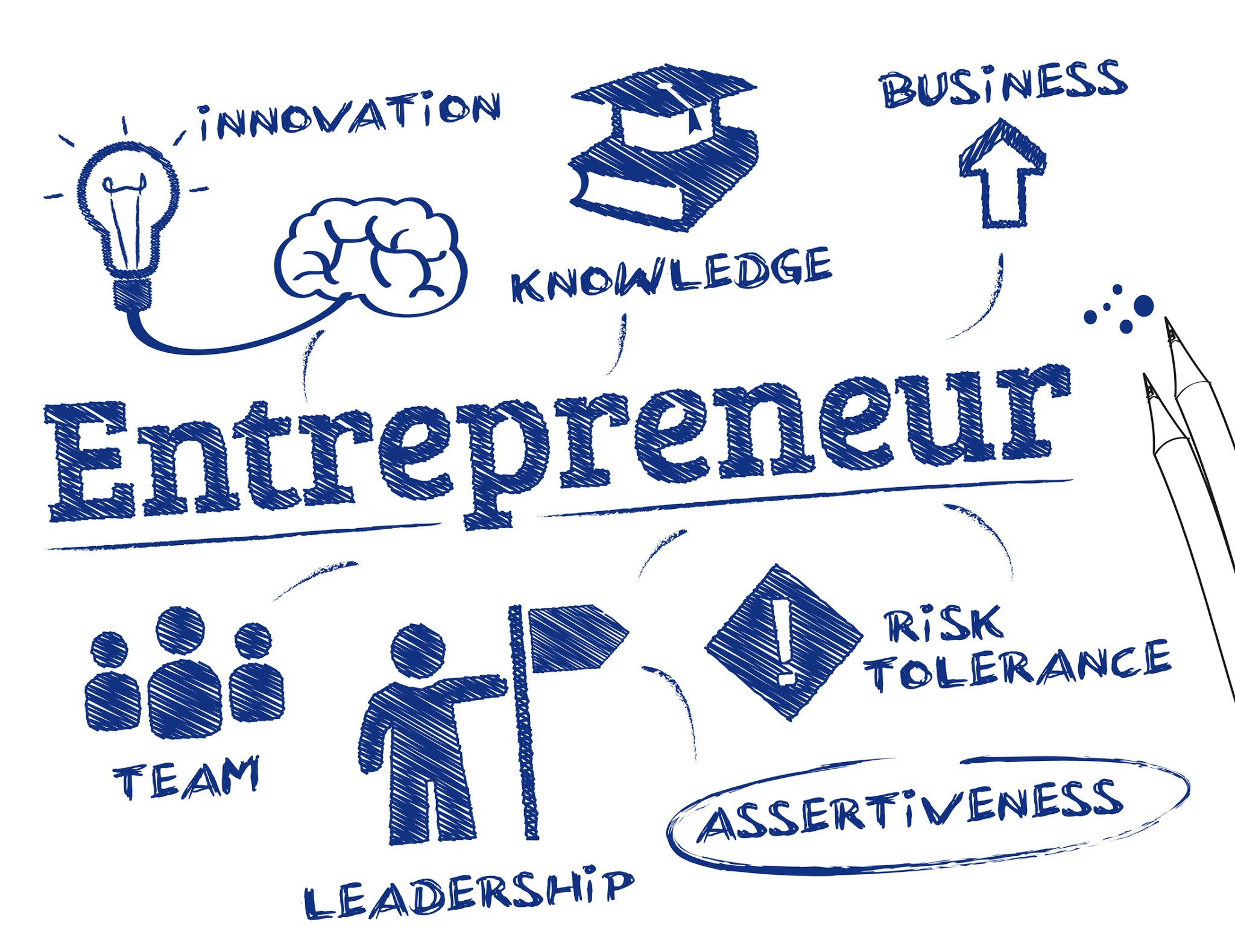
Entrepreneurship

Being your own entrepreneur is extremely rewarding, and it can be extremely lucrative for college students and recent graduates. These next money-making ideas are bucketed in this category because your earnings are only limited by your own internal drive.

1.Start A Blog Or Website


If you really want to make money online, you need to start a blog or website. This is your home base for everything that you do online, and it, by itself, can turn into a hugely profitable venture.

2.Freelance Write For Blogs And Businesses


Freelancing writing is one of the easiest ways to start making money, especially if you’re a fast writer. Beyond writing for blogs, many businesses are looking for writers to help with many different types of writing – from general how-to content to technical writing, to putting together brochures.

Work


Of course, you can always earn money by working. These are jobs that college students and young adults are well suited for given school schedules, summer vacations, and more.

3.Become A Tutor


Another great way to earn money while in school. If you’re a pro at any class in college, simply offer to help others that aren’t. You can post a sign outside the lecture hall, or even use a Facebook group for the class (as many classes are going digital). You can easily find clients and charge a decent rate to boost your income.

4.Get An Internship


Almost all internships are paid these days, and they can be a great way to gain real-world skills while also boosting your income. While many internships start over the summer, some companies offer extended internship programs, where you can stay on as an intern during the school year.

5.Plan Events


Do enjoy managing people, tasks, and coordinating things to get something done? If so, then party planning could be right up your alley. You can get paid to plan an event. This can be hard for a college student to do, but I’ve seen several pull it off.

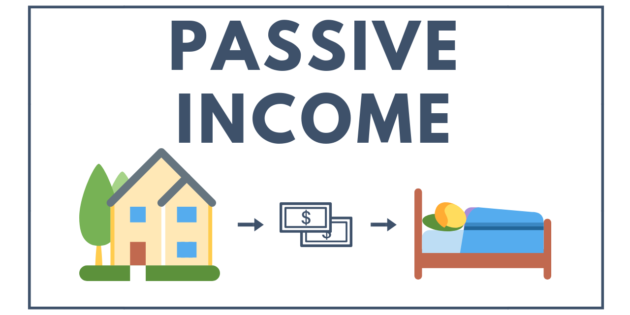
Build Passive Income


Now that you know different ways to make money in college, take it to the next level by investing some of those profits into building a passive income:

6.Start Investing


Once you have a little bit of money, you need to start investing it. The goal, of course, is to turn your investments into a passive income stream that will pay you for the rest of your life. It doesn’t take much to get started.

7.Peer To Peer Lending


Similar to investing, peer-to-peer lending is where you loan money to someone else, and they pay you back with interest.

School vs Workspace

Our children must learn how to acquire knowledge that can be applied across domains and situations.

Photo by samer daboul on Pexels.com

Traditionally, schools and colleges have been cloistered enrollments where students only acquire knowledge. They then move to the next stage of their lives – into work places – where they may or may not apply the knowlege they have.

This separation has ensured that young people who join the work force have no idea about the exigencies of the work environment and are completely unprepared to deal with this situation.

However, future workplaces are likely to be far removes from conventional or current experiences.

In fact, it is estimated that most of tomorrow’s workforce may be contractual. In fact, already many large organizations are tapping into on-demand talent of the gig economy.

Increasingly, these new economy workers will be required to rely on their own knowledge and the skills to provide services and produce products that solve businesses’ and society’s pressing problems.

Photo by Burst on Pexels.com

Our children, therefore, must learn how to acquire relevant knowledge that can be applied in different domains and circumstances. They must discover the joy learning so that they can become learners for life as well as independent learners, capable of handling uncertainty with flexibility.

Schools must therefore re-engineer their systems, curricular and pedagogies to ensure that students have agency over their own learning and lives and learn to learn, unlearn and re-learn with agility.

Schools, therefore, must teach children to be entrepreneurs, expose them to real life work and social environments through projects and experiences so that they know how to tackle challenges that lie ahead and are capable of solving problems independently.

Reference

http://www.timesofindia.com

http://www.wilipedia.com

http://www.hindustantimes.com

Ways To Improve Your Work-Life Balance While Working From Home

Work is an important aspect of everyone’s lives. Our income ensures that the lights are kept on, that there is food on our table, and the rainy-day fund is full. In today’s volatile and incredibly quick corporate environment, achieving work-life balance is a difficult challenge.

As we become more linked via social media and the internet, it becomes increasingly difficult to distinguish our workplace from our personal life. It is standard practise to read emails at all periods of the day and night, to handle business calls at the dinner table, and to work on our computers on weekends. How did this come to be regarded as acceptable?

Jobs are starting to require more and more from their employees, putting them under intense pressure to provide better outcomes. As a result, employees work harder and longer and spend less time at home.

Despite overwhelming proof that working longer is damaging to both individuals and employers, several workers continue to struggle to alter their beliefs — and strongly established behaviours — about work hours.

Establishing a healthy work-life balance is not only beneficial to one’s health and wellbeing, but it could also boost one’s efficiency and, consequently, performance. Simply stated, if your employees do not see work as a chore, they will work even harder, commit fewer errors, and are much more inclined into becoming company supporters.

How To Improve Your Work-Life Balance While Working From Home

Allow yourself to just let go of perfection

We should constantly aim for excellence rather than perfection; this really is especially crucial when balancing work and life while working remotely. You are unlikely to have everything you need to do your tasks exactly as you would at the office. You won’t have access to all of your files, computer, copier, or even the fax machine you barely use once a month. It’s time to make changes and just do the utmost you can with the resources you have. It’s a little mental adjustment, but it makes a massive impact.

Disconnect

If you’re always available, your working hours never conclude. You require those periods when you switch off. Allow yourself some time away from work. It might be something as easy as not reading emails in the evenings or on weekends. Give yourself periods of tranquilly rather than racing through each activity.

Exercise

Exercise should always be the first thing we make time for when our routine is interrupted in such a major way. It decreases stress, increases endorphins, and improves your mood. Don’t even have an hour to work out? Begin by stretching for 15 minutes with yoga. It will provide you with the same benefits (although on a smaller scale) as well as an extra sense of achievement and self-care.

It’s understandable that when gyms and sports centers are shut, it might be difficult to find alternative forms of exercise. Several trainers and gyms now offer online lessons, and you may even find free classes on YouTube. When working at home, exercising is a wonderful method to attain work-life balance.

Have proper meals

While munching on snacks during the day while working from home may sound appealing, it does nothing for your productivity or feeling of work-life balance. At work, we may feel more driven to take a lunch hour when our colleagues urge us to do so – this doesn’t really occur when you are working from home. Ensure that you schedule time in your day for a decent break. Create a calendar or phone alert about it.

Create transitions going in and out of the work mindset

We frequently take our transit time for granted and wish we can get there sooner. However, we rarely recognise the chance it provides to psychologically prepare. You don’t usually sign off on a large project and then head home to cook dinner. Allow your mind to press the reset button. Get a signal to serve as a buffer at the start and conclusion of your day.

Remember to socialise

When the whole company begins working from home, you are shut away from several informal everyday contacts. If you’re not accustomed to working alone, this might be isolating. Occasional social contacts can break up your day and make it feel unique, whereas isolation may make each day seem like Groundhog Day, except we’re all working.

Resist this by speaking with your coworkers several times during the day. Take a video coffee break, inquire how they did over the weekend, check up on their personal happenings, reach out and exchange that joke or meme, or simply talk about the series you’re currently binge-watching. Continue to chat to them on a certain issue if you typically do.

When working from home, these small encounters might help you maintain your work-life balance.

Freelancing hits success

In the modernized world, many hang back from working under anyone for a long term and wish to create their work independently and just offer their potentials to an entity. They are the freelancers who are always self employed and not necessarily committed to a particular employer long time. Freelancer is an independent worker who earn money on a per job or per task basis for a short term work. This has become a well known career choice for a lot of people these times. Freelancing professionals work in a wide area of fields across many industries and companies. Although there are plentiful opportunities available for freelancing, the most popular fields are content writing, designing, sales & marketing, branding, recruiting, web development, teaching, copywriting, photography, SEO, social media. The prominent fact is that you should possess the requisite skills for the job/project and make a good income out of it.

Perks of freelancing and success rate

Where many other jobs demand constraints for time and work places, Freelancers can work anytime and from anywhere with the freedom to set your own pace, take projects for several companies, so freelancing offers many flexibilities which helps to maintain a good work-life balance. The benefit of being a freelancer is that you are not restricted to a specific 9 to 5 schedule and choose work in line with your preferences and choose clients/ companies you want to work with, which allows you to pursue in your own interests and passion. According to a payoneer’s data, the average freelancer worked 36 hours a week at a rate of $21per hour, for an annual pretax salary of more than $39,000. This was significantly higher than the average salary for non-freelancers in most of the countries in the survey.

The money you make is utterly dependent upon the quality of work and how much effectually you work. While people argue that freelancing can impact a person’s financial security and long term career goals, freelances find their work to be obliging in making their lives less stressful. They have the authority to decide and demand for the the wages to be charged on their projects. Many freelancers are paid on hourly basis, so if they work long hours they will be able to make more finances. Employees tend to leave the jobs due to the the discontentment with the management, but in freelancing you work with freedom without anybody to constantly keep breathing down on your neck. With people searching out for an enduring job to obtain more income they spend half their life, freelancing makes it more accessible for people to gain good income by investing your potentials and skills in a short time. It may takes years for some people to get promoted to a higher level and have a hike in their salary but freelancing makes you get closer to the income you dreamt of in a short time with your quality work.

On the other side this may seem unstable for some without any steady income over the years. You may perceive a fluctuation in the workload, where you’ll be swamped with work one month but not the same the next month like a feast- famine cycle. It carries an unpredictable nature of work and wages with no paid time off or medical leave. Many people are susceptible to turn away from this because of such drawbacks. If you really staunch and determined about being a freelancer you should be disciplined, consistent and organized. You should engage yourself in multiple projects, never become distracted or unstable in the field. Keep a track of your work and manage them efficiently. However the work may be unsteady you should be able to market yourself. There is a just fine line between the advantages and snags, here the perks of freelancing greatly outweigh the drawbacks. If you are good at a job sky is the limit to how much you can sprout your business.

ARE WE REALLY ENJOYING OUR WORK?

Work is worship for those who take work seriously and it should be so because your work reflects your personality to some extent and how we do it is also part and parcel of our identity. Here in, comes the real trouble because when you do the work you enjoy, you try to put in your heart and mind into it but, if you are unfortunate enough to be doing the kind of work that you are not proud of, then surely enough it shows in your outcome.

Money, being the prime factor in today’s world and so, when your sole priority is to mint money, then it hardly matters whether you are an engineer or an interior designer. You would try to impress upon the authorities in your field with the sole objective of prosperity in your field. For this, you may go to any extent of unethical attempts, without even thinking about its aftermath.

Mental tension and stress and the related health hazards are all part and parcel of today’ s changing world. Today’s young generation is the first generation of professionals who are earning, four times more than what their parents have earned and so they have a lot of money at their disposal, which is making them spend more All this was possible only because of India’s changing economic condition and the advent of multinational companies with huge capital investment and infrastructure.

In fact, the call centre culture has also changed our lives for the worst, since lifestyle patterns are changing drastically. Initially, youngsters seem to be enjoying the western influence of working like asses on five days and reserving the weekends for parties and celebrations. And to get those two days of relief, they are ready to slog whether they like their job or not. It henceforth, becomes a mechanical slogging where, you are not concerned, whether your mind is at work but it’s just about the finished product that they look forward to. On the whole, we cannot rule out the fact that there are people, who are fortunate enough to bag the job they desire or those who have ultimately landed in those fields, where they have wanted to be. Such people are really lucky in the sense that they do their work with the utmost dedication and they have a fulfilment in life, even if they are not taking home fat salaries like their counter-parts, but don’t have any satisfaction to boost of.

There is a third side to all this and that is trying to derive meaning in whatever meaningless things we are doing to make both ends meet. So even if, one is in a job that is detested by him, he can still work towards generating a positive attitude to one’s Work. Try and enjoy, what one is doing and thus try to attain a sense of satisfaction, that he supposes, he could have otherwise got.

When the major IT companies of India are expecting their employees to be back in office?

As the Covid-19 graph is falling, and people have been working from Home for the past one year due to the pandemic, the IT giants of India namely; TCS, Wipro, and Infosys sooner or later this year are expecting to bring back their employees to the office. 

The Chief Human Resources Officer(Saurabh Govil) of Wipro recently said that Bengaluru-based Wipro is likely to call employees slowly back to the office from September. As vaccination is attaining stride, depending on the situation of pandemic and third wave. In a press conference, Govil mentioned, “This will vary between country by country and different stages of the pandemic. This will not be one size fits all.” The company’s Chairman, Rishad Premji said that around 55% of the employees in India are vaccinated. The company has around 2 lakhs employees.

Further, the largest software company Tata Consultancy Services (TCS) is also looking forward to bring its employees back to the office once they are fully vaccinated against the novel Coronavirus by September this year. Milind Lakkad (company’s Chief of Global Human Resources) stated, “…In less than two months, over half a million associates and family members and over 70 percent of our associates have been vaccinated, and we are on track to vaccinate all TCSers and families by September.” He also mentioned, “During April and May, the second wave of the pandemic has been quite demanding for the TCS Family. Our thoughts are with the families who suffered the personal loss despite our best efforts. I want to acknowledge the temperament and personality of our associates who stood by each other in these stressful times.”

Infosys’ Chief Operating Officer ( U.B Pravin Rao) also answered questions considering bringing back employees to the office, during a press conference after Quater-1 results. He said that 98% of the employees globally are working from home. “We expect 20-30% of people to start coming to work from the office, this will vary to geographies, depend on nature of projects, individual preferences,” Rao said. Rao also informed that in India around 58% of the employees are fully vaccinated and 10% of the employees are partially vaccinated, “we can increase the number of people coming to the office to work this quarter.”

Apart from this, all the three IT giants of India are expecting to hire more than 1 lakh college graduates this year. 

Does Business Require Competition?

“Competition is a good thing; it forces us to do our best.”

  • Nancy Pearcey

Since every aspect in life has two angles, competition too can be considered in the positive as well as the negative sense. Mostly, competition is used in the negative sense which is the reason most of the businesses end on a short note. Thus, we will be learning a positive sense of this word in today’s article.

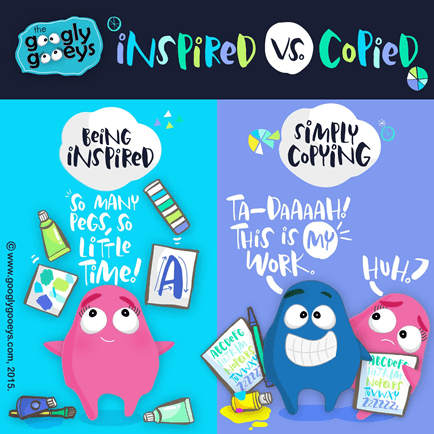
The term becomes negative when you resolve to imitating the procedures followed by your competition. As discussed in earlier articles, a business needs to stand out for which uniqueness is quintessential. Thus, blindly following the footsteps of your competition isn’t going to help. Also, focussing merely on your competition and their profits isn’t the right move because that diverts your attention from the possible surplus you could generate. In short, avoid opening up an encyclopaedia of services offered by your competition just so as to match their ability because that isn’t possible. All have different capabilities and varied ways of thinking. Perhaps you could do better than the competition and in order to believe yourself, lay aside continuous inspection of the competition. Let us understand this better.

For instance, a company selling electrical appliances and will of course have competition because one can’t possibly come up with a business extremely alien to all, owing to the desires of the mob. Thus, competition persists because we need to consider the needs of the population on this planet and arrange for such services that would benefit. Uniqueness must come in the way we exhibit or present those services.

Getting back to the story, you are receiving good deal traffic but are occupied in considering the competition. You’re trying to get into their good books so as to know more about their ways of introducing and presenting the services. However, while you are busy understanding your competition, you failed to comprehend over the fact that you could understand the psychology of the customers and list their desires thereby coming up with a unique form of exhibition of your services. In short, you lose access to creativity when you are busy imitating which certain businessmen term as ‘taking inspiration’. A point to be noted is, that inspiration means simply learning from the competition and coming up with your own unique form of services while imitation is looking up services provided by the competition that seem to best appeal to the mob and trying out the same! Most businessmen resort to the latter but coin their efforts as former!

Yes, there is a possibility of better inclining towards the latter because we feel that more customers would be attracted to us as well, as they do to the competition. But a point that we miss out on is, that if the customers have already tried that way out, why would they be interested in yet another company offering the same format with no particular speciality or uniqueness in its services? Also, customers remain glued to the same company for ages owing to the trust and genuineness they feel towards that brand which is the reason, they wouldn’t actually be interested in trying out a new brand with the same level of services. Why take the risk and opt for a new brand with same manner of exhibition of services when the old one does the trick? That is when uniqueness comes into the picture because your aim shouldn’t be to snatch the customers of your competition which is a tedious task and may gain no possible results. Instead, your aim should be to gain a new set of enthusiastic customers for yourself. Don’t go for Renaissance in business that is rebirth or revival of your competition. Go for something unique that people would be excited enough to try out owing to the way it functions.

Thus, competition should be taken in a positive sense. Take inspiration from them. Capture some of their bonus points that help them and develop your business with creativity on the basis of that structure. In short, use your competition as stepping stones to success! Also, competition can help you grow vividly because it helps understand updates of market trends which keep changing and are visible in your competition. By closely observing the same, you could flourish your business and step by step, move further than your competition not by imitating them but by personal creativity. The competition would neither blame you for stealing their ideas nor would you feel guilty of being a copy cat! So, be yourself and unique in business to ensure additional bonuses in the future!

Thank You For Reading!

Pomodoro Technique for productive study/work

” Time and tide wait for none”. No matter how many times we hear or see this clichéd quote, not all of us actually understand the essence of these words. Time management is an essential skill for aspirants of all kinds. In this fast-evolving world, one must keep up par with others to achieve their goal. The fact that smart work is better than hard work is of the essence. Productivity is smart work. One such method to maintain productivity in our daily life is the Pomodoro technique.

Pomodoro technique is a time management method where a timer is used to break down the work at hand into intervals, separated by short breaks. This method was developed by Francesco Cirillo in the late 1980s. Each interval is called a ‘Pomodoro’ the Italian word for tomato, the tomato-shaped kitchen timer that Cirillo used as a college student.

The original technique has 6 steps

1. Choose a task you would like to get done

No matter how small or big the task is, it deserves your full undivided attention.

2. Set the timer for 25 minutes

Keep a promise to yourself that you don’t interrupt yourself for just 25 minutes. You can use your mobile timer or a good old clock for timing your session.

3. Work on the task until the timer rings

Immerse yourself. Meanwhile, if you remember anything other than the work at hand, write it down on a sheet of paper. You can give them thought later.

4. When the timer rings, tick off your completed task

Hurray! You have given your undivided attention to the task for 25 minutes.

5. Take a short break

Take a deep breath, meditate, grab a cup of your favourite beverage go for a stroll or do something that is relaxing for your brain to reward yourself.

6. After every 4 Pomodoros take a longer break

A break of 20 to 30 minutes is good enough to rest, preview the information and prepare yourself for the next set of Pomodoros.

To make the best out of these Pomodoro sessions you can:

  • Use the first few minutes of the session to review what you have done earlier.
  • Set up a timetable and try to be devoted to it.
  • You can use airplane mode or do not disturb mode on your mobile. (Apply only if you are not accountable for not picking up calls 🙂
  • Be mindful of the shorter breaks. They might prolong at times, thus unsettling your next Pomodoro cycle.
  • Understand your body — find out which part of the day you are most productive. This can work wonders and get a lot of things done.

The rules of the Pomodoro technique are not necessarily rigid. If you are not able to pull up 4 Pomodoros continuously, opt for one or two Pomodoros in a day. At the end of the day, what matters the most is how much productive and focus you are in those sessions and how much work gets done. You can also vary the time interval as 50/10 (50 minutes of focus and 10 minutes of break) instead of the traditional 25/5 technique if you are quite confident about your focus.

This technique is useful if you feel distracted or overwhelmed to focus on what matters to you. It has worked well for me in this lockdown and has helped a lot in my exam preparations. Hope it works for you too!

Yoga: Physical and Mental fitness.

Benefits of yoga

Yoga is a complete combination of spiritual, mental and physical practices which was originated in ancient India. It is followed by many people all around the world. It is adapted by the people in their lifestyles on daily basis  Yoga is a type of work out that involves both mind and body, it is much more than just burning calories and strengthening muscles.

Among with them their are some other major health benefits of yoga.

Improves overall health.

Yoga is combined of cardio, functional and strength training which effects the overall health physically and mentally. Yoga helps in developing core strength, improving immunity, improving mental health, improves heart health, increases immunity, decreases stress, etc. A few minutes of yoga everyday can bring some good changes in your everyday lifestyle.

Develops strength.

Yoga poses requires balancing of the body, and it takes a lot of strength to hold your body in balanced posture. Regular yoga helps you to strengthen the muscles of your arms, legs, back and core. It works as a full body workout. 

Boosts metabolism.

Yoga can be a very good way to increase your metabolism. As it helps in improving digestion, circulation and increasing lean muscle mass. And by boosting the metabolism, yoga can also help in loosing weight as it helps in burning calories.

Improves flexiblility and posture

Yoga poses works by stretching your body muscles. Regular yoga is a great way to improve your flexibility and posture. Few weeks of daily yoga can help you to feel less stiff and you will be able to move your body better. It also serves the purpose of keelping your body toned.

Improves mental health and concentration.

Everyday yoga helps a person to relax mentally and concentrate better. Yoga and meditation requires you to concentrate on your breathing, it helps you to calm your mind and be more relaxed mentally. As a result few minutes of yoga in the morning can result in better concentration throughout the day.

How to balance both work & life ?

There used to be a time when the domain of work and personal life were clearly distinct. But with globalization becoming the norm of the day the chances of work encroaching into one’s personal life and vice versa has become alarming. If you think one day you will be lucky enough to get everything set and then relax, you are bound to be disappointed. Life will be always demanding and may not slow up any time soon. Learning to strike a balance between work and life is an ongoing art. Despite the never ending quest for ‘Work-Life Balance’ it has been cropping in our mind what does it actually mean.  

Work–life balance is a broad concept including proper prioritizing between “work” ( career and ambition ) on the one hand and “life” ( health, pleasure, leisure, family and spiritual development ) on the other. It is also related to “lifestyle balance” and “life balance”. Sadly, there is no perfect ‘one-size fits all’, balance you are looking for. It is different for each of us because we all have different priorities and different lives. Trying to schedule an equal number of hours for each of your various work and personal activities seems unrealistic and robotic. Life is and should be more fluid than that.  

The paradox is that right balance for you today will probably be different tomorrow say when you are single or when you get married, or when you start a new career or are nearing your retirement. Work-life balance is a two-pronged approach. The other prong of work-life balance, which many individuals overlook, relates to what individuals do for themselves. Our haphazard lifestyle has put us in the paraphrase of “I am running all the time.” At the core of an effective work-life balance are two key concepts that are relevant to all of us. They are daily achievement and enjoyment. Why do you want a better income, a new house, a good college or a dream job ? Achievement and Enjoyment are the front and back of the coin of value in life. Trying to live a one sided life is why so many “successful” people are not nearly as happy as they should be.  

Engraining a fuller meaning of these two concepts is like half the battle won to define a positive ‘Work-Life Balance’. Most of us already have a good grasp on the meaning of achievement. But enjoyment is not restricted to simply ha ha. It means pride, satisfaction, happiness, celebration, love, a sense of well being, in a nutshell it means all the joys of living. On the other hand corporate world today has become exceedingly demanding. The changing economic conditions and social demands have changed the nature of work throughout the world. Within the ramped up competition of a 24/7 business cycle, ‘work-life’ balance is becoming unbalanced. The imbalance also has a negative impact in the personal life of working people- increasing number of divorces, infertility due high stress levels, advent of nuclear families etc.  

While we strike for a work life balance, we are not merely balancing our profession and family, we are also balancing our mental and status quo and thereby balancing our emotional intelligence, which is the worldly ability to manage you and to handle others. This benefits the company in the long-run. Similarly, women work force now constitutes a significant percentage of the total work force in any organization today. Women executives have to deal with- running a home, doing daily chores like cooking/cleaning, raising family and handle the tight deadlines at home and work. The society over the years has recognized women’s need to legal and financial independence. But the transition to motherhood still continues to have practical and emotional consequences. It also affects their professional stature when they return to work.  

Organizations today to some extent have realized the importance of the employee-work-life balance and its importance in the efficiency of the employees. They can help facilitate work-life balance for their employees through work-life programs and training. In offices also, efforts are being made to provide friendly work atmosphere for the employees by providing all sorts of refreshments available for the employee. The employees are given the freedom to have their own ways of doing the work. They are given the assignments with deadlines and they can have their own schedule as far as they are meeting the deadlines. Some organizations have gone to the extent of involving the families of the employees by introducing maternity leaves / paternity leaves and various holiday packages and insurance schemes. Organizations now focus on grooming their employees who are now not considered merely a work force but regarded as the ‘Human Capital’ of the organization.  

To maintain work-life balance is an arduous task. But still it is within one’s reach, if one follows the simple tips listed here :  

Plan your agenda : Start your day by taking care of the little things you have to do at home. A little planning is essential. Taking care of home needs in advance will help you to be less tensed during working hours. Strike a work-life balance by evaluating your work-home relationships like listing out the amount of time you are spending at work and home.  

Organize : Everything in your business should be set up using logical systems so anyone needing anything can find it when they need it.  

Prioritize ruthlessly : The secret to booking your time effectively boils down to knowing what’s important and what can wait. Ask questions that help you determine the level of urgency.  

Don’t overbook : Things rarely go according to a prearranged agenda. Don’t try to plan on doing too many things. Assume that only 50% of the things you plan on doing today will actually get done. If you don’t, you’ll just waste valuable time trying to find out why things didn’t happen.  

Be Productive : Switch on to the work mode when you are at work. Be sure that you shut off the part of the brain that makes you worry about your home life. Remind yourself that it is work time and you need to be most productive.  

Learn to say no : One of the biggest land mines to effective time management is recognizing you don’t have to agree to everything and with everyone. Use your priority criteria to identify requests that simply aren’t worth your time.  

Everything is not perfect : Time management isn’t an exact science. Do what you can and enjoy whatever time you spend more pleasantly or productively.  

Focus on Home Life : While you are enjoying your home life, try to avoid intruding into work life by checking emergency e-mails or answering work- related phone calls. The best way to focus on home life will be crumbled to pieces if you intrude into your work life while at home.  

Hence, the concept of ‘Work life balance’ is becoming more and more relevant in a ever-dynamic working environment. The role played by the individual is as important as that of the organization in managing this tumultuous see saw. One of the best approaches to this is by the use of one’s emotional intelligence. Be sure to remember that striking a work-life balance is a continuous process, rather than a one-shot deal. Work and home life should be balanced. If there is a tilt in the balance there are chances of soaring stress levels.