The serenity of the lulling ocean is a wondrous thing to behold..more precious than the gems coveted and covered in platinum or gold…
Oksana Rus
Introduction
International day of Tropics is observed every year on June 29th . This day is celebrated to highlight the different challenges and opportunities faced by the nation as well as by the people who lived in tropical areas .
Firstly , you want to know about things like :
What are tropics ?
Why we celebrate international day of Tropics ?
Or
Is it worth it to talk about these things and is it really important ?
Well hold your horses and try to calm .
What is tropic day and why we celebrate it ?
Well a tropic day is celebrated to highlight the importance of Tropics , it signifies extraordinary and astounding diversity of tropical nations .
The Tropic defined as a area /region between tropic of Cancer and tropic of Capricorn . The day aim at promoting tropical regions and awareness to the people about the diversity of these regions .
While these regions go through little seasonal changes on day to day basis because of some factors like tomography , climatic variation that causes changes in temperature and make these regions warm.
This day introduced to the world when in June 29th , 2014 twelve leading tropical research institutes come together and collaborate. The inaugural state of the Tropics report was launched . The report offers some unique perspective for the increasing the importance of these regions .
United Nations General Assembly adopted resolution A/RES/70/267 in 2016, which declared that 29 June of each year is to be observed as the International Day of the Tropics.
The International day of Tropics briefly explained the issues affecting the tropical zone’s all over the world. To raise awareness and important role the countries played to Sustainable goals .
International day of Tropics 2021
As per the state tropics report the theme of this year is “ THE DIGITAL DIVIDE IN THE TROPICS ”
With the record of sustainable development goals as well as developmental scope . The biodiversity of these regions are maximum and its loss is also greater there. Tropical regions comprise 98% world’s mangrove forests, and around 99% mangrove species.
Due to the subpolar zone the Sun is directly overhead which is one of the region of extinction of flora and fauna in the Tropics. The region is subjected to myriad and need immediate attention to ensure sustainable development.
More than 50% of renewable water resource could be founded their. But the threat lies which causes eviction of lives in the Tropics.
Importance :
Due to the problems it’s our duty as a human being to spread awareness about the implications in climate changes , deforestation , urbanization , global warming effect the biodiversity and lives in Tropics.
The International day of Tropics organize many events in which people share their stories , events and lives in these areas and formulate strategies to ensure the development of such regions .
You who sacrifice fortunes to see the luxuriance of the tropics or the polar lights of the arctic, must pay more dearly to see the One for whom the luxuriance of the tropics is poverty and the polar lights are a tallow candle.
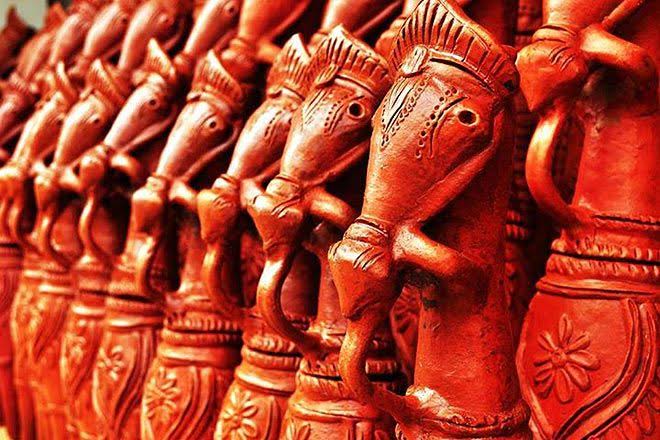
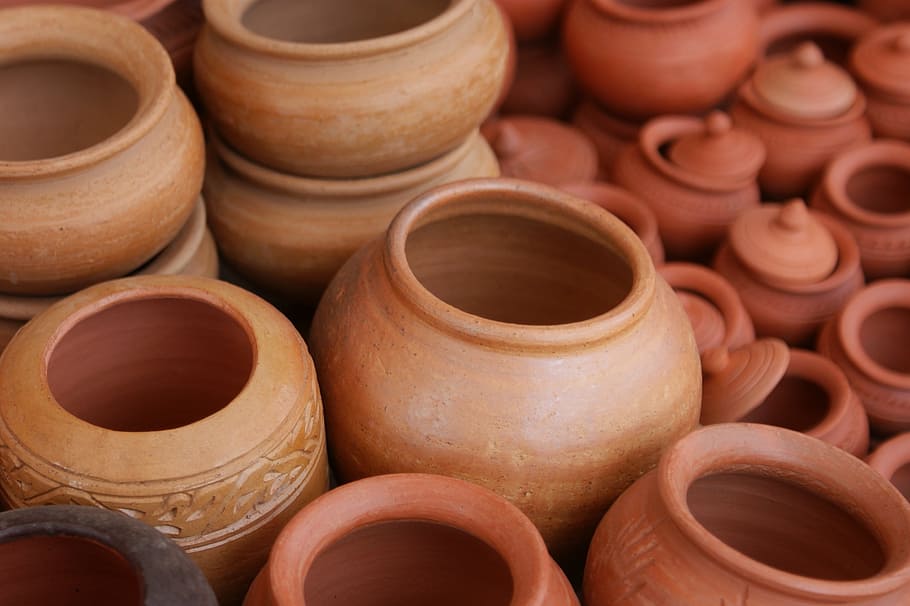
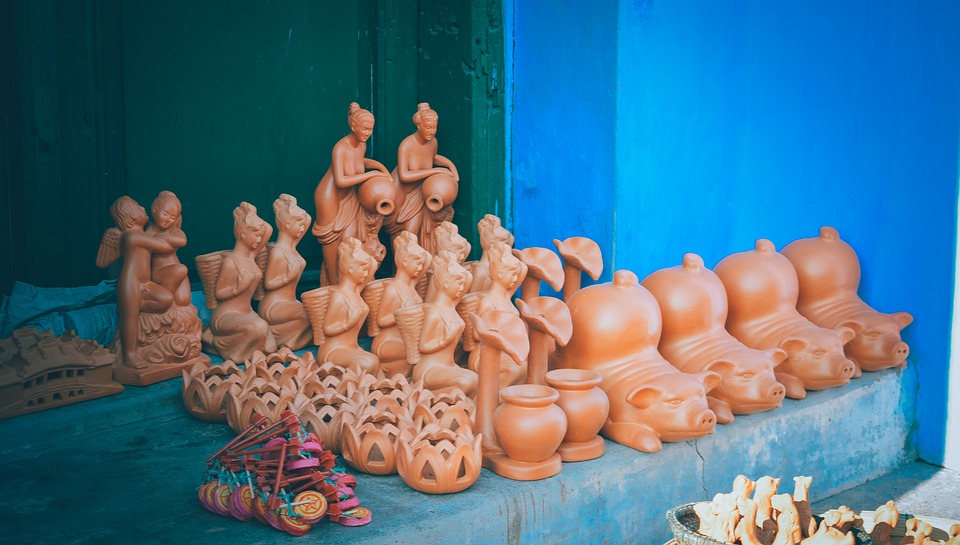
According to the dictionary the Terracotta art means hard,fired clay,brownish in colour when unglazed which is used to make architectural ornaments and facings, structural units, pottery and as a material for sculpture. The word ‘Terracotta’ came from Latin word ‘Terra-cotta’ and in Italian language Terrakotta means ‘baked-earth’.
Basically Terracotta is a type of earthenware or Ceramic pottery. At 1st we should have enough knowledge about earthenware. Earthenware is glazed or unglazed non-vitreous pottery which is made on fire below 1,200°C (2,190°F). So what do you say ? ‘baked-earth’ makes sense right?
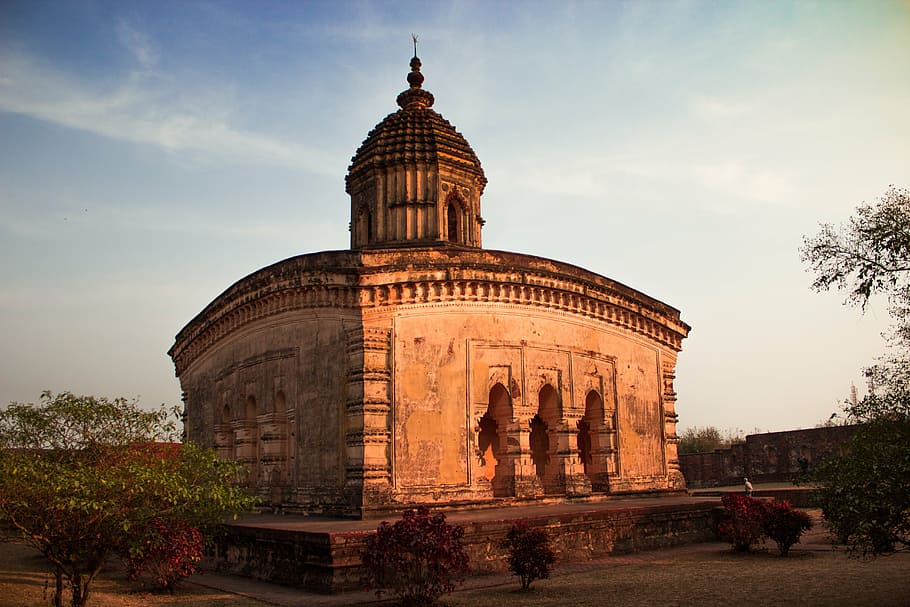
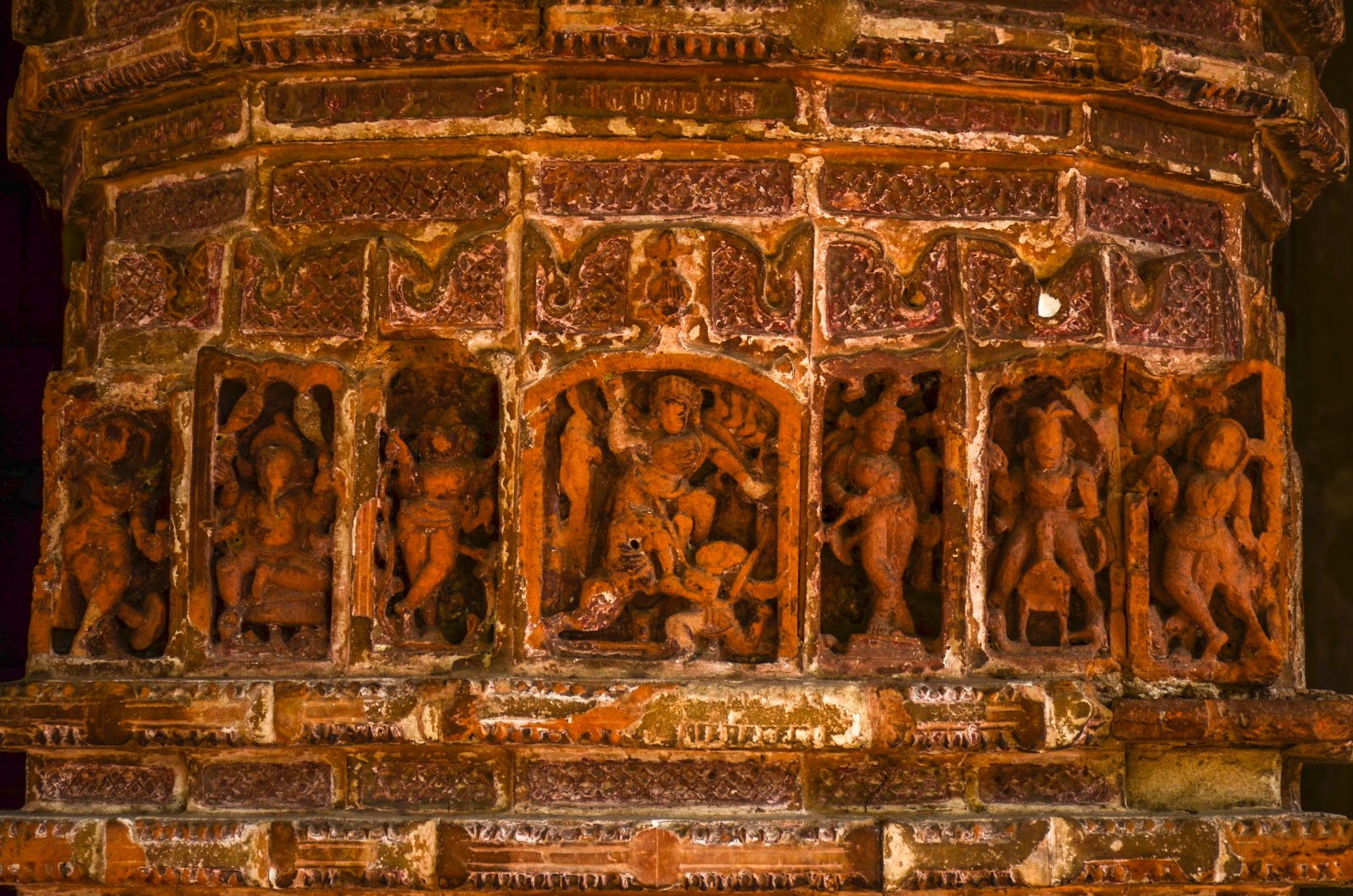
Normally Terracotta is used for sculpture making. But not only for sculpture but also for flower vas, doll,pot,water pipes, bricks,roofing tiles etc. Even there are also many temples of Terracotta. It is too flexible material for sculpture.Terracotta is usually a fairly coarse, porous type of clay. At first it has to be shaped then fired until hard. In the past, it was left to harden in the hot sun ,after that it was baked in primitive ovens. Ultimately, it was fired (at about 1000°C) in a special oven, kilns. After baking the clay became a brownish colour. Until it was glazed it was not watertight.terracotta is too simple than other bronze or other material work.
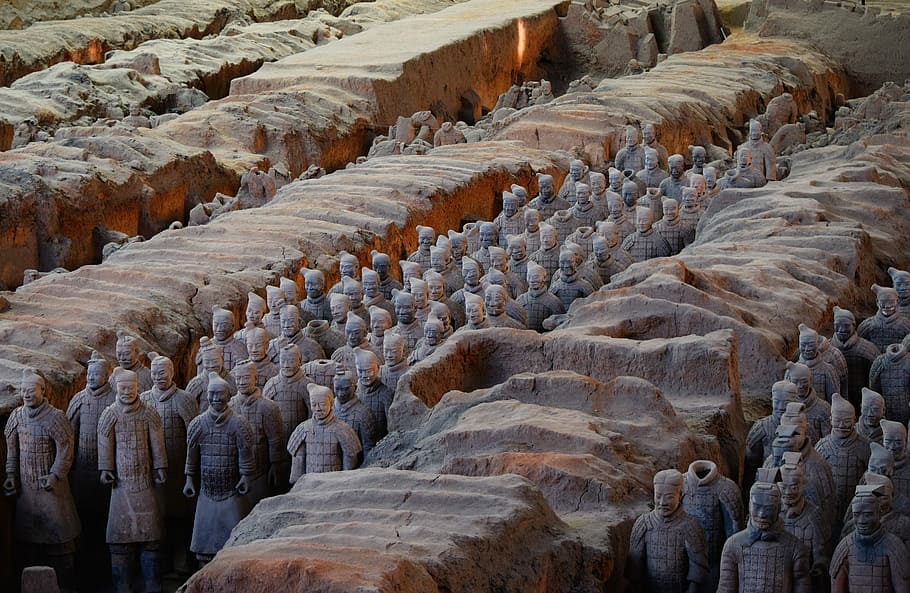
It was 1st used in Prehistoric art according to Venus of Dolni Vestonice (26,000-24,000 BCE) which was found buried in a layer of ash in Moravia at a paleolithic encampment. Some famous Terracotta figures are- The Thinker of Cernavoda(5000 BCE), The Enthroned Goddess Figurine(6000 BCE).Bronze and Iron Age artists kept the culture of the terracotta tradition, like the female fertility cult figures unearthed at Mohenjo-daro in Pakistan (3000-1500 BCE), and The Burney Relief (1950 BCE) from Ancient Mesopotamia. On the other hand we must say Chinese art created the biggest example of Terracotta art, those are-The Terracotta Army (246-208 BCE). Around the Mediterranean,such as early Egyptian, Minoan, Mycenaean, Greek and Etruscan cultures, employed terracotta for figurative works – such as the Tanagra Figurines from Boeotia in central Greece – besides decorative art and architectural ornamentation.Particularly in the era of Hellenistic art (323-30 BCE) it was widely used by sculptors. It was also used in Early Christian art, for tomb reliefs (from c.200 CE). Terracotta is also famous in African sculpture, pre-Columbian art.
In India Terracotta is famous in the same way as in the past. In India Terracotta is a heritage culture. It is very common that there are many things of terracotta at most homes in India. ‘Bishnupur’ in West Bengal is a great source of Terracotta sculptures or other things. Murshidabad, Birbhum, Jessore, Digha (all are in West Bengal) are also the treasure of Terracotta. There are also famous in Rajasthan, Bihar, Haryana, Himachal Pradesh, Odisha, Jammu and Kashmir etc.
According to United Nations, about 1 billion people all over the world come under the category of “disabled” and that is 15% of the global population. Now, the question is, shall we as a society neglect 15% people in the world just because they happen to be in minority?
Media being one of the crucial facets of society has a major role to play when it comes to disseminating information and making people aware about significant and ignored issues. Now, let us go through what media has done to represent people with disabilities and their issue since the beginning of the pandemic.
1) Disability and Broadcast Media
A Look: Public Broadcasters of various countries
In 2020, the World Federation of the Deaf noted that 80 governments in the world have been providing sign language interpretations while Covid-19 press briefings.
For example, in order to curb Covid-19 pandemic, South Korean government aimed to strengthen the ways disabled people could be informed during the pandemic and other related disasters. The country’s public broadcaster KBS during the pandemic announced that it would work to expand the reach of information in its disaster countries. During the pandemic, the public radio in the country had continued to provide programmes dedicated to disabled community with daily news and health updates and general life advice.
When it comes to India’s public television broadcaster Doordarshan and public radio-All India Radio, very minimal representation of disabled community took place during the pandemic. Even though the objective of the these broadcasters is social welfare, disabled community was one of the most ignored ones as “no special programmes” were held for this community, nor was their issue highlighted specifically anywhere. News Bulletins with sign language were held for the disabled community though. More has to be done to ensure social inclusion of all communities including the disabled ones.
Private Broadcasters: nothing matters, but profits!
Media all over the world, including the Indian ones either portray disabled people as “nothing” or “everything” and both of them are dangerous. In 2019, Ministry of Information and Broadcasting in India directed the private channels to include special schemes for disabled community. Although some channels have started news bulletins for disable people but there was almost equal to zero representation of the disabled community during the pandemic.
There should be open space for the disabled community such as they should be invited for panel discussions and debates relating to different happenings in the world from politics to entertainment and like.
Digital Media: A hope in every way!
This is probably the best when it comes to serving and representing the disabled community during the pandemic. Digital and online media were the perfect mediums through which disabled people got proper spaces to talk about the issues they were facing during the pandemic.
One of the online apps called “News Hook” became increasingly popular among the disabled audience which used sign language specifically for the audience with hearing impairment. It covered headlines relating to technology, politics, entertainment, business and sports during the pandemic. It should also be noted that 65% of the staff here were from the disabled community.
Moreover, web portals of Indian Newspapers like The Indian Express and The Business Standards and many more gave enough of space to the disabled people so that they can talk freely about the issues they faced during the lockdowns.
The same above mentioned media channels also used platforms like YouTube to sensitise the audiences regarding the hindrances faced by the disabled community. Some reporters and even famous YouTube personalities covered the terrible times disabled people in India went through during the pandemic.
It should also be noted that online media was comfortable for disabled people as well as the medium is now more easily accessible with good quality content and also because of its low price rates.
Media, especially the mainstream media should be more responsible and sensitive in dealing with issues relating to the disabled community. More representation about the disabled community should take place in the mainstream media. Disabled people “aren’t incapable” and therefore they should be given proper employment in the media. They should be engaged and involved in live discussions and debates. Together, as society which includes the media we should create an environment which is inclusive, anti- discriminatory and diverse.
“Travelling – It leaves you speechless, then turns you into a story teller”.
-Ibn Batuta.
Traversing new lands and frontiers. Exploring people and culture has always been of significant importance for mankind. Nowadays travelling has become too mainstream with planned packages, theme parks, resorts which kind of rob the good old ‘free travel’ of its essence. Going solo, which gives you the feeling of being independent, entirely self dependent and the accomplishment of something unique has become some what of a prized adventure.
Even trekking(taken from the Afrikaans word ‘trek’ meaning to hike/travel) which has always been in the conversation of ‘free travel’ has become some what stagnant and less exciting because of it being planned down to the smallest of details. This isn’t entirely a bad thing as it’s done for the safety of travellers, but the charm is diminishing none the less.
Because of this, ‘Road less travel’, has become the ultimate toast of travelling. Going with a small group of friends or family or even alone, on journeys which are spontaneous although reserved for pragmatic changes.
As time goes by, the solo travel, synonymous with the 60s Hippie culture is on a resurgence. Our land, India, is a fertile ground for such adventures! As we see many foreign tourists travelling as if they were a local, and this is what led me to write this blog in the first place.
Coronaviruses are a group of related viruses that causes diseases in mammals and birds. In humans, coronaviruses causerespiratory tract infections that can be mild, such as some cases of the common cold (among other possible causes, predominantly rhinoviruses), and others that can lethal, such as SARS, MERS and COVID-19. Symptoms in other species vary: in chickens, they cause an upper respiratory tract disease, while in cows and pigs they cause diarrhea. There are yet to be vaccines or antiviral drugs to prevent or treat human coronavirus infections.
Coronaviruses constitute the subfamily Orthocoronavirinae. They are enveloped viruses with a positive-sense single-stranded RNA genome and a nucleocapsid of helical symmetry. The name coronavirus is derived from the Latin corona meaning crown or halo, which refers to the characteristic appearance reminiscent of a crown or a solar corona around the virions when viewedunder two-dimensional transmission electron microscopy, due to the surface covering in club-shaped protein spikes.
Difference between epidemic and pandemic
An epidemic is an outbreak of a disease that spreads quickly and affects many individuals at the same time. An outbreak occurs when there is a sudden increase in the number of cases of a disease. It generally describes an increase that was not anticipated. An outbreak can occur in a community, geographical area or several countries. Epidemic is often usedbroadly time describe any problem that has grown out of control. During an epidemic, the disease is actively spreading.
A pandemic is a type of epidemic that relates to geographic spread and describes a disease that affects an entire country or the whole world. Declaring a pandemic allows national and global public health agencies to respond to the situation at a higher degree.
COVID-19 as a pandemic
COVID-19 is declared a pandemic because of the speed at which it has spread globally. The World Health Organizationdeclares it to be a controllable pandemic and continues to provide advice on precautionary practices and ways to stop the spread of the disease.
How is COVID-19 diagnosed?
Diagnosis may be difficult with only a physical exam because mild cases of COVID-19 may appear similar to the flu or a bad cold. A laboratory test can confirm the diagnosis.
How is COVID-19 treated?
As of now there is no specific treatment for the virus. People who become sick from it should be treated with supportive measures: those that relieve symptoms. For severe cases, there may be additional options for treatment, including research drugs and therapeutics.
What are the symptoms of COVID-19?
COVID-19 symptoms include cough, fever, shortness of breath, fatigue and respiratory issues etc…
What is the incubation period for COVID-19?
It appears that symptoms are showing up in people within fourteen days of exposure to the virus.
How is COVID-19 spread?
Recent information indicates it may be passed from person to person. Community spread is being seen, also. Community spread means people have been infected with the virus in a particular area, including some people who are not sure how or where they become infected.
Origin of coronavirus
COVID-19 appeared in Wuhan, a city in China, in December 2019. Although health officials are still tracing the exact source of this new corona virus, early hypothesis thought it may be linked to a seafood market in Wuhan, China. Some people who visited the market developed viral pneumonia caused by the new corona virus. A study came out on Jan 25,2020 states that the individual with the first reported case became ill on December 1,2019 and had no link to the seafood market. Investigations are ongoing as tto how this virus originated and spread.
Precautions against Corona virus
We should wash our hands frequently and thoroughly for at least twenty seconds. Use alcohol-based hand sanitizer if soap and water aren’t available. Also we should cover coughs and sneezes with a tissue. Avoid touching eyes, nose or mouth with unwashed hands. Stay home when you are sick. Clean and disinfect surfaces and objects people frequently touch.
Effect of Corona virus on the world
Corona virus has recently affected the world in an unexpected manner. A large number of people have already died and many more have been infected. It has badly affected the life of people in different countries all over the world especially across Europe. Rather than affecting the health of the people corona virus also have a great impact on the world economy. Markets have fallen leaving many people unemployed. Outputs have been decreased. Falling oil and stock prices is also a great crisis.
Corona virus: Indian scenario (especially Delhi) and the various govt. measures
Over 6000 people have died globally since the outbreak of the novel coronavirus. More than 162000 have been infected. What started in China, soon spread across France, the US, Spain, Italy, South Korea and now India. India so far, has officially reported more than 110 cases and three deaths, according to the Ministry of Health. More cases are emerging every day even as states continue issuing advisories on social distancing. Delhi is one of the prone areas due to the large population in such a small area.
The government has put stringent measures to curb the spread of the virus. Schools, colleges, theatres, offices, gyms etc.. have been closed in many states especially Kerala and Delhi. Thermal screenings are being held at airports and railway and bus stations. People coming from other places are being kept for self isolation in their houses. Isolation camps are being opened in various places. Awareness is being spread through various advertising methods. Shops are closed and various campaigns are held to make people more aware. Public meetings, weddings, religious programs etc.. are also being suspended.
Corona virus and Indian culture and tradition
Indian culture and tradition have already taught us what we need to avoid catching deadly corona virus. We should follow our Indian values of washing our hands before everything, before eating a meal, before doing anything. We should stop shaking hands and use the Indian food of greeting namasthe, as it cuts down the chances of virus transmission. Also various traditions Indian medicines like turmeric, neem, honey etc.. can keep us immune against corona virus.
Conclusion
Corona virus has already affected the complete world. It also keeps spreading at an alarming rate. So it necessary for us to keep calm and united to fight against this pandemic. We should take all the precautions to fight it. We should follow government instructions. Eat well and stay healthy. Let’s join our hands together in the global fight against this great epidemic that the world is currently facing.
Language is art. The calm you get when gazing at art is unparalleled, they say. Little did they know about the sweet words in a language that could sway the souls of millions. Each language has its own charm, wrapping its arms around people whose only solace is words. Keeping aside all distress, gloom and melancholy, I am going to take you places today.
Is it just me, or does your mind couple certain words with visualized scenarios that transport you magically and everything starts to fall into place and just make sense? If you are like me, then get ready for a hell of a ride! I am going to give you 13 never heard words from different languages, with deep, beautiful meaning behind. Tuck in tight. Check the last word for a twist!
Meaning: showing a band of bright luster caused by reflection from inclusions in the stone.
Sample sentence: She was attired in a silk dress with chatoyant effects in red and green.
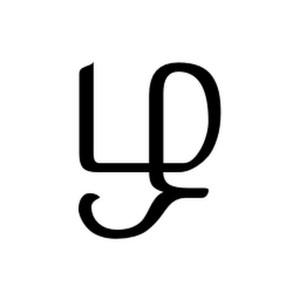
13. Maanvizhi (Tamil)
Pronunciation: The ‘zh’ sound cannot be represented in phonetics and is unique to the language itself(Tamizh). It is pronunced by rolling your tongue inwards making sure it doesn’t touch the roof of your mouth. Watch this to learn how to pronounce it.
Meaning: A person(usually female) whose eyes is like a baby deer’s eye
The letter ‘zha’ in tamil
These are a few words that I curated overtime and found them to be so beautifully formed. They resonate a unique feeling when pronouncing them. I have given to you only a very few words from very few languages across the world. There are certainly many words that I’ve missed. Do comment your favorite ones.
There are several countries where Indians are not required to have a visa to travel. A total of 58 countries allow you a visa-free travel with your Indian passport.
>Indonesia
Indians travelling to Indonesia can go visa-free for 30 days. If the duration of travel is more than 30 days Indians can apply for visa after their arrival in Indonesia.
>Ecuador
Citizens of India don’t need a visa in advance to travel to Ecuador. The facility of visa-free stay here for Indians is of duration of 90 days. The travelers, though, need to carry their financial documents and passport with a validity of 6 months along with their return ticket and travel insurance.
>Serbia
Indian citizens can stay upto 30 days visa-free in Serbia from the date of entry within a year. A stay exceeding the mentioned duration would require a temporary residence permit.
>Montserrat
Indian citizens can travel visa-free for 30 days in Montserrat without a tourist visa.
>Macau
Indians can stay visa-free in Macau given the stay should not exceed 30 days. Visitors are required to ensure their passport validity upto 6 months from the date of visit.
>Svalbard
You don’t need a visa to travel, work and reside permanently in Svalbard.
>Nepal
Indians don’t need to have a visa to stay in Nepal. However, it is important to register to the Indian Embassy in Kathmandu after a stay of 6 months.
>Haiti
Haiti doesn’t ask for a tourist visa to Indian travelers who can live upto 90 days there. All non-Haitian traveler are, though, required to pay a tourist fee of 10USD on arrival and validate their passports of 6 months validity from the date of arrival.
>Turks and Caicos
A tourist visa is not needed to travel to Turks and Caicos. All you need is a valid visa for entry and exit.
>Jamaica
Indian visitors can travel to Jamaica visa-free for upto 30 days. A stamp on the passport by the immigration officer on arrival acts as a tourist visa for Indians.
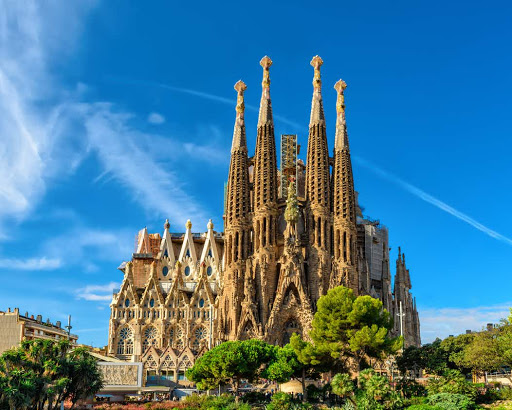
We humans always have an impeccable liking for controversies. They give us something to put the gray cells of our brain to work. Let’s exercise them today by taking a look into the world’s tallest church(basilica), Sagrada de Familia, constructed by the famous architect Antoni Gaudi(1852-1926). The God’s architect, started the construction of Sagrada de Familia in the year 1882. Be prepared for this statement. The basilica is still under construction and will not be completed until 2026! That’s a whooping 135 years of construction! If it is a famous church, which can be funded abundantly, why is it still under construction after over a century?
Sagrada de Familia and its private funding
The construction of the basilica has been carried out with the help of private funding and donations and is not funded by any government or church. Now you may ask why a church has shortage of funds. The answer to this is the beginning of the controversy. Before divulging into it, it is important to note that it isn’t a church, but rather a basilica. It was originally designated as a cathedral but then in 2010, Pope Benedict XVI declared it a basilica. What’s the difference between a basilica and a church?
Antoni Gaudi drew inspiration from nature
Before answering the question of why it is considered controversial, let me give you a brief tour of the basilica. The basilica is to have eighteen spires out of which only eight has been constructed as of now. These spires symbolize the Twelve Apostles, Virgin Mary, Four Evangelists, and Jesus Christ. They also differ in their heights accordingly to denote the hierarchy, with Jesus Christ’s spire the tallest of all at an astounding 560 feet.
Antoni Gaudi was an admirer of nature. He often finds inspiration for his works from mother nature herself.
The great book, always open and which we should make an effort to read, is that of Nature.
-Antoni Gaudi
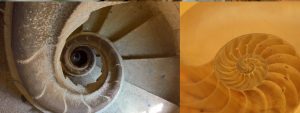
This can be reflected in his basilica too. To showcase it to you, let me show you a staircase inside the Sagrada Familia. You will notice that the staircase spirals, not ordinarily, but rather ‘scientifically’. The spirals represent the famous Fibonacci spiral. The Fibonacci spiral is a logarithmic spiral whose growth factor is φ, the golden ratio 1.69, which is the ratio which is found almost everywhere. In flowers, sea shells and even the human body. You may now understand Gaudi’s love for nature.
Spiral staircase(Left), a sea shell on the right.
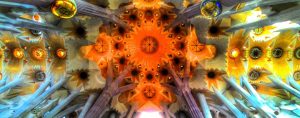
Also, the basilica incorporates curved lines rather than straight ones. This can be observed in the pillars of the basilica, curved and giving the illusion of many trees huddled together to form a forest. According to Gaudi, nature did not give us straight lines. So it is to do justice to nature by incorporating curved lines in his temple.
The straight line belongs to men. The curved one to God.
-Antoni Gaudi
Not only in this basilica, Gaudi’s work reflects nature in many of his other art works and buildings.
Ceiling of Sagrada Familia, resembling trees in a forest
Freemasonist?
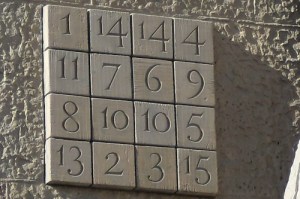
The magic square in the passion façade.
His fascination for nature is co-walked by his fascination for something strange too. Interesting right? Next to the passion façade, near his tomb(yes, Gaudi is buried inside the basilica)there lies a 4×4 magic square with 15 numbers inscribed on it. Even bizarre. These numbers are positioned in such a way that when you add the numbers horizontally, vertically or diagonally, they add up to the number 33!
Now, 33 is not any number. There is symbology in play here. 33 is said to be the highest rank that a freemasonist can go. There exists a controversy that Gaudi was a masonist and that he achieved the 33rd rank. But 33 maybe a coincidence, you may think. But note that his other work Parque Guëll, has staircase whose steps sum to 33 too. Now this is far too real to be ignored as a mere coincidence. One more thing, Gaudi’s friend Eduard was a freemasonist and his patron Guëll was also a freemasonist. These facts make it difficult to ignore ’33’.
Addressing the elephant of the room
So what does all this have to do with the controversy. Gaudi’s nature inspired works were frowned upon during his days. The basilica had undergone many attacks, also a reason for its delayed construction. George Owens, in his novel Homage to Catalonia, wrote:
I went to have a look at the cathedral—a modern cathedral and one of the most hideous buildings in the world. Unlike most of the churches in Barcelona it was not damaged during the revolution—it was spared because of its ‘artistic value,’ people said. I think the Anarchists showed bad taste in not blowing it up when they had the chance.
Alongside this, there was the freemasonist theory. Christianism and freemasonry were not exactly the friendly combo. In 1983, the Church issued a new code of canon law, which stated: ‘A person who joins an association which plots against the Church is to be punished with a just penalty; one who promotes or takes office in such an association is to be punished with an interdict‘.
Such was the heat between these two groups. And having said that Gaudi may have been a masonist, poses no doubt in churches denying funding to Sagrada de Familia. Even though it is addressed a basilica, by now you can be sure that it isn’t seen as one by many Catholics. This can be contradicting and confusing. Like an oxymoron, propagating absolutely different ideas: Science and Religion. These two have always been like oil and water. No matter how hard you try to mix, they will stand separated.
Thus, I leave you all with questions lingering in your minds. May your quest begin!
Note: More information regarding the intertwining of science and religion symbolism can be read in the book ‘Origin’ by Dan Brown. Meanwhile, you can check another article which revolves around the ideas of the book here.
Considering the rate of global expansion it is impossible to imagine any place unexplored and far from the reach of humans. However, there do exist certain places around the world which are forbidden from public viewing.
>Poveglia Island, Italy
Considered one of the most haunted islands in the world Poveglia Island is rumoured to have about 50% of its soil consisting of human remains. Located in between Venice and Lido the island was used as a quarantine station for plague infected people from 1793 to 1814. Also, evidences from past have proved that the island was used by Napoleon to store weapons in early 1800s. By the year 1922, until 1968, the buildings there were converted into mental asylum for the ill. It is believed that mentally ill patients were brutally tortured and killed at the hospital. Afterwards the island was used for agricultural purpose.
>North Sentinel Island, India
Located in the Bay of Bengal, North Sentinal Island is apart of the Andaman and Nicobar Islands. It is home to the Sentinelese an indigenous tribe often known as ‘uncontacted’ people. According to the Andaman and Nicobar Islands Protection of Aboriginal Tribes Act prohibits people from outside the island to travel here. It is believed the Sentineleses have inherited the island from generations and wish to remain in no contact with the outside world. Out of respect to their voluntary isolation the island is banned for travelling.
>Tomb of Qin Shi Huang, China
The tomb of Qin Shi Huang, the first Qin emperor of China is situated in Lintong District, Xi’an, Shaanxi province of China. constructed over 38 years, from 246 to 208 BC, and is situated underneath a 76-meter-tall tomb mound shaped like a truncated pyramid. It is preserved in the respect of the late emperor.
>Bhangarh Fort, India
Built in the 16th century, Bhangarh Fort is located in Rajasthan, India. Claimed as one of the most haunted forts in India, trespassing near Bhangarh is legally prohibited between the sunset and sunrise. However, according to government claims, visiting the place after sunset is prohibited due to dense forest cover, the presence of wild animals and no street lighting facilities.
>Ilha da Queimada Grande, Brazil
Also known as Snake Island, Ilha da Queimada Grande is an island off the coast of Brazil in the Atlantic Ocean. As the name suggests, it is known for its snake population having an average of five snakes per mile. It is home to an endangered snake species, Bothrops insularis, a golden lancehead pit viper. The snakes became trapped on the island when rising sea levels covered up the land that connected it to the mainland. Considering the danger from one of the deadliest serpents in the world the Brazilian government has made it illegal for anyone to visit the island.
In the beginning of holy month of Ramadan on 13th of April the Israeli security forces installed metal barriers outside the Damascus Gate not allowing access of Palestinians in the area. Ramadan is the holiest month for Muslims where they fast, pray, donate and go to pilgrimages.
The conflict kept rising between them starting from May 7th to May 10th. Clashes took place in the Eastern Jerusalem region. The Israeli forces stormed Al Aqsa Mosque in East Jerusalem. Al Aqsa Mosque is the third most holiest pilgrim place for Muslims around the world. The Israeli security forces used tear gas while people were in the middle of their prayer. There was a video that went viral on the internet that showed that the Israeli forces were dropping tear gas on them in the middle of their prayer. They used stun grenades and rubber tipped bullets on the worshippers. More than 900 hundred Gazans have being injured 31 of them being children since the day of attack. This took place during the final week of Ramadan. Since the evening of May 10th around 250 rockets were launched from Gaza which a city in Palestine into the Israel territories.
Social media platforms are deleting certain posts showing the footage of the violence taking place in Palestine. Freedom of Speech and Right to Information and Mass Media is a fundamental right of every citizen and that is being taken away too. People are scared for their lives. “We felt like we were in a horror movie,” said a local resident Salwa Al-Attar, who escaped the bombardment with her family. “The planes were above us, and the tanks and navy were bombing – and we could not move. The children, women and men were screaming.” This statement is from a BBC news article. On Friday, May 14th which is yesterday seven Palestinians were killed after Israel launched an airstrike on a house in Gaza City. On Saturday May 15th, Israeli airstrike destroyed a high rise building Al Jalzeera and The Associated Press and other media offices in the Gaza Strip. The airstrike happened an hour after the Israeli military ordered people to evacuate the building. The building had The Associated Press, Al Jazeera and a number of offices. Israeli air strike in Gaza city today killed at least 10 Palestinians majority being women and children.
As each moment passes by the Palestinians are scared and living in terror. They are living with the fear of losing their loved ones. We should post about it, tweet and share it on our stories to spread the awareness and amplify to stand in support of the suppressed. It is the least we can do in the middle of this pandemic that has already cost so many lives.
We can see the unity amongst different countries as they unite and stand together. 100,000s of people were seen in London marching for peace between the two. There are over 70 protests in support of Palestinians across UK, USA, Japan and Jordan. You don’t have to be a Muslim or belong to Palestine to be in support of them it is merely for the sake of humanity.
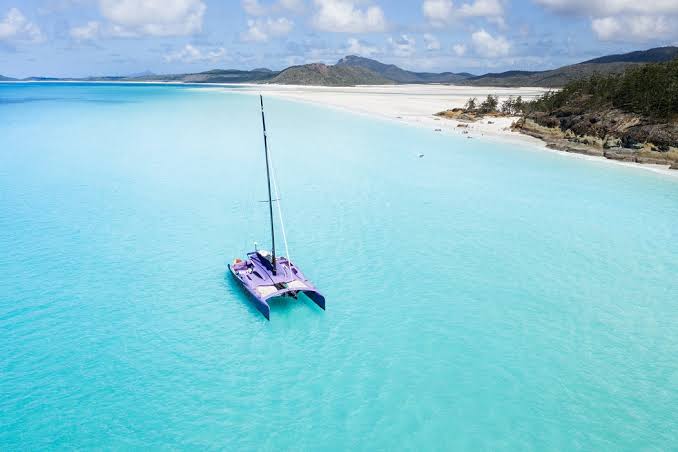
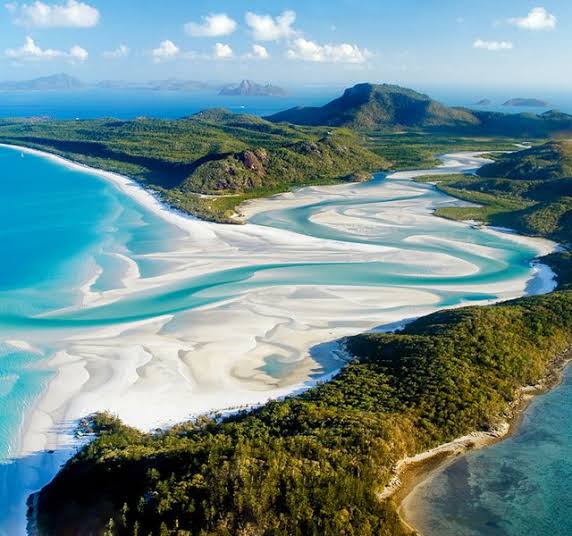
Whitehaven Beach is a 7 km stretch along Whitsunday Island, Australia. The island is accessible by boat, seaplane & helicopter from Airlie Beach, as well as Hamilton Island. It lies across from Stockyard Beach, better known as Chalkie’s Beach, on Haslewood Island. The beach is known for its crystal white silica sands and turquoise colored waters. The beach has tour barbeque and camping facilities.
The beach was named and discovered in 1879 by Staff Commander EP Bedwell. ‘Whitehaven’ was one of the many names, from the then English county of Cumberland, which Bedwell brought to the area. It followed James Cook’s 1770 naming of the island group, the Cumberland Islands.
The beach was awarded Queensland’s Cleanest Beach in Keep Australia Beautiful’s 2008 Beach Challenge State Awards. In July 2010, Whitehaven Beach was named the top Eco Friendly Beach in the world by CNN.com. Dogs are not permitted on the beach and cigarette smoking is prohibited.
Whitehaven Beach is known for its bright white sands, which consist of 98% pure silica. Local rocks do not contain silica so it has been suggested that the sands were brought to the beach by prevailing sea currents over millions of years.
Unlike regular sand, the sand on Whitehaven Beach does not retain heat making it comfortable to walk barefoot on a hot day. This sand is also very fine, and can damage electronic equipment such as telephones and cameras, although it is good at polishing up jewellery.
Tourists and locals visit Whitehaven Beach to swim and take in the bright white sand. Some visitors eat a BBQ lunch, and campers can stay by booking the National Parks camp facilities.
The Whitehaven Beach Ocean Swim is a 2 km open swimming competition held on the beach in November each year since 2009 as part of the Hamilton Island Triathlon. The 2012 event was held on 11 November 2012. The beach was also featured in the racing video game Forza Horizon 3.
In 2018, the government announced an investment of $3.9 million for the construction of a new long-distance walking track and upgrading of the camping areas on the Island to improve the holiday experience of the visitors. The track will connect Whitehaven Beach to the Tongue Point.
Whitehaven Beach is known for its bright white sands, which consist of 98% pure silica. Local rocks do not contain silica so it has been suggested that the sands were brought to the beach by prevailing sea currents over millions of years.
Whitehaven Beach has a shallow shoreline and is sheltered from the open ocean by the other islands in the Whitsunday group and the outer reef. There are no big waves or rip tides to worry about here, the water is usually relaxed and calm and suitable for swimmers of all strengths.
Self-sufficient boats and campers can anchor overnight off the beach, or book a national park campsite and camp on the southern end of the iconic Whitehaven Beach itself.
Whitehaven Beach is perhaps best known for its dazzling white sand, crystal clear waters and perfect photographic opportunities, but is often a good place to see sharks. It’s home to both blacktip reef sharks and baby lemon sharks, which use the calm and shallow waters as a nursery.
Whitehaven beach is famous for its silky smooth white sand and crystal clear turquoise water, Whitehaven Beach is on the bucket lists of travelers worldwide with thousands making the journey each year. The sand is so fine that it can easily get into and damage electronic equipment.
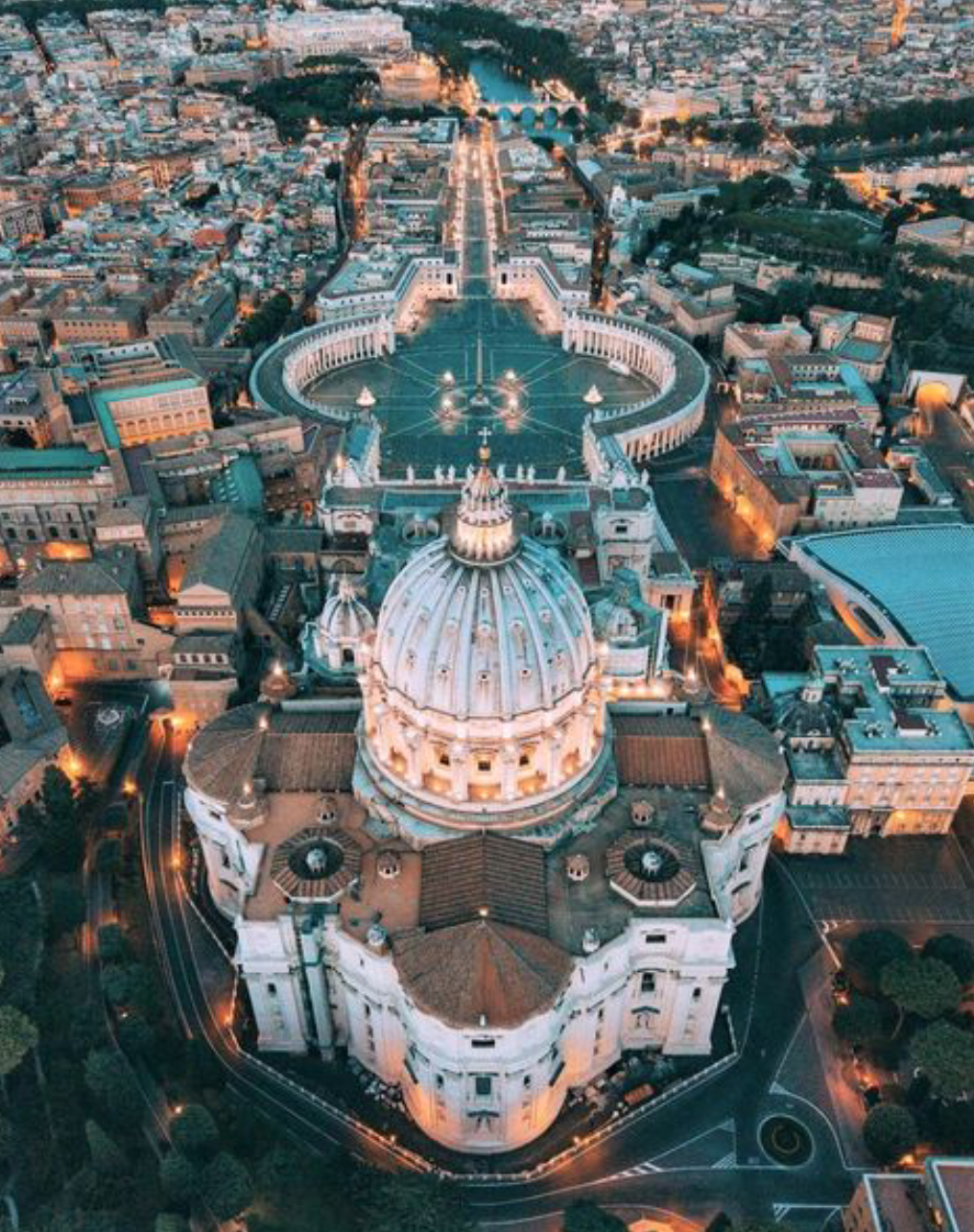
The word ‘country’ makes one think of a large land mass. However, not every country is huge. There are some countries that are really small in size. They are so tiny, that some of them can even be covered by foot! Some of these countries can fit entirely within the city of another country. The smallest country in the world, the Vatican City, for example, can fit into the city of Rome, capital of Italy. Many of these countries are only small in size. With their wealth and natural resources, they can even compete with any of the larger countries. So, here’s a showcase of some of the small, yet distinct countries.
• Vatican City
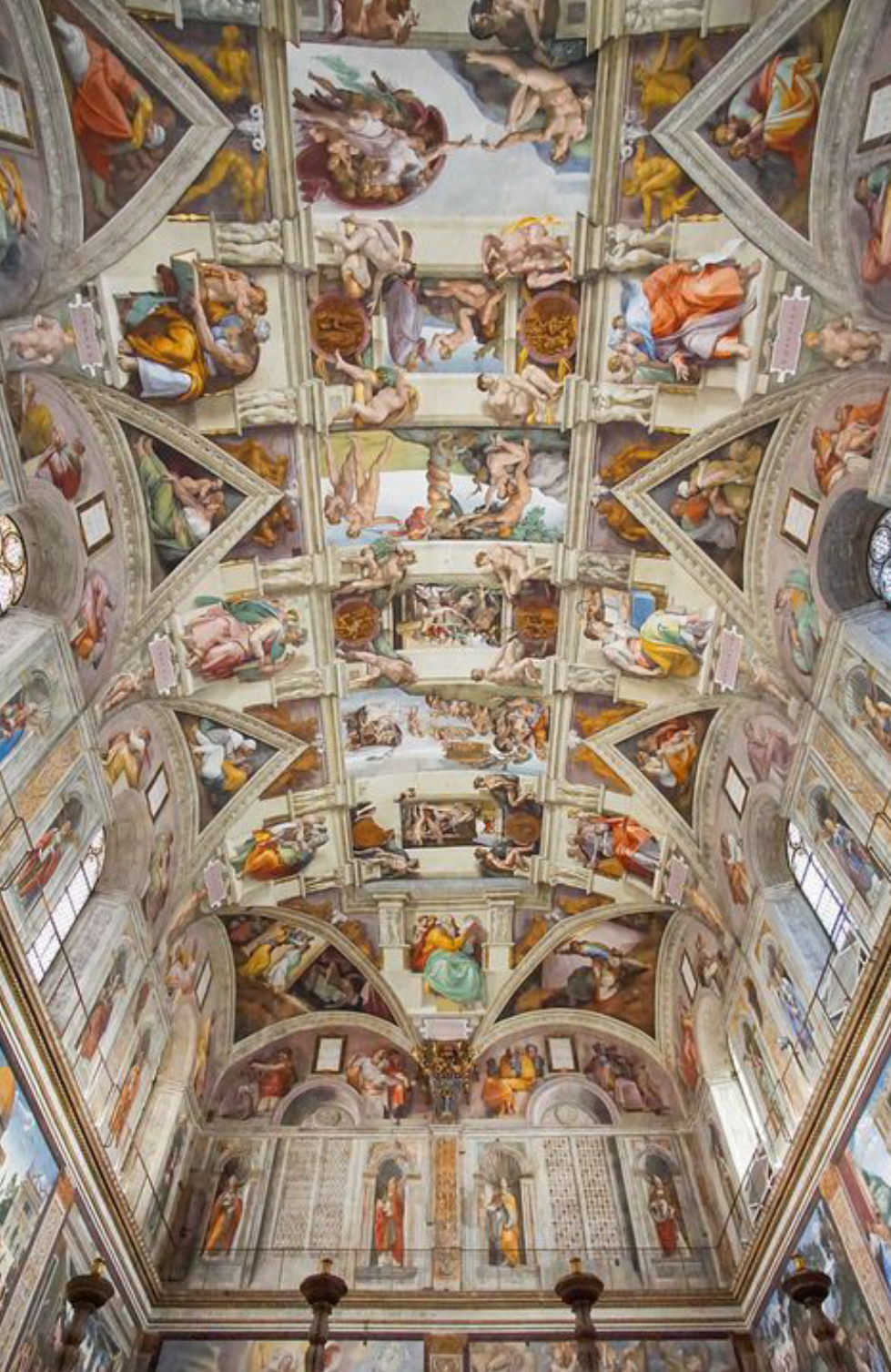
Vatican City is the world’s smallest fully independent nation state. It is also the smallest by population. Situated on the western bank of the Tiber river, the Vatican City’s 3.2 kilometre border is landlocked by Italy. The Vatican City has served as the official home of the pope of the Catholic church since 1377. However, Vatican City was not declared an independent state until the Lateran treaty of 1929 which created the independent state of Vatican City for the Catholic church. Today nearly 75% of the Vatican’s citizens are members of the clergy. Along with the centuries old buildings and gardens the Vatican maintains its own banking and telephone systems post office pharmacy newspaper and radio and television stations. Its 600 citizens include the members of the Swiss guard a security detail charged with protecting the Pope since 1506. The most significant building in Vatican City is Saint Peter’s Basilica. It is the Italian language that is used by most of those located within the state however the official documents are written in Latin.
• South Korea
Compared to the giants of Asia like India and China, South Korea is much smaller in size. Its total area is 100,032 square kilometres. South Korea has one pf the most homogeneous populations in the world which are thought to be descended from several Mongol tribes that migrated from central Asia. Tourism is a fast growing industry in South Korea.
• Portugal
Portugal is a sovereign state in Western Europe. It comprises of the continental part of Portugal on the western coast of the Iberian Peninsula and the small archipelagos of Madeira and the Azores in the Atlantic Ocean.
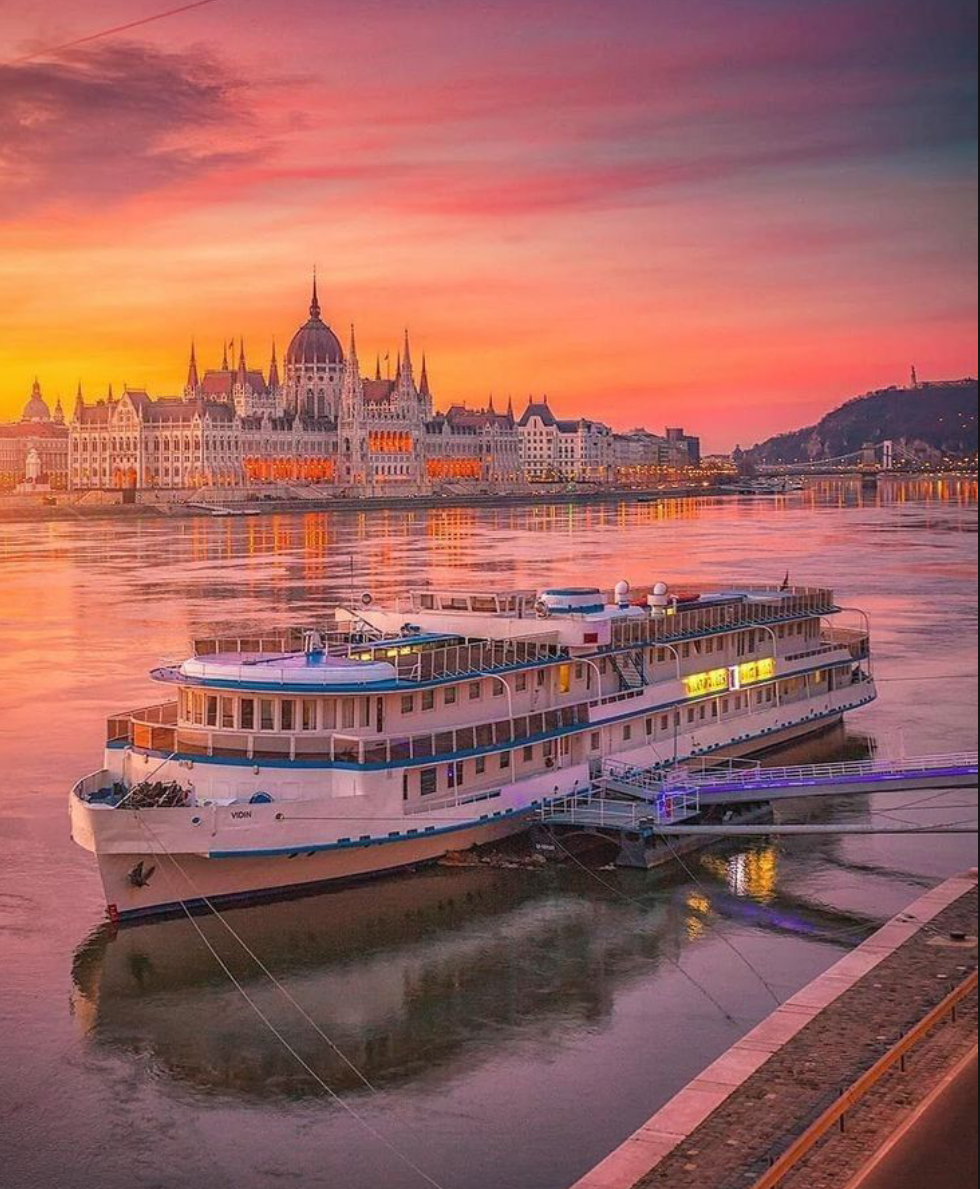
• Hungary
The name “Hungary” may very well come from the medieval Latin word ‘Hungaria’ which translates as “Land of Huns”. Another source states that the name is derived from the Turkish words on ‘Ogur’ meaning ‘ten arrows’ or ‘ten people’
• UAE
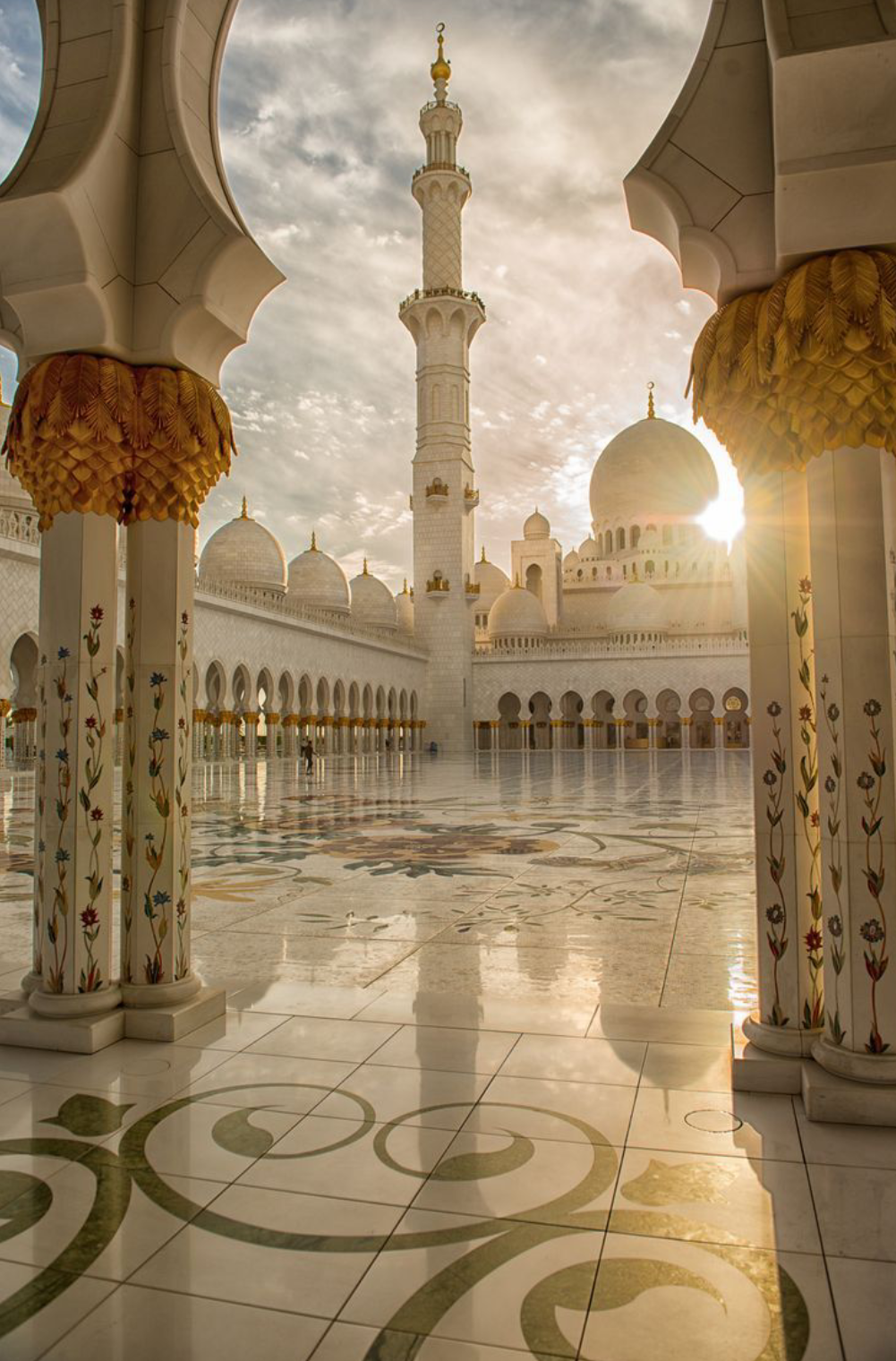
The United Arab Emirates is a constitutional federation of seven Emirates; Abu Dhabi, Dubai, Sharjah, Ajman, Umm al-Quwain, Ras al-Khaimah and Fujairah. The federation was formally established on 2nd December, 1971. The UAE’s oil reserves are the seventh largest in the world while its natural gas reserves are the worlds seventeen largest. The Dubai police fleet includes Lamborghini, a Ferrari and a Bentley. This is to allow them to catch speeders who can outrun other cars.
• Dominican republic
The island of Hispaniola, the second largest island of the Antilles in the Caribbean contains two separate countries, the Dominican republic and Haiti. The Dominican republic is the only country in the world to have an image of the Holy Bible on its national flag.
• Panama • Georgia • Ireland • Iceland • Sri Lanka • Costa Rica • Bhutan • Switzerland • Belgium • Israel • Fiji • Qatar • Jamaica • Singapore • Maldives …to name a few others.
Automation is the technology by which a process or procedure is performed with minimal human assistance. Automation or automatic control is the use of various control systems for operating equipment such as machinery, processes in factories, boilers and heat treating ovens, switching on telephone networks, steering and stabilization of ships, aircraft and other applications and vehicles with minimal or reduced human intervention.
Network automation is the process of automating the configuring, managing, testing, deploying, and operating of physical and virtual devices within a network. With everyday network tasks and functions automated and repetitive processes controlled and managed automatically, network service availability improves. It is the process of using software to automate network and security provisioning and management in order to continuously maximize network efficiency and functionality.
Automation is still green, but when it begins to mature, network admins and engineers will not even need to log into any router or firewall equipment. Of course, automation will not replace human intelligence (our jobs). With the proper automation tool, we will be able to do thousands of tasks per day, something that probably took months before. Automation will give us more time to think about network architecture, design, and plan for its capacity.
Best Network Automation Tools and Software of 2020:
Here are some of the best network automation tools, some are free, and others are paid :
Solarwinds Network Automation Manager(NAM) –
Solarwinds Network Automation Manager (NAM) is an integrated network automation tool designed for highly scalable or enterprise networks. It provides full automation and management from a unified web-based console. (NAM) includes components of various network automation tools and operations management software for all your network deployments.
It includes some features of the Network Performance Monitor (NPM), Netflow Traffic Analyzer (NTA), User Device Tracker (UDT), Network Configuration Manager (NCM), IP Address Manager (IPAM), VoIP & Network Quality Manager (VNQM), and SolarWinds High Availability. The network engineer can configure certain network automation functions on NAM and let the tool monitor the availability, faults, and performance for all nodes and paths in your network.
Its key features include : analysing traffic and bandwidth and find hogs, monitoring and backing-up network devices automatically, deploying network configurations in bulk, automatic subnet discovery and IP scanning and monitoring network performance.
ManageEngine Network Configuration Manager (NCM) by ManageEngine is one of the most comprehensive software for network configuration, change, and compliance management. It supports multi-vendor networks with products from Cisco, NetGear, Fortinet, Juniper, HP, and more.
NCM can help you automate the management of the entire lifecycle of network device configurations. You can automate daily monotonous configuration tasks in bulk. Instead of going one by one, which generally would take a long time, you can apply a new configuration or changes to multiple devices. You can also schedule automatic configuration backups that might be useful in case of rollbacks.
Its key features include : automating new or edit configuration in bulk, network automation using Configlets, configuration backups, configuration change notifications and rollback actions.
Ansible (Tower) –
Ansible by RedHat, the simple automation framework, is definitely at the core of a lot of new networking DevOp solutions. It automates the configuration of servers and provides native support for legacy and open network infrastructure. Ansible is an open-source project built by the community. It is available for Linux/Unix-like OS and Windows.
To automatically configure servers, Ansible uses playbooks, which are ordered units of scripts (written in YAML) that define how a server should work and behave through the Ansible automation tool.
Ansible Tower is the enterprise web-based GUI tool that makes Ansible easy to use. The software is designed to be the central platform for all automation tasks. Ansible Tower helps network teams manage complex deployments.
Its key features include : leveraging the current network CLI commands to automate over 45 different networking vendors, between switches, routers, load balancers, and firewalls, provide automation for software-based controllers (SDN), automate interconnection of hybrid and multi-clouds.
Netmiko –
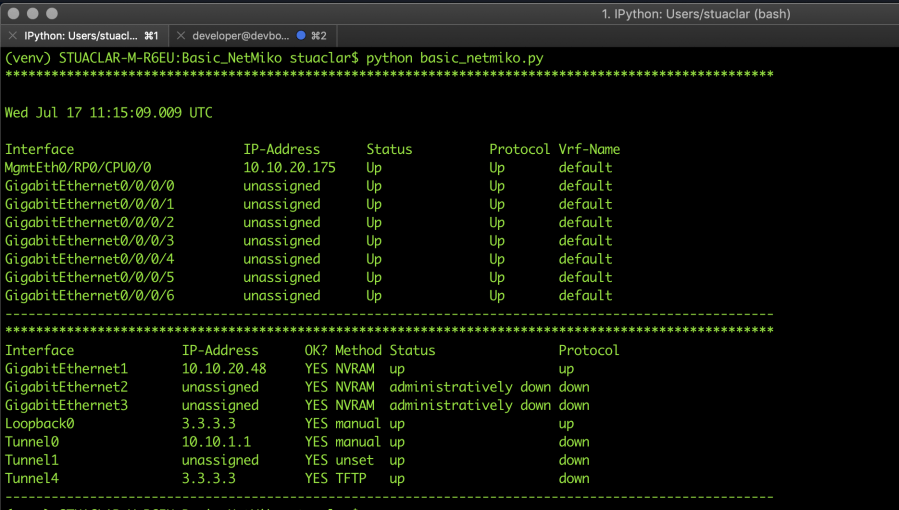
Netmiko is an open-source Python library based on the Paramiko SSH library. It allows easier management and connection of network devices through SSH. Netmiko improves the library of Paramiko by including support to a wide range of networking vendors and platforms, such as Arista EOS, Cisco ASA, HP Comware7, Juniper Junos, Linux, and more. The tool simplifies and automates the logging to a network device through SSH and executes commands.
Its key features include : establishing an SSH connection to network devices, execute “show” commands and retrieve the results, execute configuration commands, it supports a wide range of vendors and platforms.
NAPALM–
NAPALM (Network Automation and Programmability Abstraction Layer with Multivendor support) is a Python library that can interact with different network devices via a unified API. The software is cross-platform and open-source. It uses different technologies to connect to the network devices, execute configurations, and retrieves the output data. It can support different networking operating systems such as Arista EOS, Cisco IOS, Cisco IOS-XR, Cisco NX-OS, and Juniper JunOS.
Its key features include : connecting to single or multiple devices, executing commands automatically, replace, merge, and compare configurations, discarding or rollbacks configuration, retrieving and audit information.
Truesight Network Automation –
Truesight formerly known as BladeLogic, is now part of the BMC product portfolio. Truesight is an APM with AIOps (Artificial Intelligence Operations) capabilities. It is designed to improve the performance and security of hybrid-cloud environments at a cost-efficient price. TrueSight provides scalable and automated network configuration management capabilities. The software gives full control of the entire configuration across the network, from systems, routers, and firewalls. It can also be programmed to automatically keep track of changes in configuration and apply rollback in case of failure.
Its key features include : service-aware analytics, auto-scans and auto-backups, automatic audits and security compliance checks, patch and image update automation, capacity optimization.
Apstra OS–
Apstra OS (AOS) is referred to as a self-operating network, which automates the lifecycle of leaf-spine network switching. AOS supports multiple switches hardware vendors (Cisco, Juniper, Arista, and more) and operating systems (EOS, Junos, NX-OS, and more).
Apstra comes with a single console to automate your network. It decouples the network (software) from the underlying physical and virtual infrastructure. It works at the management plan to control switches or other devices through their open APIs.
ApstraOS ensures that network elements such as protocols, design, cabling, etc. work continuously. With AOS, you can create, edit, or remove leaf-spine devices, instantly across different network vendors. AOS also comes with closed-loop real-time validation and advanced data analytics.
Its key features include : automated L3 design and deployment with intra-rack virtual networks, operational analytics. Intent-Based Analytics (IBA), built-in Telemetry, NSX-T and vSphere Integration.
NetBrain Automation–
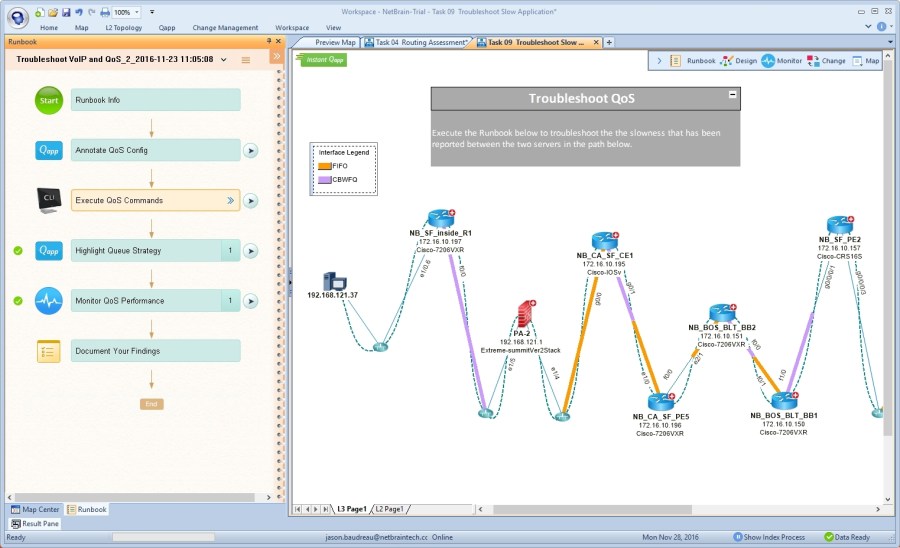
NetBrain is an adaptive network automation platform. It uses a single-pane-of-glass that shows all network data through mapping and visualization. The software also comes with a powerful search engine that allows you to look through all your network elements.
NetBrain performs an in-depth automatic network discovery to collect data from all network devices. It decodes multi-vendor networks and builds a digital representation of the network. The software creates a dynamic map to be used as a UI to all devices and to configure automation tasks. The software improves the device map experience by adding CLI automation and data from third-party network vendors through API.
Its key features include : automaticing network device inventorying, single-pane-of-glass and dynamic maps, viewing device’s CLI at the map-level, automating workflows with Executable Runbooks.
A phoenix is a mythological bird that cyclically regenerates or is otherwise born again. Associated with fire and the sun, a phoenix obtains new life by arising from the ashes of its predecessor. Some legends say it dies in a show of flames and combustion, others that it simply dies and decomposes before being born again. Most accounts say that it lived for 500 years before rebirth.Herodotus, Lucan, Pliny the Elder, Pope Clement I, Lactantius, Ovid, and Isidore of Seville are among those who have contributed to the retelling and transmission of the phoenix motif. The phoenix symbolized renewal in general, as well as entities and concepts such as the Sun, time, the Roman Empire, Christ, Mary, and virginity.
The phoenix is best known as a being of Greek mythology, but has analogues in other traditions: including the Hindu garuda and bherunda, the Russian firebird, the Persian simorgh, the Georgian paskunji, the Arabian anqa , the Turkic Konrul, also called Zümrüdü Anka, the Tibetan Me byi karmo, the Chinese Fenghuang and zhu que, and the Japanese hō-ō .
The phoenix myth is also part of early Christian traditions. Some scholars have speculated that these early phoenix legends may have their origins in the bennu of Egyptian mythology. In the 19th century, scholastic suspicions appeared to be confirmed by the discovery that Egyptians in Heliopolis had venerated the bennu. However, the Egyptian sources regarding the bennu are often problematic and open to a variety of interpretations. Some of these sources may have actually been influenced by Greek notions of the phoenix, rather than the other way around.
Classical discourse on the subject of the phoenix points to a potential origin of the phoenix in Ancient Egypt. Herodotus, writing in the 5th century BC, gives a somewhat skeptical account of the phoenix.
To Appear:
The phoenix is sometimes pictured in ancient and medieval literature and medieval art as endowed with a halo, which emphasizes the bird’s connection with the Sun. In the oldest images of phoenixes on record these nimbuses often have seven rays, like Helios (the Greek personification of the Sun). Pliny the Elder also describes the bird as having a crest of feathers on its head, and Ezekiel the Dramatist compared it to a rooster.
Although the phoenix was generally believed to be colorful and vibrant, sources provide no clear consensus about its coloration. Tacitus says that its color made it stand out from all other birds. Some said that the bird had peacock-like coloring, and Herodotus’s claim of the Phoenix being red and yellow is popular in many versions of the story on record. Ezekiel the Dramatist declared that the phoenix had red legs and striking yellow eyes, but Lactantius said that its eyes were blue like sapphires and that its legs were covered in yellow-gold scales with rose-colored talons.
Herodotus, Pliny, Solinus, and Philostratus describe the phoenix as similar in size to an eagle, but Lactantius and Ezekiel the Dramatist both claim that the phoenix was larger, with Lactantius declaring that it was even larger than an ostrich.
The ozone layer or ozone shield is a region of Earth’s stratosphere that absorbs most of the Sun’s ultraviolet radiation. It contains a high concentration of ozone in relation to other parts of the atmosphere, although still small in relation to other gases in the stratosphere. The ozone layer contains less than 10 parts per million of ozone, while the average ozone concentration in Earth’s atmosphere as a whole is about 0.3 parts per million. The ozone layer is mainly found in the lower portion of the stratosphere, from approximately 15 to 35 kilo meters (9.3 to 21.7 mi) above Earth, although its thickness varies seasonally and geographically.
The ozone layer was discovered in 1913 by the French physicists Charles Fabry and Henri Buisson. Measurements of the sun showed that the radiation sent out from its surface and reaching the ground on Earth is usually consistent with the spectrum of a black body with a temperature in the range of 5,500–6,000 K (5,227 to 5,727 °C), except that there was no radiation below a wavelength of about 310 nm at the ultraviolet end of the spectrum. It was deduced that the missing radiation was being absorbed by something in the atmosphere. Eventually the spectrum of the missing radiation was matched to only one known chemical, ozone.
Its properties were explored in detail by the British meteorologist G. M. B. Dobson, who developed a simple spectrophotometer (the Dobsonmeter) that could be used to measure stratospheric ozone from the ground. Between 1928 and 1958, Dobson established a worldwide network of ozone monitoring stations, which continue to operate to this day. The “Dobson unit”, a convenient measure of the amount of ozone overhead, is named in his honor. The ozone layer absorbs 97 to 99 percent of the Sun’s medium-frequency ultraviolet light (from about 200 nm to 315 nm wavelength), which otherwise would potentially damage exposed life forms near the surface.
In 1976, atmospheric research revealed that the ozone layer was being depleted by chemicals released by industry, mainly chlorofluorocarbons (CFCs). Concerns that increased UV radiation due to ozone depletion threatened life on Earth, including increased skin cancer in humans and other ecological problems, led to bans on the chemicals, and the latest evidence is that ozone depletion has slowed or stopped. The United Nations General Assembly has designated September 16 as the International Day for the Preservation of the Ozone Layer.
Ozone Depletion:
Ozone depletion consists of two related events observed since the late 1970s: a steady lowering of about four percent in the total amount of ozone in Earth’s atmosphere (the ozone layer), and a much larger springtime decrease in stratospheric ozone around Earth’s polar regions. The latter phenomenon is referred to as the ozone hole. There are also springtime polar tropospheric ozone depletion events in addition to these stratospheric events.
The main cause of ozone depletion and the ozone hole is manufactured chemicals, especially manufactured halocarbon refrigerants, solvents, propellants, and foam- blowing agents (chlorofluorocarbons (CFCs), HCFCs, halons), referred to as ozone-depleting substances (ODS). These compounds are transported into the stratosphere by turbulent mixing after being emitted from the surface, mixing much faster than the molecules can settle. Once in the stratosphere, they release halogen atoms through photodissociation, which catalyze the breakdown of ozone into oxygen. Both types of ozone depletion were observed to increase as emissions of halocarbons increased.
Ozone depletion and the ozone hole have generated worldwide concern over increased cancer risks and other negative effects. The ozone layer prevents most harmful wavelengths of ultraviolet (UV) light from passing through the Earth’s atmosphere. These wavelengths cause skin cancer, sunburn, permanent blindness, and cataracts, which were projected to increase dramatically as a result of thinning ozone, as well as harming plants and animals. These concerns led to the adoption of the Montreal Protocol in 1987, which bans the production of CFCs, halons, and other ozone-depleting chemicals.
The ban came into effect in 1989. Ozone levels stabilized by the mid-1990s and began to recover in the 2000s, as the shifting of the jet stream in the southern hemisphere towards the south pole has stopped and might even be reversing. Recovery is projected to continue over the next century, and the ozone hole is expected to reach pre-1980 levels by around 2075. In 2019, NASA reported that the ozone hole was the smallest ever since it was first discovered in 1982.











 Eduindex
You must be logged in to post a comment.